
Sow 2 zucchini seeds in warm soil and pick the first fruit 6 to 9 weeks later. That is growing zucchini in Australia at its simplest. The rest of this page is 12 moves, from variety to harvest.
Sow after your last frost. Water at the base. Pick small and pick often. Zucchini rewards those 3 habits with more fruit than one household eats.
I have learned that picking the first fruit small keeps the plant fruiting instead of stalling. Zucchini is Cucurbita pepo, the same species sold as marrow when a fruit grows large. British seed packets call the same vegetable courgette. Australians call it zucchini.
1. Pick 1 Bush Variety That Suits Your Patch
Pick 1 bush variety and give it room. Most zucchini grow as bushes. A few trail a little. None climb like a pumpkin vine. A bush plant spreads about 1.5 m across at full size, according to Gardenate’s Australian zucchini notes. That spread decides your spacing before you sow.
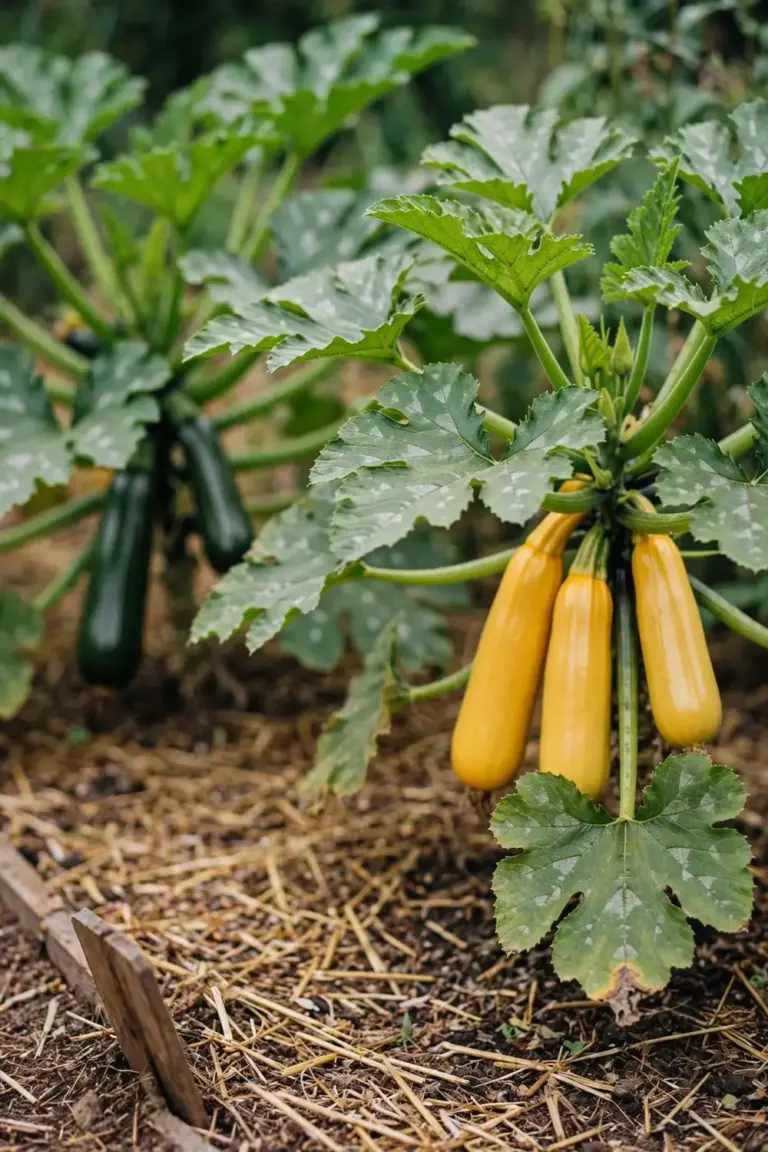
Green zucchini dominate Australian seed racks. Yellow or gold zucchini earn a place in humid gardens. The yellow types resist mold damage better in humid areas and keep producing even when mildew marks the leaves, according to the same Gardenate notes. A gold fruit also shows up fast against green leaves at picking time.
| Variety | Fruit | Habit | Notes |
|---|---|---|---|
| Blackjack | Dark green, narrow, ridged | Bush | The most popular green variety in Australia |
| Black Beauty | Dark green, narrow, ridged | Bush | A standard green variety, widely sold |
| Costata | Gray-green, striped, ribbed | Bush | Striped fruit with strong ridges |
| Greyzini | Gray-green, striped | Bush | Striped fruit, pale flesh |
| Lebanese | Pale gray-green, small, roundish | Bush | Pick small for stuffing |
| Golden | Gold, narrow | Bush | More mold resistant in humid areas |
Buy 1 variety for your first patch. One plant feeds a household at peak season. Two plants bury it in fruit. Seed packets name the habit on the front. Trust the packet over the catalog photo. Read the days-to-harvest line on the packet too, which tells you how long from sowing to first picking for that variety. Compare packets on that line when two varieties look alike, and pick the shorter line for a short season.
2. Sow Zucchini in Your Australian Climate Window
Sow zucchini when the soil warms, not when the calendar flips. Zucchini grows through the warm months in cool and temperate zones and through the cooler months in the tropics. The table below sets the window by zone.
| Climate Zone | Sow Window | Notes |
|---|---|---|
| Temperate | September to October | Sydney, Melbourne, Adelaide, Perth; sow after frost |
| Cool and Tasmania | October onward | Sow after the last frost, later than temperate zones |
| Sub-tropical | August to January | Brisbane and northern New South Wales |
| Tropical | April to September | Darwin and Cairns; grow through the cooler months |
| Arid | September | Alice Springs; sow as heat builds, water well |
Zone windows come from Seasol’s zucchini growing guide. In cool and temperate climates, sow seeds and seedlings in spring after frost passes and into early summer. In subtropical zones, plant from August until January. In tropical areas, plant from April to September.
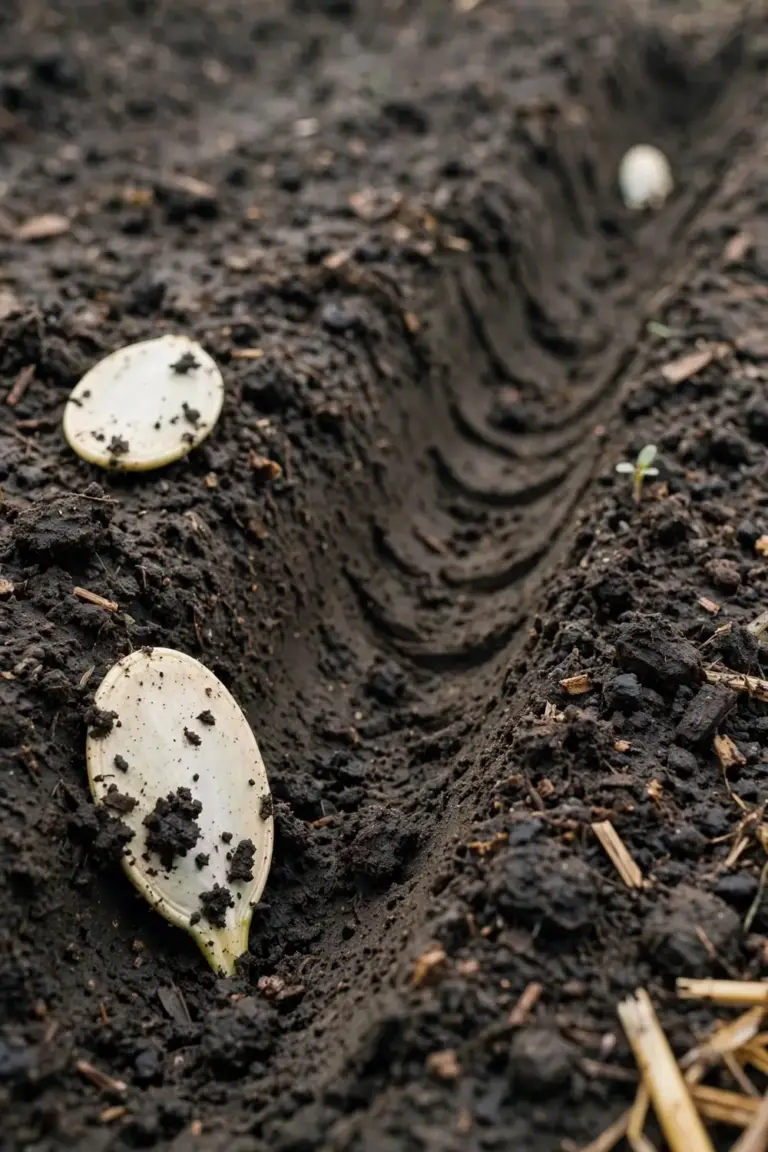
Soil temperature sets the real start line. Zucchini germinates best when soil sits between 21 °C and 35 °C, according to Gardenate’s Australian zucchini notes. Ultimate Backyard’s Australian planting guide puts the floor lower, at a minimum soil temperature of 15 °C. Read those 2 numbers as a range with a distinction. Soil at 15 °C allows germination. Soil between 21 °C and 35 °C drives fast, even germination. A soil thermometer costs little and settles the question fast. Push it 5 cm into the bed in the morning and read it before you sow.
Frost kills zucchini. A single frost night blackens the big leaves and ends the plant. Check your local frost dates before you sow. Sow after the last expected frost, then keep a frost cloth handy for a late cold snap. A frost cloth draped over hoops holds a few degrees of warmth through one cold night. Remove it in the morning so the plant catches the sun. Gardeners in frost-prone valleys sow a week later than gardeners on a hilltop above them. Cold air pools in low ground. A slope drains it away. Walk your yard at dawn once in spring and feel where the cold sits. That cold pocket is the last place to sow zucchini.
3. Build Rich, Free-Draining Soil Before You Sow
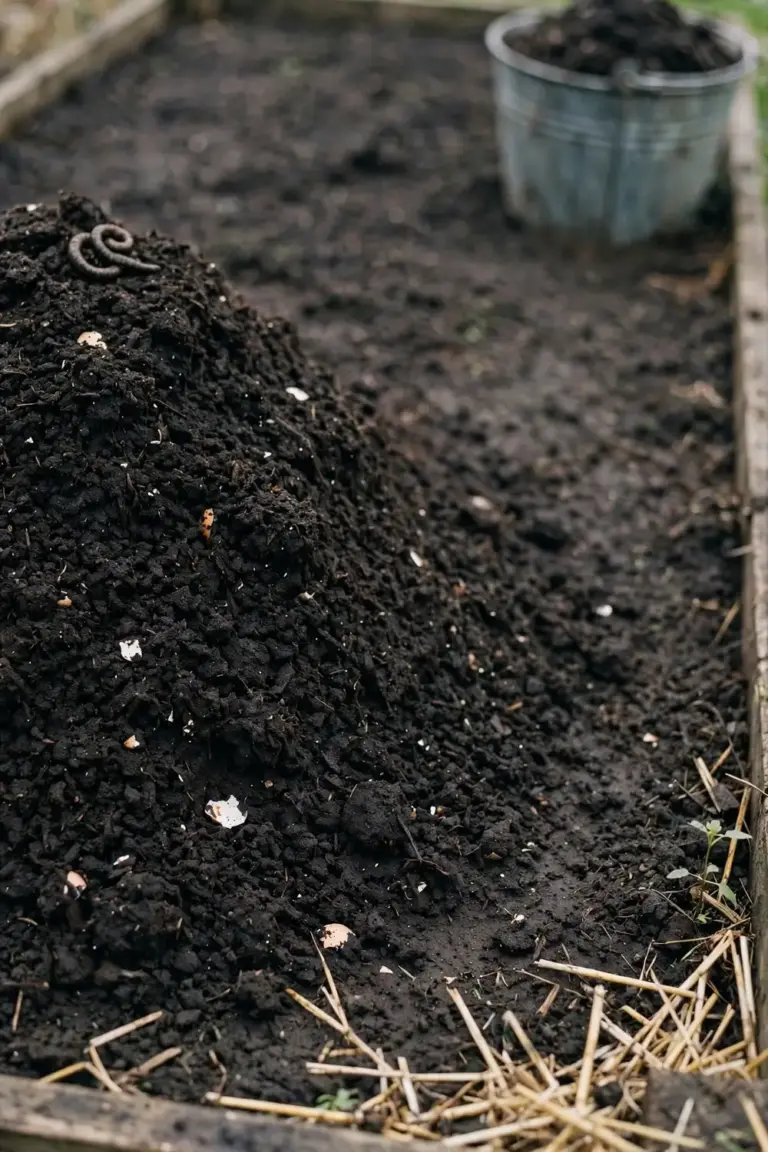
Build the bed before the seed goes in. Zucchini is a heavy feeder with shallow roots. It wants rich soil, steady moisture, and drainage that never leaves the roots sitting in water. Dig aged manure or compost into the bed about a week before planting, according to Ultimate Backyard’s Australian planting guide. That week lets the amendment settle into the soil instead of sitting in a hot pocket around the seed.
Zucchini grows best in soil with a pH of 6.0 to 7.5, according to the same Ultimate Backyard guide. University of Georgia Extension’s squash guide gives a slightly lower band, a pH of 5.8 to 6.8. The 2 ranges overlap between 6.0 and 6.8. Aim for that overlap and the plant stays happy. A home pH test kit reads the bed in minutes. Lime lifts a low pH. Sulfur lowers a high one. Test first, then amend.
Site the bed in full sun. Zucchini needs at least 6 hours of direct sunlight per day, according to the Ultimate Backyard guide. Plants grown in shade grow leggy and fruit poorly, if they fruit at all. Watch the patch over several days before planting. Note which spots hold sun from morning to afternoon. Pick the sunniest one. In the hottest districts, light afternoon shade helps the big leaves through a heatwave. Everywhere else, full sun wins. Building soil health pays off across the whole vegetable patch, not only for zucchini.
A raised bed suits zucchini in heavy clay. The bed lifts the roots above wet ground and warms earlier in spring. Build the bed from timber or brick and fill it with a mix of topsoil and compost. A bed 30 cm deep holds enough root room for zucchini. In sandy soil, skip the raised bed. The soil already drains fast. Dig compost into the ground instead and mulch thick. Both paths reach the same goal. Rich soil that drains fast and holds moisture between waterings.
4. Sow Zucchini Seed Direct or Start in Trays
Sow zucchini direct where it will grow, or start it in trays. Direct sowing suits most Australian gardens because the seed germinates fast in warm soil and the plant hates root disturbance. Trays suit gardeners who want a head start while frost still threatens. Both paths work. Pick the one that fits your frost date.
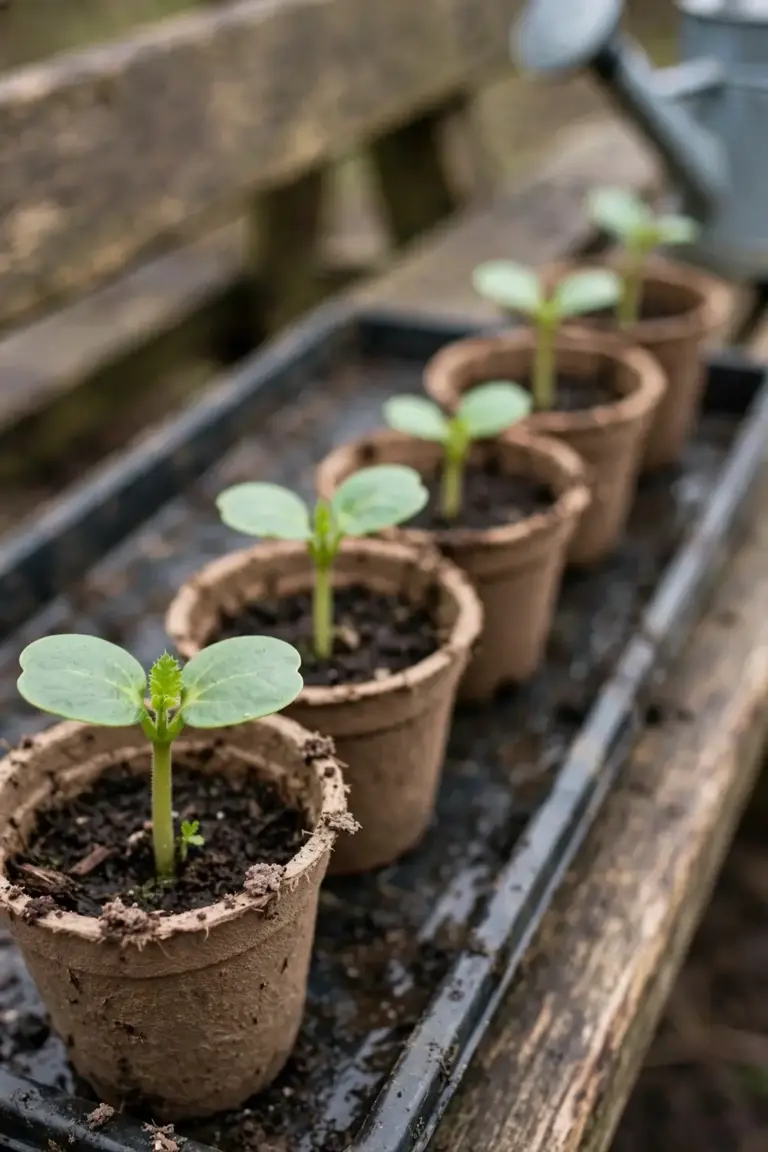
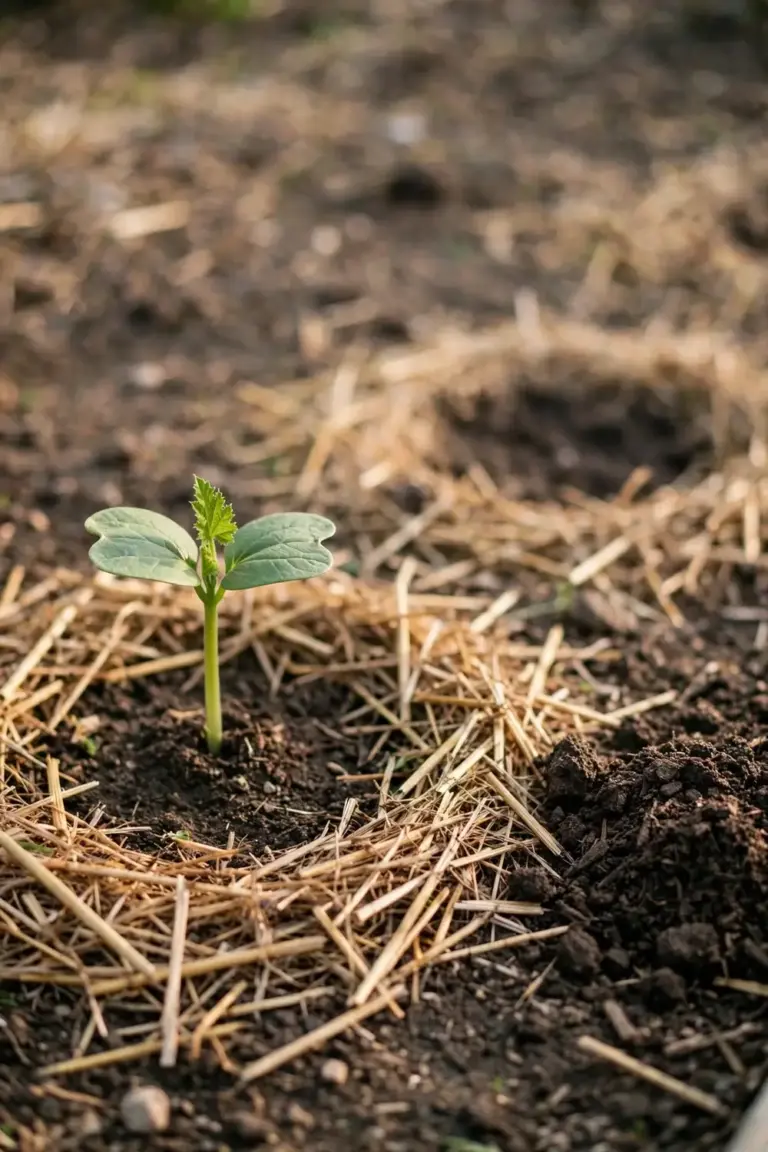
Sow seed at a depth about 3 times the diameter of the seed, according to Gardenate’s Australian zucchini notes. That depth buries the seed deep enough to stay moist and shallow enough to break the surface fast, so sow 2 seeds per spot and thin to the stronger seedling after the true leaves show. Snip the weaker one with scissors, since pulling it disturbs the roots of the keeper, then start seeds in trays 4 to 6 weeks before transplanting, according to the same Gardenate notes. Germination takes 7 to 14 days, according to Seasol’s zucchini growing guide, so keep the mix moist during that window. Move seedlings out once the first true leaves form and handle the root ball gently, because zucchini seedlings sulk after rough handling. Biodegradable pots reduce transplant shock because the whole pot goes into the ground. For the full seed-starting method, the guide to how to grow zucchini from seed covers the first steps in detail. The seed starting steps cover trays, mix, and timing for any vegetable.
5. Space Zucchini Plants 50 to 90 cm Apart
Space zucchini plants 50 to 90 cm apart, according to Gardenate’s Australian zucchini notes. Seasol’s zucchini growing guide narrows that band to 70 to 80 cm for transplanted seedlings. Use the wider end of the range in humid districts. Air moves between widely spaced plants and leaves dry faster after rain. Use the narrower end in dry districts where leaves shade the soil and hold moisture.
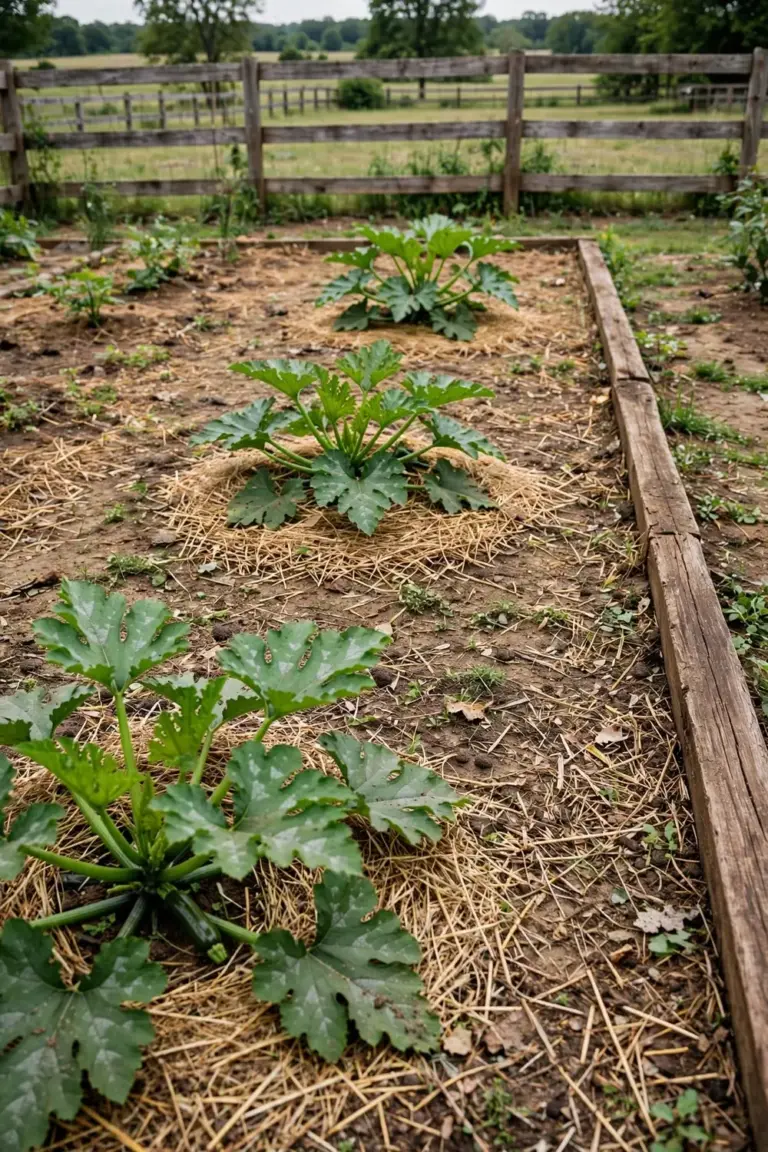
A zucchini plant spreads about 1.5 m across at full size, according to the same Gardenate notes. That spread surprises new growers. The seedling looks small for weeks. Then the leaves double in size and the plant fills its space. Plan for the adult plant, not the seedling. A bed that fits 3 seedlings in October holds 3 adult plants in December only when the spacing was right in October.
Mounds help in heavy soil. University of Georgia Extension’s squash guide plants summer squash in mounds 1.2 m apart. A mound lifts the crown above wet soil and warms faster in spring. Build a low, wide mound. Sow into the top. Mulch the mound after the seedling stands. Skip mounds in sandy soil that already drains fast.
6. Water Zucchini at the Base Every Week
Water zucchini at the base, not over the leaves, because wet leaves invite disease. A soaker hose or a watering can aimed at the root zone keeps the foliage dry. Water in the morning so any splash dries before nightfall.
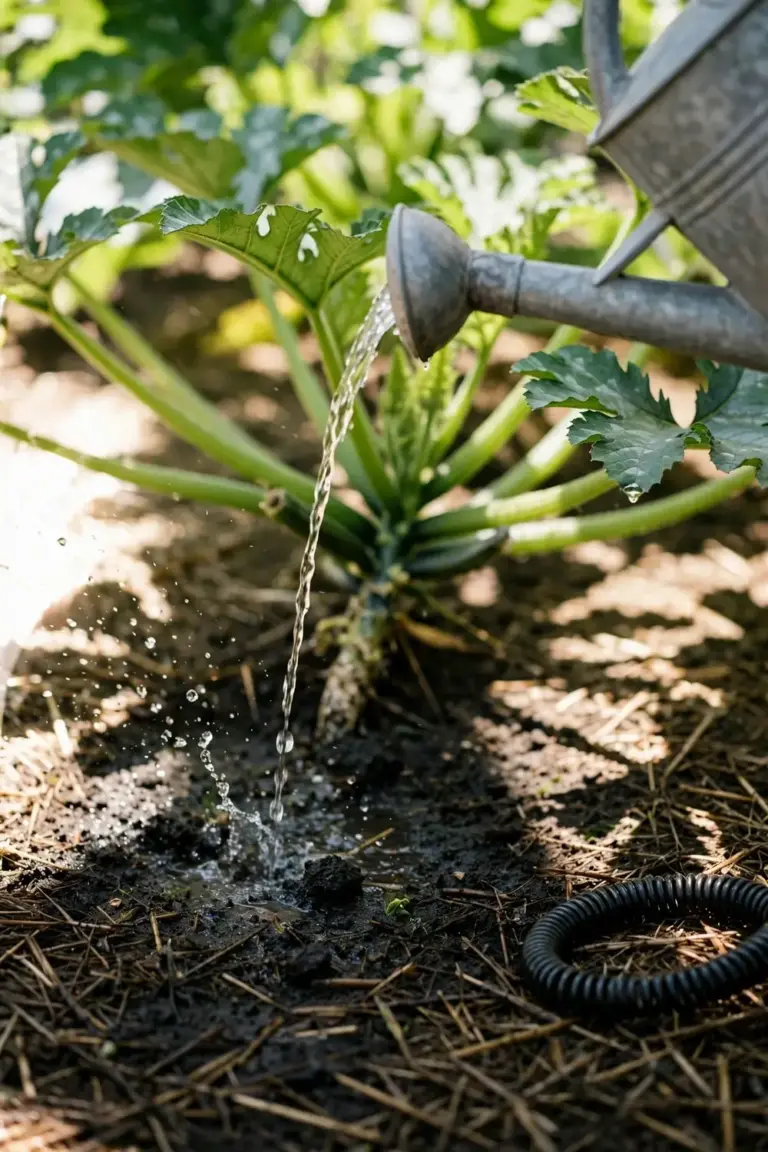
Established squash need 2.5 to 3.8 cm of water per week, according to University of Georgia Extension’s squash guide. Moisture needs to reach 15 to 20 cm deep into the soil, so a shallow sprinkle that wets only the top 2 cm leaves the roots dry. Push a finger 5 cm into the soil, and water when the top feels dry at that depth, continuing until the soil feels damp at 15 cm. A deep soak once beats a light sprinkle every day.
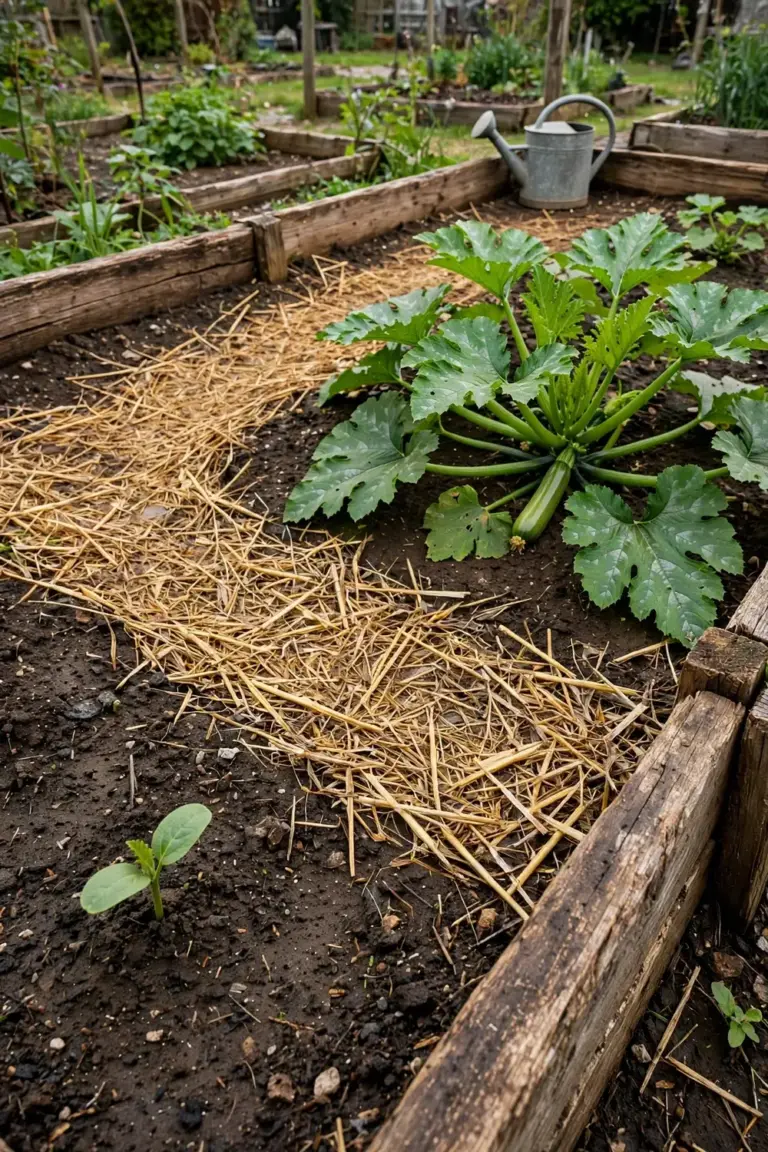
Zucchinis are thirsty plants, according to Ultimate Backyard’s Australian planting guide. Dry roots cause bitter fruit or stunted growth, so mulch holds the moisture in. Regular mulching with straw, pea-straw, or sugarcane mulch retains moisture and suppresses weeds, according to the same guide. Lay mulch 5 cm thick around the plant but keep it clear of the stem by a hand width, because mulch piled against the stem holds moisture where rot starts.
Watch the leaves for the watering signal. Leaves that wilt in the afternoon heat and recover by morning want water, while leaves that stay wilted at dawn want more water than they got. Leaves that yellow from the base up while the soil feels wet point to overwatering, and overwatered roots rot in still, wet soil. Let the top few centimeters dry between waterings and the roots breathe again. A plant that wilts every afternoon in a pot wants a bigger pot or a saucer that holds water through the day, so move it to a larger pot rather than watering twice a day. The roots spread into the fresh mix and the plant steadies.
7. Feed Zucchini Through the Fruiting Season
Feed zucchini like the heavy feeder it is. Bed preparation does the first half of the work: compost and aged manure dug in a week before planting carry the plant through its first month. The second half comes from feeding while the plant fruits, because a plant that sets fruit every 2 days burns through soil nutrients fast.
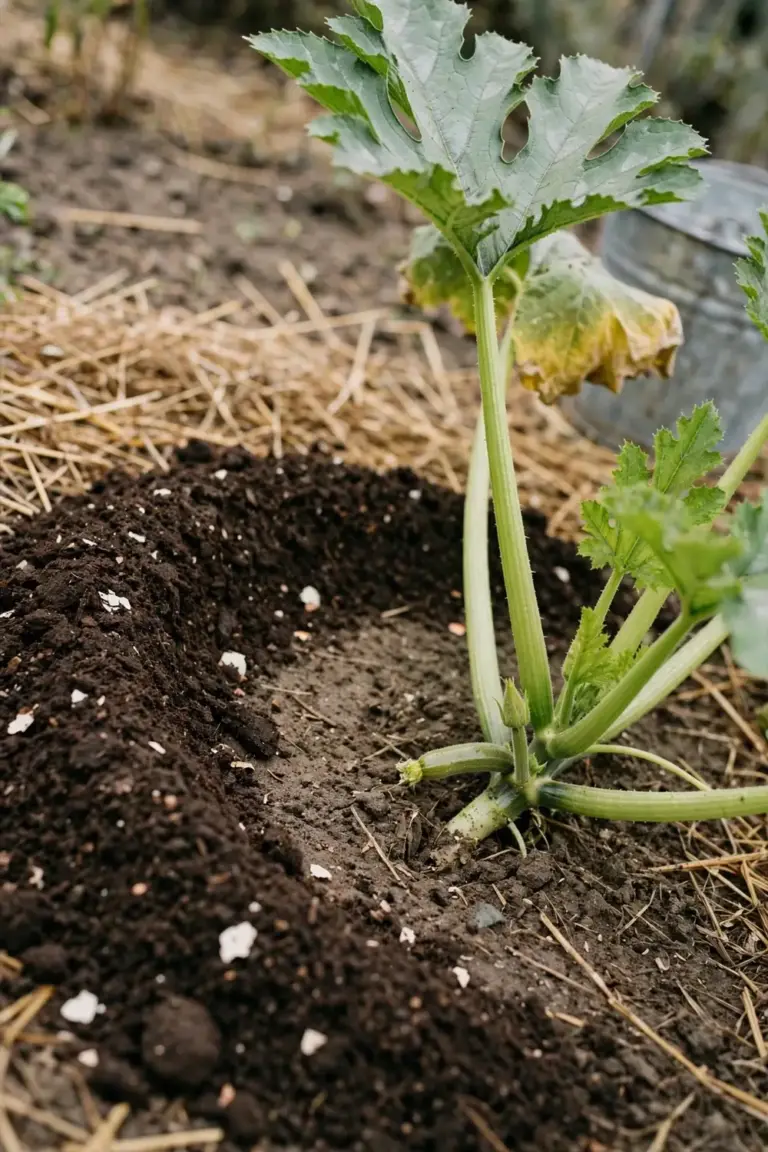
Side-dress with compost once the first fruit sets. Lay a 3 cm band of mature compost around the plant, clear of the stem. Water it in. Repeat the side-dress midway through the season when the leaves pale. Compost feeds slowly and improves the soil as it breaks down. A home compost heap supplies it free. Compost bin options for your garden cover the bin styles that suit a small yard.
Skip fresh manure. Fresh manure burns roots and carries weed seed. Use aged manure or finished compost only. Skip fertilizer against the stem. Granules sitting on the stem burn the tissue. Spread feed in a ring around the drip line, where the roots feed. Water after feeding. Water carries the nutrients down to the roots and off the leaves. A hungry plant shows it in the leaves. Pale green leaves and slow new growth mean the plant wants food. Dark green leaves and steady new flowers mean the feeding rate suits the plant. Watch the leaves and adjust.
8. Grow Zucchini in a 40 to 50 cm Pot
Grow zucchini in a pot when the garden bed runs out of room. One plant fills a large pot by midsummer. Pick a pot 40 to 50 cm across with drainage holes in the base, according to Seasol’s zucchini growing guide. One plant goes in each pot. Two plants in one pot fight for water and food, and both lose.
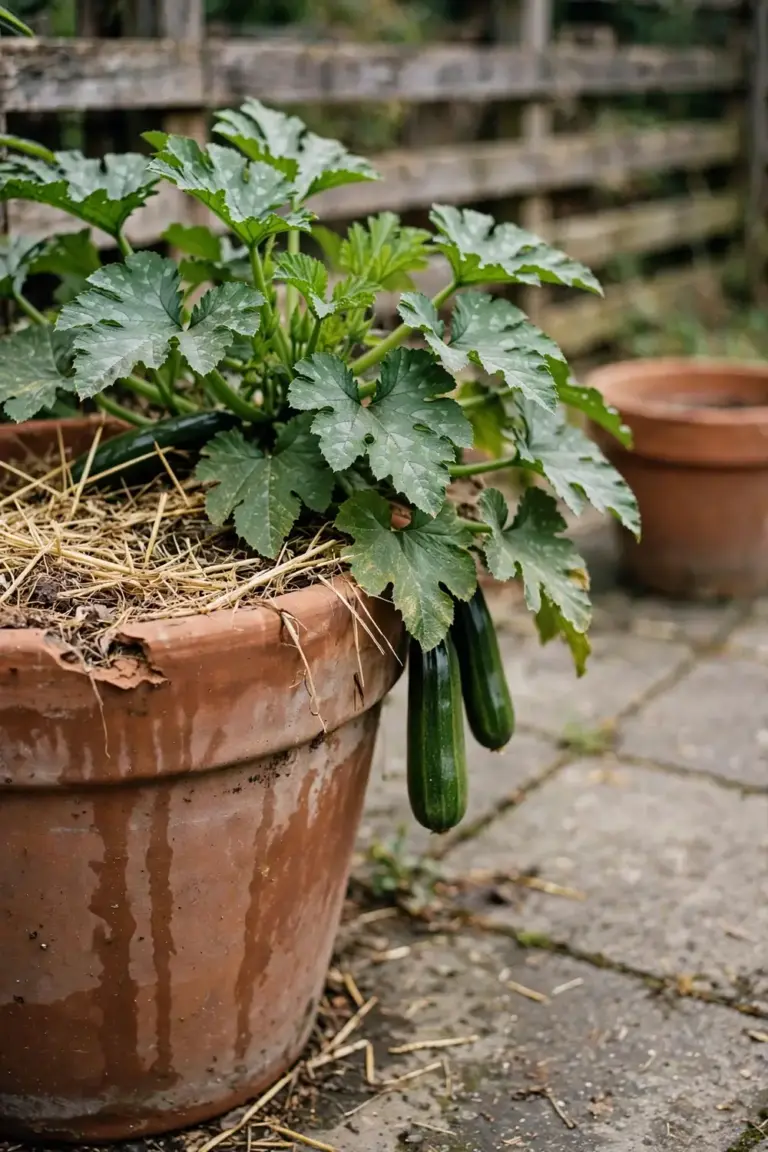
Fill the pot with quality potting mix, not garden soil. Garden soil compacts in a pot and drowns the roots. Potting mix drains fast and holds air around the roots. Add a slow-release organic fertilizer to the mix at planting time and set the pot where it catches full sun. A balcony that holds 6 hours of sun grows a zucchini, while a shaded courtyard does not.
Pots dry faster than beds. Check the mix daily in hot weather. Water when the top 3 cm feels dry. Water until it runs from the drainage holes. A saucer under the pot holds a little reserve, but empty it after rain, because roots sitting in a full saucer rot within days. Feed a potted zucchini more often than a bed plant. The small soil volume runs out of nutrients fast. A liquid feed through fruiting keeps the plant producing.
9. Hand Pollinate Zucchini When Bees Are Scarce
Hand pollinate zucchini when fruit starts and then rots at the tip, because that rot signals poor pollination. The plant sets a tiny fruit behind each female flower, and without pollen the fruit yellows, softens, and drops. Bees do this work in most gardens. A balcony garden or a week of cold rain leaves the flowers unvisited. A human hand fixes it fast.
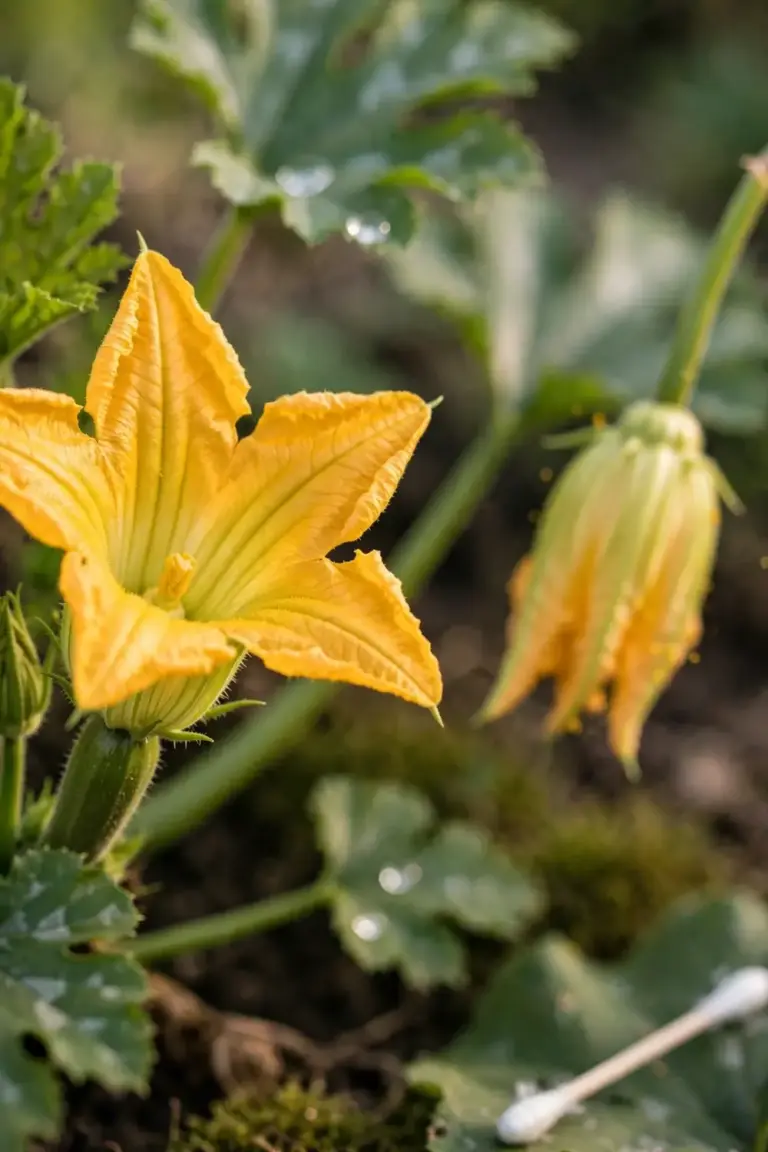
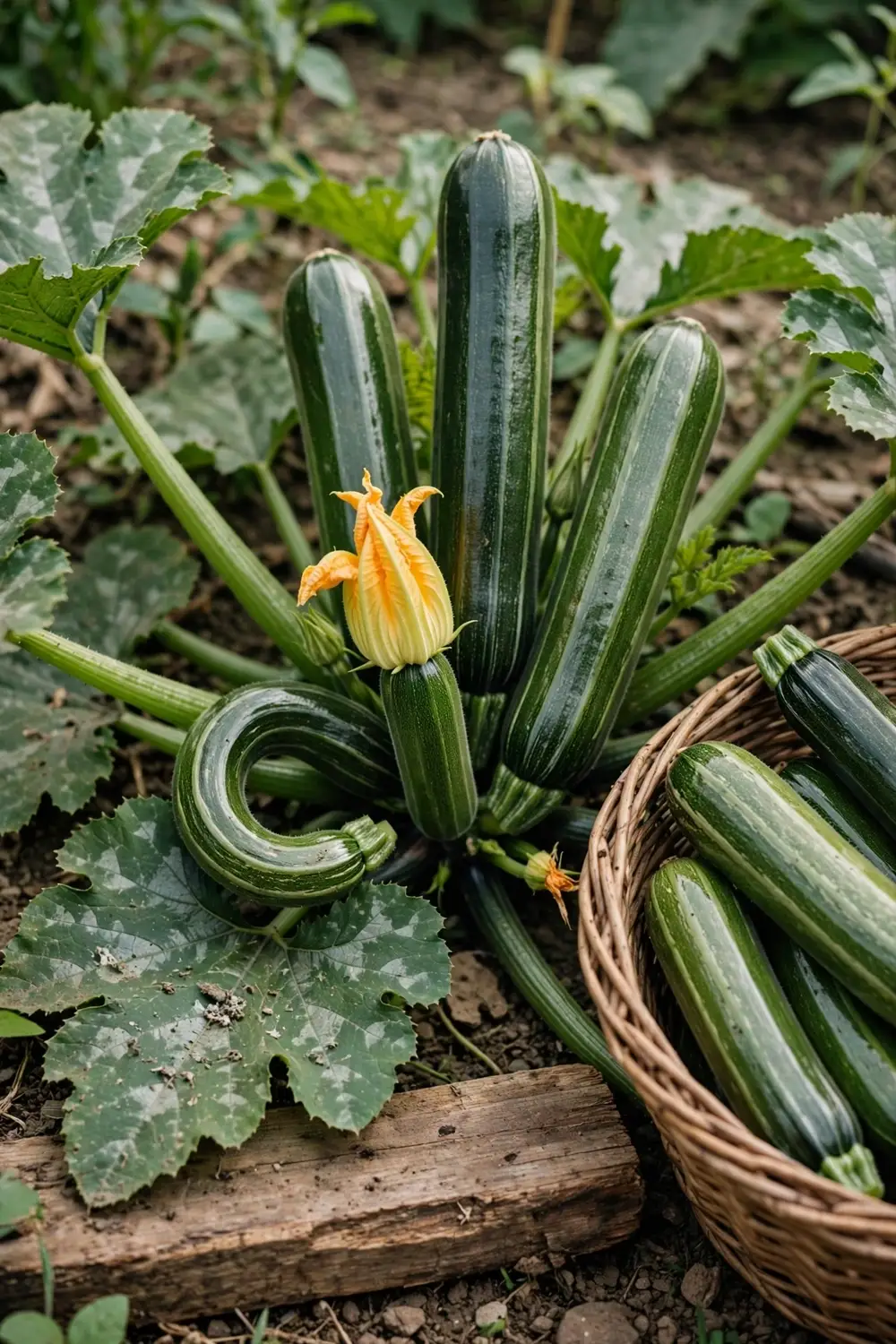
Learn the 2 flower types. Male flowers grow on long, thin stems. Female flowers grow on short stems with a small swelling behind the petals. That swelling is the ovary, the future fruit, according to University of Georgia Extension’s squash guide. Male flowers open first. Female flowers follow as the weather warms and the plant grows, according to Gardenate’s Australian zucchini notes. A plant covered in male flowers alone is not broken. It is warming up.
Pick a male flower. Peel the petals back. Brush the pollen onto the center of an open female flower. A cotton swab carries pollen from the male flower to the stigma in the center of the female flower, according to the University of Georgia guide. Gardenate describes the same move with the flower itself: pick a male flower with a straight stem and gently brush pollen inside female flowers. Work in the morning while the flowers stand open. Flowers close by afternoon. Pollinate each female flower once. One visit sets the fruit.
10. Pick Zucchini at 15 cm, Every Few Days
Pick zucchini at about 15 cm long. That size tastes best, because the skin stays tender and the seeds stay small. Ultimate Backyard’s Australian planting guide puts the harvest size at around 15 cm and notes that fruit tastes better before it grows large and develops tough skin and seeds. A fruit left too long turns into a marrow. The skin toughens. The seeds swell. The plant slows down and sets fewer new fruit.
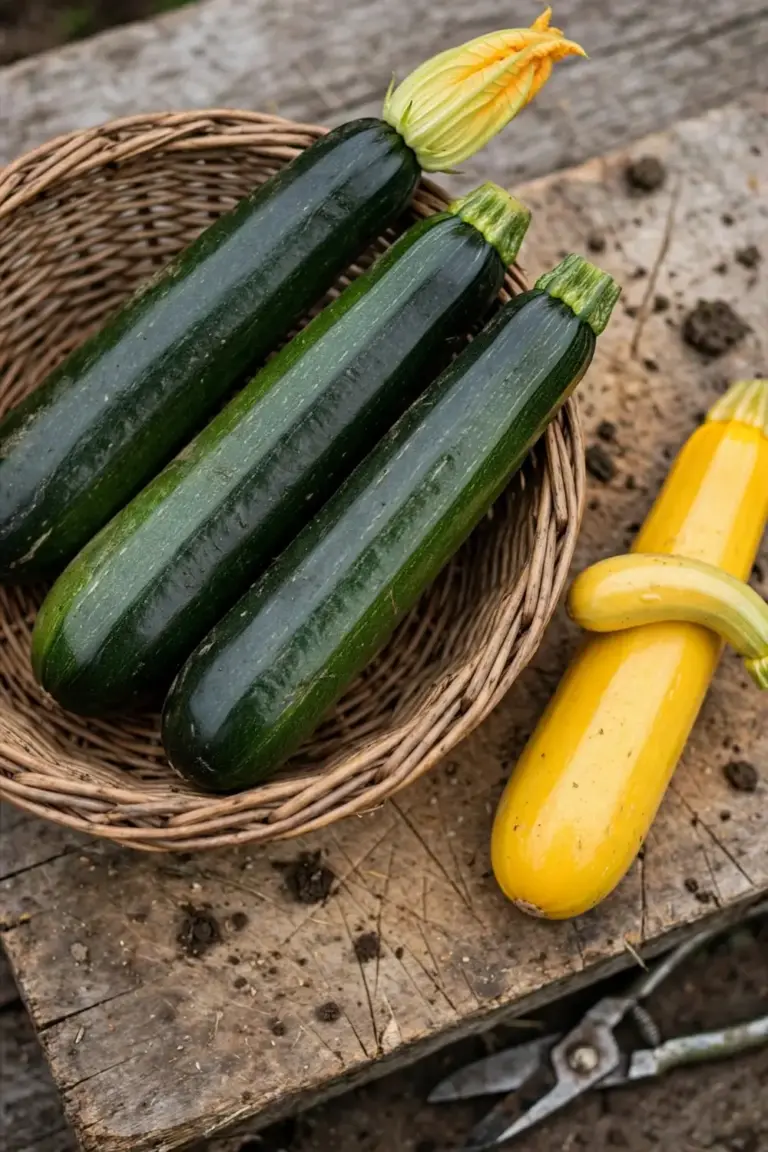
Check the plant every few days in peak season. Zucchini grows fast in warm weather. A fruit left too long turns into a marrow. Cut the fruit with a knife or secateurs and leave a short piece of stem on the fruit. Twisting tears the plant, while cutting keeps the wound clean. Wear gloves. The leaves and stems grow sharp glassy spines, according to Gardenate’s Australian zucchini notes. Gloves stop the spines from scratching your forearms.
Harvest runs 6 to 9 weeks from sowing, according to the same Gardenate notes. Ultimate Backyard’s Australian planting guide gives 50 to 60 days to fruit. The 2 figures agree. Picking keeps the plant producing. Gardenate puts it plainly: cut the fruit often to keep producing. Leave a fruit on the plant and the plant shifts energy into seeds instead of new flowers. Pick often and the plant keeps flowering.
11. Keep Zucchini Pests in Check Without Spraying First
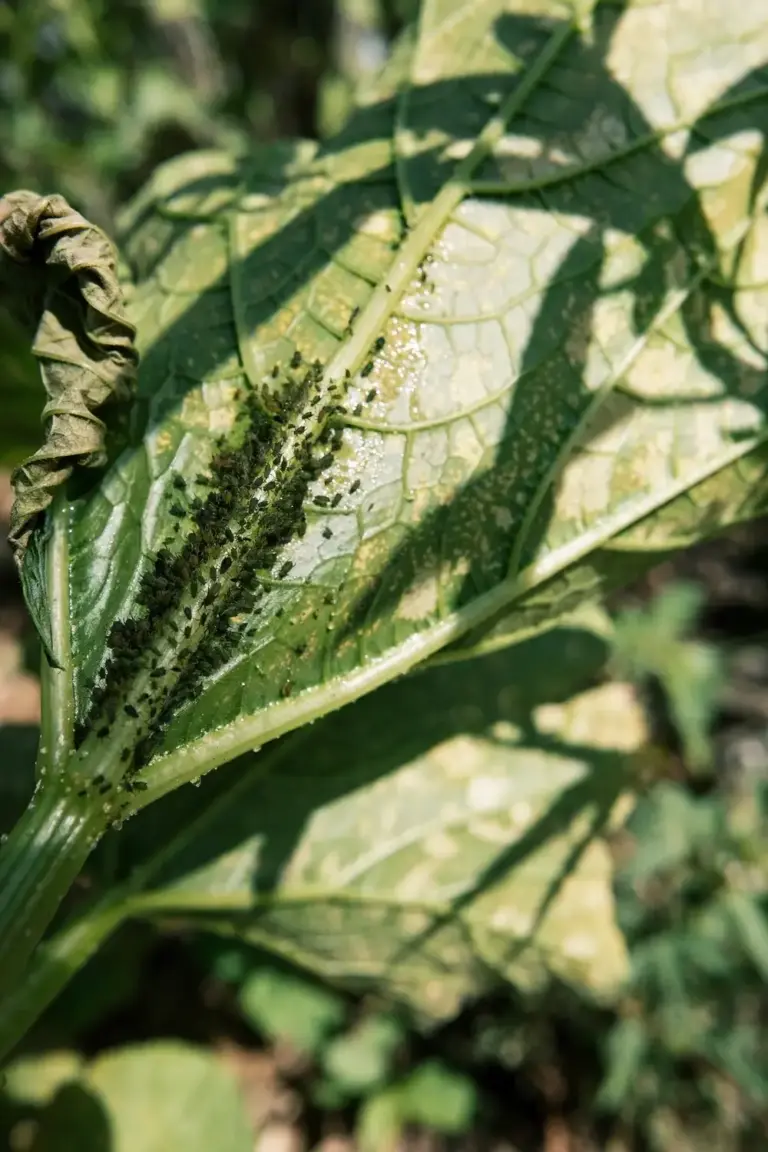
Check the undersides of the leaves every week. Aphids cluster there. They suck sap and curl young leaves. A strong jet of water knocks a small colony off. Repeat the jet a few days later to catch the next hatch. Ladybirds and lacewings eat aphids. Spraying kills the predators along with the pest. Hold the spray until the water jet fails twice.
Pumpkin beetle chews holes in leaves and flowers. Hand-pick the beetles in the morning while they move slowly and drop them into a bucket of soapy water. Slugs and snails chew seedlings at night, so a torch after dark finds them on the stems. Pick them off and move them far from the bed. A copper ring around a pot deters slugs from climbing in.
Row covers protect young plants from insect pests during the seedling stage, according to University of Georgia Extension’s squash guide. Drape fine mesh over hoops above the seedlings. Remove the covers when the plants begin to flower. Bees need access to the flowers. A cover left on through flowering blocks pollination and the fruit fails. Plant flowers near the bed to draw bees in. Nasturtiums and marigolds pull double duty. They attract pollinators and they sit well beside zucchini. The site’s organic pest control guide covers identification and natural control across vegetables.
12. Fix 5 Common Zucchini Problems
Zucchini tells you what is wrong. Read the symptom, then act on the cause. The 5 problems below cover most failures in Australian gardens.
No Fruit Sets at All
No fruit sets when pollination fails. The plant flowers, the flowers drop, and no swelling appears behind them. Cold rain keeps bees inside, and a balcony garden has few bees at all. Hand pollinate as described in the pollination section. Open 1 male flower and brush pollen onto each open female flower. New fruit should swell within days.
Fruit Rots at the Tip
Fruit rots at the tip when pollination stays incomplete. The fruit starts, then yellows from the blossom end and softens. Partial pollination causes uneven fruit growth. Hand pollinate the next flowers before they close. Pick off the rotted fruit, because rotted fruit left on the plant invites mold. The plant recovers fast once pollination improves.
Leaves Turn Yellow
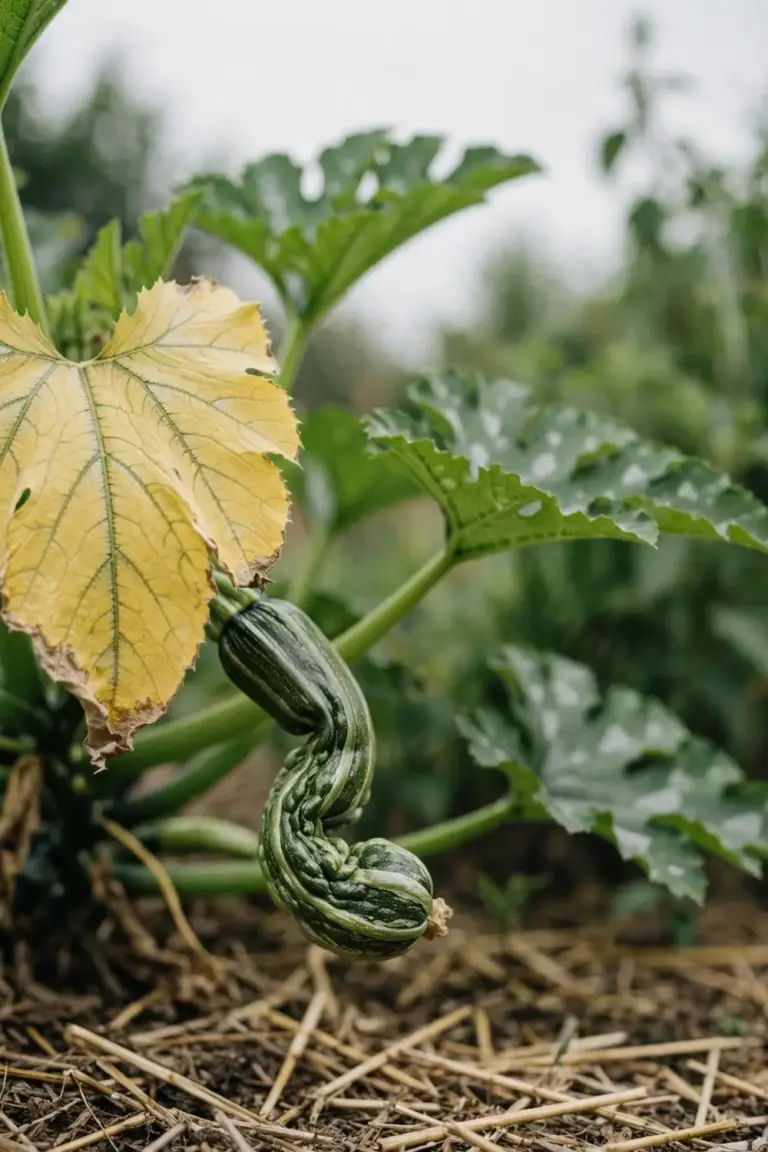
Leaves turn yellow for several reasons. Old lower leaves yellow first as the plant ages. That yellowing is normal. Young leaves yellow when the plant lacks food or water. Feed the plant and check soil moisture at 15 cm deep. Yellow leaves with a white powdery coating point to mildew. Read the mildew row below.
Fruit Grows Misshapen
Fruit grows misshapen when pollination stays partial. A fruit pollinated on one side swells on that side and stays thin on the other. The result looks bent or lumpy. Hand pollination fixes the next fruit. A fruit that stays misshapen is still safe to eat. Slice it and cook it. The shape changes nothing about the flavor.
| Problem | What You See | First Fix |
|---|---|---|
| Powdery mildew | White powder coats the leaves | Space plants 50 to 90 cm apart, water at the base, and keep leaves dry. Strip the worst leaves and bin them. Do not compost mildewed leaves. |
Frequently Asked Questions
Sow zucchini after your last frost in cool and temperate zones, from September to October. Sub-tropical gardeners sow from August to January. Tropical gardeners sow from April to September. Arid gardeners sow in September. Soil temperature decides the exact day. Sow when soil sits above 15 °C and grows fastest between 21 °C and 35 °C.
Yes. One zucchini plant grows well in a pot 40 to 50 cm across with drainage holes. Fill the pot with quality potting mix. Set it in full sun. Water daily in hot weather and feed with liquid fertilizer through fruiting. Pots dry faster than beds, so check the mix each morning in summer.
Male flowers fall off by design. They open, shed pollen, and drop, while female flowers fall off when pollination fails. Cold rain, few bees, or a balcony with no insect traffic all cause it. Hand pollinate each open female flower in the morning, and fruit should swell within days once pollen reaches the stigma.
Prevention carries the weight. Space plants 50 to 90 cm apart for airflow. Water at the base and keep leaves dry. Mulch the soil to stop splash. Strip badly coated leaves and bin them instead of composting them. Yellow varieties resist mold damage better in humid areas. Treatment beyond prevention belongs to a dedicated diagnosis guide.
Yes, with space between them. Cucumber is a different crop with its own needs. Both belong to the cucurbit family, so they share pests and diseases. Keep the 2 crops in separate beds and rotate cucurbits to fresh ground each year. Do not let cucumber vines tangle with zucchini leaves. Tangled leaves stay damp and invite mildew.
Start With 1 Plant This Weekend
Start with 1 plant this weekend. Sow 2 seeds in warm soil. Thin to the stronger seedling. Water at the base. Pick the first fruit at 15 cm. One plant teaches the whole cycle. Next season, sow a second plant a few weeks after the first and stretch the harvest across summer.