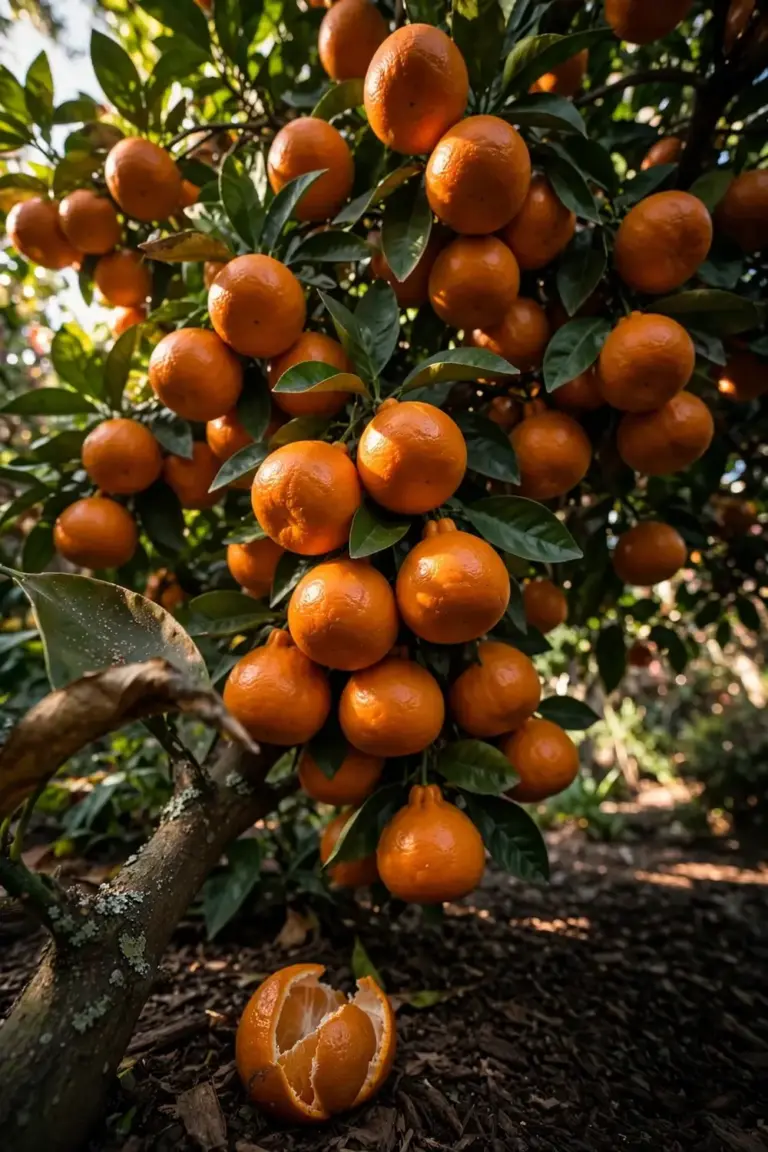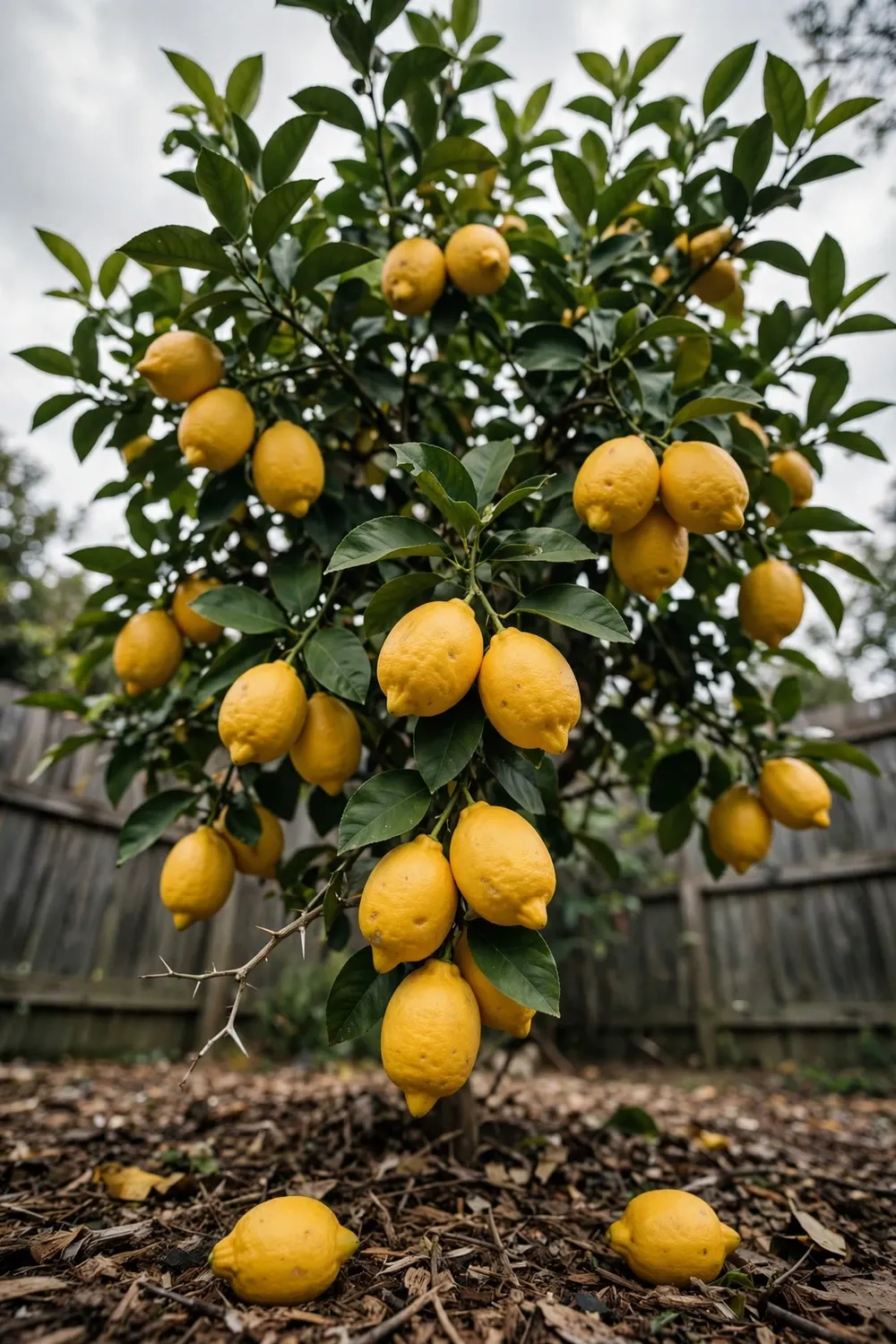

Prune a lemon tree in Australia once a year, after harvest and before the spring flush. The main cut falls in a 4 to 8 week window set by frost risk in your climate. Dead wood comes off any time of year. I have learned that the cut I skip in spring is the crossing branch that wounds the tree by autumn.
A lemon tree fruits on new growth. Pruning opens the canopy to light and air, and the tree answers with fresh fruiting wood. A tree left unpruned still fruits, but the canopy thickens, the center shades out, and fruit shrinks toward the outside of the tree. A pruned tree also fruits where you can reach it, which matters more than most gardeners admit until harvest day.
The cut list below follows the order a working pruner uses: dead wood, suckers, crossing branches, skirt, shape, height.
Prune a Lemon Tree in Australia After Harvest, Before the Spring Flush
Prune after the main harvest, before strong new growth starts. Flower buds for the next crop form soon after harvest, so a late cut removes them. An early cut in winter pushes soft shoots that frost burns.
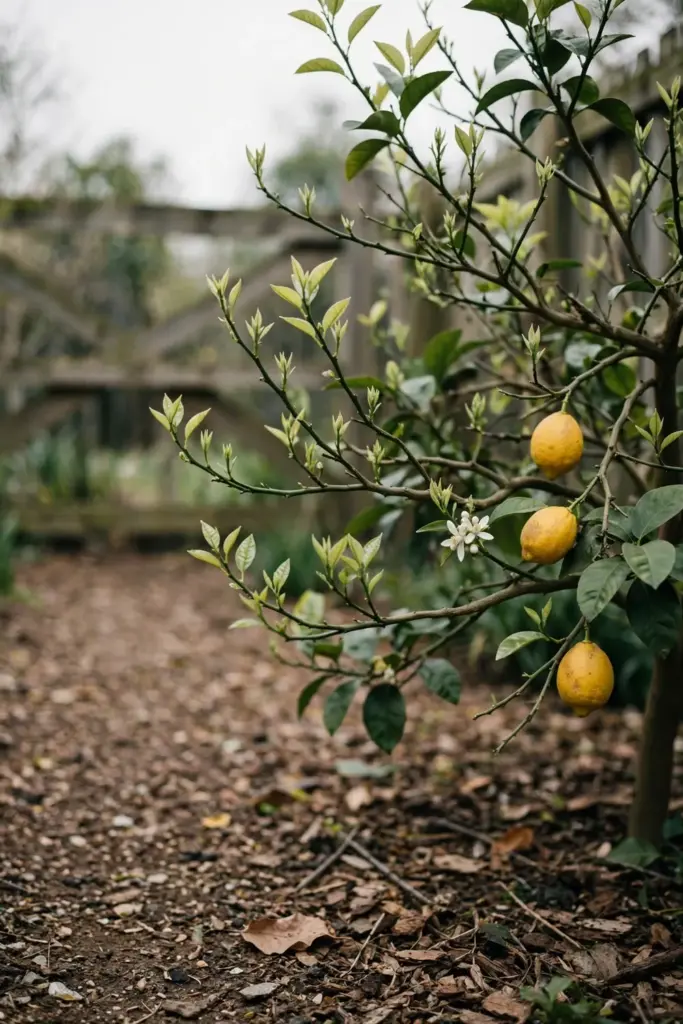
The right weeks depend on climate. Warmer coastal gardens prune first. Frost-prone inland gardens wait until the last frost has passed. The table below gives the windows.
| Window | When | Why |
|---|---|---|
| Warmer coastal gardens | August to September | The winter harvest ends, frost risk stays low, and the tree has time to settle before the spring flush. |
| Frost-prone inland gardens | October to November | Pruning waits until after the last frost, so fresh cuts and new shoots escape frost burn. |
| Dead, diseased, or damaged wood | Any time | Dead wood never waits for the calendar. Cut it out as soon as you see it. |
| Meyer lemons | Once a year, in the lightest fruiting window | Meyer lemons carry fruit through much of the year. Pick the window with the fewest fruit on the tree and prune once. |
| Avoid: high summer | December to March | Heavy pruning in heat exposes bark to sunburn and opens cuts while citrus borer activity peaks. |
| Avoid: early winter | June to July | A cut now pushes soft growth that the first hard frost burns back. |
Summer pruning has one narrow exception. A single dead branch or a broken limb comes off whenever it appears. The summer ban covers the annual heavy prune, not emergency cuts.
Watch your own tree for the signal. The main harvest ends, the last fruit leaves the branches, and the tree rests before the spring flush. That rest window is the prune window. A tree still carrying a heavy crop waits, and a tree already pushing spring growth has waited too long.
Southern Living gives the same timing rule for lemon trees in plain terms: prune after harvesting the fruit, usually in late winter to early spring, because flower buds for the next season form quickly, according to its lemon pruning guide.
Gather Sharp Tools and a Disinfectant Bucket
Sharp tools make clean cuts. Clean cuts heal fast. Blunt tools crush bark and leave ragged wounds that stay open to disease.
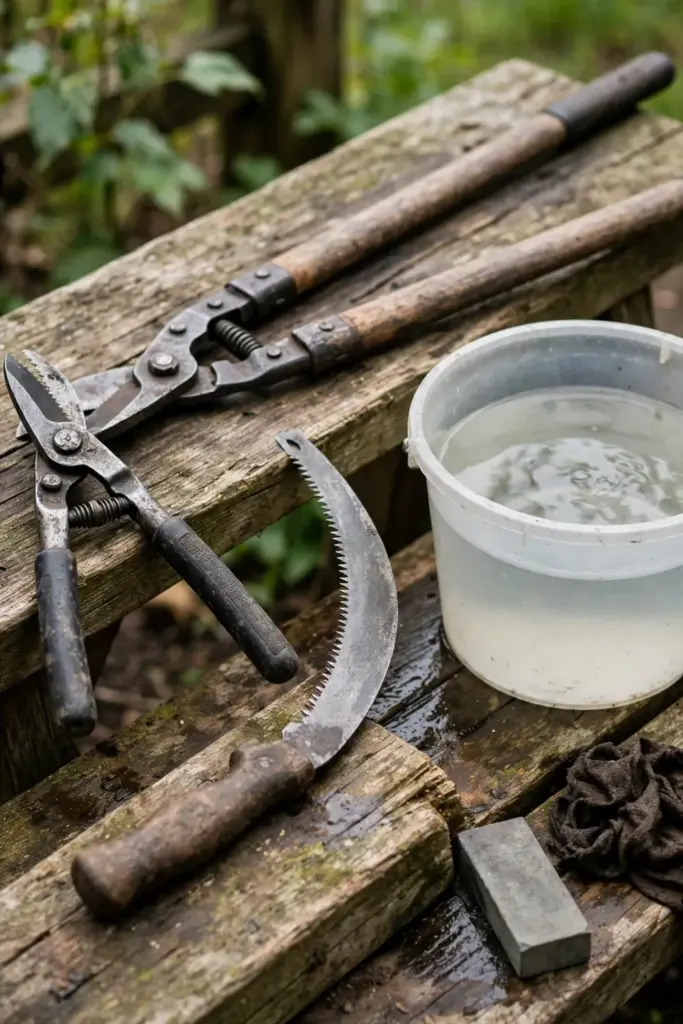
You need three tools: bypass secateurs for small branches, loppers for branches up to wrist thickness, and a curved pruning saw for heavy limbs. Bypass blades cut like scissors. Anvil blades crush the stem, so leave them in the shed. Add thick gloves. Lemon thorns bite through thin garden gloves.
Sharpen the blades before you start. A sharp edge slices cleanly, while a dull edge tears bark and leaves a ragged wound. A few passes with a sharpening stone restore a secateur blade, and a clean blade stays sharp for a full session on one tree. Oil the pivot when you finish so the blades open smoothly next time.
Set up a disinfectant bucket before the first cut. The Louisiana State University AgCenter recommends a 10 percent bleach solution, nine parts water to one part bleach, with blades soaked at least ten minutes and rinsed with clean water afterward to prevent corrosion, according to its tool sanitizing guide. Mix the solution fresh on pruning day. Old bleach solution loses strength.
Disinfect after diseased wood and between trees. Cut out a gall wasp swelling or a diseased branch, then dip the blades before the next cut. A dirty blade carries pathogens from one cut to the next. Rinse the bleach off the blades at the end of the session and dry them. Bleach left on steel corrodes it.
Cut Dead, Diseased, and Damaged Wood First
Dead wood goes first because it sets the shape of every cut that follows. A dead branch blocks light, holds disease, and hides the live structure underneath. Remove it and the tree you need to shape appears.
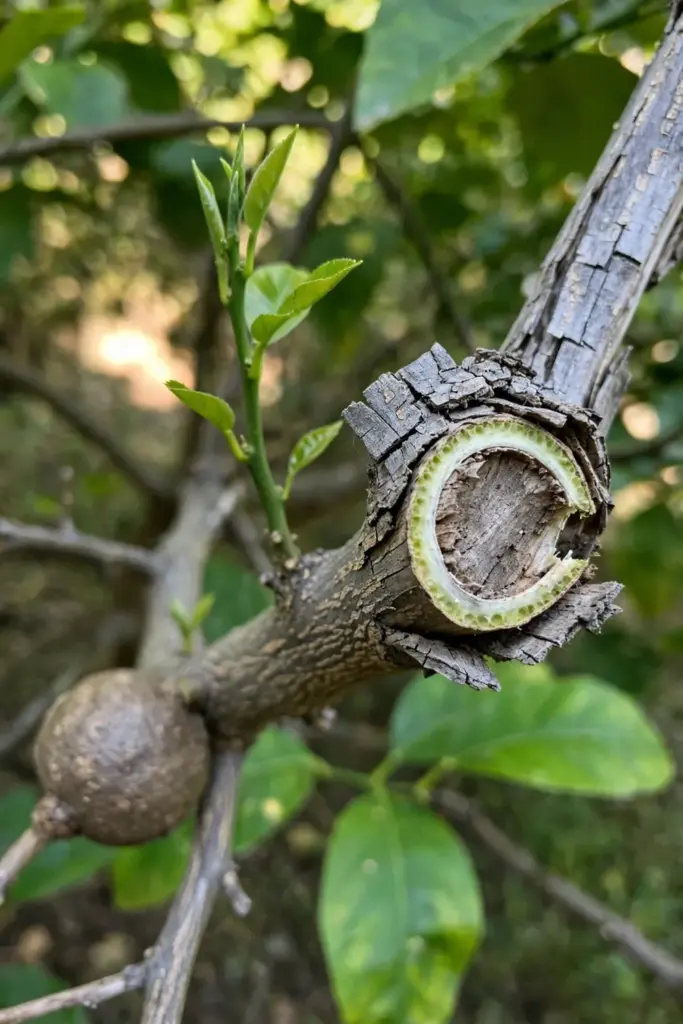
Work branch by branch, following each dead branch back to live wood and cutting where green tissue starts. If the boundary is unclear, scratch the bark with a thumbnail. Green cambium means live wood, brown dry tissue means dead wood, so cut back to the green.
Diseased wood shows cankers, oozing, or bark that peels away from the branch. Cut well back into healthy wood, beyond the visible damage, because infection runs ahead of the stain. Bag the cuttings with the gall wasp wood. Never compost diseased prunings.
Cut out swellings from citrus gall wasp and bag them. The wasp larvae live inside the swelling. Bin the bag with household waste. Never drop gall wasp wood on the soil under the tree. The larvae survive in cut wood left on the ground.
Check the remaining canopy for pest colonies while you work. Scale insects and mealybug gather on stressed growth and fresh shoots. If colonies appear after pruning, treat them with the methods in the site’s organic pest control guide. Pruning alone leaves the pest problem in place. It exposes the colonies so treatment reaches them.
Pull Suckers and Water Shoots at the Base
Suckers grow below the graft union. They belong to the rootstock, not to the lemon variety on top. Rootstock growth never produces the lemons you planted the tree for. It steals water and nutrients from the fruiting canopy. Remove every sucker at its base, flush with the trunk, leaving no stub.
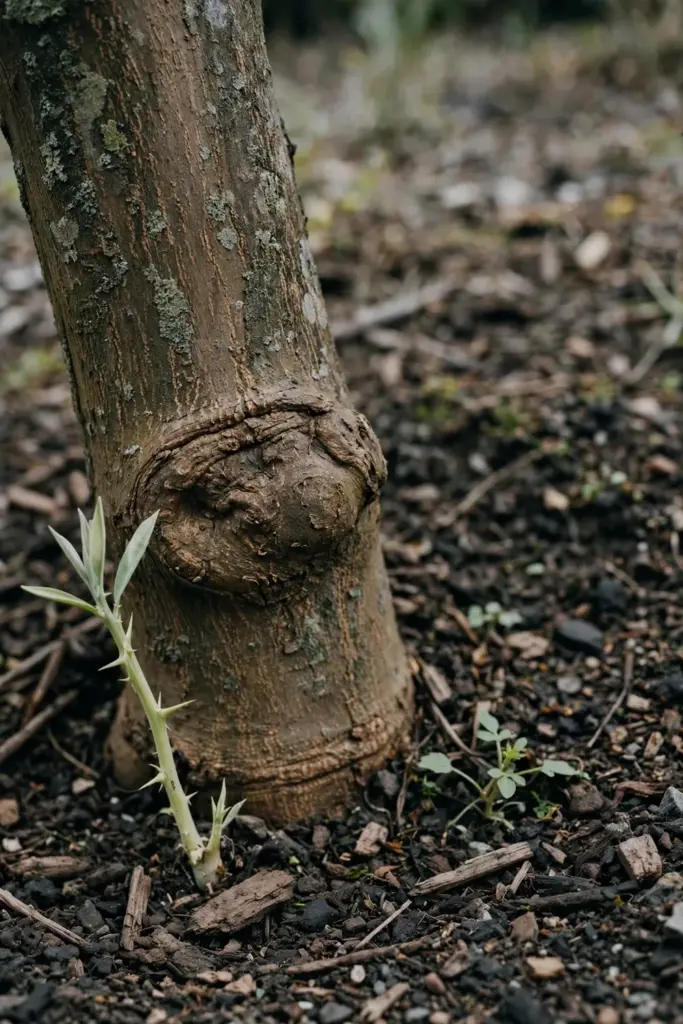
Find the graft union first. It sits as a knuckle or scar low on the trunk. Any shoot rising below that line is a sucker. Any shoot rising above it belongs to the lemon variety.
Water shoots grow straight up inside the canopy, vigorous, upright, and pale, and they rarely fruit. They shade the fruiting wood around them while pulling energy into leafy growth. Remove them at their base, the same way as suckers.
Keep one water shoot only when it fills a real gap in the canopy. A bare patch in the dome leaves bark exposed to sunburn. One well-placed water shoot fills the gap and becomes fruiting wood within a season. Cut the rest.
Remove Crossing and Rubbing Branches
Crossing branches rub. Rubbing wears through bark. The wound lets disease into the tree and never fully heals while the two branches keep touching. One of the pair goes.
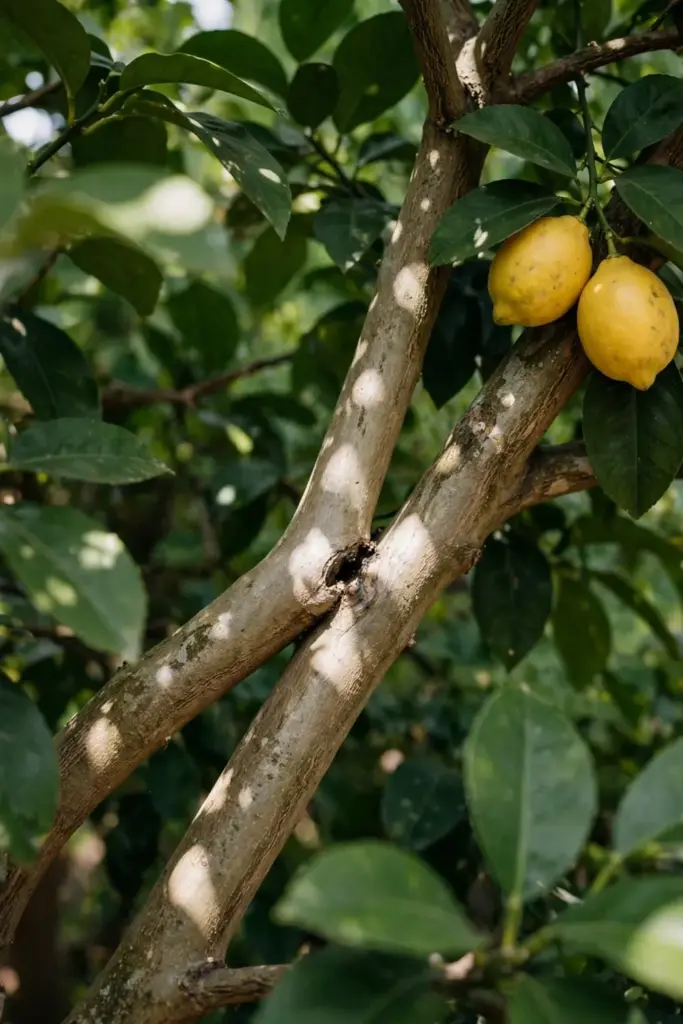
Pick the weaker branch. The weaker branch grows at a narrow angle, carries fewer fruiting shoots, or leans into the center of the tree. Cut it back to its origin, just outside the branch collar. The collar is the swollen ring where the branch meets its parent limb. A cut outside the collar heals fastest.
The branch collar tells you where to cut. Find the swollen ring where the branch meets its parent limb. Cut just outside that ring and the tree seals the wound from the collar outward. A cut flush with the trunk removes collar tissue and heals slowly, while a long stub rots from the tip inward.
Step back after each pair. A lemon tree opens up faster than most gardeners expect. Three or four crossing cuts can change the light inside the canopy. Stop when light reaches the center of the tree. More cutting past that point costs fruiting wood for no gain.
Skirt the Bottom and Open the Center
Skirting clears the lowest growth so no branch or fruit touches the soil, because fruit on the ground rots and low branches catch fertilizer, herbicide, and mud splash. Pests climb from soil to canopy along those low branches. Clear them and the tree loses a whole highway for trouble.
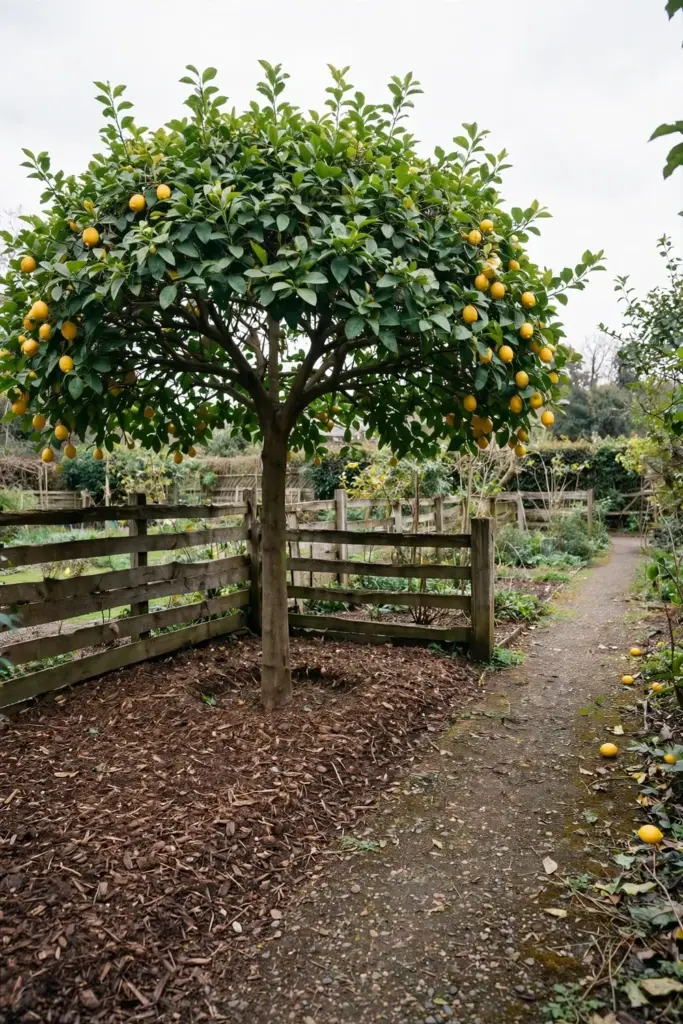
Cut the lowest branches back to their origin and leave a clear gap between the lowest foliage and the soil. That gap lets air move under the canopy and keeps the trunk dry after rain, and a dry trunk resists collar rot.
Sunlight on the lower branches decides fruit quality across the whole tree. The lowest fruit ripens first when light reaches it, and shaded lower fruit stays green and sour. A dome with an open center puts light on every branch, top to bottom.
Open the center next. Remove inward-growing shoots that fill the middle of the tree. Light must reach the inner fruiting wood or the center of the tree stops fruiting. The goal is a dome: bottom branches wider than the top, with light reaching every fruiting shoot. The dome shape follows the same open-center logic as the site’s spring pruning guide.
In hot climates, leave some low foliage on the south side of the tree. A fully skirted tree in a heatwave exposes the trunk to direct sun, and a little shade on the trunk side matters more than a tidy skirt line. Balance the gap against the sun.
Cut Back Height Without Topping the Tree
Height control keeps the harvest within reach. A lemon tree left alone grows past comfortable picking height within a few seasons. Ladders and tall trees mix badly. Prune for a height you can harvest from a stable step platform.
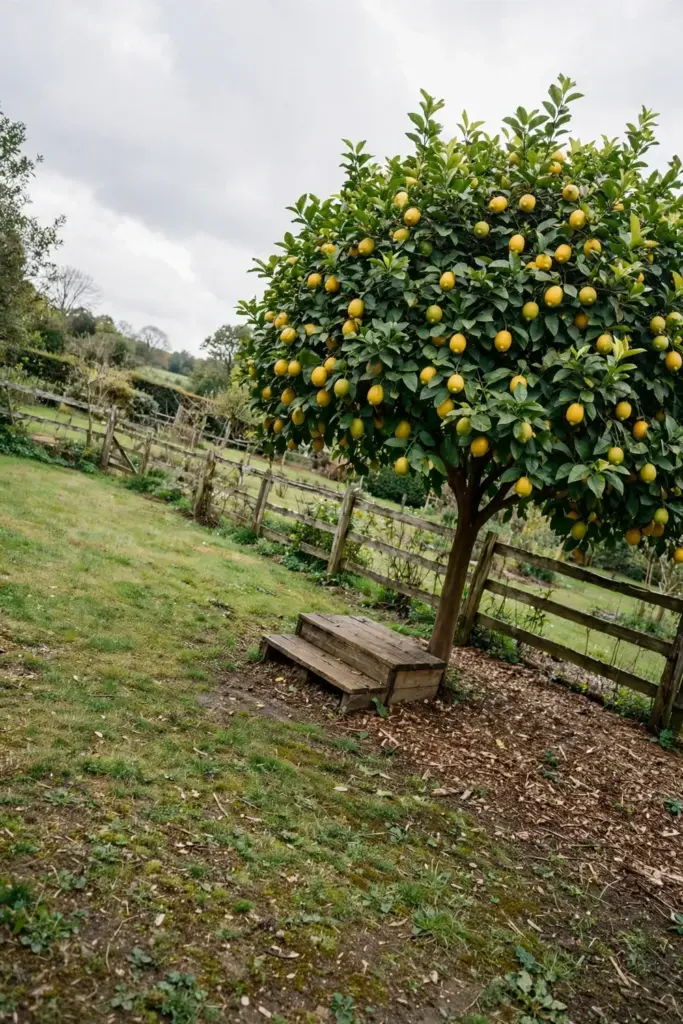
Reduce long branches to an outward-facing lateral. The lateral is a side branch strong enough to take over as the new leader. Cut just above it. The tree redirects growth outward instead of upward, and the dome keeps its shape.
Measure height against your reach, not against the fence. A tree you can harvest without a ladder gets picked clean. Fruit left high on the tree rots, drops, and draws fruit fly. A tree at picking height gives a full harvest with both feet on the ground.
Never shear the top flat. Topping cuts every branch at one height and the tree answers with a thicket of upright water shoots. The thicket shades the fruiting wood, holds moisture, and breeds disease. A topped tree looks tidy for a month and then grows into a denser mess than before.
Spread a big height reduction over two or three seasons. Cut the tallest third of the over-tall branches this year and the next group next year. The tree keeps enough leaf area to feed itself while the height comes down.
Keep the Annual Cut Under One-Third of the Canopy
Never remove more than one-third of the canopy in a single year. Heavy pruning stresses the tree, pushes a flush of leafy regrowth that does not fruit, and exposes bark to sunburn. The tree spends the season replacing leaves instead of setting fruit.
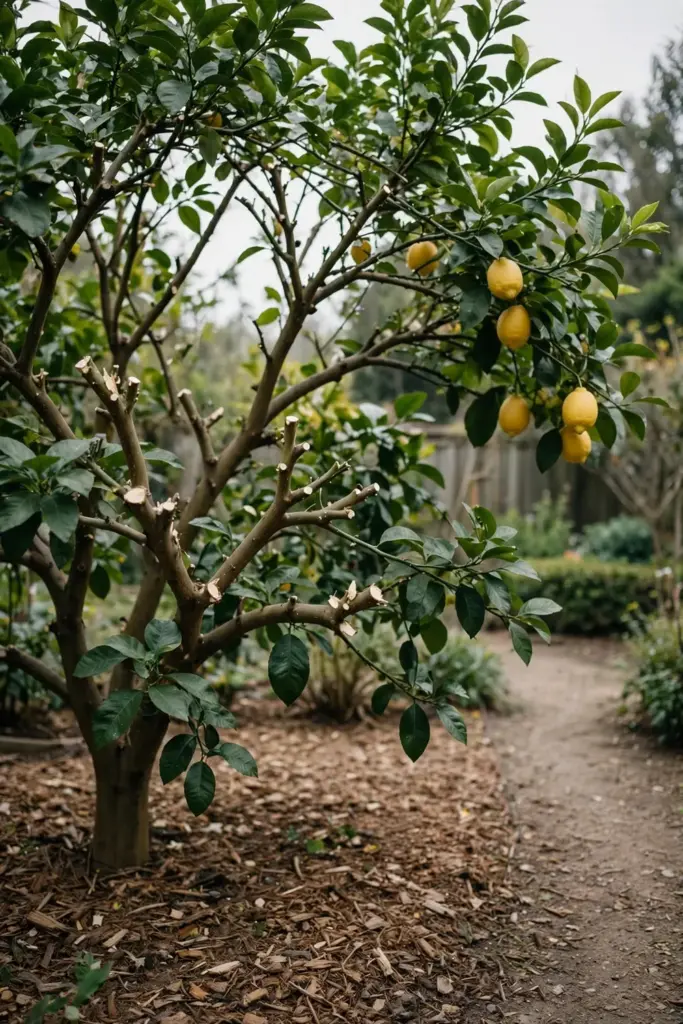
New South Wales DPI sets the working figure at 30 percent of the canopy each year, for both structural pruning of large limbs and annual maintenance pruning of the canopy, according to its hand pruning guide for citrus. A tree pruned at that rate keeps its limb structure sound and its fruiting shoots no older than four to five years.
A “haircut” all over the tree breaks this rule in the worst way. Shearing trims every branch tip a little and removes the fruiting shoots across the whole canopy. Selective thinning removes whole branches at their origin and leaves the remaining fruiting wood intact. Thin selectively. Never shear.
Count the canopy before you start. Picture the tree in thirds. Dead wood and suckers do not count toward the third, since they were not feeding the tree. Live canopy does. When the live cuts reach one-third, stop. The rest waits until next year.
Count dead wood separately from live canopy. Dead branches never fed the tree, so removing them costs nothing. Suckers and water shoots sit in the same category. The one-third limit covers live, leafy canopy only, which is why dead wood always comes off first.
Use the Three-Cut Method on Heavy Branches
A heavy branch tears bark when it falls. The tear runs down the trunk and leaves a wound far bigger than the cut. The three-cut method drops the weight before the final cut, so nothing tears.
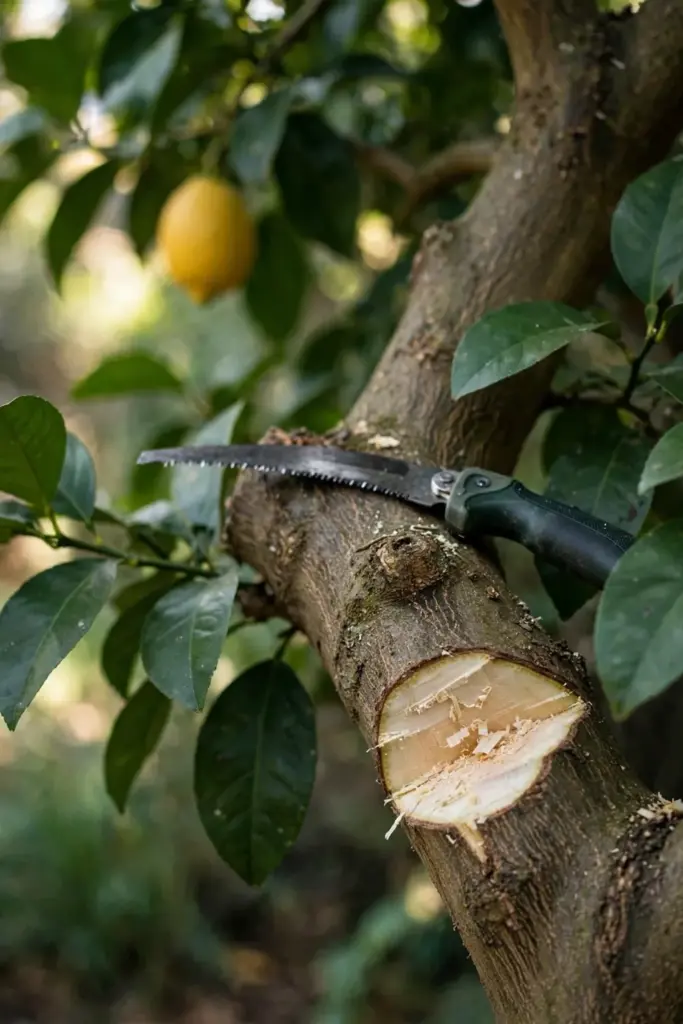
Start with the undercut. Saw upward from underneath the branch, about 15 to 30 cm out from the branch collar, through about one-third of the branch. The undercut stops bark from peeling when the branch drops.
Then make the top cut. Saw downward from the top, a few centimetres farther out than the undercut. The branch drops cleanly. The undercut catches the bark and the peel stops at the undercut line.
Finish with the stub removal. Remove the remaining stub with a final cut just outside the branch collar. The collar is the swollen ring at the base of the branch. A cut just outside it heals fastest, because the tree seals wounds from collar tissue outward.
The University of Florida IFAS tree pruning cue card states the same rule in one line: branches are removed with three cuts to prevent bark tearing, and the final cut sits back at the branch collar, according to its pruning cue card.
Skip wound sealant, since pruning paint and tar trap moisture against the cut and slow healing. The tree seals the wound itself from the collar, so a clean cut outside the collar needs no dressing. Keep the cut surface dry and let the tree do the work.
Water, Mulch, and Feed After You Finish
Water deeply after pruning. A pruned tree grows new shoots fast and those shoots need steady water. Soak the root zone slowly until the soil is moist well below the surface. A shallow sprinkle wets the mulch and leaves the roots dry.
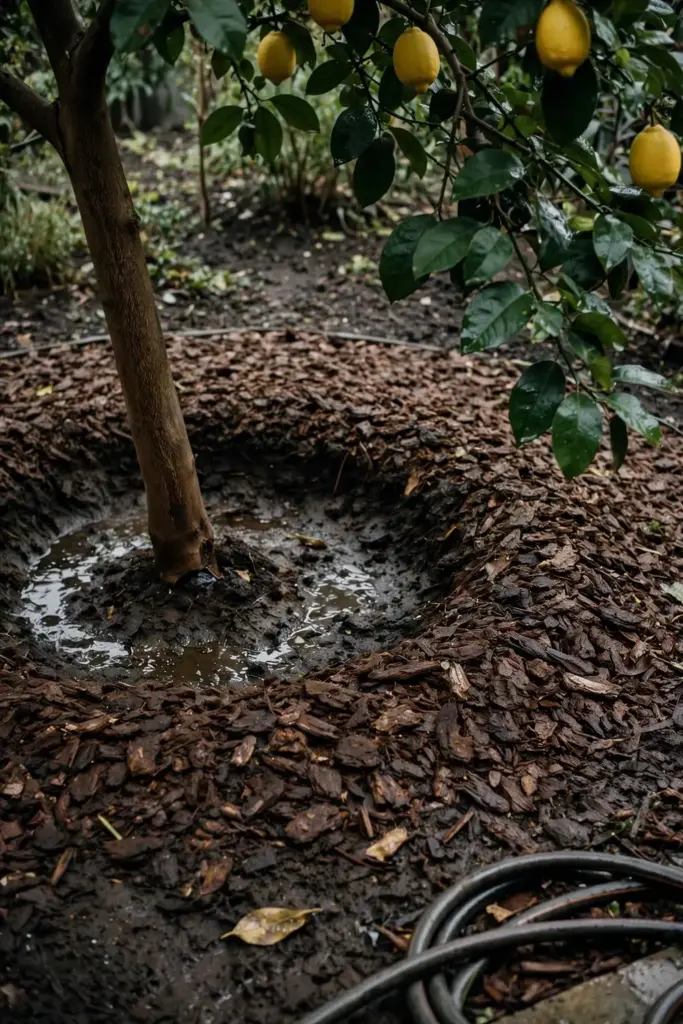
Mulch under the canopy with coarse organic mulch. Mulch holds soil moisture, cools the root zone, and keeps the soil biology active while the tree regrows. Keep the mulch clear of the trunk. Mulch piled against bark holds moisture against it and invites collar rot. A gap of one hand width around the trunk is enough.
Feed in spring after pruning, then again in early autumn, since a balanced citrus feed matches the tree’s two growth pushes. Hold the feed on a stressed tree straight after a heavy prune. Let the first flush of new growth harden, then feed. The site’s lemon growing guide covers feeding and watering through the season.
Watch the new growth. The first flush after pruning shows whether the cuts were right. Strong outward shoots mean the tree is filling the dome. A thicket of upright water shoots means the cut went too hard. Thin the thicket lightly once the shoots harden. Leave the outward growth alone.
Expect the first flush within weeks in warm weather. The flush shows pale green shoots along the cut branches. Leave them. They harden within a month and carry next season’s fruit. A second, lighter flush follows in summer on a healthy tree.
Thin heavy fruit sets so branches do not break, since a pruned tree sometimes sets a heavy crop on fewer branches. Remove the smallest fruit in each cluster while the fruit is still young. The remaining fruit grows larger and the branch stays intact through wind and rain.
Soil health carries the recovery. A tree pruned on tired soil regrows slowly. The site’s soil health guide covers the soil biology that turns mulch and feed into growth the roots can use.
Train Young Trees, Renovate Old Trees, Lighten Potted Trees
Young trees need shaping, not fruit. Training starts in the first two seasons. Pick three or four well-spaced scaffold branches with wide angles. Remove the rest. A young tree with a strong framework carries heavy crops for decades. A young tree left to itself grows a tangle that takes years to fix.
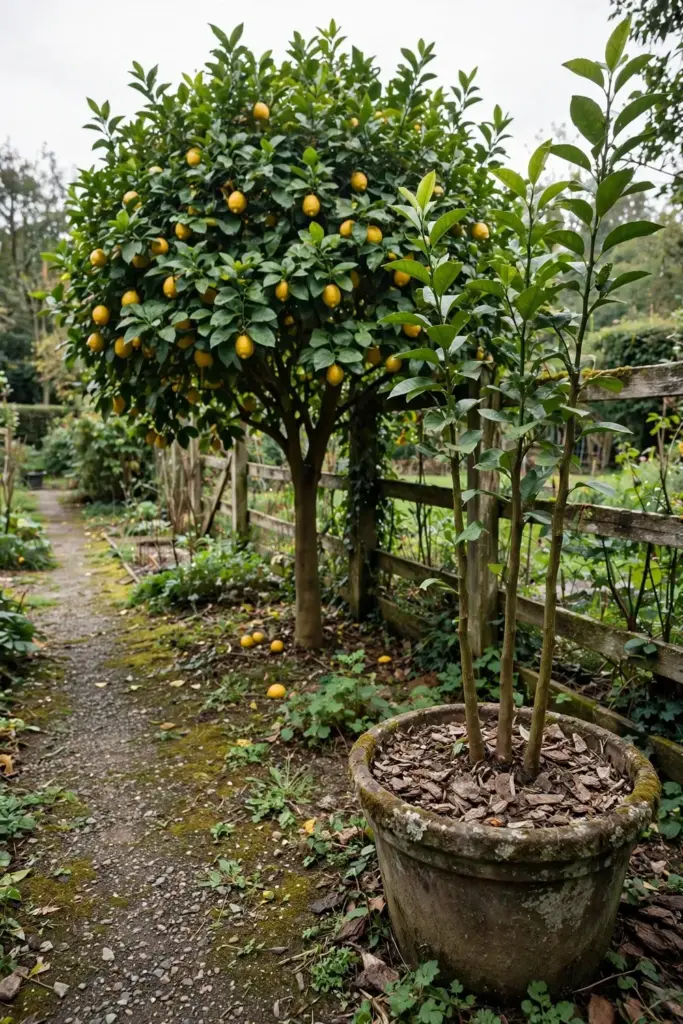
Space the scaffold branches evenly around the trunk. Three branches set evenly apart form a stable tripod, and a fourth fills the remaining gap on a vigorous tree. Wide angles hold heavy crops without splitting. Narrow angles split under load, so cut out any branch that rises steeply against the trunk.
Let a young tree fruit lightly in its second season, stripping most of the early fruit and leaving a few. Fruit drags energy away from framework growth, so a tree that fruits hard in year one stays small, while a tree shaped first fruits bigger later.
Renovate an old tree over several seasons. A tree unpruned for years carries dead wood, crossing branches, and a dense center. Cut the dead wood in year one. Remove the worst crossing branches in year two. Bring the height down in year three. Each season stays under the one-third limit and the tree keeps fruiting through the renovation.
Prune potted lemons lighter than ground trees. A potted lemon grows slower and holds less leaf area. The same five cuts apply, but take less at each pass. Check the drainage holes before pruning. A root-bound pot stresses the tree more than any pruning cut.
Feed a potted lemon more often than a ground tree, in smaller doses, because nutrients wash out of a pot with every watering. A pot that holds water rots roots faster than any pruning cut harms the canopy. When roots circle the pot, move the tree up one pot size, then prune lightly.
Skip the Five Mistakes That Cost Next Year’s Crop
Mistake one: shearing the tree into a ball. Shearing removes fruiting shoots across the whole canopy, and the tree answers with leafy regrowth and skips fruiting. Thin whole branches at their origin instead.
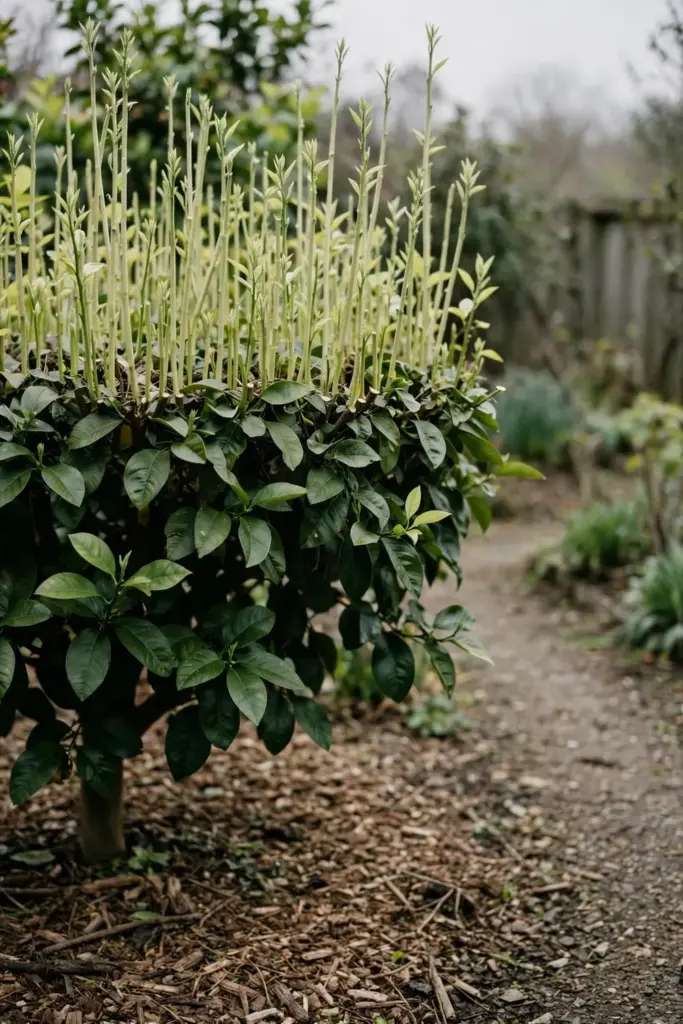
Mistake two: topping the tree flat. Topping triggers a thicket of upright water shoots that shade the fruiting wood and hold moisture after rain. The thicket breaks the dome shape, so light stops reaching the lower branches. Reduce height to outward laterals, one branch at a time, and the dome stays intact.
Mistake three: pruning hard in high summer. A heavy summer cut exposes bark to sunburn and opens wounds while borer activity peaks. Sunburned bark cracks, peels, and dies back, leaving the branch open to borers and rot. Keep summer cuts to dead or broken wood only, and leave the annual prune for the cool months.
Mistake four: pruning before the last frost. A cut pushes soft growth, and frost burns that soft growth back. Wait until the last frost has passed, then prune.
Mistake five: cutting with dirty tools. A blade that cut diseased wood a minute ago carries pathogens to the next cut. Disinfect between trees and after diseased wood. A fresh bleach solution at the same strength protects every tree in the garden.
Frequently Asked Questions
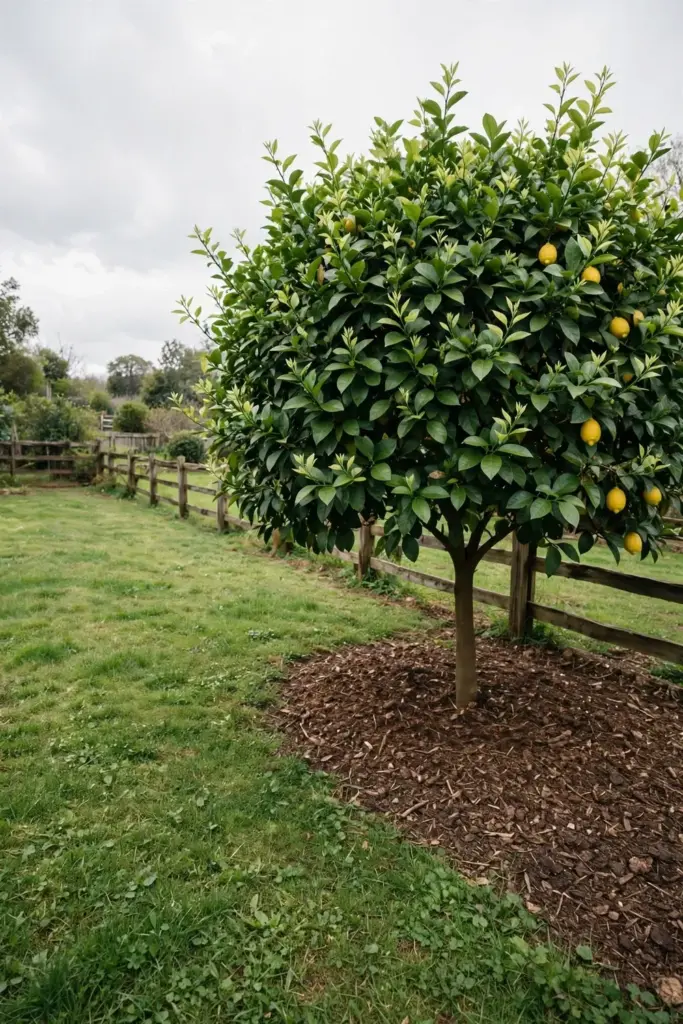
Prune once a year after the main harvest, before the spring flush. Warmer coastal gardens prune from August to September. Frost-prone inland gardens wait until October or November, after the last frost. Dead, diseased, or damaged wood comes off any time. Meyer lemons fruit through much of the year, so prune once in the lightest fruiting window.
Avoid a heavy summer prune. Summer cuts expose bark to sunburn and open wounds while borer activity peaks. A single dead or broken branch still comes off whenever it appears. The summer ban covers the annual heavy prune, not emergency cuts. If a branch breaks in a storm, cut it back cleanly the same day.
Keep the annual cut under one-third of the live canopy, and count only leafy growth toward that share. Dead wood and suckers do not count toward the third. Spread a big job over two or three seasons. Stripping the tree in one pass costs a season of fruit.
No. Skip pruning paint, tar, and wound sealant, since sealants trap moisture against the cut and slow healing. The tree seals wounds itself from the branch collar outward, so a clean cut just outside the collar needs no dressing. Keep the cut surface dry and let the collar tissue close the wound.
Heavy shearing is the usual cause. Shearing removes the fruiting shoots across the whole canopy, and the tree answers with leafy regrowth that does not fruit. A young tree also fruits lightly while it builds framework. Thin whole branches at their origin, keep the annual cut under one-third, and give the tree a full season to set fruiting wood.
Leave the Tree to Fill the Gaps
Pruning ends when the cuts end, and the tree does the rest: new shoots fill the dome, light reaches the center, and fruit sets on fresh wood.
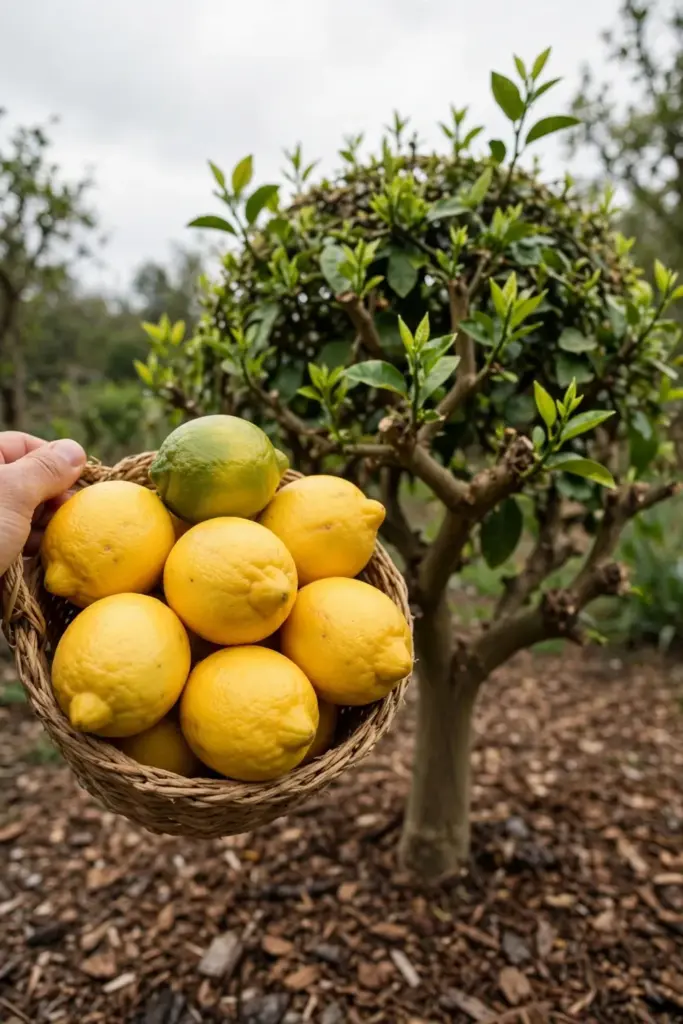
Walk past the tree once a week through spring. Rub out any sucker that rises below the graft while it is still soft. Thin one water shoot that crowds the center. Small touches through the season beat one big correction next year.
One annual prune, five cuts in order, and the one-third limit keep a lemon tree productive for decades. Cut dead wood first. Cut crossing branches next. Skirt, shape, and stop. The tree handles the rest.