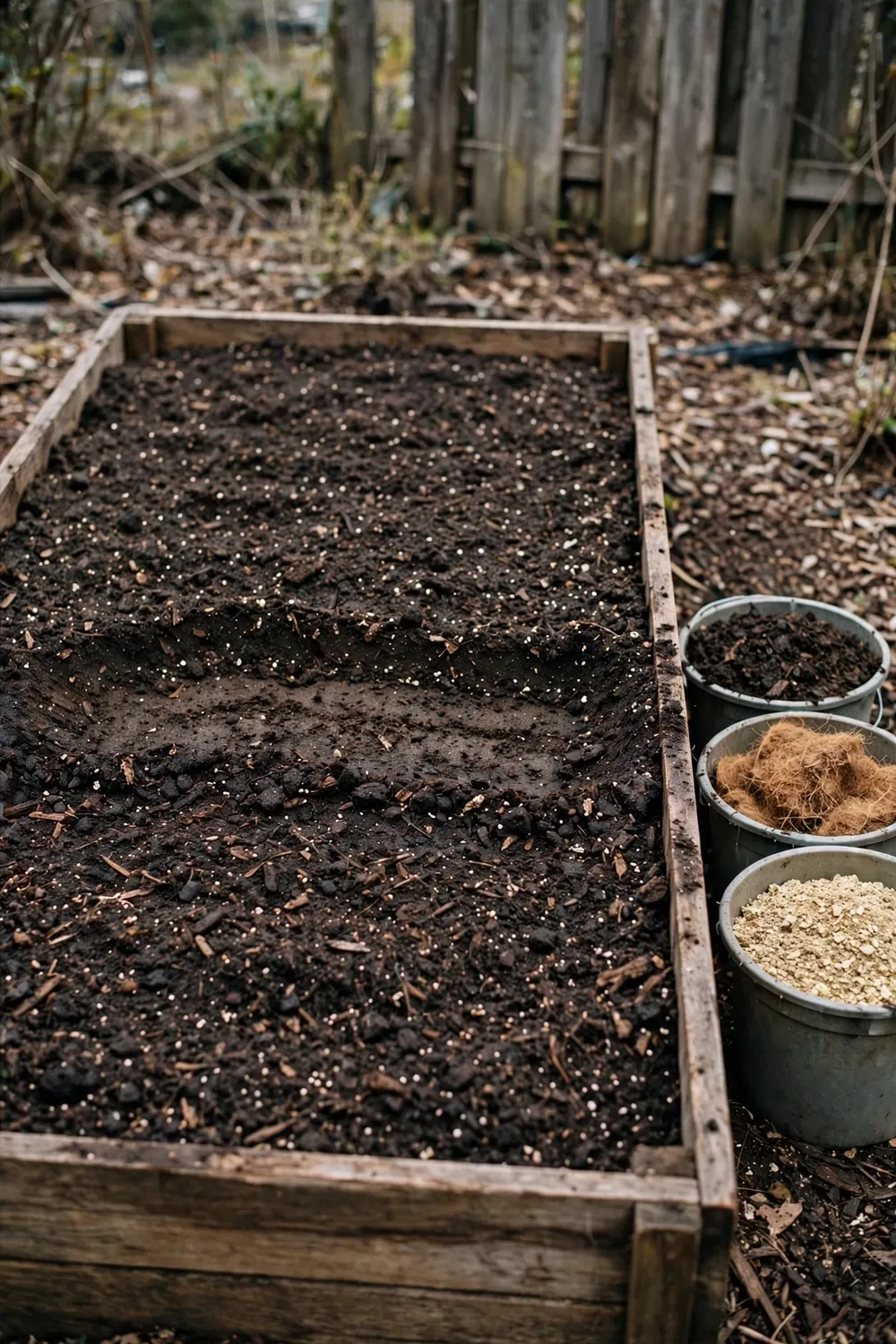

The best soil mix for a raised garden bed in Australia is a blend of mineral bulk, compost, and a coarse mineral that keeps the mix open. For most vegetable beds, that means 3 equal parts: topsoil, finished compost, and a drainage material, measured by volume. This guide to the best soil mix for raised garden beds in Australia gives three recipes with exact ratios, explains what each ingredient does, and covers fill layers, volume math, climate tweaks, and the materials to keep out.
A raised bed is a container with open ground beneath it. The mix inside must drain freely after rain, hold enough moisture between waterings, and feed plants for a full season. Garden soil from the yard fails on all three counts in a frame. It compacts under its own weight, it seals at the surface, and it carries weed seed. A purpose-built mix avoids those faults because each ingredient carries one job.
What Raised-Bed Soil Must Do
Raised-bed soil must drain, hold moisture, and feed plants at the same time. Drainage keeps roots breathing after heavy rain. Moisture holding keeps the bed from drying to dust between waterings. Feeding comes from compost and from the slow release of nutrients as organic matter breaks down.
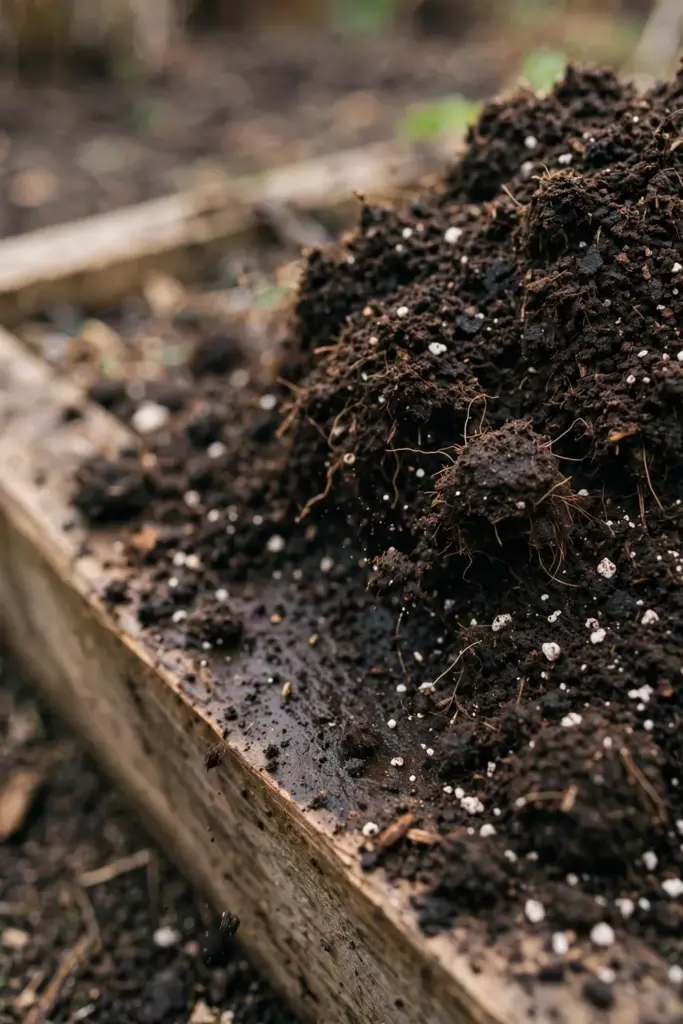
The three jobs pull against each other. A mix that drains fast dries fast. A mix that holds water can turn airless. A mix rich in fresh organic matter can lock up nitrogen while it decays. The recipes below balance the three jobs by giving each job its own ingredient. Topsoil supplies the mineral body. Compost supplies food and microbes. Coarse mineral material supplies air channels that never rot away.
Test the balance before planting. Squeeze a moist handful of mix, then open your hand. The lump should hold its shape for a second, then crumble when poked. Water poured on the surface should soak in within seconds. Never let it sit in a puddle. A mix that forms a slick ball has too much fine material. A mix that falls apart like dry sand has too little body. Adjust with compost for body or with perlite for air, then test again.
Structure matters more than any single ingredient brand. Two bags labelled the same can differ widely. Feel the mix, check the drainage, and trust the squeeze test over the label. Good soil for soil health is judged by how it behaves wet, not by how it looks dry.
The Three Recipes: Ratios by Volume
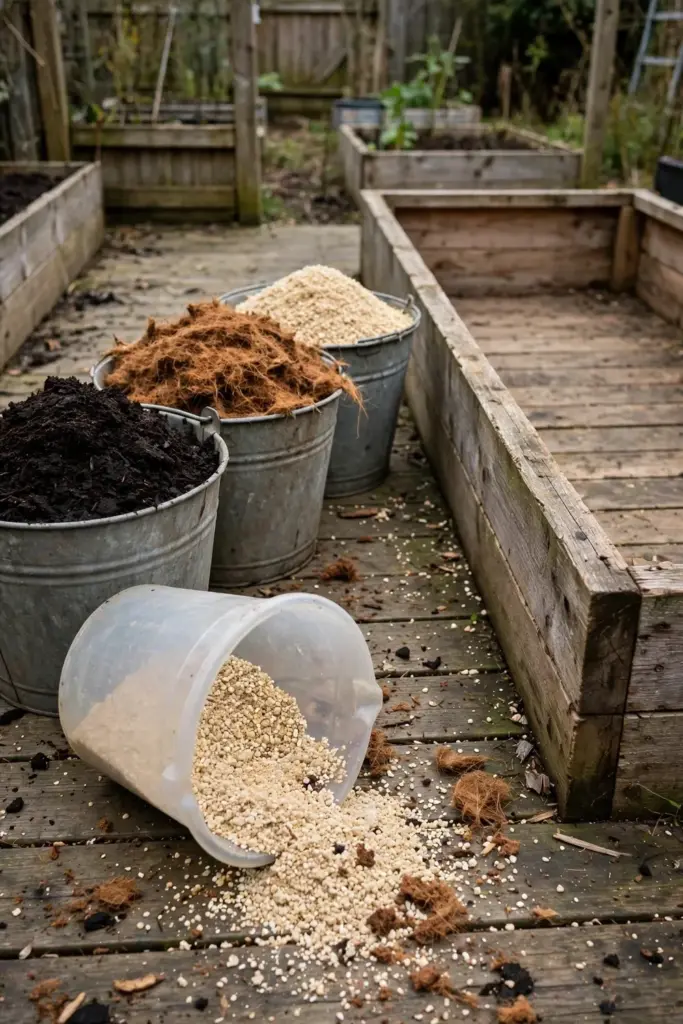
Three recipes cover nearly every Australian raised bed. The bulk ratios below come from the raised-bed guides Australian gardeners commonly quote, including Lettuce Grow Something for the 40-40-20 mix and CalcHub for the 60-30-10 mix. Measure every ingredient by volume, using the same bucket for each part. Volume keeps the ratios honest. Weight misleads because a bucket of compost weighs far less than a bucket of wet topsoil.
| Recipe | Ratio by Volume | Best For | Cost |
|---|---|---|---|
| Classic 3-Part Mix | 1 part compost : 1 part coco coir : 1 part coarse vermiculite or perlite | Small beds, soilless growing, precise control | Highest per litre |
| Bulk Landscape Mix | 4 parts topsoil : 4 parts compost : 2 parts coarse sand | Large beds filled from a landscape supplier | Lowest per litre |
| Balanced 60-30-10 Mix | 6 parts topsoil : 3 parts compost : 1 part coarse mineral | Large beds where topsoil quality is good | Low per litre |
The Classic 3-Part Mix is Mel Bartholomew’s Mel’s Mix from the Square Foot Gardening method. It contains no soil at all. Compost feeds the plants. Coco coir holds moisture without waterlogging. Coarse vermiculite or perlite holds air channels open. The mix is light, it drains cleanly, and it suits beds that sit on paving or on a balcony slab. Its cost climbs fast in a big bed because every litre arrives in a bag.
The Bulk Landscape Mix suits a bed of one metre or longer. Topsoil gives the mineral body. Compost gives the food. Coarse sand opens the structure. Buy the ingredients in bulk from a landscape supplier and feel a sample before ordering. Topsoil quality varies between suppliers and between loads. A good sample is dark, crumbly, and smells like earth. A sample that is pale, sticky, or sour will fight you all season.
The Balanced 60-30-10 Mix suits a bed where the topsoil is already decent. It uses less compost and less mineral material than the other two, yet it still drains and still feeds. It settles less than compost-heavy mixes because mineral soil forms most of its volume. Pick this recipe when the supplier’s topsoil looks and feels like real loam. Screened clay fails the test.
Whichever recipe you choose, mix the ingredients before they go into the bed. Tip each part onto a tarp or into a wheelbarrow, turn the pile until the color is even, then fill. Mixing inside the bed leaves pockets of pure compost beside pockets of pure topsoil. Roots grow unevenly across those pockets. A uniform mix gives every plant the same start.
What Each Component Does
Compost feeds the bed. It releases nutrients slowly as microbes break it down. It adds structure that mineral soil alone lacks. It introduces the microbial life that turns dead leaves into plant food. Use finished compost only. Finished compost is dark, crumbly, and smells like forest floor. Unfinished compost still shows recognisable food scraps and smells sour. It robs nitrogen from plants while it finishes breaking down. Buy bagged compost from a garden center, or use compost from your own heap once it has fully matured. If you want to make your own, the compost bin options on this site cover the common bin styles.
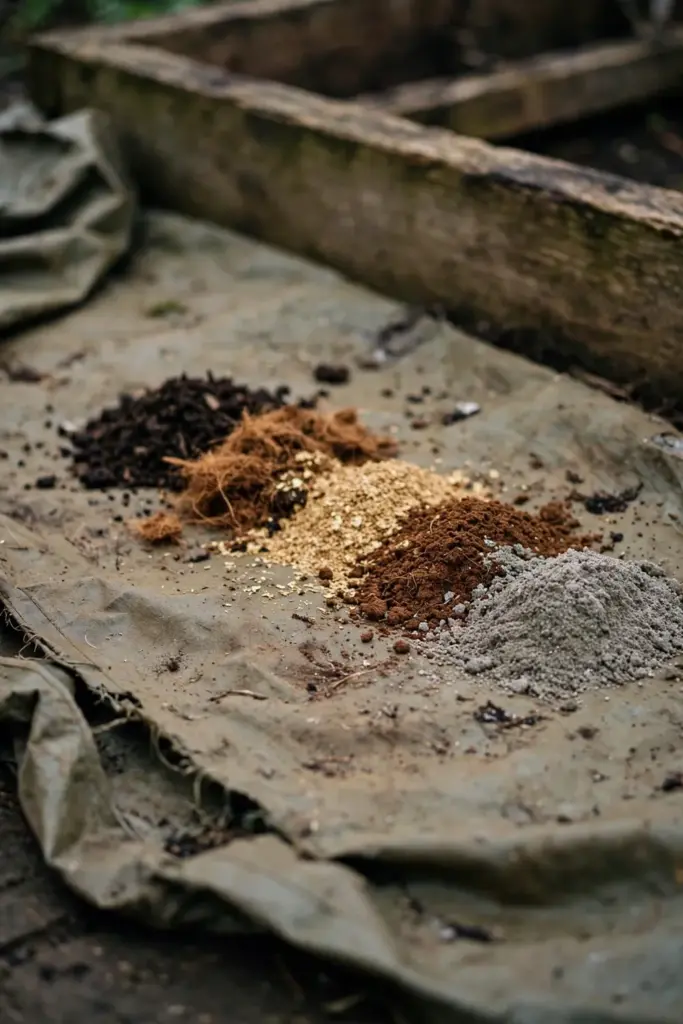
Coco coir holds moisture without waterlogging. It absorbs water readily and releases it slowly. Its pH sits near neutral, so it rarely pushes the mix acidic. It rehydrates easily after drying out, which matters in a hot Australian summer. Peat moss holds moisture too, and it leans slightly acidic. Peat costs more in sustainability terms because peat bogs regrow slowly. Coir is the simpler choice in Australia, and it behaves the same way in the mix.
Vermiculite holds moisture and carries calcium and magnesium. It suits beds that grow water-loving crops. Perlite drains faster and holds more air. Scoria, the volcanic rock sold at Australian landscape yards, does the same job as perlite and lasts indefinitely. Pick vermiculite for thirsty beds and perlite or scoria for beds that must drain fast. All three keep their structure for years. None of them breaks down into sludge.
Topsoil gives the mix its mineral body and its weight. It supplies trace minerals that compost alone cannot. It anchors tall plants. Used alone, topsoil compacts in a frame and drains poorly. Used as one part of a recipe, it stabilises the mix. Buy screened topsoil and check it by hand. Rub a pinch between your fingers. Gritty grains are sand, silky grains are silt, and sticky grains that smear are clay. A loam with all three in balance feels crumbly, never greasy.
Coarse sand opens the mix. It creates pores that water and air move through. It carries almost no nutrients. Use coarse sand only. Fine sand packs between soil particles and sets like concrete. If the supplier cannot confirm the grade, skip sand and use perlite or scoria instead. A bag of washed coarse river sand from a landscape yard is the safe buy.
Recipes by Crop Type
Most vegetables grow well in any of the three recipes. A few crop groups reward a small adjustment. The table below starts from the Bulk Landscape Mix and shifts one ingredient at a time. Keep the total at ten parts so the ratios stay easy to measure.
| Crop Group | Adjusted Ratio | Why It Shifts |
|---|---|---|
| General vegetables | 4 topsoil : 4 compost : 2 coarse mineral | Balanced food, drainage, and body |
| Leafy greens | 3 topsoil : 5 compost : 2 coir | Extra moisture and food for shallow roots |
| Root crops | 5 topsoil : 3 compost : 2 coarse sand | Loose, stone-free depth for straight roots |
| Herbs | 5 topsoil : 3 compost : 2 perlite or scoria | Sharper drainage, leaner food |
| Native plants (Proteaceae) | Low-phosphorus mix, no manure compost | Phosphorus harms phosphorus-sensitive natives |
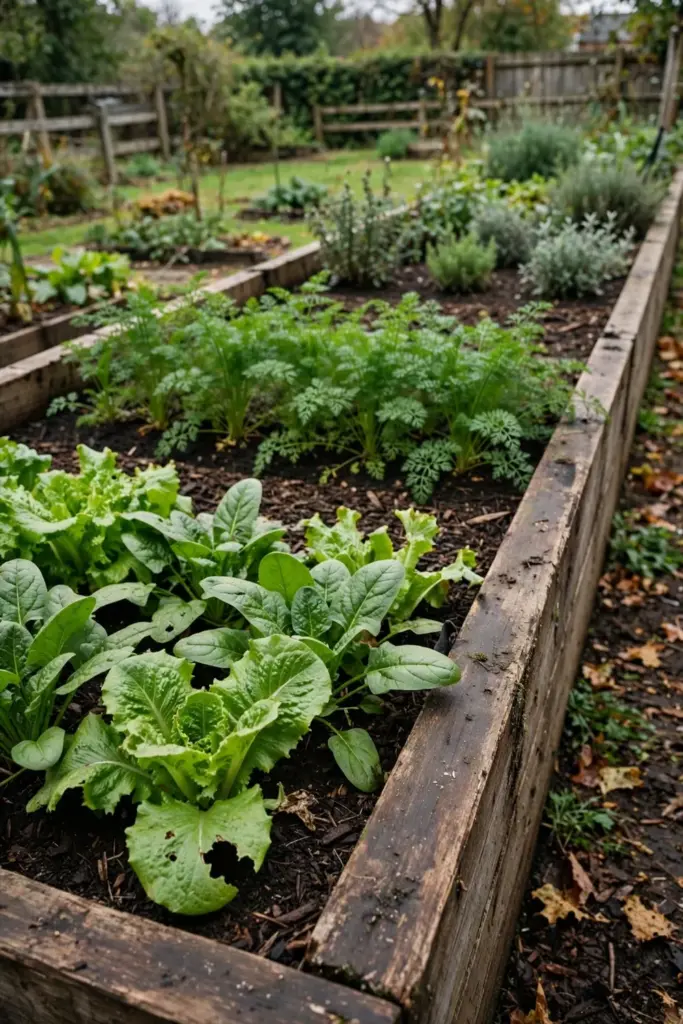
Leafy greens drink heavily and root shallowly. Extra compost and coir hold water near the surface where lettuce and spinach feed. Root crops need depth without obstacles. Extra topsoil gives straight, clean carrots. Stones, sticks, and lumps of unbroken compost fork a carrot root. Sieve the mix for a dedicated root bed. Herbs prefer leaner soil and sharper drainage. Too much compost grows soft, flavourless herbs. A leaner mix with extra perlite or scoria grows tougher, more aromatic leaves.
Native plants in the Proteaceae family, including grevillea and banksia, need a low-phosphorus mix with no manure-based compost. Keep natives in their own bed with a mix made for them. Never feed a native bed with the same rich compost that suits vegetables. Phosphorus that feeds a tomato can poison a grevillea.
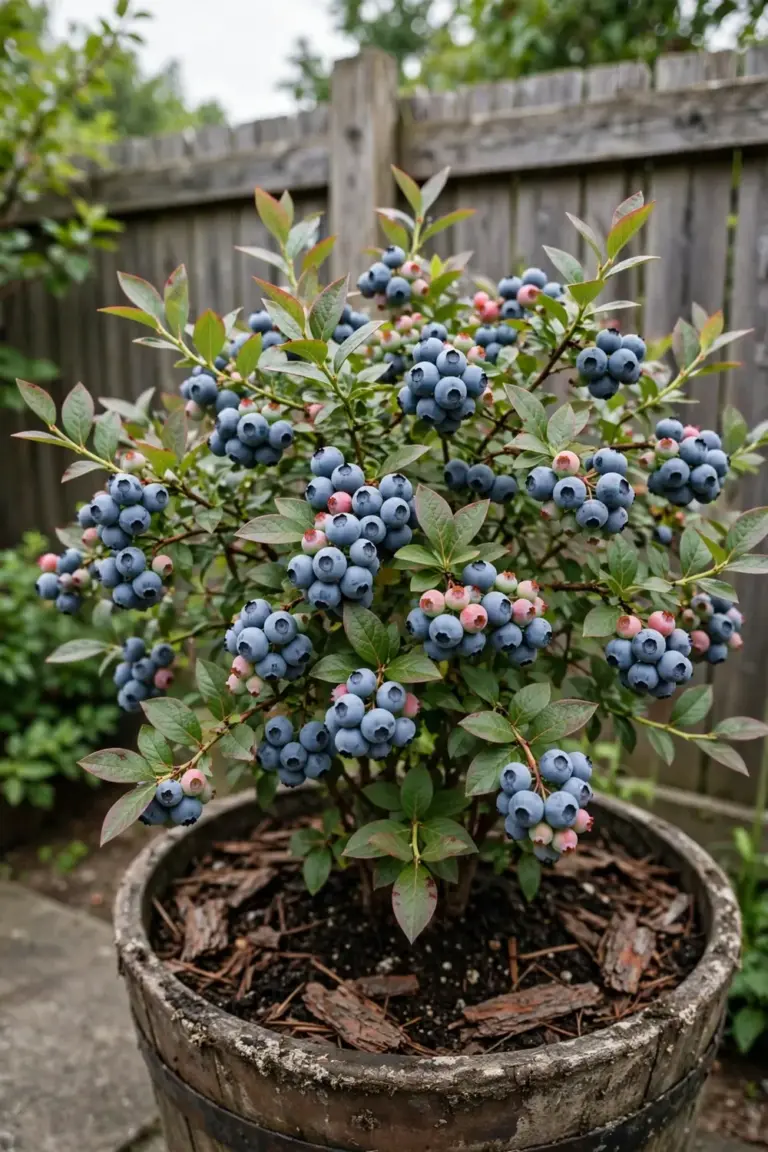
Blueberries need acidic soil below pH 5.5. Give blueberries their own bed or pot with an acid mix. A vegetable bed at near-neutral pH will starve a blueberry of iron even when the plant looks well fed. Keep acid-loving plants separate from the main vegetable bed.
How Much Soil to Buy
Volume equals length times width times depth, with all three measurements in metres. The answer comes out in cubic metres. Multiply cubic metres by 1,000 to get litres. That is the whole calculation. Measure the inside of the frame, not the outside. Timber thickness steals volume from the fill.
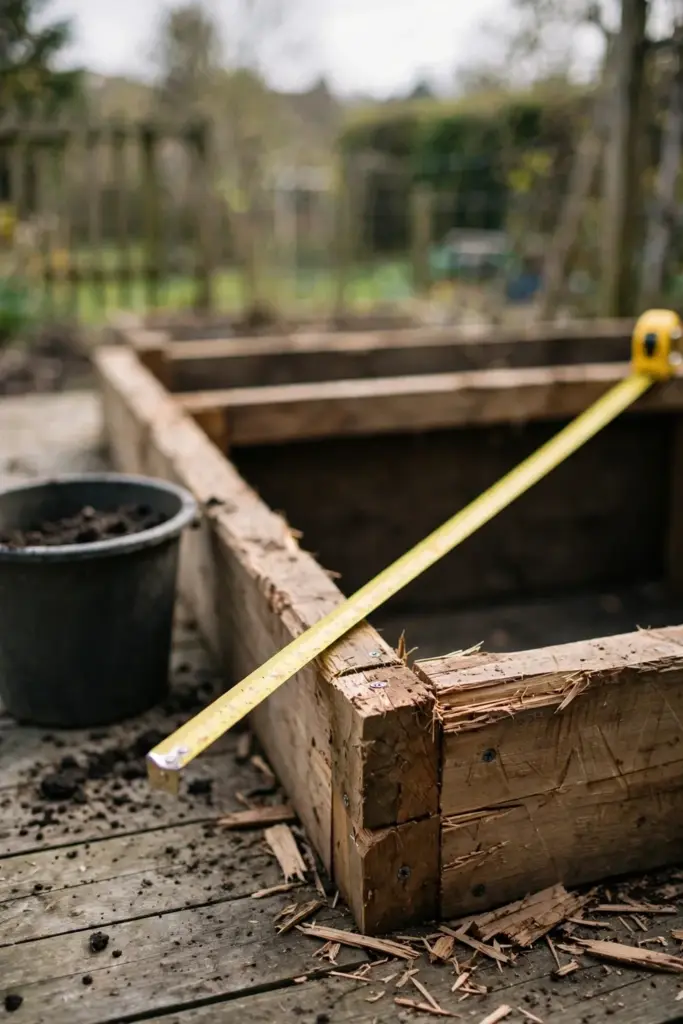
One worked example covers the method. A bed 2.4 metres long, 1.2 metres wide, and 0.4 metres deep holds 2.4 times 1.2 times 0.4, which equals 1.152 cubic metres, or 1,152 litres. The Bulk Landscape Mix for that bed needs 461 litres of topsoil, 461 litres of compost, and 230 litres of coarse sand. Round each part up to the nearest bag or quarter cubic metre. Soil settles after the first few waterings, so a small surplus beats a second trip to the supplier.
Buy in bags for one small bed. Buy in bulk for two beds or more. Bulk soil arrives by the cubic metre from a landscape supplier and costs far less per litre than bagged soil. Bagged soil suits a single bed on a balcony or a courtyard where a truck cannot dump a load. Check bag labels for litres, not kilograms. Two bags of the same weight can hold very different volumes.
Order a small surplus. Settling eats the first few centimetres. A bed filled to the rim in the morning can sit 5 centimetres low after a week of watering. The surplus tops the bed back up without a second delivery fee. Keep the leftover mix in a covered pile or a spare bin. It tops up the bed after harvest and fills pots through the season.
Filling in Layers
Fill a deep bed in layers to save money and to build structure from the bottom up. The 300 mm top-layer depth below follows Australian fill guides from Planters Raised Gardens and Organic Garden Co. A bed deeper than 400 millimetres does not need premium mix all the way down. Most vegetable roots feed in the top 300 millimetres. The lower layer can be cheaper bulk material that breaks down slowly.
Start with the base. On lawn, lay overlapping sheets of plain cardboard or thick newspaper straight over the grass. Wet the sheets thoroughly. The cardboard smothers the grass and rots away within a season. On concrete or paving, lay geo-textile fabric across the base. The fabric drains freely and holds the soil inside the frame. Never use plastic sheeting. It traps water and drowns the bed from below.
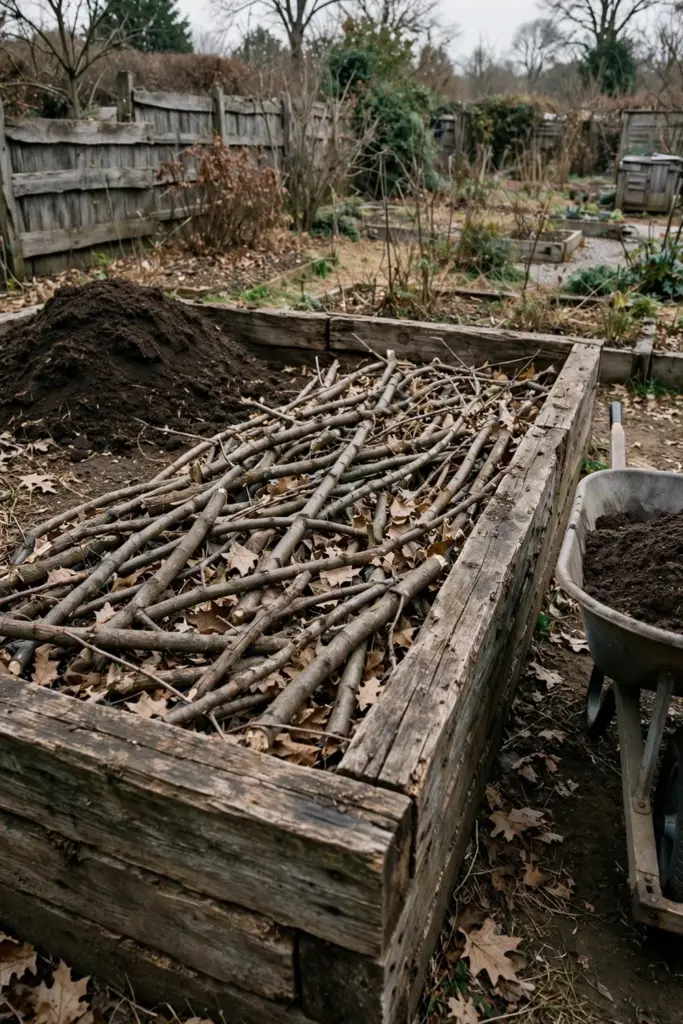
Add the bulk layer next. Woody offcuts, straw, dry leaves, and small branches fill the bottom 100 to 300 millimetres of a deep bed. This lasagna-style base, sometimes called hugelkultur, decays slowly and releases nutrients over years. Pack the pieces tightly. Loose voids collapse later and drag the surface down with them. Keep this layer out of the top 300 millimetres. Roots need real soil in the top layer, not air pockets between branches.
Top the bed with 300 millimetres of quality growing mix. That is the layer plants actually live in. Water the filled bed deeply and let it settle for a day or two before planting. Top up the settled surface with more mix. A bed planted into unsettled soil sinks around the seedlings and leaves their crowns exposed.
When the bed sits on open ground, loosen the native soil beneath before filling. Clemson Extension advises working a 2 to 3 inch layer of organic material into the existing soil inside a framed bed, with compost at 10 to 20 percent of the total bed volume. That advice covers the native soil under the bed. The imported fill above it still follows the recipe ratios. The two layers meet in the middle and roots cross the boundary without hitting a hard pan.
Climate Tweaks for Australian Regions
Australia spans climates that pull a soil mix in opposite directions. The regional adjustments below follow the climate guidance in Australian supplier Dr Green Thumbs’ raised-bed guide. A recipe that holds moisture in Melbourne can stay soggy in Brisbane and dry out in Alice Springs. Start from one of the three recipes, then shift one ingredient for the local climate.
Temperate and coastal gardens, from Sydney to Melbourne, use the recipes as written. The main adjustment is mulch. Lay a thick mulch blanket before summer to slow evaporation. Mulch also keeps the soil surface cool and stops rain from compacting the top layer. The mulching guide on this site explains how mulch controls weeds and holds moisture.
Sub-tropical gardens, from Brisbane to Darwin, need more air. Humid summers keep the mix wet for days. Add one extra part scoria or perlite for every 10 parts of mix. The extra coarse mineral opens air channels that humid air alone cannot dry. Raise the bed slightly if the site floods in summer storms, because a bed that drains in a day beats a bed that stays wet for a week.
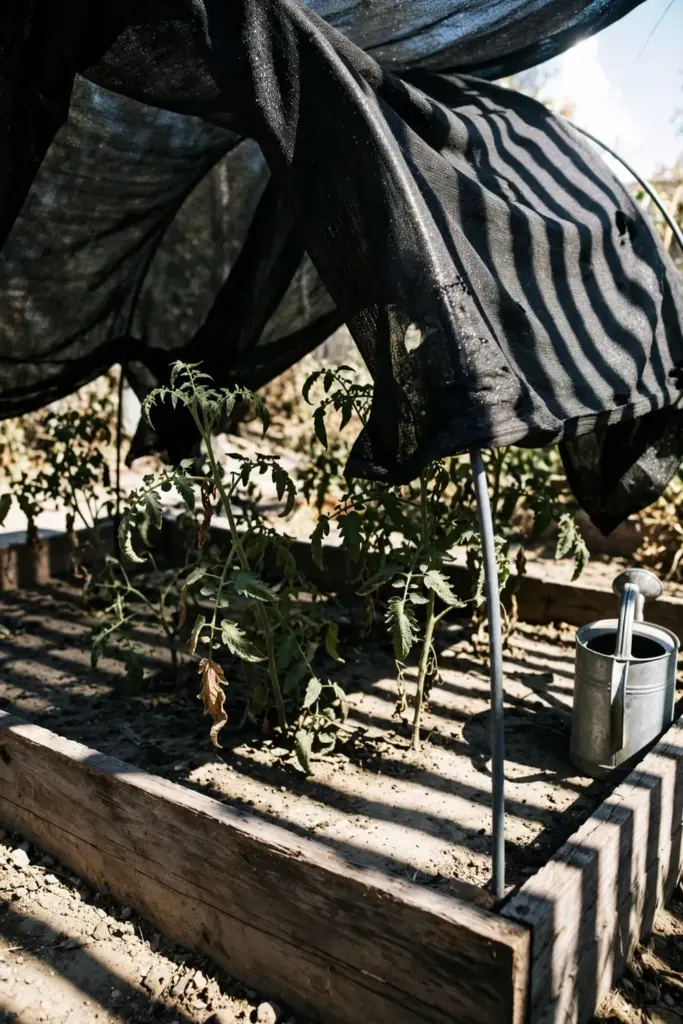
Arid and hot inland gardens, across inland South Australia and Western Australia, need more moisture holding. Add one extra part biochar or coco coir for every 20 parts of mix. Both hold water in the root zone without turning the mix soggy. Shade cloth over the bed in the hottest weeks cuts evaporation further, and deep, infrequent watering pushes moisture to the full root depth instead of wetting only the surface.
Cool-climate gardens in Tasmania and the southern highlands warm slowly in spring. A darker mulch absorbs heat and brings the bed into production sooner. Avoid extra water-holding ingredients in a cool, wet spring. The mix already holds enough moisture. Extra coir in a cold bed stays wet and chills the roots.
I have learned that a bed filled with the wrong mix costs more to fix than the mix itself. That lesson came from watching a rich, soggy bed grow yellow seedlings while a plain, open mix beside it grew strong ones.
What Not to Use in a Raised Bed
Pure topsoil alone compacts in a frame and drains poorly. It forms a hard cap after rain and cracks as it dries. Pure compost alone settles fast and lacks structure for large plants. Oregon State University researchers found an all-compost raised bed that reached 30 percent organic matter, and the pepper plants in it burned and died by the end of the season. Pure potting mix in a large bed dries too fast and costs far more than a bulk recipe. Potting mix is formulated for containers, not for bed volume.
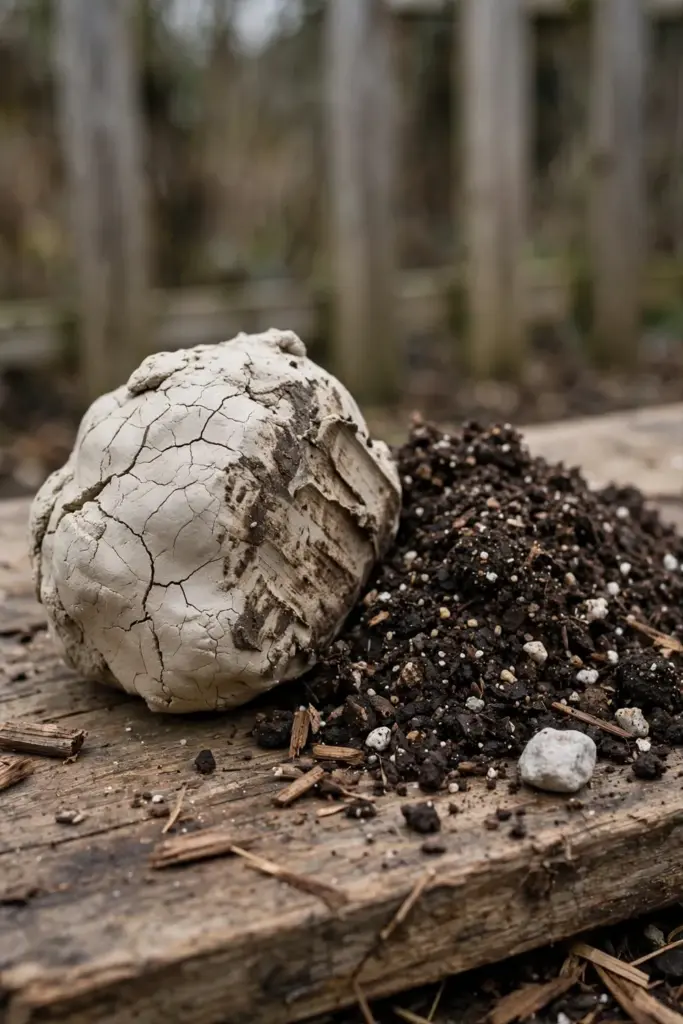
Garden soil dug from your own yard brings waterlogging, weed seed, and stunting into the bed. It may carry soil-borne disease from last season’s crop. Buy fresh topsoil from a supplier instead. Unfinished organic waste and excessive wood fragments cause nutrient lock-up. Microbes breaking down fresh wood pull nitrogen away from plant roots. Wood chips belong on top as mulch, never mixed into the soil, so plant in soil, not in chips.
Fresh manure has no place in a bed about to be planted. Oregon State University Extension advises against adding fresh manure to an existing garden plot and recommends composting manure before it goes near growing plants. Fresh manure burns roots and can carry pathogens onto produce. Use composted manure or finished compost instead.
Treated timber scraps, glossy printed paper, diseased plants, and weedy soil stay out of the bed. Treated timber can leach chemicals into the soil. Glossy paper carries inks and coatings that do not break down cleanly. Diseased plants and weedy soil import the exact problems the bed was built to avoid. If in doubt about a material, leave it out. A bed is harder to clean than it is to fill.
Fine sand is a quiet saboteur. It looks like a drainage aid. In a mix it packs between soil particles and sets hard. The result drains worse than the mix without sand. Use coarse sand only, or skip sand and use perlite or scoria. The same rule applies to beach sand. Salt in beach sand harms plants and soil life. Never use it.
Buying Smart: Bagged vs Bulk
Bagged soil suits a single small bed. Walk into a garden center, read the label, and carry the bags home. Bagged mixes vary in quality. Some bags are mostly wood fines with a little compost. Squeeze a handful through the bag if the staff allow it. A good bagged mix feels crumbly and smells like earth. A bag that feels like wet sawdust is mostly filler.
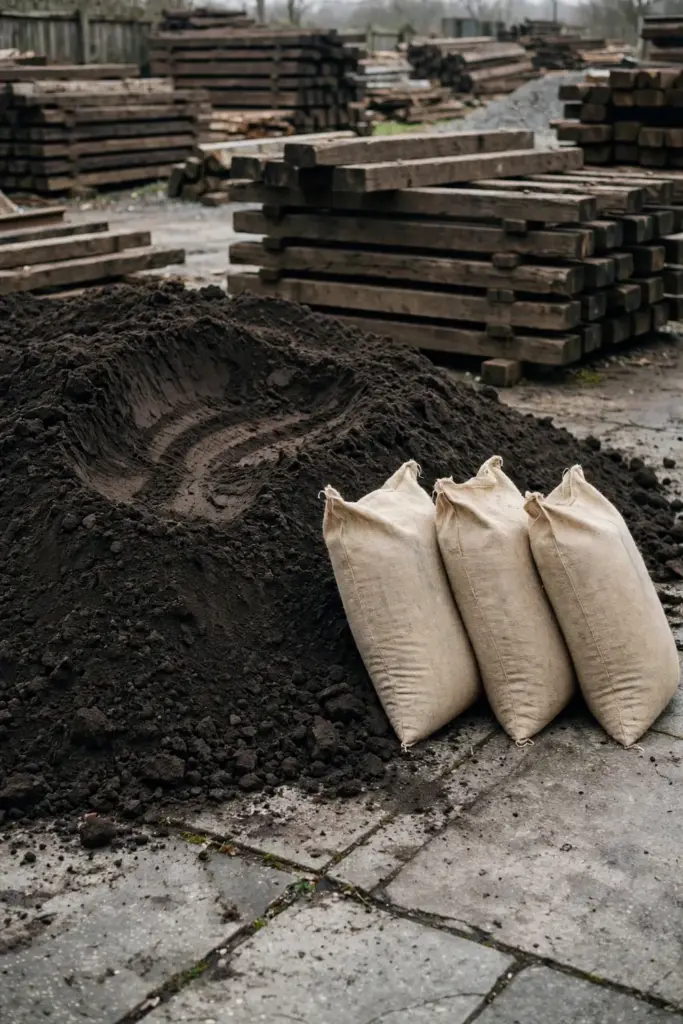
Bulk soil suits two beds or more, with a landscape supplier delivering by the cubic metre and tipping the load onto a tarp or driveway. Bulk buying costs far less per litre than bags. It also lets you see the product before you commit. Visit the yard and ask for a sample. Feel it, smell it, and check for lumps of clay or chunks of rubbish. A supplier who refuses a sample is a supplier to avoid.
Read bagged labels with care. Labels in Australia list ingredients in broad terms. “Garden soil” on a bag can mean anything from screened loam to shredded green waste. “Potting mix” must meet the Australian Standard for potting mixes, which sets minimum quality rules. Raised-bed mixes have no equivalent standard. The label tells you less than your hands do. Trust the squeeze test.
Price the whole job before buying. A bed needs mix, mulch, and maybe a soil test. A soil test costs little and tells you the pH and nutrient levels of the finished mix. Test once at the start. A test beats guessing with lime or fertilizer all season. Most vegetables grow best with a soil pH between 5.8 and 6.3, according to University of Delaware Extension. If the test shows pH far outside that band, adjust with lime to raise it or sulfur to lower it, following the test report’s rates.
Topping Up and Refreshing Each Season
Soil settles every season. Organic matter breaks down, worms pull mulch underground, and watering compacts the surface. A bed that started full can sit 5 to 10 centimetres low after a year. Top it up before each new planting season.
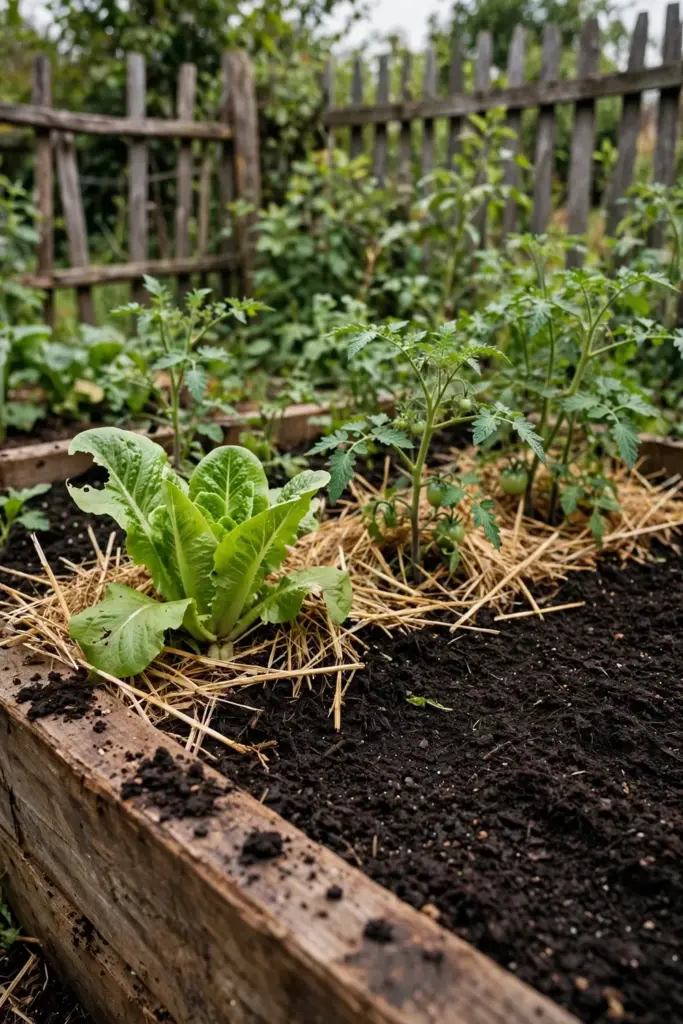
Start by clearing the spent crop. Pull old plants, roots and all. Leave healthy root systems of legumes in place if the bed grew beans or peas. Their roots hold nitrogen that the next crop uses. Rake the surface level. Spread 2 to 3 centimetres of finished compost across the bed. Fork it lightly into the top few centimetres. Deep digging destroys the soil structure the season built.
Feed the bed at the same time. A slow-release organic fertilizer, or a fresh layer of compost, carries the bed through the first weeks of growth. The fall garden bed prep guide on this site covers seasonal bed preparation in depth. For a raised bed, the routine is simpler: compost on top, mulch over that, water it in, and plant.
Mulch the refreshed bed with 50 millimetres of straw or wood chip. Mulch holds moisture, suppresses weeds, and feeds soil life as it decays. Keep mulch a few centimetres clear of plant stems. Mulch piled against a stem holds moisture against the bark and invites rot. Water deeply after mulching until water runs from the base of the bed. Then pause until the top 30 millimetres dry out. That wet-dry rhythm grows deeper roots than daily sprinkling.
Compost-heavy mixes settle more than mineral mixes. A bed filled with a 50-50 compost blend can drop noticeably in the first year. Annual top-ups fix the drop. After two or three seasons the bed reaches a stable level and the yearly top-up shrinks to a thin compost dressing. The bed improves with age as long as the top-ups keep coming.
Troubleshooting Soil Problems
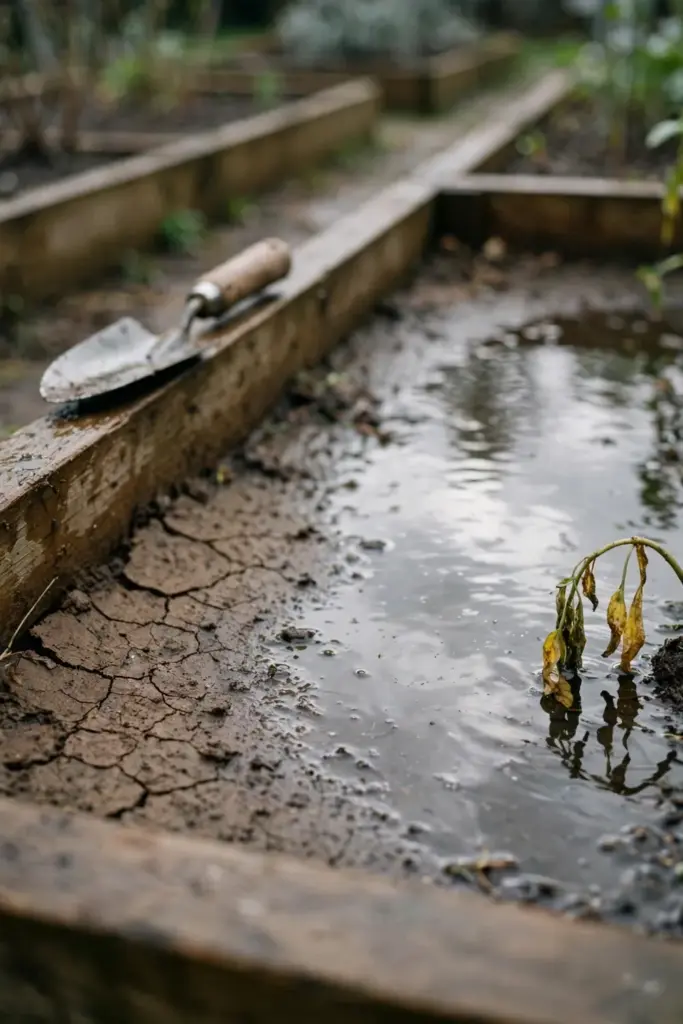
Water pools on the surface after rain. The mix has too many fines or the surface has sealed. Break the crust with a fork, working only the top few centimetres. Top-dress with coarse compost and perlite. Check the base drains freely. A bed on paving needs its geo-textile fabric clear. A blocked fabric turns the bed into a bathtub.
The bed dries out within a day of watering. The mix has too much coarse material or too little organic matter. Top-dress with compost and coir. Mulch 50 millimetres deep. Water slowly so the mix absorbs the water instead of letting it run down the inside of the frame. A bed that dries daily in summer needs both more organic matter and more mulch.
Seedlings turn yellow soon after planting. The mix may be short on nitrogen, or the pH may sit outside the range where nutrients stay available. Test the soil before adding fertilizer. A pH test costs little and rules out half the possible causes. If the pH reads below 5.5, many nutrients lock up even when they are present. Lime raises the pH. If the pH reads in range, a balanced organic fertilizer or a compost top-dress usually fixes the yellowing.
The bed sinks unevenly. The bulk base layer had loose voids. Woody material packed loosely collapses as it decays. Top up the low spots with mix and firm the surface gently. The sinking slows as the base layer fully decays. In a new bed, pack the base layer tighter and water it in before adding the top soil layer.
White crust forms on the surface. Salts from fertilizer or from hard water accumulate at the surface. Flush the bed with a deep, slow watering to push salts below the root zone. Cut back on liquid fertilizer for a few weeks. Switch to compost top-dressing instead. A salt crust signals overfeeding more often than underwatering.
Frequently Asked Questions

Yes. Raised-bed soil improves with age when it gets a yearly top-up. Clear the spent crop, spread 2 to 3 centimetres of finished compost over the surface, and fork it lightly into the top few centimetres. Test the pH every second year and adjust only when the report calls for it. Replace the mix only when it has become compacted, contaminated, or diseased. Good mix lasts for years with compost and mulch.
No lining is needed on open ground. Roots grow through into the soil below, and worms travel up into the bed. Cardboard or newspaper over grass smothers weeds and rots away. On concrete or paving, lay geo-textile fabric to hold soil in while water drains out. Never use plastic sheeting. Plastic traps water, drowns roots, and turns the bed into a stagnant tray.
Settling is normal. Organic matter breaks down, watering compacts the mix, and loose base material collapses as it decays. Compost-heavy mixes settle more than mineral mixes. Top the bed up with fresh mix before the next planting. Pack base layers tightly when filling a new bed, and water the base layer in before adding topsoil. The sinking slows after the first two seasons.
Yes, in their own bed with a low-phosphorus mix. Phosphorus-sensitive natives in the Proteaceae family suffer in rich vegetable soil. Use a mix made for natives with no manure-based compost. Keep the native bed separate from vegetable beds, and never share fertilizer between the two. A vegetable feed that suits tomatoes can poison a grevillea within weeks.
Test once when the bed is first filled, then every two years. A soil test reports pH and nutrient levels. It stops guesswork with lime, sulfur, and fertilizer. Test sooner when plants show persistent yellowing or poor growth that compost does not fix. Retest a few months after any large lime or sulfur application. The test result guides the next adjustment.