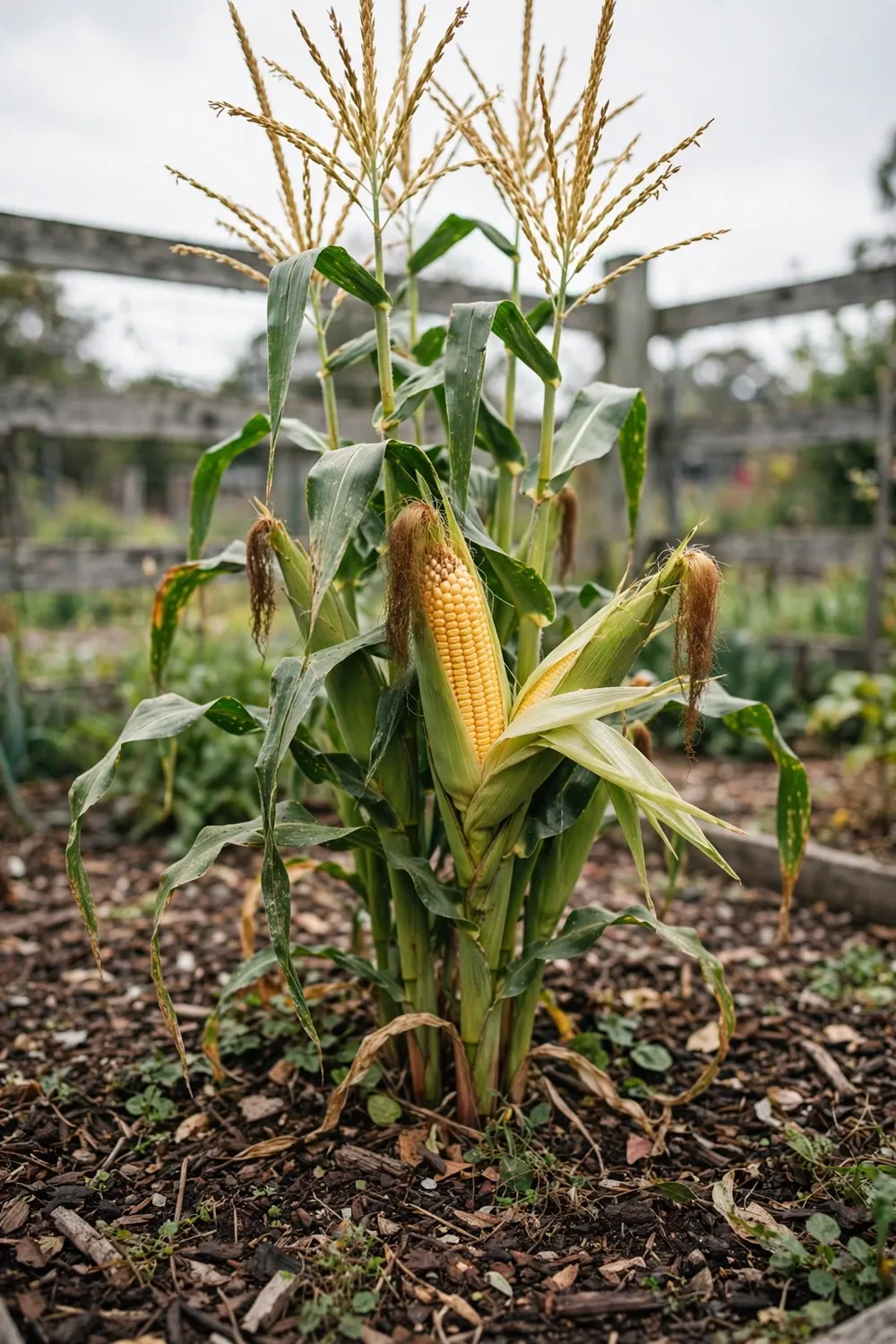

Sow sweet corn in a block of at least 4 rows after the soil warms, feed it like the heavy feeder it is, and pick each cob the day you eat it. That is growing corn in Australia in one line. A home patch needs sun, rich soil, steady water, and wind moving between the rows.
I have learned that a block of corn feeds the family and a single row feeds the birds. Cobs reach the table in 75 to 105 days from sowing, and the harvest window for one sowing runs short, so succession sowing keeps cobs coming. The rest of this page runs from variety choice and sowing dates through block planting, feeding, pollination, pests, and harvest.
Pick Sweet Corn and One Variety Only
Grow sweet corn, and grow one variety at a time. Sweet corn is Zea mays grown for fresh eating, and one variety keeps the flavor true.
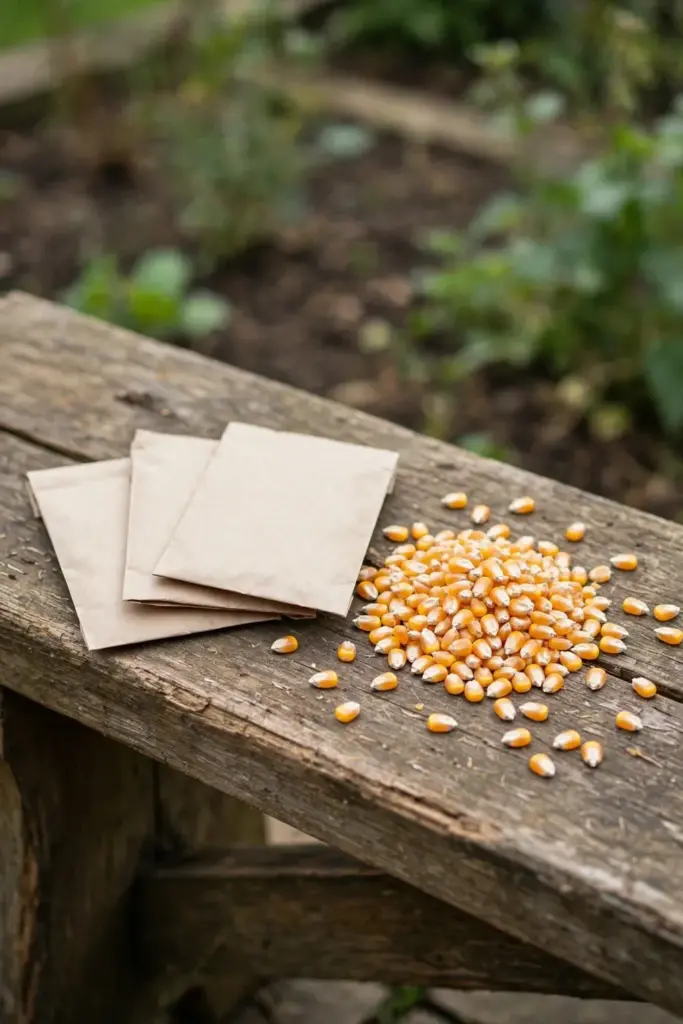
Seed packets sort sweet corn into three types. Standard sugary corn carries the classic corn flavor. Sugary-enhanced corn tastes sweeter and holds its sweetness longer after picking. Supersweet corn tastes sweetest of the three and needs the warmest soil to germinate. Pick the type that matches your soil warmth and your taste, then plant only that type in the patch.
Corn types cross-pollinate readily. A supersweet patch next to a standard patch produces starchy kernels and lost sweetness. Separate supersweet and standard corn by 76.2 m, or sow them 2 weeks apart, according to Virginia Tech Extension sweet corn guide. In a home garden, 2 weeks apart is the practical choice. Sow the second type when the first shows 3 to 4 leaves.
Buy fresh seed each season from a supplier you trust. Corn seed loses vigor in a hot shed. Store leftover seed cool and dry, and test a few seeds on damp paper before sowing an old packet. Seed that sprouts slowly in the test sprouts slowly in the bed.
Popcorn is a different corn type with its own popping trait. Keep popcorn in its own patch, away from sweet corn, or skip it until the sweet corn finishes. One patch, one variety, one flavor. That rule saves more cobs than any fertilizer.
Time Sowing to Warm Soil in Your Zone
Sow when the soil at sowing depth reads at least 12°C and is rising at 9 am. Frost kills young corn, so the last frost date sets the start of the season.
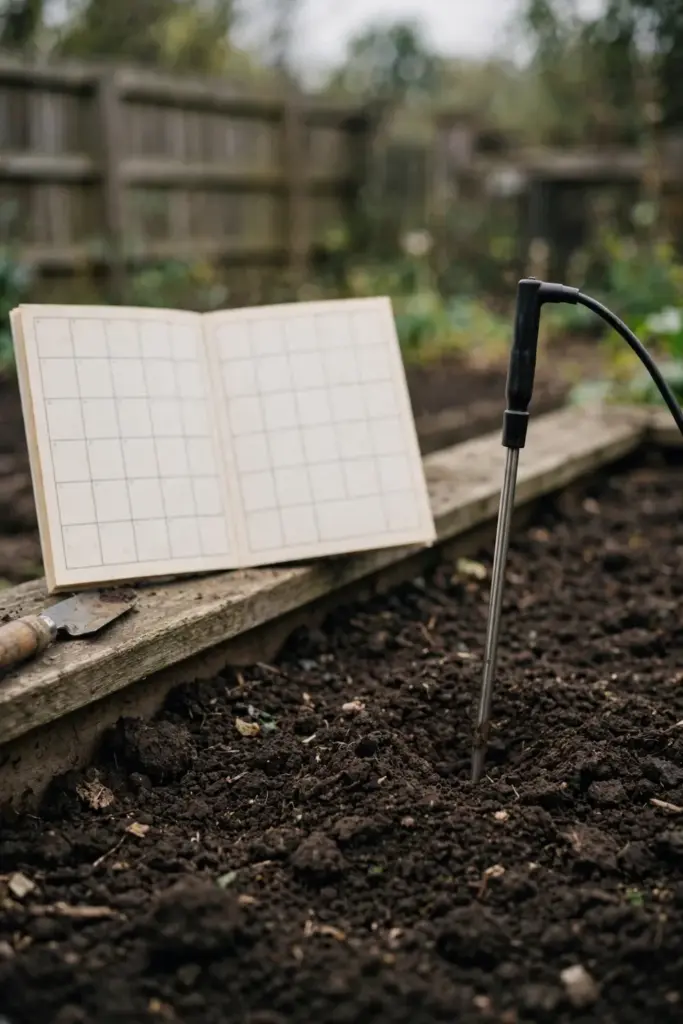
Sweet corn is a warm-season, frost-sensitive crop. NSW DPIRD puts sweet corn ready to pick in 75 to 105 days, depending on the cultivar, the locality, and the sowing time, and sets the soil temperature at sowing depth at a minimum of 12°C and increasing at 9 am, ideally between 15°C and 35°C, with a minimum for supersweet of 14 to 16°C, according to the NSW DPIRD sweet corn growing guide. Hot, dry, windy conditions above 35°C at flowering disrupt pollination and seed set, so a heatwave at silking costs kernels. Sow early enough that silking lands before the hottest weeks.
| Zone | Sow Window | Note |
|---|---|---|
| Tropical | Year-round in warm soil | Sow any month the soil stays warm |
| Subtropical | August to March | Long season suits two successions |
| Warm Temperate | September to February | Sow after the last frost |
| Cool Temperate | October to December | Short season suits the earliest varieties |
Check the soil with a thermometer before sowing. A warm week in September means nothing if the soil still reads 10°C. Wait for the soil, not the calendar. The calendar sets the window and the thermometer sets the day.
Black plastic warms soil a week early. Lay it over the bed, pin the edges, and cut holes at sowing time. The plastic holds heat and stops weeds. Pull it off once seedlings stand, so the soil breathes.
Give Corn Full Sun and Room to Stand
Plant corn in full sun in the open, away from fences, trees, and tall crops that shade the rows. Corn grows tall and casts shade, so it belongs on the north side of low crops where it cannot shade them.
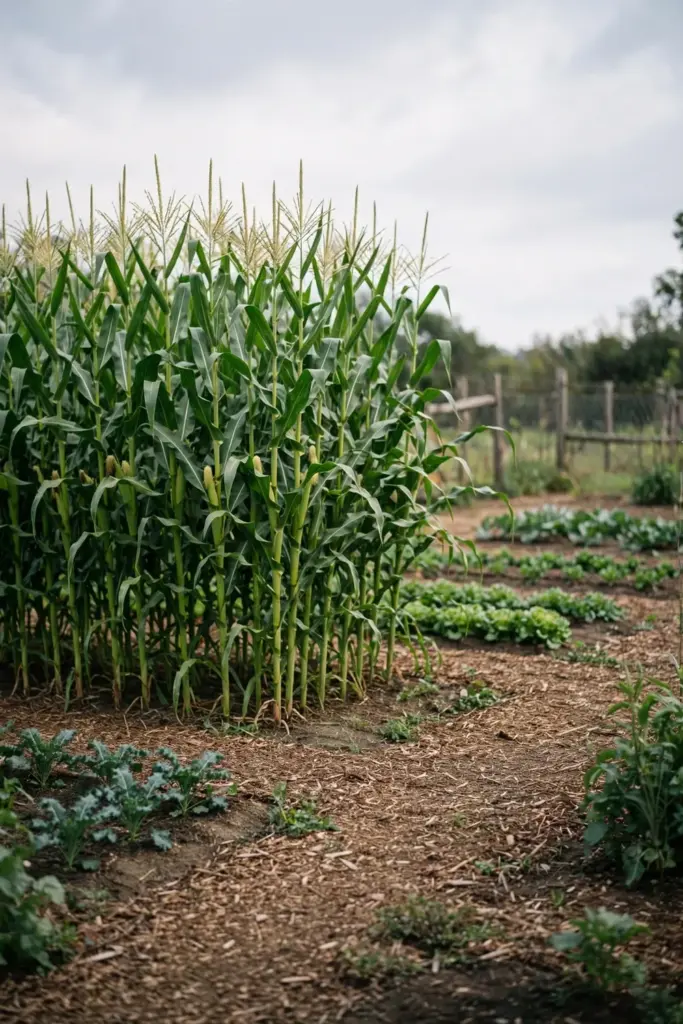
Wind matters as much as sun. Corn pollinates on moving air, and a fence or a hedge on the windward side steals pollen from the silks. Give the block open ground on all sides so wind moves through it. A block tucked against a fence on the windy side pollinates poorly even when the soil and feeding are right.
Room also means room for you. Leave a path around the block for watering, feeding, and picking. A block you cannot reach is a block you cannot tend. Picking needs a clear walk around every side, because cobs ripen on all sides of the block at once.
Think about what stands around the patch before sowing. A tall fence on the windward side blocks the breeze that carries pollen. A tree to the north throws shade across the block through the day. A hedge hard against the block steals wind and water. The same hedge a good distance away breaks gales and lets breezes through.
Mulch the paths around the block, not just the bed, because mulched paths stay firm after watering and keep boots clean at picking time while bare paths turn to mud in a wet week and carry weed seed into the bed.
Build Rich Soil Before You Sow
Corn wants deep, well-drained loam rich in organic matter. Dig compost or well-rotted manure through the bed before sowing, and let the bed settle before the seed goes in.
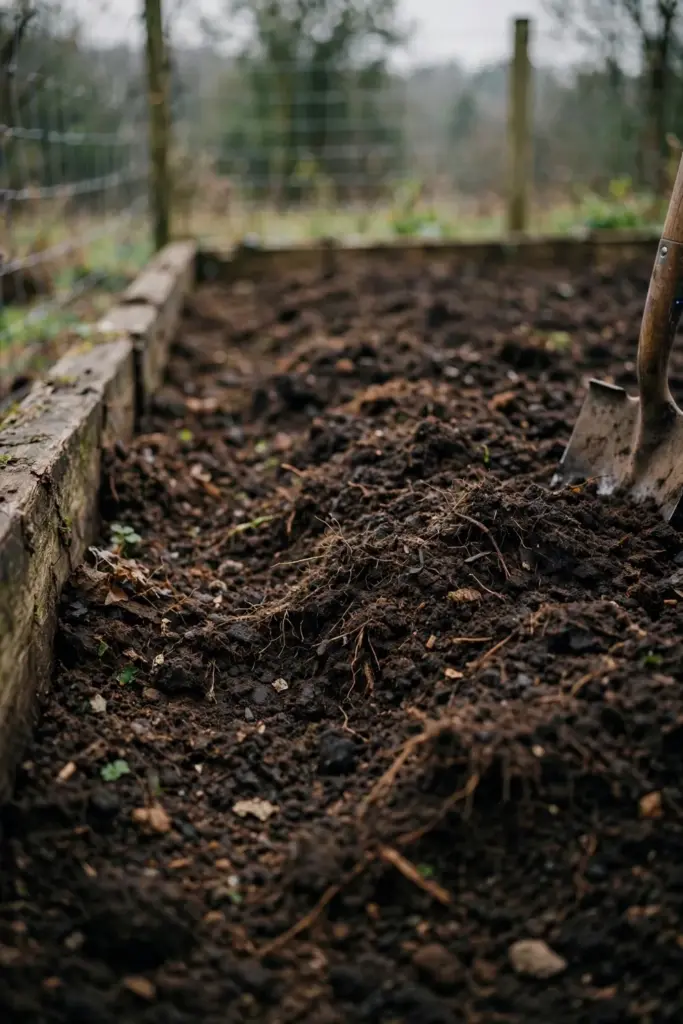
Corn grows best at pH 6.0 to 7.0, according to the Virginia Tech Extension sweet corn guide. Test the soil before sowing. Lime lifts a low pH and sulfur lowers a high one, and both need weeks to work. A test in autumn fixes the bed before spring sowing. Building soil health is a long game, and building soil health covers the steps that pay off across seasons.
Dig the bed a spade deep before sowing. Corn roots chase loose soil, and a compacted layer stops them. Fork the base of the trench to break a hard pan. A bed dug once in autumn needs only a light fork before spring sowing.
Fresh manure burns seedlings. Use compost or manure that sat and rotted for months, not a fresh load from the stable. Fresh manure also carries weed seed. A rotted pile smells like soil, not ammonia, and that smell tells you it is ready.
Beans and pumpkins grow well beside corn. Beans fix nitrogen in the soil and pumpkins shade the ground under the stalks. This old Three Sisters pairing still works in a home bed. Give the beans a stalk to climb and give the pumpkins room to run outside the block, so neither one crowds the corn.
Sow in Blocks, Not in Single Rows
Sow corn in a block of at least 4 short rows. Wind carries pollen from tassel to silk, and a block keeps pollen inside the patch.
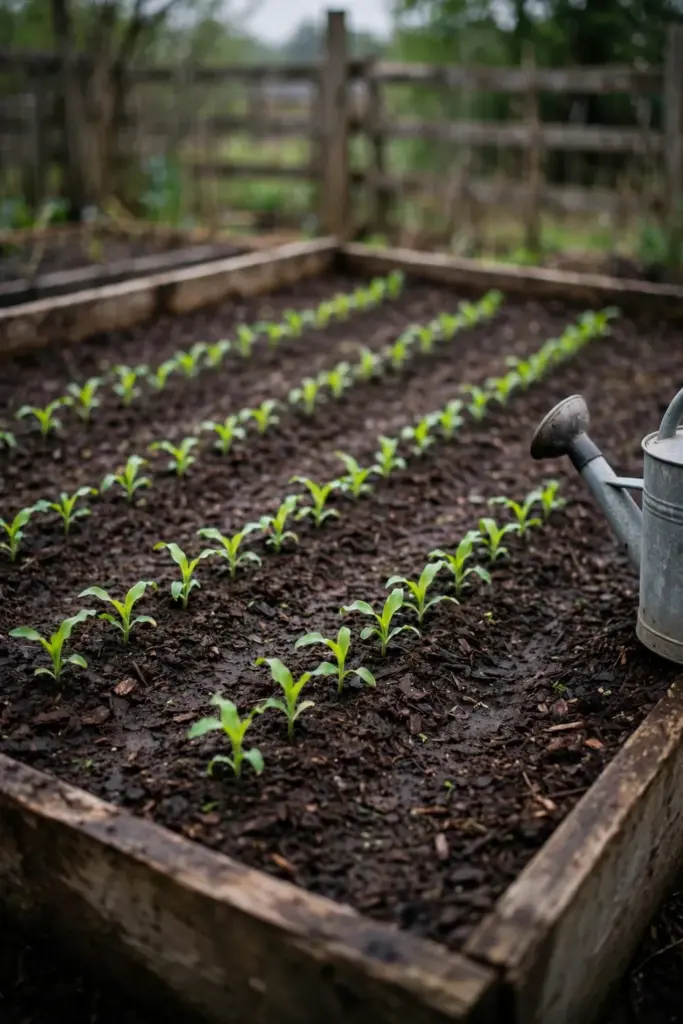
Sow seed 2.5 to 5.1 cm deep. Space plants 20.3 to 25.4 cm apart in rows 76.2 to 91.4 cm apart, according to the University of New Hampshire Extension sweet corn guide. Sow 2 seeds per hole and thin to the strongest seedling after emergence. Thin plants look ruthless, but two seedlings in one hole fight for water and feed all season.
Each silk feeds one kernel. A silk that misses pollen leaves a blank spot on the cob. That is why a single long row fails: pollen blows past the silks and never comes back. A block catches its own pollen, and every silk gets several chances.
Sow seed where it will grow. Corn seedlings resent transplanting, so direct sowing beats pots of seedlings. Sow a small block every 7 to 10 days for a steady harvest, according to the University of New Hampshire Extension sweet corn guide. Three small blocks beat one large block, because one large block ripens all at once and the table cannot keep up.
Thin when seedlings show 3 to 4 leaves. Pull the weaker seedling at each hole and leave the strong one. Thinning late wastes water on plants you will pull. Thinning early gives the keeper room to grow.
Water Deep Through Tasselling and Cob Fill
Water corn deeply and keep the soil moist from tasselling through cob fill. Dry soil at silking leaves gaps on the cob.
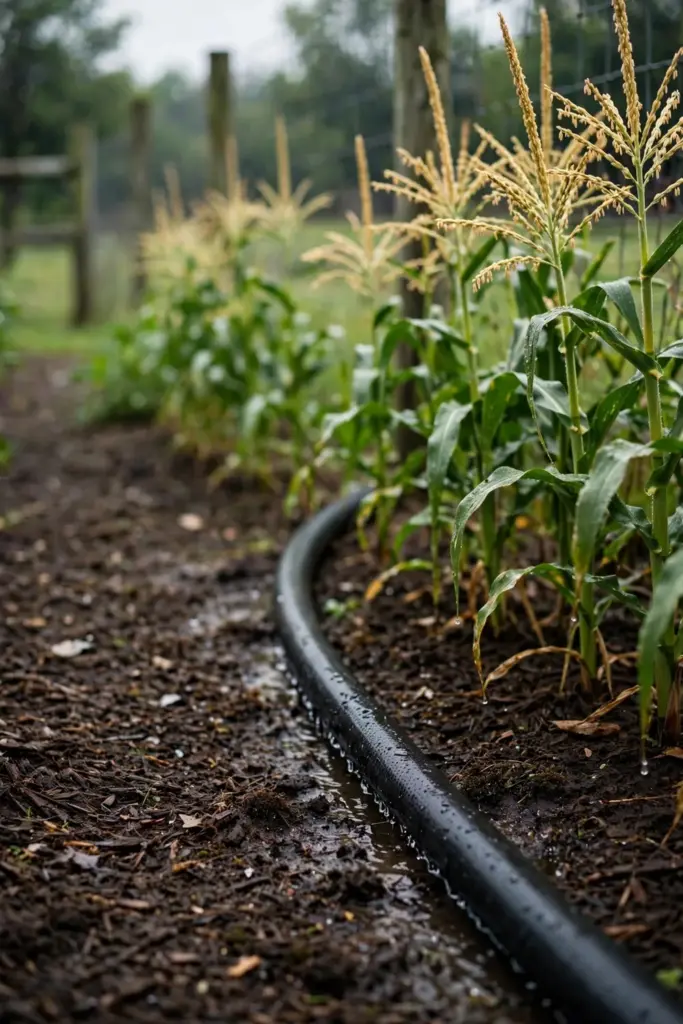
Corn roots run shallow, so a dry week at silking costs kernels even when the plants look tall. Water the soil, not the leaves. Wet leaves invite leaf disease, and dry cobs never fill. A soaker hose or a slow bucket at the base puts water where roots can reach it.
Mulch holds moisture between waterings. A straw or leaf mulch layer keeps the soil cool and cuts evaporation on hot days. Mulching for weed control, moisture, and soil health covers how thick to lay it and what to keep away from stems. Water deeply once the mulch is down, so moisture reaches the roots instead of sitting in the mulch.
Check the soil before watering. Push a finger 5 cm into the soil. Dry soil at that depth means water now. Damp soil means wait.
Leaves tell you when water runs short. Leaves curl inward along the midrib on a dry afternoon. Silk tips dry early. Cobs fill poorly after a dry silking week. Water before leaves curl, not after. A plant that wilts at noon and recovers by evening still lost growth that day.
Count rain as watering. A good storm does the job for the week. Skip the hose after rain and check the soil instead. A bed watered after rain stays wet too long, and wet feet slow corn as surely as dry soil.
Feed Corn Like the Heavy Feeder It Is
Feed corn twice after sowing: once when plants reach knee height, and once when tassels appear. Corn is a heavy feeder, and pale leaves mean hunger.
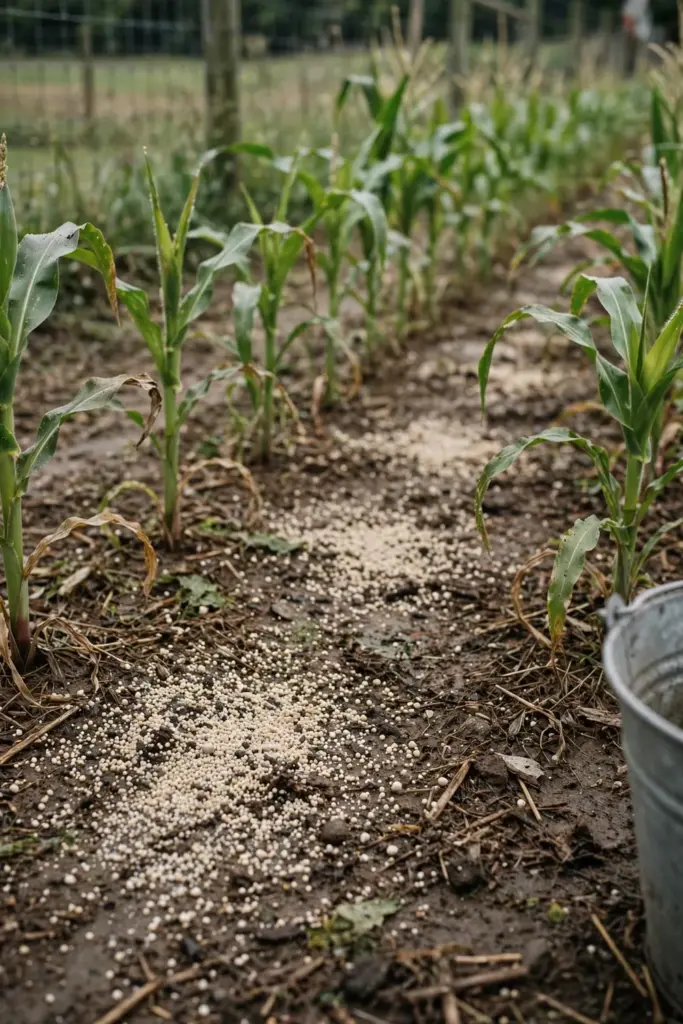
The University of New Hampshire Extension sets sidedressing at about 1.1 kg of a 10% nitrogen fertilizer per 30.5 m of row, according to the University of New Hampshire Extension sweet corn guide. Spread the fertilizer between the rows and water it in. Never pile fertilizer against stems. Fertilizer on a stem burns it, and a burned stem feeds nothing.
The University of Georgia Extension recommends sidedressing near the V6 stage, when the plant carries 6 leaves, according to the University of Georgia Extension sweet corn growth guide. Knee height and 6 leaves land at about the same time, so either marker works. The second feed at tasselling carries the plant through cob fill, which is the hungriest week of its life.
Yellow lower leaves at tasselling mean the plant ran short of nitrogen. Feed at once and water it in. Yellow leaves at seedling stage mean cold soil or wet feet, not hunger, so check drainage before adding fertilizer.
Compost feeds the soil and fertilizer feeds the plant. Compost before sowing builds structure. Sidedressing during growth delivers nitrogen on time. A bed with compost alone still runs short at tasselling, because corn eats nitrogen faster than compost releases it.
Hand-Pollinate When the Wind Cannot Reach
Shake pollen from tassels onto silks on still mornings. Hand pollination fills cobs in sheltered yards where wind cannot reach.
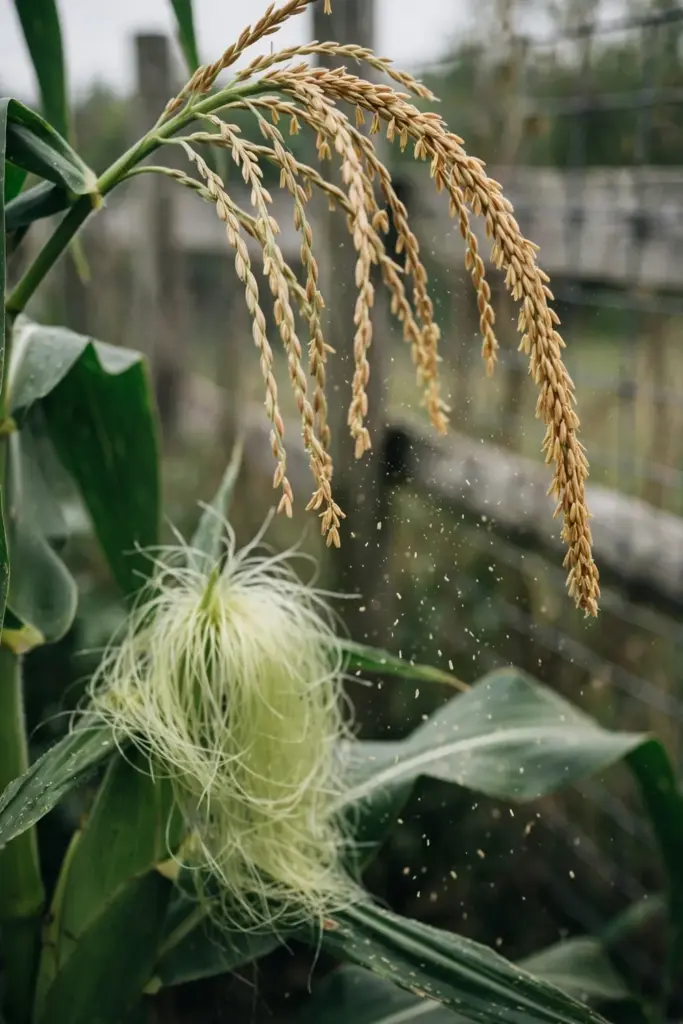
Tassels shed pollen for days after they open. Bend a tassel over the silks below and shake it. Pollen falls as pale dust. Move from plant to plant and shake each tassel over the silks of its neighbors. Repeat for 3 mornings while silks look fresh. Silks stay receptive for days after they appear, so a second shake catches late silks.
Hand pollination never replaces a block. It rescues a block that sits behind a fence or a hedge. A block in open wind pollinates itself. A block in a still corner needs a hand for 3 mornings, and those 3 mornings decide whether cobs fill or stay patchy.
Tassels shed most pollen in the morning, when the air dries after dew. Shake tassels between breakfast and midday for the best fall. A shake in wet air moves little pollen. A shake in the heat of the afternoon finds the day’s pollen already spent.
Skip spraying during pollen shed. Any spray at that time washes pollen off silks and kills the insects that visit the patch. Spray before tasselling or after silks brown, never between.
Check Earworm, Slugs, Birds, and Possums at a Glance
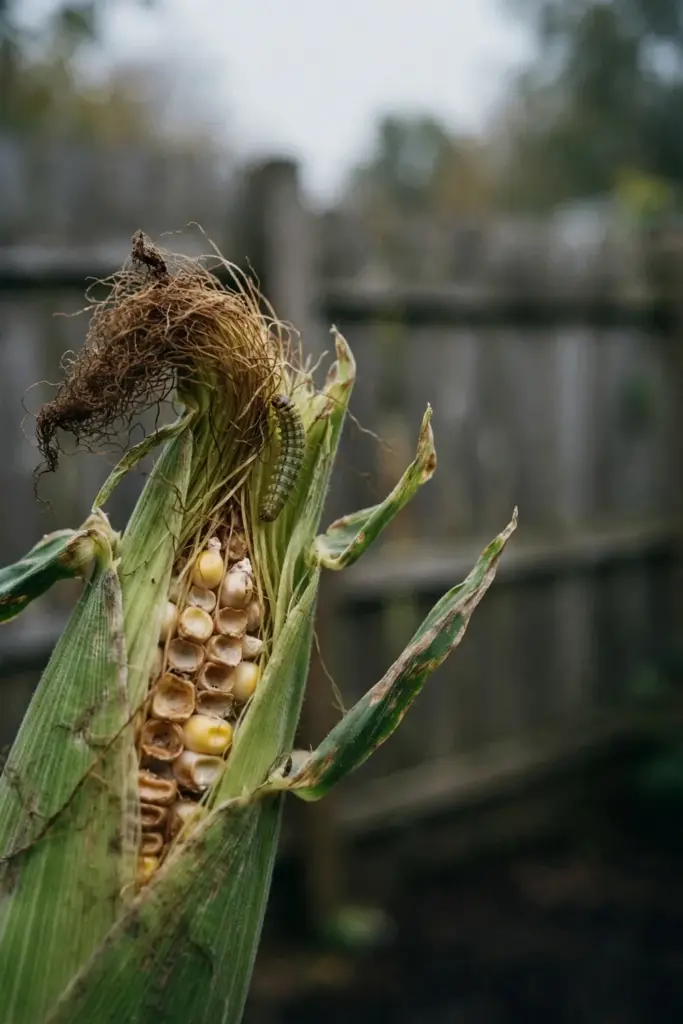
Check silk tips weekly from silking onward. Earworm larvae feed inside the cob tip, so the silk tip is where you catch them.
| Pest | Sign | Organic Fix |
|---|---|---|
| Corn earworm | Chewed silk tip, larvae in cob tip | Pinch the silk tip, hand-pick larvae |
| Slugs and snails | Holes in seedlings, slime trails | Hand-pick at night, clear hiding places |
| Birds and possums | Stripped cobs, torn husks | Net the block, fence the bed |
Earworm causes the most cob damage in a home patch. Pinch the silk tip where larvae feed, and pull any larva you find. A tight net over the block keeps birds and possums off ripening cobs, and a fence keeps possums out of the bed. Slugs attack seedlings, so check the bed at night while plants are small.
Earworm moths lay eggs on fresh silks at night. Larvae hatch and crawl down the silk channel into the cob tip. That is why the tip is the battleground. A tight husk tip slows them. A loose husk tip invites them. Check tips every few days from the first silk to the last pick.
Netting stops birds and possums, but it must sit clear of the cobs. Netting draped on cobs tangles birds and tears husks. Hold nets up on stakes or hoops, and check them daily. A net on the ground catches more wildlife than cobs.
Leave ladybirds and lacewings alone. They eat aphids on corn leaves and cost nothing. A spray aimed at one pest kills them too. Check the patch before spraying anything, and spray only the pest you named.
Organic pest control covers the full approach: identify first, then act with the lightest fix that works. Follow the label on any bought spray. Keep pets and children away from sprayed plants until dry. One pest at a time, one fix at a time. A sprayed patch without a diagnosis kills good insects and leaves the real pest standing.
Harvest When Silks Brown and Kernels Run Milky
Pick a cob when silks turn brown and dry and the husk feels full. The milk test confirms it.
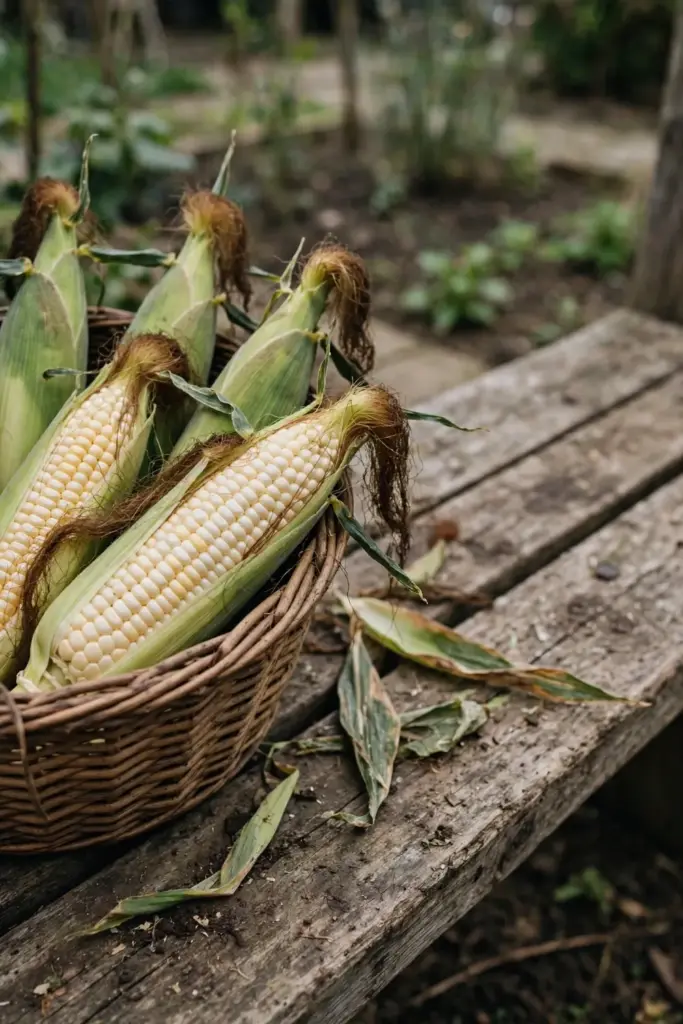
Peel back a corner of husk and press a kernel with a thumbnail. Milky juice means pick now. Clear juice means wait. Doughy kernels mean the cob passed its best. Check one cob per block, not every cob. The rest of the block follows within days.
Each sowing stays at its best for 7 to 10 days, according to the University of New Hampshire Extension sweet corn guide. Pick cobs as they ripen, every day or two, rather than stripping the block in one go. A cob left a week past its best turns starchy and tough, and no cooking fixes it.
Pick in the morning when cobs are cool. Morning cobs carry the most sugar and the least field heat. Carry a bucket and twist each ripe cob down and away from the stalk. A clean twist snaps the cob free without tearing the stalk.
Check ripeness without peeling every cob. A ripe cob feels blunt and full at the tip through the husk. An unripe cob feels pointed and loose. Peel one cob per block to confirm, then pick the rest by feel. Peeling every cob dries the kernels that stay on the stalk.
Eat or Freeze Corn on Picking Day
Eat corn the day you pick it. Sugars turn to starch after picking, and a cob picked yesterday never tastes like one picked today.
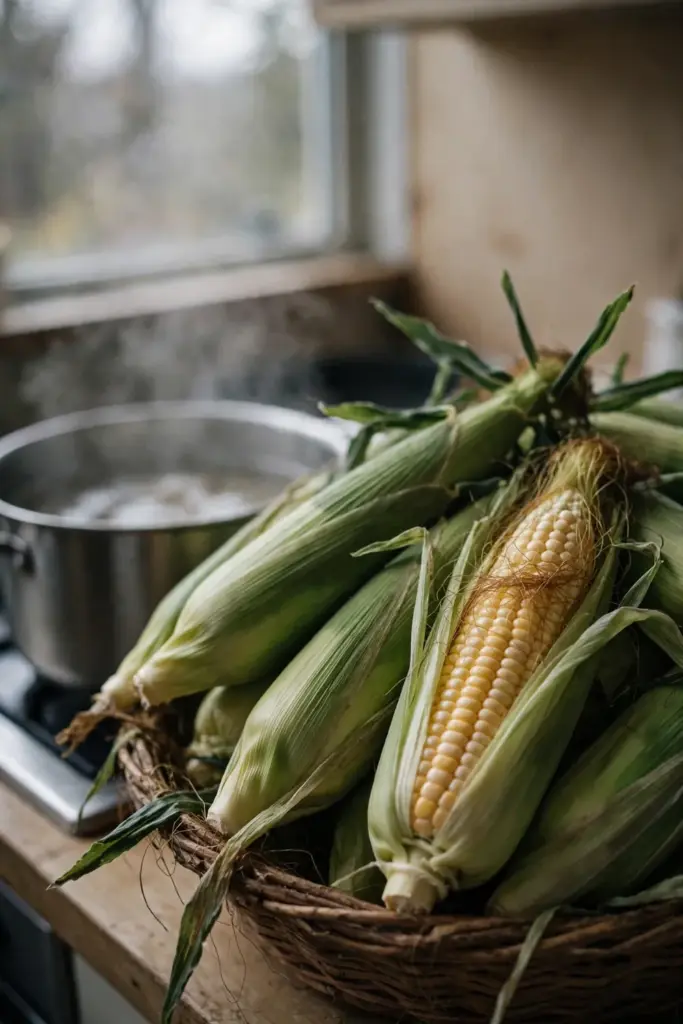
Cook cobs in plain water. Boil or steam them briefly, just until hot through. Long boiling leaches sweetness into the pot. Grill cobs in their husks for smoke without drying them out. Butter and salt go on at the table, not in the pot.
Blanch cobs and freeze them if the patch outruns the table. Blanching stops the enzymes that turn sugar to starch in storage. Freeze cobs whole, or cut kernels off the cob after blanching for a smaller package that cooks straight from frozen.
A picked cob keeps in the fridge for a few days, but every day costs sweetness. The fridge slows the change. It never stops it. Eat the oldest cobs first and freeze the rest.
Grilling suits cobs picked the same day. Soak cobs in their husks in water first, then grill over medium heat and turn often. Husks char and steam the kernels inside. Peel back the husk at the table. A cob grilled past its best dries out, so grill only fresh cobs.
Grow Corn in Pots When Space Is Short
Grow corn in pots only as a backup. Corn is a block crop, and pots shrink the block.
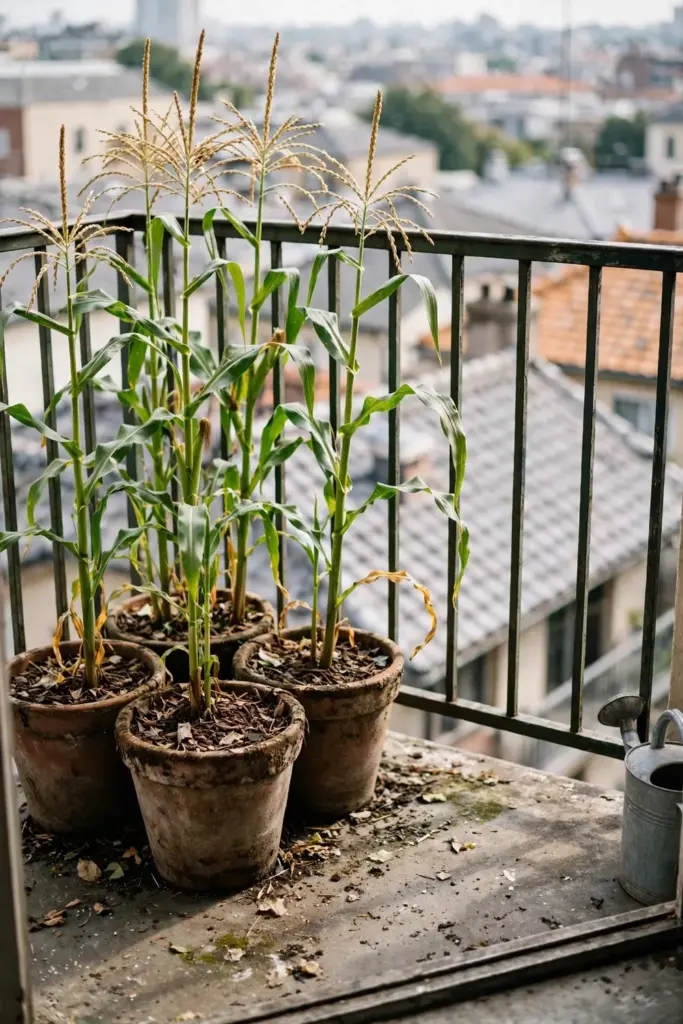
Use a large pot per plant and group pots in a block of at least 4 pots. Set pots close together so pollen stays inside the group. Hand-pollinate daily, since a pot block holds less pollen than a bed. A pot block behind a wall needs a shake every morning while silks look fresh.
Water pots daily in summer. Pots dry faster than beds, and a dry pot at silking costs kernels. Feed pots at the same two marks as beds: knee height and tasselling. A pot holds less soil, so it holds less feed, and a hungry pot plant shows it fast.
Fill pots with potting mix, not garden soil. Garden soil sets hard in a pot and drowns roots. Potting mix drains and holds air. Top up the mix after the first watering, since mix settles and leaves a gap at the rim.
Expect smaller cobs from pots. A pot plant grows a smaller root system than a bed plant, and a smaller root system grows a smaller cob. Pots suit a taste of corn on a balcony, not a family harvest. For a real harvest, a bed beats pots every time.
Fix Patchy Cobs, Yellow Leaves, and Lodging
Patchy cobs mean poor pollination. Sow in a block next time, and hand-pollinate this block for 3 mornings. A single row or a windy fence line causes the same gap. Move the block to open ground and shake tassels over silks while silks look fresh. Sow rows across the prevailing wind when you can. Wind blowing down the rows carries pollen past the silks. Wind blowing across the rows pushes pollen from row to row.
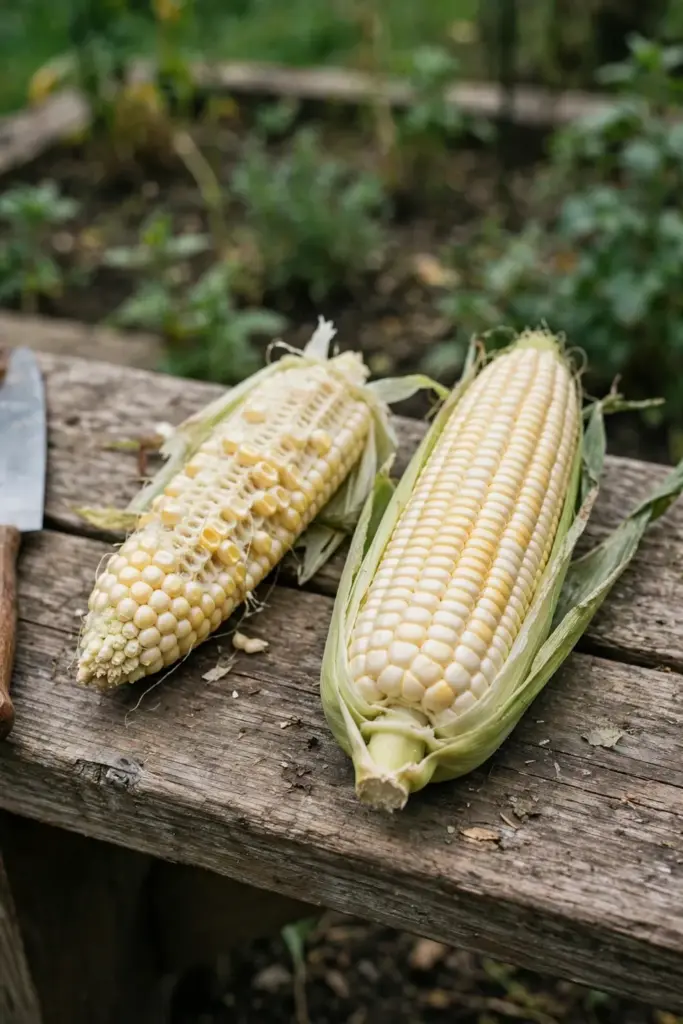
Yellow leaves mean hunger or dry soil. Feed at knee height and tasselling, and water deeply at silking. Yellow lower leaves at tasselling mean nitrogen ran short. Yellow seedlings mean cold soil or wet feet, so check drainage before adding fertilizer. A pale plant in wet soil needs air, not feed.
Lodged stalks mean wind or shallow roots. Hill soil around the base of each plant after thinning, so the mound braces the stalk and covers shallow roots. A lodged plant often rights itself in a few sunny days. Prop up young plants that stay down. Leave older plants alone, since a bent stalk still feeds its cob.
Frequently Asked Questions About Growing Corn in Australia
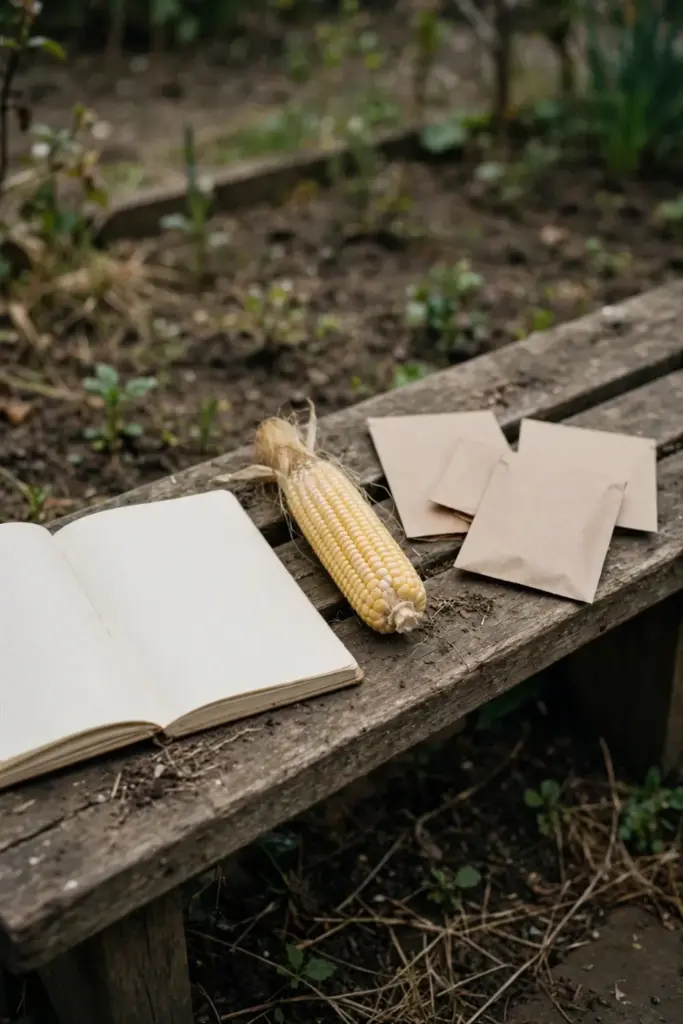
A single row pollinates poorly. Wind carries pollen past the silks, and each silk that misses pollen leaves a blank spot on the cob. Sow in a block of at least 4 short rows. A block catches its own pollen and fills cobs. If space allows only one row, hand-pollinate daily by shaking tassels over silks.
Half-full cobs mean poor pollination. A single row, a fence on the windy side, a heatwave above 35°C at silking, or a spray during pollen shed all cut kernel set. Sow in a block in open wind, hand-pollinate on still mornings, and skip spraying between tasselling and silk browning. The next block fills when pollen reaches every silk.
Silks turn brown and dry, and the husk feels full. Peel back a corner of husk and press a kernel with a thumbnail. Milky juice means pick now. Clear juice means wait a few days. Doughy kernels mean the cob passed its best. Pick in the morning, and eat the cob the same day for the sweetest result.
Two varieties in one patch cross-pollinate and lose their flavor, especially supersweet next to standard corn. Separate them by 76.2 m, or sow them 2 weeks apart. In a home garden, 2 weeks apart is the practical choice. Sow the second type when the first shows 3 to 4 leaves. One variety per patch keeps the flavor true.
Corn is a tender annual and does not come back. Frost kills it, and the stalk finishes after harvest. Pull spent stalks and compost them. Sow fresh seed next season after the soil warms, since saved seed from hybrid varieties does not breed true.
Plant a Block and Eat It the Day You Pick It
Corn rewards a gardener who gets four things right: warm soil, a block, rich feeding, and picking day. Warm soil starts the seed, a block fills the cob, feeding carries the plant through cob fill, and picking day decides the flavor.
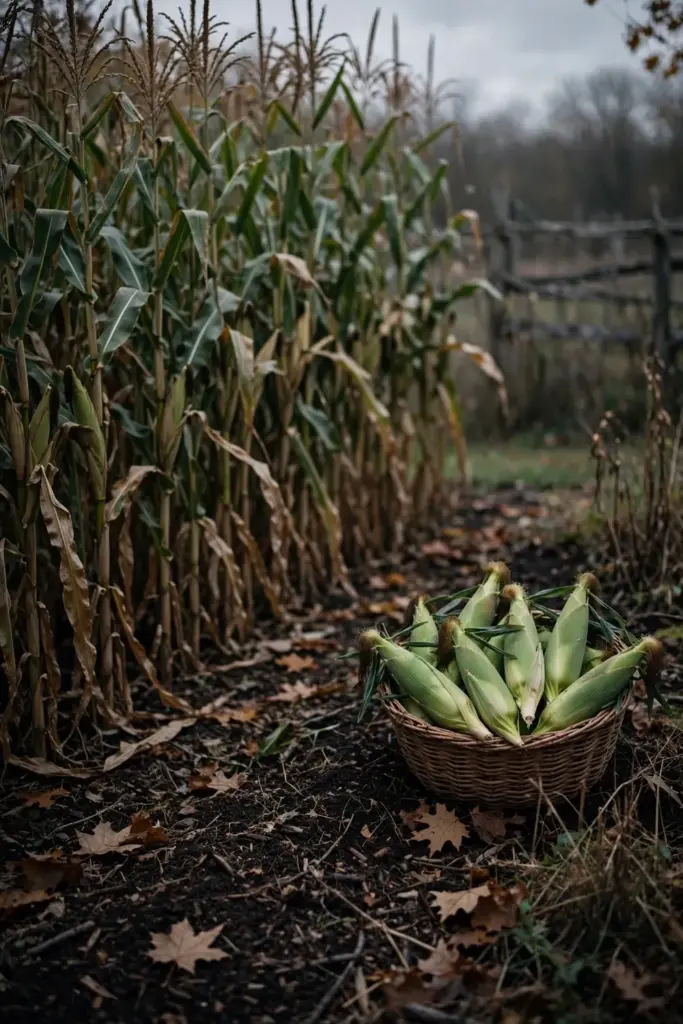
Start with one block of one variety. Sow after the soil warms, water through tasselling, feed at knee height and tasselling, and check silk tips weekly, then pick each cob when silks brown and kernels run milky and eat it the same day. The second block gets easier, because the first one showed what the patch actually grows.