
Gray spots about a quarter inch across on your St. Augustine grass are usually gray leaf spot, a fungal disease that explodes when daytime temperatures sit between 80 and 90 F with humid nights above 65 F. The short version of this whole article: most home lawns beat it with watering changes, smarter mowing, and nitrogen discipline alone, and fungicides are a backup for severe cases, not the first move.
The disease is easy to misread. Heat stress, brown patch, and dollar spot all turn lawns ugly in the same months, and treating the wrong problem wastes money. This guide walks you through identifying gray leaf spot by its lesions, understanding why it showed up, and working through nine treatments in the order that actually matters, with honest limits on what each one does.
If the damage looks more like large tan rings with a dark border than small gray-centered spots, you may be dealing with a different disease entirely, and our brown patch guide covers that one separately.
What Gray Leaf Spot Actually Is
Gray leaf spot is a foliar fungal disease caused by Pyricularia oryzae (also published as P. grisea; the sexual stage is Magnaporthe oryzae), according to the University of Georgia turfgrass pathology program. It is a true fungus, not an oomycete, which matters because it responds to different fungicide classes than water-mold diseases like Pythium.
The fungus survives in thatch, debris, and infected leaf tissue, then produces gray masses of spores during warm, humid weather. Wind, splashing water, and mower tires carry those spores across the lawn. Infection needs roughly nine hours of leaf wetness, which is why the disease follows stretches of humid nights, frequent rain, or evening irrigation.
Gray leaf spot is primarily a leaf disease. It kills blades, not roots or crowns, so a lawn that looks wrecked in August can push new growth and recover fully once conditions change. That single fact shapes the whole treatment approach: protect new leaves and fix the conditions, and the lawn usually does the rest.
How to Identify Gray Leaf Spot on St. Augustine Grass
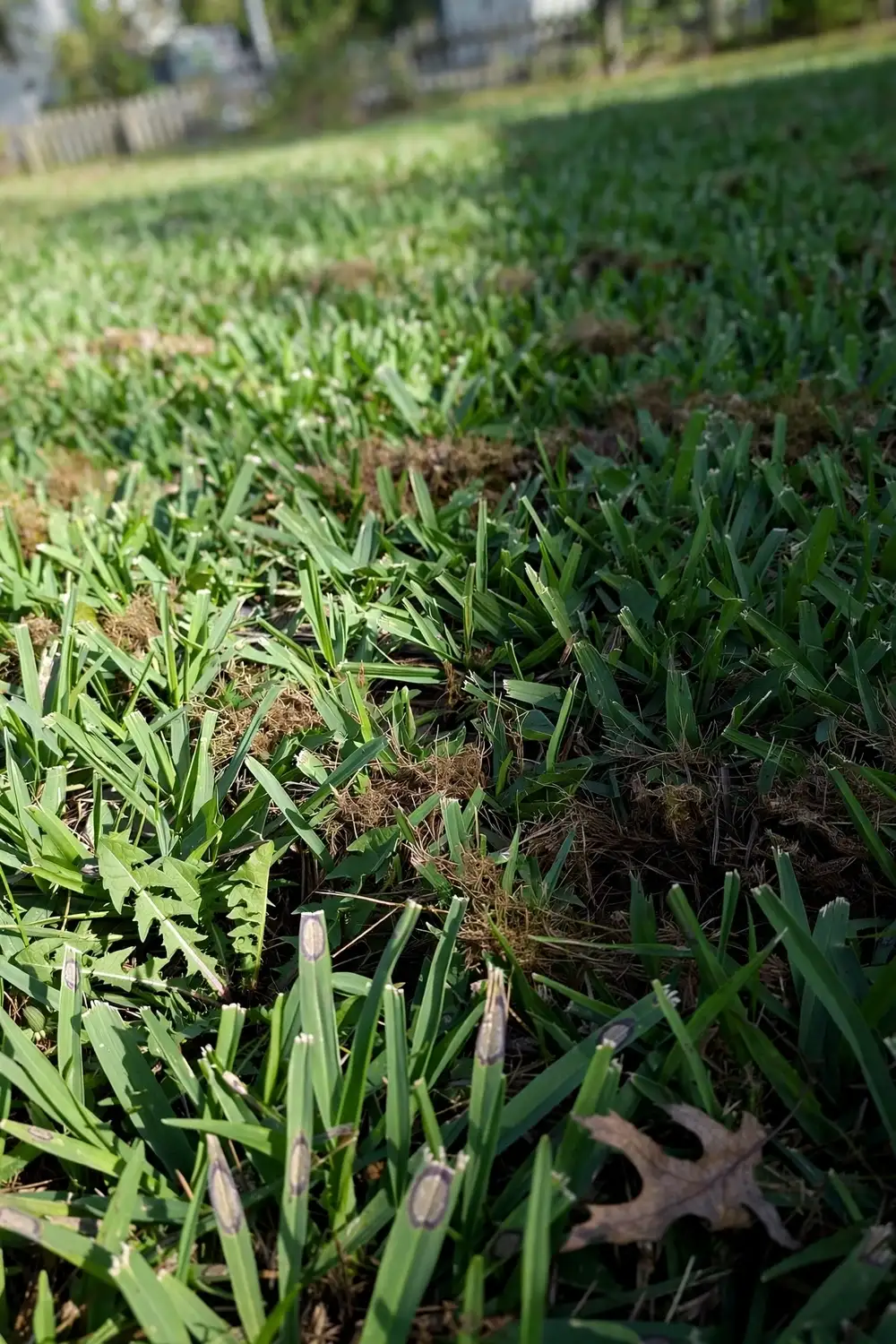
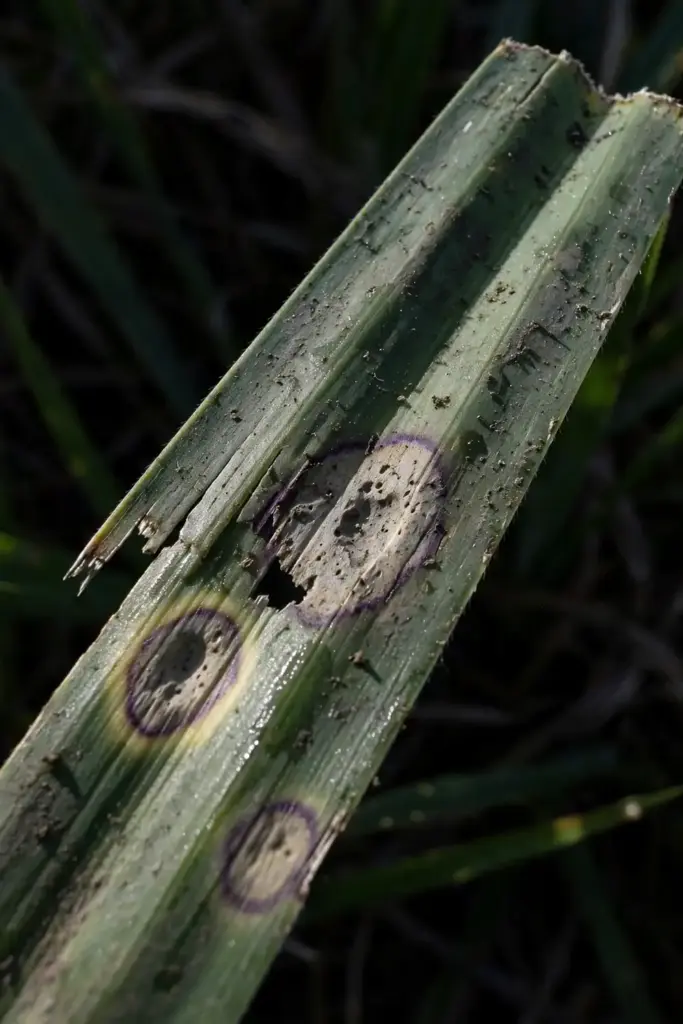
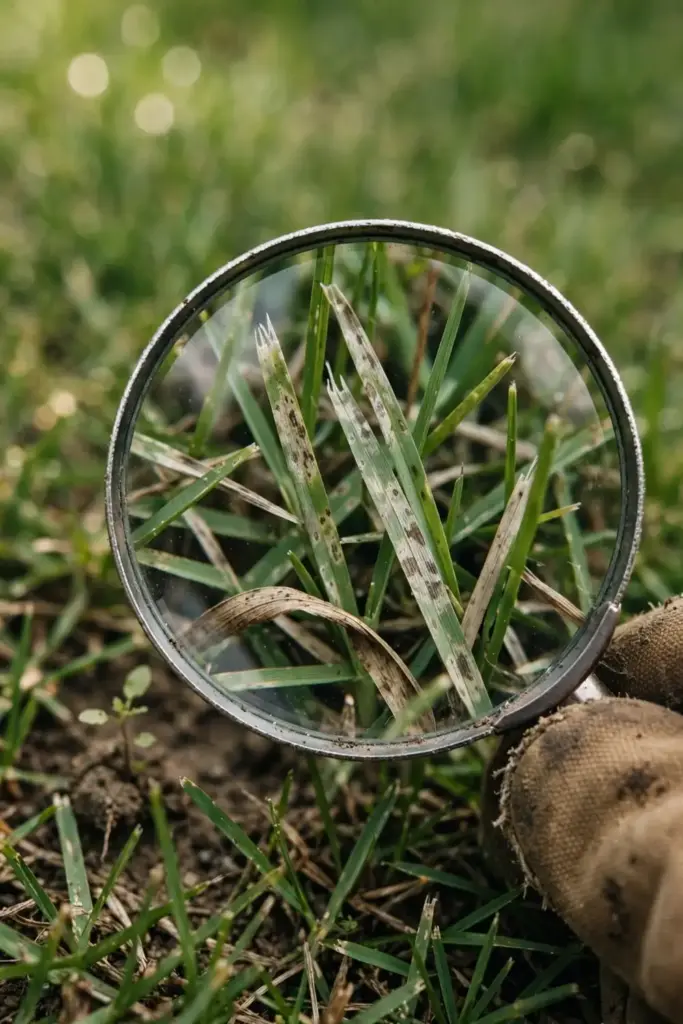
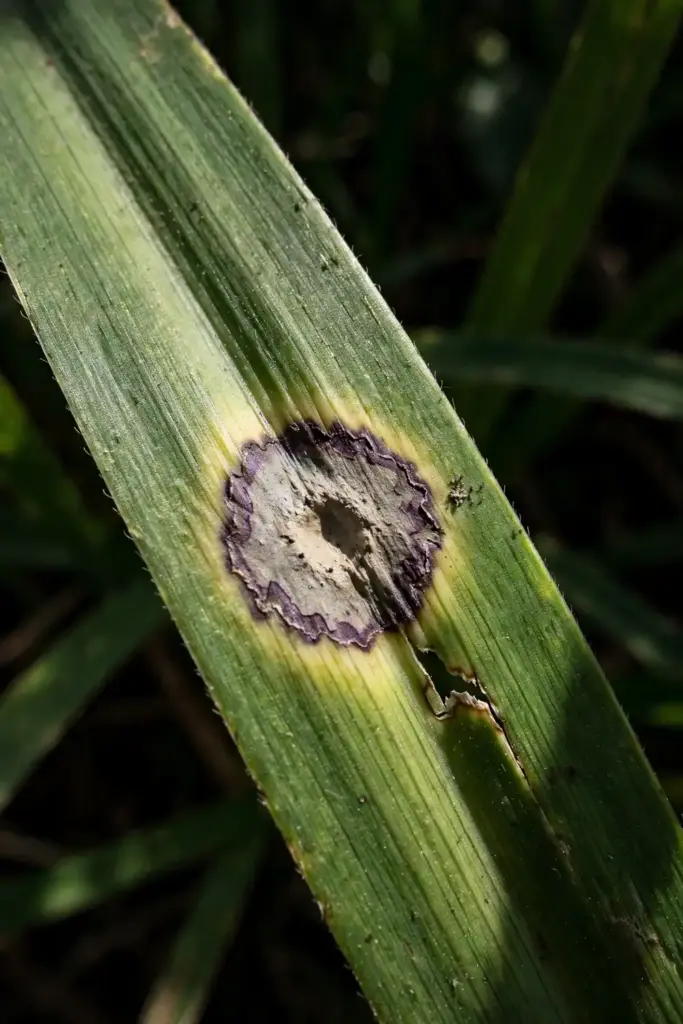
Start with the lesions, because they are distinctive once you know the pattern. On St. Augustine grass, the first sign is small brown spots on the leaf blades and stems. Those spots enlarge fast, reaching about a quarter inch in length, and turn bluish-gray, oval, or elongated, the University of Georgia reports.
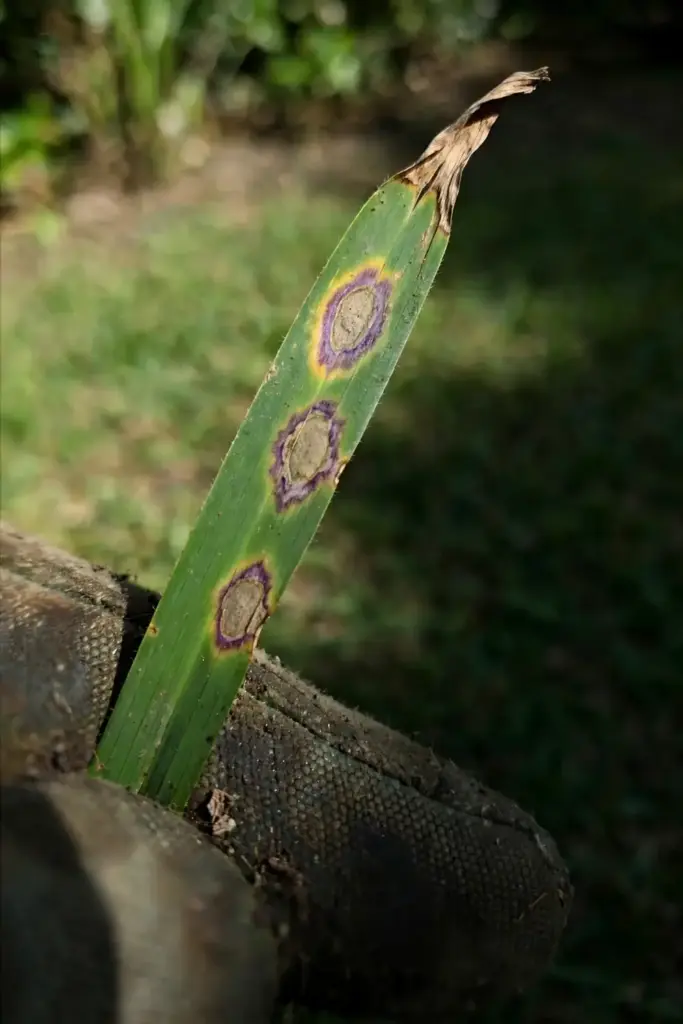
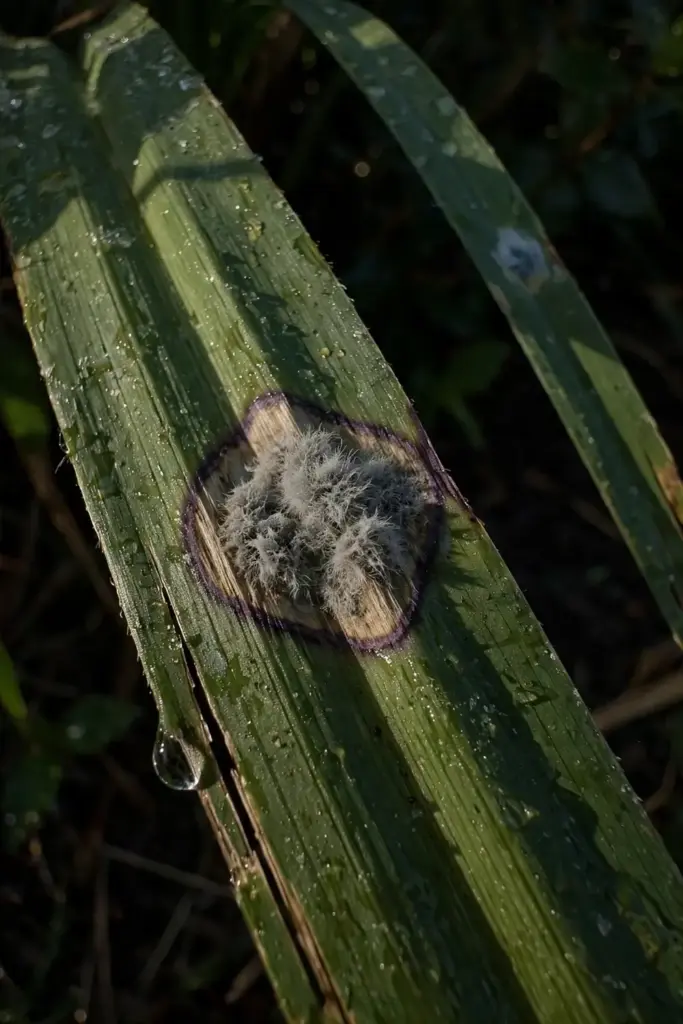
Mature lesions are the giveaway. They have tan to gray depressed centers with irregular purple-to-brown margins, and some show a yellow halo around the edge. During active sporulation in warm, humid weather, the lesion centers may carry visible gray masses of spores. Severely affected blades wither, shrivel, and turn brown, and large areas of turf start to look dry and thin even though the soil is moist.
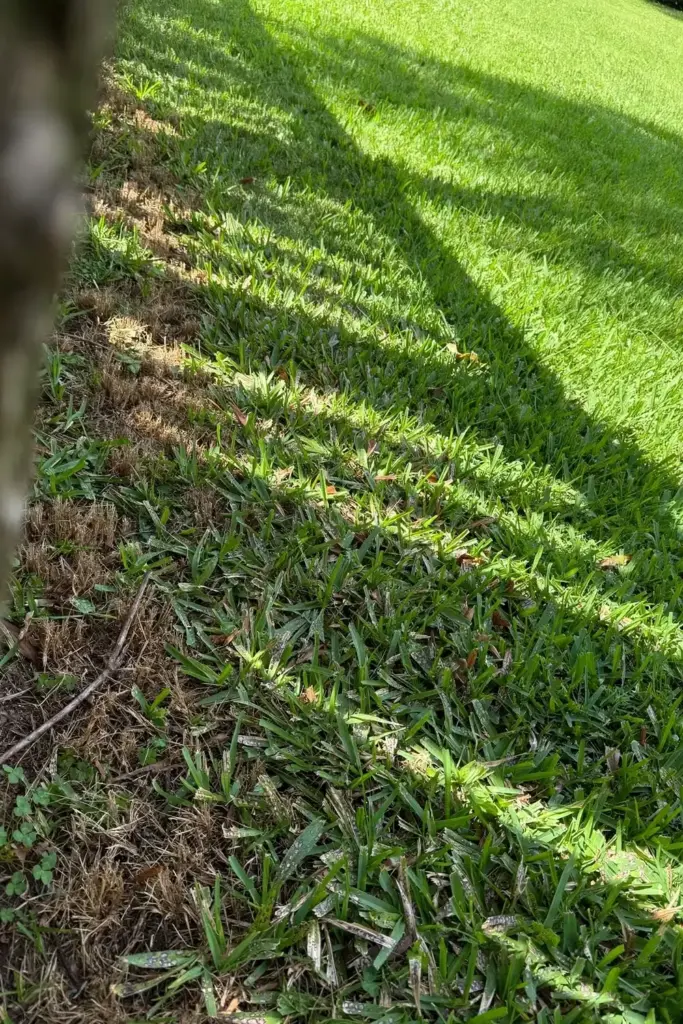
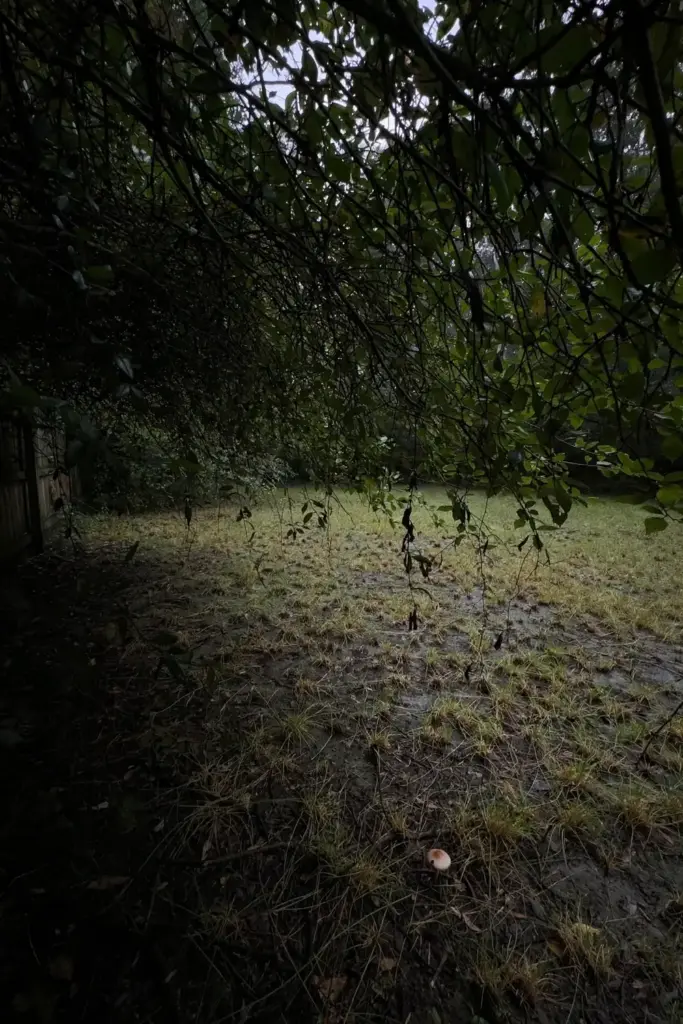
Check the pattern across the lawn. Gray leaf spot often starts in the shadiest, most humid spots with limited airflow, then spreads outward. If the damage concentrates under trees and along fences while the sunny middle of the lawn looks fine, the pattern supports the diagnosis.
How to Identify Gray Leaf Spot on Ryegrass and Fescue
On perennial ryegrass and tall fescue, the disease wears a slightly different outfit. The University of Massachusetts turf program describes initial small, water-soaked lesions that turn necrotic, most often gray to light brown with a dark brown border. Older lesions sometimes carry a yellow halo.
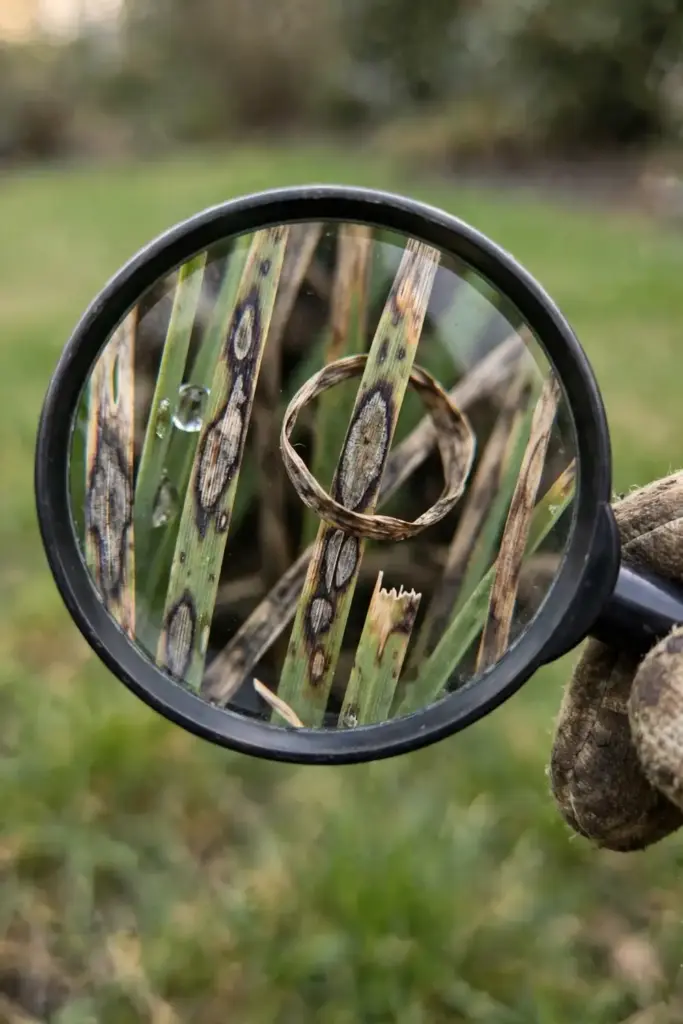
Lesions can merge into irregular shapes and blight whole blades. One signature the UMass researchers flag: blighted leaves may twist into a characteristic “fish-hook” shape and carry grayish spores and spore stalks on the surface. That twisted-blade look is a strong field clue on cool-season grasses.
Gray leaf spot on ryegrass and fescue shows up most in late summer and early fall in the Northeast, on higher-cut turf in roughs, athletic fields, and lawns. On these grasses it can be confused with drought or heat stress at first glance, because whole patches brown out. The difference is the lesions: heat stress browns blades uniformly, while gray leaf spot leaves spotted, haloed evidence on individual blades before the patch goes brown.
Which Grasses Get Hit Hardest
St. Augustine grass takes the hardest hit in the home-lawn world, especially in the Southeast and Gulf Coast. Louisiana State University notes it is the most common victim in Louisiana, with occasional trouble on Bermuda grass and centipede grass. The University of Georgia lists St. Augustinegrass, perennial ryegrass, and tall fescue as the main Georgia targets.
Perennial ryegrass runs second in many regions, and tall fescue follows. The UMass program documents significant recent outbreaks on both in the Northeast. NC State Extension’s TurfFiles disease guide notes the pathogen attacks many genera of warm-season turfgrass, which is why the disease shows up far beyond the Southeast. Bermuda grass, centipede grass, bentgrass, and various fescues can all host the fungus, but severe home-lawn damage concentrates on St. Augustine and ryegrass.
Cultivar matters inside a species. Some St. Augustine cultivars tolerate the disease noticeably better than others, and the University of Georgia recommends resistant varieties where replanting is on the table. If you are resodding a chronically afflicted area, ask the sod supplier specifically about gray leaf spot resistance rather than buying on color and price alone.
Gray Leaf Spot vs Brown Patch vs Dollar Spot vs Heat Stress
Four summer problems turn lawns ugly, and only one of them is gray leaf spot. Use this table before you spend a dollar on treatment.
| Feature | Gray Leaf Spot | Brown Patch | Dollar Spot | Heat Stress |
|---|---|---|---|---|
| Lesion look | Tan-gray depressed centers, purple-brown irregular margins, sometimes a yellow halo | Tan lesions with a dark brown border, often on the leaf margin; large circular patches | Small bleached spots with a reddish-brown border; cobweb-like mycelium on dewy mornings | No lesions; blades brown uniformly from the tip down |
| Lesion size | About 1/4 inch on St. Augustine | Lesions vary; patches 1 to 3 feet wide | Spots about the size of a silver dollar, merging into larger areas | Whole blades or whole areas |
| Pattern | Starts in shade and humid pockets, spreads outward | Circular or crescent patches, sometimes with a smoke ring edge | Scattered small spots across the lawn | Worst on slopes, near pavement, and in full afternoon sun |
| Weather trigger | 80 to 90 F days, nights above 65 F, humid, 9 hours of leaf wetness | Hot and humid, especially with excess nitrogen | Warm days, cool humid nights, low nitrogen | Prolonged heat above 90 F with dry soil |
| First response | Cut evening watering, raise mowing height | Reduce nitrogen, improve airflow | Light nitrogen feeding, morning watering | Deep watering, not fungicide |
If your lawn shows the tan-gray centered lesions with purple-brown margins, stay on this page. If you see the big rings of brown patch instead, switch to the brown patch guide linked in the intro.
Why Nine Hours of Wet Leaves Matters So Much
Every gray leaf spot outbreak is a moisture story before it is anything else. Louisiana State University’s turf pathology guide puts the infection requirement at roughly nine hours of leaf wetness during warm (82 to 90 F), humid weather. Spores landing on a dry blade mostly fail. Spores landing on a blade that stays wet overnight succeed.
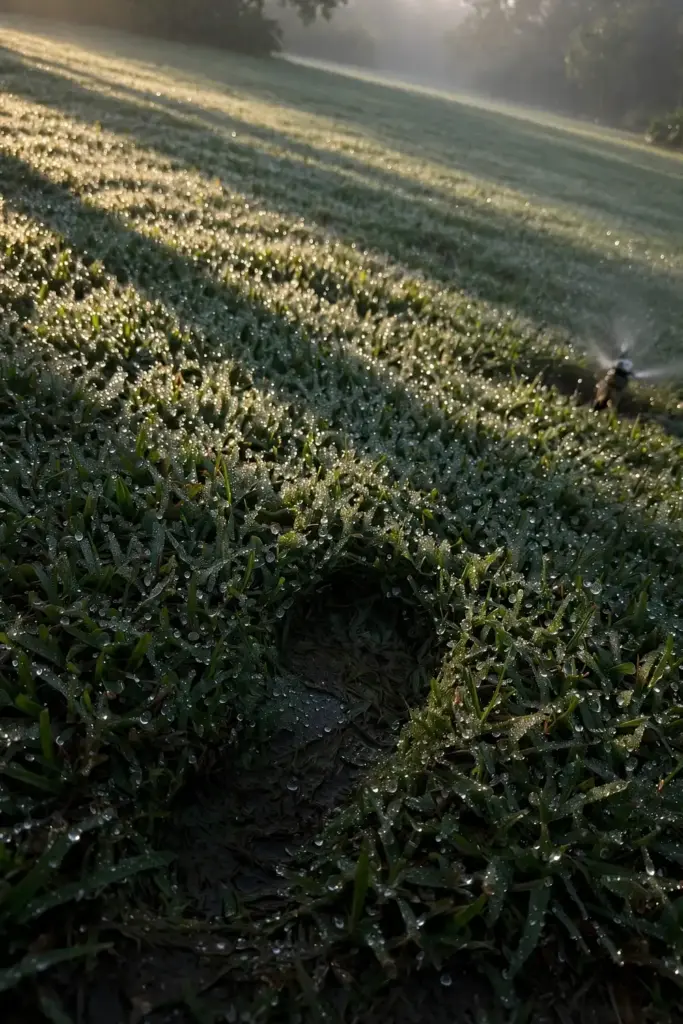
That number explains the disease’s favorite setups. Lawns watered in the evening stay wet all night, handing the fungus its nine hours on a schedule. Shaded areas dry slowly and hit the threshold even with morning watering. Alternating wet and dry spells, which the LSU guide flags specifically, seem to hit a sweet spot the fungus exploits.
It also explains why the disease favors stressed, fast-growing turf. High nitrogen pushes soft, succulent growth that stays wet longer and infects more easily. Drought-stressed turf with shallow roots, compacted soil, and heavy thatch all extend the wet window or weaken the plant’s defenses. Control the wet hours and you starve the disease of its one non-negotiable requirement.
What Makes Gray Leaf Spot Worse in a Home Lawn
Nitrogen timing is the biggest self-inflicted wound. The University of Georgia is blunt: high nitrogen levels, especially quick-release formulations applied in midsummer, make turf highly susceptible. A lawn pumped full of fast nitrogen in July grows soft, wet, long blades that the fungus colonizes eagerly.
Evening irrigation runs second. Watering after dinner keeps blades wet through the night, delivering the nine-hour infection window the fungus needs. Lawns watered deeply once a week in the early morning dry by midday and deny the fungus its window.
Thatch and compaction come third. Excessive thatch holds moisture against the crowns and serves as a spore reservoir; compacted soil keeps roots shallow and the surface wet longer. Shade and poor airflow extend drying time in the same way. Mowing wet grass spreads spores on tires and blades to healthy areas, and applying atrazine or other stress-inducing herbicides during active disease can intensify symptoms, the University of Florida notes.
None of these factors alone causes an outbreak. The disease needs the fungus, a susceptible host, and the wet-warm window together. Homeowners control two of the three.
Step 1: Decide Whether Your Lawn Needs Treatment at All
Here is the honest triage most guides skip. Gray leaf spot kills leaves, not crowns or roots. A St. Augustine lawn that looks terrible in August routinely pushes clean new growth in September once nights cool and the wet window closes. If the damage is patchy, the lawn is otherwise healthy, and the forecast shows a break in the humidity, the correct treatment may be patience plus the cultural steps below.
Treat aggressively when three things line up: the disease is spreading fast across sunny areas (not just shade pockets), lesions are killing whole blades faster than new growth replaces them, and warm humid weather is forecast to continue for weeks. Young or newly sodded lawns with shallow roots deserve faster action than established turf, because they have less reserve to regrow.
Fungicides protect new growth. They do not heal spotted blades, and they do not erase existing lesions. Every spotted blade you see today will stay spotted until it is mowed off or replaced. Anyone selling a product as a cure for existing spots is selling something the biology does not support.
Step 2: Change When and How You Water
This single change does more than any product. Clemson University’s Home and Garden Information Center recommends irrigating deeply but infrequently, about one inch of water once per week, and always in the early morning so foliage dries quickly. Morning watering breaks the overnight wet window instead of extending it.
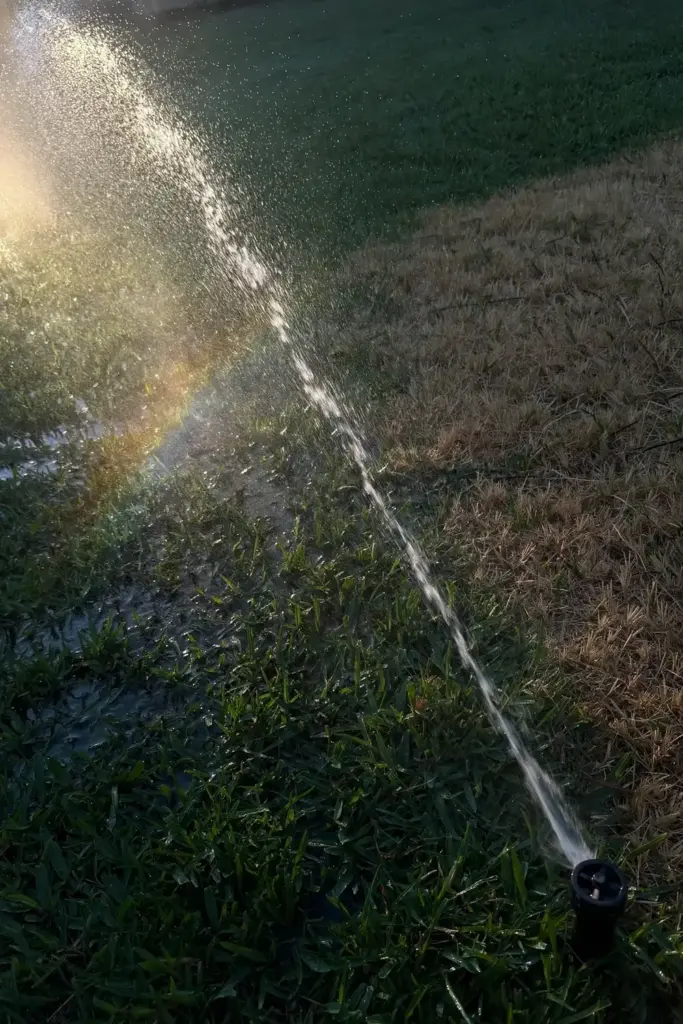
Water between roughly 4 and 8 a.m. if your timer allows it. Give the lawn about an inch per session, less if rain has already delivered it. A cheap rain gauge ends the guessing; skip the sprinkler after a thunderstorm soaks the yard. Water only when the grass shows mild stress, blades folding or footprints lingering, rather than on a fixed daily schedule.
Avoid overhead irrigation late in the day entirely while the disease is active. If parts of the lawn stay soggy, check drainage and consider aeration before blaming the fungus. Deep, infrequent morning watering grows deeper roots, and deep roots carry the lawn through the dry spells that stress turf and invite disease.
Step 3: Raise the Mower and Bag the Clippings
Raise the mowing height for the affected grass. Taller blades shade the soil, keep the surface cooler, and give the plant more leaf area to outgrow the damage. The LSU guide specifically recommends raising the mowing height to help turf recover. Cut no more than a third of the blade in any single mowing, and keep the blade sharp, because torn leaf tips stay wet longer and invite infection.
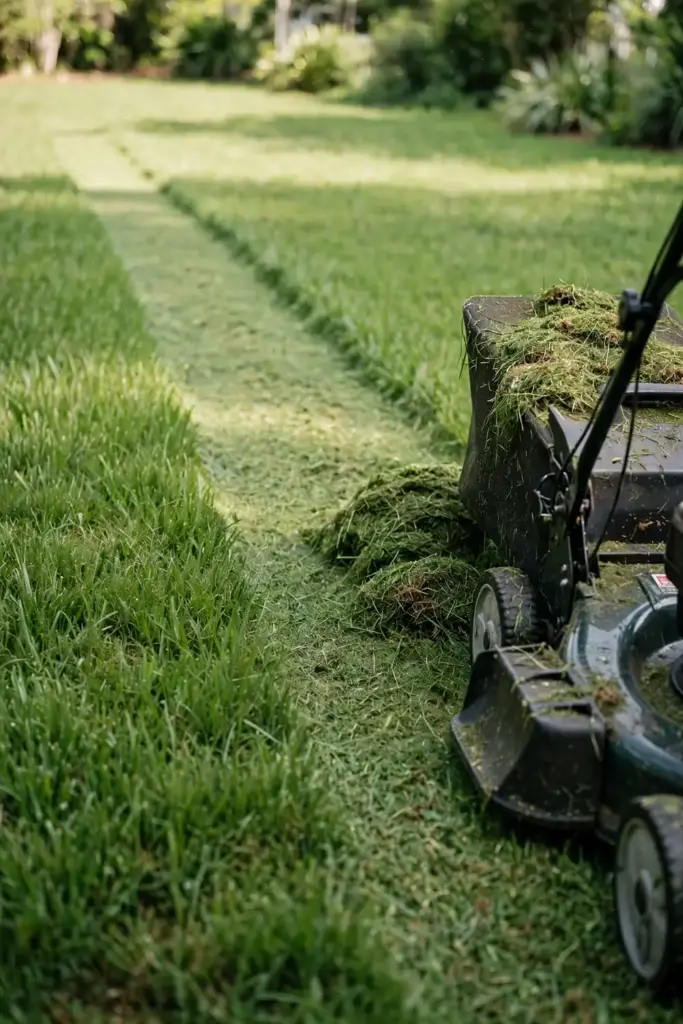
Mow only when the grass is dry. Mowing wet turf is one of the fastest ways to spread gray leaf spot, since spores ride on tires, shoes, and mower decks to healthy areas. When the disease is active, mow the healthy areas first and the diseased patches last, then rinse the deck before the next use.
Bag the clippings from infected areas and dispose of them off the lawn. Mulching clippings back in is normally good practice, but during an active outbreak it redistributes spores across the turf. Return to mulching once new growth comes in clean.
Step 4: Stop Feeding the Fungus
Nitrogen discipline is the cultural control people resist most and need most. Clemson advises avoiding medium to high nitrogen fertilizer levels while the disease is active, and LSU warns specifically against overfertilizing with nitrogen, especially quick-release formulations, during summer.
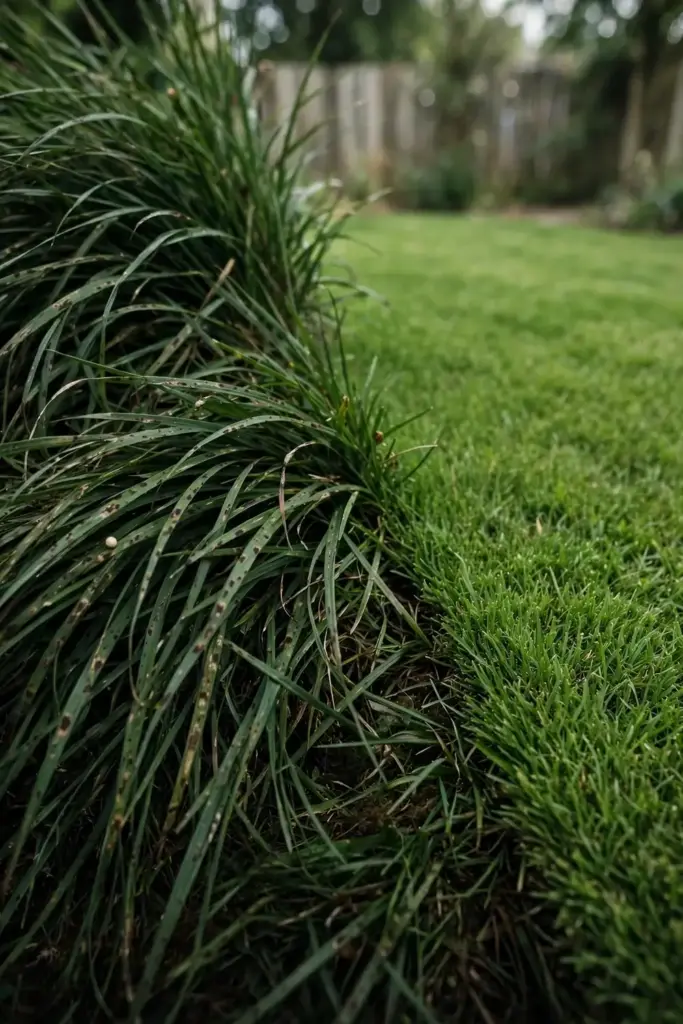
If the lawn was fertilized heavily in early summer and the disease followed, that sequence is not a coincidence. Hold off on nitrogen until the outbreak passes and new growth looks clean. When you do feed again, prefer slow-release formulations at moderate rates, and time the feeding for the grass’s real growth season rather than the disease’s favorite weather.
Potassium gets an honorable mention here. Light potassium feeding strengthens cell walls, making blades physically tougher for spores to penetrate. It is a supporting player, not a cure. It pairs well with the watering changes in Step 2. Get a soil test before adding anything, so you feed a documented deficiency instead of guessing.
Step 5: Open Up Airflow and Light
Gray leaf spot starts where air goes to die. Limb up overhanging trees, prune back shrubs crowding the lawn’s edge, and let morning sun and breeze reach the turf. Clemson lists improving air circulation and light levels among its core management tips, and it is the cheapest intervention on this list.
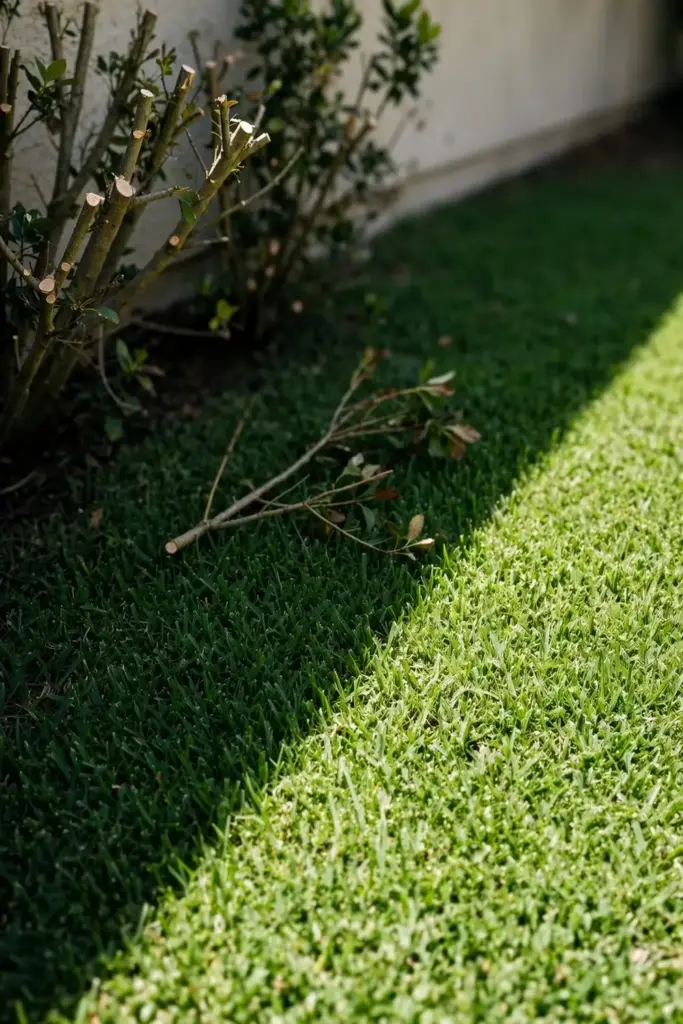
Focus on the spots where the disease started. Those shade pockets and fence lines are your early warning system; if they stay damp past midmorning while the rest of the lawn dries, the microclimate is the problem. Thinning a tree canopy is a one-time job that pays off every humid summer.
Inside the lawn, avoid anything that traps humidity at the surface. Clear fallen leaves and debris promptly during the outbreak, because debris holds moisture against the blades. Keep the lawn’s edges trimmed so air moves across the turf instead of pooling.
Step 6: Reduce Thatch and Compaction
Thatch thicker than about half an inch acts as a sponge and a spore bank. The University of Georgia recommends reducing thatch, and Clemson lists it among the core management practices. Dethatch warm-season grasses in their active growing season when they can recover quickly, not in the middle of a severe outbreak when the turf is already stressed.
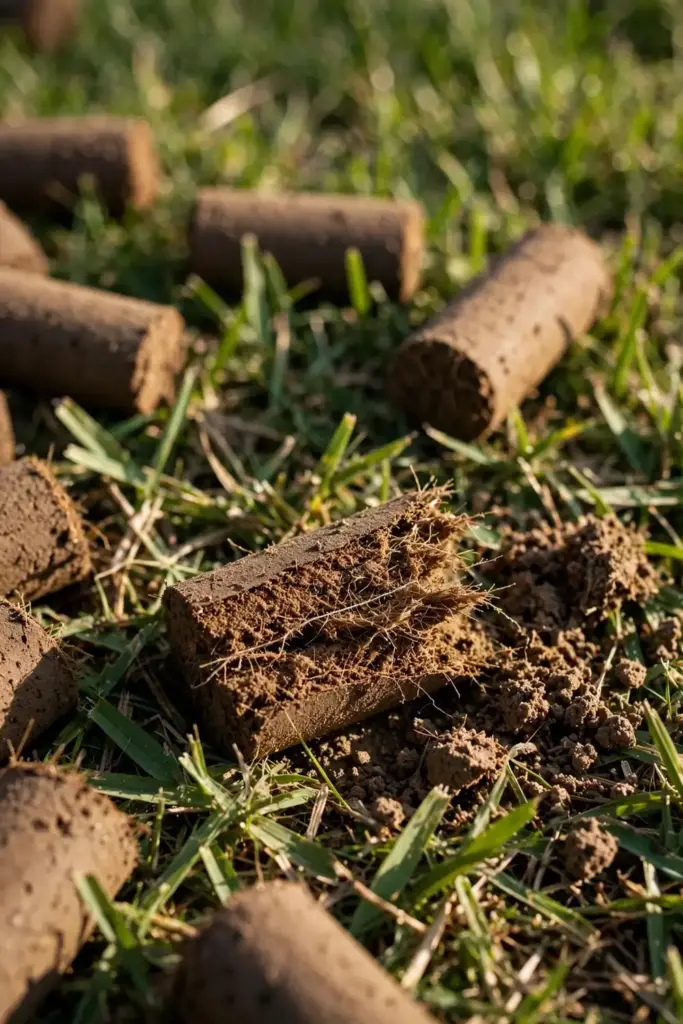
Compaction deserves the same attention. Compacted soil keeps roots shallow and the surface wet longer, both of which favor the disease. Core aeration opens the soil, improves drainage, and lets water move down instead of sitting on the surface. Aerate when the grass is actively growing and the disease pressure is moderate, then follow with the deep-watering routine from Step 2.
These are medium-effort, high-payoff steps. A lawn with open soil and thin thatch dries faster after every rain and every irrigation, which shortens the wet window the fungus depends on.
Step 7: Pick a Fungicide Class That Works on It
When cultural steps are not enough, fungicides can protect new growth, but the class matters. Gray leaf spot is a true fungus, and the effective classes are well documented. The University of Georgia’s gray leaf spot management guide lists the strobilurin, benzimidazole, DMI, carboxamide, and nitrile families as effective options when cultural controls fall short.
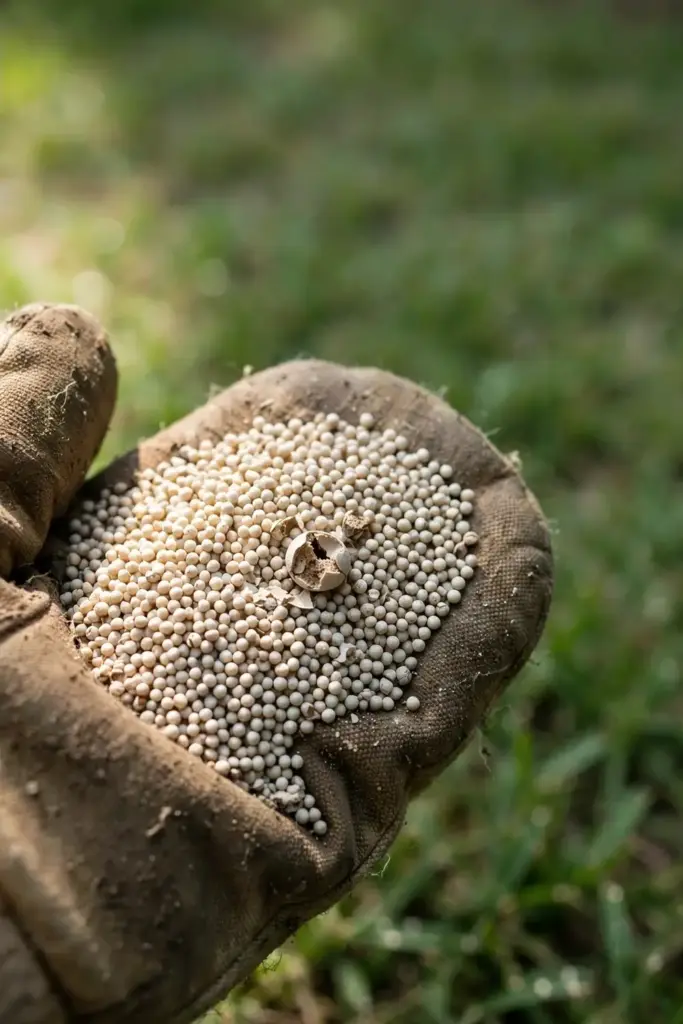
Strobilurins, also called QoI fungicides, are among the most effective. Clemson rates azoxystrobin as good and lists homeowner products such as Scotts Disease Ex and Heritage G granules. Pyraclostrobin earns the same good rating in products like Pillar G. These are systemic products that protect new growth from the inside.
Thiophanate-methyl, a benzimidazole, also rates good at Clemson, available in products like Bonide Infuse granules. DMI fungicides such as propiconazole rate fair to good and appear in products like BioAdvanced Fungus Control for Lawns; Clemson notes DMIs work best tank-mixed with a strobilurin under high pressure. The contact fungicide chlorothalonil works when applied frequently under moderate pressure or as a tank-mix partner.
Two honest limits before you buy. First, University of Florida researchers have identified strobilurin-resistant gray leaf spot populations in the Midwest, so no single class should be used alone season after season. Second, only buy products labeled for residential lawns and for gray leaf spot specifically, and follow the label rates exactly. The label is the law, not a suggestion.
Step 8: Apply It So It Protects New Growth
Timing beats quantity. Apply at the first sign of spreading lesions, not after the lawn is half brown. Fungicides guard fresh blades from infection; they cannot resurrect spotted ones. Spraying a lawn that has already been fully blighted wastes product on dead tissue.
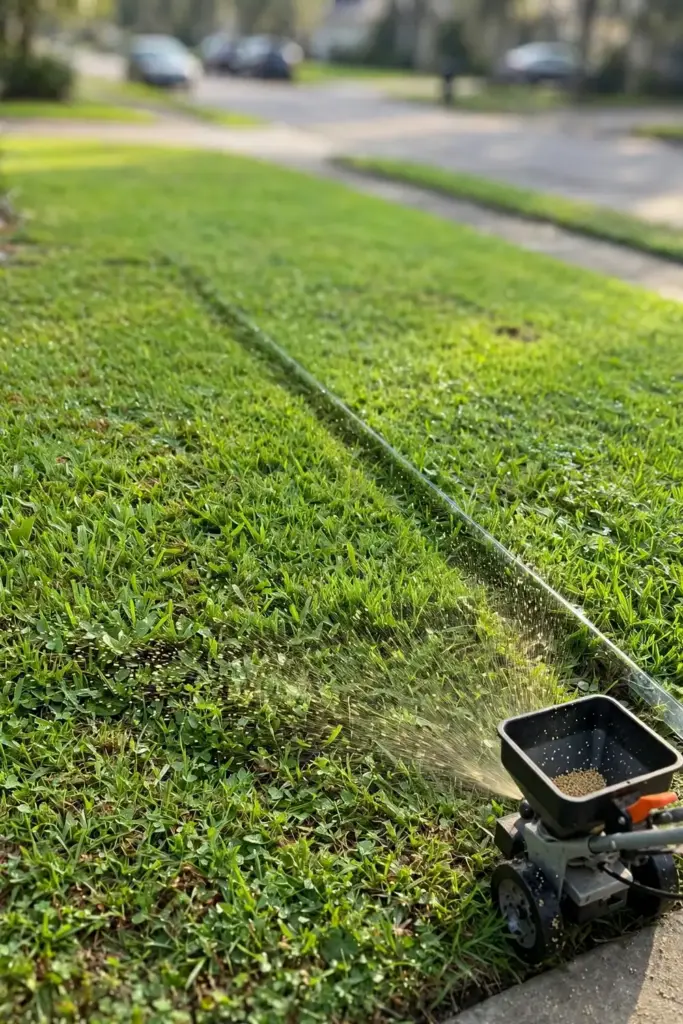
Cover the whole lawn, not just the visible patches, because spores have already traveled beyond what you can see. Water the product in only if the label says to; many foliar fungicides need to stay on the leaf surface. Apply in calm, dry weather so the spray lands where aimed and dries on the blades.
Plan on a second application about 14 to 21 days later, which is the standard reapplication interval on most homeowner labels for this disease. One spray rarely carries a lawn through a long humid stretch. Mark the calendar when you spray so the follow-up happens on time instead of from memory.
Keep people and pets off the treated area until sprays have dried, per the label. Store leftover product sealed and out of reach, and never pour rinse water where it can reach storm drains.
Step 9: Rotate Chemistry So It Keeps Working
Resistance management is the step that protects every future application. The University of Florida’s turf pathology guidance recommends rotating products with different modes of action and tank-mixing systemic products with contact fungicides to slow resistance. Using the same strobilurin all season, every season, selects for the resistant strains already documented in the Midwest.
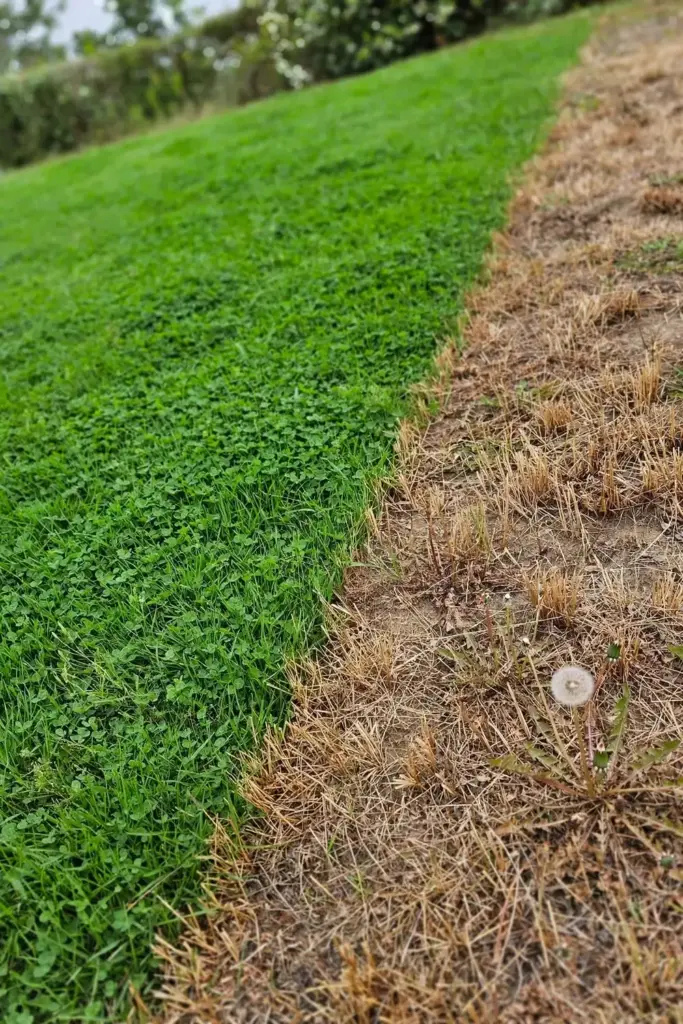
In practice this is simple. If the first application was a strobilurin like azoxystrobin, make the second a different class, such as thiophanate-methyl or a DMI, or tank-mix the systemic with chlorothalonil. The FRAC group numbers on product labels tell you which class you are holding; different numbers mean different modes of action.
Do not stockpile half-used bottles of the same product and reach for them first every year out of habit. A small rotation between two or three classes, chosen from Clemson’s rated list, keeps every class working longer. When in doubt, the least resistance-prone program is the one that leans hardest on the cultural steps above and uses fungicides as the short, sharp backup.
Living With a Lawn That Had Gray Leaf Spot
Recovery is the norm, not the exception. Because the fungus kills leaves and spares crowns, established lawns typically push clean growth once temperatures moderate and the wet window closes. Keep mowing at the raised height, keep the morning watering routine, and let the mower gradually remove the spotted blades.
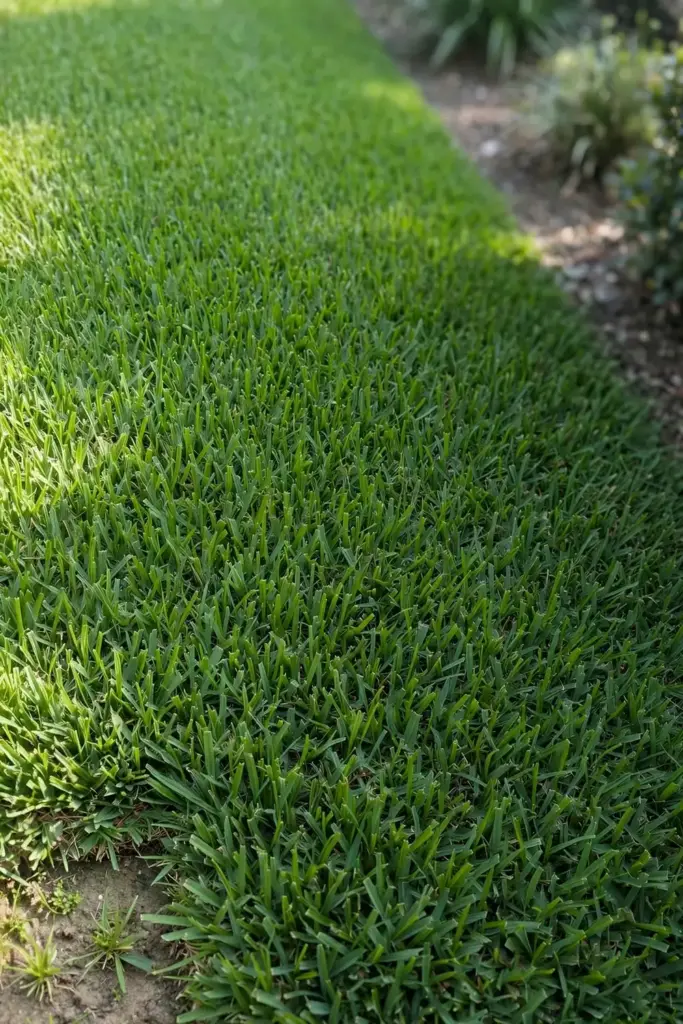
Do not rush to resod. Give the lawn four to six weeks of good conditions before deciding any area is truly dead. Tug-test suspect patches: if the crowns resist pulling and show white or green tissue at the base, the grass is alive and regrowing. Only areas where crowns pull up easily with rotted bases need replanting.
If the same area gets hit year after year, change the equation instead of repeating the treatment. Improve the drainage, open the canopy, or resod the chronic pocket with a more resistant St. Augustine cultivar. A lawn that needs fungicide every August has a site problem wearing a disease costume, and the site problem is the one worth fixing.
For ongoing lawn nutrition timing once the disease passes, our guide to the best time to fertilize your lawn in spring lays out a schedule that feeds growth without feeding the fungus. And if you spot small dark leaf spots that do not match the gray-centered pattern described here, our Bipolaris leaf spot guide covers the closest lookalike.
Frequently Asked Questions
Often, yes. Gray leaf spot kills leaves but spares crowns and roots, so established lawns usually push clean new growth once hot, humid weather breaks and leaf wetness drops. Patchy damage on an otherwise healthy lawn frequently resolves with corrected watering and mowing alone. Widespread, fast-spreading damage during a long humid stretch deserves active treatment rather than patience.
No product kills the lesions already on the blades. Strobilurin fungicides such as azoxystrobin and pyraclostrobin, plus thiophanate-methyl and DMI fungicides like propiconazole, protect new growth from infection when applied at the first sign of spread. Cultural controls do the heavy lifting: morning watering, raised mowing height, nitrogen discipline, and airflow. The combination, not any single product, is what stops an outbreak.
Yes, but change how. Mow only when the grass is completely dry, raise the deck, and bag the clippings from infected areas instead of mulching them back in. Mow healthy sections first and diseased patches last, then rinse the mower deck before the next use. Mowing wet, diseased turf is one of the fastest ways to spread spores across the lawn on tires and blades.
It spreads readily between susceptible grasses, including St. Augustine, perennial ryegrass, tall fescue, and sometimes Bermuda and centipede grass. It does not infect garden vegetables, flowers, shrubs, or trees. The same fungus causes blast diseases on rice and some other grains, but in a home landscape the risk stays within the lawn grasses listed here.
Yes. Bagging removes spore-covered clippings from the lawn instead of redistributing them. Dispose of the bagged material off the lawn rather than composting it in an open pile, since home compost rarely gets hot enough to kill the fungus. Once new growth comes in clean and lesions stop appearing, you can return to mulching clippings normally.
Call one when the damage keeps spreading despite two fungicide applications plus the cultural steps, when large areas show dead crowns rather than just spotted blades, or when you cannot confidently distinguish the disease from insect damage or herbicide injury. A local extension diagnostic clinic can confirm the pathogen from a sample, which beats guessing with a third product.
Where to Go From Here
You now have a complete gray leaf spot treatment lawn plan. Start today with the free steps: move watering to the early morning, raise the mower one notch, and bag the clippings from the worst patches. Those three changes cost nothing and cut the disease’s wet window immediately. Hold the nitrogen until new growth looks clean, then feed on a schedule built for the grass, not the fungus.
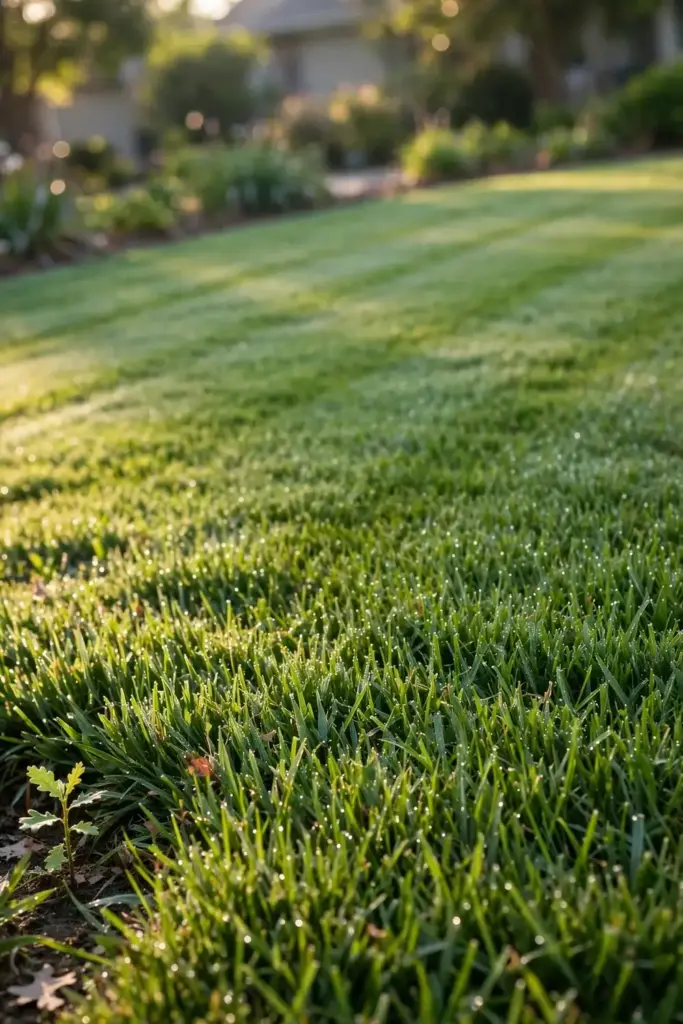
If lesions keep spreading after a week of corrected culture during humid weather, pick one rated fungicide class, apply it to the whole lawn, and calendar the follow-up for 14 to 21 days out. Rotate the chemistry on the second round. And when the outbreak passes, fix the site conditions that invited it, because the lawn that needed rescue this August will need it again next August unless the drainage, airflow, or shade changes.
The canonical soil health guide is worth a read once the crisis passes, since open, living soil dries faster and grows deeper roots, which is the long-term version of everything above.