
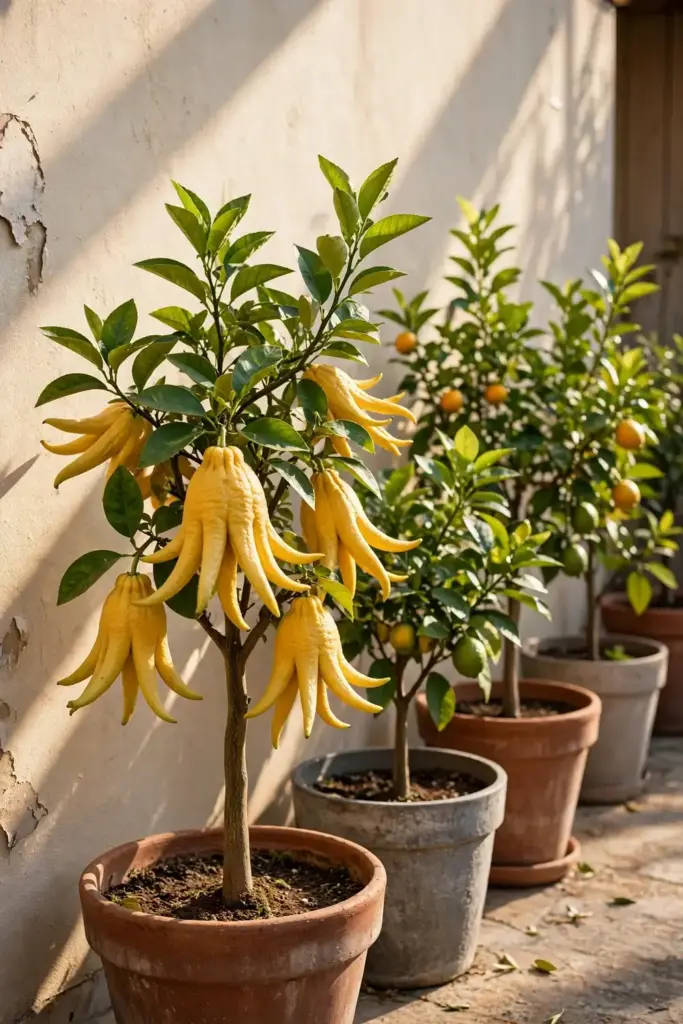
Growing Buddha’s hand in pots is the way most people outside zones 9 to 11 should do it. The tree is frost-tender, and one hard freeze can finish it. A pot turns the tree into a mobile plant you wheel or carry indoors when the temperature drops, which is the entire strategy.
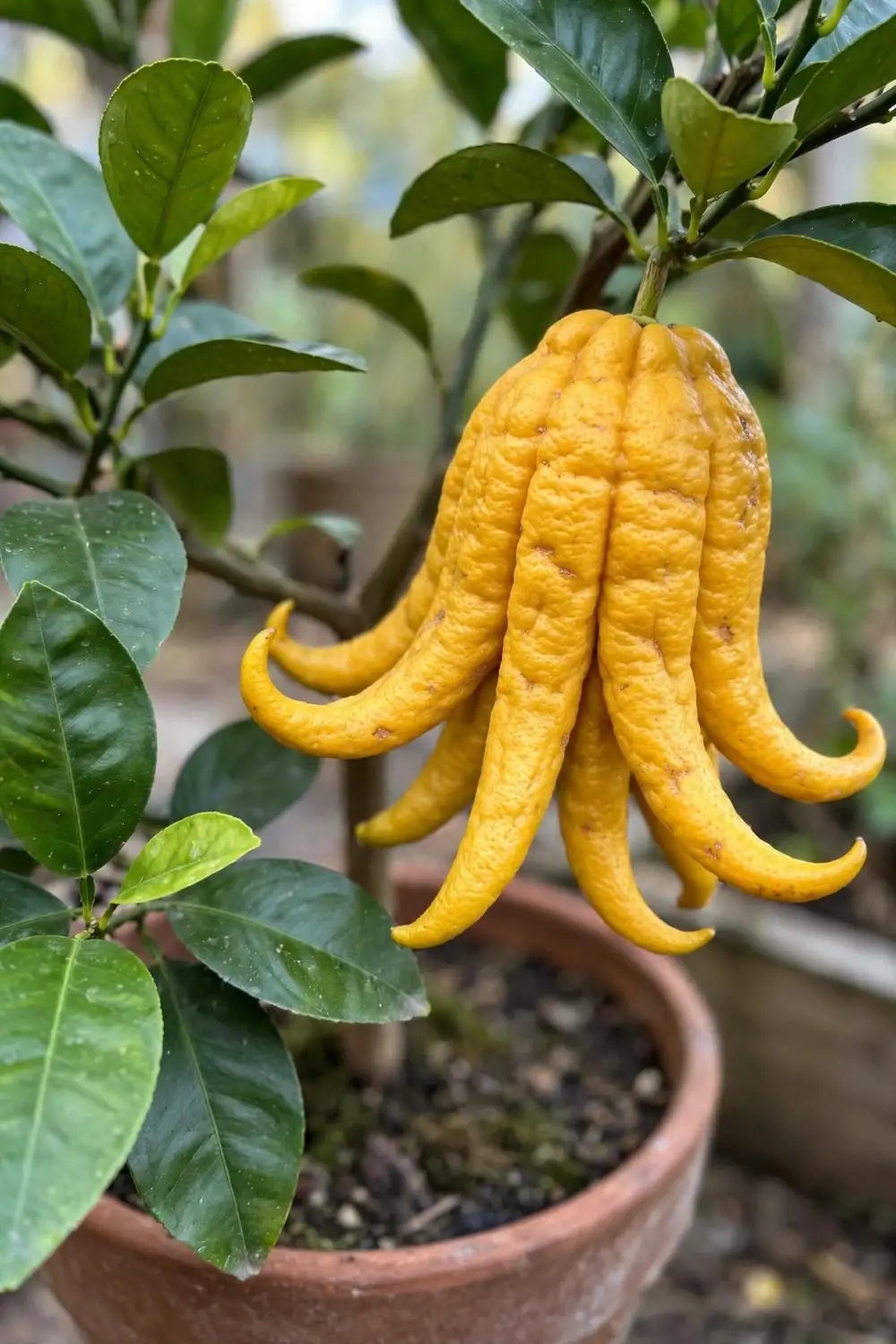
The fruit looks like a yellow hand with fingers, and it has almost no pulp or juice. The value is the rind, which is intensely fragrant. One fruit can scent a room for weeks. That is the honest deal with growing Buddha’s hand in pots: an ornamental, fragrant conversation piece that lives in a container and winters inside your house.
1. Accept the Zone Reality: Buddha’s Hand Hates Frost
Buddha’s hand grows outdoors year-round only in zones 9 to 11. If you live anywhere colder, the tree must come inside for winter. Protection is commonly advised below about 5 degrees C (40 F). This is not a marginal preference. Citrus foliage damages quickly in freezing air, and Buddha’s hand is one of the more tender varieties.
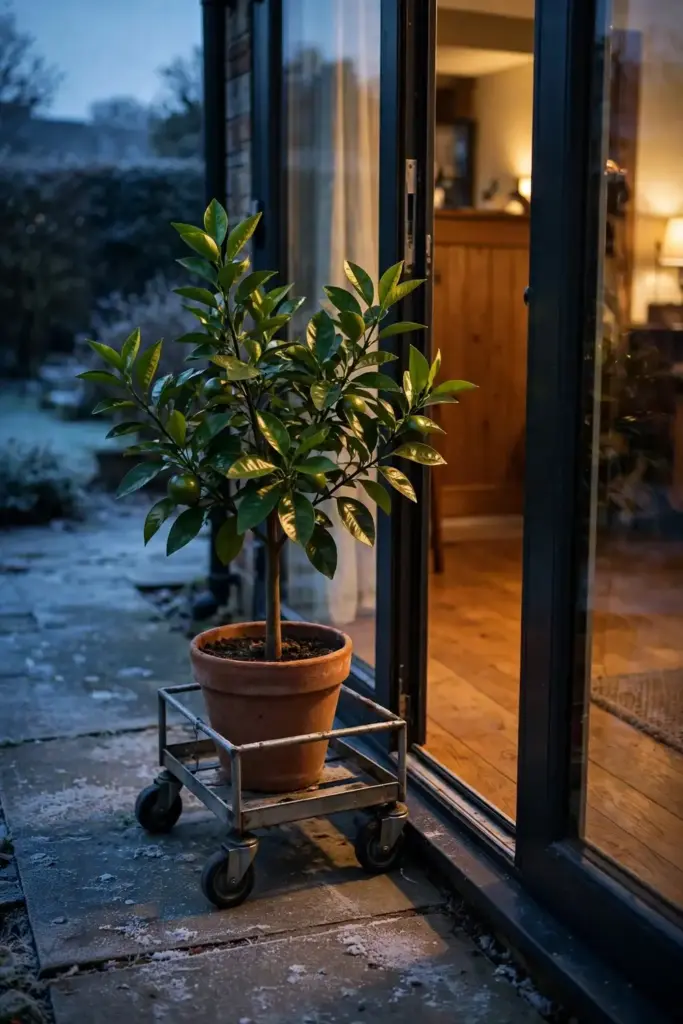
Growing Buddha’s hand in pots solves the zone problem completely. The tree spends the warm months on a sunny patio and the cold months in a bright room or greenhouse. Plantura’s overwintering guidance puts the indoor holding temperature at 8 to 15 C (roughly 46 to 59 F), cool and bright rather than warm and dark. A cool sunroom beats a heated living room for this tree.
Check your USDA zone before you buy. If you are in zone 8 or below, commit to the pot strategy from day one. Do not plant it in the ground hoping for mild winters.
2. Buy a Grafted Tree, Not Seeds
Buy a grafted nursery tree on dwarfing rootstock. A grafted Buddha’s hand can fruit within 2 to 3 years, while a seed-grown tree takes far longer and does not grow true to type. The fake-seed listings sold to hobbyists are a known problem with this plant, and seeds of citrus in general need no cold stratification but produce variable, slow trees.
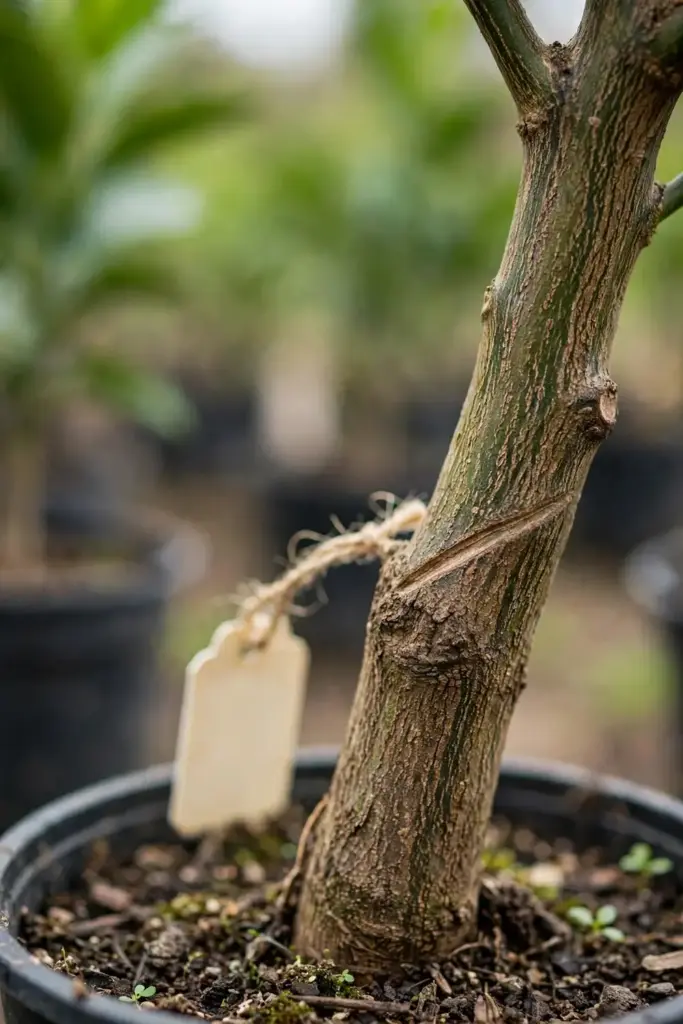
Look for a tree 2 to 3 feet tall in a 3 to 5 gallon nursery pot. Inspect the graft union above the soil line, firm green bark, and glossy leaves with no yellowing. Ask the nursery whether the rootstock is dwarfing; a dwarf or semi-dwarf rootstock keeps a container tree at a manageable 4 to 6 feet instead of climbing toward its natural size.
Avoid trees with mushy bark, circling roots bursting from the drainage holes, or sticky honeydew on the leaves, which signals scale or aphids already in residence.
3. Choose the Pot: Size, Material, and Drainage
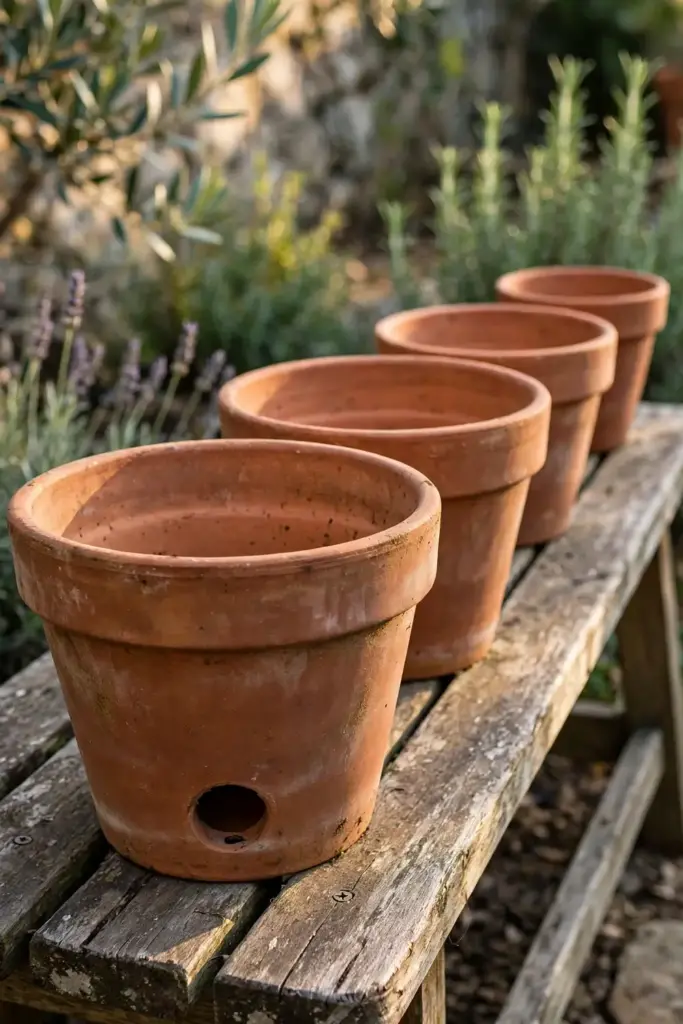
Start with a pot 30 to 40 cm (12 to 16 inches) in diameter for a young tree. The UC Master Gardeners of San Luis Obispo County recommend 14 to 16 inch pots for small citrus trees, noting that larger trees can move up to resin wine tubs that stay light enough to carry. A round terracotta pot is the classic choice because the clay breathes and the weight keeps a top-heavy tree upright.
| Tree stage | Pot diameter | Pot depth | Material |
|---|---|---|---|
| New 2 to 3 ft tree | 30 to 40 cm (12 to 16 in) | At least 30 cm | Terracotta or resin |
| Established 4 to 5 ft tree | 45 to 55 cm (18 to 22 in) | 40 to 45 cm | Resin wine tub or terracotta |
| Mature container tree | 60 cm (24 in) maximum | 45 to 50 cm | Resin, on a rolling caddy |
Drainage holes are non-negotiable. Citrus roots rot in standing water, and a pot without holes is a death sentence. The UC Master Gardeners advise against setting the pot directly on the ground, a drip tray, or a patio; raise it at least a half inch so water escapes freely. Terracotta pot lifters, bricks, or boards all work.
If you cannot lift a 60 cm pot, use a rolling plant caddy from the start. You will move this tree twice a year, and your back will thank you.
4. Mix the Potting Medium: Never Use Garden Soil
Citrus in pots needs a fast-draining mix. The UC Master Gardeners recommend commercial palm and cactus mixes over regular potting mix because they drain better and keep roots from waterlogging, and they warn explicitly never to use regular garden soil, which compacts and drains poorly. A dedicated citrus and cactus potting mix from the nursery works as well.
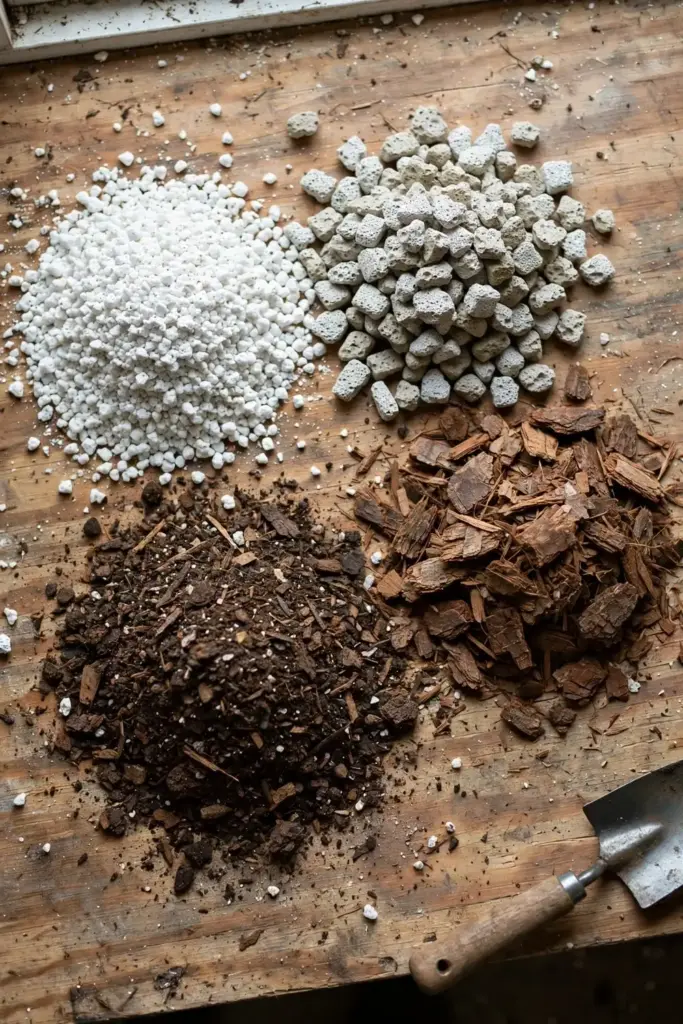
A reliable home recipe is 2 parts commercial citrus or cactus mix to 1 part coarse perlite or pumice, with a handful of composted bark for structure. The mix should feel gritty and fall apart in your hand, not clump. Aim for a pH between 5.5 and 6.5, the slightly acidic range citrus prefers.
Do not add a layer of gravel at the bottom of the pot. The old advice about drainage layers is backwards; a gravel layer raises the perched water table and keeps the root zone wetter, not drier. One uniform mix from top to bottom drains best.
5. Plant It Right: Root Ball, Crown, and First Watering
Set the tree so the top of the root ball sits level with the mix surface, with the graft union several inches above the soil line. The UC Master Gardeners note that citrus needs no special transplanting care, but if the root ball is dry, soak it in water for an hour first, and loosen circling roots gently with your fingers or a clean knife.
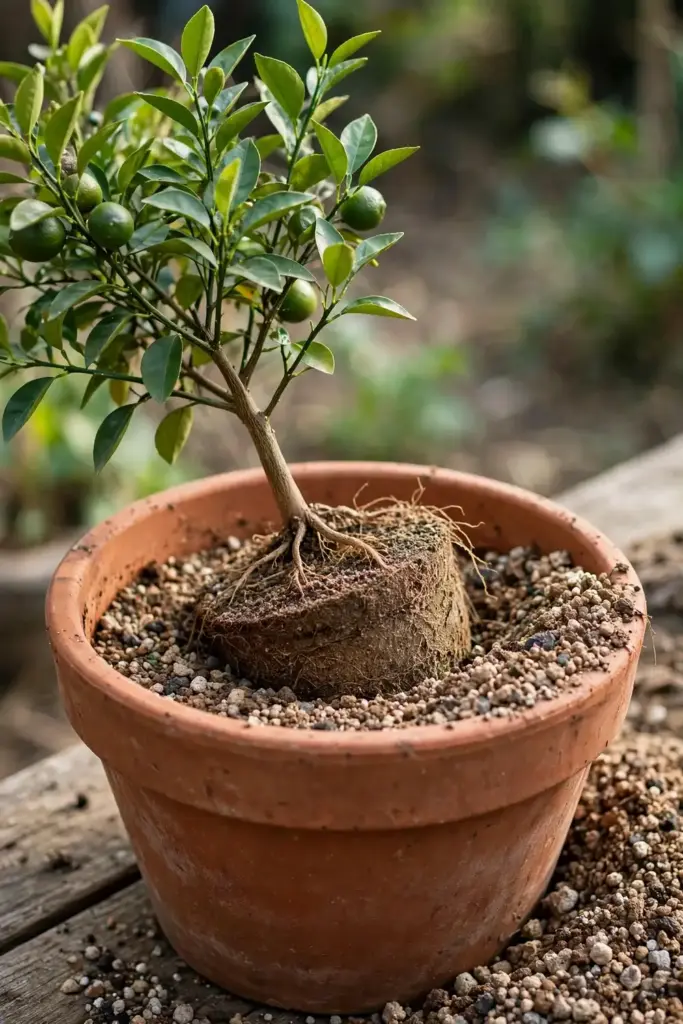
Fill around the root ball with your citrus mix, firming lightly to remove large air pockets without compacting. Water deeply until water flows from the drainage holes. Then leave the tree alone for several days and let the top few centimeters of mix dry before watering again.
Stake the tree loosely for its first season if it leans. Tie it to a single bamboo stake with soft plant ties in a figure eight, and remove the stake once the trunk firms up, usually within a year.
6. Give It 8 Hours of Sun
Buddha’s hand wants full sun: 6 to 8 hours of direct light daily, with 8 or more being ideal. Place the pot in the sunniest spot you have, ideally south-facing and sheltered from strong wind. Citrus flowers and fruits in proportion to the light it receives, and a shaded tree grows leggy with few flowers.
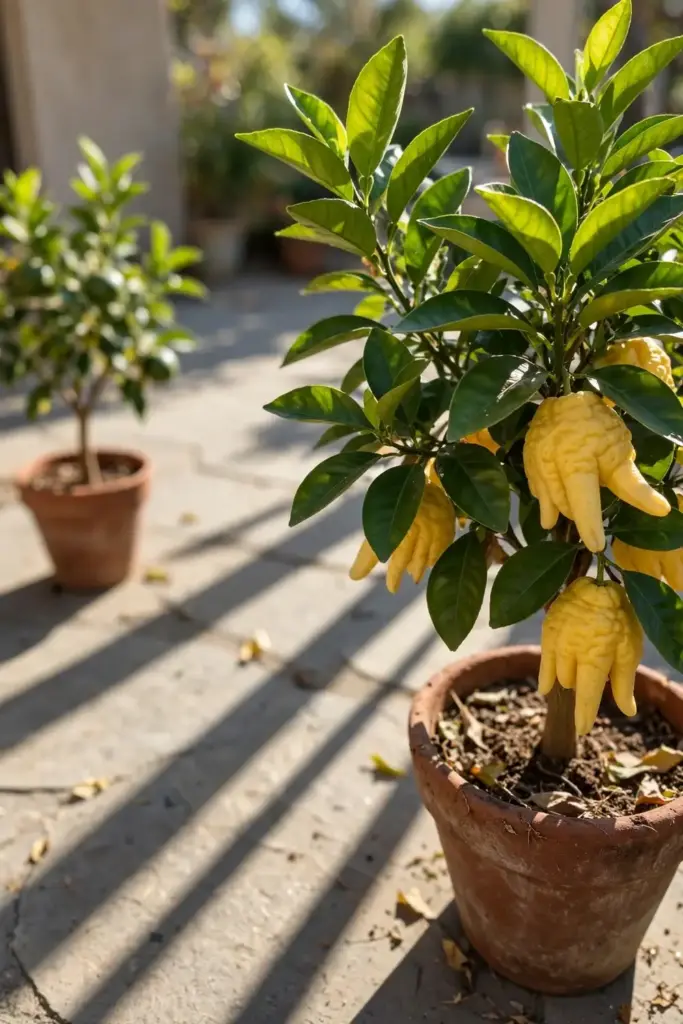
When you move the tree outdoors in spring, harden it off over 7 to 10 days. Start with morning sun and a few hours of shade, then increase exposure. A tree that spent winter indoors will sunburn if it goes straight into full July sun, and scorched leaves do not recover.
Rotate the pot a quarter turn every couple of weeks during the growing season so all sides get light. The tree will grow symmetrically instead of leaning toward the sun. A small piece of tape on the pot rim marks the starting position so the rotation stays even.
7. Water by the Finger Test: Citrus Rhythm in a Pot
Water when the top 2 to 3 inches of mix feel dry, then water deeply until it drains from the bottom. The UC Master Gardeners advise letting the soil dry between waterings for container citrus, and the pot-size guides for Buddha’s hand repeat the same rule. In summer heat this may mean every 2 to 3 days; in a cool winter room it may stretch to 10 days or more.
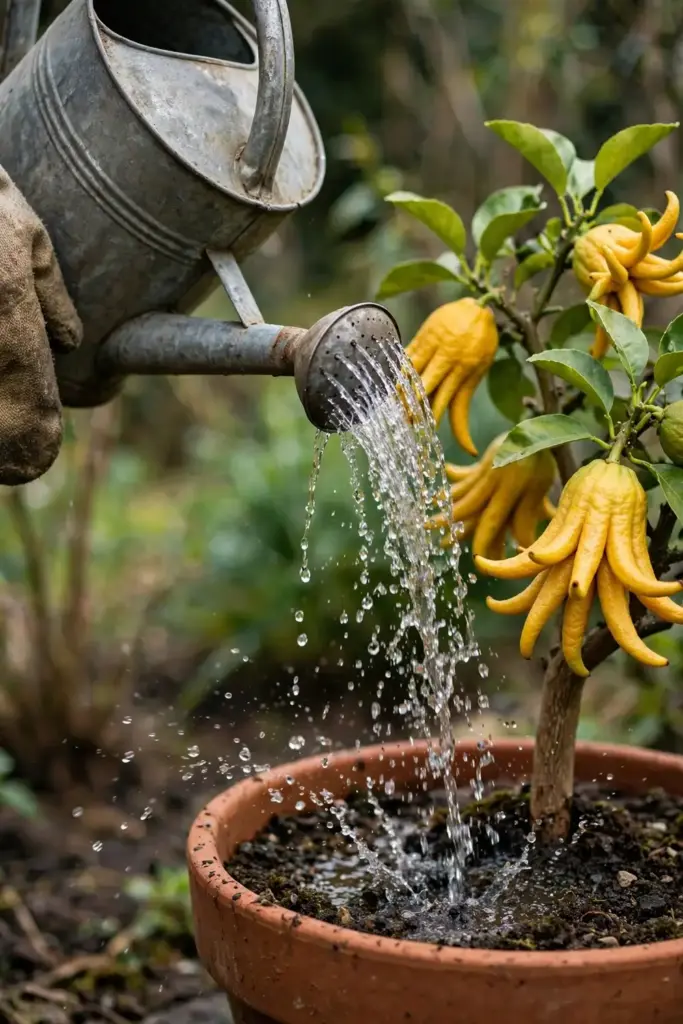
The finger test beats any schedule. Push your finger into the mix. Dry at 2 inches means water. Still damp means wait. Citrus roots need air between waterings, and constant sogginess invites Phytophthora root rot, the most common killer of potted citrus. The lemon growing guide uses the same watering rhythm for its container trees.
Water in the morning so foliage dries by evening. Empty the saucer after watering, or better, keep the pot raised on lifters so it never sits in water at all.
8. Feed on the Citrus Calendar
Feed from early spring through late summer and stop in fall so the tree hardens off before winter. Citrus are heavy feeders and evergreens, so they need a steady supply through the growing season. Clemson’s Home and Garden Information Center lays out the citrus feeding calendar with nitrogen-focused applications through the warm months. A balanced citrus fertilizer with micronutrients (look for iron, manganese, and zinc on the label) applied at the label rate works well.
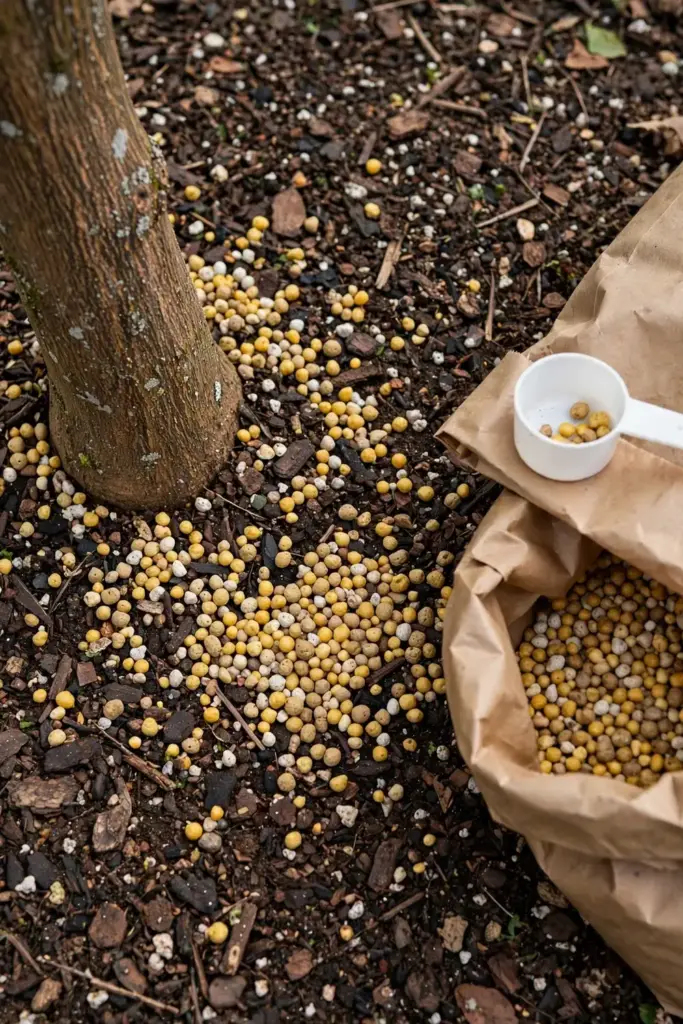
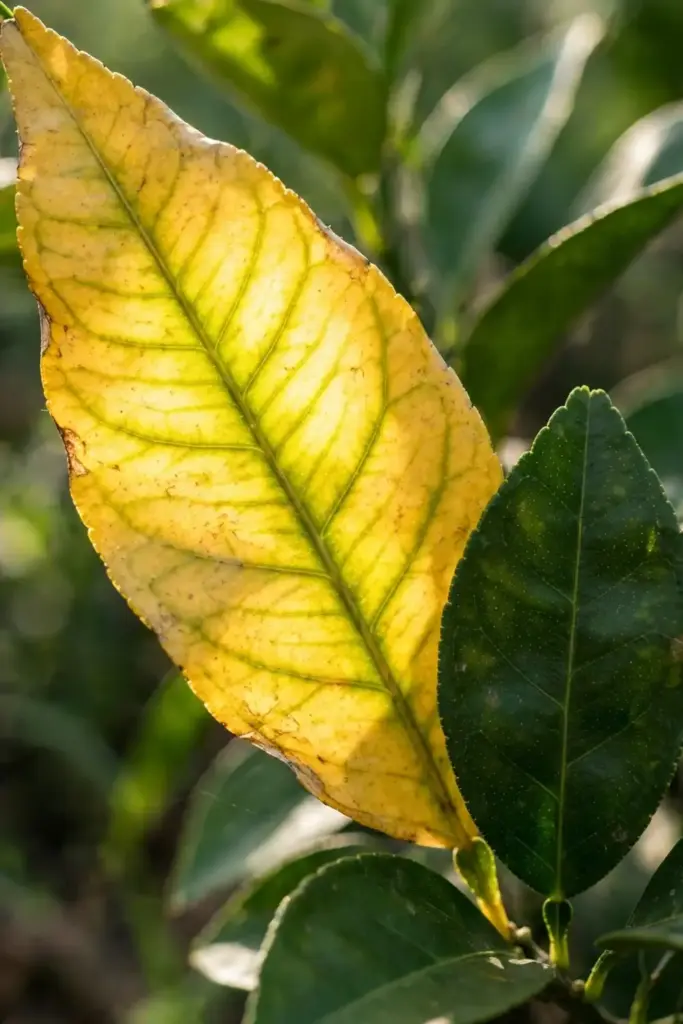
A common schedule is a slow-release granular citrus feed in March, June, and September, or a liquid feed at half strength every 2 weeks from April through August. Yellow new leaves with green veins signal iron deficiency, which is common in alkaline mixes; an iron chelate drench corrects it, and keeping the pH in the 5.5 to 6.5 range prevents recurrence.
Do not fertilize a stressed tree. If the tree just moved indoors, just repotted, or looks sickly, hold the feed until it pushes healthy new growth. Fertilizer on a struggling tree adds stress instead of strength.
9. Move It Indoors Before the First Frost
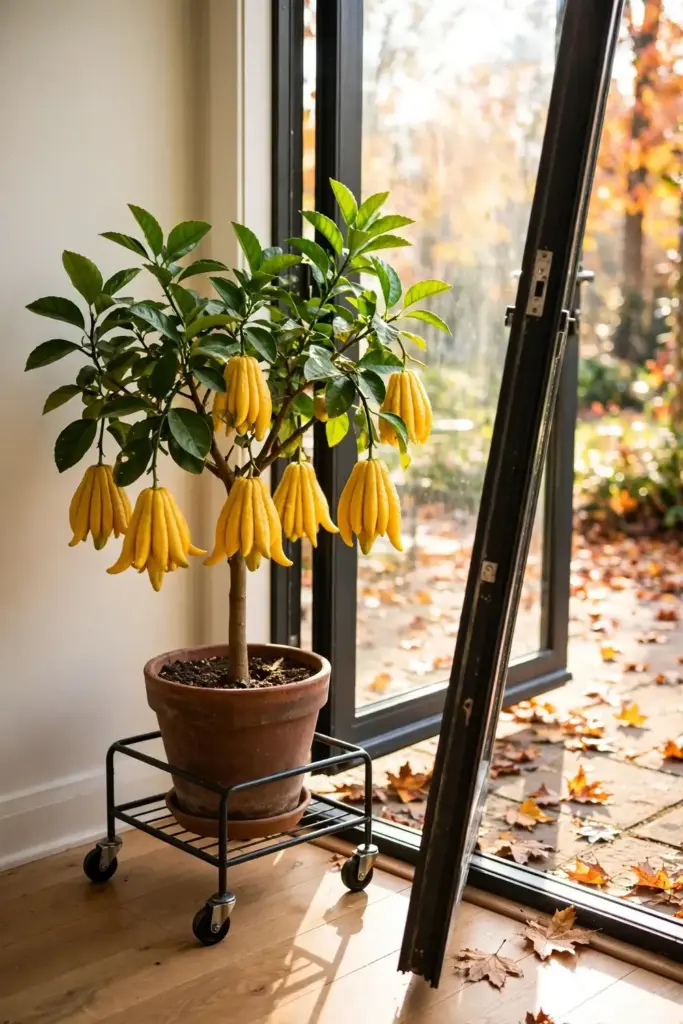
This is the centerpiece of growing Buddha’s hand in pots. Move the tree inside when night temperatures approach 5 C (40 F), well before any frost. In most temperate regions that means October. Do not wait for the forecast to say freezing; citrus foliage can take damage in the low 40s F if the cold lingers.
Before the move, inspect every leaf for pests. Wash the foliage with a strong spray of water and treat any scale or aphids with insecticidal soap. You do not want to import a pest colony into your house.
| Timing | Action |
|---|---|
| 2 weeks before the move | Stop fertilizing; reduce watering slightly |
| Moving week | Inspect and wash foliage; treat pests |
| Move day (nights near 5 C / 40 F) | Carry to the brightest indoor spot |
| First 2 weeks indoors | Expect some leaf drop; do not panic or overwater |
| December to February | Hold at 8 to 15 C if possible; water sparingly |
| March (nights above 7 C / 45 F) | Harden off and move back outside |
Place the tree in the brightest window you have, ideally south-facing, or under a grow light for 10 to 12 hours a day. Keep it away from heating vents, which dry the air and stress the tree. Leaf drop in the first weeks indoors is normal; the tree is adjusting to lower light, and it will stabilize.
Water sparingly in winter. The tree barely grows in cool indoor conditions, and wet mix in a dim room is the fastest route to root rot. Let the mix dry deeper than in summer, roughly the top third of the pot, before watering.
10. Light It Up Inside: Grow Lights and Humidity
A south window alone is often not enough in northern winters. Supplement with a full-spectrum LED grow light positioned 12 to 18 inches above the canopy, running 10 to 12 hours daily on a timer. The grow lights guide covers how to match light intensity to plant needs.
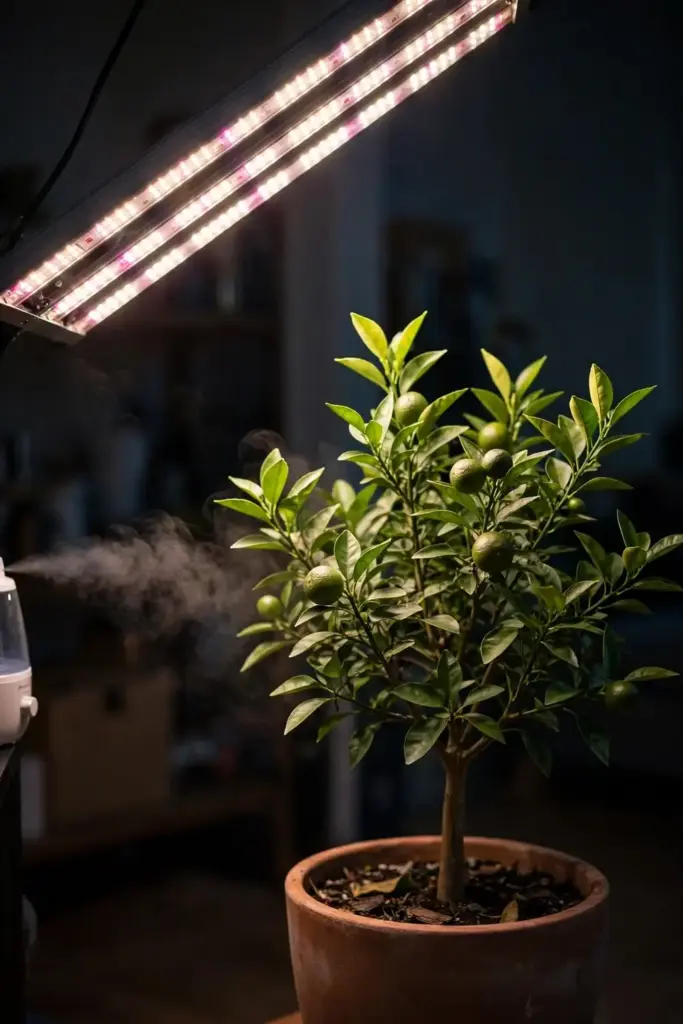
Indoor winter air is dry, and citrus appreciates humidity support in heated rooms. Set the pot on a pebble tray filled with water (the pot sits on the pebbles, not in the water) or run a small humidifier nearby. Grouping the tree with other houseplants raises local humidity too.
Watch for spider mites in dry indoor air. They show as stippled, dusty leaves with fine webbing underneath. A weekly shower of the foliage with room-temperature water prevents most infestations, and insecticidal soap handles outbreaks.
11. Prune for Container Size
Prune in early spring before the growth flush, shaping the tree to fit its pot. Buddha’s hand naturally wants to grow 6 to 10 feet, so container pruning is how you keep it at 4 to 6 feet. Remove crossing branches, inward-growing shoots, and any suckers below the graft union; rootstock suckers steal energy and never make Buddha’s hand fruit.
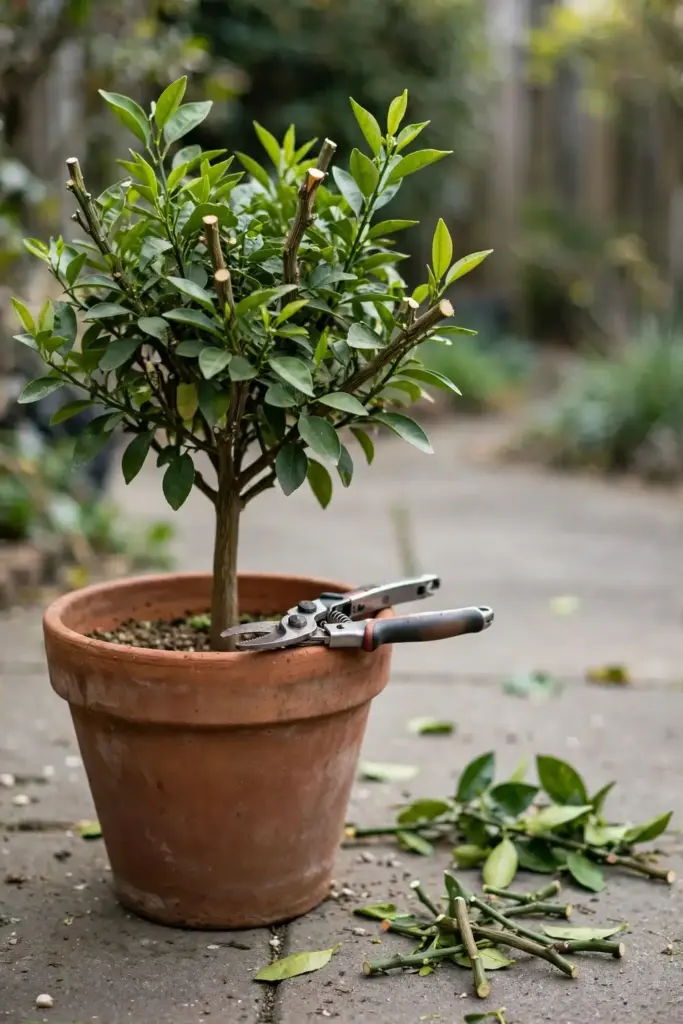
Use clean, sharp bypass pruners and cut just above an outward-facing bud. Never remove more than a quarter of the canopy in one session. Citrus fruits on new wood, so a light annual shaping actually encourages the flowering wood you want.
Thin crowded fruit clusters to one fruit per cluster when they are marble-sized. A potted tree cannot support a full load, and fewer fruits grow larger and more fragrant.
12. Repot Every 2 to 3 Years
Citrus in pots exhausts its mix and fills it with roots. Every 2 to 3 years, in early spring, slide the tree out and inspect. If roots circle densely or water runs straight through, it is time. Move up only one pot size, about 5 cm (2 inches) wider; jumping to a huge pot leaves wet mix around a small root ball, which rots.
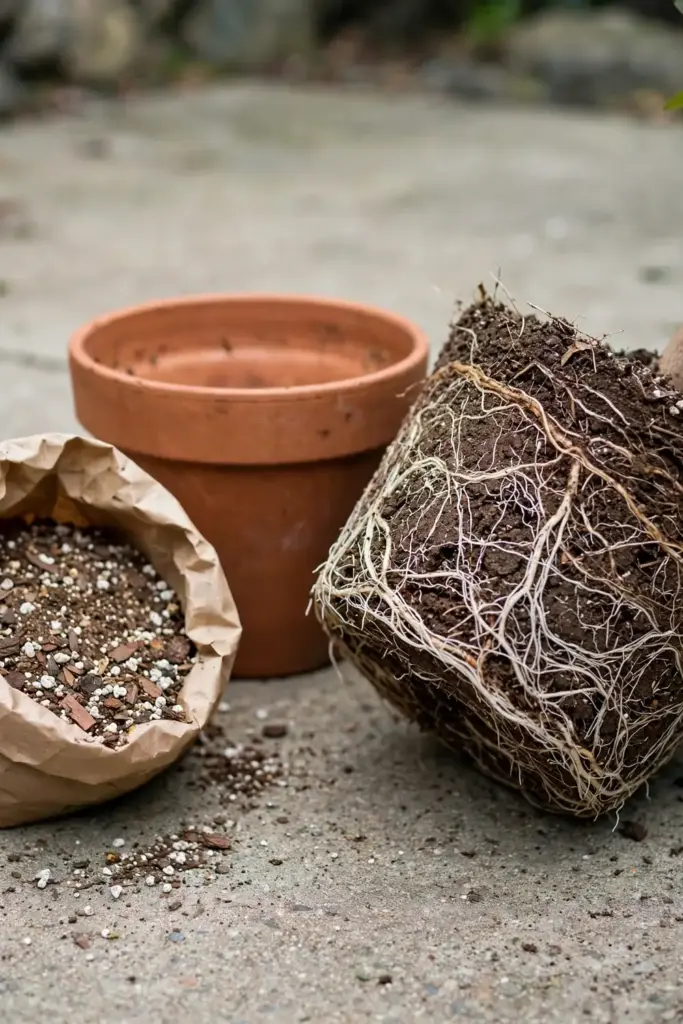
The UC Master Gardeners note that every few years the tree needs fresh soil, best done when it is not flowering or fruiting. You can also root-prune instead of upsizing: shave 2 to 3 cm off the root ball all around with a clean saw, replace with fresh citrus mix, and return the tree to the same pot. This keeps a mature tree in its final container indefinitely.
After repotting, water deeply and keep the tree in bright shade for a week before returning it to full sun. Hold fertilizer for 4 to 6 weeks while roots re-establish.
13. Watch for Pests: Scale, Aphids, and the Asian Citrus Psyllid
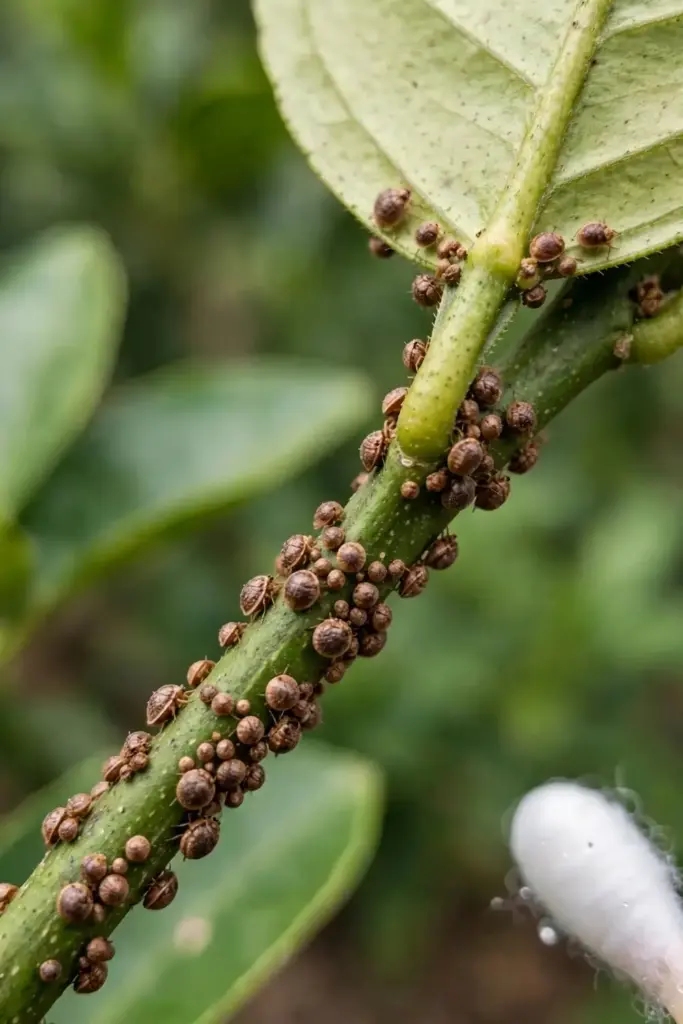
Potted citrus indoors attracts the usual suspects. Scale shows as small brown bumps on stems and leaf undersides; dab them with a cotton swab dipped in rubbing alcohol, then follow with insecticidal soap. Aphids cluster on new growth; a strong water spray dislodges them. Mealybugs hide in leaf joints and look like tiny cotton tufts.
The serious one is the Asian citrus psyllid, a tiny insect that spreads huanglongbing (HLB), a fatal and incurable citrus disease. The UC Master Gardeners list it as the most serious threat to citrus and urge homeowners to inspect new growth regularly; if you suspect it, contact your state agriculture department. Buy trees only from reputable nurseries, and never move citrus plant material across quarantine boundaries.
Quarantine new plants for 2 weeks before placing them near your Buddha’s hand. Most indoor pest explosions start with a new plant that carried passengers.
14. Expect Fruit: Fragrant Fingers, Not Juice
Buddha’s hand fruit ripens in fall to early winter, turning from green to deep yellow. The fingers may stay closed in a tight fist or splay open; both forms are normal and depend on the variety and growing conditions. Fruit on a young potted tree may take 2 to 3 years to appear. A container tree carries fewer fruits than a ground-planted one, which is the expected tradeoff for mobility.
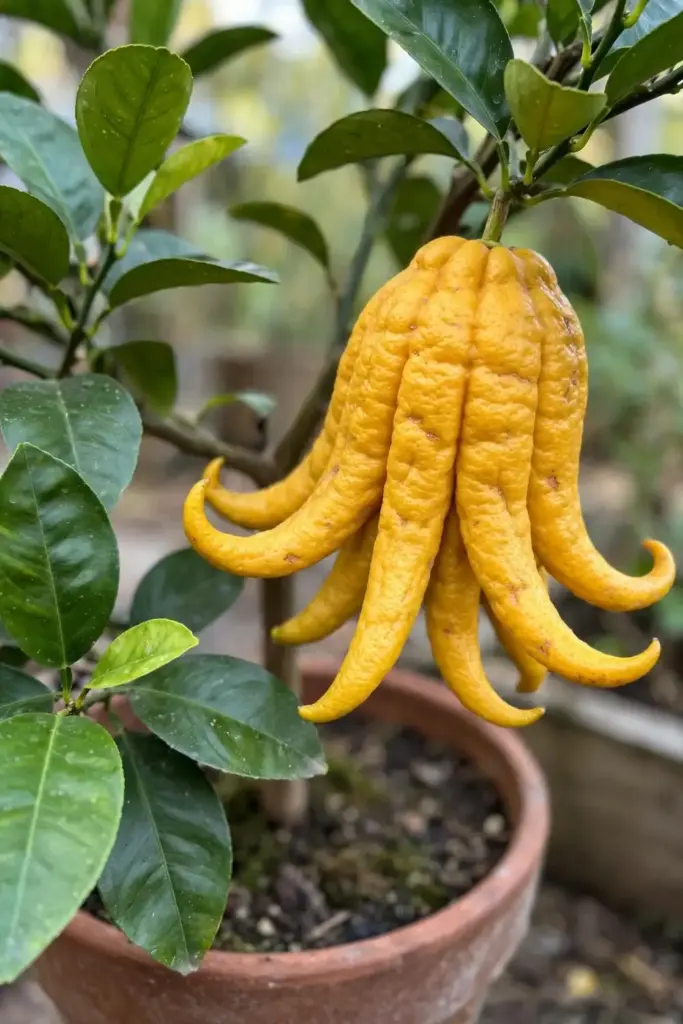
The fruit has little or no pulp and essentially no juice. Set expectations accordingly: this is not a juicing citrus. The rind is thick, fragrant, and full of aromatic oils, and the white pith is mild rather than bitter. One fruit perfumes a room for weeks, which is why the plant is grown as much for fragrance as for flavor.
Harvest when the rind turns fully yellow and the fruit feels heavy and firm. Cut, do not pull, leaving a short stem attached. A ripe fruit keeps at room temperature for 2 to 3 weeks, longer refrigerated.
15. Use the Fruit: Zest, Citrus Salt, and Fragrance
The rind is the harvest. Zest it over desserts, candy thin strips of peel, or infuse the zest in vodka, vinegar, or olive oil for a citrus perfume that keeps for months. Buddha’s hand citrus salt, made by pulsing zest with flaky sea salt, is the classic preparation and keeps the fragrance usable all year.
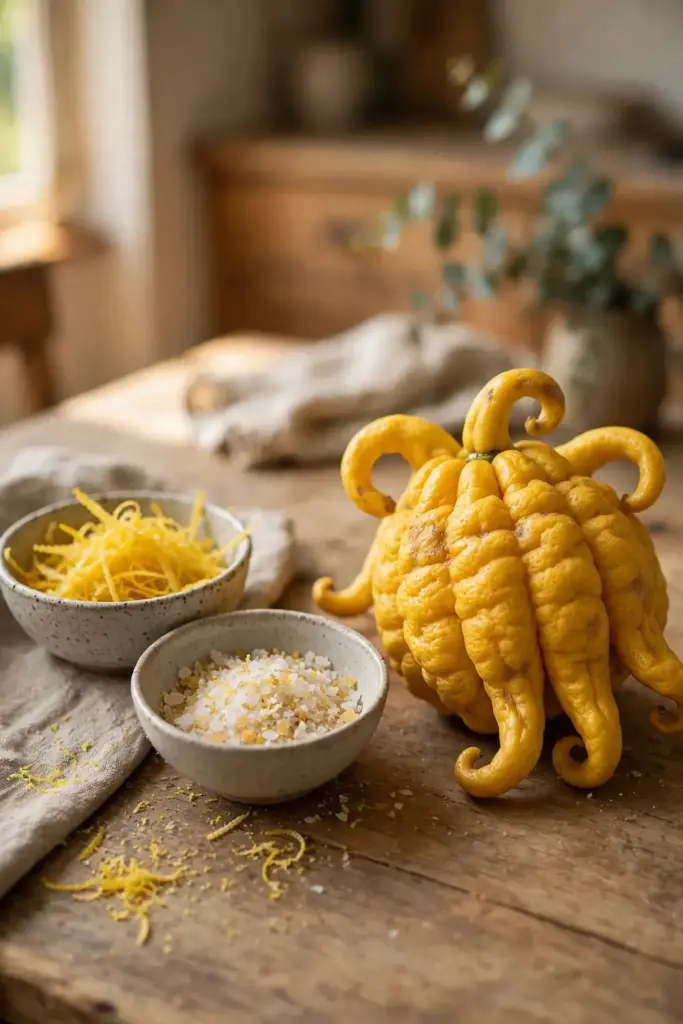
The whole fruit works as a natural air freshener; set one in a bowl on the table and replace it when the scent fades. In Lunar New Year tradition the fruit symbolizes happiness and longevity, and a potted tree heavy with golden fingers is a living decoration.
Dry thin slices of rind in a dehydrator or low oven for potpourri. The scent is a blend of lemon, lavender, and tangerine that no synthetic fragrance quite matches.
16. Seven Container Mistakes That Kill Potted Citrus
The same seven errors kill most potted Buddha’s hand trees. First, a pot with no drainage holes. Second, garden soil in the pot, which compacts and suffocates roots. Third, watering on a fixed schedule instead of the finger test. Fourth, leaving the tree out until frost hits.
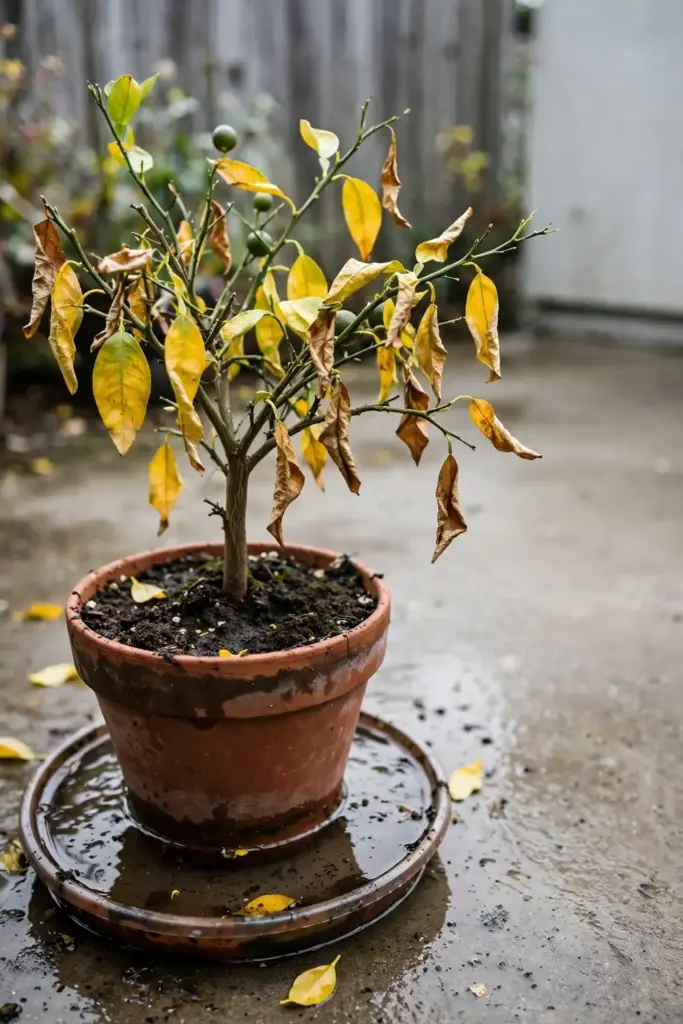
Fifth, fertilizing in winter, which pushes soft growth in low light. Sixth, skipping the pest inspection before the indoor move, which imports scale and mites into the house. Seventh, repotting into a vastly oversized pot, which keeps the root zone wet for weeks.
Every one of these is avoidable, and most dead container citrus traces back to one of them. Run through the list whenever the tree looks unhappy; the cause is usually on it.
17. Troubleshooting: Yellow Leaves, Drop, No Fruit
Yellow leaves with green veins point to iron deficiency from alkaline mix; check the pH and apply an iron chelate drench. Uniformly pale yellow older leaves suggest nitrogen shortage during the growing season; resume the citrus feeding schedule. Yellow leaves plus wet mix means overwatering; let the pot dry and check the drainage holes.
Sudden leaf drop after the indoor move is adjustment shock, not death. Keep watering minimal, keep the light bright, and wait; new growth in 4 to 6 weeks means the tree has settled. Leaf drop with sticky honeydew underneath means scale or aphids; treat and quarantine.
No flowers by year three usually means too little light or too much nitrogen. Move the tree to a sunnier spot and switch to a low-nitrogen bloom formula for one season. Flowers that drop without setting fruit often need hand pollination indoors; dab each flower with a soft brush in the morning.
18. Frequently Asked Questions
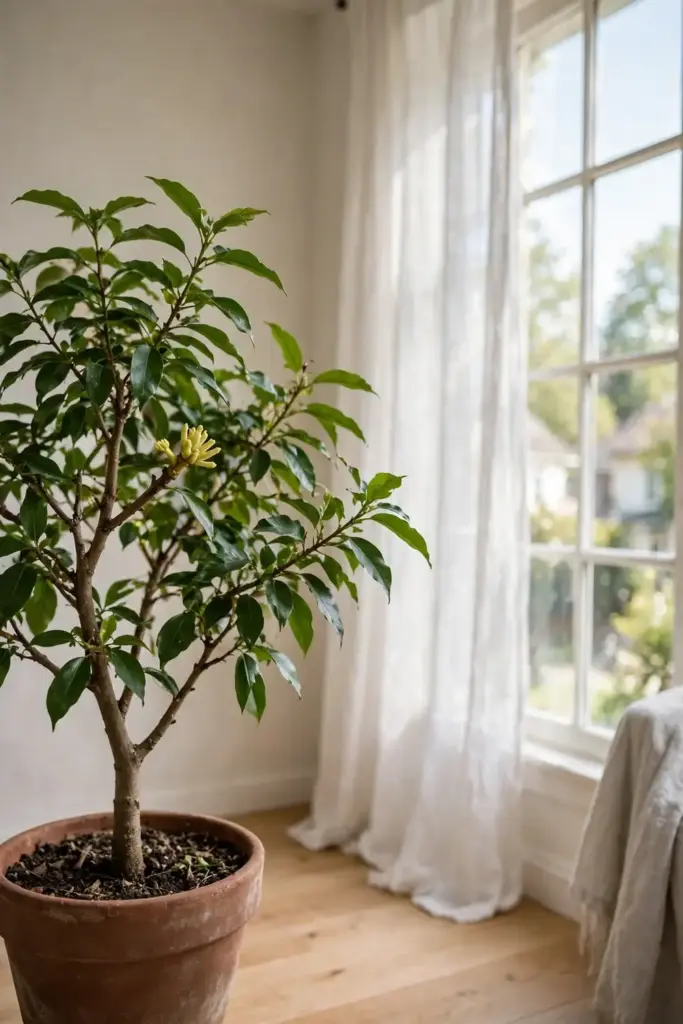
A young tree starts in a 30 to 40 cm (12 to 16 inch) pot. A mature container tree tops out at 60 cm (24 inches) on a rolling caddy, which is about as large a pot as one person can still move. Move up one size every 2 to 3 years, or root-prune to hold the tree in its final pot. Terracotta breathes best, but resin wine tubs are lighter to move.
Only in zones 9 to 11, and even there, protect it below 5 C (40 F). Everywhere else, growing Buddha’s hand in pots means moving it into a bright, cool room for winter. An unheated sunroom held at 8 to 15 C is ideal. A heated living room works with a grow light and humidity support.
When the top 2 to 3 inches of mix are dry, water deeply until it drains. That is every 2 to 3 days in summer heat and as rarely as every 10 days in a cool winter room. The finger test decides, not the calendar. Never let the pot sit in water.
Leaf drop in the first weeks inside is normal adjustment to lower light. Keep watering minimal and the light bright, and new growth should appear in 4 to 6 weeks. If drop continues with sticky residue on leaves, check for scale or aphids and treat with insecticidal soap.
Yes, the rind and pith. There is almost no pulp or juice, so eat it as zest, candied peel, citrus salt, or infused in drinks and oils. The whole fruit also works as a fragrant decoration. Wash homegrown fruit before zesting, especially if you sprayed anything on the tree.
A grafted nursery tree typically fruits in 2 to 3 years under good care. Seed-grown trees take much longer and do not grow true to type, which is why grafted stock is the recommended start. A container tree carries fewer fruits than a ground-planted one, so thin clusters to one fruit each.
19. Where to Go From Here
Growing Buddha’s hand in pots comes down to three habits: a fast-draining mix in a pot you can move, watering by the finger test instead of the calendar, and a disciplined indoor move before the first frost. Get those right and the tree rewards you with fragrant golden fingers every fall.
If you have the climate and the space for a tree in the ground, the companion growing guide covers the outdoor method in full; this article is the container method for everyone else. For the fruit side of the family, the blood orange guide shows how another citrus behaves in home gardens, and the feeding and watering logic carries straight across.