
Scarify 20 Sichuan pepper seeds this weekend. That is how to grow Sichuan pepper from seed: a thorny, citrus-scented shrub that pays you back in tingling red husks for decades to come. The rest of this page is 15 moves, from seed coat to spice jar. I have learned that this seed tests your calendar more than your skill.
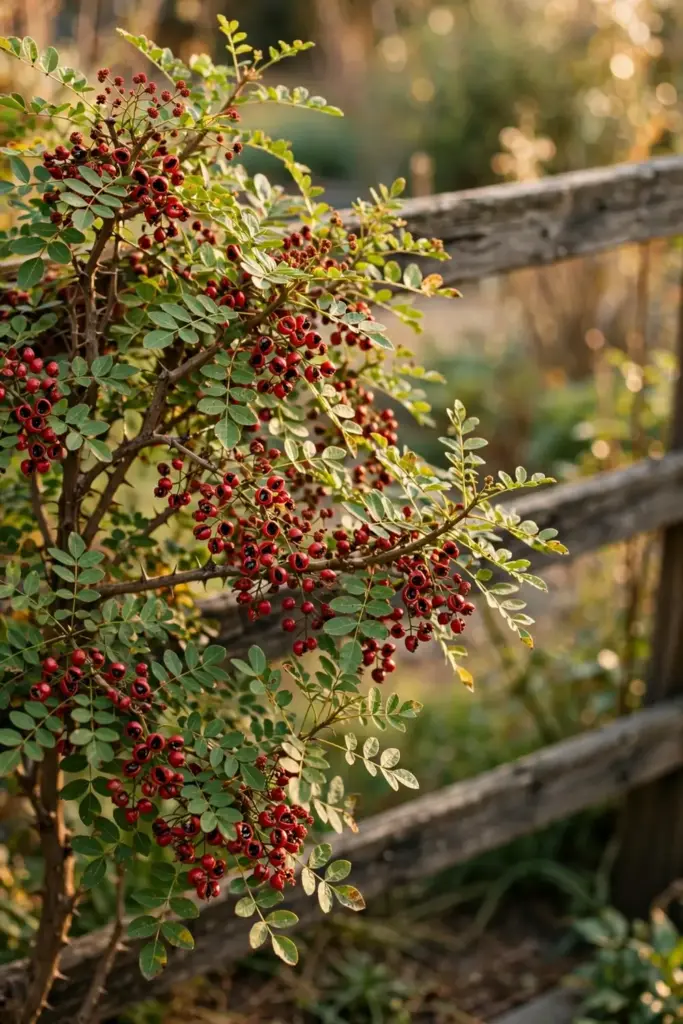
Sichuan pepper (Zanthoxylum simulans) is a deciduous shrub or small tree in the citrus family, grown for the dried husks that numb and tingle in mapo tofu and five-spice powder. It is no relation to black pepper or chili peppers. Nursery saplings fruit in 2 to 3 years, while seed-grown trees need 4 to 6 years before the first real harvest, so buy a plant if you are impatient and sow seed if you are building a grove. Gardeners in USDA zones 6 to 9 can grow it outdoors without winter protection, because Gardening Know How’s growing guide confirms it is hardy in zones 6 through 9 and reaches 4 to 5 m at maturity. The shrub earns its place twice: as a spice plant and as an ornamental, with gnarled thorn-studded branches that look sculptural all winter long.
1. Pick Your Species and Spelling
The spice has several botanical sources, and the names on seed packets vary. Zanthoxylum simulans is the standard Sichuan pepper of Chinese commerce. Z. bungeanum is the red huajiao of northern China. Z. schinifolium is a smaller, self-fertile species. Z. piperitum is Japanese sansho. All four produce the tingling husks, but only simulans and bungeanum are commonly sold as Sichuan pepper seed. Buy from a seller who prints the Latin name. “Sichuan” and “Szechuan” are two romanizations of the same Chinese province; this article uses Sichuan throughout. A packet labeled only “prickly ash” may be an American species grown for ornament, not spice.
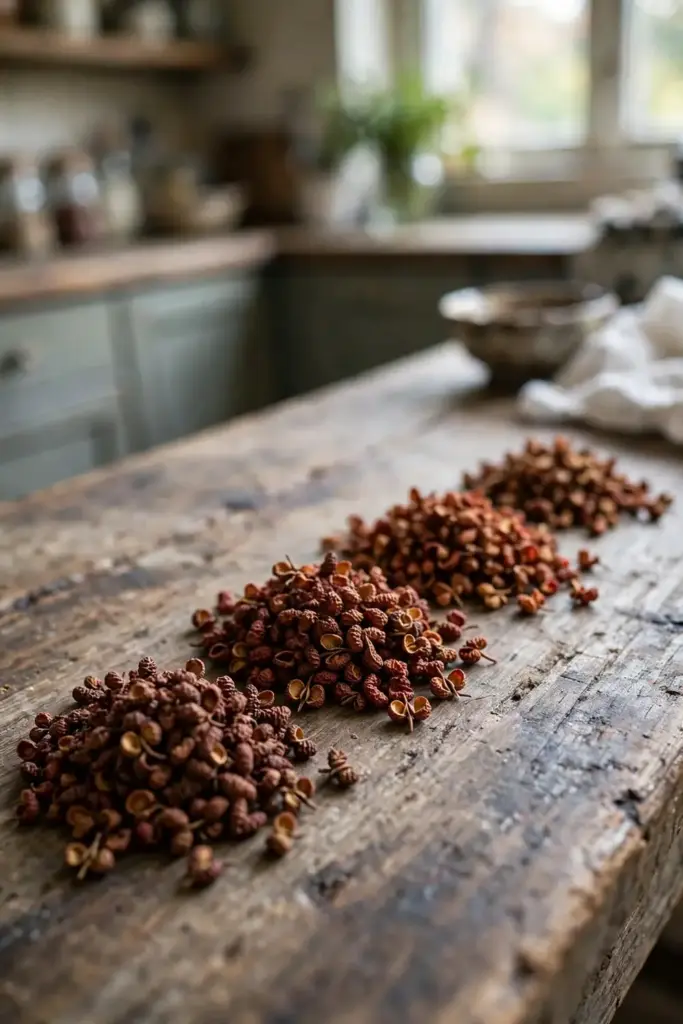
Seed packet confusion is the number-one reason growers end up with the wrong plant. Zanthoxylum americanum, the American prickly ash, is a fine native shrub, but its husks are thin and barely aromatic compared with simulans. If the seller cannot tell you which species is in the packet, assume it is the cheapest one and keep shopping. Serious seed houses list the collection location and the harvest year. That detail is worth paying extra for, because three years of growing the wrong species is the most expensive mistake a spice grower can make.
| Species | Common name | Fertility | Notes |
|---|---|---|---|
| Z. simulans | Sichuan pepper | Dioecious: needs male + female | Standard spice species, zones 6–9 |
| Z. bungeanum | Red huajiao | Mostly dioecious | Northern Chinese red pepper |
| Z. schinifolium | Sichuan pepper | Self-fertile | Smaller shrub, crops within 3 years per Agroforestry Research Trust |
| Z. piperitum | Japanese sansho | Dioecious | Japanese cuisine, similar culture |
2. Confirm Your Climate Zone
Sichuan pepper is a temperate plant, not a tropical one. It thrives in USDA zones 6 to 9, tolerates winter cold to about minus 20°C once established, and actually needs winter chill to set fruit well. Gardeners in zone 5 can try it against a warm wall with heavy mulch, but expect dieback in hard winters. In zone 10 and warmer, the lack of chill reduces fruiting and the tree grows leaves at the expense of husks. Match the species to your zone before ordering: simulans suits most temperate gardens, and container growing works where winters bite harder. A tree planted where it cannot get cold enough will disappoint you slowly.
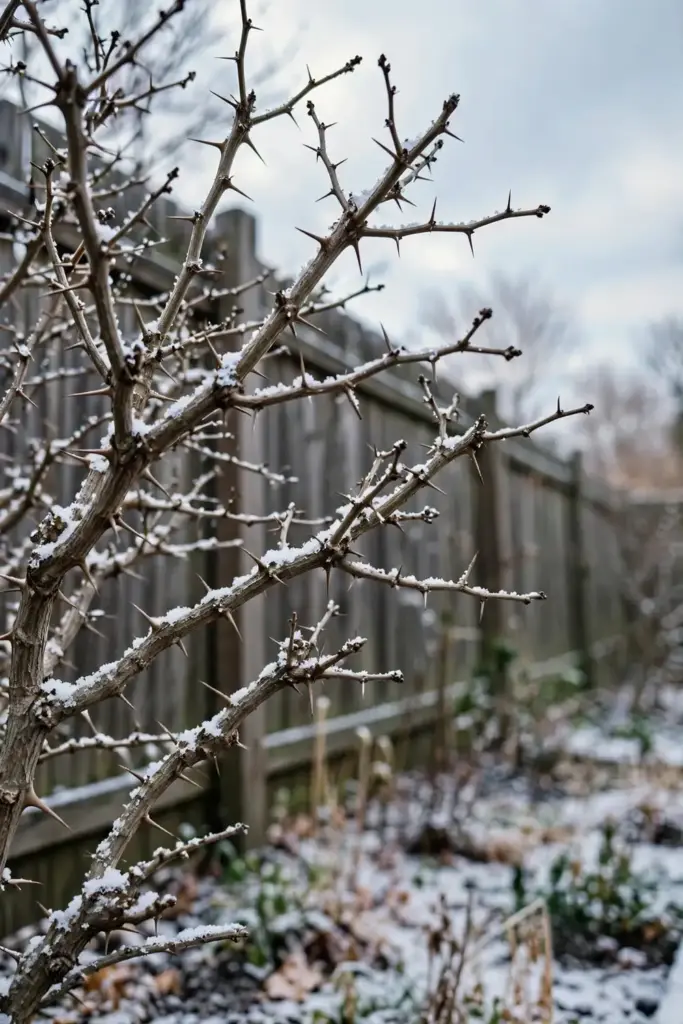
Microclimate matters as much as the zone number. A south-facing wall in zone 6 can behave like zone 7, while a frost pocket at the bottom of a slope in zone 7 can behave like zone 6. Walk your garden on a cold morning and notice where frost lingers longest; keep the Sichuan pepper out of that spot. Cold air drains downhill like water, so the middle of a gentle slope beats both the frosty bottom and the windy top. One well-chosen spot outperforms a whole garden of compromises, and the tree will fruit years earlier for it.
3. Plan for Male and Female Trees
Here is the fact that ruins solo plantings. Zanthoxylum simulans is dioecious: male and female flowers grow on separate plants, and male and female plants must both be grown if fruit is required, as the PFAF plant database states plainly. One tree alone flowers beautifully and fruits never. Plant at least three seedlings to beat the odds, since roughly half of seed-grown plants are male. Nurseries rarely sex young plants, so numbers are your only insurance. If space allows a single shrub only, buy Z. schinifolium instead: it is self-fertile and crops within 3 years, though the husks are smaller.
You will not know the sex until the tree flowers, which takes years. Male flowers show pollen-dusted stamens; female flowers show tiny green carpels in the center. Mark each tree with a tag the spring it first blooms, because by autumn you will have forgotten which was which. Keep at least one male for every three or four females. The male earns its space: without its pollen drifting on the spring wind, the females are ornamental. One generous male upwind of the row covers the whole planting.
4. Source Fresh, Named Seed
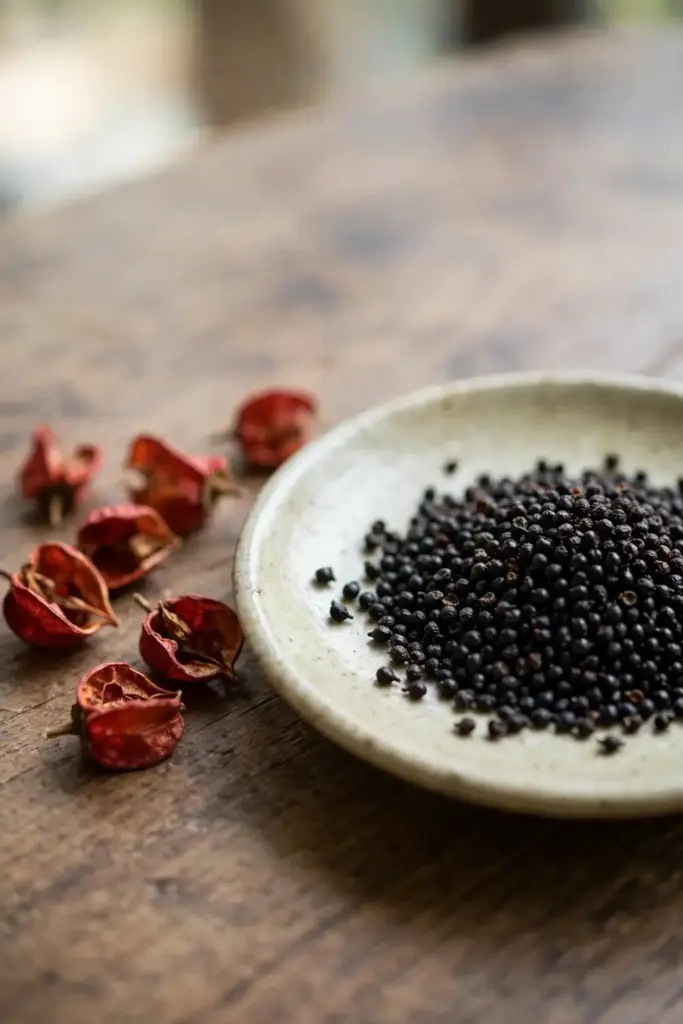
Sichuan pepper seed stays viable about a year in cool, dry storage, then germination falls off a cliff. Order from a seed house that lists Zanthoxylum simulans by Latin name and gives a harvest year; market-stall “peppercorns” are dried husks with the seed often removed or dead. Expect 20 to 30 seeds per packet from most collectors. The seed is a small, hard, black bead inside the husk. If your packet contains only reddish husk fragments and no black beads, you bought the spice, not the seed. Reputable sellers ship the black seed with a little husk still attached. Store the packet in the refrigerator until you are ready to start the stratification clock.
Time your order for autumn. Fresh seed arrives after the harvest, and the stratification clock runs over winter, which is exactly the schedule the seed evolved for. Seed ordered in spring has already sat in a warehouse for six months, losing vigor every week. If you must buy spring seed, ask the seller when it was collected; a straight answer means a serious seller. A vague answer means keep shopping. Twenty seeds of fresh stock outperform fifty seeds of tired stock.
5. Scarify the Hard Seed Coat
The seed coat is waterproof, and water cannot reach the embryo until the coat is breached. Pour freshly boiled water over the seeds, let the water cool naturally, and soak for 24 to 48 hours. Discard any seeds that float after the soak. As an alternative, rub each seed gently between two sheets of fine sandpaper until the glossy coat dulls. Do not crack the seed. A cracked seed rots in the stratification bag within weeks. Scarification alone does not trigger germination; it only opens the door. The cold does the rest.
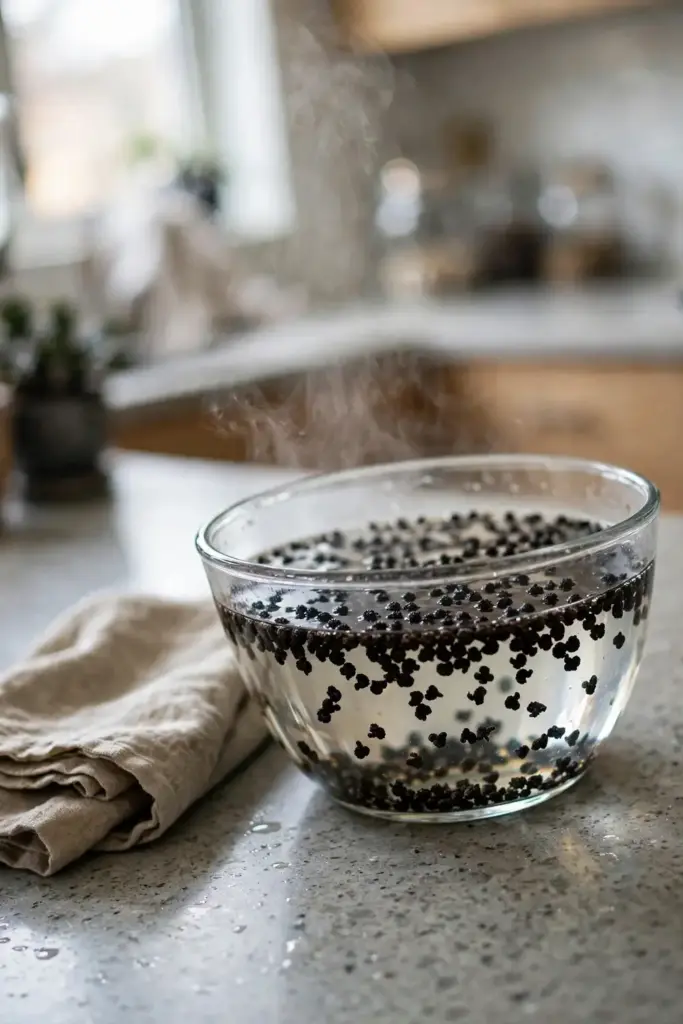
Work in small batches so no seed waits around. Scarified seed dries out fast, and a dried scarified seed is worse off than an untouched one. Move each batch straight from the soak into the damp stratification medium. If you use the sandpaper method, wear a dust mask; the fine black dust is irritating. Rinse the dust off the seeds before bagging them. Clean seed stratifies cleanly, and dusty seed grows mold that you will be picking off for three months.
6. Cold Stratify for 3 Months
Mix the scarified seed into barely damp sand or vermiculite in a sealed bag, label it with the date, and refrigerate at 2 to 5°C for 3 months. Stored seed may require up to 3 months of cold stratification, though scarification may also help, per the PFAF propagation notes. Check monthly: the medium should feel like a wrung-out sponge, never wet. Moldy seeds get discarded; a few white root tips poking out early are fine and mean the batch is waking up. Start the clock in December and you sow in March. Start it in March and you sow in June, which still works but shortens the first growing season.
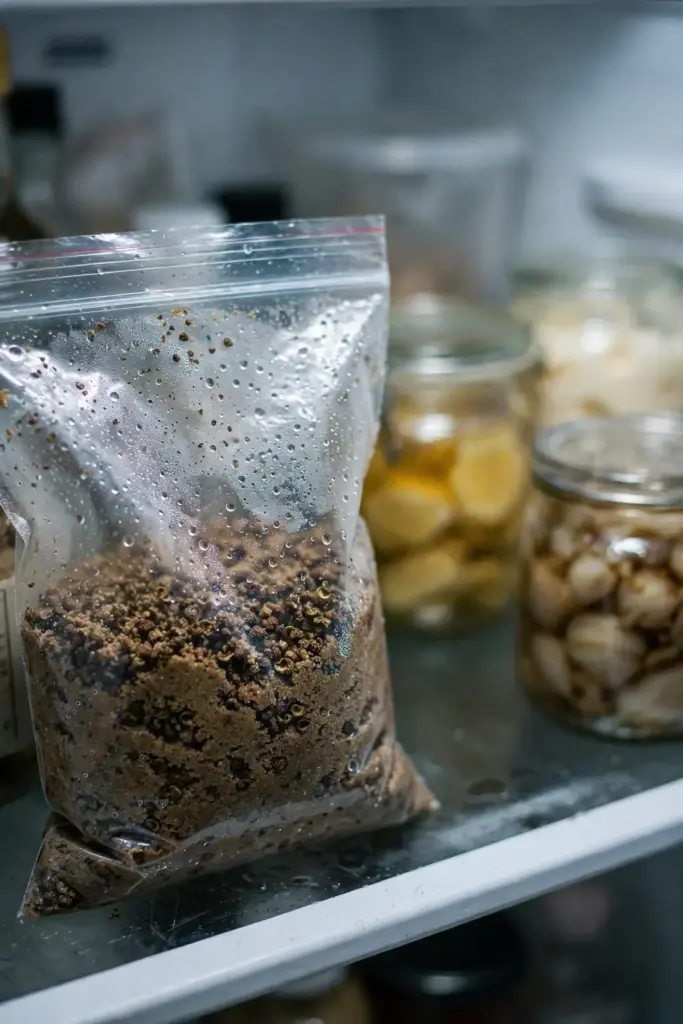
Keep the bag away from ripening fruit in the refrigerator. Apples and bananas release ethylene gas, which can damage dormant seed over three months. A crisper drawer shelf dedicated to seed works well. If the medium dries, mist it lightly rather than pouring water in; puddles rot seed. Write the sow date on the bag in marker, not pencil, because condensation erases pencil. When March arrives, the bag should smell faintly earthy. A sour smell means something rotted; pick through and discard the soft ones before sowing.
7. Sow in Deep Pots
Sow stratified seed 1 cm deep in deep pots of gritty, free-draining mix. The seedling throws a taproot fast, and shallow trays produce bent, stunted roots that never recover. Use 15 cm tall pots, one seed per pot. Water gently and set the pots in a cold frame or sheltered spot outdoors; the fluctuating spring temperatures finish what the refrigerator started. Cover with a thin grit layer to deter fungus gnats. Label every pot. Three months of stratification deserves better than a mystery pot.
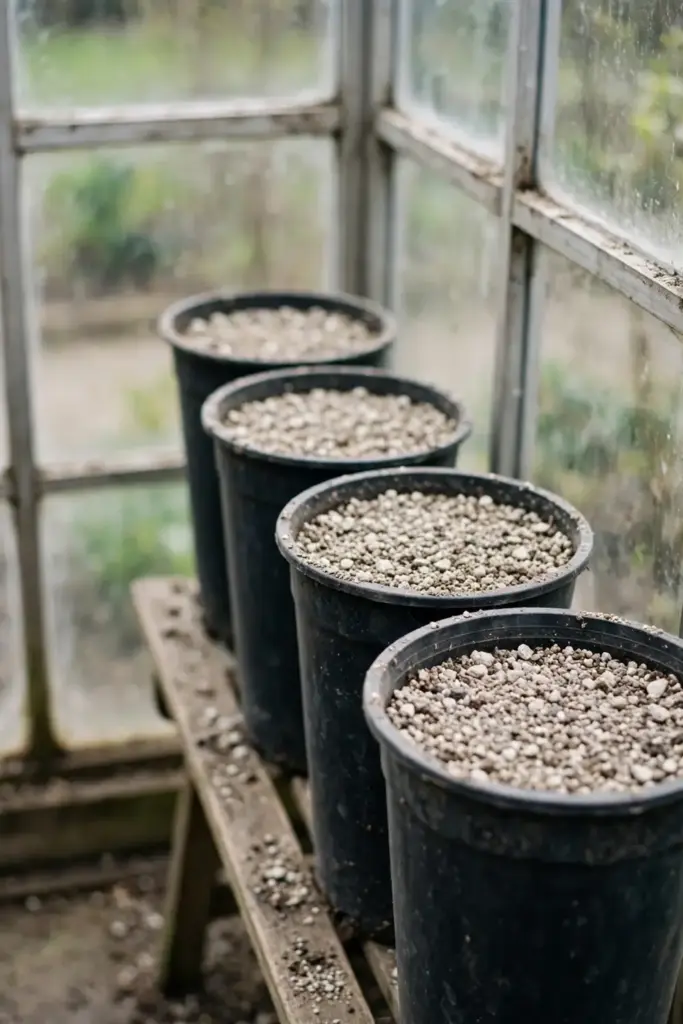
The mix matters less than the depth, but get both right. Two parts loam-based compost to one part coarse grit gives the drainage this species wants without drying out in a day. Do not use pure peat; it stays too wet in a cold frame and the seedling’s taproot rots before it ever emerges. Stand the pots on gravel, not soil, so worms cannot enter the drainage holes and slugs cannot climb in. A cold frame lid propped open on warm days prevents cooking; closed on frosty nights, it buys several degrees of protection.
8. Wait Out the Slow Germination
Germination should take place in late spring, though it might take another 12 months, as PFAF warns. Do not throw the pots away in July. Keep them watered and shaded through summer, and many will sprout the following spring. This is the stage where most growers fail: they assume dead seed and compost the pot in August, one season too early. A seed that has not sprouted by the second spring is genuinely dead. Until then, patience. The seed-starting steps for stubborn woody seed describe this exact waiting game.
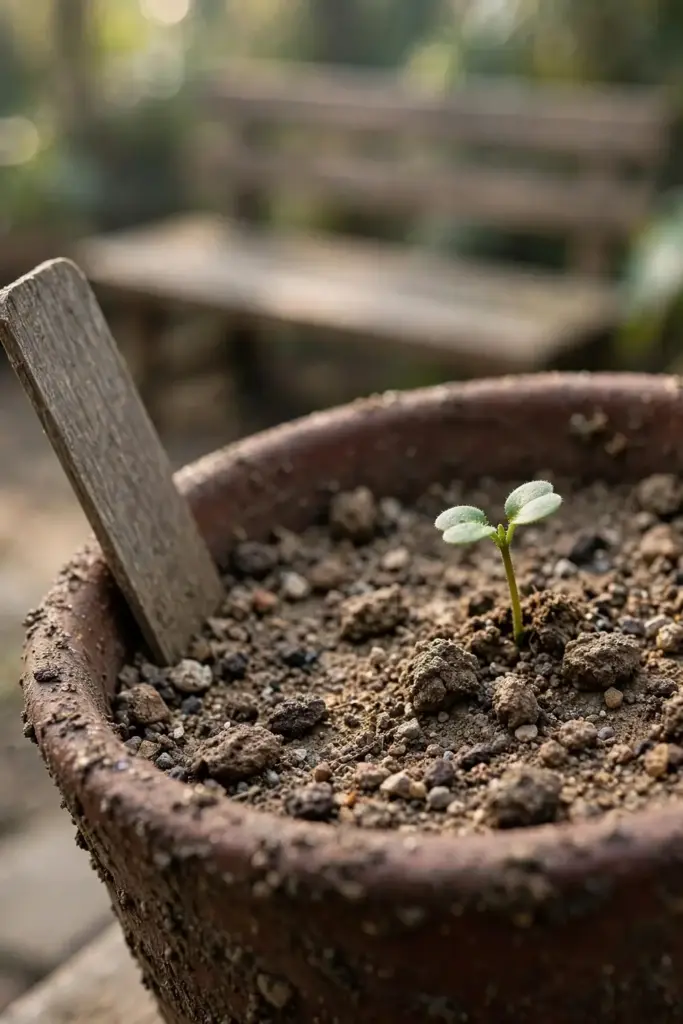
Make the waiting easy on yourself. Group the Sichuan pepper pots in one corner of the cold frame with a dated label facing out, and water them when you water everything else. Out of sight means out of mind, and out of mind means dead from drought. A few weeds in the pots are actually reassuring: they prove the mix is alive and moist. Pull the weeds, keep the faith. When the first seedling finally pushes up its pair of rounded seed leaves, the whole two-year wait compresses into a single good morning.
9. Grow Seedlings in Full Sun
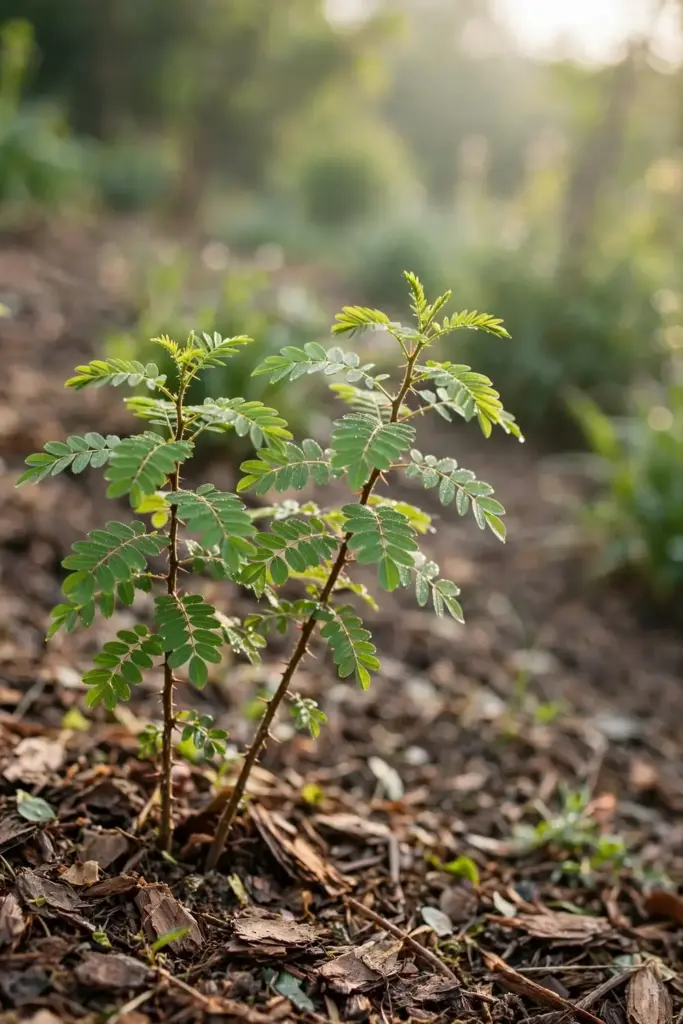
Once sprouted, give seedlings full sun and good air movement. Sichuan pepper seedlings grow fast in their first summer, often reaching 30 to 50 cm by autumn. Water when the top of the mix dries; the species tolerates short dry spells but sulks in waterlogged pots. Feed monthly with a half-strength balanced liquid feed from midsummer onward. The first thorns appear on the stem within months. Handle young plants by the root ball, never by the stem. Those baby spines are already sharp enough to draw blood.
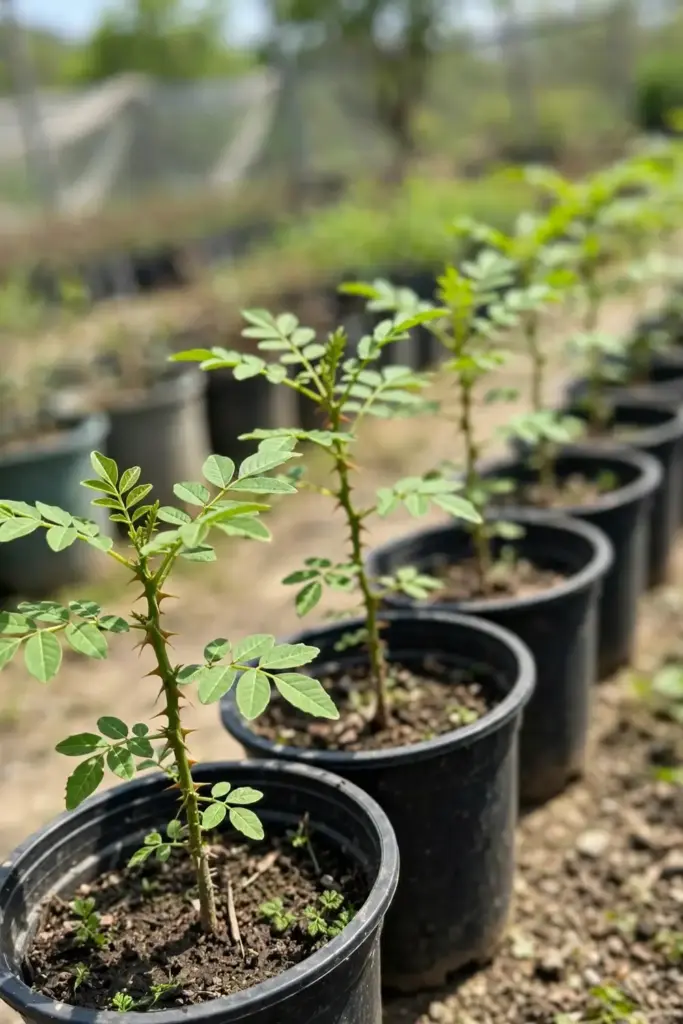
Pot up when roots circle the bottom. Usually once in the first summer, from the sowing pot to a 2-liter pot, then to a 5-liter pot by autumn as the taproot runs. Each move gives that taproot room to run straight down, which is exactly what a tree needs to face decades of wind without leaning. A seedling kept too long in a small pot develops a kinked taproot that never straightens. The mature tree leans for life. Check by tipping the pot: white root tips at the drainage holes mean move day has arrived.
10. Plant Out in Early Summer
Plant out in early summer of the second year, once the seedling is 40 to 60 cm tall and the roots fill the pot. Choose full sun or light shade and deep, well-drained, moisture-retentive soil; the species is unfussy about soil type but hates winter waterlogging. Space multiple trees 3 to 4 m apart. Dig the hole twice as wide as the root ball but no deeper, set the tree at its nursery depth, and water deeply. Mulch 8 cm deep with bark, keeping the mulch clear of the stem. Stake only if the site is windy; a staked tree that never sways grows a weak trunk.
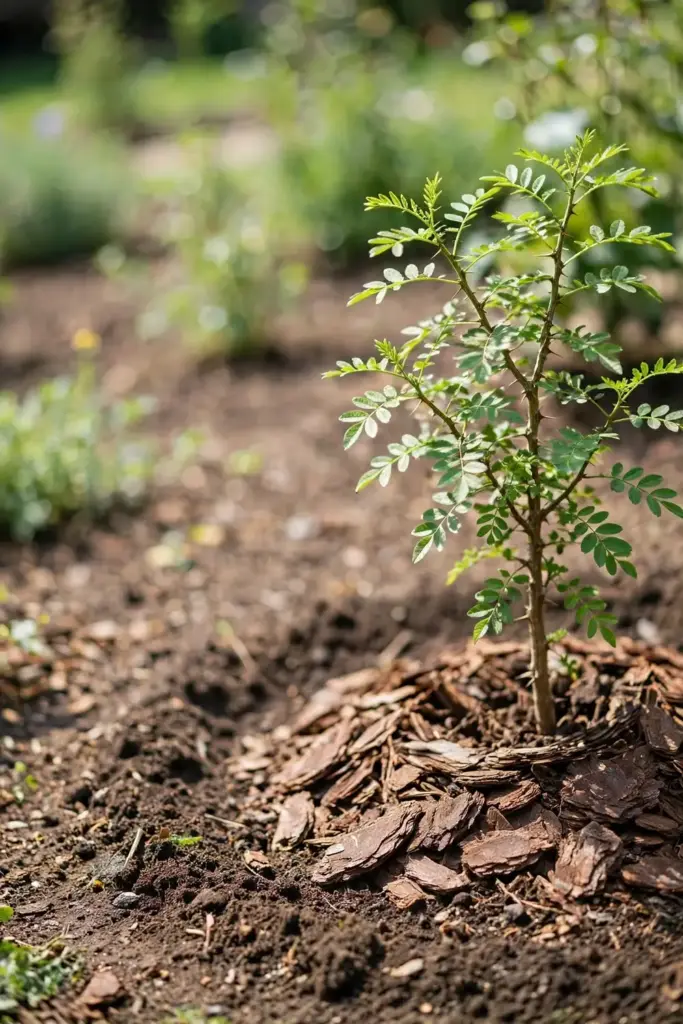
Plant on a calm, overcast day if you can. Hot sun on a freshly planted tree wilts it within hours, and a stressed transplant takes weeks longer to establish. Water the hole before the tree goes in, not just after; dry soil walls wick moisture away from the root ball. For the first month, check soil moisture with your finger twice a week. The tree is established when new shoots extend in the second spring without your help. Until then, you are its weather.
11. Water and Mulch the Young Tree
Water deeply once a week through the first two summers, then back off. Established Sichuan pepper is drought-tolerant and resents wet feet, especially in winter. The bark mulch from planting does triple duty: it holds moisture, suppresses weeds, and keeps the mower away from the thorny trunk. Top it up each spring. Yellow leaves in summer usually mean too much water, not too little. This tree evolved on well-drained slopes, and its roots expect air between waterings.
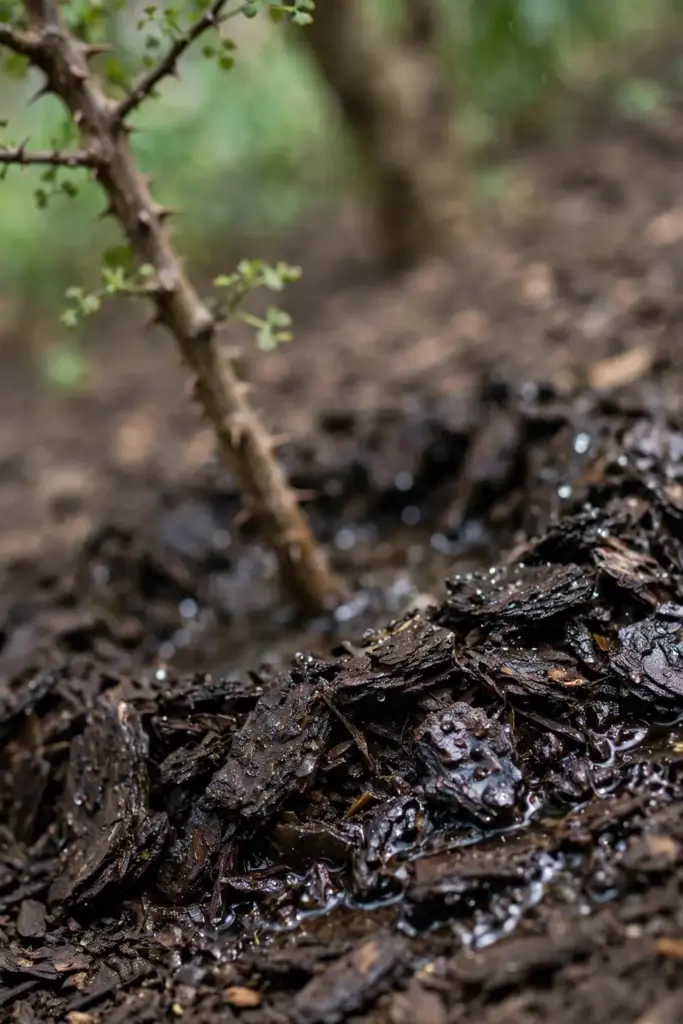
Learn to read the leaves. Slightly cupped, dull leaves on a hot afternoon are normal heat behavior; the same look on a cool morning means the roots are unhappy. Dig down 10 cm beside the tree before reaching for the hose. Moist soil at that depth means wait. Dry soil means water deeply, not a sprinkle. A slow overnight soak from a dripping hose beats five minutes of sprinkler every time, because it wets the deep roots where this tree actually drinks.
Winter watering is where potted trees die. A dormant Sichuan pepper in a cold garage needs only a cup of water a month, just enough to keep the roots from desiccating. In the ground, winter rain handles everything; never supplement it. The single most dangerous combination is a warm spell in February followed by your well-meaning hose. The tree wakes, drinks, and then the returning frost kills the tender new roots. Leave the hose coiled until spring growth is unmistakable.
12. Feed for Fruit, Not Leaves
Feed lightly. A 5 cm compost top-dressing each spring is enough for most soils; add a balanced slow-release fertilizer only if growth is pale and weak. Excess nitrogen grows soft leaves and few husks, which is the opposite of the goal. Stop feeding by midsummer so new wood hardens before winter. Container trees need more: feed monthly through the growing season and flush the pot each autumn to prevent salt buildup. A tree that fruits heavily one year may rest the next. That biennial rhythm is normal, not a deficiency.
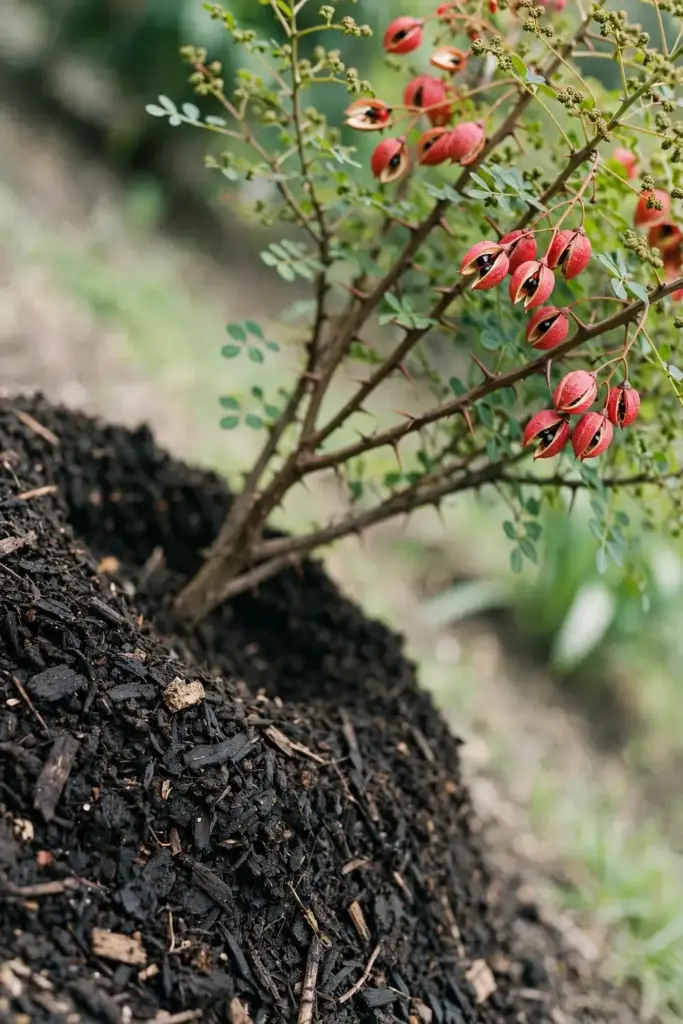
Watch the fruit, not the foliage, to judge feeding. A mature tree carrying a heavy crop of red husks is fed correctly no matter what the leaves look like. A tree with enormous dark leaves and no fruit is overfed. If you inherit an overfed tree, skip fertilizer for a full year and let it rebalance. The species is a light feeder by nature; most garden soils already hold more fertility than it needs. When in doubt, mulch with compost and walk away.
13. Prune With Thick Gloves
Prune in late winter while the tree is dormant. Remove dead, crossing, and inward-growing branches, and cut out root suckers at their base. The trunk and branches carry stout, flattened thorns up to 2 cm wide at the base, so wear thick leather gloves and long sleeves; this is not a bare-handed job. Flowers form on old wood, so prune lightly: heavy cutting removes next year’s fruiting wood. The spring pruning techniques for thorny shrubs apply directly. Step back often. A thorny tree pruned badly is a thorny tree you must live with.
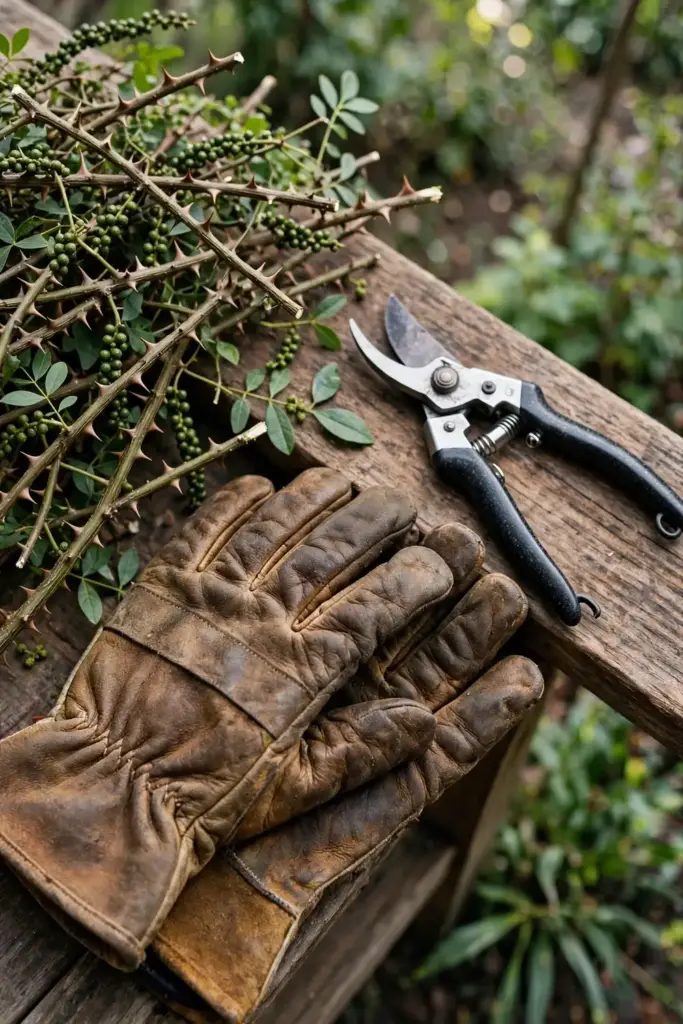
Keep your tools sharp, because tearing bark on a thorny branch invites canker. Loppers handle branches up to 4 cm; a pruning saw takes the rest. Cut just outside the branch collar, never flush with the trunk. Paint nothing on the cuts. The tree seals its own wounds faster than any dressing. Burn or bin the thorny prunings rather than composting them, unless you enjoy finding thorns in your compost for the next three years. A yearly fifteen-minute session keeps the tree open, fruitful, and safe to walk past.
14. Watch for Suckers and Self-Seeding
Sichuan pepper suckers from the roots, especially after disturbance, and birds spread the seed. In a small garden this enthusiasm becomes a thicket within five years. Mow or cut suckers at ground level in late winter; digging them out disturbs the roots and triggers more. A root barrier sunk 40 cm deep around the planting area contains the spread neatly. Pests are few: the aromatic foliage repels most insects, though scale occasionally colonizes stressed trees. Citrus relatives share some pests, and the lemon growing guide notes the same scale insects on container citrus. Check branch crotches in winter, when scale is easiest to spot.
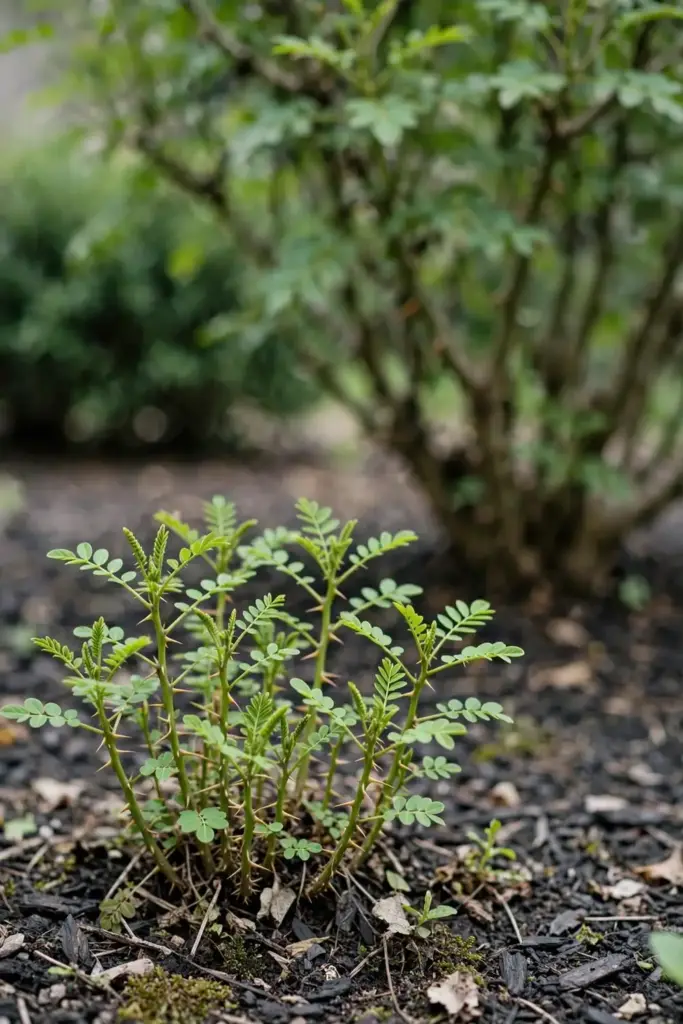
Turn the suckering habit into free plants. A sucker with its own roots, lifted in late winter and potted, becomes a gift tree for a friend, with one catch: you still do not know its sex until it flowers. Label gifted suckers as unsexed so nobody plants a lone male and waits six years for fruit that never comes. In regions where Zanthoxylum naturalizes aggressively, check local guidance before planting near wild land. A spice plant should stay a garden plant.
15. Harvest Red Husks and Dry Them
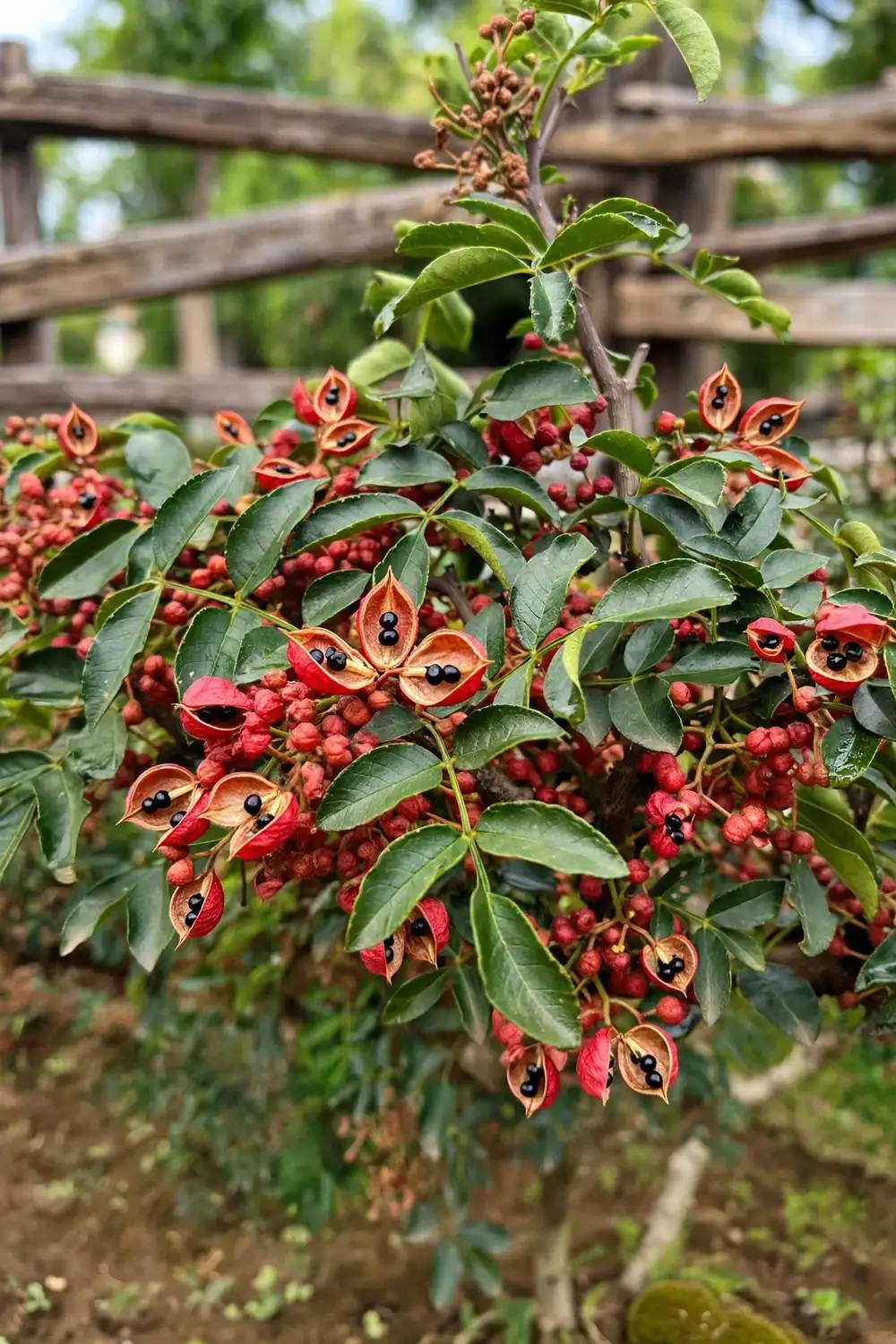
Pick the husks when they turn bright red in early autumn and just begin to split open, revealing the black seed inside. Snip whole clusters with shears, wearing gloves. Spread the clusters on trays in a warm, airy spot out of direct sun; the husks dry in about a week and release the bitter black seeds, which you discard. The spice is the dried husk, not the seed. Store in an airtight jar away from light; properly dried husks keep their tingle for a year. Toast lightly in a dry pan before grinding to wake the aroma. Your first real harvest will be modest. The tree doubles its crop most years after that.
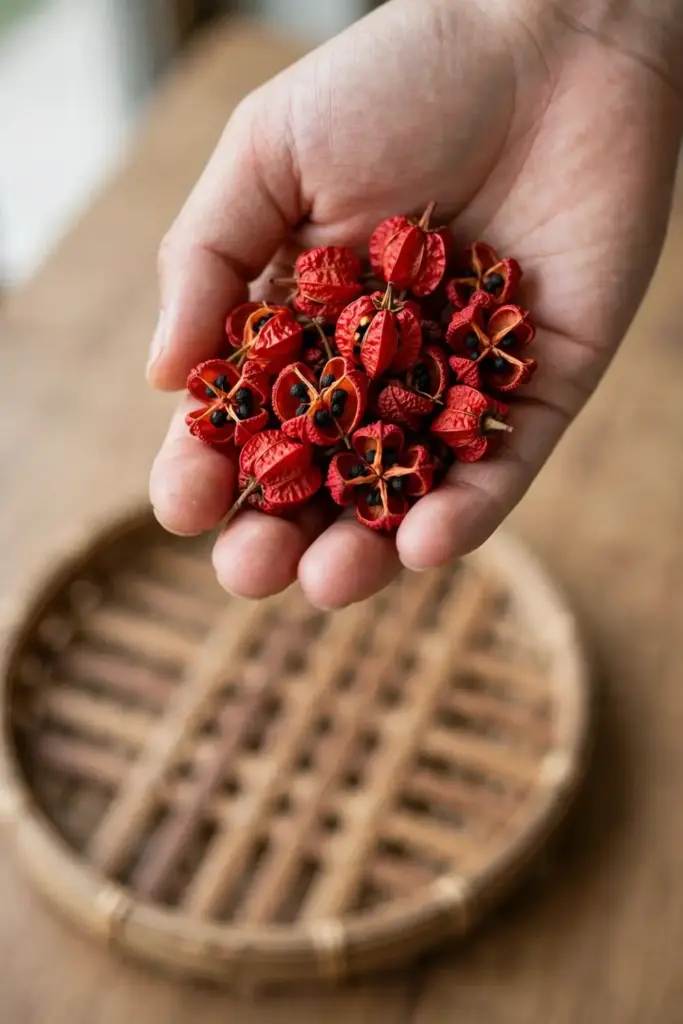
Time the picking by the split, not the calendar. An unopened husk is underripe and weakly flavored; a husk that has gaped wide and dropped its seed is past prime. The sweet spot lasts about two weeks per cluster, and clusters on the same tree ripen unevenly, so pick in two or three passes. Morning picking, after the dew dries, gives the most aromatic husks. Leave the lowest clusters for the birds. They planted the next generation last year, and the tree can spare them.
Frequently Asked Questions
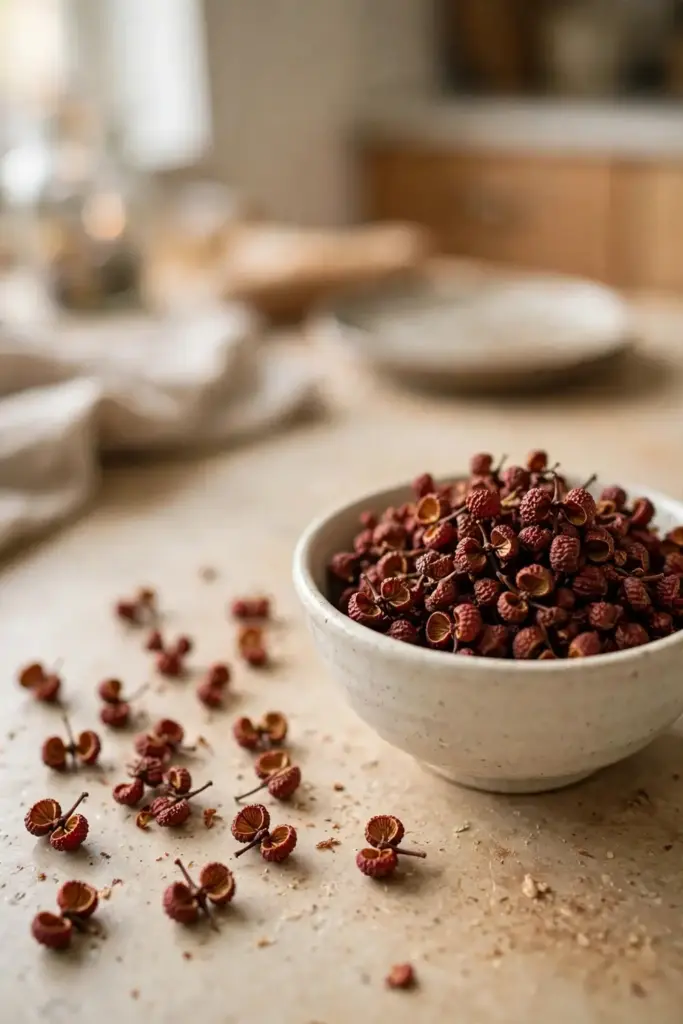
No. Sichuan pepper is the dried husk of Zanthoxylum simulans, a shrub in the citrus family (Rutaceae). Black pepper is the dried berry of Piper nigrum, a tropical vine, and chili peppers are Capsicum fruits in the nightshade family. The three share nothing but the English word “pepper.” Sichuan pepper’s signature is the tingling numbness from hydroxy-alpha-sanshool, a compound the other two peppers do not contain.
The usual cause is a missing partner. Zanthoxylum simulans is dioecious, so a lone tree, or two trees of the same sex, will flower without ever setting husks. Plant at least three seedlings to make a female likely, or switch to self-fertile Z. schinifolium. After sex, the next causes are youth (seed-grown trees need 4 to 6 years), heavy shade, and hard pruning that removed the old wood where flowers form.
Yes, for years. A 40 cm container holds a young tree happily, and Z. simulans tolerates pot culture well; Van den Berk’s nursery data even lists tree containers as a suitable application. Use a gritty, free-draining mix, water deeply but infrequently, and expect slower growth and lighter crops than in the ground. In zones colder than 6, the pot is the strategy: move it into an unheated garage or cold frame for winter.
Longer than you hope. After scarification and 3 months of cold stratification, expect sprouts in late spring, but some seed waits a full second year before germinating. Sow in deep pots, keep them watered and shaded, and do not discard the pots until the second spring has passed. Fresh, properly stratified seed germinates far better than old dry seed sown straight from the packet.
Where to Go From Here
Fifteen moves, one thorny shrub, and a spice that makes your tongue buzz. Start the stratification clock this winter and you hold seedlings by summer; start it next winter and you are a year behind for no reason. Plant three, wear the gloves, and let the tree do the slow, steady work. The first grinding of your own husks, toasted and crushed over hot noodles, will taste like the whole wait condensed into a single bite. The mapo tofu will thank you.