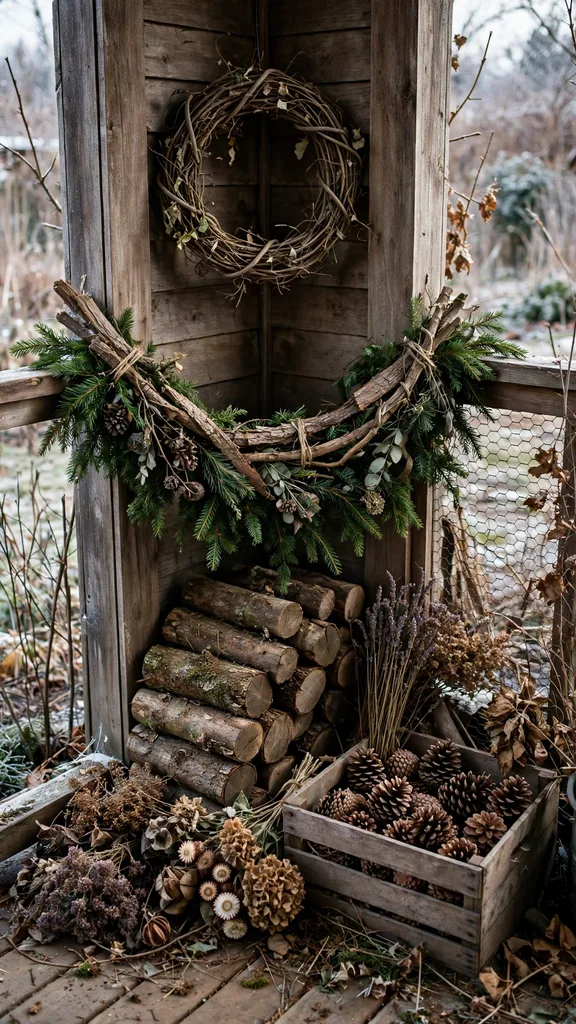
Rustic Christmas decorating, done from the garden, is a materials discipline: raw wood, bark, vine, cones, dried flowers and fruit, and fresh greens, in browns, grays, and faded golds, with red berries as the one loud note. This list gathers 45 rustic decorations organized by surface, door, mantel, table, rail, window, wall, porch, tree, kitchen, hearth, and garden, because rustic style is not a set of objects but a way of treating every surface the same honest way.
This is a style list, not a construction manual: it shows what goes where and why it works, and links to the batch’s building guides for the making. I decorate this way myself because the materials are already here, in the woodpile, the pruning heap, and the dried store, and a house dressed from its own garden looks settled in a way bought rustic, with its distressed paint and printed burlap, never quite manages.
| Surface | Rustic Treatment | Key Materials |
|---|---|---|
| Door | Swags, bunches, vine wreaths | Bark, evergreen, husks |
| Mantel and table | Log lines, laid garlands, scatters | Logs, dried flowers, citrus |
| Rail and window | Pruning garlands, twig stars | Prunings, twigs, cones |
| Walls | Pressings, hoops, bundles | Bark, vine, wheat, lavender |
| Porch and garden | Crates, cans, ladders, fence swags | Wood, metal, prunings |
| Tree and hearth | Burlap, popcorn, log baskets | Burlap, cones, firewood |
1. Bark and Evergreen Door Swag
Wire evergreen cuttings around a core of bark pieces and long pinecones for a door swag with the woodshed in it. The bark’s rough plates against the soft greens is the rustic palette in one object, and it takes the weather a door can give.
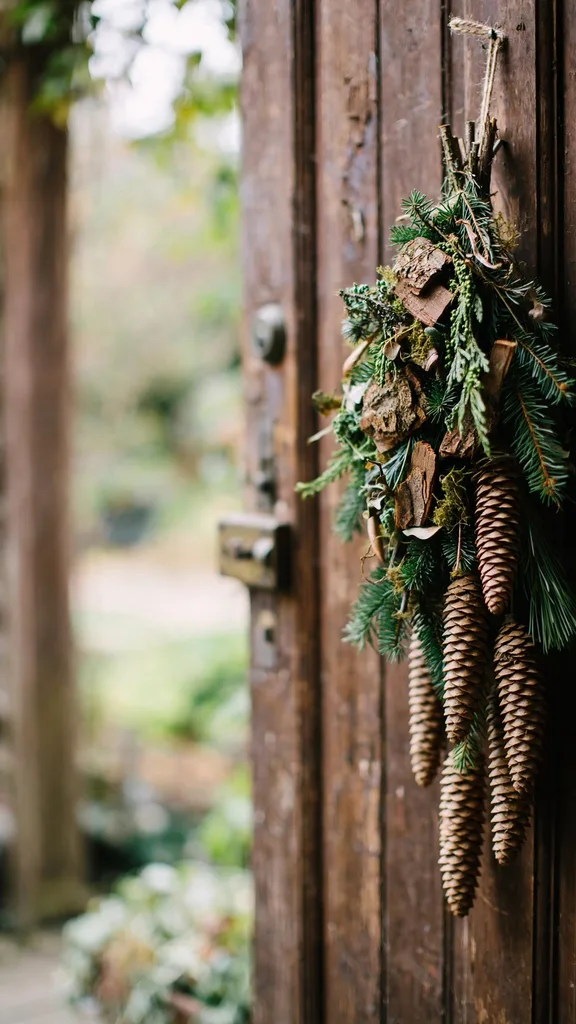
Bark from fallen or felled wood only; stripping a living tree for decoration is theft from the tree. The swag lasts 4 to 6 weeks outdoors, and the bark and cones return to the store for next year’s version.
2. Twine Wrapped Evergreen Bunch on the Door
Gather a fat bunch of mixed evergreens, bind the stems with twine in a long spiral wrap, and hang the bunch by its own loop. No frame, no foam, no fuss: the twine is the craft, and its neat spiral against the wild greens is the whole design.
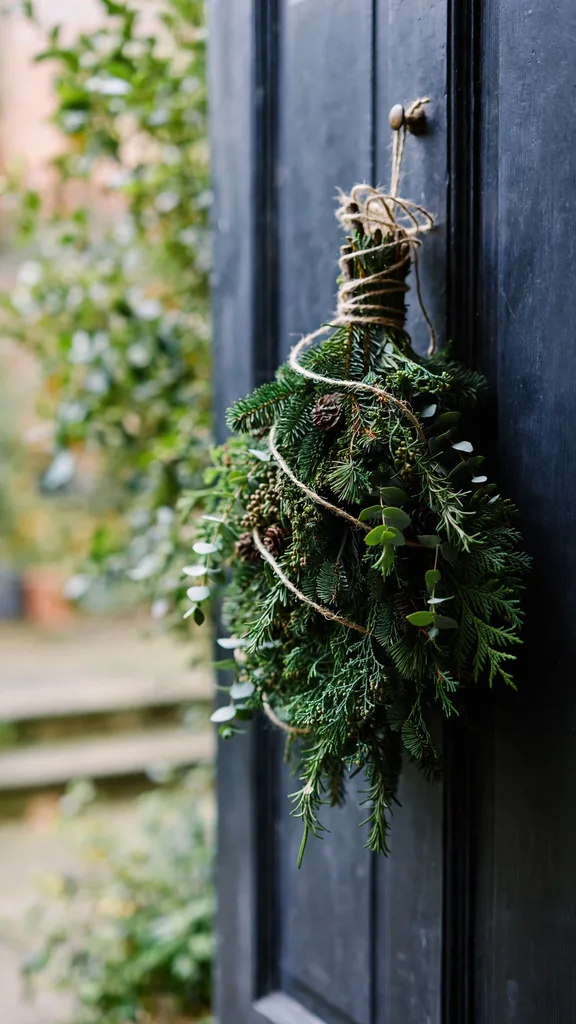
A door bunch lasts 4 to 5 weeks outdoors and refreshes by re-cutting the same hedge. It is the fastest door decoration in this list, which leaves more time for the slower surfaces inside.
3. Dried Corn Husk Door Swag
Save corn husks at harvest, dry them flat, and wire them in a fan behind evergreen tips and a few ears of dried ornamental corn for a door swag from the vegetable garden. The husks’ pale gold against dark green is autumn shaking hands with Christmas.
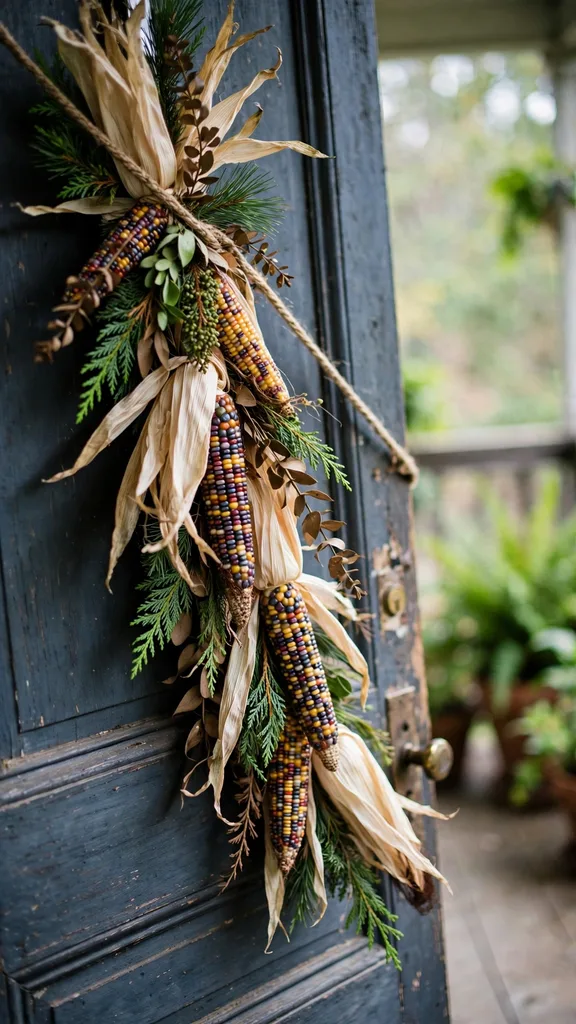
Husks are brittle when dry; wire them gently and hang the swag where it will not be brushed daily. It lasts the whole season under a porch. A garden that grows corn decorates two seasons from one crop.
4. Vine and Seed Head Wreath for the Door
Wind grapevine into a rough base and wire seed heads, cones, and dried flowers around it for a door wreath that looks gathered rather than made. The full wreath craft, from bases to bows, lives in the Christmas wreaths collection; this one is its rustic branch.
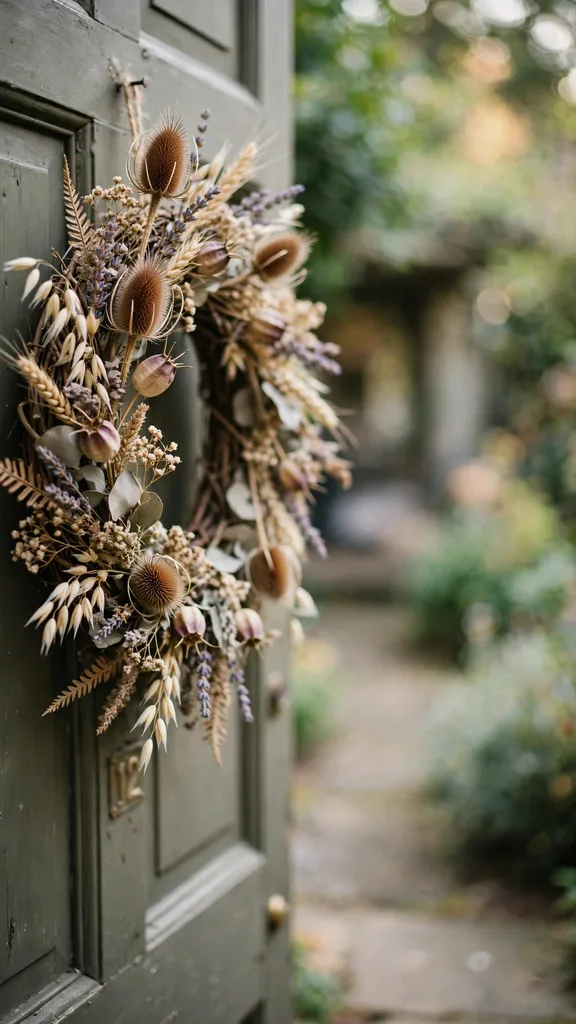
A vine wreath base lasts for years, redressed each season. Seed heads are the fragile part; keep spares in a box and replace the broken ones in minutes. Roughness is the point, so leave the vine’s wild ends untrimmed.
5. Log and Jar Mantel Line
Line the mantel with short log rounds on their sides, glass jars holding battery lights between them, and evergreen tips tucked along the line. The logs give the mantel a woodpile honesty, and the jars glow like the fire’s echo.
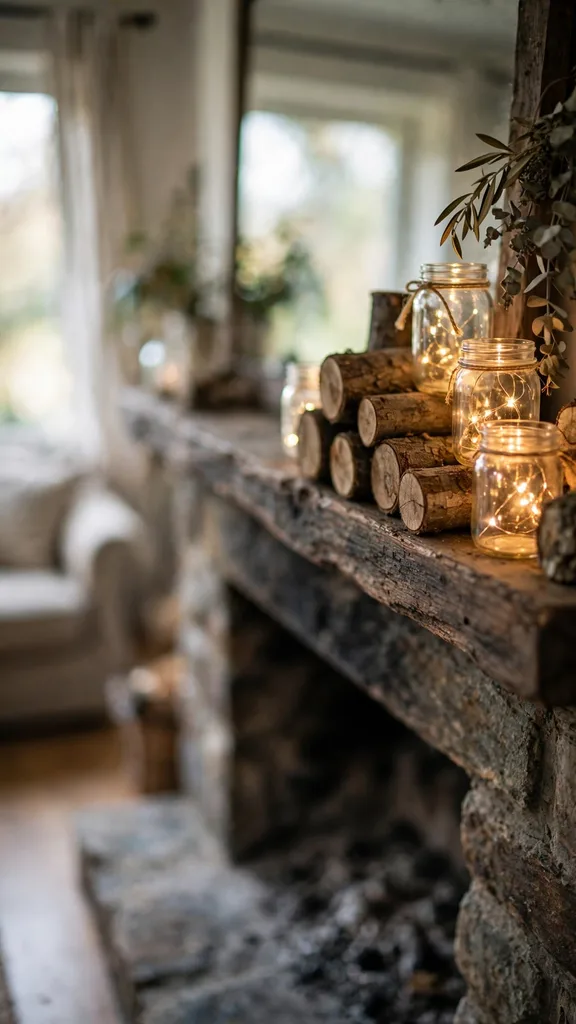
Battery lights only near dry materials, and a hand’s width from any real flame if the fire is lit. The line builds in ten minutes and dismantles into the log store and the recycling, which is rustic decorating’s favorite ending.
6. Dried Flower and Wheat Mantel Garland
Lay a loose garland of dried flowers, wheat stems, and grasses along the mantel in drifts rather than strung, the dried harvest’s faded golds and pinks doing the work fresh flowers do in other houses, only softer.
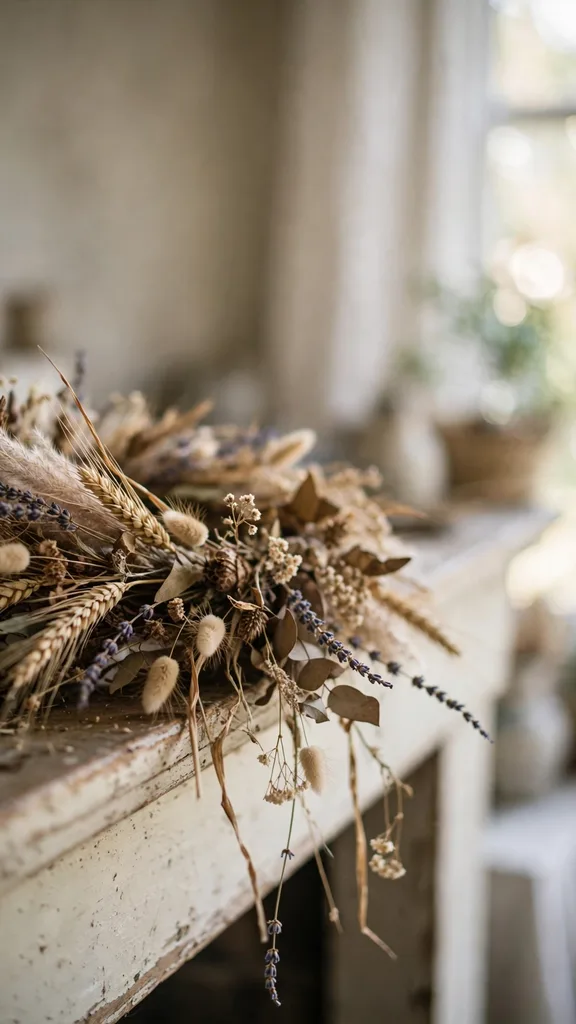
Laid garlands need no construction and shed gently; a weekly shake outside keeps them tidy. They last the whole season and beyond, since everything in them is already dried. The mantel is where dried flowers earn their keep.
7. Magnolia Leaf and Cone Mantel Garland
Wire magnolia leaves and cones along a rope for a mantel garland in gloss green, copper, and bark brown. The NC State Extension Plant Toolbox entry for Magnolia grandiflora profiles the tree whose leaves, leathery and two toned, make this the most tailored rustic garland here.
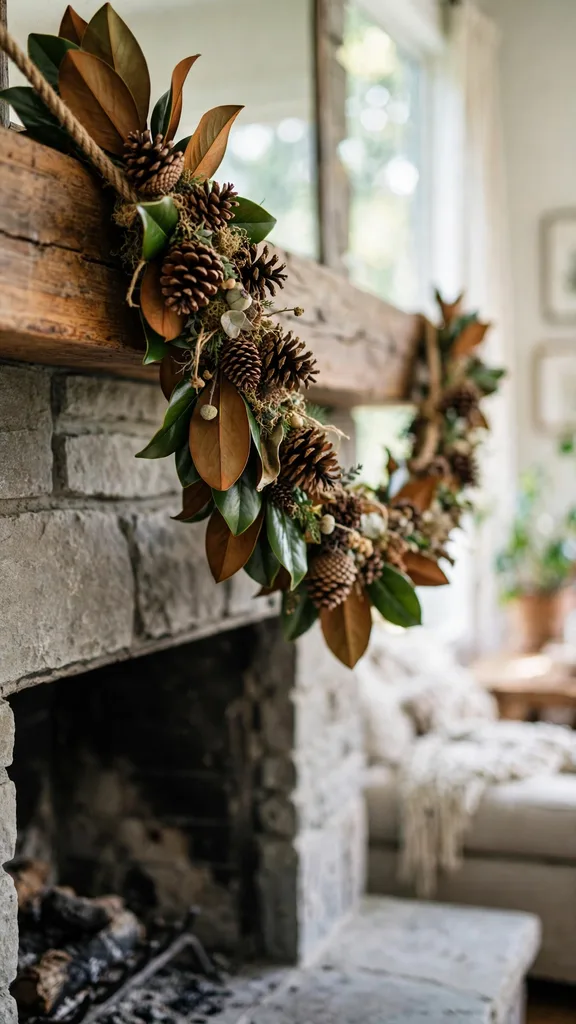
Magnolia leaves hold 4 to 5 weeks indoors, curling into their copper phase. Wire the garland on a rope core so it drapes in even swags. It is the mantel piece for households that like their rustic with a straight spine.
8. Log Slice Chargers and a Cone Runner
Set the table with log slice chargers under the plates and a runner of cones, evergreen tips, and dried orange slices down the middle. The slices’ rings echo the runner’s cones, and the table looks dressed by the woodpile and the garden together.
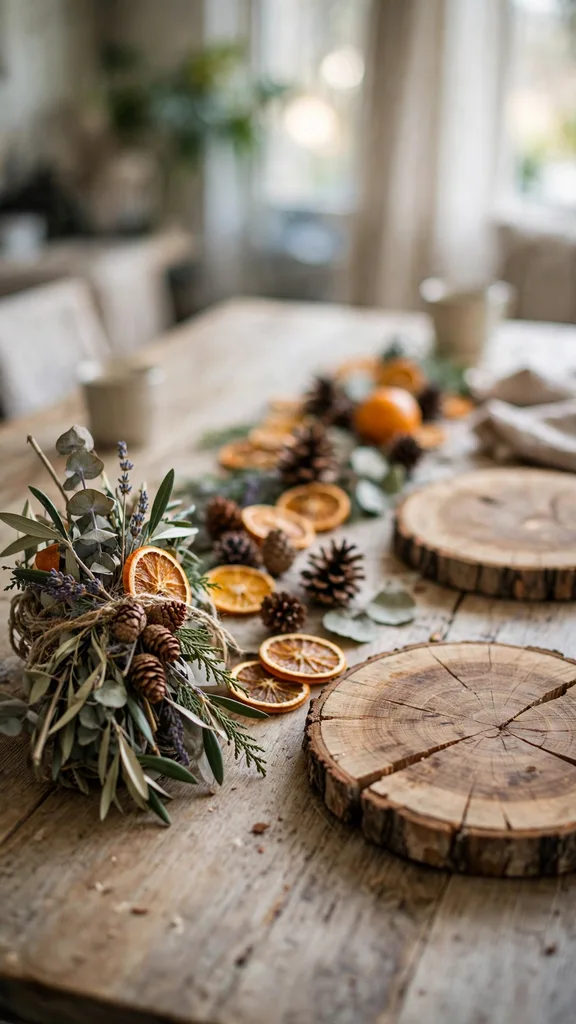
Sand the slices lightly so they sit flat and do not snag linen. The runner builds in minutes from the store. After the meal, the chargers stack in a cupboard and the runner returns to its materials, a table that decorates and disassembles on the same day.
9. Dried Citrus and Herb Table Scatter
Scatter dried orange slices, herb sprigs, and small cones along the table’s center in a loose drift for a runner that is not a runner. The scatter suits long tables and lazy hosts, being arranged by the handful and cleared by the handful.

The Clemson Extension guide to drying oranges gives the method behind the slices, an eighth of an inch thick and dried low and slow until translucent. Citrus and herbs scent the table gently, which a formal runner never does.
10. Jar Posies of Herbs and Dried Flowers
Fill small jars with posies of herbs and dried flowers, one at each place or a row down the table, for table flowers at the rustic scale. Jars are the rustic vase: honest, heavy enough not to tip, and already in the cupboard.
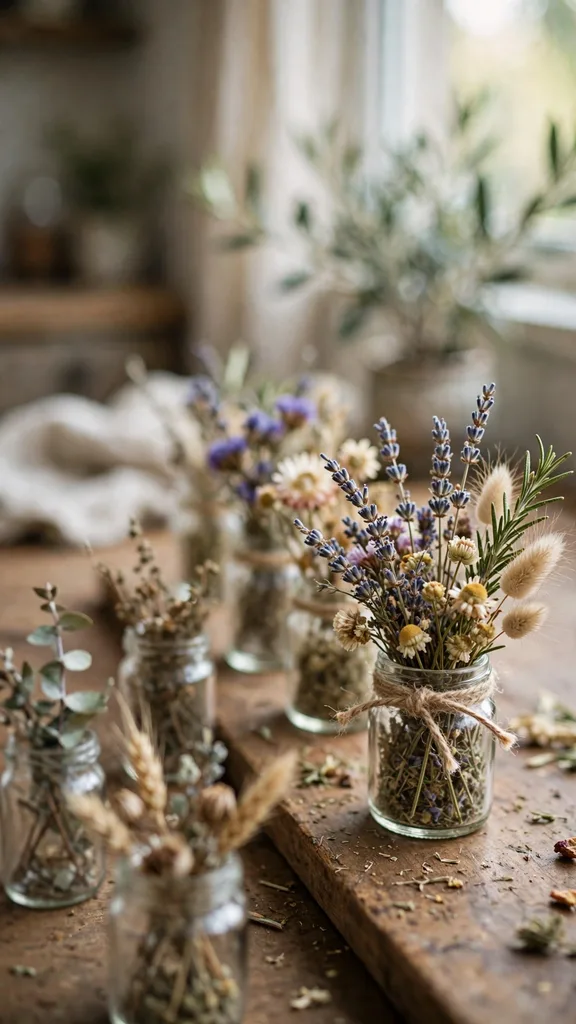
Posies build from the dried store and the herb bed in minutes. After the meal they move to sills and shelves and go on decorating, which is more than cut flowers in a florist’s vase usually manage in a rustic house.
11. Rough Garland of Mixed Prunings on the Rail
Build the stair or porch rail garland from mixed prunings, evergreen, dogwood, and vine worked together, for a garland with branches in it rather than only leaves. The construction, wiring, and species by species lasting times are covered end to end in the fresh Christmas garland guide.
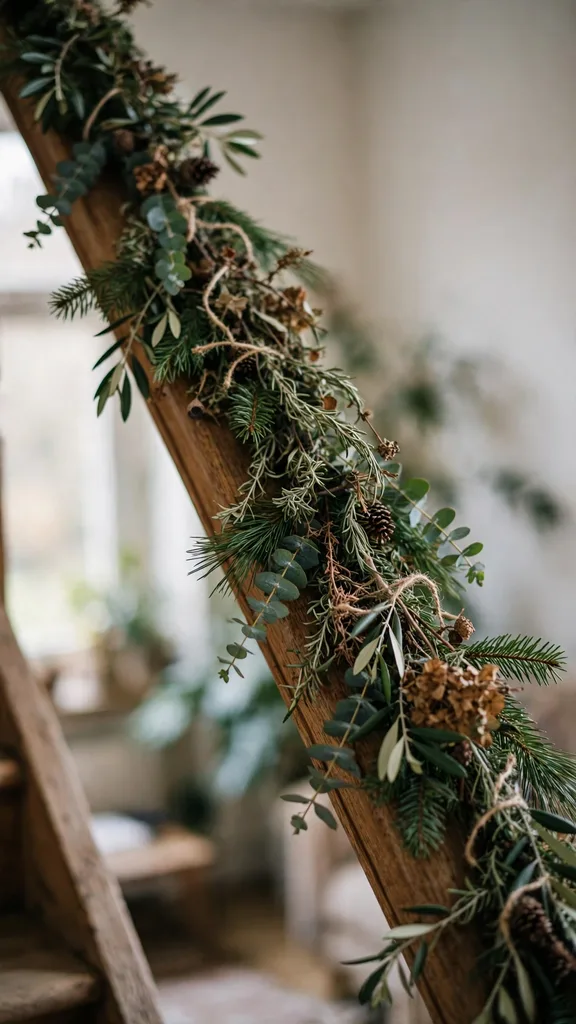
A prunings garland is heavier than a leaf garland, so fix it at every post or newel. Its roughness is its charm: the rail looks grown over rather than decorated, which is the rustic ideal for a staircase.
12. Cone and Twine Stair Swags
Tie small swags of greens and cone clusters at each newel and baluster turn for a staircase dressed in rhythm. Swags suit stairs better than garlands in houses where hands need the rail clear, and they build faster.
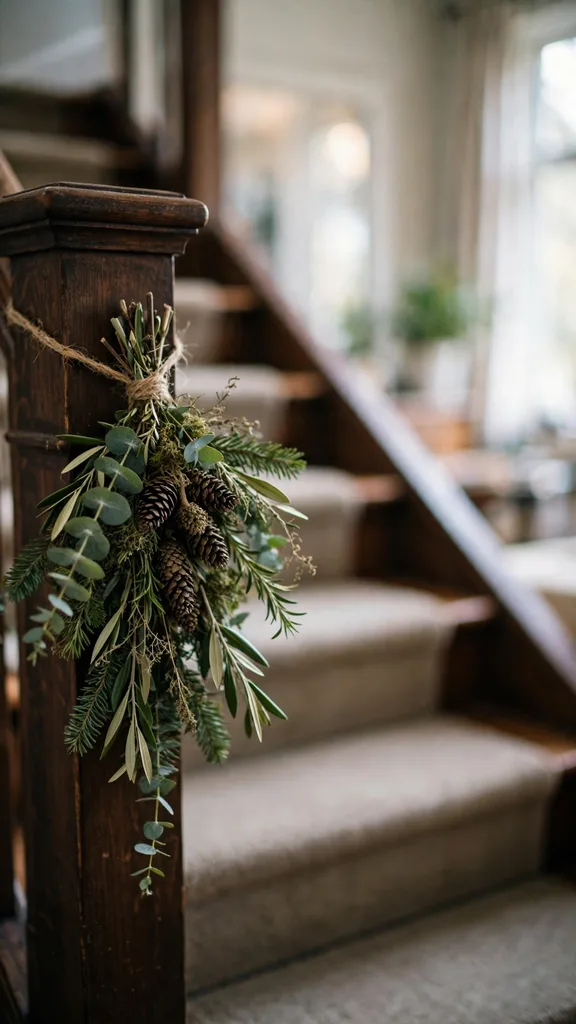
Each swag lasts 4 to 5 weeks and replaces individually. Three cones per swag and one species of green keeps the rhythm calm. The stairs get the decoration; the rail keeps its job.
13. Twig Star in the Window
Bind a star from straight twigs and hang it in the window against the winter light, where its silhouette does the work. A twig star costs five sticks and ten minutes, and from the street it is the window’s whole decoration.
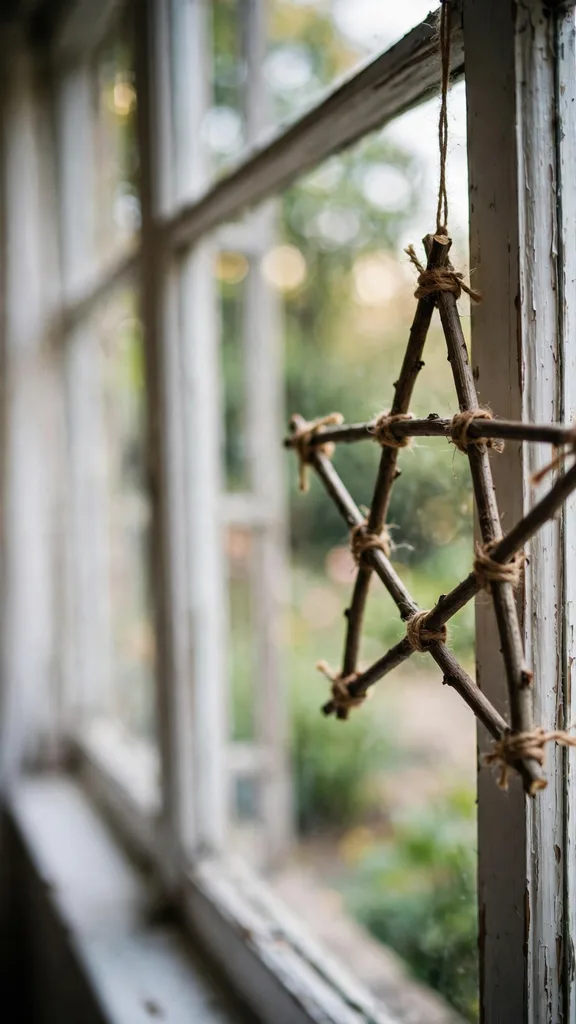
Make stars in a set of sizes for a run of windows. Willow and dogwood bend to the points without snapping. The star stores flat and returns each year, a small tradition with a very low storage rent.
14. Dried Orange and Cone Window Garland
String dried orange slices and small cones across the window, where the light turns the slices amber and the cones silhouette between them. It is the window’s stained glass, made from the kitchen and the pine trees.
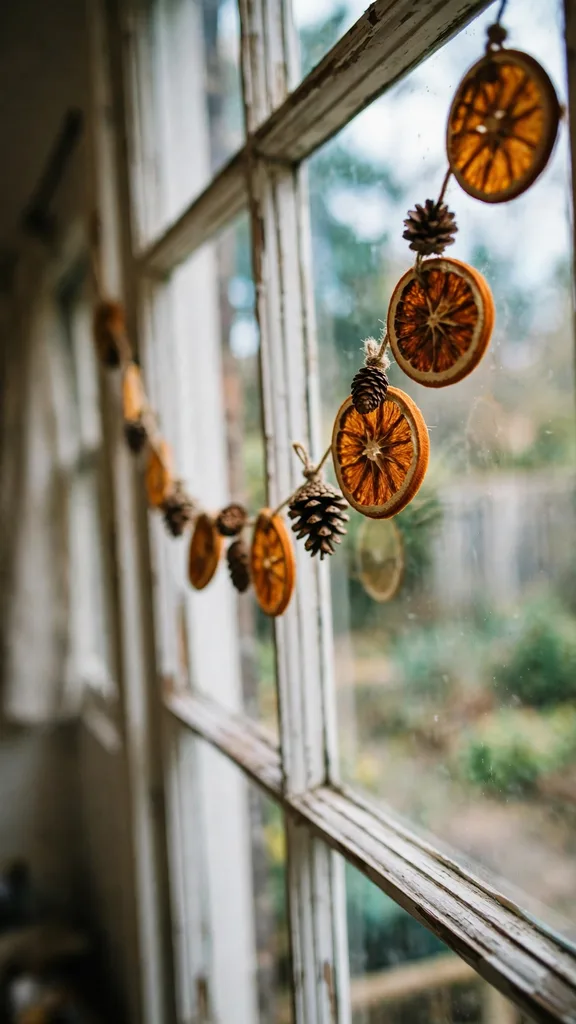
The garland lasts the whole season in a window, the sun preserving what it illuminates. Keep the slices fully dry before stringing or they soften at the thread holes. Two windows of this and the house glows from the street.
15. Bark Framed Botanical Pressings
Mount pressed leaves and flowers on card and frame them with bark strips for wall pieces that bring the garden’s specimens indoors. A row of three above a sideboard is a herbarium with rustic manners.
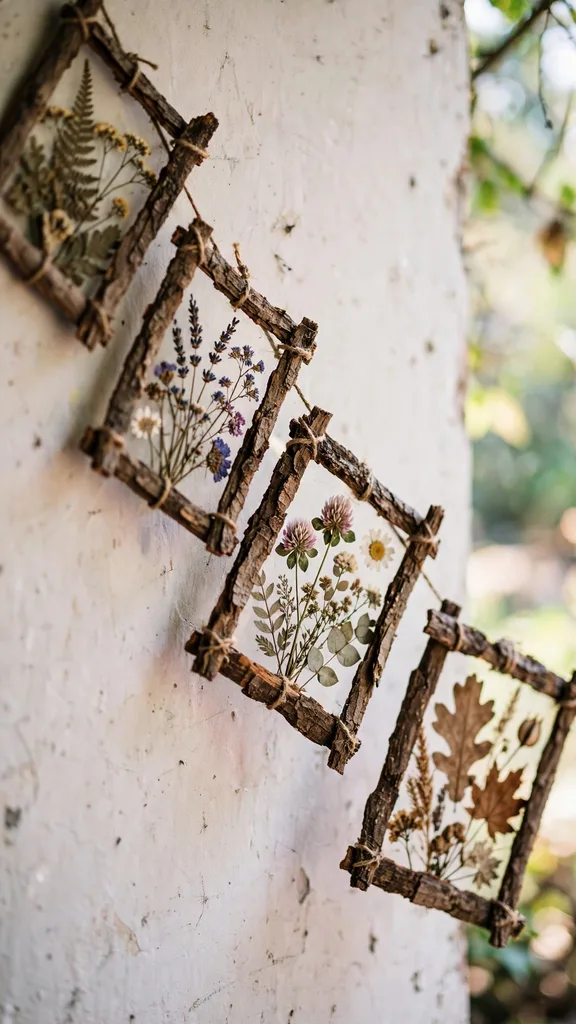
Pressings keep for years out of direct sun. Bark frames want fallen bark and a hot glue patience. The pressings are summer’s work displayed in winter, which is the garden calendar decorating the wall.
16. Woven Vine Hoop With Dried Flowers
Weave a hoop of vine, dress one side with dried flowers and seed heads, and hang it as a wall wreath that leaves half its circle bare. The empty half is the design: rustic decorating trusts negative space more than shops do.
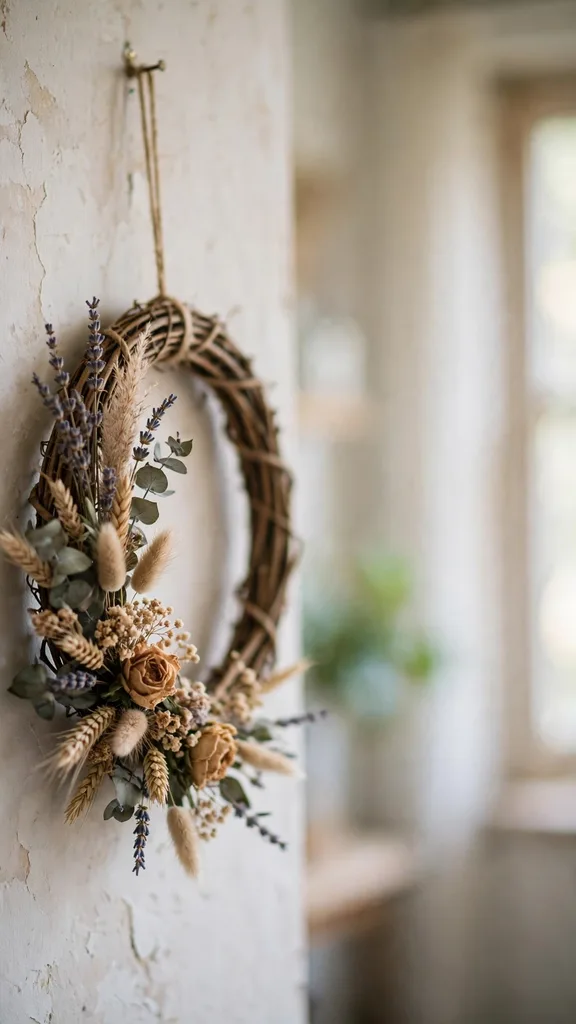
The hoop lasts for years, redressed as the flowers fade. Hang it where its shadow plays on the wall in low light. It suits the modern rustic room, where one strong object beats a gallery of small ones.
17. Wheat and Lavender Bundle on a Hook
Tie a sheaf of wheat and lavender and hang it on a wall hook or a door latch, a bundle that is half harvest, half bouquet. Its golds and violets against a plain wall need nothing else in the frame.
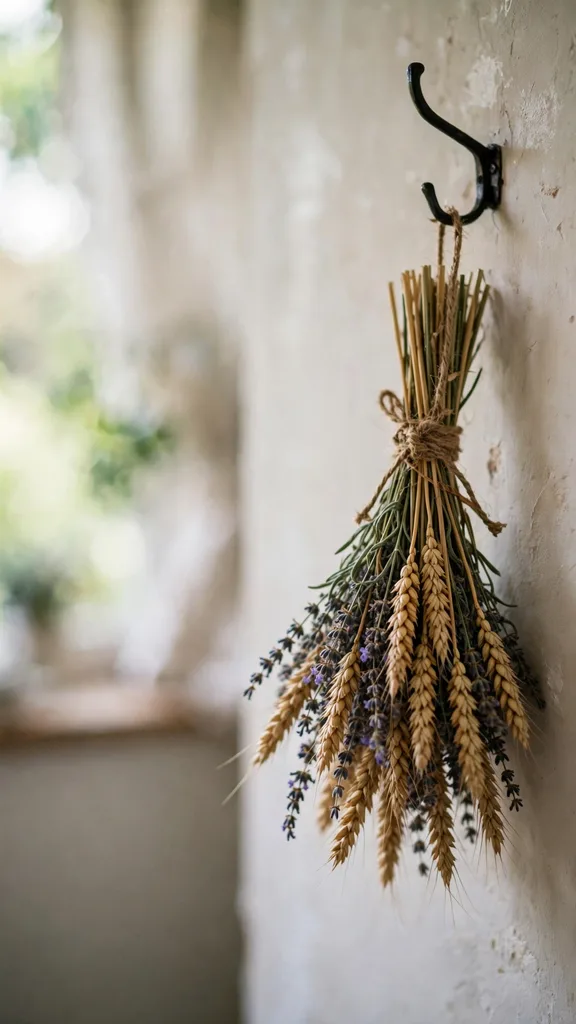
The bundle keeps for a season and more in a dry room. Make it in summer when both are cut, and December’s wall is decorated by July’s foresight. A hook, a bundle, a wall: the shortest recipe in this list.
18. Crate of Logs and Greens by the Door
Fill a wooden crate with short logs, evergreen tips standing among them, and a few large cones on top, and set it by the door as a still life of the woodpile. It is the porch’s easiest big piece, assembled from what the shed already holds.
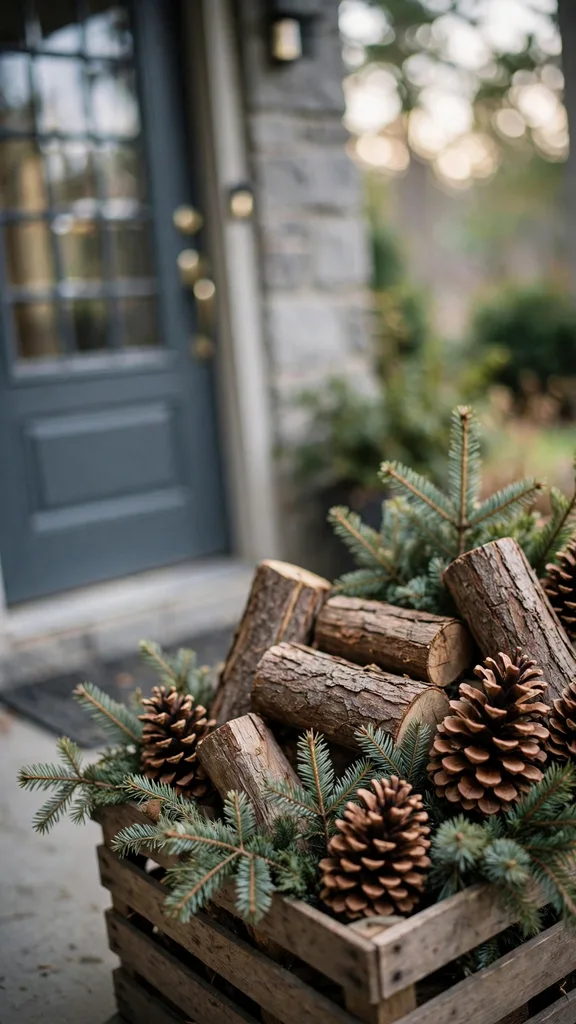
The crate weathers a season or two outdoors and stores the same logs in January. Refresh the greens at New Year. A crate by the door also hides the parcel delivery spot, which is a modern rustic function.
19. Stacked Firewood Wall With Greens
Stack the firewood neatly against the porch wall and tuck evergreen tips and berry sprays along its top edge, turning the fuel store into the porch’s backdrop. A well stacked woodpile is already beautiful; the greens just sign it.
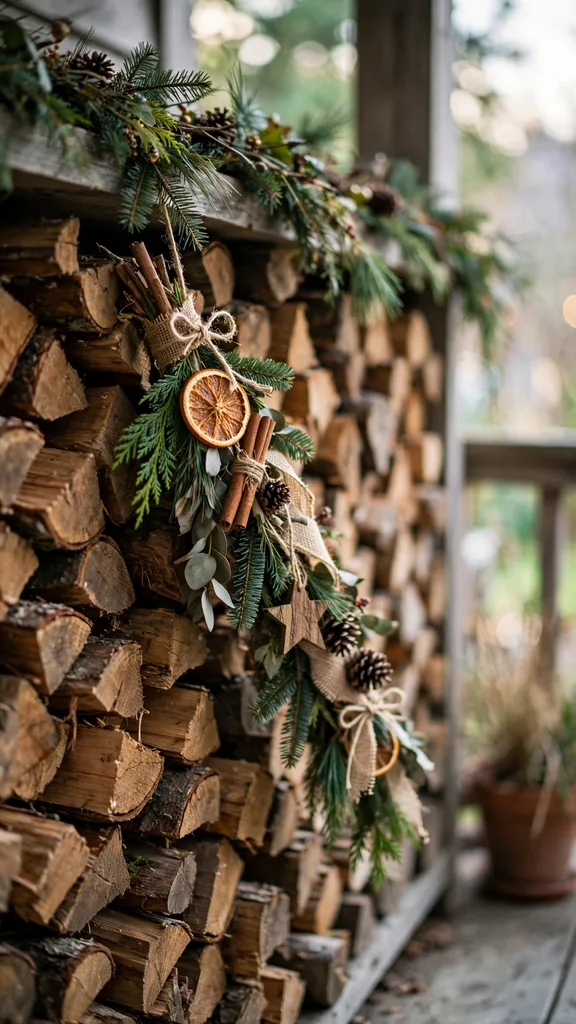
Keep the decorated layer at the top, away from the logs that actually feed the fire, or the display will be burned by degrees. The wood wall lasts all winter because it is restocked, a decoration with a supply chain.
20. Old Ladder Display With Pots and Cones
Lean an old ladder against the porch wall and dress its rungs with small pots, cone baskets, and a draped garland for a vertical display in the space a chair would waste. Ladders are the rustic shelf: strong, free, and already in the shed.
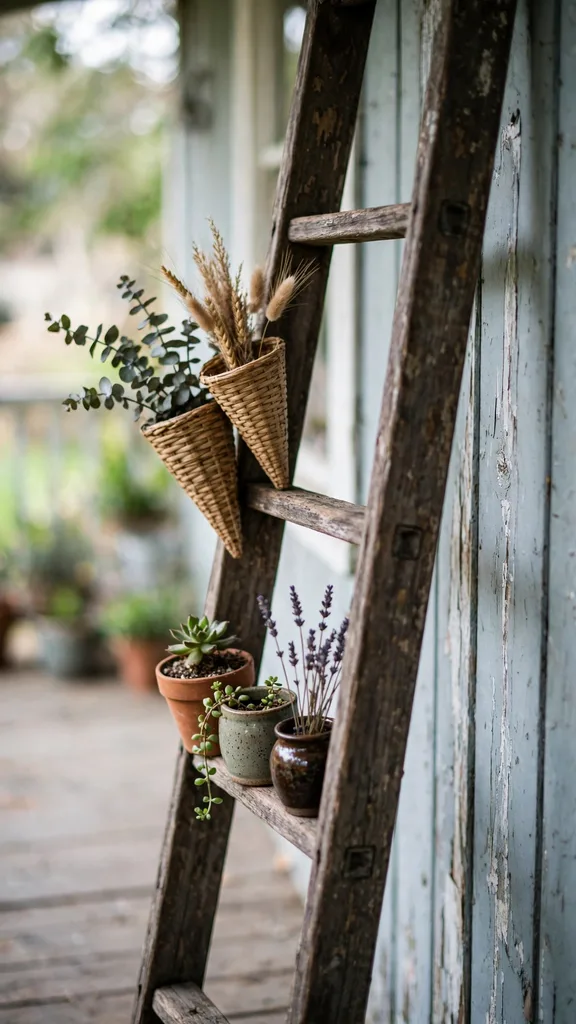
Secure the ladder’s feet and keep the heavy pots low. The display changes with its pots, so it can run all winter on swaps. A ladder that held paint pots in summer holds the Christmas garden in December, promoted.
21. Milk Can With Dogwood Stems
Stand tall red dogwood stems in an old milk can or churn by the door for the farmyard classic: height, color, and a container with a past. The stems’ red against the can’s weathered metal is a color scheme a century old.
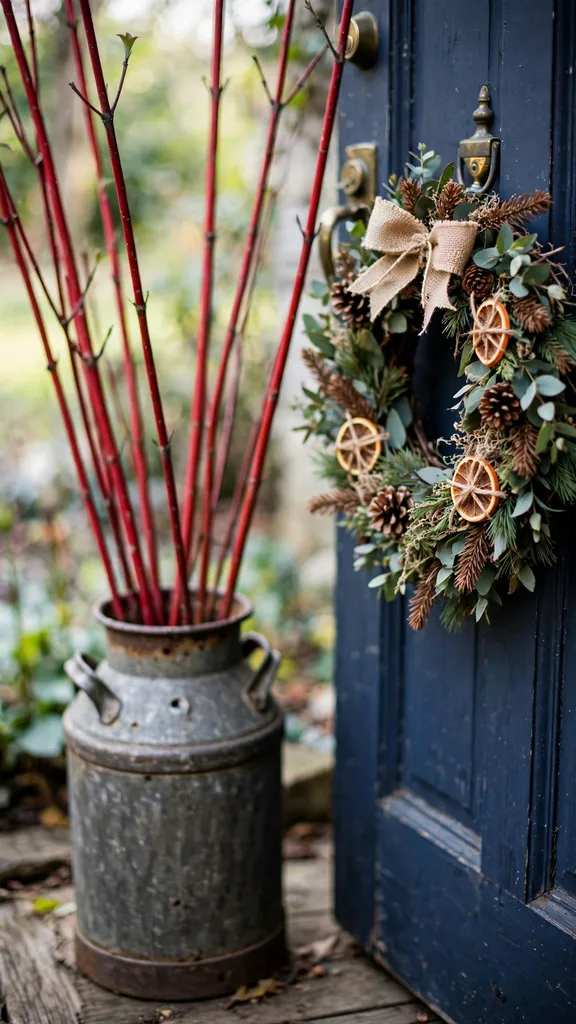
Any tall, heavy vessel works; weight matters at a door. The stems last the season and may root in spring if the can holds water. It is the porch piece that makes visitors from farms nod and visitors from cities take photographs.
22. Wheelbarrow of Evergreens and Gourds
Fill a wheelbarrow with evergreen boughs, leftover ornamental gourds and pumpkins, and cones, and park it by the porch as the garden’s own delivery. The barrow’s load looks abundant because it is: the autumn and winter harvests in one vehicle.
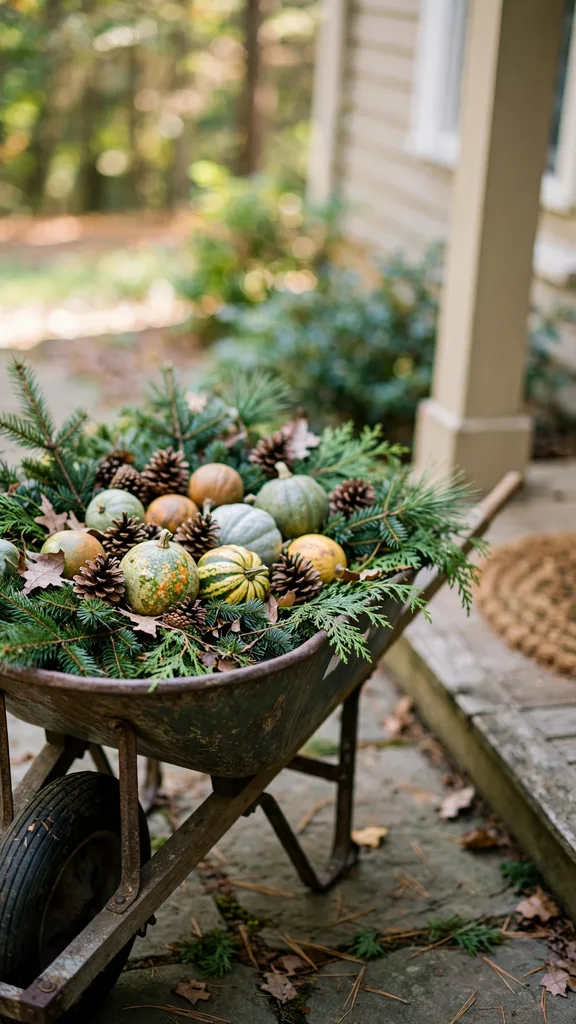
The barrow display lasts until the gourds soften, usually well past Christmas. Tip the barrow out in January and it returns to work. A wheelbarrow is the rustic container that also does the carrying, which no urn can claim.
23. Burlap Ribbon and Cone Tree Trim
Trim the tree with wide burlap ribbon wound loosely through the branches and cones wired among them, the rustic tree’s base layer. The hanging ornaments that complete it, dried flowers, seed heads, and herbs, are gathered in the DIY ornaments from the garden collection.
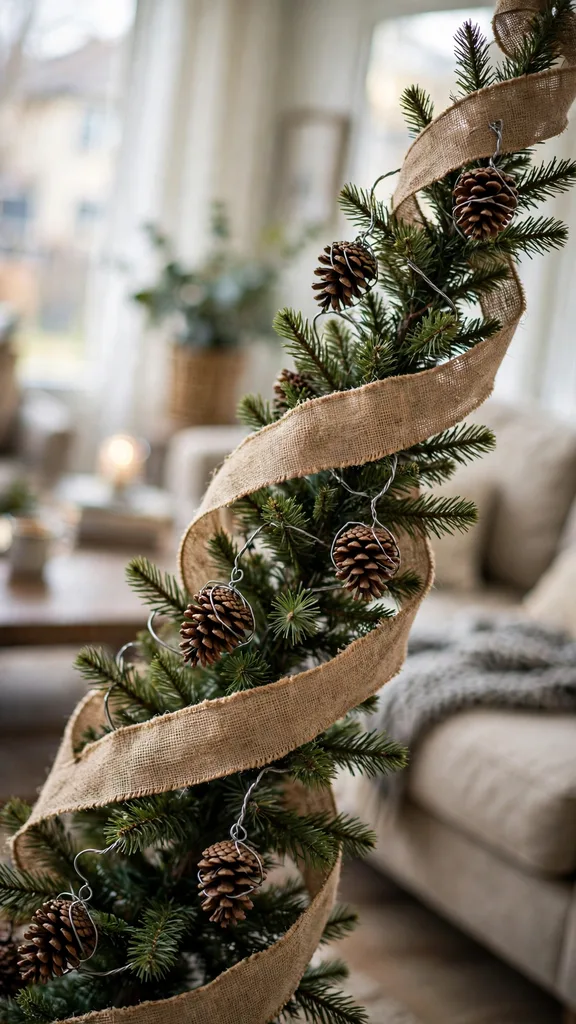
Burlap ribbon stores for years and its roughness sets off every smoother ornament. Wind it loosely; a tight spiral looks like packaging. The tree’s rustic scheme is a palette decision, browns and greens first, shine last and least.
24. Popcorn and Dried Flower Tree Garland
Drape the tree with a garland of popcorn and dried flowers for the homestead tree’s classic string in white and faded colors. It is the garland children expect and birds inherit in January, strung for the outdoor tree when the indoor one comes down.
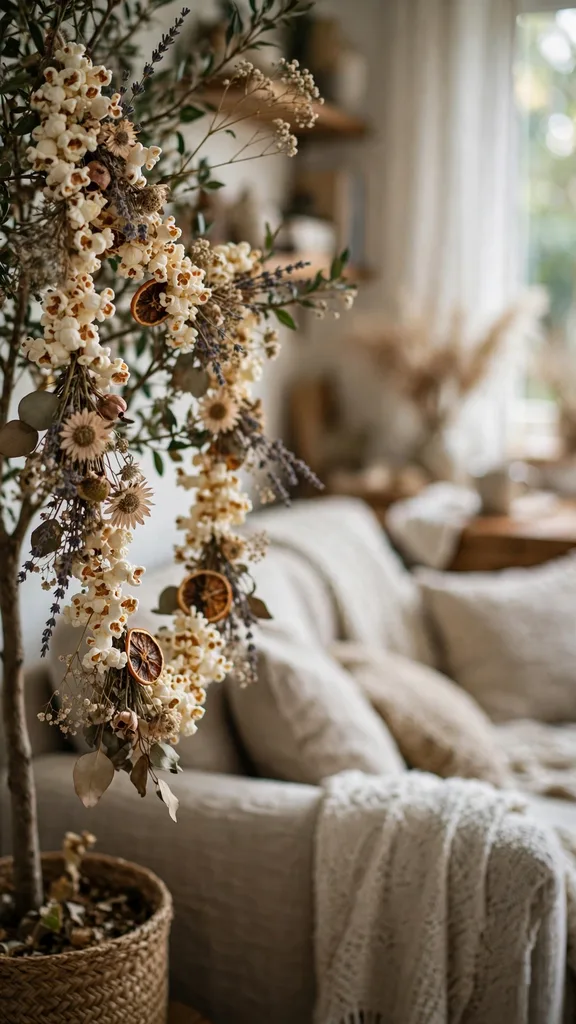
Popcorn garlands last 3 to 4 weeks indoors. Thread the corn a day after popping so it strings without crumbling. The tree dressed in food and flowers is the oldest scheme in this list and still the warmest.
25. Lavender and Wheat Bedroom Bundle
Tie lavender and wheat into a bundle for the bedroom door or the bedpost, where its scent is calm and its colors are quiet. Rustic decorating in a bedroom whispers, and dried lavender is its softest voice.
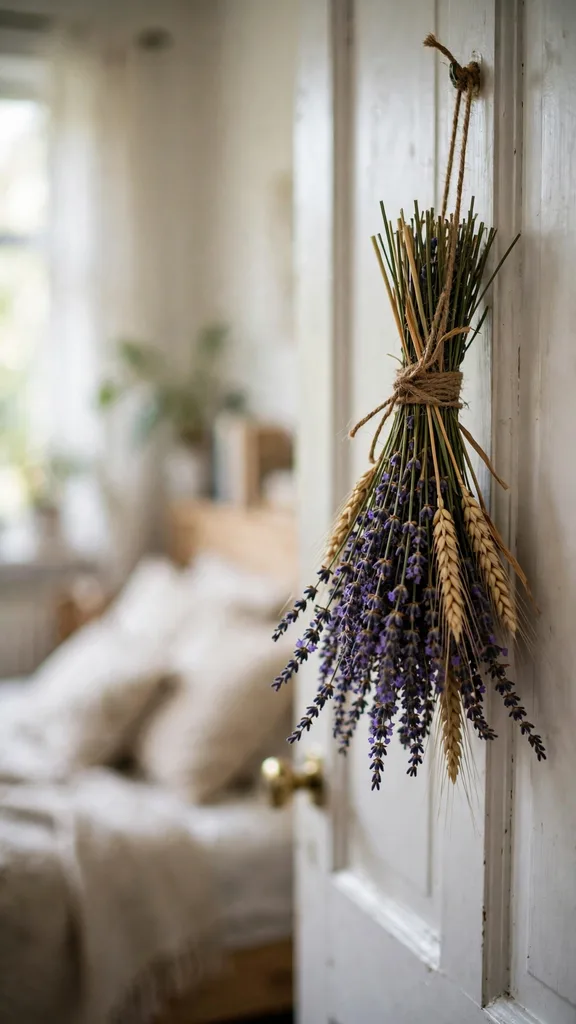
The bundle scents the room for months. Keep it out of direct sun to hold the violet. A bedroom bundle is also the guest room’s welcome, harvest and garden in one handful, hung before the guests arrive.
26. Dried Flower Posy on a Dresser
Stand a posy of dried flowers in a small jug on the dresser for a bedroom piece at the scale the room wants. Dressers collect clutter; a single posy claims the surface for the garden instead.
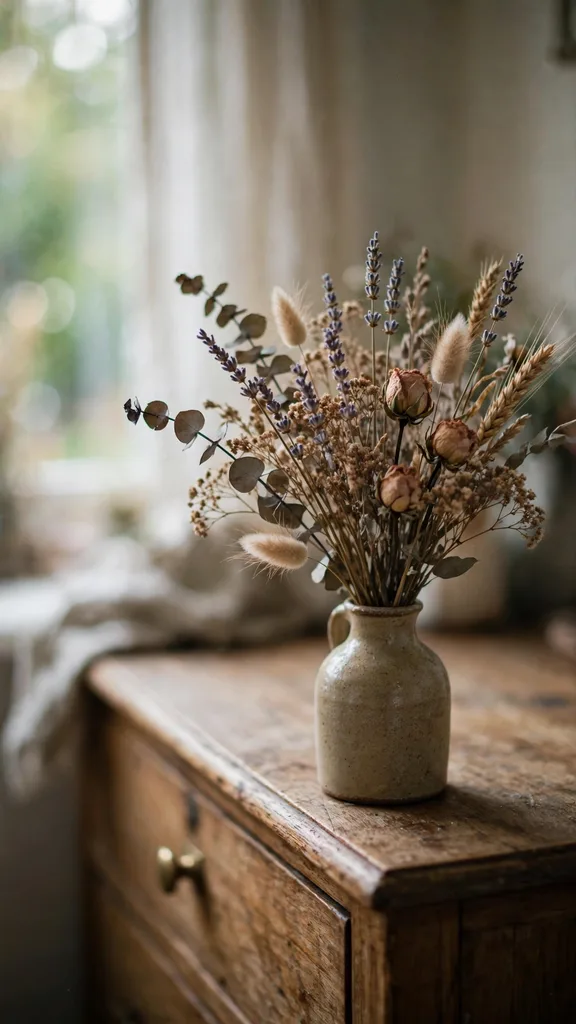
Dried posies last a season and more. Choose the quiet colors for bedrooms, whites, faded pinks, and grasses. The posy is the smallest complete decoration here, and some rooms need exactly one.
27. Herb and Chili Strings by the Kitchen Window
Hang strings of dried chilies and herb bundles by the kitchen window, where the light finds them and the cook can reach them. The kitchen’s rustic decoration is its stores, displayed: color with a use attached.
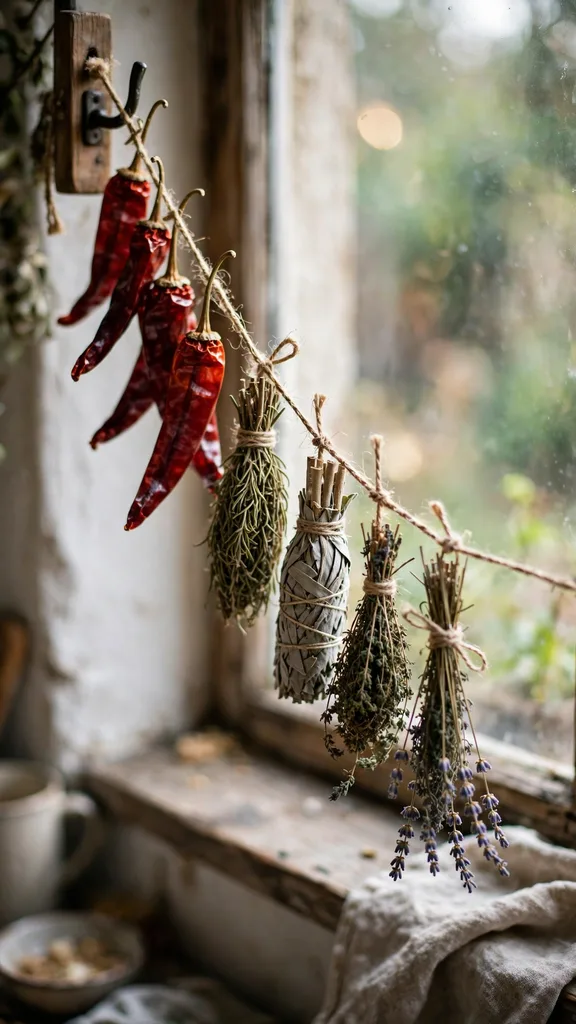
Chilies and dried herbs keep for months, so the window strings run the season and into the cooking. Build them on strong twine; a kitchen window’s garland is handled more than any other in the house.
28. Wooden Bowl of Cones and Nuts
Fill a wooden bowl with cones and whole nuts in their shells and set it on the kitchen table or the counter as a centerpiece that can be snacked from and rearranged by every passerby. It is the interactive centerpiece, rustic style.
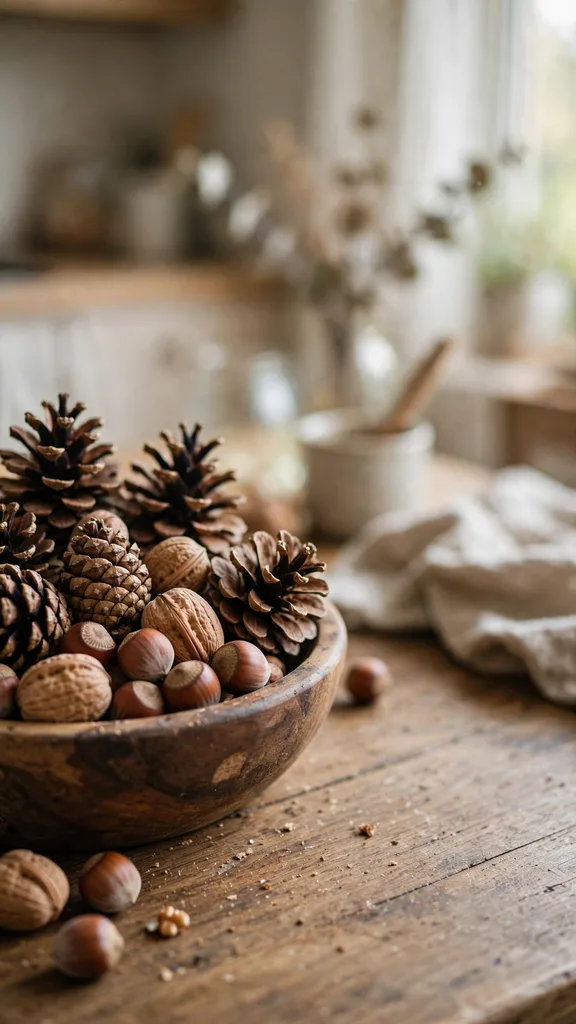
The bowl’s contents keep indefinitely, so it can live on the table all winter. Add dried orange slices for color at Christmas and remove them in January, and the bowl has seasons like the garden.
29. Dried Apple and Cinnamon Jar Display
Layer dried apple rings and cinnamon sticks in tall jars and line them on a shelf or a windowsill, the pantry’s stained glass. The jars show the stores and scent the shelf faintly, decoration by inventory.
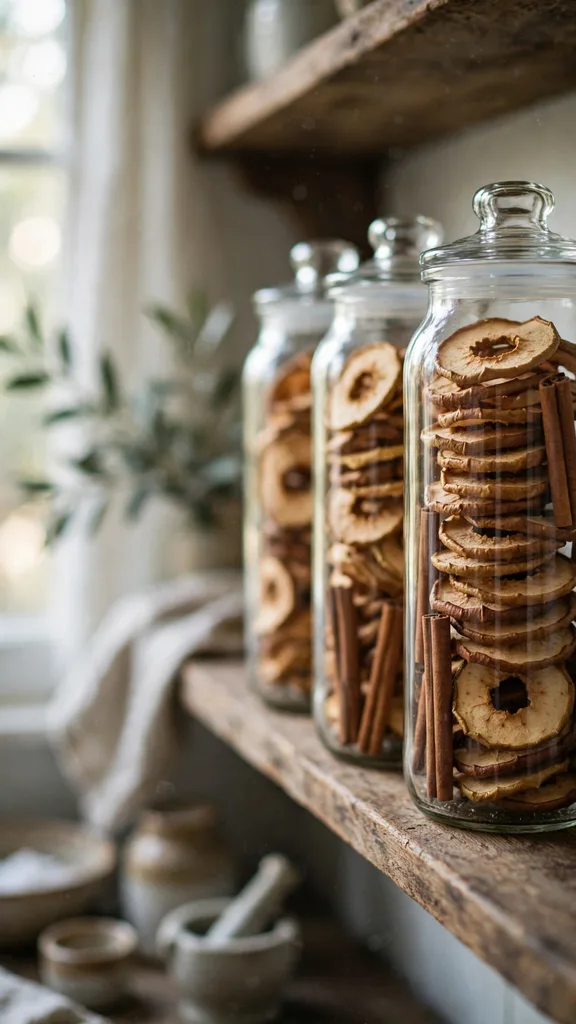
Jars keep their contents dry for months, so the display is also storage. Three jars in a row are a design; one is a jar. The kitchen shelf is the rustic room’s gallery, and its exhibits are edible.
30. Eucalyptus Bunch on a Hook
Hang a bunch of eucalyptus stems on a hook in the bathroom or the hall, where its silver leaves and clean scent suit small rooms. A single bunch is the minimum viable decoration, and it works.
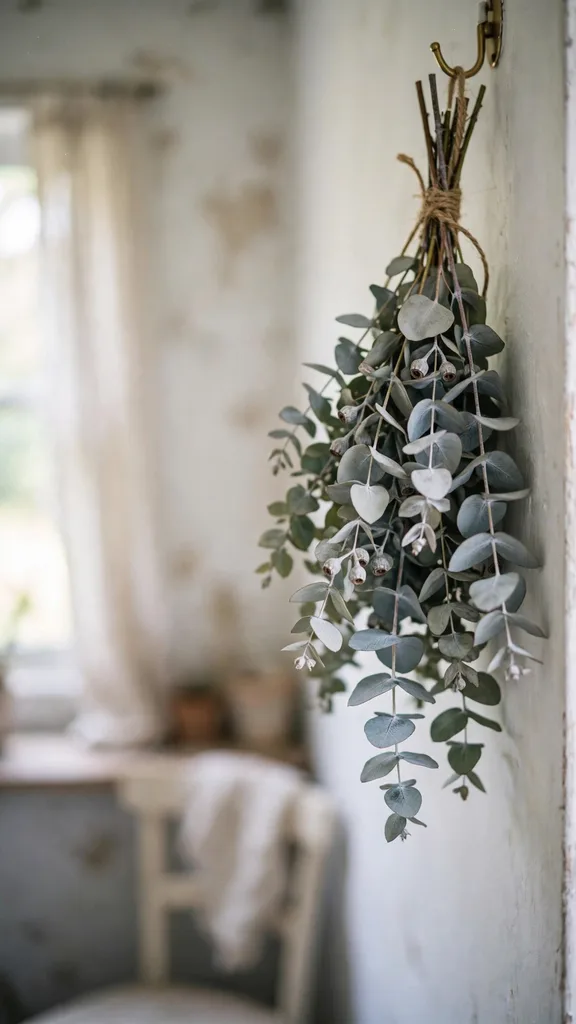
Eucalyptus dries in place and keeps its looks for months. Hang it where the shower’s steam or the hall’s traffic releases its scent. Small rooms deserve the garden too, and a bunch is how it gets there.
31. Small Bark Pot With a Fern
Set a small fern in a bark covered pot on a table or a shelf for a woodland piece at houseplant scale. The bark pot is a cachepot trick: a plain pot inside a sleeve of bark pieces, glued or tied.
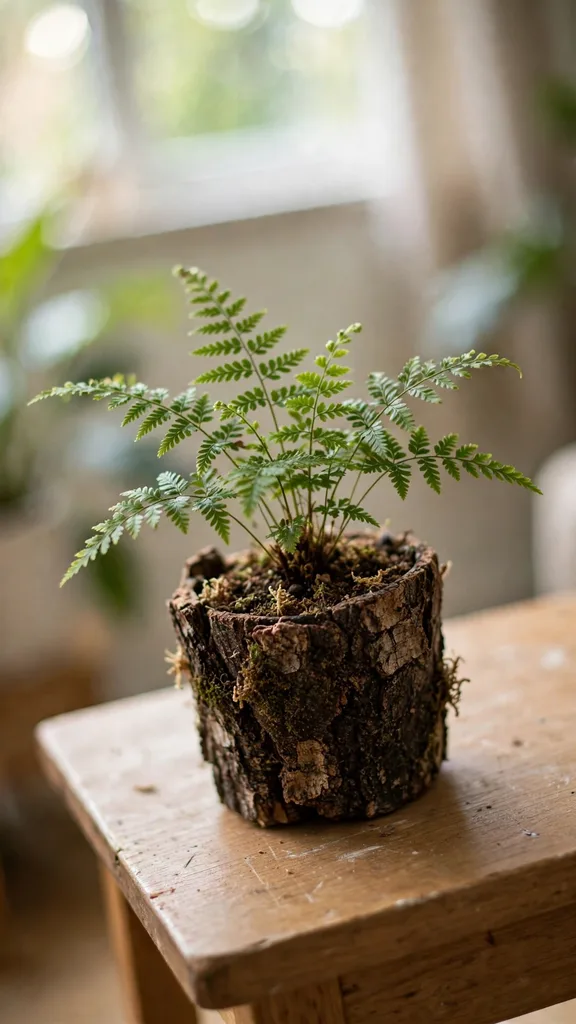
Ferns want humidity, so the bathroom and kitchen are its best rooms. The bark sleeve lasts for years. A bark pot is also the gift wrap that stays on, for the plant gifts of the season.
32. Basket of Firewood and Cones by the Hearth
Fill the hearth basket with firewood and large cones together, the fuel and the decoration in one container, and tuck evergreen tips along the top. The hearth is the rustic room’s altar, and its basket is the offering.
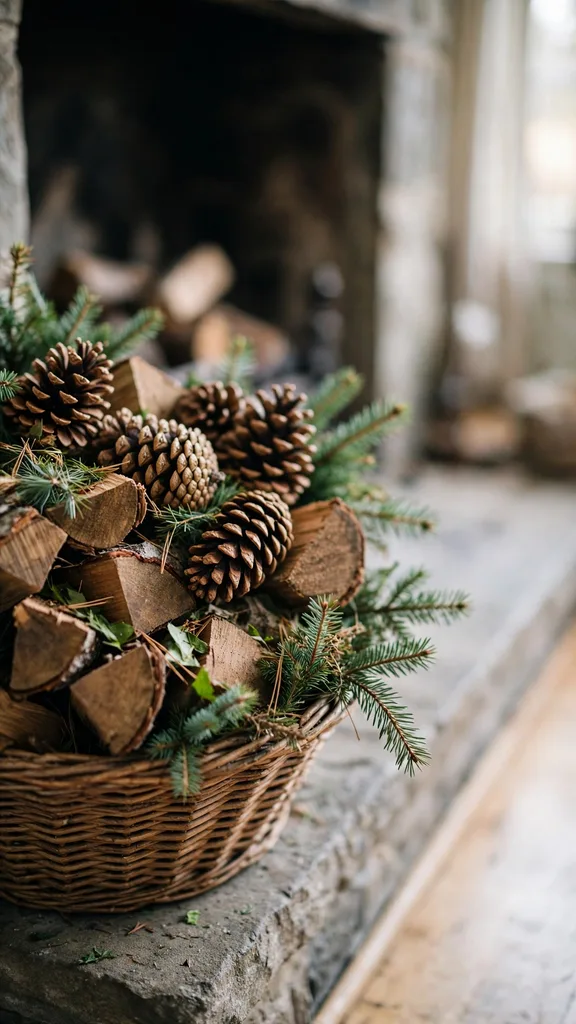
Keep the greens at the top, away from the logs that feed the fire, and everything a hand’s width from flame. The basket refills itself all winter from the wood store, the only self renewing decoration here.
33. Log Basket With Evergreen Tips
A log basket dressed with evergreen tips and a few berry sprays turns the wood store into a hearth display that changes daily as logs leave and arrive. It is decoration in motion, rustic style, since nothing by a working hearth stays still.
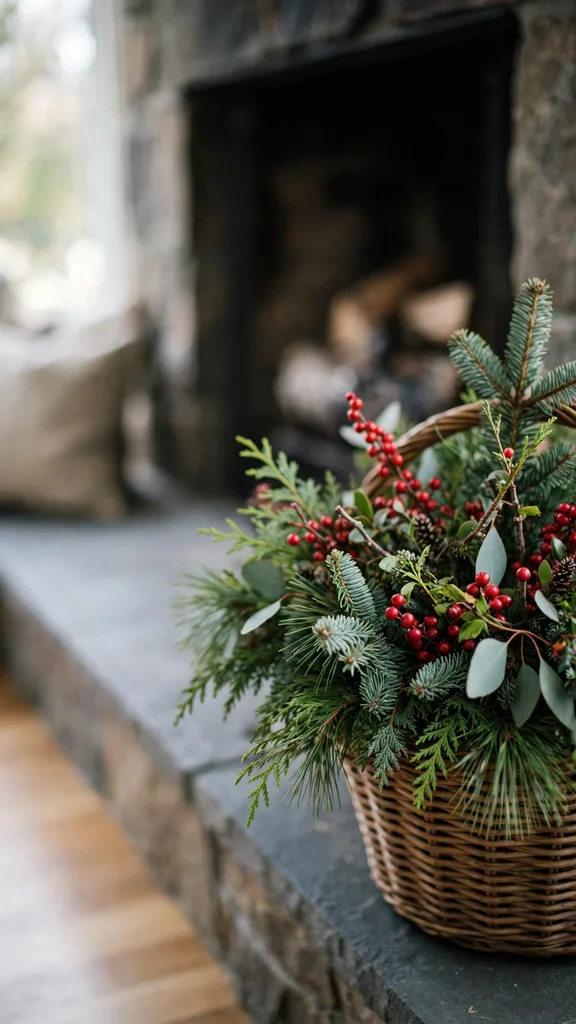
Berry sprays near a hearth dry fast in the heat; expect a week from them and refresh from the shrub. The evergreen tips last longer. The basket’s lesson is that rustic displays are maintained by use, not despite it.
34. Stone and Cone Hearth Line
Line the hearth’s edge with smooth stones and cones in an alternating row for a floor level decoration that a fire cannot reach and a broom can work around. It is the hearth’s skirting, made from the garden’s two heaviest materials.
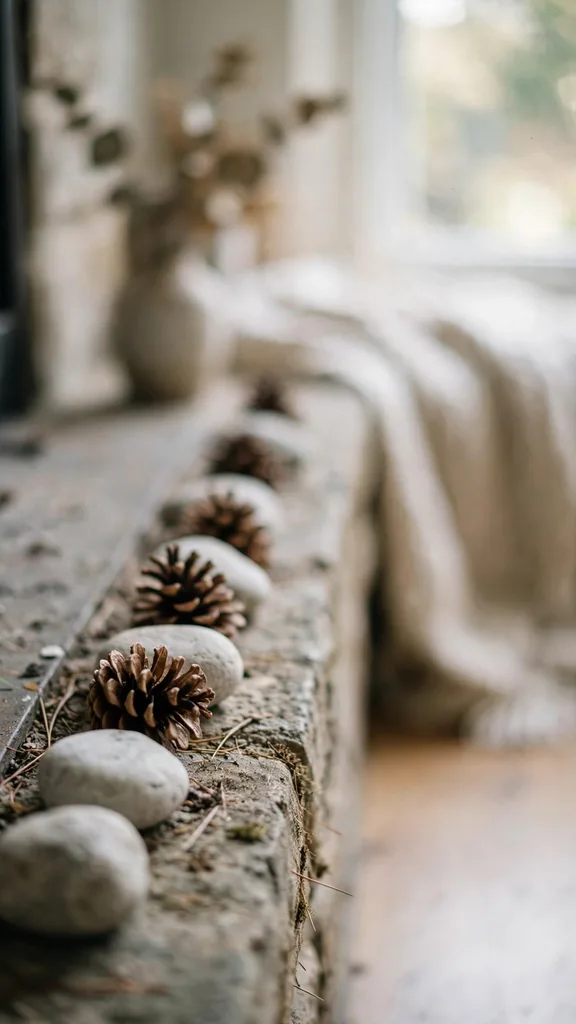
Stones and cones last forever and store in the same basket. The line suits the minimalist rustic room, where the floor is a surface too and most people forget it. Children will rearrange it, which is participation, not damage.
35. Hanging Branch With Cones and Dried Oranges
Hang a straight branch from a beam or above a table and tie cones, dried oranges, and herb bundles along it at varied lengths for a rustic chandelier without lights. The branch brings the ceiling into the decorating, a surface most rooms waste.
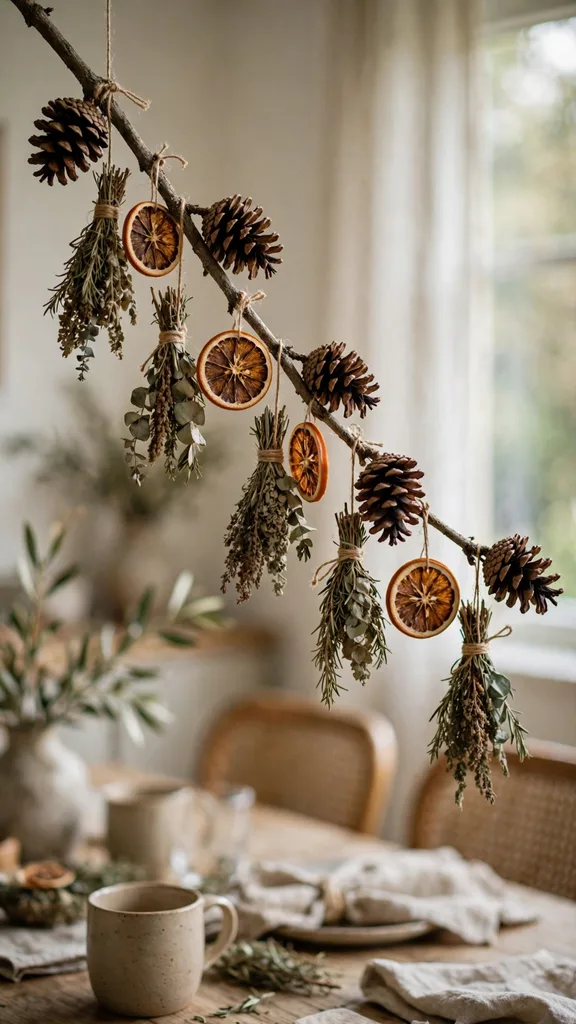
Hang it high enough to clear heads with margin, on cord that will hold. The pieces last the season. A hanging branch over the Christmas table is the piece guests photograph upward, a new angle for the house.
36. Garland of Dried Leaves on a Beam
String dried leaves, oak, beech, and magnolia, on twine and drape the garland along a beam or a mantel edge for the quietest garland here: brown on brown, shape on shape. It is the garland for rooms that find Christmas loud.
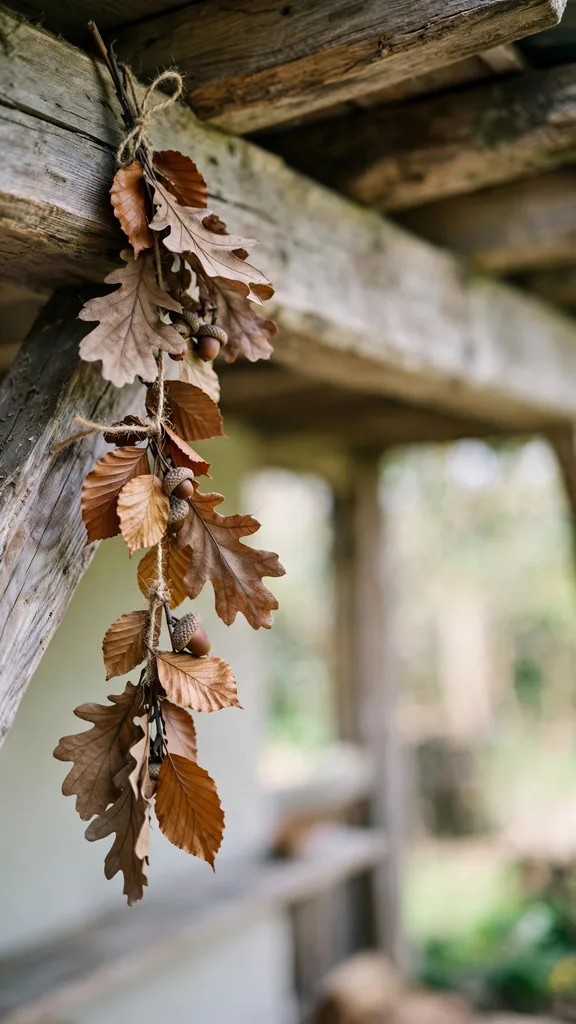
Dried leaves are brittle; string them gently and hang the garland where it will not be touched. It lasts the season in still air. The leaf garland is autumn kept, which is a defensible Christmas theme in a gardener’s house.
37. Rustic Fence Swags of Prunings
Tie swags of mixed prunings and cones along the garden fence for the outdoor rustic line: the fence is the garden’s longest surface, and swags dress it in rhythm without a single bought item.
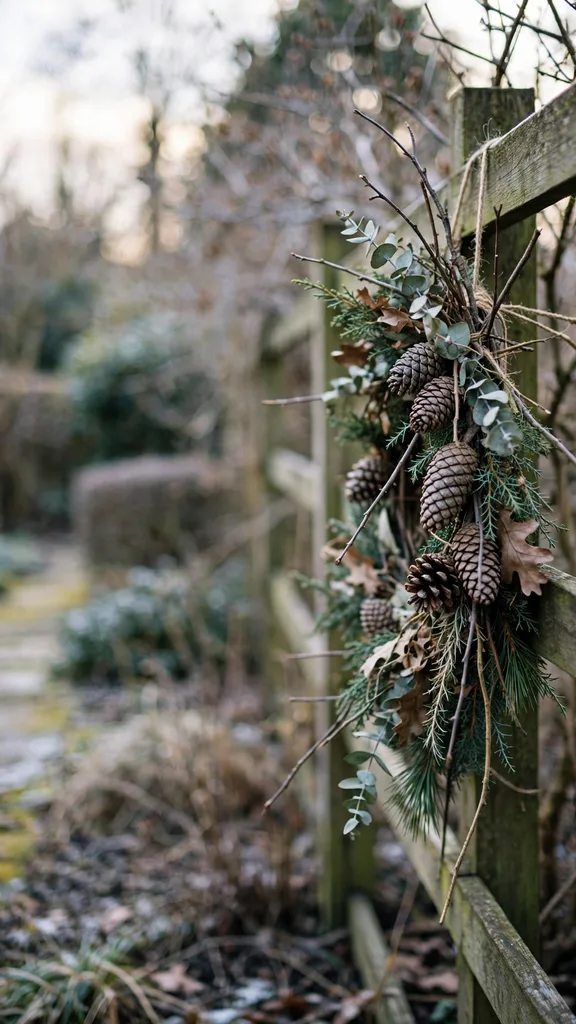
Swags outdoors last 4 to 6 weeks and replace one by one. Wire them at two points each against the wind. A dressed fence tells the street the garden is awake in winter, which is half of rustic decorating’s public work.
38. Gate Wreath of Vine and Seed Heads
Hang a rough vine wreath dressed with seed heads and grasses on the garden gate, the threshold piece that promises the garden beyond is decorated in the same gathered style. Gates are the garden’s front doors and deserve their wreath.
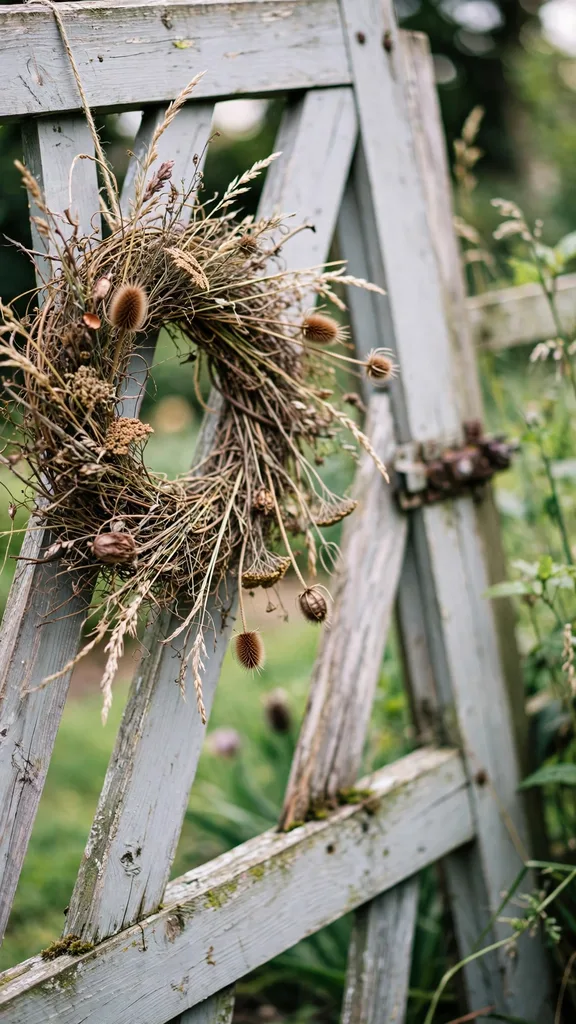
The vine base lasts for years; the seed heads refresh each autumn from the beds. Hang it on the gate’s garden side if the street side weathers hard. A gate wreath is seen at arm’s length by everyone who enters, so its details earn their making.
39. Shed Door Twig Star and Cone Bunch
Dress the shed door with a twig star and a bunch of cones on twine, the outbuilding’s modest share of the season. The shed is where the materials live, so its door wearing them is only fair.
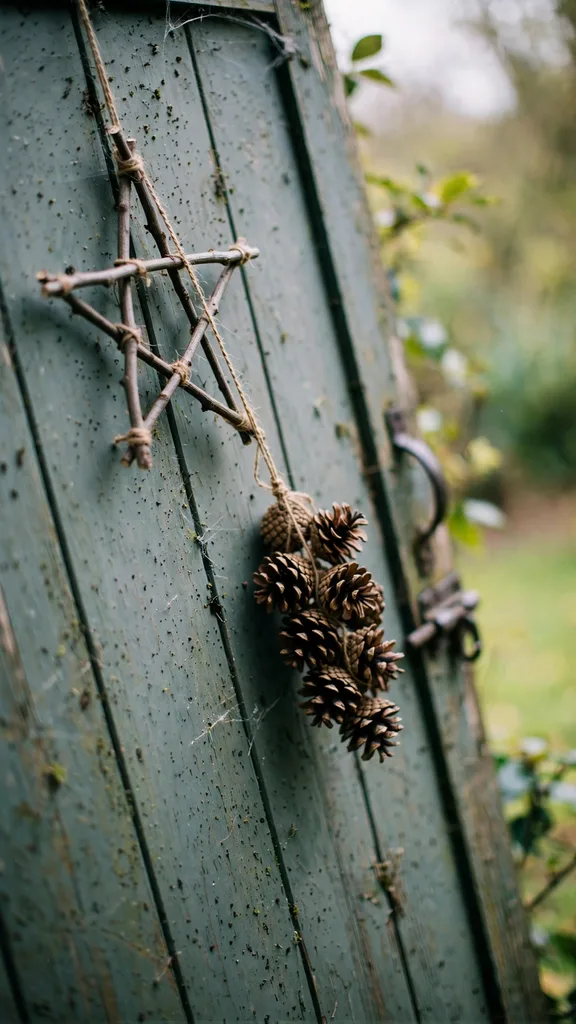
Both pieces last the season outdoors and store in the shed they decorated. A dressed shed door makes the winter garden’s working end look intentional, which encourages the gardener who has to look at it daily.
40. Cold Frame and Crate Still Life
Arrange a still life by the cold frame: a crate of pots, a stack of logs, a basket of cones, and one berried shrub in a pot, grouped where the winter work happens. The potting area becomes a display by arrangement rather than addition.
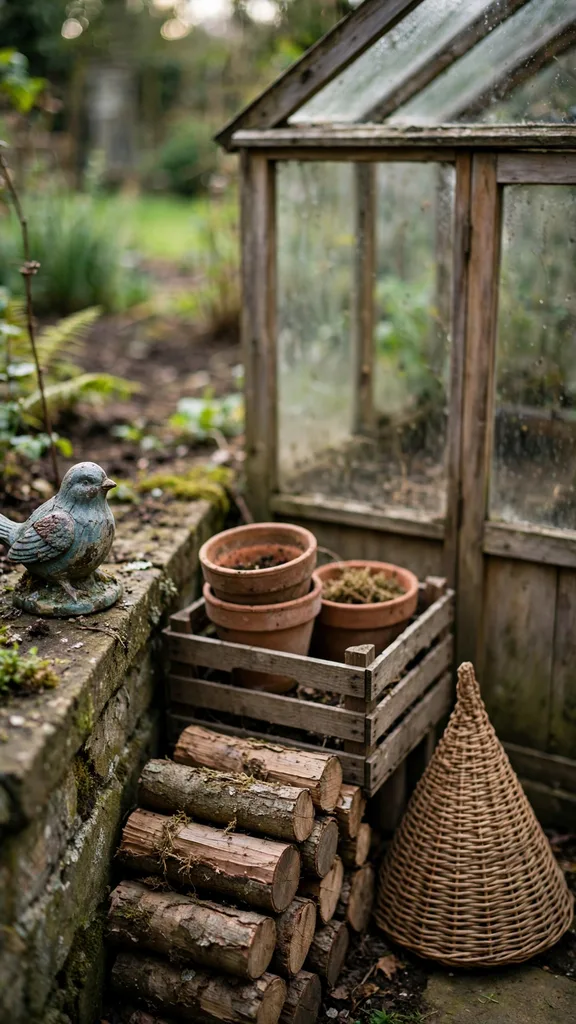
Still lifes need editing, not buying: move things until the group sits well. The winter garden’s beauty is mostly arrangement at this scale. Photograph it in frost, when the still life earns its name.
41. Raw Wood Everything: The Unfinished Palette
Let raw wood lead the scheme: unfinished crates, bare branches, log slices, and bark in their natural state, with greens and dried materials as the only color. The unfinished palette is rustic decorating’s foundation, and it cannot clash with any house.
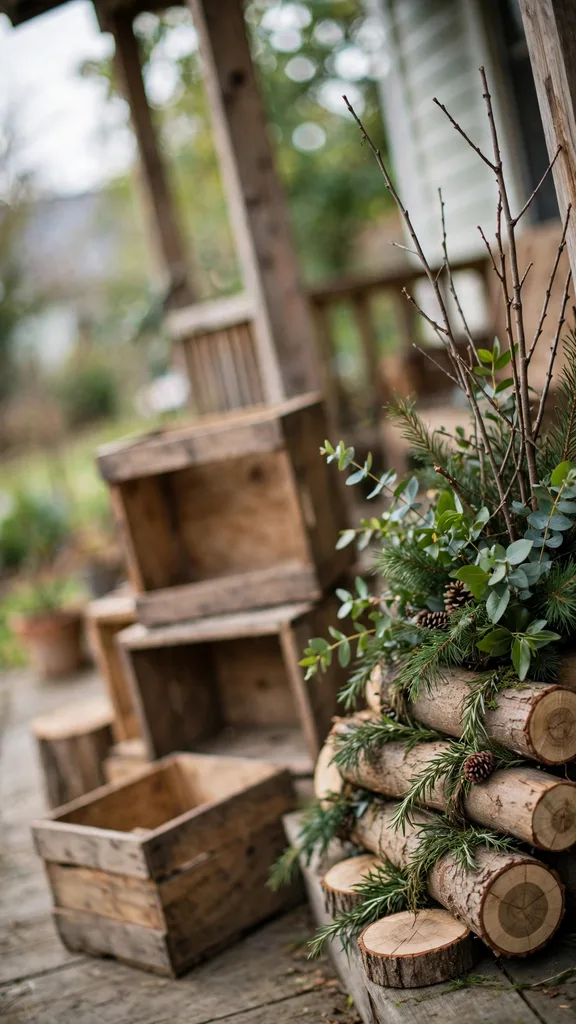
Raw wood outdoors weathers gray over seasons, which the palette welcomes. Indoors it stays warm toned. A house decorated in raw wood and green needs no color scheme meeting; the materials are the scheme.
42. Twine, Burlap, and the Honest Fastenings
Use twine, burlap, and plain wire as the scheme’s fastenings, visible and unashamed: the twine spiral on the door bunch, the burlap bow on the crate, the wire on the wreath. Rustic style shows its workings, and the workings are part of the look.
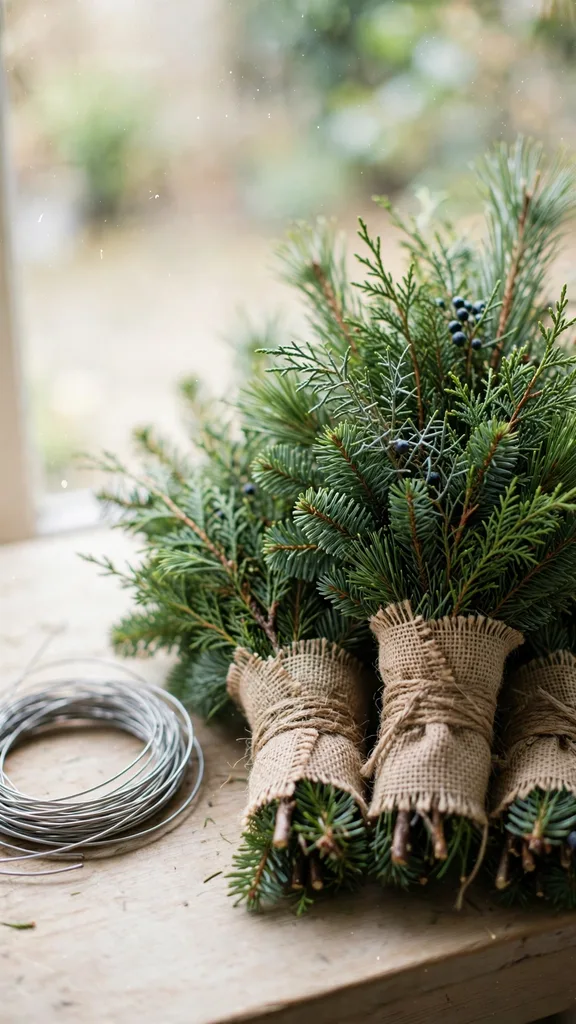
These are the list’s few bought materials, and they serve for years. Keep them plain; printed ribbon and glittered twine belong to another article’s style. Honest fastenings are the rustic signature, as recognizable as any color.
43. Muted Colors: Browns, Grays, and Faded Golds
Build the palette from browns, grays, and faded golds, with green as the ground and red berries as the only loud note, used sparingly. Muted colors are why rustic rooms feel calm in a loud season, and the garden supplies them for free.
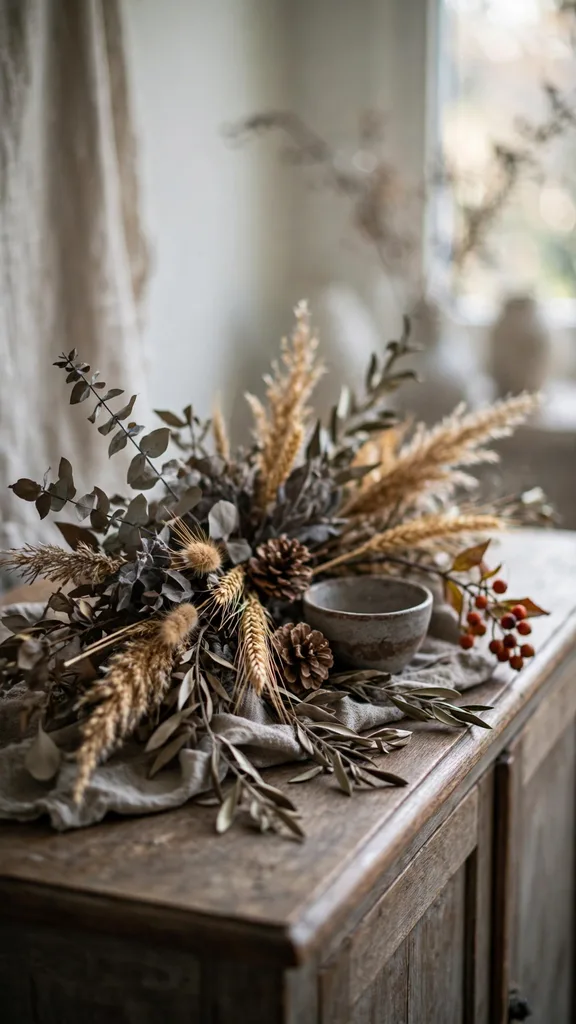
Dried materials are muted by nature; fresh greens deepen the ground. One red accent per surface is the discipline: a berry spray here, a chili string there. The eye rests, which in December is a form of hospitality.
44. Patina Over Polish: Weathered Containers
Choose weathered containers, galvanized buckets with dents, crates with stains, clay with salt marks, over new and shiny ones. Patina is the rustic container’s finish, earned by seasons outside, and it makes new plantings look established on day one.
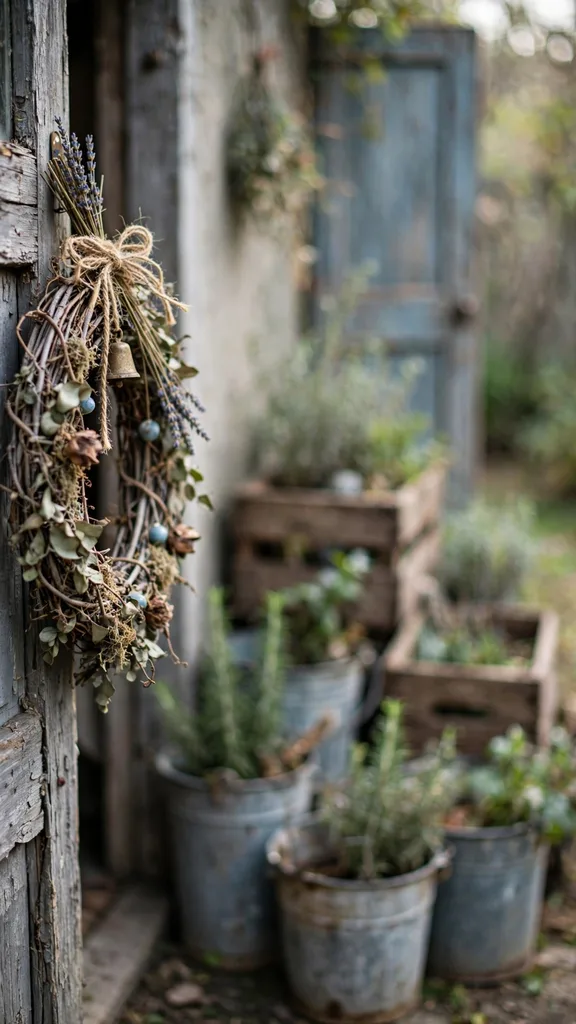
Weathered does not mean broken: the container must still hold compost and drain. A collection of patinaed pots is a garden’s autobiography, and December is when it is read aloud by the door.
45. The Whole Rustic House: Every Surface in Garden Materials
Assemble the whole scheme: bark and greens at the door, logs and jars on the mantel, slices and scatter on the table, prunings on the rail, stars in the windows, pressings and hoops on the walls, crates and cans on the porch, bundles in the bedrooms, strings in the kitchen, and the fence and gate dressed outside. Every surface in the house wearing the garden, in browns and greens.
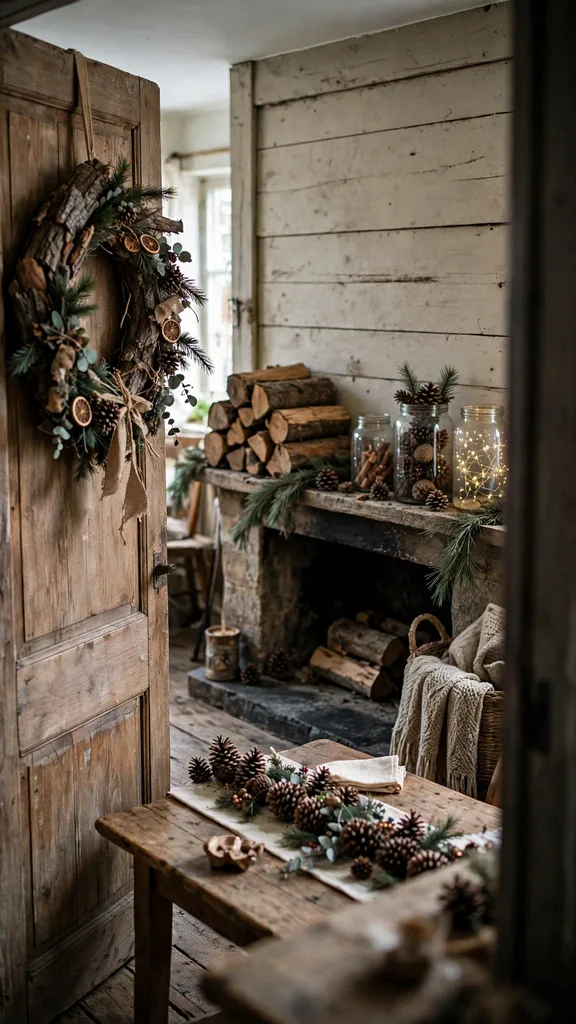
The scheme holds through the season with the usual refreshes, berries and door greens at the midpoint. The wider season’s displays gather in the Christmas garden ideas pillar, but this house is the rustic argument complete: a garden decorates a home more honestly than a shop can.
Frequently Asked Questions
The materials and the finish: natural materials from the garden and the woodpile, wood, bark, vine, cones, dried plants, and fresh greens, used with their roughness showing, fastened with twine and plain wire, in a muted palette of browns, grays, greens, and faded golds. Rustic decorating avoids shine, glitter, and plastic, and lets patina and imperfection stand as the finish. If it could have come from the garden, the shed, or the woodpile, it is rustic.
Nearly: the greens, prunings, vine, cones, seed heads, dried flowers and fruit, herbs, logs, and bark are all garden and woodpile materials. The honest bought list is twine, burlap, plain wire, and the jars and containers you likely already own. Even the tree’s garland, popcorn and dried flowers, comes from the kitchen and the beds. A garden that is pruned, harvested, and gathered from all year decorates December as a by-product.
Fresh greens last 4 to 6 weeks outdoors and 3 to 5 indoors. Dried materials, flowers, fruit, wheat, and leaves, last the whole season and often store for the next. Logs, bark, cones, vine, and weathered containers last for years. The scheme is maintained like the other garden displays: refresh the berries and door greens at the season’s midpoint and everything else stands.
Discipline in three places: one palette, browns, greens, and faded golds with red used sparingly; repetition, the same swag or star repeated along a surface reads as design; and editing, one strong piece per surface rather than many small ones. Rustic is rough materials arranged with intent. The moment the arrangement has a rhythm and a limit, it stops being a pile and starts being a style.
The door, the mantel or table, and the one surface your household sees most, in that order. Those three carry the house’s Christmas for residents and guests alike. Then the porch and the tree, then the quiet rooms and the garden surfaces as time and materials allow. A rustic scheme built surface by surface never looks half done, because each surface is complete in itself.