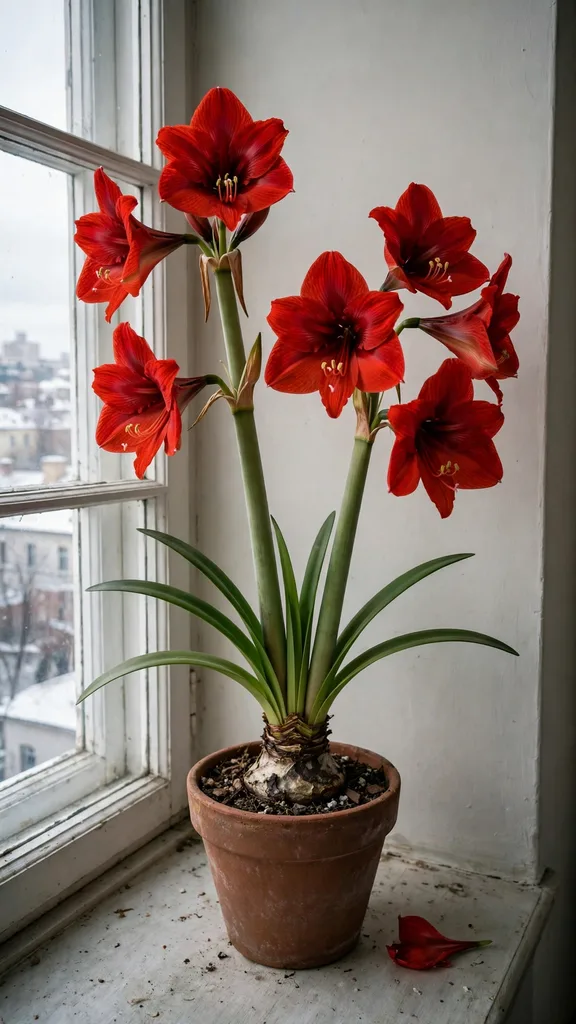
An amaryllis planted at the right moment is the most reliable Christmas flower you can grow: one big bulb, one pot, and flowers 6 to 8 weeks after planting. Count back from the day you want the blooms open, and for Christmas Day that means potting the bulb between late October and mid-November, with the exact week set by how warm your house runs. I plant my Christmas bulbs in the first week of November and hold a spare bulb back for a second pot two weeks later, so one display is opening as the other peaks. This guide is the countdown: bulb size, pot, planting depth, and the two levers, warmth and cool, that let you land the flowers on the day instead of a week either side of it. The full year-round cycle that follows the holiday sits in the amaryllis care guide.
| Item | Value |
|---|---|
| Bulb | Amaryllis (Hippeastrum) hybrid, the larger the better |
| Weeks to bloom | 6 to 8 from potting |
| Plant for Christmas Day | Late October to mid-November |
| Pot | Heavy, about 5 cm (2 in) wider than the bulb |
| Planting depth | Top third of the bulb above the mix |
| Light while growing | Brightest window you have |
| Growing temperature | 20 to 24°C (68 to 75°F) |
| To slow the flowers | Move the pot to 10 to 13°C (50 to 55°F) |
Count Back 6 to 8 Weeks From the Day You Want Flowers
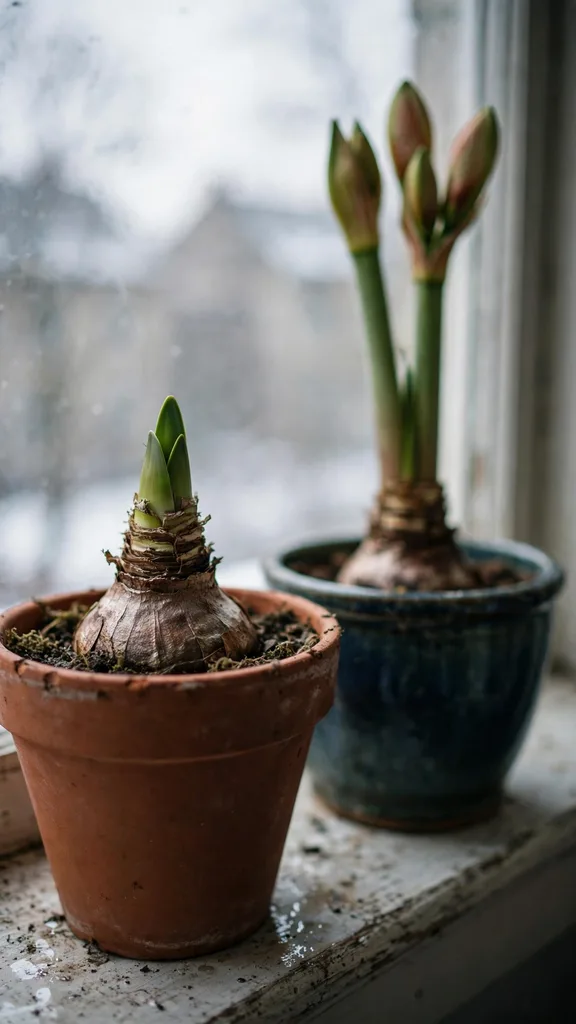
Amaryllis runs on a steadier clock than most forced bulbs. Wisconsin Horticulture’s forcing guide puts amaryllis at 6 to 8 weeks from planting to bloom, and warmth decides where in that window your plant lands: a bulb on a bright sill in a heated room flowers near six weeks, while the same bulb in a cool room takes the full eight. Count back from your date and pick the planting week that matches the room.
| Flowers wanted | Warm room (6 weeks) | Cool room (8 weeks) |
|---|---|---|
| December 18 | November 6 | October 23 |
| December 25 | November 13 | October 30 |
| January 1 | November 20 | November 6 |
If you are already inside the window, plant anyway and run the pot warm from day one: a week in the warmest bright spot in the house pulls a late planting forward by several days. A bulb planted on December 1 in a warm room still flowers in mid-January, which covers the darkest weeks of the year when a flower is worth most.
Buy the Biggest Bulb You Can Find
With amaryllis, bulb size is flower count. The bulb carries the whole display inside it before it ever meets soil: a large bulb of 30 cm (12 in) or more around sends up two or three flower stalks, each carrying four or more blooms, while a small bulb manages one stalk and finishes in a week. For a Christmas display that has to perform on a fixed date, the big bulb is the insurance.
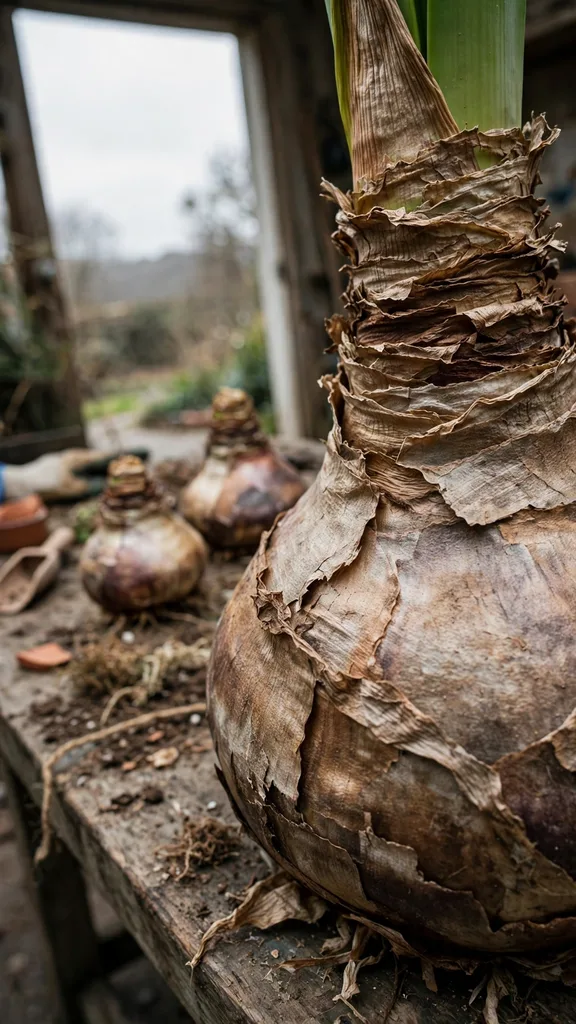
Handle every bulb before you buy it. It should feel heavy and firm, with a dry papery skin, a solid base, and no soft spots or red-brown streaks. A bulb that feels light for its size has dried out in storage and flowers late and small. Buy from stock that has been kept dry and cool, and plant within a week or two of purchase, because a bulb sitting in a warm shop is already spending its stored energy on growth you cannot see.
Pick a Pot Only Slightly Wider Than the Bulb
Amaryllis flower best slightly crowded. Choose a pot about 5 cm (2 in) wider than the bulb, so a hand’s breadth of mix surrounds it on each side, and make it a heavy one: a flower stalk 50 to 60 cm (20 to 24 in) tall carrying four big blooms will tip a light plastic pot the first time it is knocked. Clay beats plastic here on weight alone.
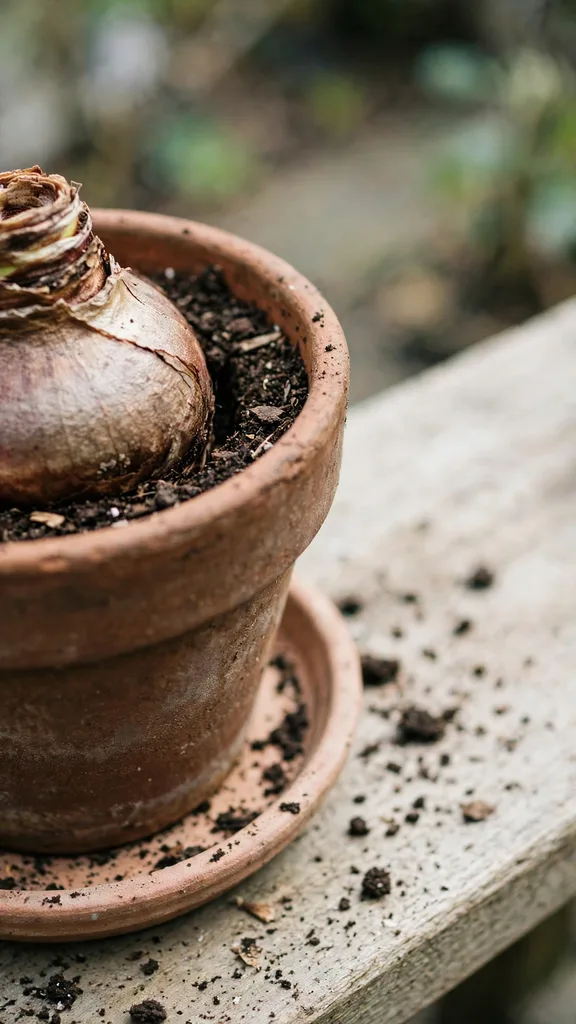
The pot must have a drainage hole. Amaryllis roots rot fast in a pot that holds water, and a Christmas display that collapses in week five from a rotted base is the commonest failure of the whole project. Use a free-draining potting mix, and if the mix is heavy, work in a handful of coarse perlite or grit before planting. Set a saucer under the pot rather than standing it in a decorative outer pot full of water.
Set the Bulb With Its Shoulders Above the Mix
Fill the pot two-thirds full of mix, settle the bulb on it, and spread the roots down and out before firming more mix around them. The finished planting leaves the top third of the bulb, the shoulders and the neck, clear above the surface. Planted at that depth the bulb stays dry at its most rot-prone point, the neck, while the roots sit in moist mix below.
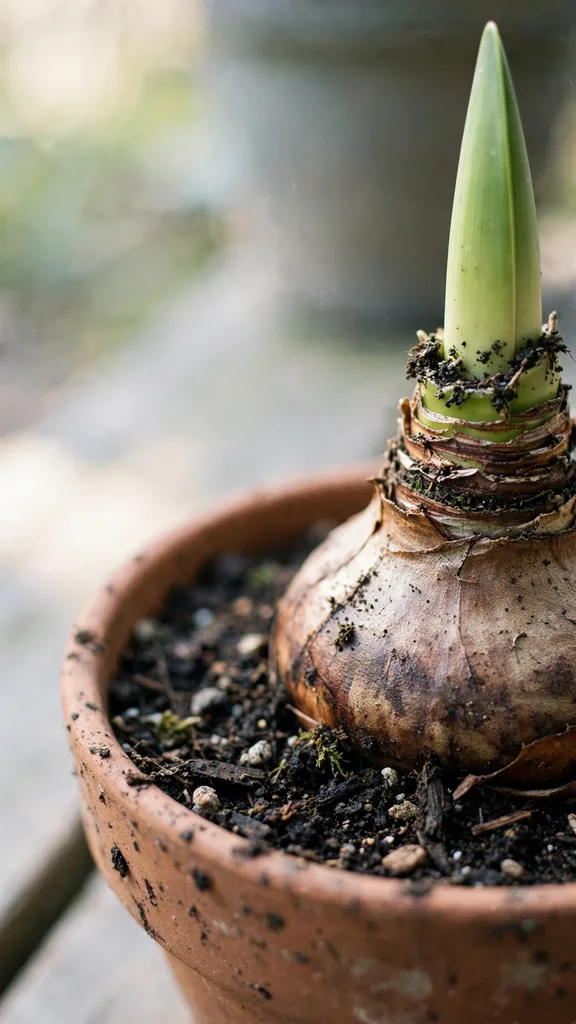
A bulb planted too deep is the second commonest failure: buried necks rot, and the flower stalk struggles out late and weak. A bulb planted too shallow rocks as the stalk grows and can pull itself out of the pot at full height. Press the mix firm around the bulb so it stands locked, water once to settle everything, and the planting is done in five minutes.
Water Once, Then Wait for Green Growth
Water the pot thoroughly once at planting, let it drain completely, and then leave it alone. The bulb carries everything the first growth needs, and a pot kept wet before roots are running is a pot set up to rot. The University of Illinois Extension amaryllis guide gives the working rule for the whole growing period: water when the top 5 cm (2 in) of mix are dry, and keep the bulb’s neck and shoulders dry every time.
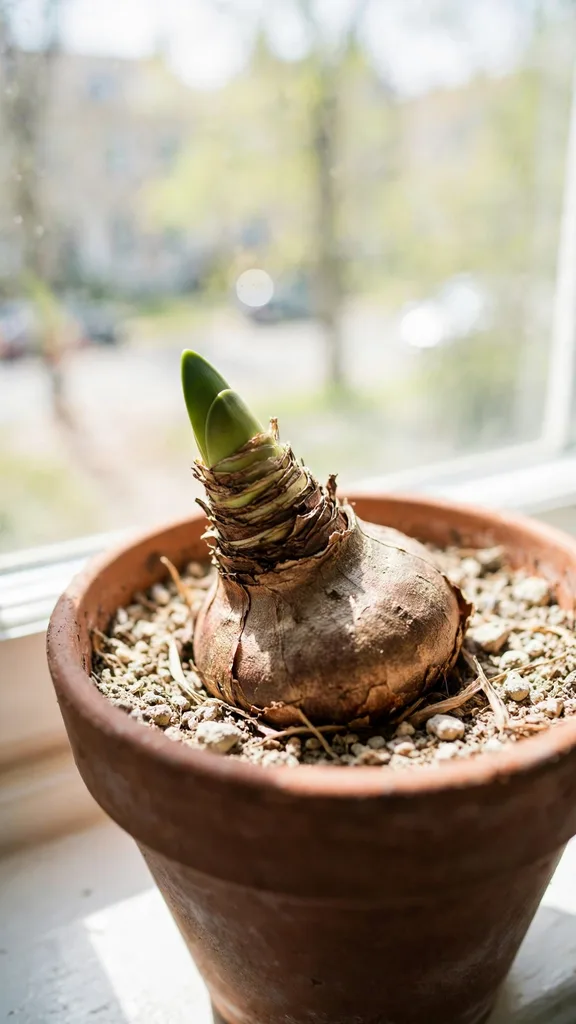
Growth shows as a blunt green or red-tinged tip at the neck, usually within one to two weeks in a warm room. The flower stalk comes first or alongside the first leaves, a thick stem rising fast once it starts. From that point water normally, never letting the pot sit in its own drainage, and keep the saucer emptied after every watering.
Give the Growing Plant Your Brightest Window
Light decides the shape of the display. An amaryllis growing in a dim room stretches a long, pale, weak stalk that leans hard toward the window and snaps or folds under the weight of the open flowers. The same bulb on the brightest sill in the house grows a shorter, thicker stalk that stands on its own.
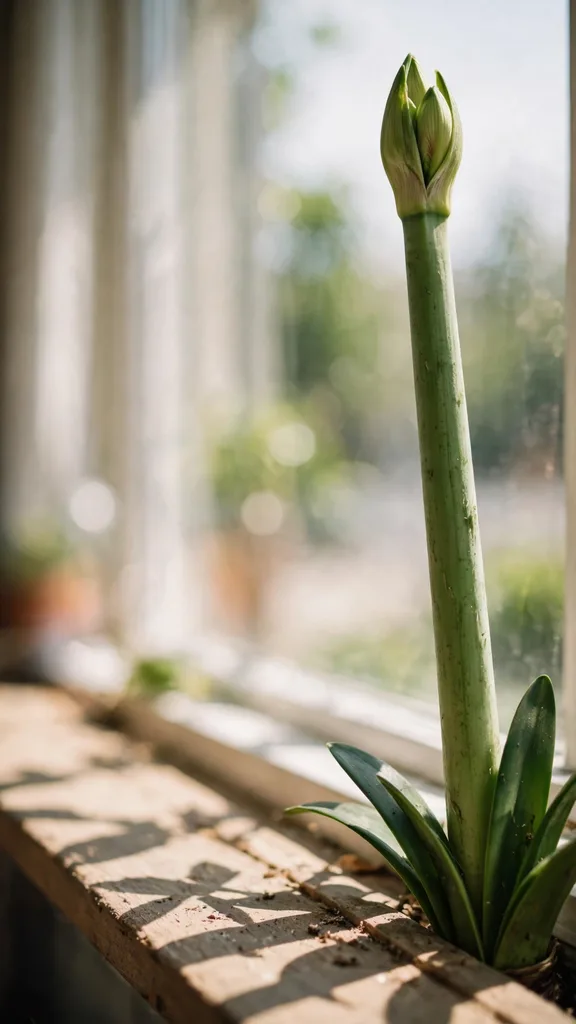
Turn the pot a quarter turn every few days so the stalk grows straight instead of bending into the light. Keep the room at ordinary heated-house temperature while the stalk rises: warmth is growth speed now, and a cold windowsill in a cold week can stall a stalk that was on schedule. If the only bright window is also a cold one, pull the pot back into the room at night.
Stake the Stalk Before the Buds Open
Even a well-grown stalk is top-heavy once four blooms open on it. Push a slim stake or a twiggy stem into the mix beside the bulb when the stalk stands 30 cm (12 in) tall, before the buds separate, and tie the stalk to it loosely with soft twine in a figure of eight. Staking early, while the stalk is still rising, avoids spearing the bulb with a stake pushed in blind later.
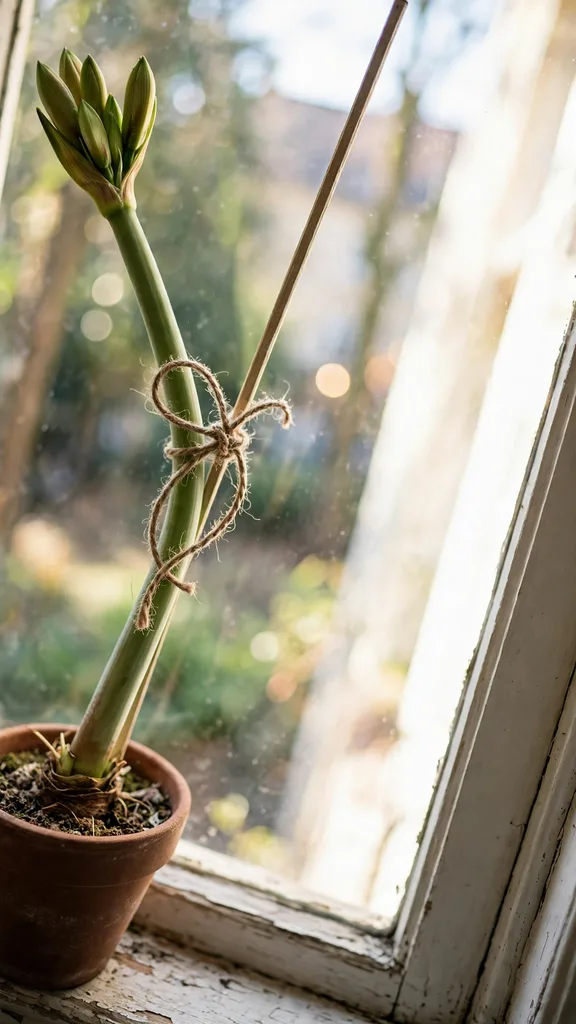
Set the stake on the side away from the window so the tie pulls the stalk gently upright against its lean. A second stalk often follows the first by a week or two: leave room for it when you position the stake, and tie it to the same support when it reaches height. The whole job takes a minute and saves the display from the one accident that ends it early.
Slow or Speed the Flowers to Land on the Day
This is the step that makes a Christmas amaryllis different from a January one: you hold two levers over the schedule, and both are temperature. A growing plant moved to a cool room at 10 to 13°C (50 to 55°F) slows almost to a stop, holding buds for a week or more. The same plant in the warmest bright room in the house gains days. Check the buds from about ten days before your date and steer.
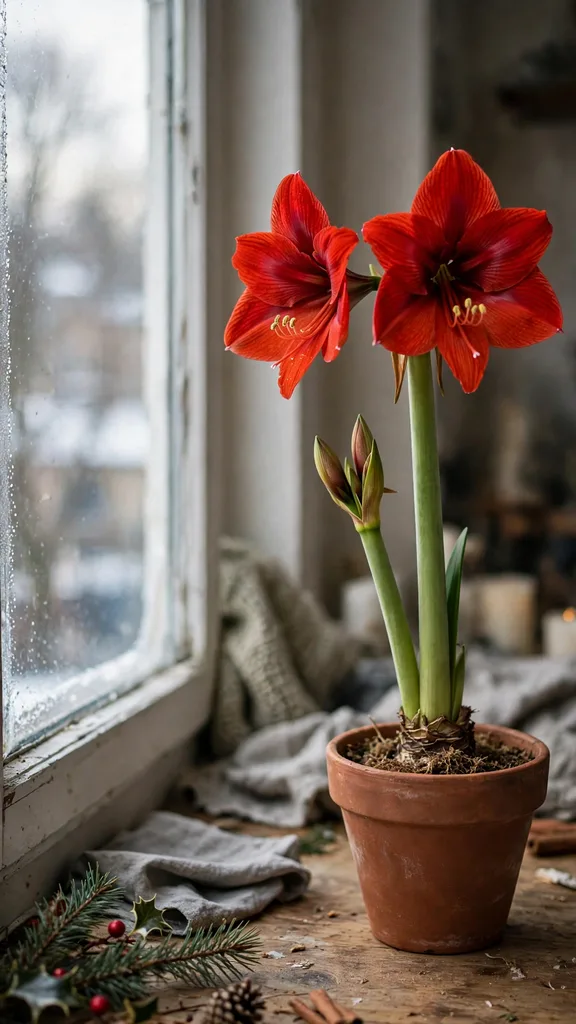
If the buds show color too early, move the pot cool and dim and the flowers will wait. If the stalk is still short with your date a week away, move the pot to warmth and full light. Once the first flower opens, the display lasts longest somewhere cool and out of direct sun, so a plant that bloomed on time earns a move to the coolest bright room for the holiday itself.
Plant in Waves for Flowers From December to February
One bulb gives one flush of about two to three weeks. Three bulbs planted a fortnight apart give flowers from mid-December into February, and the planting takes minutes each time. Buy all the bulbs at once while the largest stock is in the shops, keep the waiting bulbs somewhere cool, dry, and dark, and pot one up every two weeks from late October.
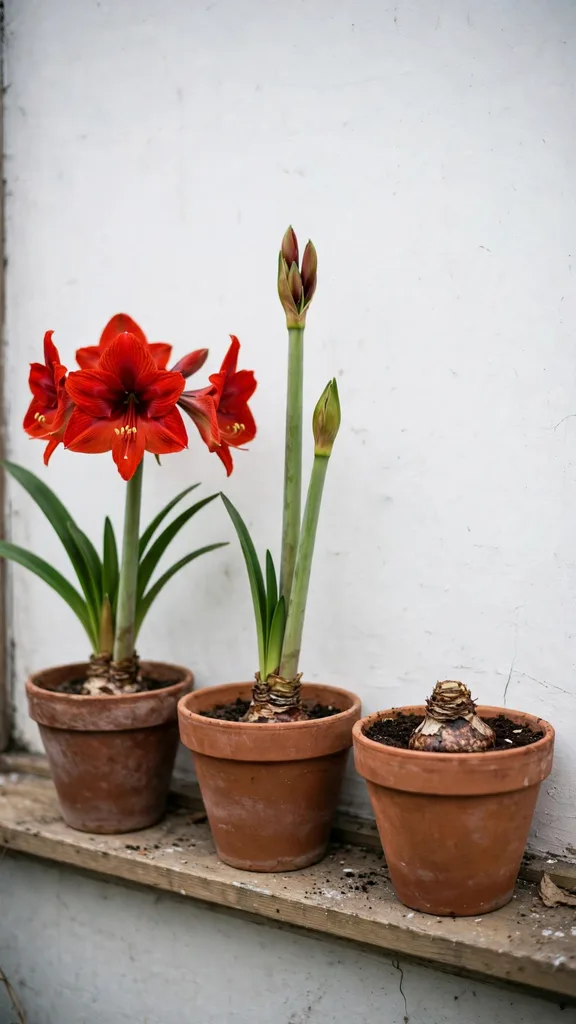
Waves also cover the schedule risk. If the first pot runs early or late despite the steering, the next pot in the line is already coming, and one of the three will land on the holiday. A bulb in flower is also the easiest living decoration of the season, and it sits among the wider set of Christmas garden ideas that fill the house from the garden. Label each pot with its planting date on a strip of tape underneath, because by the third pot the dates blur, and next year’s timing depends on remembering which week worked.
What to Do in the Week After Christmas
When the last flower fades, cut the stalk down to 2.5 to 5 cm (1 to 2 in) above the bulb and keep every leaf. The bulb has spent its stored food on the display, and the leaves are how it earns that food back over the spring and summer. A bulb fed and grown on through the year flowers again the following Christmas, which turns a one-season purchase into a permanent plant.
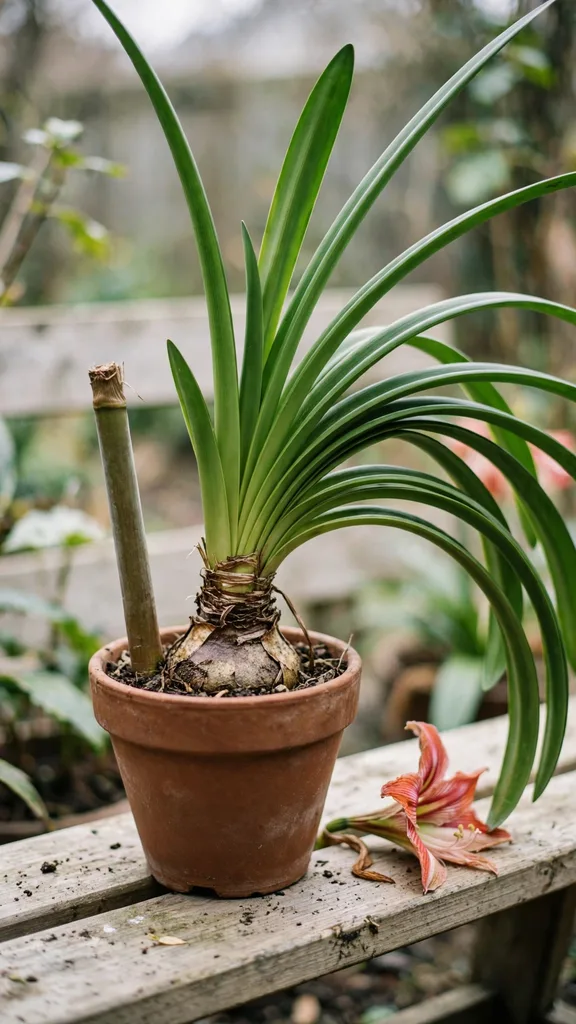
That aftercare is a cycle of feeding, a summer outdoors, and a cool rest in autumn, and it has its own calendar. The timings, the rest temperatures, and the fixes for a bulb that refuses to rebloom are set out in the amaryllis care guide linked at the top of this page, which picks up exactly where this countdown ends.
Frequently Asked Questions About Growing Amaryllis Bulbs for Christmas
Count back 6 to 8 weeks from December 25. A warm room runs near six weeks, so plant around November 13; a cool room runs near eight, so plant around October 30. Most homes land between the two, which puts the planting in the first half of November. Planting a second bulb two weeks after the first covers the error either way.
Six to eight weeks from potting to open flowers in most homes, with warmth setting the pace. The stalk usually shows within one to two weeks of planting, rises fast for a month, and the buds open over the final week or two. A bulb that shows nothing after three weeks in a warm room is usually too cold, planted too deep, or dead at the base.
You can, and the roots showing through a glass vase look good, but soil is the safer choice for a Christmas display. A water-grown bulb sits with its base at the water line, rots more easily than a potted one, and has nothing to anchor a top-heavy stalk. If you use water, keep the level just below the base of the bulb and add a layer of pebbles for weight and grip.
The usual cause is a bulb that was too small or too tired to carry a flower this year: the flower forms inside the bulb the season before, and a bulb that grew poorly last summer may hold leaves only. Overpotting and deep planting add to it. Grow the leaves on in good light, feed through summer, and the bulb rebuilds the strength to flower next year.
Yes. Cut the spent stalk, keep the leaves, feed the plant through spring and summer, then give it a cool rest of 8 to 10 weeks in autumn before watering it back into growth. A bulb run on that cycle flowers year after year and grows larger, sending up more stalks as it gains size. The full cycle is covered in the amaryllis care guide.