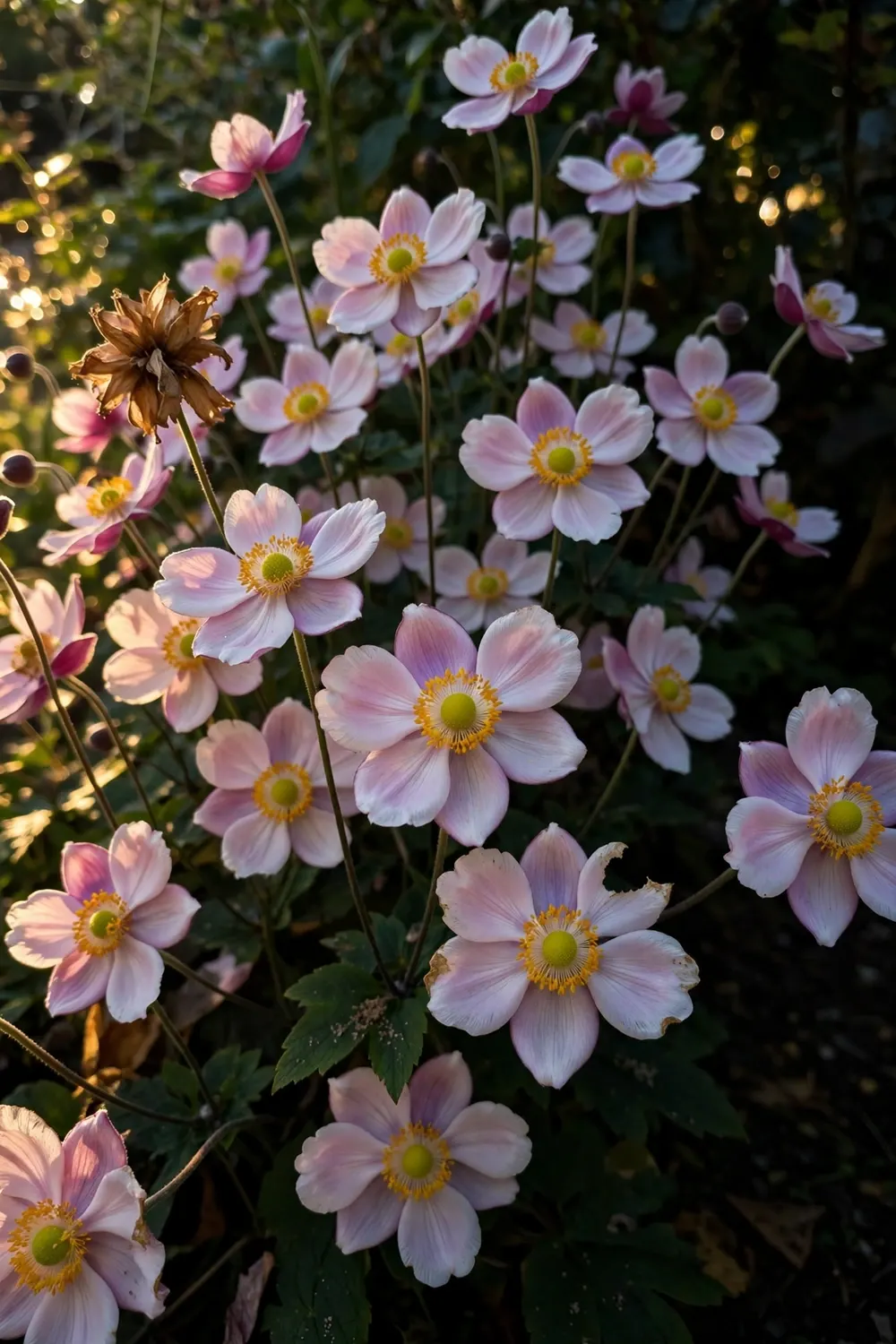

Give one Japanese anemone 60 cm of space and a spadeful of compost this spring. That is how to grow fall anemones: a late-blooming perennial that flowers from August until frost on wiry stems. The rest of this page is 12 steps, from buying the right variety to stopping its rhizomes from taking the bed.
Plant in spring, six weeks or more before summer heat arrives. The first summer is the establishment year. The second summer is when the colony starts to run.
For the 21-item roster of fall flowers, see fall blooming perennials; for vase life and conditioning, fall cut flowers. This page is about one plant: how to grow Japanese anemones and keep them.
The 5 Varieties at a Glance
| Variety | Height | Bloom Window | Zone |
|---|---|---|---|
| ‘Honorine Jobert’ | 90-120 cm | Aug-Oct | 4-8 |
| ‘September Charm’ | 60-90 cm | Late summer to frost | 5-7 |
| ‘Whirlwind’ | 90 cm | Jul-Oct | 5-8 |
| ‘Pamina’ | 90 cm | Jul-Oct | 5-7 |
| ‘Fall in Love Sweetly’ | 50-60 cm | Late summer to fall | 4-8 |
Heights and zones are standard nursery reference data, collected from grower catalogs rather than a single trial.
1. Confirm It Is a Japanese Anemone
Buy a plant labeled Anemone hupehensis, Anemone x hybrida, or Eriocapitella. Those are the Japanese anemones. Corm anemones sold for fall planting bloom in spring and need a different guide. The name on the tag decides the care.
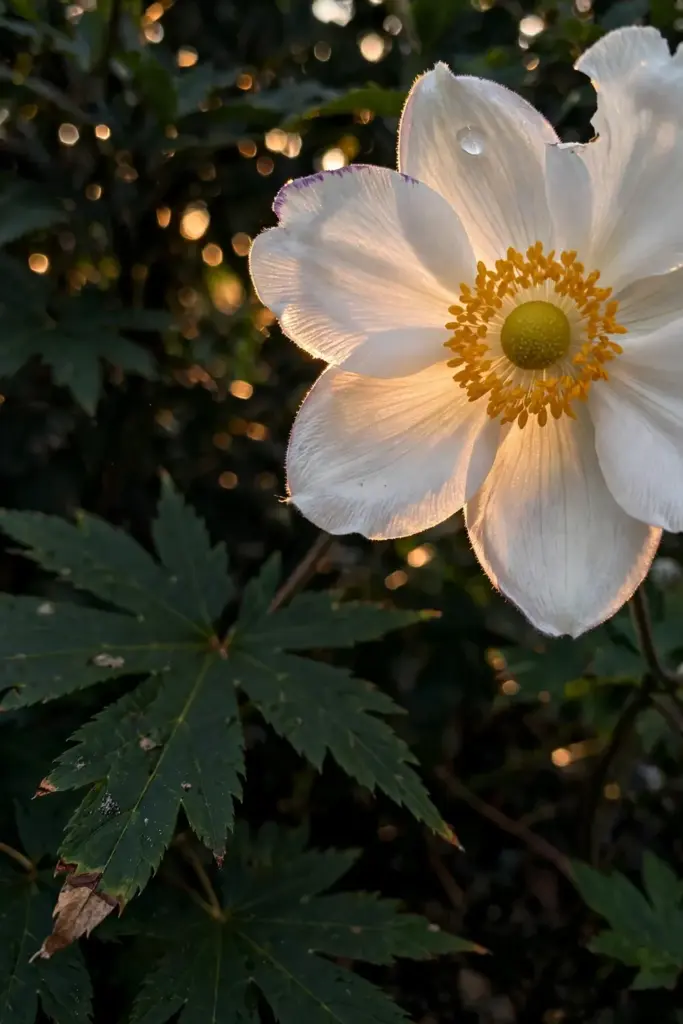
Japanese anemones are herbaceous perennials, not bulbs. If the nursery pot holds a leafy plant in a gallon container, it is the right thing. If it holds dry corms, it is a different article.
2. Pick a Proven Variety
Start with ‘Honorine Jobert’ if you want white. It is the classic: tall, vigorous, and the most widely grown for a reason. Its single white flowers with yellow centers carry from August into October. Pick ‘September Charm’ for silvery-pink flowers in partial shade; it tops out lower and suits smaller beds.
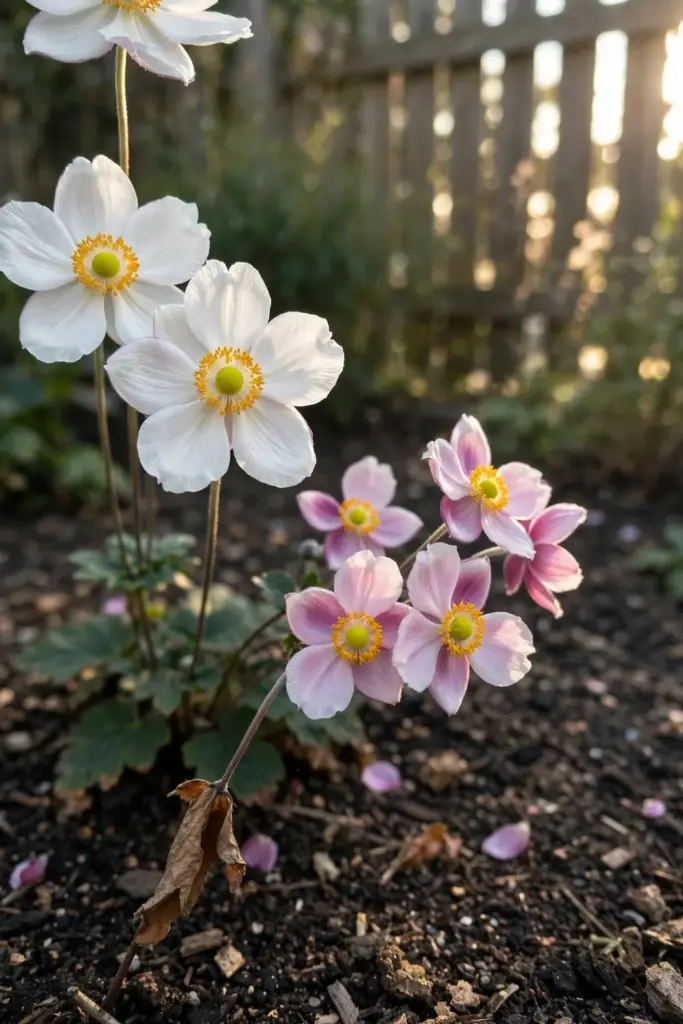
Pick ‘Whirlwind’ for semi-double white blooms with twisted petal tips, a detail you notice up close. ‘Pamina’ is a double pink that reads almost like a small rose. ‘Fall in Love Sweetly’ is the compact modern pick at 50 to 60 cm, bred for containers and the front of the border. Buy the plant for the space you have, not the space you wish you had.
3. Plant in Spring, Not Fall
Plant Japanese anemones in spring, after the last frost. Spring planting gives roots a full season to establish before winter. Fall planting risks frost heave on a plant that has not anchored yet.
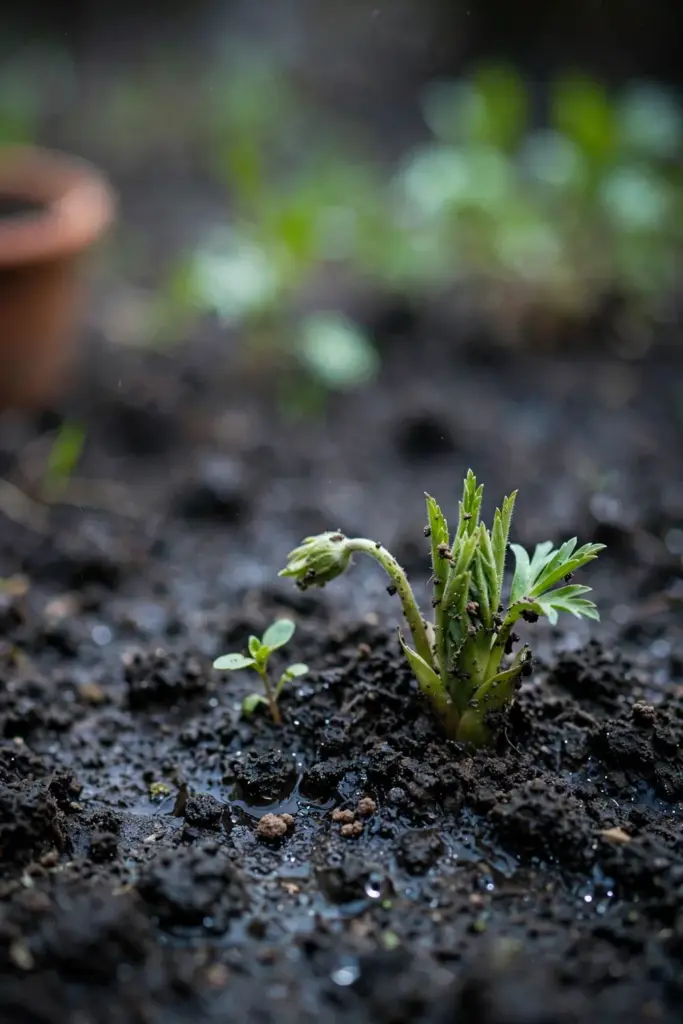
This is the opposite of bulbs and the opposite of the corm anemones sold for fall planting. If your nursery sells gallon pots of Japanese anemones in October, heel them in a sheltered spot and plant in spring. Patience beats a dead crown. The fall planting guide covers spring-versus-fall timing for the rest of the perennial bed.
4. Give It Half-Day Sun and Rich, Moist Soil
Site it in full sun to partial shade. In cool climates it takes full sun. In hot climates give it afternoon shade, or the foliage dries at the edges. Fine Gardening’s Japanese anemone profile calls for moist, fertile, humusy soil in sun or partial shade.
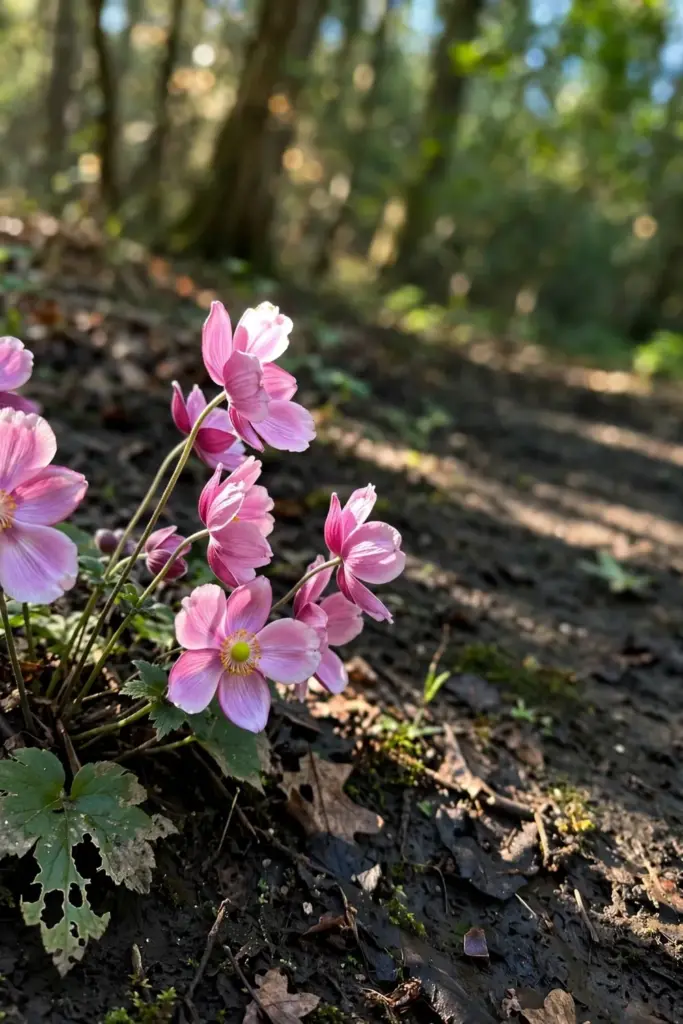
Dig compost into the top 20 cm of the planting hole. The plant wants soil that holds moisture but drains. Soggy winter soil rots the crown. That one failure kills more anemones than cold does.
5. Space 45 to 60 Cm Apart
Set plants 45 to 60 cm apart, center to center, even though the pots look sparse at first. The clump fills the gap within two seasons. Crowding at planting time invites powdery mildew later, and mildew on anemones makes for a long, ugly season.
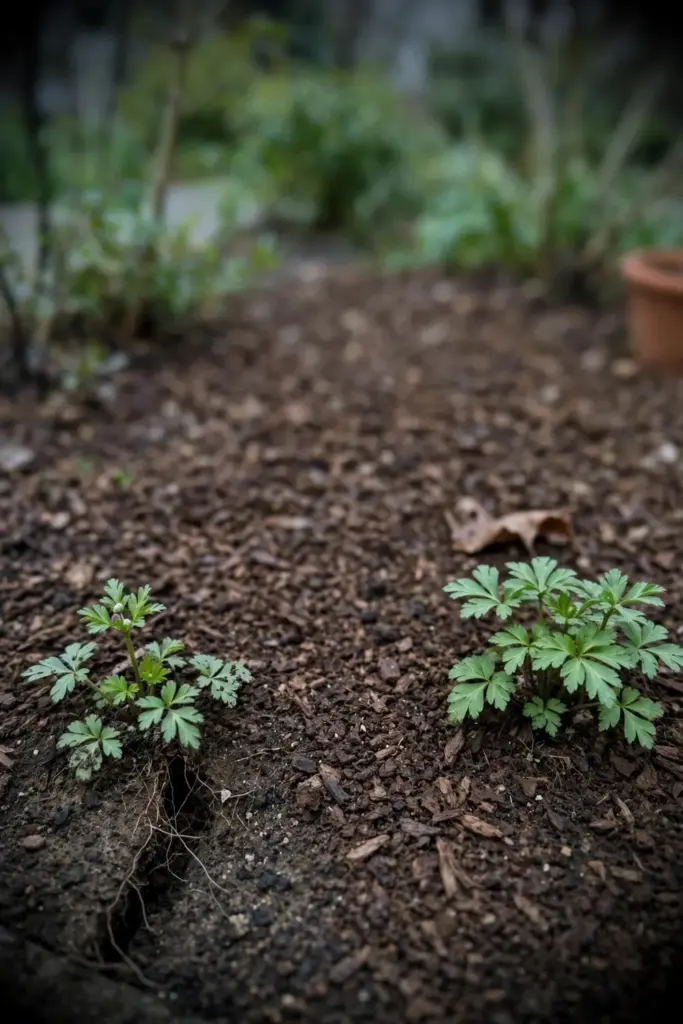
Japanese anemones spread through underground rhizomes and can form colonies 1.2 to 1.8 m wide, according to The Spruce’s Japanese anemone guide. Space for the colony, not the pot.
6. Water the First Summer Deeply
Water deeply once a week through the first summer if rain misses. The goal is consistently moist soil, never standing water. A 5 to 7.5 cm layer of organic mulch holds that moisture.
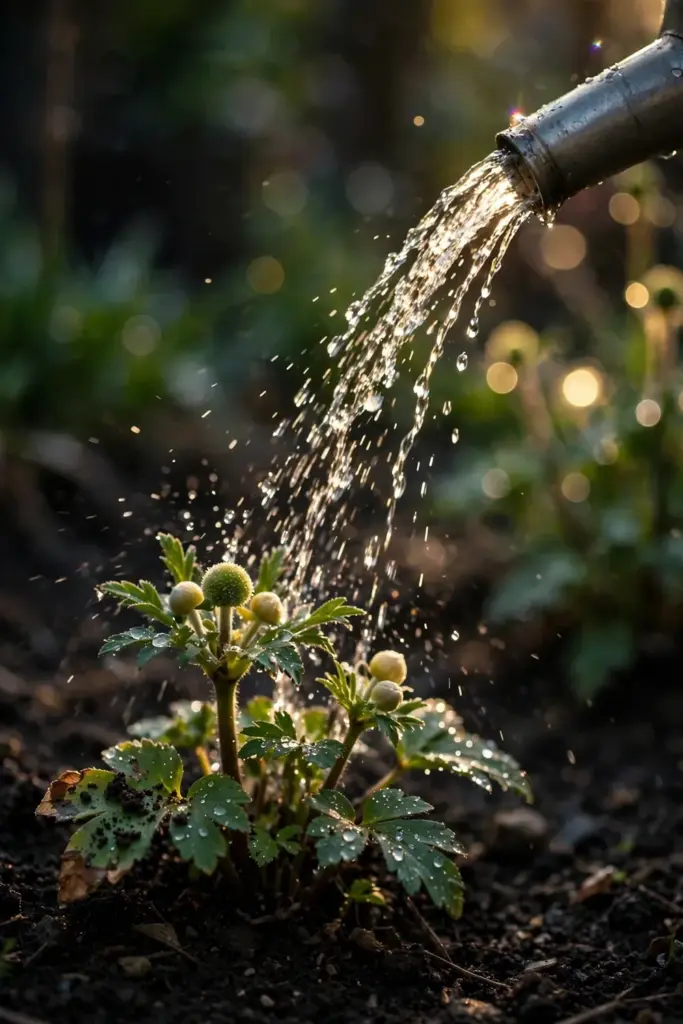
Established plants tolerate dry spells, but the first summer decides the colony. Shallow daily watering trains roots to the surface. One deep soak trains them down. Deep wins.
7. Feed Twice a Year
Fertilize in spring and again in fall with compost or a balanced 10-10-10 fertilizer, following the package directions, as Better Homes and Gardens’ anemone guide recommends. That is all it needs.
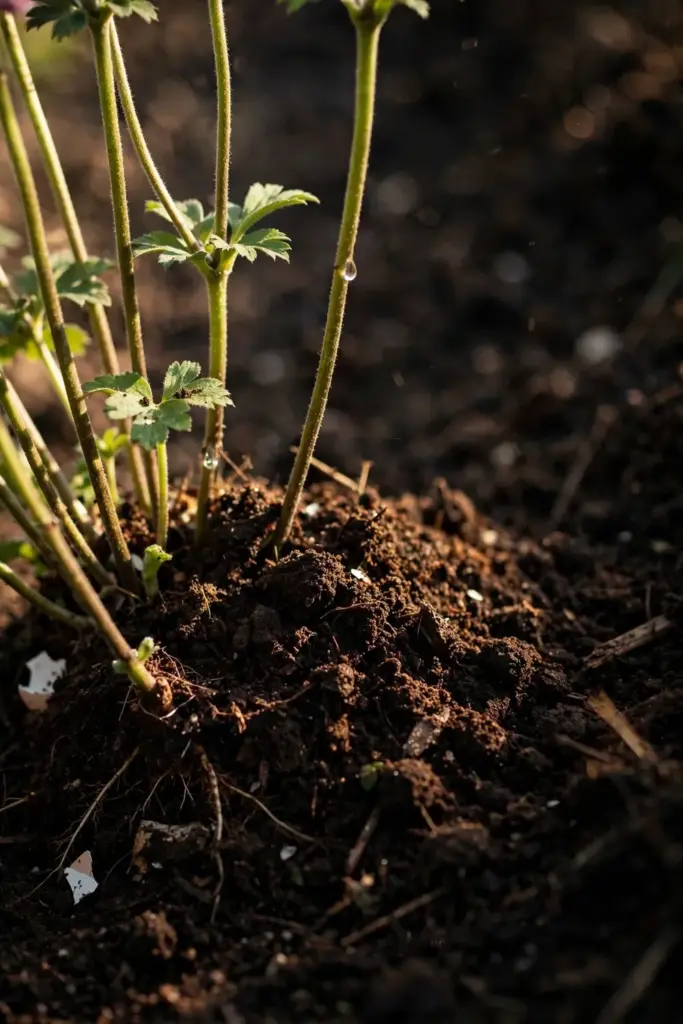
Do not push nitrogen in midsummer. Soft, overfed growth flops and invites mildew. A thin spring top-dressing of compost does more than a heavy chemical feed.
8. Mulch After the First Hard Frost
Leave the foliage standing through fall. After the first hard frost, lay a 5 cm layer of light, airy mulch over the crown. Remove it in early spring before new growth starts.
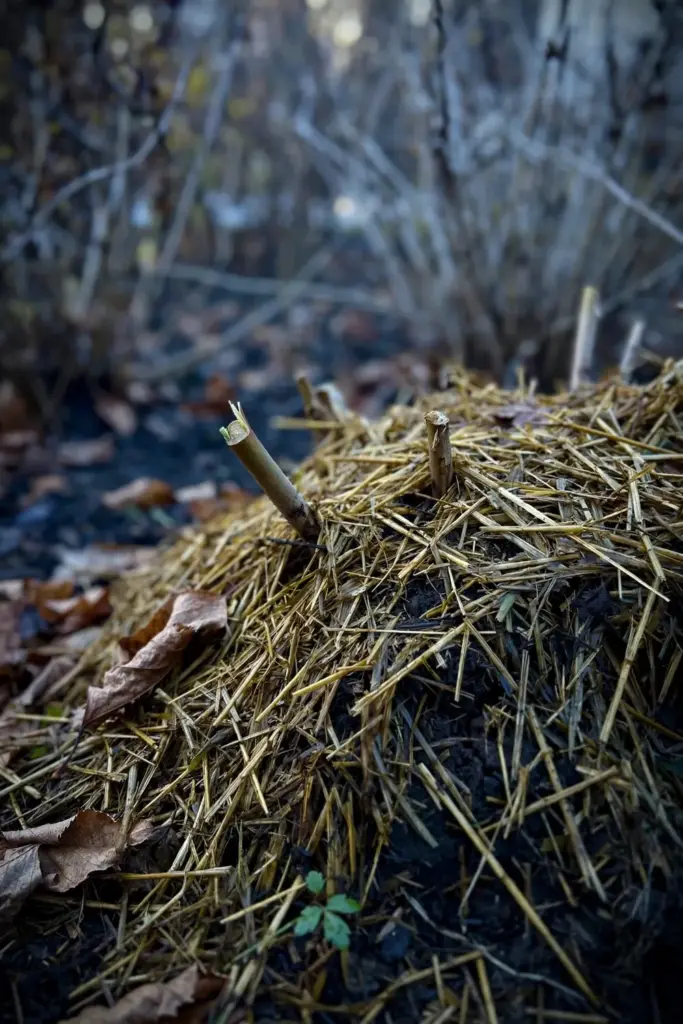
The mulch stops frost heave, not cold. Japanese anemones are hardy in zones 4 to 8, so cold is rarely the killer. The killer is the freeze-thaw cycle lifting a shallow crown out of the soil.
9. Divide Every 3 to 4 Years
Dig and divide the clump in early spring before new growth, or right after flowering in fall. Lift the whole crown with a fork, shake off the loose soil, and cut the rhizomes into sections, each with roots and at least one growing point attached. Replant at the same depth it grew before.
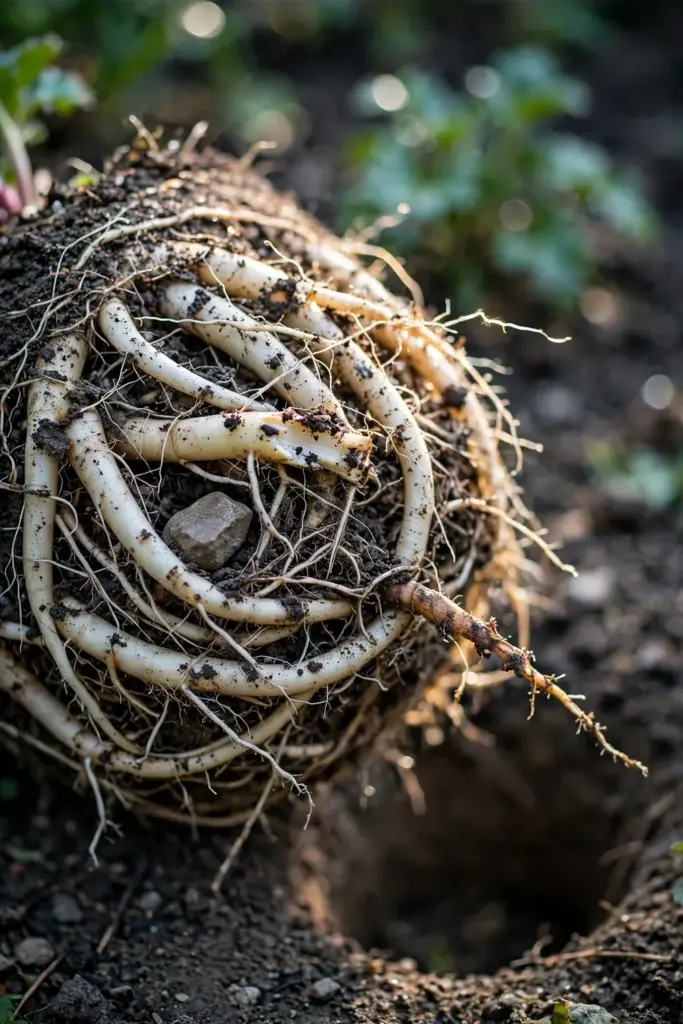
Division doubles as propagation. Take root cuttings in spring if you want more plants without buying them: 5 to 7.5 cm sections of pencil-thick root, laid horizontally in pots of damp mix, sprout new shoots. A divided clump blooms better than a congested one. Congested crowns produce fewer, smaller flowers on weaker stems.
10. Control the Spread
This is the step most guides skip. Japanese anemones spread by rhizomes, and a happy plant colonizes fast. Fine Gardening notes it can become weedy in some areas. In a site it loves, one clump becomes many.
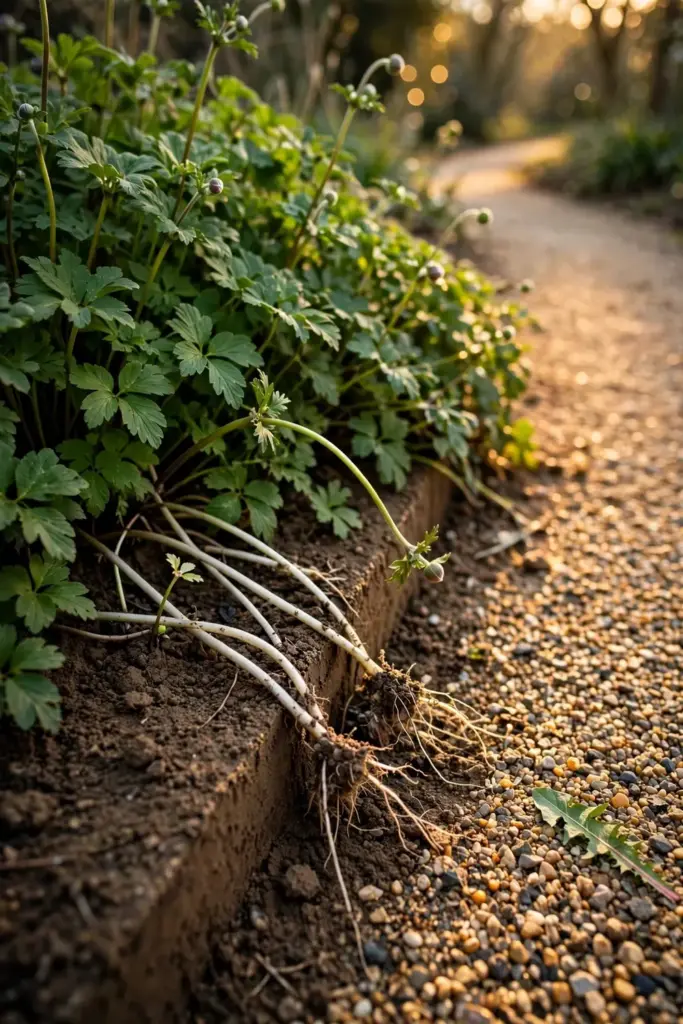
Sink a root barrier 25 to 30 cm deep around the planting, or site it where a path or lawn edge boxes it in. Every second spring, slice the advancing edge with a spade and lift the runners before they root deeper. Two minutes of edging beats an afternoon of digging out a colony that ate the walkway.
11. Keep It Away From Kids and Pets
All anemones are toxic to people, according to The Spruce’s Japanese anemone guide. The sap irritates skin and the plant is unsafe to eat.
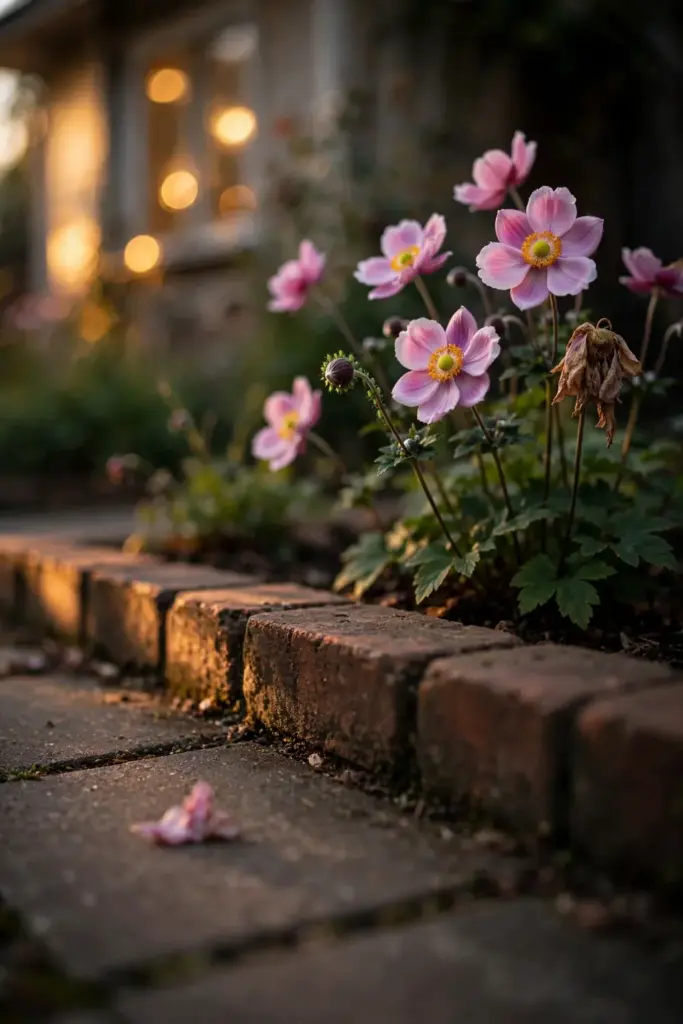
Toddlers chew everything, and this is not a plant to chew on. Site it away from the vegetable garden and the dog’s favorite corner, and wear gloves when dividing large clumps. The flowers are for looking at.
12. Cut Back and Enjoy
Deadhead spent flowers through the season to keep blooms coming into October. Leave the last flush standing. The seed heads catch frost and feed birds.
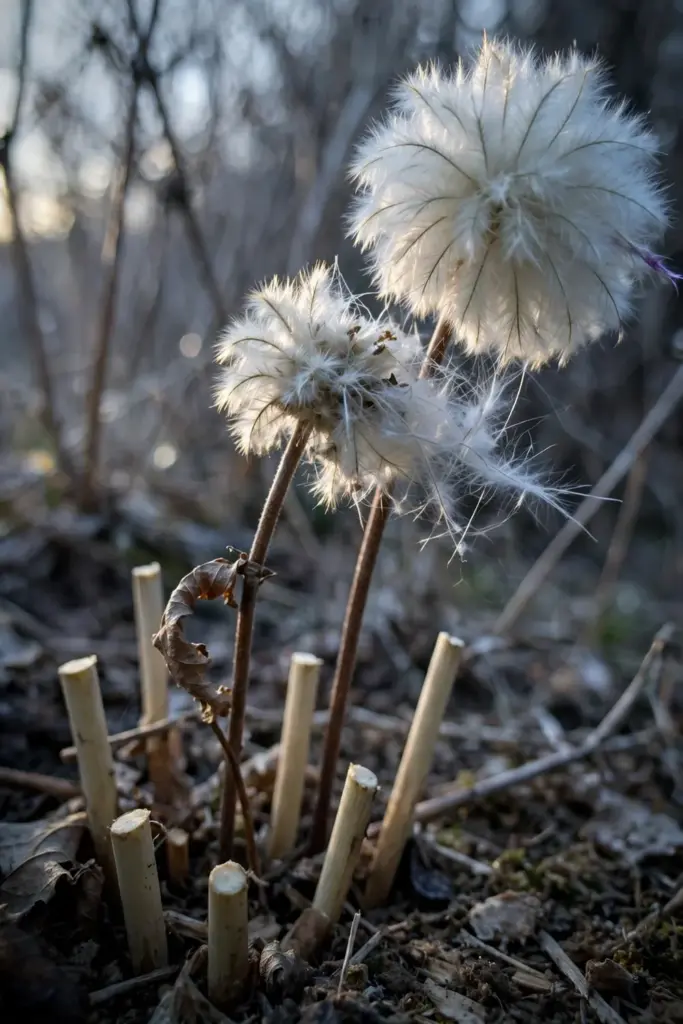
Cut the dead foliage to the ground in late winter before spring growth. Then the cycle restarts: spring planting season, summer establishment, and by August the wiry stems carry pink and white flowers again. That is the whole reward for 12 steps done right.
Mistakes That Waste a Season
Planting in fall and losing the crown to frost heave. Siting in full hot sun with dry soil and watching the leaf edges crisp. Feeding heavily in midsummer and getting floppy, mildewed growth. Skipping the root barrier and finding the anemone in the lawn three years later. Planting corm anemones by mistake and wondering why nothing blooms in fall.
Frequently Asked Questions
Are Fall Anemones the Same as Japanese Anemones?
Yes. When gardeners say fall anemone, they mean the Japanese anemone: Anemone hupehensis, Anemone x hybrida, or Eriocapitella. They are herbaceous perennials that bloom from late summer into fall. Fall-planted anemone corms are a different plant that blooms in spring.
When Is the Best Time to Plant Japanese Anemones?
Plant in spring after the last frost. Spring planting gives the roots a full growing season before winter. Fall planting risks frost heave on unestablished crowns. In zones 7 and warmer, early fall planting can work, but spring remains the safer bet everywhere. Run the frost-date math for your area before committing to any fall planting.
Will Japanese Anemones Come Back Every Year?
Yes, in zones 4 to 8. They are herbaceous perennials that die back in cold weather and return from the crown in spring. Mulch after the first hard frost to prevent frost heave. They return reliably. The real question is whether they return everywhere, because the rhizomes spread.
How Do You Stop Japanese Anemones From Spreading?
Sink a root barrier 25 to 30 cm deep around the planting, or site the plant where a path or lawn edge limits it. Every two years, slice the advancing edge with a spade in spring and lift the runners. Deadheading before seed sets helps, but rhizomes, not seed, drive the spread.
Are Japanese Anemones Poisonous to Dogs?
Yes. All anemones contain protoanemonin, which is moderately toxic to animals and humans. Ingestion causes mouth and digestive irritation. Site the plants away from areas where dogs dig and chew, and wear gloves when dividing or handling large amounts of foliage.
How Long Do Japanese Anemones Bloom?
From August until frost, often eight weeks or more. Deadheading spent flowers extends the display into October and beyond. ‘September Charm’ blooms from late summer until frost. In mild climates the show runs into November; the first hard frost ends it everywhere.