
Count 13 bloom forms before you buy a single mum. That is the whole trick behind fall chrysanthemums: the plant sold as a round cushion at the garden center is one member of a family with spider legs, quills, spoons, and pompoms, and knowing which class you hold tells you when it blooms, whether it survives winter, and how to care for it. The rest of this page walks the 13 classes recognized by the National Chrysanthemum Society, each tagged by bloom form, bloom window, and best use, then the buying, pinching, and overwintering rules that decide whether your mums return. Six to eight weeks before your first hard freeze is the practical clock: buy tight buds, get roots in the ground, and leave the stems standing after frost.
For the full fall roster beyond mums, see fall blooming perennials. For the planting decision, when to plant, pots versus ground, and whether they come back, the planting-mums-in-fall companion is the deeper read. For mums as cut stems with vase-life tags, fall cut flowers; and the fall planting guide lists potted mums among the season’s crops.
Garden Mums vs Florist Mums: The Distinction That Decides Everything
Mums and chrysanthemums are the same plant, Chrysanthemum x morifolium. The difference that matters is breeding. Garden mums are selected for cold tolerance and typically hold zones 5 through 9, though individual cultivars vary with their genetics, the site, and the severity of the winter, according to Virginia Tech’s overwintering guide. Florist mums share the same species name but were never bred for hardiness, and they do not survive freezing.
The tag at the store rarely says which one you hold. Treat a mum bought in full bloom in October as seasonal color, not as a perennial investment. Treat a garden mum bought with tight buds and planted while roots still have weeks of warm soil as a plant that can return. That single distinction answers most of the disappointment: the plant did not fail; the wrong type was asked to do the wrong job.
1. Irregular Incurve
Bloom form: Giant blooms with ray florets curving inward and hanging down to form a skirt. Bloom window: Late season. Best use: Exhibition and show benches.
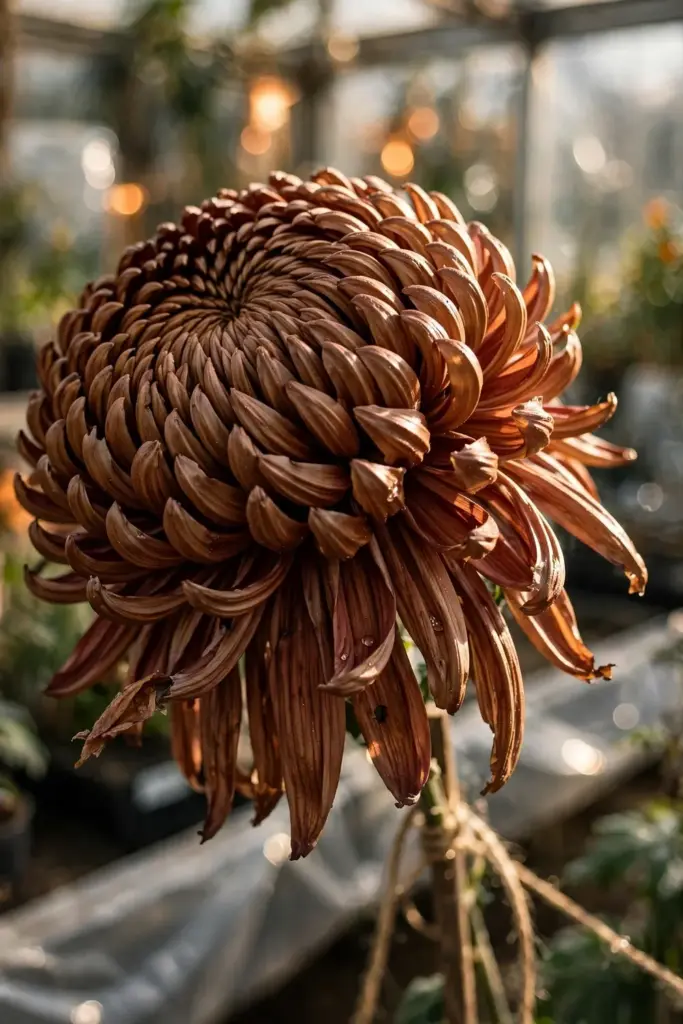
Irregular incurves are the giants of the chrysanthemum world. Growers often disbud the plant to a single stem so all energy feeds one enormous bloom, the ogiku of Japanese tradition, with the disk florets completely hidden under layers of curving rays. These are the flowers that stop visitors at fall shows.
They are not casual border plants. The stems need staking, the blooms need shelter from heavy rain, and the plants want the full garden-mum treatment: rich soil, steady water, and pinching through summer. Buy this class for the spectacle, not for a low-maintenance foundation planting.
2. Reflex
Bloom form: Ray florets reflex outward in a mop-like head. Bloom window: Mid to late season. Best use: Borders and large containers.

Reflex blooms read as full, shaggy mounds of petals falling outward from the center. The disk stays hidden. The overall effect is softer than the incurves, which makes reflex cultivars forgiving in a mixed border where a perfect globe would look stiff.
Most retail mums with a loose, full look sit somewhere near this class. They pair well with ornamental grasses. The mop texture plays against vertical seed heads, and a standard pinching schedule mounds them up with no staking.
3. Regular Incurve
Bloom form: Near-perfect globular form, smaller than irregular incurve. Bloom window: Mid to late season. Best use: Formal beds and foundation plantings.
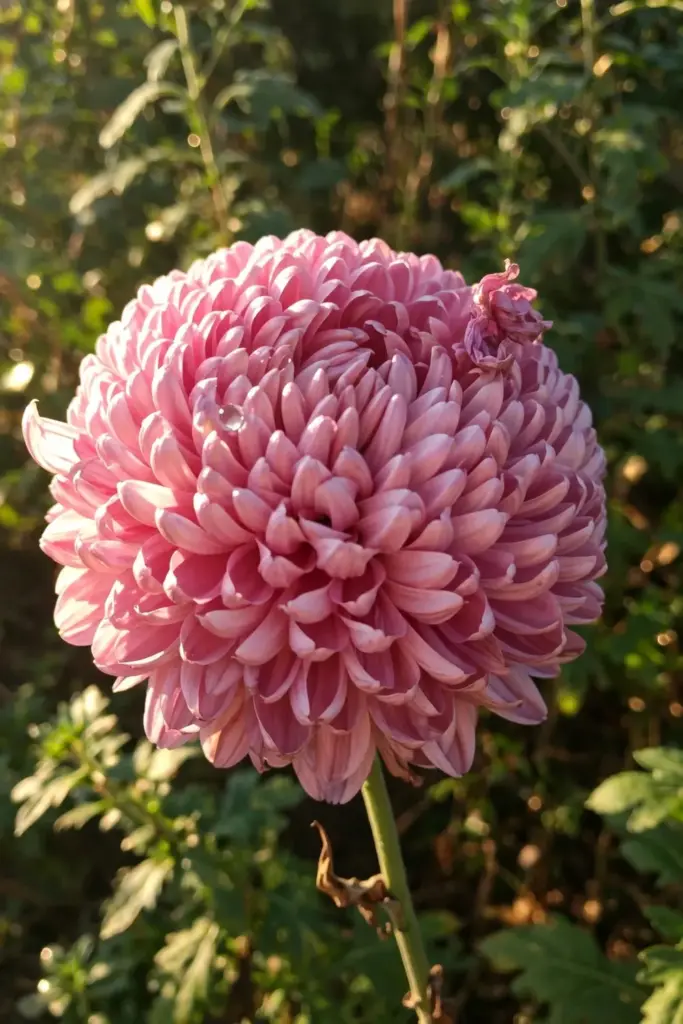
Regular incurves are the tidy globes: dense, symmetrical, and almost architectural. The disk florets are fully concealed, and the bloom holds its shape through wind better than the looser classes. If you want mums that look intentional from the street, this is the class.
Because the form is so structured, spacing matters. Crowded globes trap moisture and invite mildew, so give each plant the airflow its form deserves and site them where morning sun dries the foliage fast.
4. Decorative
Bloom form: Full blooms with ray florets radiating at no more than 90 degrees to the stem. Bloom window: Early to mid season. Best use: Porch pots and mass plantings.

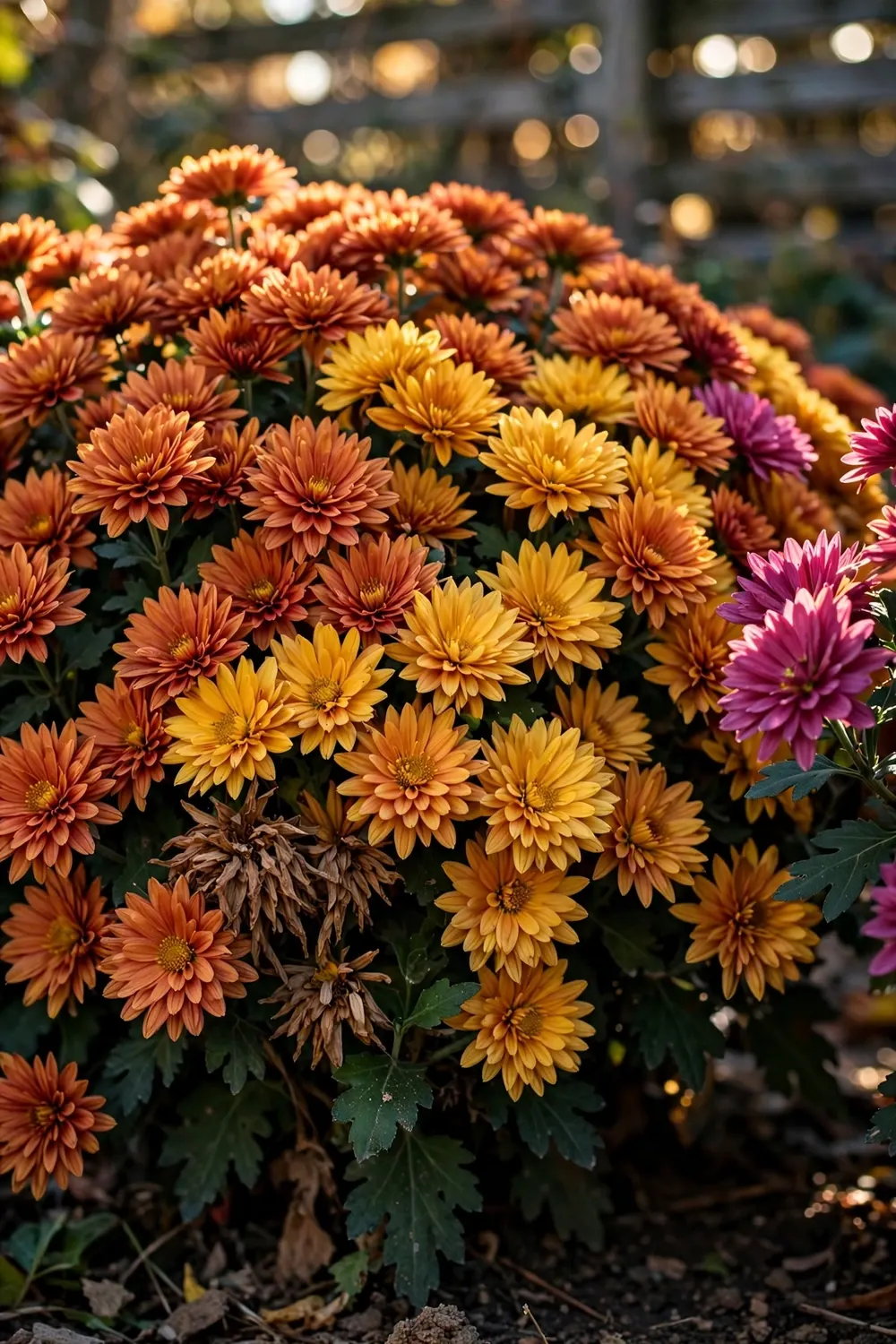
Decorative is the class behind the classic cushion mum, the dome of color sold by the thousand every September. The blooms lack the mop look of reflex types, and the plant naturally forms a compact mound that needs little shaping to look good in a pot.
This is the workhorse class, and it carries most of the buying advice on this page. Buy decorative mums with tight buds, plant them while the soil is still warm, and you get the best return on the least effort of any class here.
5. Intermediate Incurve
Bloom form: Between irregular and regular incurve in size and form, with broader florets and a looser bloom. Bloom window: Mid season. Best use: Mixed borders.
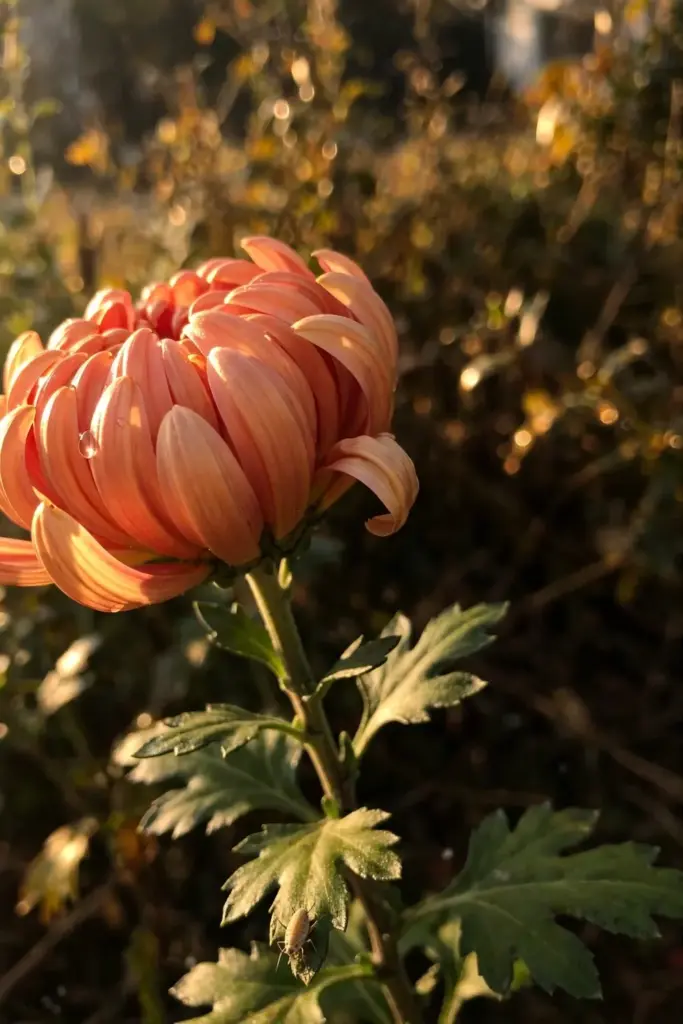
Intermediate incurves split the difference: showier than a cushion, less demanding than a show-bench giant. The broader florets catch light well, and the looser composition reads as natural in a cottage-style border rather than formal.
They appreciate the same pinching schedule as the other incurves but forgive a missed pinch better than the exhibition types. Use them where you want one plant to carry a stretch of border from late summer into frost.
6. Pompon
Bloom form: Small, fully double, near-globular blooms. Bloom window: Mid season. Best use: Edging and small containers.
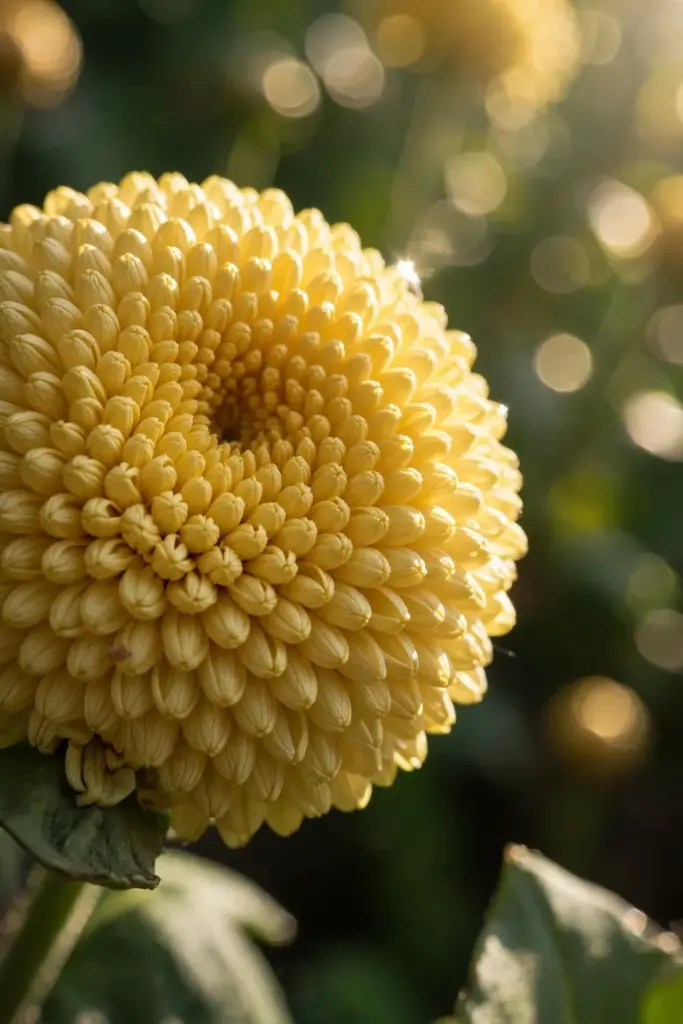
Pompons are the button mums: neat spheres an inch or two across, produced in generous sprays. The name is often misused for any small spray mum, but true pompons are fully double with the disk hidden, and the form is almost perfectly round.
Their scale makes them ideal for the front of a bed, where big incurves would overwhelm. They also dry well, so a few stems cut at peak make long-lasting dried arrangements. Pinch once or twice and the sprays multiply.
7. Single and Semi-Double
Bloom form: Exposed disk florets with one to seven rows of ray florets. Bloom window: Early season. Best use: Pollinator beds and naturalistic plantings.

Single mums look like oversized daisies, with a golden disk that pollinators can actually reach. That exposed center is the point: while the double classes are bred for petal count, singles are bred for the simple landing-pad flower that bees work late into fall.
They bloom earlier than most classes, which extends the mum season at the front end. Plant them near the vegetable garden or the last asters and they become the most ecologically useful mums you can grow.
8. Anemone
Bloom form: Prominent raised disk florets overshadowing the ray florets. Bloom window: Mid season. Best use: Borders with textural contrast.

Anemone mums flip the usual script: the cushion-like raised disk is the feature, ringed by a flat skirt of ray florets. The two-tier structure gives the bloom depth that photographs well and reads clearly from a distance.
They sit comfortably between the formal doubles and the simple singles, which makes them useful bridging plants in a border. Give them the standard mum care and they hold their form through light frosts that flatten looser blooms.
9. Spoon
Bloom form: Visible disk with long tubular ray florets that open into spoon shapes at the tips. Bloom window: Mid to late season. Best use: Collector beds and cutting gardens.

Spoon mums are conversation pieces. Each ray floret is a tube that flares into a tiny spoon at the end, and the visible disk centers the whole composition. They are less common at retail, so finding them usually means a specialty nursery or a mail-order catalog.
Their novelty is also their weakness in the landscape: the form reads best up close, in a cutting bed or near a path, rather than at street distance. Cut stems last well in water, which makes them worth the hunt for indoor arrangements.
10. Quill
Bloom form: Tubular ray florets with the disk fully concealed. Bloom window: Mid to late season. Best use: Textural accents in borders.
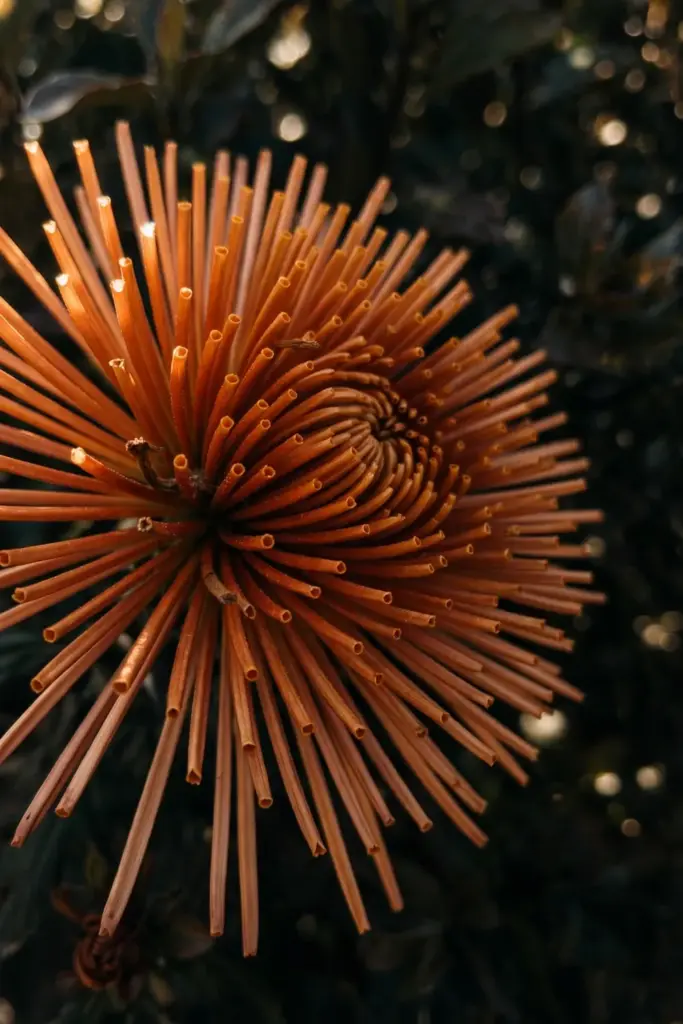
Quill mums trade petal width for tube length. The blooms look fine and spiky from a distance, almost like a different genus, and that texture stands out against the broad petals of decorative mums nearby.
They share the late-season window with the spiders and brushes, so a quill cultivar extends the display after the early singles have finished. Site them where the low autumn sun backlights the tubes and the form glows.
11. Spider
Bloom form: Long tubular ray florets with hooked or barbed ends, hanging loosely. Bloom window: Late season. Best use: Specimen plantings and late-fall focal points.
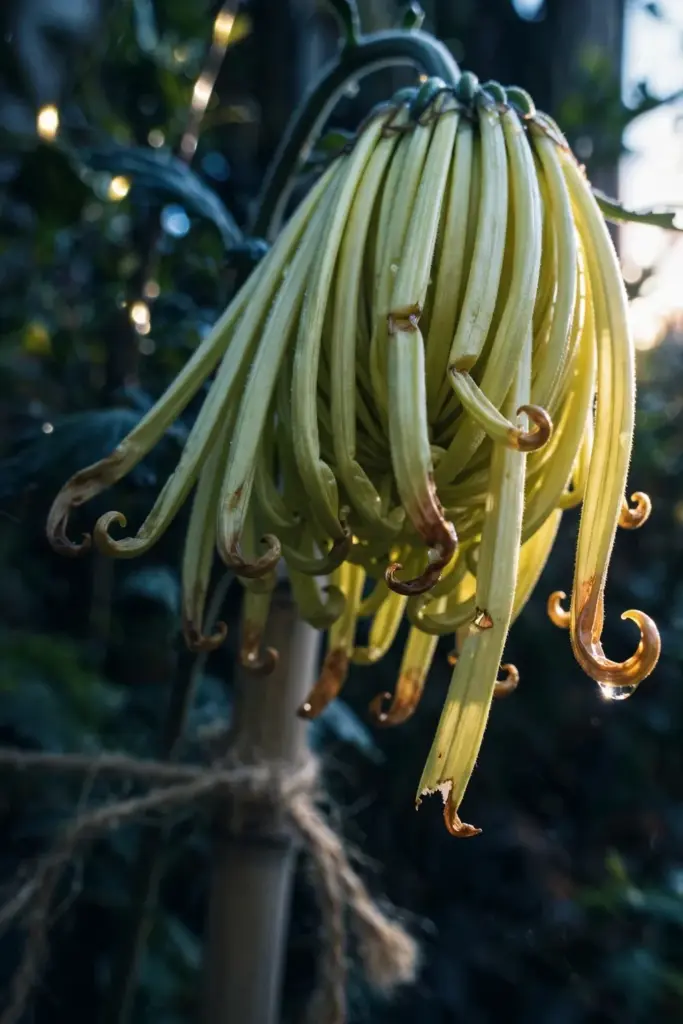
Spider mums, also sold as Fuji mums, are the drama queens of the family. The hooked tubes dangle like spindly legs around a hidden disk, and the bloom period often does not start until the rest of the garden has quit. That lateness is the point: spiders carry the mum season into November in mild climates.
They are rarely found at big-box stores, so plan a specialty order. Give them a sheltered spot, because the long tubes catch wind, and stake the stems before the buds open.
12. Brush or Thistle
Bloom form: Tubular ray florets projecting outward, disk sometimes visible. Bloom window: Late season. Best use: Exotic accents and show culture.
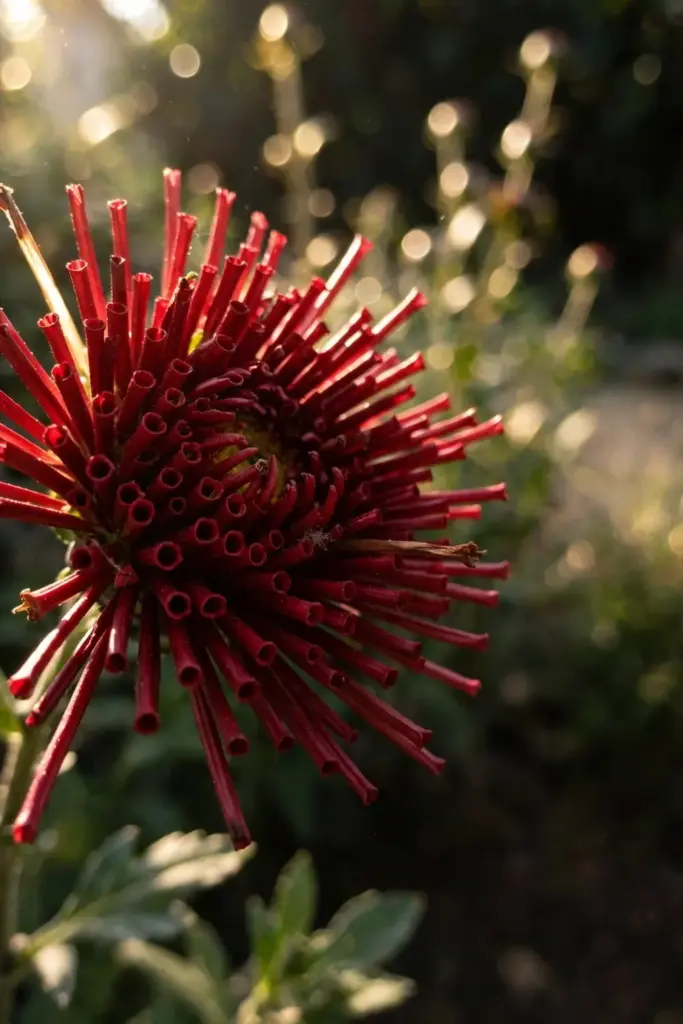
Brush and thistle mums look untamed next to a cushion: fine tubes project in every direction, and the bloom has a wild energy that suits naturalistic plantings better than formal beds. The disk may show through, which adds another layer of texture.
Like the spiders, they bloom late and want shelter from wind. They are a collector’s class, and a single plant in a prominent pot will draw more questions than a whole row of decorative mums.
13. Exotic
Bloom form: Forms that fit none of the other twelve classes. Bloom window: Variable. Best use: Novelty and breeding interest.
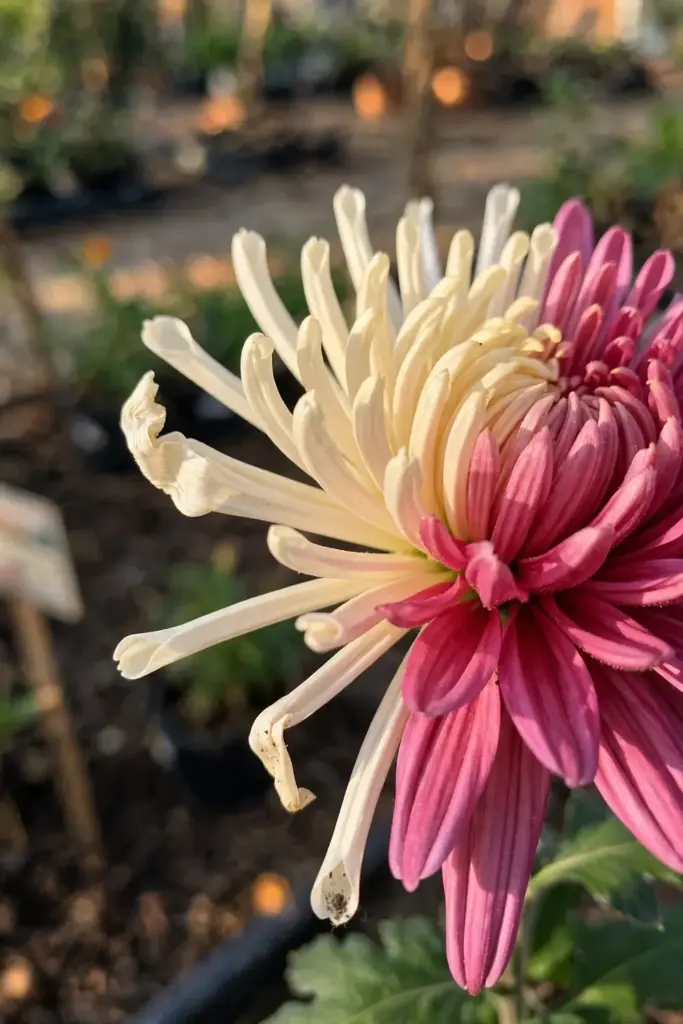
Exotic is the catch-all for the rule-breakers: blooms that blend two classes or invent a new one. Modern breeding keeps adding to this drawer, with spoon-spiders and spider-anemones among the recent novelties.
Buy exotic mums the way you buy art: for the form itself, with no expectation that the plant behaves like a standard garden mum. Check the hardiness of the specific cultivar, because novelty and cold tolerance do not always travel together.
The 13 Classes at a Glance
The bloom windows below are typical nursery ranges, and hardiness follows the garden-mum baseline: cultivars in these classes are generally hardy in zones 5 through 9, with individual cultivars varying by genetics and site, per the Virginia Tech guide linked above. Florist mums in any class are not hardy.
| Class | Bloom form | Bloom window | Best use |
|---|---|---|---|
| Irregular Incurve | Giant, skirted | Late | Exhibition |
| Reflex | Mop-like, outward | Mid-late | Borders, containers |
| Regular Incurve | Tight globe | Mid-late | Formal beds |
| Decorative | Full, angled rays | Early-mid | Pots, mass planting |
| Intermediate Incurve | Loose, broad florets | Mid | Mixed borders |
| Pompon | Small globe | Mid | Edging, small pots |
| Single / Semi-Double | Daisy-like, open disk | Early | Pollinator beds |
| Anemone | Raised cushion disk | Mid | Textural borders |
| Spoon | Tubular, spoon tips | Mid-late | Cutting gardens |
| Quill | Tubular, concealed disk | Mid-late | Textural accents |
| Spider | Hooked tubes | Late | Specimen, late focal |
| Brush / Thistle | Projecting tubes | Late | Exotic accents |
| Exotic | Unclassified forms | Variable | Novelty |
14. Buy Buds, Not Blooms
Timing: Shop while buds are still tight. What it does: Shifts the plant’s energy to roots. Frost note: Tight buds bought early still have weeks of warm soil.

The single most useful buying rule comes from extension work: mums already in full flower put their energy into blooms, not roots, and a flowering plant moved into cold soil rarely survives winter. Buy the plant that has not opened yet, as Ohio State University Extension’s mum care notes advise for anyone hoping to overwinter potted mums.
This is the opposite of how most people shop. The full, showy pot at the store is the worst perennial investment on the table. Walk past the open blooms, pick the tightest buds in the color you want, and the plant rewards you with both a longer display and a real chance at year two.
15. Pinch Stems at Six Inches, Then at Twelve
Timing: Through early summer, 100 days before the desired bloom. What it does: Forces branching and a bushy habit. Frost note: Late pinching delays blooms into frost.

Pinching is the difference between a leggy mum and a mound. When stems reach 6 inches tall, pinch the tips; pinch again when they reach 12 inches, 100 days before you want flowers, according to the Ohio State notes. Each pinch forces side shoots, and the side shoots are what carry the fall display.
Stop in time. Pinching too late pushes bud set past the safe window, and buds caught by hard frost never open. Mark the last pinch date on the calendar the way you would a frost date, because it functions like one.
16. Deadhead to Stretch the Display
Timing: Through the bloom season. What it does: Extends flowering by removing spent blooms. Frost note: None; stop fussing once hard frosts arrive.

Removing spent flowers keeps the plant putting energy into the remaining buds, and Ohio State’s mum care notes say the flowering period can be extended by deadheading. Snip the brown heads back to the next set of leaves and the plant stays presentable weeks longer.
Expect a longer show, not a second one. Mums bloom on day length, so deadheading stretches the existing display rather than triggering new buds. When the whole plant browns after hard frost, the season is over and the stems stay standing for winter insulation.
17. Leave the Foliage Standing After Frost
Timing: After the first hard frost; mulch once the ground freezes. What it does: Insulates the crown through winter. Frost note: This is the overwintering step.

The instinct to cut everything back in fall kills mums. Virginia Tech advises leaving the existing foliage and stems on the plant until after the first hard frost, because that material insulates the crown. Then add 3 to 4 inches of light, airy mulch over the crown: pine needles, loose shredded bark, clean straw, or evergreen branches.
The mulch has a specific job beyond warmth. It shades the soil so it does not freeze and thaw in turns, which heaves the plant and tears the roots. Pull the mulch away in early to mid-April once severe cold has passed, and the crown wakes up intact.
18. Give Them Six Hours of Sun
Timing: At planting; reassess each season. What it does: Powers bud set and keeps growth compact. Frost note: Shade-grown mums bloom late and weak.

Mums need 6 or more hours of direct sun daily, and the Virginia Tech guide adds a warning most gardeners miss: a spot that is sunny in fall may not get enough light in summer once the trees leaf out. Site the plant for July sun, not October sun.
In too much shade the stems stretch, the buds set late, and the display lands after the frost instead of before it. If the only open spot is shady, treat the mum as seasonal color and skip the overwintering effort.
19. Space Plants 18 to 30 Inches Apart
Timing: At planting. What it does: Gives airflow that prevents disease. Frost note: Crowded, wet crowns rot over winter.

Ohio State recommends 18 to 30 inches between plants, and the reason is airflow: good circulation cuts the pressure from pathogens, pests, and fungi. Mums packed shoulder to shoulder stay damp, and damp foliage in cool fall air is an invitation to mildew.
Spacing also protects the winter crown. Plants sitting in heavy, waterlogged soil die over winter no matter how hardy the cultivar, per the Virginia Tech guide, so space generously and plant in ground that drains.
20. Water Until the First Hard Frosts, Then Back Off
Timing: Through fall; reduce as winter approaches. What it does: Keeps roots growing, then lets the plant go dormant. Frost note: Dry soil heaves worse than moist soil.

Keep watering through the bloom season and right up to the first hard frosts. Virginia Tech then says to taper off as winter approaches, since dormant mums need less water, but the soil should never go completely dry: dry soil lets cold air into the profile and increases heaving.
The alternative for a prized plant is to skip the gamble entirely. A mum can spend winter in an unheated garage or basement corner where it will not freeze, or in a cold frame, and go back out in spring. That is the safest overwintering method the extension services offer.
Common Mistakes That Kill Mums
Buying full bloom in October and expecting a perennial is the classic error, and the garden-mum versus florist-mum distinction explains it. Planting late is the second: a mum set into cold soil with weeks to go cannot build the root system that winter demands, so the earlier planting in the season, the better the survival odds.
Cutting the stems down in fall is the third. The brown tops look untidy, but they are insulation and a mulch anchor. The fourth is wet feet: mums forgive cold far better than they forgive waterlogged soil, so drainage outranks every other site factor for overwintering.
Frequently Asked Questions
Yes. Mum is the common name for Chrysanthemum x morifolium, the species behind nearly all fall mums. The National Chrysanthemum Society recognizes 13 bloom classes within the genus, from single daisies to spider forms. When a tag says garden mum, florist mum, or hardy mum, it is describing the breeding and intended use, not a different plant.
Garden mums typically return in zones 5 through 9 when planted early enough to root before the ground freezes, left standing through winter, and mulched after the soil freezes. Florist mums were never bred for hardiness and do not survive freezing. Ohio State notes that even garden mums are best rotated to a new spot after about three years to reduce insect and disease pressure.
Spring planting is the safer route to a perennial mum, since roots get a full season to establish. Fall planting works when the plant goes in six or more weeks before the first hard freeze and gets the overwintering treatment above. For the full planting decision, with frost-date timing and the pots-versus-ground question, see the planting-mums-in-fall companion.
They survive in part shade but bloom poorly. Mums need 6 or more hours of direct sun for compact growth and on-time buds; in shade the stems stretch and flowering slides late, sometimes past the frost. If shade is all you have, buy for one season of color and skip the overwintering effort.
In East Asia the chrysanthemum is a noble flower: longevity and rejuvenation in China, and the imperial emblem of Japan, where the flower appears on the Imperial Seal. In Victorian flower language it carried meanings from friendship to slighted love depending on color. The symbolism is why mums anchor fall festivals and shows across both continents.
Energy allocation is the usual cause. A mum bought in full bloom spends its reserves on flowers instead of roots, and a shallow pot freezes solid around a root ball that never had a chance. For container mums, the safer play is an unheated garage or cold frame for winter, or treating the pot as seasonal color and starting fresh with tight buds.
Bring the Same Mums Back Next Fall
The 13 classes are the map and the care rules are the vehicle. Buy tight buds of a garden mum, pinch through early summer, leave the stems standing, and mulch after the ground freezes, and the same plant that carried October color comes back to do it again. The fall gardening tips pillar keeps the full seasonal checklist, and the Thanksgiving planter ideas article carries mums into the November porch palette.