
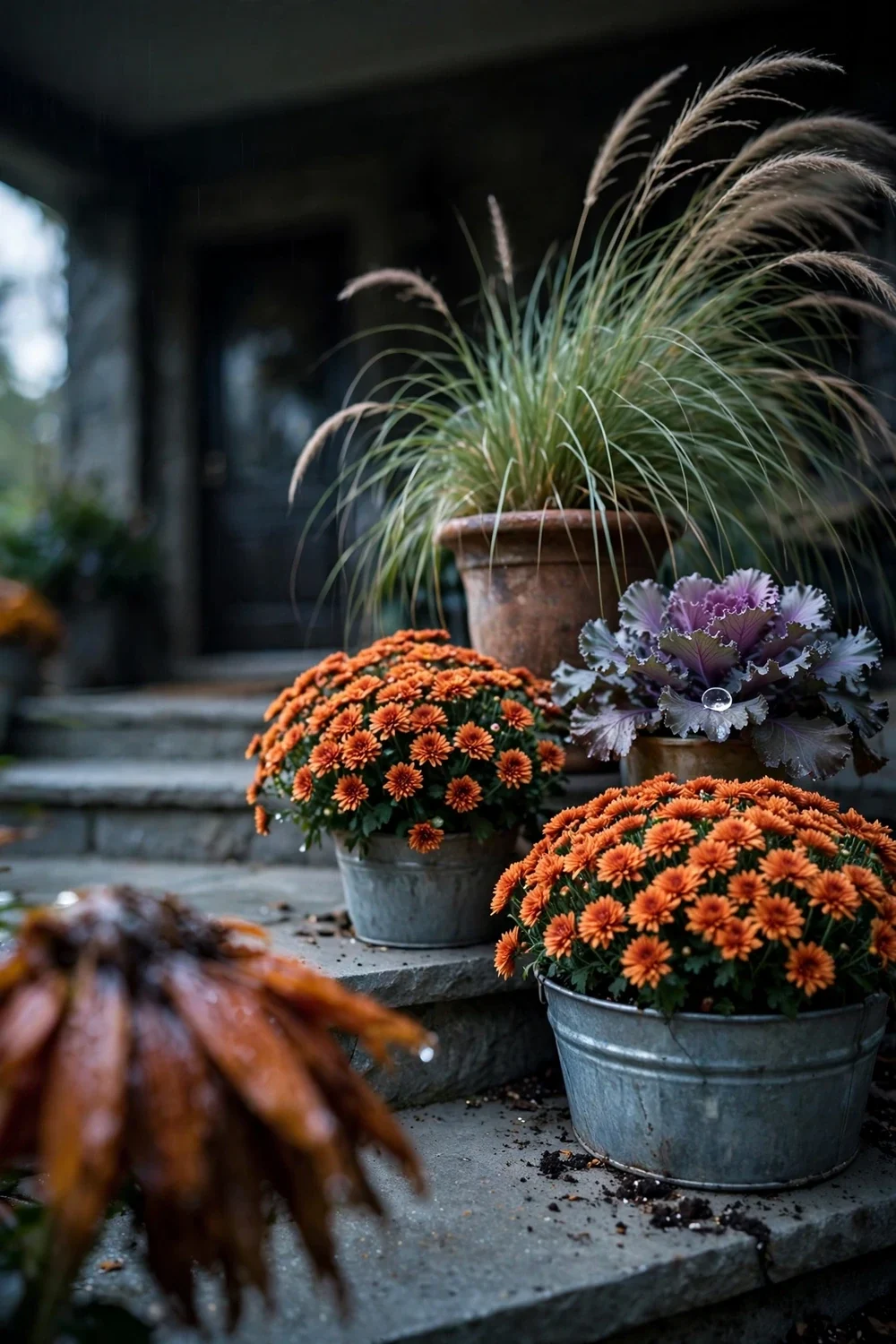

Fill one 35 cm pot this weekend with a thriller, a filler, and a spiller, and it will carry the porch from September to first frost. That is a fall planter idea: a cold-season container built on purpose, not a summer pot left to fade. The rest of this page is 21 builds, from the first mum-and-kale classic to the last evergreen swap for winter.
October does the heavy lifting. Nursery shelves turn over to cool-season plants now, and soil temperatures still sit in the range pansies need to root: 45 to 65 F (7 to 18 C), per the University of Georgia pansy guide. Plant this week and the roots establish before the first hard freeze.
The 21 builds below are September and October planters: live plants in pots, built to survive frost. When November arrives, the holiday look takes over, and pumpkin vessels, harvest decor, and the table and steps dressed for the meal move to Thanksgiving planter ideas. For the bed work behind the pots, see the fall gardening tips.
How to Read the Tags on Every Build
Every numbered build below carries the same four tags, so you can scan instead of reading. Thriller is the tall center. Filler is the mounding middle. Spiller trails over the rim. Sun is what the pot needs where it sits. Frost tells you how much cold the planting takes before it quits.
| Build | Thriller / Filler / Spiller | Sun | Frost |
|---|---|---|---|
| 1. Mum, Kale, and Ivy Classic | Mum / ornamental kale / ivy | Full sun | Light frost |
| 2. Fountain Grass Tower | Fountain grass / sedum / creeping jenny | Full sun | Light frost |
| 3. Shade Pot With Pansies | Fern / pansies and violas / sweet potato vine | Part shade | Hard frost |
| 4. Aster Drift in a Pot | Aster / celosia / bacopa | Full sun | Light frost |
| 5. Ornamental Pepper Punch | Peppers / marigolds / alyssum | Full sun | First frost |
| 6. Silver Cools the Pot | Dusty miller / white mums / licorice plant | Full sun | Light frost |
| 7. Tall Urn at the Door | Fountain grass / mums / ivy | Full sun | Light frost |
| 8. Galvanized Tub | Mums / ornamental kale / trailing sedum | Full sun | Light frost |
| 9. Terracotta Bowl | None / pansies and violas / creeping thyme | Full to part shade | Hard frost |
| 10. Window Box Border | Dwarf aster / pansies / ivy | Full to part shade | Light frost |
| 11. Matched Door Pair | Mum / kale / ivy | Full sun | Light frost |
| 12. Step Staircase | Grass, mum / kale / jenny | Full sun | Light frost |
| 13. Odd-Number Cluster | Mixed / mixed / mixed | Full sun | Light frost |
| 14. Entry Table Pot | None / pansy clump / none | Part shade | Hard frost |
| 15. Summer Pot Refresh | Reused grass / fresh mums / fresh ivy | Full sun | Light frost |
| 16. Edible Planter | Curly kale / rainbow chard / lettuce | Full sun | Hard frost |
| 17. Faux Arrangement | Dried grasses / preserved eucalyptus / none | Any | All winter |
| 18. Frost Protection | Care how-to, not a planting | n/a | n/a |
| 19. Winter Evergreen Bridge | Birch / evergreen boughs / none | Any | All winter |
| 20. Feeding | Care how-to, not a planting | n/a | n/a |
| 21. Spring Bulb Swap | Bulbs (dormant) / fall annuals / n/a | Full sun | Overwinter |
Read the frost column with the calendar. Light frost means the planting looks good until about -2 C, which covers most of October in zones 6 and 7. Hard frost means it keeps going past -4 C with shelter against the house. Nothing in a pot survives a deep freeze the way the same plant would in the ground, because the roots have no earth around them.
1. Build the Mum, Kale, and Ivy Classic
Set one garden mum in the center of a 35 cm pot, ring it with three ornamental kales, and tuck English ivy starts at the rim so they spill over the edge. That is the classic fall planter: one thriller, one filler, one spiller, each doing exactly one job.
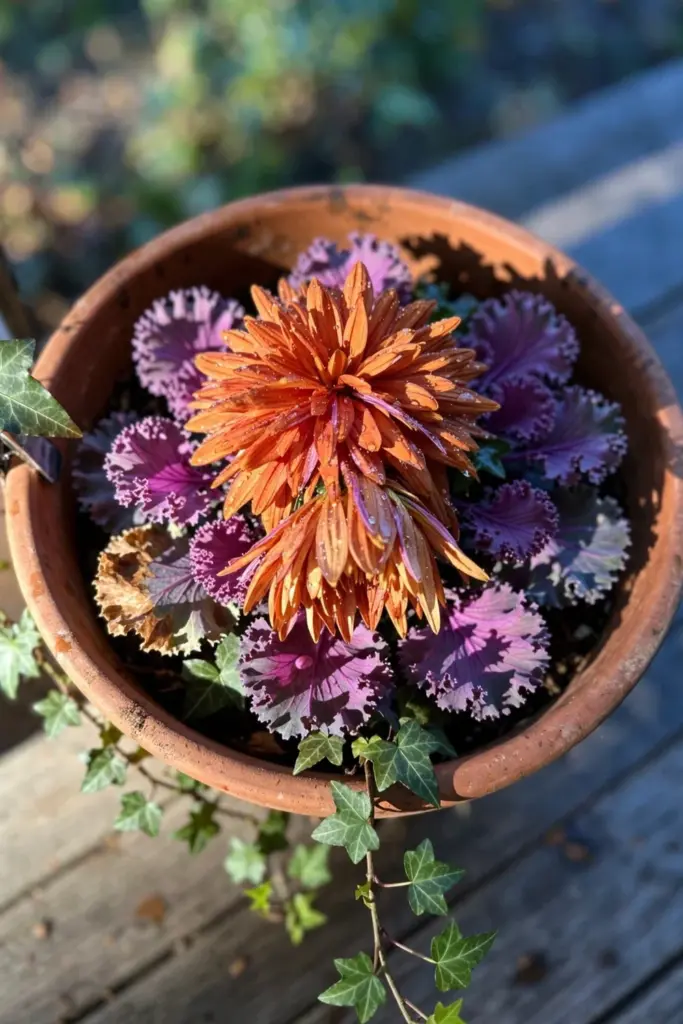
Buy the mum with tight buds, not open flowers. Buds open over the next two weeks, which stretches the show instead of spending it in the parking lot. Garden mums are hardy in zones 5 to 9, and medium-height varieties suit planters and porch pots, according to Virginia Tech’s garden mum guide. The kale colors up as nights cool.
Water at the base until it runs out of the drainage hole. Mums drink heavily in bloom, and a pot dries faster than a bed. Deadhead spent flowers so the plant spends energy on buds, not seeds.
Tags: Thriller: garden mum | Filler: ornamental kale | Spiller: English ivy | Sun: full sun | Frost: light frost
2. Let a Fountain Grass Take the Center
Plant purple fountain grass in the middle of the pot and let it be the whole show above 60 cm. Ring the base with bronze mums and creeping jenny spilling over the rim. The grass gives the pot its silhouette; everything else is trim.
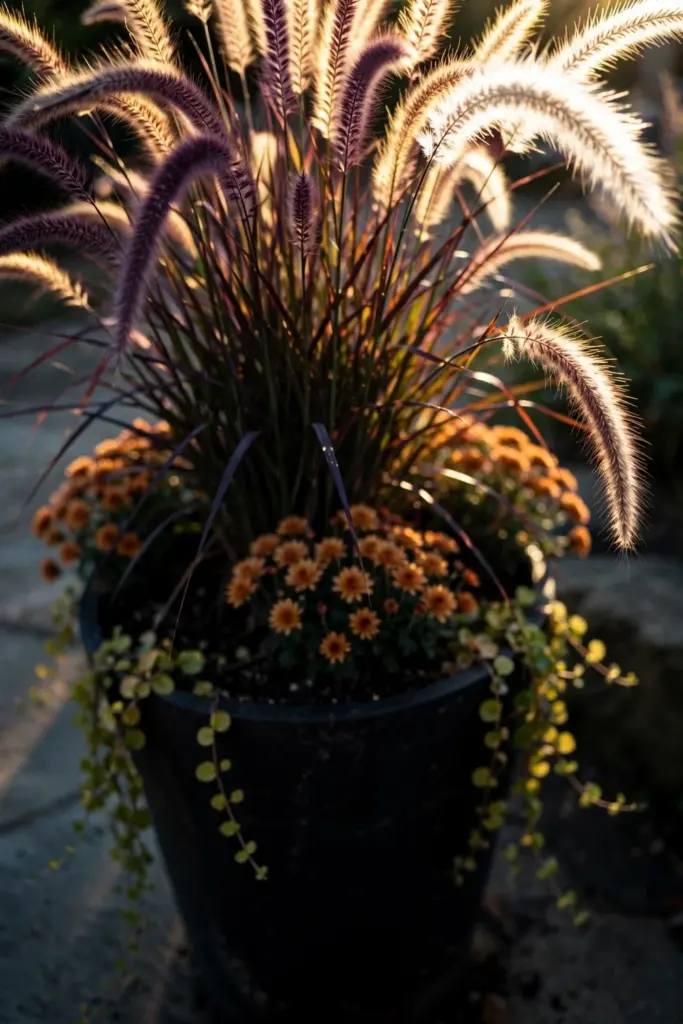
Fountain grass grows as an annual in most zones, so treat it as a one-season thriller and pull it in November. Its arching plumes catch side light in the morning, which is the cheapest drama a porch gets. Set the grass 10 cm deeper than it sat in the nursery pot; the extra depth anchors it against wind.
Do not let the grass crowd the fillers. Give each mum 15 cm of its own soil. Crowded roots in a pot mean wilted leaves by week three, and the grass always wins the water fight.
Tags: Thriller: purple fountain grass | Filler: bronze mums | Spiller: creeping jenny | Sun: full sun | Frost: light frost
3. Put Pansies in the Shadiest Pot
Fill the north-side pot with pansies and violas, the one planting that prefers the cool side of the house. Tuck a small fern behind for height and let sweet potato vine trail over the front. Pansies bloom best when nights run cool, around 4 to 15 C.
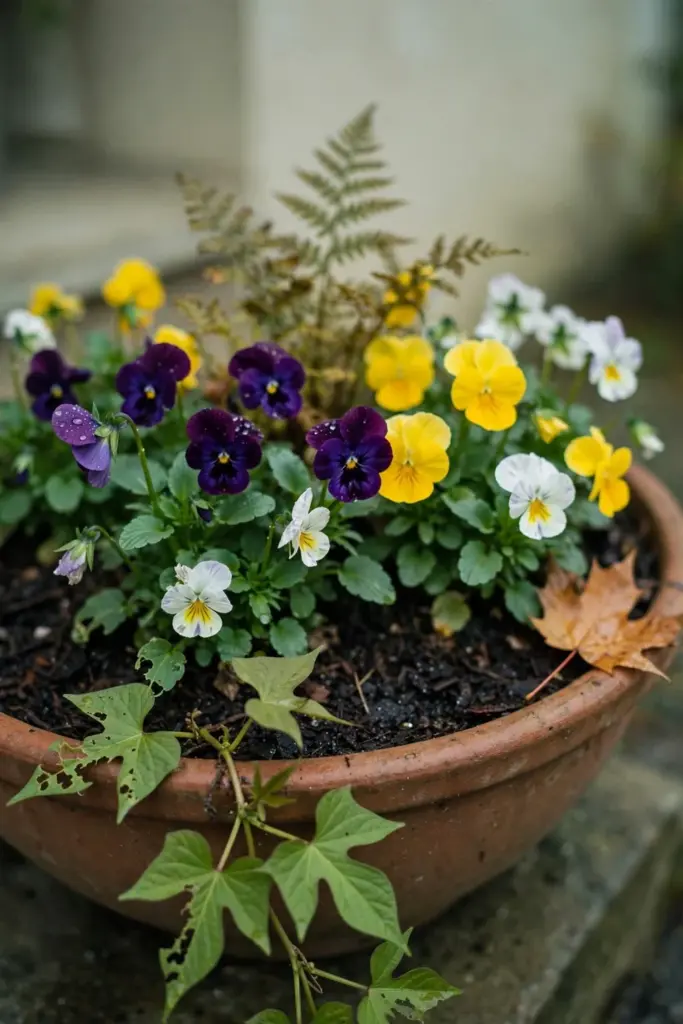
Plant while soil temperatures hold between 45 and 65 F (7 to 18 C), the band the Georgia guide above names for best root growth. Roots that establish in warm soil keep feeding the plant through cold spells; roots planted into cold soil stall and the blooms never come.
Water lightly in winter months and do not drown them. Pansies hate wet feet more than cold air, and a soggy pot in December rots the crown. Pile pine straw over the pot for a hard freeze, then rake it off when the cold passes.
Tags: Thriller: autumn fern | Filler: pansies and violas | Spiller: sweet potato vine | Sun: part shade | Frost: hard frost
4. Go Beyond Mums With Asters and Celosia
Build the pot around New England asters for purple, celosia plumes for red-orange, and white bacopa trailing over the edge. Nobody at the nursery has to know you skipped the mums. This is the answer to the mums-on-repeat porch.
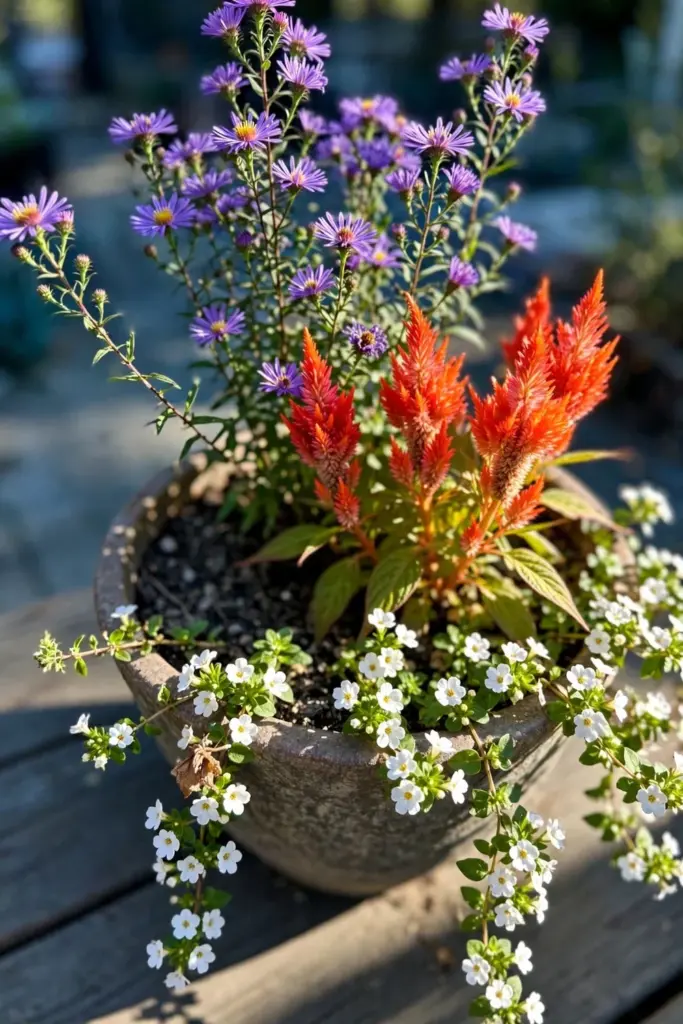
Asters bloom late and feed late pollinators, which gives the pot a job past decoration. Celosia holds its plumes through light frost when mums are already done. Bacopa keeps flowering until a hard freeze, and it trails 30 cm without any pinching.
Stake the asters if the pot sits in wind. Their stems go woody and top-heavy by October, and one gust lays the whole planting sideways. A single bamboo stake tied loosely at 30 cm fixes it.
Tags: Thriller: New England aster | Filler: celosia | Spiller: bacopa | Sun: full sun | Frost: light frost
5. Spice the Pot With Ornamental Peppers
Center the pot on ornamental peppers with purple, orange, and red fruit, then fill around them with gold marigolds and white alyssum. The peppers carry the pot after the marigolds fade; the fruit holds its color for weeks.
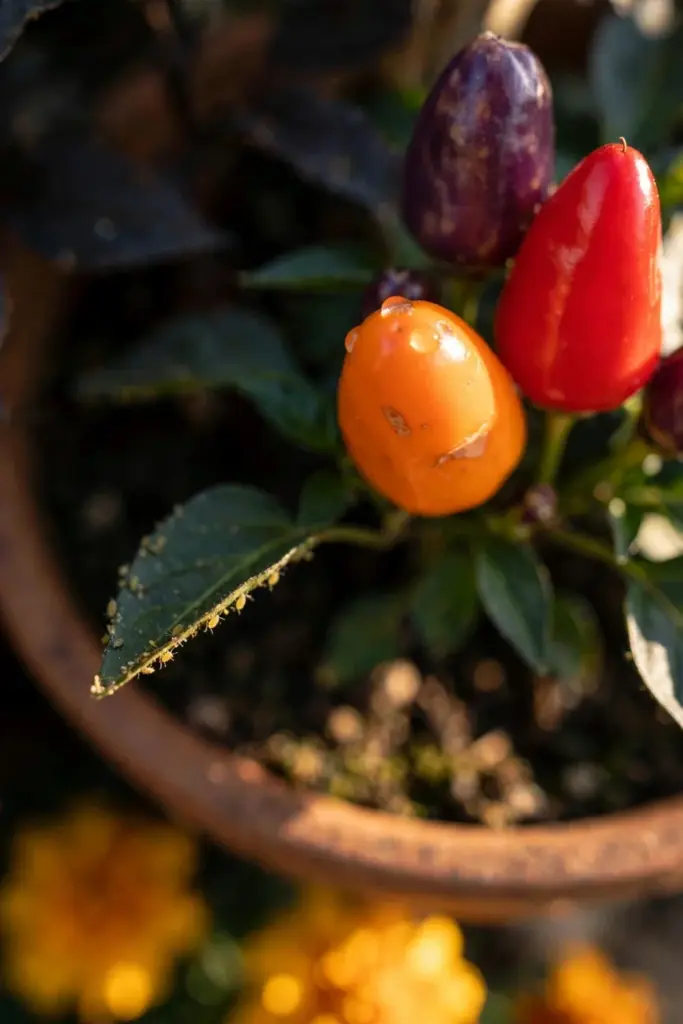
Keep the peppers away from the front-door handle. Kids grab shiny fruit, and ornamental peppers are hot. This is a look-from-a-step-back planting, not a tasting planting. One warning sign near the door is cheaper than one emergency room visit.
Pull the alyssum when it goes leggy in October and tuck in a fresh pansy start. The peppers do not care about the swap, and the pot gets a second bloom flush from one 10 cm plant.
Tags: Thriller: ornamental peppers | Filler: marigolds | Spiller: alyssum | Sun: full sun | Frost: first frost
6. Cool a Hot Palette With Dusty Miller
When every pot on the street is orange, build one around silver. Dusty miller goes in the center, white mums fill the middle, and licorice plant spills over the rim. Silver cools the whole porch by contrast.
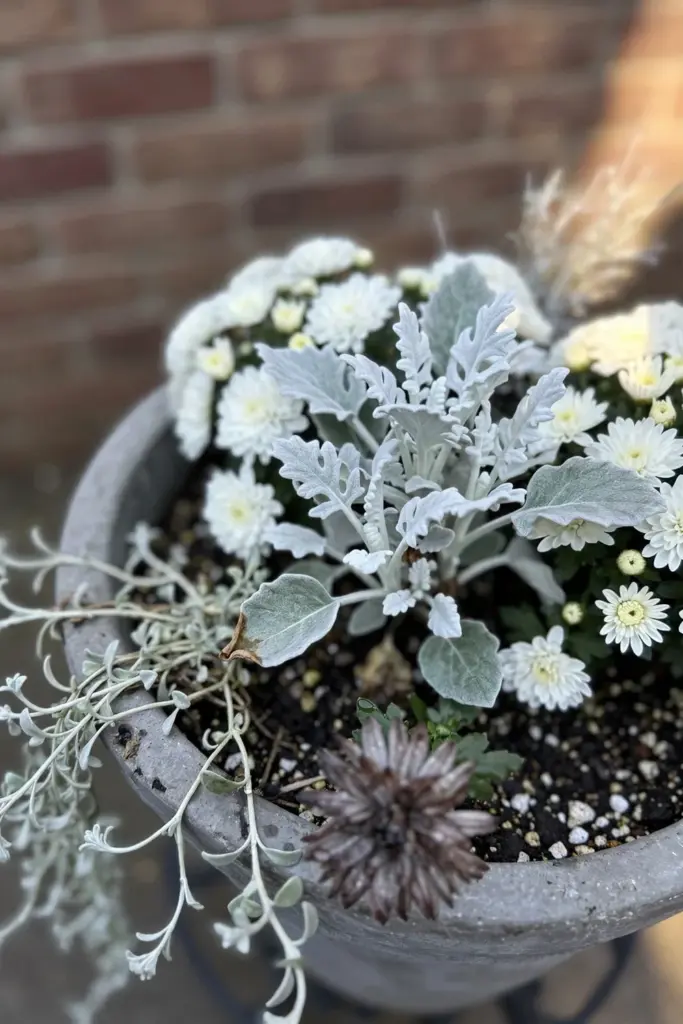
Dusty miller holds its felted leaves through the first few frosts without flinching. It never blooms, which is the point: it is structure, not color. One silver plant per pot is enough; two makes the pot look gray.
Do not overwater it. Dusty miller rots in soggy soil faster than almost any fall annual, and its silver turns to brown mush. Water when the top 2.5 cm of mix is dry, never on a schedule.
Tags: Thriller: dusty miller | Filler: white mums | Spiller: licorice plant | Sun: full sun | Frost: light frost
7. Set a Tall Urn at the Door
One tall urn by the front door does more than three small pots scattered around. Fill it with a grass thriller, mums at the shoulder, and ivy spilling down the pedestal. Height at the door reads as intention from the street.
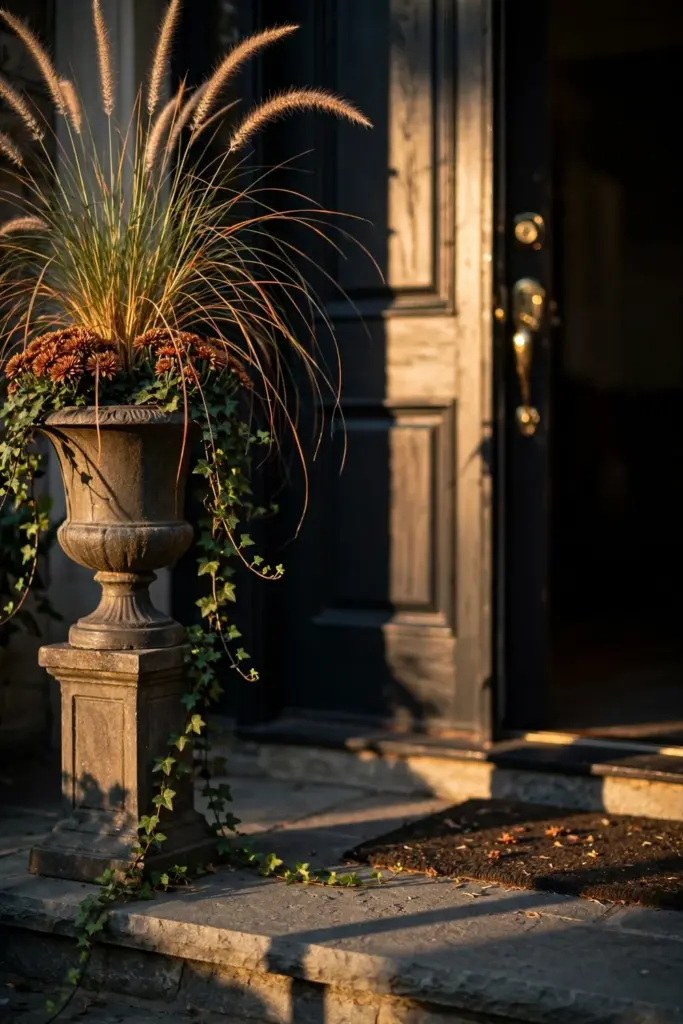
Weight the urn before planting. A tall pot full of wet mix catches wind like a sail. Set a brick or a stone in the bottom third, then the mix on top. The stone also improves drainage, which every tall pot needs.
Plant the thriller off-center, toward the back. A centered grass in a centered urn looks like a flag. Shift it 8 cm back and the whole planting leans forward, which is what the door view wants.
Tags: Thriller: fountain grass | Filler: mums | Spiller: ivy | Sun: full sun | Frost: light frost
8. Use a Galvanized Tub for the Harvest Look
A low galvanized tub says harvest without a single pumpkin. Drill drainage holes in the bottom, fill with mums, kale, and trailing sedum, and set it by the steps. Metal cools fast at night, so this pot needs the toughest plants you have.
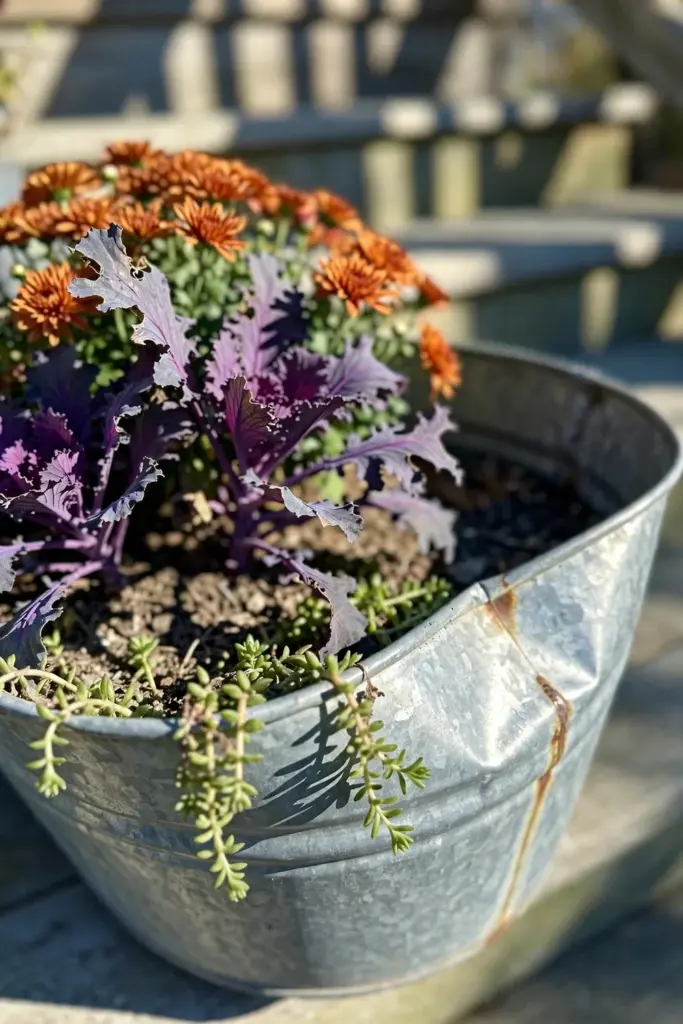
Line the inside with a black nursery pot if the tub has no holes and you cannot drill. The liner lifts out for watering at the hose, then drops back in. No liner and no holes means a bathtub by November.
Metal pots swing temperature more than clay or plastic, heating fast by day and dumping heat at night. That swing stresses roots, so this pot needs the toughest plants you have. Move the tub against the house wall on frost nights. The wall radiates stored heat and buys the plants 2 to 3 degrees, often the difference between alive and mush by morning.
Tags: Thriller: mums | Filler: ornamental kale | Spiller: trailing sedum | Sun: full sun | Frost: light frost
9. Warm Up Plain Terracotta
Terracotta dries fast, which is its virtue and its curse. Soak the pot in a bucket for an hour before planting so the clay stops stealing water from the mix. Then plant pansies, violas, and creeping thyme, all of which tolerate the dry side.
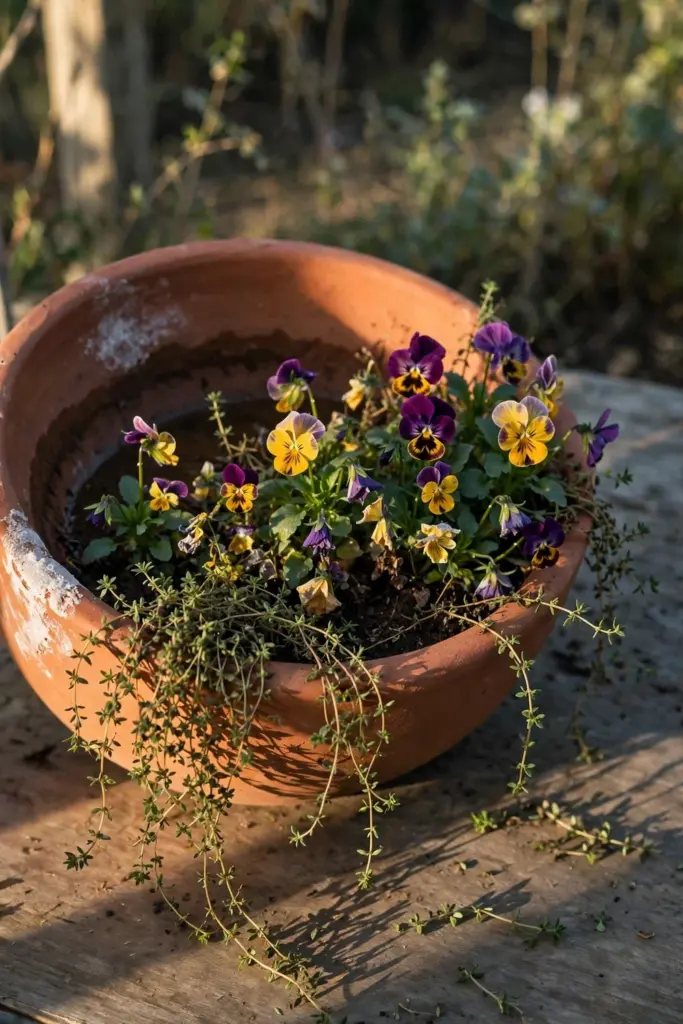
Terracotta breathes through its walls, so the mix inside dries a day sooner than plastic. Check the soil with a finger, not a calendar. In October that usually means water every two to three days; in a warm September, daily.
Seal the outside with a clear masonry sealer if the pot must overwinter outside. Wet clay cracks in freeze-thaw cycles. Sealed terracotta survives; unsealed terracotta spalls by spring.
Tags: Thriller: none (low bowl) | Filler: pansies and violas | Spiller: creeping thyme | Sun: full sun to part shade | Frost: hard frost
10. Plant the Window Box Like a Small Border
One window box gets the border treatment: a row of dwarf mums or asters at the back, pansies in the middle, and trailing ivy or bacopa over the front edge. Plant it in the same thriller-filler-spiller order, just in a line instead of a circle.
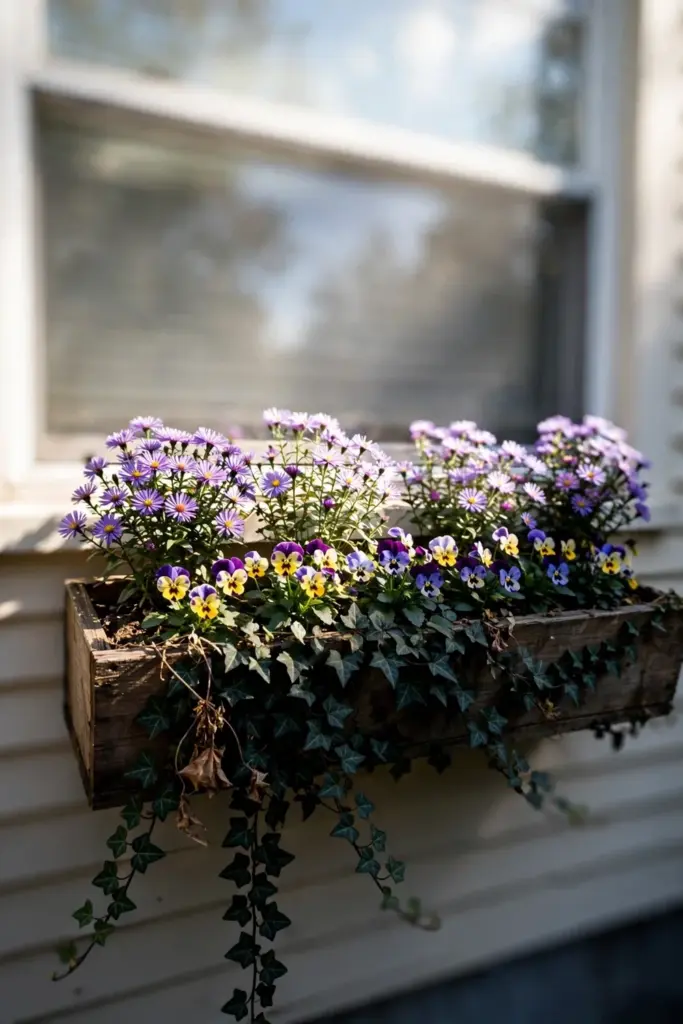
Window boxes dry out faster than any ground-level pot. Wind hits them from three sides. Water them daily in September, and check twice on warm days. A box that dries out once in fall never fully recovers its bloom.
Keep the box planting to one season. Perennials in a shallow box heave out of the soil in freeze-thaw and die. Treat the window box as annuals-only, and replant it fresh each fall.
Tags: Thriller: dwarf aster | Filler: pansies | Spiller: ivy | Sun: full sun to part shade | Frost: light frost
11. Flank the Door With a Matched Pair
Two identical pots, two identical plantings, one on each side of the door. Symmetry at the entry reads as care from the curb. Build both pots on the same day from the same flat of plants so they match.
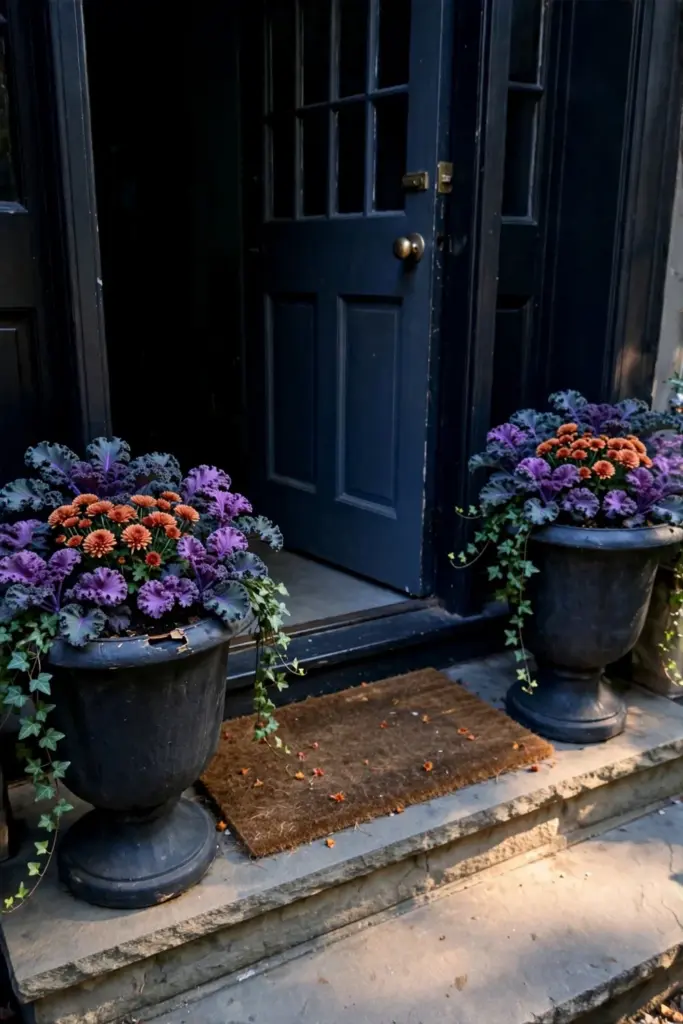
Match the plants, not just the pots. Two different mums in two identical urns look like a mistake. Buy one extra of everything and plant both pots assembly-line: thriller, filler, spiller, water.
If one pot gets more sun, rotate the pair weekly. The sunny-side pot grows faster and the symmetry drifts. A quarter turn every Sunday keeps them even through October.
Tags: Thriller: mum | Filler: kale | Spiller: ivy | Sun: full sun | Frost: light frost
12. Layer the Steps: Tall, Medium, Low
Put the tallest pot on the top step, a medium pot on the middle step, and a low bowl at the bottom. Three heights on three steps make a staircase of color that pulls the eye up to the door. Each pot gets its own palette so the steps do not blur together.
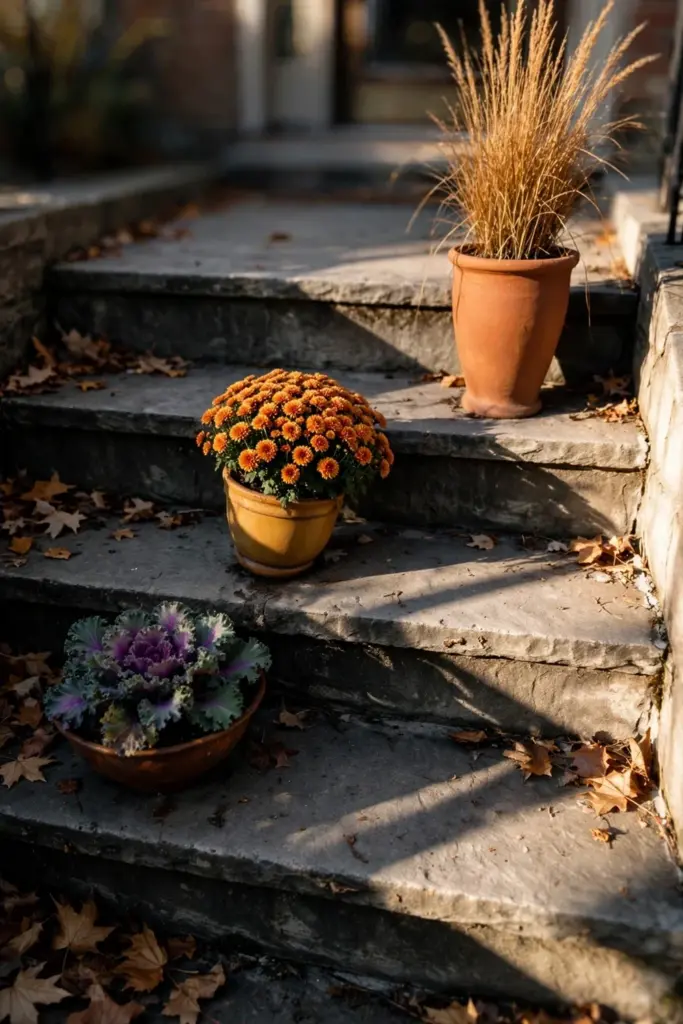
Anchor every pot against the railing or the wall. Steps funnel wind, and a gust down a stairwell topples a top-heavy mum pot. A pot that falls three steps breaks, and the soil stains the concrete.
Water the top pot first. It dries fastest, farthest from the hose, and highest in the wind. Work down the steps in order and you will not forget the thirsty one.
Tags: Thriller: grass (top) / mum (middle) | Filler: kale | Spiller: jenny | Sun: full sun | Frost: light frost
13. Group Odd Numbers and Vary the Heights
Cluster three or five pots together instead of lining them up like soldiers. Odd numbers read as a garden; even numbers read as a store display. Vary the pot heights by at least 15 cm so the group has a skyline.
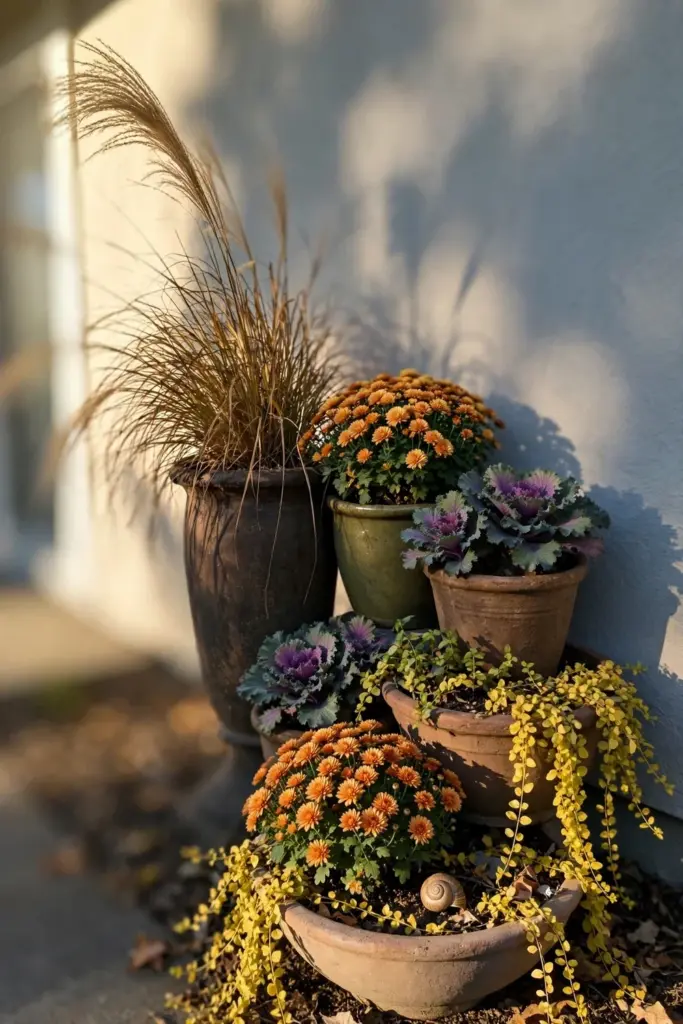
Set the tallest pot at the back of the group and the lowest in front. Every plant stays visible, and the watering can reaches the back pot without moving the front ones. Overlap the rims slightly so the group reads as one planting.
Leave 5 cm between pots for air. Pots jammed rim to rim trap moisture and grow mildew on the shaded sides. A finger-width gap is enough.
Tags: Thriller: mixed | Filler: mixed | Spiller: mixed | Sun: full sun | Frost: light frost
14. Dress the Entry Table With Small Pots
A small pot on the entry table, the bench, or the windowsill extends the porch inside the sightline. Use 15 cm pots with a single pansy clump, a small kale, or a trio of violas. Small pots dry fast, so these are the daily-water pots.
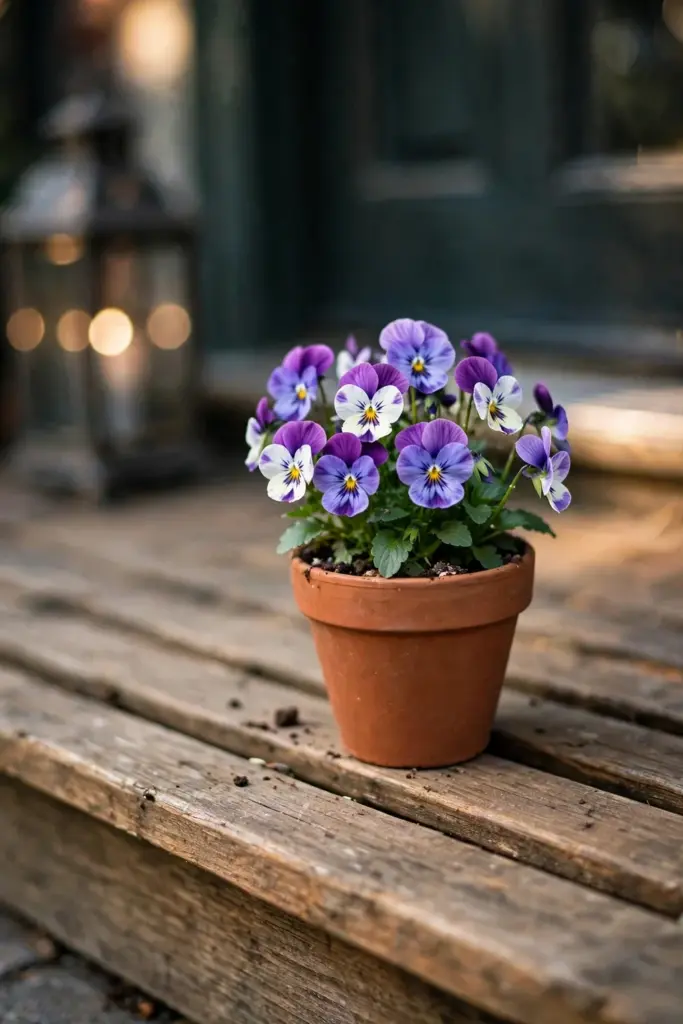
One small pot beats three tiny ones. A 10 cm pot holds almost no mix and dries by noon. Step up to 15 cm minimum and the planting survives a missed watering.
Bring tabletop pots inside on frost nights. They have no soil mass to buffer cold, and they freeze an hour before the big pots do. Set them by the door in the morning.
Tags: Thriller: none | Filler: pansy clump | Spiller: none | Sun: part shade | Frost: hard frost
15. Refresh Summer Pots Without Buying New Ones
Do not dump the whole pot. Pull the spent summer annuals, leave the thriller if it still looks good, and plug fall plants into the gaps. A fountain grass that survived summer becomes the thriller of the fall pot for free.
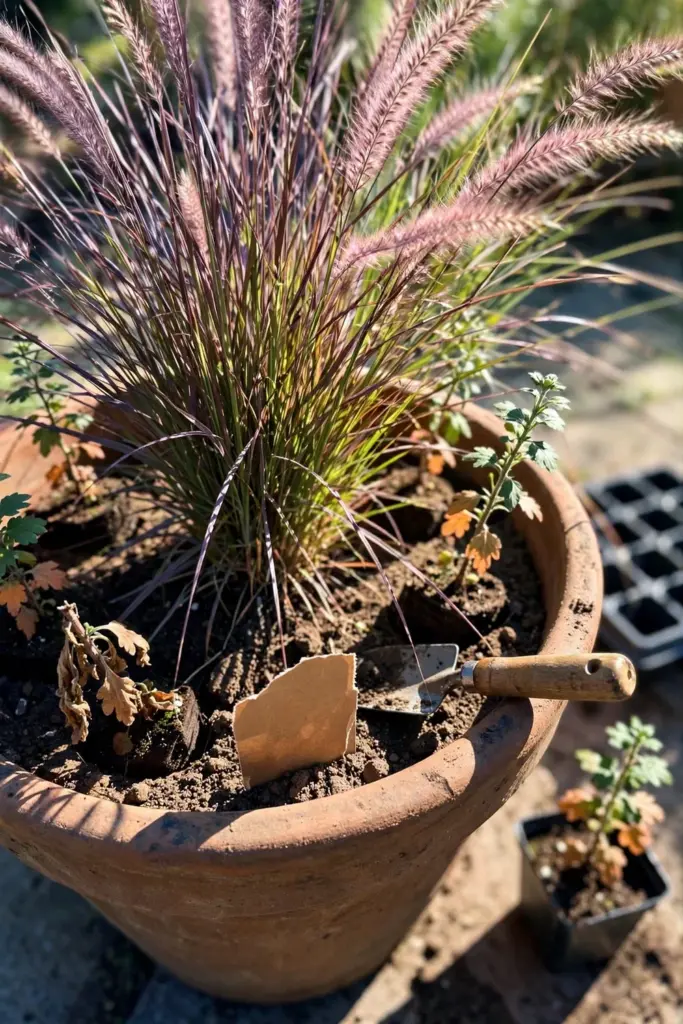
Top up with 5 cm of fresh potting mix before planting. Summer roots ate the nutrients and the mix has settled. Fresh mix on top gives the fall plants a clean start without a full repot.
Cut the old roots back by a third when you pull the spent plants. Matted root balls strangle new transplants. Tease the remaining roots apart with your fingers before setting the fall plants in.
Tags: Thriller: reused grass | Filler: fresh mums | Spiller: fresh ivy | Sun: full sun | Frost: light frost
16. Fill an Edible Planter With Kale, Chard, and Lettuce
Plant the pot you eat from. Curly kale goes in the center, rainbow chard rings it, and cut-and-come-again lettuce fills the edge. Every one of these takes frost, and the kale tastes sweeter after a cold night.
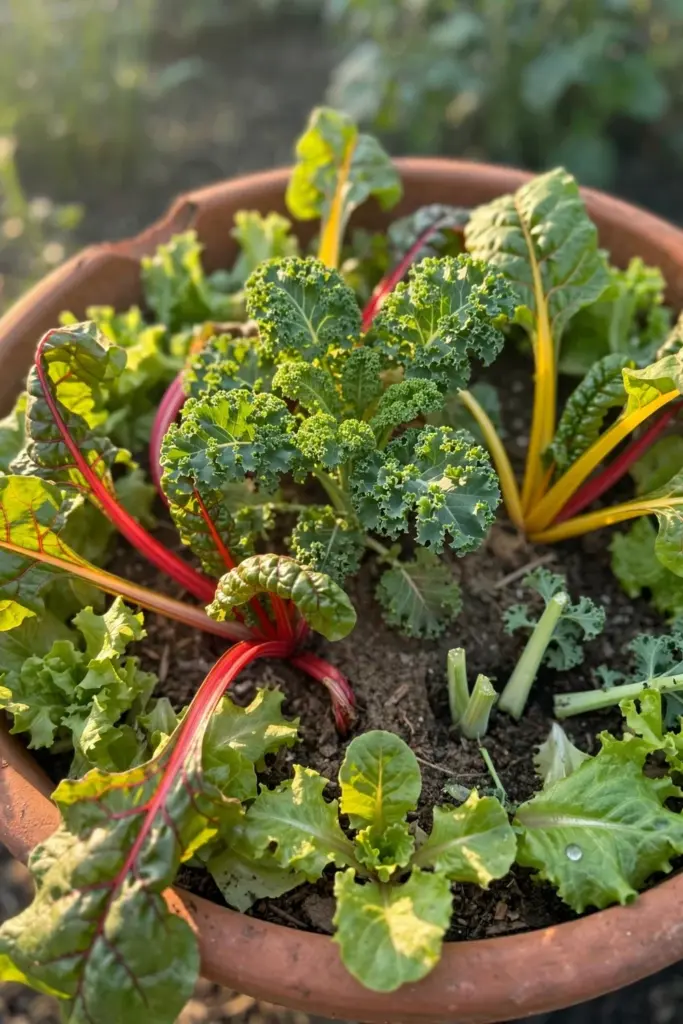
Sow lettuce seed directly into the pot in early September, 0.5 cm deep, and thin to 10 cm. Transplants of kale and chard go in the same week. The lettuce germinates in the shade of the transplants and takes over as they get harvested.
Harvest the outer leaves first and leave the crown. Kale and chard regrow from the center for weeks, so one careful picking session feeds salads into November in most zones.
The fall herbs to plant page lists the full herb palette for pots. Herbs want their own pot. They drink less than leafy greens, and sharing a pot means either drowned herbs or thirsty kale.
Tags: Thriller: curly kale | Filler: rainbow chard | Spiller: lettuce edge | Sun: full sun | Frost: hard frost
17. Go Faux When the Frost Wins
Say it plainly: some porches face north, sit in a wind tunnel, or belong to people who travel in October. A faux arrangement of dried grasses, preserved eucalyptus, and artificial mums in a heavy urn looks good from November to March with zero water. Honest fake beats dead real.
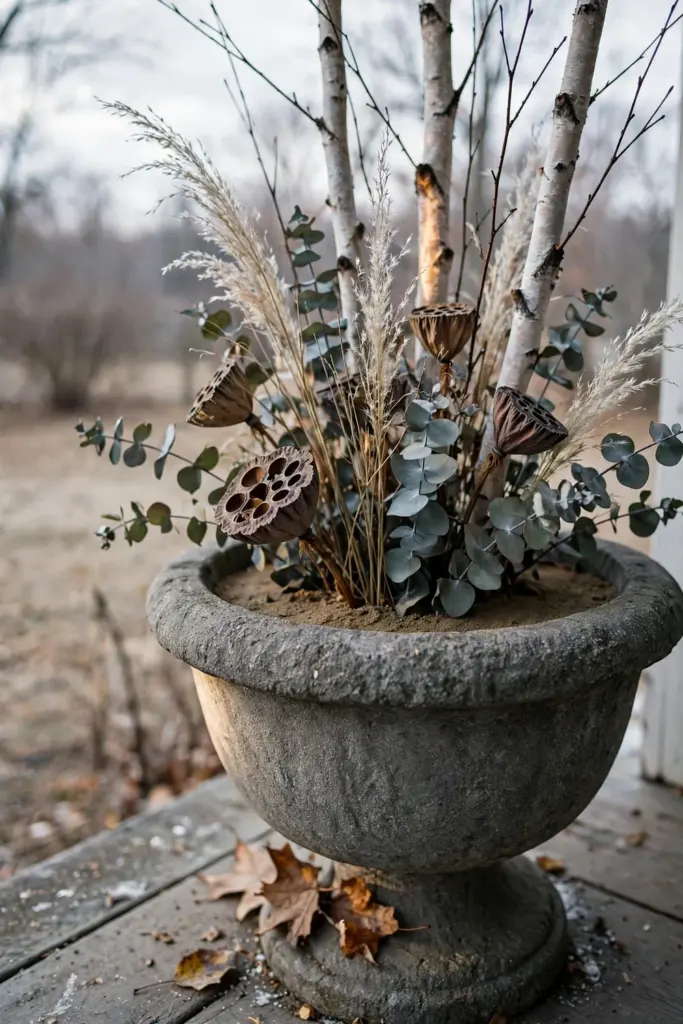
Buy the stems, not the pre-made ball. Loose dried grasses, lotus pods, and birch branches arranged in the urn look like a choice. A plastic mum ball from the craft aisle looks like a craft aisle.
Weight the urn well. Faux stems catch wind and have no soil mass to hold them. Fill the bottom third of the urn with sand before arranging, and the arrangement survives the season.
Tags: Thriller: dried grass stems | Filler: preserved eucalyptus | Spiller: none | Sun: any | Frost: all winter
18. Keep Planters Alive Through the First Frost
The first frost is a warning, not a funeral. Move pots against the house wall, where stored heat buys 2 to 3 degrees. Cluster small pots together so they shelter each other. Water the mix the afternoon before; wet soil holds heat better than dry soil.
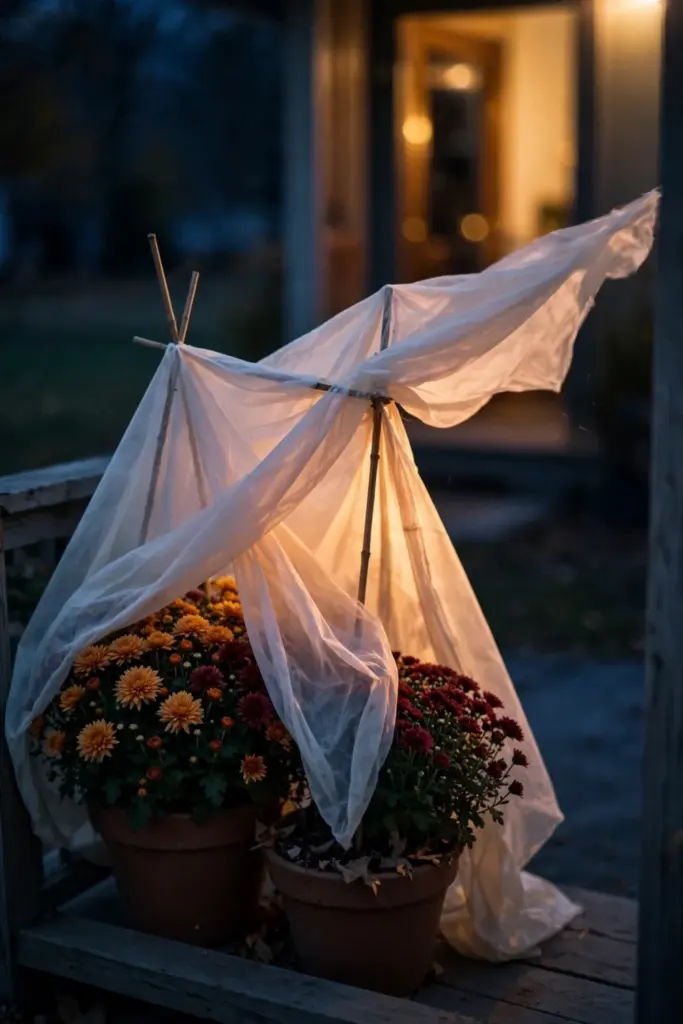
Cover with a bedsheet or frost cloth when the forecast drops below -2 C. Drape it over the whole pot so it traps ground warmth, and pull it off in the morning. Plastic sheeting touches leaves and freezes them; cloth does not.
Know what you are protecting. Pansies and kale take hard frost and need no cover. Mums, peppers, and celosia need the sheet. Match the effort to the plant, not the calendar.
Tags: Thriller: n/a | Filler: n/a | Spiller: n/a | Sun: n/a | Frost: protection how-to
19. Bridge to Winter With Evergreens and Branches
When the last mum fades, do not empty the pot. Pull the spent annuals and stick in cut evergreen boughs, red-twig dogwood stems, and birch branches. The pot goes from fall to winter in 20 minutes with no new plants.
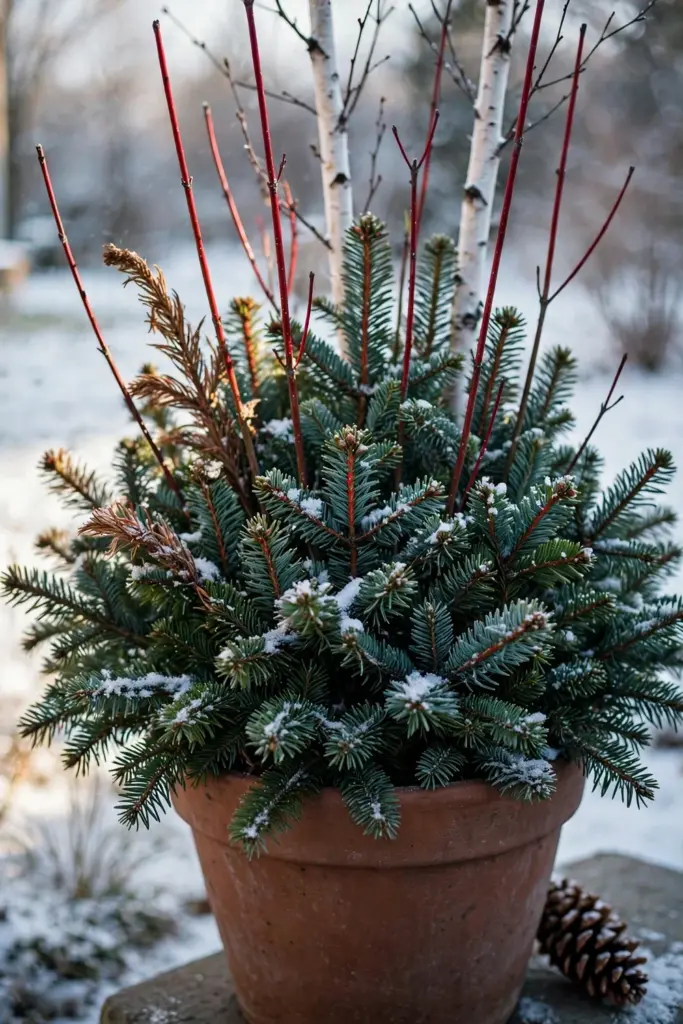
Push each stem 15 cm into the mix so wind cannot pull it out. Pack the stems tight; sparse winter pots look abandoned. Three boughs, five dogwood stems, and two birch branches fill a 35 cm pot.
Water the mix once after arranging, then leave it. Frozen mix holds the stems upright all winter. The arrangement comes out in March when the spring pot goes in.
Tags: Thriller: birch branches | Filler: evergreen boughs | Spiller: none | Sun: any | Frost: all winter
20. Feed the Pot Once, Then Stop
Mix a slow-release granular fertilizer into the potting mix at planting time, then stop feeding. Fall plants in pots need one meal to establish, not a season of snacks. Extra nitrogen in October grows soft leaves that frost kills.
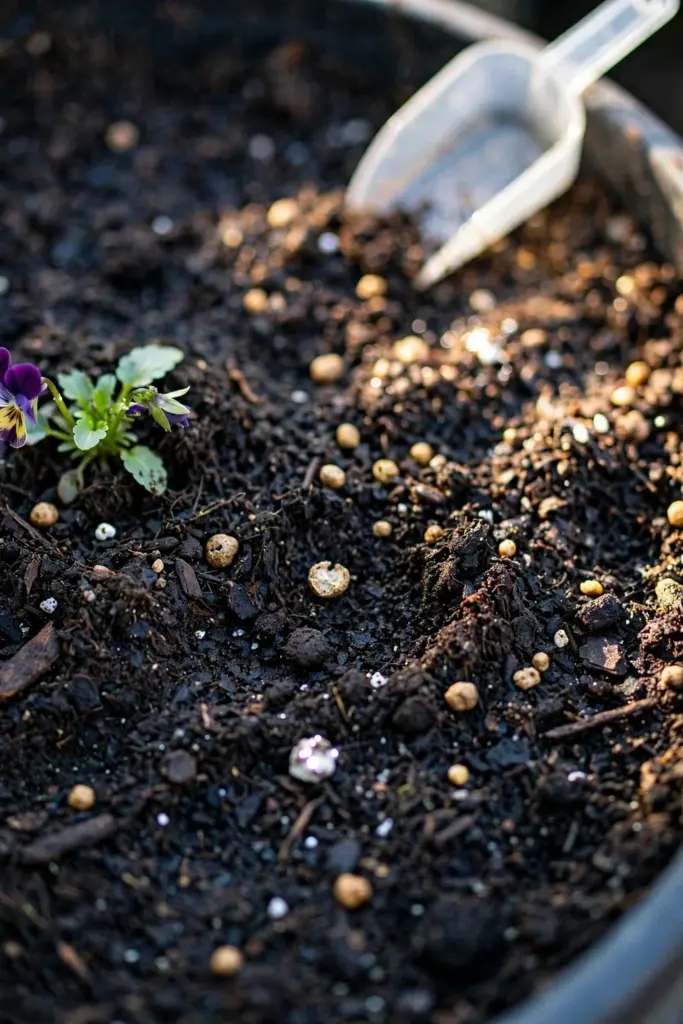
Use half the label rate. Pots concentrate fertilizer salts, and fall rain does not flush them the way summer storms do. Half rate feeds the plant without burning the roots.
Skip liquid feed after mid-October. The plants are slowing down, and liquid nitrogen pushes tender growth into the first freeze. One granular feeding at planting carries the pot to winter.
Tags: Thriller: n/a | Filler: n/a | Spiller: n/a | Sun: n/a | Frost: care how-to
21. Plan the Spring Swap Before You Forget
While the fall pot looks good, tuck 10 daffodil or tulip bulbs into the bottom of the mix, 15 cm deep. The fall annuals bloom above them now; the bulbs push through in March. One pot, two seasons, one planting.
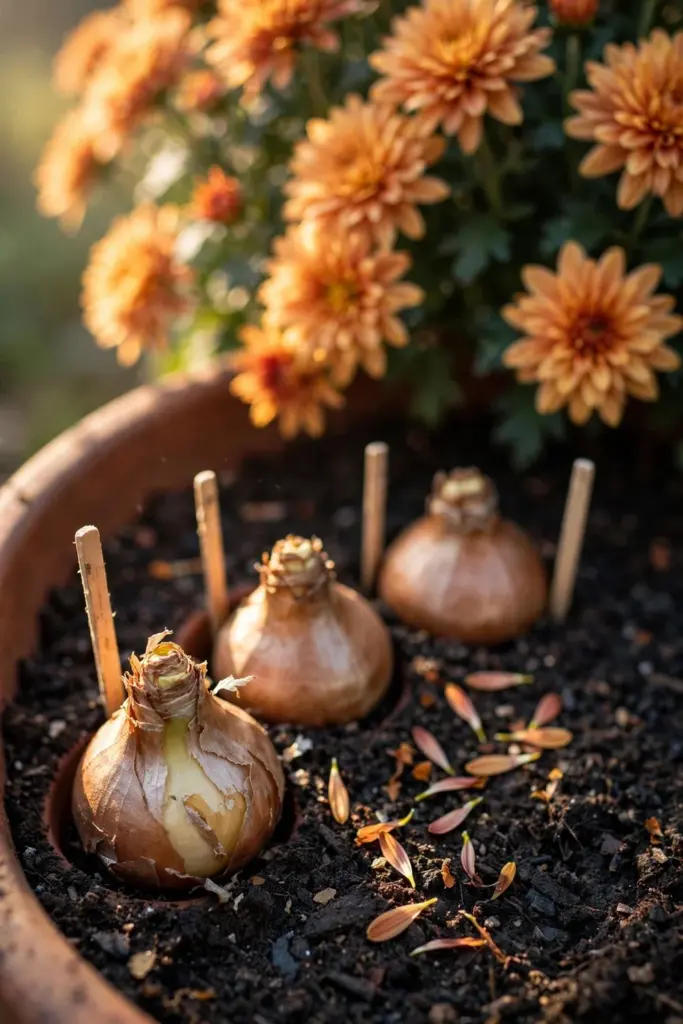
Mark the bulb spots with short sticks. In March you will forget where they are and stab them with the trowel. Three sticks in a triangle mark the zone well enough.
The bulbs to plant in fall page lists which bulbs suit containers and how deep each one goes. Daffodils forgive; tulips demand drainage.
Tags: Thriller: spring bulbs (dormant) | Filler: fall annuals | Spiller: n/a | Sun: full sun | Frost: overwinter
Build It Right the First Time
A good planter starts below the plants. Use a commercial soilless potting mix, not garden soil: the University of Georgia container guide recommends soilless mixes of peat moss with perlite or pine bark for drainage and aeration, and notes that garden soil compacts in pots and starves roots. Every pot needs a drainage hole. No hole, no planting.
Size the pot to the planting. A 35 cm pot holds a thriller, three fillers, and three spillers comfortably. A 25 cm pot holds one thriller and two fillers, and nothing more. Small pots dry out faster and blow over in wind, so go bigger than the nursery display suggests.
Fill the pot to 3 cm below the rim. That headroom holds water instead of spilling it down the porch. Press the mix firmly around each root ball, water until it drains, and top with 2.5 cm of fine bark mulch to slow drying.
Match the Pot to the Spot
Sun decides the planting more than taste does. A south-facing porch gets 6 or more hours of direct sun, which suits mums, grasses, peppers, and sedum. A north-facing entry gets reflected light only; plant pansies, violas, ferns, and heuchera there and skip the sun lovers entirely. Morning sun with afternoon shade is the kindest spot on the house and grows almost everything on this page.
Wind is the second decider. Stairwells, open corners, and the gap between houses funnel gusts that dry pots out and topple tall planters. Put the heavy urns and low bowls in the windy spots, and keep the tall grass planters where the house breaks the wind. A pot that rocks in its saucer needs a heavier pot or a more sheltered corner, not a bigger plant.
Group pots by thirst, not by looks. The terracotta bowl and the window box dry a day sooner than the big plastic urn. When the thirsty pots sit together, one watering pass serves them all. Scatter them across the porch and the dry ones get forgotten while the big pots get overwatered.
Mistakes That Kill Fall Planters
Planting into garden soil. It compacts, it drains badly, and it carries weed seed. Use soilless mix every time.
Buying mums in full bloom. Open flowers fade in a week. Buy tight buds and get three weeks of color instead of one.
Forgetting the drainage hole. The prettiest ceramic pot without a hole becomes a swamp by the second rain. Drill it or double-pot.
Watering on a schedule. Pots dry at different rates. Check the top 2.5 cm with a finger and water only when it is dry.
Feeding all fall. One granular feeding at planting is enough. Late nitrogen grows soft tissue that the first frost turns to mush.
Leaving pots in the wind. A stairwell or an open corner funnels gusts that topple tall planters. Anchor against the wall or the railing.
Frequently Asked Questions
What Should I Put in Planters for Fall?
Build around the thriller-filler-spiller formula: one tall center plant like a mum or fountain grass, mounding fillers like ornamental kale or pansies, and trailers like ivy or creeping jenny over the rim. Add a soilless potting mix, a drainage hole, and one granular feeding at planting. That formula carries a pot from September to first frost in most zones.
When Should I Plant Fall Containers?
Plant in September or early October, while soil temperatures still hold in the 45 to 65 F (7 to 18 C) band that cool-season roots need. Nursery shelves turn over to mums, kale, and pansies now, and planting early gives roots weeks to establish before hard frost. In zones 8 and warmer, October planting still works well.
How Do I Keep Fall Planters Looking Good?
Water when the top 2.5 cm of mix is dry, not on a schedule. Deadhead spent mum and aster blooms so energy goes to buds. Move pots against the house wall on frost nights and cover tender plants with cloth below -2 C. Pull spent summer annuals promptly so they do not shade the fall planting.
What Colors Work Best in a Fall Planter?
One dominant hue with one cool contrast reads best from the curb: rust-orange mums with silver dusty miller, or gold marigolds with blue-green kale. Warm colors carry fall, and a single cool note keeps them from blurring together. Limit the pot to two color families plus green for the cleanest look.
Can Fall Planters Survive Winter?
Some can. Pansies, ornamental kale, and evergreen boughs take hard frost and hold into winter in most zones. Mums, peppers, and celosia do not. For a winter look, pull the spent annuals in November and arrange cut evergreen boughs, red-twig dogwood, and birch branches in the same pot with no new planting.
Do I Need to Fertilize Fall Planters?
Once. Mix a slow-release granular fertilizer into the potting mix at planting time at half the label rate, then stop. Fall plants need one meal to establish roots, not ongoing feeding. Liquid nitrogen after mid-October pushes soft growth that the first freeze kills, so put the bottle away.
Start With One Pot
One pot done well beats five pots done tired. Build the mum-kale-ivy classic this weekend in the biggest pot you own, set it where the door view lands, and water it when the top 2.5 cm is dry. The rest of the porch can wait until the first pot proves the formula works.








