
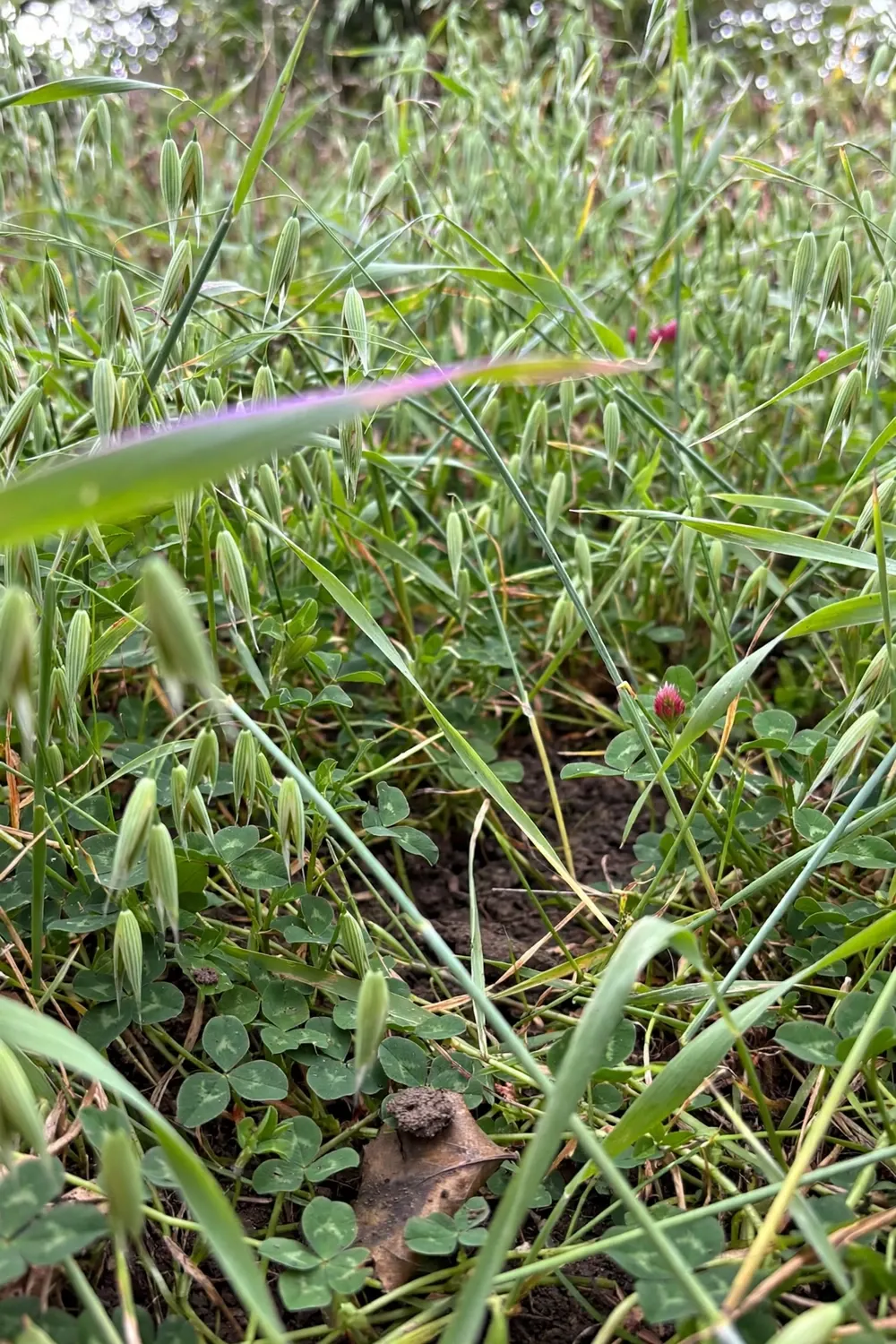

Sow 21 cover crops this fall: broadcast the seed after you pull the last summer crop, rake it in, and let the plants feed the soil all winter. That is cover crops for fall planting as a working list: 17 species tagged by winter habit, kill method, seed rate, and sowing window, plus the mixes worth sowing, how to kill the stand without herbicides, raised-bed fits, and zone-by-zone timing. The rest of this page is 21 entries, from the first nitrogen-fixing clover to the last state-by-state sowing window.
Work from the top if October is close. Sow the legumes first. They need the most warmth to establish before cold shuts them down. Broadcast before rain so the seed gets watered in for free. Kill every overwintering stand two to three weeks before you plant spring crops.
The broad fall plan is a different job. That lives on the site’s fall gardening tips. The one-paragraph cover crop mention inside the planting calendar is a different job too. That lives on fall planting guide. Bed preparation as a whole (soil tests, compost, mulch) is a different job handled in the bed-prep guide, which holds cover crops to one section and points here for the full list. This page stays on the deep dive: every species with its tags, mixes that work, and how to kill the stand without herbicides.
How to Read the Tags on Every Cover Crop
Each of the 17 species entries carries the same four tags so you can scan instead of guess. Winter habit tells you whether the plant dies on its own in winter or survives to spring, because that decides whether you must kill it. Kill it names the no-herbicide method that works: winter-kill, chop-and-drop, tarping, or digging in. Sow gives the broadcast seed rate per acre with the home-garden equivalent per 100 square feet in parentheses. Timing gives the sowing window relative to your first hard frost. Seed rates below are standard extension broadcast figures (drilled rates run lower), and winter-kill thresholds follow UMass Extension vegetable notes, SARE’s Managing Cover Crops Profitably, and USDA NRCS mix baselines. Legumes need the right rhizobia inoculant on the seed or they fix almost no nitrogen. Buy the inoculant with the seed. It costs little and decides the whole job.
Winter-Kill vs Overwinter: the Comparison Table
This is the decision the whole article hangs on. Winter-kill species die on their own and leave a mulch you plant straight into. Overwintering species survive and must be killed in spring, but they give you living roots all winter and the most biomass.
| # | Cover Crop | Winter Habit | Kill Method | Sow (Broadcast) |
|---|---|---|---|---|
| 1 | Crimson clover | Winter-kills zone 5 and colder; overwinters 6-8 | Chop-and-drop or rake out | 15-20 lb/acre (about 3/4 oz per 100 sq ft) |
| 2 | Hairy vetch | Overwinters to about -20F | Mow at early bloom, tarp regrowth | 25-40 lb/acre (about 1-1.5 oz per 100 sq ft) |
| 3 | Austrian winter peas | Overwinters to about 10F | Chop-and-drop | 40-80 lb/acre (about 1.5-3 oz per 100 sq ft) |
| 4 | Red clover | Overwinters zone 4 and warmer | Mow, then dig in | 10-15 lb/acre (about 1/2 oz per 100 sq ft) |
| 5 | Fava beans | Winter-kills below about 20F | Chop-and-drop | 80-150 lb/acre (about 3-5.5 oz per 100 sq ft) |
| 6 | Winter rye | Overwinters to about -30F | Mow or crimp at flowering | 90-120 lb/acre (about 3-4.5 oz per 100 sq ft) |
| 7 | Oats | Winter-kills below about 20F | None; rake the mulch flat | 80-110 lb/acre (about 3-4 oz per 100 sq ft) |
| 8 | Annual ryegrass | Overwinters zone 6 and warmer | Mow short, then tarp | 20-30 lb/acre (about 3/4-1 oz per 100 sq ft) |
| 9 | Winter wheat | Overwinters to about -15F | Mow at flowering | 90-160 lb/acre (about 3-6 oz per 100 sq ft) |
| 10 | Triticale | Overwinters to about -20F | Mow at flowering | 90-100 lb/acre (about 3-3.5 oz per 100 sq ft) |
| 11 | Tillage radish | Winter-kills below about 20F | None; roots rot in place | 12-20 lb/acre (about 1/2-3/4 oz per 100 sq ft) |
| 12 | Mustard | Winter-kills below about 25F | Chop at flowering, dig in | 10-15 lb/acre (about 1/3-1/2 oz per 100 sq ft) |
| 13 | Turnips | Tops die about 15F | None; rake tops flat | 10-12 lb/acre (about 1/3-1/2 oz per 100 sq ft) |
| 14 | Forage kale | Overwinters to about 10F | Chop-and-drop | 8-14 lb/acre (about 1/3-1/2 oz per 100 sq ft) |
| 15 | Buckwheat | Dies at first frost, 32F | None; mow if flowering | 50-70 lb/acre (about 2-2.5 oz per 100 sq ft) |
| 16 | White clover | Overwinters zone 3 and warmer | Mow, smother, or dig out | 5-10 lb/acre (about 1/4-1/3 oz per 100 sq ft) |
| 17 | Camelina | Overwinters to about -20F | Chop-and-drop | 5-8 lb/acre (about 1/4 oz per 100 sq ft) |
Nitrogen Fixers: Legumes That Feed the Next Crop
Legumes pull nitrogen from the air and bank it in the soil. They are the only cover crops that add fertility instead of just holding it. Bagged fertilizer is a different job. That lane belongs to best fertilizer for fall vegetables. This page stays on the living kind. Inoculate every legume seed. Without the right rhizobia strain, the nodules never form and the nitrogen never arrives.
1. Sow Crimson Clover for Early Spring Nitrogen
Winter habit: winter-kills in zone 5 and colder; overwinters in zones 6 to 8. Kill it: chop-and-drop at early bloom, or rake out the winter-killed residue. Sow: 15 to 20 lb per acre broadcast (about 3/4 oz per 100 sq ft). Timing: 6 to 8 weeks before first hard frost.

Crimson clover is the prettiest nitrogen fixer you can sow. A good stand pays back 70 to 150 lb of nitrogen per acre to the following crop, according to SARE’s crimson clover guide. The crimson flower heads feed early pollinators too, which is a bonus no bagged fertilizer offers.
North of zone 6, treat it as a winter-killed annual like oats. SARE notes it is gaining popularity exactly that way in zone 5 and colder: planted in late summer, it covers ground and fixes nitrogen, then dies and leaves an easy spring seedbed. South of that line it overwinters, so mow it at early bloom before it sets hard seed.
2. Grow Hairy Vetch for Maximum Nitrogen
Winter habit: overwinters to about -20F; the hardiest common legume. Kill it: flail-mow or chop at early bloom, then tarp any regrowth for two weeks. Sow: 25 to 40 lb per acre broadcast (about 1 to 1.5 oz per 100 sq ft). Timing: 6 to 8 weeks before first hard frost; late July to early August in the north.
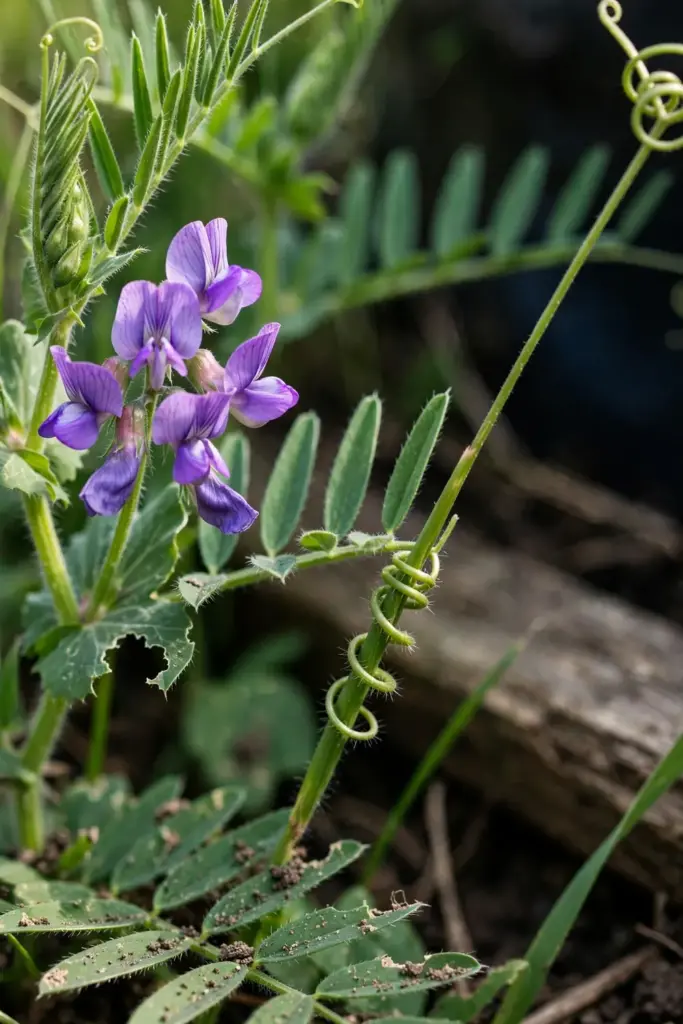
Hairy vetch is the nitrogen king of fall cover crops. As a rule of thumb, credit it with two to three pounds of nitrogen per acre per sunny day once full spring growth begins, and mow it at early bloom, which SARE’s hairy vetch guide puts at 10 to 25 percent flowering. A vigorous stand can bank as much as 135 lb of nitrogen per acre with 4,000 to 7,000 lb of aboveground biomass, per Arkansas Extension cover-crop material. Drill it at 40 lb per acre if you want the full stand; broadcast runs a little thinner.
The catch is spring management. Vetch killed too early gives up nitrogen; killed too late it sets seed and becomes a weed. Mow it at early bloom, and be ready to mow or tarp again where it regrows. SARE’s guide is blunt about this: have a second pass planned before you sow.
3. Plant Austrian Winter Peas Where Vetch Would Tangle
Winter habit: overwinters to about 10F; winter-kills in colder zones. Kill it: chop-and-drop; the hollow stems collapse fast. Sow: 40 to 80 lb per acre broadcast (about 1.5 to 3 oz per 100 sq ft). Timing: 6 to 8 weeks before first hard frost.
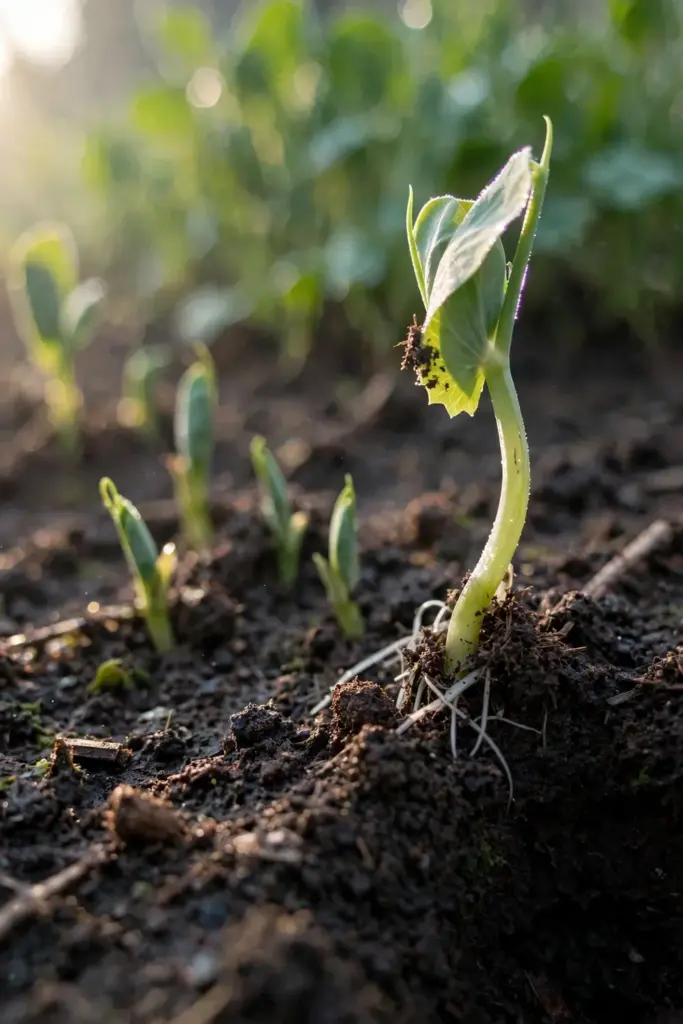
Austrian winter peas fix nitrogen like vetch but die easier and handle easier. The vines are hollow and brittle, so they chop down with shears and melt into the soil within weeks. The University of Delaware recommends 40 lb per acre for Austrian winter peas in cover crop work. That is a big seed, so the per-100-square-foot scoop looks alarming. It is correct. Peas are heavy.
Sow peas where you want nitrogen but dread vetch’s spring wrestling match. They are the polite legume. In zones 6 and warmer they overwinter and bloom early; in colder zones they winter-kill and still leave fixed nitrogen in the root zone.
4. Frost-Seed Red Clover Into Tired Beds
Winter habit: overwinters in zone 4 and warmer; behaves as a short-lived perennial. Kill it: mow close, then dig the crowns out with a fork. Sow: 10 to 15 lb per acre broadcast (about 1/2 oz per 100 sq ft). Timing: late summer, or frost-seed onto frozen ground in late winter.

Red clover is the patient legume. It establishes slowly in fall, then explodes in spring with deep taproots and a long bloom. USDA guidance for Pennsylvania lists 10 lb per acre drilled for red clover, with broadcast rates adjusted upward by about half. The small seed goes a long way, which makes it one of the cheapest covers per bed.
Use it where a bed will rest a full season, not where spring vegetables are waiting. Red clover’s strength is persistence, and persistence is exactly what you do not want in front of April transplants. Mow it before it flowers if you must kill it young.
5. Sow Fava Beans as a Big-Seed Legume
Winter habit: winter-kills below about 20F; overwinters in zones 7 and warmer. Kill it: chop-and-drop; the thick stems need shears, not a rake. Sow: 80 to 150 lb per acre broadcast (about 3 to 5.5 oz per 100 sq ft). Timing: 8 weeks before first hard frost; needs a long fall.
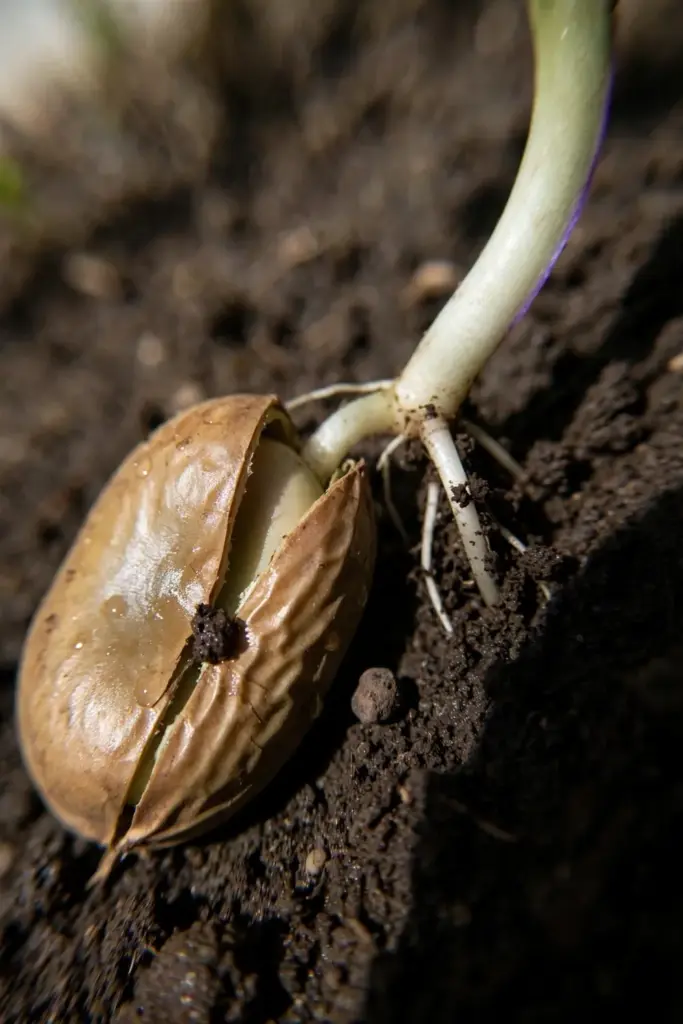
Fava beans are the heavyweight legume: huge seed, huge biomass, huge nitrogen potential where the fall is long enough. Small-seeded varieties survive colder weather than the big broad-bean types, so read the packet. In mild-winter regions they overwinter and bloom in early spring, feeding pollinators when little else does.
The seed cost stings, so reserve favas for beds that need maximum organic matter, not for every empty corner. One bed of favas, chopped in spring, can transform heavy soil in a single season.
Biomass and Weed Suppression: Grasses That Smother
Grasses fix no nitrogen. They earn their place another way: they scavenge leftover fertilizer, smother weeds, hold soil against winter rain, and build organic matter fast. Sow a grass wherever the previous crop was a heavy feeder. The grass catches what the vegetables left behind.
6. Plant Winter Rye, the Cold-Proof Workhorse
Winter habit: overwinters to about -30F; the hardiest cover crop there is. Kill it: mow or crimp at flowering; never let it set seed. Sow: 90 to 120 lb per acre broadcast (about 3 to 4.5 oz per 100 sq ft). Timing: before September 15 in the north; tolerates sowing up to 2 weeks before a killing frost.
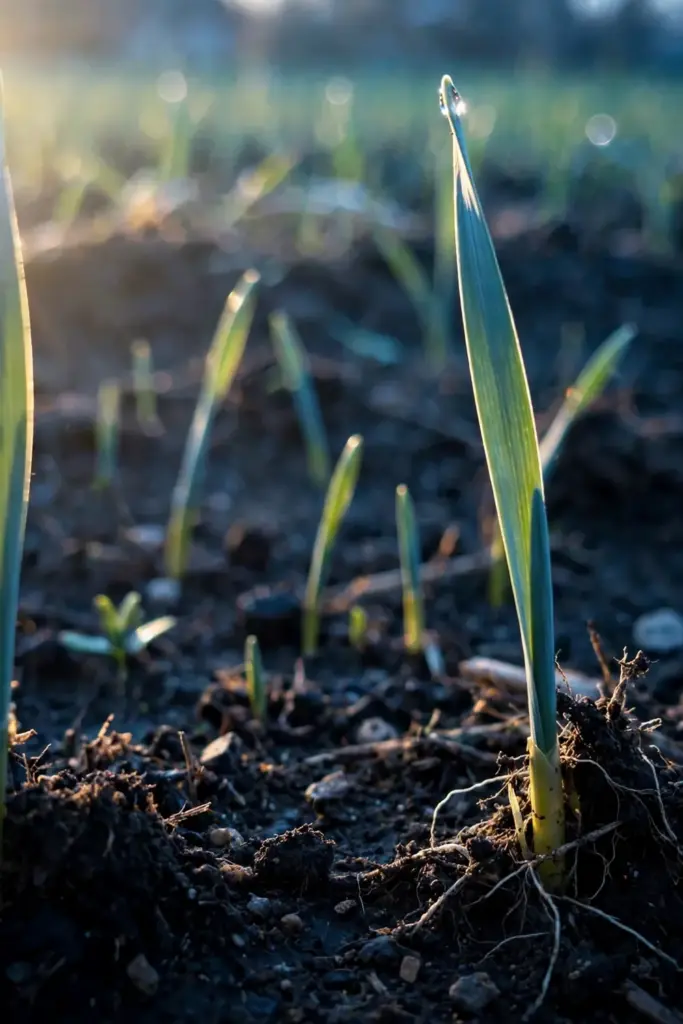
Winter rye grows when nothing else will. UMass Extension calls it the most common cover crop in Massachusetts for good reason: it establishes in cold soil, scavenges nitrogen all winter, and can produce up to 7,000 lb of biomass per acre by spring. UMass lists 90 to 120 lb per acre broadcast, or 50 to 60 lb mixed with a legume.
Two cautions. Rye residue is allelopathic: it suppresses germination of small-seeded crops sown right after it. Kill it two to three weeks before planting, and transplant rather than direct-seed into rye ground. And never let it head out. Rye seed in the bed becomes rye weeds for years.
7. Broadcast Oats for a Winter-Killed Mulch
Winter habit: winter-kills below about 20F; the classic no-kill cover. Kill it: none. Rake the dead mulch flat in spring and plant through it. Sow: 80 to 110 lb per acre broadcast (about 3 to 4 oz per 100 sq ft). Timing: 6 to 8 weeks before first hard frost; needs fall growth to matter.
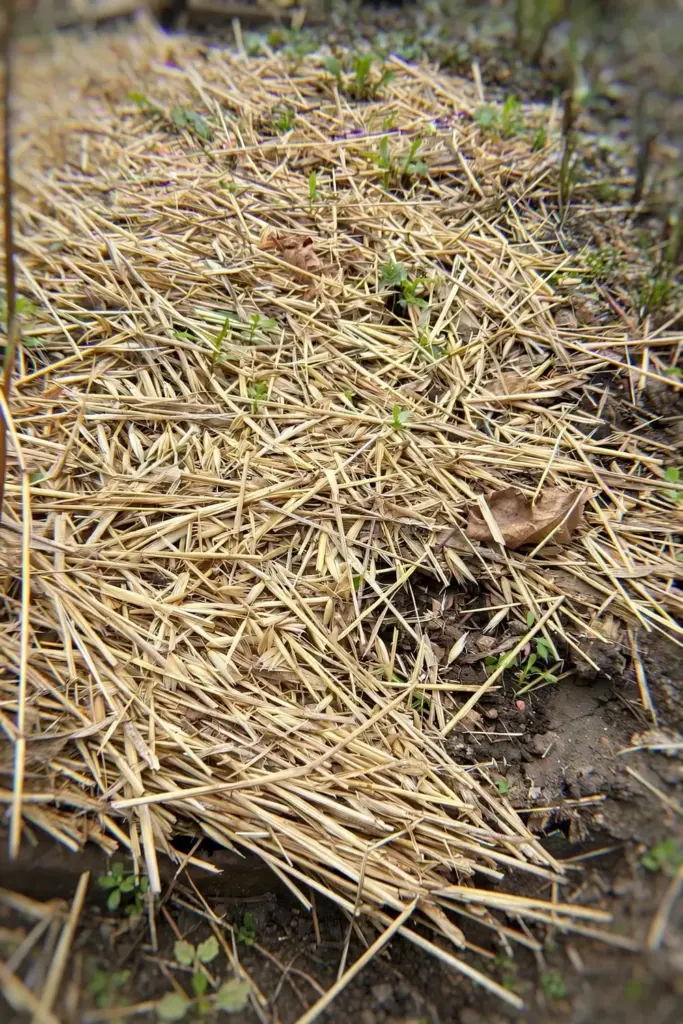
Oats are the lazy gardener’s cover crop, and that is a compliment. They grow fast in fall, die cleanly in winter, and leave a mat of straw-colored mulch that suppresses spring weeds without any termination work. No mowing, no tarping, no wrestling.
The trade is nitrogen. Oats scavenge it but release it slowly, and a thick oat mat can tie up nitrogen as it decomposes. Pull the mulch aside from planting holes, or add a nitrogen source at planting time. For a first cover crop in a new bed, oats are the safest possible start.
8. Sow Annual Ryegrass for Quick Fall Cover
Winter habit: overwinters in zone 6 and warmer; winter-kills in colder zones. Kill it: mow very short in spring, then tarp for two weeks. Sow: 20 to 30 lb per acre broadcast (about 3/4 to 1 oz per 100 sq ft). Timing: 6 to 8 weeks before first hard frost.
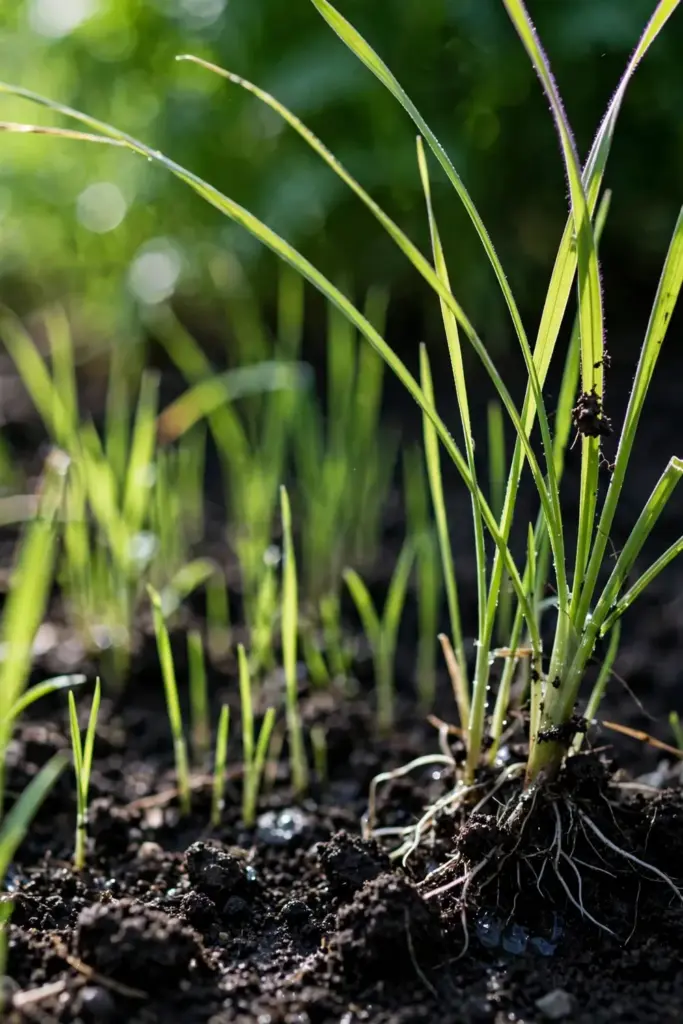
Annual ryegrass germinates fast and covers ground fast, with a dense fibrous root system that holds soil like mesh. UMass lists 20 to 30 lb per acre broadcast, or 8 to 15 lb mixed with a legume. The small light seed needs firm seed-to-soil contact, so rake it in or walk the bed after broadcasting.
Do not confuse it with perennial ryegrass, which is harder to kill and will haunt the bed. Buy seed labeled annual or Italian ryegrass. In warm zones it overwinters and must be killed decisively; a half-hearted mowing just makes it angry.
9. Drill Winter Wheat as a Gentler Rye
Winter habit: overwinters to about -15F. Kill it: mow at flowering. Sow: 90 to 160 lb per acre broadcast (about 3 to 6 oz per 100 sq ft). Timing: late summer to early fall; before September 15 in the north.
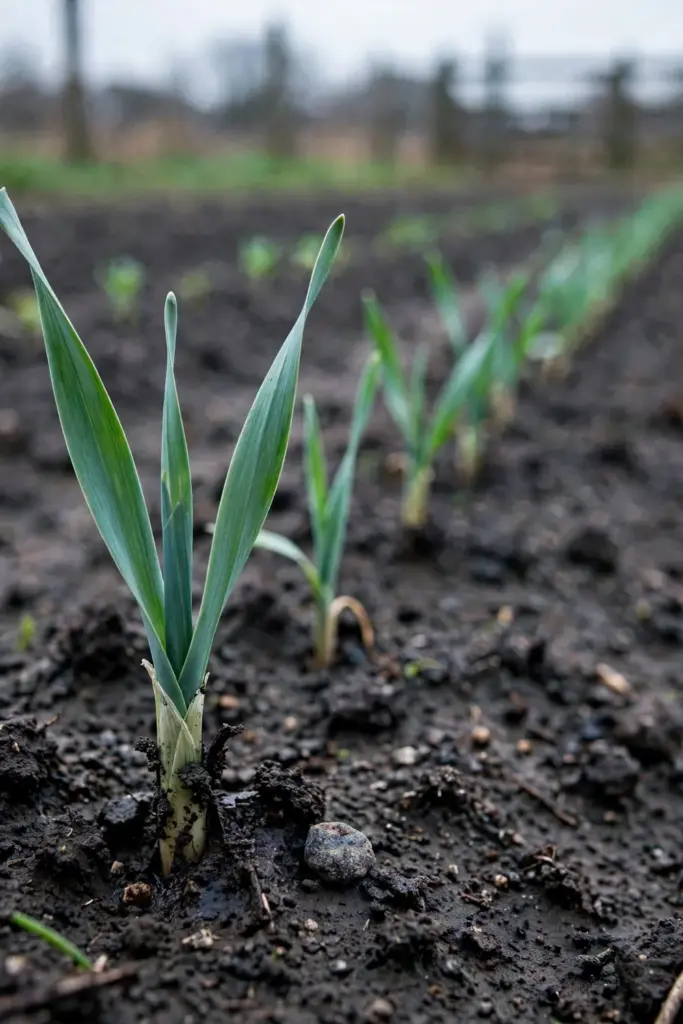
Winter wheat does rye’s jobs with less attitude. It scavenges nitrogen, phosphorus, and potassium, controls erosion, and builds organic matter, but it does not grow as tall or mature as quickly as rye, so there is no spring rush to kill it before it gets out of hand. UMass lists 90 to 160 lb per acre broadcast, or 60 to 90 lb mixed with a legume.
Wheat is also the better nurse crop for legumes. Its upright, open growth shelters young clover and vetch without smothering them. If you want a rye-vetch style mix with easier spring management, wheat plus hairy vetch is the calmer combination.
10. Try Triticale for Rye Vigor Without the Edge
Winter habit: overwinters to about -20F, between rye and wheat. Kill it: mow at flowering. Sow: 90 to 100 lb per acre broadcast (about 3 to 3.5 oz per 100 sq ft). Timing: as early as August; makes more fall growth than wheat.
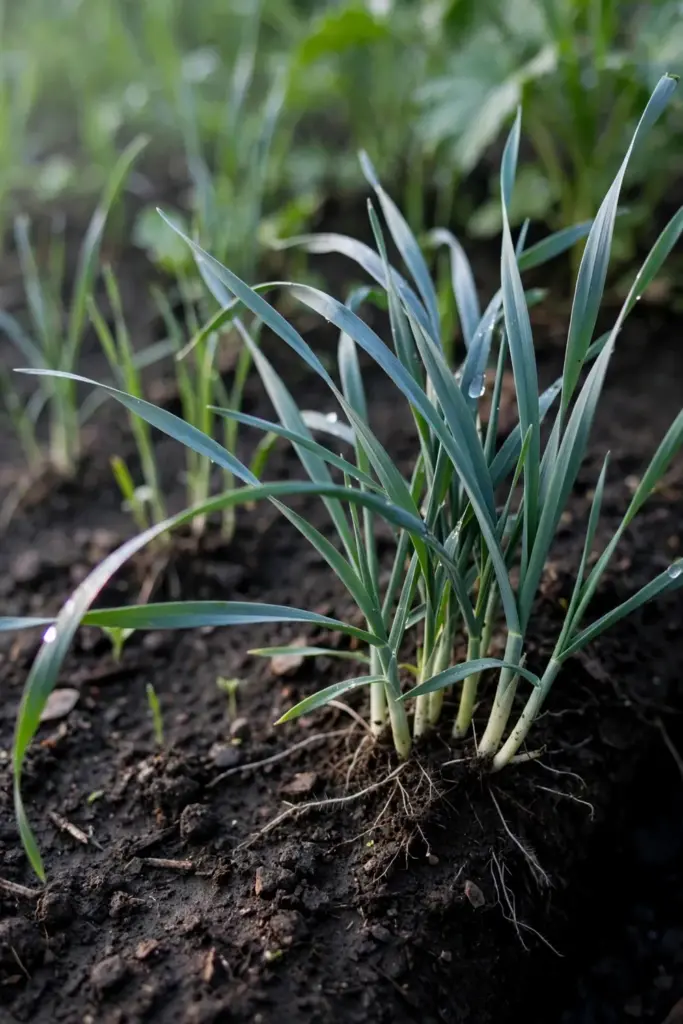
Triticale is the rye-wheat hybrid, and it behaves like the best of both: rye’s fall vigor and weed suppression with wheat’s easier spring manners. UMass notes it can be seeded as early as August and outgrows winter wheat in fall, giving more erosion control and weed suppression. Rates run 90 to 100 lb per acre broadcast, or 60 to 90 lb mixed with a legume.
It is less common in garden seed racks than rye or wheat, so order early. Where you find it, it is the thinking gardener’s grass: all the biomass, less of the allelopathy drama.
Compaction Relief: Brassicas That Drill Down
Brassicas punch taproots through compacted layers, scavenge nutrients from deep in the profile, and die in winter to leave channels that spring roots follow. They are the cover crops for beds with a hard pan or years of foot traffic.
11. Drop Tillage Radish to Break Compaction
Winter habit: winter-kills below about 20F; roots rot in place. Kill it: none. Let the roots decompose and leave their channels. Sow: 12 to 20 lb per acre broadcast (about 1/2 to 3/4 oz per 100 sq ft). Timing: late summer, after daytime averages drop below 80F.
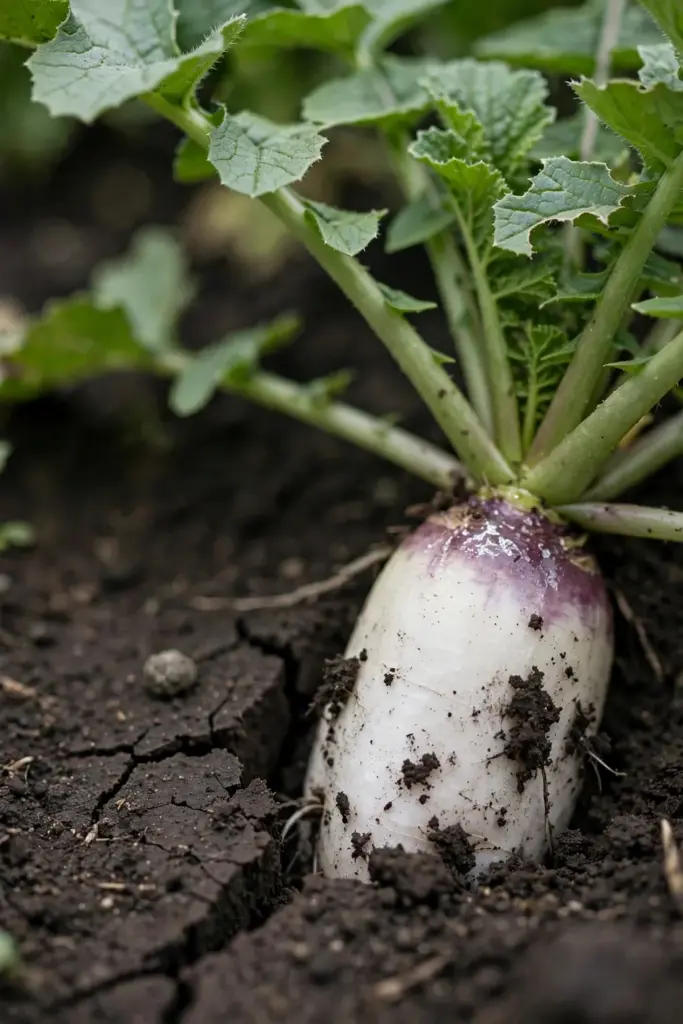
Tillage radish (daikon type) grows a root like a white baseball bat, sometimes 30 cm or more deep, then winter-kills and rots, leaving a ready-made channel for spring roots and rainfall. UMass Extension lists 8 to 12 lb per acre drilled or 12 to 20 lb broadcast, planted in late summer or early fall once daytime averages fall below 80F. A little seed goes a very long way.
Sow it thin. Overcrowded radishes make skinny roots and no compaction relief. And keep it away from spring brassica plantings in the rotation; it shares their pests.
12. Sow Mustard for Biofumigation
Winter habit: winter-kills below about 25F. Kill it: chop at early flowering and dig the residue in immediately. Sow: 10 to 15 lb per acre broadcast (about 1/3 to 1/2 oz per 100 sq ft). Timing: late August through September.
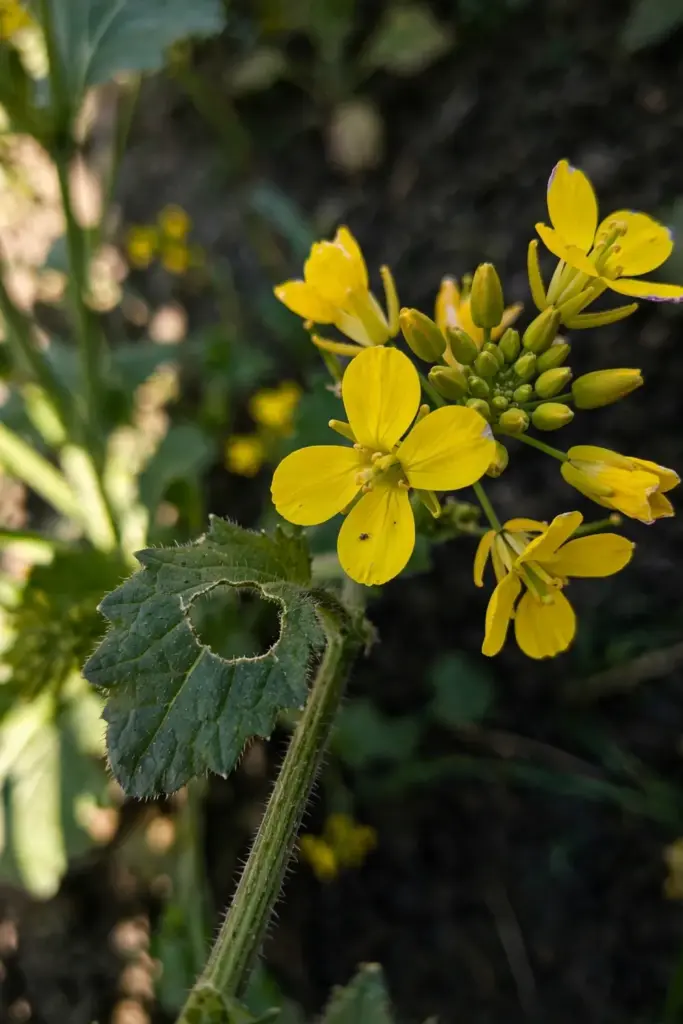
Mustard does something no other cover crop does: when chopped at flowering and incorporated, it releases compounds that act as a natural fumigant against soil-borne disease organisms. The same fact sheet’s biofumigation guidance says to plant in late August through September at 10 to 15 lb per acre broadcast, allow flowering, then mow and incorporate promptly and water it in.
This is the one cover crop where incorporation timing matters more than the sowing. Chop too early and the chemistry never develops; chop too late and you get mustard seed everywhere. Watch for the first open flowers, then act that week.
13. Broadcast Turnips for Cheap Biomass
Winter habit: tops die around 15F; roots may survive mild winters. Kill it: none needed where tops winter-kill; rake them flat. Sow: 10 to 12 lb per acre broadcast (about 1/3 to 1/2 oz per 100 sq ft). Timing: fall, after daytime averages drop below 80F.
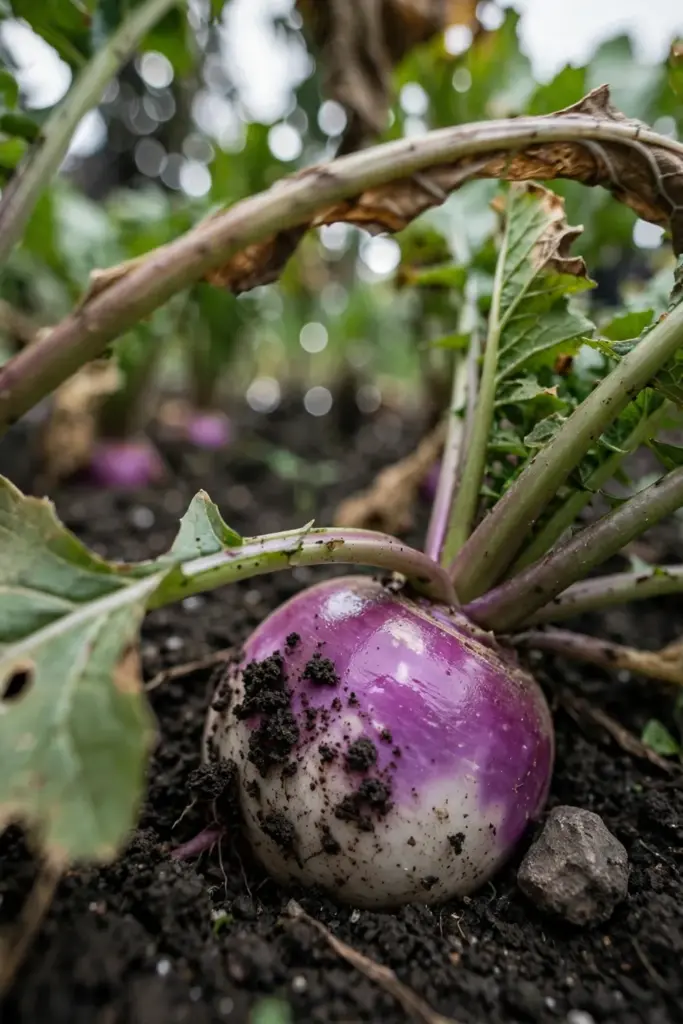
Turnips are the budget brassica: big leaves for surface cover, big roots for soil structure, tiny seed cost. Arkansas Extension material credits turnip stands with 1,000 to 6,500 lb of biomass per acre and notes they perform well even in poorly drained soils where other covers sulk. UMass lists 4 to 7 lb per acre drilled or 10 to 12 broadcast.
The residue decomposes very fast, so turnips give short-lived surface cover. Pair them with a grass if you need mulch that lasts into May.
14. Plant Forage Kale for Late Cover
Winter habit: overwinters to about 10F; hardy leaves persist. Kill it: chop-and-drop in spring; stems are fibrous. Sow: 8 to 14 lb per acre broadcast (about 1/3 to 1/2 oz per 100 sq ft). Timing: late summer to early fall.
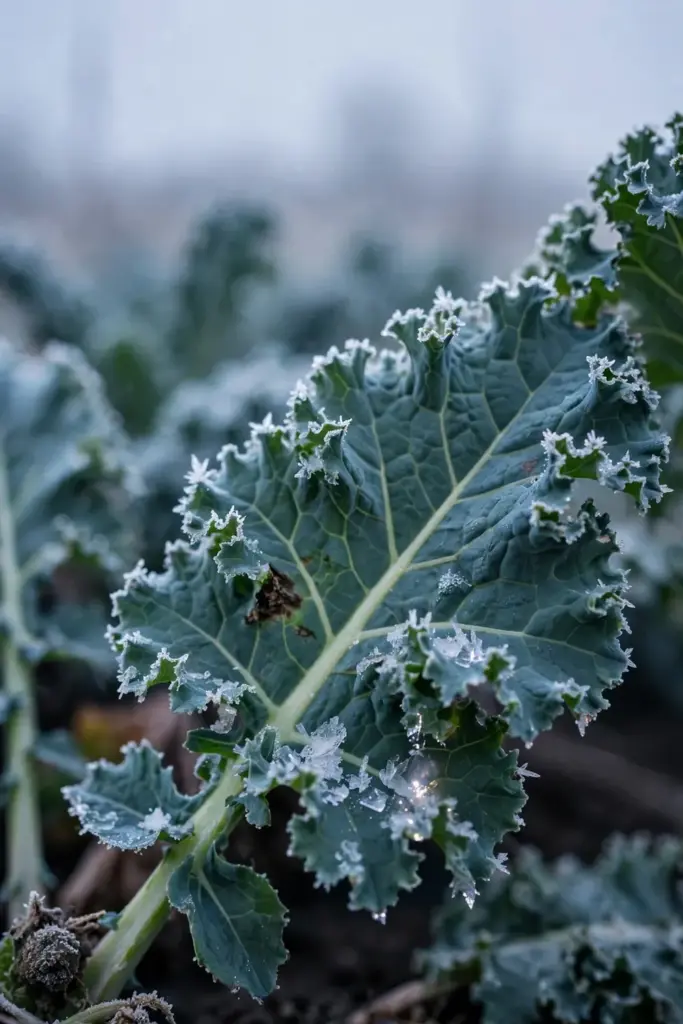
Forage kale is the brassica for gardeners who want winter interest with their soil improvement. The leaves stand through cold that kills mustard and radish, holding soil and feeding wildlife, then resume growth in spring for an early chop-and-drop mulch. Sow it at rapeseed-like rates; the seed is small and the seedlings compete well.
It shares pests with every other brassica, so keep it out of beds slated for spring cabbage, broccoli, or kale. Rotation discipline matters more with brassica covers than with any other group.
Fast Fillers and Living Mulch
These three stand outside the big groups. Each solves a specific fall problem: buckwheat covers ground faster than anything, white clover lives between your crops, and camelina survives cold on almost no seed.
15. Sow Buckwheat for the Fastest Cover
Winter habit: dies at the first frost, 32F; the original winter-kill cover. Kill it: none, unless it flowers, then mow before seed sets. Sow: 50 to 70 lb per acre broadcast (about 2 to 2.5 oz per 100 sq ft). Timing: 6 to 8 weeks before first frost; needs warm soil.
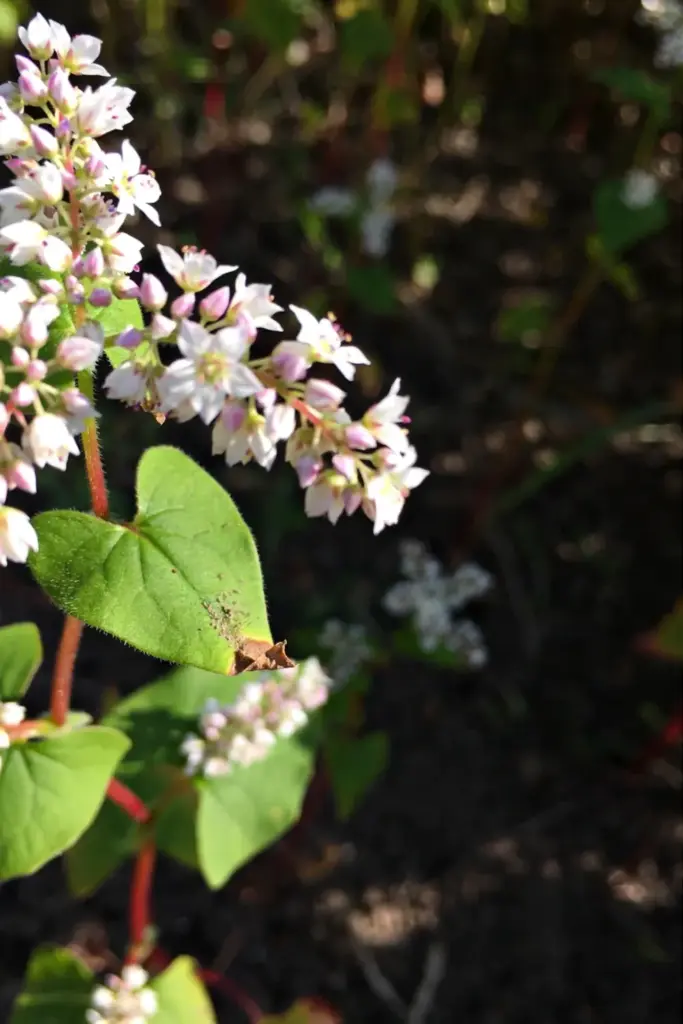
Buckwheat is the fastest cover crop from seed to bloom, and it smothers weeds while it does it. UMass Extension calls it the best choice when weed suppression is the main goal, lists 50 lb per acre drilled or 70 broadcast, and warns to mow at flowering to prevent volunteers. It also scavenges phosphorus and makes it available to the next crop.
The catch is the calendar. Buckwheat needs warmth, so in northern zones it is an August cover, not an October one. Sow it the day the summer crop comes out. Every week of delay costs biomass.
16. Keep White Clover as Living Mulch
Winter habit: overwinters in zone 3 and warmer; effectively perennial. Kill it: mow repeatedly, smother with tarp, or dig crowns out. Sow: 5 to 10 lb per acre broadcast (about 1/4 to 1/3 oz per 100 sq ft). Timing: late summer, or frost-seed in late winter.

White clover is not a winter cover so much as a permanent understory. Sow it between rows or around perennials and it fixes nitrogen, feeds pollinators, and outcompetes weeds year after year. The seed is tiny and cheap; a little covers a lot of path.
The permanence is the point and the problem. White clover does not leave when you want the bed back. Use it in paths, orchard understories, and perennial borders, never in annual vegetable rotations unless you enjoy digging.
17. Sow Camelina for a Cold-Hardy Small Seed
Winter habit: overwinters to about -20F as a winter annual. Kill it: chop-and-drop; the thin stems collapse easily. Sow: 5 to 8 lb per acre broadcast (about 1/4 oz per 100 sq ft). Timing: late summer to early fall.
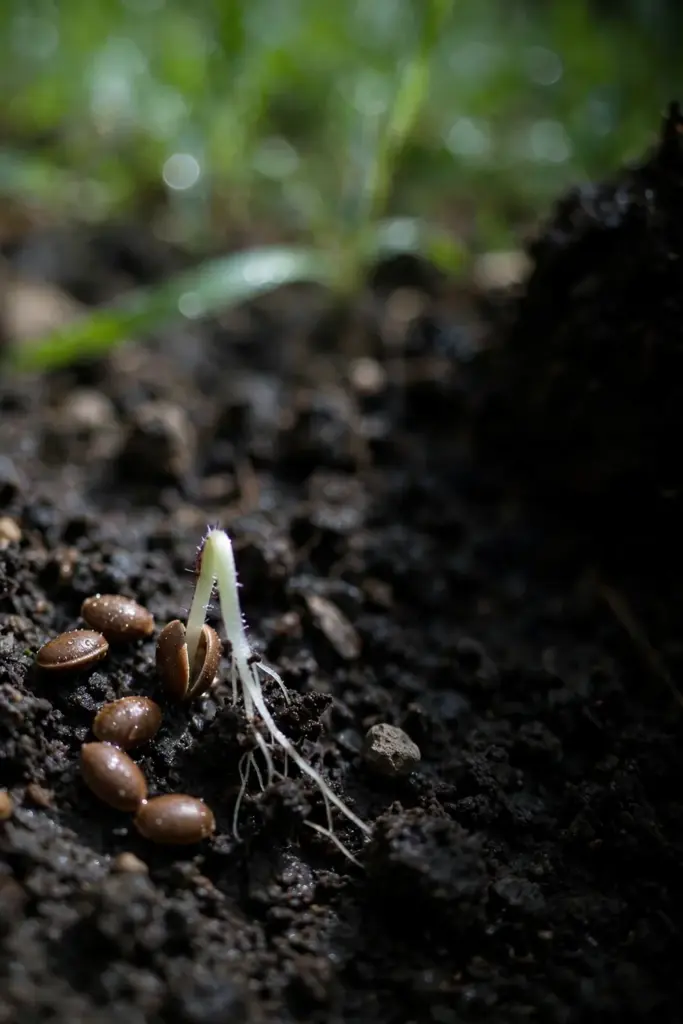
Camelina is the obscure brassica that deserves wider use: extremely cold-hardy, tiny seed so a packet covers a big bed, and no pest baggage compared to mustard and radish. It grows a modest rosette in fall, overwinters, then bolts in spring for an early chop.
Think of it as the low-commitment brassica. Where tillage radish is a sledgehammer for compaction, camelina is a light winter blanket with deep roots for its size.
18. Mix Species Instead of Sowing One
The move: sow two or three species together, never a lone grass or a lone legume. The ratio: about two parts grass or cereal to one part legume by seed weight, then halve each monoculture rate. Timing: sow at the earlier species’ deadline.
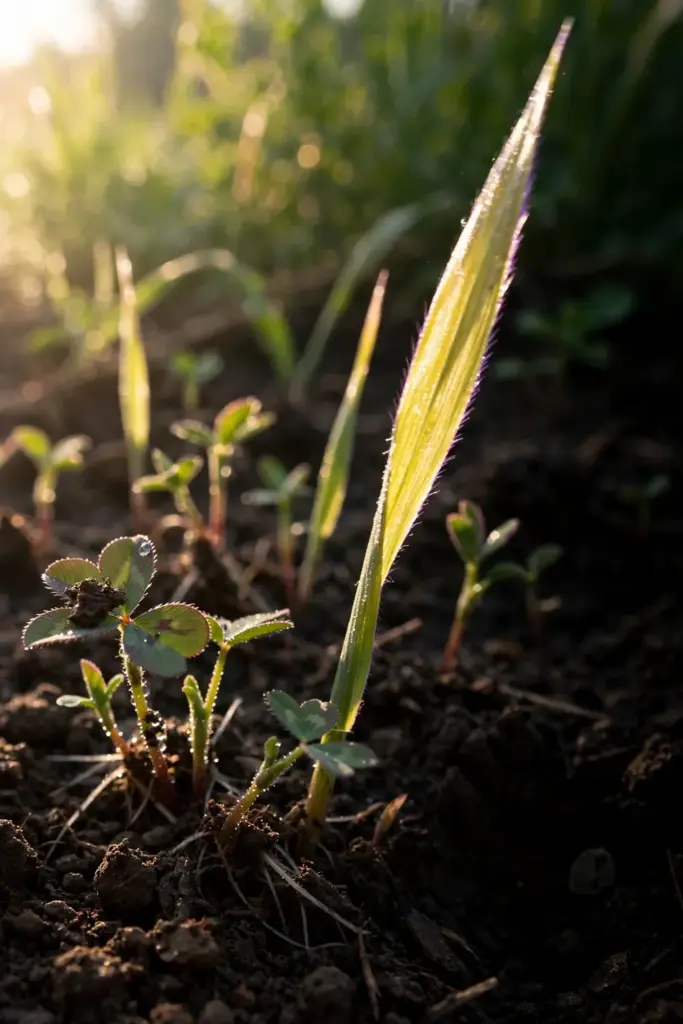
Mixtures beat monocultures on almost every measure: the grass scavenges nitrogen and smothers weeds while the legume fixes nitrogen the grass then catches. The standard home-garden recipe is oats plus crimson clover at the 70-30 split a conservation district guide for vegetable growers specifies: 3 oz of oats and 1.5 oz of crimson clover per 100 square feet for August sowings. Ohio State’s late-summer guide suggests oats at 1 bushel per acre with crimson clover at 12 lb and radish or rape at 2 lb.
For maximum nitrogen, copy the research mix USDA researcher Aref Abdul-Baki refined in Maryland and published in SARE’s cover crop guide: 40 lb of rye with 40 lb of hairy vetch per acre, plus 10 to 12 lb of crimson clover for weed suppression. USDA NRCS mix baselines show the same halving principle at larger scales: a six-species mix drops rye from 90 to 15 lb, oats from 60 to 10, crimson clover from 20 to 3.3, hairy vetch from 25 to 4.2, daikon radish from 9 to 1.5, and rapeseed from 5 to 1.3 lb per acre.
Keep brassicas to a small fraction of any mix. They germinate fast and will swamp slower legumes if given an equal share.
19. Terminate Cover Crops Without Herbicides
The move: kill overwintering covers with steel, shade, or timing, not spray. The window: two to three weeks before spring planting. The rule: winter-kill species need nothing; everything else needs a plan before you sow it.
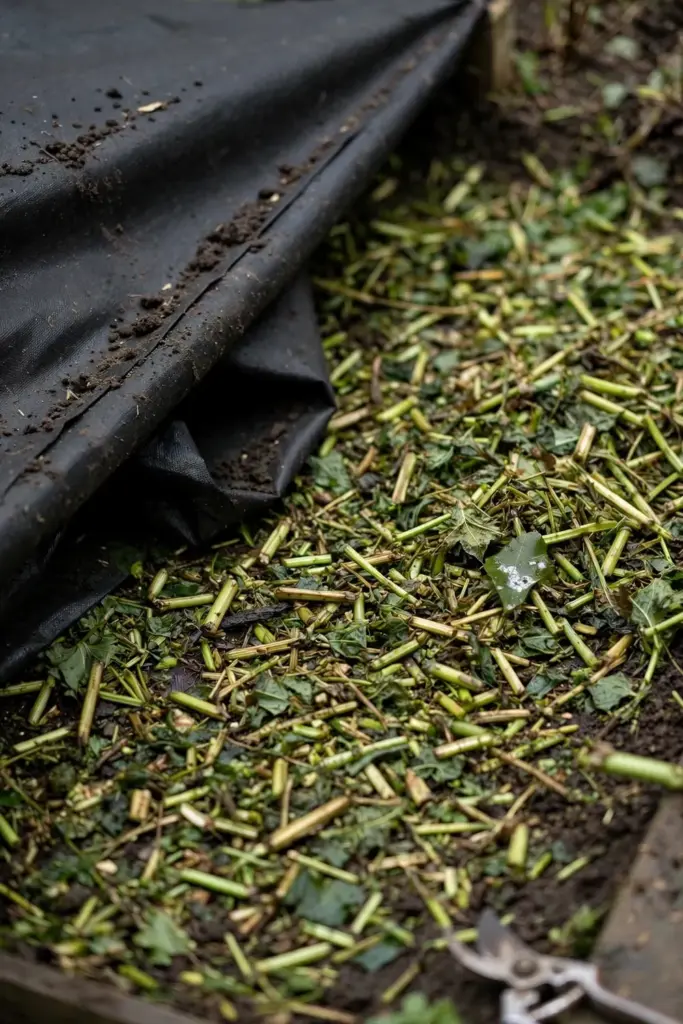
Start with the free option: winter-kill. Oats, buckwheat, tillage radish, mustard, turnips, crimson clover (north), and Austrian peas (north) die on their own. Rake the residue flat and plant through it. No work, no timing risk.
For survivors, chop-and-drop is the home gardener’s flail mower. Cut the stand with shears, a sickle, or a string trimmer at flowering, and leave the residue as mulch. SARE’s hairy vetch work shows the timing clearly: mow at early bloom, when nitrogen peaks, and expect to mow or tarp again where vetch regrows. It always tries.
Tarping (occultation) finishes what mowing starts. Lay a black or silage tarp over the chopped stand for two to three weeks. The darkness kills regrowth and warms the soil underneath. This is the reliable way to kill winter rye and annual ryegrass without tillage.
Crimping is the no-till classic scaled down. A roller-crimper snaps rye stems at flowering (anthesis) and lays them into a weed-proof mat. Home gardeners can approximate it: stomp the stand flat with a board, then tarp for a week. It works best on rye and triticale at full flower; crimp too early and the stems stand back up.
Whatever the method, respect the two-to-three-week gap before planting. Fresh residue ties up nitrogen as it decomposes, and rye residue suppresses germination of small seeds. Planting the day after the kill is how cover crops get blamed for poor stands.
20. Fit Cover Crops Into Raised Beds
The move: treat a 4-by-8 bed like a small field, at the same per-area rates. The pick: winter-kill species first; aggressive overwinterers only if you own a tarp. The math: a 4-by-8 bed is 32 square feet, roughly a third of the 100-square-foot rates in the tags above.
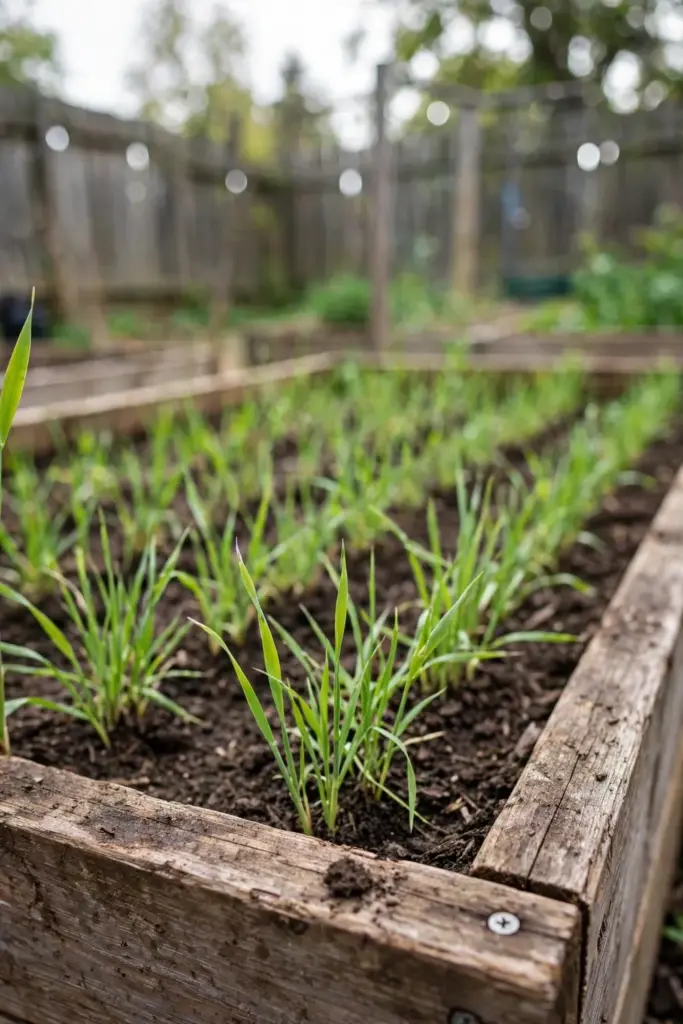
Raised beds are ideal cover crop territory: small enough to sow by hand in minutes, valuable enough to deserve winter protection. The search data agrees; “fall cover crops for raised beds” is a top related query, and gardeners keep asking whether it works in boxes. It does. The rules just tighten.
Favor species that die on their own: oats, buckwheat (August only), tillage radish, mustard, turnips. They leave a clean mulch and never fight you in April. Avoid winter rye and hairy vetch in beds unless you will tarp; their spring vigor overwhelms a small box, and digging them out destroys the bed structure you built.
For a 4-by-8 bed, the oats-and-crimson-clover mix works out to about 1 oz of oats and 1/2 oz of crimson clover, the per-bed figure from the conservation district guide. Broadcast, rake lightly, water once. When spring comes and the bed needs food again, the rotation continues on fall vegetables to plant, which picks up where the cover crop leaves off.
21. Match Sowing Dates to Your Zone
The move: sow by your first frost date, not by the calendar month. The rule: most species need 4 to 6 weeks of growth before hard frost; rye tolerates 2. The adjustment: sow earlier in cold zones, later in warm ones.
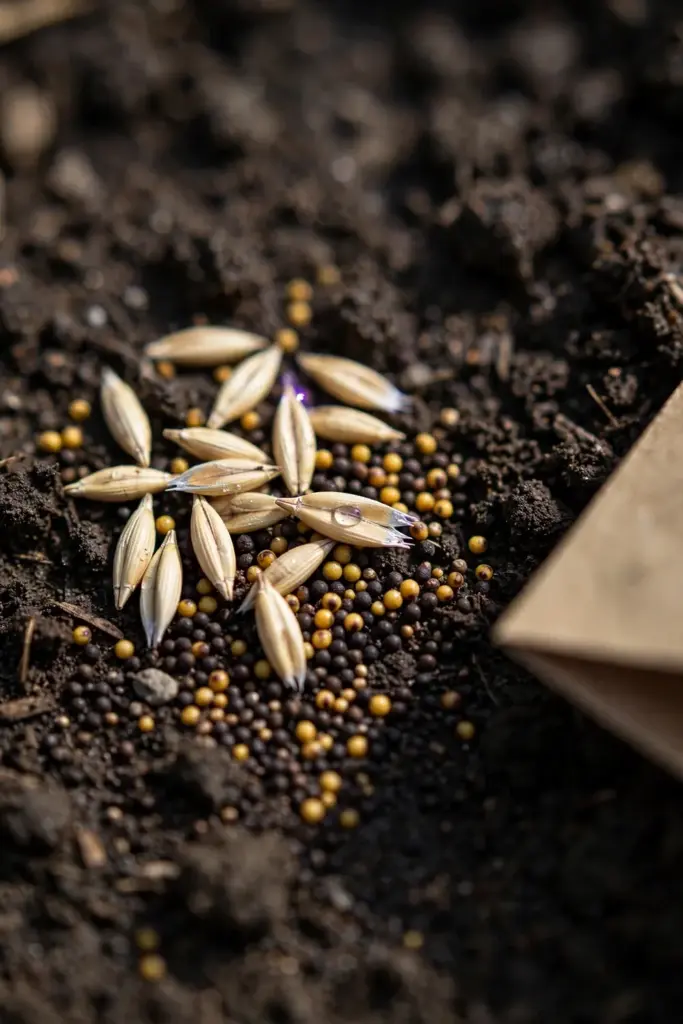
Zone tables look precise and lie a little; your actual first-frost date is what matters. Still, the pattern holds across the country:
| Zone | Sow Window | Best Bets |
|---|---|---|
| 3-4 | Early to mid-August | Winter rye, winter wheat, triticale, hairy vetch |
| 5-6 | Mid-August to mid-September | Above plus oats, crimson clover (winter-kills), tillage radish, mustard, turnips, annual ryegrass |
| 7 | September | Above plus Austrian peas, fava beans, buckwheat (early Sept), red clover |
| 8-9 | October to early November | Everything; crimson clover and ryegrass overwinter reliably, brassicas after daytime highs drop below 80F |
Two timing notes from extension work. UMass advises planting brassicas only after daytime averages fall below 80F; sown into heat, they germinate poorly and bolt. And winter rye is the emergency option: UMass notes it can go in as late as two weeks before a killing frost and still establish, which makes it the answer to “is it too late?” in every zone.
State-level demand for this information is real; related searches run through Texas, Georgia, Florida, Ohio, Pennsylvania, Wisconsin, and Michigan. If your state extension publishes a cover crop planting calendar, follow its dates over any national table. Local frost data beats a zone average every time.
Cover Crop Mistakes That Cost You Spring
Sowing legumes too late. Crimson clover and hairy vetch need six to eight weeks of fall growth to fix meaningful nitrogen. Sown in late October in zone 6, they are decoration. Sow legumes first, grasses last.
Skipping the inoculant. Legume seed without the right rhizobia is just expensive birdseed. The nodules never form, the nitrogen never arrives, and the bed gets a weed instead of a fertilizer. Buy inoculant with the seed and use it the same day.
Letting winter rye set seed. One headed-out rye stand seeds the bed for years, and the volunteers are tougher than the cover was. Mow at flowering, not after. If seed heads appear, mow immediately and compost the clippings hot or bag them.
Planting brassicas into hot soil. Mustard and radish sown when days still average above 80F germinate unevenly and bolt early. Wait for the cool-down. The calendar can wait; the thermometer cannot.
Tilling a wet spring bed to kill the stand. Chopping a live cover into cold wet soil compacts the bed and buries residue that will not decompose. Mow, then tarp, and let the soil dry before you work it.
Letting hairy vetch go to seed. Vetch seed is hard and long-lived. A single missed spring turns your nitrogen factory into a perennial weed problem. Mow at early bloom and check for regrowth two weeks later.
Frequently Asked Questions
What Is the Best Cover Crop to Plant in the Fall?
Match the species to the job. Hairy vetch fixes the most nitrogen. Winter rye survives the coldest weather and smothers the most weeds. Tillage radish breaks compaction. Oats die on their own for zero spring work. Most home gardeners do best with a two-species mix: oats plus crimson clover covers the common cases.
Can I Still Plant Cover Crops in October?
In zones 7 and warmer, yes; October is prime time. In zones 5 and 6, October is late for everything except winter rye, which establishes up to two weeks before a killing frost. In zones 3 and 4, October is too late for fall sowing. Sow by your first frost date, not the month: most species need four to six weeks of growth first.
Do I Need to Inoculate Legume Cover Crop Seed?
Yes. Clover, vetch, peas, and beans need their specific rhizobia bacteria to form the root nodules that fix nitrogen. Without inoculant, a legume cover is just a green manure with no nitrogen bonus. Buy the inoculant matched to your species, coat the seed the day you sow, and keep it out of sun and heat until planting.
Will Cover Crops Come Back as Weeds?
They can if you let them set seed. Winter rye, hairy vetch, and crimson clover all become weeds when their seed matures in the bed. The fix is timing: kill every overwintering stand at flowering, before seed forms. Winter-kill species (oats, buckwheat, radish, mustard) cannot become weeds in cold zones because winter kills them first.
Can I Use Cover Crops in Raised Beds?
Yes. A small box is easier to sow, water, and kill than a big field. Favor winter-kill species like oats, tillage radish, and mustard that die on their own and leave a plant-through mulch. Avoid winter rye and hairy vetch unless you own a tarp for spring termination. A 4-by-8 bed needs about 1 oz of oats plus 1/2 oz of crimson clover for the classic mix.
When Do I Kill the Cover Crop in Spring?
Two to three weeks before you plant the next crop. Killing at flowering captures peak nitrogen from legumes and peak biomass from grasses. Killing earlier wastes growth. Killing later risks seed set and nitrogen tie-up as heavy residue decomposes. Winter-kill species need no action; rake the residue flat and plant through it.
Start With One Bed This Fall
Start with one bed this fall. Broadcast oats and crimson clover into the first empty bed, rake it in before rain, and watch what happens over winter. One bed teaches the whole system: the sowing, the waiting, the spring kill, the soil underneath. Next fall you will know exactly which species each bed needs, because you will have seen it work.








