
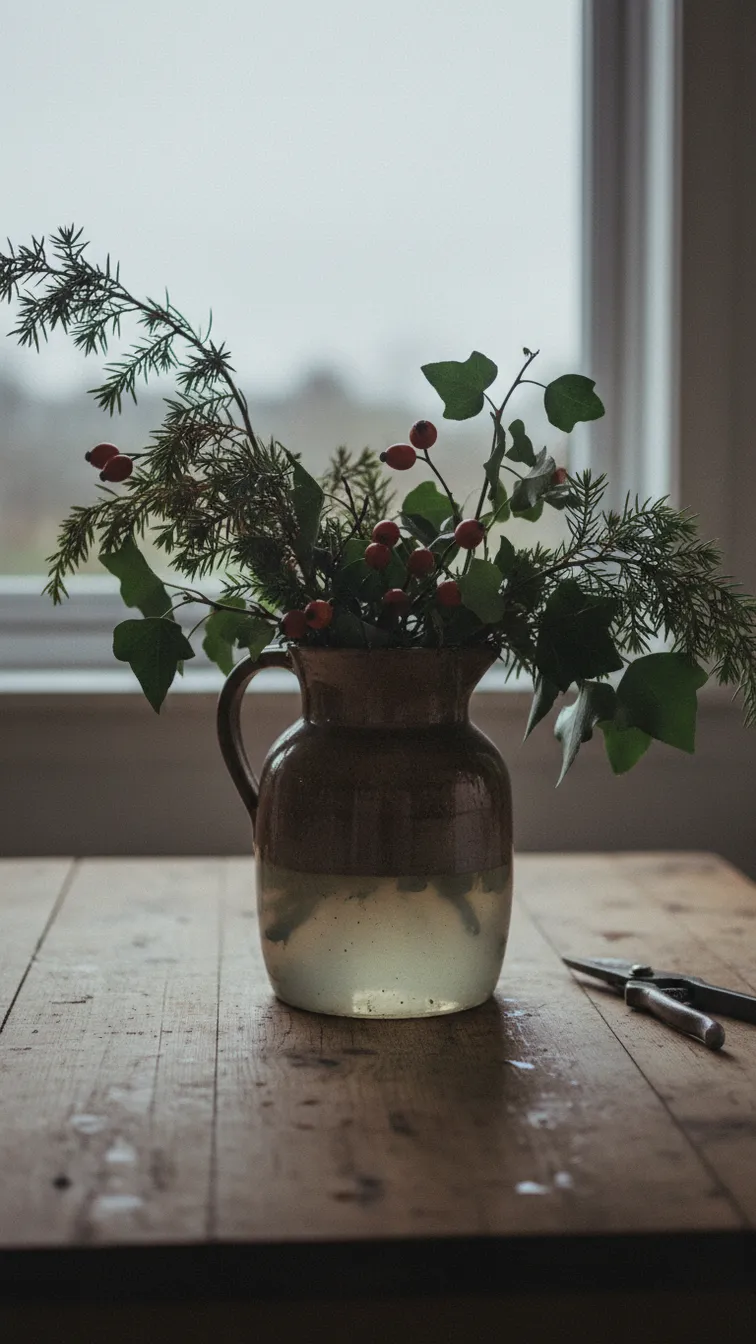

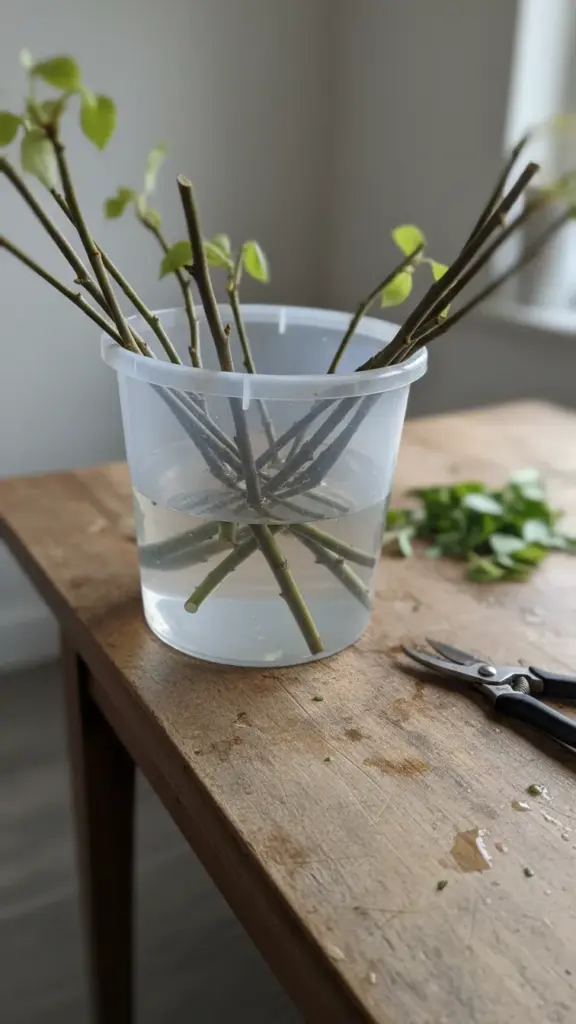
Spend 25 minutes cutting stems into a bucket of water, then pick 3 of the 13 thanksgiving centerpieces below. That is enough for the table without a florist. Each idea uses what is still standing in a late-November garden, or a pot that still has roots.
Work from the top if Thursday is close. The first three jugs cover most tables. Living pots and a fire-safe lantern are the ones guests actually notice.
A garden centerpiece is cut material in water, or a living plant on a saucer. If the stems cannot drink, the arrangement is finished by the time the pie comes out.
The first garden centerpiece I was proud of wilted before dessert. I had stuffed rose hips, ivy and a handful of kale into a pretty bottle, leaves and all, and set it on a sunny sideboard next to a bowl of apples. By the time we sat down the water was cloudy and the hips had dropped.
The next year I split the woody stems, stripped every leaf that would sit below the waterline, and moved the jug off the fruit bowl. It looked rougher. It also lasted until Sunday.
I still will not put a taper in fresh cedar. A battery lantern in the middle of the greenery is the compromise I actually keep.
1. Mix Three Kinds of Evergreen in One Jug
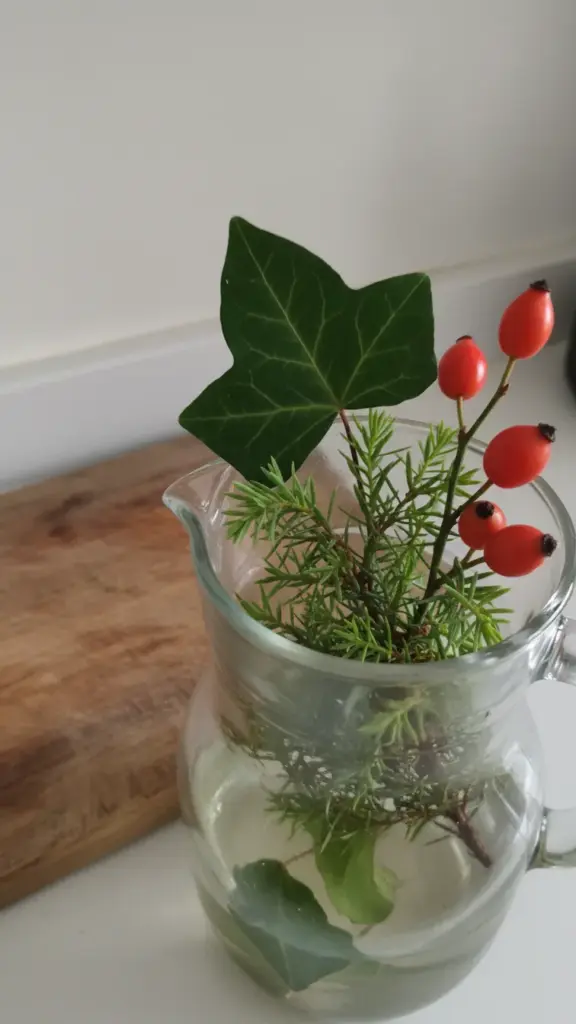
This is the default thanksgiving centerpiece if you only make one. Walk the garden with a bucket of water, not a dry trug. Cut juniper or pine, a broader leaf such as ivy, magnolia, boxwood or kale, and one berry or hip stem.
Mississippi State University Extension’s holiday centerpiece guide tells designers to use a variety of at least 3 types of foliage. That mix is the useful rule even when you skip foam and fill a jug. The same page says to push each stem at least 2.54 cm into soaked foam if foam is what you are using, and that a floating brick hydrates in less than 1 minute.
Recut every stem at a slant. Split the last stretch of woody stems so water can enter. Strip every leaf that would sit below the waterline. Stand the lot in a heavy jug, low enough to talk over.
2. Pair Rose Hips With Leftover Hydrangea
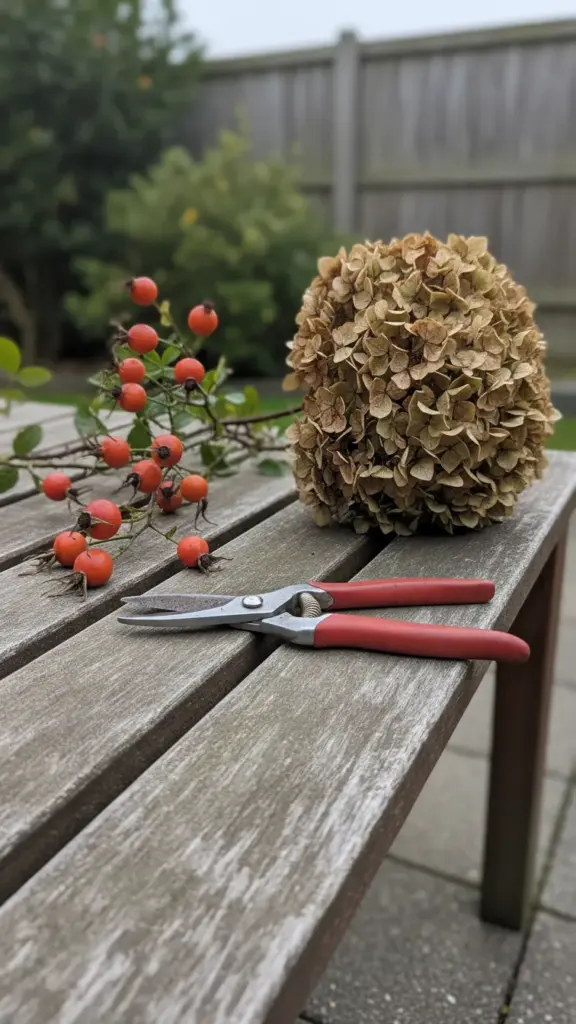
Rose hips are the November color most people expect, and they do not need a ribbon. Leftover hydrangea heads are already dry. They do not drink, so pair them with one evergreen that still can.
Cut the hips longer than the jug is tall so you can recut later. Hydrangea can sit above the waterline, or in a second dry bottle beside the wet jug. Dry heads snap if you force them into foam.
Take a few stems from several plants. A shrub stripped for one lunch looks worse than a slightly smaller table arrangement. When you cut woody branches, use a clean, sharp pair of secateurs and a proper cut, the same care the site’s spring pruning techniques ask for on living plants.
3. Build a Low Holly and Berry Bowl
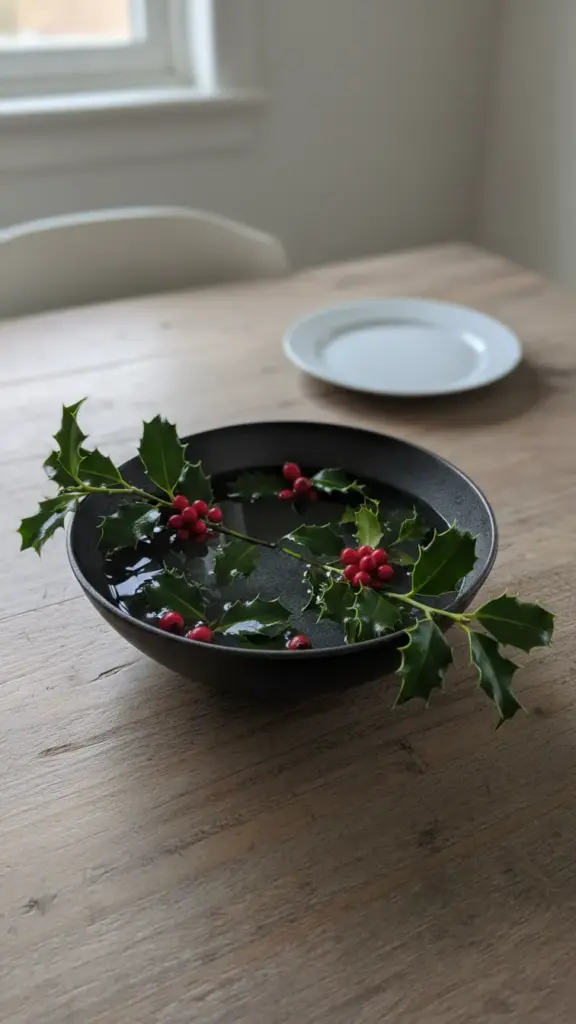
Thanksgiving centerpieces fail when they become a hedge between people. A wide bowl of holly, ivy and hips stays below eye level once everyone is seated. One taller branch is fine. A wall of holly is not.
Use a heavy bowl or a short crock that will not tip when someone reaches for the gravy. Fill it halfway. Place three evergreen stems first, at different heights, so they make a loose triangle. Drop hips into the gaps.
Leave space to see the tablecloth through the stems. If the bowl looks stuffed, pull material out. Extra water will not fix a packed neck.
4. Set Kitchen Herbs in Clay Pots
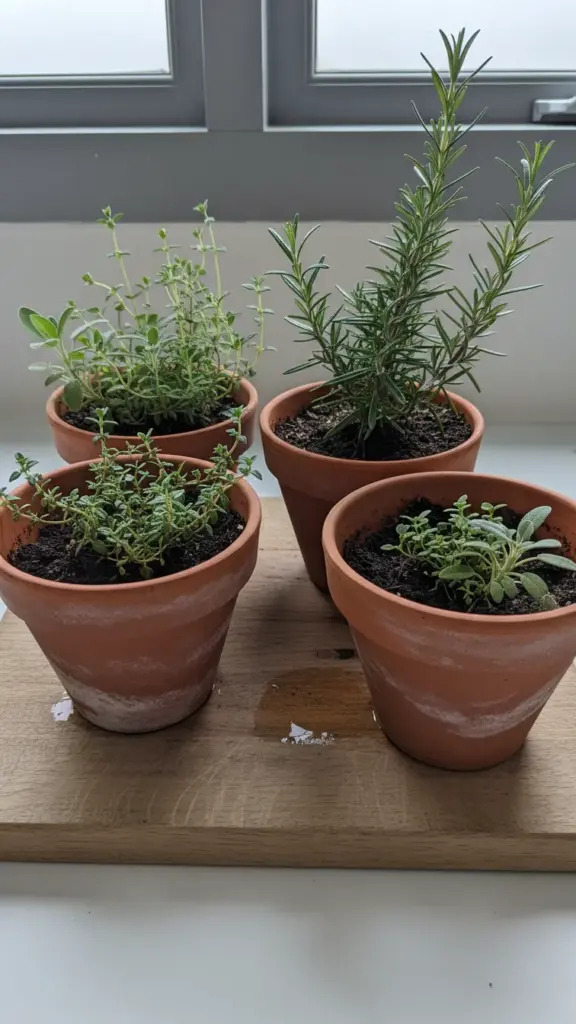
Rosemary, thyme, sage and a small bay in clay pots will sit on the table, scent the room, and go back to a bright window on Friday. This is a centerpiece that still has roots, so it does not wilt on the same clock as cut stems.
Water the pots the day before, not as guests arrive. Living pots fail from wet compost in a dark dining room, so let the top of the mix dry and give them light once the meal is over. The site’s morning watering habits are written for the garden. The same rule holds for a pot on the table: water before the mix goes bone dry, then stop.
Cluster three pots on a board or a tray so they read as one object, not scattered clutter.
5. Force an Amaryllis in a Heavy Pot
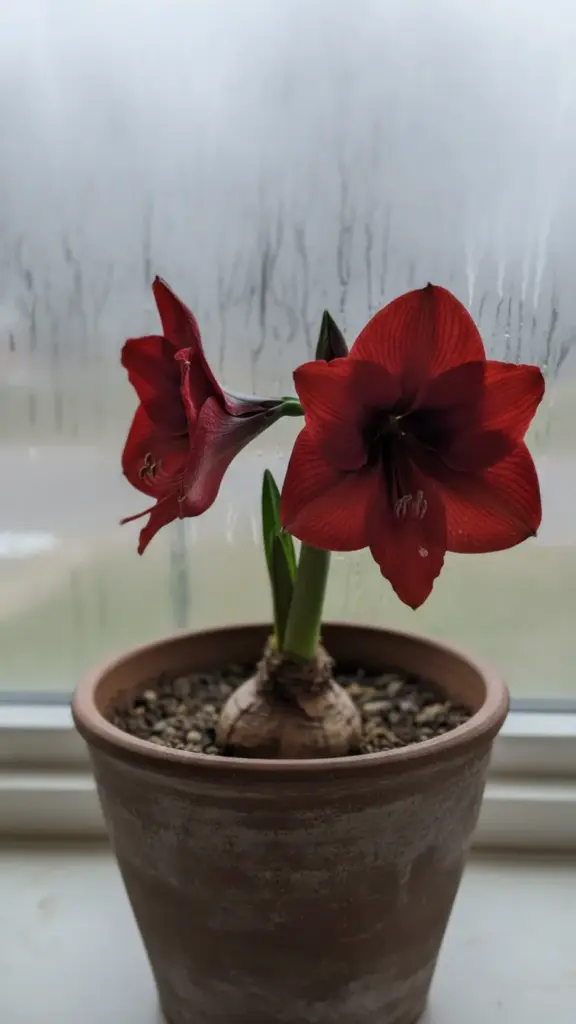
If you want a flower that is still attached to a bulb, amaryllis is the indoor option that can hit a late-November table. UF/IFAS’s amaryllis guide puts pre-forced bulbs at 3 to 6 weeks after planting, with each open flower lasting 2 weeks.
Count backward from Thursday. A bulb started in mid-October is in the window. A bulb started that Wednesday is a next-month plant. Leave 1/4 to 1/3 of the bulb above the mix, and allow 5.1 cm between the bulb and the pot wall. Use a heavy pot. The scape will get top-heavy.
Once the flowers open, move the pot out of bright sun. After the meal it goes back to light and ordinary watering. It does not belong in the jug.
6. Grow a Tray of Greens for the Table
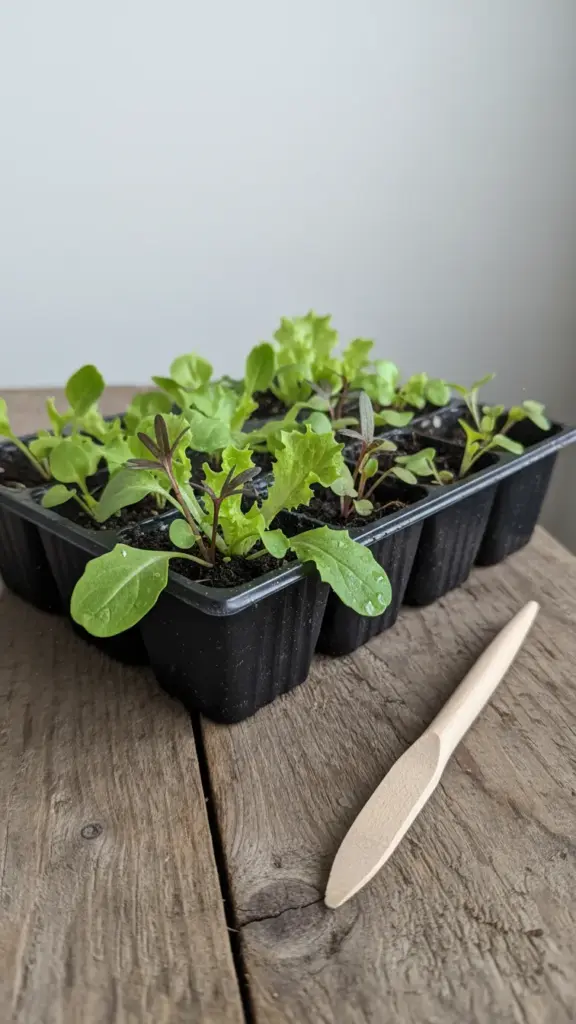
A shallow tray of mixed greens sown a couple of weeks earlier can sit in the middle as a living runner. You are growing a garnish, not a field. Keep the mix just moist.
For the method, use the site’s seed starting steps. A windowsill tray started in early November is the version that actually has leaves by Thanksgiving. A tray sown on Wednesday is for December.
Set the tray on a board so wet mix never sits on the tablecloth. Snip from the edges during the meal if you need a handful of leaves.
7. Stand Dried Allium and Grass Plumes Dry
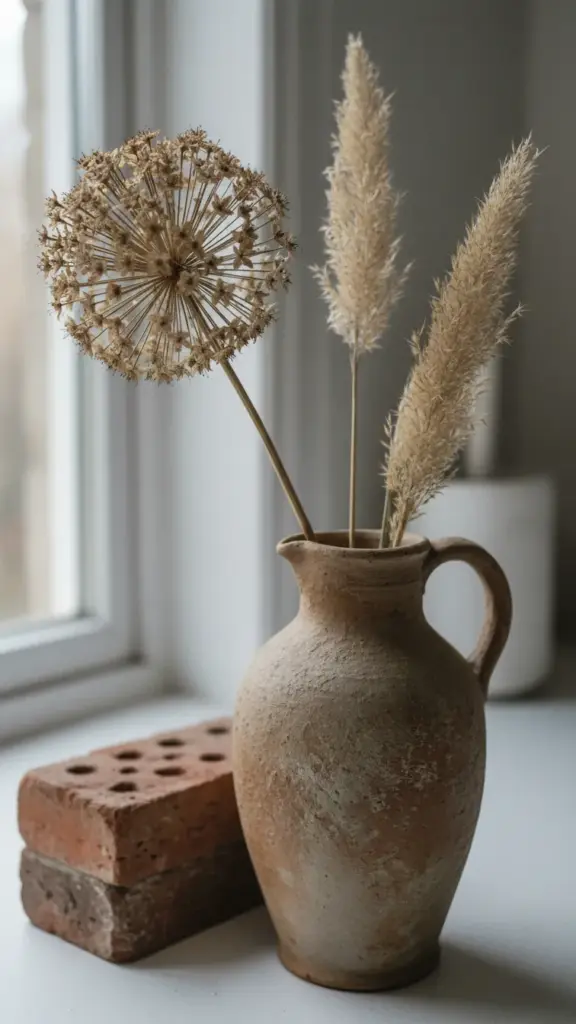
Dried allium globes, ornamental grass plumes and old seed heads do not drink. They can stand in a dry jug, a crock of sand, or above the waterline in a mixed arrangement. This is the idea that survives a hot kitchen because there is nothing to wilt.
Do not mix dry plumes into sour foam. They only need a vessel that will not tip. Keep them away from open flame. Dry grass is tinder.
One tall allium and two grass stems is enough. A thick bundle reads as a craft-store pick.
8. Fill a Crock With Kale and Sage
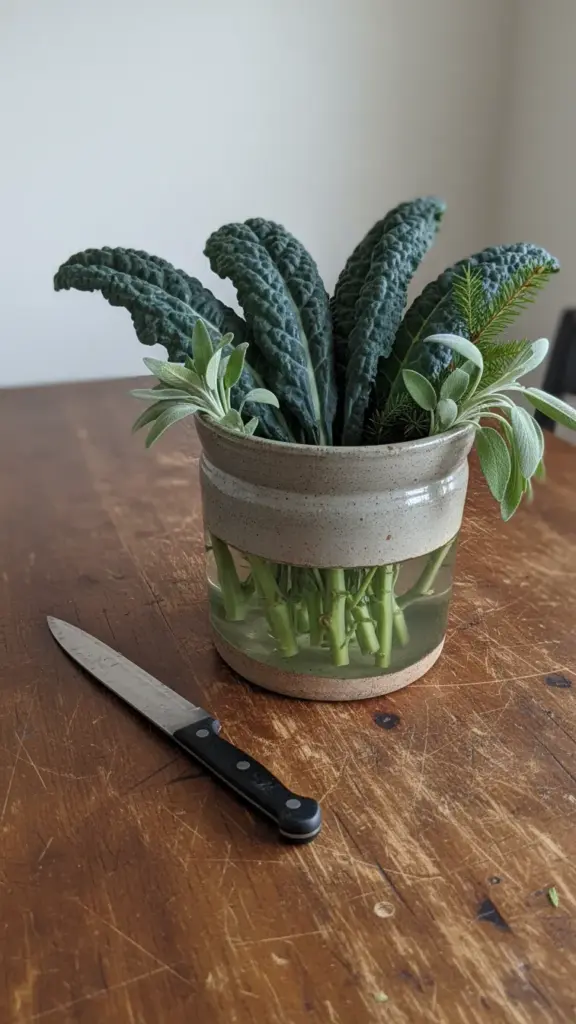
Late kale and sage are food and foliage. Stand a few whole kale leaves in a heavy crock with sage sprigs and one evergreen so the kitchen scent is on the table. Cut kale from the bottom of the plant if you still want the growing point to work after the weekend.
Strip any leaf that would sit in the water. Kale slime is faster than holly slime. Recut the stems at a slant and rest them in a bucket for at least 1 hour in a cool room before they go on the table.
Guests will steal sage for the pan. Plant extra sprigs so the crock still looks finished after the first pass.
9. Add Colored Dogwood or Willow Stems
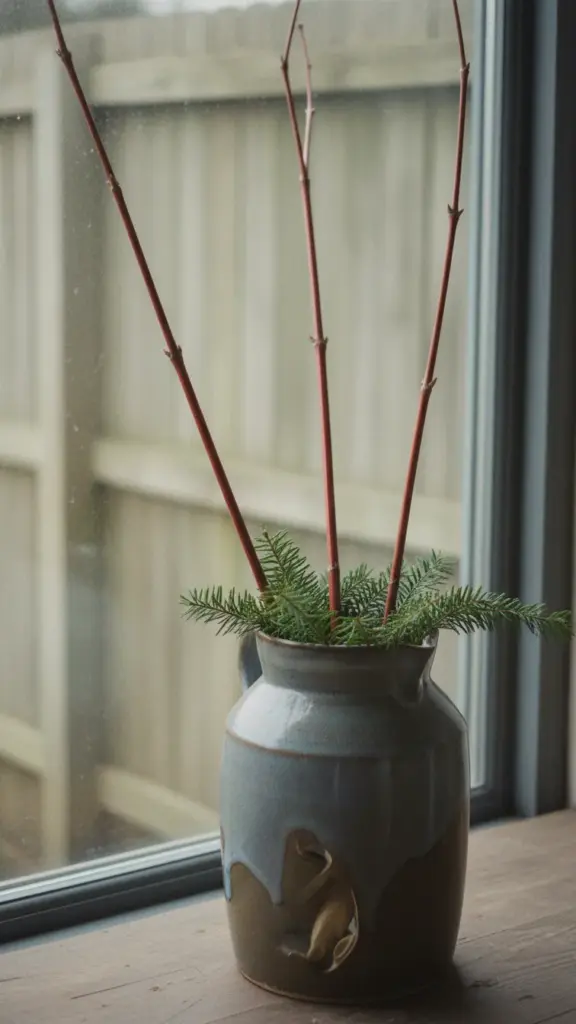
Colored bark is the structure when flowers are gone. Cut a few dogwood or willow stems longer than the jug, recut at a slant, and split the bottoms. They last if they can drink.
Use them as the tall line in a low evergreen mix, not as a bare bundle of sticks. Three stems of different heights beat a fistful of matching lengths.
Skip any stem that is cankered, spotted or already dying back. Diseased wood stays outside. One ugly stem will slime the whole jug.
10. Layer Magnolia Leaves With Pine
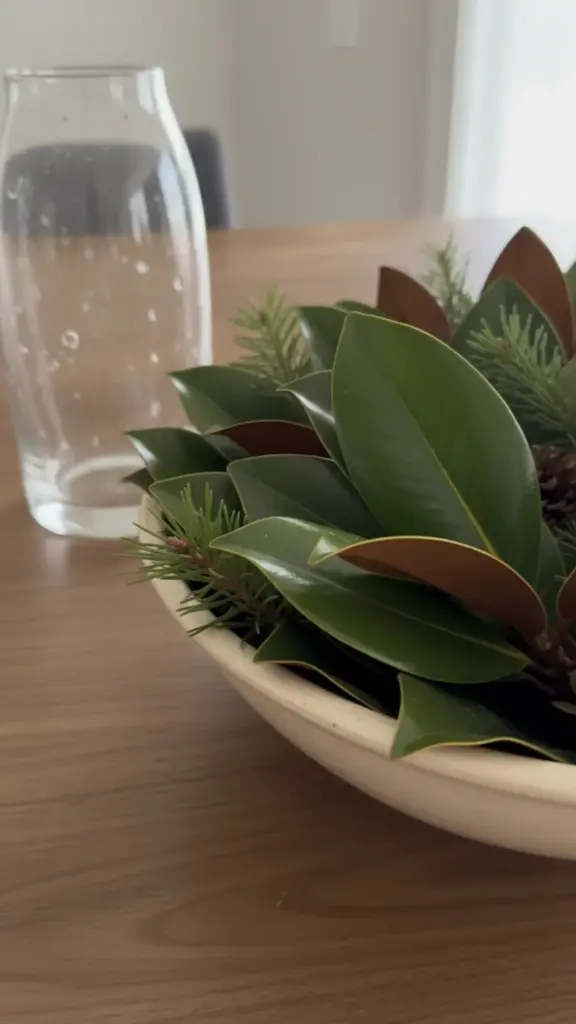
Broad magnolia leaves give a Thanksgiving table a dark, glossy plane. Pine or juniper gives the needle. Together they are two of the three textures Mississippi State asks for, and they fill a wide bowl faster than holly alone.
Pine drops sap on a tablecloth. Stand those stems in a glass first and wipe them before they go in the jug. Magnolia leaves can sit on the water surface if the stems are short. Change that water if it clouds.
Keep the mass low. Magnolia on end becomes a screen.
11. Ring a Lantern With Garden Evergreens
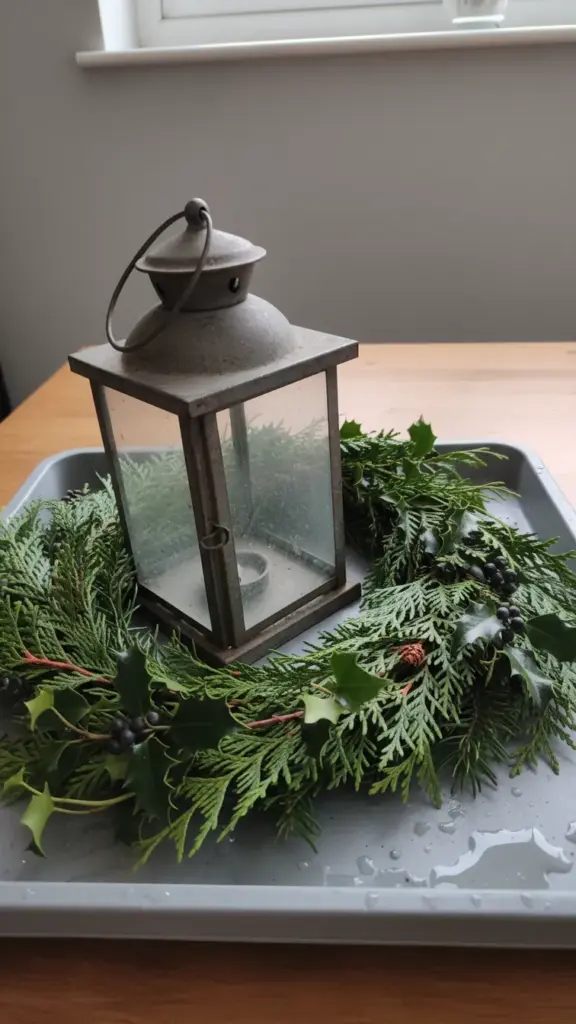
A lantern in a ring of cut evergreen is the centerpiece Mississippi State walks through in full, from soaked foam to a care tag. You can copy the idea with garden cedar, holly, boxwood and ivy around a battery lantern, and skip the ribbon if that is not your table.
If you use foam, let it float until it is heavy, never force it under, and add water every few days. Mississippi State’s page also says to keep the design out of warm drafts and direct sun, and to park it in a cool garage or porch overnight. That Wednesday rest is worth doing if Thursday will be a hot kitchen.
The lantern is not glued to the greenery. Lift it separately.
12. Put a Hurricane Glass in the Greenery
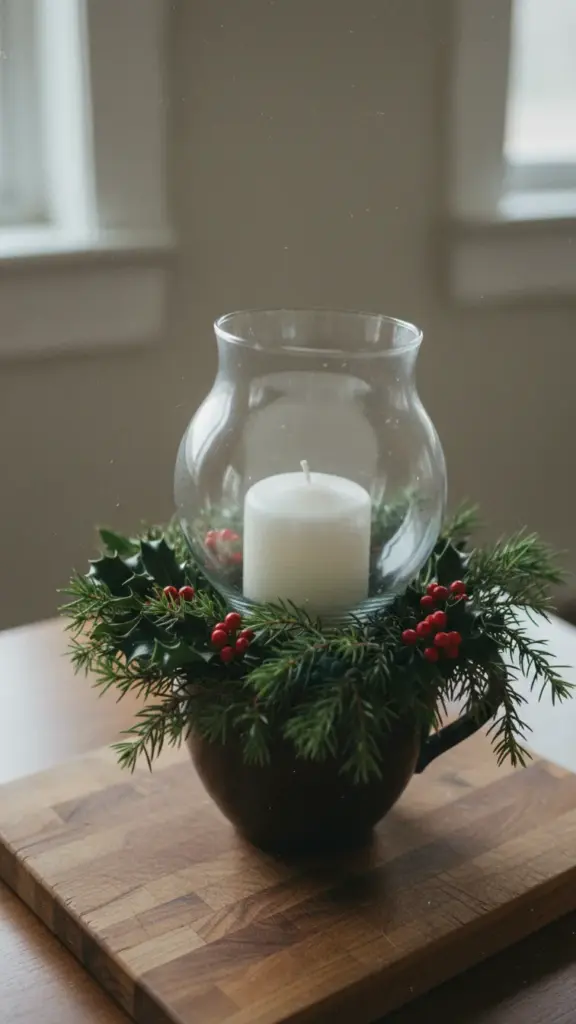
Fresh cedar next to a taper is a fire hazard. University of Georgia research on holiday greenery tells households to replace greenery every week, and to use a simple test: if the needles bend they are still fresh, if they break they are dry and due for the bin. Dry greenery needs only a spark. Fresh greenery is still not flame-retardant.
Keep cut greenery in water until it goes on the table. Point heaters away from it. Plastic berries at the base of a candlestick can melt and ignite the real stems. Mississippi State’s centerpiece page adds the rule that matters at dinner: never leave a burning candle unattended.
The table version is a hurricane glass, a closed lantern, or a battery candle in the middle of the greenery. If you want real flame, put the candles on a separate plate with a clear gap around them, not inside the jug.
The Bend Test on Friday Morning
Pinch a needle or a holly leaf. If it flexes, top up the water and leave the jug. If it snaps, strip that stem out. UGA’s weekly replacement rule is written for a long holiday season. A Thanksgiving weekend is shorter, and Friday morning is still the moment to pull anything that has gone brittle.
13. Use One Tall Branch in a Heavy Jug
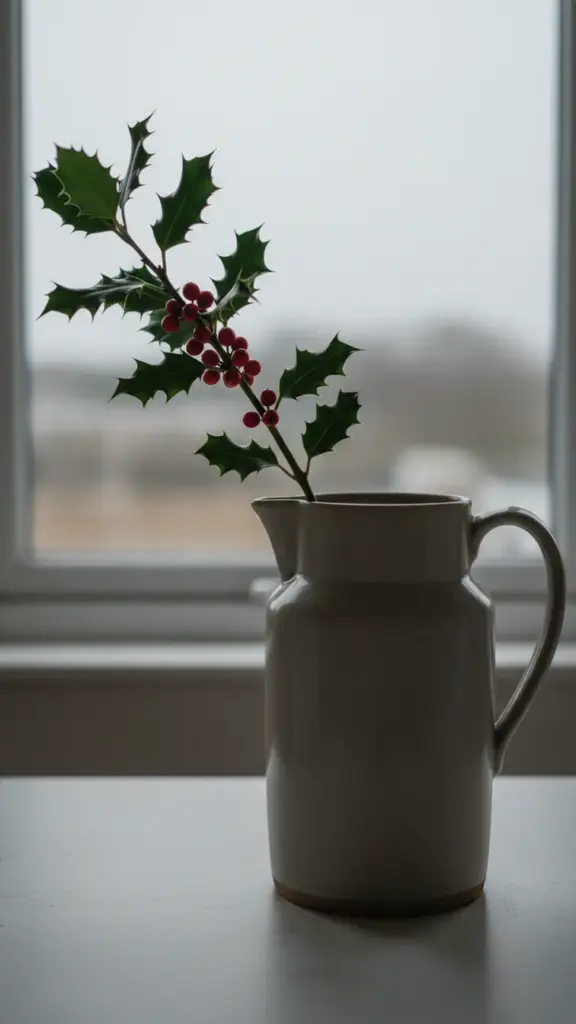
The smallest idea is often the one that still looks like a garden. One well-cut branch of holly, magnolia, dogwood or twisted willow in a heavy jug of water, with the bottom split and the submerged leaves stripped.
Rest it for at least 1 hour in a cool room. Set it off the fruit bowl and off the sunny sideboard. Top the water up on Friday.
This is the backup if the mixed jug went wrong, and it is a valid centerpiece on its own. Do not add a taper to the neck of the jug.
FAQ
When Should I Cut Stems for Thanksgiving Centerpieces?
Cut on Wednesday, into a bucket of water, then condition and rest the stems for at least 1 hour in a cool room before you arrange them. Thursday morning is still fine if Wednesday got away from you. Cutting on Thursday afternoon, straight into a dry jug on a warm table, is how arrangements collapse before dessert.
How Do I Keep Evergreens From Drying Out?
Keep cut ends in water from the moment they leave the plant. Strip leaves below the waterline, recut at a slant, and top the jug up every morning. UGA’s bend-or-break needle test tells you when a stem is too dry to stay. Replace anything that snaps. A cool room overnight on Wednesday helps more than any additive in the water.
Can I Put Candles in a Greenery Centerpiece?
Only if the flame is enclosed or well away from the stems. Fresh greenery is still flammable, and dry greenery needs one spark. Never leave a burning candle unattended. A hurricane glass, a closed lantern or a battery candle in the greenery is the version that does not gamble the tablecloth.
How Far Ahead Can I Force an Amaryllis for the Table?
Pre-forced bulbs flower 3 to 6 weeks after planting, and each open bloom lasts 2 weeks. Start in mid-October for a late-November table. Leave the neck of the bulb above the mix, use a heavy pot, and move it out of bright sun once the flowers open. A bulb started at Thanksgiving is for the next holiday.
Why Did My Jug Wilt Overnight?
Usually leaves rotting in the water, a dry jug, heat, or fruit nearby. Recut the woody stems, strip anything that sat below the waterline, change the water, and move the jug to a cooler spot away from the fruit bowl. If a stem is still limp after a second rest in water, it is done. Take it out.
Should I Use Floral Foam?
You do not have to. A heavy jug of water is enough for garden stems and is easier to top up. If you use foam, soak it until it floats, never force it under, push each stem at least 2.54 cm in, and add water every few days. Dry foam is how a centerpiece dies in an afternoon.








