
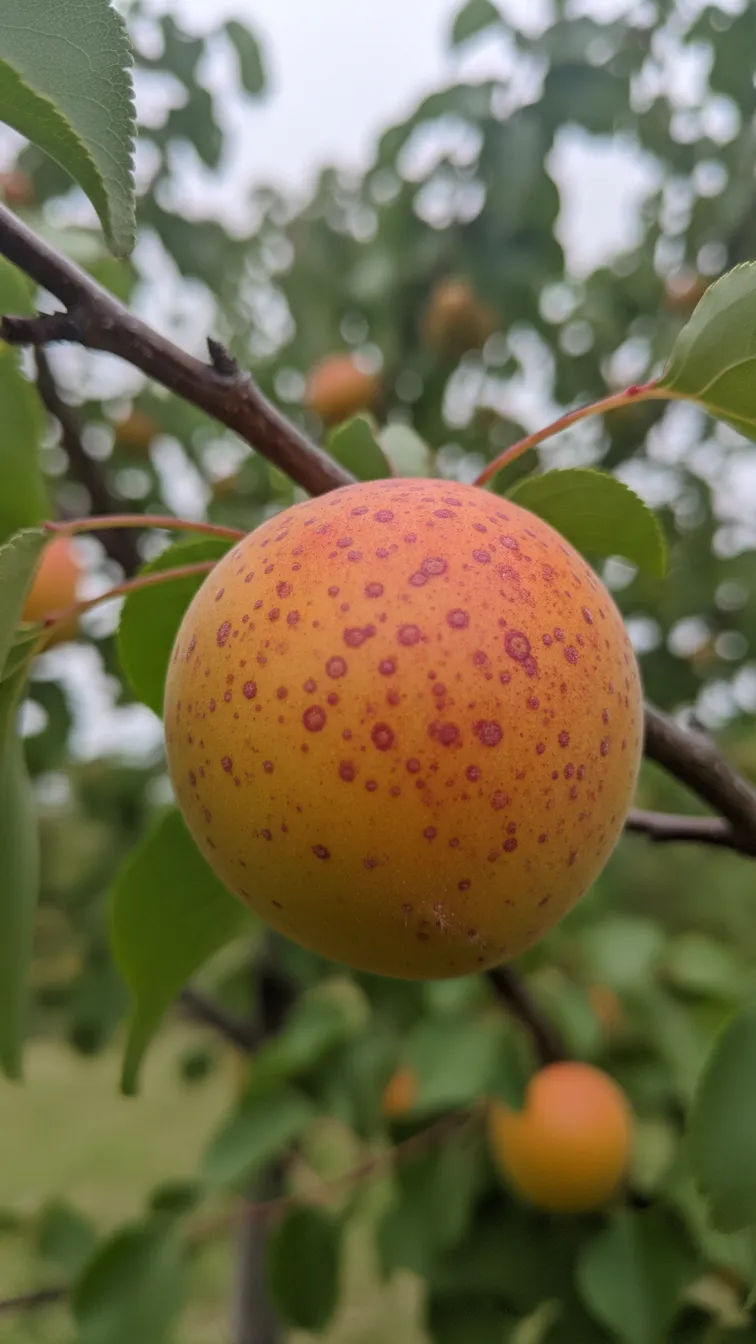

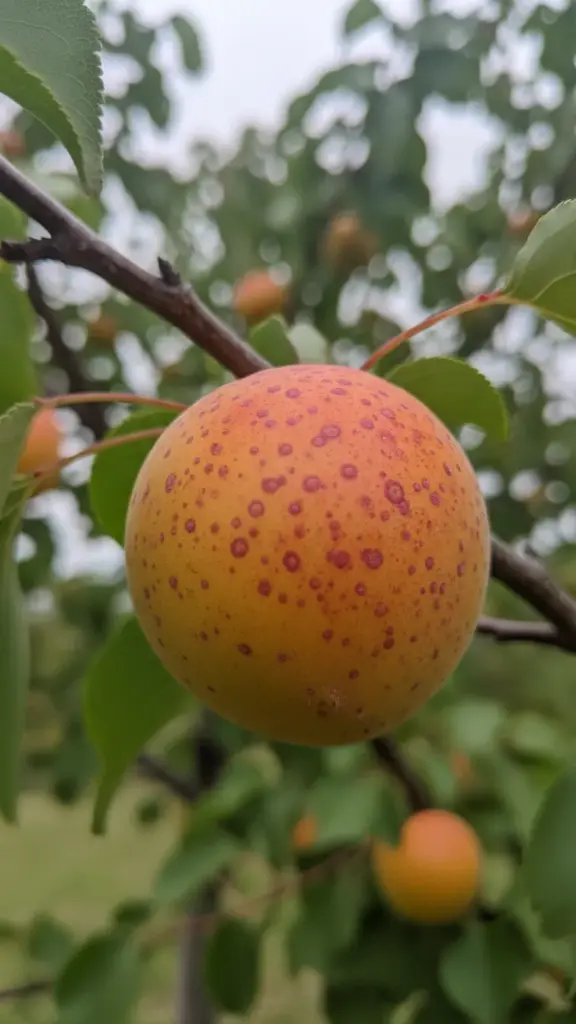
Coryneum fruit spot is the fruit-stage symptom of Coryneum blight, a fungal disease that also goes by shot hole disease, and it covers peaches, apricots, and other stone fruit with small purplish spots that turn scabby, gummy, and disfigured before harvest. If Coryneum fruit spot is showing up on your trees, understanding the disease’s full life cycle matters more than treating the fruit spots alone. See our apricot growing guide for the basics of raising a healthy tree from the start.
What Coryneum Fruit Spot Is
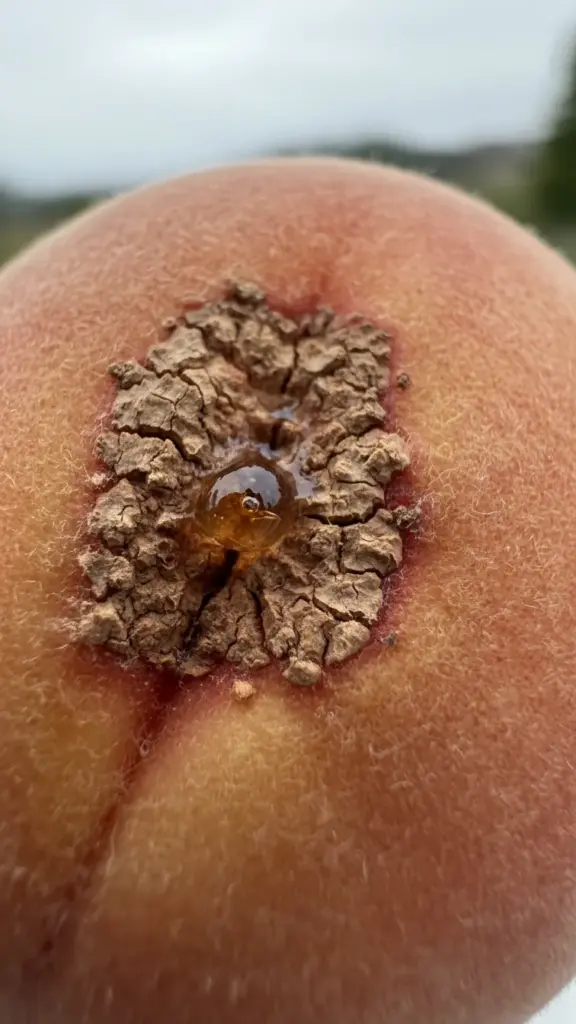
Coryneum blight is caused by the fungus Wilsonomyces carpophilus, formerly known as Coryneum carpophilum or Coryneum beijerinckii. The disease is also called shot hole disease, California blight, peach blight, winter blight, or pustular spot, depending on the region and which part of the tree shows the most damage.
The fungus infects buds, twigs, branches, blossoms, leaves, and fruit, but which tissue suffers the most damage varies by host. On peaches and nectarines, the disease is usually most damaging to twigs, dormant buds, and leaves, while on apricots it more frequently attacks the fruit directly, according to a historical USDA review of market diseases in stone fruits.
How to Identify Coryneum Fruit Spot
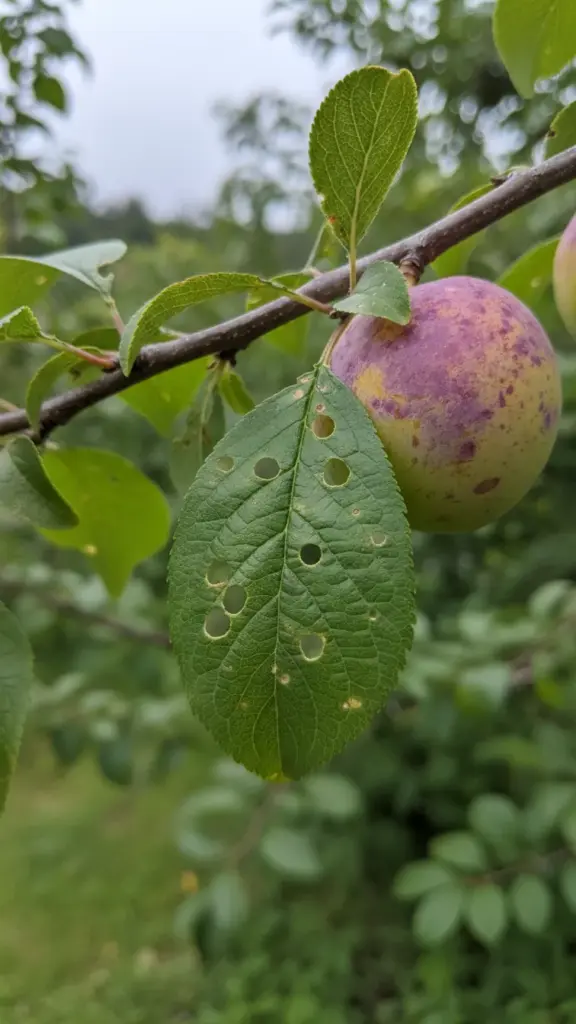
On the fruit itself, the disease causes small, purplish-red, circular spots that are usually distinct from one another rather than merging together early on. As the spots enlarge, a cream-colored area develops in the center while the margins darken to a deeper red or brown. Later, the spots become slightly sunken and take on a rusty brown, scabby texture, and gumming often accompanies the lesions.
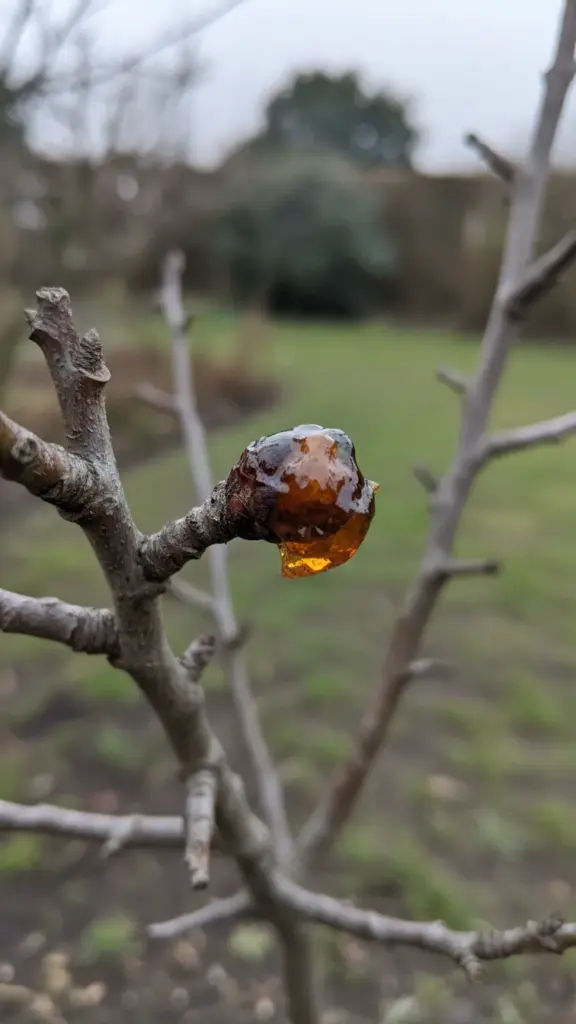
On the tree overall, look for related shot hole symptoms as confirmation: small purplish or reddish spots on leaves that fall out to leave visible holes, gummy varnished-looking buds, and elongated brown or black cankers on twigs, according to Colorado State University Extension.
Coryneum Fruit Spot by Host Fruit
The same fungus produces somewhat different patterns of damage depending on which stone fruit is affected.
| Host Fruit | Most Affected Tissue | Fruit Symptom |
| Apricot | Fruit most frequently | Purplish spots enlarging to gray or scabby lesions with gumming |
| Peach, Nectarine | Twigs, buds, leaves primarily | Rough, corky spots on fruit, less commonly the dominant symptom |
| Sweet Cherry | Fruit and leaves | Reddish brown lesions, sunken rot after storage |
| Almond (nut and ornamental) | Buds, twigs, leaves | Similar shot hole pattern, fruit damage less commercially significant |
Apricot growers in particular should watch the fruit closely, since it is the tissue most likely to show visible, marketable damage on that host.
How Coryneum Fruit Spot Spreads
The fungus overwinters in infected buds and in canker tissue on twigs and branches, giving it a durable source of new spores each spring. Spores are spread primarily by splashing water during rain events, which is why outbreaks track closely with wet weather in spring and, less commonly, before harvest.
Blight is notably difficult to eradicate once established, since the fungus surviving in infected buds and twigs can continue producing spores for two to three years, according to Colorado State University Extension. This is one of the main reasons control requires a multi-year commitment rather than a single treatment season.
Does Coryneum Fruit Spot Cause Lasting Damage
Yes, in two distinct ways. First, infected buds can develop cankers that expand to girdle and kill the twig outright, causing structural damage to the tree beyond just the current season’s fruit. Second, even fruit that survives to harvest can carry latent infection, and ripe fruit infected before picking can develop sunken rot lesions during two to three weeks of refrigerated storage, reducing shelf life and marketability even when the fruit looked acceptable at harvest.
Severe foliar shot holing can also weaken the tree overall by reducing its leaf area, which compounds the direct fruit and twig damage over successive seasons.
Step 1: Prune and Destroy Infected Wood During Dormancy
Remove infected twigs and branches by pruning during the dormant season, then destroy the removed wood rather than leaving it in the orchard or garden. Thorough dormant-season pruning is considered a major, effective component of home management for this disease.
Inspect buds and twigs carefully after leaf drop, looking specifically for the shiny, gummy, varnished appearance that marks an infected bud, and prioritize removing those first.
Step 2: Direct Irrigation Away From Foliage and Fruit
Avoid overhead irrigation that wets leaves, buds, and fruit directly, since diligent sanitation combined with directing irrigation water away from foliage provides adequate control where shot hole incidence is already low. Switching to drip or soil-level watering reduces one of the two main pathways, alongside rain, that spreads spores between susceptible tissue.
This step matters most in regions with naturally wet springs, where you cannot control rainfall but can still control how much additional moisture your irrigation adds to the canopy.
Step 3: Apply a Dormant Fungicide Spray
Apply a fungicide spray after leaf drop in fall or before buds swell in late winter, using options such as Bordeaux mixture, fixed copper, or a synthetic fungicide like chlorothalonil where the disease is severe on high-value trees. Retreatment between full bloom and petal fall may be necessary on highly susceptible apricot varieties or if wet weather continues into spring.
Fungicide timing matters more than frequency here, since a well-timed dormant spray, applied to bare branches before infection windows open, is generally more effective than reactive spraying once fruit spots are already visible.
Step 4: Treat Again at Shuck Fall for High-Value Trees
For apricot and other highly susceptible trees, plan a follow-up fungicide application at shuck split, when the papery covering over young fruit sheds shortly after bloom, since this is a key infection window for fruit-stage disease specifically. Commercial growers typically follow protective fungicide schedules through frequent wet weather events during this period.
Home growers with just one or two trees can often skip this step in dry springs, applying only if rain is expected within about two weeks of shuck fall.
Step 5: Commit to a Multi-Year Control Program
Plan on continued pruning and fungicide applications over a three-year period rather than expecting one season of treatment to eliminate the disease, since the fungus can persist and continue producing spores from existing infected wood for two to three years. Consistent removal of dead and cankered wood each dormant season steadily reduces the amount of inoculum available to reinfect the tree.
Tracking which branches you have already treated and inspected from year to year helps you notice whether the disease pressure is actually declining or simply moving to previously unaffected wood.
Common Questions
Is Coryneum Fruit Spot the Same as Shot Hole Disease
Yes. Coryneum fruit spot describes the fruit-stage symptom of the same disease known as shot hole disease, Coryneum blight, California blight, or pustular spot, all caused by Wilsonomyces carpophilus.
Can You Eat Fruit With Coryneum Fruit Spot
Affected fruit is typically culled at the packinghouse for commercial sale, though home growers can often cut away the scabby, sunken lesions and eat the remaining unaffected flesh if the fruit is otherwise sound.
Why Does Coryneum Fruit Spot Affect Apricots More Than Peaches
The reasons are not fully explained in the literature, but apricot fruit tissue appears more susceptible to visible fruit-stage symptoms than peach fruit, where the fungus more commonly damages twigs, buds, and leaves instead.
How Long Does the Coryneum Fungus Survive on a Tree
Once established in infected buds and cankered twigs, the fungus can continue producing spores for two to three years, which is why control requires sustained effort across multiple growing seasons rather than a single treatment.
Does Rainfall Make Coryneum Fruit Spot Worse
Yes, significantly. Spores spread primarily through splashing water during rain events, so wet spring weather and prolonged rainy periods before harvest both increase infection risk considerably.
Where to Go From Here
Coryneum fruit spot is the visible, fruit-stage face of a disease that actually lives in buds and twigs year-round, which is why treating only the spotted fruit rarely solves the underlying problem. Dormant-season pruning, well-timed fungicide sprays, and irrigation that keeps foliage and fruit dry address the disease at its source rather than just its symptoms. If you are starting new stone fruit trees, growing a plum tree from seed or an apricot from a pit gives you a chance to build good sanitation habits into your orchard from the very first dormant season.








