
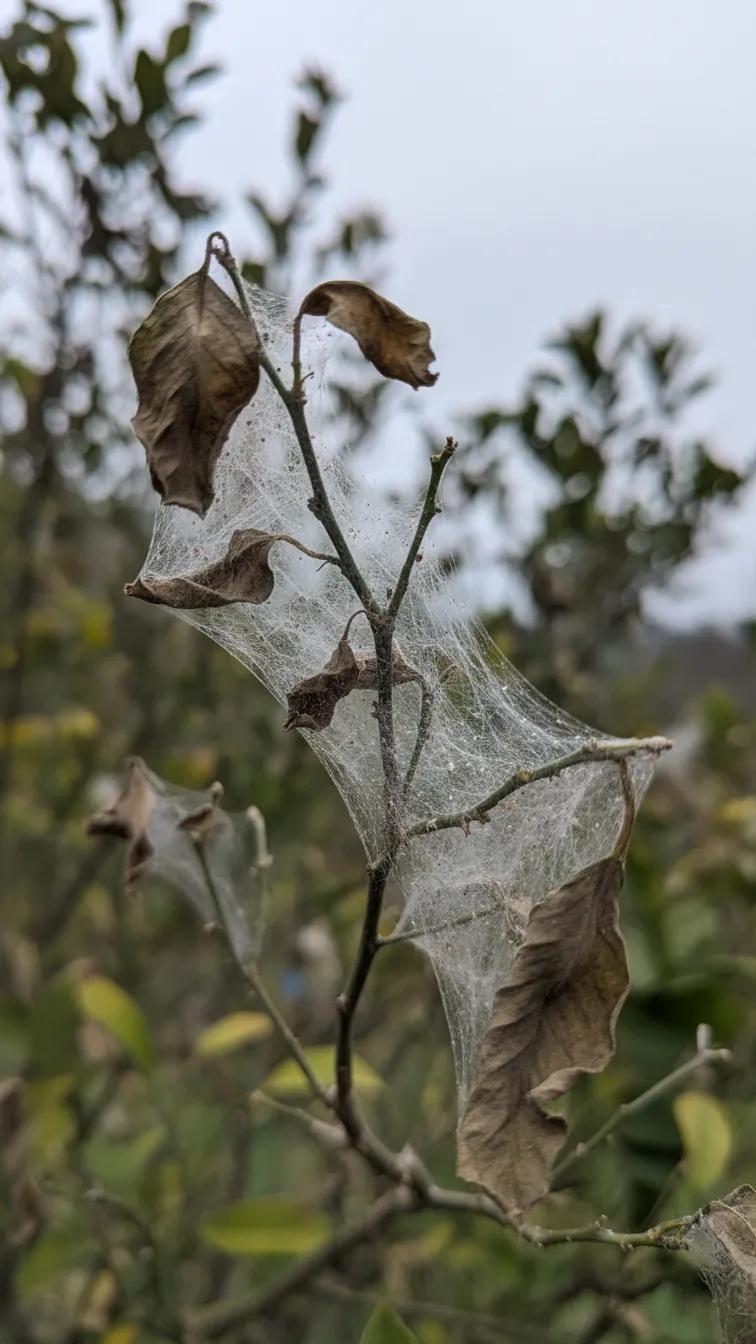

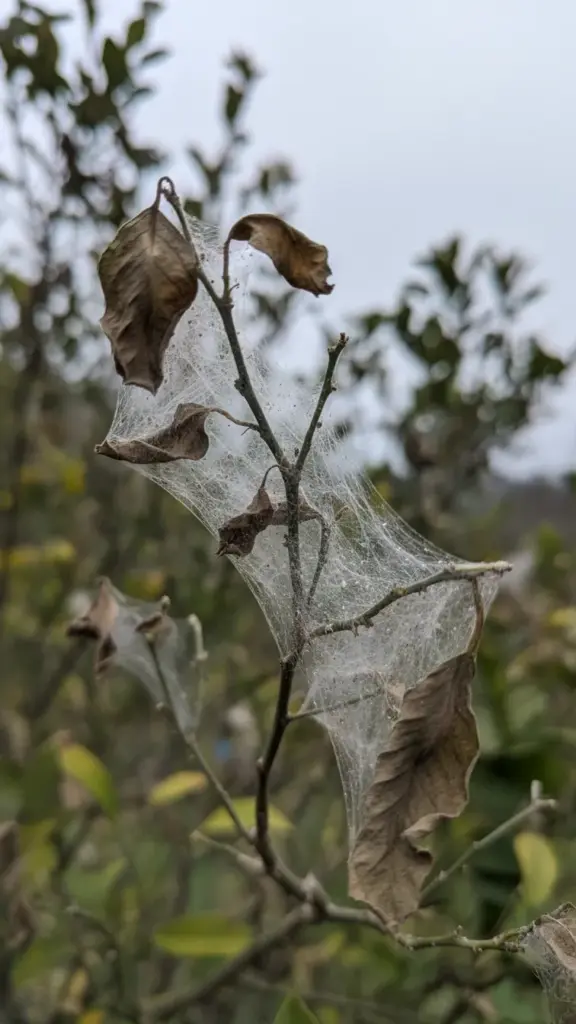
Corticium blight is an older name still used for two related fungal problems, pink disease and thread blight, that wrap twigs and leaves in fine fungal threads and slowly girdle branches on trees like fig, citrus, coffee, and pepper. If Corticium blight is spreading through your planting, understanding which of the two forms you are dealing with changes how you should prune and treat it. See our fig growing guide for the basics of keeping a fig tree healthy overall.
What Corticium Blight Is
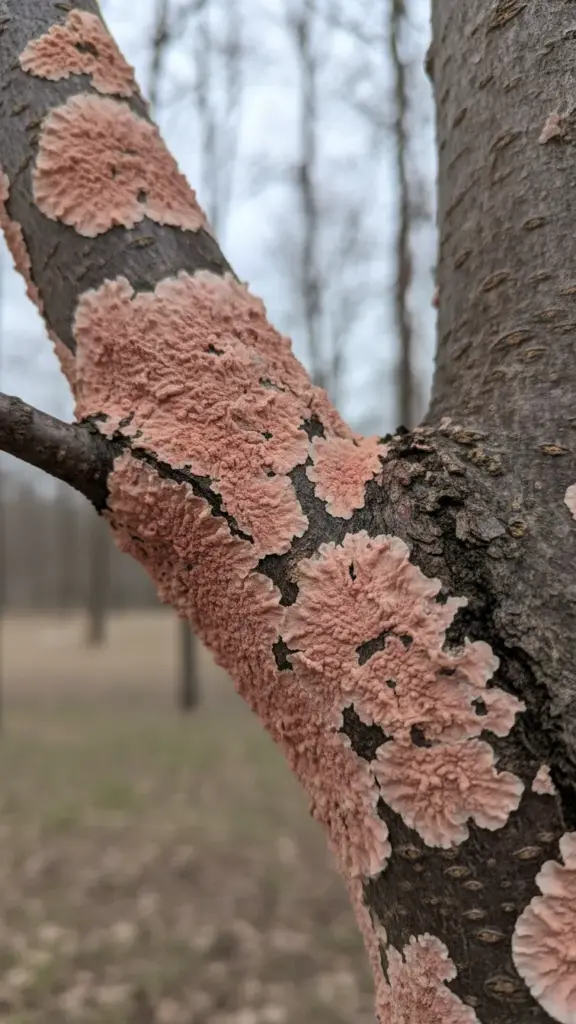
Corticium is an old genus name that has since been split and reclassified, but gardeners and older extension literature still use it to describe two distinct diseases. Pink disease is now classified as Erythricium salmonicolor (formerly Corticium salmonicolor) and attacks the bark of branches, producing a pink, spore-bearing encrustation that can kill the tissue underneath, according to a review of ecological mechanisms for pest and disease control.
Thread blight is a separate group of diseases caused by species including Corticium koleroga and Corticium stevensii, which produce fine, web-like fungal threads across leaves and twigs rather than a bark encrustation. Both problems were historically grouped together because they share the same genus name and a similar appearance from a distance.
How to Identify Corticium Blight
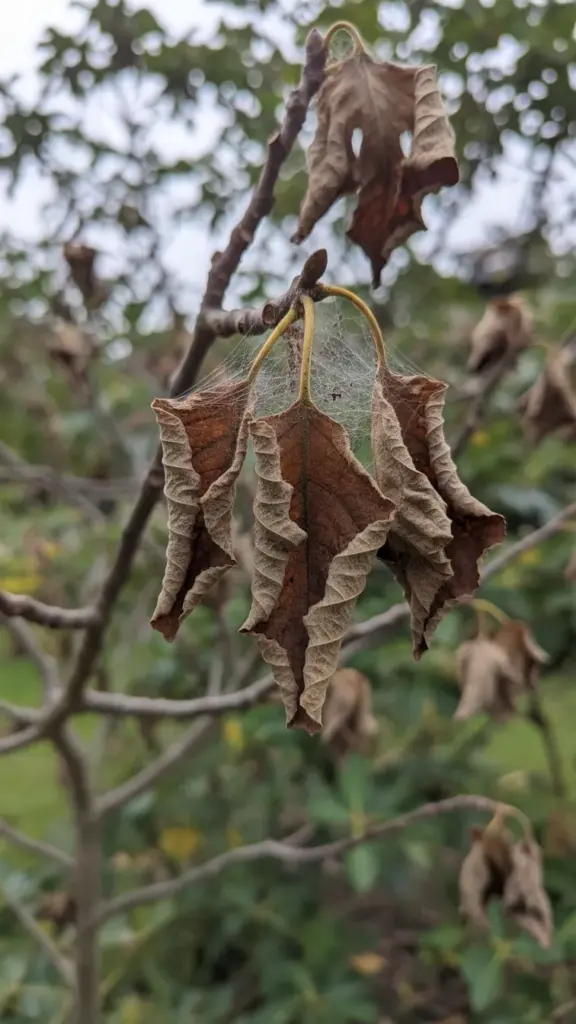
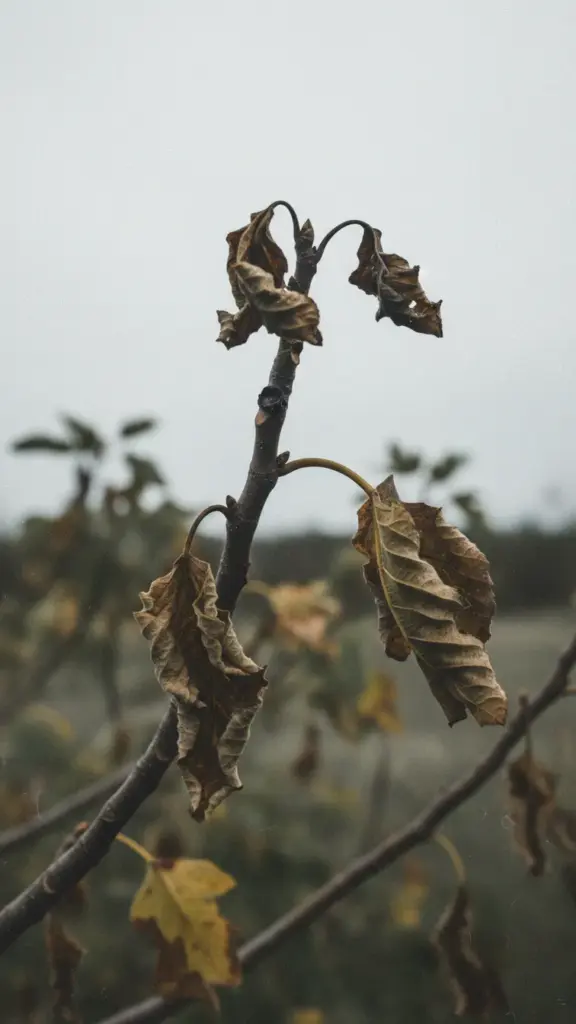
Thread blight is identified by fine white or tan fungal threads running across the undersides of leaves and along twigs, which causes affected leaves to stick together and often hang on the plant instead of dropping normally. On fig trees specifically, this appears as leaf blight with threads visible on close inspection, according to research on Corticium leaf blights of fig.
Pink disease shows a different pattern: a pink to salmon-colored crust develops on the bark of branches, usually starting where two branches meet or where moisture collects, and the branch beyond the infected area often wilts and dies as the pathogen girdles the tissue underneath.
Corticium Blight Across Different Host Plants
The specific pathogen and the plants it prefers vary, though the underlying pattern of thread-like growth or bark encrustation stays consistent.
| Host Plant | Typical Cause | Key Symptom |
| Fig | Corticium koleroga, Corticium stevensii | White thread-like mycelium, leaves stuck together and hanging |
| Citrus | Corticium salmonicolor / koleroga | Pink bark encrustation (pink disease) or thread blight on twigs |
| Coffee | Corticium koleroga | Blight on leaves, branches, twigs, and berries with white fungal threads |
| Pepper | Corticium salmonicolor or Marasmius scandens | Foot rot or thread blight at the stem base |
| Rubber, Cacao | Corticium salmonicolor | Pink spore-bearing bodies on branches, branch dieback |
If you are growing more than one of these plants and see similar symptoms across them, the same underlying fungal group is a likely explanation, even though the visible symptom differs by host.
Conditions That Favor Corticium Blight
High humidity and prolonged leaf wetness are the biggest drivers of both thread blight and pink disease. Foliage in plantings subject to almost daily fog for long periods has been found to be severely damaged by the thread blight fungus, since constant moisture on leaves and twigs gives the fungus the conditions it needs to spread from leaf to leaf and branch to branch.
Dense, shaded canopies with poor air circulation make the problem worse by trapping moisture and slowing how quickly foliage dries after rain, dew, or fog. Warm temperatures combined with this persistent moisture create the most favorable conditions for outbreaks to expand quickly.
Does Corticium Blight Cause Lasting Damage
Yes, particularly with pink disease, which girdles and kills the branch tissue it infects. Once a branch is girdled, everything beyond that point typically dies back, and the damage does not reverse on its own even if conditions later become less favorable for the fungus.
Thread blight is generally less immediately destructive than pink disease, since it usually affects leaves and smaller twigs rather than girdling larger branches, but repeated defoliation from thread blight still weakens the plant over time and can open the door to secondary problems.
Step 1: Prune Out Infected Twigs and Branches
Remove infected twigs and branches well below the visible symptoms, since both thread blight and pink disease can extend slightly beyond where damage is obvious. Cutting a few inches into apparently healthy wood gives a better chance of removing the fungus completely rather than leaving a hidden infection to resume spreading.
Dispose of pruned material away from the planting rather than leaving it on the ground nearby, since infected debris can serve as a source of new infections.
Step 2: Sanitize Pruning Tools Between Cuts
Clean pruning shears with rubbing alcohol or a diluted bleach solution between cuts, especially when moving from a clearly infected branch to healthy wood. This single habit prevents you from being the one who spreads the fungus from an infected branch to a healthy one during the same pruning session.
A consistent tool-sanitizing habit matters more here than with many other diseases, since thread blight spreads readily through contact with infected plant material.
Step 3: Improve Air Circulation Through the Canopy
Thin dense canopies and remove crossing or crowded branches to let air move more freely through the plant, since poor air circulation and trapped humidity are major drivers of Corticium blight outbreaks. Spacing plants further apart at installation, where that is still an option, reduces the shared humid microclimate that lets the disease pass between neighboring plants.
Removing nearby vegetation that blocks airflow, such as overgrown hedges or dense understory plantings, can meaningfully speed up how quickly foliage dries after rain or fog.
Step 4: Reduce Leaf Wetness From Irrigation
Switch to drip or soil-level irrigation instead of overhead watering wherever practical, since wetting the foliage directly extends the window during which the fungus can establish new infections. Water early in the day rather than in the evening, so any moisture that does reach the leaves has time to dry before nightfall.
If your planting is affected by persistent natural fog or humidity rather than irrigation, focus more heavily on canopy thinning, since watering adjustments alone will not solve a climate-driven moisture problem.
Step 5: Apply a Copper-Based Fungicide
Copper-based fungicides are commonly used against thread blight and pink disease, applied both as a spray on foliage and as a treatment on pruning wounds and exposed cuts after removing infected material. Treating fresh pruning cuts helps prevent the fungus from re-establishing at the wound site during humid weather.
Repeat applications on a schedule appropriate to your local conditions and product label, since a single treatment rarely resolves an established outbreak on its own, particularly where humidity remains high through the season.
Common Questions
Is Corticium Blight the Same as Pink Disease
Not exactly. Pink disease is one specific form of Corticium blight, caused by what is now classified as Erythricium salmonicolor, while thread blight is a separate group of diseases within the same historical genus that produces fungal threads rather than a pink bark encrustation.
Can Corticium Blight Kill an Entire Tree
It is more likely to kill individual branches through girdling, particularly with pink disease, rather than the whole tree outright. Repeated branch dieback over several seasons can weaken a tree significantly, though a single localized infection caught early rarely kills a mature tree.
Why Do Affected Leaves Stay Stuck to the Plant
The fine fungal threads produced by thread blight physically bind leaves together and to the twig, which is why affected foliage often hangs in place rather than dropping normally the way healthy senescing leaves do.
Does Corticium Blight Spread Between Different Plant Species
Some species within this fungal group have a fairly wide host range, including fig, citrus, coffee, pepper, cacao, and rubber, so a planting with several of these species growing close together in humid conditions carries a somewhat higher combined risk.
Is Corticium Blight More Common in Certain Climates
Yes. It is most problematic in humid, foggy, or persistently wet climates, which is why it is more frequently reported in tropical and subtropical growing regions than in drier temperate ones.
Where to Go From Here
Corticium blight covers two related problems, thread blight and pink disease, that both thrive on prolonged leaf and bark moisture and poor airflow through the canopy. Pruning out infected wood, sanitizing tools, and opening up a crowded canopy address the underlying conditions rather than just the visible symptoms. If you are growing pepper plants or fig trees from seed in a humid climate, watching for early thread growth on leaves before it spreads to woody tissue gives you the best chance of stopping it early.








