
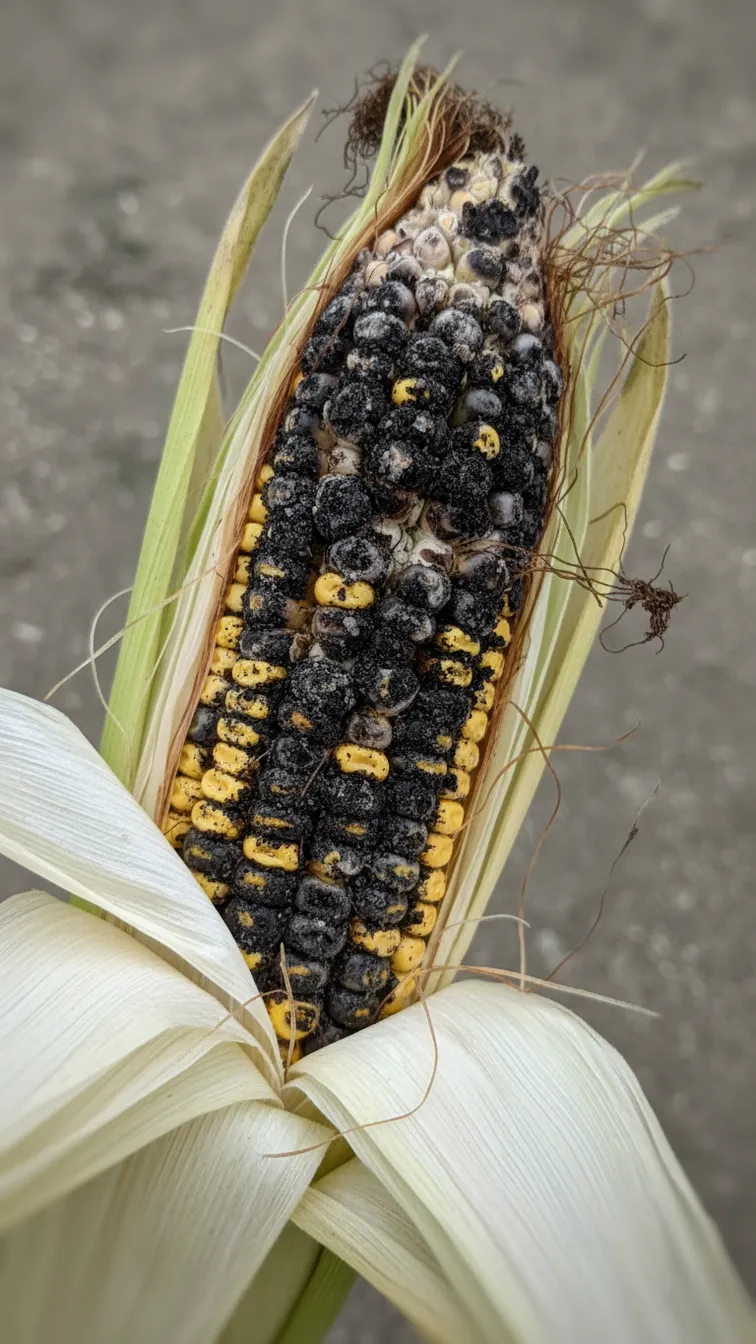

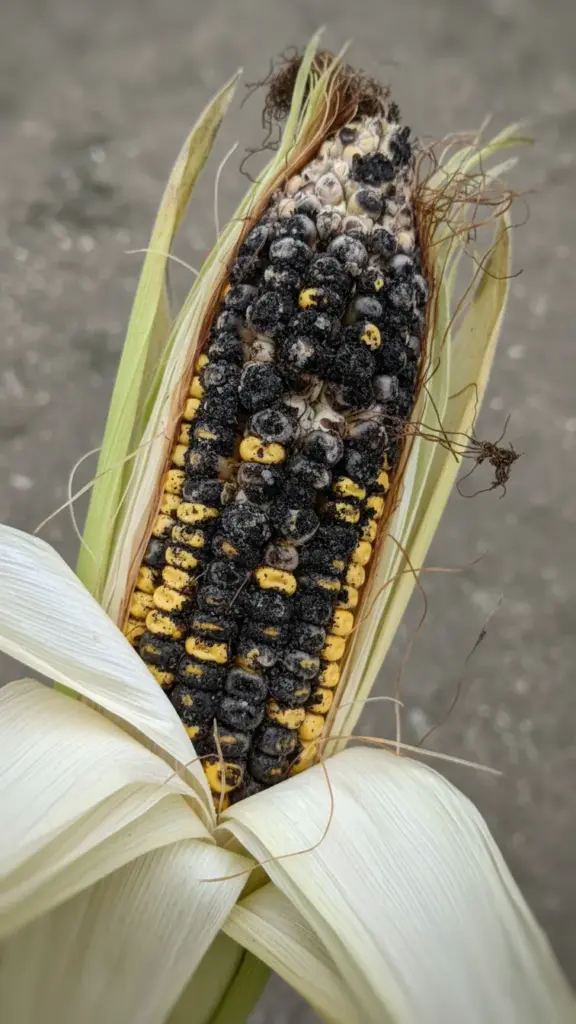
Common smut is one of the most recognizable diseases a home gardener or field grower will ever see on corn, because there is no mistaking a swollen, silvery gall bursting open into a cloud of black powder. If you are growing your own sweetcorn, this is one of the first disease names you are likely to run into once ears start to form.
What Common Smut Is
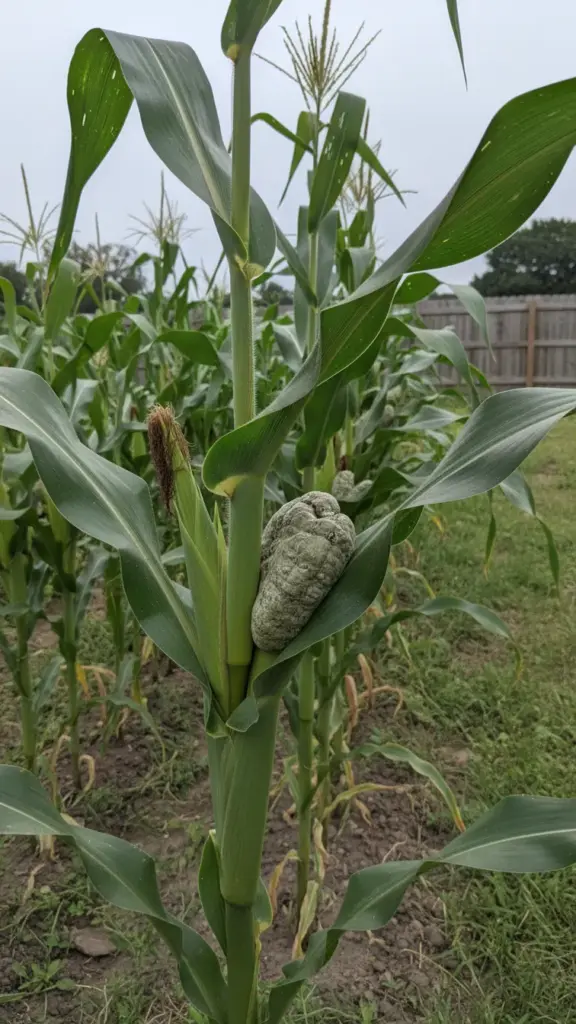
Common smut is a fungal disease of corn caused by Ustilago maydis. It infects almost any actively growing part of the plant above ground, including leaves, tassels, stalks, and ears, and turns healthy tissue into swollen, tumor-like galls. Unlike leaf-spot fungi that leave behind flat lesions, this pathogen hijacks the plant’s own growth signals and forces infected cells to expand into fleshy masses that can grow several inches across on an ear or stalk.
Sweet corn tends to suffer the most visible and yield damage from this disease, though field corn and popcorn can be infected too. Gardeners notice it most because they expect clean, fully formed ears at harvest.
Common smut is often confused with head smut, a related but different disease that destroys the tassel and ear structure entirely rather than forming distinct galls. The two are easy to tell apart once you know what to look for, covered later in this guide.
How to Identify Common Smut Galls
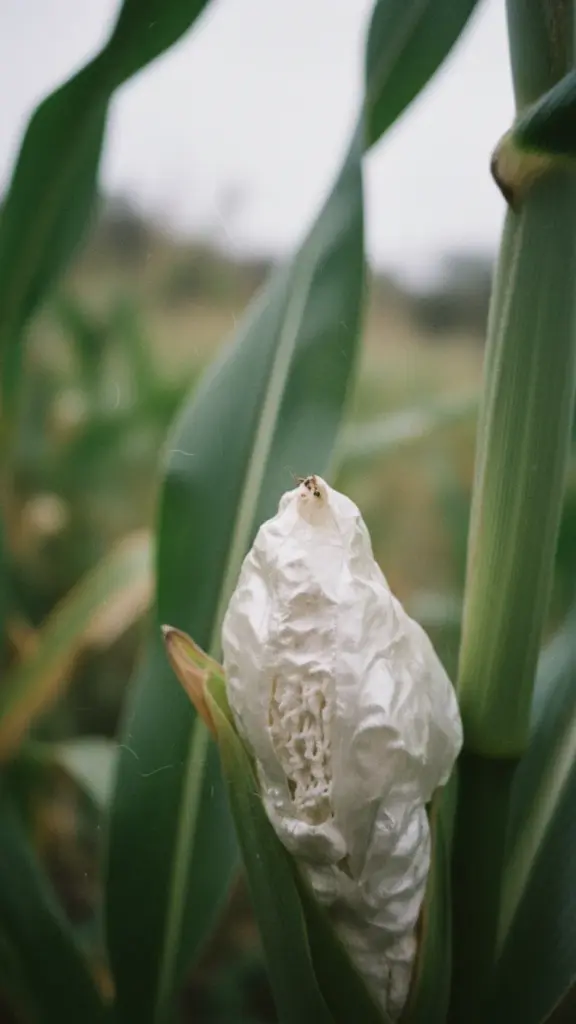
The clearest sign of common smut is a gall: a swelling that starts out pale green to silvery white, feels spongy or fleshy to the touch, and is often larger than anything else on the plant. Young galls are covered by a thin membrane that keeps the inside moist and pale.
As the gall matures, three changes happen in sequence. The outer covering turns papery, dry, and grayish brown. The inside fills with a black, powdery mass of spores. The membrane eventually splits or ruptures on its own, releasing spores into the air.
Galls on leaves and tassels tend to stay small, often under half an inch, and dry out quickly without doing much visible harm. Galls on ears and stalks are the ones growers notice, sometimes reaching four to six inches across and replacing kernels entirely with fungal tissue.
Timing matters for diagnosis. Early symptoms can appear within about ten days of infection, and the black spore mass usually finishes forming roughly three weeks later. If you catch a gall in that pale, spongy stage before it turns dark, you still have a chance to remove it before it releases spores.
Where Common Smut Appears on the Corn Plant
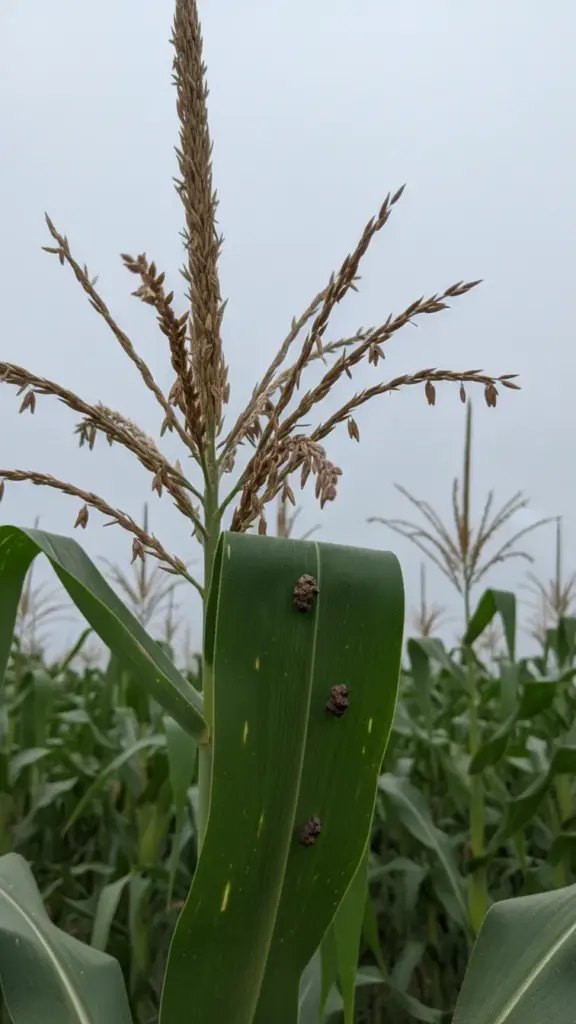
Every above-ground part of the plant with actively dividing cells is a potential infection site, which explains why symptoms can show up in so many different places on the same plant.
Ears are the most common and most damaging location. Because ear tips finish pollinating last, that unfertilized tissue stays vulnerable longer and often becomes the first place a gall forms. Kernels near the tip of the ear are replaced by galls more often than kernels closer to the base.
Tassels and leaves get infected too, but the galls there stay small and mostly cosmetic. Stalks can develop galls at nodes or at points of physical injury, and buds and aerial roots are affected occasionally, though far less often than ears, tassels, and leaves.
How Common Smut Spreads and Survives
The fungus survives between growing seasons as teliospores, a tough resting spore stage that can remain viable in soil and crop debris for five to seven years. That long survival window is one reason common smut rarely disappears from a garden or field after just one bad season.
In spring, teliospores germinate and produce a second spore stage that spreads by wind or by water splashing up from the soil onto young leaves, a pattern documented by Wisconsin Horticulture Extension. Infection typically happens through the silks before pollination or through wounds anywhere on the plant, including damage from hail, insects, cultivation equipment, or animals feeding on the crop.
There is one unusual pathway worth knowing. Spores can pass through an animal’s digestive system after it eats infected corn and remain viable in the manure. Spreading that manure on a field or garden bed can reintroduce spores to soil that was otherwise clean.
Common Smut vs Head Smut and Other Corn Problems
Several corn problems produce discolored or swollen tissue, which makes accurate identification worthwhile before you settle on a management plan.
| Problem | Location | Key Feature | Texture |
| Common Smut | Ears, tassels, stalks, leaves | Distinct rounded galls, black powdery interior once mature | Spongy when young, papery when mature |
| Head Smut | Tassel and ear as a unit | Entire tassel or ear replaced by a mass of spores, leaflike strands present | Dry and dusty from early stages |
| Aspergillus Ear Rot | Kernels on the ear | Olive-green to black mold coating kernels, no distinct gall shape | Powdery mold layer, not a firm gall |
| Corn Borer Damage | Stalks and ears | Tunneling, broken stalks, entry holes | Physical damage rather than fungal growth |
The single most useful distinguishing feature is the gall itself. Common smut produces separate, rounded swellings you can point to individually. Head smut and Aspergillus ear rot both spread across a whole structure rather than forming isolated lumps.
Conditions That Favor Common Smut
Common smut thrives under a fairly specific combination of stress and weather. Hot, dry conditions during pollination weaken the plant’s natural defenses and interfere with fertilization, leaving more unpollinated ovaries open to infection. Warm temperatures between roughly 79 and 93 degrees Fahrenheit paired with moderate rainfall create close to ideal conditions for spore germination.
Soil fertility plays a role too. Plants grown in soils with excessive nitrogen, or treated with heavy applications of manure, show higher infection rates than plants grown under balanced fertility. Physical injury from hail, wind, insects, or cultivation equipment opens a wound the fungus can exploit even outside of the silk-infection window.
Can Common Smut Be Treated Once Galls Form
No. Once a gall has formed, there is no product or technique that reverses it. Fungicides are not effective against common smut, a point confirmed by plant pathologists at University of Nebraska-Lincoln, and nothing you spray on a gall will shrink it or stop it from eventually rupturing.
The only real option after a gall appears is physical removal before it splits open. Cutting away and destroying galls while they are still pale and firm keeps that particular batch of spores out of the soil, even though it will not save the tissue that already turned into a gall.
Step 1: Scout and Remove Galls Before They Rupture
Walk your corn rows every few days once ears begin to form, since galls can go from small and pale to fully mature within about three weeks. Cut off any gall you find while it is still spongy and light colored, and place it directly into a bag rather than dropping it on the ground.
Burn the removed galls where local rules allow, or bury them well below the depth where spores are likely to resurface with tilling. Removing galls will not undo the damage to that plant, but it keeps a large release of spores from settling into your soil for years to come.
Step 2: Reduce Mechanical and Insect Injury
Because wounds are one of the fungus’s main entry points, reducing physical injury lowers infection risk noticeably. Time cultivation and hand weeding so you disturb the base of plants as little as possible once ears begin developing.
Insect control matters here too. Corn borers and similar pests create wounds that smut spores can use as an entry point, so managing insect pressure around tasseling time indirectly reduces smut risk even though it is not a direct fungicide treatment.
Step 3: Manage Nitrogen and Soil Fertility
Avoid pushing nitrogen levels higher than your corn actually needs. Excess nitrogen, along with heavy manure applications, has been linked repeatedly to higher rates of common smut infection.
A soil test before planting will tell you what your beds actually need rather than leaving you to guess. If you already apply compost or manure regularly, cutting back slightly in a bed with a smut history is worth trying the following season.
Step 4: Rotate Crops and Manage Residue
Since teliospores can survive in soil and debris for years, breaking the cycle with rotation gives populations time to decline. A three-year rotation away from corn tends to reduce disease pressure more than a two-year rotation, based on findings from NC State Extension, and even a two-year break helps more than continuous corn.
Clearing and deep-plowing infected stalks and debris in the fall buries surviving spores below the surface, which limits how easily they reach new plants the following spring. This step works best paired with rotation rather than as a substitute for it.
Step 5: Choose Resistant or Tolerant Hybrids
Hybrid selection is one of the more effective long-term tools available, even though no variety offers complete immunity. Dent corn generally shows more resistance than sweet corn or popcorn, and some sweet corn varieties have shown noticeably lower infection rates in university trials than others.
Ask your local seed supplier which hybrids perform best against common smut in your specific growing region, since resistance can vary depending on local strains of the fungus and local weather patterns.
Is Common Smut Dangerous to Eat or Feed to Animals
Common smut poses no direct health hazard to people or livestock. Immature galls are harvested and eaten in parts of Mexico and Central America under the name huitlacoche, where they are considered a delicacy and sometimes sell for more than the healthy crop growing around them.
Livestock that eat smutty stalks, leaves, or ears are not directly harmed either, though some may avoid smutty material if cleaner feed is available, and the black spore dust can irritate nasal passages in animals exposed to large amounts.
Common Questions
Does Common Smut Reduce Corn Yield
Yes, but the amount varies widely depending on how many ears are affected. A gall that replaces an entire ear results in a total loss for that ear, while small leaf or tassel galls barely affect the plant at all.
Can Fungicides Control Common Smut
No fungicide currently controls common smut effectively. Management relies on cultural practices such as rotation, fertility management, and gall removal rather than chemical sprays.
Is Corn Smut the Same as Huitlacoche
Yes. Huitlacoche is the culinary name for young, immature common smut galls harvested before they turn dry and black. It is the same fungus and the same disease, just harvested at an earlier, edible stage.
Does Common Smut Spread From Plant to Plant Within a Season
It can, though most spores released from a ruptured gall fall to the ground or settle into crop debris rather than immediately infecting a nearby plant. Wind can still carry some spores far enough to reinfect the same field later in the season.
How Long Do Common Smut Spores Survive in Soil
Teliospores can remain viable in soil and crop debris for five to seven years, which is why a single infected season can affect corn plantings for several years afterward if residue is not managed.
Where to Go From Here
Common smut is unpredictable from year to year, showing up heavily in a hot, dry season and barely appearing the next. Scouting regularly during ear formation, keeping soil fertility balanced, and rotating away from corn every few years will do more to manage this disease long term than any single treatment applied after galls appear. If your garden already deals with other gall-forming problems, building good sanitation habits now will pay off across more than just your corn patch.








