
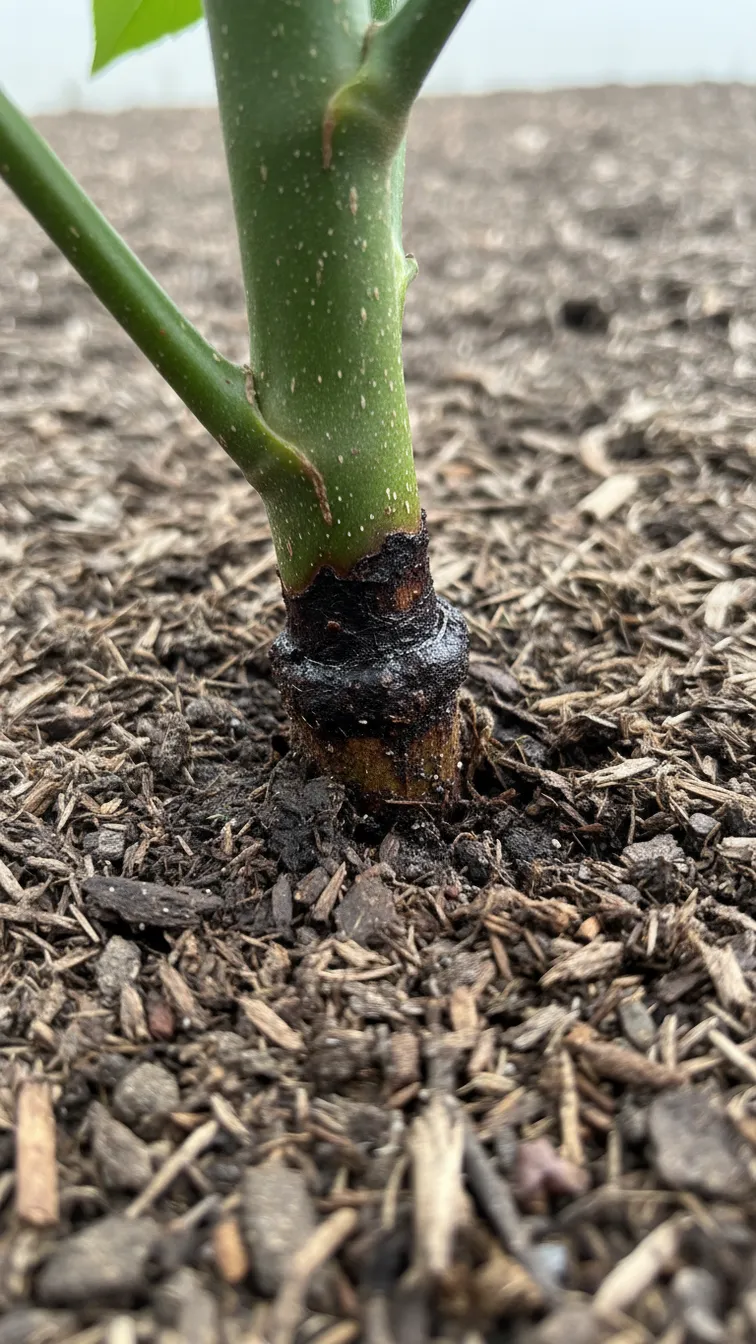

A plant that suddenly wilts and dies even though the soil looks fine and the roots seem intact often has a problem hiding right at the surface, where the stem meets the soil. That narrow band is called the collar, and when disease girdles it, water and nutrients simply cannot get past that point anymore, no matter how healthy the roots below are.
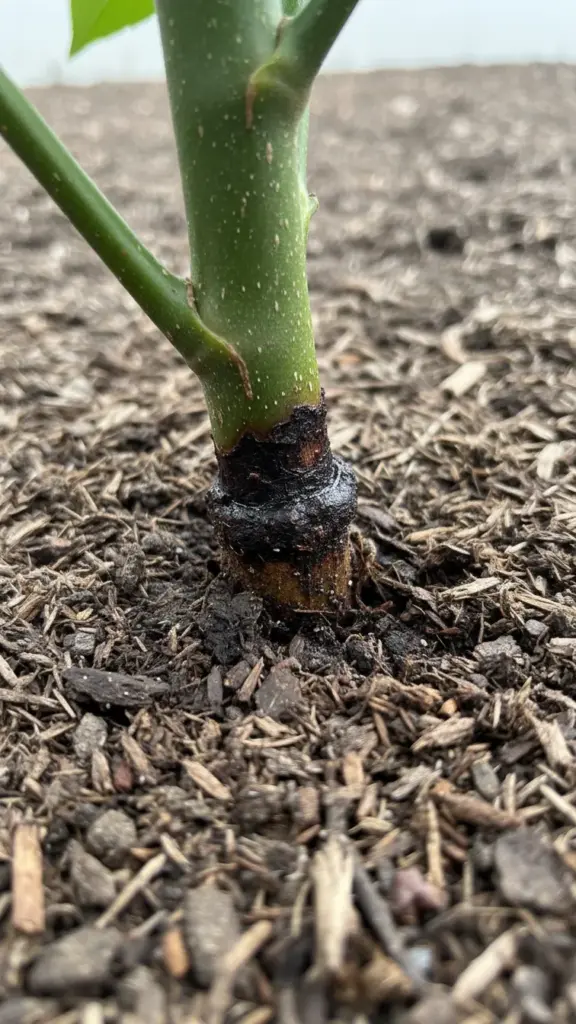
Collar rot is not one single disease. It is a description of where an infection happens rather than a single pathogen, which is part of why it shows up under different names depending on what it affects: Phytophthora collar rot on fruit and ornamental trees, and Sclerotium rolfsii or Alternaria collar rot on vegetable seedlings and transplants. This page covers what collar rot looks like across these different situations, how it differs from the crown rot and root rot terms it often gets confused with, and what to actually do about it.
What Collar Rot Actually Is
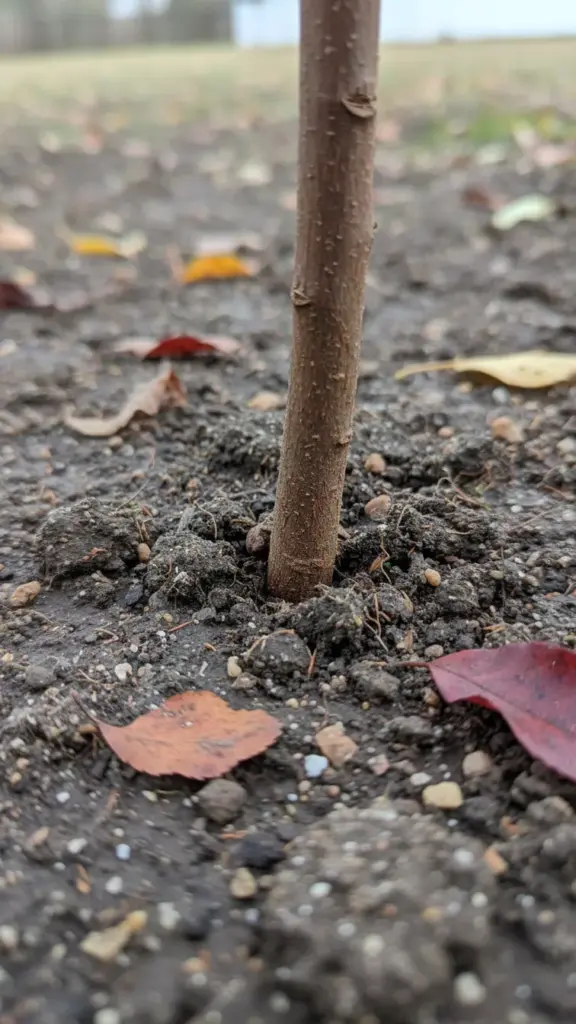
The collar is the transition zone where the stem or trunk meets the soil line, right above where the root system begins. Collar rot is any disease that attacks and girdles this specific zone, cutting off the plant’s vascular connection between roots and top growth. Because the collar carries all the water and nutrients moving up from the roots, and all the sugars moving down from the leaves, an infection that fully encircles it is often fatal even when everything above and below that point looks structurally normal.
How to Identify Collar Rot Symptoms
Symptoms vary depending on the plant and the pathogen involved, but a few signs show up consistently:
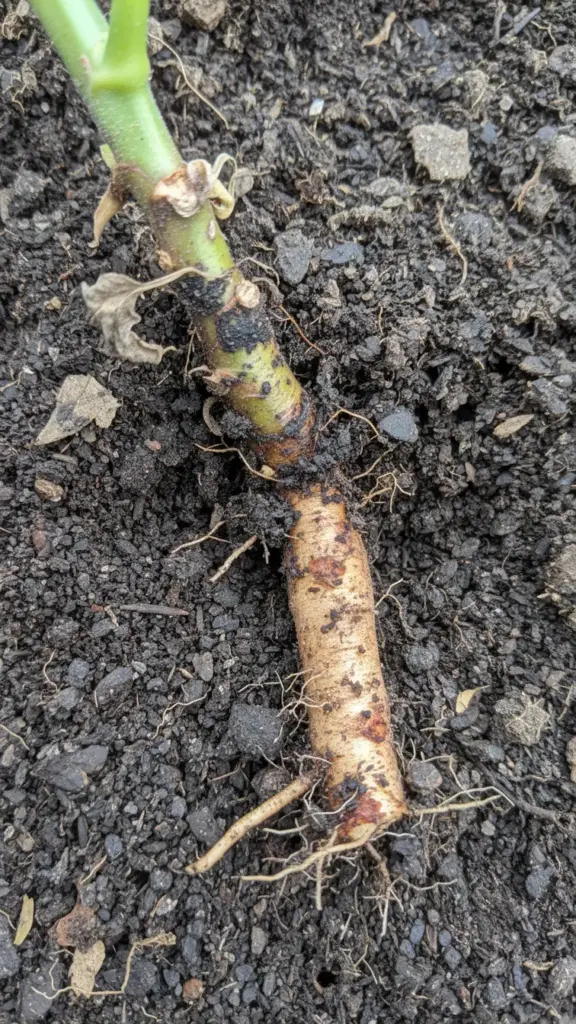
- A discolored, sunken, or water-soaked lesion right at soil level, often ringing part or all of the stem
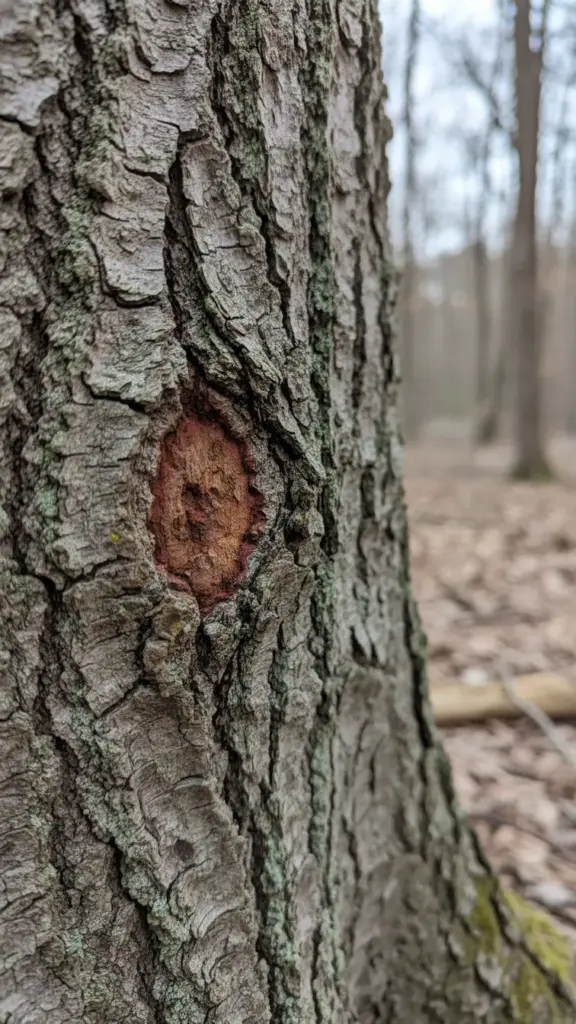
- Discoloration of the inner bark or tissue just below the surface, commonly a reddish-brown or amber-brown color
- Wilting and yellowing of older leaves first, since they are furthest from the roots and feel the water shortage soonest
- A plant that looks otherwise healthy above the lesion, then declines rapidly once the girdling is complete
- On young seedlings, a pinched, water-soaked stem right at the soil line that can cause the whole plant to collapse
Because the actual infection point is often at or just below the soil surface, the lesion itself can be easy to miss until the plant is already showing serious stress above ground.
What Causes Collar Rot
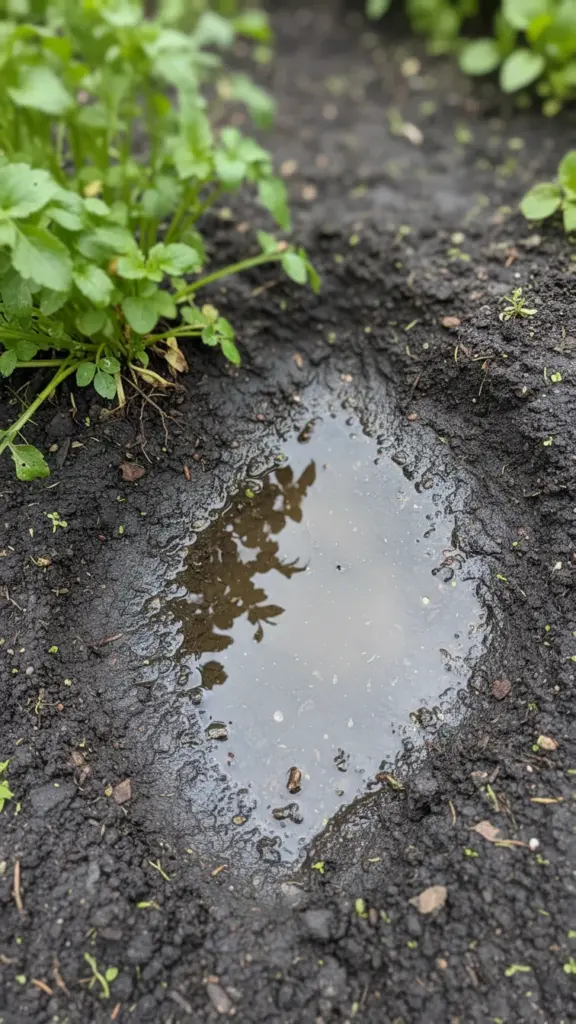
Several unrelated pathogens can cause collar rot, and which one is responsible usually depends on the type of plant involved. According to UC IPM’s overview of Phytophthora diseases, several species of the soilborne pathogen Phytophthora cause root, crown, and collar rot in a wide range of herbaceous and woody plants, especially when soil around the base stays wet for extended periods or when a plant is set too deep at planting.
On vegetable seedlings and transplants, the more common culprits are different fungi entirely. Rutgers’ Plant & Pest Advisory describes collar rot on tomato as a disease that often starts where a leaflet branch has been broken or pruned, giving the pathogen a wound to enter through, and notes that its symptoms closely resemble Alternaria stem rot, sometimes with the same dark concentric rings and sometimes without them.
Collar Rot in Trees and Woody Plants
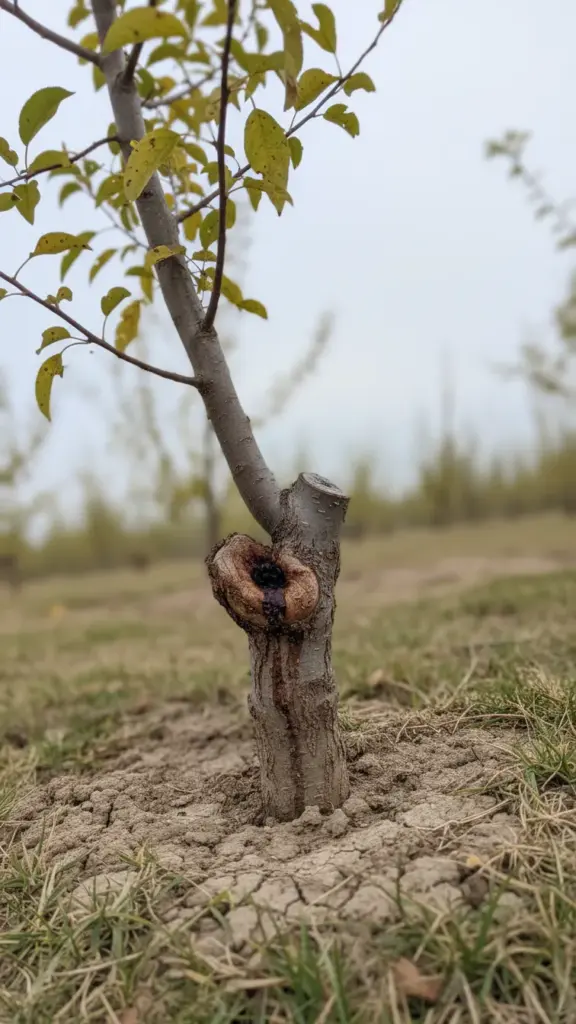
On fruit and ornamental trees, Phytophthora species are the most frequent cause, and the terminology gets specific. Washington State University’s tree fruit disease guide on apple and cherry explains that Phytophthora rots can girdle the scion, which is called collar rot, damage the rootstock just below the soil surface, called crown rot, and cause necrosis and death of fine roots, called root rot. All three can occur from the same infection, but the collar specifically refers to the graft union area on grafted fruit trees.
Infected tissue typically shows a clearly delineated reddish-brown discoloration of the inner bark several inches below the soil line, and an infected tree often continues to bloom normally even as it declines and eventually dies, which can make the cause easy to misread as something else entirely.
Collar Rot in Vegetable Seedlings and Transplants
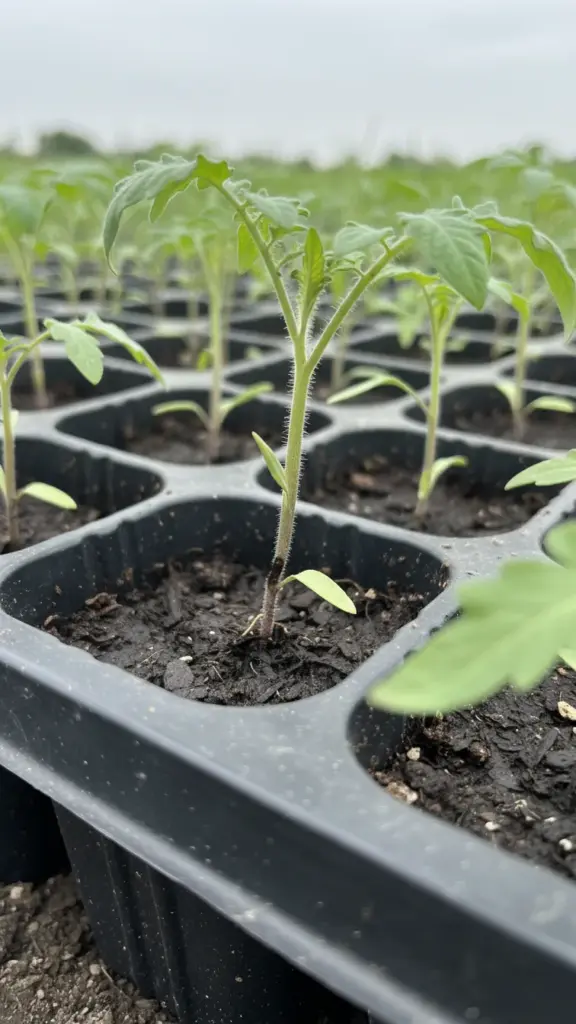
In vegetable production, collar rot most often shows up in transplant flats and float beds, where crowded, humid conditions favor infection. Symptoms typically begin as small, dark green, water-soaked lesions at the base of the stem that are easy to miss until cankers form on the lower stem, causing yellowing of older leaves, wilting, or drooping leaf tips. Once a cluster of transplants collapses, the gaps left behind in a tray or bed are often the first thing a grower actually notices.
On tomato specifically, collar rot tends to enter through a wound, often where a side shoot was pruned or broken off, and stems that become fully girdled cause the affected branch or the whole plant to wilt and die. Fungicides labeled for Early blight also tend to help against collar rot, even though there is little varietal resistance bred specifically against it.
Collar Rot vs Crown Rot and Root Rot
| Term | What It Refers To | Typical Location |
| Collar Rot | Infection girdling the stem right at the soil line, or the graft union on grafted trees | At or just above soil level |
| Crown Rot | Infection damaging the base of the stem and root crown just below the soil surface | Just below soil level |
| Root Rot | Infection killing fine and larger roots, without necessarily girdling the stem | Below ground, throughout the root system |
According to Michigan State University’s extension notes on Phytophthora diseases, crown rot and collar rot are often, and mistakenly, used interchangeably, since the same infection can affect more than one of these zones at once. In practice, exactly which term applies matters less than recognizing that the disease is attacking the base of the plant rather than its leaves or upper stem.
Why Wet Soil and Deep Planting Make It Worse
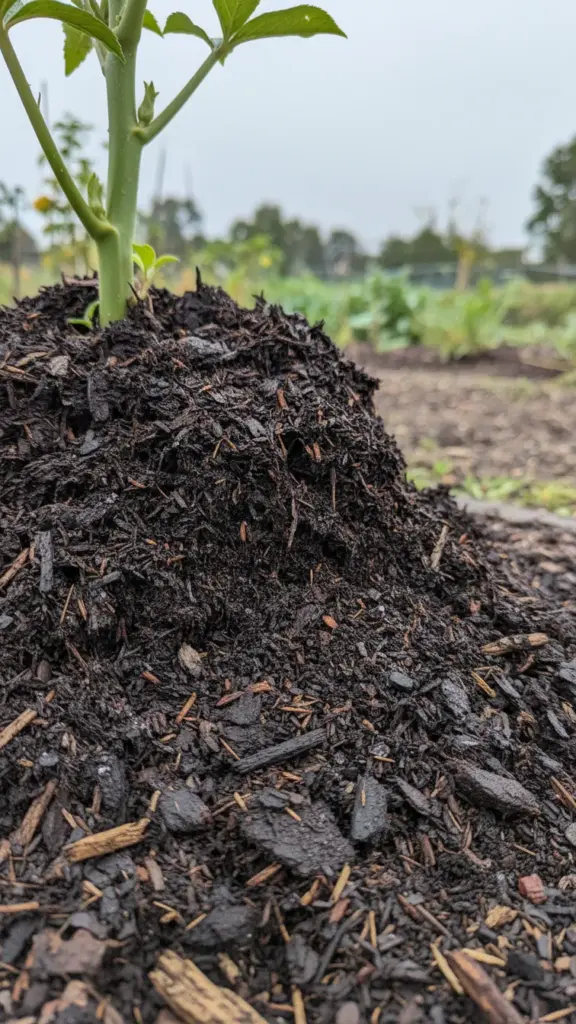
Most of the pathogens behind collar rot thrive in consistently wet soil. UC IPM notes that Phytophthora species become active in warm, moist soil and spread through spores that swim in the thin water films between soil particles, meaning waterlogged soil around the base of a plant creates exactly the conditions the pathogen needs. Planting too deep compounds the problem by burying the collar itself in that same wet zone, instead of keeping it exposed to air where it can dry out between waterings.
Step 1: Expose and Inspect the Collar
If a plant is wilting for no obvious reason, pull back mulch and soil from around the base to expose the collar and look for discoloration, a sunken lesion, or a soft, water-soaked patch. On a grafted tree, check specifically at the graft union rather than lower on the rootstock.
Step 2: Improve Drainage and Planting Depth
Make sure the collar or graft union sits above the soil line rather than buried, and correct any grading or mulch buildup that traps water against the base. Improving drainage around the root zone reduces the amount of time the collar spends in saturated soil, which is when infection is most likely.
Step 3: Remove Infected Tissue and Debris
On seedlings and transplants, remove and discard collapsed or infected plants promptly rather than leaving them in the tray or bed, since the pathogen can persist on plant debris and infect neighboring plants. On trees, any pruning wounds near the base should be made cleanly and kept as small as possible, since wounds are a common entry point for the fungi involved.
Step 4: Choose Resistant Varieties and Rootstocks
For trees, choosing rootstocks with documented tolerance to Phytophthora collar and crown rot is one of the most effective long-term controls, particularly when replanting an old orchard site with a known disease history. For vegetables like tomato, varietal resistance to collar rot itself is limited, but choosing varieties bred for Early blight resistance tends to reduce overall susceptibility to both.
Step 5: Apply Fungicide When Appropriate
Fungicide can help manage collar rot but works best as a supplement to good drainage and sanitation rather than a stand-alone fix. On trees, treatments containing fosetyl-al or phosphorous acid are commonly used against Phytophthora infections. On vegetable transplants, a fungicide program aimed at Early blight often provides useful protection against collar rot as well, since the two diseases respond to similar products.
Can a Plant Survive Collar Rot
It depends on how much of the collar has been girdled by the time it is caught. A partial lesion that has not fully encircled the stem can sometimes be arrested by exposing the area to air, improving drainage, and removing the infected tissue. Once the girdling is complete, the vascular connection is severed and the plant above that point cannot be saved, even if the roots are still alive.
Common Questions
Is Collar Rot the Same Disease Everywhere
No. It describes an infection location rather than one specific pathogen, so a tree’s Phytophthora collar rot and a tomato seedling’s collar rot are caused by entirely different organisms even though both are called by the same name.
Why Do My Seedlings Collapse in Clusters
Collar rot in trays and float beds spreads easily between crowded, humid seedlings, so a small initial infection can knock out a whole section before it is noticed, leaving visible gaps once affected plants collapse.
Can I Save a Grafted Tree With Collar Rot
It depends on how far the infection has spread around the graft union. Exposing the area, improving drainage, and removing infected bark early gives the best chance, but a fully girdled union usually cannot be reversed.
Does Mulch Cause Collar Rot
Mulch itself does not cause it, but piling mulch directly against the stem traps moisture against the collar and can create the wet conditions the pathogen needs, so keeping a small gap between mulch and the stem is a simple precaution.
Is Collar Rot the Same as Basal Stem Rot
They are related concepts, both describe disease at the base of a plant, but basal stem rot is often used for a different set of pathogens and hosts. See how basal stem rot is identified for comparison.
Where to Go From Here
If a plant is wilting without an obvious cause, check the base before assuming a root or leaf problem. A discolored, girdling lesion right at the soil line points to collar rot, and catching it before it fully encircles the stem is the difference between a plant that recovers and one that cannot be saved. For related base-of-plant diseases, see bacterial stem rot and Botrytis crown rot.








