
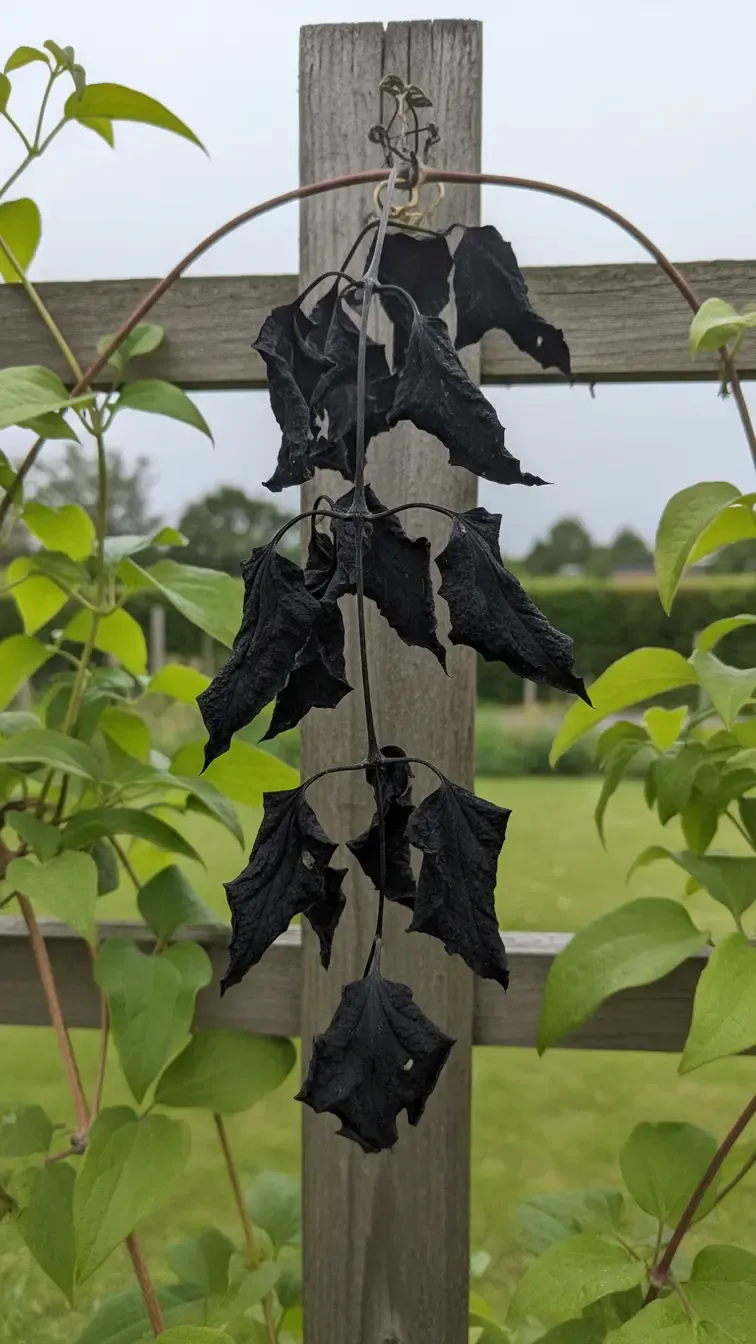

A clematis that goes from lush and flowering to black and collapsed within a few days is alarming enough that most gardeners assume the worst. The good news is that clematis wilt, despite the dramatic collapse, is rarely fatal to an established plant, and in most cases the same root system that pushed up this year’s vine will send up a new one next season.
The confusing part is that a wilting clematis and clematis wilt are not automatically the same thing. A lot of ordinary problems, drought stress, root rot, slug damage, even a plant potted into too large a container, can make a clematis wilt without the specific fungal disease being involved at all. This page separates the actual disease from its many look-alikes, explains why some varieties get hit far harder than others, and walks through what to actually do when a vine collapses overnight.
What Clematis Wilt Actually Is
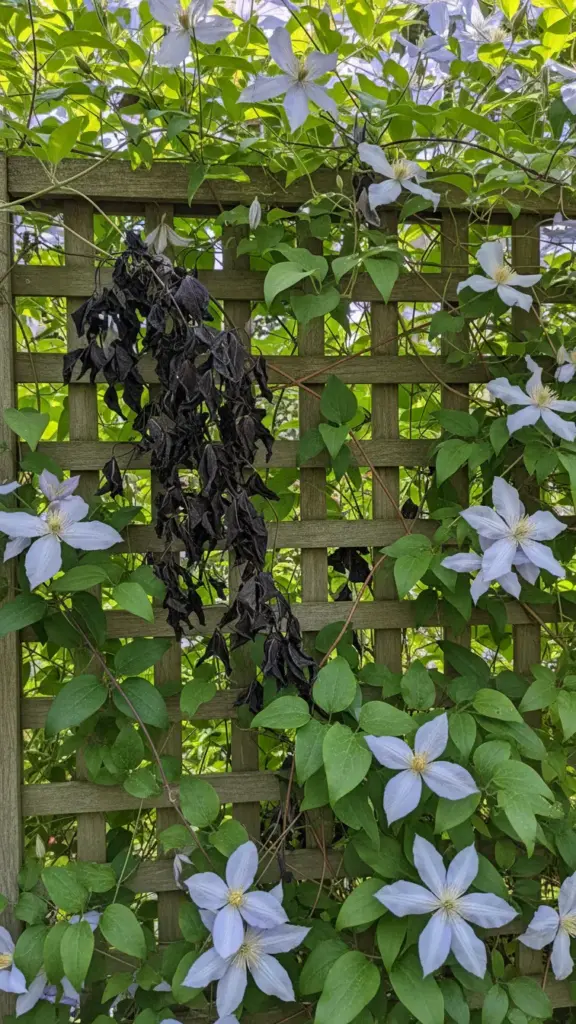
Clematis wilt is a fungal stem disease long associated with the names Ascochyta clematidina and Phoma clematidina. Clemson’s Home & Garden Information Center describes it as the most devastating problem clematis face, causing the plant or part of the vine to suddenly collapse, with the stem and leaves turning black and dying within just a few days.
Despite how frightening that sounds, the Missouri Botanical Garden’s clematis wilt profile notes an important detail: the fungus does not move systemically through the plant. It causes only localized infections at the point where it enters, usually through a wound. That single fact is why a plant can lose one or several stems above ground and still recover from the roots the following season.
How to Identify Clematis Wilt Symptoms
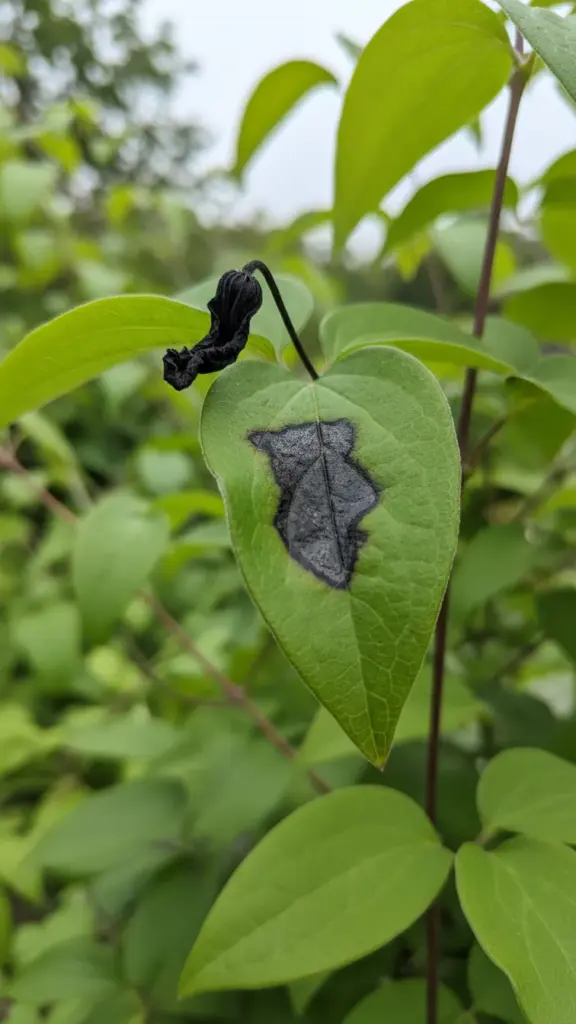
The RHS’s clematis wilt guide describes leaf spot infection first, appearing on leaves and causing affected leaf stalks to blacken and shrivel. From there, the disease can progress into the stem itself.
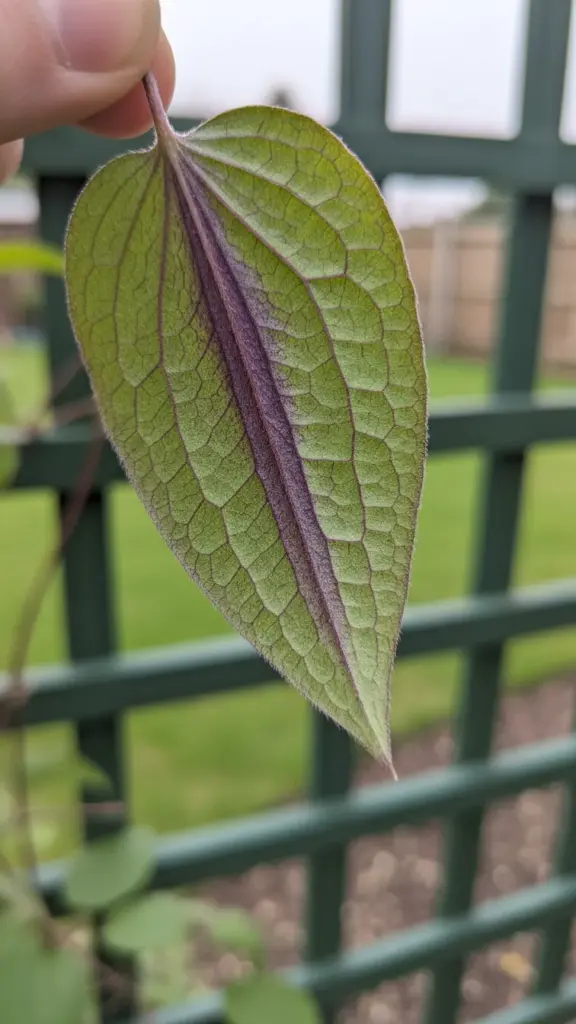
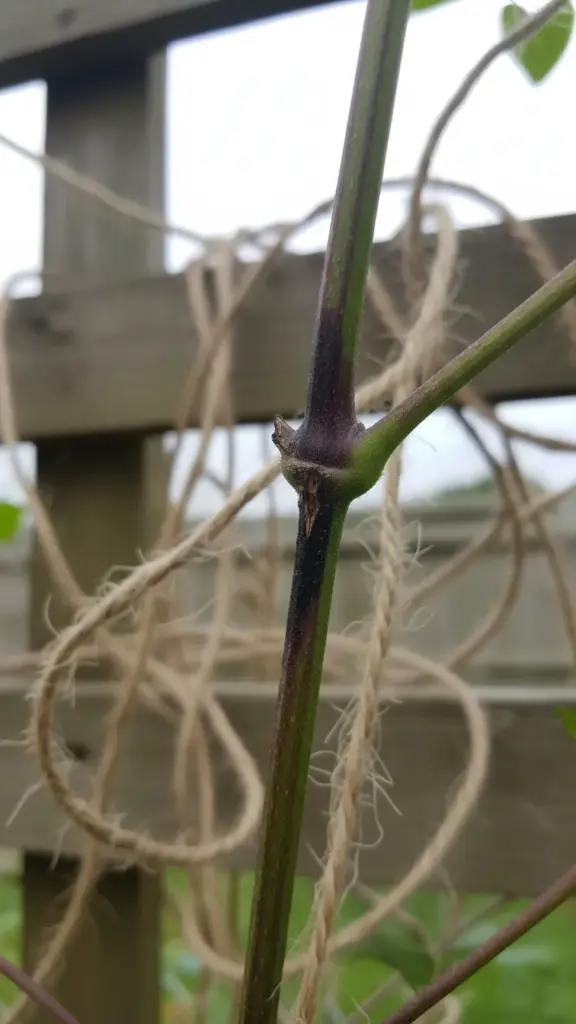
Once a stem is infected, the Missouri Botanical Garden describes the progression as fast: within just a few days, the stem and its leaves turn black, and leaf veins often develop a purple coloration before the whole section collapses. One stem, several stems, or in severe cases the entire top growth down to just below soil level, can be affected depending on how far the infection travels before it is caught.
What Causes Clematis Wilt
The fungus survives in the soil around infected plants and can overwinter in old plant debris left near the base of the vine. The Missouri Botanical Garden explains that the organism is activated by high humidity and the favorable growing conditions of early summer, and it produces slimy spores that spread through splashing water, careless handling while tying in the vine, and unsanitary pruning tools.
Crucially, the fungus needs a wound to get in. It attacks any part of a susceptible clematis that has some kind of injury, whether from wind damage, careless staking, insect feeding, or a pruning cut. A perfectly intact, undamaged stem is much harder for the fungus to infect than one that has already been nicked or bruised.
Clematis Wilt vs Other Reasons Your Clematis Is Wilting
| What You See | Likely Cause | How to Tell It Apart |
| Stem and leaves turn black within days, sometimes with purple leaf veins, on a large-flowered hybrid | Clematis wilt | Onset is fast, blackening starts at a specific point, often a wound, and spreads outward along the stem |
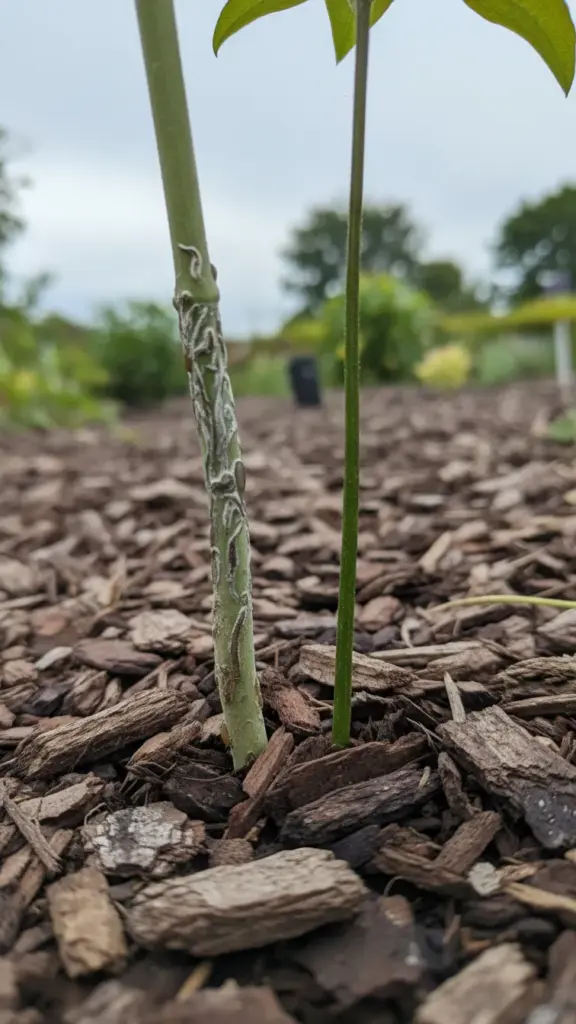
| Stems look pale or silvery near the base, with visible grazing marks | Slug and snail damage | Look for slime trails and check at night, the damage is surface grazing rather than internal blackening |
| Whole plant wilts gradually, roots feel soft or rotten when checked | Root disease such as honey fungus, Phytophthora root rot, or waterlogging | Wilting develops more slowly and is tied to soggy soil or an overpotted container rather than a sudden stem collapse |
| Plant looks stressed, small leaves, poor growth in hot dry weather | Environmental stress from a shallow, dry, or exposed planting site | No blackening, the plant usually perks back up once watered or shaded |
| A stem has died and produces a foul smelling ooze | Clematis slime flux | The smell and ooze are the giveaway, this is a different disease from clematis wilt entirely |
According to the RHS’s clematis problem FAQs, wilting clematis is very often blamed on this one disease when the real cause is something else entirely, so working through this table before treating for wilt saves wasted effort.
Which Clematis Varieties Are Most at Risk
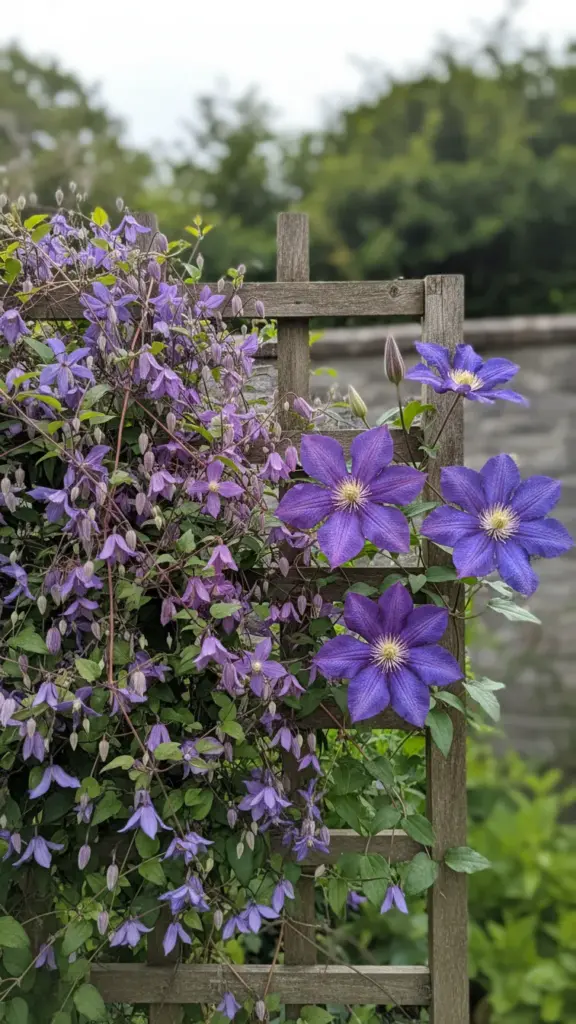
Not all clematis are equally vulnerable. The RHS notes that many species clematis are resistant to this disease, and the Missouri Botanical Garden similarly points out that species clematis and small-flowered hybrids tend to be more resistant than the large-flowered hybrid types. If you are choosing a new clematis for a site with a history of wilt, or simply want to reduce future risk, leaning toward a species or small-flowered variety is a meaningful way to stack the odds in your favor. Plants I have started myself from clematis grown from seed tend to be species types, and I have never lost one to wilt the way I occasionally see on nursery-bought large-flowered hybrids nearby.
Why Garden Conditions Make Wilt More Likely
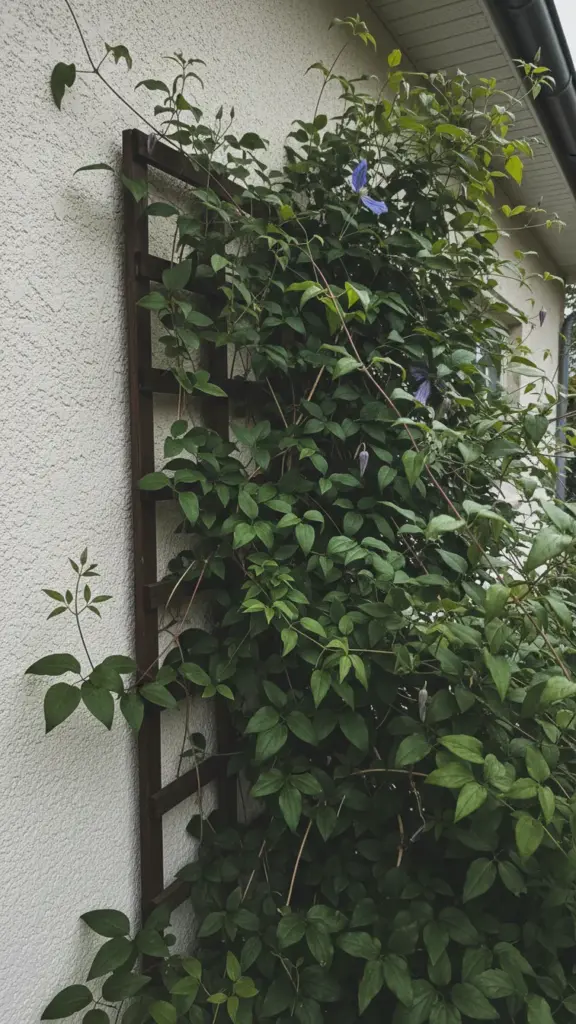
Clematis, according to the RHS, naturally prefers a deep, fertile soil in a moist and shaded habitat. Garden reality often looks nothing like that. Clematis are frequently planted in shallow, dry soil in exposed spots close to buildings, and that mismatch creates real stress on the plant, weakening it in ways that make both environmental wilting and the actual fungal disease more likely.
Good air circulation around the base of the vine also matters, since the fungus is favored by high humidity. A dense planting against a poorly designed trellis or arbor that traps moist air against the stems gives the disease more opportunity than an open structure that lets the vine breathe and dry out after rain.
Step 1: Cut Out and Destroy Infected Stems
As soon as you notice a stem blackening, cut it back well below the visibly affected area, ideally right down to just below ground level if the whole stem is involved. Destroy the removed material rather than composting it, since infected debris left in the garden is exactly what lets the fungus survive to reinfect the plant next year.
Step 2: Improve the Growing Site
If wilt keeps recurring on the same plant, look hard at the site itself. Aim for at least six hours of daily sun, well-drained soil around neutral pH, and enough open space around the base for air to move freely. Avoid disturbing the soil right around established roots, since the wilt fungus needs a wound to get started and cultivating too close to the crown is an easy way to create one.
Step 3: Protect the Plant While It Recovers
Keep the area around the base free of fallen leaves and old plant debris year-round, since that is where the fungus persists between seasons. Handle the remaining healthy vines carefully when tying them to their support, since rough handling is one of the ways the disease spreads from plant to plant.
Step 4: Consider a Protective Fungicide
For a plant with a real history of wilt, spraying the remaining healthy growth and the surrounding soil with a protective fungicide such as myclobutanil, following the product label, is one of the integrated management steps recommended by the Missouri Botanical Garden. This is a supplement to good sanitation and site selection rather than a replacement for them.
Will My Clematis Come Back After Wilt
In most cases, yes. Because the fungus stays localized rather than spreading systemically through the plant, an infected clematis that loses its above-ground growth typically sends up new shoots from the root system, and the Missouri Botanical Garden notes that an affected plant will often recover after a year or two. Established plants have a strong enough root system to survive one bad season even if this year’s flowering vine is a total loss.
Common Questions
Is Clematis Wilt Contagious to My Other Plants
It is specific to clematis. The fungi involved are adapted to this genus, so nearby roses, shrubs, or other climbers are not at risk from the same infection.
Should I Remove and Replace an Infected Clematis
Not immediately. Since the plant usually regrows from the roots, cutting out the affected growth and improving the site is worth trying for at least a season or two before deciding a plant is not worth keeping.
Can I Prevent Clematis Wilt Completely
Not completely, but choosing a resistant species or small-flowered hybrid, planting in a favorable site, and avoiding wounds to the stems and roots reduces the risk substantially.
Why Does My Clematis Wilt Every Summer in the Same Spot
Repeated wilting in the same location usually points to a site issue, such as poor drainage, too much shade for good airflow, or debris left at the base feeding the fungus between seasons, rather than bad luck.
Is a Foul Smell From a Dying Stem Part of Clematis Wilt
No. A foul smelling ooze points to clematis slime flux, a separate disease. Clematis wilt causes blackening without that particular smell.
Where to Go From Here
Start by ruling out the simpler explanations. Check for slug damage, soggy roots, or a plant that is just stressed by a hot dry site before assuming the worst. If the collapse is fast, the stem and leaves are turning black, and it is happening on a large-flowered hybrid, clematis wilt is the likely cause, and cutting out the infected growth while improving the site gives the plant its best shot at coming back next year.








