Bite 1 peach and find 1 hard pit in the middle. A stone fruit is flesh outside, stone inside, one seed locked in the stone, and the pit in the middle is the whole definition.
Stone fruit is a family name, not a single fruit. Peaches, nectarines, plums, apricots, and cherries all belong to it, and they share one ancestor and one structure. Learn the structure once and you can sort any fruit at the market stall in 2 seconds.
| Point | Detail |
|---|---|
| Definition | Fleshy fruit with one hard pit holding one seed |
| Family | Prunus genus, rose family |
| Members | Peach, nectarine, plum, apricot, cherry |
| Pit | Hardened endocarp, the stone |
| Pollination | Hybrid plums need a partner within 91.4 meters |
| Cold limit | Most kinds suit zone 5 and warmer |
What Is Stone Fruit?
Stone fruit is a fleshy fruit with a single hard pit at its center, and the pit holds one seed. Peaches, nectarines, plums, apricots, and cherries are all stone fruits because their seeds sit inside large hard pits, according to the University of Maryland Extension guide to growing stone fruits. The same guide places them all in the Prunus genus, a group of close cousins with the same flower shape and the same fruit plan.
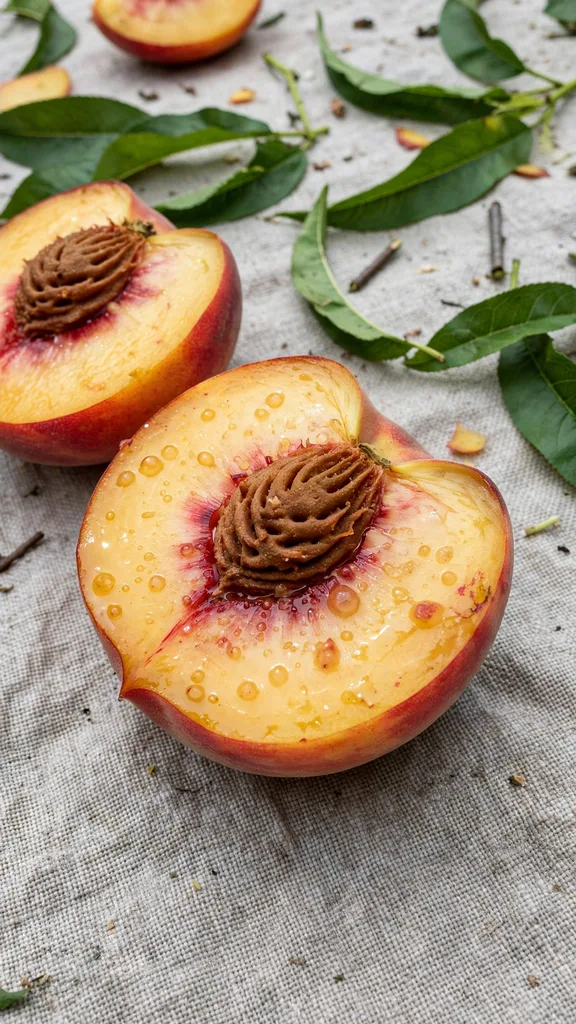
The pit is the test: cut any fruit open and look at the middle, and one hard stone means stone fruit, while a papery core with several seeds means pome fruit and many tiny seeds through the flesh mean a berry. The test needs no book and no label. The knife answers it.
The name comes from the stone, not from the taste. A peach is soft and sweet, a tart cherry is sharp enough to pucker, and both are stone fruits because both carry the same hard pit. Sweetness never decides the group. Structure does.
What Stone Fruit Is Made Of
A stone fruit has 3 layers, and each layer has a job. The skin wraps the fruit and keeps water in. The flesh feeds the animal that eats the fruit and carries the seed away. The stone guards the seed through teeth and guts until it lands somewhere new. The design is old, and it works.
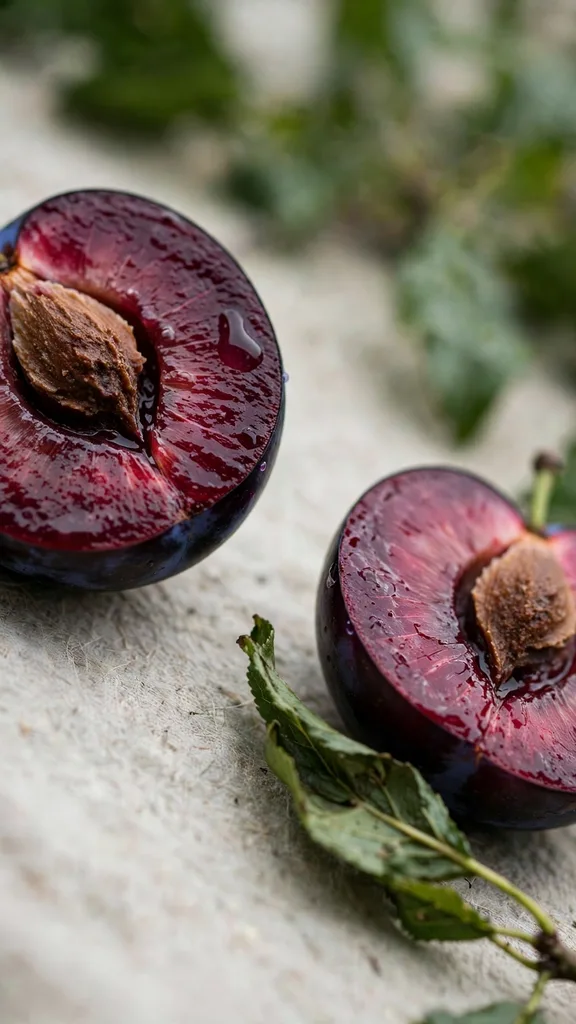
Botanists call the fruit a drupe. The skin is the exocarp, the flesh is the mesocarp, and the stone is the endocarp, the hardened inner wall of the ovary. The seed sits inside the stone like a nut inside a shell. Crack the stone and the seed shows: a pale almond-shaped kernel, bitter to the taste, never to be eaten in quantity.
The stone splits the family into 2 eating styles. Freestone fruit lets the flesh pull cleanly away from the pit, which suits eating fresh and canning in halves. Clingstone fruit grips the pit tight, which suits jam and juice, where the flesh gets cut away anyway. Peaches come in both styles, and the label on the tree tells you which one you planted.
The flesh decides the harvest, not the stone. Stone fruit ripens fast once picked, and a peach picked hard stays hard while a peach picked ripe bruises in the basket. Pick by the give at the stem end and the smell at the blossom end, not by color alone. Color lies. The nose tells the truth.
Stone Fruit vs Pome Fruit
Stone fruit and pome fruit are the 2 big groups of temperate orchard fruit, and they differ in the middle of the fruit. One hides a stone. The other hides a core. Everything else, from pruning to pests, follows from that difference.
| Point | Stone Fruit | Pome Fruit |
|---|---|---|
| Center | One hard pit | Papery core with several seeds |
| Seeds | 1 seed per fruit | 5 or more seeds per fruit |
| Members | Peach, plum, cherry, apricot | Apple, pear, quince |
| Genus | Prunus | Malus, Pyrus, Cydonia |
| Bloom | Very early spring, frost risk | Later spring, safer bloom |
| Storage | Days to 2 weeks fresh | Weeks to months in cool storage |
| Learn more | This page | Pome fruit |
Bloom timing is the practical difference. The University of Minnesota Extension guide to growing stone fruits warns that all stone fruits bloom very early in spring, so a freeze on open flowers takes the whole crop for the year, while the tree itself survives to fruit the next year. Apples and pears bloom later and dodge most late frosts. A gardener in a frost pocket grows pome fruit first and stone fruit second, or not at all.
Storage is the second difference. A peach softens in days on the bench, and a plum follows in a week. An apple holds for months in a cool shed. The stone fruit harvest comes in a rush and needs eating, freezing, or jam in the same week. The pome harvest waits. Plan the preserving jars before the stone fruit ripens, not after.
How to Recognise / Measure Stone Fruit
The pit test is the first check, and it takes one cut from stem to blossom end: one hard stone in the middle means stone fruit, a star-shaped core with seeds in chambers means pome fruit, and many tiny seeds through the flesh mean a berry. The cut takes 5 seconds. It settles every argument at the market.
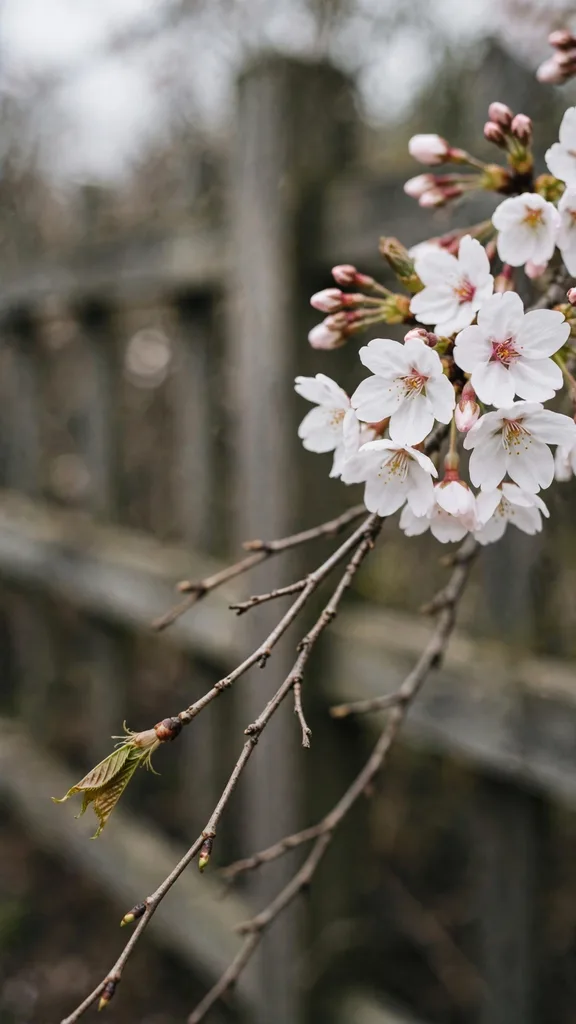
The flower test is the second check. Stone fruit flowers open in clusters of 1 to 3 on bare wood before the leaves, and the 5 petals sit wide open in white or pink. Apple flowers open in clusters of 5 or 6 with the leaves, and the buds show pink before they open white. The flower count separates the families a month before any fruit forms.
Measure the chill need before you buy. Stone fruit runs from low chill to high chill by cultivar, and the same chill hours tally that governs apples governs peaches too. A peach that needs 800 hours in a 400-hour yard blooms late and patchy, or not at all. Read the label, check the station total, and buy under your number.
Measure the pollination distance at planting. The Minnesota guide notes that hybrid plums and apricots are self-incompatible, which means they require at least 2 different kinds located within about 91.4 meters of one another for pollination to occur and fruit to set. European plums and tart cherries are self-compatible and fruit alone. The label tells you which group your tree sits in, and the tape measure tells you whether the partner stands close enough.
Common Mistakes With Stone Fruit
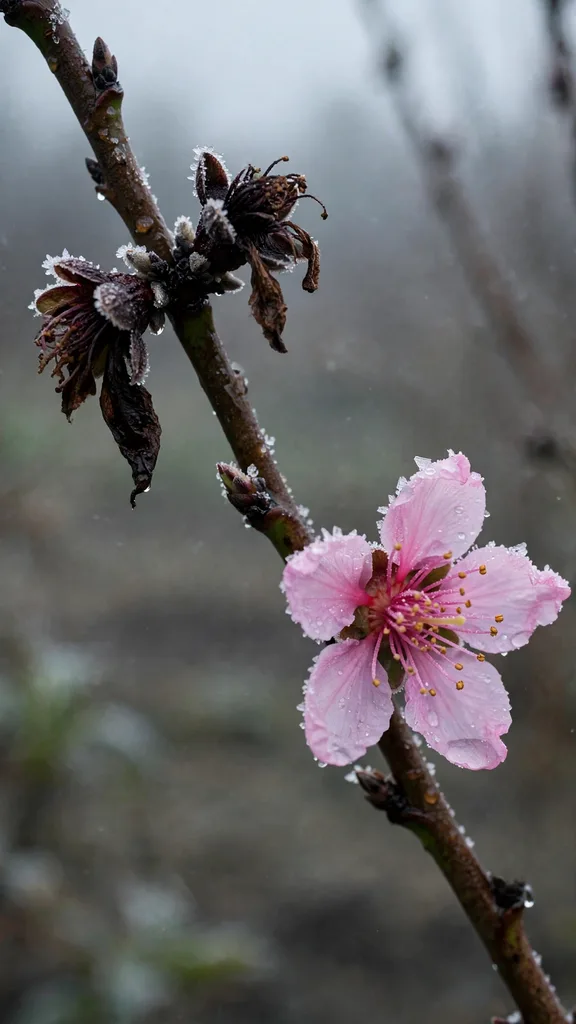
The first mistake is planting a peach where frost pools. Stone fruit blooms earliest, and a frost pocket kills the bloom while the apple on the hill above it fruits fine. Site stone fruit on a slope where cold air drains away, and keep the frost pocket for gooseberries and currants that bloom later and shrug off the cold.
The second mistake is buying a high-chill peach for a warm yard. A peach that needs 1,000 hours in a 300-hour yard never wakes properly, and the tree leafs out in patches through spring. Buy low-chill kinds for warm winters, and read the number on the label before you pay.
The third mistake is skipping the partner for hybrid plums. A lone hybrid plum blooms hard and sets nothing, because its pollen cannot fertilize its own flowers. Plant 2 different hybrid plums within 91.4 meters, or plant a European plum that fruits alone. One tree is enough only when the label says self-compatible.
The fourth mistake is picking by color. A peach turns red in the sun long before it ripens, and a fully red peach can still be hard and sour inside. Judge ripeness by the give at the stem end, the smell at the blossom end, and the background color shifting from green to gold. Color is the advertisement. Smell is the fact.
The fifth mistake is leaving the fruit on the tree too long. Stone fruit ripens fast and drops fast, and a peach left 3 days past ripe falls, bruises, and draws wasps. Pick when the fruit gives slightly at the stem and ripens the last day on the bench. The tree holds the fruit. The bench finishes it.
When Stone Fruit Matters in Your Garden
Stone fruit matters most at the market stall and the nursery, where the name sorts the fruit. Knowing the group tells you the bloom time, the frost risk, the storage life, and the partner rule in one word. A gardener who knows the group buys smarter and wastes less money on trees that never fruit.
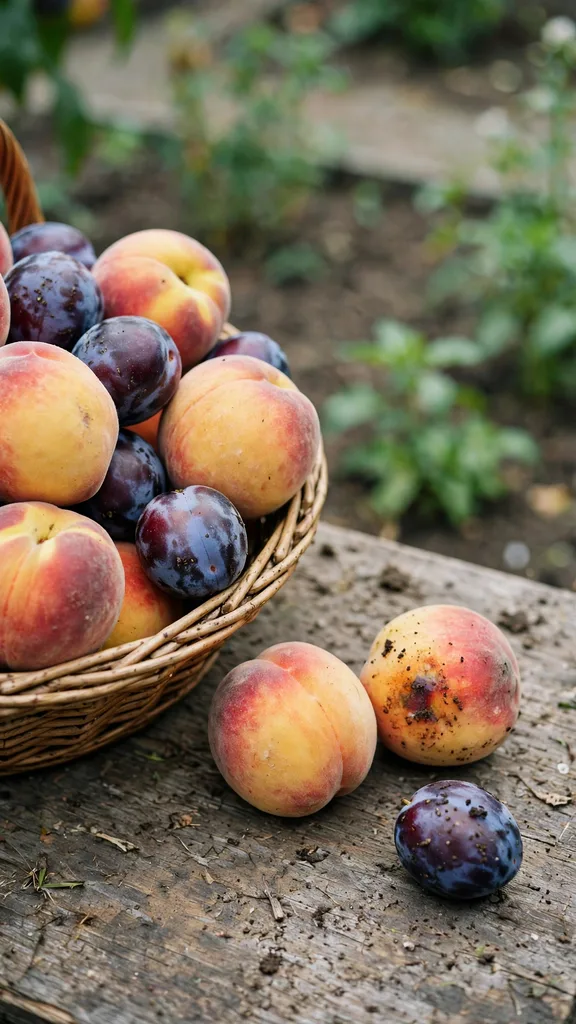
Stone fruit matters again in a frost-free spring. A warm site with no late frost grows peaches and plums that a cold site never ripens, and the harvest comes weeks before the apples. The early fruit fills the gap between spring vegetables and autumn apples, and the preserving jars fill in July instead of October.
Stone fruit matters least in a cold inland yard. Zones 3 and 4 grow apples and pears reliably, and stone fruit there is a gamble against the last frost. A gardener in that yard grows one plum in the warmest corner as an experiment, not as the main crop. The apples carry the orchard.
Stone fruit never matters as a storage crop. Peaches and plums feed the household for a week, not a winter. The fruit that stores is the apple and the pear, and the stone fruit that lasts is the one in the jam jar. Grow stone fruit for the fresh eating season. Grow pome fruit for the cellar. The gardening glossary gathers every fruit term on this site in one place.
FAQ
Yes, botanically. A mango is a drupe with one large pit, just like a peach, and so are olives, dates, and coconuts. Gardeners use the term stone fruit for the temperate Prunus group: peach, plum, cherry, and apricot. The botany is wider than the garden use, and both are correct in their own place.
Some do and some do not. European plums and tart cherries are self-compatible and fruit alone. Hybrid plums, apricots, and most sweet cherries need a second kind within about 91.4 meters. Peaches and nectarines are self-fertile in most kinds. Read the label before you buy, and plant the partner at the same time.
Frost is the usual cause: stone fruit blooms very early, and a freeze on open flowers takes the crop while the tree survives. A missing partner is the second cause on hybrid plums and apricots. A high chill number in a warm yard is the third. Check frost dates, partners, and chill hours in that order.
Peaches live shortest of the orchard trees, while plums and cherries live far longer. The short life is the trade for fast fruit: a peach crops a couple of years after planting, where an apple takes several years. Plant a replacement before the old tree fades.
Yes, dwarf peaches, nectarines, and cherries grow well in a large pot on a sunny patio, and the pot lets you move the tree under cover when frost threatens the bloom. Water daily in summer, feed in spring, and repot every few years. The crop runs smaller than a ground tree, and the fruit tastes the same.