Cut 1 shoot with 3 to 5 buds, and you hold the whole variety in your hand. A scion is the short length of last season wood that becomes the branches, leaves, and fruit of a grafted tree.
The scion carries everything the eater cares about: flavor, color, size, and cropping habit. The roots below it decide size and soil fit, and they never touch the fruit. A grower who understands that split stops blaming the variety for faults that belong underground.
| Item | Detail |
|---|---|
| What it is | A shoot that becomes the top of a grafted tree |
| What it carries | Variety, flavor, fruit shape, cropping |
| Best wood | 1-year-old shoots, collected dormant |
| Watch out for | Dried wood and buds that broke early |
What Is Scion?
The scion is the part of the vegetative wood, usually the stem or another aboveground part, from the desired variety to be propagated. It consists of a shoot with several dormant buds that will produce the new stem and branches. A scion holds no roots of its own. It lives on the rootstock below the union, and it repays that support with fruit true to its parent. Scion wood of 1-year-old shoots should be collected in late winter, with care taken to select shoots of about the same diameter as the rootstock, as the Utah State University Extension fruit FAQ advises.
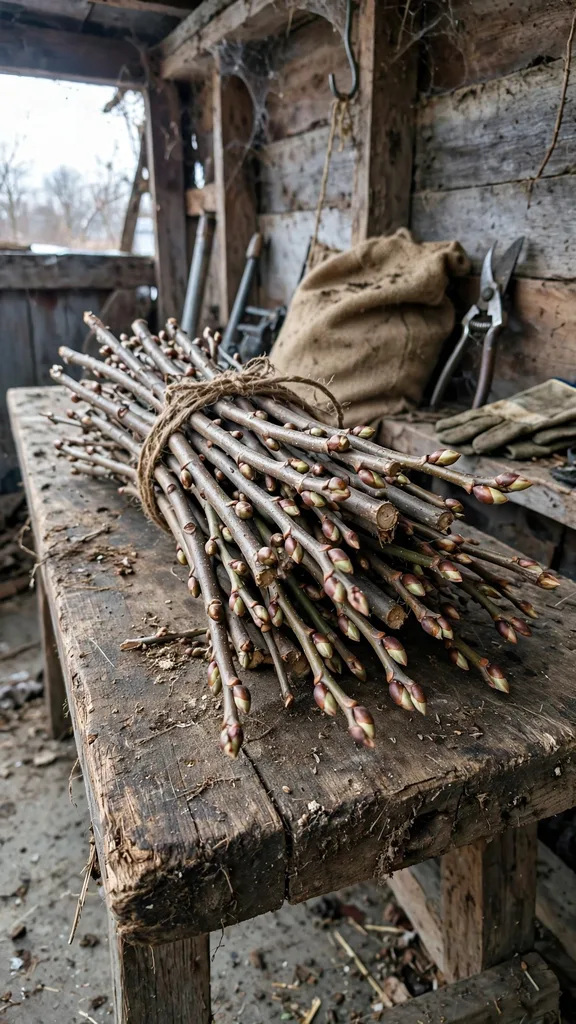
Think of the scion as a cutting with a job. A cutting must grow its own roots, and many fruit varieties root poorly or not at all. A scion skips that struggle: it borrows a ready root system and spends its energy on shoots and fruit instead. One parent tree can supply scion wood for a dozen new trees, and each one will crop exactly like the parent. That is why old orchards, rare varieties, and chance seedlings all survive through scions rather than seed.
What a Scion Looks Like
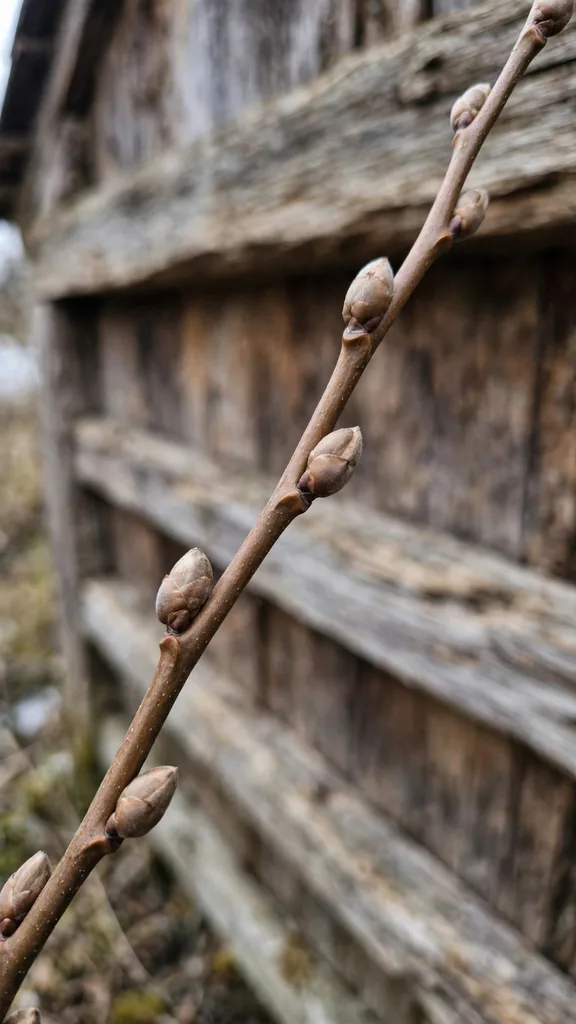
A good scion is easy to spot once you know the signs. It is a straight, pencil-thick shoot from last season growth, with plump buds spaced along its length and smooth bark without cracks or cankers. The wood should bend slightly without snapping, and a fresh cut should show pale green tissue under the bark. To prepare the scion, make a cut about 2.54 cm long at its base, matching the cut on the rootstock so the two green layers meet. Seedlings or clonal rootstocks are whip grafted in February or early March while still dormant, according to the Mississippi State University Extension grafting guide.
Storage decides whether the scion lives. Wrap the sticks in damp cloth or paper, seal them in a bag, and keep them cold until grafting day. Warmth wakes the buds early, and a bud that breaks in the bag has spent its strength before the graft begins. At grafting time, cut the scion fresh: a flat, clean face with no torn fibres gives the cambium the widest contact. Keep 2 or 3 buds above the union, and cut the top clean so rain runs off instead of pooling on the wound. The roots that feed this shoot are covered in the rootstock guide, which explains size control and soil fit.
Scion vs Rootstock
Scion and rootstock are partners, not rivals. One supplies the fruit, the other supplies the roots, and the tree needs both. Confusing them leads to the wrong fix: pruning the top when the roots are the problem, or feeding the roots when the variety is at fault.
| Feature | Scion | Rootstock |
|---|---|---|
| Position | Above the graft union | Below the graft union |
| Becomes | Branches, leaves, and fruit | The root system |
| Carries | Variety and flavor | Size control and soil fit |
| Collected | Cut as dormant shoots in winter | Raised from seed or cutting |
| If it fails | No fruit of that variety | Whole tree weakens or dies |
How to Recognize and Measure Scion
Recognize a live scion by its buds. Within 3 to 4 weeks of grafting, the buds swell and push green tips, while the bark stays smooth and the wood stays flexible. A dead scion stays stiff, its buds shrink and brown, and a scratch on the bark shows dry brown tissue instead of green. Count the buds before you graft: a stick with 3 to 5 plump buds gives the new shoot room to choose the strongest, while a stick with 1 bud leaves no margin for a knock. Match the diameter too: scion and stock of equal thickness line their cambium up on both sides at once.
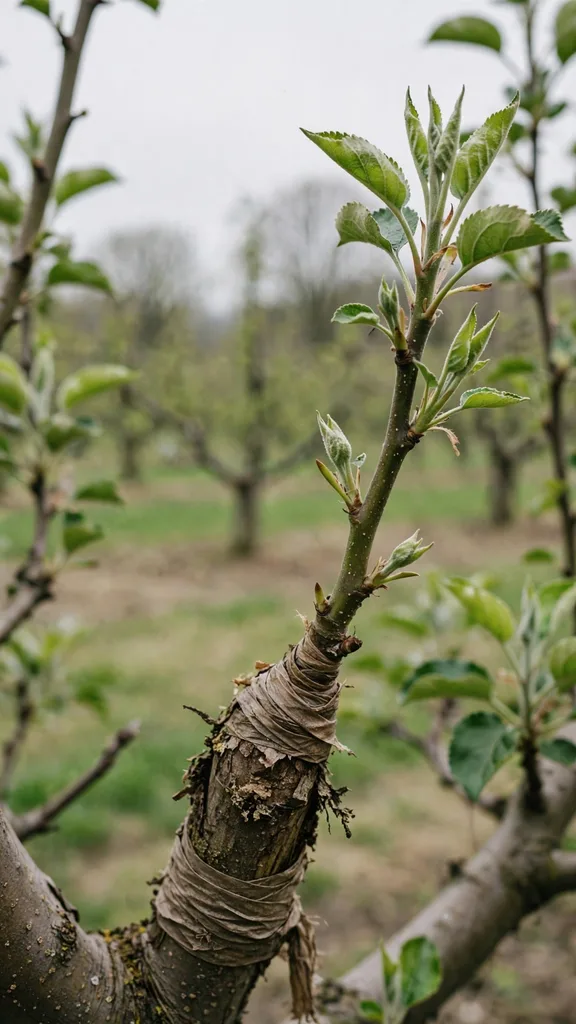
Measure the scion by growth, not by hope. A taken scion pushes a shoot 15 to 30 cm long in its first season, with leaves full size and a deep green color. Short, pale growth means the union is narrow or the binding still bites. Loosen the tie and feed the tree, and the shoot usually recovers. Check for suckers below the union each week through spring. A sucker grows faster than the scion and will starve it if left. Snap suckers off at the base, and never prune them flush with secateurs, since a stub sprouts again.
Common Mistakes With Scion
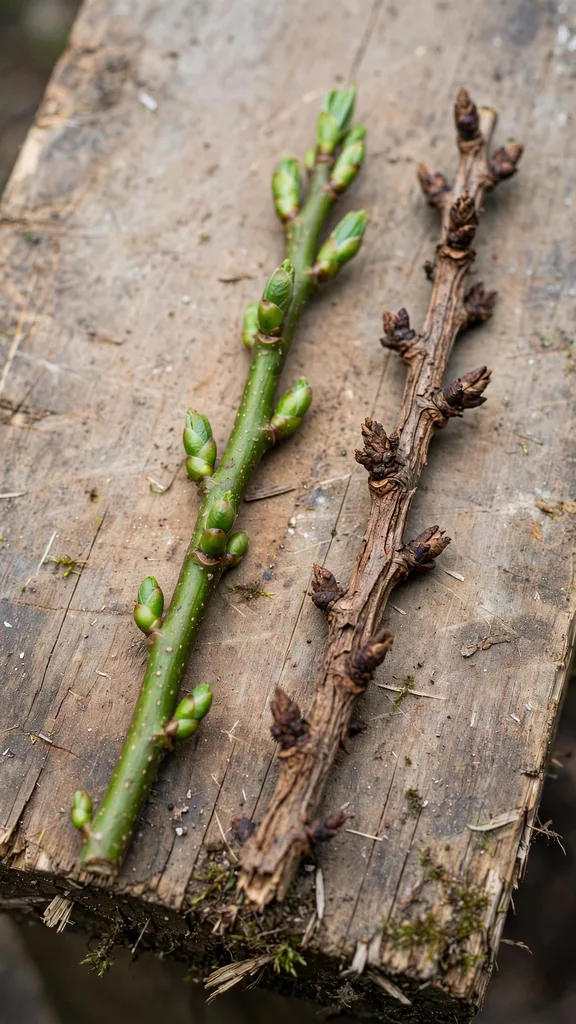
- Collecting too late. Wood cut after the buds swell has already spent its stored energy. Collect in deep dormancy, and store cold until grafting day.
- Letting wood dry out. A scion left on the bench for an hour loses the moisture its buds need. Wrap it the moment it leaves the tree, and keep it wrapped until the cut.
- Keeping too many buds. Six buds on one stick split the water six ways, and none grows strongly. Keep 2 or 3 buds above the union and cut the rest away.
- Cutting with a dull knife. A blunt blade crushes the cambium layer instead of slicing it, and crushed cells never knit. Sharpen the knife before the first cut of the day.
- Forgetting the label. Bare sticks all look alike by spring, and an unlabelled scion is a mystery variety. Tie a tag to every bundle with the variety and the date.
When Scion Matters in Your Garden
Scion wood matters most in late winter, when the trees sleep and the buds hold their strength. That is the only window for collecting wood that will keep for weeks in cold storage. Miss it, and the buds break, the wood dries, and the season is gone. Mark the calendar when the leaves fall, and cut before the sap rises. The join that uses this wood is covered in the grafting guide, with whip, tongue, and cleft methods.
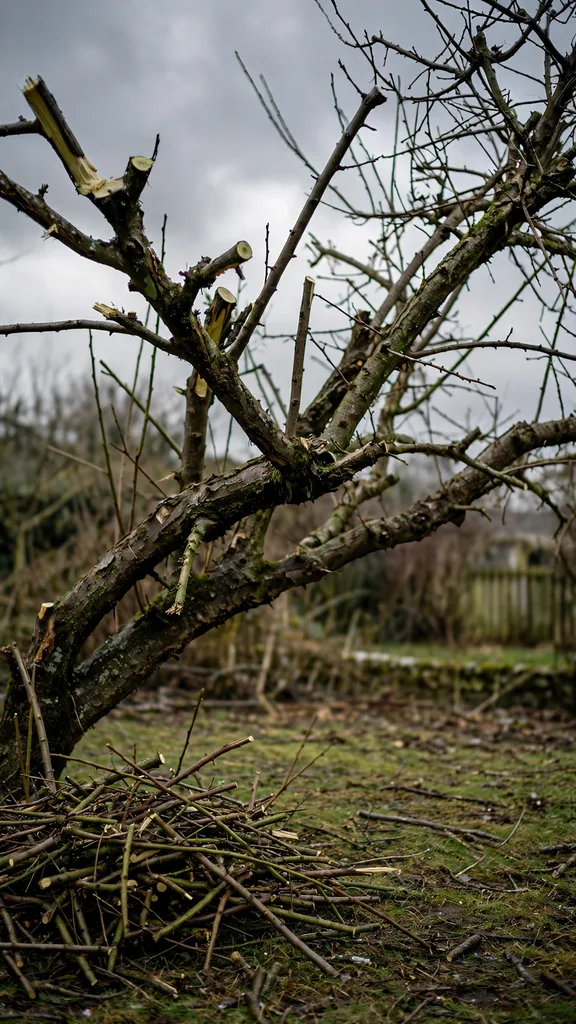
It matters again when a variety is at risk. An old tree falls in a storm, a neighbor moves house, or a rare plum crops its last season. A few sticks of scion wood, taken in time and stored cold, carry that variety into the next decade. For the full picture of the terms in this series, see the gardening glossary.
FAQ
Keep 2 or 3 buds above the graft union. That gives the new shoot a spare if one bud fails, without splitting the water too many ways. A stick with 5 or 6 buds often pushes weak, thin growth. Trim the extra buds off with a clean knife before you bind the graft.
Yes. Wrap the sticks in damp cloth or paper, seal them in a plastic bag, and store them in the coldest part of the fridge. Check the bag every 2 weeks and remoisten the cloth if it dries. Wood stored this way stays usable for weeks, which covers the whole grafting window.
A cutting is a piece of plant that must grow its own roots, while a scion is a piece that joins onto ready-made roots. Cuttings suit plants that root easily, like willow and fig. Scions suit fruit varieties that root poorly, like apple and pear, because the rootstock does the rooting work for them.
Yes. Graft a different scion onto each limb, and each limb will fruit true to its own variety. Keep the labels on, since the limbs look alike in winter. This trick suits small gardens, where one tree can carry 2 or 3 varieties and spread the harvest across the season.