
Small birds are missing from your backyard because the yard suits their bullies. Open lawn, a thin mid-storey, big-nectar plants, roaming cats, and bird feeders all favour noisy miners and other aggressive birds. One contained cat saves 110 native animals a year, yet most yards let cats roam and feeders gather the bullies.
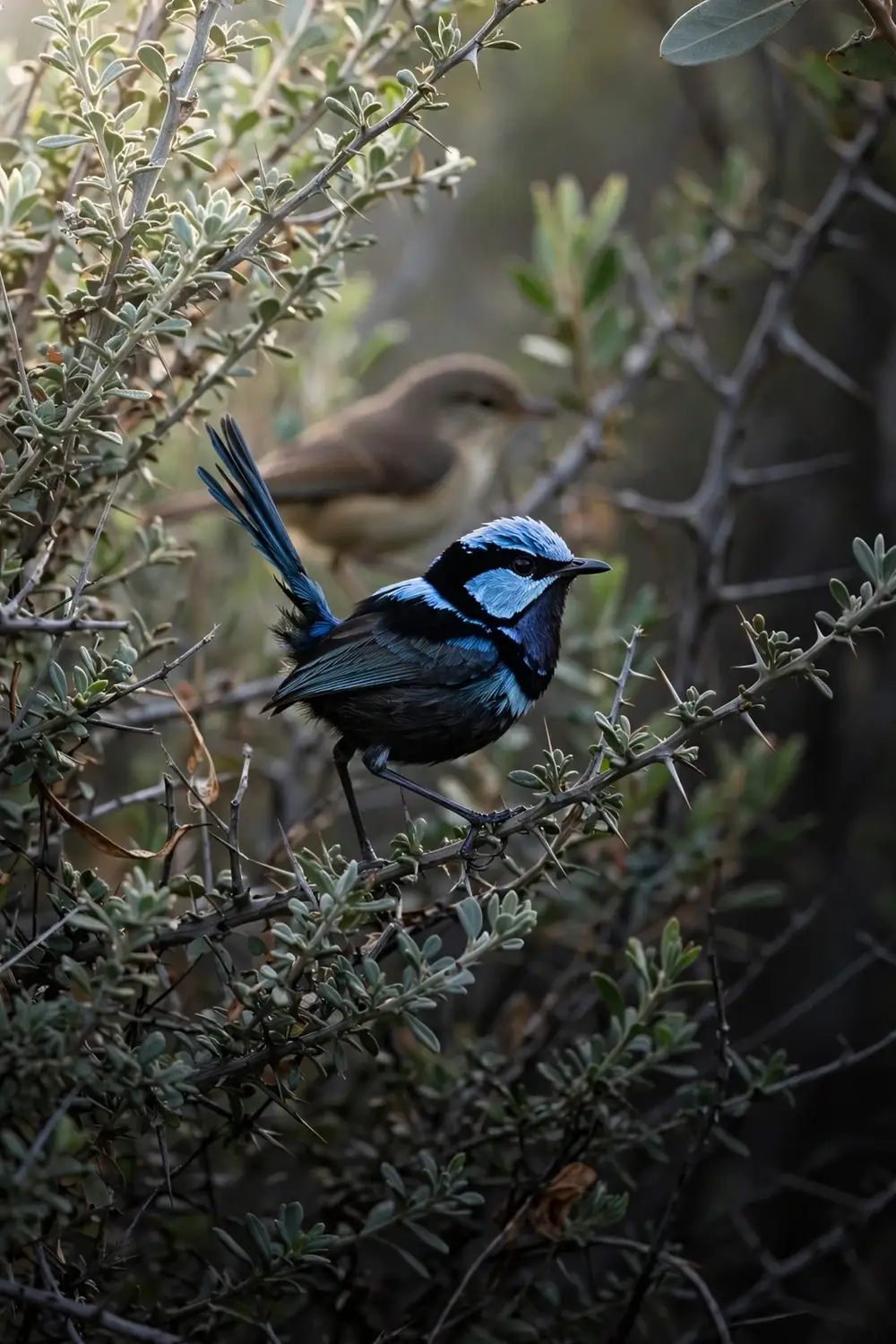
If you searched for bird friendly backyard australia, you found plenty of generic bird advice. This guide is narrower. It targets small birds only. Small birds means fairy-wrens, finches, thornbills, silvereyes, and the eastern spinebill. Bully birds means noisy miners, New Holland honeyeaters, and wattlebirds. These are the birds that chase small birds out of a yard. The 11 plants and tips below rebuild the cover and food that small birds need.
The fix is habitat, not handouts. A yard that feeds small birds grows the food itself. It keeps insects alive in leaf litter. It leaves grasses to set seed. It holds water in a shallow bath near cover. It keeps cats indoors. It makes windows safe. It stops feeding birds. Then it measures the result with a 20-minute count.
Why Small Birds Are Missing From Your Backyard
Small birds are missing because the yard has no place where a small bird can hide. Noisy miners patrol open lawns and thin plantings. Aggressive honeyeaters guard big-nectar flowers. Cats hunt at ground level. Feeders gather the bullies. Small birds stay away from a yard where every trip to food crosses open ground.
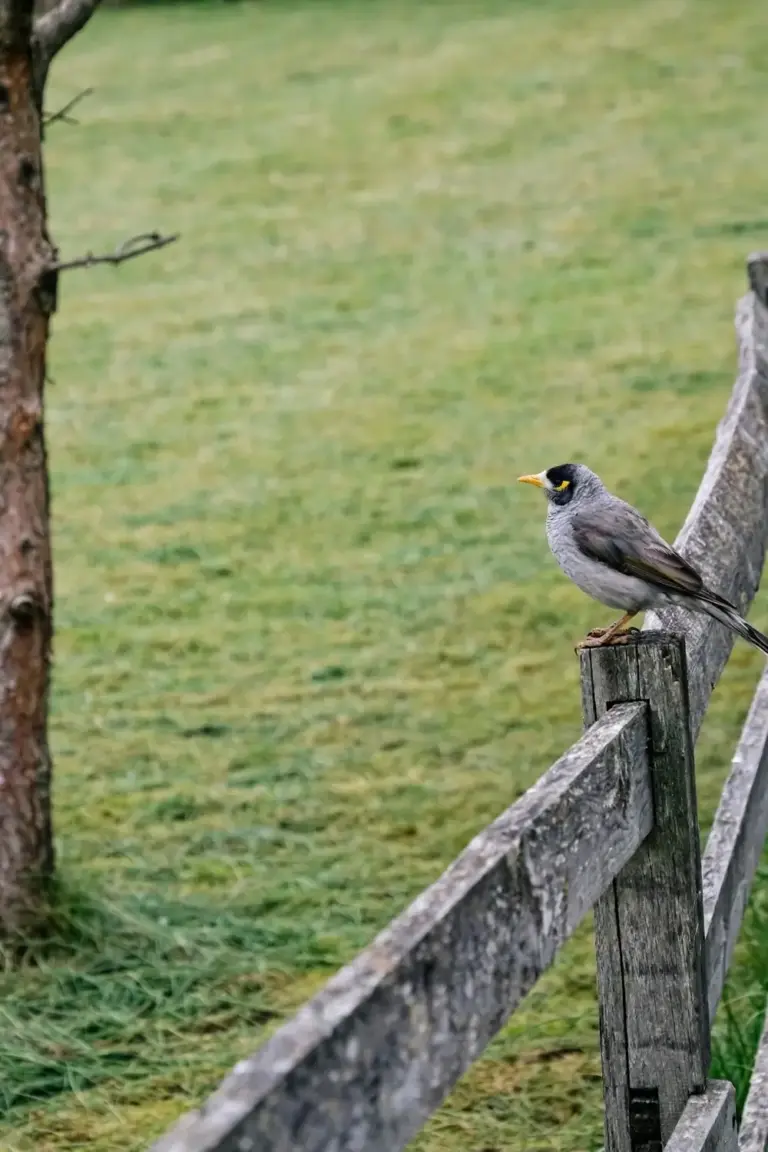
Noisy miners drive away small bush birds, particularly if there is not suitable cover for them, according to Birds Queensland. Birds Queensland Miners are native honeyeaters. They are gregarious. They flock together. They are intolerant of other birds in their territory. One miner in a fight brings the whole group. A yard with open lawn and scattered trees suits miners perfectly.
The same pattern holds for other aggressive birds. Birds in Backyards reports that Pied Currawongs and Magpies have increased dramatically in numbers over time, forcing out smaller species from many areas. Birds in Backyards Currawongs eat the eggs and chicks of small birds. Feeding lifts the numbers of these larger birds further. The result is a yard full of big birds and empty of small ones.
Five yard features drive small birds away. Open lawn gives miners a hunting ground. A missing mid-storey leaves no shelter between groundcover and canopy. Big-nectar cultivars feed aggressive honeyeaters all year. Roaming cats hunt the ground layer where fairy-wrens feed. Feeders gather flocks of bullies at one point. Each feature alone cuts small-bird visits. Together they close the yard to small birds.
The table below lists the 11 moves. Each move maps to one numbered section. Work through them in order. The thicket comes first because cover decides everything else.
| Plant/Tip | What It Does | Why |
|---|---|---|
| 1. Dense prickly thicket | Gives small birds shelter miners cannot enter | Cover decides whether small birds stay |
| 2. Small-flowered natives | Feeds honeyeaters without feeding bullies | Small flowers suit small birds |
| 3. Native grasses left to seed | Feeds finches with natural seed | Seed heads feed ground birds |
| 4. Leaf litter and logs | Grows insects for chicks | Insects are chick food |
| 5. Safe shallow water near cover | Gives drinking and bathing water | Water near cover cuts risk |
| 6. Cats indoors or in a secure run | Removes the ground-layer hunter | Cats kill small birds |
| 7. Windows made safe from strikes | Stops glass deaths | Glass kills birds that visit |
| 8. No feeding, plant food instead | Stops gathering bullies at feeders | Feeders favour aggressive birds |
| 9. Smaller lawn, grown mid-storey | Replaces miner habitat with shelter | Lawn suits miners |
| 10. No sprays, insects left alive | Keeps insect food for chicks | Chicks eat insects |
| 11. Planting for winter gaps | Holds food through the cold months | Gaps starve small birds in winter |
1. Plant a Dense Prickly Thicket for Shelter
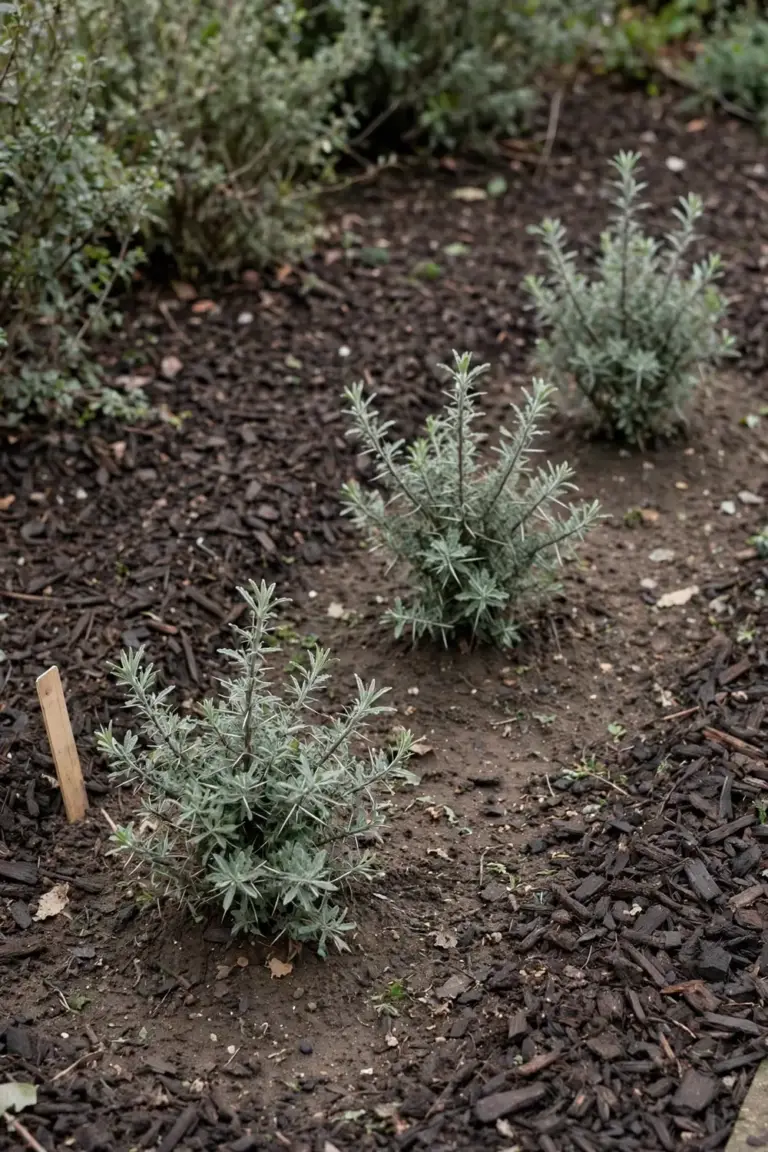
A dense prickly thicket is the single move that brings small birds back. Plant it first. A thicket is a patch of dense shrubs with prickly growth that miners cannot fly through. Small birds slip inside. Miners stay outside. The thicket gives small birds a place to feed, rest, and nest.
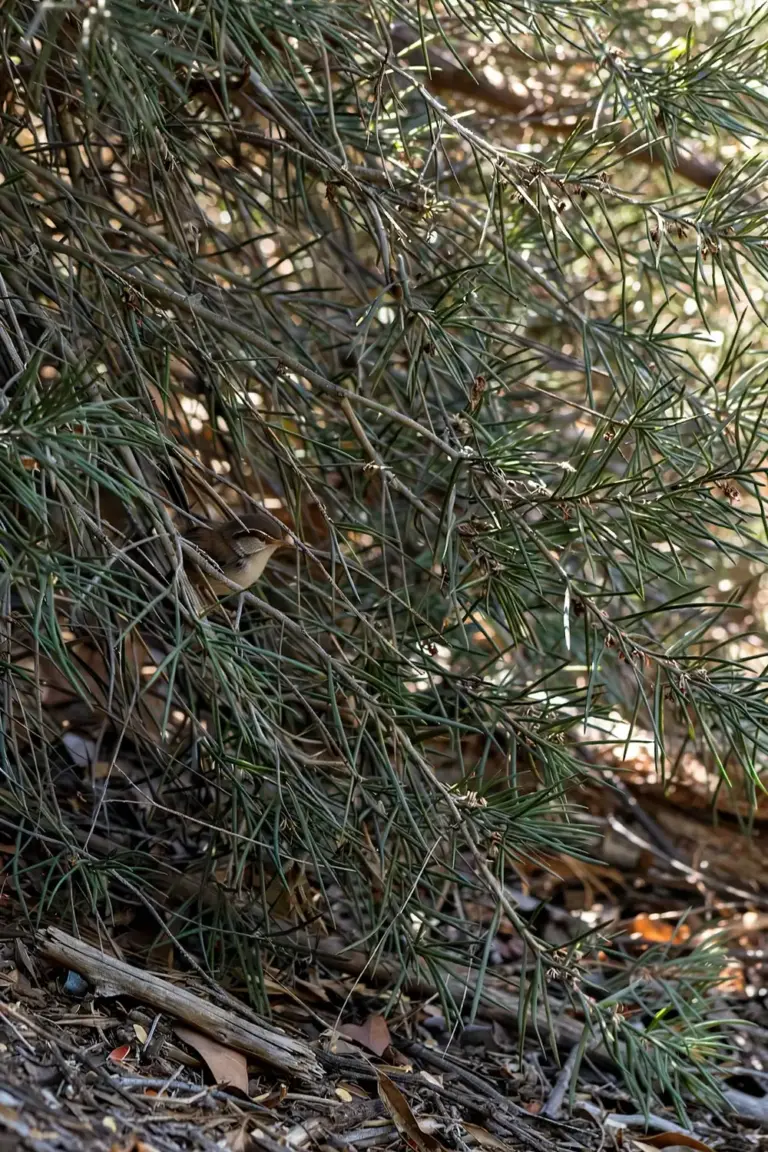
I have learned that the thicket I planted for shelter brings more fairy-wrens than any feeder I ever hung.
Choose prickly natives for the thicket. Hakea, bursaria, prickly acacia, dense grevillea, westringia, and tea tree all suit the job. Prickly plants hide small birds from cats, foxes, and larger birds, according to Connecting Country. Small woodland birds need shrubby, dense native vegetation to travel safely and raise their young. Plant the thicket in a clump, not a single row. A clump gives depth. Depth gives escape routes.
Build the thicket at the height small birds use. BirdLife Australia’s Urban Birds program advises shelter between knee and head height, mostly shrubs plus groundcover. That band is the mid-storey. Most yards skip it. They have lawn, then trees, with nothing between. A thicket fills the missing band. Plant the shrubs close enough that their branches touch within one season. Leave a gap at the base for ground feeding. Keep the center dense.
Place the thicket where small birds already try to visit. A corner near an existing tree works. A strip along a back fence works. A patch beside a tap or a downpipe works because water draws insects. Avoid placing the thicket where cats wait. A thicket beside a fence that cats walk is a trap. A thicket with two open sides is a trap. A thicket with cover on three sides and one watched exit is shelter.
2. Plant Small-Flowered Natives for Honeyeaters
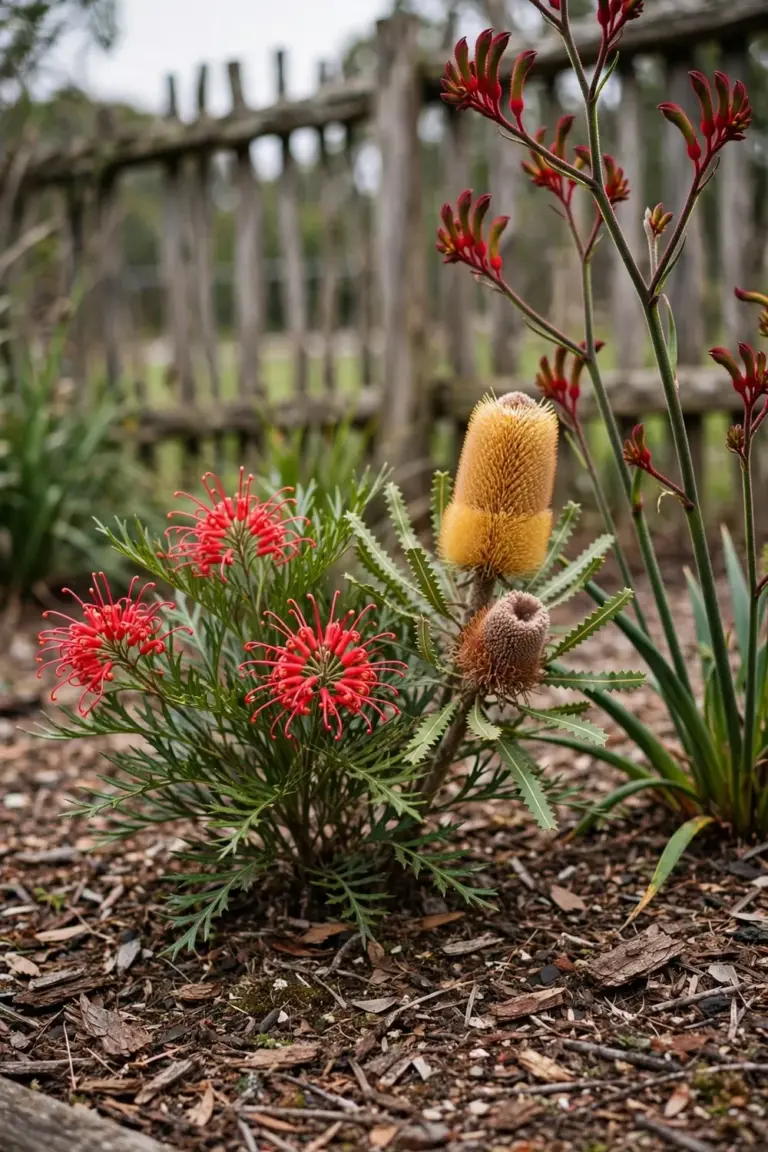
Small-flowered natives feed honeyeaters without feeding the bullies. Correa, small-flowered grevillea, and banksia suit the job. Their flowers are small. Small birds reach them. Large aggressive honeyeaters gain less from them. Big-nectar cultivars do the opposite. They pour nectar into large flowers that miners and wattlebirds guard.
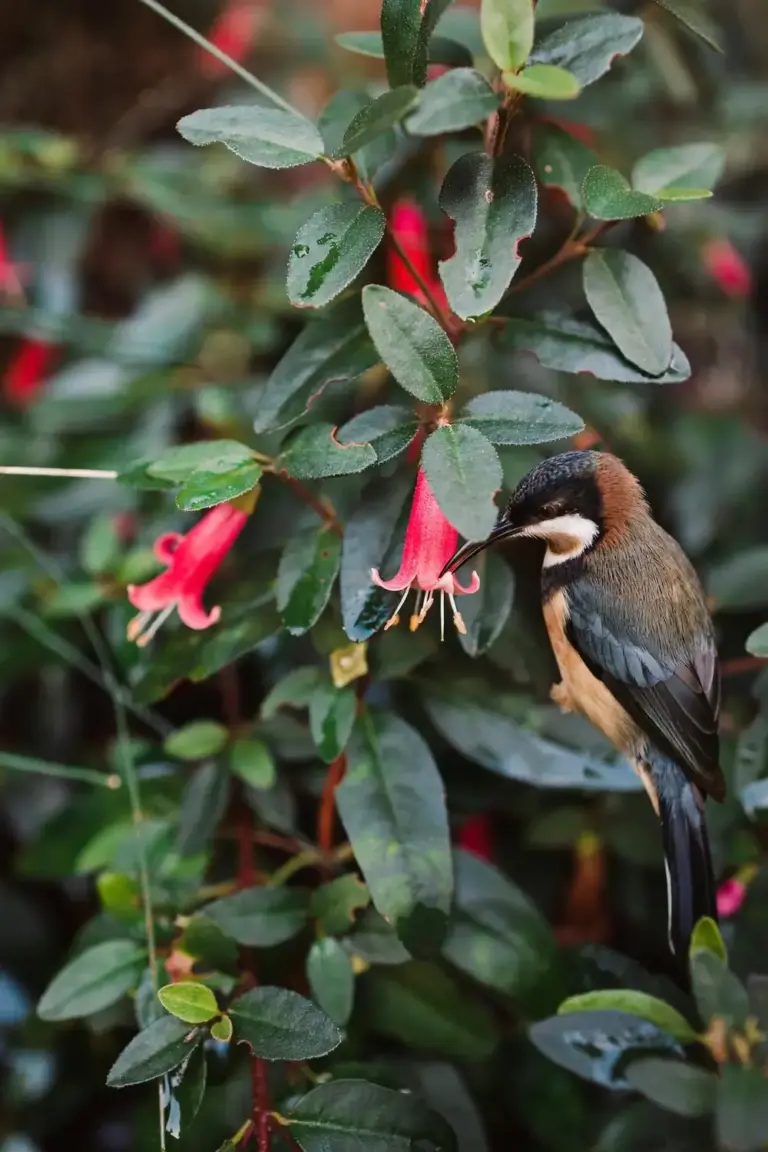
Birds in Backyards advises a garden that provides natural food with small-flowering locally native shrubs to feed honeyeaters. Locally native plants suit local birds. They flower on a local calendar. They host local insects. A correa from your district feeds your spinebills. A grevillea bred for giant flowers feeds miners.
Plant small-flowered natives in clusters near the thicket. Clusters let small birds feed and retreat in one move. A lone shrub in open lawn forces a long exposed flight. Three shrubs beside the thicket give a short hop. Mix species so something flowers each season. Correa flowers in the cooler months. Small-flowered grevillea flowers across much of the year. Banksia carries winter food.
Keep big-nectar cultivars out of the small-bird zone. A single large-flowered grevillea beside the thicket draws miners to the exact spot small birds use. If you already grow big-nectar plants, keep them far from the thicket. Let the thicket zone belong to small flowers. Small-space gardeners can still join in. A pot of correa on a balcony gives a spinebill a feed. The container native guide shows how to grow natives in pots. Best Australian Native Plants Container Gardens
3. Leave Native Grasses to Set Seed
Native grasses left to set seed feed finches with natural seed. Wallaby grass, kangaroo grass, and lomandra all suit the job. Red-browed finches eat grass seed. They feed on the ground. They need seed heads close to cover. A mown lawn gives them nothing. A patch of seeding grass beside a thicket gives them a full feed.
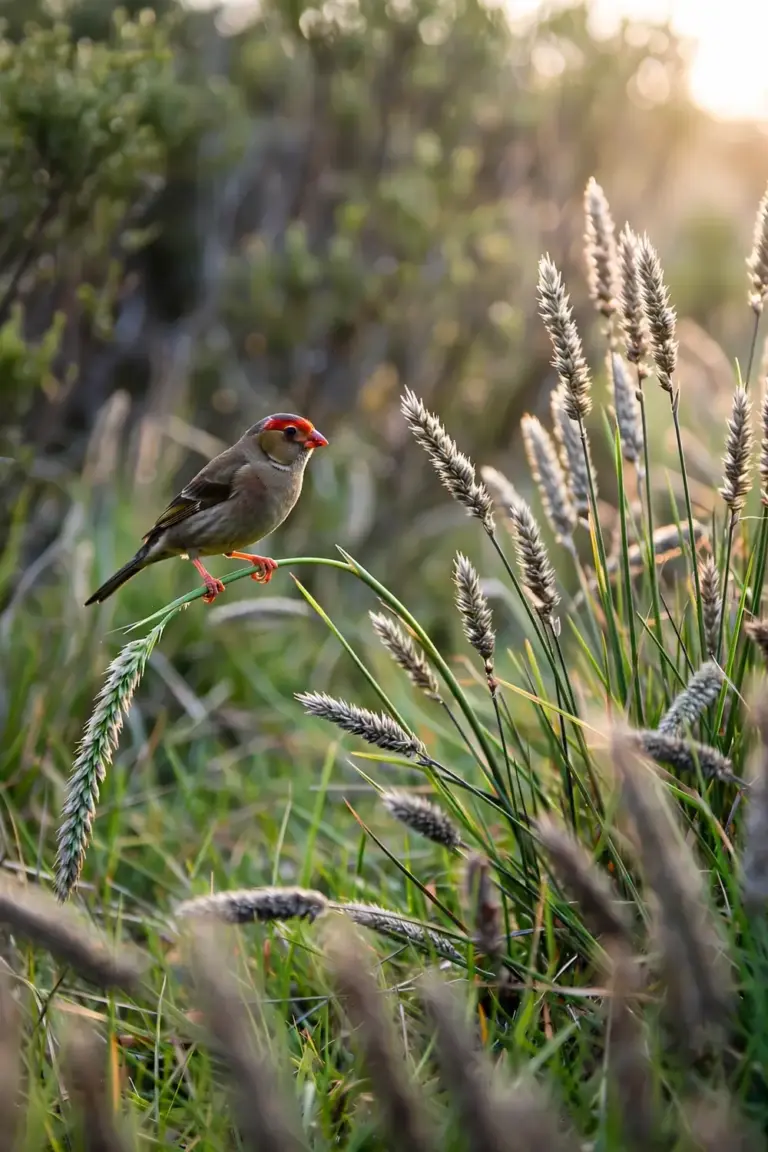
Birds in Backyards lists native grasses to provide seed as part of a garden that feeds birds naturally. No feeder is needed. No bought seed is needed. The grass grows the food. The finch harvests it.
Leave a patch of grass unmown through the seeding season. Mark the patch with edging or a low border so it reads as a choice, not neglect. Cut it once the seed drops. Let it regrow. Rotate the patch each year so the soil rests. A patch the size of a door suits a small yard. A strip along a fence suits a narrow yard.
Place the grass patch beside the thicket, not across open lawn. Finches feed on the ground. Ground feeding exposes them to cats and miners. A patch beside cover lets a finch grab seed and slip into shelter. A patch in open lawn forces a long flight with a full crop. The finch will skip it.
4. Keep Leaf Litter and Logs for Insects
Leaf litter and logs grow the insects that feed small-bird chicks. Fairy-wrens eat insects and other small arthropods. They hunt on the ground and in low bushes. They feed their chicks insects. A yard swept bare of litter starves them. A yard with litter and logs feeds them.
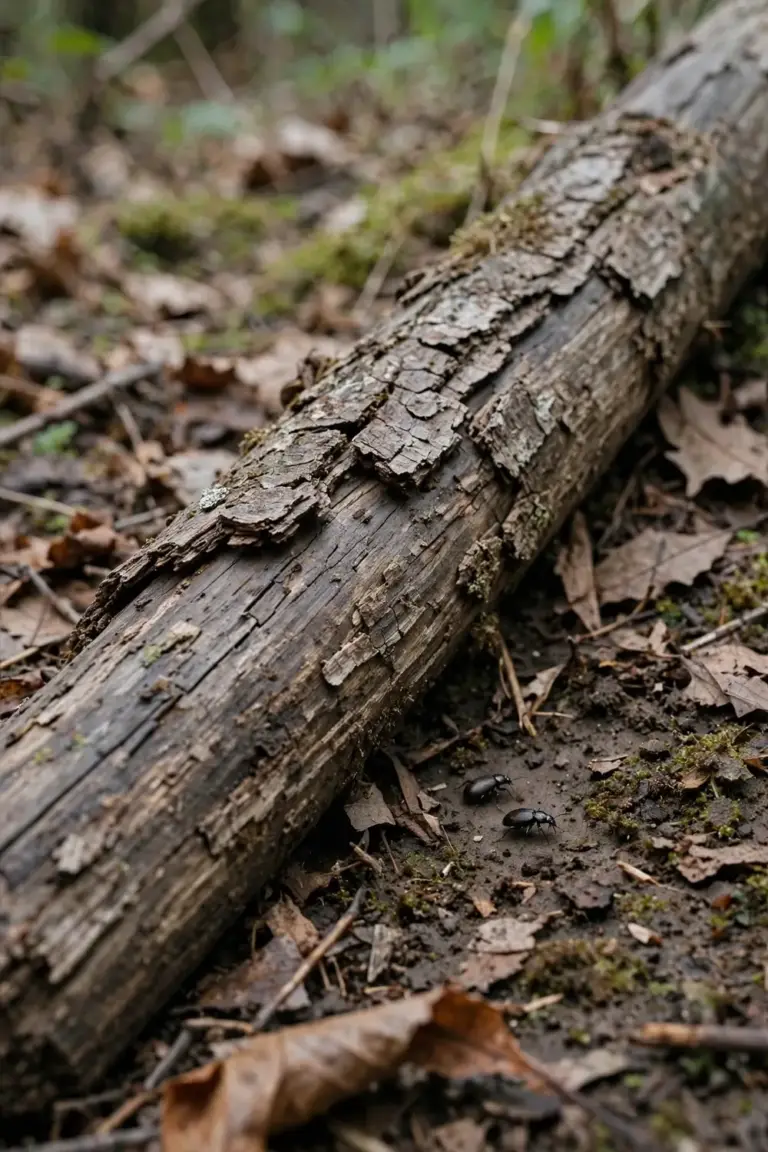
Leaf litter shelters bugs and worms for ground-feeding birds. A log holds beetles under its bark. A pile of twigs holds spiders. A layer of mulch holds insects in the soil. Birds in Backyards lists mulch to encourage insects as part of a garden that feeds birds naturally. The soil feeds insects. Insects feed chicks.
Keep a litter zone under the thicket and beside the grass patch. Rake leaves onto the zone instead of binning them. Lay one or two logs flat on the soil. Leave them in place. Do not turn them. The insects colonise the underside. The birds learn the spot. The mulching guide explains how a mulch layer holds moisture and feeds soil life. What Is Mulching
Keep the litter zone messy by design. A tidy yard is a hungry yard for small birds. A litter zone under shrubs reads as garden bed, not mess. Edge it with stones or timber. Tell visitors it is a bird zone. The mess is the point. The mess is the food.
5. Offer Safe Shallow Water Near Cover
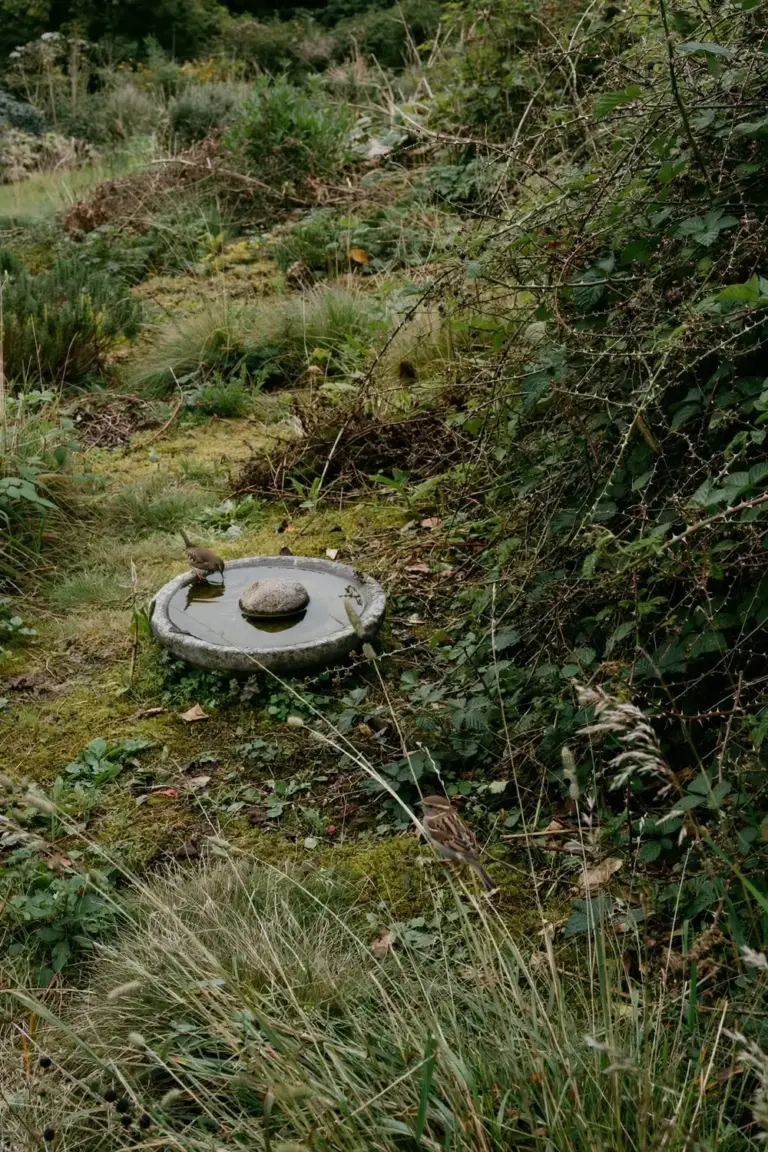
Safe shallow water near cover gives small birds a drink and a bath without a long exposed flight. A shallow birdbath with gently sloping sides suits small birds. Place it near dense shrubs so birds can sip and retreat quickly if startled. Add a rock or stick in the bath for safe perching. Small birds stand on the rock. They drink. They bathe. They leave.
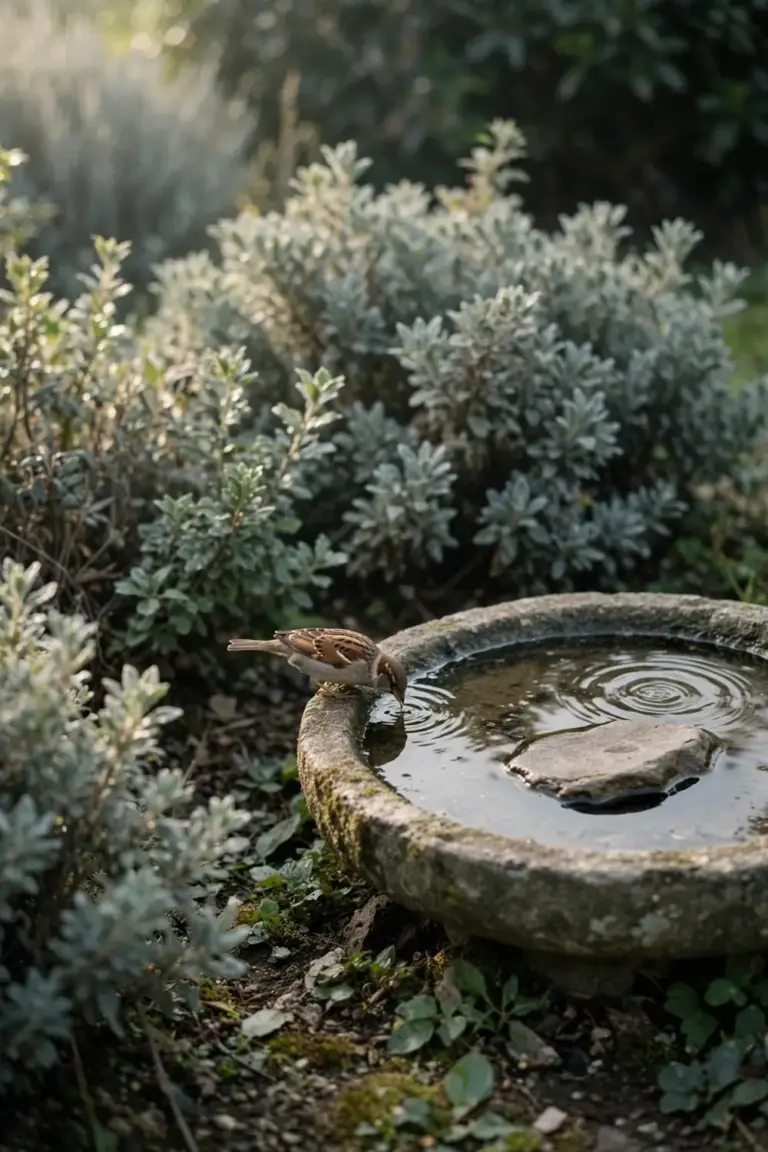
Water placement decides safety. A bath in open lawn exposes every visitor. A bath beside the thicket gives a short hop to cover. A bath under a branch gives a perch above the water. A bath near a window risks a strike. BirdLife Australia advises placing bird baths within 50 cm of windows to avoid high-speed collisions. A bath close to glass means a startled bird has no room to build speed. A bath far from glass with a clear flight line invites a fast strike.
Keep the bath shallow. Small birds bathe in a few centimeters of water. Deep water drowns them. A saucer with a stone in the center suits a small yard. A birdbath with a sloping edge suits a larger yard. Clean the bath weekly. Dirty water spreads disease. Fresh water draws more birds than a dirty bath ever will. The water features guide shows how to site water in a garden. Water Features to Transform Your Garden
Keep a second water point in summer. Heat dries small baths fast. A second saucer in shade holds water through the hot hours. Place it near cover too. Two baths near two thickets serve two territories. One bath in open sun serves none.
6. Keep Cats Indoors or in a Secure Run
Keep cats indoors or in a secure run, because cats hunt the ground layer where fairy-wrens feed. A roaming cat kills small birds. A roaming cat also stalks them. Stalked birds stop feeding. They stop caring for young. They leave the yard. The cat does not need to catch a bird to drive it away.
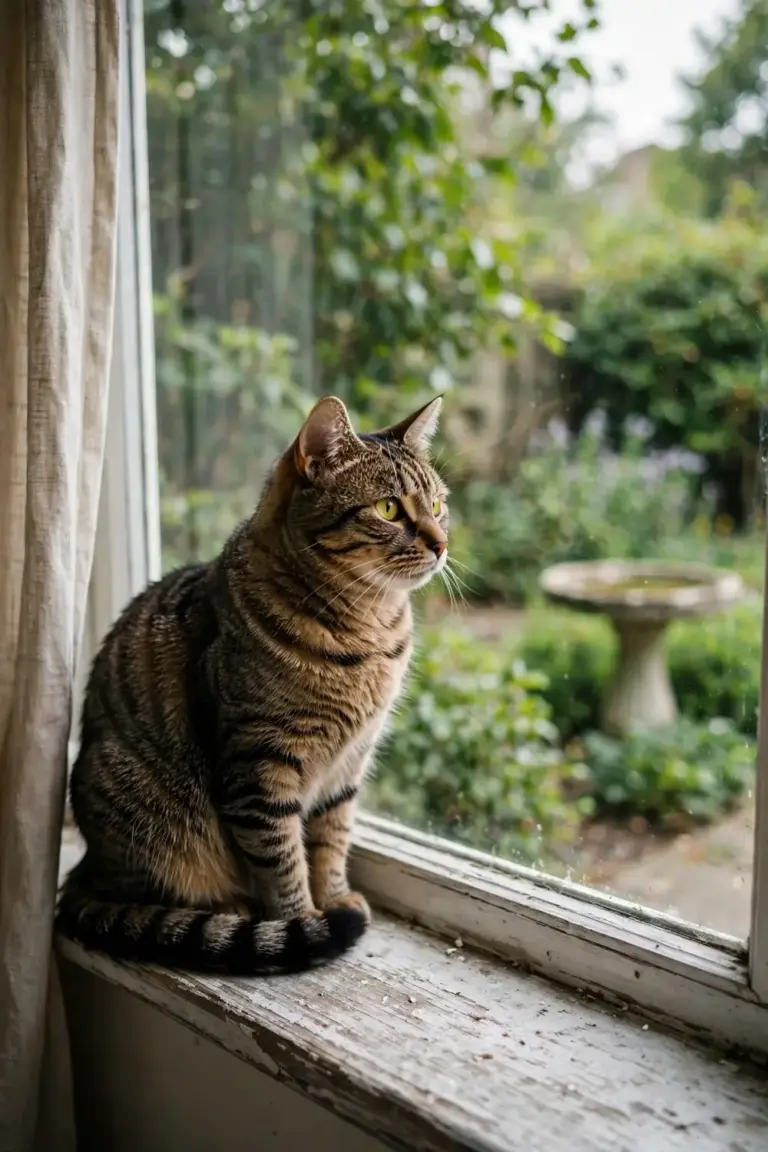
The numbers are stark. Australia holds 5.3 million pet cats, according to the Biodiversity Council. Biodiversity Council Roaming pet cats kill around 323 million native mammals, birds, and reptiles each year. Each pet cat kept indoors or in a secure run saves the lives of 110 native animals per year. One contained cat saves 110 animals. That is the largest single gain of the 11 moves.
Keep your own cat indoors. Build a secure run if the cat needs outdoor time. A run is a mesh enclosure attached to the house. The cat sees the yard. The birds stay safe. Talk to neighbours about their cats. A neighbour’s cat hunts your thicket too. A street where cats stay home is a street where small birds stay.
Do not rely on a bell. A bell does not stop a cat from stalking. A bell does not stop a cat from waiting at a thicket exit. Containment stops the hunt. A bell only warns some birds some of the time. Keep the cat in. Keep the birds alive.
7. Make Windows Safe From Strikes
Make windows safe from strikes. Glass kills birds that visit. A bird sees sky or garden reflected in glass. It flies at the reflection. It hits the glass. Small birds die from strikes. A yard that draws small birds to windows without making the glass safe draws them to a hazard.
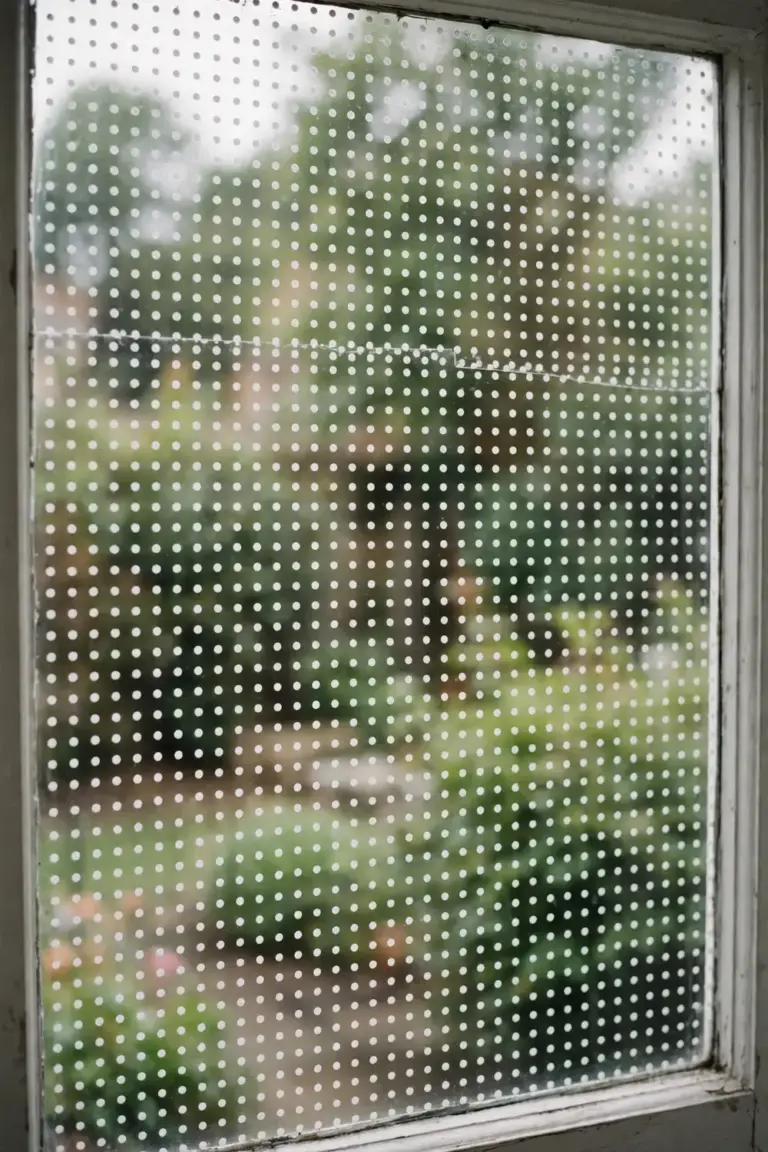
BirdLife Australia advises covering the outside surface of the glass with a repetitive or grid pattern to make windows less reflective. Patterns must sit high in contrast and spaced no more than 5 to 10 cm apart. Decals, stickers, tape, or dot patterns all work. Soap, tempera paint, clay, or special UV liquid markers also work. The pattern goes on the outside of the glass. Patterns on the inside fail because modern double and triple paned glass hides them.
Treat the windows nearest the thicket and the bath first. Those are the windows small birds fly past. A window that faces the thicket is a strike risk. A window that reflects the thicket is a strike risk. A window with a clear line of sight through the house is a strike risk. Cover the whole pane, not one decal in the center. One decal leaves most of the glass clear. A full grid breaks the reflection.
Move indoor plants out of view. A plant behind glass looks like habitat. A bird flies at it. A plant beside a window draws birds to the glass. Move the plant back from the window. Avoid planting nectar-rich or fruit-bearing trees near windows. Food beside glass draws birds to glass. Keep food plants near the thicket. Keep glass bare of reflections.
8. Stop Feeding Birds and Plant Food Instead
Stop feeding birds and plant food instead. Feeding gathers bullies at one point. Miners, currawongs, and magpies learn the feeder. They guard it. They drive small birds away. They eat eggs and chicks. Feeding helps the birds that already do well. It harms the birds that need help.
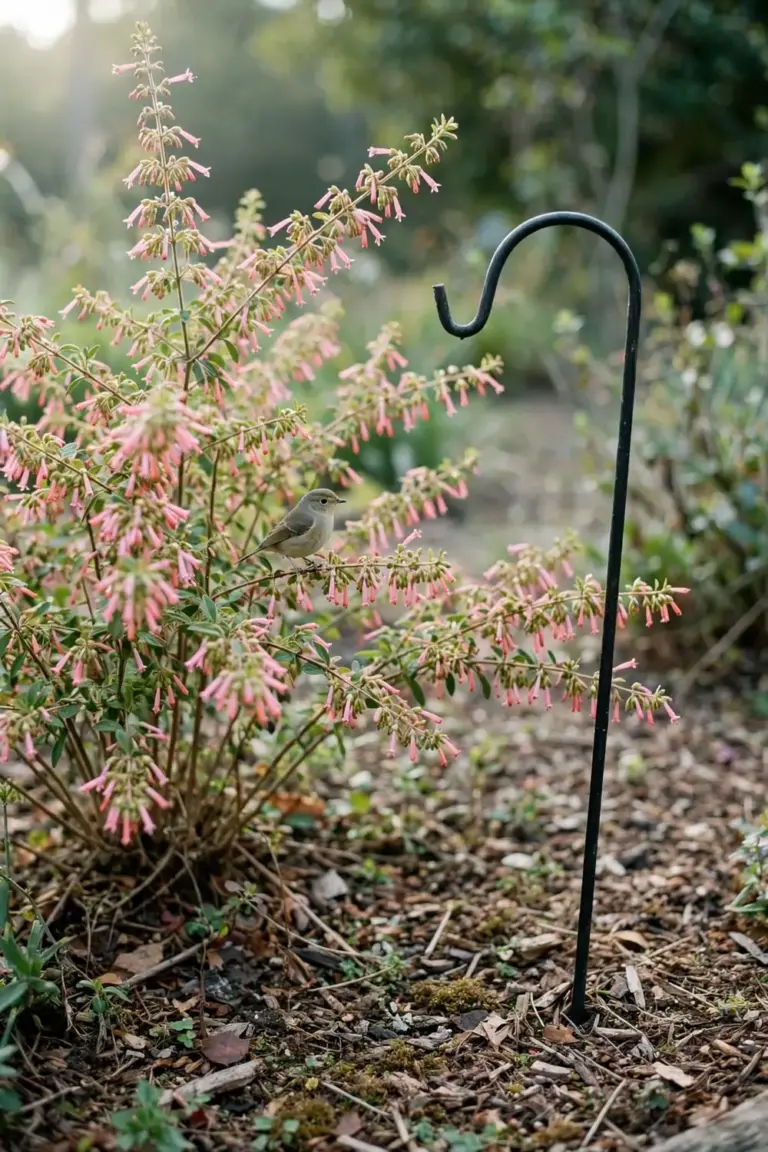
Birds in Backyards recommends that you plant for birds instead of feeding them artificially. Birds in Backyards Planting grows natural food. Natural food feeds the whole bird community. A feeder feeds a few problem birds. Birds will not starve if you stop feeding them. Even while being fed, they continue to hunt for food naturally.
Feeding also lifts miner numbers. Birds Queensland states that providing artificial nectar feeders for birds will invariably increase miner numbers. Birds Queensland Nectar feeders feed miners. Seed feeders feed mynas and sparrows. Bread feeds ducks badly. Honey water lacks the complex sugars of flower nectar. Every feeder tilts the yard toward the birds that already win.
If you already feed birds, wean off feeding. Cut the frequency. Feed less often. Then stop. Birds in Backyards advises that you cease feeding if large flocks of 20 or more birds begin feeding at the same time. A flock of 20 at a feeder is a bully flock. It is not a bird community. Stop the feed. Plant the food. The small birds will find it.
9. Shrink the Lawn and Grow a Mid-Storey
Shrink the lawn and grow a mid-storey. Lawn suits miners. Miners hunt on open grass. They patrol it. They guard it. Every square metre of lawn is a square metre of miner ground. A yard of lawn and trees has no place for a small bird to hide. A yard of lawn, mid-storey, and trees has shelter at every height.
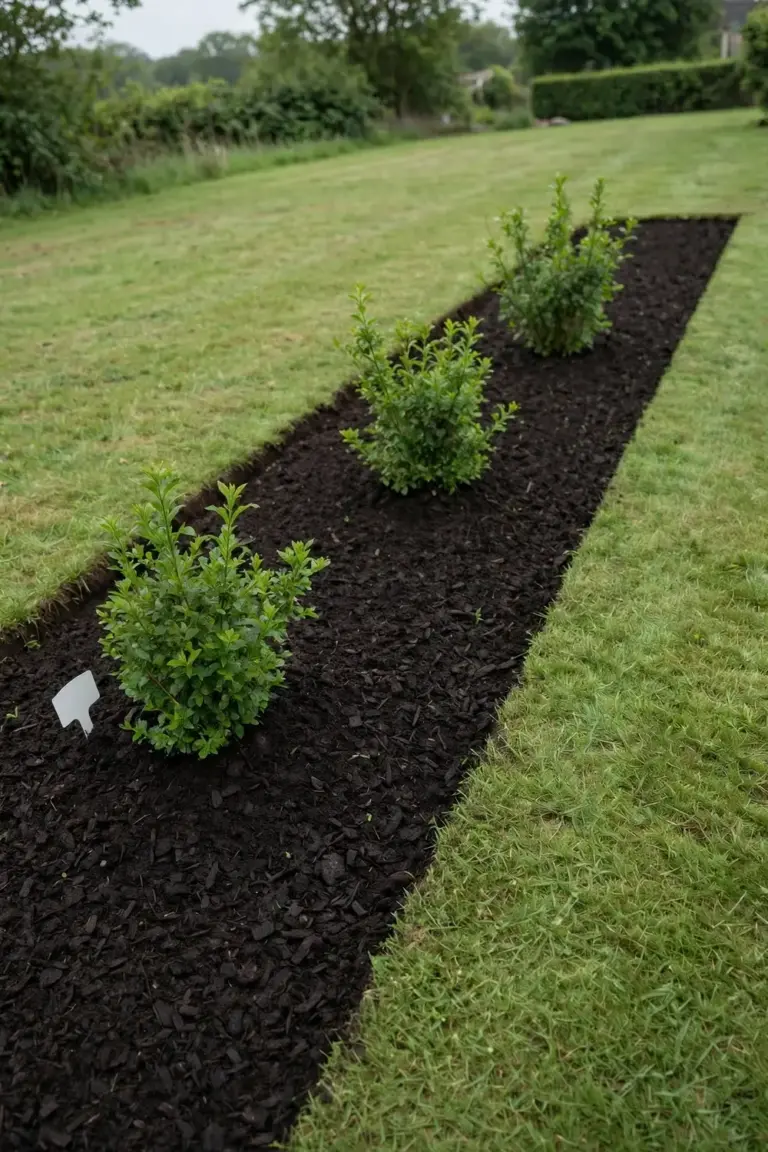
BirdLife Australia’s Urban Birds program advises loosening your grip on the lawn. Every patch of bare grass is a missed chance to welcome small birds. Replace some lawn with shrubs and groundcover wherever you can. The advice is blunt. Lawn is the problem. Shrubs are the fix.
Build three layers: groundcovers and grasses cover the soil, mid-storey shrubs fill the knee to head height band, and taller trees give canopy. Different species feed and shelter at different heights. Lorikeets and honeyeaters use the canopy. Fairy-wrens and thornbills use the mid-storey. Finches use the ground layer. A yard with one layer serves one group. A yard with three layers serves all of them.
Start with one lawn patch. Pick the patch beside the thicket. Dig it. Plant it with shrubs and groundcover. Mulch it. Water it through the first summer. Next year pick another patch. A yard changes one patch at a time. A yard does not need to lose all lawn at once. It needs to lose enough lawn to break the miners’ patrol.
10. Skip Sprays and Let Insects Feed the Chicks
Skip sprays and let insects feed the chicks. Small birds feed their chicks insects: fairy-wrens carry caterpillars, spiders, and beetles to the nest, and thornbills glean insects from leaves. A yard sprayed for insects starves chicks. A yard with insects feeds them.
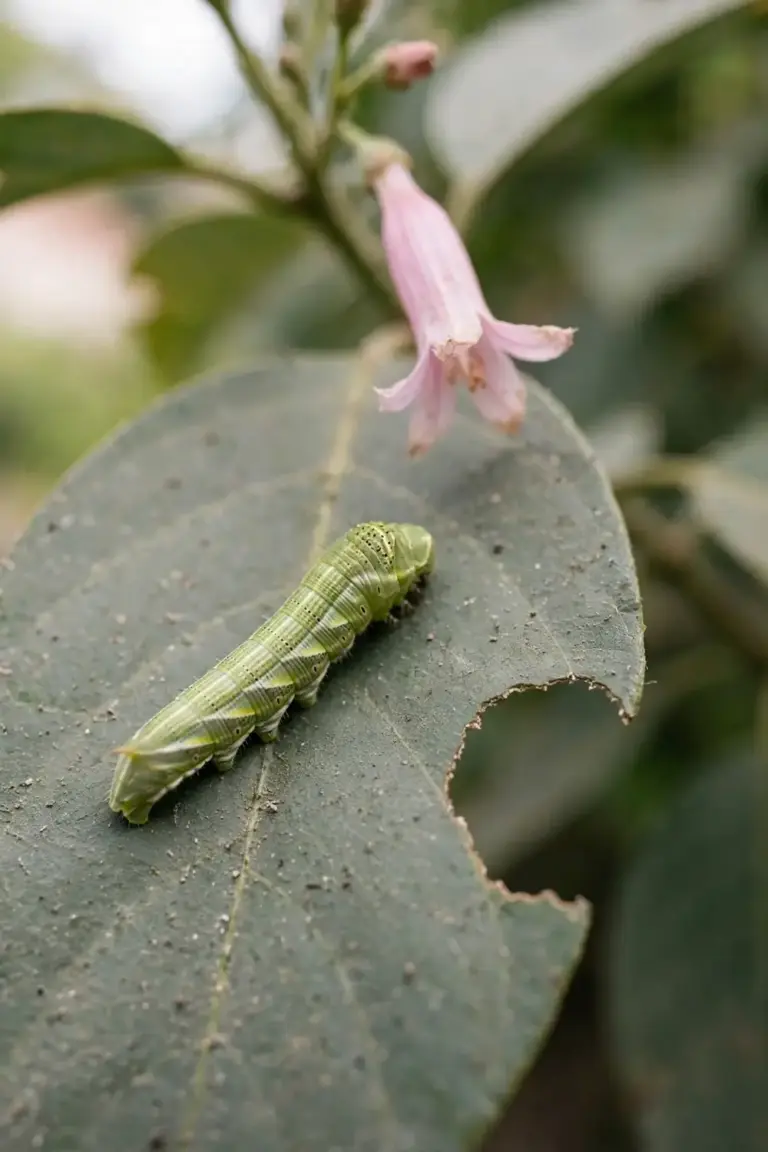
Avoid using chemical sprays. Birds need insects to feed their young. A spray that kills aphids kills the caterpillars too. A spray that kills beetles kills the spiders too. The insect food web feeds the bird food web. Break the first link and the second link starves.
Tolerate chewed leaves on the bird plants. A chewed correa leaf holds a caterpillar. A caterpillar feeds a wren chick. A perfect leaf feeds nothing. The bird plants are not show plants. They are food plants. Their job is to grow insects. Let them do it.
Control pests by hand where you must. Pick caterpillars off vegetables by hand. Hose aphids off roses with water. Leave the bird plants alone. The birds will eat the insects. A yard with birds needs fewer sprays because the birds do the pest control. The insects feed the birds. The birds protect the vegetables. The loop closes.
11. Plant for Winter Gaps So Small Birds Stay
Plant for winter gaps so small birds stay. Winter starves small birds. Insects slow down. Flowers stop. Seed drops. A yard that feeds birds in spring and starves them in winter loses them. Small birds leave a yard with a winter gap. They do not return in spring.
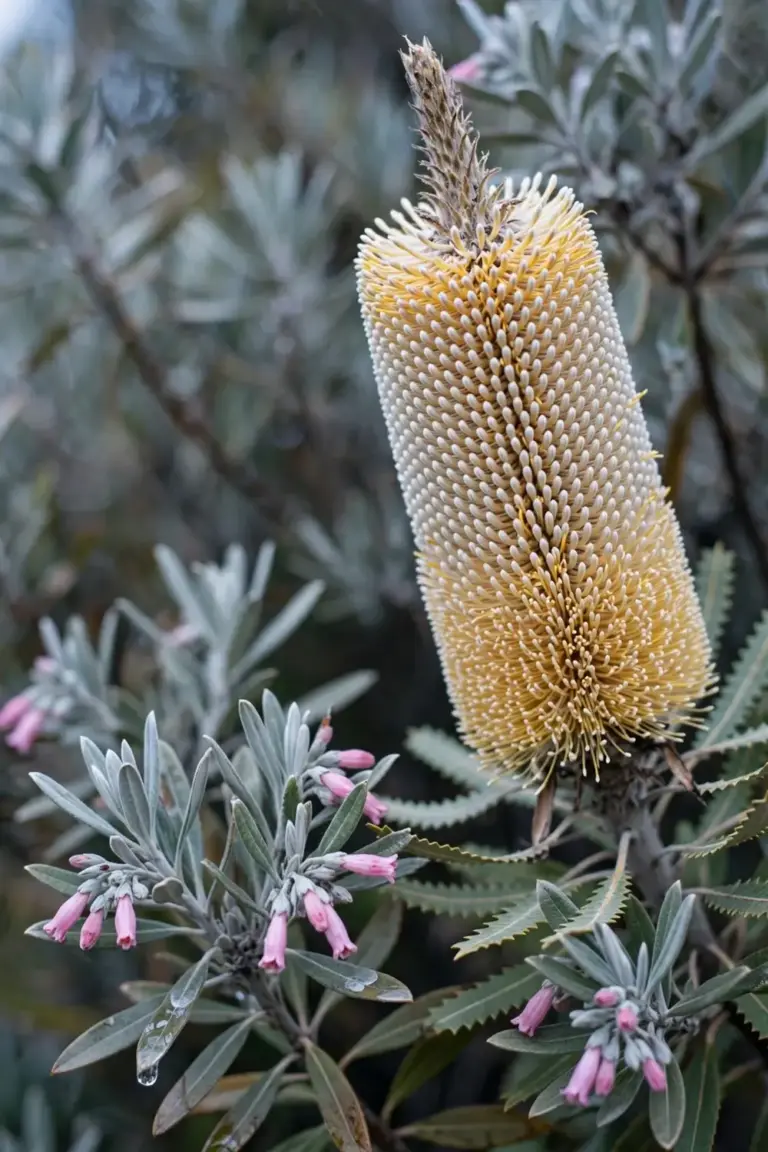
Banksia and correa fill the winter gap. Correa flowers in the cooler months, banksia carries winter nectar, and small-flowered grevillea flowers across much of the year. Plant them near the thicket. Winter food near winter shelter keeps small birds through the cold months. A winter flower beside cover is worth more than a spring flower across open lawn.
Stagger bloom times across the year. Plant species that flower in different months. One species flowering in spring and nothing in winter is a gap. Three species flowering across spring, summer, and winter is a bridge. The bridge holds small birds in the yard all year. A yard with year-round food holds year-round birds.
Check your yard each winter. Walk it in July. Count the flowers. Count the seed heads. Count the insects. If the yard is bare in July, plant a winter flowerer. If the grass is mown flat in July, leave a patch to seed. Winter is the test. A yard that passes the winter test keeps its small birds.
Count Your Birds With the Aussie Backyard Bird Count
Count your birds with the Aussie Backyard Bird Count. The count measures whether the 11 moves worked. It turns a feeling into a number, and a number into a trend. BirdLife Australia runs the count each year during Bird Week in October.
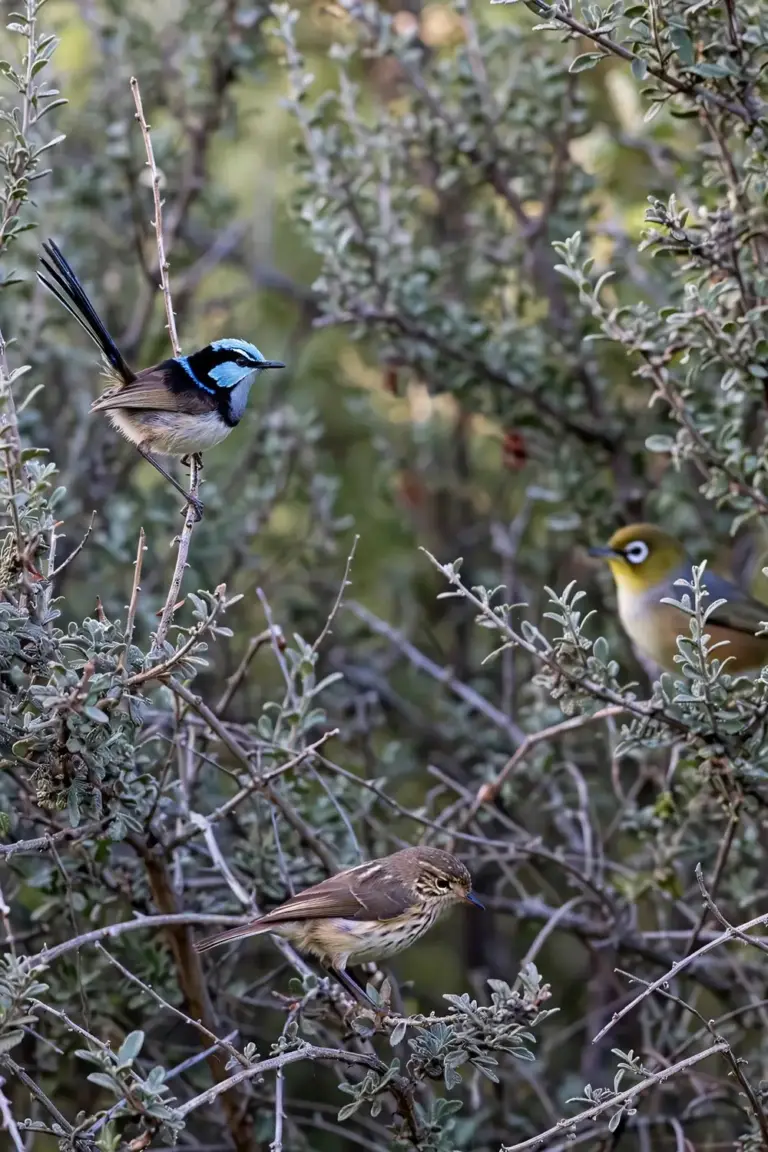
The method is simple. Spend 20 minutes standing or sitting in one spot. Note down the birds that you see. Count the number of each species that you spot within the 20-minute period. BirdLife Australia recommends counting within a maximum 80 m radius or an area of 100 m by 200 m. Submit the count through the Aussie Bird Count app or web form. Aussie Bird Count
Run a baseline count before you change the yard. Count in October. Record the species. Record the numbers. Note which birds are small and which are bullies. Then plant the thicket. Then count again next October. Compare the two counts. A yard gaining small birds shows more fairy-wrens, finches, and thornbills. A yard still losing shows miners only.
Count outside the count week too. BirdLife Australia offers Birdata for year-round surveys. A monthly 20-minute count from the same spot builds a real trend. One count is a snapshot. Twelve counts are a story. The story tells you whether the thicket worked. The story tells you which plant the finches use. The story tells you when the miners return.
Frequently Asked Questions
Lorikeets use the canopy and big-nectar flowers, while fairy-wrens use the mid-storey and ground layer. A yard with canopy and big flowers serves lorikeets. A yard with no thicket serves no wrens. Plant the thicket first. Plant small flowers second. Shrink the lawn third. Wrens arrive once cover exists. Lorikeets will still visit the canopy. Both groups can share a layered yard.
A thicket gives shelter to any small animal that uses dense cover. Snakes follow frogs and mice, not shrubs. Rats follow food waste and pet food, not shrubs. Keep pet food indoors. Keep rubbish bins shut. Keep the thicket clean of food waste. A thicket with no food waste holds birds, not rats. A yard with pet food outside holds rats with or without a thicket.
Small birds arrive once cover is established. A new thicket needs one season of growth before branches touch, and birds scout the yard while shrubs grow. They return when cover holds. Expect visits within the first year. Expect nesting in the second year. Patience is part of the method. A yard planted this spring counts more small birds next October than this October.
A birdbath helps in summer when water is scarce. Keep it shallow. Keep it near cover. Clean it weekly. Place it within 50 cm of a window or far from glass to cut strike risk. Add a rock or stick for perching. A bath in open sun dries fast and exposes visitors. A bath in shade near a thicket holds water and holds birds. Two baths near two thickets serve two territories.
Yes. The Aussie Bird Count runs once a year during Bird Week in October. BirdLife Australia offers Birdata for year-round surveys. Run a 20-minute count from the same spot each month. Record species and numbers. Compare counts across months. A monthly count builds a trend. A trend shows whether your yard gains small birds. One count is a snapshot. Twelve counts are a story.
Start With One Thicket This Weekend
Start with one thicket this weekend. Pick a corner. Plant three prickly shrubs. Mulch the patch. Water it in. Leave the litter. The thicket is the first move. The other 10 moves follow it: cover first, food second, water third, cats indoors, windows safe, no feeders, lawn smaller, sprays stopped, and winter gaps filled. Count in October.
Small birds do not need a perfect yard. They need a yard with cover. A yard with cover holds fairy-wrens. A yard with cover holds finches. A yard with cover holds thornbills. Plant the thicket. The small birds will find it.