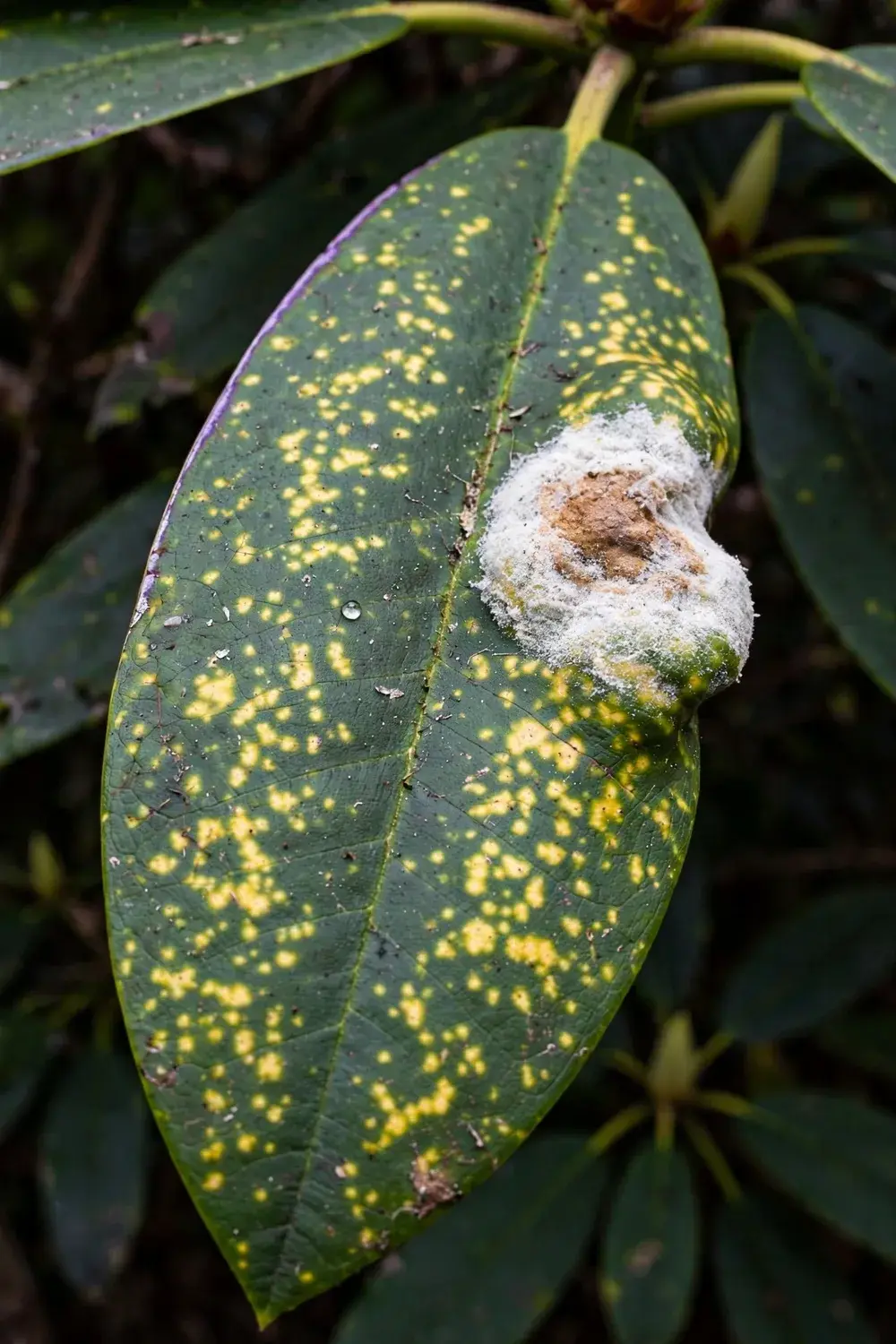

Yellow leaf spot is a yellow-spotted leaf symptom on rhododendron caused by fungi in the genus Exobasidium, a genus with 2 home-garden symptom forms: spots and galls. The spots start flat and yellow, and part or all of a leaf may thicken and turn fleshy. A thin white bloom of spores can cover the spot, and the center turns brown as the spot ages. The damage is usually cosmetic, and the home-garden response is removal plus airflow, with spray as a preventive option only.
This article treats yellow leaf spot as a grouping, not as one named species. The Clemson index lists it as Exobasidium sp. under Rhododendron sp. (Rhododendron), with no species attached. The literature attaches different names to different spot cases, so picking one species would contradict another source. The grouping framing is the honest framing.
I have learned to look for the white bloom on a yellow spot before I blame hunger or cold, because that bloom is what marks the spot as Exobasidium rather than a feeding or weather problem.
What Yellow Leaf Spot Actually Is
Yellow leaf spot is the spot form of Exobasidium disease on rhododendron. Exobasidium fungi infect plants in the heath family, and the same genus produces galls, blisters, blights, and leaf spots across that family. The spot form stays flat at first, then may thicken. The gall form swells into fleshy masses. Both forms belong to the same grouping, and both end with a white spore bloom.
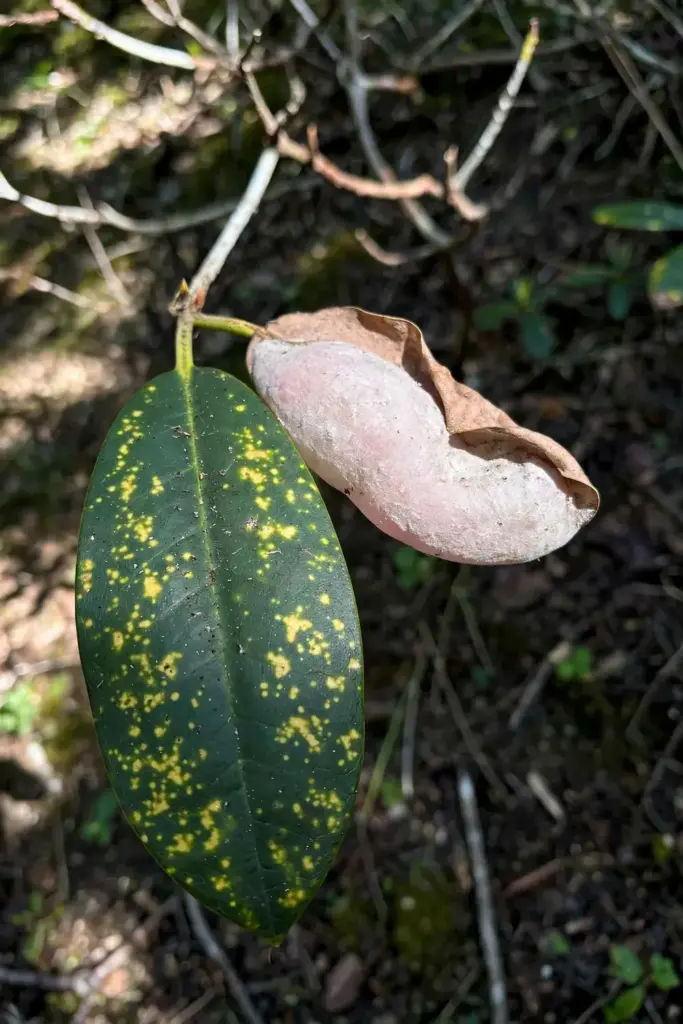
Infection happens at bud break. Older leaves resist infection, and infection depends on high humidity and moisture during bud break, according to the Pacific Northwest Pest Management Handbooks page on rhododendron leaf and flower gall. Young expanding tissue is the target. The fungus overwinters as spores on bark and bud scales, then enters as buds open in spring. Wet spring weather drives the worst years, and dry springs keep the disease quiet.
Azaleas sit inside this grouping because azaleas are Rhododendron species. Clemson attaches the yellow leaf spot name to Rhododendron sp. (Rhododendron), while the azalea block of the same index lists Exobasidium leaf gall and witch’s broom. The practical grouping covers rhododendrons including azaleas, and the cleanup is the same for both.
How to Identify Yellow Leaf Spot on Rhododendron Leaves
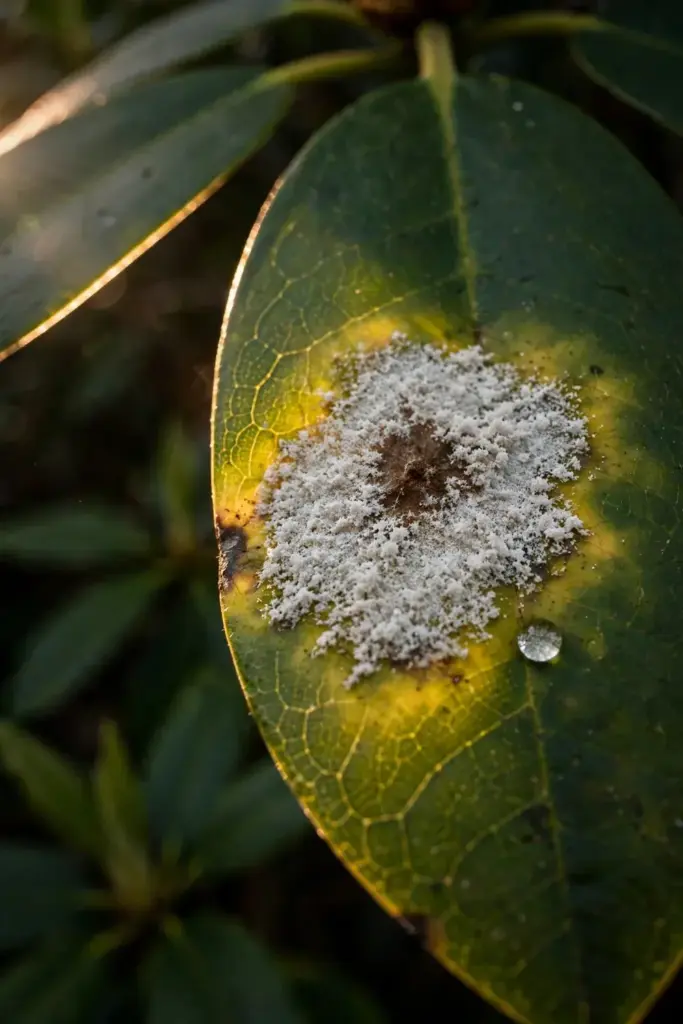
Yellow leaf spot starts as yellow leaf chlorosis, leaf thickening, or yellow leaf spotting on evergreen rhododendron leaves. Either all or part of a leaf may become thickened, fleshy, and covered with a white bloom of spores. As spots age, the center of the spot begins to turn brown. That sequence of yellow, then thickened, then white, then brown-centered is the field signature.
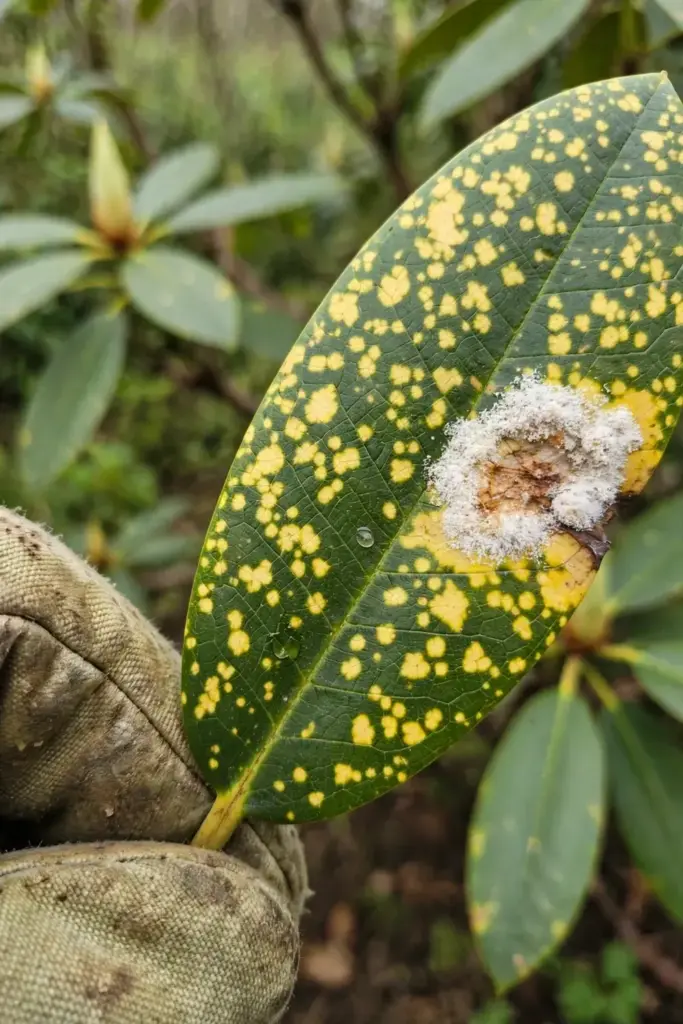
The white bloom is the decisive check. A thin white layer over the spot is the spore-producing layer of the fungus, and it appears as the infected tissue matures. One published example names Exobasidium decolorans for yellow chlorotic leaf spots on Rhododendron occidentale, in the UF/IFAS Extension bulletin on gall and leaf spot diseases caused by Exobasidium fungi. That name belongs to that example only. It is not the identity of every yellow leaf spot.
A yellow leaf that never thickens and never shows a white bloom points away from this grouping. Check the underside in good light, and check again a few days later. A spot that stays flat, dry, and bloom-free through that watch needs a different explanation, and a lab sample settles the question when the field signs stay unclear.
Why the Species Name Stays Unresolved
The species name stays unresolved because the sources do not agree on one. Clemson lists yellow leaf spot as Exobasidium sp., genus only. The literature splits. One source ties yellow chlorotic spots on Rhododendron occidentale to Exobasidium decolorans. Another case of rhododendron spotting drew speculation toward Exobasidium burtii, a relative of the fungus behind the pinkster gall on azaleas, without confirmation. The gall literature names Exobasidium vaccinii, Exobasidium azaleae, and Exobasidium camelliae for gall forms on azalea, rhododendron, and camellia. None of those names is declared here as the cause of a given garden’s yellow leaf spot.
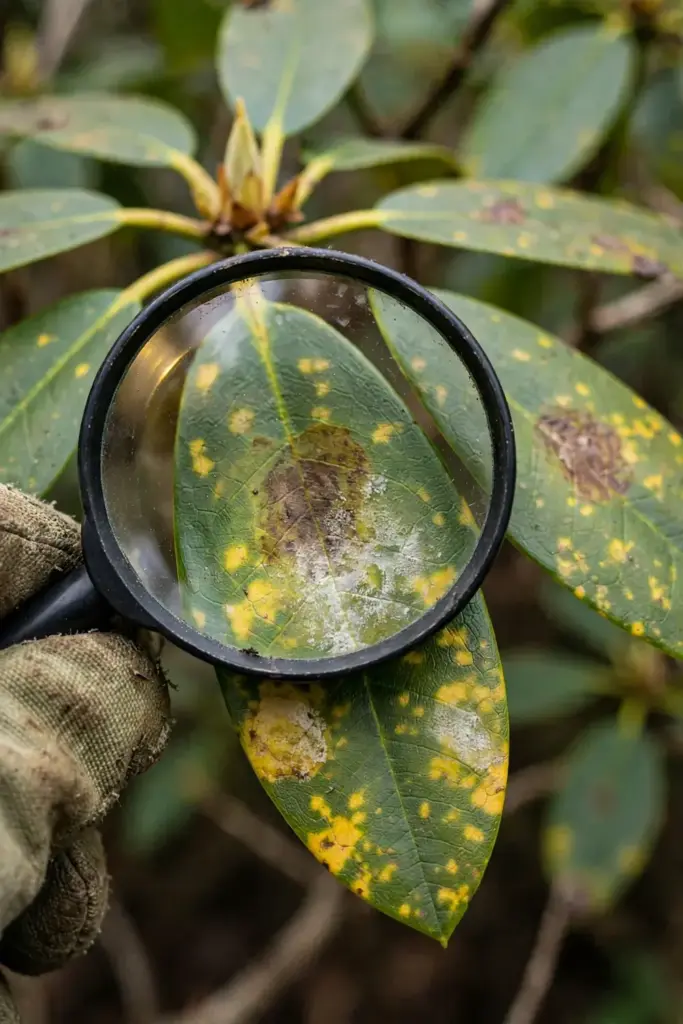
Species separation in this genus rests on microscopic spore and basidia measurements, and on host and symptom records that do not line up cleanly across regions. The field eye sees a yellow spot with a white bloom. The microscope names a species. The home gardener manages the grouping, and the grouping is what this article covers.
What Makes Yellow Leaf Spot Worse in a Home Garden
Cool, wet weather in spring and early summer promotes Exobasidium gall and spot disease. Overhead watering wets the foliage and moves spores by splash. Dense, shaded growth holds moisture on the leaves after rain. Plants in poorly aerated soil and spots with low air circulation face repeat infection, according to the University of New Hampshire Extension article on Exobasidium gall of rhododendron.
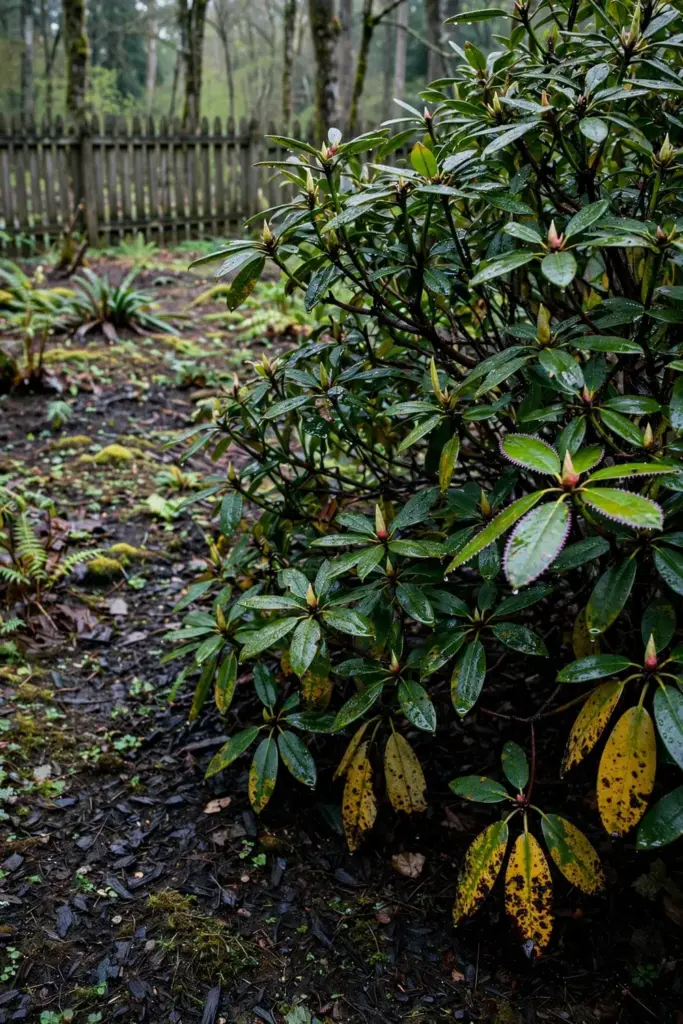
Three habits feed the disease. Overhead sprinklers soak buds at the exact moment spores are active. Tight, unpruned growth traps damp air around the leaves. Fallen spotted leaves left under the shrub carry the fungus into the next season. Each habit is fixable, and fixing them beats any spray applied after spots appear.
Soil and siting set the background. Rhododendrons want moist, well-drained, acidic soil, and a shrub sitting in soggy ground stays stressed and slow to dry. The site’s guide to soil health covers drainage and organic matter for beds that hold water too long. Open spacing and light pruning for airflow help the canopy dry after rain, and the site’s spring pruning guide covers the cuts that open a crowded shrub without stripping its buds.
Pick and Destroy Spotted Growth Before It Turns White
Pick and destroy spotted and galled growth before it turns white. The white bloom is the spore layer, and removing tissue before that layer forms cuts next spring’s inoculum. Handpicking is the main control for a home garden, and it works best when it starts at the first sight of spots.
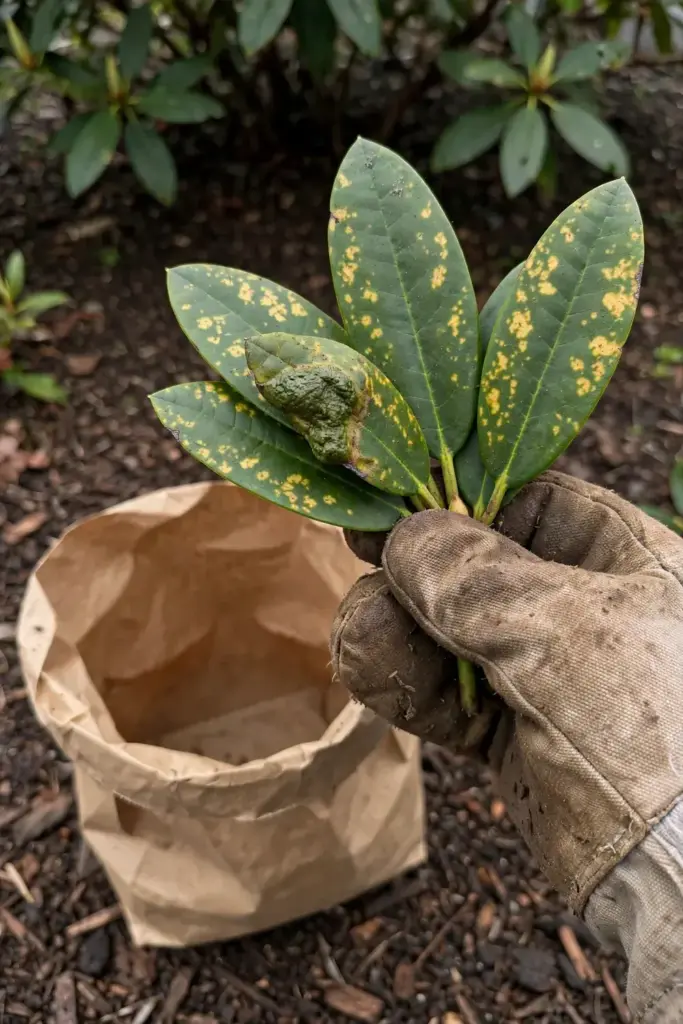
Bag the removed leaves and shoots, and send them to the trash. Do not compost spotted leaves. Do not leave picked leaves on the ground around the plants. Rake up fallen spotted leaves under the shrub and trash those too. Clean tools after the job so sap and spores do not ride to the next shrub.
| Timing | Action | Why It Matters |
|---|---|---|
| At first sight of yellow spots | Handpick the spotted leaves and shoots | Removal early catches tissue before spores mature |
| Before any white bloom appears | Bag and trash all picked material | The white layer is the spore source for next spring |
| After cleanup | Rake fallen leaves and clean tools | Fallen leaves and dirty tools carry the fungus forward |
Repeat the check through spring. A second round of picking catches spots that were too small to see on the first pass. A shrub that showed heavy spotting last year deserves weekly checks this spring, because the fungus overwinters on bark and bud scales and returns with bud break.
When to Spray and When to Skip It
Skip the spray once spots are showing. Spraying after infection and visible symptoms has no effect on the disease during the growing season, and fungicides have not been shown to be very effective for this disease once galls and spots are present. The spray window is preventive, and it closes before bud break.
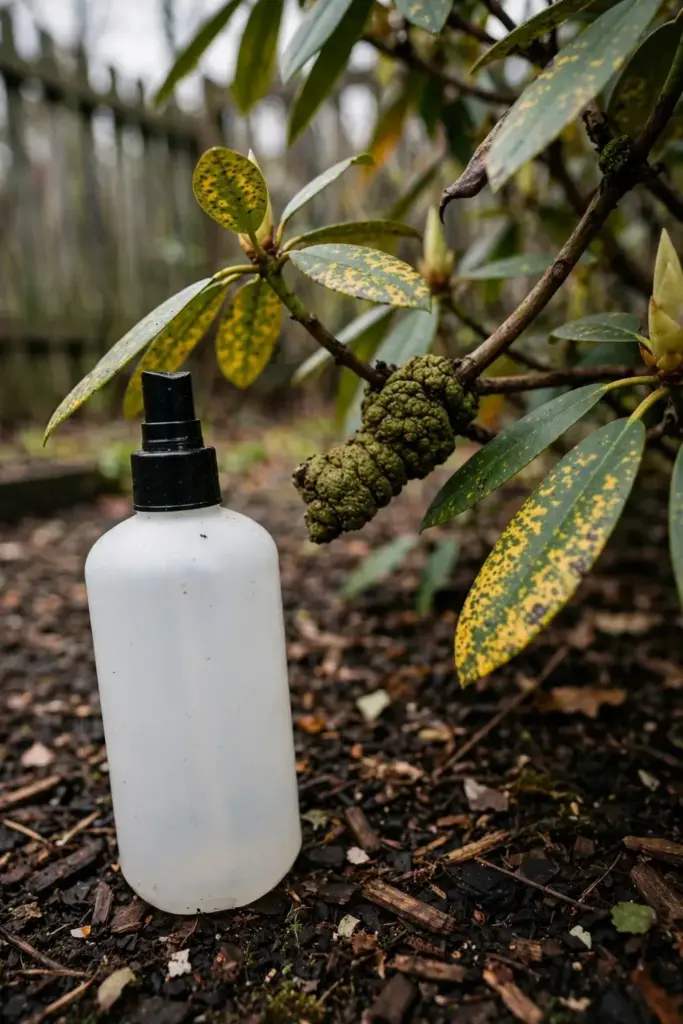
The preventive window runs before bud break in spring, with a second spray 2 to 3 weeks later, according to the Pacific Northwest Pest Management Handbooks page on rhododendron leaf and flower gall. That handbook lists Captan 80 WDG at 1.5 lb per 100 gal water, with a 48-hour reentry interval, and it notes that other references call chemical control unsuccessful. Symptom reduction shows the following spring, not the spring of spraying. Clemson lists mancozeb and chlorothalonil for leaf gall on azaleas and rhododendrons, and directs growers to follow label directions, in its Clemson Extension guide to azalea and rhododendron diseases.
For most home gardens, handpicking plus airflow is the whole program. A preventive spray earns its place only where handpicking cannot keep up, and where last year’s infection was heavy. Read the label, respect the reentry interval, and treat spray as the backup, not the plan.
Frequently Asked Questions
Both sit in the Exobasidium grouping, with different symptoms. Gall tissue swells into fleshy, bladder-like masses, while yellow leaf spot stays flatter and shows as yellow spots that may thicken. Both end with a white spore bloom, both follow wet spring weather, and both answer to the same cleanup. Remove affected tissue before it turns white, trash it, and improve airflow.
Rarely. The damage is usually minor and does not affect the overall health of the plant, though it can cut flowering and lower the shrub’s looks. Repeat infection over several years can reduce vigor, so a shrub that spots heavily every spring deserves steady cleanup and better airflow. A single light year of spots is a cosmetic problem, not a plant emergency.
Only as a preventive spray before bud break, and only when handpicking cannot keep up. Spraying after spots appear does not cure the current infection. The preventive window is one spray before bud break and a second spray 2 to 3 weeks later. Follow the label, respect the reentry interval, and judge success by next spring’s leaves, not this spring’s spots.
No. Bag spotted leaves and shoots and send them to the trash. Composting keeps infected tissue in the garden, and picked leaves left on the ground under the shrub carry the fungus into the next season. Rake up fallen spotted leaves too, and clean tools after the job so spores do not ride to the next shrub.
Where to Go From Here
Yellow leaf spot rewards the gardener who picks early, trashes the picked leaves, and opens the canopy to air. Check buds as they open in spring, and pull spotted growth before it turns white. Keep overhead water off the foliage. A preventive spray fits only the heavy-infection case. It runs before bud break or not at all. The Plant Care archive collects the site’s disease coverage for the next problem the garden throws up.