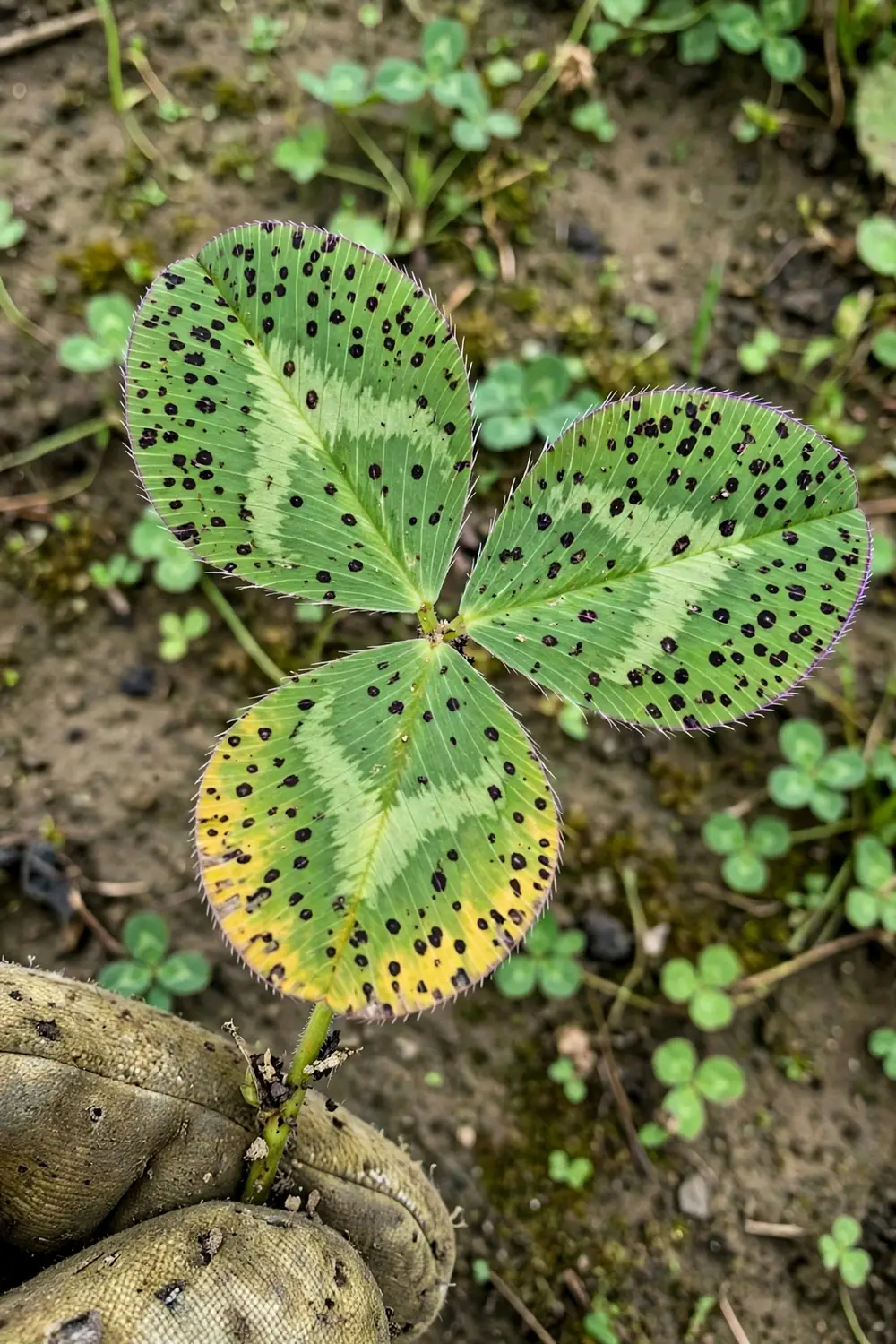

Pseudopeziza Leaf Spot spots clover leaves with small dark circles in cool wet weather, worst in fall. The fungus behind it is Pseudopeziza trifolii, and red clover takes the hardest hit. Cutting early and clearing the residue are the 2 moves that matter in a home patch.
I have learned to treat spotted clover leaves as a cue to mow, not a cue to spray. This disease seldom kills clover. Long-term infection saps vigor and adds winter injury risk, so early cutting protects the stand.
The sections below name the fungus plainly, show how to read the spots, and separate the home moves from field-scale advice that does not belong in a garden.
1. What Pseudopeziza Leaf Spot on Clover Actually Is
Pseudopeziza Leaf Spot is a fungal leaf spot disease of clover. The fungus Pseudopeziza trifolii causes it. Clemson lists the clover entry under the genus name only, while current literature names Pseudopeziza trifolii as the species behind clover infections.
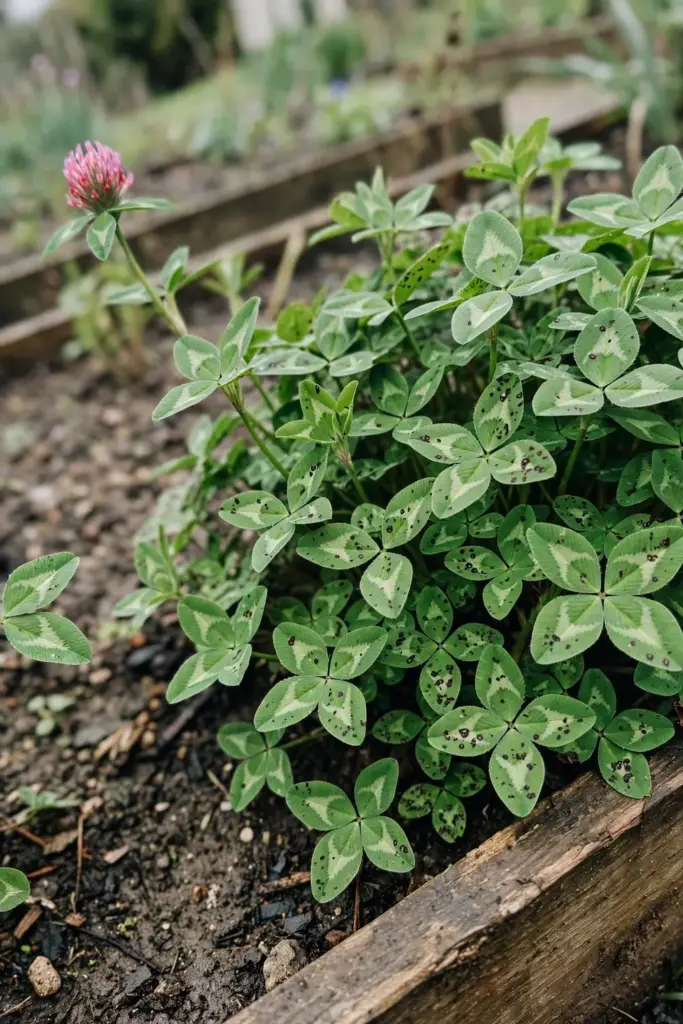
The fungus lives in plant residue and on diseased leaves between seasons. Spores spread from that residue when cool wet weather returns. The disease shows through the growing season and peaks in fall, per the Pacific Northwest Pest Management Handbook on clover common leaf spot.
Alfalfa carries a separate disease under the name common leaf spot. Its fungus is Pseudopeziza medicaginis. The two fungi are distinct species, and alfalfa advice does not transfer to clover.
2. How to Identify Pseudopeziza Leaf Spot on Clover Leaves
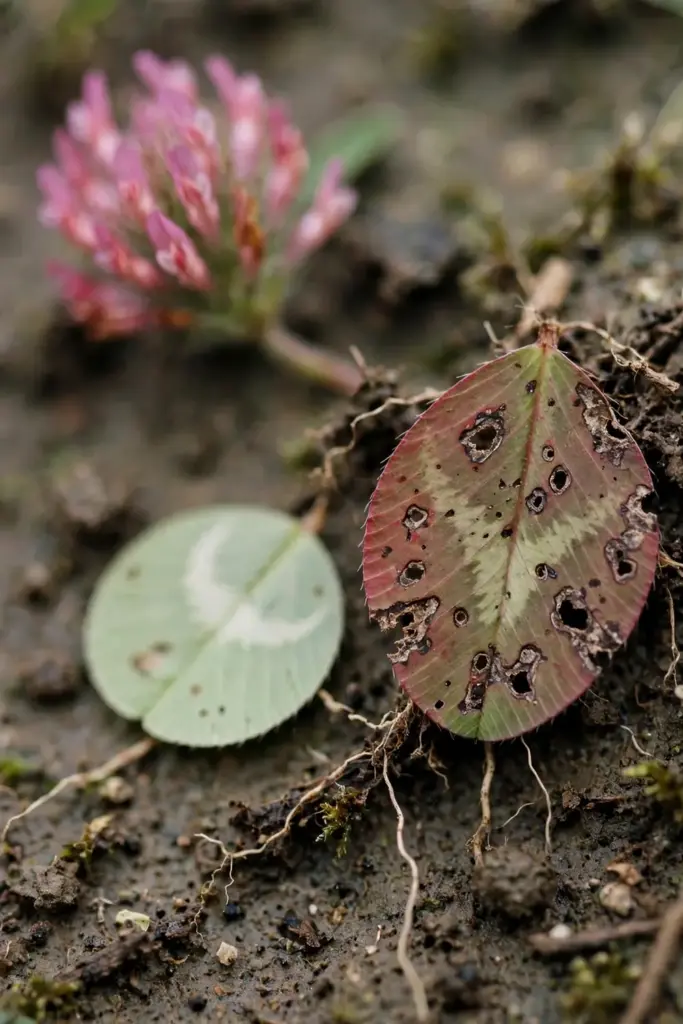
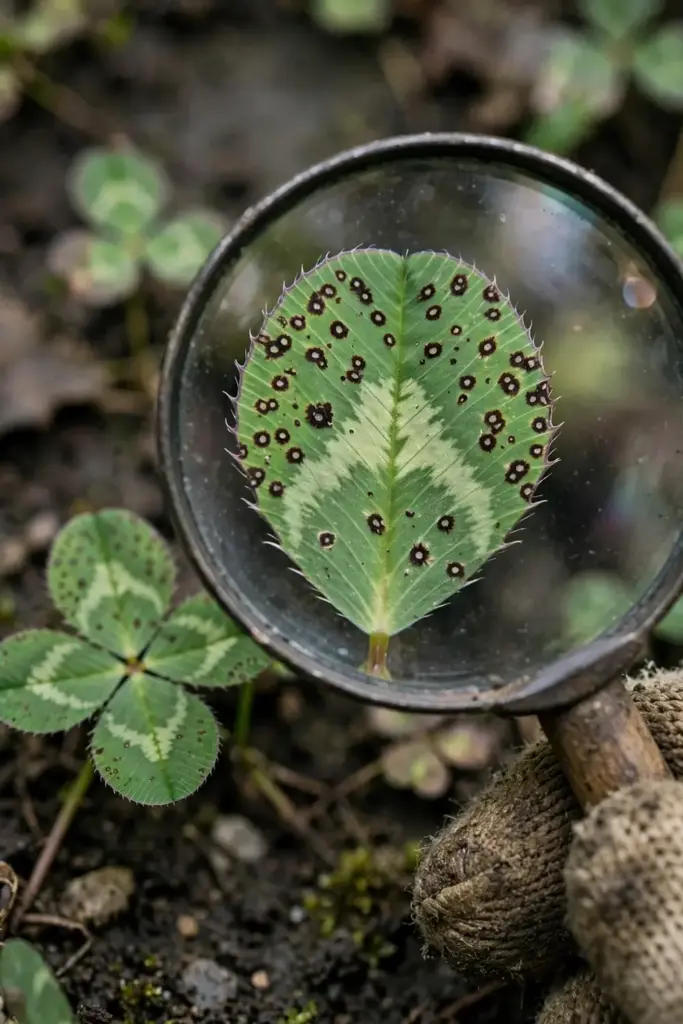
Start with the leaf surface. Look for small dark brown to black circular spots with irregular or fringed edges. Spots can appear on both leaf surfaces, and petiole or stem spots stay rare.
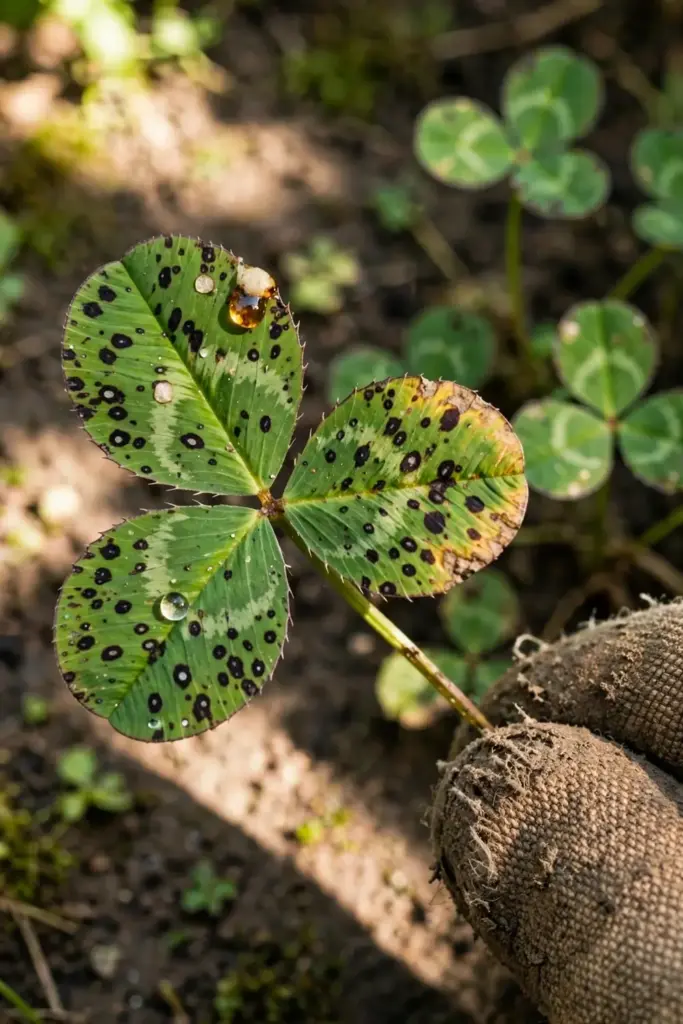
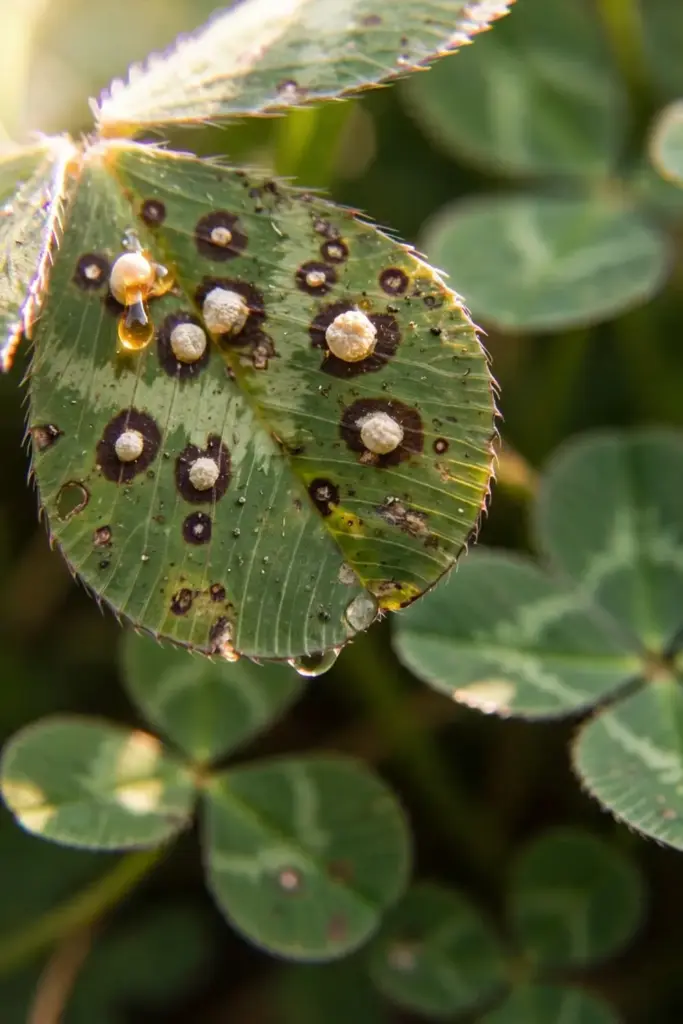
Check the upper surface on a damp morning. Small light-colored raised disks sit on the spots. These disks are the fruiting structures, and they ooze an amber liquid under moist conditions. That ooze plus the fringed edge is the strongest field clue, per the Pacific Northwest Pest Management Handbook on clover common leaf spot.
Field ID stays presumptive. Several fungi spot clover leaves, and only a lab settles the species. Treat a field read as a working ID, then act on the home moves below.
3. Which Clover Takes the Hardest Hit
Red clover takes the hardest hit. The fungus attacks red clover first, and it also infects white and crimson clover. A patch of red clover in a cover-crop bed deserves the closest watch. The red clover growing guide covers growing this host from seed.
No resistant varieties are known. Tetraploid varieties run more susceptible than diploids. Variety choice offers no reliable shield, so management carries the whole defense.
4. Why Cool Wet Weather Drives Pseudopeziza Leaf Spot
Cool wet weather drives this disease. Moisture lets spores leave the fruiting disks and reach fresh leaves. Fall brings the worst pressure, when cool damp days stack up.
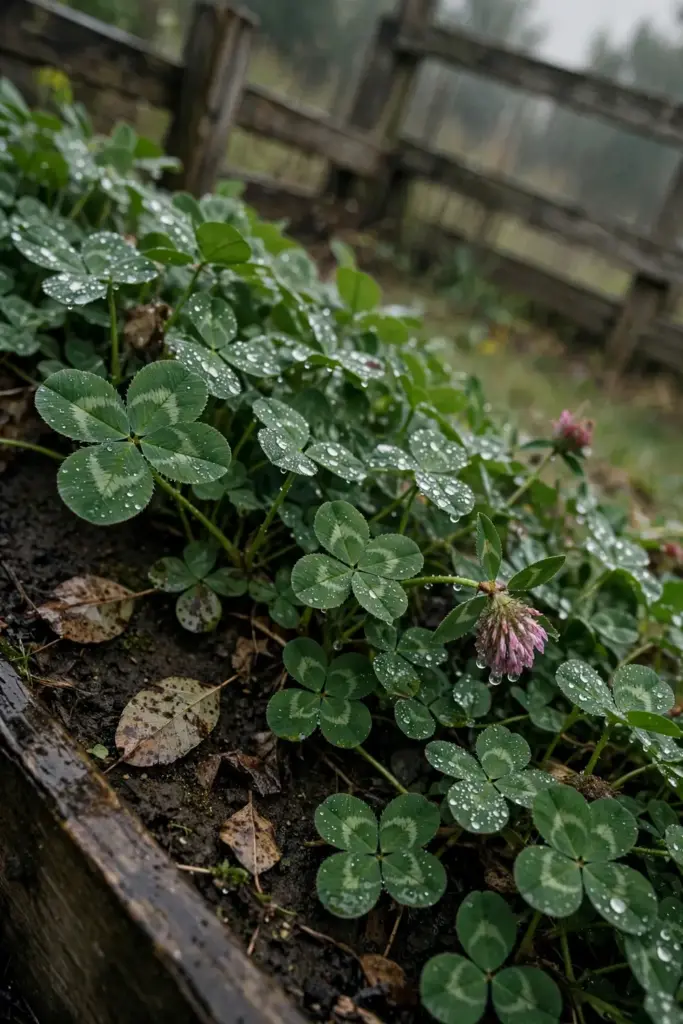
Residue carries the fungus between seasons. Infected leaves left on the bed hold spores through the gap, per the Pacific Northwest Pest Management Handbook on clover leaf spots. Early cutting breaks that chain by removing infected leaves before spore pressure builds.
A thick uncut stand holds moisture longer. A tall stand dries slowly after rain, and slow drying gives spores more hours to infect. Regular cutting opens the stand and shortens the wet window.
5. What Pseudopeziza Leaf Spot Does to a Clover Patch
Most infections look worse than they act. Leaf spots on clover seldom cause serious losses, per the Pacific Northwest Pest Management Handbook on clover leaf spots. A few spots on scattered leaves cost the patch almost nothing.
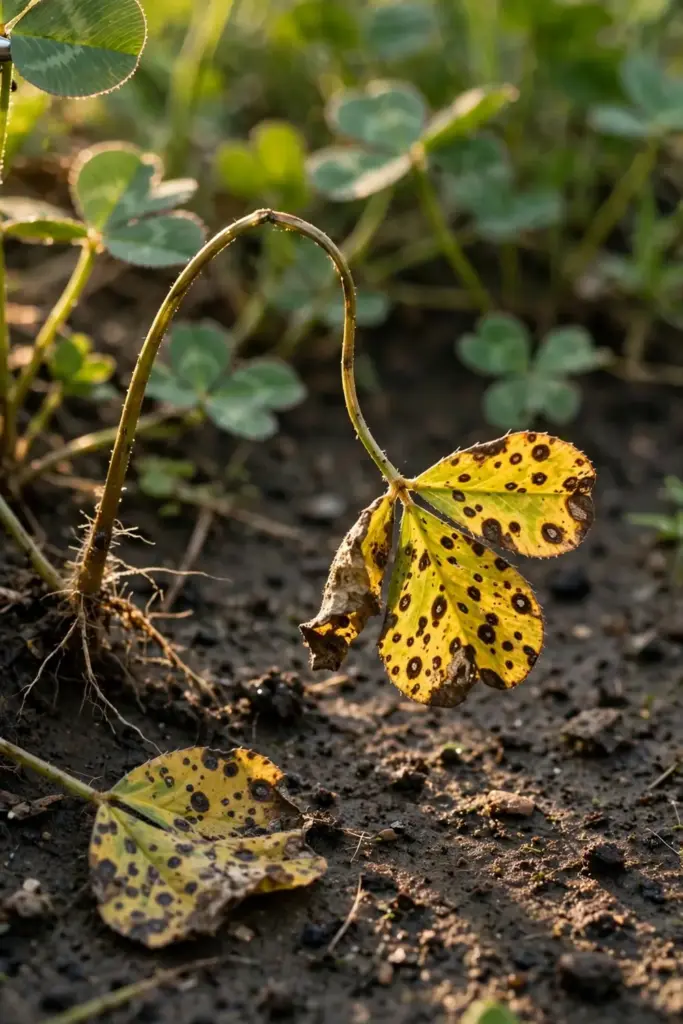
Long-term infection is the real cost. Infected leaves turn yellow and drop, per the PlantVillage clover disease guide. A stand that keeps losing leaves loses vigor, and weak stands take more winter injury. Watch the leaf loss across the season, not the spot count on one leaf.
| What You See | What It Means | What to Do |
|---|---|---|
| Small dark spots with fringed edges | Early infection, leaves still feeding the plant | Watch, mow on schedule |
| Spots with pale raised disks oozing amber when wet | Fruiting structures releasing spores | Cut early, remove clippings |
| Yellowing leaves dropping | Heavy or long-term infection | Cut early, clear residue, check stand vigor going into winter |
| Spots on petioles or stems | Rare for this disease | Recheck the ID, suspect a different leaf spot fungus |
Judge the patch by leaf loss. Scattered spots with leaves still on the plant need only the normal mowing schedule. Steady yellowing and dropping leaves call for an early cut and a residue cleanup.
6. Cut Early and Clear the Residue
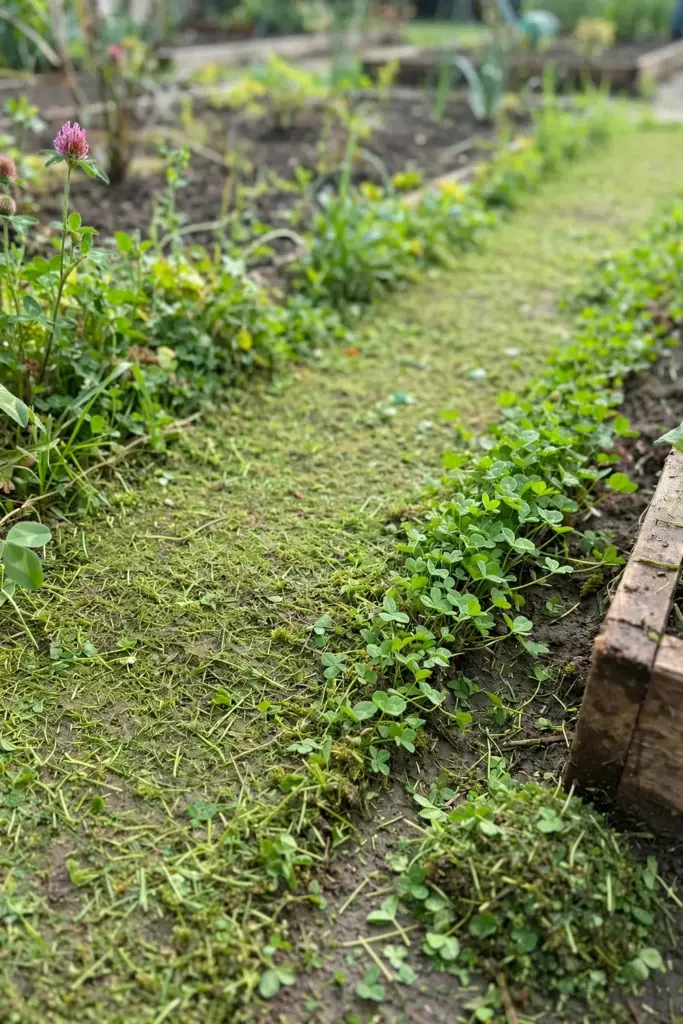
Cut early. Early cutting removes infected leaves before the fungus builds spore pressure, and it strips inoculum from the stand. The Pacific Northwest handbook lists early cutting as the cultural control for this disease. Mow or cut the patch at the first sign of spreading spots, then keep the normal cutting rhythm.
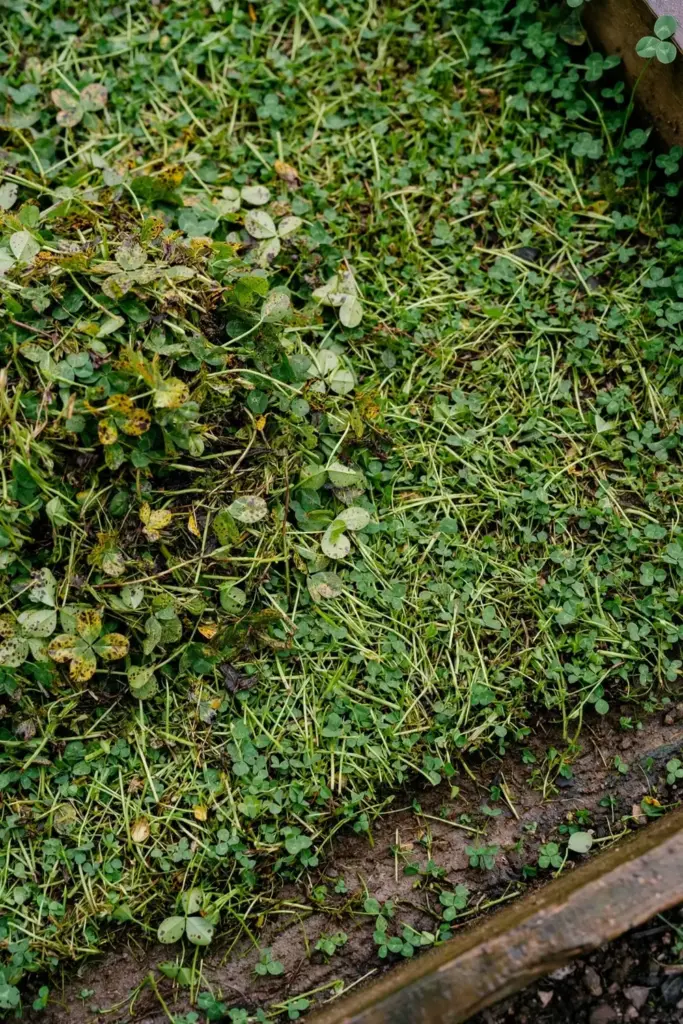
Clear the clippings off the bed. The fungus survives in plant residue, so clippings left on the bed hand the fungus its next season. Haul spotted clippings away instead of leaving them as mulch. The fall garden bed prep guide covers end-of-season bed cleanup, and the soil health guide covers the soil care that grows a stand able to replace lost leaves fast.
Leave the sprayer on the shelf. The handbook chemical controls are per-acre seed-crop fungicide rates, written for clover seed crops. No home-garden spray program exists for this disease, and a home patch does not need one.
7. What Not to Do With Pseudopeziza Leaf Spot
Do not borrow alfalfa advice. Alfalfa common leaf spot comes from a different fungus, and its yield-loss figures belong to alfalfa fields. Nothing from that disease transfers to a clover patch.
Do not borrow black currant evidence. An old note describes a Pseudopeziza leaf spot on black currants. That is a different host and a different disease, and it proves nothing about clover.
Do not chase a lab-perfect ID before acting. Field ID stays presumptive, and the home moves work on the symptoms, not the species name. Cut early and clear residue whether the spots prove Pseudopeziza or another leaf spot fungus.
Do not expect a variety fix. No resistant varieties are known, and tetraploid types run more susceptible. The honest defense is cutting and cleanup, not shopping.
8. Frequently Asked Questions
Seldom. The disease spots leaves and rarely kills plants. PNW notes that clover leaf spots seldom cause serious losses. Long-term infection thins the stand by dropping leaves, and weak stands take more winter injury. A few spots need nothing beyond normal mowing. Steady leaf loss calls for an early cut and a residue cleanup. The disease is a vigor tax, not a stand killer.
No. PNW lists fungicide rates for clover seed crops, measured per acre. No home-garden spray program exists for this disease. A home patch does not need one either, since early cutting and residue cleanup handle the pressure. Save the spray budget for problems where a spray actually changes the outcome. Spotted clover is not one of them.
PNW names clover species as the hosts: red clover first, plus white and crimson clover. Grass is not listed as a host. Spotted clover in a lawn will not turn into spotted grass. Mow the lawn on schedule and clear the clippings from heavy patches. The grass itself needs no treatment for this disease.
No. Clover common leaf spot comes from Pseudopeziza trifolii. Alfalfa common leaf spot comes from Pseudopeziza medicaginis, a distinct species. The two diseases share a common name and a genus, not a fungus. Keep their advice apart. Alfalfa spray rates and alfalfa yield figures do not apply to a clover patch.
9. Where to Go From Here
Walk the clover patch after the next cool wet spell. Check the upper leaf surfaces for fringed dark spots and amber ooze. Cut early when spots spread, and haul the clippings away.
Clover earns its bed in other ways. The cover crops guide covers crimson clover as a cover crop, and a healthy stand there shrugs off a few spots.
Spot the signs early. Cut early. Clear the residue. The patch does the rest.