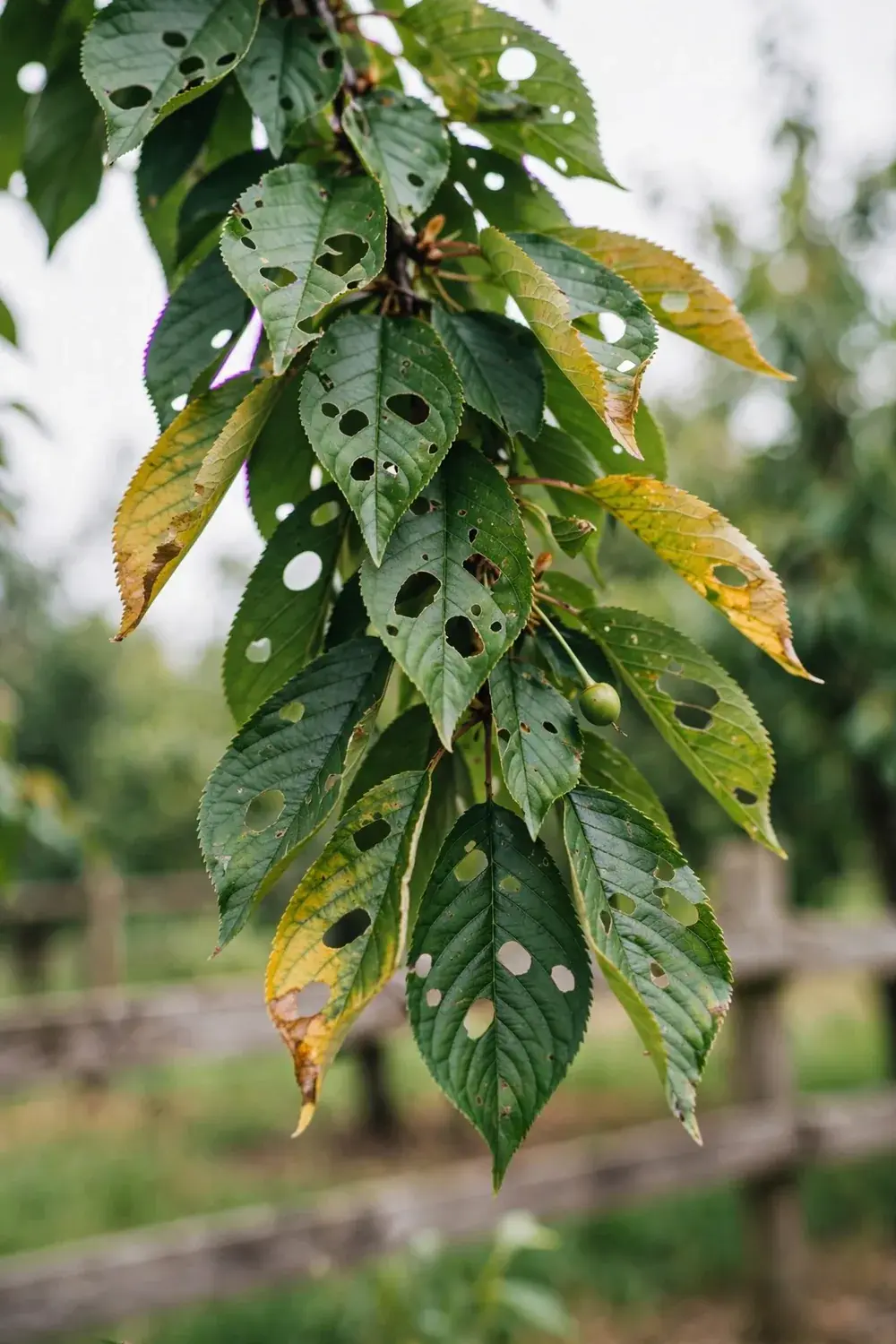

Shot hole leaves on stone fruit look alarming. Round holes pepper the leaves as if someone fired a shotgun through the canopy. The holes are a symptom, and 5 different causes can leave them. In most cases the right move is to do nothing.
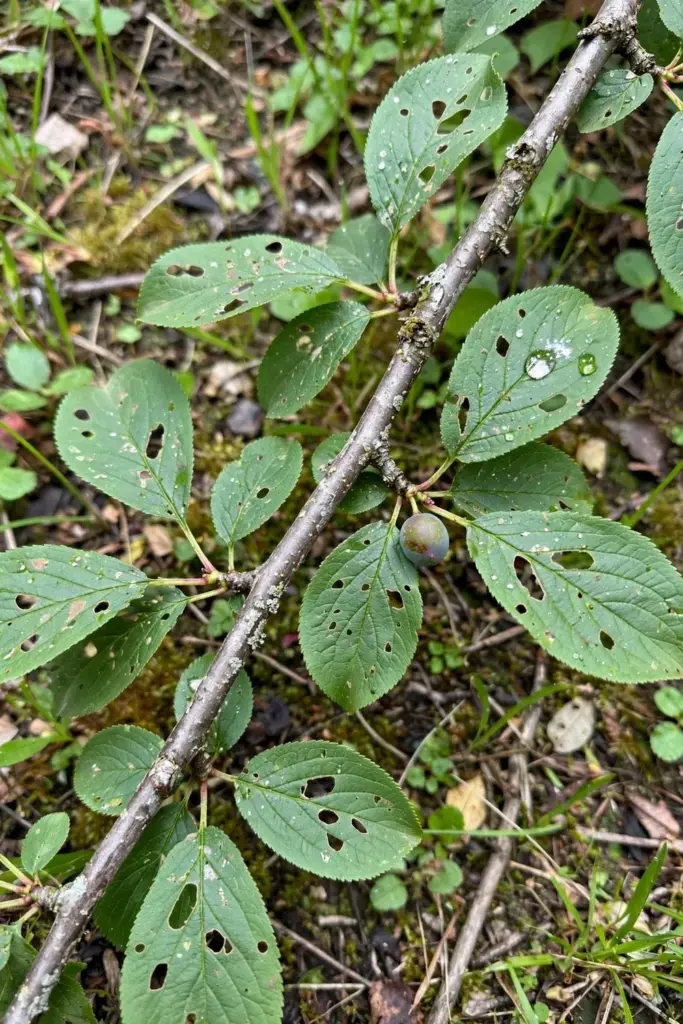
I have learned to check how much leaf the tree is actually losing before I reach for any spray. The leaf itself explains the holes. A spot of dead tissue forms first. The leaf then builds a cork layer around the dead patch, sometimes a few millimeters beyond the edge of the damaged tissue. That layer lets the dead center separate and fall out, which leaves a clean round hole behind. Purdue Extension describes this cork-layer mechanism in its account of shot hole leaf spot of Prunus.
This page walks through the 5 causes one by one. It names the most likely culprit from lab samples, points to the full fungal shot-hole disease guide where that disease owns the detail, and ends with the one rule that decides whether you act at all. Get the cause identified before you act, and only when the tree is losing a significant share of its leaves.
What Shot Hole Leaves on Stone Fruit Actually Are
Shot hole leaves on stone fruit are leaves with round holes left behind after dead spots drop out. The holes are the end of a process. A spot forms, the tissue dies, the leaf seals it off with cork, and the dead center falls away. The hole stays. The leaf keeps working around it.
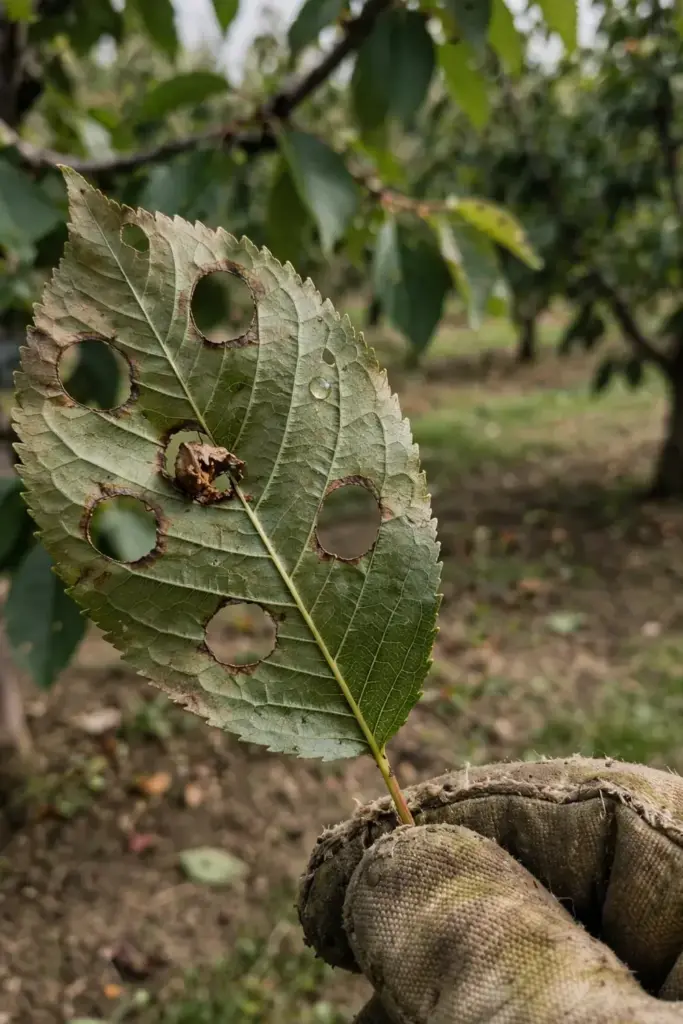
Stone fruit means Prunus. Cherry, plum, peach, nectarine, apricot, and almond all sit in this group, and all of them can show shot holes. The same hole pattern can come from fungi, bacteria, viruses, or chemical injury. Purdue Extension lists all four groups as causes in its account of shot hole leaf spot of Prunus. The holes alone never name the cause. Field ID sorts suspects. A lab names the agent.
| Cause Group | Agent | What Happens on the Leaf | Home Move |
|---|---|---|---|
| Fungus | Blumeriella jaapii | Small spots that drop out and leave holes, leaves yellow and fall | Rake fallen leaves, do nothing else unless leaf drop is heavy |
| Fungus | Wilsonomyces carpophilus | Spots that drop out and leave holes, plus bud and fruit damage | See the dedicated shot-hole disease guide |
| Bacterium | Xanthomonas arboricola pv. pruni | Spots that drop out and leave holes | Do nothing unless leaf drop is heavy, then get a lab ID |
| Virus | Prunus necrotic ringspot virus, Cherry necrotic rusty mottle virus | Necrotic spots that can drop out and leave holes | No cure exists, remove only confirmed severe cases |
| Injury | Chemical burn from fungicides or herbicides | Burned patches that drop out and leave holes | Stop the exposure, check spray history, do nothing else |
Cherry laurel hedges get their own shot-hole condition, and it is a separate hedge problem from the stone fruit symptom covered here.
1. Fungal Cause: Cherry Leaf Spot From Blumeriella Jaapii
Cherry leaf spot is the most common cause of shot hole leaves on stone fruit in lab samples. Purdue Extension reports that Blumeriella jaapii is the most common cause found on samples that reach the lab. The fungus behind cherry leaf spot is the cause a gardener most likely has.
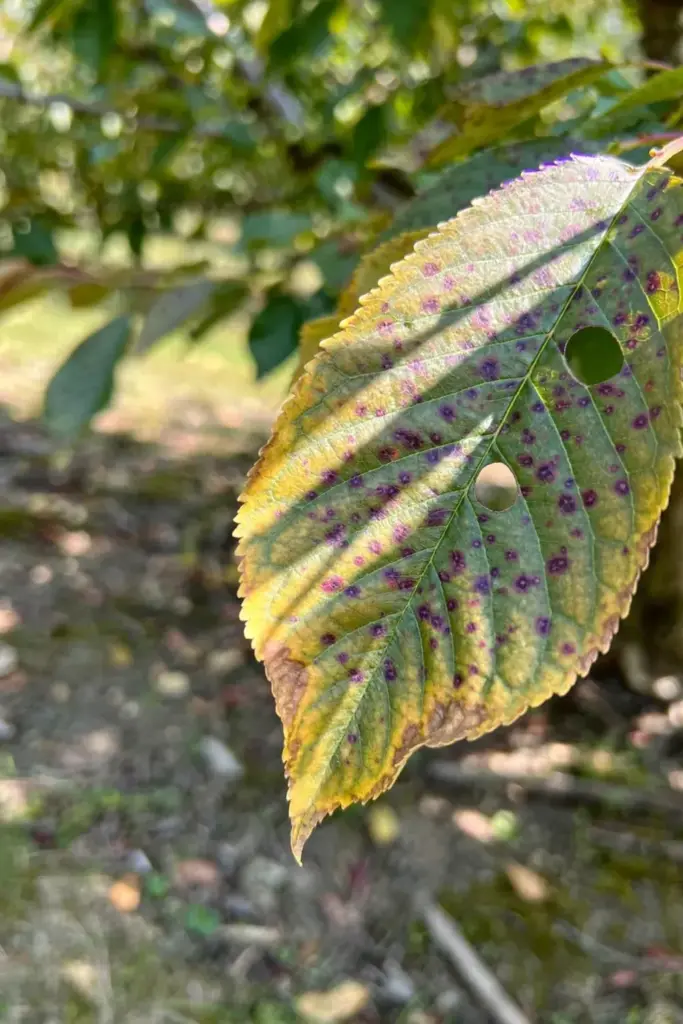
The fungus makes small purple spots on the upper leaf surface. The spots turn reddish brown. After several weeks the centers of the spots may drop out, which produces the shot-hole appearance. Affected leaves often turn yellow and drop early. Iowa State University Extension confirms this sequence and adds that mild wet weather in spring favors the disease.
The fungus survives winter on dead leaves on the ground. Spores released from those leaves during rainy spring periods infect new leaves. Raking and removing fallen leaves breaks that cycle. Better air circulation inside the canopy helps too, since dry leaves infect less readily. Fungicides exist, and they protect leaves only when they go on before infection. Spraying after the holes appear does nothing for the holes already there.
Cherry leaf spot also goes by the name cherry leaf spot in the Cylindrosporium leaf spot guide, which covers that disease in full. This explainer stays with the symptom. The guide owns the disease detail.
2. Fungal Cause: Shot-Hole Disease From Wilsonomyces Carpophilus
Shot-hole disease is the one cause on this list that is a named disease in its own right. The fungus Wilsonomyces carpophilus causes it. It is also called Coryneum blight. This is the disease behind the classic shot-hole picture on stone fruit.
This article does not re-cover that disease. The full account lives in the shot-hole disease guide, which covers identification, buds, twigs, fruit damage, and management for the fungal disease. Read that guide when the pattern points to the fungal disease rather than to the symptom in general.
Two facts matter here. First, the fungal disease can damage buds, twigs, and fruit in addition to leaves. Second, the leaf holes it leaves look like the holes every other cause on this list leaves. Holes alone cannot separate it from cherry leaf spot or bacterial leaf spot. The guides split the diseases apart. The symptom brings them together.
3. Bacterial Cause: Bacterial Leaf Spot From Xanthomonas Arboricola Pv. Pruni
Bacterial leaf spot is the bacterial cause of shot holes on stone fruit. The bacterium is Xanthomonas arboricola pv. pruni. Purdue Extension lists it among the causes of shot hole leaf spot of Prunus, alongside the two fungi, the two viruses, and injury.
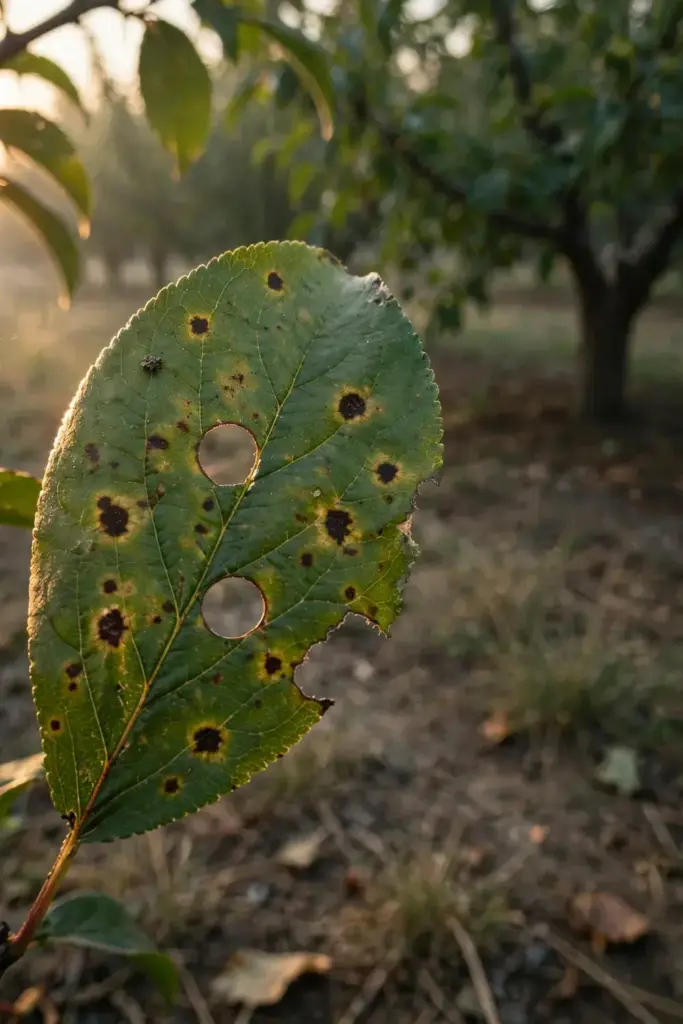
The bacterial spots follow the same arc as the fungal ones. Spots form, tissue dies, the dead centers drop out, and holes remain. Bacterial leaf spot can also mark fruit and twigs, which the fungal leaf spot usually does not. Fruit or twig marks alongside leaf holes tilt the suspicion toward bacteria. They do not prove it.
No home gardener can separate bacterial from fungal shot holes by eye alone once the centers have dropped out. The empty hole erases the evidence. That is why the lab rule matters for this cause more than for any other. Do nothing while leaf loss stays light. Get a lab ID when leaf drop turns significant, before you spend money on any treatment aimed at the wrong kingdom.
4. Viral Causes: Prunus Necrotic Ringspot Virus and Cherry Necrotic Rusty Mottle Virus
Viruses are the two causes on this list that no spray can touch. Purdue Extension lists Prunus necrotic ringspot virus and Cherry necrotic rusty mottle virus as viral causes of shot hole leaf spot of Prunus. Both infect Prunus species. Both can leave necrotic spots that drop out and leave holes.
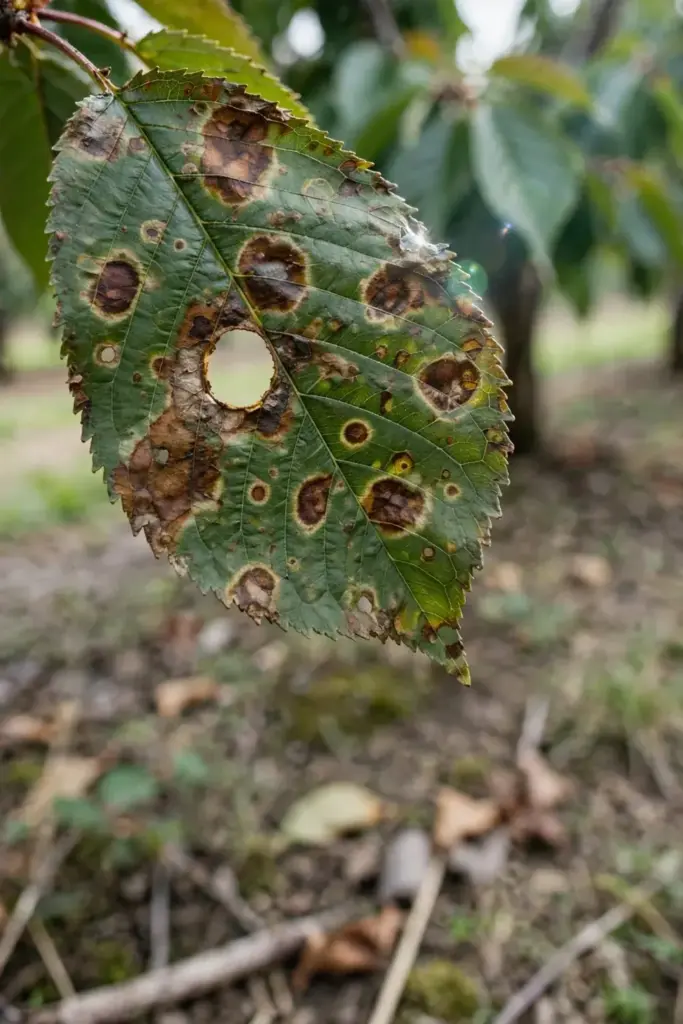
Prunus necrotic ringspot virus shows the mechanism plainly. Washington State University Extension reports that the necrotic spots it causes may drop from the leaf, which gives the leaf a shotholed appearance. The virus spreads to healthy trees through infected pollen and through grafting. No chemical treatment is recommended for it. The non-chemical options are to remove infected trees from orchards if desired, and to plant and graft only with stock that is certified virus-free.
Cherry necrotic rusty mottle virus belongs on the same list, and the same logic applies. A confirmed virus infection has no cure. Removal is a decision for confirmed and severe cases only. Never rogue a tree on holes alone. Holes are a symptom, and the viral causes are only two of the five suspects behind them. A lab ID comes first, and most home trees never need that step.
5. Injury: Chemical Burn and Other Non-Pathogen Damage
Injury is the cause with no pathogen at all. Purdue Extension lists chemical damage, including contact burn from fungicides and herbicides, as a cause of shot hole leaf spot of Prunus. A spray meant to protect the tree can burn the leaf it lands on. The burned patch dies, the leaf seals it off, and the dead center drops out like any other shot hole.
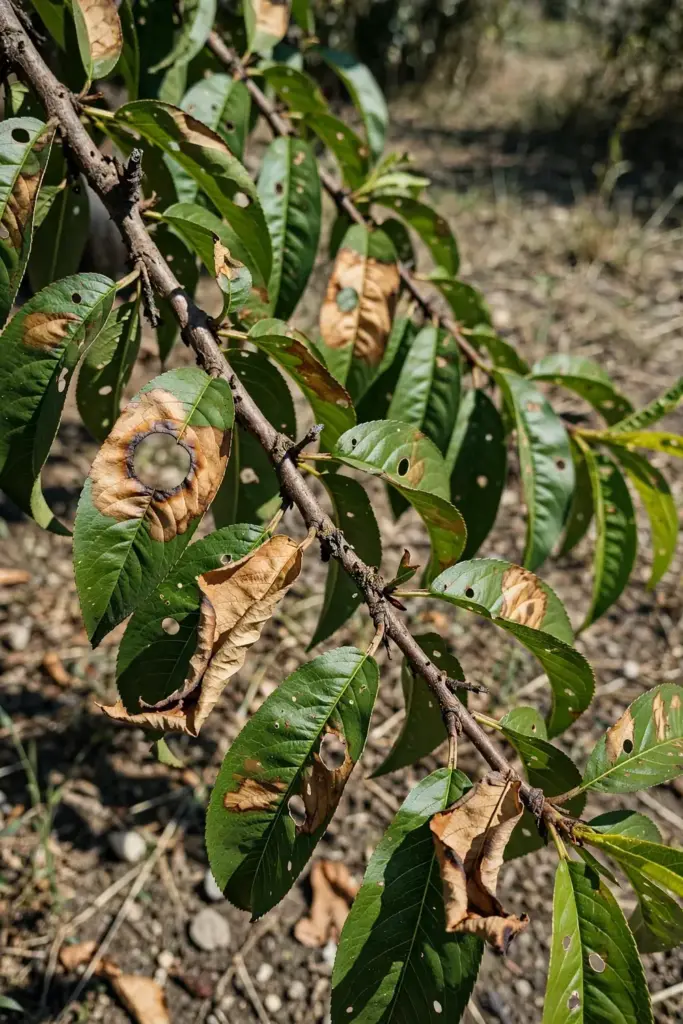
Spray history is the clue. Ask what was sprayed recently, at what rate, and in what weather. A burn pattern that lines up with a spray pass points toward injury rather than infection. Hot, bright conditions after a spray raise the odds of burn. So does spraying a tree already stressed by drought or heat.
The response is to stop the exposure. Check the label, check the rate, and skip the next application until you know what burned the leaves. Do not chase a burn with a fungicide. A burn is not an infection, and a fungicide cannot heal dead tissue. New growth after the exposure ends comes in clean, and the holed leaves keep working until they drop on their own schedule.
Do not confuse leaf shot holes with the shothole borer, a bark-boring beetle that bores into bark and buds rather than leaves. Different problem, different part of the tree.
When to Do Nothing and When to Get a Lab ID
Do nothing in most cases. Purdue Extension states that in most cases no management is necessary, since the damage is usually minor and does not cause severe defoliation. A tree with scattered holes and a full canopy keeps photosynthesizing, keeps fruiting, and drops the holed leaves on its own schedule. The holes look worse than they are.
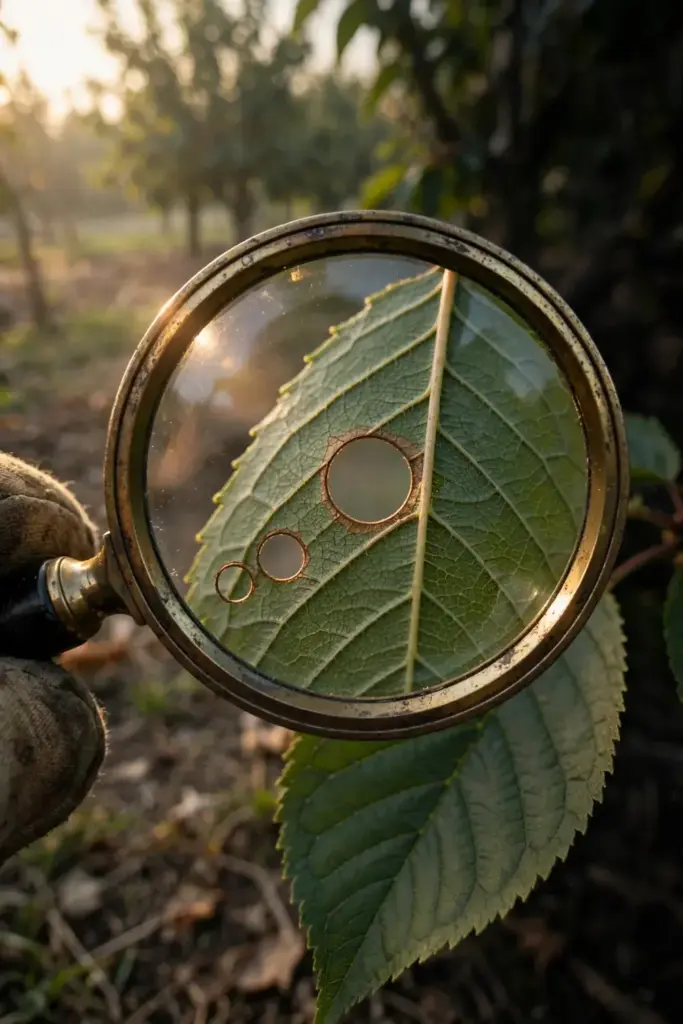
Watch one number. Leaf drop is the measure that matters. Light leaf loss with scattered holes means wait. Significant leaf drop changes the call. Purdue Extension advises that when significant leaf drop is observed, having the cause identified matters so the right management strategy follows. Identification first, treatment second. Treatment aimed at the wrong cause wastes money and can make the real problem worse.
Rake and dispose of fallen leaves in the fall either way. Fallen leaves carry the cherry leaf spot fungus through winter, and cleanup breaks that cycle. The University of Maryland Extension gives the same advice for cherry shot hole: in most cases trees recover with no treatment, and raking fallen leaves reduces overwintering pathogens. Cleanup costs nothing, helps the most likely cause, and never hurts the tree.
Frequently Asked Questions
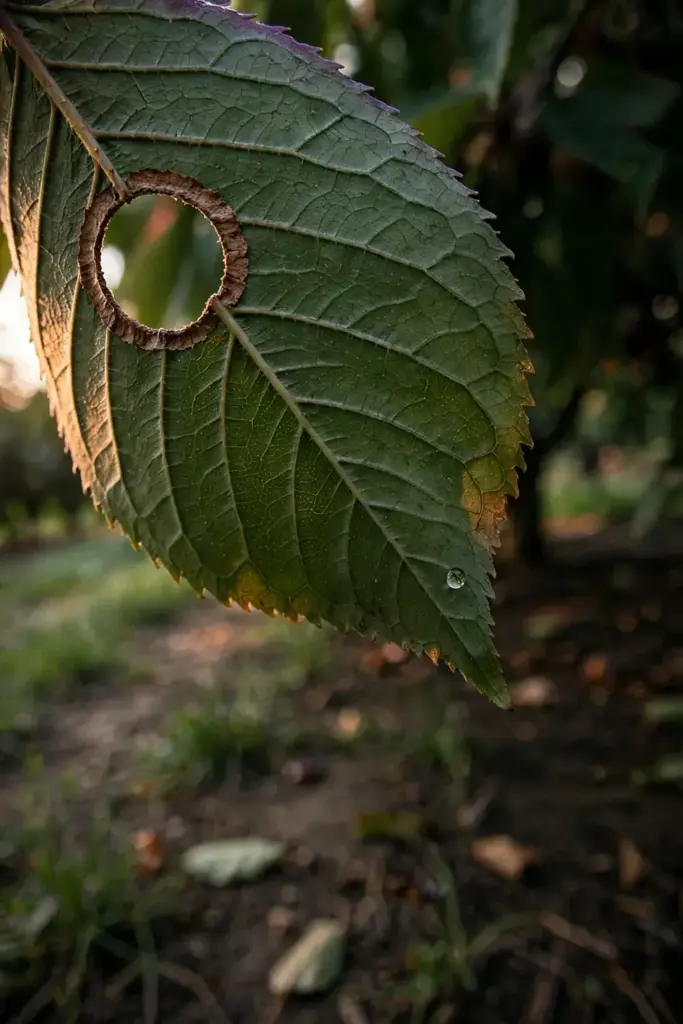
No. Shot hole is a symptom. Five different causes can leave the same holes: two fungi, one bacterium, two viruses, and chemical injury. Purdue Extension lists all five as causes of shot hole leaf spot of Prunus. The named disease on this list is shot-hole disease from Wilsonomyces carpophilus, and it has its own guide. The rest are separate causes that share one symptom. Treat the symptom as a question, and let the cause decide the answer.
Usually no. Purdue Extension states that in most cases no management is necessary, since the damage is usually minor and does not cause severe defoliation. Spraying after the holes appear cannot heal holes already there. Fungicides protect leaves only before infection, and they do nothing against bacteria, viruses, or chemical burn. Rake fallen leaves, keep the canopy dry, and wait. Reach for a lab ID only when leaf drop turns significant.
No. The holes look alike once the dead centers have dropped out. Cherry leaf spot, shot-hole disease, bacterial leaf spot, viral spots, and chemical burn all end at the same round hole. Other marks on fruit, twigs, or buds can tilt the suspicion, and spray history can point toward injury. Certainty needs a lab. Send a sample when leaf drop is significant, and act only on the identified cause rather than on the hole pattern.
Usually no. Scattered holes cost a tree little leaf area, and the tree keeps fruiting. Repeated heavy defoliation across seasons weakens a tree, since early leaf loss cuts the food the tree stores for winter and for the next spring. That is the real risk, and it is why significant leaf drop earns a lab ID. One bad-looking summer of scattered holes is cosmetic. Years of early defoliation are a different story, and they deserve a diagnosis.
Where to Go From Here
Walk the tree this week. Count the holes, then count the leaves the tree is actually losing. Scattered holes with a full canopy mean wait. Heavy leaf drop means send a sample to a lab and act on the identified cause.
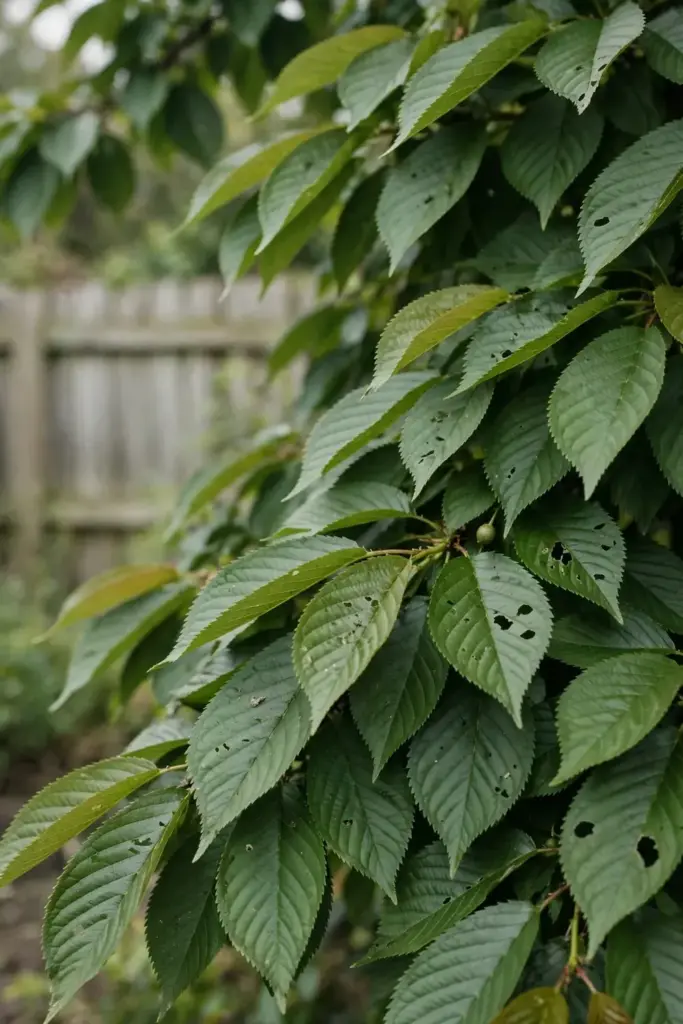
Rake the fallen leaves before winter. That one cleanup breaks the cycle of the most likely cause, cherry leaf spot, and it costs nothing. Keep the canopy open so leaves dry fast after rain. Hold the sprayer until you know what you are spraying against.
More plant care guides live in the Plant Care archive. Start with the holes. End with the cause.