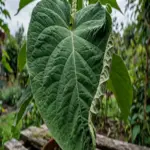

Red stele on strawberries has no cure once it reaches the roots, and the plants that look worst are rarely the ones that decide the season. The disease kills feeder roots underground while the leaves still look almost normal, so a patch can lose a whole row before the cause is clear. The 10 strategies below start with telling red stele from crown rot, then give the only playbook that works: confirm the identification, remove infected plants, and protect the healthy plants beside them with drainage, clean stock, and resistant varieties.
I have learned that a gardener who treats red stele as a water problem, not a spray problem, already has the right response.
The rest of this page walks through identification on roots and leaves, the strawberries hit hardest, a compiled differential table against crown rot, the swimming-spore mechanism behind every control decision, and the 10 strategies in order. Healthy soil drains fast and holds together, and the soil health guide covers the structure and organic matter that keep a strawberry bed from staying wet.
What Red Stele on Strawberries Actually Is
Red stele on strawberries is an oomycete disease of strawberry plants. The pathogen is Phytophthora fragariae var. fragariae. Oomycetes are water molds. They are not true fungi, and that distinction drives every control decision below. Sprays aimed at true fungi do not touch this organism, and no spray cures a plant that already carries it.
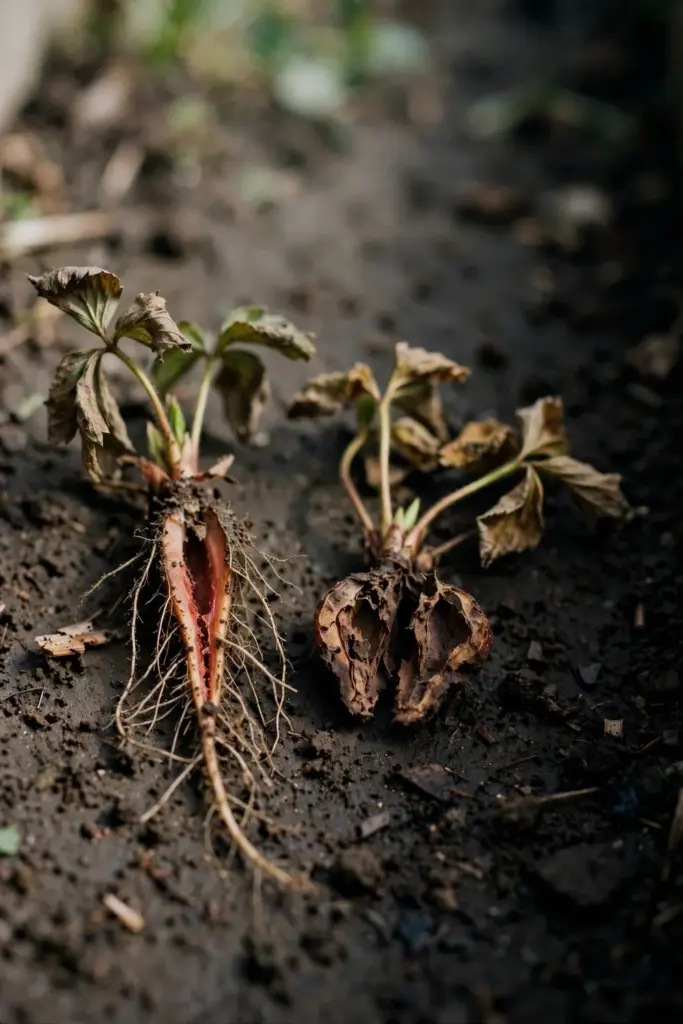
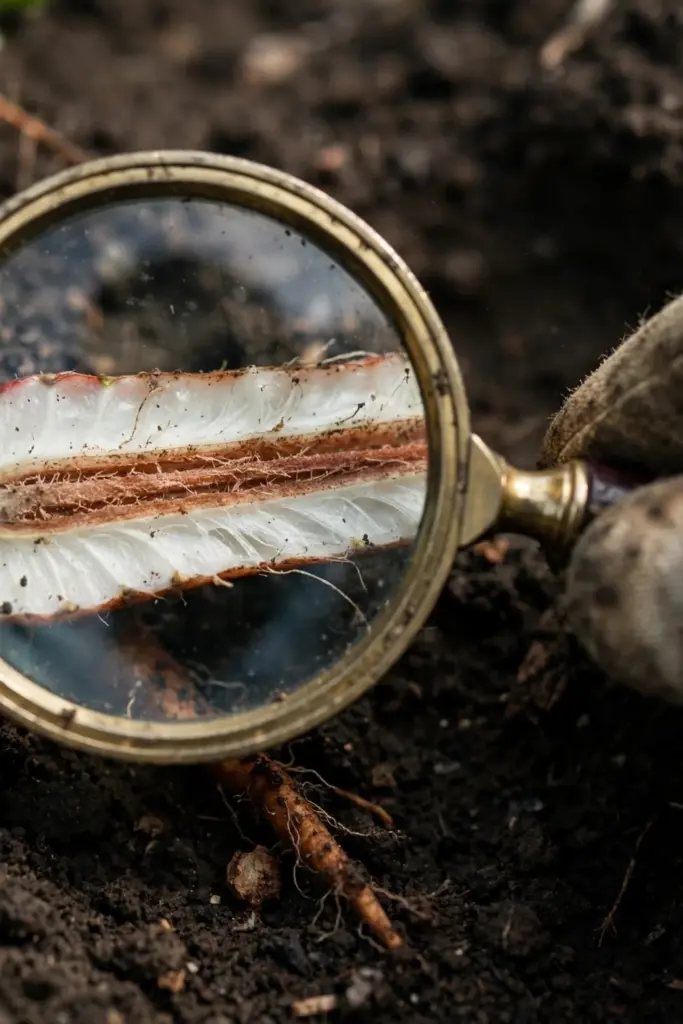
The name describes the symptom. Stele is the central vascular core of a root. In an infected root, that core turns reddish brown while the outer cortex stays white. Cut a root lengthwise and the red core shows against white tissue. That contrast is the whole diagnosis in the field.
Red stele is a soil-borne disease. The pathogen survives in soil as thick-walled resting spores called oospores. Those oospores persist for many years once established, even in a bed that grows no strawberries in the meantime. A bed that held red stele stays a red stele bed. Prevention carries the whole strategy, because no treatment restores infested soil to safe ground.
Two older names still appear in garden writing. Red core is the British name for the same disease. Lanarkshire disease is a historic name from the same outbreak history. Both names point at the same pathogen on the same host. Red stele is the name used throughout, and no second name is swapped in for the same disease.
The host scope is narrow. Coverage stays on strawberries only. Raspberry root rot comes from a different variety of the same species, Phytophthora fragariae var. rubi, and it is a different disease. The two never merge. A strawberry bed and a raspberry bed need separate attention, even when they sit side by side.
How to Identify Red Stele on Roots
Red stele on roots shows first at the root tip, then moves upward. Feeder roots die first. Main roots lose their side branches and take on a bare, unbranched look that Extension writers call rat-tail. A healthy strawberry root system looks feathery with fine laterals. A red stele root system looks stripped.
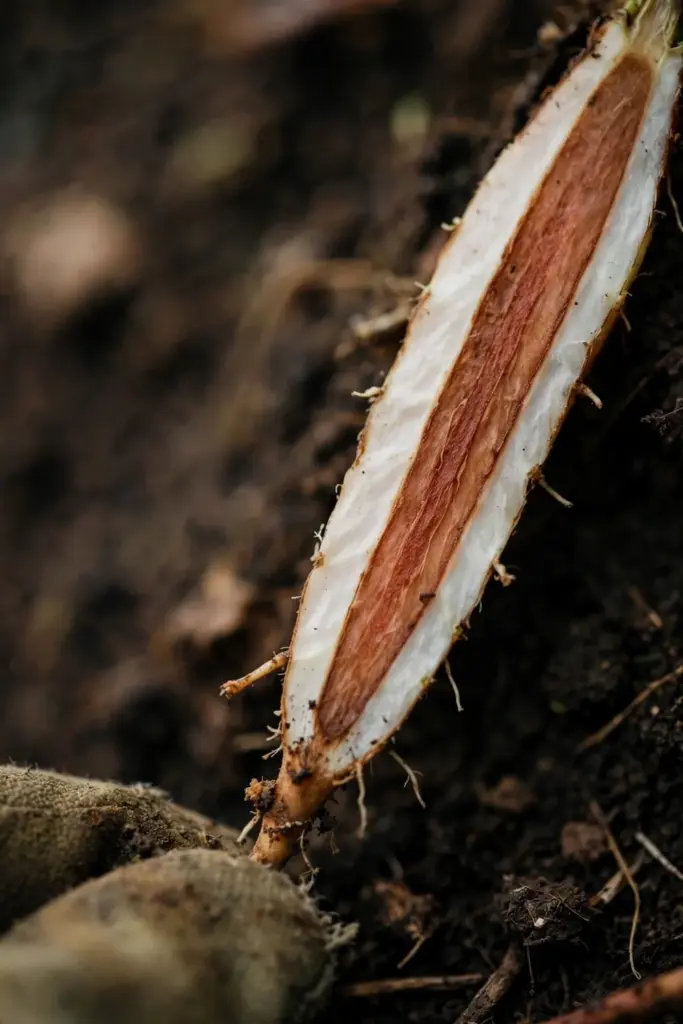
Dig the plant, never pull it, because pulling snaps the roots and leaves the evidence in the ground. Loosen the soil around the crown with a trowel, lift the whole root ball, and shake the soil free. Pick a main root that still looks white on the outside. Slice it lengthwise with a sharp knife and read the core.
A red stele root shows a reddish-brown core inside white outer tissue, and the discoloration starts at the root tip and moves upward toward the crown, usually stopping before it reaches the crown. The crown itself stays firm and pale in a red stele plant. That crown detail matters, because crown rot attacks the crown first. The differential table in the next section turns that contrast into a decision.
One warning belongs with every cut test. A reddish core does not guarantee that red stele is present, as the UMass Extension fact sheet on red stele states. Other damage can redden root tissue. The cut test is presumptive. It tells a gardener to act, and it tells a gardener which action to take. A lab confirms the pathogen where the decision is expensive, such as replanting a whole bed.
Check several plants, not one. Red stele spreads in patches where the soil stays wettest, so one plant at the patch edge can look clean while its neighbor is already infected. Cut roots from three or four plants across the patch, including one that still looks healthy. The pattern across plants carries as much information as any single root.
How to Identify Red Stele Above Ground
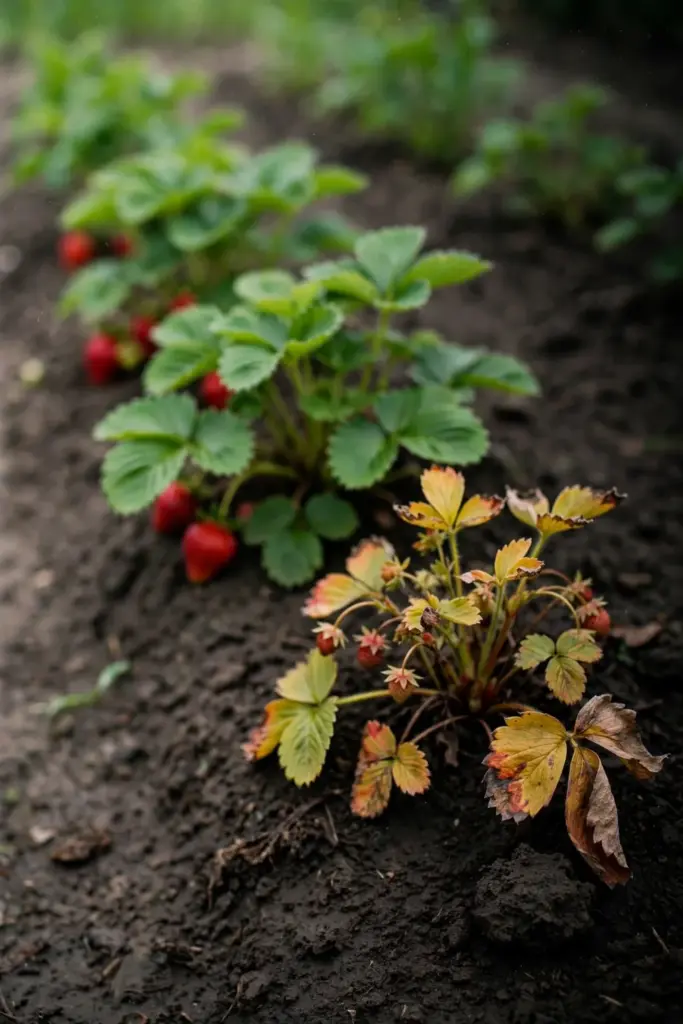
Red stele above ground looks like a plant that cannot get water. Leaves wilt under stress, then recover at night in early stages, then stop recovering. Growth stalls. Runner production drops. Berries stay small. A plant that produced a full crop last year produces a thin crop this year, and no fertilizer fixes it, because the roots that would carry water and nutrients are gone.
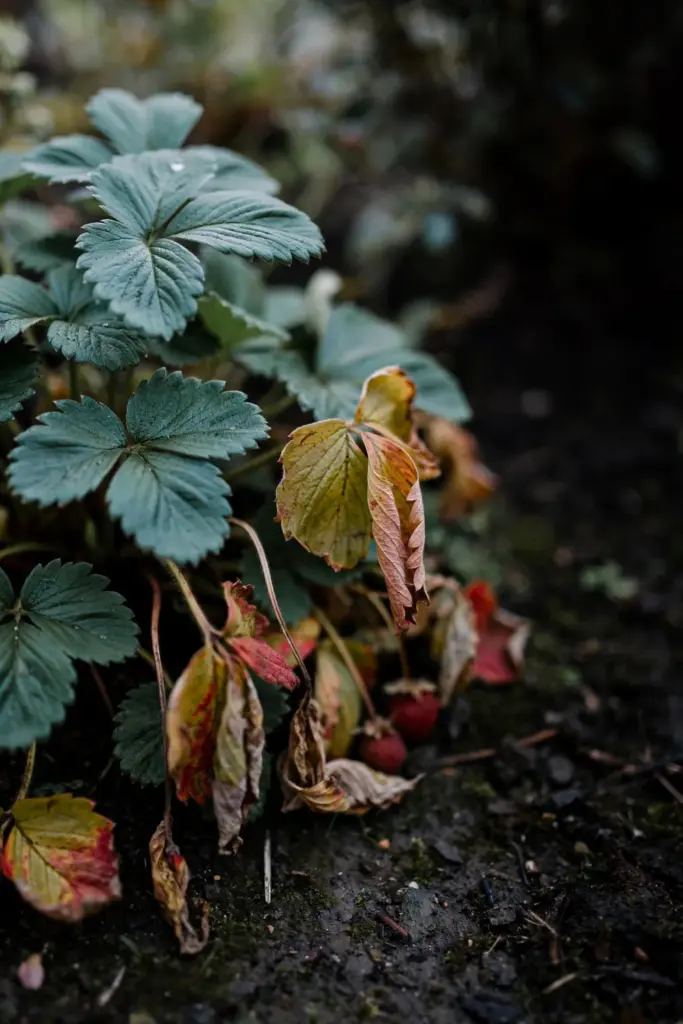
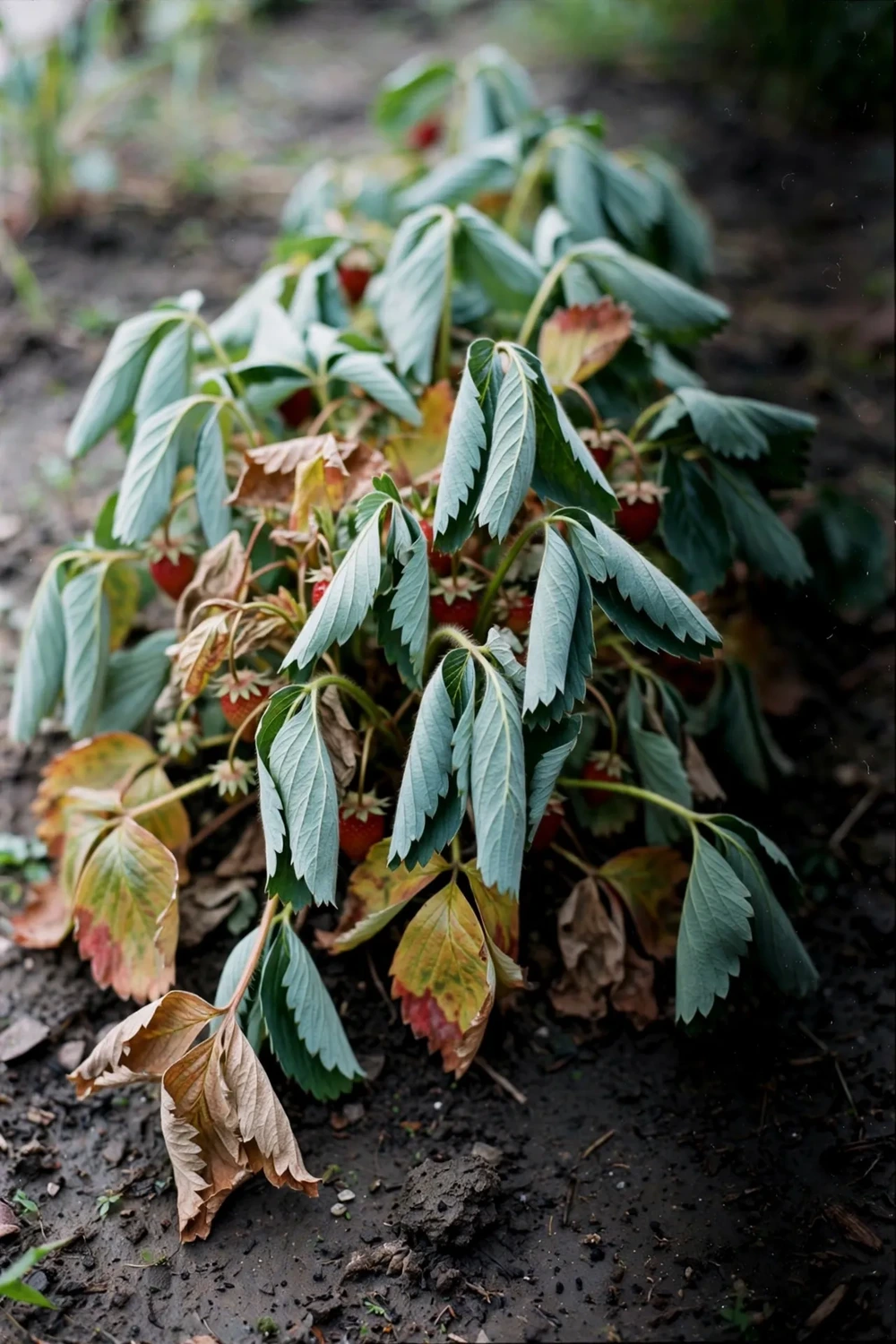
Leaf color follows a sequence. Young leaves take on a bluish-green tint and lose their normal gloss. Older leaves turn red, orange, or yellow. The plant looks autumnal in the wrong season. That color sequence appears in the UMass Extension fact sheet on red stele, and it separates red stele from simple drought, where leaves wilt without the bluish tint and the off-season color.
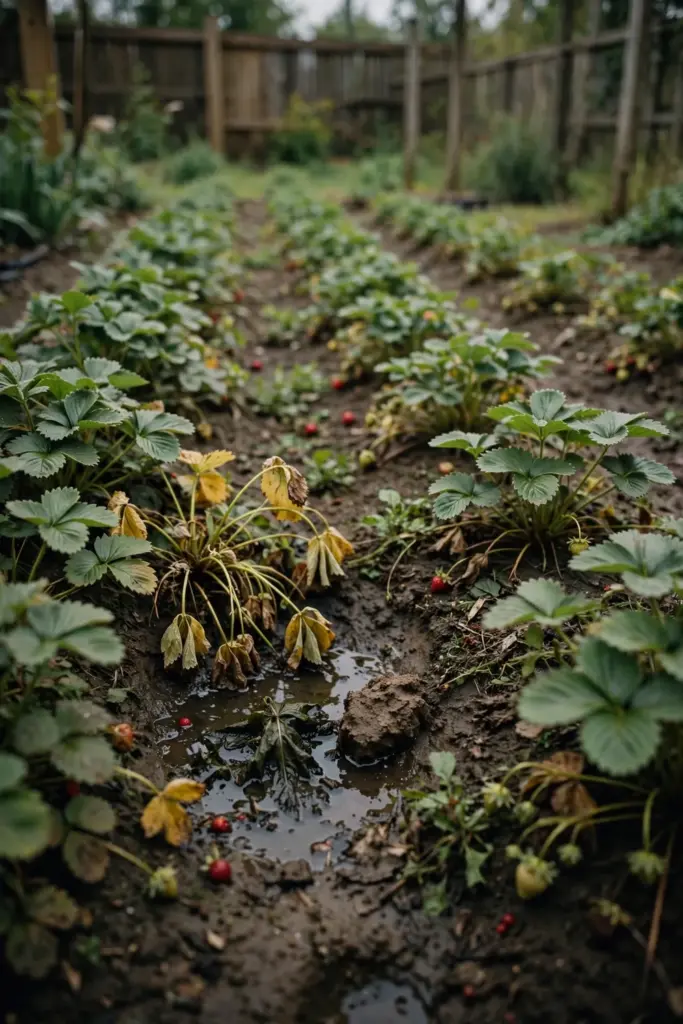
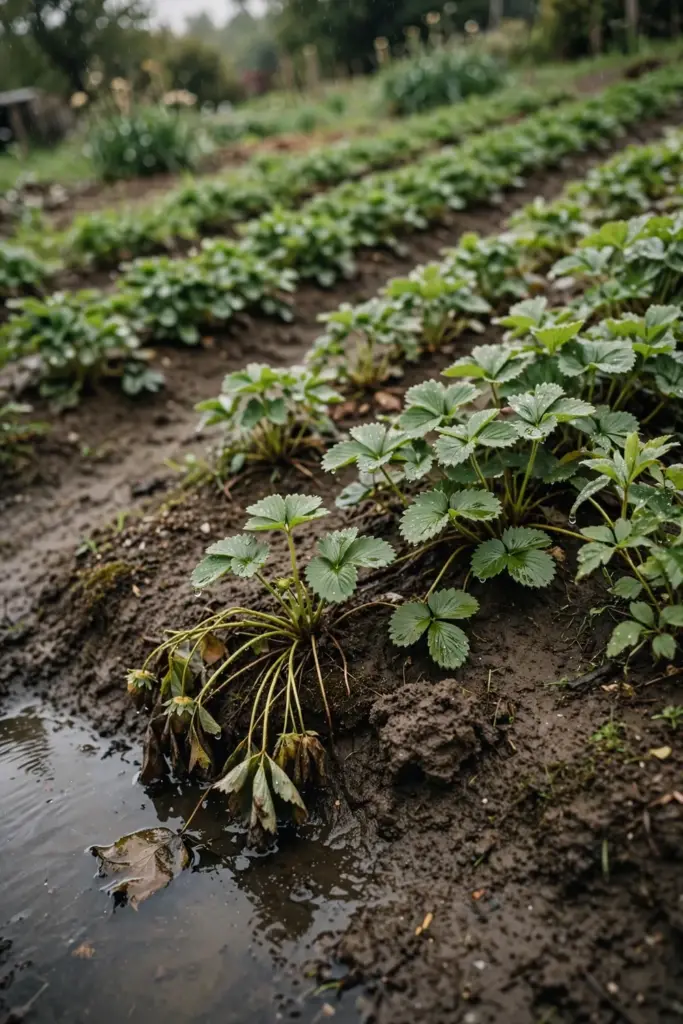
The patch pattern matters as much as the plant pattern. Symptoms appear in patches or swaths where the soil is wettest. Low spots go first. The edge of a bed near a downspout goes first. A whole bed going sick at once points somewhere else, such as a watering failure or a herbicide exposure. A wet patch going sick while the high ground stays healthy points at red stele.
Timing gives a second clue. Infections move in cool, wet soil in spring and fall. A plant that looked fine at planting can decline fast once spring rain saturates the bed. A plant that limps through summer may collapse at the first fall wet spell. Watch the wettest weeks, not the hottest ones.
Which Strawberries Get Hit Hardest
Red stele hits strawberries in wet ground. The exposure decides the loss, not the label on the plant tag. Beds in low spots go first. Beds in heavy soil that holds water go first. Beds that already held red stele go first. A strawberry planted in a well-drained bed with no history of the disease faces far less pressure than the same variety planted in a soggy corner with a history.
New plantings from infected stock carry the highest single-plant risk. A plant that arrives infected carries the pathogen into clean soil on day one. No drainage fix undoes that introduction. Certified disease-free plants exist precisely because nursery stock is the main way red stele reaches a new garden. Strategy 4 gives the buying rule its full treatment.
Beds with a history of red stele carry the highest site risk. Oospores persist in soil for many years, so a bed that lost plants last season still holds the pathogen this season. Replanting strawberries into that bed repeats the loss. The honest move is a new site for strawberries, or a long rest for the old bed. Strategy 8 states the rotation limits plainly.
Plants under stress show symptoms first. A plant short of water in summer, then soaked in fall, shows the decline before a vigorous neighbor does. Good growing conditions do not prevent infection, and they do not cure it. They buy time. The plant with strong roots still loses feeder roots to zoospores. It has more roots to lose before the loss shows above ground.
Red Stele vs Phytophthora Crown Rot
Red stele and Phytophthora crown rot both attack strawberries, both come from the same genus, and both cause wilting and stunting. Gardeners confuse them because the above-ground symptoms overlap. The two diseases differ in where the damage sits. Red stele is a root disease, and crown rot is a crown disease, and the cut test tells them apart in minutes.
The table below is compiled from parallel Extension sources. No published head-to-head home guide for this pair exists, so the table carries that compiled status openly. The red stele side comes from UMass Extension and the Pacific Northwest Handbook. The crown rot side comes from the Pacific Northwest Handbook crown rot page. The black root rot contrast at the end of this section comes from Extension comparisons of the two root syndromes. Every row was checked against those sources at production.
| Feature | Red Stele | Phytophthora Crown Rot |
|---|---|---|
| Pathogen | Phytophthora fragariae var. fragariae | Phytophthora cactorum |
| Where damage sits | Roots | Crown |
| First sign | Feeder roots die, rat-tail roots | Crown tissue rots, plant wilts suddenly |
| Cut test | Reddish-brown core inside root, outer cortex stays white | Crown cut open shows dark brown discoloration in crown tissue |
| Crown | Usually spared, stays firm and pale | Rots, turns dark brown, may break when the plant is pulled |
| Roots | Rat-tail, feeder roots destroyed, main roots unbranched | Roots stay healthy if crown rot is the only problem |
| Speed | Slow decline across weeks, stunting then collapse | Rapid collapse, whole plant wilts and dies fast |
| Favored weather | Cool, wet soil in spring and fall | Warm temperatures plus wet conditions |
| What settles it | Lab confirmation; a reddish core alone does not guarantee red stele | Lab confirmation; crown discoloration plus rapid collapse points at crown rot |
One fence belongs with the table. Crown rot comes from Phytophthora cactorum. Leather rot also comes from Phytophthora cactorum, and it is a fruit rot, not a crown disease. The same species causes two different syndromes, possibly through different pathotypes. No leather-rot evidence is borrowed as crown-rot evidence. The table above compares red stele with crown rot only, and leather rot stays out of it.
One lookalike deserves a single line. Black root rot complex attacks the outer root tissue first and leaves a white core in early stages, the exact inverse of red stele. A white core with blackened outer tissue points away from red stele. A red core with white outer tissue points toward it.
Why Swimming Zoospores Drive Every Decision
Red stele spreads because its spores swim. The resting oospores sit in soil and wait. When soil turns chilly and wet, in the range the UMass Extension fact sheet on red stele gives as 40 to 50 degrees Fahrenheit, oospores germinate and release zoospores. Zoospores are motile spores. They swim through water in the soil, and they are chemically attracted to strawberry root tips.
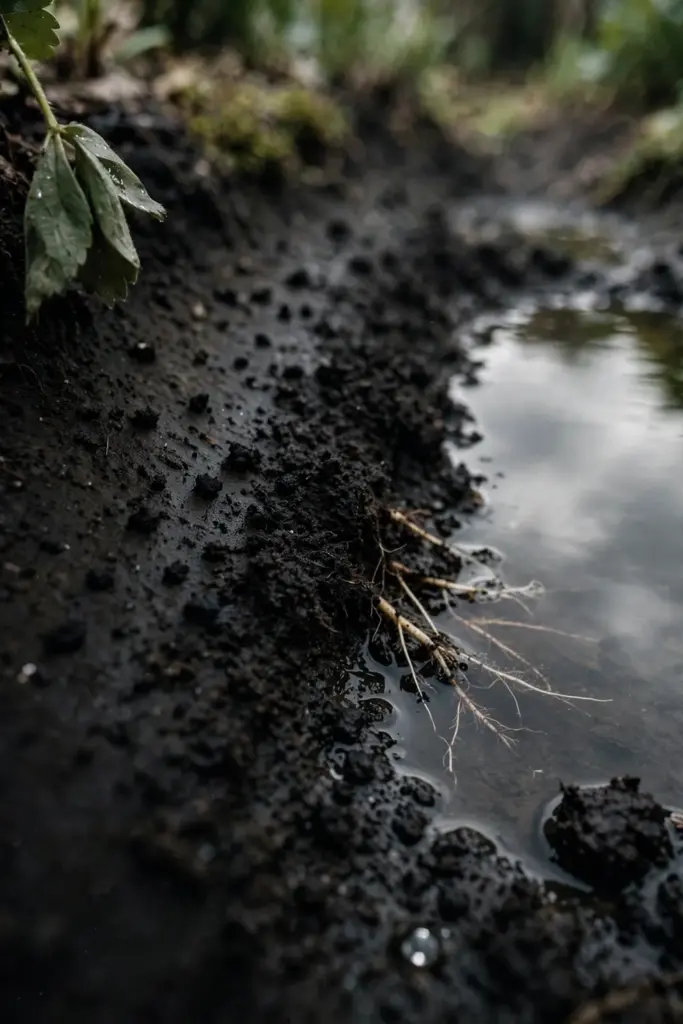
That swimming step explains the whole disease: zoospores reach only roots that sit in wet soil, so a root in drained soil stays out of reach while a root in saturated soil sits in the pathogen’s path. Drainage is the mechanism that breaks the infection chain, not general good practice.
Once a zoospore infects a root tip, the pathogen grows up the root and destroys tissue as it goes. The root tip rots first, then the rot climbs. New oospores form inside the dying root. When the root decays, those oospores release into the soil and wait for the next wet spell. Each infected plant adds to the soil reservoir. Each season of standing water multiplies it.
The cycle runs fastest in saturated soil. Zoospores need free water to swim. A bed that drains within hours of rain gives them a short window. A bed that ponds for days gives them a long one. Every strategy below either shortens the wet window, keeps the pathogen out of the bed, or removes plants that feed the reservoir.
What Makes Red Stele Worse in a Home Garden
Standing water is the first risk factor. Any spot where water ponds after rain is a red stele nursery. Low spots, bed edges near downspouts, and compacted paths that drain into beds all hold water long enough for zoospores to swim. Walk the patch after heavy rain and watch where water sits. Those are the spots that go sick first.
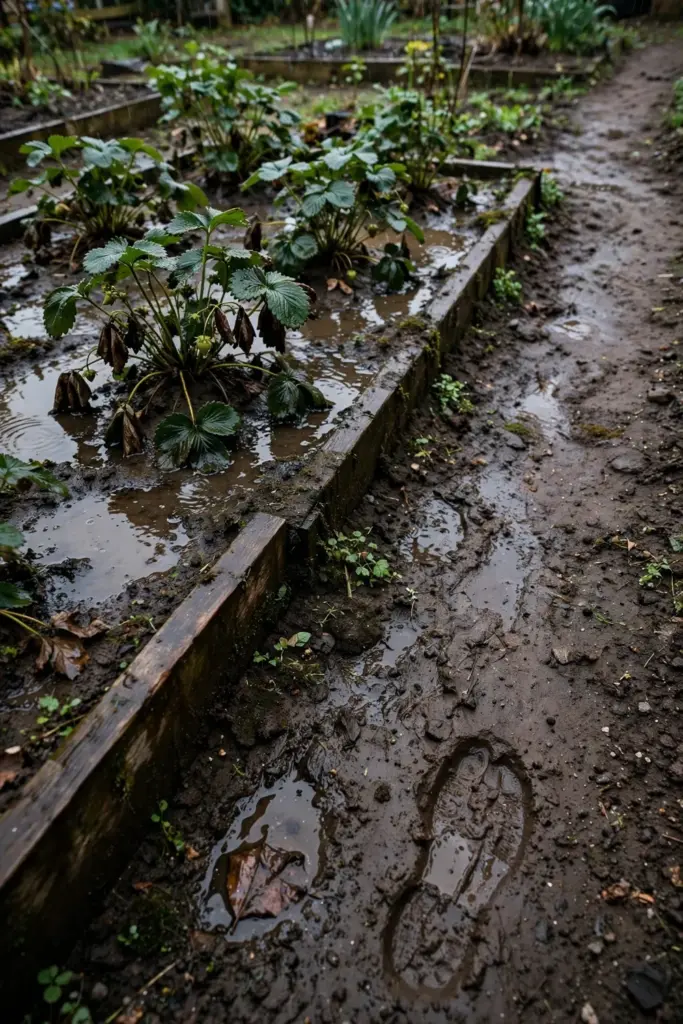
Heavy soil is the second risk factor. Clay holds water, and it holds it at the root zone for days. A sandy loam drains and breaks the cycle. A heavy clay bed keeps zoospores swimming long after the rain stops. Raised beds answer heavy soil directly, and Strategy 5 gives the height.
Infected planting stock is the third risk factor. One infected plant introduces the pathogen to clean soil. The introduction is silent. The plant can look healthy at planting and decline weeks later, after its roots have already shed oospores into the bed. Buying from a reputable nursery and inspecting roots before planting is the only defense. No post-planting treatment removes an introduction.
Moving soil moves the pathogen. Tools, boots, wheelbarrow tires, and tiller tines carry infested soil from a sick bed to a clean one. Runoff water carries spores downhill from a sick bed to a clean one. A gardener who digs in the sick bed, then digs in the clean bed without cleaning tools, does the pathogen’s work for it. Strategy 7 gives the cleaning routine.
Replanting into a known-infested bed is the last risk factor, and the most avoidable. Oospores persist for many years, so last season’s loss is this season’s inoculum. A bed with a red stele history needs a new crop, a long rest, or strawberries in containers with fresh soil. It does not need another strawberry planting.
Step 1: Decide Whether Treatment Is Worth It
Step 1 is the honest cost and benefit call. No treatment cures red stele in an infected plant. No spray, no drench, and no soil amendment pulls the pathogen out of roots that already carry it. A gardener who spends money on a cure spends it on nothing. The money goes to protection of the healthy plants instead.
Fungicides aimed at Phytophthora do not kill this organism once it is inside the plant. The Pacific Northwest Handbook red stele page states that the FRAC 4 and P7 materials used against Phytophthora can only prevent establishment before the organism enters the plant, and that the organism can resume growth once chemical activity fades. Resistance to Ridomil has been detected in major strawberry-growing areas of the Willamette Valley. No home spray program belongs in a red stele plan. Sprays are not the tool here.
Soil fumigation is not a home-garden job either. Colorado State Extension states that chemical soil fumigation is not recommended in home gardens because of the extreme toxicity of the products. A home gardener has no safe way to fumigate a bed, and no reason to try. Drainage, clean stock, and resistant varieties do the work that fumigation promises.
The decision is simple. An infected plant is a loss. The patch around it is the asset. Every strategy from here on protects the patch.
Step 2: Confirm the Identification With the Root Cut
Step 2 turns suspicion into action by digging a declining plant with its roots intact, choosing a main root that still looks white outside, slicing it lengthwise, and reading the core. A reddish-brown core inside white cortex, plus rat-tail roots, plus a firm pale crown, points at red stele. Check the differential table against crown rot before acting, because the two demand different responses.
Cut roots from more than one plant. A single root can mislead. Three or four plants across the patch show whether the problem sits in one wet spot or across the whole bed. A wet-spot pattern with red cores confirms the field diagnosis well enough to rogue. A scattered pattern with mixed results calls for a lab sample before a whole-bed decision.
Send a sample to an Extension clinic or plant diagnostic lab when the decision is expensive. Replanting a bed, abandoning a bed, or blaming a neighbor’s runoff all deserve confirmation. The lab settles the pathogen. The field test settles the day-to-day action. Use both, each in its place.
Do not wait for a lab result before removing a plant that already shows red cores and rat-tail roots. The plant is already a source of oospores. Rogue it now, and let the lab result guide the bed-level decision later. Waiting keeps the reservoir growing.
Step 3: Rogue and Destroy Infected Plants at Once
Step 3 removes the source. Dig the infected plant with its whole root ball. Bag it on the spot, and carry the bag out of the patch. Do not shake soil off the roots in the bed. Do not drag the plant across healthy rows. Every gram of infested soil that falls back into the bed is a new infection waiting for rain.
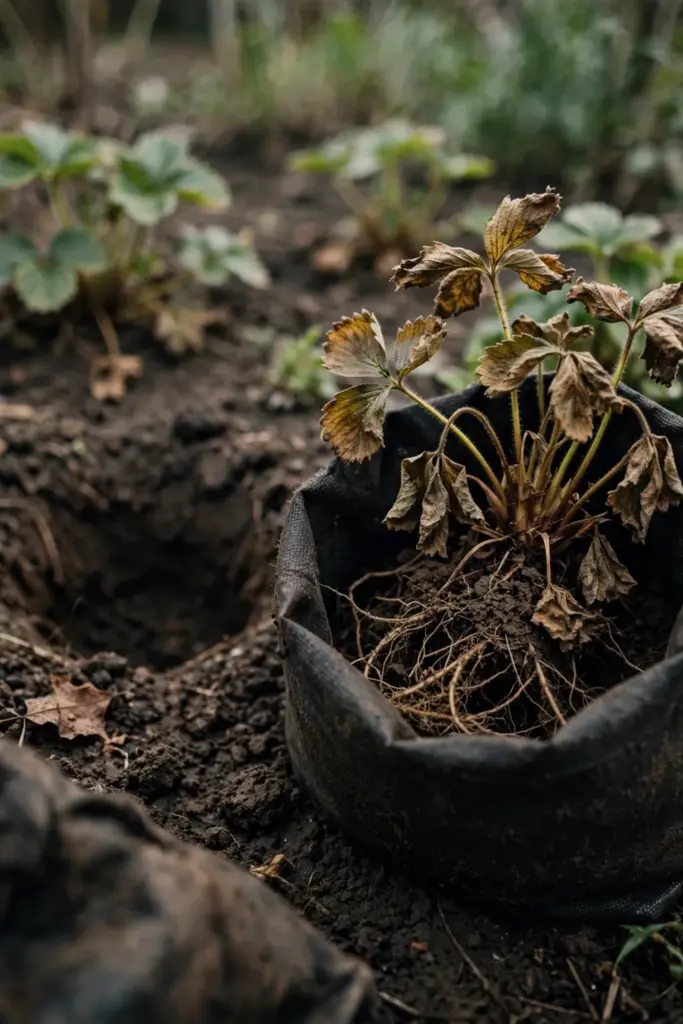
Never compost infected plants. A home compost pile does not reliably destroy oospores, and finished compost spread back onto the patch returns the pathogen with the amendment. Bag infected plants and trash them, or burn them where local rules allow. The disposal method matters as much as the removal. A pile of pulled plants left beside the bed keeps shedding spores into the soil.
Work the sick bed last. Start the day in healthy beds and finish in the sick one, so tools and boots carry nothing from sick soil to clean soil. Clean tools after the sick bed, before they touch another bed. Strategy 7 gives the cleaning routine in full.
Replace the plant only after the bed question is settled. A gap in the row is better than a new plant in infested soil. The gap holds the place while the gardener decides whether the bed gets rested, replanted with a resistant variety, or converted to containers. An empty spot grows nothing. A new susceptible plant in infested soil grows the next outbreak.
Step 4: Start Clean With Certified Plants and Inspect Every Root
Step 4 keeps the pathogen out of a clean bed. Buy certified disease-free plants from a reputable nursery. Certification is the one control that works before planting, because it addresses the main introduction route. A bargain flat of uncertified plants can carry red stele into soil that never had it. The savings vanish with the first lost row.
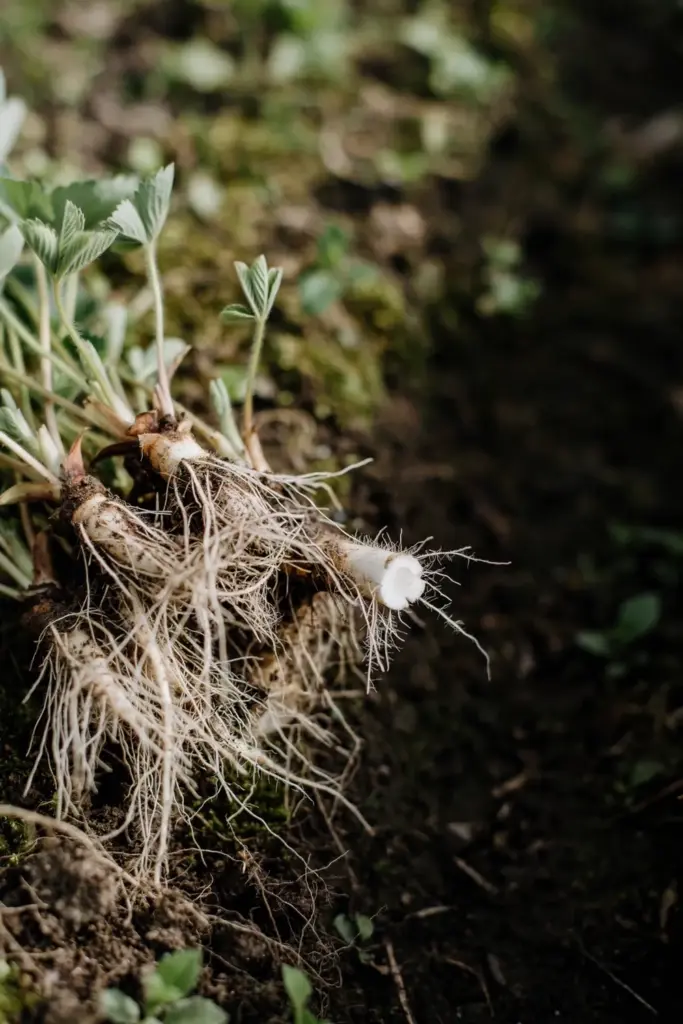
Inspect every root before it goes into the ground. Healthy strawberry roots look straw-colored to white, with fine feeder roots intact. Reject any plant with rat-tail roots, with blackened root tips, or with a reddish core visible on a cut root. Cut open any suspicious root on the spot. Colorado State Extension advises gardeners to cut open suspicious roots and never plant infected stock. A rejected plant costs a few dollars. A planted one costs the bed.
Inspect at delivery, not at planting. A plant that sits in a damp box for days can decline before it reaches the bed. Open the bundle the day it arrives. Check roots, check crowns, and plant the same day or hold the plants cold and dry until planting. A plant that waits in warm, wet conditions waits in the pathogen’s favored weather.
Keep new plants away from the old bed until they go in the ground. Do not heel them into the sick bed for holding. Do not set the bundle on soil from the sick bed. New plants go into clean soil, or into containers with fresh potting soil, and nowhere else.
Step 5: Fix Drainage With Raised Beds 15 Inches High
Step 5 is the highest-value structural fix here. Raised beds lift roots above the zone where water stands longest, and they drain faster after rain. The Pacific Northwest Handbook red stele page gives two heights: beds raised 8 to 10 inches for field plantings, and beds raised 15 inches for home gardens and small plantings. Use the home-garden height. Fifteen inches of lift is the number to build to.
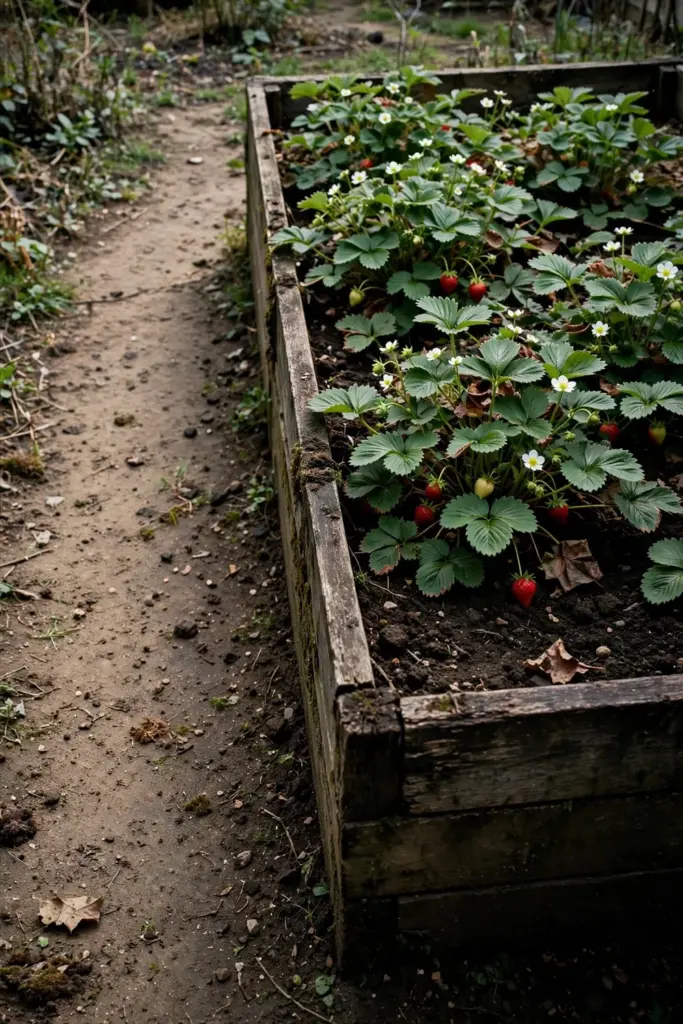
Build the bed where water does not collect. Do not plant in draws or swales where surface water flows after heavy rain. Do not set a bed at the bottom of a slope that drains through it. A raised bed in a swale still sits in the flow path. Site selection comes first, and the raised bed comes second.
Break up compacted soil under a new bed before filling it, because a raised bed on top of a compacted pan still ponds at the root zone when water cannot move down through the pan. Loosen the subsoil with a digging fork, then fill. The bed drains from the bottom as well as from the sides.
Preplant soil solarization can help as an add-on in a hot climate. The Pacific Northwest Handbook describes laying clear plastic directly on smooth, irrigated, rototilled ground, burying the edges to trap heat, and solarizing for 4 to 6 weeks during the hottest part of summer. Solarization reduces populations of soil-borne pathogens, and it works in combination with other techniques. It does not replace drainage, clean stock, or resistant varieties. Treat it as a bonus, not a cure.
The fall garden bed prep guide covers the soil tests, compost, and mulch work that keeps a raised bed draining well across seasons.
Step 6: Choose Resistant Varieties With Open Eyes
Step 6 uses one resistant-variety list, and only one. The Pacific Northwest Handbook red stele page names Olympus, Hood, Totem, Rainier, and Shuksan as resistant cultivars. That list stands alone here, because resistant-variety lists conflict across sources and merging lists creates false confidence.
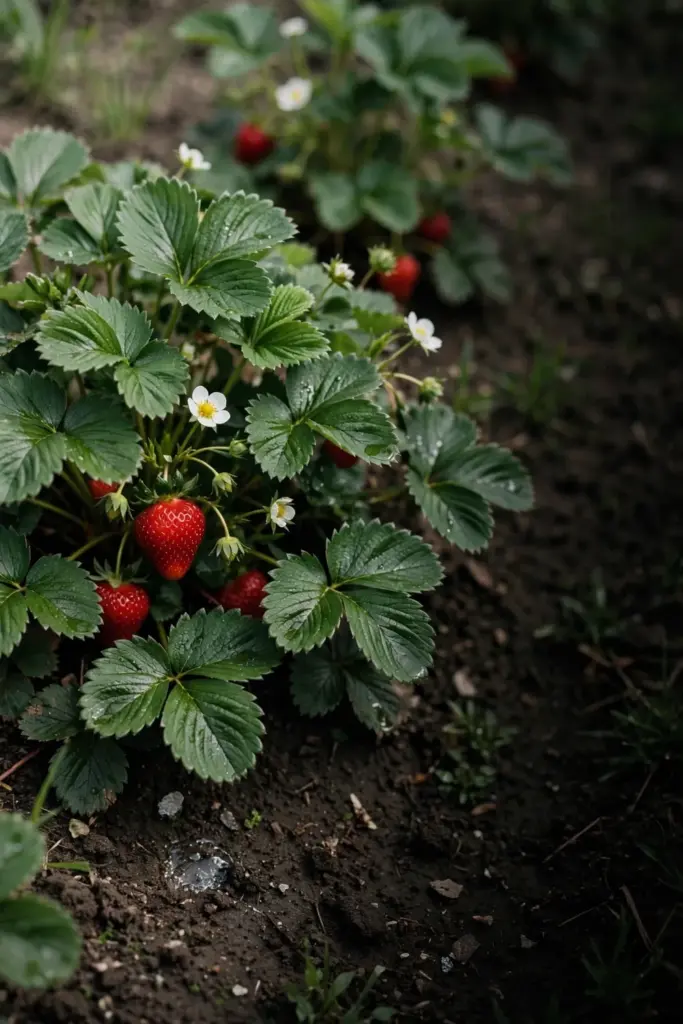
Resistance is race-specific. The Handbook records several races of the pathogen, and notes that a cultivar resistant in one field may prove susceptible in another field where a different race is present. Of the seven races described, five have been reported from Oregon and Washington. A variety that holds in one region can fall in another. Resistance is a probability, not a promise.
Even resistant varieties can fail in bad conditions. The Handbook states that even resistant cultivars are infected sometimes when virulent races are present in the soil. A resistant variety in a wet, infested bed still faces pressure. Resistance works with drainage and clean stock, never instead of them.
Ask a local nursery or Extension office which resistant varieties perform in local soil. Regional race patterns decide which varieties hold, and local advice reflects local races. A national list starts the search. Local advice finishes it. Plant a small trial patch of a new resistant variety before committing a whole bed to it.
Step 7: Clean Tools, Boots, and Equipment Between Beds
Step 7 breaks the soil-movement chain. Soil on a trowel carries oospores. Soil on a boot carries oospores. Soil on a wheelbarrow tire carries oospores. The pathogen does not walk; the gardener carries it from bed to bed on tools, boots, and tires.
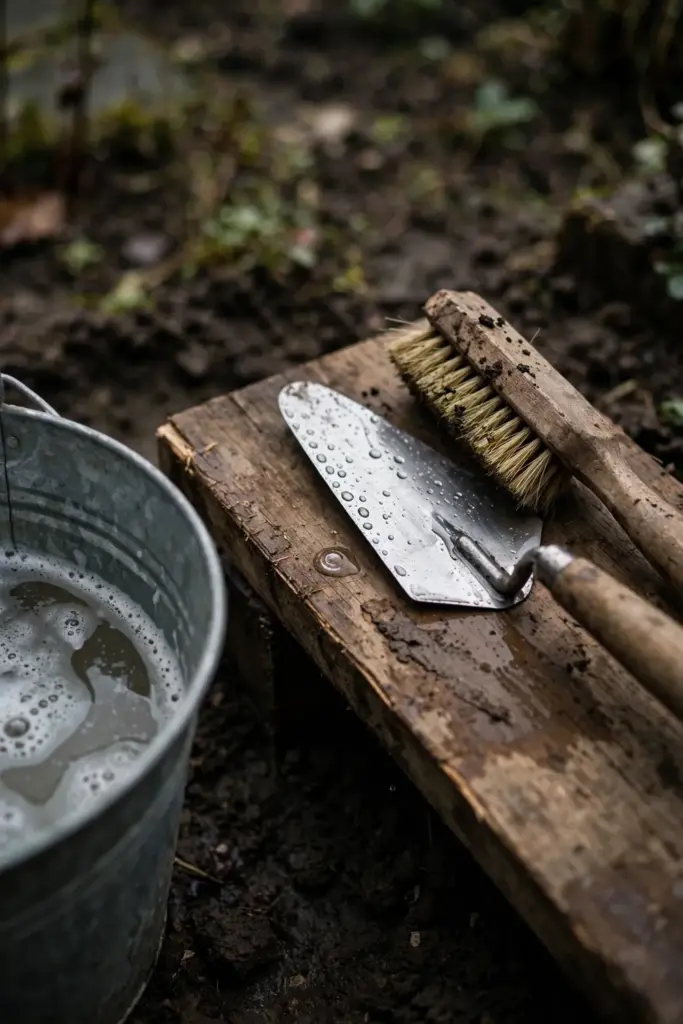
Clean tools between beds, every time. Knock soil off the tool, wash it with soap and water, and dry it before the next bed. Pay attention to the tines of a fork, the joints of pruners, and the tread of a wheelbarrow tire, where soil packs and hides. A quick knock is not enough. Wash the tool.
Clean boots the same way. Knock soil off at the bed edge, then wash the soles before walking into a clean bed. A boot brush at the garden gate turns a habit into a routine. The brush costs little, and it catches the soil that carries the pathogen.
Work sick beds last, as Step 3 requires. The order of work is a control measure. Healthy beds first, sick beds last, cleaning after the sick bed, every time. A gardener who follows that order never carries soil from a sick bed into a clean one in the same session.
Borrowed tools deserve the same routine. Colorado State Extension advises gardeners to clean soil and plant debris from cultivation equipment before use, especially when borrowing tools. A borrowed tiller from a neighbor’s infested bed can introduce red stele to a clean garden in one pass. Clean it before it touches the soil.
Step 8: Rotate Honestly and Rest Infected Soil
Step 8 states the rotation limits without flinching. Oospores persist in soil for many years, and no rotation length guarantees clean soil. Rotation reduces pressure over time. It does not sterilize a bed. A gardener who rotates for a season and replants strawberries into the same bed has rotated on paper and changed nothing in the soil.
Rest the infected bed. Plant crops that are not strawberries in that bed, and give the bed time. The rest period is measured in years, not weeks, because oospores outlast a single season. Published survival figures conflict across sources, so no single year count fits. The honest statement is the range: many years, with no safe replant date that fits every bed.
Use the rest period well. Grow vegetables, flowers, or cover crops that are not strawberries in the rested bed. Improve drainage in the bed while it rests. Break up compaction, add organic matter, and reshape the bed so water moves through it. A rested bed that drains better is a safer bed when strawberries return.
Never replant strawberries into a bed with a known red stele history unless the new planting uses resistant varieties, and even then only after a long rest. The resistant variety is the last line, not the first. Drainage, rest, and clean stock come first. A resistant variety in a rested, drained bed has a real chance. A susceptible variety in an unrested, wet bed has none.
Step 9: Reset Containers With Fresh Soil and Clean Pots
Step 9 gives container growers a clean start. Potted strawberries escape infested ground entirely, because the pot holds fresh soil, not bed soil. A container is the fastest way to grow strawberries again after a bed infection, and it is the safest way to grow them in a garden with heavy, wet soil.
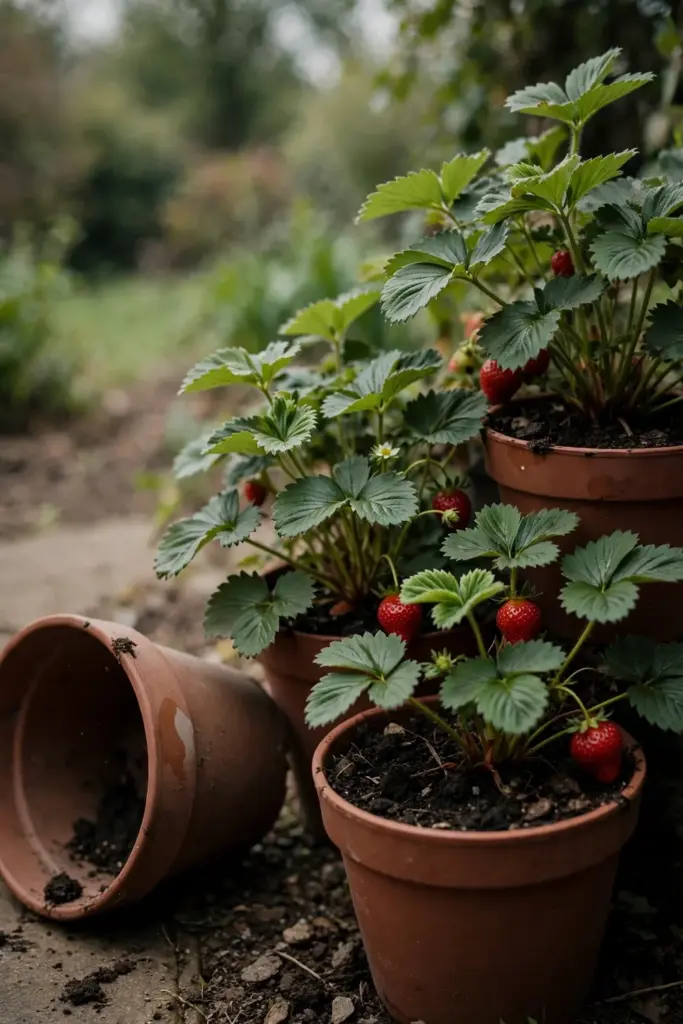
Discard the soil from any pot that held an infected plant. Do not reuse it, do not mix it into a bed, and do not compost it. The soil carries oospores. Bag it and trash it with the plant. Fresh potting soil is cheap. Infested potting soil is the next outbreak.
Clean the pot before reuse. Wash the pot inside and out with soap and water, and dry it in the sun. A pot that held an infected plant holds infested soil in its corners and drainage holes. Washing removes it. A clean pot with fresh soil is a clean start. A dirty pot with fresh soil is not.
Grow new container plants from certified stock, not from runners off infected plants. Runners from an infected mother carry the pathogen with them, even when they look healthy. Certified plants plus fresh soil plus a clean pot is the full container protocol. Skip one leg and the stool tips.
Step 10: Keep Runoff and Irrigation Water Out of Clean Beds
Step 10 guards the water path. Runoff water carries spores downhill from an infested bed to a clean one. Irrigation water that ponds in a clean bed gives those spores a swimming window. Water is the vector, and the gardener controls where it goes.
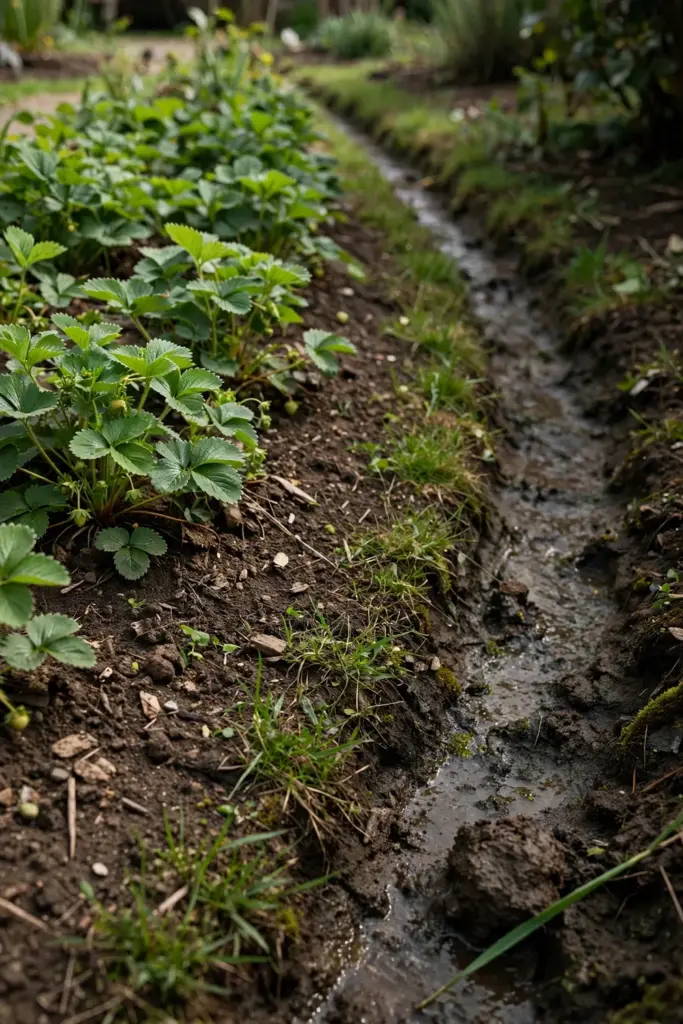
Do not let a sick bed drain into a clean bed. Grade the ground so runoff from an infested bed flows away from healthy beds, not through them. A shallow diversion channel or a grass strip between beds breaks the flow. A clean bed downhill of a sick bed, with no diversion, is the next sick bed.
Water at the base, and avoid saturating the whole bed. Drip lines and soaker hoses put water at the root zone without ponding the surface. Overhead watering that leaves standing water invites zoospores to swim. Water in the morning, so foliage and soil surface dry during the day. A bed that dries between waterings gives zoospores a short window.
Never irrigate from a pond that receives runoff from an infested bed, because pond water can carry spores into a clean bed with every watering. Use a clean water source for strawberries. A pond that collects field runoff is a distribution system for the pathogen.
Living With Red Stele Damage You Already Have
Living with red stele means protecting what is left. Rogue the infected plants, and keep the healthy ones. Improve drainage around the healthy plants now, even mid-season. A shallow diversion channel that moves runoff away from the healthy row helps this week, not next year. A mulch layer that keeps soil from splashing onto crowns helps with every rain.
Harvest from healthy plants as normal. Berries from healthy plants in the same patch are fine to pick and eat. The disease attacks roots, and it does not change the fruit on a healthy plant. Pick promptly, and do not let overripe fruit fall and rot in the bed. Fallen fruit feeds other problems, and a clean bed is a healthier bed.
Do not try to save an infected plant with extra water or extra fertilizer, since extra water extends the zoospore swimming window while extra fertilizer pushes soft growth on a plant whose roots cannot support it. Both make the decline faster. The infected plant is a loss. Spend the water and the fertilizer on the healthy plants.
Plan the next planting now, while the loss is fresh. Pick a new site with good drainage, or commit the old bed to a long rest. Order certified plants of a resistant variety for the new site. Start a container patch with fresh soil for next season. The gardener who plans during the loss plants into clean ground next spring. The gardener who waits replants into the same infested bed and loses the patch twice.
Frequently Asked Questions
There is no safe number of years that fits every bed. Oospores persist in soil for many years, and published survival figures conflict across sources, so no single year count fits. Rest the bed for years, plant crops that are not strawberries there, and improve drainage while it rests. Replant strawberries only in a new site, in containers with fresh soil, or in the old bed after a long rest with resistant varieties.
No. Fungicides aimed at Phytophthora do not kill this organism once it is inside the plant. The Pacific Northwest Handbook states that the FRAC 4 and P7 materials used against Phytophthora can only prevent establishment before the organism enters the plant. Resistance to Ridomil has been detected in major strawberry-growing areas. No home spray program fits red stele, because sprays cannot rescue an infected plant.
No. Never compost infected plants. A home compost pile does not reliably destroy oospores, and finished compost spread back onto the patch returns the pathogen with the amendment. Bag infected plants on the spot, and trash them or burn them where local rules allow. Clean the tools and boots used for removal before they touch another bed, so the disposal job does not become the next introduction.
Not as the same disease. Raspberry root rot comes from Phytophthora fragariae var. rubi, a different variety of the same species, and it is a different disease. Do not assume a strawberry diagnosis applies to raspberries, and do not assume raspberry advice applies to strawberries. Keep tools and boots clean between the two crops, and treat each crop on its own evidence. A lab confirms the pathogen when the decision matters.
You cannot settle it without digging. Above-ground symptoms overlap, since both diseases cause wilting, stunting, and off-color leaves. The cut test decides it. Slice a root lengthwise for red stele and slice the crown open for crown rot. A red core inside a white cortex points at red stele. Dark brown crown tissue points at crown rot. Dig, cut, and read the tissue before acting.
Where to Go From Here
Red stele on strawberries rewards the gardener who acts early and honestly. Confirm the identification with the root cut. Rogue infected plants at once, and never compost them. Start clean with certified plants, inspect every root, and fix drainage with raised beds 15 inches high. Choose resistant varieties with open eyes, clean tools between beds, rest infected soil, reset containers, and keep runoff water out of clean beds.
The single next action is the cut test. Walk the patch, dig one declining plant, and read the root. The answer in the root decides everything that follows. A red core means the 10 strategies start today. A clean root means the search continues, and the patch gets a different plan.