
Cymbidium mosaic virus has no cure, and it hides. An infected orchid can look healthy for months, bloom normally, and still carry the virus, and one cut with a contaminated tool can pass it to the next plant. The 10 strategies below tell you how to read the black-streak signs, test before you trust, and run the sanitation that stops the spread, because testing settles what symptoms cannot.
The virus is Cymbidium mosaic virus, abbreviated CymMV, species Potexvirus cymbidii, genus Potexvirus, family Alphaflexiviridae. The name “Cymbidium” is historical: the virus was first found in Cymbidium, but it infects orchids across many genera. This article uses CymMV throughout after this introduction.
One abbreviation fence up front. In orchid context, “CMV” often means Cymbidium mosaic virus, but CMV generally means Cucumber mosaic virus, a different virus on a different host. This article uses CymMV, never bare CMV. The Cucumber mosaic virus article on this site covers a different virus, and no evidence is borrowed from it.
What Cymbidium Mosaic Virus Actually Is
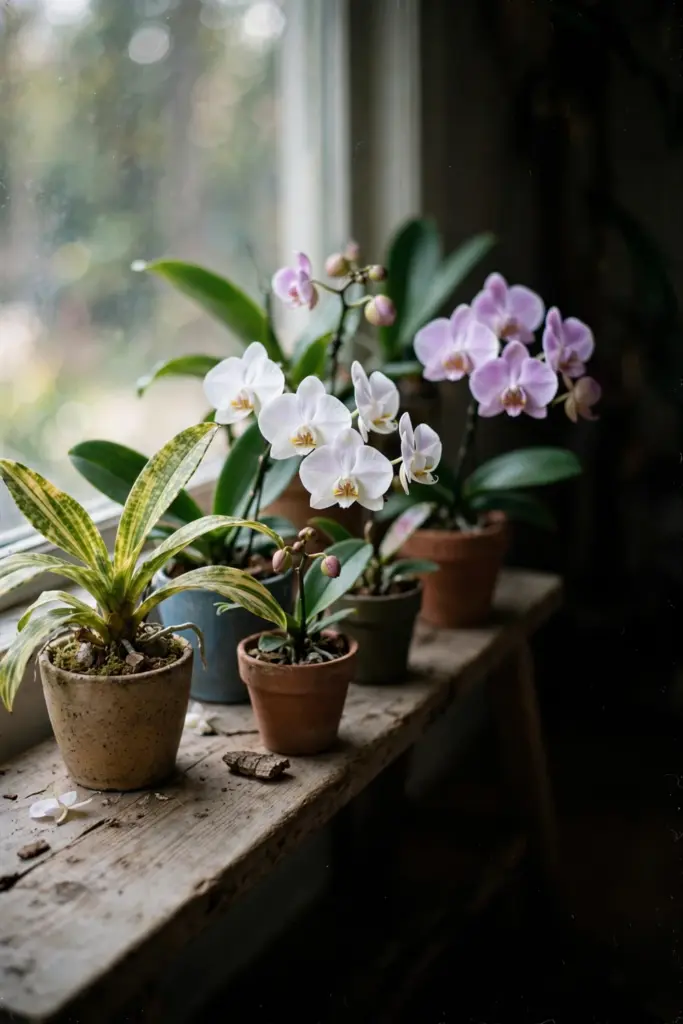
Cymbidium mosaic virus is a virus of orchids, and orchids only. It does not infect plants other than orchids. It is found in many orchid genera: Cattleya, Vanda, Oncidium, Phalaenopsis, Dendrobium, Epidendrum, Cymbidium, and many more. The orchid-only host range is the fence. A virus on a non-orchid plant is not CymMV.
CymMV has no cure. Once infected, the plant cannot be cured, so management is prevention, testing, and destroy-or-isolate decisions, and the no-cure spine runs through this article: a seller who promises a cure sells a lie.
CymMV is one of the two most prevalent orchid viruses. The other is Odontoglossum ringspot virus, ORSV. When growers say a plant has “a virus”, they usually mean one of these two. Mixed CymMV plus ORSV infection is common worldwide and produces synergistic severe symptoms. The co-infection is the worst case.
CymMV is not the same as ORSV. ORSV is a different virus, genus Tobamovirus, the co-infecting partner. ORSV is never presented as a synonym of CymMV here. The differential section separates them, and the test section shows how one strip tests both independently.
How to Identify Cymbidium Mosaic Virus on Your Orchids
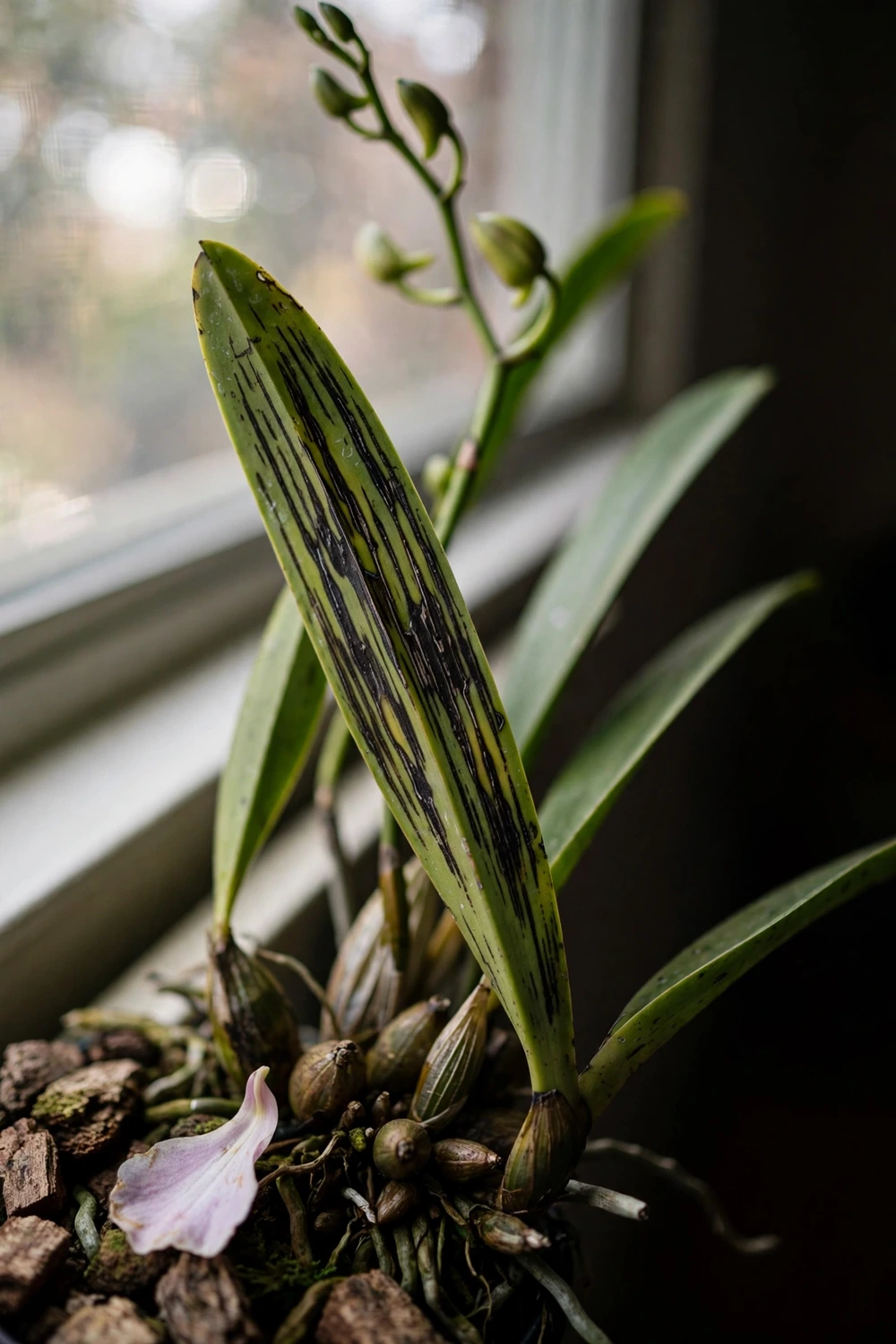
Watch new shoots for chlorotic patches. Symptoms begin in new shoots as chlorotic patches and flecks, the patches grow increasingly chlorotic, then necrotic, and the new-shoot check catches the virus early, since the chlorotic fleck is the first sign and the new shoot is the watch point.
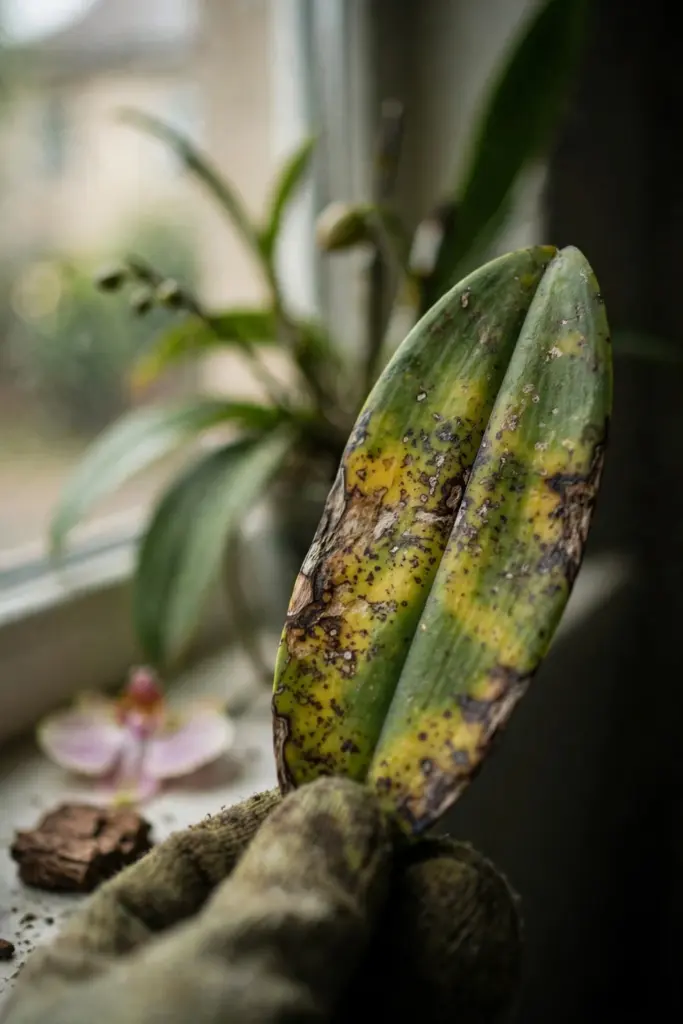
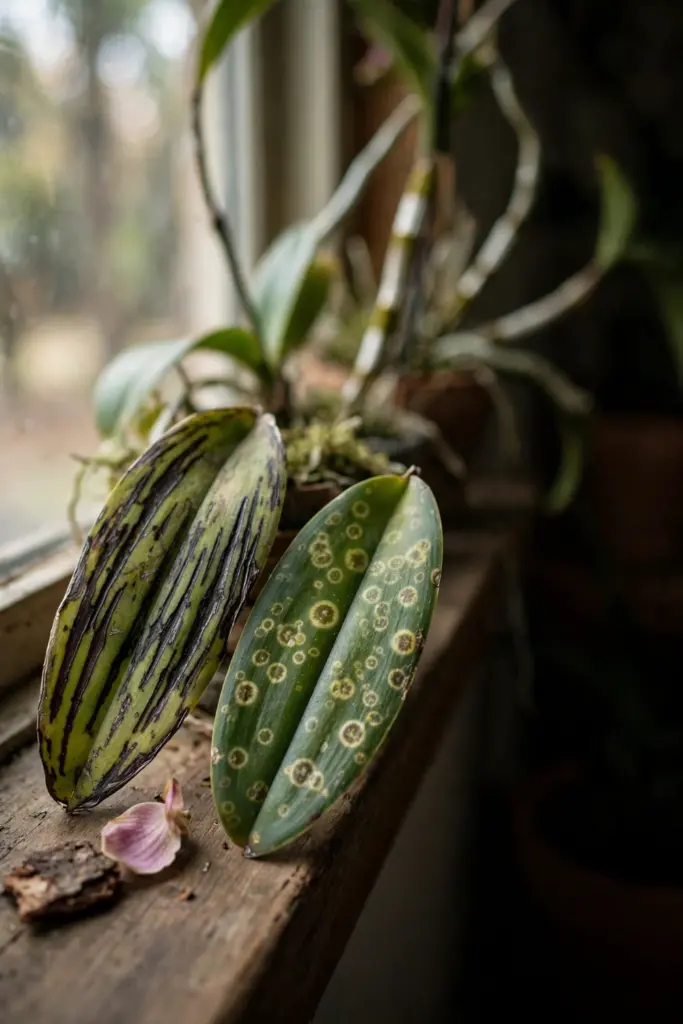
Watch for the black streak. Leaf necrosis and black streak are the most common signs: irregular brown-to-black elongated spots and streaks of dead tissue on both surfaces of older leaves, with lesions elongated, streak-like, whitish for a month or two before turning brown-gray or black, usually slightly sunken, so the black streak is the signature and a streaked orchid leaf is a suspect leaf. Watch Cattleyas for rings next: in Cattleyas the lesions are more necrotic, with dark brown or black sunken rings and streaks coalescing, so the ringed Cattleya leaf is the classic CymMV leaf.
Watch flowers, but do not trust them. Flowers are usually symptomless, but fewer and smaller, and in Cattleyas, flower necrosis appears, while no color-breaking occurs in cymbidiums and dendrobiums, so the flower check is weak and the leaf check is the strong check.
Watch vigor. Infected plants are less vigorous. Fewer, shorter-lasting flowers mark a struggling plant. The vigor decline is the slow symptom. The plant that limps along with fewer flowers is the suspect plant.
Remember the latent carrier. Not all infected plants show symptoms. Symptomless plants are excellent virus carriers. A plant with no symptoms is not a healthy plant. The symptomless carrier is the reason testing exists.
Which Orchids Get Hit Hardest
All orchid genera are susceptible. Most, if not all, orchids are susceptible to one or more types of viral infection. CymMV is found in many orchid genera. No orchid genus is safe. The collection-wide risk is the rule.
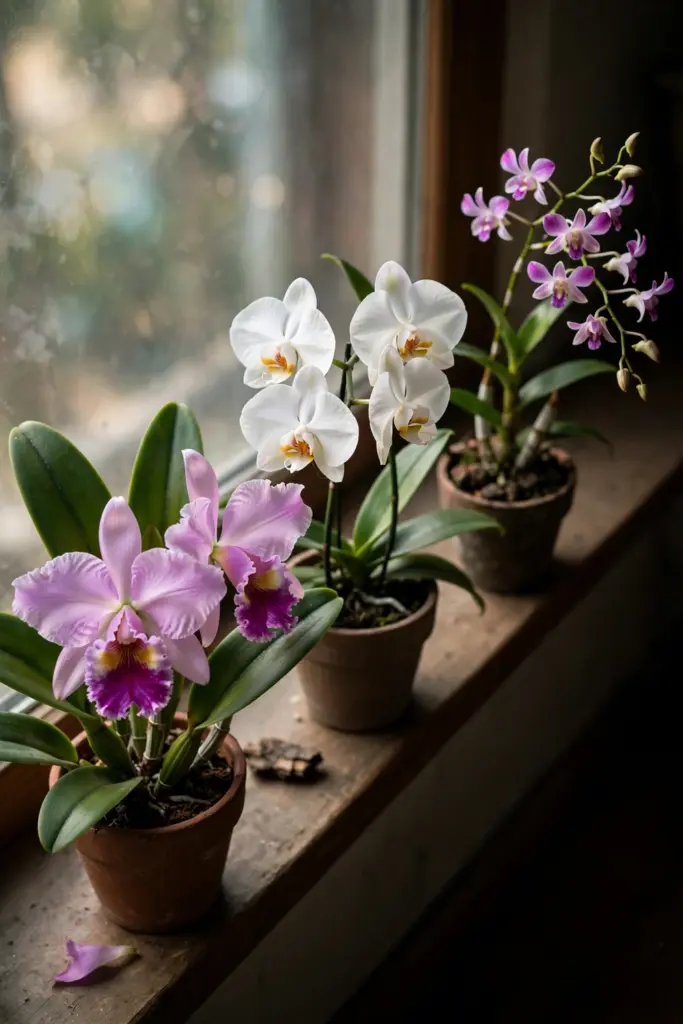
Cattleyas show the worst symptoms. In Cattleyas the lesions are more necrotic, with dark brown or black sunken rings and streaks. The Cattleya is the symptom-shower. The Cattleya collection needs the closest watch.
Cymbidiums and dendrobiums show no color-breaking. No color-breaking occurs in cymbidiums and dendrobiums, so the absence of color break does not clear them, and the cymbidium can carry the virus without the flower mark.
Phalaenopsis, Vanda, Oncidium, Dendrobium, and Epidendrum all carry it. The virus is found across the hobby’s genera, the genus does not protect, and the collection is the unit at risk.
Commercial prevalence runs high. Studies found virus in 50 percent of the orchids tested in Singapore’s botanical gardens, 25 percent of those grown in Hawaii, and 65 percent of the cut orchids from Thailand, per Scientific American. The figures are survey context, not home promises, and the prevalence explains why quarantine matters.
Cymbidium Mosaic Virus vs Odontoglossum Ringspot Virus
The two viruses travel together, and they are not the same virus. CymMV is a Potexvirus. ORSV is a Tobamovirus. The lab test settles which one a plant carries, since the ImmunoStrip tests both independently. The field identification is presumptive. The test is the answer.
| Clue | CymMV (Potexvirus cymbidii) | ORSV (Odontoglossum ringspot virus, Tobamovirus) |
|---|---|---|
| Leaf symptoms | Mild mosaic, chlorotic or necrotic sunken patches, black streak | Chlorotic ringspots or necrosis on leaves |
| Flower symptoms | Necrosis on flowers; no color-breaking in cymbidiums/dendrobiums | Color breaking and/or distortion on flowers |
| Prevalence | More stable and more prevalent in most surveys | Less prevalent than CymMV in most surveys |
| Seed transmission | Generally not seed-transmitted (unresolved, see below) | May be seed-transmitted (unresolved, see below) |
| Co-infection | Mixed CymMV + ORSV = synergistic severe symptoms | Mixed CymMV + ORSV = synergistic severe symptoms |
| Test | ImmunoStrip tests CymMV independently | ImmunoStrip tests ORSV independently |
No published home-gardener head-to-head comparison article exists. This table compiles the distinction from parallel sources: Nature Scientific Reports, MDPI, and SciELO research. The compiled status is flagged here. The mixed-infection row is the most important: co-infection produces necrotic ringspots, mottling, ridging, curling, and distortion of flowers, worse than either virus alone.
Seed transmission is unresolved. Sources differ: one specialist source says seed transmission is likely at a very low rate or may not be possible and is not extensively studied; one research source says CymMV is not seed-transmitted, unlike ORSV; one paper lists seed transmission for CymMV. This article flags the conflict rather than resolving it. Do not promise seed safety, and do not promise seed risk.
How Cymbidium Mosaic Virus Spreads
Growers spread it with tools. The virus spreads by contaminated pruning tools. Unless heated or bleached between each trimming, the blades play the part of a dirty syringe. The tool is the vector. The disinfected tool is the prevention. The tool discipline is the whole control program.
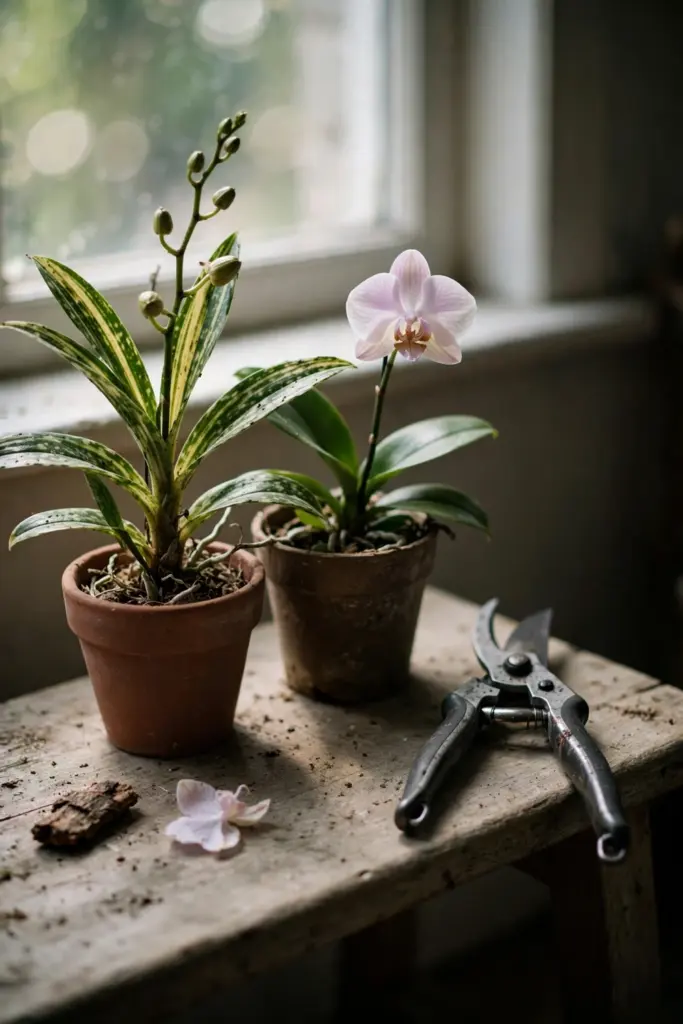
Growers spread it by dividing. Dividing an infected plant spreads the virus to the divisions, and backbulb and division from an untrained grower is a common infection source, so the division is the multiplication of the virus and the tested mother plant is the safe division. Growers spread it by sharing next: orchid growers divided plants indiscriminately, gave them to friends, and sold them, so one infected plant infected thousands, never through the air, never through insects, but by human propagation, and the sharing is the epidemic while the testing is the brake.
Tissue culture spreads it. Tissue culture of an infected mother plant multiplies the virus. The cloned plant carries the virus. The virus-indexed mother plant is the safe culture. The untested mother is the risk.
Insect vectors are unresolved. Illinois Extension states no insect vector is known, and a specialist source agrees. Wikipedia mentions insect vectors in the wild plus cockroach evidence, and one paper lists aphid transmission. This article defaults to Extension: mechanical tool and sap spread is the established home-grower route, and the insect-vector question is flagged as unresolved. Aphids are not presented as the vector.
What Raises the Risk of Cymbidium Mosaic Virus
Untested new plants raise the risk most. A new plant from an untested source can carry the virus silently. The untested import is the collection disaster. The tested import is the safe import. The quarantine is the fence.
Shared tools raise the risk. A tool used on an infected plant and then on a healthy plant transfers sap and virus. The shared tool is the syringe. The disinfected tool is the prevention. The tool discipline is the risk lever.
Dividing before testing raises the risk. A division from an untested mother multiplies the virus. The untested division is the multiplied risk. The tested mother is the safe division. The test comes before the knife.
Repotting on a shared surface raises the risk. Hands, tools, and repotting surfaces can all be contaminated. Sap on the bench transfers to the next plant. The shared surface is the transfer. The fresh newsprint is the fence.
Buying from uncertified producers raises the risk. Certified producers test their stock. Uncertified producers may not. The certified producer is the safe source. The uncertified bargain is the risk.
Strategy 1: Confirm the ID With the Black-Streak Signs
Check new shoots. Chlorotic patches and flecks on new shoots mark the early stage. The new-shoot check catches the virus early. The chlorotic fleck is the first sign. The new shoot is the watch point.
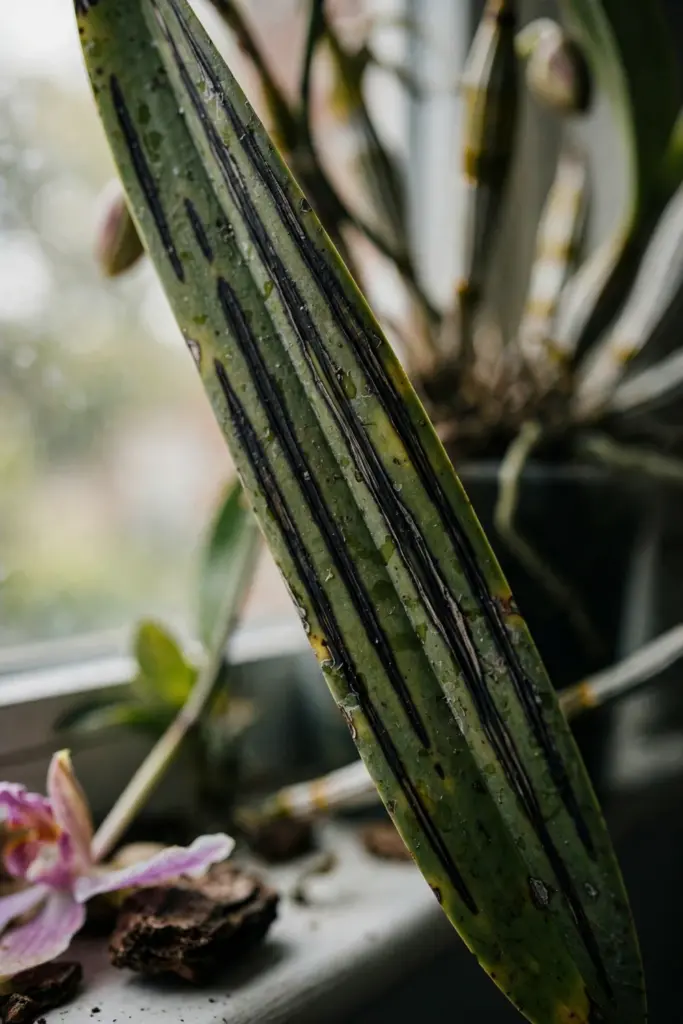
Check older leaves. Irregular brown-to-black elongated spots and streaks of dead tissue on both surfaces of older leaves mark the classic stage. The black streak is the signature. The streaked leaf is the suspect leaf.
Check Cattleyas for rings. Dark brown or black sunken rings and streaks coalescing mark the Cattleya pattern. The ringed Cattleya leaf is the classic CymMV leaf. The rings are the Cattleya mark.
Check flowers and vigor. Fewer, smaller, shorter-lasting flowers mark a struggling plant. Flower necrosis in Cattleyas marks the flower stage. The vigor decline is the slow symptom. The limping plant is the suspect plant.
Symptoms cannot settle it. Symptoms are highly variable, and latent carriers are symptomless, so field identification is presumptive, testing settles it, and no symptoms does not mean healthy.
Strategy 2: Tell It From ORSV With the Differential and the Test
Use the leaf pattern. CymMV shows mosaic and sunken patches with black streak, while ORSV shows chlorotic ringspots or necrosis, so the leaf pattern is the field differential: the ringspot is the ORSV mark, and the streak is the CymMV mark.
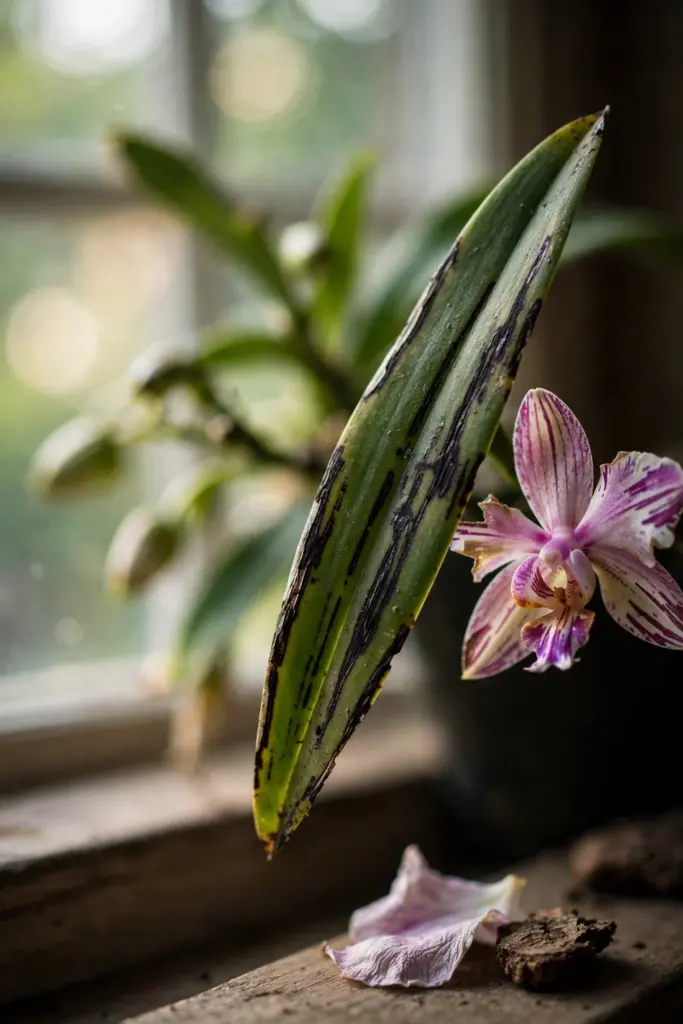
Use the flower pattern. CymMV shows necrosis on flowers with no color-breaking in cymbidiums and dendrobiums. ORSV shows color breaking and distortion on flowers. The flower pattern is the second differential. The broken color is the ORSV mark.
Use the co-infection warning. Mixed CymMV plus ORSV infection produces synergistic severe symptoms: necrotic ringspots, mottling, ridging, curling, and distortion of flowers. The severe plant may carry both viruses. The severe symptoms are the co-infection warning. The test separates them.
Use the test to settle it. The ImmunoStrip tests CymMV and ORSV independently, one strip gives two answers, and the test settles the differential where the symptoms overlap, so the test is the answer.
Strategy 3: Test Before You Trust, With the ImmunoStrip
Buy the orchid test kit. The Agdia Orchid Virus ImmunoStrip tests CymMV and ORSV simultaneously. The kit contains ImmunoStrips, buffer-filled sample extraction bags, and a user guide. The kit is marketed to hobbyists and greenhouse growers for on-site spot checks. The hobbyist kit is the home test.
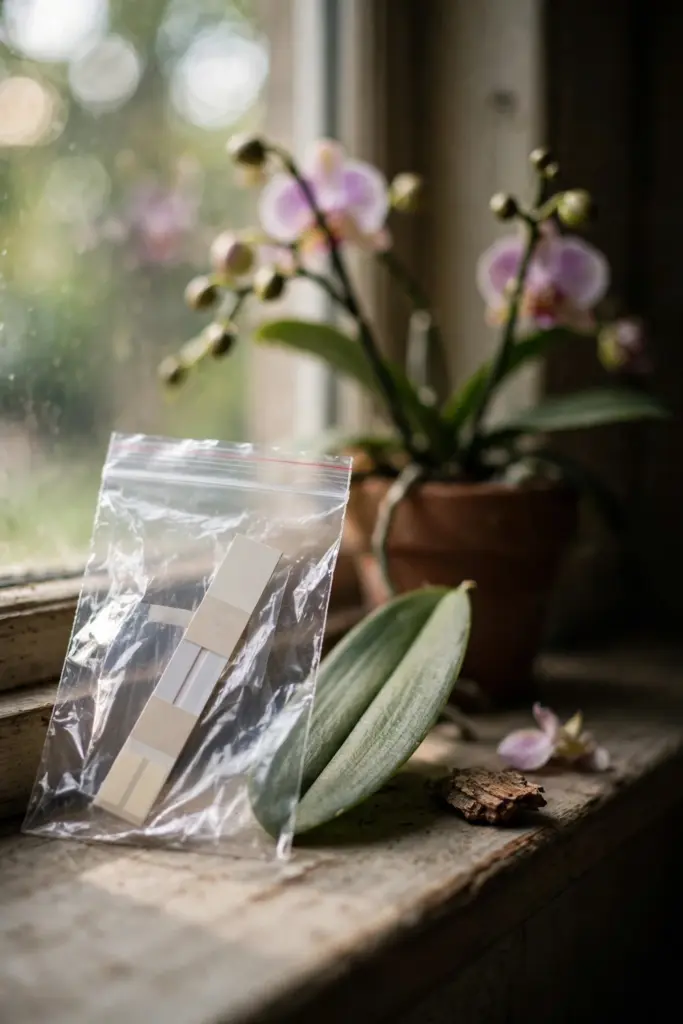
Take a quarter-sized sample. Cut a leaf tip about the size of a quarter and crush it in the mesh bag. The sample goes between the grinding mesh layers in the buffer-filled bag. The crushed sample releases the sap. The sap carries the virus.
Insert the strip and read in 30 minutes. Place the test strip in the sample bag so the bottom quarter inch sits in the buffer. Within 30 minutes, the strip shows ORSV, CymMV, both, or neither. The strip is the answer. The 30-minute read is the home diagnosis.
Test symptomatic and asymptomatic plants. The ImmunoStrip detects CymMV in symptomatic and asymptomatic plants. The asymptomatic plant is the carrier. The test catches the carrier. The symptomless plant gets tested too.
Test before you buy, divide, or repot. Test a new plant before it joins the collection, test a mother plant before dividing, and test a suspect plant before repotting, since the test comes before the knife, the pot, and the bench.
Strategy 4: Quarantine Every New Plant
Quarantine new plants up to a year. Quarantine new plants for up to a year before they join the collection. The year-long quarantine lets hidden virus show. The quarantine is the fence. The collection stays clean.
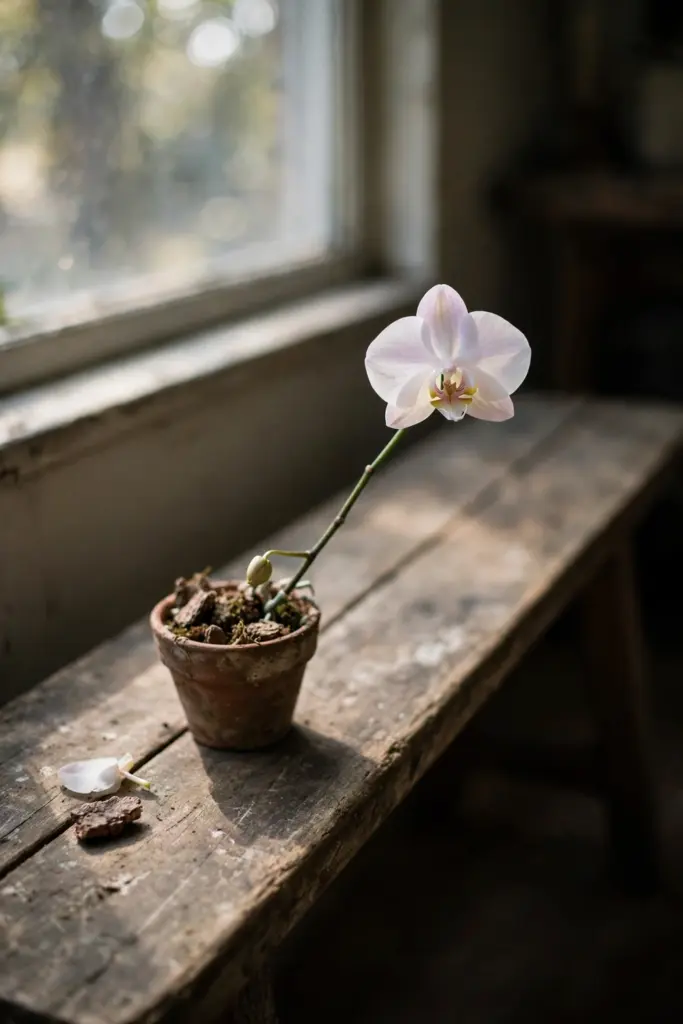
Keep the quarantine plant separate. The quarantine plant sits away from the collection, on its own bench, with its own tools. The separation is the containment. The shared bench is the transfer. The separate bench is the fence.
Test the quarantine plant before release. The quarantine ends with a test, not with a calendar. A negative test clears the plant. A positive test destroys or isolates it. The test is the release. The calendar is not.
Quarantine divisions too. Divisions from an untested mother stay quarantined until tested, since the division is the multiplied risk, and the tested division is the safe division, so the quarantine covers divisions.
Strategy 5: Destroy or Isolate Infected Plants
Destroy infected plants as the default. There is no cure for an orchid infected with CymMV, infected plants should be discarded, and suspicious ones isolated, so the destruction is the default and the default protects the collection.
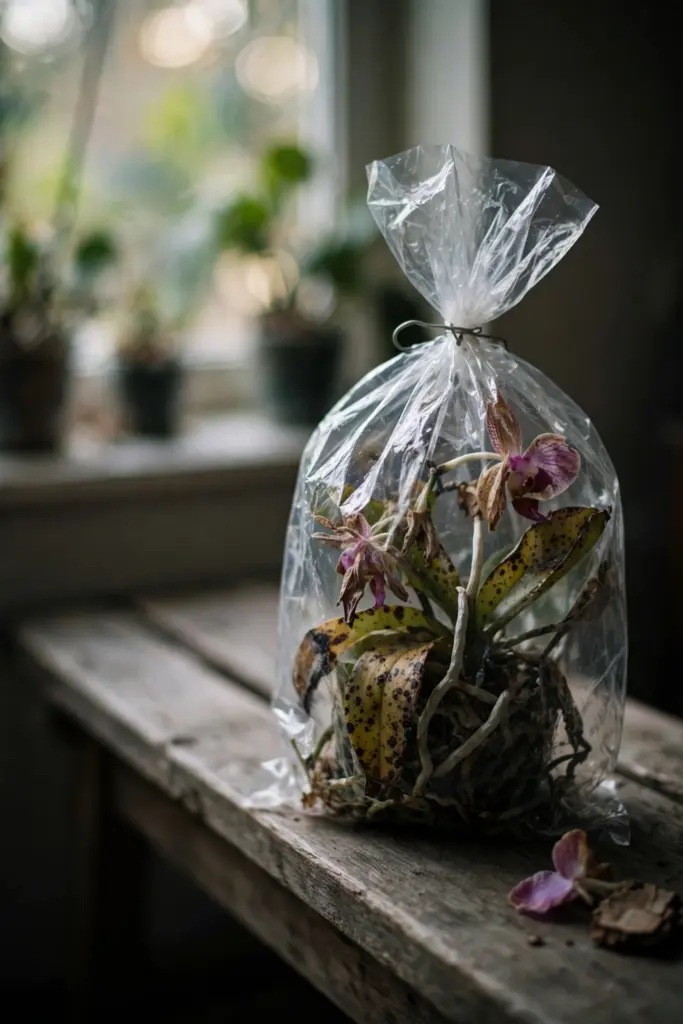
Isolate only with a very good reason. A valuable breeding plant or a unique clone may justify isolation. The isolated plant sits completely separate, with its own tools, and never shares, divides, or trades. The isolation is the exception. The exception needs discipline.
Dispose in the council bin or burn. Dispose of infected plants in the council bin or by burning. Store the plant away from the collection while it dries. The disposal is the containment. The compost pile is a distribution route.
Never trade or gift an infected plant. A gifted infected plant spreads the virus to another collection. The gift is the epidemic. The destruction is the kindness. The infected plant never leaves as a gift.
Strategy 6: Disinfect Tools Between Every Plant
Flame tools to blue heat. Heat-treating cutting tools is a recognized sanitizing technique: flame the instrument with a propane torch, 15 to 20 seconds with a hot flame on each side, so the flame sterilizes the blade, the blue heat is the sterilization, and the flame is the tool discipline.

Use long-bladed knives, not secateurs, where flame is the method. Long-bladed knives flame cleanly. Secateurs hide sap in joints. The long blade is the flammable blade. The secateur is the trap.
Use two knives so one soaks while the other works. Two knives keep the work flowing. One knife soaks in disinfectant while the other cuts. The two-knife system is the workflow. The single knife is the bottleneck.
Know the disinfectant range. Sources differ: 10 percent sodium hypochlorite for a minimum of 5 minutes; trisodium phosphate at 10 percent or saturated for over 5 minutes; bleach solutions; flame to blue heat; dry heat, and trisodium phosphate below 5 percent is ineffective, per orchid-society guidance. No single recipe is presented here as the settled method. Verify the recipe against AOS or Extension guidance before printing one as the method, and follow the product label.
Strategy 7: Disinfect Hands, Surfaces, and Pots
Wear disposable gloves. Hands can carry sap from one plant to the next. Disposable gloves, discarded after each plant, break the chain. The gloves are the hand fence. The bare hand is the transfer.
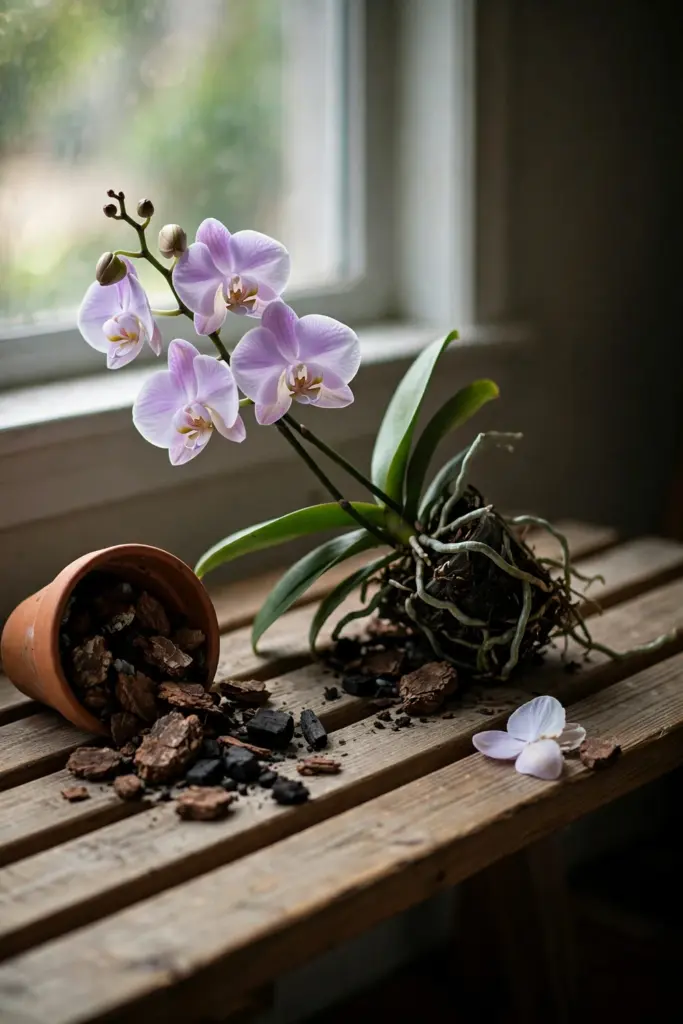
Repot on fresh newsprint. Repot on newsprint, and replace the top layer between plants, then wrap up the newspaper, gloves, and detritus and discard them before touching the next plant, since the newsprint is the surface fence and the shared bench is the transfer.
Disinfect pots before reuse. Make sure pots are sterile before reuse. Heat-treating pots, or a disinfectant soak per the product label, sterilizes them. The sterile pot is the clean pot. The reused dirty pot is the reservoir.
Clean the bench between plants. The bench holds sap from the last plant. The cleaned bench starts the next plant clean. The bench reset is the prevention.
Strategy 8: Buy From Certified Producers
Buy orchids from certified producers. Certified producers test their stock. The certified producer is the safe source. The certified stock is the tested stock. The certification is the guarantee.
Ask for virus-free proof. Ask the seller for virus-indexed stock or test results. The seller who tests is the seller to trust. The seller who cannot show a test is the seller to avoid. The proof is the purchase condition.
Avoid bringing plants with symptoms home. Do not buy a plant with streaks, rings, or mottling. The symptomatic plant is the infected plant. The bargain is the risk. The healthy plant is the purchase.
Avoid backbulb and division bargains from untrained growers. Backbulb and division from an untrained grower is a common infection source. The bargain division is the risk. The tested division is the safe division.
Strategy 9: Never Share, Divide, or Trade an Untested Plant
Do not divide an untested mother. A division from an untested mother multiplies the virus. The untested division is the multiplied risk. The tested mother is the safe division. The test comes before the knife.
Do not gift an untested plant. A gifted untested plant may carry the virus silently. The gift is the epidemic. The tested gift is the safe gift. The test comes before the gift.
Do not trade an untested plant. A traded untested plant spreads the virus to another collection. The trade is the transfer. The tested trade is the safe trade. The test comes before the trade.
Do not clone an untested mother. Tissue culture of an infected mother plant multiplies the virus. The cloned plant carries the virus. The virus-indexed mother is the safe culture. The untested mother is the risk.
Strategy 10: Keep a Virus-Free Collection With Routine Testing
Test the collection routinely. Test suspect plants at once, and test the collection on a routine schedule. The routine test catches the carrier before the carrier spreads. The schedule is the safety net. The routine is the discipline.

Test after any tool slip. A tool used without disinfection between plants is a tool slip. Test both plants after a slip. The slip test catches the transfer early. The early catch saves the collection.
Keep records of tests. A dated record of each plant’s test result builds the collection’s virus history. The record shows which plants are cleared. The record is the collection’s health file. The history is the proof.
Replace, do not rescue, a positive plant. There is no cure. A positive plant gets destroyed or permanently isolated. The rescue is a fantasy. The replacement is the reality. The collection stays clean.
Living With Cymbidium Mosaic Virus in a Collection You Already Own
A collection with CymMV is a collection to manage, not a collection to abandon. Test every plant. Destroy the positives. Isolate the suspects. Disinfect tools between every plant. Quarantine every new plant. The virus will still appear, but it will appear as a single positive, not as an epidemic.

Stop three habits. Do not cut two plants with the same undisinfested tool. Do not divide an untested mother. Do not gift an untested plant. Keep those three lines unbroken and the virus stays contained. The Plant Care archive collects the site’s disease coverage for the next problem the collection throws up.
Frequently Asked Questions

No. There is no cure for an orchid infected with CymMV. Infected plants should be discarded, and suspicious ones isolated. Meristem tissue-culture rescue is lab-only, tedious, costly, and takes five to seven years before the plant may bloom again, and it is not a home treatment. Antiviral and transgenic approaches are research, not home advice. The management is prevention, testing, and destroy-or-isolate decisions.
Use the Agdia Orchid Virus ImmunoStrip, a hobbyist kit that tests CymMV and ORSV simultaneously. Cut a leaf tip about the size of a quarter, crush it in the buffer-filled sample bag, insert the strip, and read in 30 minutes. The strip shows ORSV, CymMV, both, or neither. Test symptomatic and asymptomatic plants, since carriers are symptomless. Test before you buy, divide, or repot. A diagnostic lab can confirm a doubtful result.
Only with a very good reason and strict isolation. A valuable breeding plant or a unique clone may justify isolation, completely separate from the collection, with its own tools, never shared, divided, or traded. For a casual grower with a few plants, destruction is the safer default. An isolated plant still carries the virus. The isolation must be permanent and disciplined, or the virus escapes.
The insect-vector question is unresolved. Illinois Extension states no insect vector is known, and a specialist source agrees. Wikipedia mentions insect vectors in the wild plus cockroach evidence, and one paper lists aphid transmission. This article defaults to Extension: mechanical tool and sap spread is the established home-grower route. Do not present aphids as the vector. Tool discipline is the control that works regardless of the insect question.
No, not to non-orchids. CymMV does not infect plants other than orchids. It will not spread to your houseplants, vegetables, or garden plants. It will spread to every orchid in the collection through shared tools, dividing, and trading. The collection is the unit at risk. The orchid-only host range is the fence, and the orchid collection is the protection target.
Where to Go From Here
Cymbidium mosaic virus rewards the orchid grower who tests before trusting, disinfects tools between every plant, quarantines every new plant, and destroys the positives. Confirm the ID with the black-streak signs. Tell it from ORSV with the differential and the test. Test with the ImmunoStrip. Quarantine. Destroy or isolate. Disinfect tools. Disinfect hands, surfaces, and pots. Buy certified. Never share untested. Test routinely.
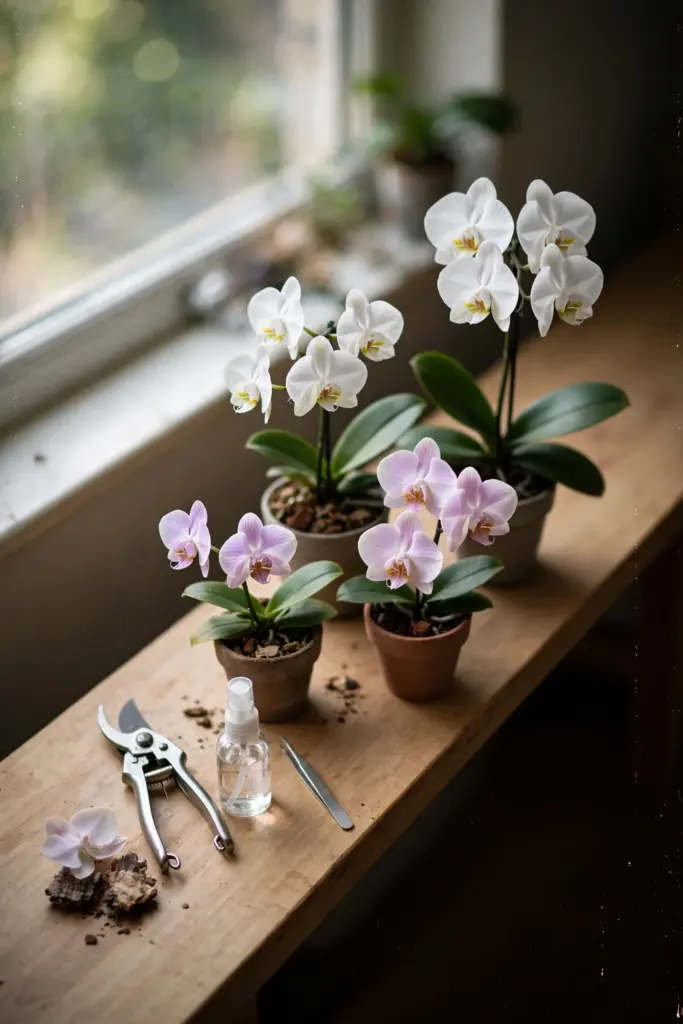
Next season, start with a tested collection. A collection with tested plants, disinfected tools, quarantined imports, and routine testing will hold CymMV to an occasional single positive. The Scientific American article on orchid viruses is a useful companion for the wider orchid-virus story, since it sets the home-grower response here against the reporting behind it, and the Plant Care archive collects the site’s other disease guides.