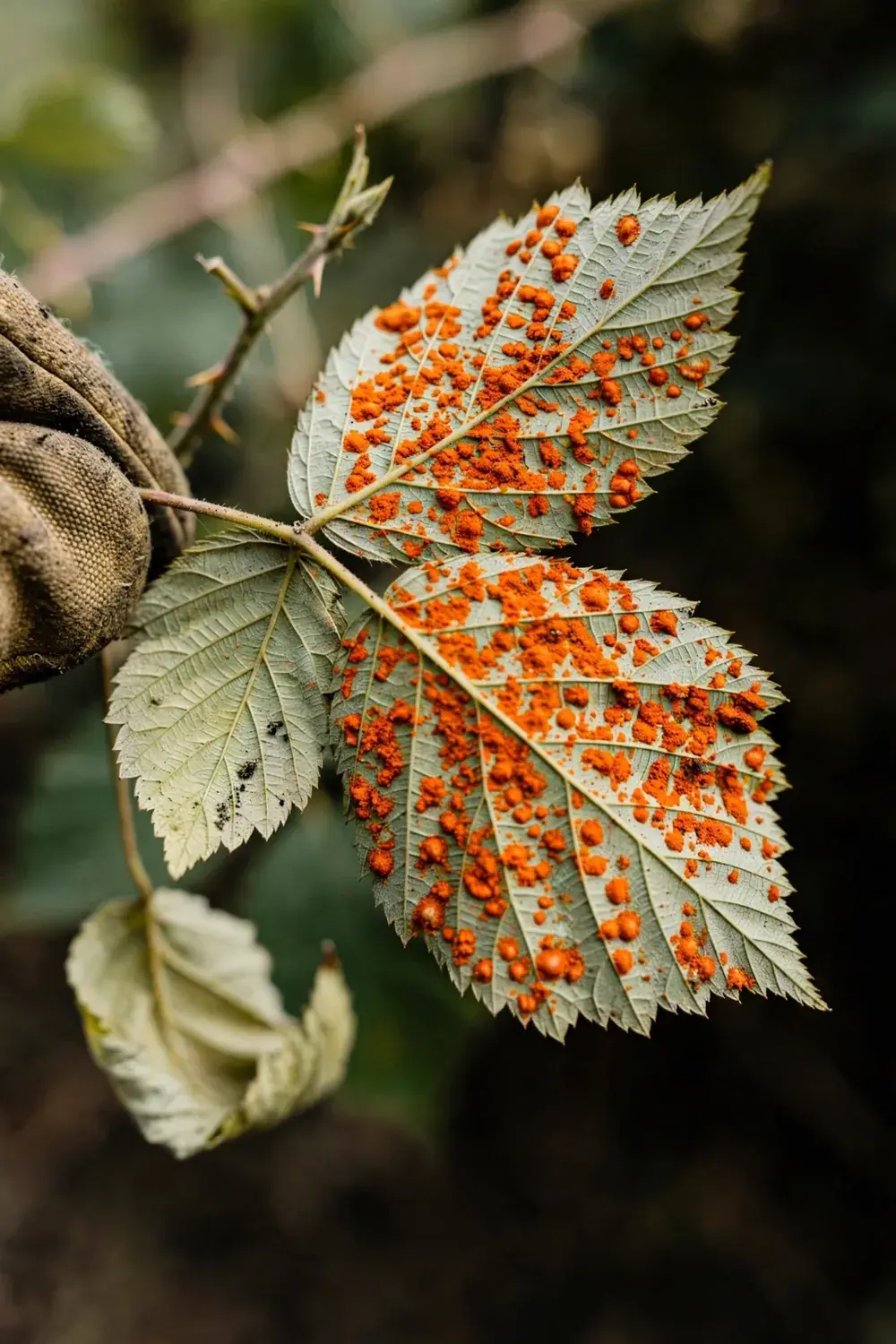

Orange rust has no cure once it enters a bramble. The 10 strategies below save the healthy plants around the infection, starting with the spring walk that spots one spindly shoot before its pustules break open.
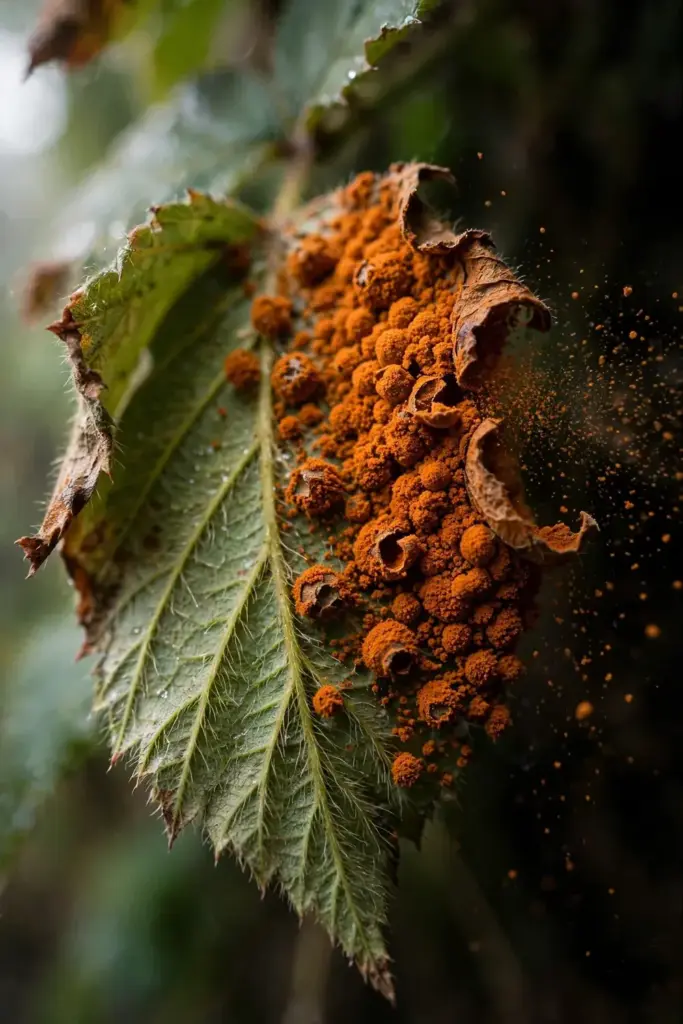
The signature is a cluster of weak spindly shoots with pale misshapen leaves, followed within weeks by blister-like pustules that turn powdery and bright orange on the leaf undersides. The fungus behind those pustules already runs through the roots, crown, and shoots, so the plant stays infected for life.
The rest of this page runs the order a gardener should follow. Identify the disease first, then tell it apart from cane and leaf rust, then work the 10 steps from clean stock to next-season scouting. I have learned that the shovel used a week early saves more fruit than any spray bought after the pustules open.
What Orange Rust Actually Is
Orange rust is a systemic fungal disease of brambles. Two closely related fungi cause orange rust, and the two forms show nearly identical symptoms.
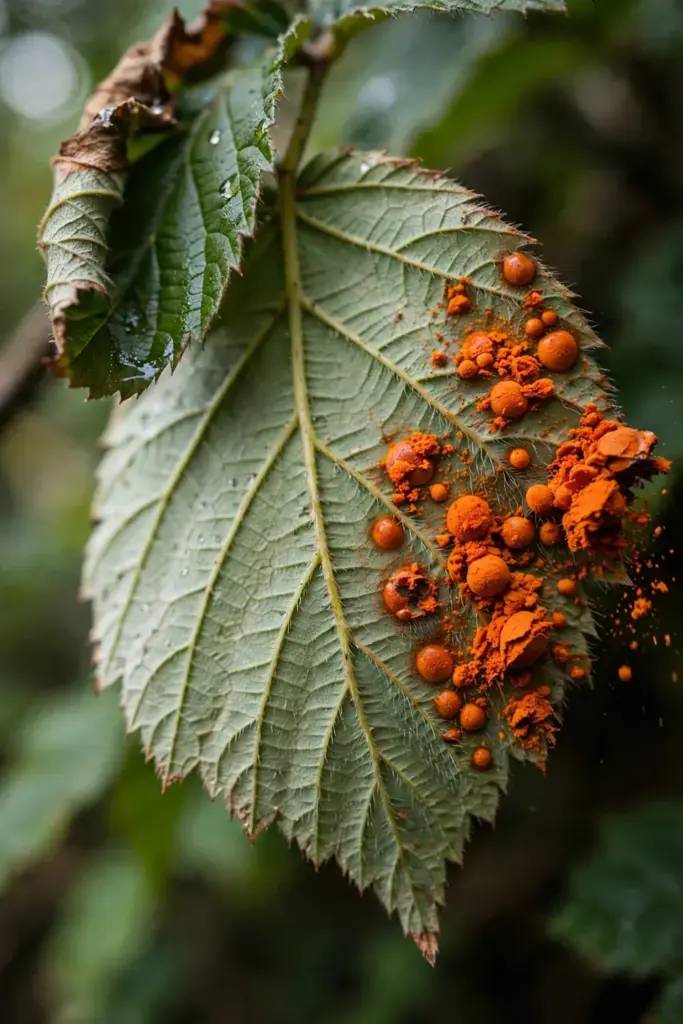
The long-cycle form hits black raspberry hardest, and the fungus is Arthuriomyces peckianus. The short-cycle form hits blackberry and dewberry hardest, and the fungus is Gymnoconia nitens. Gardeners in the southern United States see the short-cycle form most often, while gardeners in the Northeast see the long-cycle form most often. Older books list the same fungi under the synonyms Gymnoconia peckiana and Puccinia peckiana. The University of Georgia diagnostic guide still lists Kunkelia nitens as the pathogen name for the blackberry form, a further synonym for Gymnoconia nitens. One name per form keeps the rest of this page clear.
Orange rust infects blackberry, black raspberry, dewberry, and purple raspberry. Red raspberry stays immune to orange rust, a point every Extension source agrees on. Orange rust rarely kills a plant. Orange rust stunts the plant and weakens it until it produces little or no fruit, and the infected plant then stands in the patch as a source of spores for its neighbors. The University of Illinois Report on Plant Diseases No. 708 calls orange rust the most common and serious of the several rust diseases attacking brambles, and it states that a rust-infected plant remains diseased throughout its life.
How to Identify Orange Rust on Shoots and Leaves
Orange rust shows first on new growth in spring. Look for weak spindly shoots with pale misshapen leaves, then check the leaf undersides for blister-like pustules that start waxy and turn powdery bright orange.
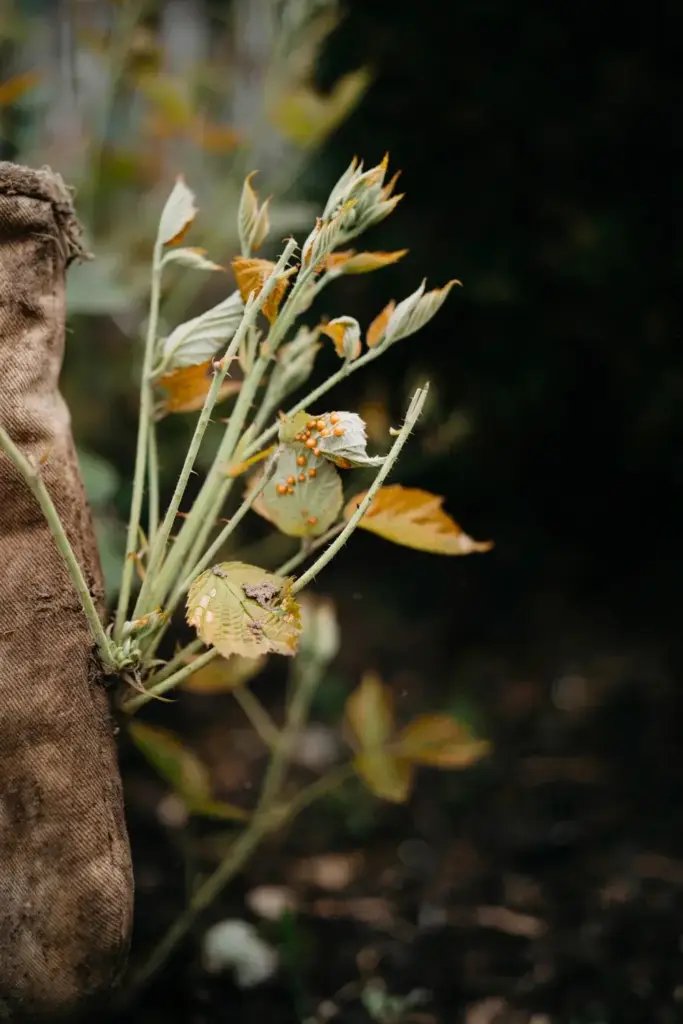
New shoots from an infected plant come up thin, numerous, and pale green with a yellow-orange cast. The leaves stay narrow, stunted, and misshapen, often with a twisted or cupped edge. Infected shoots carry few spines or none at all. Several stunted canes may rise from one bud, which gives the plant a bunchy witches-broom look. The Penn State Extension guide to managing orange rust describes primocanes photographed in the last week of April in Pennsylvania with exactly this shape, and it calls that stage the right moment to dig the plant out, before spores form.
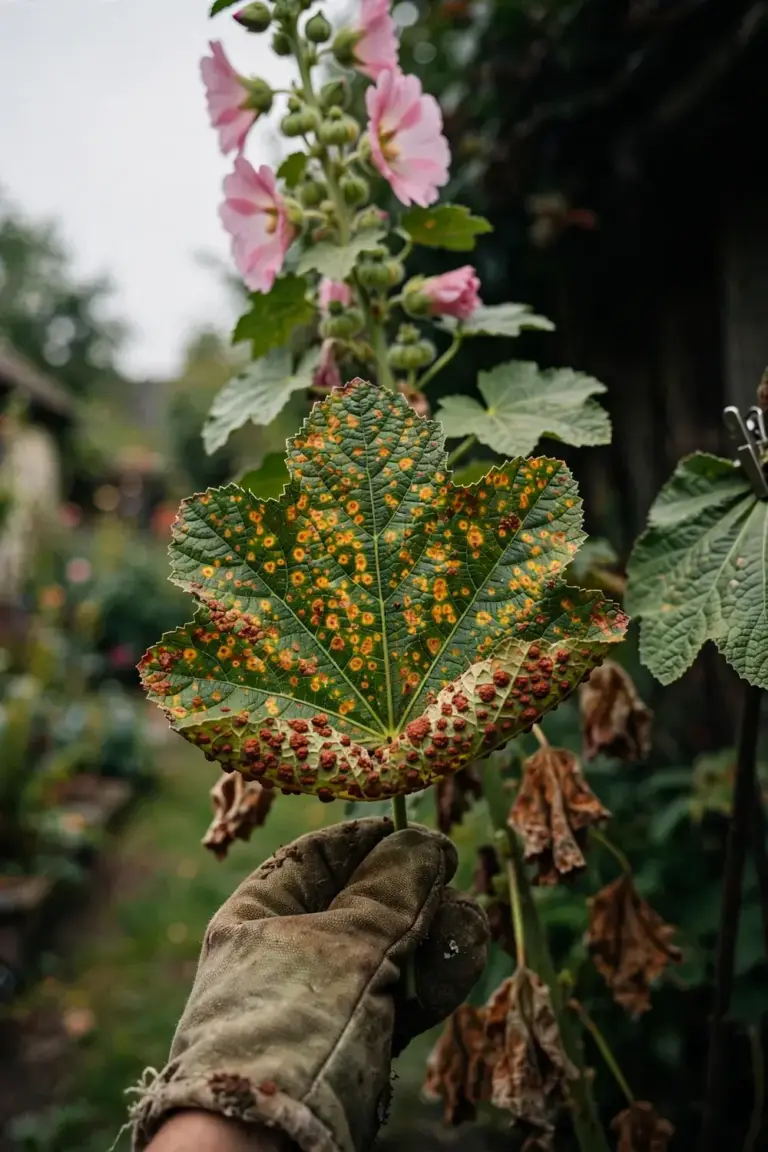
The pustules arrive days to weeks after the shoots. They erupt on the leaf undersides as blister-like bumps of various sizes, waxy at first, then powdery and bright orange. Much of the leaf underside can still look green when the first pustules show, so flip leaves to check. About two weeks later the leaf undersides may sit covered in orange pustules, with abundant spores releasing on the wind. Severely affected leaves then dry, curl, and drop by early summer. Leaf drop looks like recovery. It is not recovery, and Step 10 returns to that trap.
How to Identify Orange Rust on Canes, Crowns, and Fruit
Orange rust shows on canes, crowns, and fruit as weakness and missing fruit, not as spots. A cane that looks healthy in June can still carry the fungus in its crown and roots.
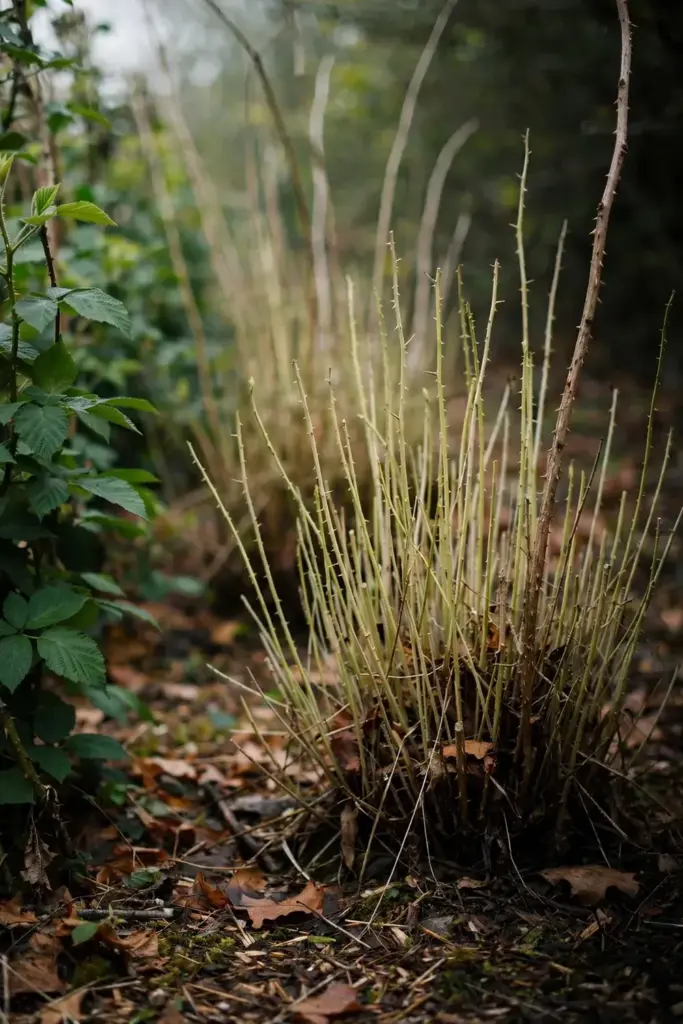
Infected canes stay spindly and bushy, and they grow too weak to form rooted tips. Toward the end of June, a diseased plant can push up young canes with normal-looking leaves. Those canes will not blossom the following spring. The fungus already sits in the roots, canes, and leaves, so a healthy-looking cane on a diseased plant is a diseased cane.
Fruit tells the same story by its absence. Infected floricanes produce few blooms or none, and the plant bears little or no fruit in the following season. A blackberry cane loaded with blossoms in spring does not carry orange rust. A cane that leafs out pale and spindly, then drops its rusted leaves without setting fruit, fits the pattern.
The crown and roots hide the real infection. The fungus overwinters in the crown and roots and sends up new infected canes every year. New plants that sprout from root pieces left in the ground after digging already carry the infection, because the fungus travels in living root tissue. That fact sets the rules for Step 4. Dig wide, dig deep, and watch the spot the next spring.
Which Brambles Get Hit Hardest by Orange Rust
Black raspberry takes the worst of orange rust. Blackberry runs second, and dewberry and purple raspberry also host the disease.
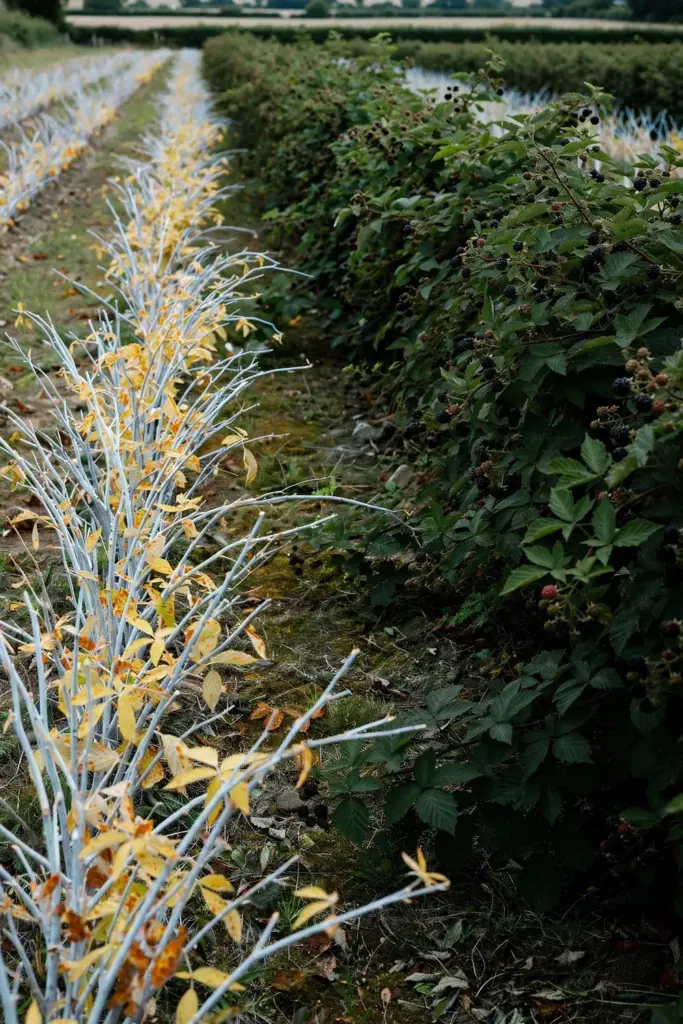
All black raspberry cultivars are susceptible to orange rust, and no black raspberry cultivar is known to resist it, according to the University of Delaware Weekly Crop Update. The long-cycle fungus Arthuriomyces peckianus drives that damage. A black raspberry patch with orange rust loses its crop across the planting unless infected plants come out fast, because every infected plant feeds spores to its neighbors all season.
Blackberry susceptibility varies by cultivar. Many erect blackberry cultivars are susceptible, including thornless types. Thornless canes fool gardeners who expect thornless plants to escape cane diseases. They do not escape orange rust. The short-cycle fungus Gymnoconia nitens drives most blackberry infections. Dewberry hosts the same short-cycle form. Purple raspberry hosts orange rust too, and the disease hits it the same way it hits black raspberry.
Red raspberry stays immune. That immunity matters twice over. A red raspberry patch beside an infected blackberry patch does not need removal, and a rust on red raspberry leaves is a different disease entirely. Late leaf rust and yellow rust attack red raspberry, and neither one is systemic the way orange rust is. The guide to growing raspberries from seed covers the planting side of that crop, and knowing which raspberry types sit outside the orange rust host list helps when planning a patch.
Orange Rust vs Cane and Leaf Rust
Check three things before naming the disease: whether the infection runs through the whole plant, when it appeared, and whether the leaf blisters distort the leaf. A microscope settles the last doubt, because the two rusts grow different spores.
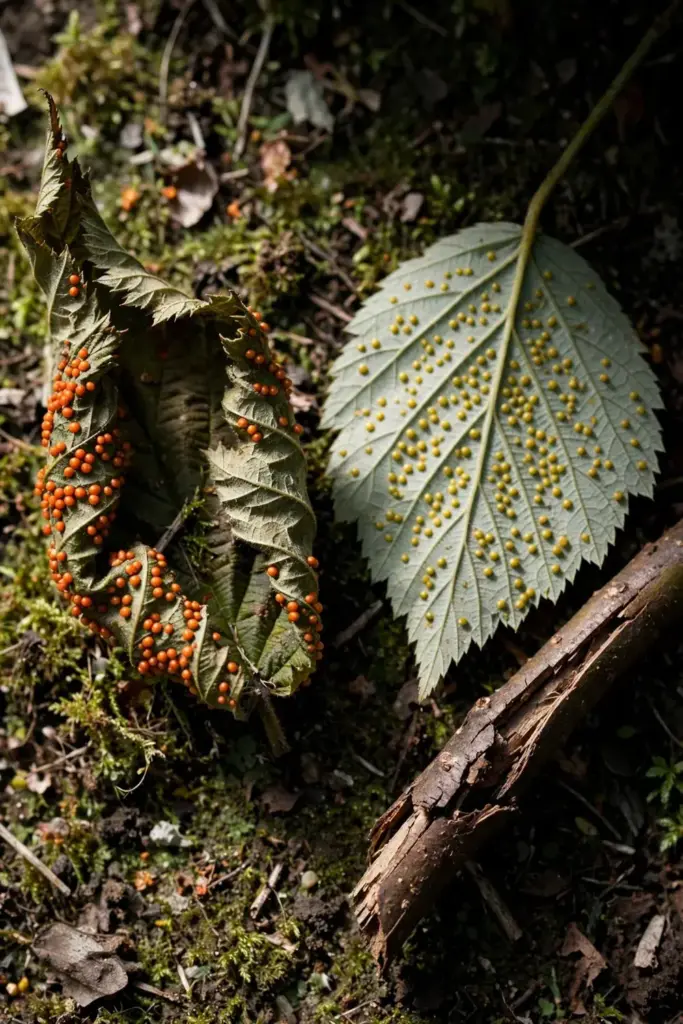
Orange rust is systemic. Cane and leaf rust is not systemic. That single difference decides the response. An orange rust plant comes out, roots and all. A cane and leaf rust plant stays, and the gardener prunes old diseased canes after harvest. The Growing Produce comparison of the two rusts warns that mistaking cane and leaf rust for orange rust leads gardeners to destroy plants that could still fruit for seasons to come, a critical and unrecoverable mistake.
| Sign | Orange Rust | Cane and Leaf Rust |
|---|---|---|
| Pathogen | Arthuriomyces peckianus on black raspberry, long cycle, and Gymnoconia nitens on blackberry, short cycle | Kuehneola uredinis |
| Systemic | Yes. Orange rust lives through the whole plant for life | No. Cane and leaf rust stays in the tissue it infects |
| First appears | Early season, at primocane emergence and bloom | Later, during harvest and onward into summer and fall |
| Leaf pustules | Bright orange, blister-like, clustered near the leaf margins | More yellow, spread across the leaf |
| Leaf shape | Leaves misshapen and cupped, margins distorted by blisters | Leaves keep their shape, with no distortion |
| Cane lesions | None typical. Damage shows as weak spindly shoots | Lesions split cane bark, first on floricanes |
| Spore check | Round spores with lobed margins | Irregular spiny spores |
| Action | Dig out the whole plant, roots included | Keep the plant, prune old diseased canes after harvest |
Color alone does not separate the two rusts. Orange rust pustules read bright orange, and cane and leaf rust pustules read more yellow, yet color varies enough that the comparison article calls it a weak test. Leaf distortion and cane lesions carry more weight in the field. The definitive test is spore shape under a compound microscope, and county Extension offices can send leaf samples to a diagnostic clinic for that confirmation.
Two more look-alikes deserve a line each. Orange felt, the alga Cephaleuros varescens, paints canes orange without any rust at all. A rub test separates it, since rust spores rub off and stain while orange felt does not, according to the University of Georgia diagnostic guide. Sugarcane orange rust is a different disease on a different crop, caused by Puccinia kuehnii, and it has no place in a bramble patch.
Why Systemic Infection Makes Orange Rust Different
Systemic infection makes orange rust different because the fungus lives inside the whole plant. A spray that coats the leaves never reaches the fungus in the crown and roots.
Infection starts in wet spring weather. The University of Delaware Weekly Crop Update states that infection takes place when leaves stay wet for more than 12 hours in a day and temperatures sit between 43 and 72 degrees Fahrenheit. The fungus cannot infect when heat reaches 85 degrees Fahrenheit or when conditions stay very dry. Wind carries the orange spores from pustules to healthy leaves during those wet spells. One infected plant can therefore seed a whole row in a single wet spring.
The fungus needs no second host. Cornell Cooperative Extension describes orange rust as autoecious, which means the fungus completes all its life stages on one host, in this case Rubus species. The fungus overwinters in the crown and roots of infected plants, then sends up infected canes each spring. Penn State Extension adds that a second type of spore forms as temperatures cool in late summer and early fall, and that the timing of that second spore release is hard to pin down. Cultural controls carry the weight for that reason, since a gardener cannot time a spray to a spore release nobody can see.
What Makes Orange Rust Worse in a Home Garden
Wet springs, wild brambles near the patch, dense canes, and infected planting stock make orange rust worse. Each factor feeds the infection window or hands the fungus a new host.
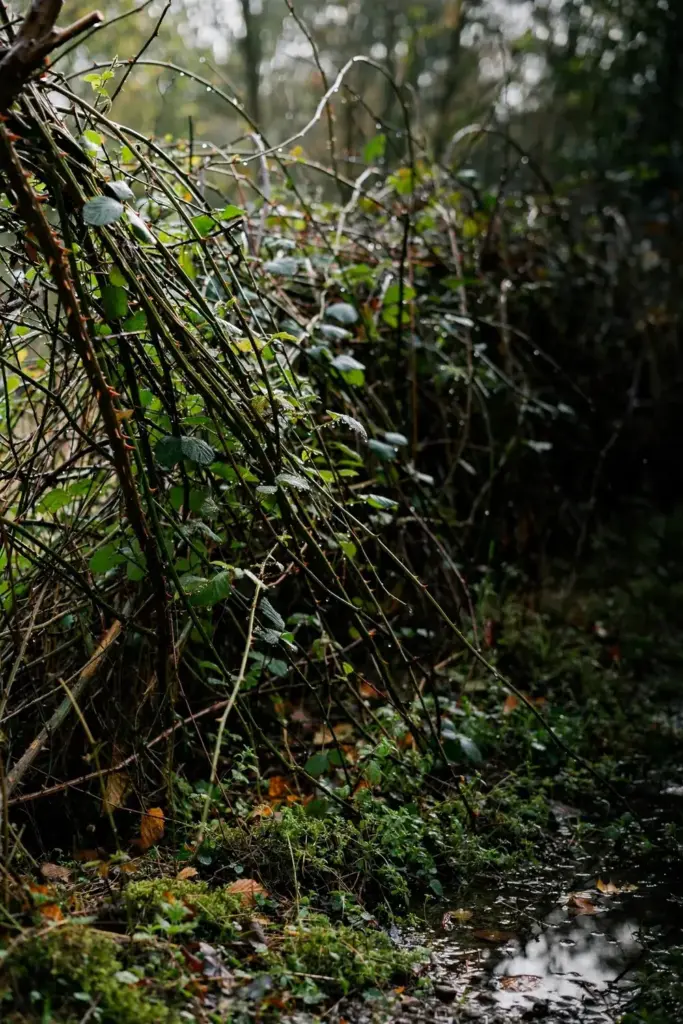
Wet years hit hardest. Penn State Extension notes that orange rust symptoms grow more severe in wet years, when leaf wetness stretches past the 12-hour infection threshold again and again. A patch in a low spot that holds dew until midday stays wet longer than a patch on a breezy slope. Overhead watering late in the day adds wet hours the same way rain does.
Wild brambles along wooded edges feed spores into a planting all spring. Brambles grow wild along fences, wood lines, and ditch banks in much of the eastern United States, and many of those wild plants carry orange rust without anyone noticing. A new planting sited downwind of a wooded edge catches spores on every spring breeze. Penn State Extension advises siting a new planting as far from wild brambles as possible, on the upwind side of wooded areas.
Dense canes and weeds hold moisture inside the row. A thicket of primocanes dries slowly after rain, and weeds at the base block air movement at soil level. Old floricanes left standing after harvest add more leaf surface and more shade to the same damp row. Thinning, weeding, and floricane removal all shorten the wet hours that orange rust needs.
Infected planting stock starts the problem before the first season ends. A nursery plant that looks healthy at purchase can already carry the fungus in its crown. That is why Step 2 starts with certified disease-free stock from a reputable nursery, and why Step 3 scouts every new plant through its first spring.
Step 1: Decide Whether the Plant Is Worth Saving
An infected plant is never worth saving. The decision takes one minute, and it saves the rest of the patch.
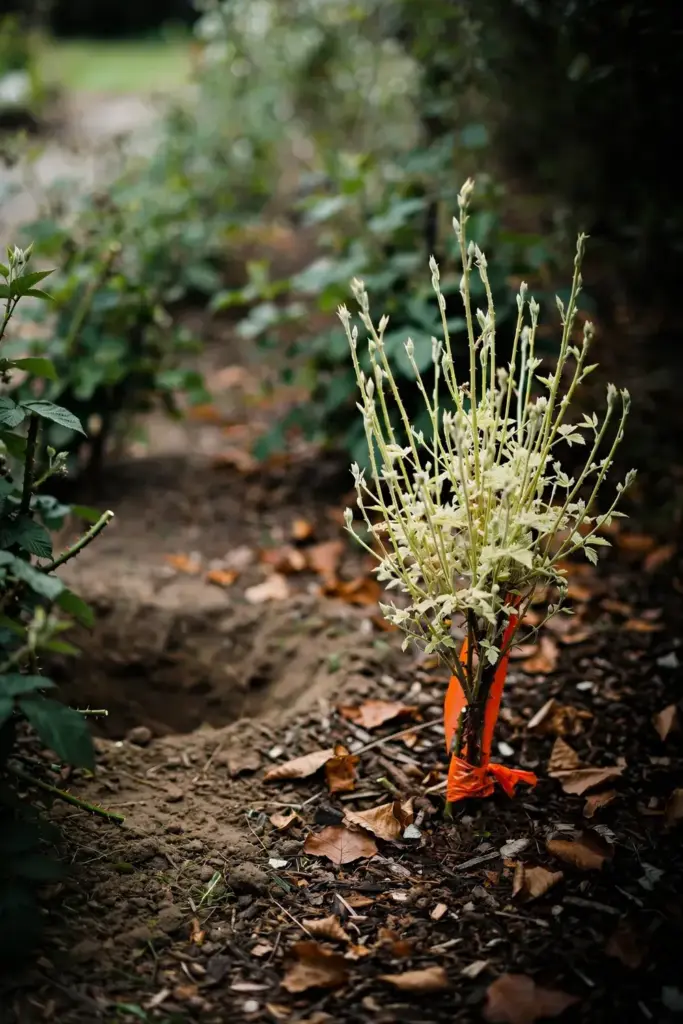
An infected plant will not recover. No spray, no pruning cut, and no season of rest clears the fungus from the crown and roots. The plant will not fruit next season. The plant will shed spores onto healthy neighbors all spring. Keeping it costs the fruit of the plants around it, and it costs a year of waiting for a recovery that never arrives.
The math runs one way. One infected plant removed in April protects ten healthy plants through June. One infected plant left standing infects its neighbors, and each newly infected plant then needs removal the next spring. The patch shrinks every year the gardener waits. Removal feels drastic on a plant that still has green leaves. The green leaves are the trap, and Step 10 explains why.
Replacement beats treatment. Dig the infected plant out, watch the spot for suckers, and replant with a resistant blackberry variety or a clean black raspberry plant from certified stock. The replacement fruits in its second or third season. The infected plant fruits never again.
Step 2: Start With Certified Disease-Free Stock
Buy certified disease-free planting stock from a reputable nursery. Clean stock is the only starting point that keeps orange rust out of a new patch.
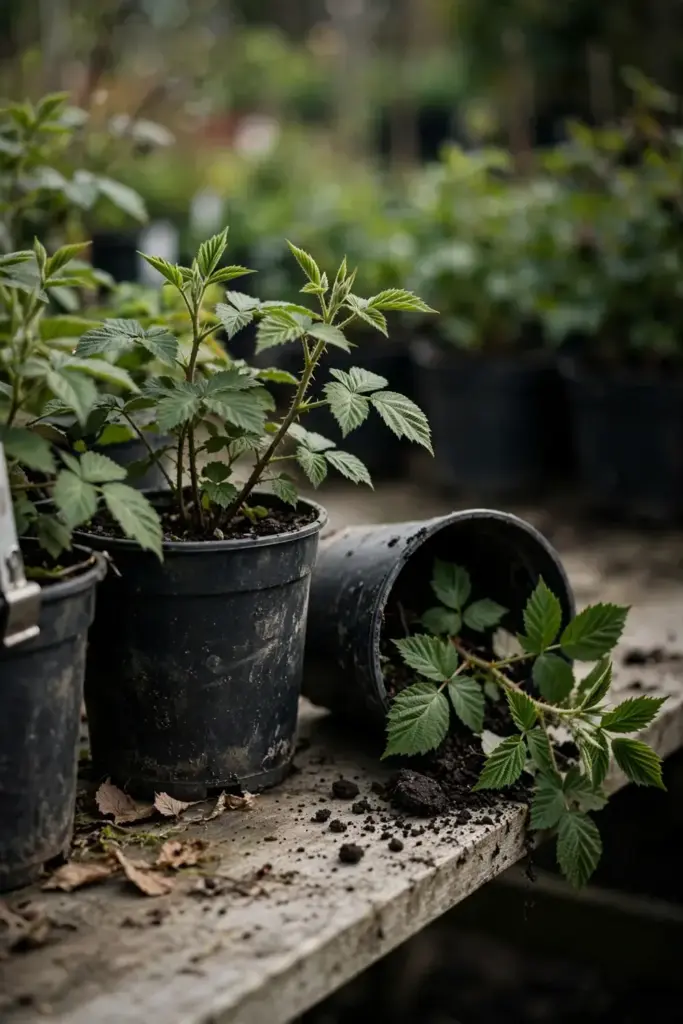
Inspect every plant before it goes in the ground. Look for spindly pale growth, narrow cupped leaves, and any orange dust on the leaf undersides. Reject a plant that shows those signs, even when the rest of the bundle looks healthy. A reputable nursery answers questions about certification and sourcing. A seller who cannot say where the stock came from is a seller to skip.
Plant promptly and water at the base. New plants establish fastest in loose soil with room for air movement, and base watering keeps leaves dry during the first weeks. Watch every new plant through its first spring. Orange rust often shows in the first season after planting, when the stress of transplanting meets a wet spring. A plant that leafs out spindly and pale in that first spring earns removal, not patience.
Step 3: Scout New Growth Every Spring
Walk the patch every week from the first spring growth until early summer. Scouting catches orange rust while the pustules are still closed, when removal still protects the neighbors.
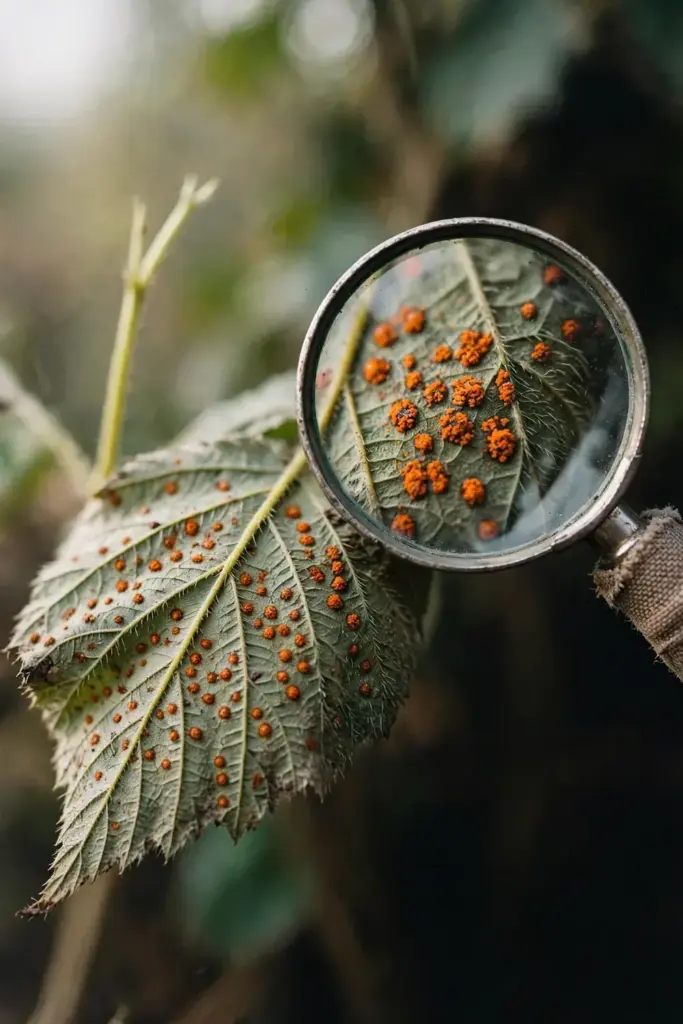
Look at the base of each plant first. Infected shoots rise spindly and numerous from the crown, pale green with a yellow-orange cast. Flip the leaves. The undersides show the first waxy blisters before they turn powdery and bright orange. Check the wild brambles along the fence and wood line on the same walk, since those plants often show symptoms before the patch does.
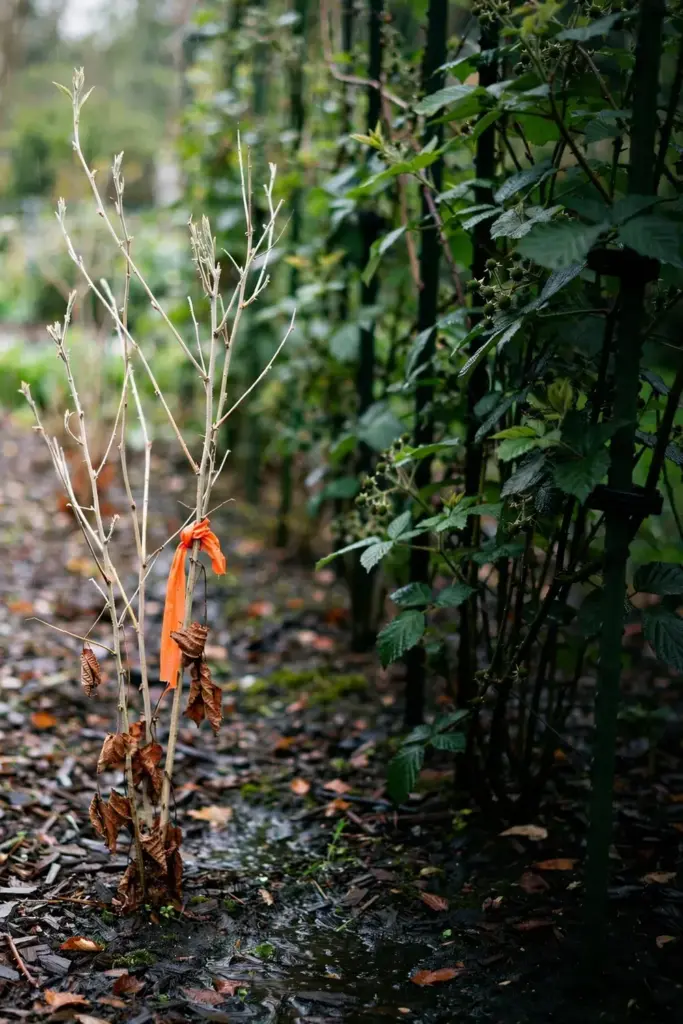
Flag every suspect plant with a strip of bright tape. Do not pull the flag until the plant is out of the ground. A flagged plant that turns out healthy loses nothing but a strip of tape. An unflagged plant that turns out infected loses the patch a week of spore-free time.
| Timing | What to look for | Action |
|---|---|---|
| First spring growth | Spindly pale shoots, narrow cupped leaves | Flag suspect plants |
| A few weeks later | Waxy blisters on leaf undersides | Dig out flagged plants before pustules open |
| Early summer | Rusted leaves wither and drop | Keep flags on. Healthy-looking canes on flagged plants still carry the fungus |
| Late summer and fall | Second spore type, timing hard to spot | Keep canes thinned, weeds down, floricanes out after harvest |
| Next spring | Suckers from old root pieces | Pull infected suckers at once |
Step 4: Dig Out Infected Plants Whole, Roots and All
Dig out the whole infected plant, roots included, as soon as symptoms show. Cutting the canes alone leaves the fungus in the crown, and the plant grows back infected.
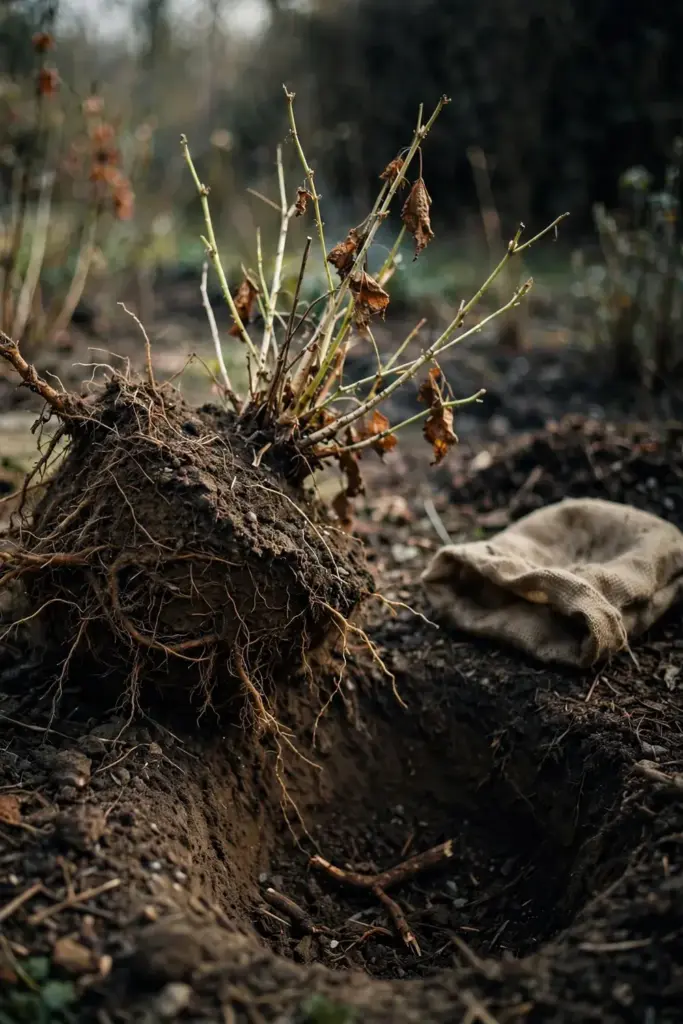
Dig wide around the crown and lift the full root mass. Root pieces left in the ground sprout new plants, and those sprouts already carry the infection. Work when the soil is moist enough to lift roots cleanly, and shake soil off the root ball over the hole so stray root pieces stay visible. Pick out every root piece thicker than a pencil.
Bag the canes first when the pustules have already opened. Penn State Extension advises cutting canes, bagging them, and disposing of them before digging when the ideal timing was missed, so spores do not shake loose across the patch during removal. Tie the bag shut and send it out with household trash. The University of Illinois advises removing and burning wild and infected brambles including the roots, and gardeners who cannot burn should bag and trash the material instead.
Keep infected plants off the compost pile. Root pieces survive in a home compost pile and resprout, and the resprouts carry the infection. Mark the spot where the plant stood. Watch that spot through the next spring, and pull any sucker that rises from a leftover root piece. One marked spot watched for a season beats a second full removal the year after.
Step 5: Clear Wild Brambles Near the Patch
Remove wild Rubus plants beside the patch, and scout the wooded edges every spring. Wild brambles are the reservoir that re-infects a clean patch year after year.
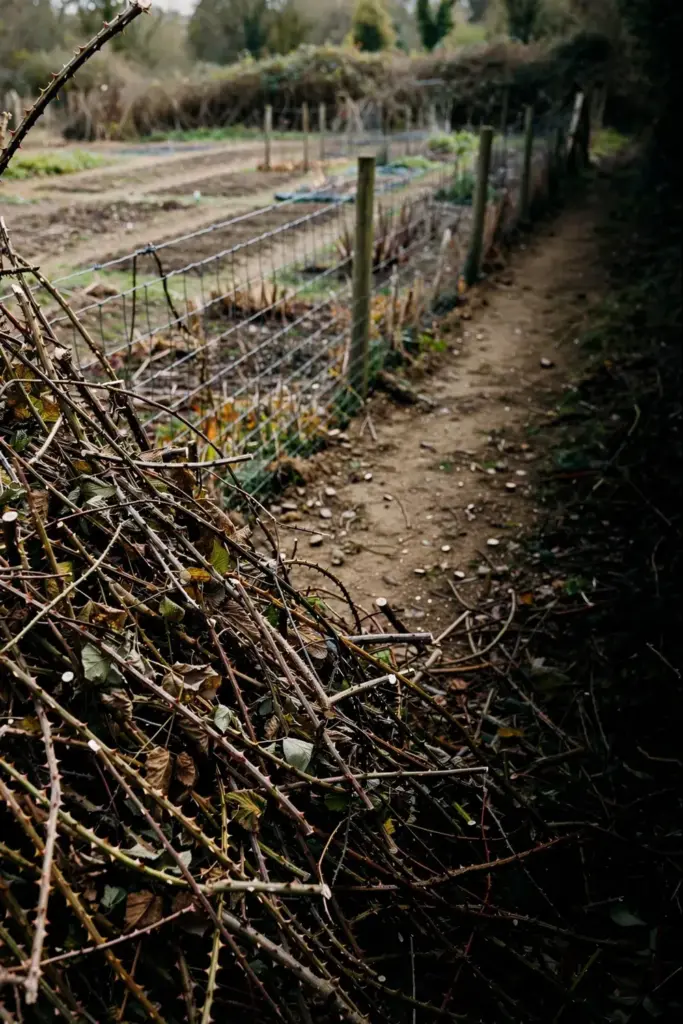
Wild blackberries and black raspberries grow along fences, ditch banks, and wood lines, often within sight of the garden. Many carry orange rust with no gardener watching them. Their spores ride the wind into the patch during the same wet spring weather that drives infection. A patch cleared of infected plants but left beside an infected wild thicket starts each spring at a disadvantage.
Cut wild brambles at ground level and dig out the crowns where the ground allows it. Where digging is impractical, cut the canes and watch for regrowth, then cut again. The goal is no orange pustules on wild plants near the patch during spore season, not the eradication of every wild bramble in the county. Home gardeners work the fence line and the wood edge beside the patch. Commercial guidance that calls for clearing a quarter-mile radius belongs to commercial plantings, not to a backyard row.
Site any new planting with wild brambles in mind. Choose ground upwind of wooded areas, and keep the new row as far from the wood edge as the yard allows. A new patch planted downwind of an infected thicket starts its first spring already exposed.
Step 6: Never Propagate From an Infected Plant
Never propagate from an infected plant. Cuttings, root pieces, and tip layers from an infected mother plant all carry orange rust to the next generation.
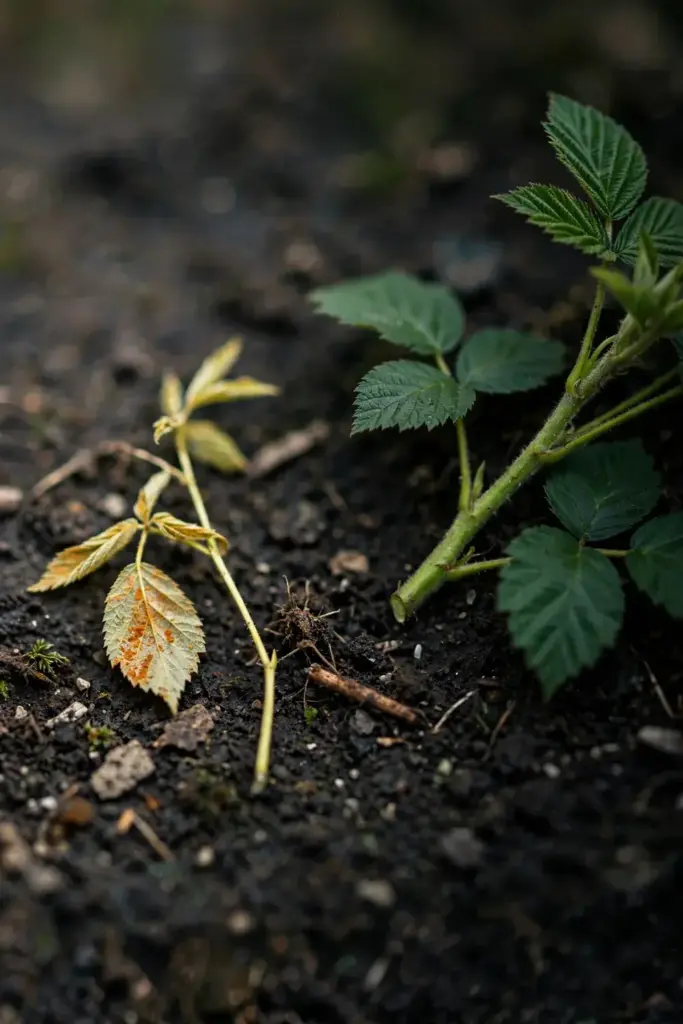
The fungus travels in living tissue. Penn State Extension states that any plant propagated from an infected plant will also be infected, including canes dug from infected plants and plants grown from root pieces of infected mothers. A cutting that roots and leafs out looks like a success. The fungus inside it makes that success temporary, and the new plant then infects the bed it was planted to fill.
Tip layers fail on their own. Infected shoots grow too weak to form rooted tips, which limits cane growth and spread, according to the University of Illinois. That weakness is a small mercy. Root pieces are the real danger, because they root readily and carry the fungus with them.
Label mother plants before propagating. Take cuttings, divisions, and tip layers only from plants that showed clean vigorous growth all spring, with no spindly shoots and no orange pustules. When in doubt, buy fresh certified stock instead of propagating. The guide to growing blackberry fruits for big yields covers the planting and training side, and clean mother plants are the precondition for every propagation method it describes.
Step 7: Thin Canes and Open the Air
Thin healthy canes, control weeds, and remove floricanes after harvest. Air movement dries leaves faster, and drier leaves cut the infection hours orange rust needs.
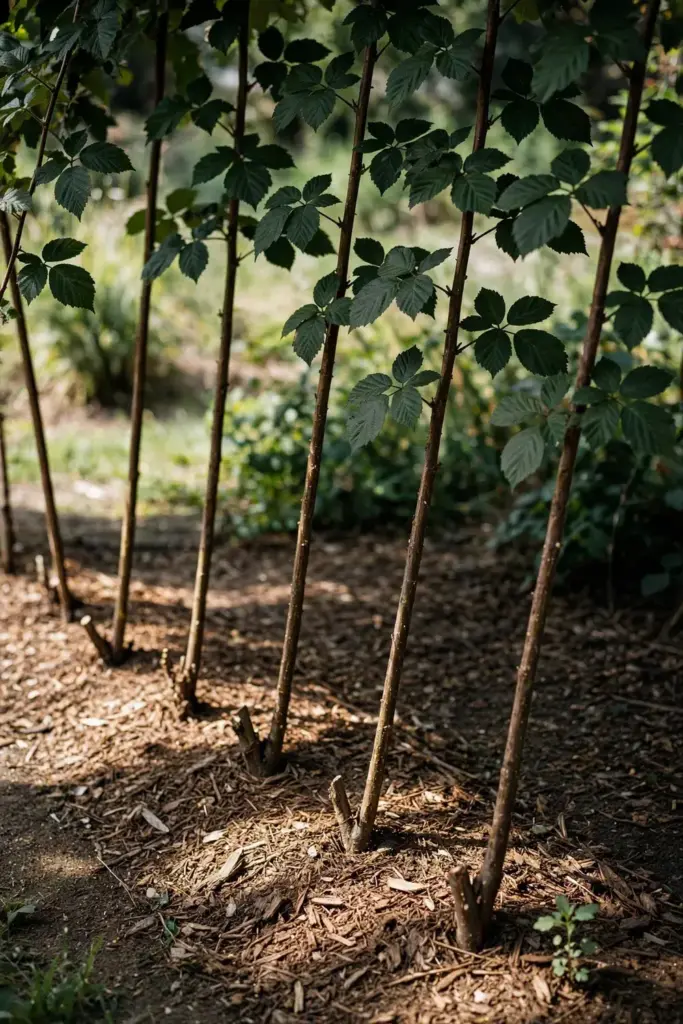
Thin primocanes to the strongest shoots and cut the weak ones at ground level. A row of six strong canes dries faster than a thicket of twenty thin ones, and the strong canes fruit better. Work in dry weather, and carry cut canes out of the row instead of dropping them under the plants.
Weed the base of the row through the season. Weeds hold dew at soil level and block air movement where new shoots emerge. A clean strip at the base of the row dries within hours of rain. Mulch helps hold that clean strip, provided the mulch stays pulled back from direct contact with the crowns.
Cut floricanes to the ground right after harvest. Spent fruiting canes shade the row, hold moisture, and add nothing to next year’s crop. Spring pruning techniques cover the dormant-season cuts that shape the row, and the post-harvest floricane cut is the summer partner to that work.
Step 8: Choose Resistant Varieties for the Next Planting
Choose resistant blackberry varieties for the next planting. Resistance protects a new planting. Resistance never cures an infected plant.
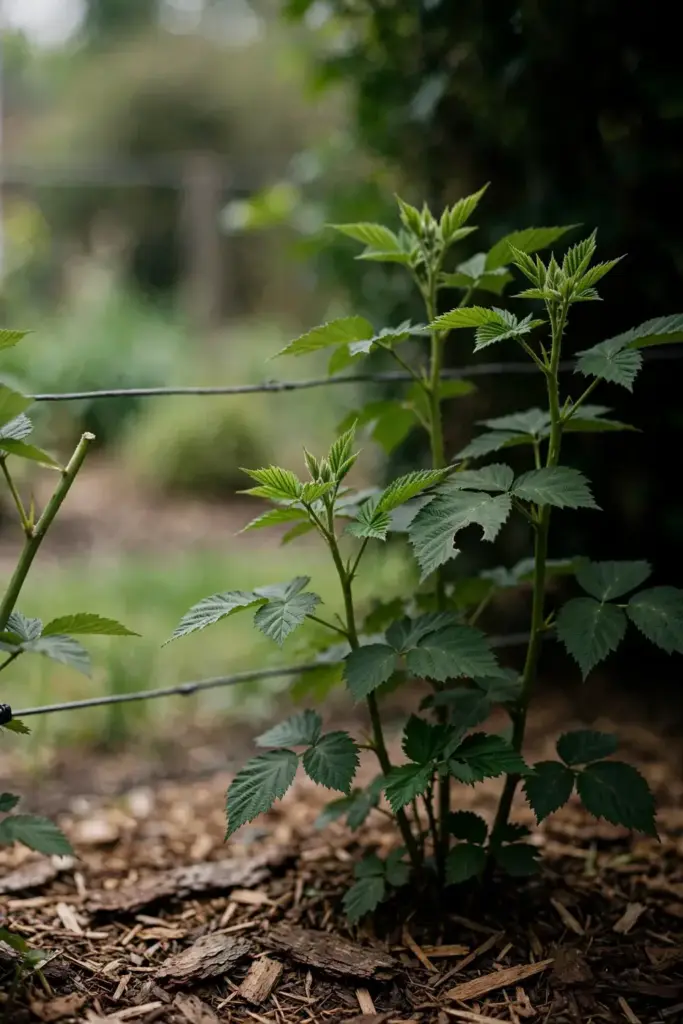
The Louisiana State University AgCenter blackberry trials rate several cultivars resistant to orange rust, including Arapaho, Ouachita, Cheyenne, Shawnee, Choctaw, Kiowa, and Chickasaw. Navaho ranks susceptible in the same trials, and it shows up as the most often affected variety in southern plantings. A gardener replacing an infected Navaho row with Arapaho or Ouachita starts the new row with genetics on its side.
Treat the Apache story as a caution, not a promise. Apache was long described as resistant to orange rust, yet a nursery shipment of Apache arrived infected, which suggests a more virulent strain or a gap in the resistance. Plant Apache if the nursery stock is certified and the patch is clean, and scout it like any other variety. Resistance is a head start, not a guarantee.
Black raspberry offers no resistant option. No black raspberry cultivar is known to resist orange rust. A gardener who wants black raspberries plants certified stock, scouts hard, and removes infected plants fast. That is the whole defense for black raspberry, and it works when the gardener works it.
Step 9: Protect Healthy Neighbors With Sprays Only Where Labels Allow
Sprays protect healthy plants only. No spray cures an infected plant, and no spray belongs in the plan as a default.
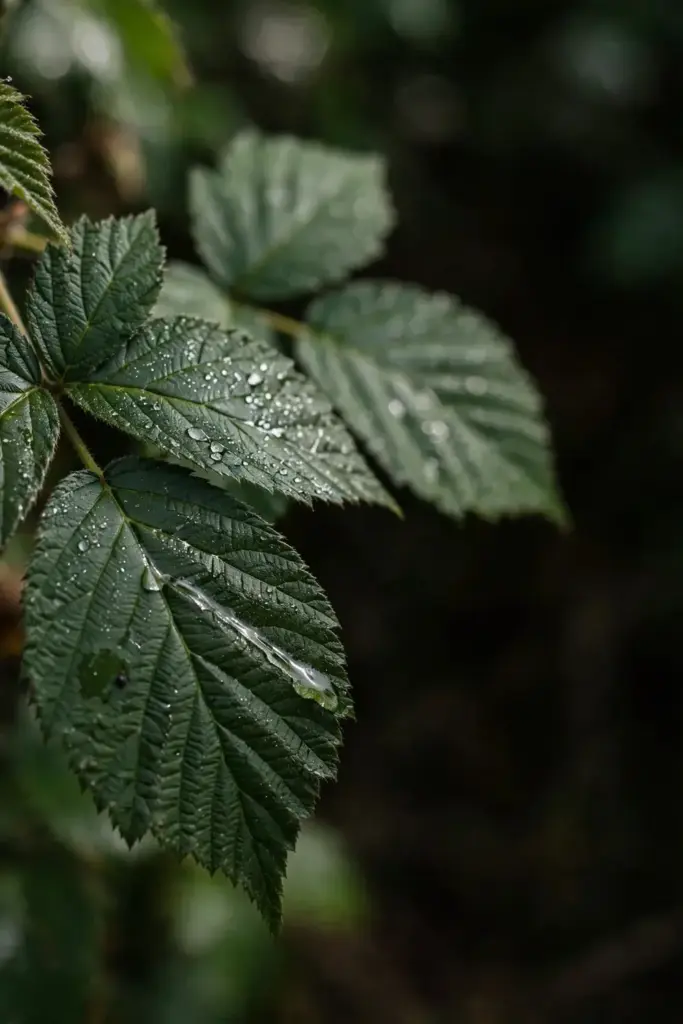
The sources split on fungicides, and the split matters. Cornell Cooperative Extension states that no effective fungicides exist for the control of orange rust. The University of Delaware Weekly Crop Update names myclobutanil and propiconazole as the best options, applied when the orange pustules first show and before they burst open, to protect healthy plants from infection. Penn State Extension places fungicides in categories 3 and 11 for protecting uninfected plants at spore release. All three sources agree on the limit: sprays protect neighbors, and none cures an infected plant.
Read the label for the product, the crop, and the state. Fungicide labels change, and a product labeled for blackberries in one state may not be labeled for raspberries or for home gardens in another. A county Extension office answers the label question for the gardener’s state and crop. A gardener who sprays without that check risks an illegal application that still fails to cure anything.
Home gardeners do best when cultural controls carry the plan. Removal, clean stock, wild bramble clearing, thinning, and resistant varieties decide whether orange rust takes hold. A protective spray is a supplement for a patch with a history of orange rust, applied to healthy plants at spore release under local Extension guidance. A spray program without removal is effort spent on the wrong half of the problem.
Step 10: Watch for the Summer False Recovery
Watch for the summer false recovery. Infected plants look better by July, and the improvement is an illusion.
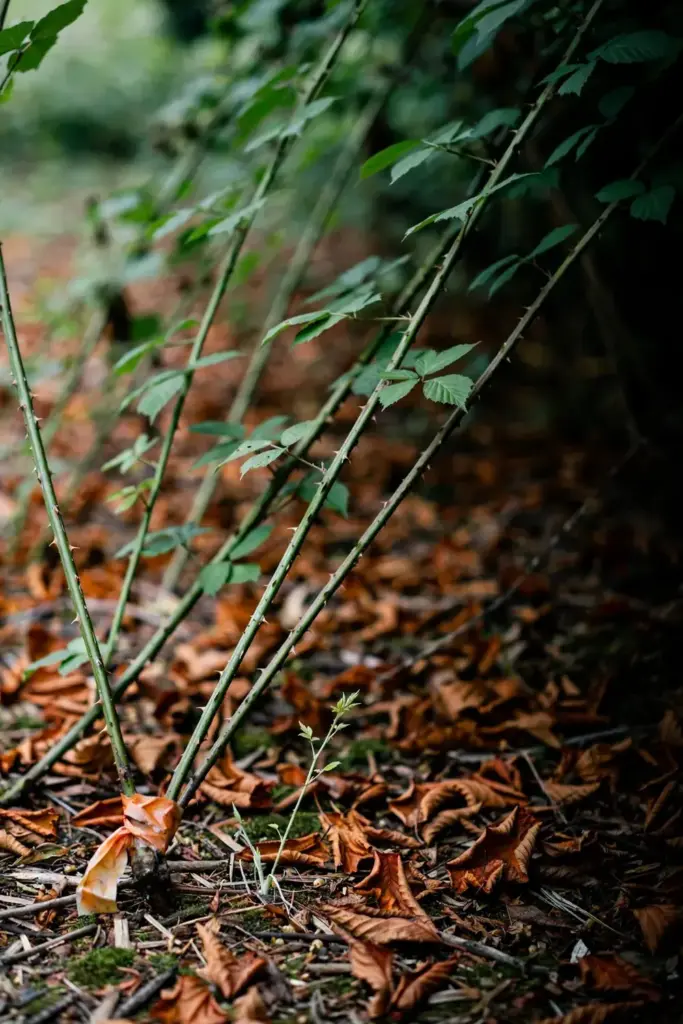
The rusted leaves wither and drop by early summer, and the plant pushes up young canes with normal-looking leaves. The patch looks like it recovered. The fungus still sits in the roots and crown. Those healthy-looking canes will not blossom the following spring, and the pustules return with the next wet spring. Penn State Extension warns that fallen rusted leaves can make a gardener assume the disease has disappeared. The assumption costs a year.
Keep the flags on infected plants through the summer. Do not judge a flagged plant by its July leaves. Judge it by its April shoots and its leaf undersides. A plant flagged in spring comes out in spring, even when its summer growth looks clean.
Do not replant into the same hole while root pieces remain. Wait until the spot has shown a full season with no infected suckers, or move the new planting to fresh ground away from wild brambles. A resistant variety planted into a hole full of infected root pieces starts its life beside the fungus it was bred to resist.
Living With Orange Rust Damage You Cannot Undo
A patch found late still has moves. Removal stops the spread, and replanting with resistant varieties rebuilds the patch on clean ground.
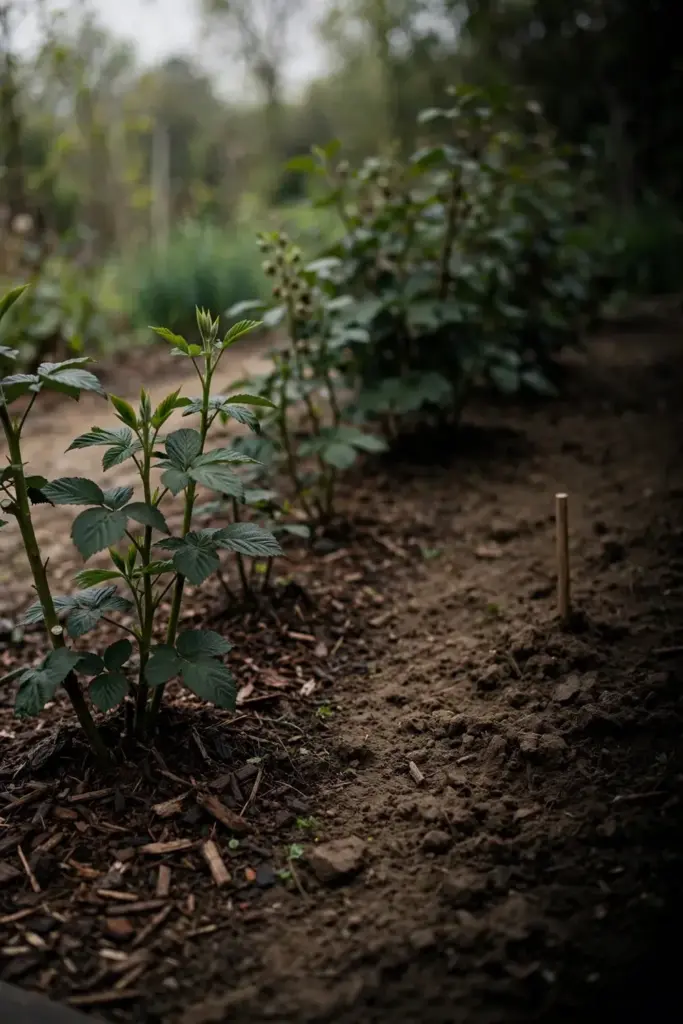
Start with the worst plants. Dig out every plant that showed pustules, then the spindly pale plants beside them. Protect the plants that remain with thinning, weed control, and wild bramble clearing. Expect little or no fruit from the infected plants that stay in the ground while the gardener works through the row. An infected plant that keeps standing is an inoculum source, not a crop.
Plan the rebuild before the next spring. Order certified disease-free stock for a new row, and choose resistant blackberry varieties where the old row failed. Site the new row upwind of wild brambles, and keep the old row’s ground under watch for suckers for a full season. A patch rebuilt on clean stock, clean ground, and resistant varieties fruits again. A patch left to carry its infected plants does not.
Other rusts stay on their own hosts. A rust on daylilies is a different disease on a different host, and it never jumps to brambles. That host specificity cuts both ways. Orange rust never jumps to daylilies, roses, or vegetables, and clearing the bramble patch clears the disease from the garden.
Frequently Asked Questions
No. Orange rust has no cure. The fungus grows through the roots, crown, and shoots, and it stays in the plant for life. No spray, pruning cut, or soil treatment clears it. Digging out the whole plant, roots included, is the only control for an infected plant. Protect the healthy neighbors with clean stock, thinning, and removal, and replant the spot with a resistant variety after a season of watching for suckers.
Infected plants set little or no fruit worth picking. The berries that do form stay sparse and small, and the plant still needs removal. Orange rust is a plant disease, and it does not infect people, so a stray berry carries no human health risk. Picking around the infection wastes the season. Dig the plant out, protect the healthy row, and put the picking effort into plants that will fruit next year.
No. Red raspberries are immune to orange rust. Every Extension source behind this page repeats that point. A rust on red raspberry leaves is a different disease, usually late leaf rust or yellow rust. Those rusts are not systemic, and they do not call for plant removal. Check the host before deciding. A red raspberry patch beside an infected blackberry patch needs watching, not digging.
Orange rust rarely kills a blackberry plant. Orange rust stunts the plant and weakens it until it produces little or no fruit. The plant persists for years in that weakened state, shedding spores onto healthy neighbors each spring. That persistence is the real damage. A dead plant stops spreading disease. A living infected plant spreads it every season, which is why removal beats waiting.
Yes, after the roots are fully out and the spot has shown a full season with no infected suckers. Dig wide, pick out every root piece, and mark the spot. Pull any sucker that rises the next spring. Plant certified disease-free stock, and choose a resistant blackberry variety for the replacement row. When the old row sat beside wild brambles, a new spot upwind of the wood edge gives the replant a cleaner start.
Spray only to protect healthy neighbors, and only where the label allows it. No spray cures an infected plant. Cornell Cooperative Extension states that no effective fungicides exist for orange rust control, while Delaware Extension names myclobutanil and propiconazole as protectants for healthy plants. Check the label and ask the county Extension office before spraying. Removal, clean stock, and thinning decide the outcome. Spray is a supplement, never the plan.
Where to Go From Here
Orange rust rewards the gardener who acts in spring and punishes the gardener who waits for summer. One spindly shoot in April is the whole decision. Dig the plant out, roots and all, before the pustules open. Clear the wild brambles beside the patch. Thin the healthy canes and keep the row dry.
Start the next walk this week. Flag the suspect plants, check the leaf undersides, and dig out what the flags mark. Order certified stock and resistant varieties for the rebuild, and give the new row ground upwind of the wood edge. The bramble guide to luscious raspberries and blackberries covers the growing side of the patch, and a clean patch is the patch that fruits.