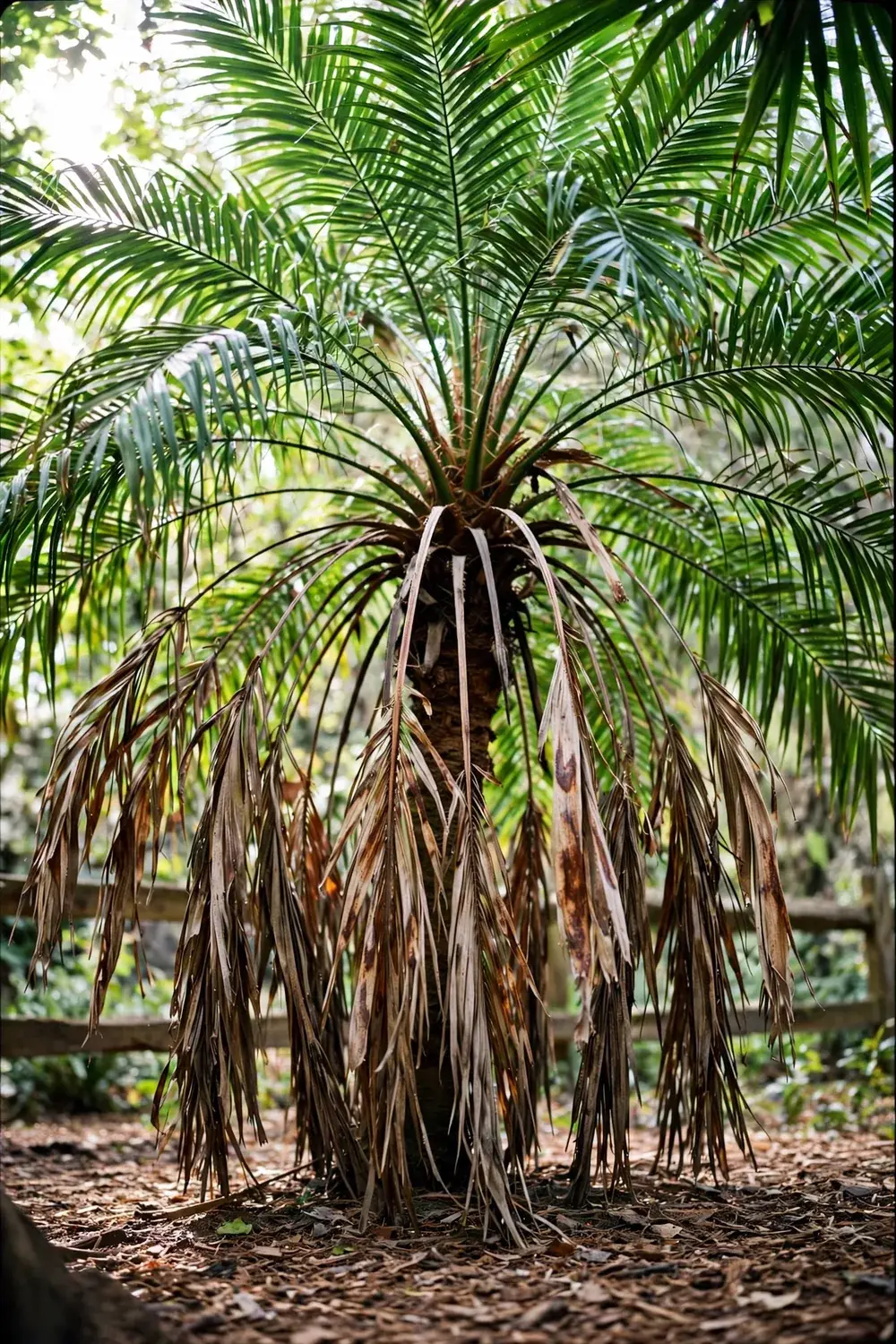

7 cultural moves hold petiole (rachis) blight of palm in check. No spray bottle does that work. Petiole (rachis) blight of palm is a fungal attack on the stalk behind each frond that cuts water and food to one side of the leaf. The rest of this page walks the 7 strategies, from dry fronds to a lab sample, and names the point where treatment stops paying.
The fungi behind this disease infect only the stalk. The leaf dies because the stalk fails first. I have learned to look at the stalk before I look at the leaf. A brown streak on the stalk explains a half-dead frond. A spot on the blade alone points somewhere else.
If your palm is still a seedling in a pot, start with the notes on growing palm trees from seed. This page stays on palms already planted out in warm-climate yards, where the disease shows up on landscape fronds.
1. What Petiole (Rachis) Blight of Palm Actually Is
Petiole (rachis) blight of palm is a syndrome, not a single-pathogen disease. Several fungi cause it, and the symptoms stay the same no matter which one is at work. The UF/IFAS fact sheet on petiole (rachis) blight of palm names Neodeightonia, Cocoicola, and Serenomyces among the palm-only fungi behind it. Macrophoma, Phoma, Phomopsis, Diplodia, and Lasiodiplodia cause the same stalk damage, and those fungi attack many other hosts too.
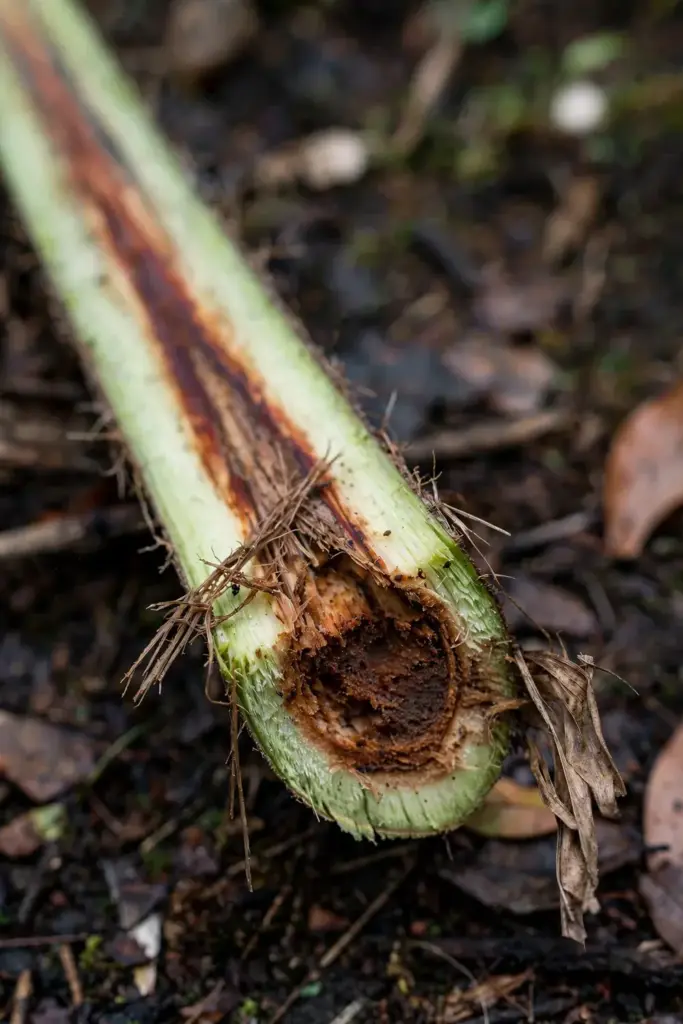
The name needs a short anatomy lesson. A palm leaf has three parts. The leaf base, or sheath, grips the trunk. The petiole is the stalk that runs from the base to the blade. On feather-shaped, pinnate leaves, the petiole extends through the blade as the rachis, the rib that carries the leaflets. On fan-shaped, palmate leaves, the petiole stops where the blade starts. On elongated fan, costapalmate leaves, the extension into the blade is called the costa. Growers use petiole and rachis interchangeably, and the disease got its common name because the first stalk diseases showed up on Phoenix palms, which carry a rachis.
The host range inside the palm family is unknown. UF/IFAS states that plainly. No ranked list of susceptible species exists. Mature palms with trunks show the disease more often than young trunkless palms. The oldest, lowest leaves show it first, and the damage climbs toward younger leaves over time. The disease may kill several of the lowest leaves. It seldom kills the palm on its own.
That last point shapes the whole page. Petiole (rachis) blight of palm is a stress disease with a prevention playbook. The fungi need wet stalks and an opening in a weakened palm. Close those doors and the disease stays a few dead fronds instead of a thinning canopy.
2. How to Identify Petiole (Rachis) Blight on the Petiole and Rachis
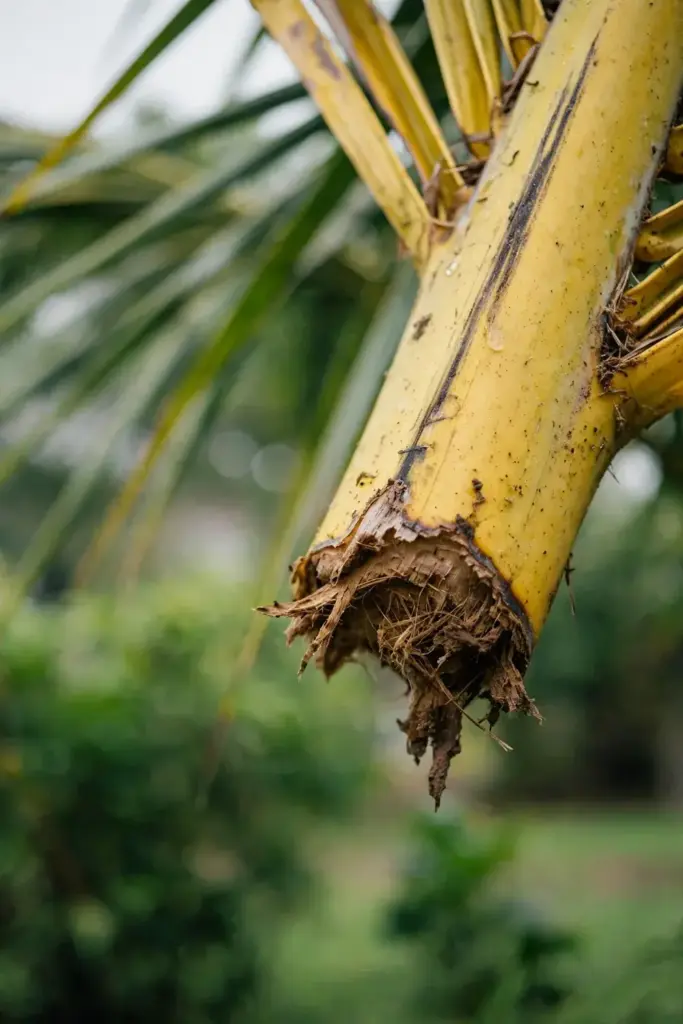
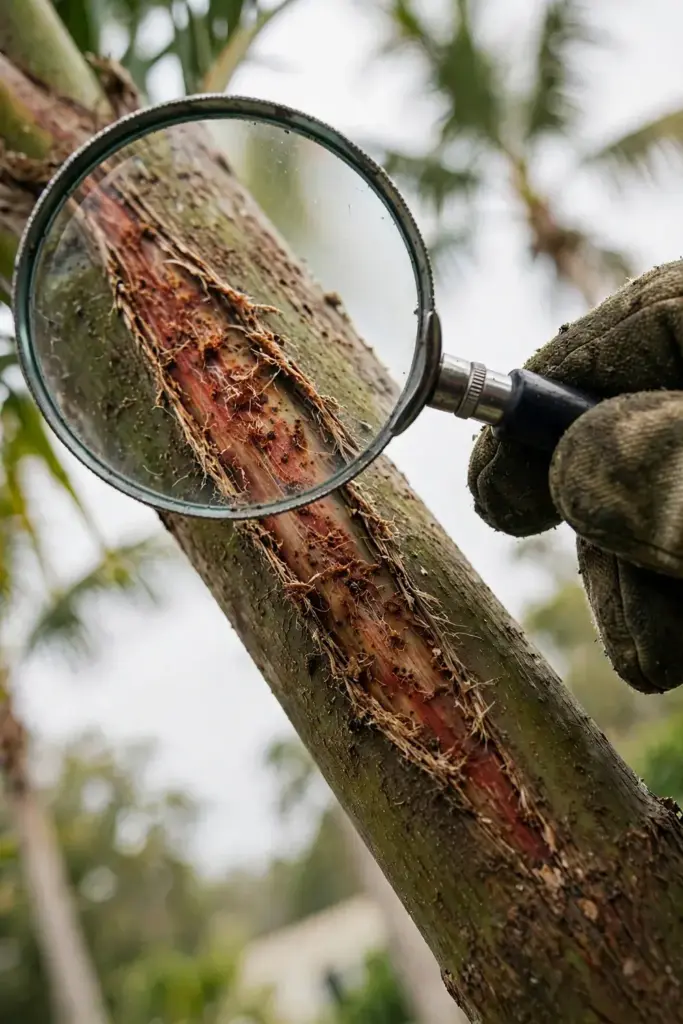
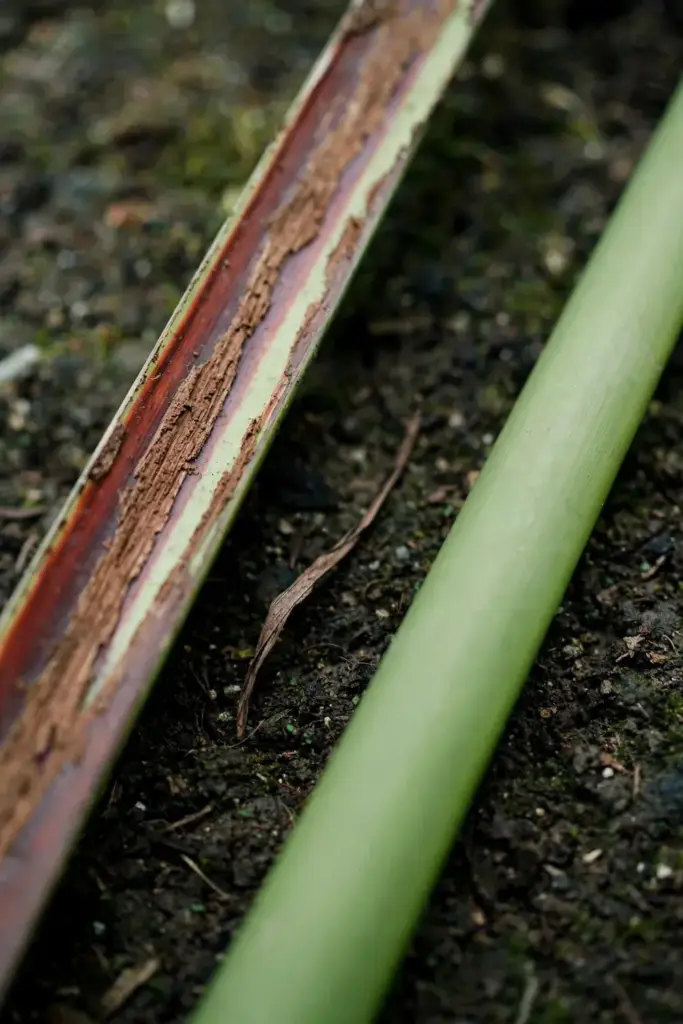
Look for brown or reddish-brown elongated lesions or streaks along the petiole and rachis of the oldest, lowest leaves. That streak is the signature. It runs lengthwise along the stalk. It may sit on one side of the stalk or wrap partway around it. Fungal structures sometimes erupt on the diseased stalk surface while the leaf still hangs on the palm.
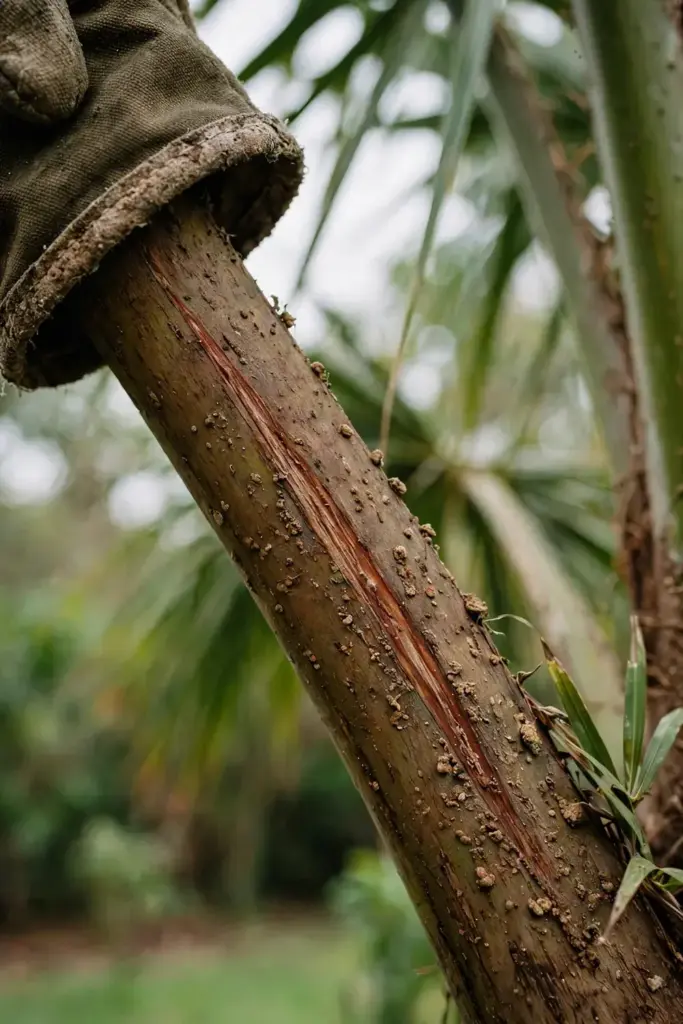
A cross-section through the streak tells the rest of the story. The internal tissue inside a diseased stalk turns discolored where the fungus invaded. Cut that section with a saw. Pruning shears crush healthy internal tissue as they cut, and the bruise can look like fungal damage. A saw gives a clean face and an honest read.
Sample the stalk, not the blade. The pathogen lives in the petiole or rachis, and the stalk is the tissue a lab needs. A leaf blade with dead patches but a clean stalk points to a different problem. When you inspect, start at the lowest living fronds and work upward. The disease starts low and climbs, so the lowest fronds carry the oldest and clearest streaks.
Learn the healthy stalk first, so the diseased one stands out. A healthy petiole feels firm and shows an even green or gray-green rind with no lengthwise streaks. The surface stays smooth, with no raised bumps or erupted patches. A diseased stalk breaks that even color with a brown or reddish-brown line running along its length. Once you know the clean look, one walk around the canopy is enough to spot the odd stalk out.
3. How to Identify Petiole (Rachis) Blight on the Leaf Blade
Look for one-sided or uneven death in the leaf blade. Leaflets on one side of a feather frond die while leaflets on the other side stay green. A fan frond loses a wedge of segments while the rest holds color. The whole leaf dies in time, but the death starts lopsided. That lopsided pattern is the clue most readers notice first.
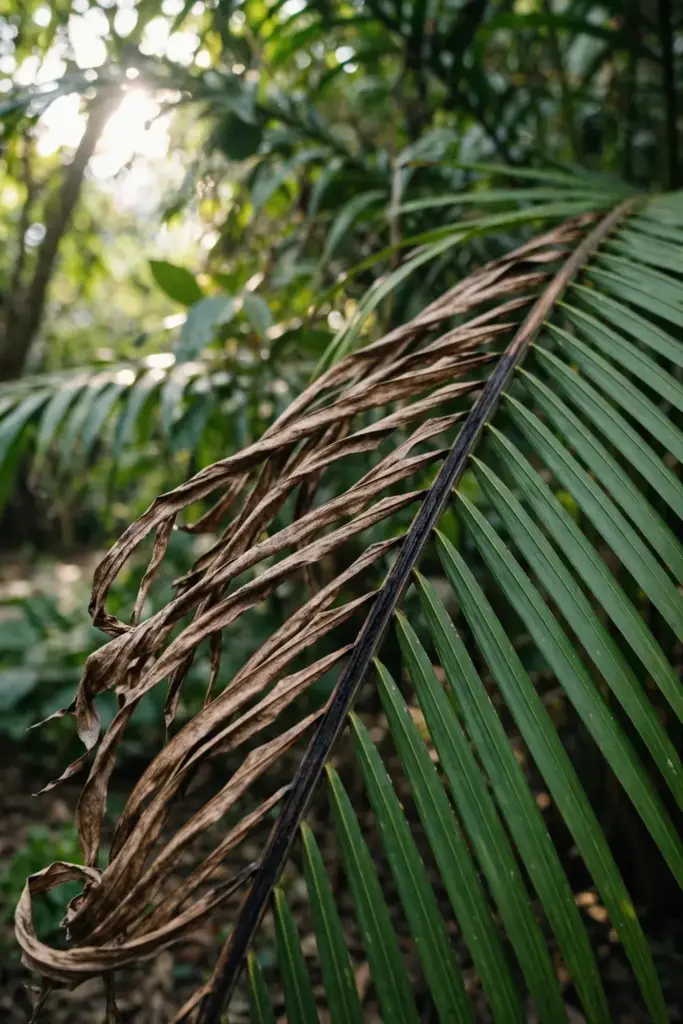
The fungus never infects the blade tissue. The blade dies because the fungus destroys vascular tissue, the xylem and phloem, deep inside the stalk. Xylem moves water up from the roots. Phloem moves carbohydrates down from the leaf. A lesion that severs those channels starves only the leaflets wired to the destroyed section. The dead half of the blade maps the dead section of the stalk.
Spots sitting on the blade itself point to a different disease. Petiole (rachis) blight of palm leaves no blade lesions of its own. A palm with true blade spots may carry Cylindrocladium leaf spot, a separate leaf-spot disease that also shows up on palms. Read the stalk first. A clean stalk with spotted leaflets rules this disease out.
4. Which Palms Get Hit Hardest
No palm group carries a proven top ranking for this disease. The host range is unknown, and every palm may be susceptible. The pattern that does hold is age and position. Mature palms with trunks show petiole (rachis) blight of palm more often than young trunkless palms. The oldest, lowest leaves take the first hit. The disease then moves upward through the canopy toward younger leaves.
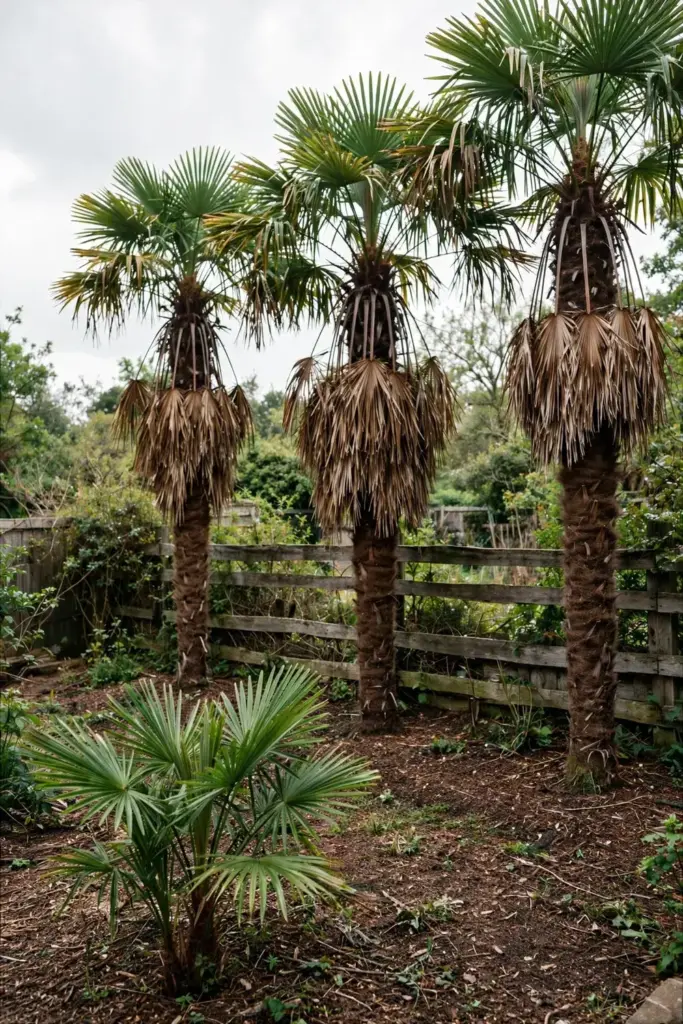
Phoenix palms, the date palms, gave the disease its common name. The first stalk diseases appeared on Phoenix palms, which carry a rachis on every frond. Many homeowners start those palms from pits, and the notes on growing a date tree from seed cover that start. A seed-grown date palm in a yard faces the same stalk disease as a nursery-bought one once it grows a trunk.
Three palm groups carry a special warning. On Phoenix palms, queen palm, and Washingtonia palms, the one-sided leaf death of petiole (rachis) blight of palm looks like Fusarium wilt, a lethal disease. Field inspection cannot separate the two on those palms. Only a laboratory diagnosis can. If your palm belongs to one of those three groups and shows one-sided frond death, treat the lab step as mandatory, not optional.
5. Why Wounds and Weak Palms Drive This Disease
Wounds and weak palms drive this disease more than spores alone do. The fungi behind petiole (rachis) blight of palm need an opening to get in and a stressed palm to get going. A healthy, well-fed palm with dry stalks and intact tissue resists infection. Open wounds and wet stalks invite it. A nutrient shortage opens the door wider.
That finding comes from the companion UF/IFAS guide to Pestalotiopsis diseases of palm. Pestalotiopsis is a different fungus with the same stalk-attack pattern, and its researchers documented the wound rule in detail. Wounds or plant damage often precede infection, whether the damage comes from insects, other pathogens, nutrient deficiency, or human activity. The transfer is honest here: the wound rule is proven for the companion fungus and fits the same stalk-infection mechanism, not proven separately for every fungus behind petiole (rachis) blight of palm.
Nutrient shortage opens the door in a specific way. A deficiency yellows leaf tissue and then kills it. Dead tissue is a wound. The fungus enters through that wound. Fixing the deficiency removes the wound, and removing the wound prevents the disease. Proper nutrient management is therefore prevention, not just feeding for looks.
Two more conditions sit behind every outbreak, and UF/IFAS states both as presumptions rather than proven facts. High humidity is presumed necessary for infection, as it is for many diseases of above-ground tissue. Spores are presumed the main way the fungi move from palm to palm. Very little is known about this disease beyond those presumptions, which is why the management advice stays general: sanitation and water management. Care that keeps palms strong completes the set.
6. What Makes Petiole (Rachis) Blight Worse in a Home Landscape
Leaf wetness, still air, crowding, wounds, and nutrient shortage make petiole (rachis) blight of palm worse in a home landscape. Each one lengthens the wet hours on the stalk, opens an entry point, or weakens the palm. Stack two or three and the disease moves faster than sanitation alone can check.
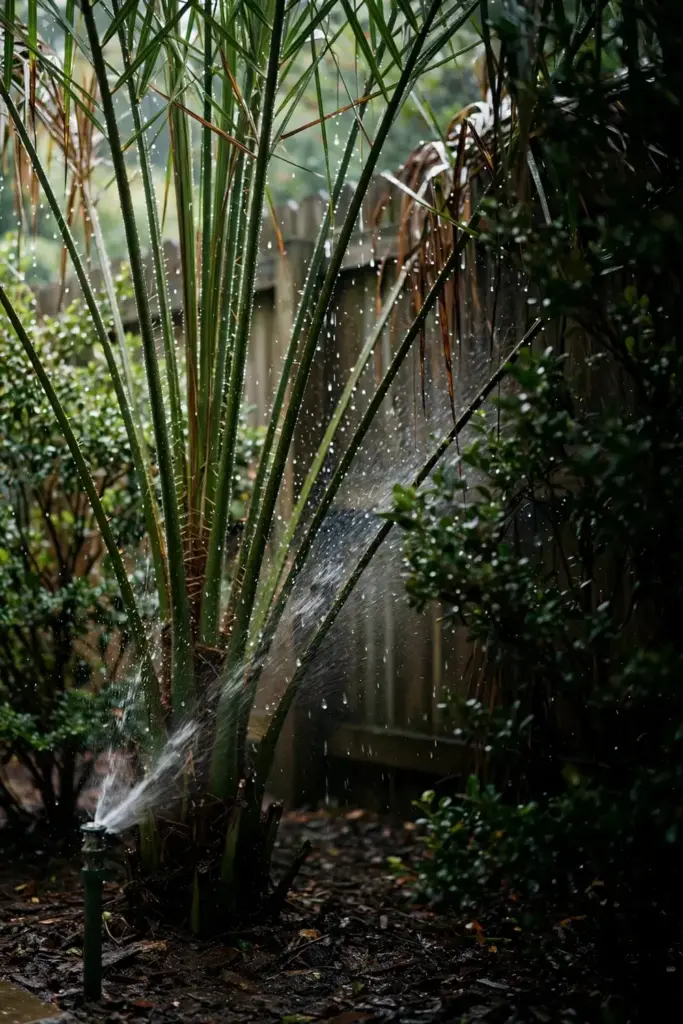
Overhead irrigation is the biggest lever. Sprinklers that wet the fronds keep stalks damp for hours. Evening irrigation is worse, since the stalks stay wet through the night. Tight spacing blocks air movement and holds humidity in the canopy. A palm boxed in by a fence and dense shrubs dries slower than a palm with open air on two sides.
Wounds stack on top of wetness. A trunk nicked by a mower, a frond torn in a storm, or a crown stripped for shape each opens a doorway. Nutrient shortage stacks higher still. A palm short on nutrients drops its defenses and grows the dead tissue that fungi enter through. The disease follows the weakest palm in the yard first, then spreads from its spores to the neighbors.
Home yards differ from nurseries in one useful way. Nursery palms stand close together in large numbers, so one infected frond threatens the whole block and spacing changes carry real cost. A home yard holds a few palms with room around them. That room is the advantage. Use it. Keep the air moving and keep the fronds dry. The home palm then faces less pressure than any nursery row.
7. Step 1: Decide Whether Treatment Is Worth It
Treatment pays only when the palm still has a healthy core and the disease is still limited to the lower canopy. Petiole (rachis) blight of palm has no cure. Plant tissue does not heal. A streaked stalk stays streaked for the life of that frond. No spray reverses that damage. UF/IFAS publishes no evaluated fungicide program for this disease in home landscapes. Cultural control comes first, and it is the whole program for most yards.
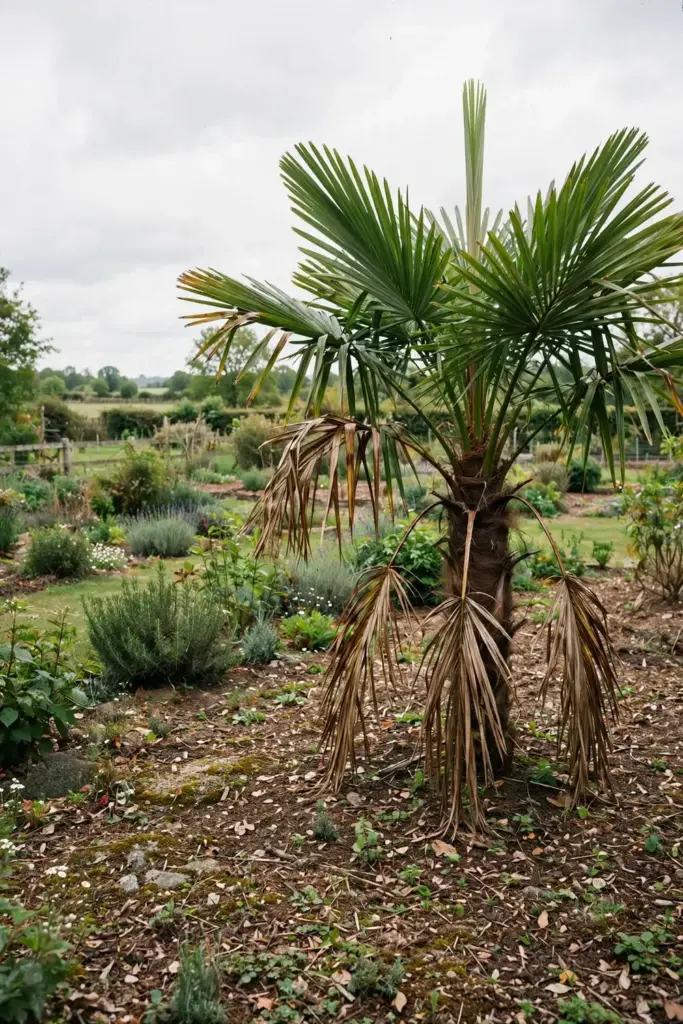
Run three checks before you spend anything. First, count the damage. A palm with streaks on a few lowest fronds and clean new growth is a good candidate for the 7 strategies below. A palm with streaks climbing into the spear leaf and the young crown needs a lab sample before any other move. Second, weigh the deficiency. On landscape palms, the nutrient shortage often hurts more than the blight, and feeding the palm beats treating the fungus. Third, name the palm. A Phoenix palm, queen palm, or Washingtonia palm with one-sided frond death needs lab confirmation first, because the lethal lookalike Fusarium wilt mimics this disease on those three groups.
The table below lays out the 7 strategies at a glance. Steps 2 through 5 carry the detail.
| Strategy | What It Costs You | What It Buys |
|---|---|---|
| 1. Keep fronds dry | A nozzle change and a morning habit | Shorter wet hours on every stalk |
| 2. Give palms air and space | Room around each palm | Faster drying and less humidity in the canopy |
| 3. Remove and destroy severely infected fronds | One careful pruning session | Fewer spores reaching healthy fronds |
| 4. Feed palms correctly | One palm fertilizer, applied to the label | No deficiency wounds for fungi to enter |
| 5. Stop wounding palms | Discipline with tools and mowers | Closed doors where fungi enter |
| 6. Disinfect tools between palms | 5 minutes of soaking per tool | Fewer fungi carried palm to palm |
| 7. Confirm with a lab | One sample and a clinic fee | A certain diagnosis, and separation from lethal Fusarium wilt |
If the palm fails the three checks, the honest move is the lab sample in Step 5, not a shopping trip. A diagnosis costs less than a season of sprays aimed at the wrong disease.
8. Step 2: Keep Fronds Dry and Give Palms Air
Keep fronds dry and give palms air. Those are strategies 1 and 2, and they cost nothing but habit. The fungi behind petiole (rachis) blight of palm need wet stalks to infect. Shorten the wet hours and the infection window shrinks with them.
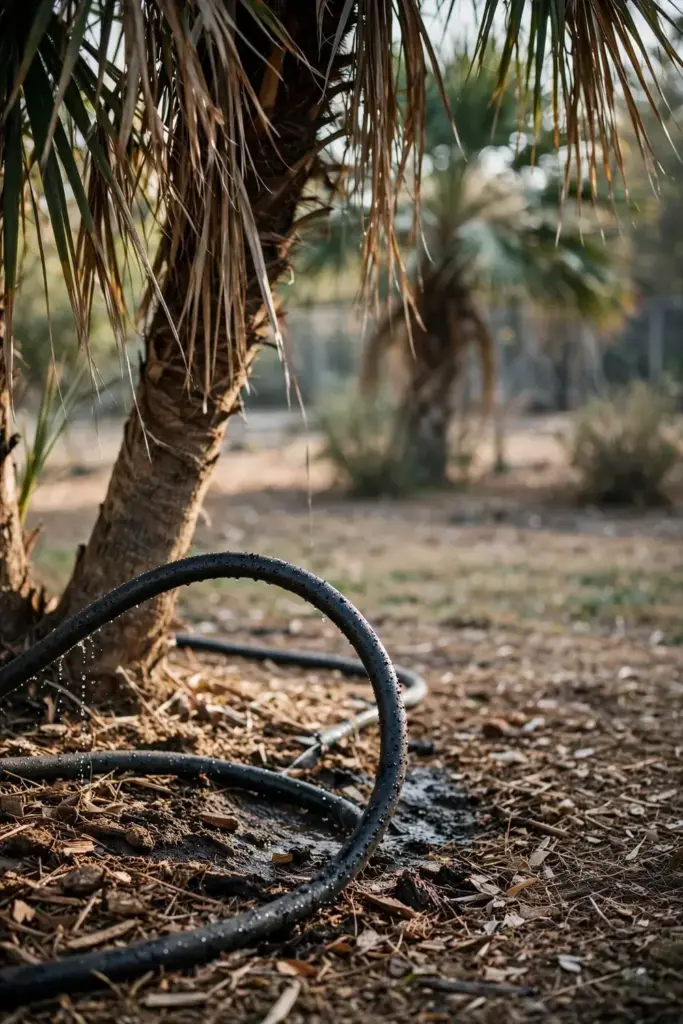
Switch overhead irrigation to ground-level delivery where you can. A soaker hose or a drip line wets the root zone and leaves the fronds dry. Where overhead irrigation must stay, run it in the early morning hours. Morning water lets the sun and the breeze dry the stalks during the day. Evening water leaves the stalks wet through the night, and night wetness is the longest infection window a palm offers.
Space new plantings so air moves through the canopy. Palms planted tight against walls, fences, and dense shrubs dry slowly. A palm with open air on two sides dries fast after rain. Do not crowd a new palm against an established one to fill a gap. The gap fills itself as the crowns grow, and the air between them is worth more than a full-looking bed.
Rain wets fronds too, and no habit stops a storm. What you control is the drying after it. Skip the sprinkler cycle when rain already soaked the canopy. Let sun and air dry the stalks before you add more water. A palm that dries between wettings faces a shorter infection window than a palm kept damp by irrigation on top of rain.
9. Step 3: Remove and Destroy Severely Infected Fronds
Remove and destroy severely infected fronds. That is strategy 3, and it cuts the spore supply at the source. A badly streaked frond sheds spores onto healthy fronds and neighboring palms. Taking it off the palm and out of the yard lowers the pressure on everything around it.
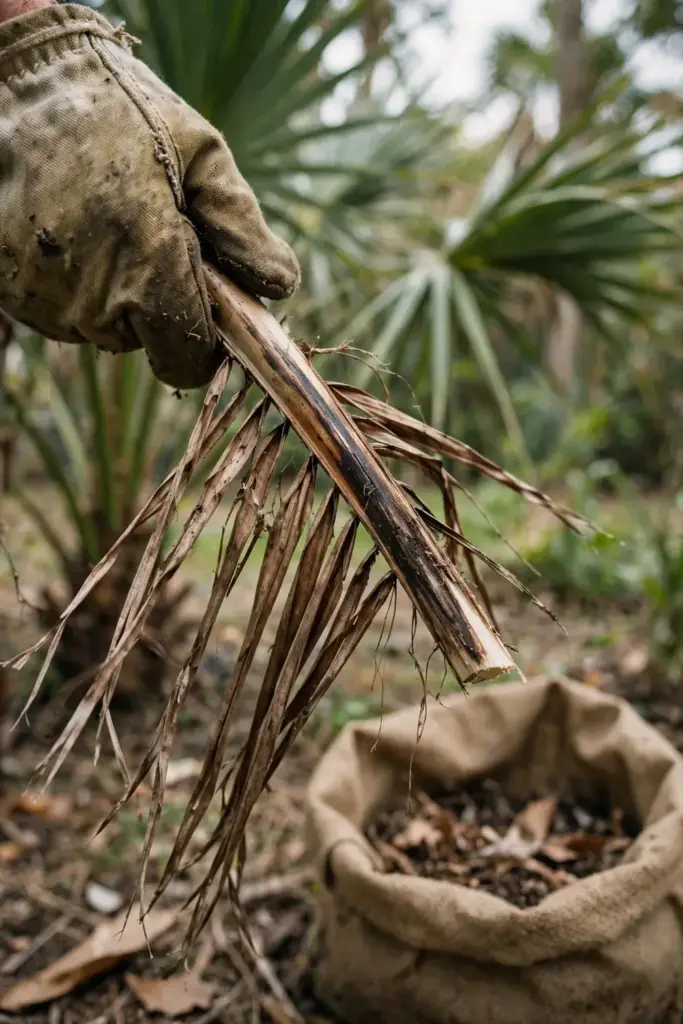
Cut only the fronds that are severely infected. A frond with a streak but mostly green blade still feeds the palm. A frond that is mostly dead feeds nothing and sheds spores. Cut the dead ones. Leave the working ones. Cut clean and cut little. The spring pruning techniques page covers clean-cut basics that apply to any woody plant.
Prune lightly when the palm is under nutrient stress. Removing too many leaves from a starving palm harms the palm more than the disease does. The palm needs every working frond to photosynthesize its way out of the shortage. If the palm shows yellow, nutrient-starved fronds beside the streaked ones, feed it first and prune second. Take the worst fronds now and the rest after the new growth shows the feeding worked.
Destroy what you cut. Bag the fronds and put them in the trash. Do not leave cut fronds under the palm. A pile of infected fronds under the canopy is a spore bank sitting at the base of the plant you are trying to protect.
10. Step 4: Feed Palms Correctly and Stop Wounding Them
Feed palms correctly and stop wounding them. Those are strategies 4 and 5, and they close the two doors the fungi use most. A well-fed palm grows no deficiency wounds. An unwounded palm offers no entry points.
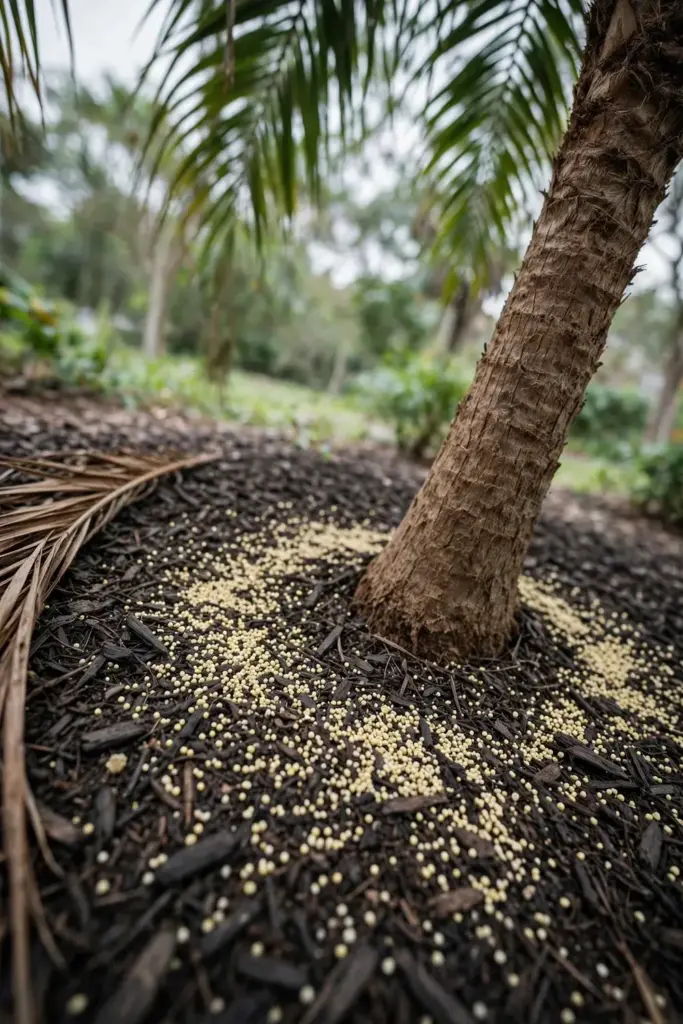
Use a palm fertilizer with an 8-2-12+4Mg analysis, with slow-release nitrogen, potassium, and magnesium, and follow the label rates, per the UF/IFAS guidance on landscape palm fertilizers. Apply it across the root zone, not in a pile against the trunk. Check the label for timing and repeat applications. Correcting a shortage takes months, not days, because the palm must grow new, healthy fronds to replace the damaged ones.
Stop wounding palms. Every cut is a doorway. Skip cuts into the trunk. Skip the shaped-crown pruning that strips living fronds to make a pineapple silhouette. That cut removes the palm’s food factory and opens a ring of fresh wounds at once. Keep mowers and string trimmers away from the trunk base. A nicked trunk base is a wound that never fully closes on a palm.
11. Step 5: Disinfect Tools and Confirm With a Lab
Disinfect tools between palms and confirm with a lab. Those are strategies 6 and 7, and they are the two moves that separate careful growers from guessers.
Soak pruning tools in a disinfectant solution for 5 minutes before using them on another palm, per the UF/IFAS pruning palms guide. Flag it honestly: the 5-minute soak is proven for Fusarium wilt of palms, where infested tools carry the fungus palm to palm. UF/IFAS does not state the same soak for petiole (rachis) blight of palm. Treat tool disinfection as a precautionary habit, not as proven control for this disease. The logic holds because the stalk-blight fungi are presumed to move palm to palm as spores, and a tool that cuts a streaked stalk can carry those spores to the next palm.
Confirm with a lab when the diagnosis matters. Cut a 61 cm (2-foot) section of petiole or rachis showing typical symptoms. Cut it into pieces for packing. Place the pieces in a cardboard box padded with newspaper. Do not bag them in plastic. Send the box to your local Extension diagnostic clinic. The clinic identifies the pathogen and separates petiole (rachis) blight of palm from Fusarium wilt. That separation matters most on Phoenix palms, queen palms, and Washingtonia palms, where only a laboratory diagnosis can tell the two apart. A lab result turns the rest of this page from presumption into a plan.
12. Living With Existing Damage
Live with the damage already on the fronds. Petiole (rachis) blight of palm leaves permanent marks. Plant tissue does not heal. A streaked stalk stays streaked until that frond dies and drops. No feed, spray, or wash erases a lesion. Accepting that fact saves money and spares the palm a round of useless treatments.
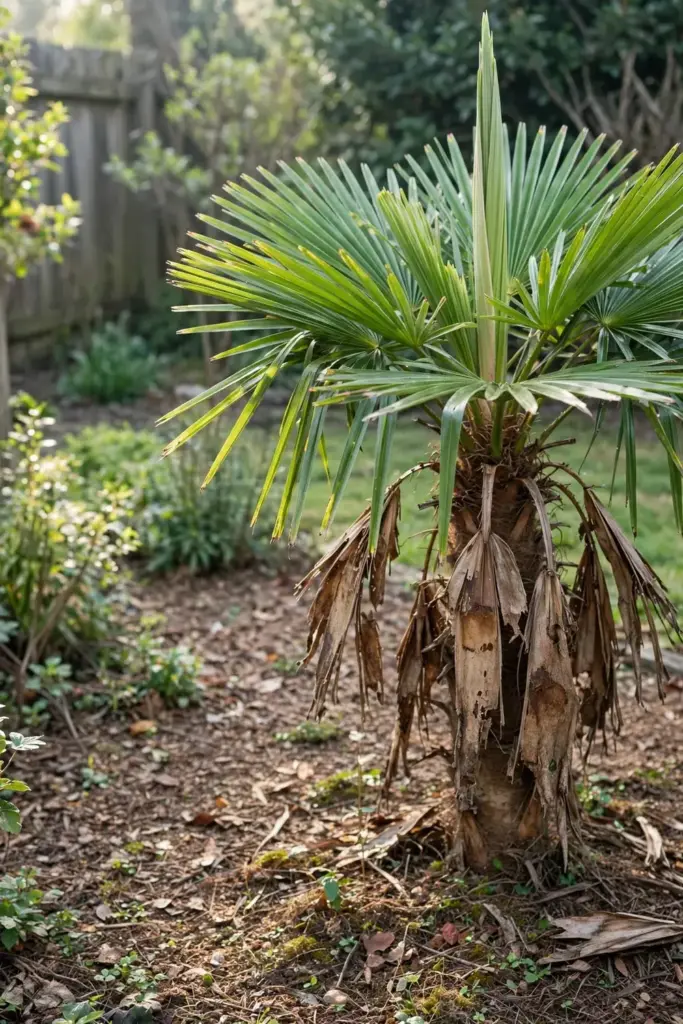
Keep fronds that still work. A frond with a streak on one side and a green blade on the other still photosynthesizes. It feeds the palm while the new growth comes in. Remove fronds only when they turn mostly dead and stop paying their way. A palm with a few streaked lower fronds and clean new growth is a palm winning the fight.
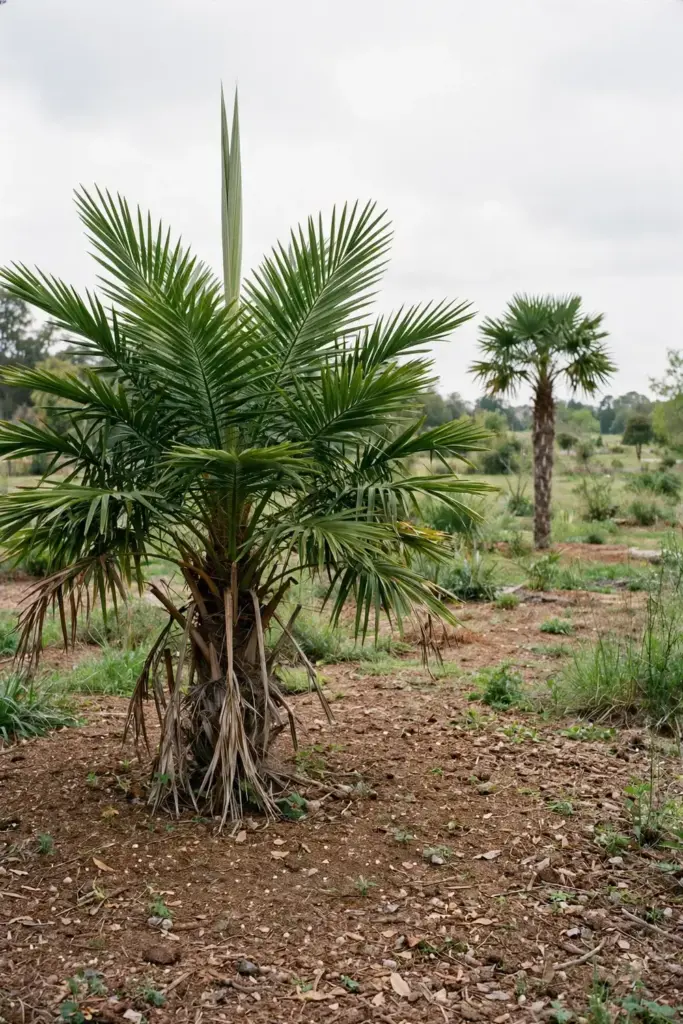
Watch the newest fronds. Fresh fronds that open clean show the program working. Fresh fronds that open with new streaks show the disease still moving. Check the spear leaf, the upright new leaf in the center of the crown, with each walk. A clean spear leaf is the best sign a palm gives. If the spear leaf streaks or stalls, send a fresh sample to the clinic and ask for a full diagnosis before you change anything else.
Judge the program by a full flush of new fronds, not by one leaf. Old streaks never fade, so the lower canopy keeps its scars while the crown improves. That split is normal. Clean new growth above scarred old fronds means the 7 strategies are working. New streaks on the fresh growth mean the pressure is still high, and the lab step moves to the front of the line.
13. Frequently Asked Questions
Petiole (rachis) blight of palm seldom kills a palm on its own. The disease kills several of the lowest leaves and moves upward, but the palm usually keeps its crown. The danger is indirect. A stressed palm with a thinning canopy invites other diseases, and those diseases can kill it. Keep the palm fed and dry. Leave it unwounded, so the blight stays a frond problem, not a palm problem.
No fungicide cures the brown streaks. Plant tissue does not heal, so a lesion stays for the life of that frond. UF/IFAS publishes no evaluated fungicide program for this disease in home landscapes. Fungicides at most protect uninfected stalks, and only after a cultural program of sanitation and water management is running. Start with dry fronds, spacing, feeding, and sanitation. Those moves carry the control.
Do not cut off every spotted frond. Remove only the severely infected ones, and prune lightly when the palm is under nutrient stress. A palm short on nutrients needs every working frond to photosynthesize its way back. Taking too many leaves harms the palm more than the disease does. Feed the palm first and take the worst fronds now, then revisit the rest after new growth shows the feeding worked.
Field inspection alone cannot separate the two on Phoenix palms, queen palms, and Washingtonia palms. Both diseases cause one-sided leaf death and stalk streaks on those three groups. Only a laboratory diagnosis can tell them apart. Submit a 61 cm section of symptomatic petiole or rachis to your local Extension diagnostic clinic in a cardboard box padded with newspaper. Do not bag the sample in plastic.
Do not compost infected palm fronds. UF/IFAS advises removal and destruction of severely infected fronds to cut the spore supply. Bag the cut fronds and put them in the trash. Do not leave them under the palm, and do not stack them in a home compost pile. A pile of infected fronds at the base of the palm keeps spores where they do the most harm.
14. Where to Go From Here
Start with one walk around your palms. Read the stalks on the lowest fronds. Streaks on the stalk with one-sided leaf death mean petiole (rachis) blight of palm is on the list. A clean stalk with a spotted blade means something else is at work.
Then run the 7 strategies in order. Dry the fronds. Open the air. Cut the worst fronds and destroy them. Feed the palm. Stop wounding it. Disinfect the tools. Send a sample when the diagnosis matters. The disease has no cure, but a dry, fed, unwounded palm keeps it to a few dead fronds at the bottom of the canopy.