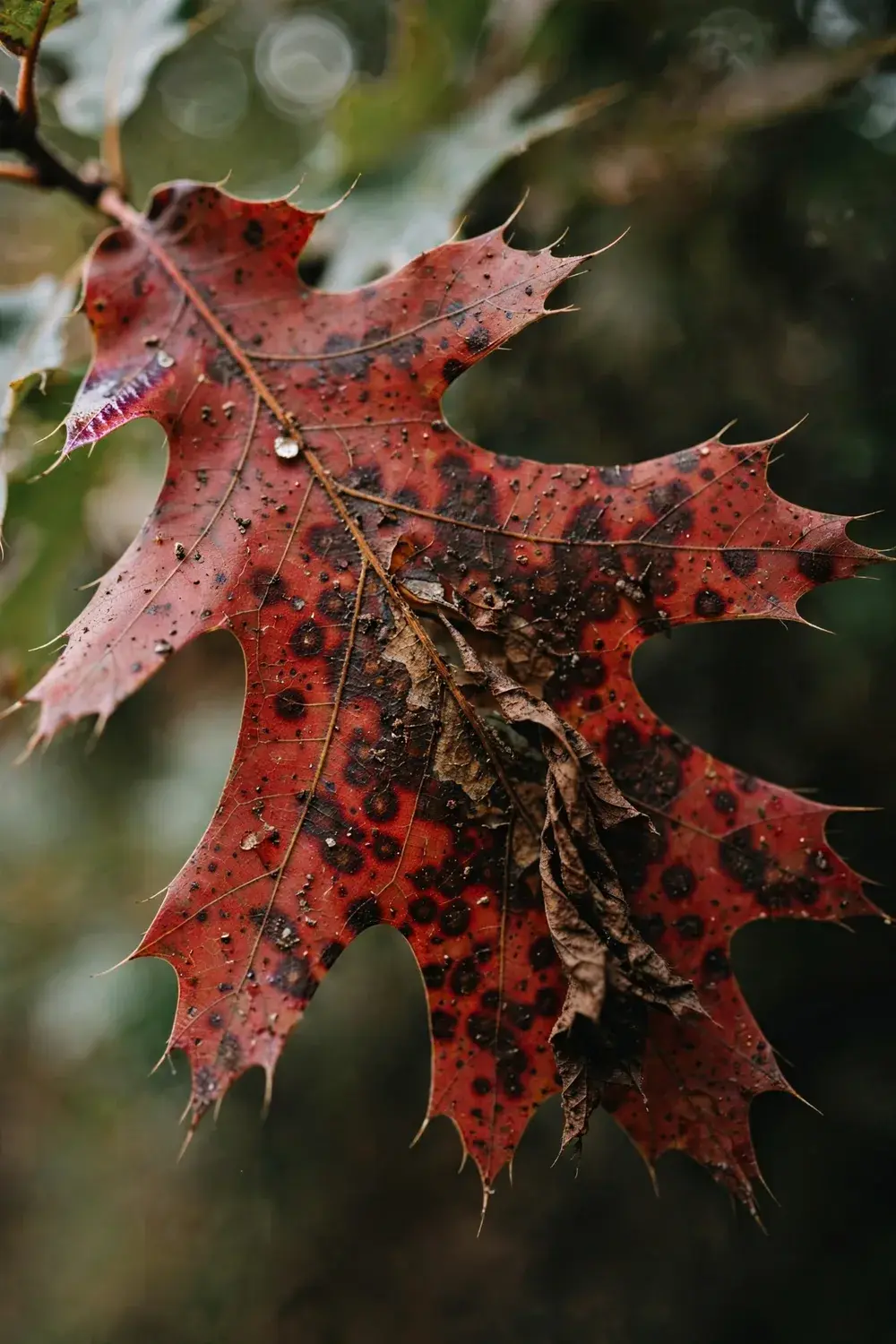

Brown spots that show up on oak leaves in July and August are usually Tubakia leaf spot, a cosmetic late-season fungus, and 9 strategies separate it from the two diseases it mimics. The spots look alarming on a lawn tree, and the tree usually carries on without lasting harm.
I have learned to check the calendar before I reach for any spray, because timing separates this disease from the two problems it mimics.
The rest of this page runs the 9 strategies in order, from telling Tubakia leaf spot from anthracnose and oak wilt to the fall cleanup that keeps next year quieter.
What Tubakia Leaf Spot Actually Is
Tubakia leaf spot is a fungal leaf disease of oaks. The pathogen is Tubakia dryina, a fungus that once carried the name Actinopelte dryina.
The older name still shows up on nursery tags and garden center labels, so check the botanical name when advice mentions Actinopelte. One pathogen, two names. The current name is Tubakia dryina.
University of Wisconsin-Madison notes that Tubakia is most likely a species complex, a group of closely related fungi rather than a single uniform fungus. Other Tubakia species also occur on oaks, which explains why symptoms vary a little from tree to tree. The fungus overwinters in infected twigs and in dead leaves that hang from the tree or lie on the ground, and wind and rain splash carry its spores to new leaves in spring.
Some Extension pages call the same disease Tubakia leaf blotch. One disease, two common names. Check the pathogen name when common names differ, and Tubakia dryina settles the question.
How to Identify Tubakia Leaf Spot on Oak Leaves
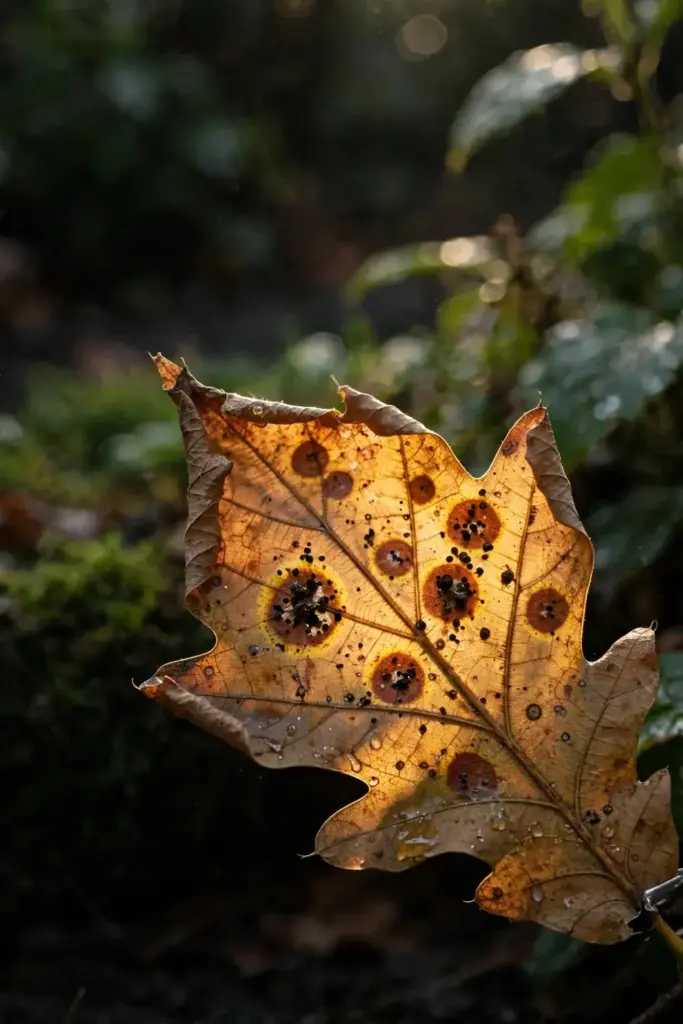
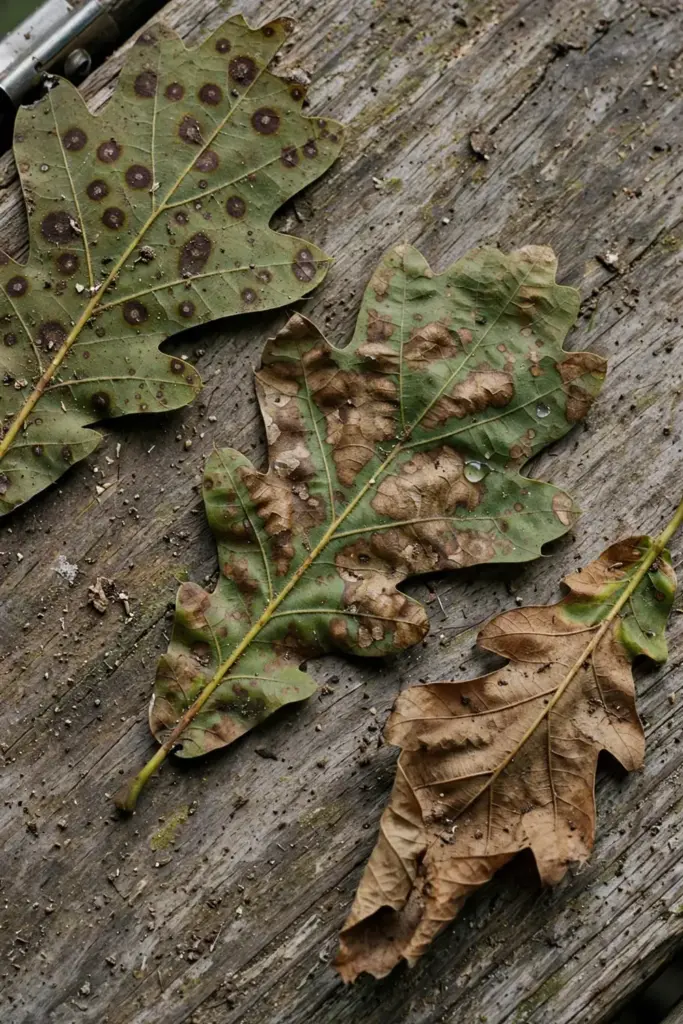
Look for round spots first. The University of Missouri Extension guide to Tubakia leaf spot on oak describes circular leaf spots, dark red to brown, running 0.6 to 1.3 cm across. Spots often start small and grow, and crowded spots merge into larger blotches with ragged edges.
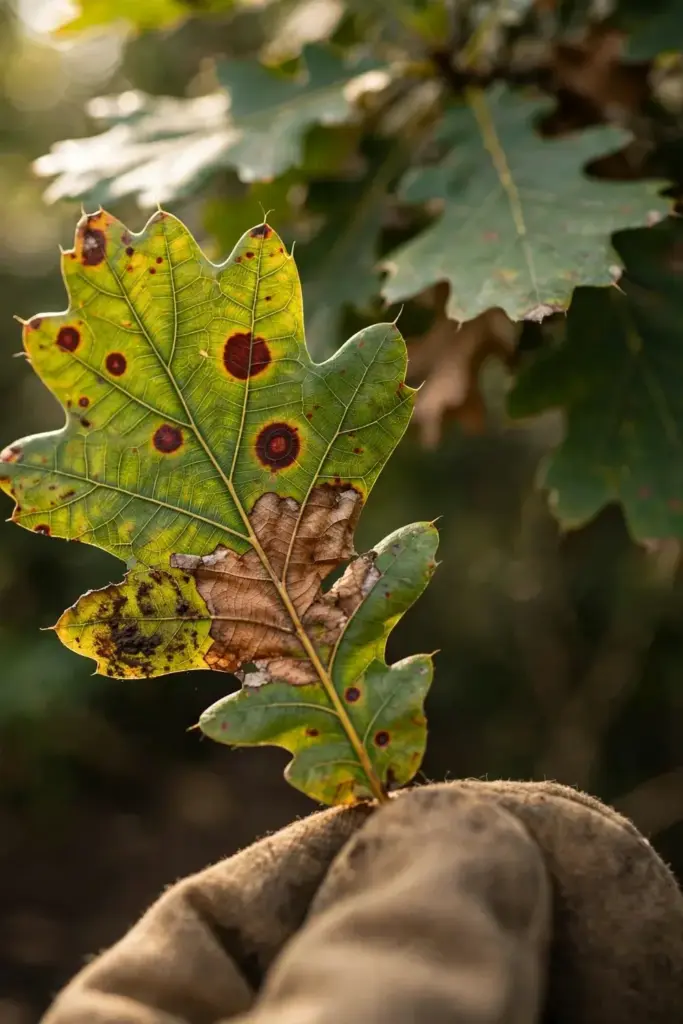
Spots on veins do the real damage. A spot on a leaf vein kills that vein, and the leaf tissue past the dead vein collapses. That collapse is the signature of Tubakia leaf spot. A leaf with a dead vein and a wedge of brown tissue past it fits the pattern better than a leaf with scattered round spots alone.
Iowa State University Extension describes spots with dark rings or a yellow halo around the edge. Fruiting bodies sit inside the lesions as tiny dark discs, visible on either side of the leaf. The spores themselves are microscopic, so field identification stays presumptive until a lab microscope confirms it.
Compare leaves from the lower canopy with leaves from the top. A tree with spots low and clean leaves high fits Tubakia leaf spot. A tree with spots all through the canopy points to a different problem, and the differential table below sorts the three main suspects.
How to Identify Tubakia Leaf Spot on Twigs and Canopy
Check the twigs after the leaves. The fungus causes small cankers on small branches and twigs. A cankered twig holds spores through winter and feeds the next season.
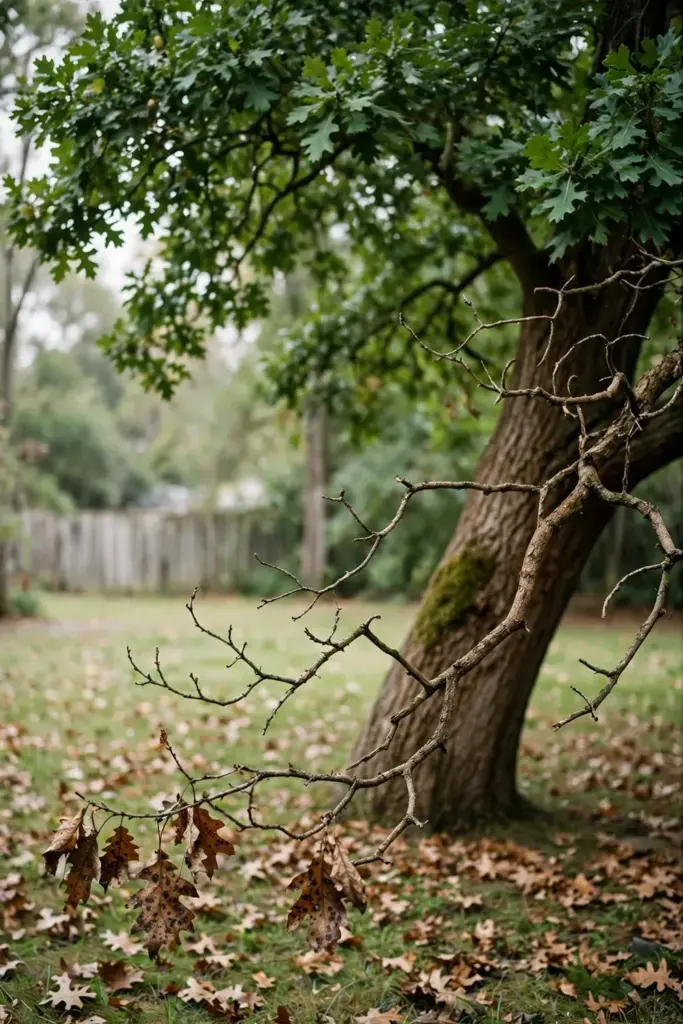
The cankers stay small and sit on twigs, not on trunks or scaffold limbs. Cut the twig and the canker goes with it. That small size is one more reason the disease stays cosmetic in most years.
Step back and read the whole canopy. Wisconsin DNR forestry staff report that symptoms run worst in the lower canopy, where air stays warm and damp. Lower branches can lose nearly all their leaves while the top of the tree still holds green leaves. That bottom-up pattern separates Tubakia leaf spot from oak wilt at a glance, since oak wilt drops leaves from the top first.
Heavy leaf loss late in the season looks worse than it is. Defoliation turns severe on stressed trees, and it lands late in the season when trees start dropping leaves anyway. A bare lower canopy in September still leaves the tree with a full season of growth behind it.
Which Oaks Get Hit Hardest
Every oak species can host Tubakia leaf spot. Oaks in the red oak group carry the worst damage, and that group includes black oak, red oak, and pin oak, all with pointed lobes on their leaves.
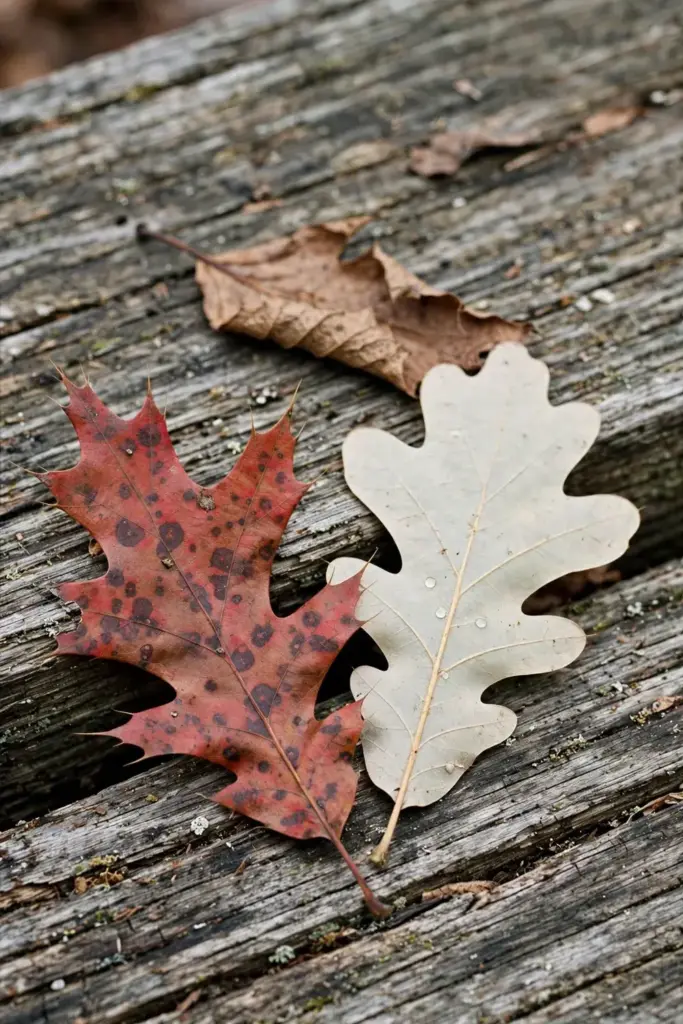
Red oak group leaves carry pointed lobes with bristle tips. White oak group leaves carry rounded lobes without bristles. The lobe shape tells you which group your tree belongs to, and the group tells you how hard the disease is likely to hit.
White oaks catch the disease too, and the white oak group shows lighter damage in most years. The gap between the groups is a matter of degree, and a stressed white oak can still lose plenty of leaves.
Maple, apple, and elm can carry Tubakia leaf spot. Bur oak blight is a separate disease caused by Tubakia iowensis on bur oak alone, and it is not the same disease as the leaf spot on red and white oaks.
Tubakia Leaf Spot vs Oak Anthracnose vs Oak Wilt
Timing draws the first line. The University of Wisconsin-Madison Plant Disease Diagnostics Clinic fact sheet on Tubakia leaf spot places anthracnose in the cool part of the growing season, in May and June, and Tubakia leaf spot in the warm summer months, in July and August. Spots that appear on fresh spring leaves point to anthracnose. Spots that show up on full summer leaves point to Tubakia leaf spot.
| Clue | Tubakia Leaf Spot | Oak Anthracnose | Oak Wilt |
|---|---|---|---|
| Pathogen | Tubakia dryina | Apiognomonia errabunda | Bretziella fagacearum |
| Usual timing | July and August | May and June | July and August |
| Leaf shape | Round spots, tissue collapses past dead veins | Irregular blotches, leaves puckered when infected young | Leaves wilt, brown from the tip, green near the stalk |
| Where it hits first | Lower and inner canopy | Shaded lower branches, young leaves | Top of the tree, then downward |
| Leaf drop | Gradual, late in the season | Leaves held through the season | Sudden drop, many leaves at once |
| Tree outcome | Cosmetic in most cases | Cosmetic in most cases | Kills oaks |
| First move | Rake leaves, skip the spray | Rake leaves, skip the spray | Get a lab diagnosis fast |
Canopy pattern draws the second line. The Wisconsin DNR comparison of oak wilt and leaf diseases notes that Tubakia leaf spot runs worst in the lower canopy, while oak wilt drops leaves from the top first. Anthracnose leaves come out misshapen or puckered when infection hits expanding leaves. A spotted oak with a green top and a thinning bottom fits Tubakia leaf spot.
Oak wilt is the killer of the three. Tubakia leaf spot and anthracnose stay cosmetic in most cases, and oak wilt calls for a lab diagnosis without delay. When the pattern runs top-down and leaves drop in a rush, treat it as suspect oak wilt until a lab says otherwise.
Two diseases can share one leaf. Spot anthracnose sometimes shows up on the same oak leaves as Tubakia leaf spot. Purdue Extension notes that co-occurrence on oak leaves. Co-occurrence does not mean one disease caused the other, and the calendar check still separates the main pattern.
Why Vein Infection Drives the Damage
A spot on flat leaf tissue costs a small patch of leaf. A spot on a vein costs the whole leaf past that vein. That difference drives the damage in Tubakia leaf spot.
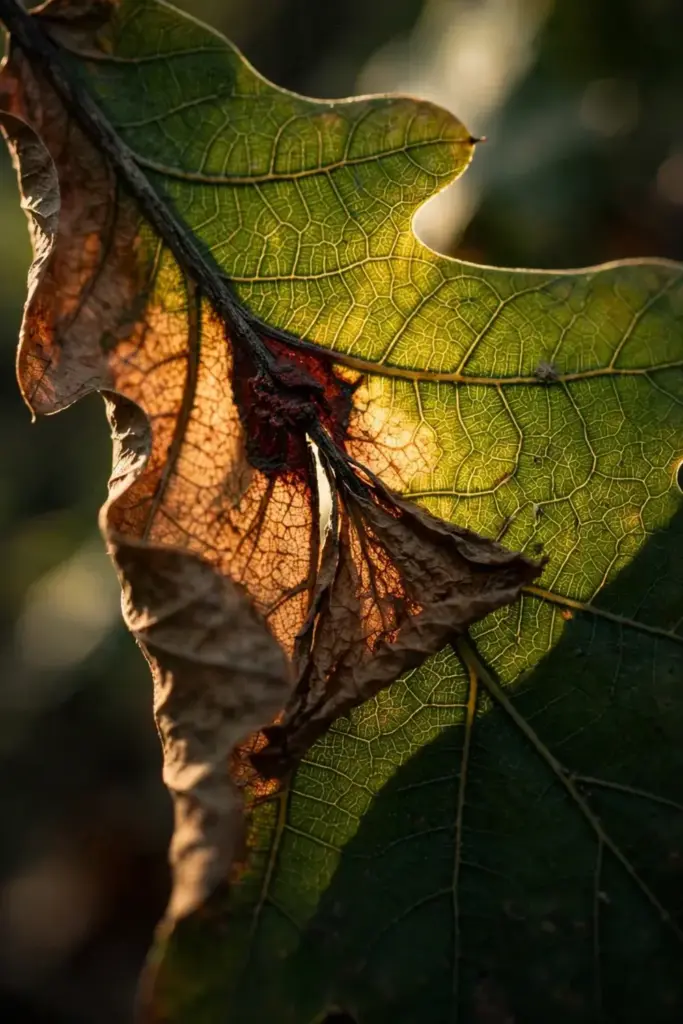
The fungus colonizes leaf tissue from each infection point. When the infection point sits on a vein, the vein dies and the tissue past the dead point loses its supply line. The tissue collapses, dries, and browns, and a small infection produces a large dead wedge. Many vein hits across one leaf turn the leaf brown, and the tree drops it.
The cycle runs on a delay. Spores overwinter on infected twigs and fallen leaves, and spring wind and rain splash spread them to new foliage. Infection lands early in the season, and symptoms wait until mid-summer or later to show. The tree grows all spring with a quiet infection, then shows spots when the season is mostly banked.
One more mechanism point matters. The fungus colonizes leaf tissue and twig tips, and it does not eat wood. The tree keeps its scaffold and its roots. That is why leaf loss in one season rarely carries into the next.
What Makes Tubakia Leaf Spot Worse in a Home Garden
Iowa State University Extension lists stress as the main amplifier, and drought or nutrient deficiency leaves a tree more susceptible to the disease. Iron deficiency leaves a tree particularly susceptible. A tree that already struggles with water or nutrients loses more leaves to the same fungus.
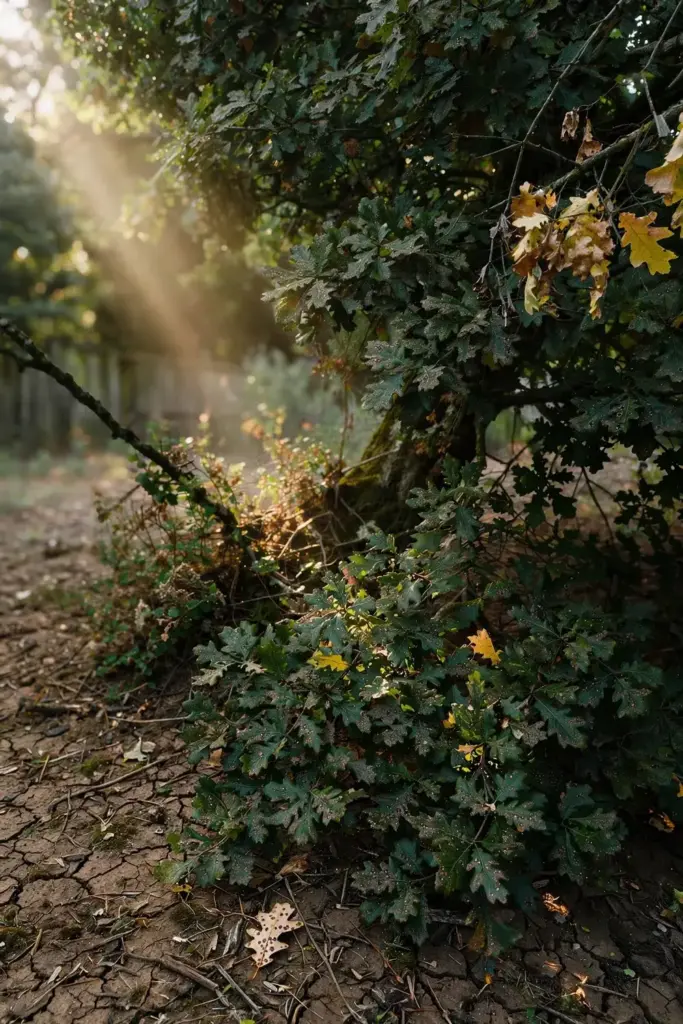
Newly transplanted trees catch it harder than older, settled trees. Transplant shock cuts the roots back, and a short root system cannot pull the water a full canopy wants. Mulch and steady watering help a new tree settle, and a settled tree holds its leaves longer under the same pressure.
Warm, wet weather feeds the fungus, and a dense canopy holds moisture after rain. Pruning for airflow dries the canopy faster. One bad year costs leaves. Year after year of heavy leaf loss on an already stressed tree wears vigor down, so the cleanup and vigor work in the steps below pays off across seasons.
Low spots and tight plantings hold damp air. An oak in a hollow or behind a fence dries slower than an oak on a breezy rise. Thinning nearby shrubs opens the same airflow that pruning opens inside the crown.
Step 1: Decide Whether Treatment Is Worth It
Start with the honest call. Tubakia leaf spot is cosmetic in most cases, and it shows up late enough in the season that no long-term harm follows in most years. A healthy oak with spots in August needs cleanup, not treatment.
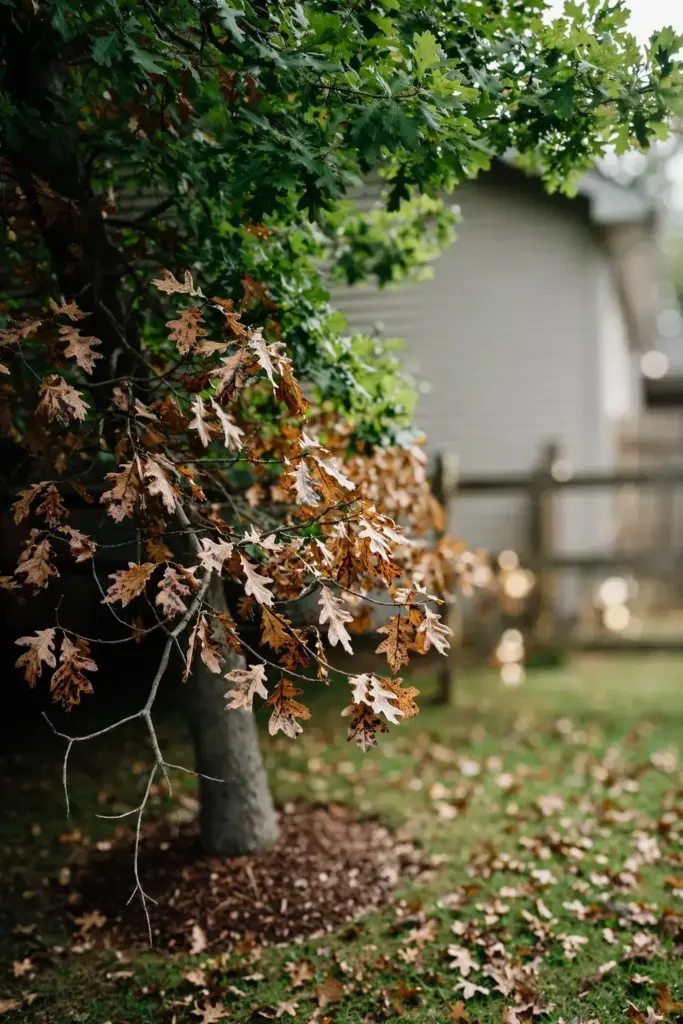
Spend effort where it pays. Water at the drip line and mulch the root zone to build vigor that holds leaves next year. A soil test tells you whether feeding helps at all. A spray cannot undo spots that already formed, and University of Wisconsin-Madison advises against fungicide sprays for this disease. Skip the spray and put the money toward the steps below.
The call changes when the tree carries other stress. A tree with construction damage, root cutting, or a second disease on top of Tubakia leaf spot earns closer watching. Vigor work still comes first, and a lab sample comes before any spending.
Step 2: Rake and Destroy Fallen Leaves Before Spring
Rake up every fallen leaf and twig under the oak in fall or winter. The fungus rides winter inside that debris, and spring spores start from the pile you leave on the ground. A clean bed under the tree removes the source before spring.
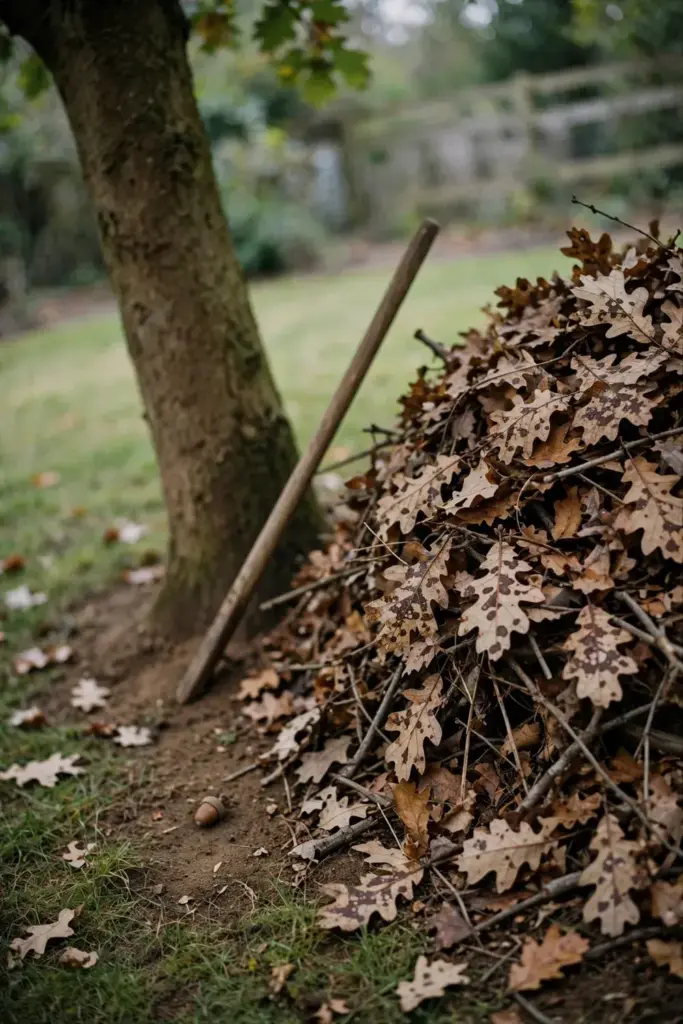
Destroy what you rake. Burn the pile where local rules allow burning, or bury it. Hot compost works when the pile reaches 60 degrees Celsius and you turn it so the outer leaves end up in the center. University of Wisconsin-Madison puts the pile temperature at 60 degrees Celsius, and the heat plus decay clears the fungus. Cold compost never gets hot enough, so keep infected leaves out of a cool pile. Fold the job into fall garden bed prep, which already covers soil tests, compost, and mulch for winter beds.
Work before spring spore spread. Leaves and sticks raked in fall or winter never release spores in spring. A late cleanup still helps, and an early cleanup helps more.
Rake after leaf fall finishes, when the whole crop of infected leaves sits on the ground. A second pass after a windstorm picks up the leaves that hung on late. Two passes beat one pass that leaves a mat of infected leaves under the drip line.
Step 3: Prune for Airflow and Cut Out Cankered Twigs
Open the canopy so leaves dry fast after rain. The fungus wants warm, wet leaves, and an open canopy runs cooler and dries sooner. Cut out small cankered twigs while you prune, since cankers hold spores through winter.
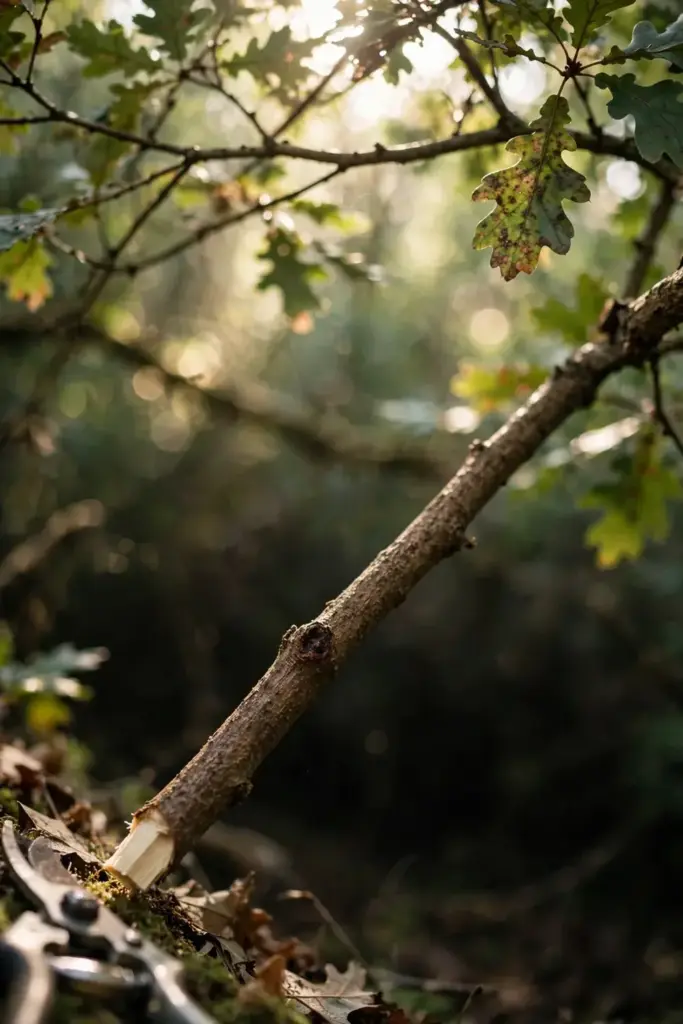
Prune with the tree in mind. Spring pruning techniques cover the timing and the cuts for a clean canopy. Take dead, crossing, and cankered wood first, then thin enough to let air move through the crown. A crown that breathes dries before spores settle.
Haul the prunings out with the leaves. Cankered twigs on the ground feed the same cycle as fallen leaves. Burn, bury, or hot-compost them with the leaf pile.
Cut on a dry day. Wet cuts and wet tools move spores from twig to twig, and a dry day keeps the work clean. Clean the blades between trees, and leave the cuts to dry in air.
Step 4: Water at the Drip Line Through Dry Spells
Water at the drip line, where the branch tips end. Established trees want 2.5 cm of water each week from rain or from a hose, and the drip line puts that water over the roots. University of Wisconsin-Madison gives the weekly figure as 2.5 cm at the drip line.
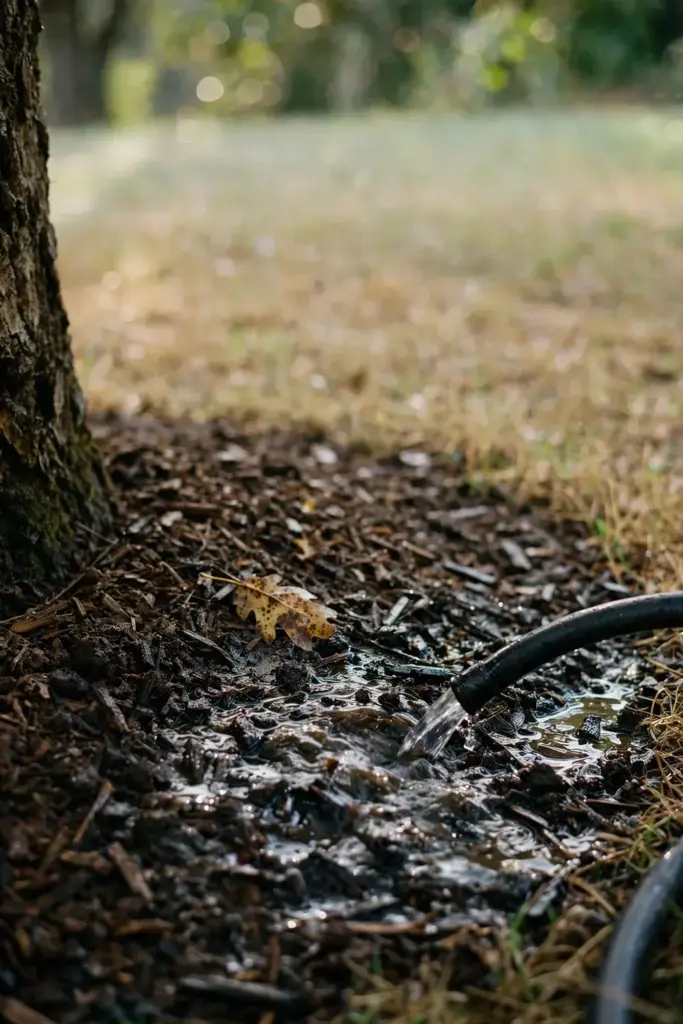
Drought stress opens the door to heavier leaf loss. A tree short on water drops spotted leaves sooner and grows less wood to replace them. A deep weekly soak beats a daily sprinkle, and a mulch ring holds the moisture between soakings.
Keep the foliage dry while you water. A hose at the base wets roots without wetting leaves, and dry leaves give spores no foothold. Overhead watering wets the canopy and holds it damp, which is the condition the fungus wants.
Check the soil before you soak. Push a finger into the soil under the mulch. Dry soil at fingertip depth calls for water. Damp soil means the tree still has water to draw on.
Step 5: Feed Only on a Soil Test
Test the soil before you feed. Fertilizer without a test feeds a guess. University of Wisconsin-Madison advises fertilizing on soil nutrient testing, not on the calendar.
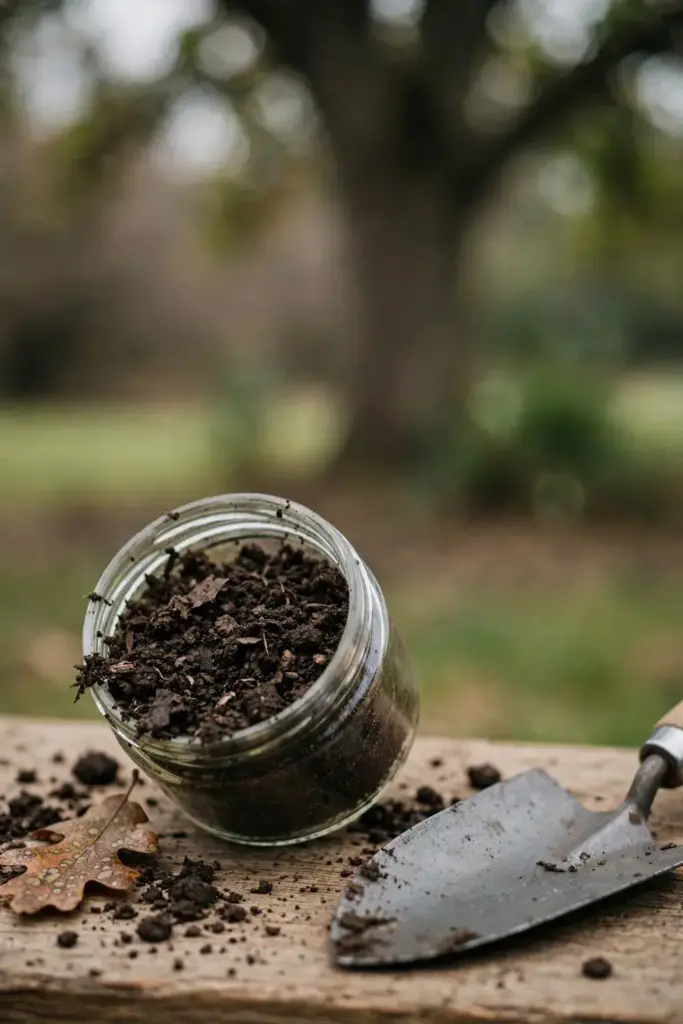
Severe leaf loss changes the call. Iowa State University Extension notes that trees with severe defoliation take a little more fertilizer than usual to push new growth. Feed a stripped tree a little heavier, and feed a lightly spotted tree on the test alone.
Build the soil around the test. Soil health covers the long work of building soil that holds water and nutrients. A tested, steady soil program beats a bag of fertilizer tossed at a spotted tree.
Skip the fertilizer bag until the test comes back. A test from the local Extension service lists what the soil already holds and what it lacks. Feed what the test says is missing, and nothing else.
Step 6: Mulch New Trees and Ease Transplant Stress
New trees need the most help. Newly transplanted oaks catch Tubakia leaf spot harder than older, settled trees. A short root system cannot pull the water a full canopy wants, and the stress shows as heavier leaf loss.
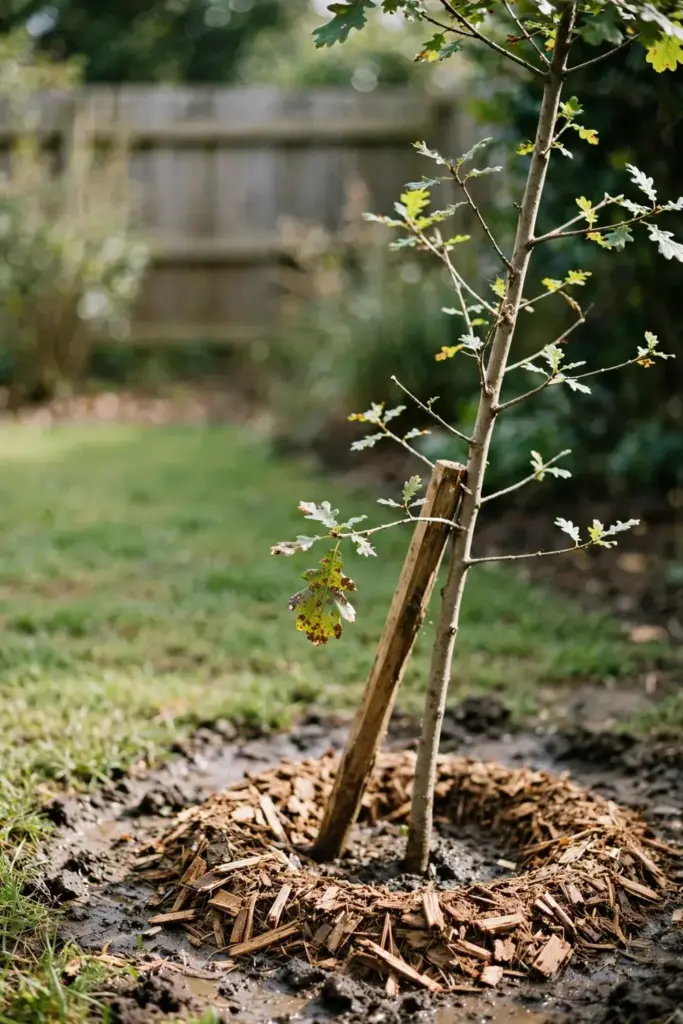
Mulch and steady water settle a new tree. Iowa State University Extension pairs mulch with proper watering to help new trees establish. Spread mulch under the canopy, water at the drip line through the first dry spells, and give the roots time to reach outward.
Guard the tree while roots establish. A new oak that holds its leaves through its first summers has roots starting to match its canopy. The same cleanup and watering routine applies, and the payoff grows as the root system grows.
Water a new tree through its first dry summer. A new oak with a short root system dries out fast in a hot week, and the stress shows as heavier spotting. A weekly soak at the drip line carries it through the spells that stress it most.
Step 7: Watch the Calendar and the Canopy Next Summer
Scout the lower canopy first. Symptoms start in mid-summer and turn noticeable in late summer or early fall, and the lower and inner canopy shows them first. A weekly look at the lowest branches catches the first spots.
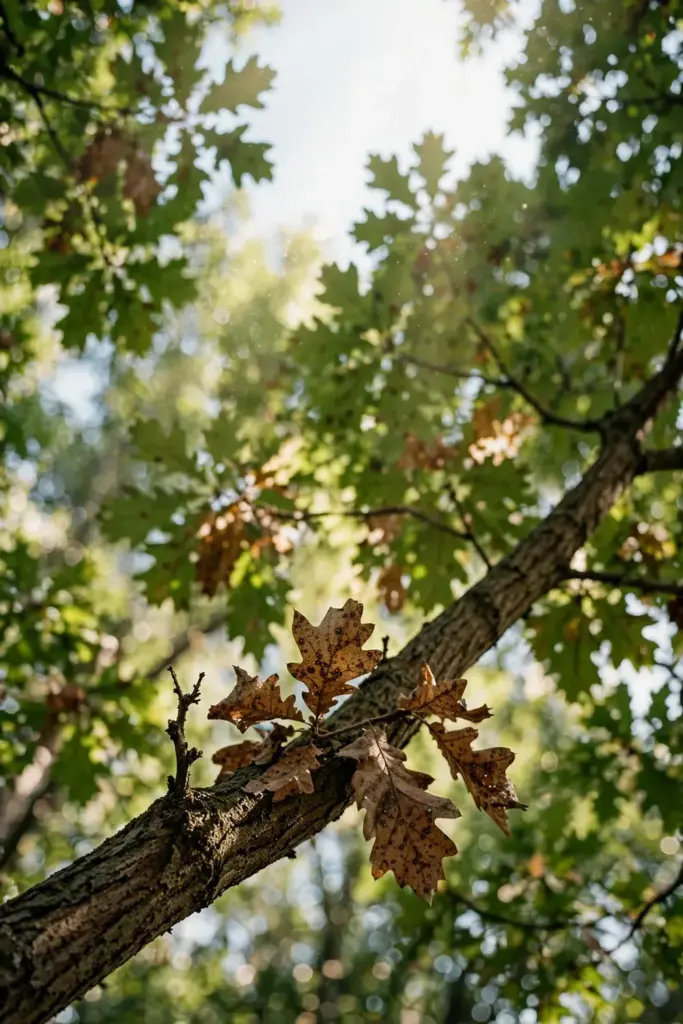
Read the date with the spots. Spots in May and June point to anthracnose. Spots in July and August point to Tubakia leaf spot. The calendar check takes a minute and saves a wrong diagnosis.
Mark what you see. A few spots on lower leaves in August call for cleanup in fall. A canopy that thins from the top down calls for a lab sample right away, since that pattern fits oak wilt. The check you do in August sets the work you do in fall.
Write the date on the first spots you find. A note from this year turns next year into a comparison. The same tree, checked the same way, tells you whether the pressure is rising or falling.
Step 8: Send a Sample to the Lab When It Matters
Field identification stays presumptive. The spores are microscopic, and proper identification takes a lab microscope. A field call separates the likely from the certain, and a lab result settles it.

Send a sample when the stakes run high. Top-down leaf drop, repeated severe defoliation, or any plan to spend real money on treatment all justify a lab check. A confirmed diagnosis beats a season of guessing.
Pack fresh leaves with spots at different stages, from early spots to collapsed tissue. Include a few twigs with cankers when the tree has them. A sample with symptoms at different stages gives the lab more to work with than a single brown leaf.
Ask the lab what it needs before you cut. Each clinic lists its own sample form and packing steps, and a sample cut to the clinic list gets an answer faster than a sample cut to a guess. A call or a web search for the nearest plant diagnostic clinic starts the process.
Step 9: Leave the Spray in the Shed
Fungicide cannot fix Tubakia leaf spot. The disease lands late in the season and stays cosmetic, so a spray buys nothing the tree needs. Iowa State University Extension states plainly that fungicide applications are not recommended for this disease.
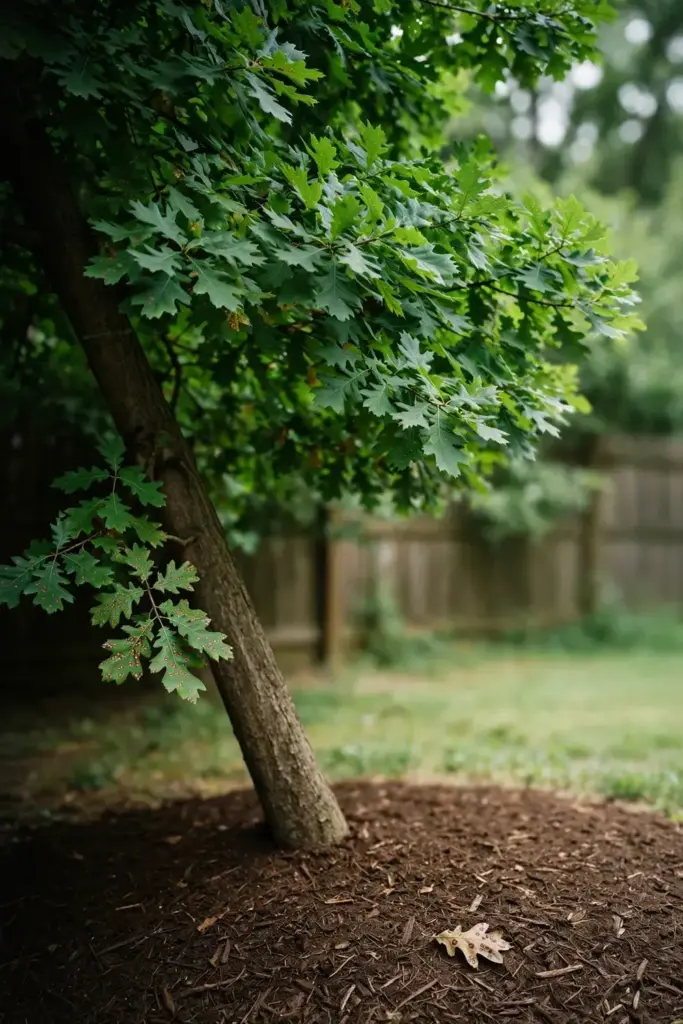
University of Wisconsin-Madison goes further and advises against attempting fungicide sprays at all. A spray aimed at spots that already formed cannot heal them. The same money spent on cleanup, water, and a soil test does work that lasts past one season.
Keep the shed closed on this one. No spray changes the outcome for a spotted oak in August. The 9 strategies end where they started. Rake the leaves and water the roots, and let the tree carry on.
The spray habit dies hard. A spotted tree looks like a tree that needs medicine, and the bottle on the shelf promises a fix. The fix for Tubakia leaf spot sits in the rake and the hose.
Living With Tubakia Leaf Spot Damage
A tree that already dropped its lower leaves still has a season behind it. The disease lands late, and Iowa State University Extension notes it occurs so late in the season that it does not affect the overall health of the tree. The growth the tree banked before the spots showed stays banked.
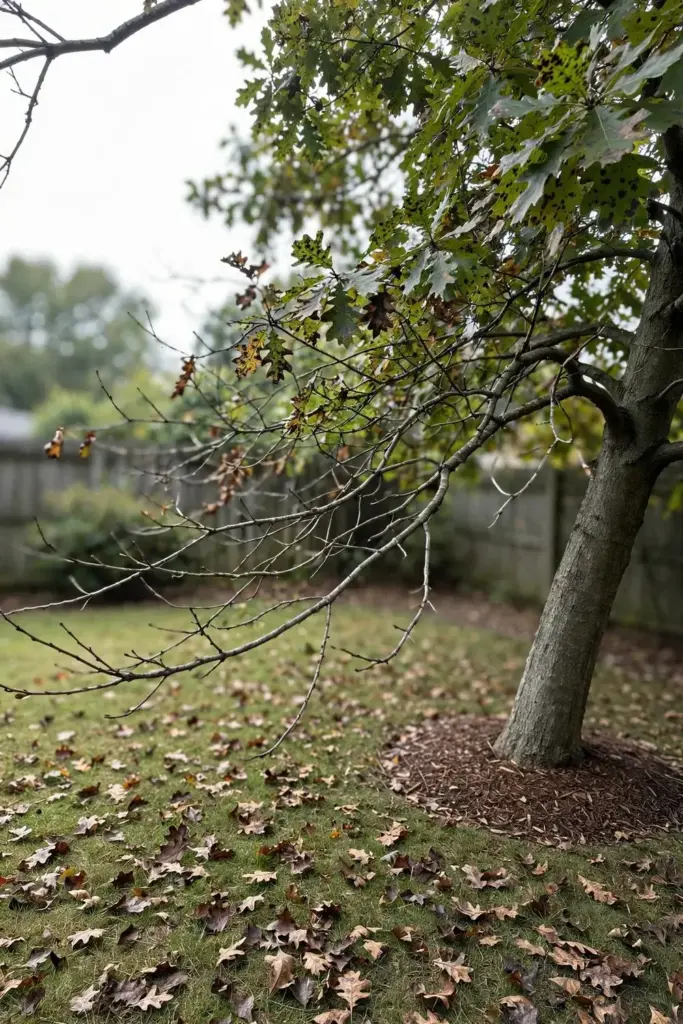
Leave the remaining leaves alone. Stripping spotted leaves off the tree removes food the tree still makes, and the spots already on a leaf will not heal. Let the tree drop leaves on its own clock, then rake them up.
Watch the lower branches through winter. Branches that lost nearly all their leaves may stay bare, and a few may die back. Cut dead wood out at pruning time, and run the cleanup and vigor routine next year. A tree that leafs out full next spring has put the bad year behind it.
Plan the fall cleanup now, while the damage is fresh. A list of the worst-hit branches and the date the leaves fell gives fall-you a head start. Rake the leaves and prune the cankered twigs. Run the vigor routine through the next season.
Frequently Asked Questions About Tubakia Leaf Spot
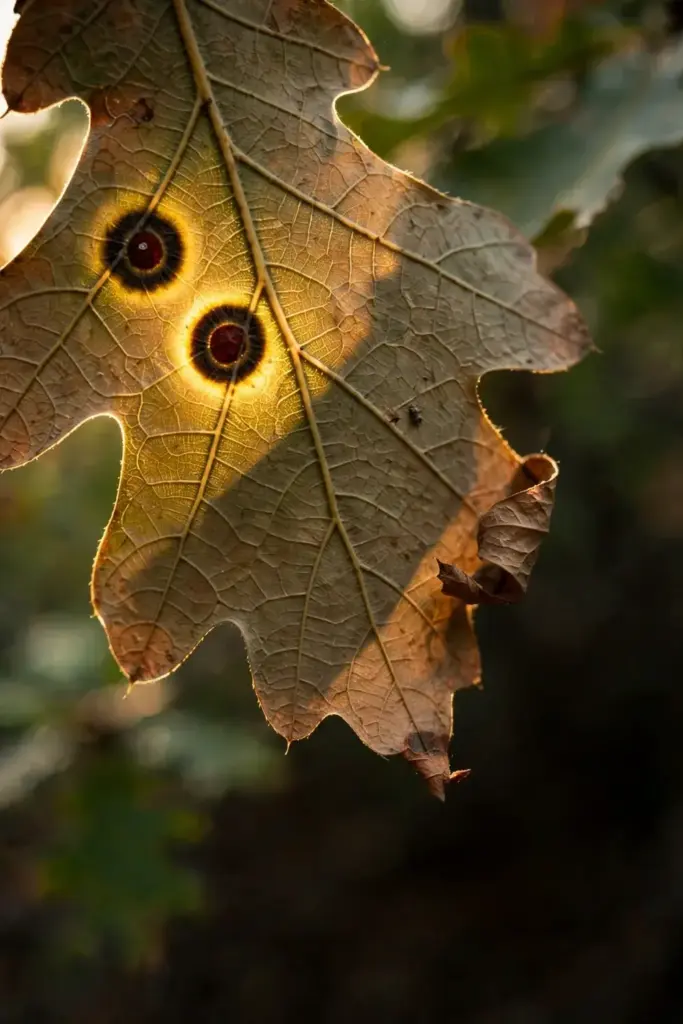
No, in most cases. Tubakia leaf spot is cosmetic and lands late in the season, so a spotted oak usually carries on without lasting harm. The tree loses leaves it would soon drop anyway. Severe defoliation on an already stressed tree can wear vigor down over time. Keep the tree watered, rake the leaves, and watch for top-down leaf drop, which points to oak wilt instead.
Check the calendar first. Anthracnose shows up in May and June on fresh spring leaves, while Tubakia leaf spot shows up in July and August on full summer leaves. Anthracnose deforms leaves infected while they expand, leaving puckered tissue. Tubakia leaf spot leaves round spots and collapses tissue past dead veins. Lower-canopy damage in late summer points to Tubakia leaf spot.
No. Iowa State University Extension and the University of Wisconsin-Madison both advise against fungicide for this disease. It lands late in the season, stays cosmetic in most cases, and the spots already on a leaf will not heal. Spend the effort on fall cleanup and watering at the drip line.
Only in a hot pile. The fungus dies when compost reaches 60 degrees Celsius and you turn the pile so outer leaves end up in the center. A cool pile never gets hot enough, so keep infected leaves out of it. Burn the leaves where local rules allow burning, or bury them. Rake and destroy the leaves in fall or winter, before spring spores spread.
Moisture settles low. The lower and inner canopy stays warm and damp after rain, and the fungus thrives in warm, wet conditions. Spores from fallen leaves also splash upward a short distance, so the lowest leaves meet spores first. Pruning for airflow dries the canopy faster and slows the cycle. Raking fallen leaves removes the spore source under the tree.
It can, when infected leaves stay on the ground. The fungus overwinters in fallen leaves and twigs, and spring wind and rain splash spread spores to new leaves. Fall cleanup breaks that cycle by removing the winter shelter. Cleanup lowers the pressure, and it never guarantees a spot-free year, since spores travel on wind from nearby trees. Keep the routine up every fall.
Where to Go From Here
Walk out to the oak and look at the lower canopy. Spots in July and August with a green top point to Tubakia leaf spot, and the work is fall cleanup and steady watering. Top-down leaf drop points to oak wilt, and that pattern calls for a lab sample.
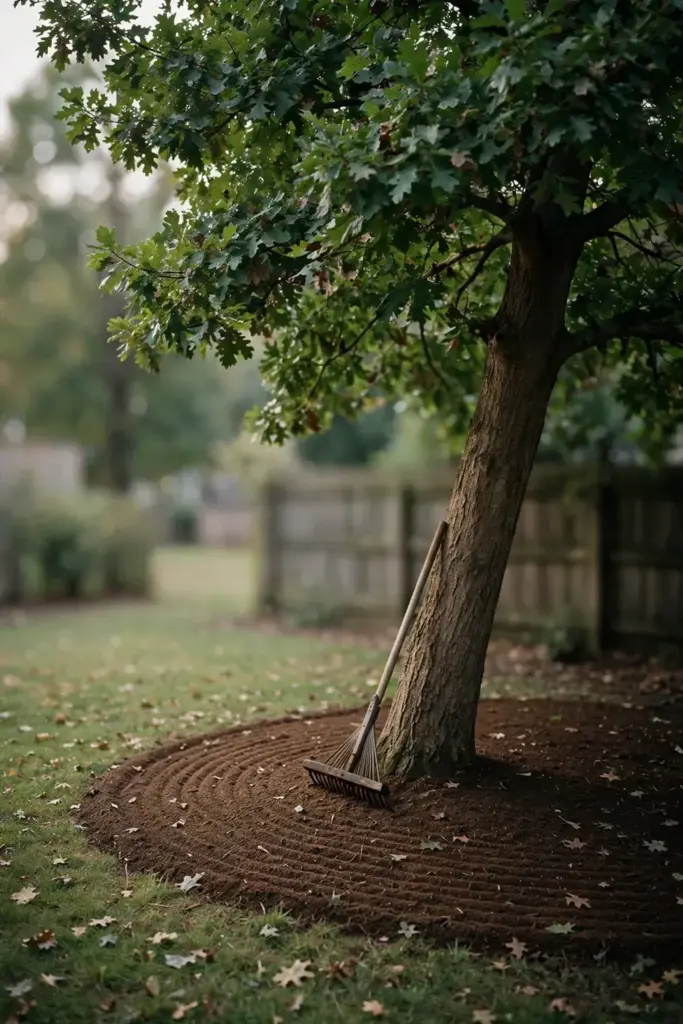
Start with the rake. Fall cleanup is the single move that cuts next year, and the vigor work carries the tree through the seasons after that. A spotted oak in August is a tree asking for cleanup, not a tree asking for a spray.
One more check before you put the tools away. Spores travel on wind from nearby trees, so a neighbor oak with heavy spotting raises the pressure on yours. Cleanup still cuts your own source, and that is the part you control.