
Ergot is a poison, not a plant disease to treat. The 7 ways below spot the toxic black spurs and keep them out of food and feed, starting with the seed-head inspection that finds them.
The signature is a black spur, a sclerotium, growing in place of a seed in a grass or grain head. The spur carries alkaloids that stay active after processing into flour or feed. There is no treatment for ergot poisoning. Prevention is the only protection.
The rest of this page runs the order a person handling grain or hay should follow. Understand the fungus first, learn its signs, then work the 7 ways from inspection to small-lot cleaning. I have learned that the seed head I check before milling is the loaf that stays safe.
What Ergot Actually Is
Ergot is a fungal disease of grasses and cereals that produces toxic sclerotia. The fungus Claviceps purpurea causes ergot.
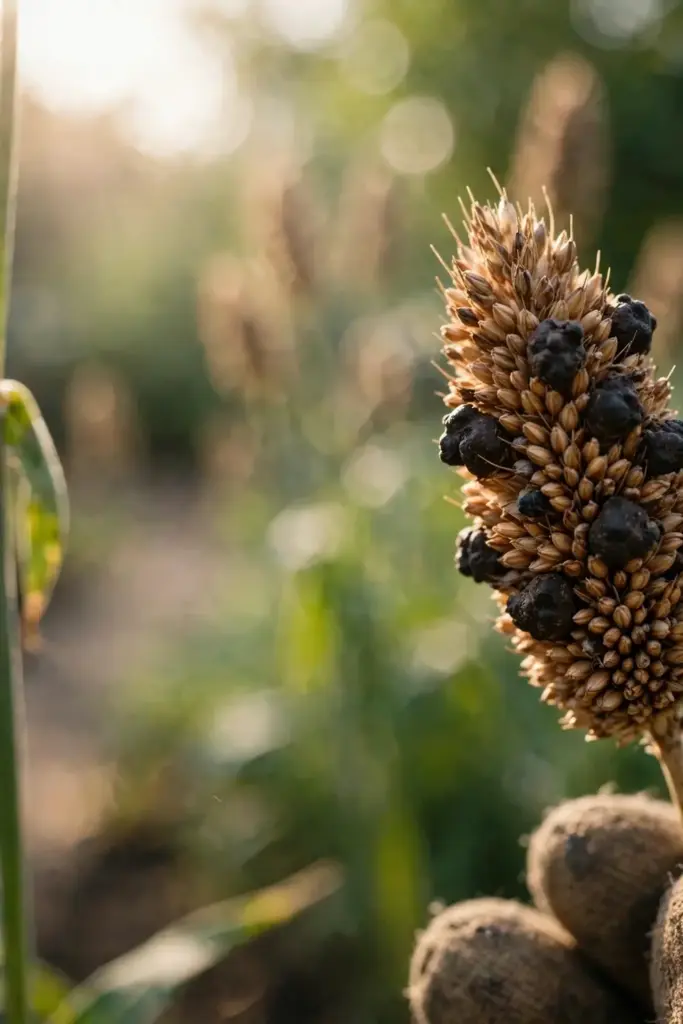
The honest frame comes first. Ergot is a safety problem, not a garden problem. The fungus replaces individual kernels in a seed head with a hard, dark sclerotium. The sclerotium carries ergot alkaloids. The alkaloids stay active after processing into flour or feed. Baking does not detoxify them. Cooking does not detoxify them. Milling contaminated grain into flour carries the poison into the flour. The only protection is keeping the sclerotia out.
Ergot does not kill the plant. The fungus replaces individual kernels. The grass or cereal plant lives on, with a few of its seeds replaced by sclerotia. A rye head with three sclerotia is a rye head with three poisons and the rest sound grain. The plant is not the victim. The eater is.
The University of Nebraska-Lincoln gives the home-scale framing: ergot is a disease of grasses and cereals, and the University of Nebraska-Lincoln CropWatch page on ergot carries the core guidance for growers and handlers. The page’s lessons transfer directly to home-grown grain and pasture grass. The scope stays on home-grown grain and pasture grass: rye, wheat, barley, triticale, and oats in small lots, plus timothy, perennial ryegrass, orchardgrass, tall fescue, brome, and wheatgrass in pasture and hay.
Ergotism is the poisoning. The historical name is St. Anthony’s fire. The symptoms are impaired circulation with burning and freezing sensations, gangrene of the extremities, convulsions, hallucinations, and death. Saskatchewan guidance lists the same symptom set. There is no treatment for ergot poisoning, per the Scottish Agricultural College. Prevention is the only protection. The sentence bears repeating, because it is the whole article.
The Salem witch trials are sometimes linked to ergot. That link is a hypothesis, stated as “it is thought” in University of Nebraska-Lincoln guidance, not a fact. This article presents it as a hypothesis and moves on. The history is interesting. The safety is the point.
Ergotamine is similar to LSD. That fact gets one line and no more. This article carries no psychoactive-use angle, no how-to, and no glorification. The similarity is a chemistry note. The safety is the point.
How to Spot Ergot on Seed Heads
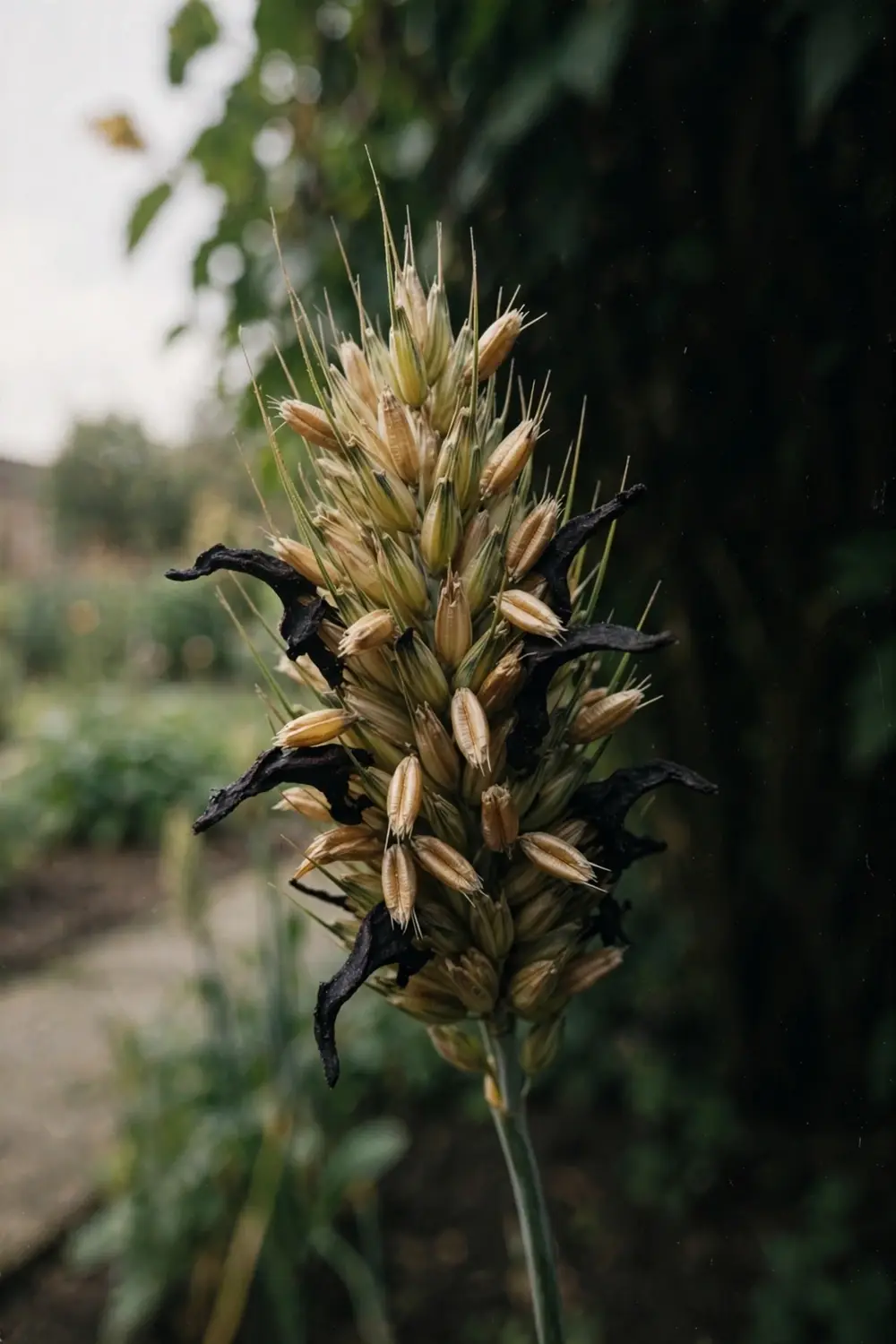
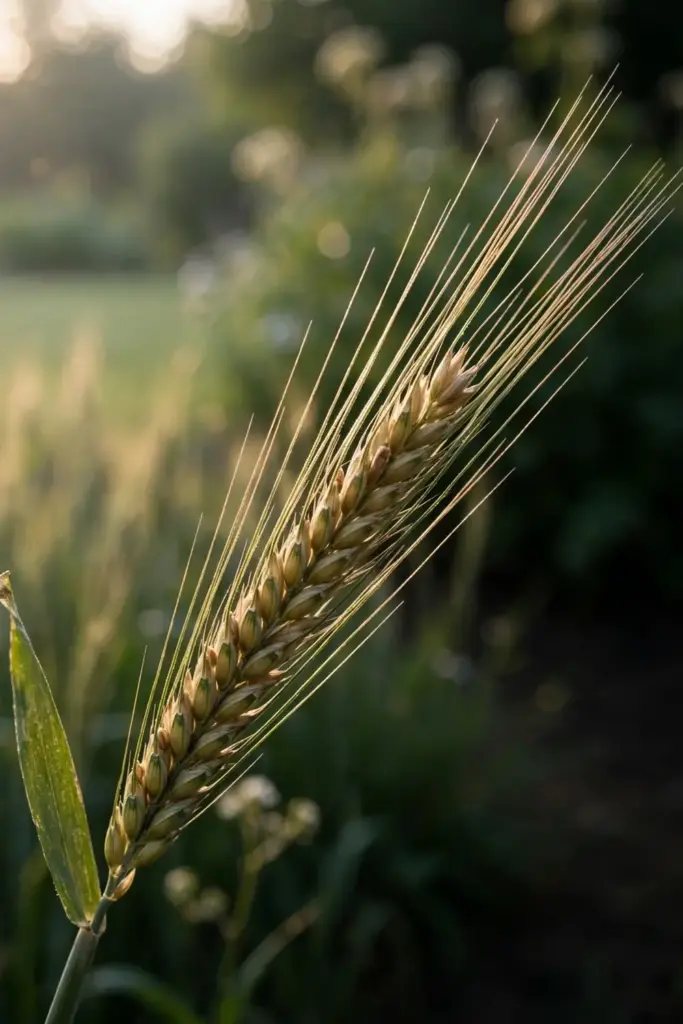
Black spurs, larger than the seeds around them, growing in place of seeds in a grass or grain head, point at ergot.
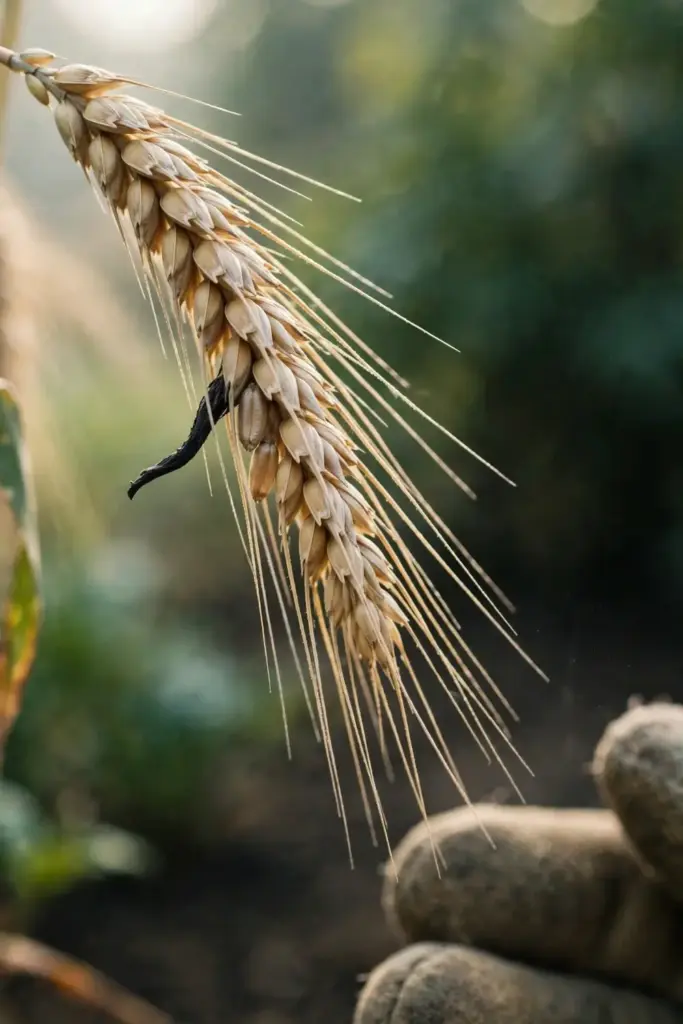
Look at the seed head first. A healthy seed head holds uniform seeds in an orderly row. An ergoty head holds one or more dark bodies among the seeds. The bodies are dark brown, purple, or black. They are larger than the seeds around them. They stick out from the head at odd angles. They look like seeds, rodent droppings, or insect parts. A head with a dark, oversized body among its seeds is an ergoty head.
Look for honeydew first, early in the season. The fungus first produces a sticky, sweet liquid called honeydew on the infected floret. The honeydew carries spores. Insects visit the honeydew and carry spores to the next floret. A head with sticky droplets in early flowering is a head to watch. A head with black spurs at harvest is a head to reject.
Measure the sclerotium. Sclerotia run from 1/16 inch to 3/4 inch long. A body in that size range, dark, hard, and growing in place of a seed, is a sclerotium. A body smaller than a seed, pale, or soft is something else. The size plus the color plus the position names the ergot.
Field identification is strong for the sclerotium itself. A black spur in a seed head is ergot until proven otherwise. The identification does not need a lab. The lab matters for the flour or feed question: how much ergot is in the lot, and whether the lot is safe. The visual check finds the sclerotia. The lab measures the contamination.
Check the whole lot, not one head. Ergot in one head points at the field. Ergot in many heads points at a field-wide problem. The proportion of ergoty heads across the lot tells the handler whether the lot is cleanable or rejectable. A lot with a few ergoty heads is a lot to clean. A lot with many ergoty heads is a lot to reject.
| Material | Ergot Limit | Source |
|---|---|---|
| No. 1 wheat, human food | 0.01 percent ergot by weight | Grainews grading guidance |
| Livestock feed | 0.10 percent ergot by weight | Grainews grading guidance |
| Beef cattle daily dry matter | Up to 0.10 percent by weight | Saskatchewan guidance |
| Human tolerable daily intake | 0.6 micrograms per kilogram body weight per day | European Food Safety Authority |
Read the table as thresholds, not targets. A lot at the limit is a lot at the edge. A lot below the limit is a lot to use. A lot above the limit is a lot to reject. The home handler who cannot measure the percentage cannot use the table. The visual check and the cleaning steps below are the home handler’s tools. The table is the standard the tools serve.
Way 1: Inspect Seed Heads for Black Spurs
Inspect seed heads for black spurs before harvest, before storage, and before use. The inspection is the gate.
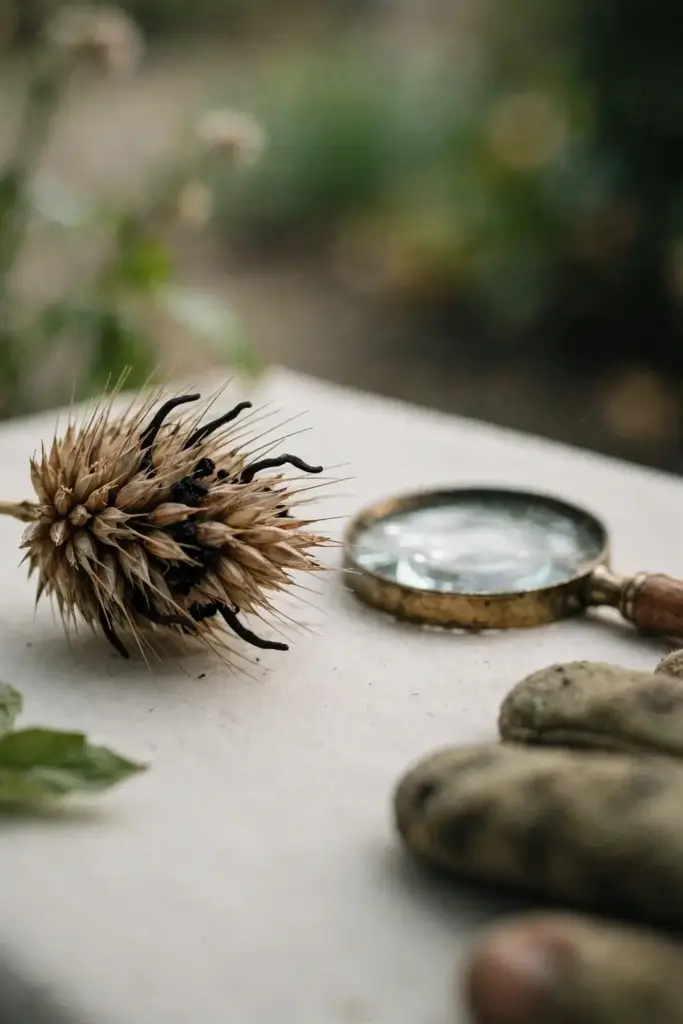
Walk the grain or pasture before harvest and look at the heads. A head with black spurs is a head to flag. A field with many flagged heads is a field to harvest separately, or to reject. The pre-harvest walk tells the handler what the harvest will bring. A handler who walks first harvests with knowledge. A handler who harvests blind stores a surprise.
Inspect the harvested grain before storage. Spread a sample on a light surface and look for dark bodies among the seeds. A sample with a few dark bodies is a lot to clean. A sample with many dark bodies is a lot to reject. The sample check takes minutes. The minutes save the lot.
Inspect the grain before milling or feeding. The pre-use check is the last gate. A lot that passed the field check and the storage check still earns a pre-use check, because sclerotia settle and concentrate during handling. A lot that fails the pre-use check gets rejected, even if it passed earlier checks. The last check is the one that protects the eater.
Inspect hay before feeding. Break open bales and look at the seed heads inside. A bale with black spurs in its heads is a bale to reject. A bale with no seed heads is a bale with no concern, per the rule in Way 2. The hay check takes minutes per bale. The minutes save the livestock.
Way 2: Apply the No Seedheads, No Concern Rule
Apply the no seedheads, no concern rule. If pasture or hay has no seedheads, ergot is not a concern.
University of Missouri Extension gives the rule: if pasture or hay has no seedheads, there is no concern. Ergot forms in the seed head. No seed head means no place for the fungus to form a sclerotium. A pasture grazed short, with no heads, carries no ergot risk. A hay field cut before heading carries no ergot risk. The rule is the simplest safety check on this page.
Graze or mow to keep seed heads down. A pasture kept grazed or mowed, with no heads allowed to form, stays ergot-free. A pasture left ungrazed through heading grows heads, and the heads grow ergot. The grazing schedule is the ergot control. The mower is the ergot control.
Cut hay before heading when ergot is a concern. An early hay cut takes the heads before the fungus forms sclerotia. A late hay cut takes the heads with the sclerotia in them. The early cut costs a little yield. The late cut costs the lot. Cut early when the field shows ergot. The early cut is the safe cut.
Check the pasture after the first cutting. Cool-season grasses after the first cutting will not regrow seed heads. A pasture cut once, with no regrown heads, stays clean for the season. A pasture left uncut regrows heads and risk. The first cutting resets the field. The regrowth check confirms the reset.
Way 3: Mow Before Heading and Cut Hay Early
Mow before heading. Cut hay early. Mowing and early cutting drop and remove infected seed heads before the sclerotia form.
Mow remaining tall fescue pastures before heading. Tall fescue holds seed heads late, and the heads carry ergot. A mowed tall fescue pasture drops its heads to the ground, where they break down. An unmowed tall fescue pasture holds its heads, and the heads hold ergot. The mower is the control.
Clip seedheads to return grass to vegetative growth. A grass plant with its seed head clipped stops making seed and returns to leaf growth. The clipped head falls to the ground. The plant grows leaves, not ergot. The clip is a small act with a large safety effect. Clip the heads. The grass grows leaves.
Mow uncut tall fescue and leave 3 to 4 inches. The 3 to 4 inch stubble keeps the grass alive and growing. A scalp mow kills the grass and opens the soil to weeds. A high mow removes the heads and keeps the grass. The height matters. Mow high. Leave the stubble.
Cut hay early when ergot is a concern. Early hay harvest prevents contamination. A hay field cut before heading carries no ergot. A hay field cut after heading carries ergot in its heads. The early cut is the safe cut. The early cut costs a little yield and saves the lot.
Way 4: Check Home-Grown Grain Thoroughly Before Use
Check home-grown grain thoroughly before use. Home-grown grain should not be used unless it is checked thoroughly to ensure it is free of ergot.
Saskatchewan guidance gives the rule: home-grown grain should not be used unless checked thoroughly to ensure it is free of ergot. Commercial flour and grain products carry very little risk, because commercial grading and cleaning remove ergot. Home-grown grain carries the risk that commercial cleaning removes. The home handler must do the checking that the commercial system does. The checking is the price of home-grown grain.
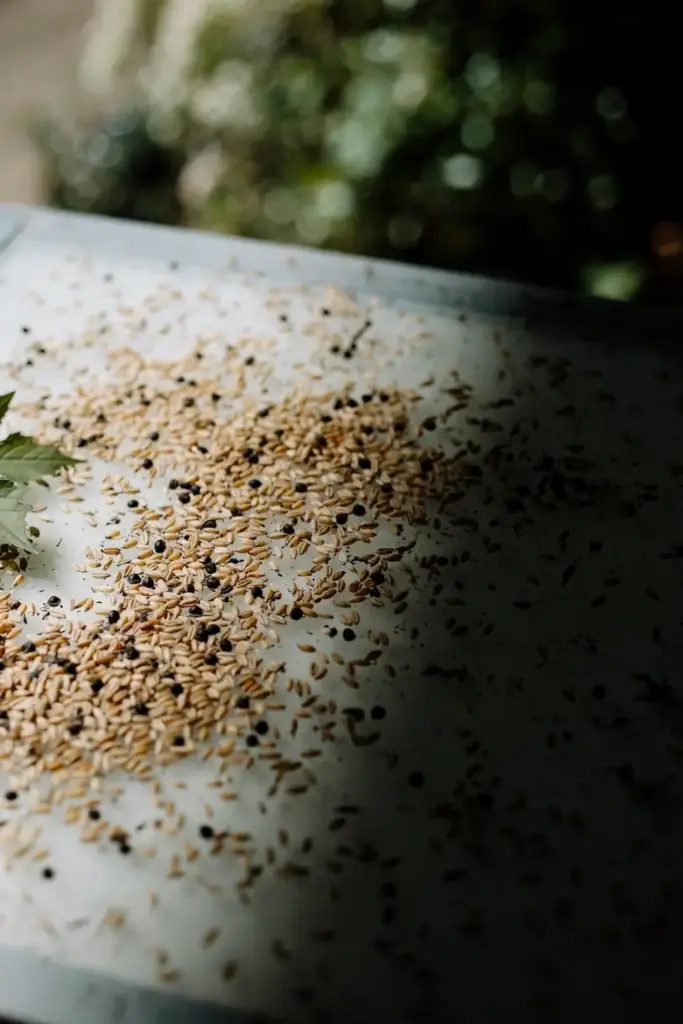
Check the grain visually, sample by sample. Spread the grain thin on a light surface. Pick out dark bodies. A lot with a few dark bodies is a lot to clean by hand or by flotation. A lot with many dark bodies is a lot to reject. The visual check is the home handler’s grading system. The grading system is the hand and the eye.
Do not mill grain that has not been checked. Milling mixes the sclerotia into the flour. Milled flour with ergot cannot be cleaned. The flour is contaminated, and the contamination is permanent. Check before milling. Clean before milling. Reject before milling. The order matters. Milling is the last step, not the first.
Do not assume a small amount is safe. The tolerable daily intake is 0.6 micrograms per kilogram of body weight per day, per the European Food Safety Authority. A small amount in a daily loaf adds up across days. A child or a pregnant woman faces a higher risk, per the German Federal Institute for Risk Assessment. The small amount is not safe by being small. The small amount is safe only by being absent.
Way 5: Never Feed Contaminated Grain or Hay to Livestock
Never feed contaminated grain or hay to livestock. Ergot poisoning in livestock causes lameness, gangrene, abortions, seizures, and death.
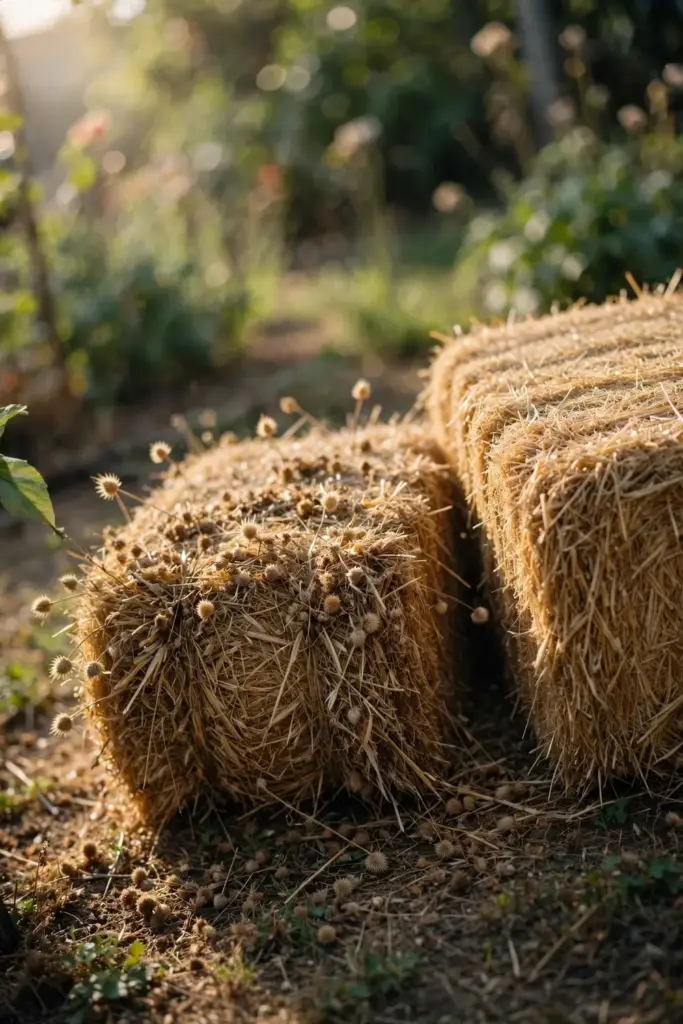
University of Nebraska-Lincoln guidance gives the rule: do not feed contaminated grain or hay to livestock. University of Missouri Extension agrees. The alkaloids that poison people poison livestock too. A cow that eats ergoty hay develops lameness, then gangrene of the extremities. A pregnant cow that eats ergoty hay may abort. A horse, sheep, or goat that eats ergoty hay faces the same poisoning. The feed is the poison. The only protection is keeping the poison out of the feed.
Do not grind or mix contaminated grain and feed it. The Scottish Agricultural College warns that grinding and mixing contaminated grain increases toxicity, because grinding spreads the alkaloids through the whole batch. Feed whole or not at all, with a strong default of not at all. A whole ergoty head fed to livestock is a poison. A ground ergoty head mixed through the feed is a poison spread through the feed. The grinding makes it worse. Do not grind it. Do not feed it.
Straw is safe only if the ergoty heads are gone. University of Nebraska-Lincoln guidance gives the straw rule: straw is safe if the ergoty heads are gone. Straw without heads carries no ergot. Straw with heads carries ergot. Check the straw. Remove the heads. The straw without heads is safe bedding and feed. The straw with heads is not.
Watch livestock for early signs. Lameness, cold ears and tails, and a reluctance to move are early signs of ergot poisoning. A cow that lags behind the herd, holds a foot up, or shows a cold tail tip is a cow to check. Remove the suspect feed at once. Call the veterinarian. Early removal saves the animal. Late removal does not.
Way 6: Handle Ergoty Material With Gloves and a Mask
Handle ergoty material with gloves and a mask. Do not sort ergoty grain with bare hands.
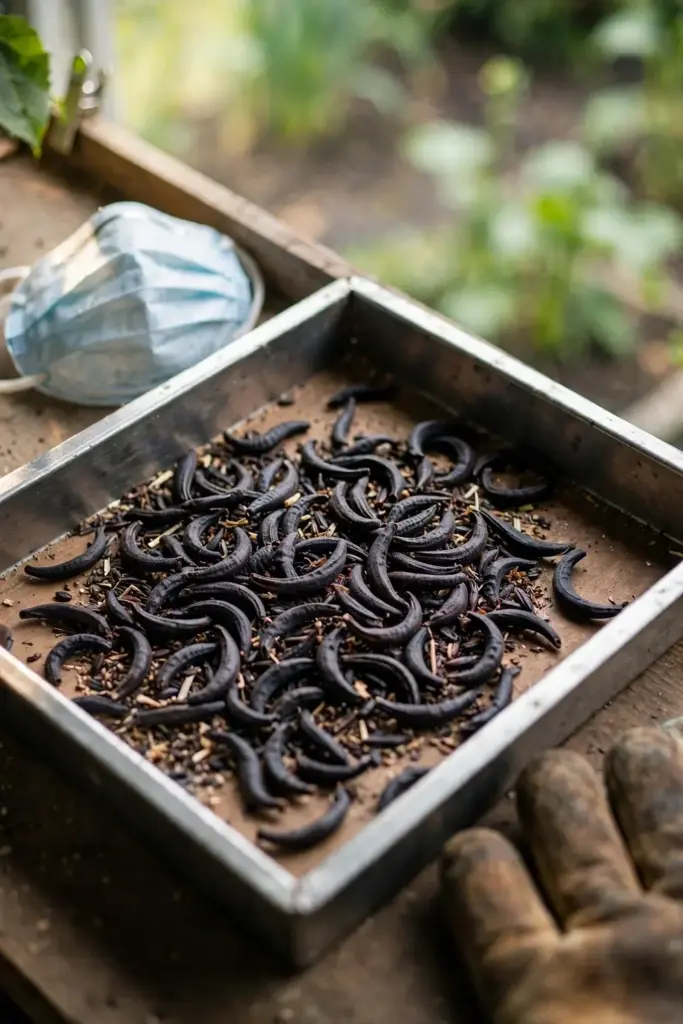
The Scottish Agricultural College gives the handling rule: wear gloves and a mask when handling ergoty material. The alkaloids absorb through skin and through inhaled dust. A handler who sorts ergoty grain bare-handed absorbs alkaloids through the skin. A handler who winnows ergoty grain without a mask inhales alkaloid dust. The gloves and mask are the barrier. The barrier is the protection.
Wear gloves for every handling step. Sorting, winnowing, bagging, and disposing all earn gloves. Wash hands after removing gloves. A glove that is removed and then touched with a bare hand transfers the dust to the hand. Wash after. The washing is part of the handling.
Wear a mask for dusty handling steps. Winnowing, grinding, and pouring grain raise dust. Dust carries alkaloids into the lungs. A dust mask or respirator blocks the dust. A bandana does not. The mask must fit and filter. The fit matters. The filter matters.
Do not let children handle ergoty grain. Children face a higher risk from ergot alkaloids, per the German Federal Institute for Risk Assessment. A child who sorts ergoty grain absorbs a larger dose per kilogram of body weight than an adult. Keep children away from ergoty material. The adult handles the ergot. The child stays away.
Way 7: Clean Small Lots and Keep Ergot Out of Food and Feed
Clean small lots by visual check, hand-removal, mowing, and small-lot brine flotation. Cleaning removes the bodies. Cleaning does not detoxify flour already milled from contaminated grain.
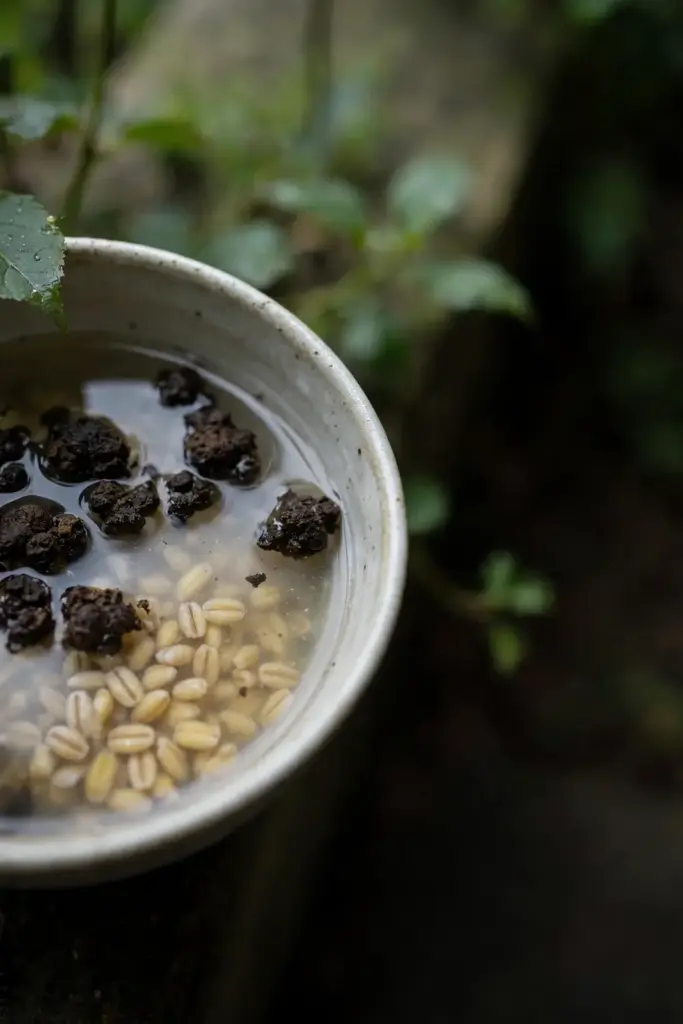
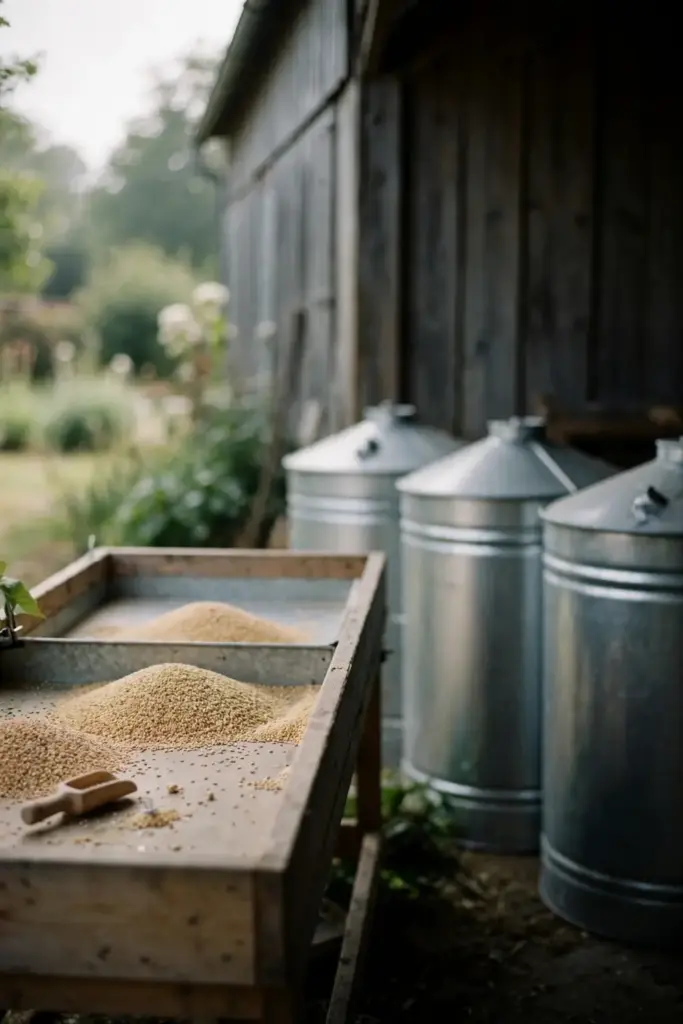
Hand-remove sclerotia from small lots. Spread the grain thin, pick out the dark bodies, and discard them. Hand-removal works for a small lot: a few kilograms, a bucket, a sack. Hand-removal does not work for a large lot. A large lot needs commercial cleaning or rejection. The hand is the tool for the small lot. The commercial cleaner is the tool for the large lot.
Use brine flotation for small lots, with the ratio verified. Brine flotation floats the sclerotia and sinks the sound grain, or the reverse, depending on the grain. The published ratios conflict: University of Nebraska-Lincoln gives a 20 percent salt solution in its CropWatch ergot guidance, a University of Wisconsin-Madison document gives 1.5 pounds of salt per gallon, about 18 percent, and a historical bulletin gives 40 pounds of salt per 25 gallons of water. This article presents the conflict and the rule: verify the ratio for the grain, use it on small lots only, and dry the seed promptly after flotation. Do not present one figure as settled. The conflict is the honest fact.
Dry the seed promptly after flotation. Wet seed molds. Wet seed germinates. Wet seed clumps. Dry the seed in a thin layer, in moving air, as soon as the flotation is done. A seed lot that stays wet after flotation trades ergot for mold. The drying is part of the cleaning. The cleaning is not done until the seed is dry.
Do not present cleaning as a way to make contaminated grain safe to eat. Cleaning removes the bodies. Cleaning does not detoxify flour already milled from contaminated grain. A lot that was milled with ergot in it stays contaminated. The flour is rejected. The grain is cleaned before milling, never after. The order matters. Clean first. Mill second. Reject when the cleaning cannot make the lot clean.
Living With Ergot in the Field and the Barn
Some risk stays. A field with an ergot history lives under prevention habits for as long as the field is in use.
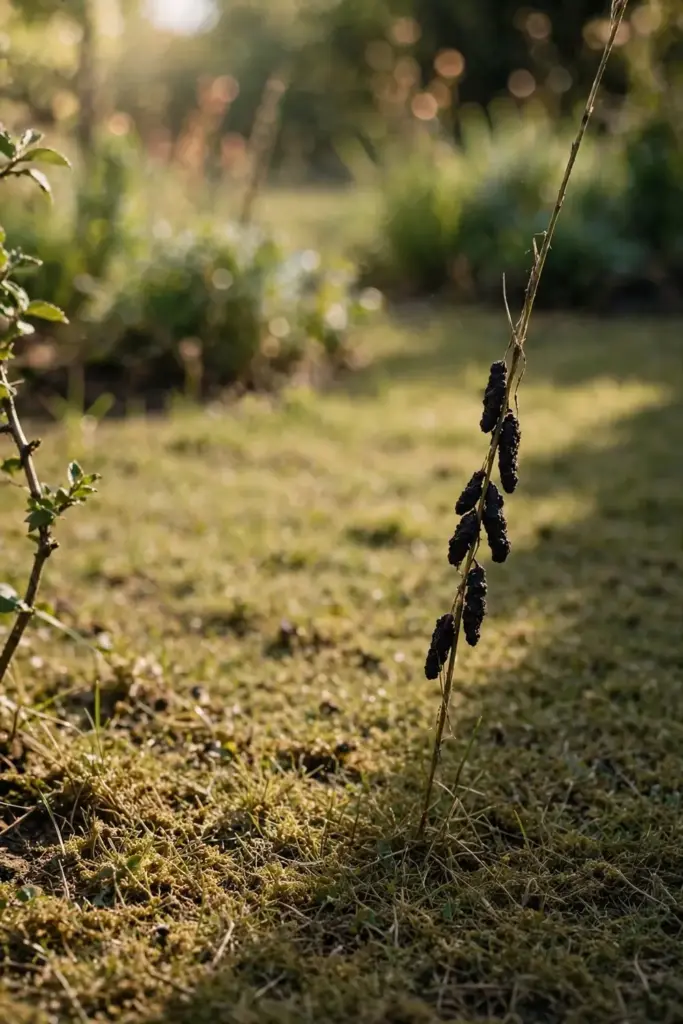
Mow and graze to keep seed heads down. The mowing habit is the cheapest insurance in the whole routine, and it never expires. A pasture kept grazed or mowed, with no heads, stays ergot-free. A pasture left ungrazed through heading grows heads, and the heads grow ergot. Mow the pasture. Graze the pasture. Keep the heads down.
Rotate the grain field. A grain field that grew rye last year and rye again this year faces the same ergot pressure. A grain field that rotates to a non-host crop breaks the cycle. The rotation starves the fungus of its host for a season. The rotation is the prevention. The monoculture is the risk.
Store grain clean and dry. A grain bin that holds clean, dry grain stays clean. A grain bin that holds dirty, wet grain grows mold and holds ergot. Clean the bin before filling. Dry the grain before storing. Check the bin through the season. The storage habits protect the lot that the field habits grew.
Do not replant an ergoty lot and expect a different result. The fungus stays in the soil and in the debris. The seed lot carries sclerotia. A new planting from an ergoty lot faces the same season with the same disadvantage. Clean the seed. Rotate the field. Mow the pasture. The routine never leaves the field.
Frequently Asked Questions
Cooking and baking do not destroy ergot poison. Ergot alkaloids remain active after processing into flour or feed. Milling contaminated grain into flour carries the poison into the flour. Baking the flour into bread keeps the poison in the bread. The only protection is keeping the sclerotia out of the grain before milling. Check the grain. Clean the grain. Reject the contaminated lot. The oven is not a detoxifier.
Commercial flour and grain products carry very little risk from ergot. Commercial grading and cleaning remove ergot sclerotia from grain before milling. The grading limits are strict, and the table above lists them. Home-grown grain carries the risk that commercial cleaning removes. The home handler must do the checking that the commercial system does. The store loaf is safe. The home loaf needs the check.
Ergot poisoning shows as impaired circulation with burning and freezing sensations, gangrene of the extremities, convulsions, hallucinations, and death. Livestock show lameness, gangrene, abortions, seizures, and death. There is no treatment for ergot poisoning. Prevention is the only protection. A person or animal that shows symptoms needs a doctor or veterinarian at once, and the suspect feed must be removed immediately. Early removal saves the animal. Late removal does not.
Never feed ergoty hay to livestock, mixed or whole. Grinding and mixing contaminated grain increases toxicity, because grinding spreads the alkaloids through the whole batch. Mixing ergoty hay with clean hay spreads the poison through the whole feeding. The mixed feeding is not safer than the whole feeding. It is worse. Reject the ergoty hay. Feed the clean hay. The rejection costs a bale. The feeding costs the animal.
Ergot does not kill the grass or cereal plant. The fungus replaces individual kernels in the seed head with sclerotia. The plant lives on, with a few of its seeds replaced by poisons. A rye head with three sclerotia is a rye head with three poisons and the rest sound grain. The plant is not the victim. The eater is. The plant’s survival is the reason ergot is easy to miss. The field looks healthy. The heads hold poison.
Ergot on rye, wheat, barley, triticale, oats, and pasture grasses is the Claviceps purpurea disease covered here. Sorghum ergot, pearl millet ergot, and dallis grass ergot are different diseases, caused by different Claviceps species, with different signs. Sorghum ergot shows honeydew only, with no sclerotia. This article covers the purpurea disease only. The other ergot species get one line and no more. The safety rules transfer. The species differ.
Where to Go From Here
Start with the seed heads. Walk the field or the pasture and look for black spurs today.
The order is inspect, apply the no-seedheads rule, mow before heading, check home-grown grain, never feed contaminated material, handle with gloves and a mask, and clean small lots. One next action beats ten good intentions. Check the heads. Bag the ergoty ones. The food stays safe because the handler checked first.