
Volutella blight is two fungal diseases sharing one common name, and both attack plants that sit in millions of yards. The 10 strategies below save the planting around the infection, starting with the triage call that tells you whether treatment is worth it at all.
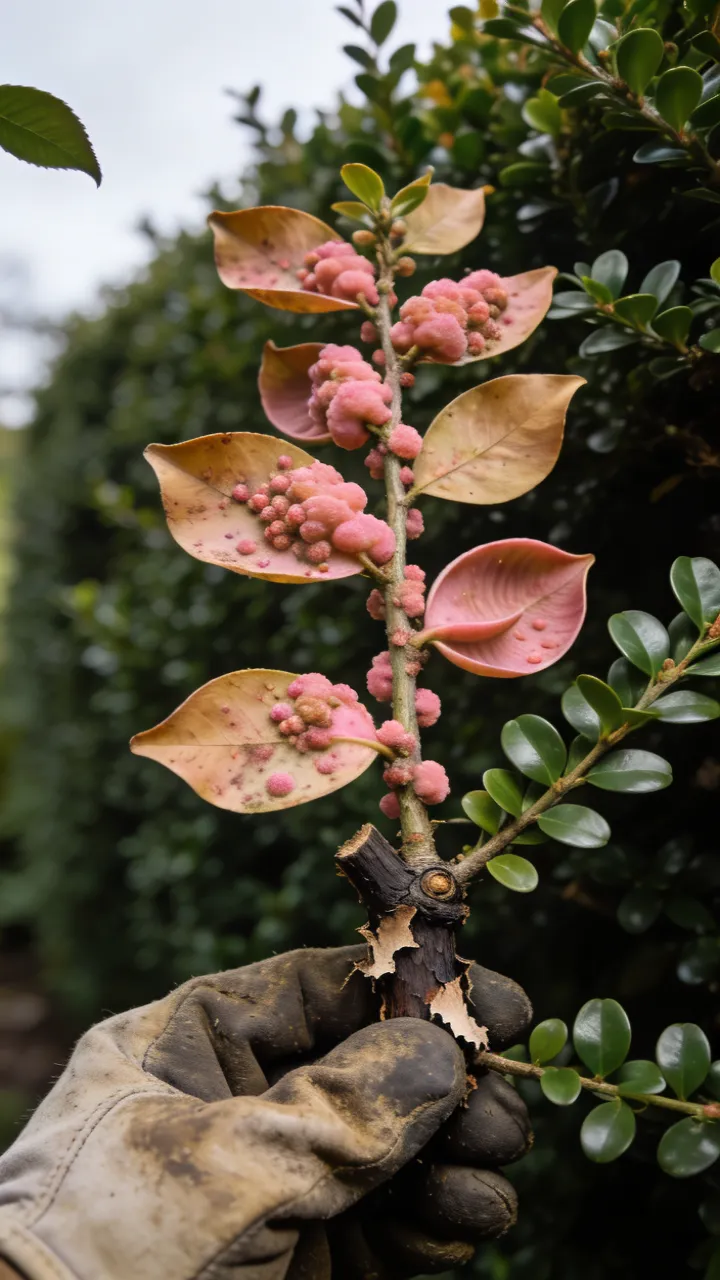
The signature on pachysandra is tan leaf lesions with brown concentric rings that merge until the leaf dies, plus stem cankers that girdle stems and kill the growth above them. The signature on boxwood is branch tips that turn red, then bronze, then yellow in early spring, with loose bark and girdling cankers underneath.
The rest of this page runs the order a gardener should follow. Identify the disease on the right host first, separate it from boxwood blight and winter injury, then work the 10 steps from the first removal to the replacement planting. I have learned that the cleanup done in dry weather matters more than any spray bought after symptoms show.
What Volutella Blight Actually Is
Volutella blight is a fungal disease of pachysandra and boxwood. Two different groups of fungi cause Volutella blight, and the host decides which one you face.
On pachysandra, the pathogen is Coccinonectria pachysandricola, long known as Volutella pachysandrae. On boxwood, the pathogens are Pseudonectria buxi and Pseudonectria foliicola, the second formerly carried as Volutella buxi. All of these fungi once belonged to the genus Volutella, which is why the diseases share a common name. The shared name confuses gardeners. The two diseases need different responses, so the host on the label matters as much as the disease name.
Volutella blight is an opportunistic disease. The fungi live in the background of most plantings and cause little damage on vigorous plants. The fungi enter through wounds, dead shoots, winter-damaged tissue, and stressed growth. A healthy pachysandra bed or a vigorous boxwood shrub usually holds Volutella blight off. A stressed planting gives the fungi the opening they need.
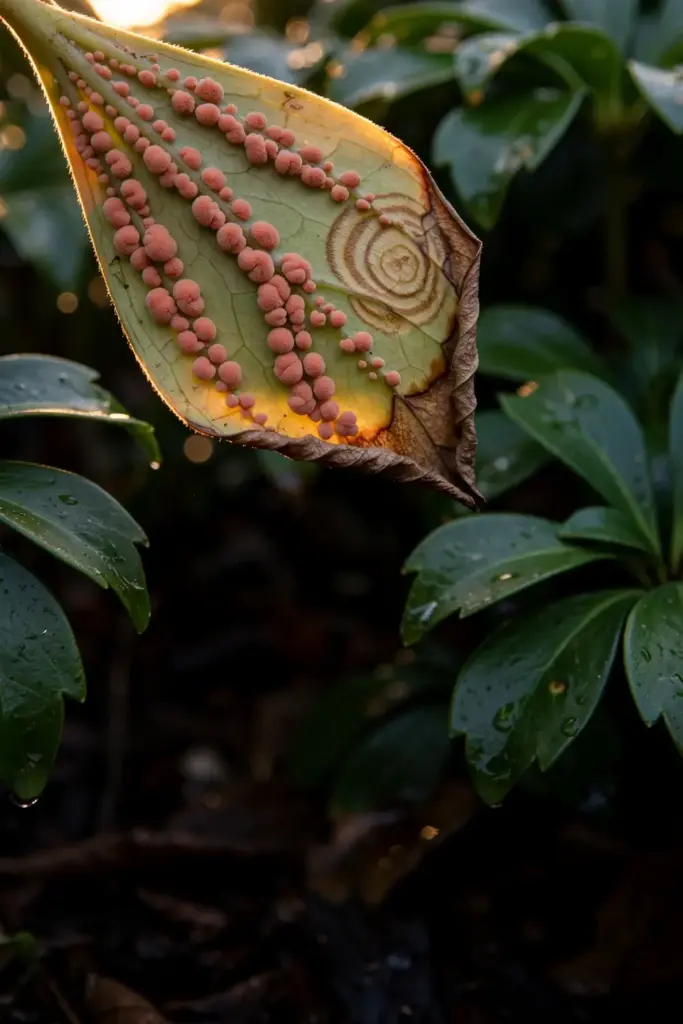
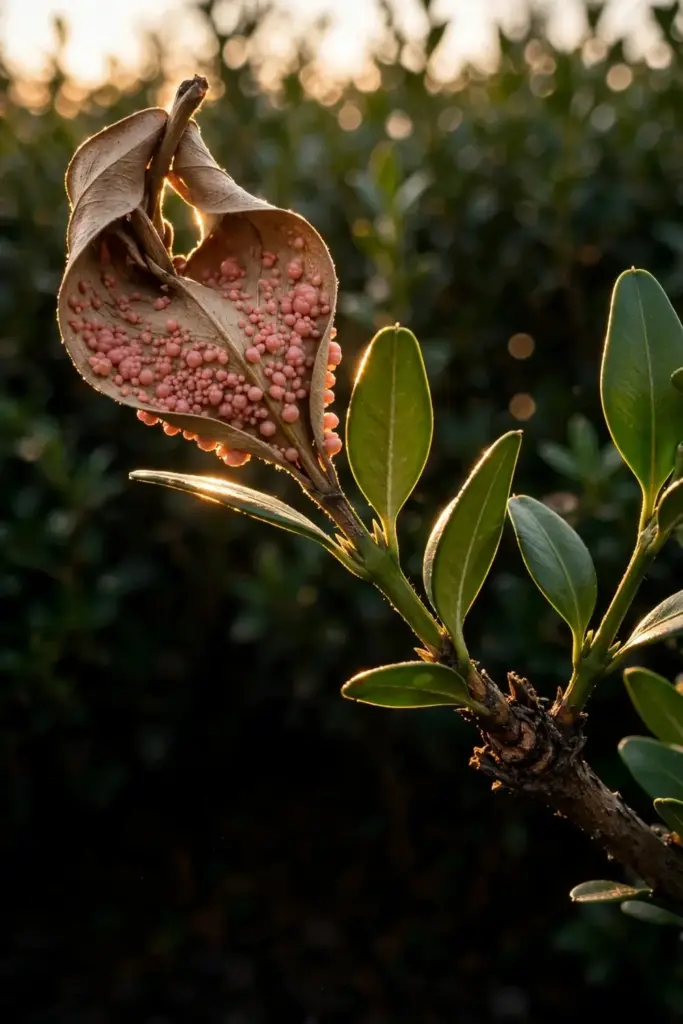
Volutella blight of pachysandra starts on leaves and moves into stems. Tan lesions with brown concentric rings appear on leaves and stems. Leaf lesions coalesce and lead to partial or complete defoliation. Stem cankers disrupt water and mineral transport, and the growth above a girdling canker turns brown and dies. Salmon-colored pads of fungal tissue appear on the undersides of infected leaves and on blighted shoots in wet weather, and those pads produce masses of spores. The UMass Extension fact sheet on Volutella blight of pachysandra describes the pathogen as opportunistic and most often found on plants injured by insect feeding, winter desiccation, excessive pruning, or nutrient and water stress.
Volutella blight of boxwood starts on branch tips and moves into wood. Leaves on infected branch tips turn red, then bronze, then yellow before new growth appears in spring. Infected branches die back. Examination of affected branches reveals loose bark, girdling at varying distances from the tips, and discoloration of the wood. In moist weather the fungus produces salmon pink fruiting bodies on leaves and stems. The University of Maryland Extension guide to Volutella blight disease of boxwood lists both American and English boxwood as susceptible to Pseudonectria buxi and Pseudonectria foliicola.
How to Identify Volutella Blight on Pachysandra Leaves and Stems
Leaf lesions carry the first field mark. Irregular tan to brown lesions appear on pachysandra leaves, often with concentric rings that give a bull’s-eye look.
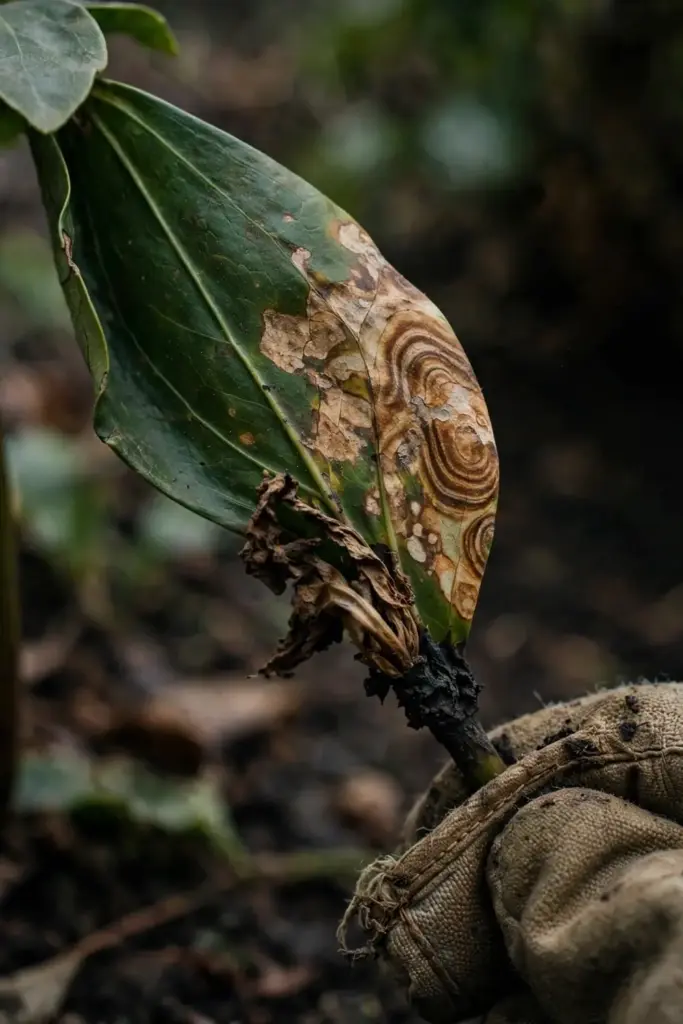
Lesions grow and merge. A single lesion stays small at first. Neighboring lesions coalesce until the whole leaf dies. Defoliation follows in patches, and plants often die in patches that form a circular pattern in the bed. A bed that thins in circles after a wet spring points at Volutella blight before any other cause.
Check the undersides in humid weather. Small pinkish spore-producing structures appear in stem cankers and on the undersides of leaf lesions during humid weather in late spring and summer. Salmon pink pads on a leaf underside are the diagnostic sign. Flip leaves on a damp morning. Dry leaves hide the pads, and wet leaves show them.
Stem cankers carry the killing blow. Brown or black cankers develop on stems and girdle them, and the plants above the canker wilt and die. A stem with a canker and dead growth above it has Volutella blight even when the leaves below the canker still look green. Trace each dead patch down to the stem. The canker sits at the boundary between live and dead growth.
Do not mistake Volutella blight for environmental scorch. Illinois Extension specialists warn gardeners not to mistake the blight for scorch. Scorch browns leaf edges after sun or salt exposure and leaves no cankers and no salmon pads. Volutella blight leaves cankers and pads. The pads decide the call.
How to Identify Volutella Blight on Boxwood Leaves and Branches
Branch tips carry the first field mark. Leaves on the tips of infected branches turn red, then bronze, then yellow before new growth appears in spring.
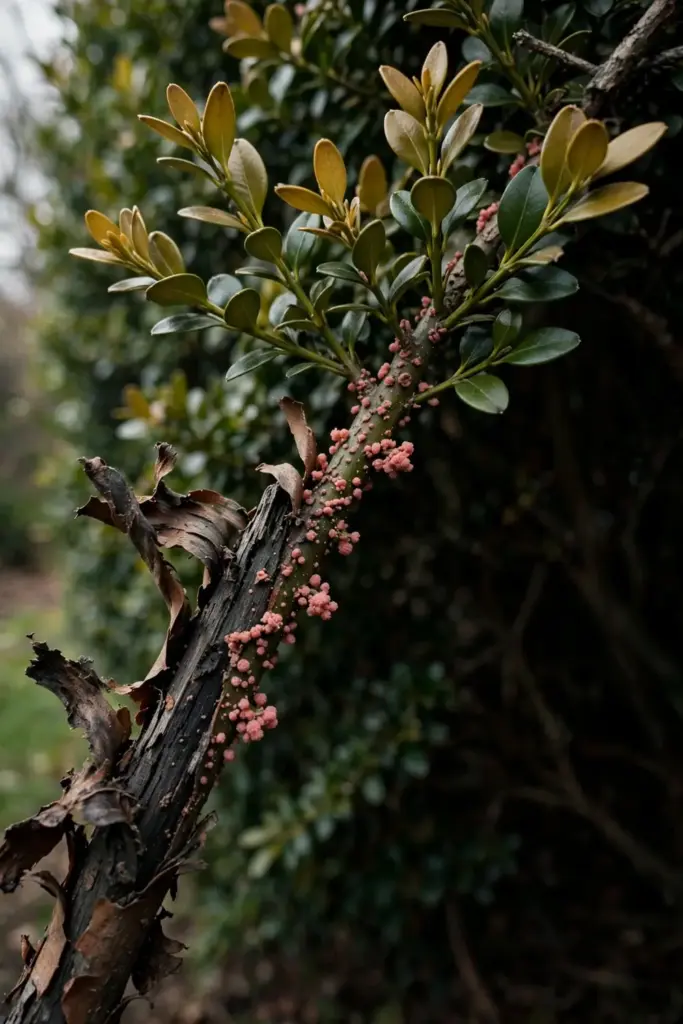
Dieback follows the color change. Infected branches die back from the tip. Growth on those branches starts late in spring, or never starts at all. A branch that stays bare while its neighbors leaf out earns a closer look. Compare branches on the same shrub. Volutella blight hits scattered branches. A whole shrub that browns at once points elsewhere.
Peel back the bark on a suspect branch. Loose bark pulls away easily from gray to black discolored wood beneath. Cankers at branch bases and at branch crotches girdle the stem, and the wood under the canker runs dark. Sunken cankers at the soil line and at branch crotches mark advanced infection. Bark that stays tight over green wood argues against Volutella blight.
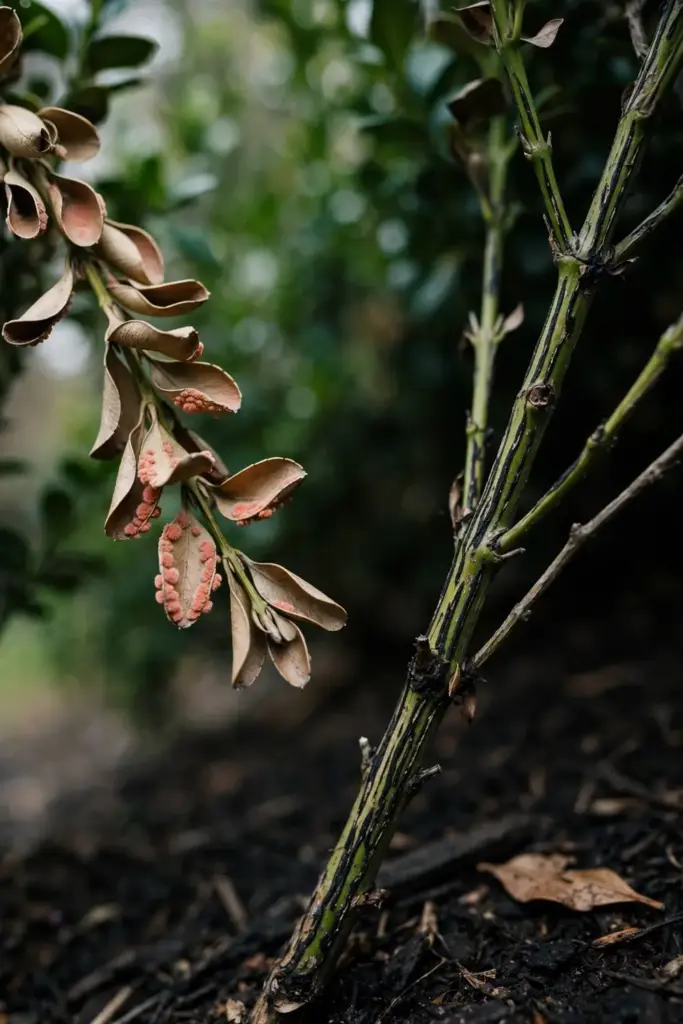
Look for salmon pink fruiting bodies in moist weather. Salmon pink sporodochia emerge on the undersides of infected leaves and on stems during periods of high humidity. The Maryland Department of Agriculture fact sheet on Volutella blight of boxwood calls these salmon structures a distinguishing feature, since boxwood blight produces white structures instead. Cupped necrotic leaves that stay attached to branches after branch death add a second field mark. Rapid leaf drop points at boxwood blight. Leaves that cup upward and stay on the branch for weeks point at Volutella blight.
Stunted gray-green growth that dies by fall or winter and turns light tan or straw in spring marks a chronic case. A shrub that loses a few branches a year and keeps the rest green is a typical Volutella blight case. A shrub that loses its whole canopy in one summer is not.
Which Pachysandra and Boxwood Get Hit Hardest by Volutella Blight
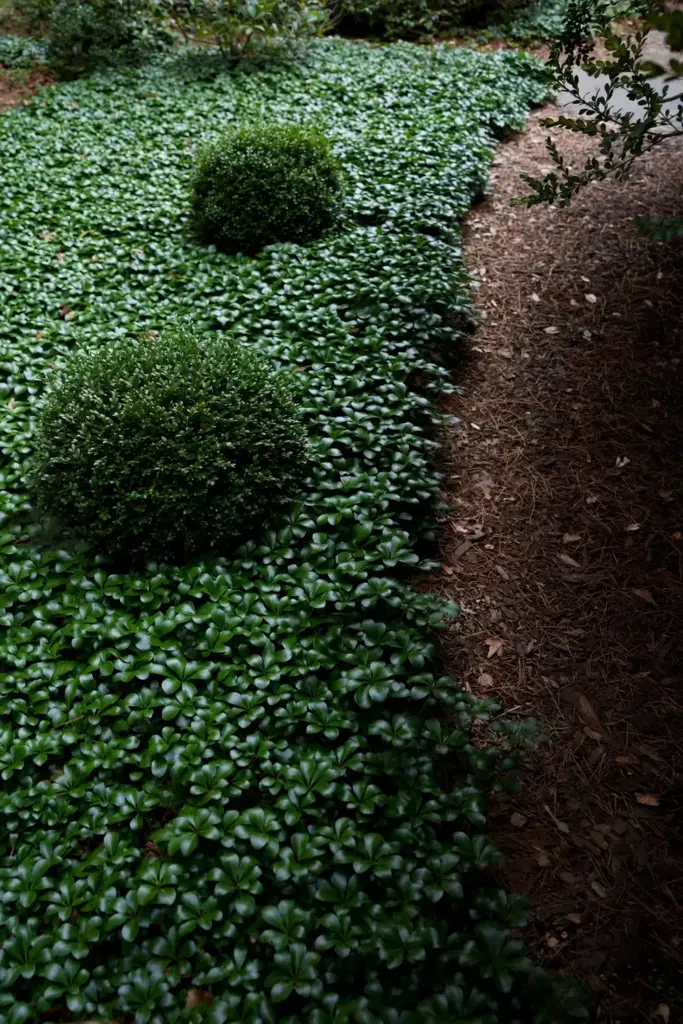
Japanese pachysandra takes the worst of it. Pachysandra terminalis is the groundcover in most affected beds, and it is the host the disease hits hardest.
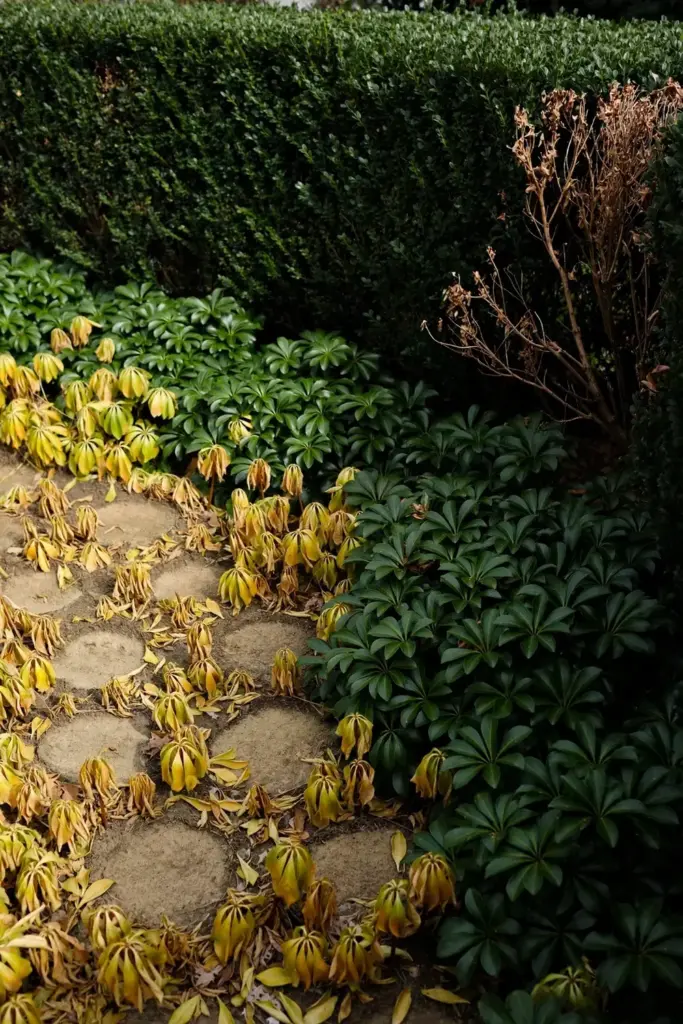
Allegheny pachysandra holds up better. Pachysandra procumbens is less susceptible than Pachysandra terminalis. The Connecticut Agricultural Experiment Station fact sheet names Allegheny pachysandra as a replacement for beds where Volutella blight keeps returning. Sweet box, the Sarcococca species, also hosts the pachysandra pathogen. A bed of Pachysandra terminalis beside a Sarcococca hedge can pass the fungus back and forth.
Both American and English boxwood are susceptible. The University of Maryland Extension guide lists both as susceptible to Pseudonectria buxi and Pseudonectria foliicola. No boxwood cultivar with proven resistance to Volutella blight appeared in the Extension sources used for this article. Planting advice for boxwood therefore centers on vigor and site, not on cultivar choice. Data not available for a ranked resistant cultivar list, and this article names none rather than inventing one.
Stressed plants of any host get hit hardest. Pachysandra in full sun suffers more than pachysandra in shade. Pachysandra weakened by scale insects, winter injury, drought, or recent shearing suffers more than vigorous pachysandra. Boxwood weakened by winter injury, drought, or heavy shearing suffers more than vigorous boxwood. The Pacific Northwest Plant Disease Management Handbook calls the pachysandra disease much more severe on stressed plants, including plants growing in full sun, wounded plants, and plants weakened by scale insects or winter injury. Stress decides severity more than species does.
Dense plantings get hit hardest of all. Pachysandra beds are low to the ground and dense, which holds moisture against leaves and stems. Boxwood hedges sheared into solid walls hold moisture and shade inside the canopy. Both setups give the fungi the wet, still air they need. A dense bed in a damp corner is the highest-risk planting in the yard.
Volutella Blight vs Boxwood Blight vs Winter Injury
Check three things before you name the disease. Season. Leaf drop. Stem marks. Volutella blight develops in early spring on the previous year’s growth, before new growth begins. Boxwood blight strikes in warm summer weather with rain or high humidity. Winter injury shows in spring after cold damage, with no fungal signs at all.
| Sign | Volutella Blight | Boxwood Blight | Winter Injury | Boxwood Dieback |
|---|---|---|---|---|
| Pathogen | Fungi. Pseudonectria buxi and Pseudonectria foliicola on boxwood. Coccinonectria pachysandricola on pachysandra | Fungi. Calonectria pseudonaviculata and Calonectria henricotiae, formerly Cylindrocladium buxicola | No pathogen. Cold, desiccation, and freeze damage | Fungus. Colletotrichum theobromicola |
| Season | Early spring on previous year’s growth, before new growth begins | Warm summer weather with rain or high humidity | Late winter into spring, after cold snaps and drying wind | Growing season, often after stress |
| Leaf signs | Tips turn red, then bronze, then yellow. Leaves cup upward and stay attached for weeks | Leaf spots, then rapid leaf drop. Leaves fall fast and leave bare stems | Bronze or straw foliage that stays attached, often on the exposed side | Leaf spots and dieback, with leaves that may drop |
| Stem marks | Girdling cankers, loose bark, dark wood beneath. No black streaks on green stems | Black streaks along green stems, a mark Volutella blight never shows | No cankers and no fruiting bodies. Wood under bark stays sound | Cankers and dieback, sometimes with pink spore masses |
| Fruiting bodies | Salmon pink sporodochia on leaf undersides and stems in humid weather | White structures, not salmon pink | None | Pink to orange spore masses in some cases |
| Leaf drop pattern | Slow. Dead leaves remain attached for long periods | Rapid defoliation, often across the whole shrub | Leaves stay attached and new healthy leaves emerge later in spring | Variable, often with scattered dieback |
| Spread | Wet sticky spores travel short distances. Main spread comes from moving infected plants and cuttings, contaminated gloves and tools, and untreated water | Spores spread by rain splash, wind, and movement of infected plants. No wound needed for infection | Not infectious. Damage stops when the weather warms | Spores spread by rain splash and contaminated tools |
| First move | Prune diseased branches when dry. Thin, do not shear. Shake out crotch leaves. Sanitize tools | Remove and destroy infected plants fast. Sanitize everything. Report to Extension where required | Wait. Do not prune until new growth shows which wood is alive | Prune diseased wood when dry. Improve air flow and vigor |
The table separates the two blights on four field marks. Black streaks on green stems belong to boxwood blight alone. Rapid defoliation belongs to boxwood blight. Salmon pink fruiting bodies and leaves that stay attached belong to Volutella blight. Purdue Extension describes the Volutella blight fungi as weak pathogens that rarely infect otherwise healthy plants and notes that Volutella blight alone usually does not kill boxwoods, while loss of branches can severely affect symmetry and ornamental value.
Winter injury needs its own response. Winter injury alone produces similar bronze foliage with no fungal signs, and winter-injury-only plants produce new healthy leaves later in spring. Volutella blight often follows winter injury, since frost-damaged tissue gives the fungi an entry point. A shrub with bronze leaves and no cankers, no loose bark, and no salmon pads earns patience, not pruning. Wait for new growth, then cut only the wood that stays dead.
Boxwood dieback, the anthracnose disease caused by Colletotrichum theobromicola, is the third disease in the American Phytopathological Society diagnostic guide for the Buxaceae family. That guide separates all three diseases by symptoms, and it notes that Volutella blight can be readily distinguished from boxwood blight based on symptoms. The dieback disease gets a brief note here because its spore masses and cankers overlap with Volutella blight. A home diagnosis that stays uncertain after the table earns a sample sent to the state diagnostic clinic. Guessing between three canker diseases wastes a season.
Why Stress and Wounds Drive Volutella Blight
Volutella blight is a disease of openings. The fungi cannot force their way into sound tissue, so they wait for a wound or a stress crack.
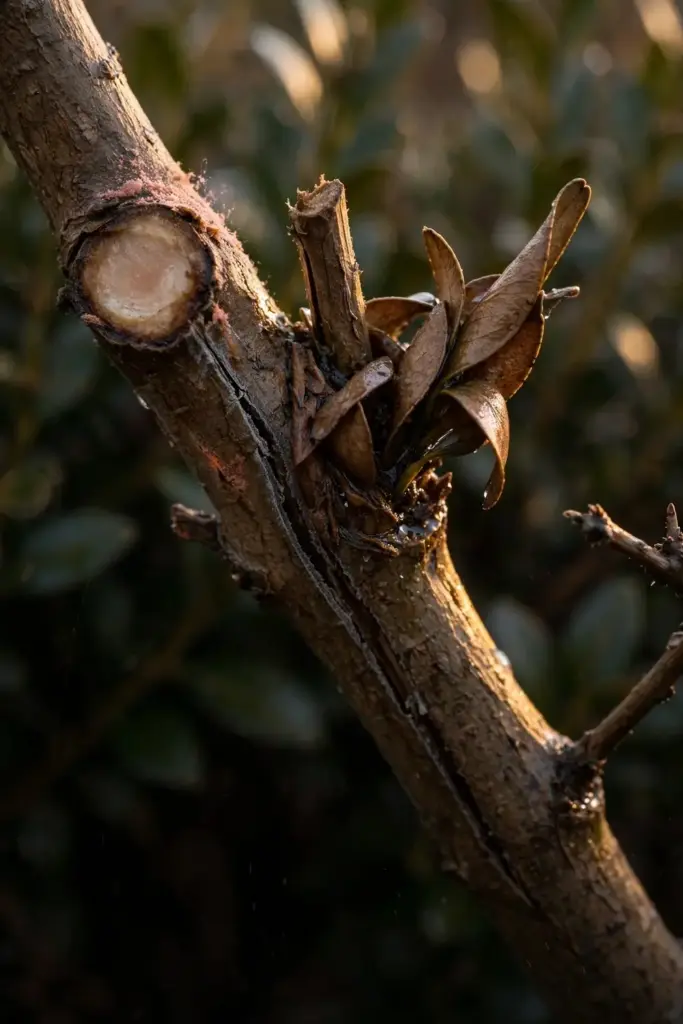
Spores enter at the base of small dead shoots, at branch crotches where leaves accumulate, at pruning wounds, and at winter-damaged areas. The University of Kentucky fact sheet lists those four entry points. A dead shoot stub, a leaf-clogged crotch, a fresh pruning cut, and a frost crack all serve as doors.
Wound timing matters more than most gardeners expect. Infection of wounds occurred for several days after the wounding event early in the growing season, according to the Pacific Northwest Plant Disease Management Handbook. Wounds occurring in the summer are much more resistant to infection. An early-season pruning cut stays open to infection for days. A summer cut closes to the fungus far faster. Prune early with care, or prune later with less risk.
Spores travel short distances on their own. Spores of Pseudonectria buxi have a wet, sticky texture and travel only short distances by wind, so long-distance spread comes from people moving infected plants, cuttings, and contaminated tools, plus untreated water through overhead irrigation, flood water, runoff, or wind-driven rain. The fungi do not fly across the neighborhood. Gardeners carry them from bed to bed on gloves, shears, and cuttings, and that fact makes sanitation the strongest tool in the whole plan.
Warmth and moisture set the infection window. Temperatures for infection and disease development run 68 to 77 degrees Fahrenheit with relative humidity above 85 percent, according to the University of Kentucky fact sheet on distinguishing Volutella blight from other boxwood problems. The Chicago Botanic Garden places the optimal range for pachysandra infection at 64 to 80 degrees Fahrenheit, with late spring and early summer the most common active period after winter stress. A wet spring after a hard winter is the classic Volutella blight setup. A dry spring after a mild winter is not.
The fungi overwinter in infected branches, leaves, and debris. Infected material left in the bed carries the next season’s spores. Fall cleanup removes that carryover. A bed cleaned in fall starts spring with far less inoculum than a bed left littered. The overwintering habit is why debris removal outranks spraying in this plan.
What Makes Volutella Blight Worse in a Home Garden
Heavy damp mulch tops the list. Thick mulch made of leaves or compost holds moisture against pachysandra stems and feeds the fungi.
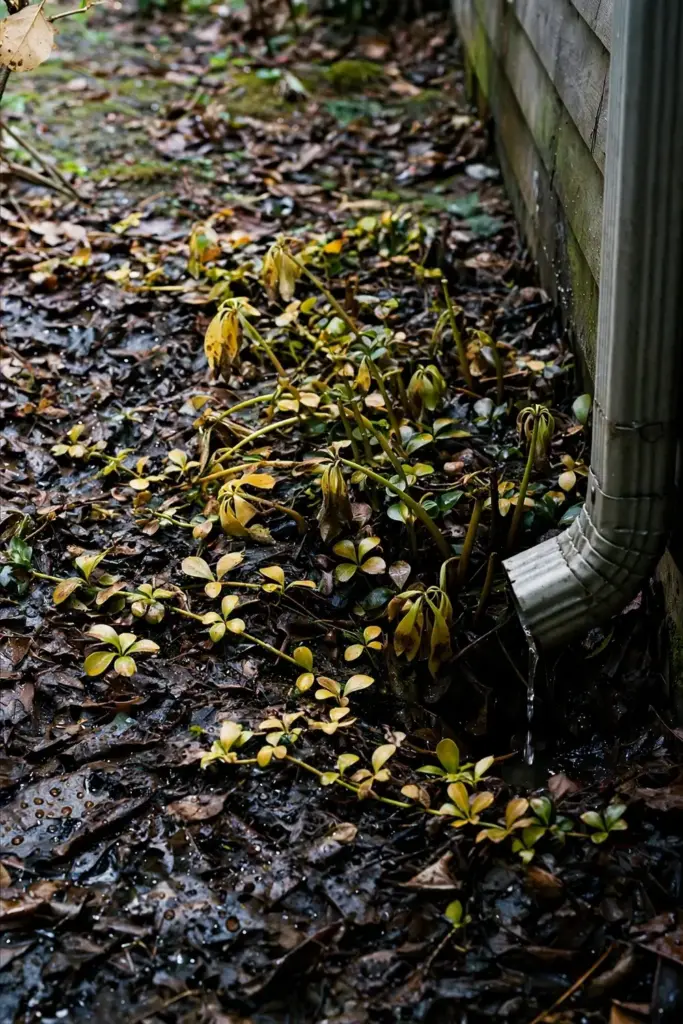
The University of Connecticut Home Garden guide warns against heavy, thick mulches of materials such as leaves or compost, which hold moisture. Mulch that stays wet keeps stems wet. Wet stems infect. A bed mulched deep with shredded leaves in a damp corner is the worst setup in the yard. Pine bark chips hold less water and suit new plantings better, according to the same guide.
Overcrowding comes next. Dense pachysandra beds trap humidity at the soil line. Boxwood hedges sheared into solid walls trap humidity inside the canopy. Still, wet air is what the fungi need. Thinning opens the planting to light and air, and drying leaves starve the infection window. A bed that dries by mid-morning after rain resists Volutella blight. A bed that stays wet past noon does not.
Overhead watering feeds the splash route. Water that hits the canopy moves spores from cankers to healthy tissue. Evening watering leaves foliage wet overnight. Morning watering lets leaves dry quickly. Drip or soaker watering keeps the canopy dry entirely. A sprinkler that wets boxwood foliage every evening through a wet spring is a disease program, not a watering program.
Winter injury opens the door. Winter desiccation, freeze cracks, and snow-load breakage wound tissue that the fungi then colonize. A hard winter followed by a wet spring is the worst combination. Salt injury near sidewalks and driveways adds a second wound source. The University of Wisconsin Plant Disease Diagnostics Clinic advises minimizing salt use near pachysandra beds to limit salt injury, and it puts the disease squarely on stressed plants.
Insects and overpruning add wounds. Euonymus scale weakens pachysandra and opens feeding wounds. The University of Connecticut guide notes that the disease spreads rapidly in stands weakened by insects such as euonymus scale and root knot nematodes. Excessive pruning wounds tissue and stresses the plant. Shearing boxwood wounds hundreds of shoot tips at once. Each wound is a door, and each stressor holds it open.
Sun exposure stresses pachysandra. Pachysandra is a shade groundcover. Pachysandra planted in full sun suffers stress that invites Volutella blight. The Pacific Northwest handbook calls the disease much more severe on plants growing in full sun. A sunny pachysandra bed fights the disease with one hand tied. Shade, moisture, and air flow are the site conditions that keep the planting safe.
Step 1: Decide Whether Treatment Is Worth It
Count the damage before you reach for a spray. A bed with scattered patches earns cleanup and culture change, and a bed that is mostly dead earns replacement.
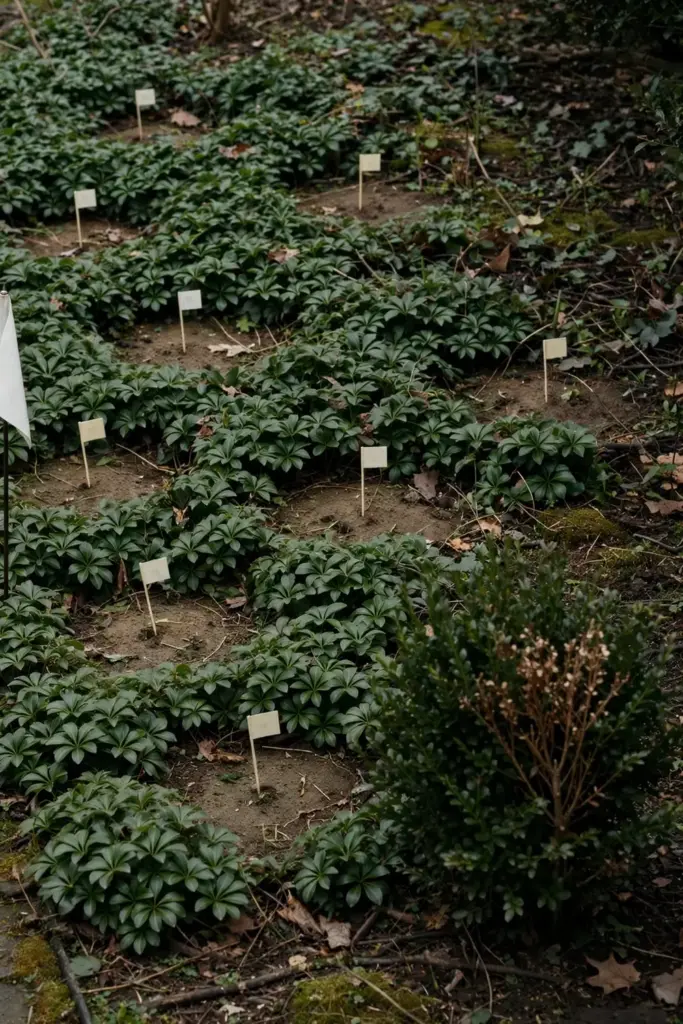
Volutella blight alone usually does not kill boxwood. Purdue Extension makes that point plain, and it changes the decision. A boxwood shrub with a few dead branches loses symmetry, not its life. Prune the dead branches, fix the stress, and the shrub recovers its shape over a season or two. A boxwood shrub with dieback across most of the canopy and cankers at the soil line earns removal. No spray restores a girdled shrub.
Pachysandra follows the same split. A bed with scattered dead patches earns removal of the worst plants, thinning, and cleanup. A bed where most plants are dead or dying earns replacement with a less susceptible groundcover. Iowa State Extension calls Volutella blight the most common disease affecting pachysandra, and it treats sanitation and stress reduction as the first steps, not spraying. Fungicides protect new growth. Fungicides do not resurrect dead plants.
Set the budget honestly. Cleanup, thinning, and mulch discipline cost a weekend and a bag. A preventative fungicide program costs product, a sprayer, and repeat applications through the wet season, and it still fails if the stress and the debris stay in place. Spend the weekend first. Spray only if the disease returns after the cleanup and the site fixes. A bed that keeps dying after two seasons of good culture is telling you the site is wrong, not that you need a stronger spray.
Step 2: Remove and Destroy Diseased Plants and Debris
Pull the worst plants first. Severely diseased plants are spore factories, and every week they stay in the bed they seed the next infection.
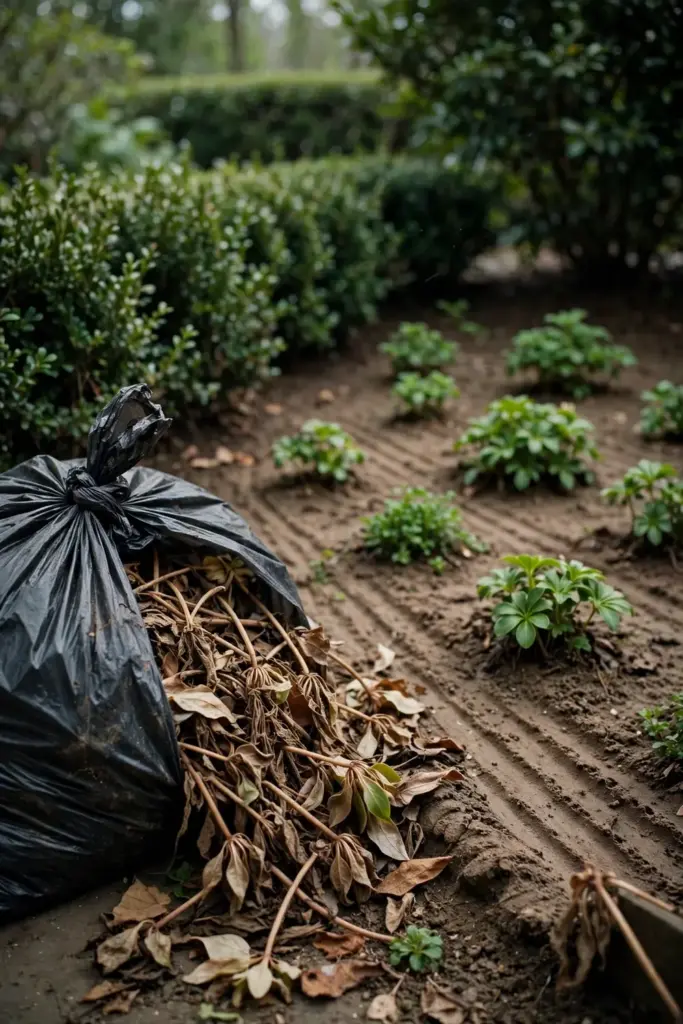
Lift out severely diseased pachysandra plants and destroy them. Bag the material and send it away in the trash, or burn it where burning is allowed. Do not place diseased material in the compost pile. A home compost pile runs too cool to kill the fungi in thick stems, and the finished compost then carries spores back into the bed. The Missouri Botanical Garden guide gives the same order: lift out and destroy severely diseased plants, bury or remove them from the site, and keep them out of compost.
Rake out the debris. Fallen leaves and plant debris in the bed hold inoculum through winter. Fall cleanup that removes fallen leaves and debris improves air circulation and reduces moisture. Rake the bed in fall and again in early spring before new growth starts. A bed raked clean in fall starts spring with far less fungus than a bed left littered.
Mow large pachysandra beds at the highest level as a cleanup tool. The University of Connecticut guide recommends mowing larger beds at the highest level and bagging the clippings for trash. Mowing removes infected leaves and opens the bed. Bag every clipping. Clippings left on the bed return the spores you just removed.
Shake out boxwood crotches. Old fallen leaves and diseased leaves accumulate in the crotches of branches in the interior of boxwood shrubs. The University of Maryland Extension guide calls for shaking out and removing those leaves. A handful of dead leaves wedged in a crotch holds moisture against a wound for months. Pull them out by hand on a dry day and bag them.
Step 3: Prune Out Diseased Wood in Dry Weather
Prune when the foliage is dry. Wet foliage spreads spores on the blade and on your gloves.
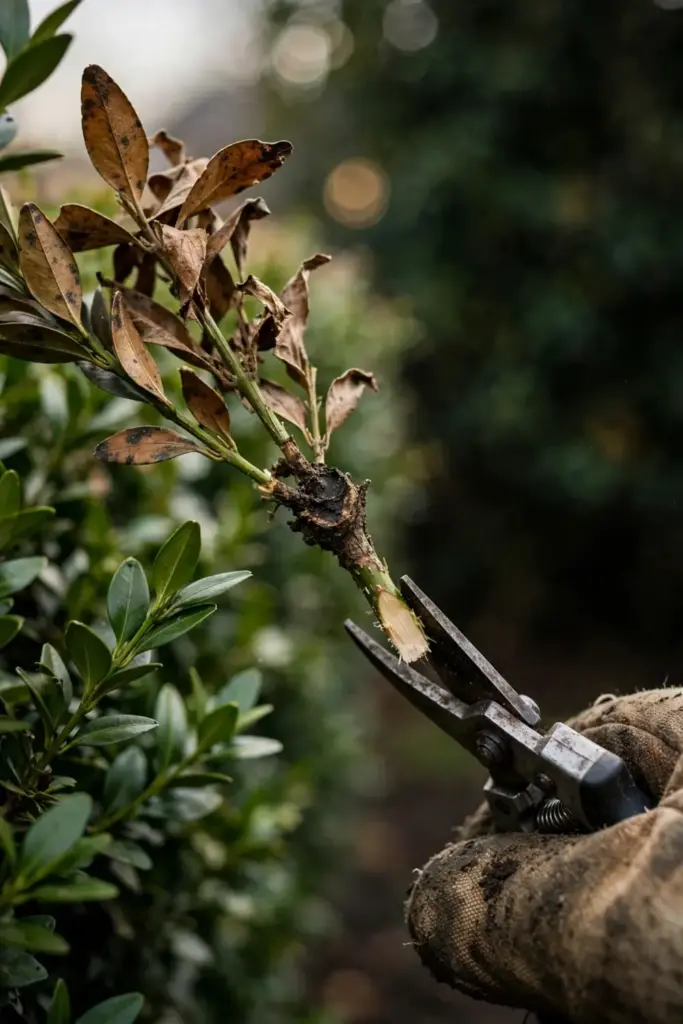
Cut diseased boxwood branches back to healthy wood. Cut below the canker, into wood that shows no discoloration under the bark. A cut that leaves stained wood behind leaves the fungus behind. Check the cut face. Healthy wood runs pale and clean. Stained wood means the cut sits too high. Cut again, lower, until the wood runs clean.
Work from the lightest damage to the heaviest, or bag as you go. Dropping cuttings on the ground under a healthy shrub seeds the soil line. Carry a bag or a tarp to the shrub and drop every cutting straight into it. Work on a dry day with a dry canopy. A dry canopy keeps spores from sticking to the blade and to your gloves.
Prune out infected pachysandra stems the same way. Prune infected stems of other plants during dry weather, and destroy all diseased material. The University of Connecticut guide gives that order: prune in dry weather, and burn or trash the material. Pruning a wet pachysandra bed smears spores across the whole bed.
The spring pruning techniques guide covers clean cut placement for shrubs and trees in full. Clean cuts at the right place heal faster than torn cuts. A ragged cut stays open longer and invites the fungi back. Sharp tools and clean cuts are disease control, not just tidiness.
Step 4: Disinfect Tools Between Every Cut
Disinfect between every cut. A dirty blade carries spores from a diseased branch to healthy wood.
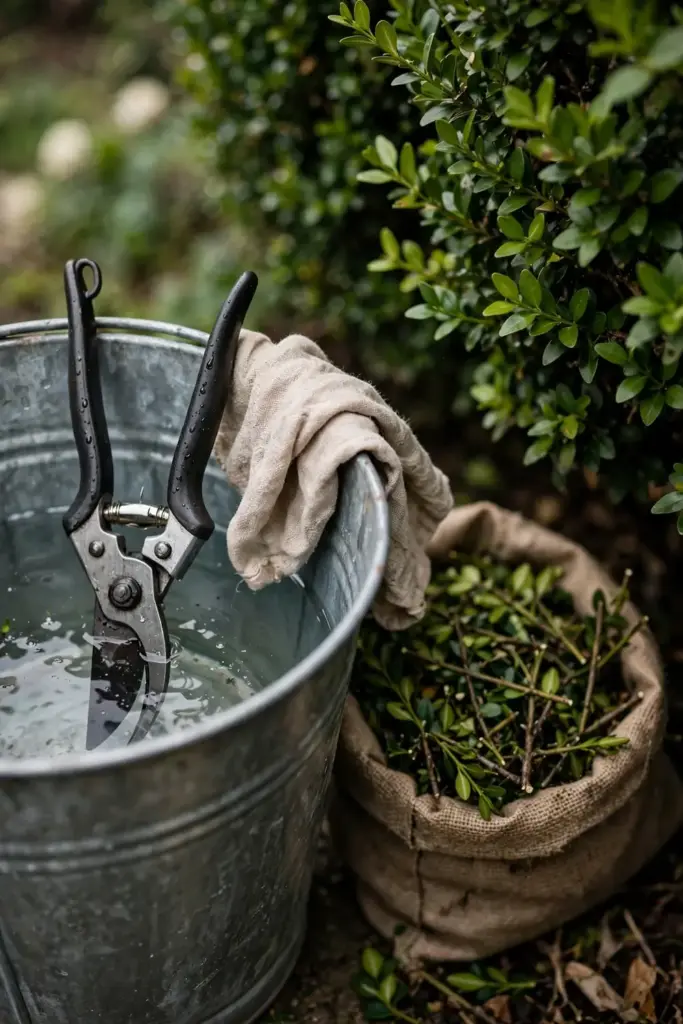
Disinfect pruners or mower blades in rubbing alcohol after use on infected plants, according to the University of Connecticut Home Garden guide. Pick one disinfectant and keep it at the shrub. A disinfectant bucket left in the shed does not get used.
Wipe or dip the blade after each cut, not just at the end of the job. A blade that passes through a canker needs disinfecting before the next cut, without exception. The same rule covers gloves. Contaminated gloves move spores from plant to plant, and the University of Kentucky fact sheet names contaminated hands, gloves, and tools as a main route of spread. Change or disinfect gloves when you move from a diseased shrub to a healthy one.
Wash and oil shears when you finish. Bleach corrodes steel fast. Oil after bleach stops the corrosion. Rinse the bucket and the rag after the last cut, and let the tools dry before storage. Tools stored dirty carry spores into the next pruning job.
Step 5: Thin, Do Not Shear, and Open the Canopy
Thin boxwood. Do not shear it. Thinning removes interior stems and opens the canopy to light and air. Shearing cuts every shoot tip at once and builds a dense shell.
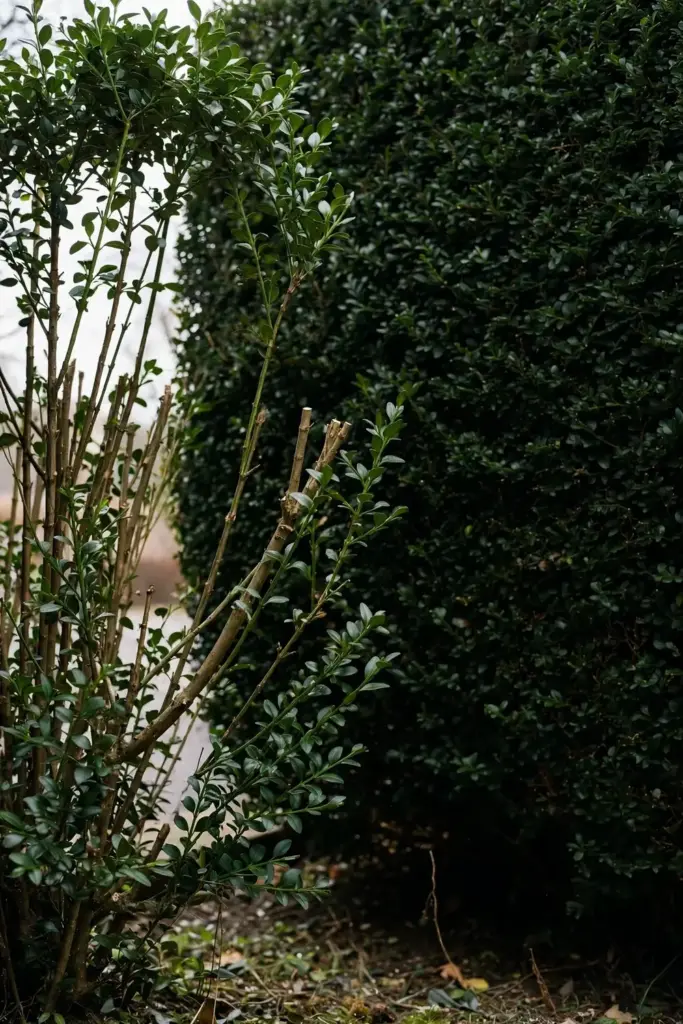
The University of Maryland Extension guide calls thinning, instead of shearing, an important measure to help prevent and control Volutella blight. Thinning is a type of pruning that removes interior stems. A thinned shrub dries by mid-morning after rain. A sheared shrub holds moisture inside the shell all day. Air flow is the difference.
Thin pachysandra beds the same way. Thin thick plantings to increase light and air circulation. The University of Connecticut guide gives that order for new and established beds alike. A thinned bed dries faster, and dry plants are less likely to become infected than plants that stay wet for extended periods. Space new plantings so the bed never closes into a solid mat.
Open the site around the planting. Cut back overhanging branches that shade a boxwood hedge into permanent dampness. Move a downspout that dumps water into a pachysandra bed. A bed under a dripping eave stays wet all season, and no amount of thinning fixes a water source. Fix the water first, then thin the plants.
Step 6: Water Early, Cut the Stress, and Fix the Site
Water in the morning. Morning watering lets leaves dry quickly in the day’s air and sun.
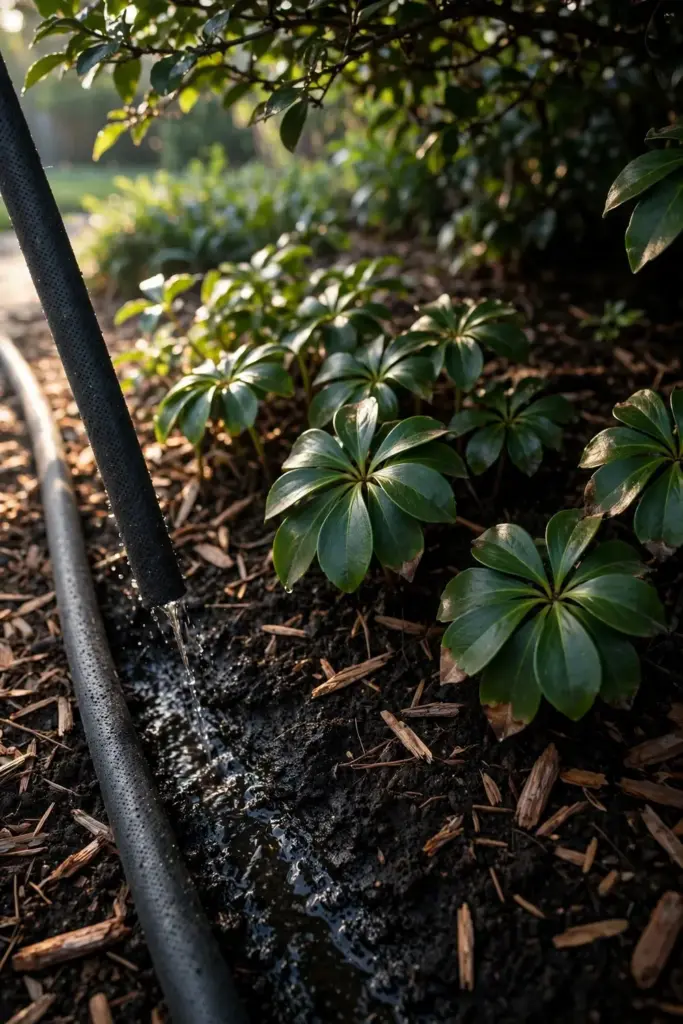
The University of Connecticut guide sets the rule: water early in the day, and water in drought, especially in summer. Established pachysandra should receive approximately one inch of water per week during the growing season up until snowfall or the ground freezes, according to the University of Wisconsin Plant Disease Diagnostics Clinic. Newly planted pachysandra should receive approximately two inches of water per week. An inch a week keeps roots alive without keeping leaves wet. A sprinkler that runs every evening keeps leaves wet all night.
Move pachysandra out of full sun. Pachysandra is a shade groundcover, and full sun stresses it into susceptibility. Plant new beds in shade or partial shade. The fruits that grow in shade guide shows which fruiting plants suit shady spots, and the same site logic applies to groundcovers: match the plant to the light the site actually gives. A pachysandra bed moved from sun to shade stops fighting its own site.
Improve vigor on boxwood. Improve growing conditions, especially to alleviate drought stress, according to the University of Maryland Extension guide. Irrigate in dry periods. Avoid fertilizing after mid-summer, since late fertilizer pushes soft growth that stays open to infection. A boxwood shrub fed steady and watered in drought holds Volutella blight off far better than a boxwood shrub starved and drought-cracked.
Control the insects that wound the plants. Prune badly infested pachysandra stems and treat euonymus scale with horticultural oil in mid-April to early May, according to the University of Connecticut guide. Scale wounds open doors for the fungi. A bed with scale and Volutella blight needs both problems handled, not just the fungus.
Step 7: Manage Mulch and Fall Cleanup
Keep mulch light and dry. Heavy damp mulch is the single worst mulch mistake for Volutella blight.
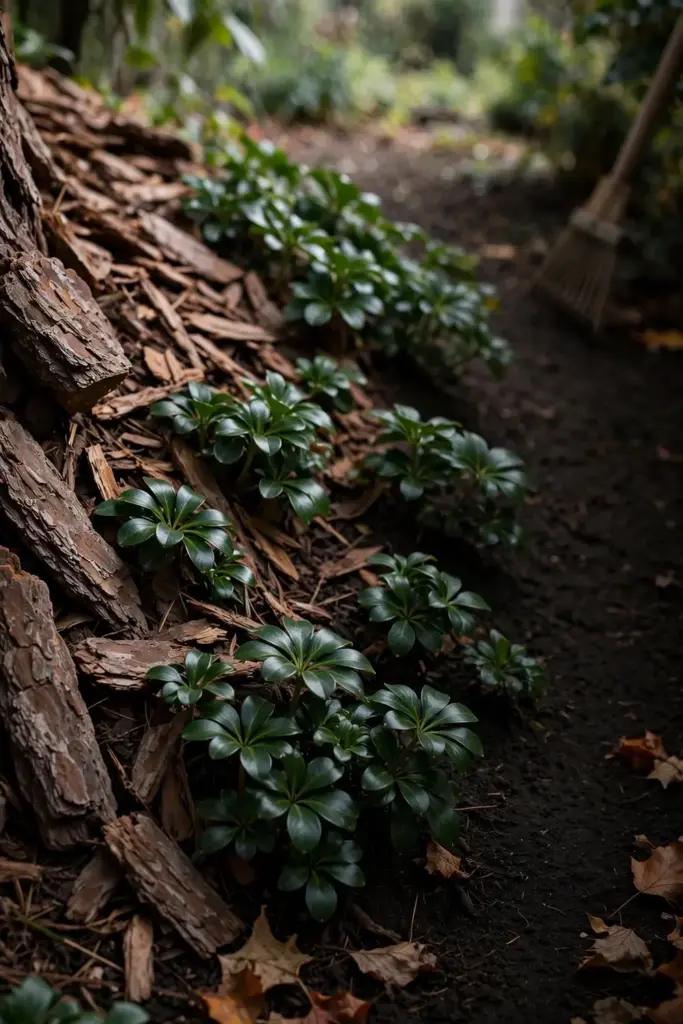
Avoid heavy, thick mulches of materials such as leaves or compost, which hold moisture. The University of Connecticut guide gives that warning for pachysandra beds. If mulching is needed on new plantings, large pine bark chips are a better choice, since they hold less water. A thin layer of pine bark chips covers soil without sealing moisture against stems. A deep layer of shredded leaves does the opposite.
Use leaf mold as a cover in spring. The Missouri Botanical Garden guide recommends mulching with leaf mold in the spring to cover up fallen debris containing inoculum. A fresh leaf mold layer buries last season’s spore load under clean material. The trick works only on a bed already cleaned of debris. Mulch over litter just hides the litter. Clean first, then cover.
Clean up in fall and again in spring. Fall cleanup removes fallen leaves and debris before winter. Spring cleanup removes what winter added. The fall garden bed prep guide covers bed cleanup, mulch, and cover crops for the whole garden. A bed cleaned twice a year carries a fraction of the inoculum of a bed cleaned never.
Do not overwater a mulched bed. Mulch plus a sprinkler plus shade equals permanent dampness at the soil line. Water at the soil line with drip or a soaker hose, and let the mulch dry between waterings. Dry mulch is harmless. Wet mulch is a disease bed.
Step 8: Use Preventative Fungicides Only Before Symptoms
Fungicides prevent Volutella blight. Fungicides do not cure it. That split decides the whole spray program before you buy anything.
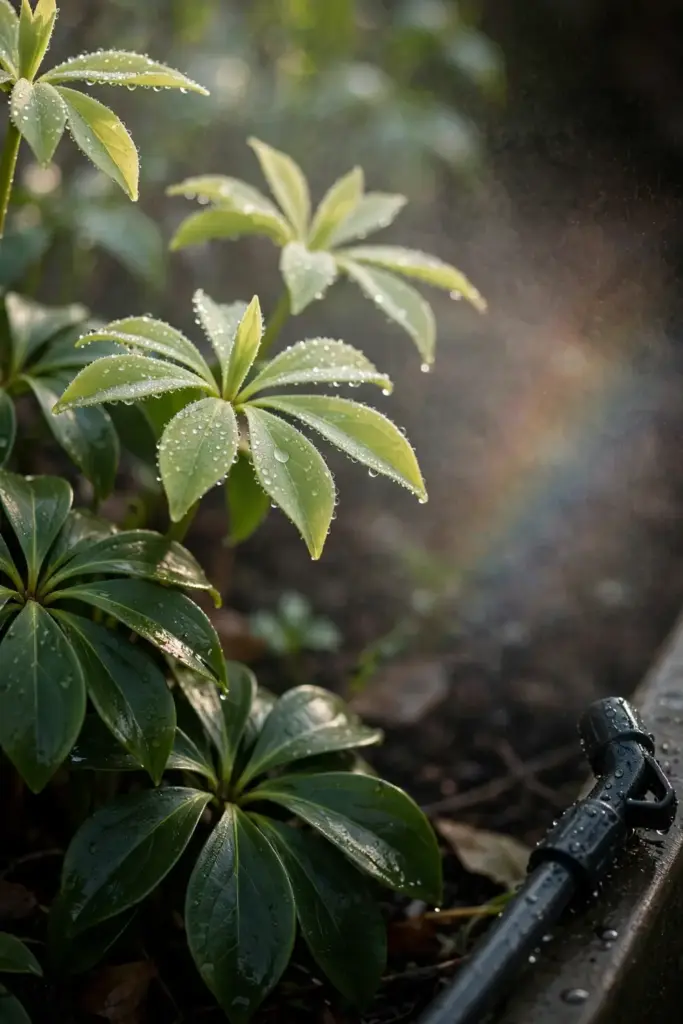
Fungicide treatments are preventative, not curative, according to the Connecticut Agricultural Experiment Station fact sheet. Apply fungicides in the spring when new growth starts. Repeat at 7- to 21-day intervals when weather conditions are conducive, and ensure good spray coverage. A spray applied after lesions appear protects only the new growth that emerges after the spray. Lesions already on the leaf stay. A gardener who sprays after symptoms and expects the spots to vanish will be disappointed every time.
Iowa State Extension lists the home options: thiophanate-methyl, chlorothalonil, and mancozeb, applied preventatively. Plants should be sprayed first when new foliage emerges in the spring, and repeated following label directions. The Iowa State Extension guide to Volutella blight of pachysandra gives that timing and names the same three active ingredients. Copper salts, copper hydroxide, and basic copper sulfate also appear in Extension lists. The Connecticut station adds an organic biological option, Bacillus subtilis QST 713, sold as Serenade, plus potassium bicarbonate and copper-based products.
Repeat on the label interval while weather stays warm and wet. Illinois Extension puts the repeat interval at 10 to 14 days while warm wet weather continues. The Missouri Botanical Garden guide puts it at 7 to 14 days through early summer and calls for stopping once temperatures rise above 90 degrees Fahrenheit. Pick the interval on the product label and hold it through the wet season. A single spray in spring is not a program.
Follow the label for rate, crop, and safety. Chlorothalonil is restricted-use in Massachusetts, and the UMass fact sheet warns never to apply it near water. No home gardener needs a commercial rate. The Pacific Northwest handbook lists commercial rates for nurseries, and those rates do not belong in home advice. The label on the product you buy sets the legal rate for your state and your plants.
Step 9: Mind Wound Timing Through the Season
Prune with the wound calendar in mind. Early-season wounds stay open to infection for days. Summer wounds resist infection far faster.
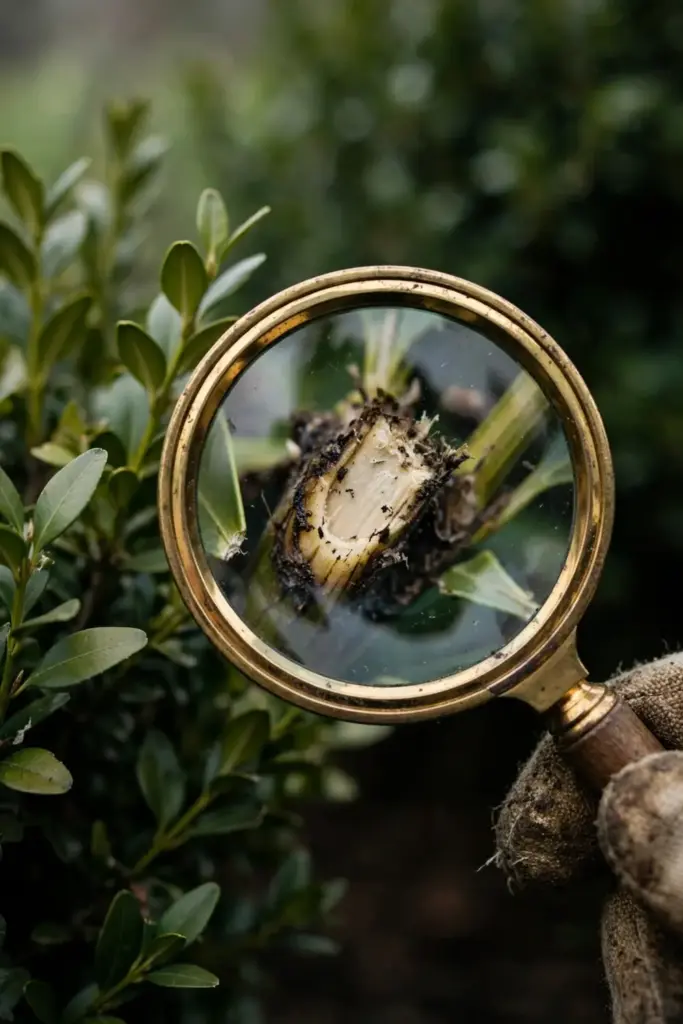
Infection of wounds occurred for several days after the wounding event early in the growing season, according to the Pacific Northwest handbook. A pruning cut made in early spring is an open door for days. A pruning cut made in summer closes to the fungus far sooner. That timing split changes how you schedule the work. Do the heavy thinning and shaping in summer when the wound risk runs low. Keep early-spring pruning to the diseased wood that cannot wait.
Disinfect after every early-season cut. The wound window and the tool rule multiply each other. A fresh early-season cut plus a dirty blade is the worst combination in the plan. A fresh early-season cut plus a disinfected blade and dry weather is a manageable risk. The three controls stack: timing, tools, and weather.
Avoid shearing and heavy pruning in wet spring weather. Shearing wounds hundreds of shoot tips at once, in the season when wounds stay open longest, in the weather when spores move fastest. One shearing session in a wet April can seed Volutella blight across a whole hedge. Thin in summer instead. The hedge keeps its shape, and the fungi lose their best opening.
Protect plants from winter injury. Winter injury is the wound that starts the spring cycle. Mulch root zones lightly, water before freeze-up in a dry fall, and shield exposed boxwood from drying winter wind where the site allows. A shrub that enters spring unwounded faces the fungi with closed doors. A shrub that enters spring frost-cracked faces them with open ones.
Step 10: Replace With Less Susceptible Plants
Replace a bed that keeps dying. Two seasons of good cleanup, thinning, and site fixes that still end in dead patches mean the planting is wrong for the site.
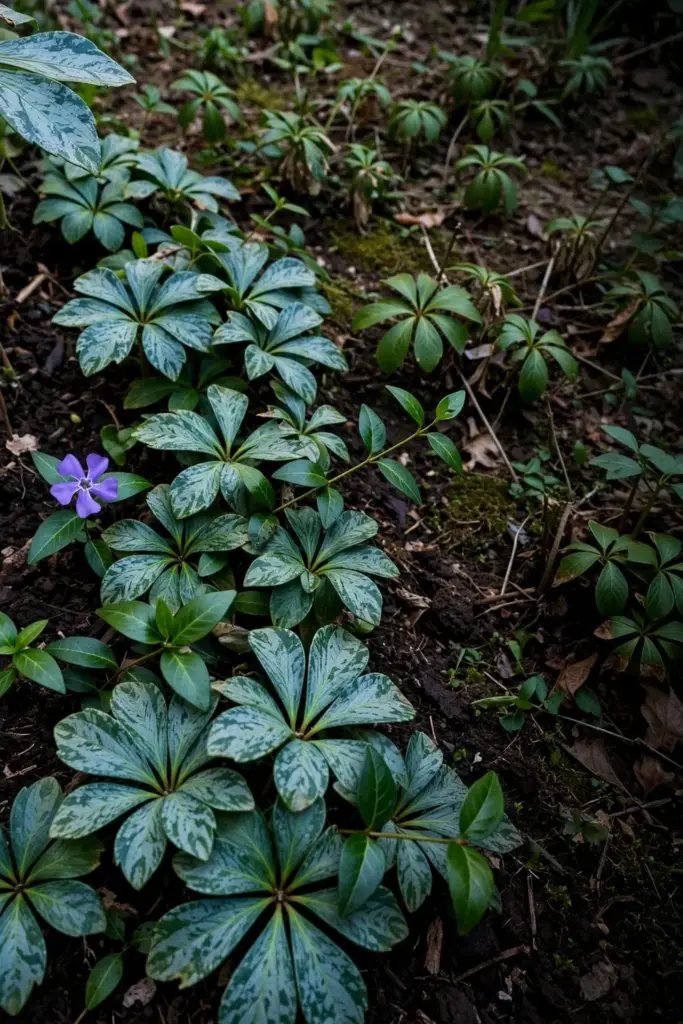
Switch Japanese pachysandra for Allegheny pachysandra. Pachysandra procumbens is less susceptible than Pachysandra terminalis, and the Connecticut Agricultural Experiment Station names it as the replacement for beds where Volutella blight keeps returning. Allegheny pachysandra is a native groundcover with mottled leaves and spring flowers. It fills the same shade-groundcover job with a tougher constitution. Plant only healthy, high-quality stock, and do not plant where conditions stay constantly moist.
Switch to a non-host groundcover where the disease has been worst. Creeping myrtle, also called periwinkle or Vinca minor, is not a host for the pachysandra pathogen, according to the Connecticut station. The how to grow periwinkle flowers guide covers planting and care for Vinca minor. A bed replanted with a non-host breaks the disease cycle entirely, since the fungus has nothing left to eat. A bed replanted with the same susceptible species in the same wet spot repeats the same outcome.
Replace a dead boxwood with a different shrub where the site stays damp. A damp, shady corner that killed one boxwood will stress the next one the same way. Plant a shrub that suits wet shade instead. A site that stays dry and airy suits a new boxwood. Match the plant to the site, not the site to the plant.
Buy clean stock. Select only healthy, high-quality plants for a new bed, according to the University of Connecticut guide. Inspect nursery stock for lesions, cankers, and loose bark before you buy. A single infected plant from the nursery seeds a clean bed in one season. Reject any plant with salmon pads, cankers, or dieback, and keep new plants away from infected beds until they show clean growth.
Living With Volutella Blight Damage You Cannot Undo
Some damage stays. A pachysandra bed with thin patches still covers ground. A boxwood shrub with a few dead branches still screens a view.
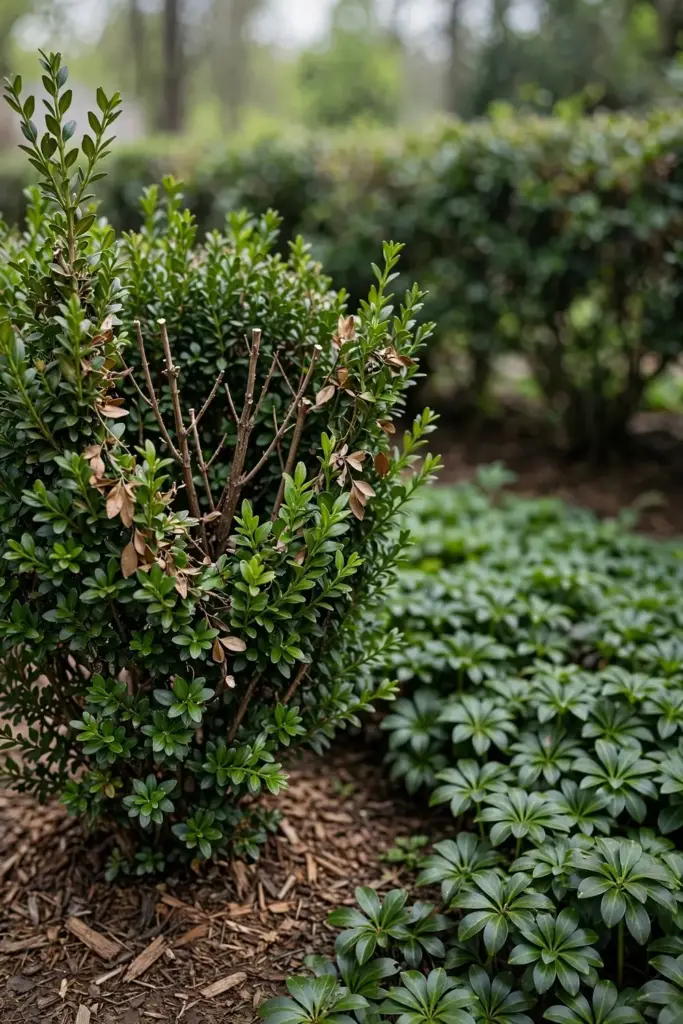
Dead patches in pachysandra fill slowly. The surrounding plants spread into the gap over a season or two, and a light leaf mold cover hides the bare soil in the meantime. Do not replant susceptible pachysandra into a gap inside a diseased bed. The gap sits in the middle of the inoculum, and the new plants catch the disease first. Fill gaps with Allegheny pachysandra or Vinca minor instead.
A boxwood shrub with dead branches keeps its shape with light correction. Prune the dead branches out in dry weather, thin the interior, and let the surrounding growth fill the hole. A shrub that lost one branch a year for three years still looks like a shrub. A shrub that lost half its canopy in one season needs a longer view. Boxwood grows slowly. A hole fills slowly too, so judge the shrub after two seasons of good culture, not after two months.
Live with cosmetic damage on a shrub that is otherwise healthy. Volutella blight alone usually does not kill boxwood. A shrub with a few bronze branches and the rest green is a cosmetic problem, not a death sentence. The honest move is cleanup and patience, not a spray program. A shrub with cankers girdling the main stems at the soil line is a different case. Remove it and replant with a shrub suited to the site.
Keep scouting after the cleanup. Walk the planting once a month through the growing season and look for new lesions, new cankers, and new dieback. A small patch caught early costs ten minutes. A patch caught in fall costs a bed. The habit of walking the planting beats any product on the shelf.
Frequently Asked Questions
No. Volutella blight is caused by Pseudonectria buxi and Pseudonectria foliicola on boxwood, plus Coccinonectria pachysandricola on pachysandra. Boxwood blight is caused by Calonectria pseudonaviculata and Calonectria henricotiae. Volutella blight develops in early spring, keeps dead leaves attached, and shows salmon pink fruiting bodies. Boxwood blight strikes in warm summer rain, drops leaves fast, and shows black streaks on green stems.
Volutella blight alone usually does not kill boxwood. Purdue Extension describes the fungi as weak pathogens that rarely infect otherwise healthy plants. Loss of branches can severely affect symmetry and ornamental value, which is the real cost. A shrub with cankers girdling main stems at the soil line is the exception. Remove a shrub with girdled main stems, since no pruning cut restores a ringed trunk.
Yes, in a stressed bed. Stem cankers girdle pachysandra stems and kill the growth above them. Plants die in patches, often in a circular pattern, and a badly stressed bed can lose most of its plants. A vigorous bed in shade with good air flow usually holds the disease to scattered patches. Remove severely diseased plants, thin the bed, fix the mulch, and replace a bed that keeps dying with Allegheny pachysandra or Vinca minor.
No. Fungicide treatments are preventative, not curative. Sprays protect new growth that emerges after the application, and lesions already on leaves stay. Apply in spring when new growth starts, and repeat at 7- to 21-day intervals while weather stays warm and wet. A spray program still fails if debris, heavy mulch, and stress stay in place. Cleanup and culture change come first, and spraying supports them.
Look for fungal signs. Volutella blight shows cankers, loose bark, dark wood, and salmon pink fruiting bodies in humid weather. Winter injury alone shows bronze or straw foliage with no cankers, no loose bark, and no fruiting bodies. Winter-injury-only plants produce new healthy leaves later in spring. A shrub with bronze leaves and no fungal signs earns patience. A shrub with cankers and salmon pads earns pruning.
No. Bag diseased material and send it away in the trash, or burn it where burning is allowed. A home compost pile runs too cool to kill the fungi in thick stems, and finished compost carries spores back into the bed. Rake out fallen leaves and debris, shake dead leaves out of boxwood crotches, and bag every clipping. Clean debris handling removes next season’s spores before they form.
Where to Go From Here
Start with the walk. Check every pachysandra bed for ringed leaf lesions and stem cankers, and check every boxwood shrub for bronze tips, loose bark, and salmon pink pads.
The order is identify, decide, remove, prune dry, disinfect, thin, water early, fix the mulch, spray only before symptoms, mind wound timing, and replace what keeps dying. One next action beats ten good intentions. Walk the planting today. Bag the worst plants and the debris. Prune on the next dry day.