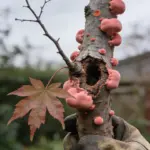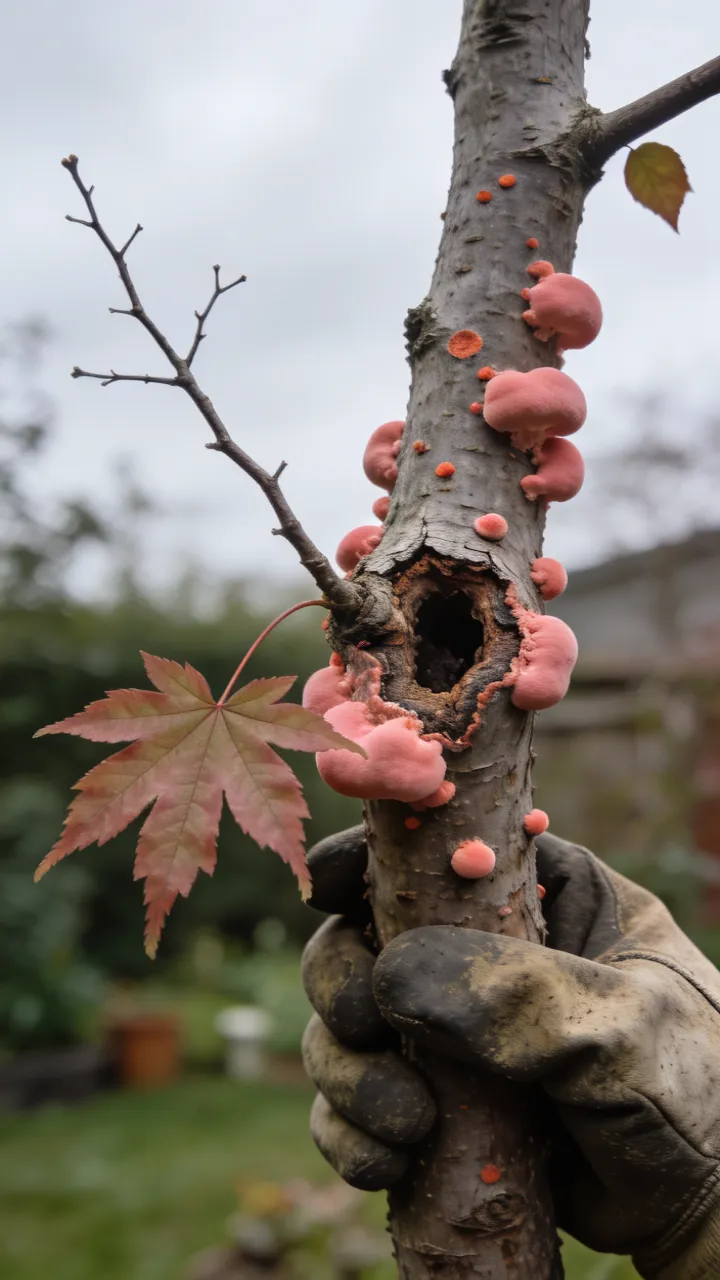

Nectria canker has no cure once it enters a branch. The 10 strategies below save the tree around the infection, starting with the triage call that tells you whether cutting is worth it at all.
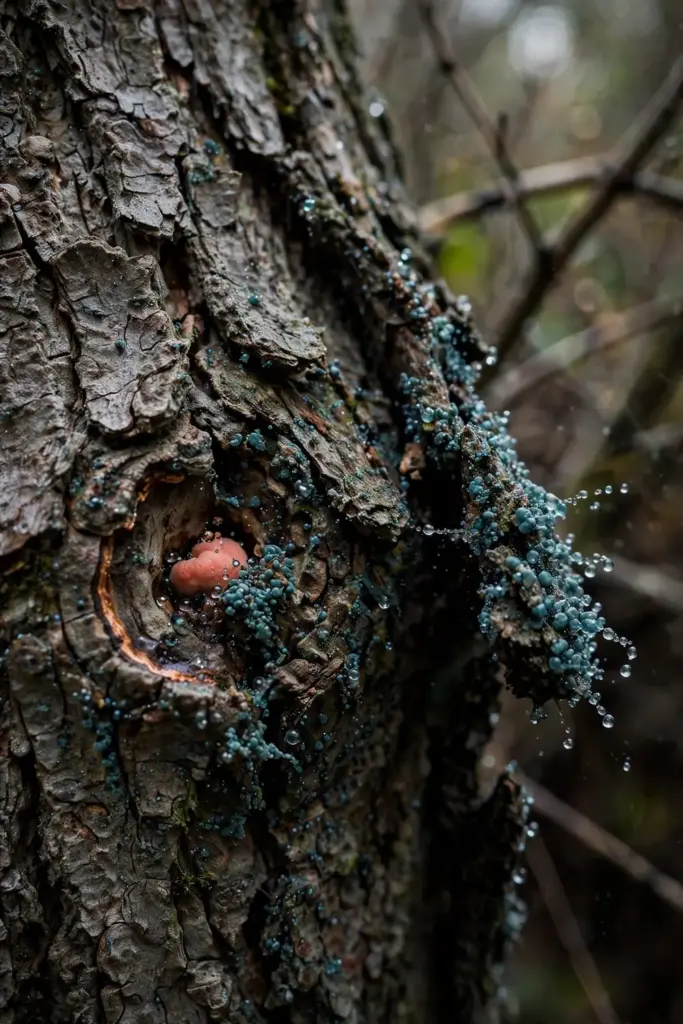
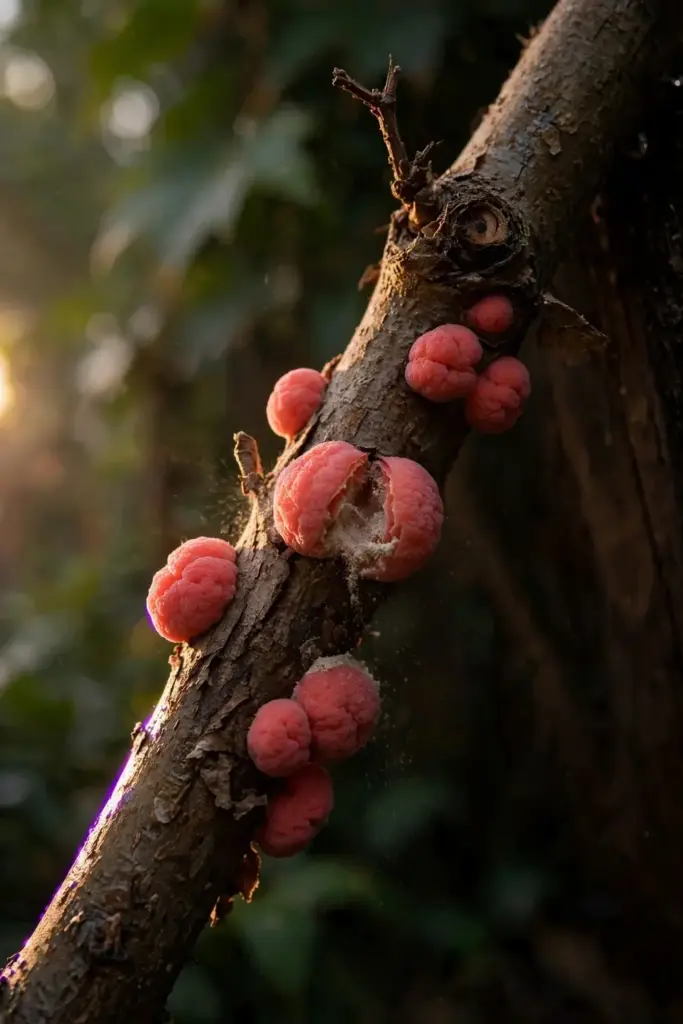
The signature is a cluster of coral-pink to orange-red fruiting bodies erupting through bark over a sunken canker. Twigs beyond the canker fail to leaf out in spring, and the branch dies back from the canker outward.
The rest of this page runs the order a gardener should follow. Identify the disease first, then decide whether the tree is worth treating, then work the 10 steps from the first cut to next-season scouting. I have learned that dry-weather pruning beats any spray for this disease.
What Nectria Canker Actually Is
Nectria canker is a fungal canker disease of woody trees and shrubs. Two fungi cause the disease that gardeners meet under this one name.
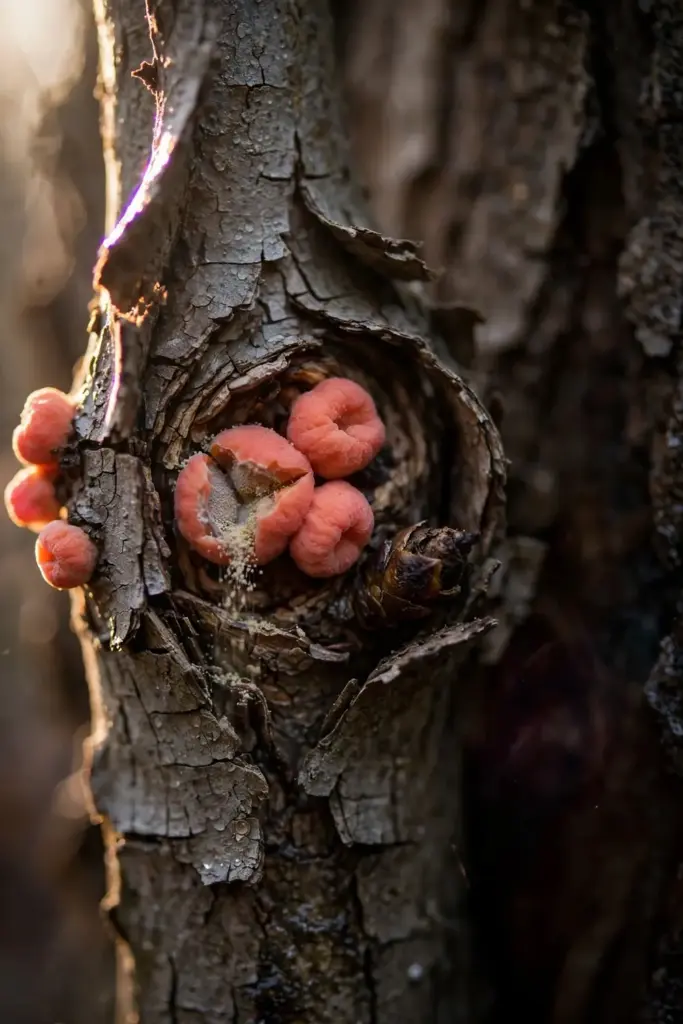
Nectria cinnabarina causes coral-spot canker. The fungus lives on dead wood as well as on living trees, and it attacks trees that are already stressed or wounded. Neonectria ditissima causes European canker. Older sources call Neonectria ditissima by the synonym Nectria galligena, and the two names describe the same fungus.
The host range is wide. The UMass Extension fact sheet on Nectria canker reports that Nectria cinnabarina attacks over 90 different genera of woody plants in landscape and forest settings. Beech, maple, elm, and honeylocust head the landscape list, and Japanese maple shows up as especially prone in diagnostic lab samples.
Both fungi work the same way. Spores land on fresh wounds. The fungus kills bark, cambium, and outer sapwood as it feeds. The fungus does not actively decay wood, though wood-rotting fungi can colonize the same spot later. Cankers often expand while the host is dormant, which is why a branch can look fine in fall and fail to leaf out in spring.
How to Identify Nectria Canker on Twigs and Branches
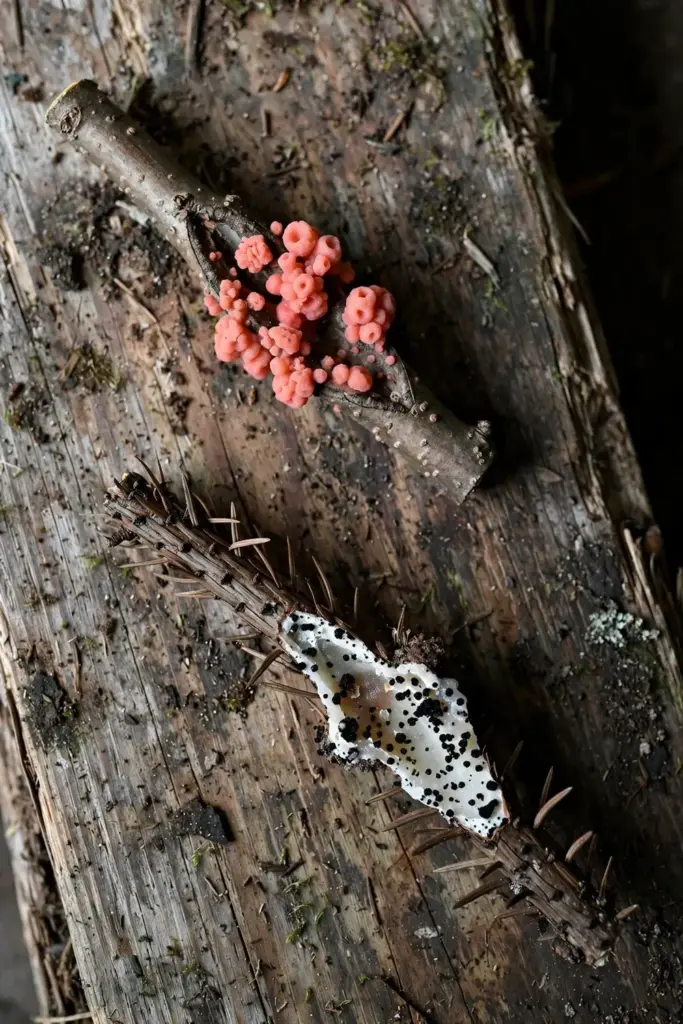
Look for coral-pink to orange-red fruiting bodies on a sunken patch of bark. A twig with those fruiting bodies has Nectria canker.
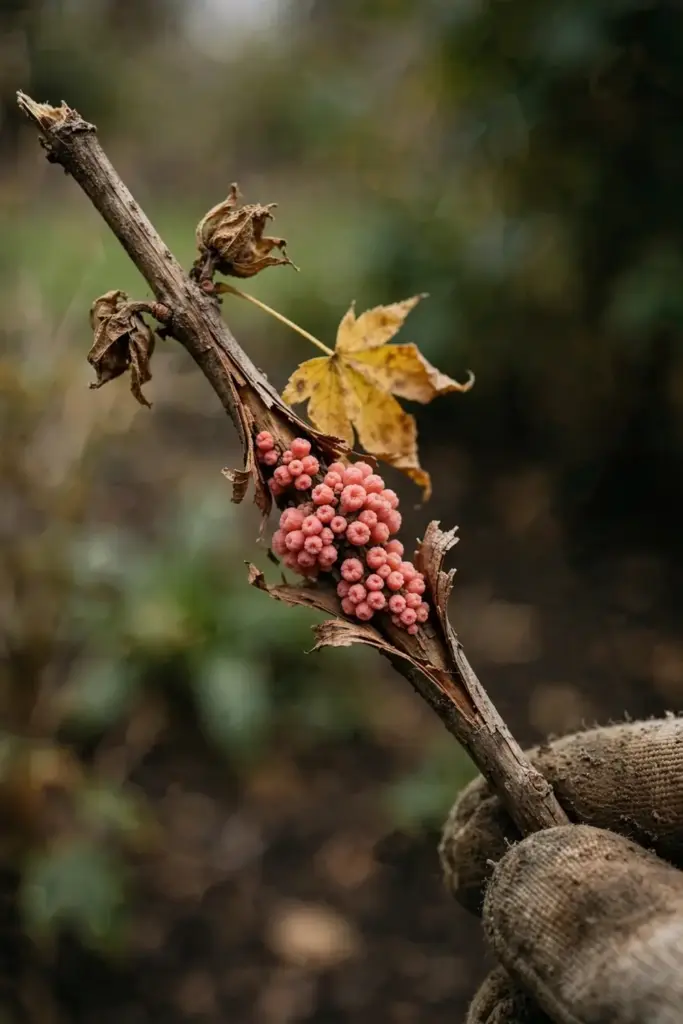
The fruiting bodies are small. UC IPM measures each spherical orange or red fruiting body at 1/50 to 1/16 inch in diameter, and notes that the growths later turn pale or gain a white spore coating. The cushions erupt through bark in spring and summer, and they stand out sharply against the bark around them.
The canker underneath starts as a slightly sunken or water-soaked patch around a wound, a leaf scar, or a pruning cut. Older cankers grow target-shaped rings of callus as the tree tries to wall off the fungus. Cut away a sliver of bark over a suspect canker and the margin shows dead dark brown wood against healthy cream-colored wood, with the green cambium layer missing where the canker sits.
The branch tells the rest. Leaves beyond a girdling canker turn chlorotic, stay undersized, or shed early. A twig that fails to leaf out in spring while its neighbors leaf out points at a canker further down the twig. Trace the dead twig back to the sunken patch and you find the canker.
How to Identify Nectria Canker on Trunks and Fruit
Trunk cankers look like the branch kind, only larger and slower. Fruit rot shows at the blossom end of apple and pear fruit.
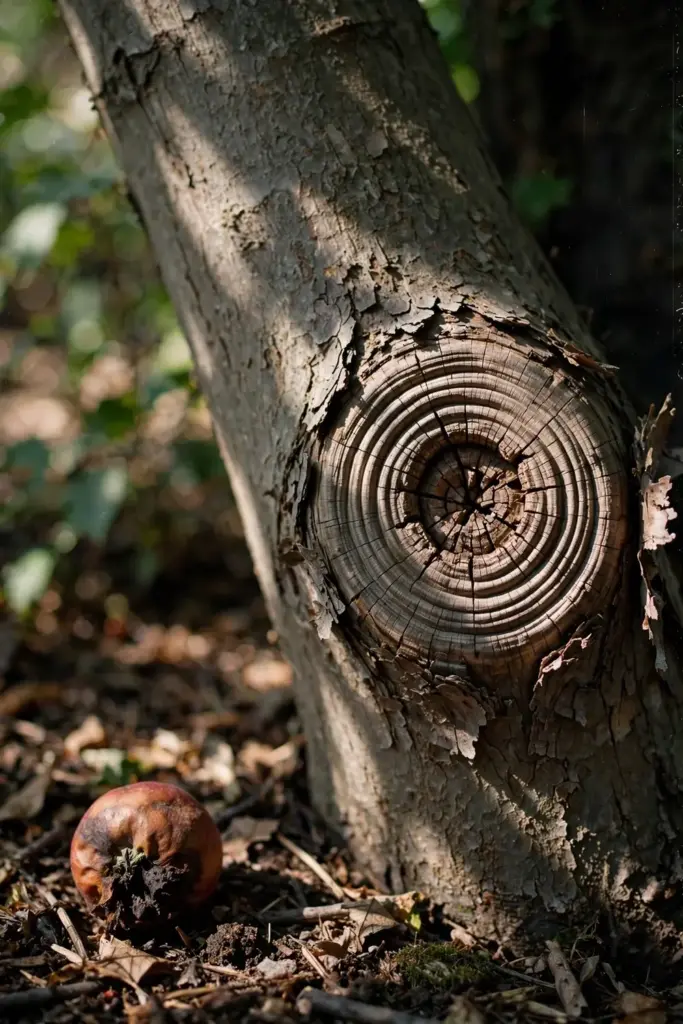
A trunk canker starts as a sunken patch and grows into a target-shaped or elongated canker with cracking, splitting, and sloughing bark. The trunk of a small tree can girdle and die from one canker. The trunk of an older tree often carries a canker for years while the canopy stays full. Cankered limbs break sooner than sound limbs under the same load, so a trunk canker over a path or a play area deserves a closer look.
European canker on apple and pear builds perennial cankers that advance year after year. The canker rings widen, the bark cracks in rings, and shoots beyond the canker die back. The same fungus rots apple and pear fruit, starting at the blossom end before harvest or showing in storage. If you grow apple fruits at home, check stored fruit often and discard any fruit with blossom-end rot rather than storing it beside sound fruit.
Coral-spot canker also hits apple twigs. A canker forms at the base of a shoot, and pink to salmon nodules cover the canker by late summer. The shoot beyond the canker wilts and dies. Apple twig blight from Nectria cinnabarina stays a twig problem on most home trees, while European canker from Neonectria ditissima threatens the trunk and the fruit as well.
Which Trees Get Hit Hardest by Nectria Canker
Japanese maple takes the worst of it. Maple, beech, elm, and honeylocust follow, and apple and pear carry the European canker form.
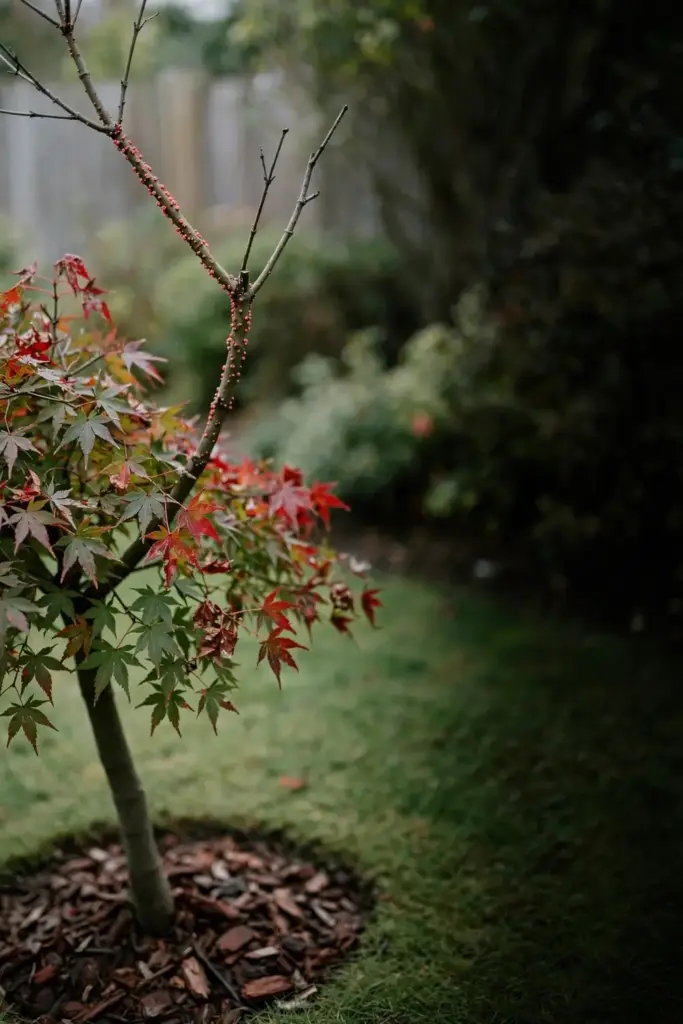
Japanese maple shows up as especially prone in samples sent to the UMass diagnostic lab, and trees with thin bark that wounds easily take the most damage. Other maples, beech, elm, and honeylocust fill out the landscape list. Birch, ash, dogwood, and walnut also host coral-spot canker.
Apple and pear carry the heavier European canker form. Young apple and pear trees suffer worst, since a trunk canker can girdle a young trunk and kill the whole tree. Older apple and pear trees usually survive with cankers, though fruit rot still cuts into the crop.
Age and vigor decide the outcome on every host. Plants infected when young may die, while older plants rarely die from Nectria canker. A stressed tree of any species loses ground faster than a vigorous tree of the same species. New transplants sit at the top of the risk list, since planting wounds and transplant shock open the door.
Nectria Canker vs Cytospora Canker vs Fire Blight
Check the fruiting bodies first. Coral-pink cushions mean Nectria canker. Black pinhead dots with orange spore tendrils mean Cytospora canker.
The table below lines up the three diseases that confuse gardeners most. Read the fruiting-body row first, then the canker row, then the host row.
| Sign | Nectria Canker | Cytospora Canker | Fire Blight |
|---|---|---|---|
| Fruiting bodies | Coral-pink to orange-red cushions erupting through bark | Black pinhead dots. Orange coiled spore tendrils ooze out in wet weather | None. No fungal fruiting bodies form |
| Canker look | Sunken canker, often target-shaped with concentric callus rings | Elongated, slightly sunken canker. Bark splits along the margin | Shoot tip blackens and bends into a crook. Blossoms blacken |
| Ooze or resin | No sticky resin. Bark may look water-soaked early | Liquid ooze on aspen. Gummy ooze on peach and cherry. Heavy resin flow on spruce | Bacterial ooze may appear. No resin |
| Hosts that show it clearest | Maple, beech, elm, honeylocust, apple, pear | Aspen, cottonwood, poplar, spruce, peach, cherry, apple, maple | Apple, pear, and related fruit trees |
| Pathogen | Fungus. Nectria cinnabarina or Neonectria ditissima | Fungus. Cytospora species | Bacterium. Erwinia amylovora |
| First move | Prune out infected wood in dry weather. Disinfect tools | Prune out infected limbs. Reduce tree stress. Disinfect tools | Prune out strikes. Treat as bacterial. Get a diagnosis before spraying |
Colorado State Extension describes the Cytospora signs in the table: black pinhead fruiting bodies, orange coiled spore tendrils in wet weather, and resin flow on spruce. The same source warns that resin flow alone proves nothing, since other stresses and insects also cause resin flow on spruce. Look for the sunken area with swollen callus around it before calling a resin flow Cytospora canker.
Keep the focus on Nectria canker. Cytospora canker is a different fungal disease, and fire blight is a bacterial disease. Each needs a different response, so neither gets merged into this page. Botryosphaeria canker belongs in the same canker group and gets the same treatment: prune, disinfect, and reduce stress.
Bacterial canker also makes cankers on fruit trees, and it needs a different response. The guide to bacterial canker in fruit trees separates bacterial cankers from fungal ones.
Why Wounds Decide Whether Nectria Canker Takes Hold
Nectria canker enters through wounds. No wound means no entry.
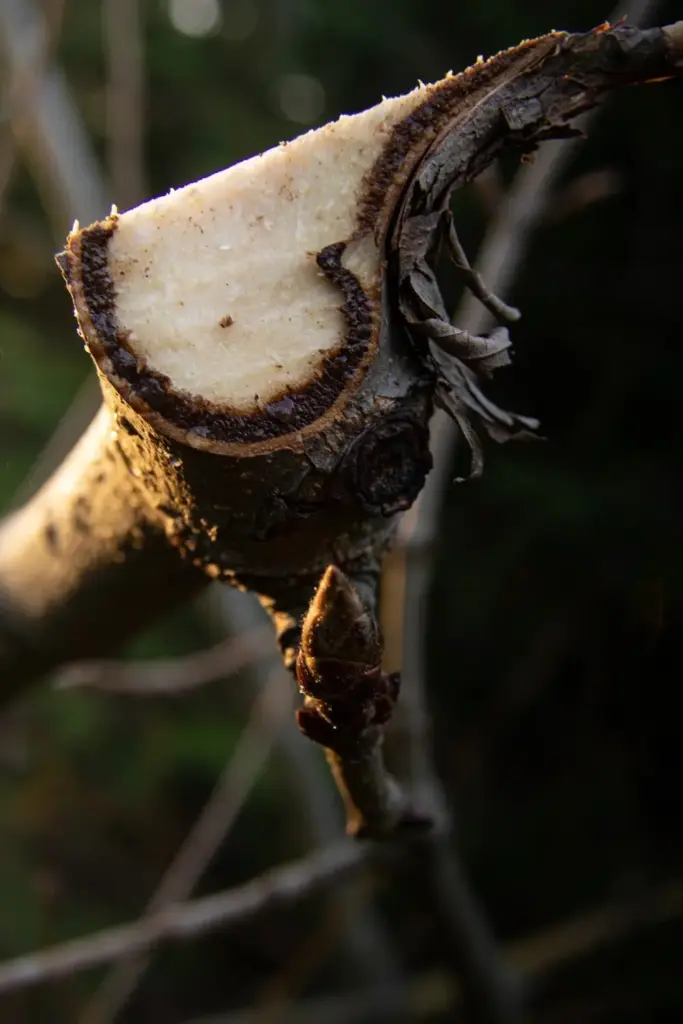
Spores land on fresh wounds. The spores germinate in wounded bark. The fungus kills bark, cambium, and outer sapwood as it feeds. The fungus does not actively decay wood.
Entry points include pruning cuts, leaf scars, frost cracks, hail wounds, insect damage, and transplant wounds. Leaf scars matter most in fall, when leaves drop and leave fresh scars open to spores. Frost cracks matter most after a hard freeze, when bark splits and stays open for weeks.
Cankers expand while the host is dormant or stressed, which is why a wound made in fall can sit quiet all winter and show a canker in spring. A vigorous tree answers with wound wood, the swollen callus that grows across the wound margin and walls off the fungus. A stressed tree answers slowly, and the fungus keeps advancing. Spores spread by splash, wash, wind, and pruning tools, so one infected branch can seed the next wound on the same tree.
Dead wood keeps the cycle going. Nectria cinnabarina lives as a saprophyte on dead wood, so a dead branch left in the canopy feeds new spores all season. Removal of dead wood is removal of inoculum.
What Makes Nectria Canker Worse in a Home Garden
Stress and wet wounds make Nectria canker worse. Drought, transplant shock, and wet-weather pruning top the list.
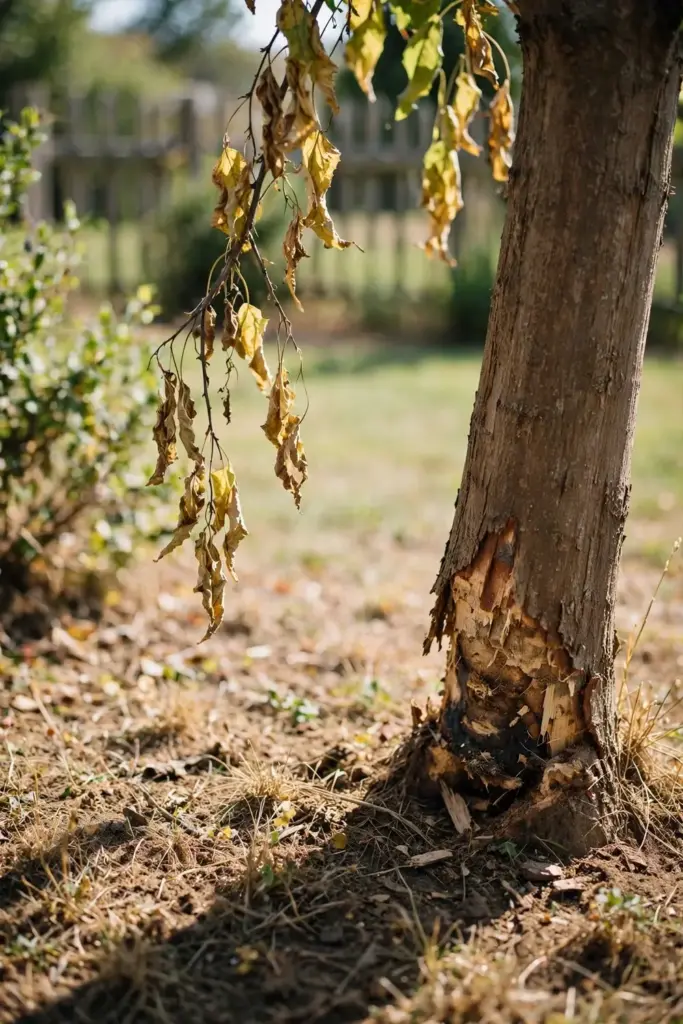
Drought stress slows callus growth and leaves wounds open longer. A tree that goes thirsty through summer walls off cankers slowly, and cankers that would stall on a watered tree keep advancing. Water during dry spells and the tree closes wounds faster.
Transplant shock opens a wide window. Fresh planting wounds, cut roots, and a small root system leave a new tree short of water and slow to heal. Freeze damage adds more wounds, and a late frost after a warm spell cracks bark across the canopy. Hail does the same damage in minutes.
Wet-weather pruning spreads the fungus from tree to tree on the blade and opens fresh wounds when spores are already moving. Mower and trimmer wounds do the same damage at ground level, season after season. A dense canopy holds moisture on bark and slows drying after rain, which keeps spores active longer. Dead branches left in the canopy hold the fungus through the season and seed the next wound.
The wrong tree in the wrong spot suffers most. A thin-barked tree on a frost-pocket site, or a species that struggles in local winters, collects wounds every year. Site choice is disease control, and it costs nothing after planting day.
Step 1: Decide Whether Treatment Is Worth It
Cut branch cankers. Leave most trunk cankers alone. Remove a young tree that is girdled at the trunk.
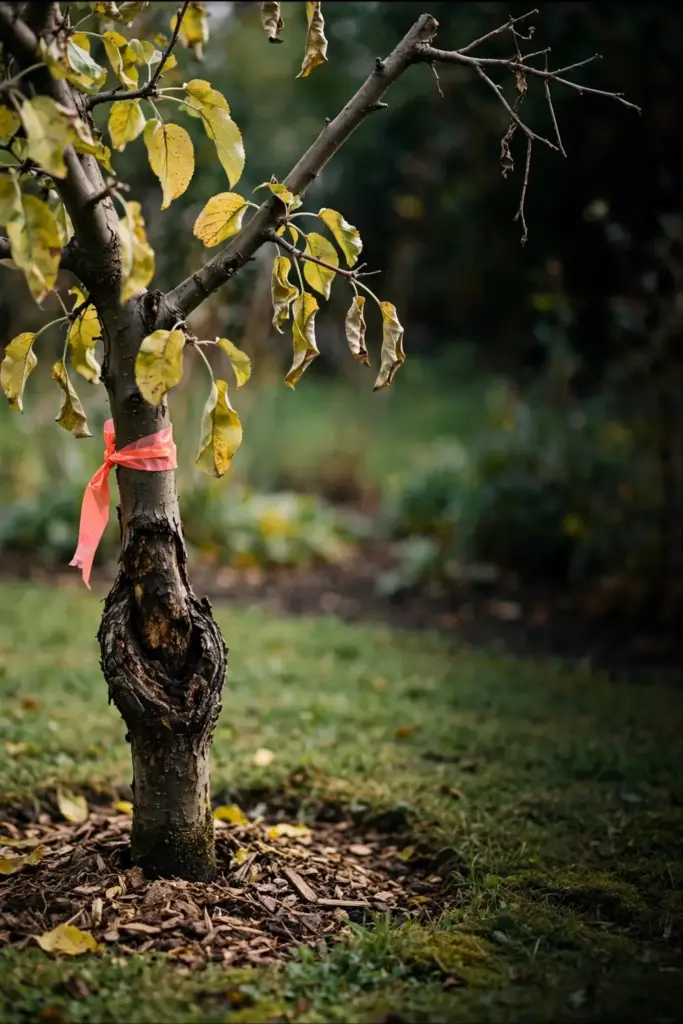
Start with the triage call, before any cut or spray. A branch canker on a vigorous tree is worth treating. Pruning removes the fungus and the branch heals. A trunk canker on an older tree with a full canopy is a monitor case. Cutting into a trunk canker makes a bigger wound than the canker itself, and the tree often lives with the canker for years.
A young tree with a girdled trunk is a removal case. The fungus has already cut the water supply, and no spray or cut restores it. A weak tree with cankers on several branches is also a removal case. Repeated pruning and spraying on a weak tree costs more effort than the tree returns, and the infected wood keeps seeding the rest of the garden. Removal ends the inoculum in one move.
There is no cure for Nectria canker, and no spray restores infected wood. Every dollar and every hour goes to removing fungus and protecting healthy wood. Make the triage call first, then spend the effort where it pays.
Step 2: Prune Out Infected Wood in Dry Weather
Cut infected branches in dry weather. Cut 6 to 8 inches below the canker into clean wood.
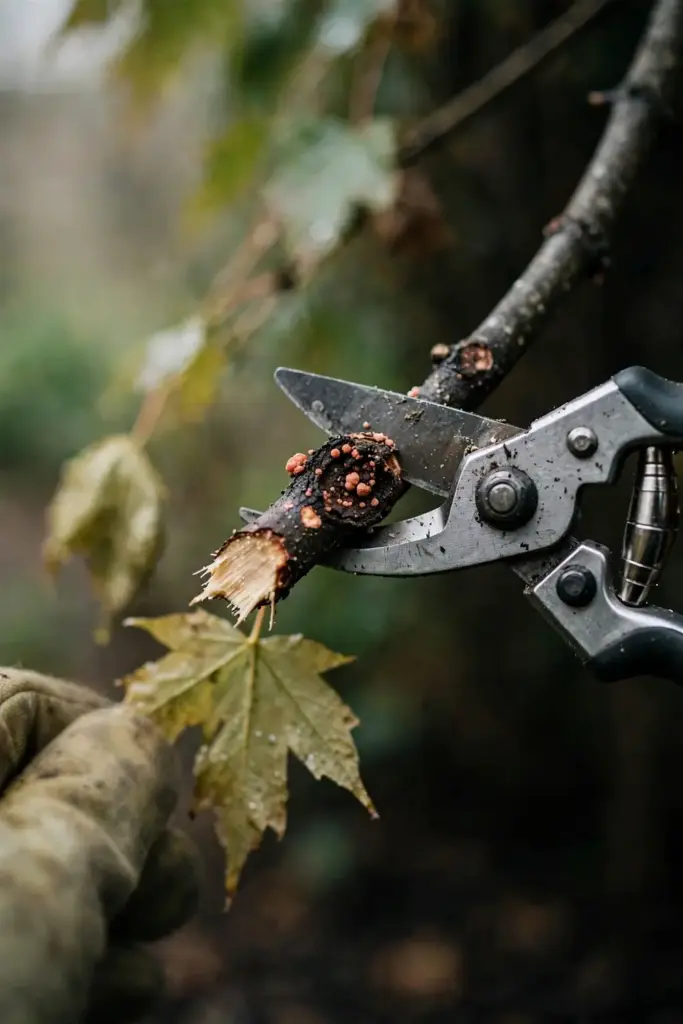
Wisconsin Horticulture advises pruning 6 to 8 inches below the canker for smaller branch cankers. UMass advises 2 to 3 feet of clean wood between the canker and the cut, since the fungus often runs ahead of the visible symptoms. The two numbers disagree, and both come from real Extension guidance. The practical rule is to cut as far below the canker as the branch allows without destroying the tree, with 6 to 8 inches as the floor. On a long branch, take more. On a short twig, take the whole twig.
Cut to a lateral branch or to the branch collar. Never leave a stub, since a stub dies back and opens a fresh wound. Never cut flush with the trunk, since a flush cut wounds the collar that closes the cut. A clean cut at the collar closes fastest. Postpone shaping cuts on neighboring trees until the disease is under control, and never prune infected wood in rain.
Work from the healthiest tree toward the sickest tree, or from the top of one tree downward, so the blade carries less fungus to the next cut. Disinfect the blade between cuts, as Step 3 describes. Carry cuttings out of the canopy as you go, rather than dropping them under the tree.
Step 3: Disinfect Tools Between Every Cut
Disinfect tools after every cut. Alcohol or bleach kills spores on the blade.
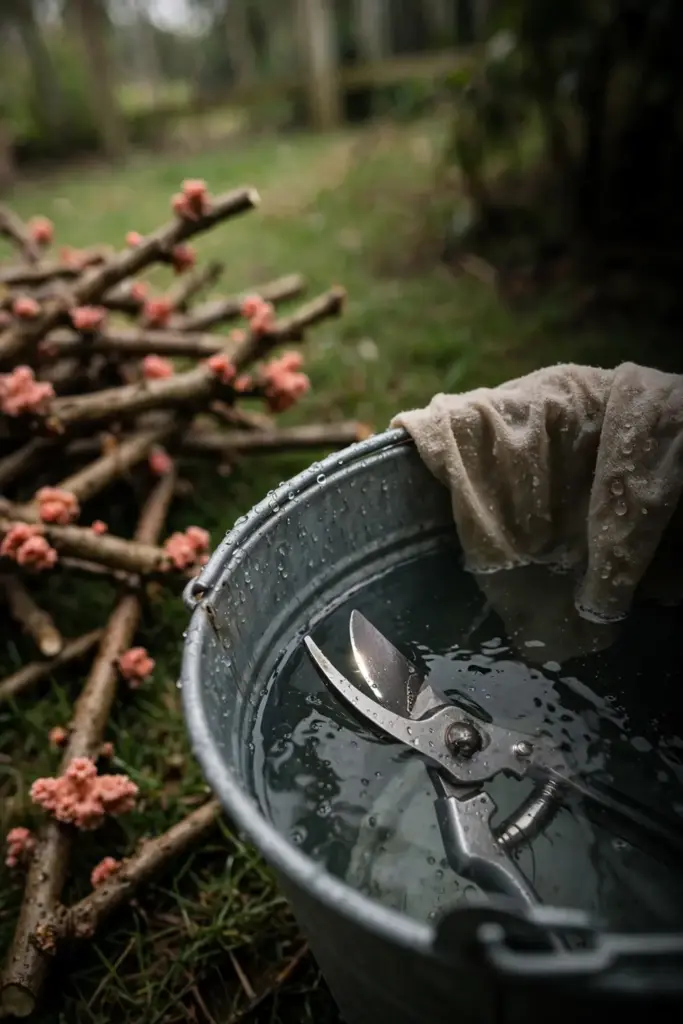
Wisconsin Horticulture specifies 30 seconds in a 10% bleach solution or 70% alcohol. Rubbing alcohol works, and some spray disinfectants work. Bleach corrodes steel, so rinse and oil tools after pruning when bleach is the disinfectant.
Carry two tools when the job is large. One tool soaks in disinfectant while the other cuts. A spray bottle of alcohol also works for quick disinfection between cuts. Scrub sap and resin off the blade first, since disinfectant cannot reach spores under a layer of sap.
A dirty blade undoes a clean cut. One unsterilized cut can carry the fungus from an infected branch to a healthy branch on the same tree. The 30-second soak is the cheapest insurance in the whole routine.
Step 4: Destroy Every Cutting and Fallen Branch
Bag or bin every cutting the day you prune. Dead wood left in the canopy keeps the fungus alive.
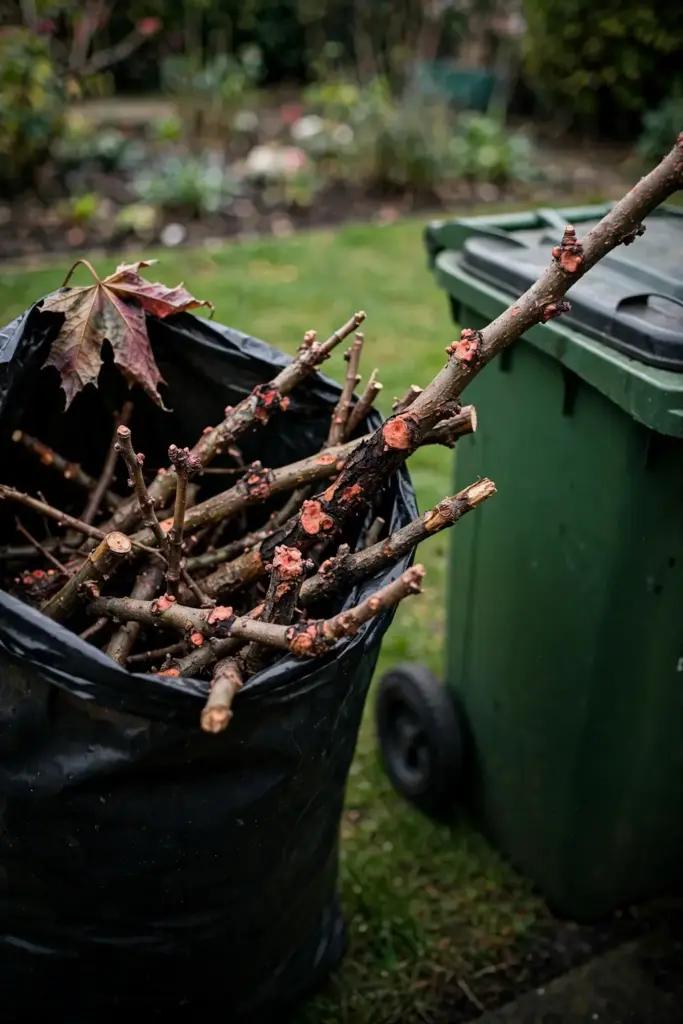
Nectria cinnabarina survives as a saprophyte on dead wood, so a pile of infected prunings under the tree feeds new spores all season. Bag the cuttings and send them out with household trash. Burn them where burning is legal and safe. Do not compost infected wood, and do not chip it into mulch for the same garden.
Pick up fallen twigs and branches from under infected trees. Rake the ground clean under the canopy after a heavy prune. Dead branches still hanging in the canopy come down in the same session. A clean canopy holds less fungus, and a clean floor gives spores nowhere to wait.
Clean tools at the end of the session. Wash blades, disinfect once more, dry, and oil. Store tools dry so the next cut starts clean.
Step 5: Time Pruning to Dry Weather and the Right Season
Prune in dry weather. Early summer is the safest window for routine cuts.
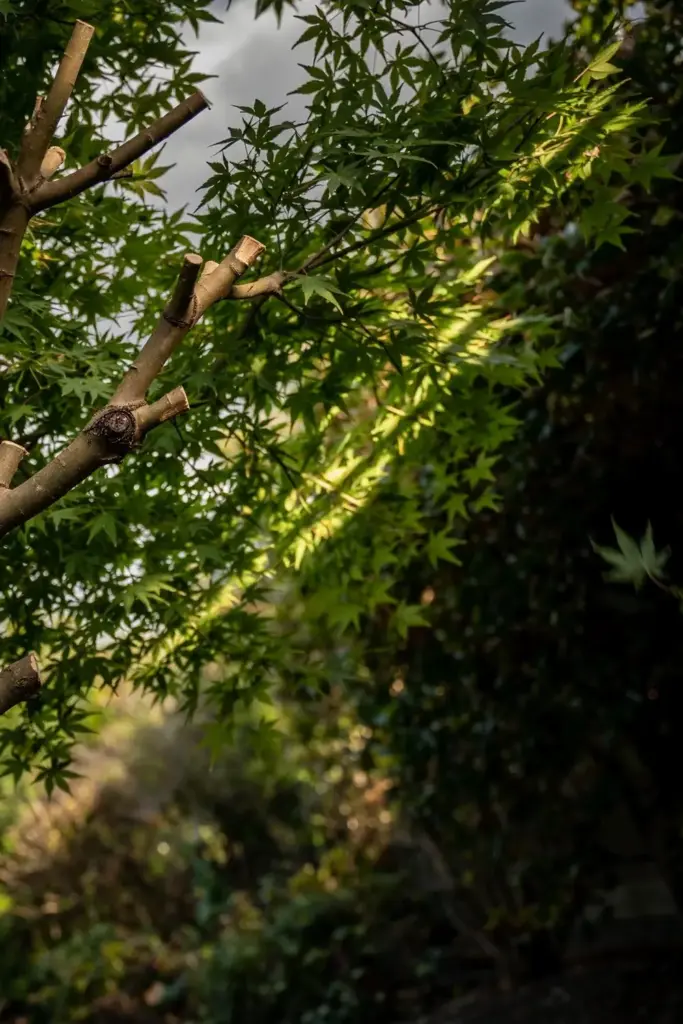
UC IPM advises pruning in early summer to reduce Nectria infections, unless another problem forces different timing. Avoid pruning in wet autumn weather, when leaf scars are fresh and spores are moving. Wait for a stretch of dry days before any pruning session, and stop when rain starts.
Save shaping cuts for dry days in the dormant season or early summer. Cut infected wood as soon as you find it in dry weather, since waiting lets the fungus advance and seed new wounds. The guide to spring pruning techniques covers clean cuts for healthy trees, and the same cut discipline applies to infected wood.
Avoid wounding trees that are growing poorly. A stressed tree heals slowly and walls off fungus slowly. Postpone shaping on a weak tree until the tree regains vigor. Every wound you avoid is one infection that never starts, and the count adds up across a season.
Step 6: Water and Feed for Vigor So Callus Wins
A vigorous tree walls off Nectria canker with callus. Water and feed for vigor, and the tree answers with callus.
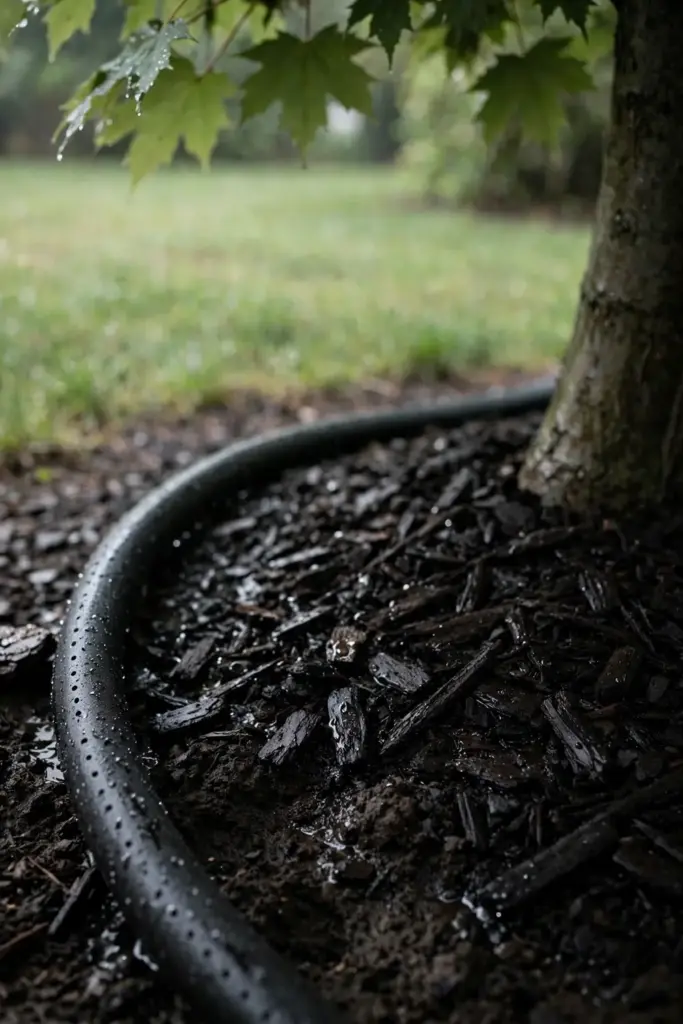
Healthy trees slow Nectria canker, and watered and fertilized trees hold the fungus in check better than stressed trees. Water deeply during dry spells, so the root zone stays moist without staying soggy. A tree that wilts in summer heals wounds slowly. Slow healing is an open door.
Feed a tree that shows pale leaves and short shoots. Skip fertilizer on a tree that already grows well, since extra nitrogen pushes soft growth that wounds easily. The notes on building soil health cover the soil basics that grow vigor without forcing soft growth.
Vigor is not a cure, and it never replaces pruning. Vigor buys time, and time lets callus close the wound. Pruning removes the fungus. Vigor closes the door behind it.
Step 7: Mulch and Clear the Root Zone
Clear grass from around the trunk. Mulch the root zone, and keep mowers and trimmers away from the bark.
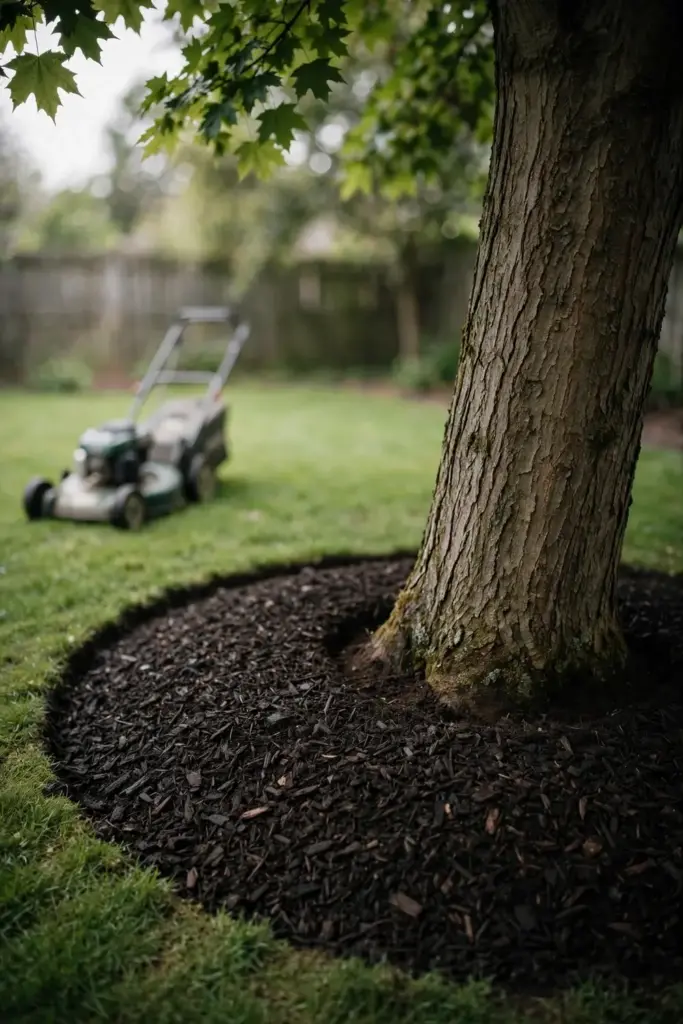
Grass around the trunk competes for water and invites mower wounds. Clear the grass and mulch the ring. Mulch holds moisture, cools roots, and keeps the mower at a distance. Keep mulch off the trunk itself. Mulch piled against bark holds moisture on bark and rots it.
Mower and trimmer wounds are prime entry points, and they recur every week through the season. A mulched ring removes the reason to mow close to the trunk. One season without mower wounds closes a whole class of entry points.
Check the mulch ring each spring. Top up mulch that has thinned, pull mulch back from the trunk, and clear weeds by hand near the bark. A clean ring is quiet work, and it pays every year.
Step 8: Use Protective Sprays Only Where They Fit
No spray cures Nectria canker. Sprays only protect fresh wounds from new infection.
UC IPM states that no fungicides cure Nectria infections. UC IPM allows one protective option for heavily infected trees or newly planted susceptible species: a thorough spray of fixed copper or freshly prepared Bordeaux mixture during early leaf drop, before rainy weather, with a second application when three-fourths of the leaves have dropped if leaf fall drags on through warm fall weather.
UMass lists locally systemic options for high-value trees alongside pruning: azoxystrobin, phosphites, pyraclostrobin, and thiophanate-methyl. A phosphite drench on the lower trunk or branch may help when infections sit on large scaffold branches or the main trunk, where pruning cannot reach. These options protect high-value trees. They do not replace pruning, and they do not cure wood that is already infected.
Read the label and follow it. Spray only on the schedule the label allows, and never spray a canopy you cannot reach safely from the ground. Hire an arborist for tall trees. Orchard-scale spray programs sit outside the home garden, and no home routine needs one.
Step 9: Scout the Canopy Again Next Season
Scout the canopy again next year. New cankers mean the fungus survived.
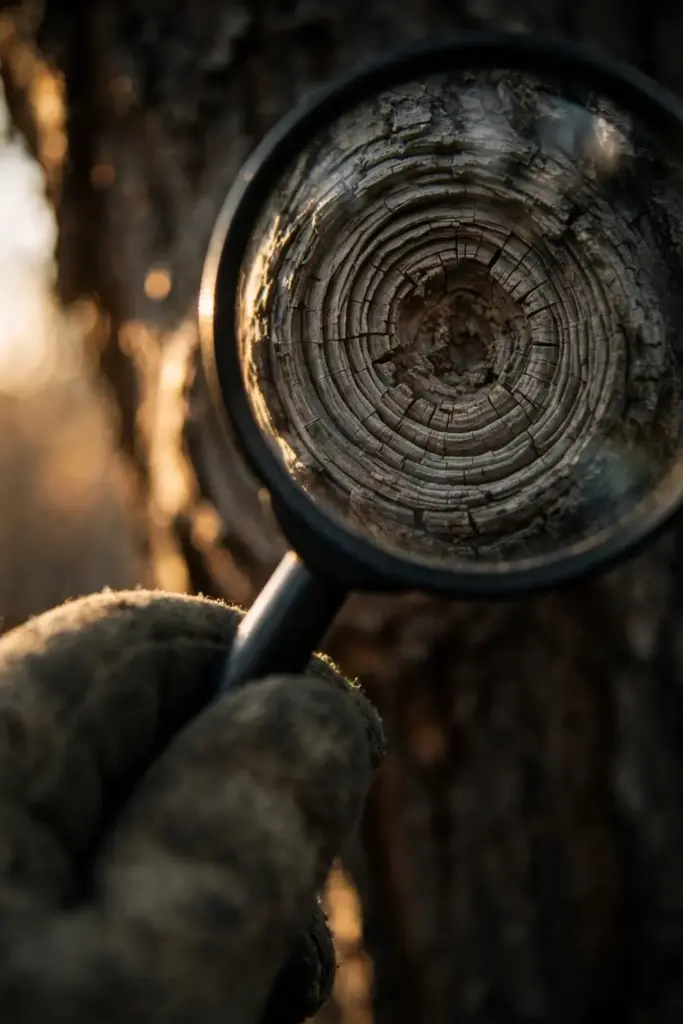
Continue scouting the canopy in later years after pruning, since the fungus can linger in wood that looked clean. Check old canker sites for wound wood closing across the wound. Check the whole canopy for fresh fruiting bodies in spring and summer. Mark treated branches with flagging tape, so next-year scouting compares the same branches.
Check neighboring trees with extra care. The fungus spreads on tools and by splash, so a neighbor pruned with a dirty blade can carry the disease before it shows a canker. Postpone shaping cuts on neighbors until the infected tree is under control.
If cankers return on the same branch, cut further back or remove the branch. A canker that returns twice on one branch means the fungus runs deeper than the first cut reached. Removal ends the cycle on that branch.
Step 10: Choose Resistant Stock and Site New Trees Well
Plant species that suit the site. Healthy nursery stock beats any spray.
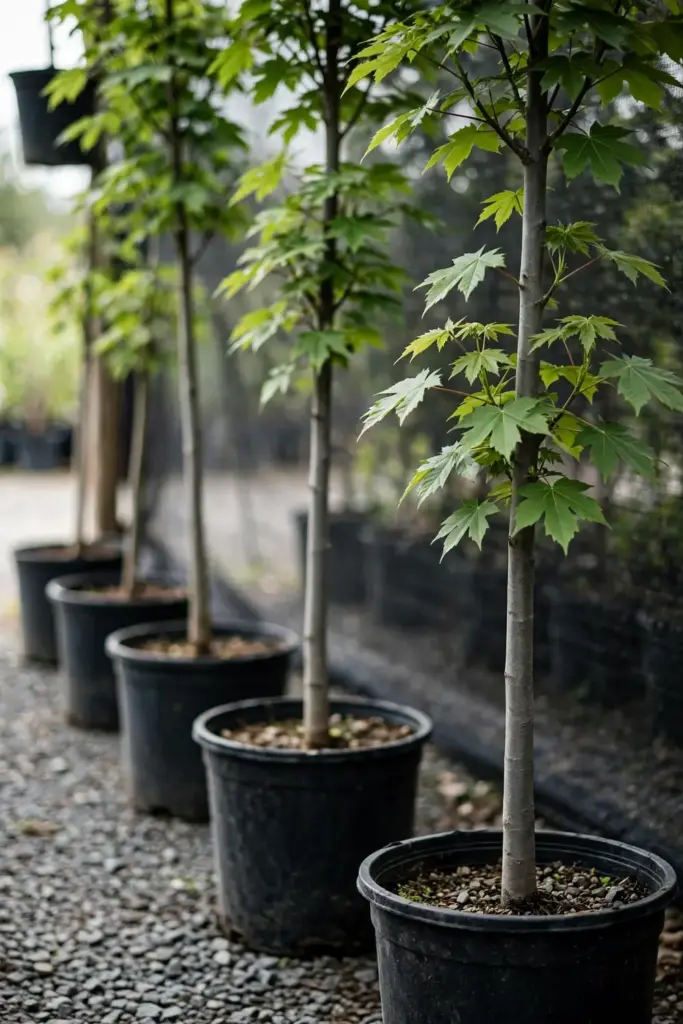
Choose plants that are well adapted to the local climate, and plant only species that suit the site and the soil. A tree that fights the site every year collects wounds every year. A tree that suits the site heals wounds fast.
Inspect nursery stock before buying. Reject trees with sunken bark patches, cracked bark, or fruiting bodies on the stems. Buy from a nursery that keeps stock healthy, and plant promptly so roots never dry out. Protect young trees from freeze damage, since frost cracks open the bark to spores.
Site a Japanese maple with care. Give it shelter from hard frost and from mower traffic, since thin bark wounds easily and Japanese maple is the most prone landscape host. Good siting costs nothing after planting day, and it prevents the wounds that start the disease.
Living With Nectria Canker Damage You Cannot Prune Out
A trunk canker is a live-with-it case. Monitor the tree and manage the hazard.
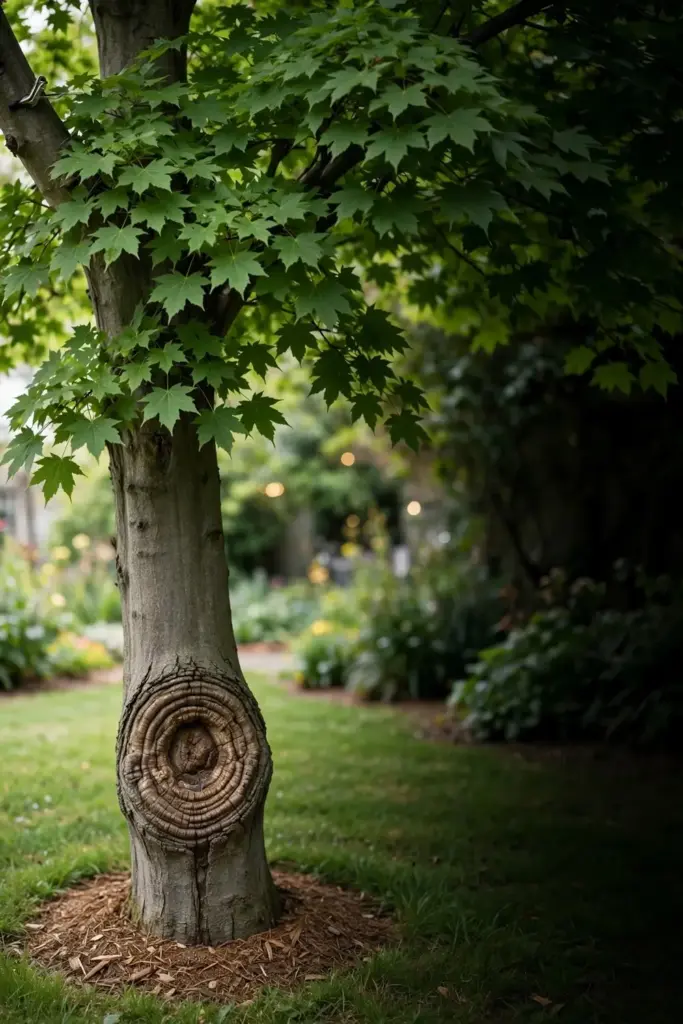
Trunk cankers on older trees often stay stable for years while the canopy stays full. Let callus close the wound, and do not cut into a trunk canker chasing clean wood. Trunk surgery makes a bigger wound than the canker, and the tree heals the bigger wound more slowly.
Cankered limbs break sooner than sound limbs under the same load. Inspect the tree after storms, and shorten a long limb that hangs over a path, a roof, or a play area. A shorter limb carries less weight and less wind load. Call an arborist for any limb that threatens a target and sits out of safe reach.
Apple and pear fruit with blossom-end rot goes straight to the trash. Do not store rotted fruit beside sound fruit, since storage rot spreads in the bin. Remove the tree when the trunk is girdled, the canopy is mostly dead, or the hazard exceeds what pruning can manage. Removal is a decision, and it is a sound one.
Frequently Asked Questions
Branch cankers rarely kill an established tree. The tree walls off the fungus with callus and keeps growing. A trunk canker on a young tree kills the tree when the canker girdles the trunk and cuts the water supply. Plants infected when young may die, while older plants rarely die from Nectria canker. Treat branch cankers early and monitor trunk cankers every year.
Cut 6 to 8 inches below the canker as the floor. UMass advises 2 to 3 feet of clean wood between the canker and the cut, since the fungus often runs ahead of the visible symptoms. Cut as far below the canker as the branch allows without destroying the tree. On a long branch, take more. On a short twig, take the whole twig.
A trunk canker on an older tree is often a monitor case, and it is not a treatment case. Let callus close the wound and inspect the tree after storms, since cankered limbs break sooner. Do not cut into a trunk canker chasing clean wood. Remove the tree when the trunk is girdled, the canopy is mostly dead, or the hazard exceeds what pruning can manage.
No spray cures Nectria canker. Fungicides only protect fresh wounds from new infection. A fixed copper or Bordeaux spray at early leaf drop may reduce new infections on heavily infected trees or newly planted susceptible species, with a second spray when three-fourths of the leaves have dropped. Locally systemic options suit high-value trees alongside pruning. Pruning and sanitation carry the real control.
Coral spot on dead wood is the saprophyte phase of Nectria cinnabarina, and it still matters. The fungus lives on dead wood and releases spores that infect fresh wounds on living trees. A dead branch left in the canopy feeds new infections all season. Remove dead wood, bag it, and send it out with household trash. Do not compost infected wood or chip it into mulch for the same garden.
Check the fruiting bodies first. Nectria canker shows coral-pink to orange-red cushions erupting through bark. Cytospora canker shows black pinhead dots, and orange coiled spore tendrils ooze out in wet weather. Cytospora cankers also run resin on spruce and gummy ooze on peach and cherry. When the signs stay unclear, send a sample to a diagnostic clinic before cutting.
Where to Go From Here
Start with one walk around the tree. Mark every canker, then cut on the next dry day.
Identify first, then decide, then cut. Prune infected branches in dry weather, disinfect tools between cuts, and destroy every cutting the day you prune. Feed and water for vigor, mulch the root zone, and scout the canopy again next season.
The tree that survives Nectria canker is the tree with fewer wounds and faster callus. Give it both. One clean pruning session on a dry day does more than any spray, and next-year scouting catches what the first session missed.