
White rot on onion and garlic has no cure once it reaches the bulb. The fungus waits in the soil as tiny black sclerotia, and a single sclerotium per 20 pounds of soil can start disease in a bed. The 10 strategies below keep white rot out of clean beds and manage beds it already owns, starting with the triage call that saves the rest of the crop.
The name needs a fence. Allium white rot is the disease on this page. Timber decay fungi cause a different white rot in wood, and Sclerotinia white mold rots stems on beans, lettuce, and tomato. Three diseases share one color word. Each one wants a different response.
The rest of this page is 10 moves, from the triage call to clean starts next season. Read the identification sections first if the plants still stand. Start at Step 1 if the bed already failed.
What White Rot Actually Is
White rot is a soilborne disease of onion, garlic, leek, shallot, and chives. The pathogen is Sclerotium cepivorum, a true fungus that lives in soil as sclerotia and infects only Allium species.
Some references call the same fungus Stromatinia cepivora. The name changed. The fungus did not. This page uses Sclerotium cepivorum throughout, so one name carries every claim.
Garlic and onion take the worst of it. The California Garlic and Onion Research Advisory Board reports no resistant varieties are available. No catalog code saves an allium from white rot. Culture carries the whole plan.
It travels on ordinary garden traffic. Infected cloves carry it. Sets and transplants carry it. Soil on tools, boots, and tires carries sclerotia into clean beds. One infected clove can seed a bed that then punishes alliums for decades.
Brown rot is a separate disease on stone fruit. It shares a color word and nothing else.
How to Identify White Rot on Leaves and Stems
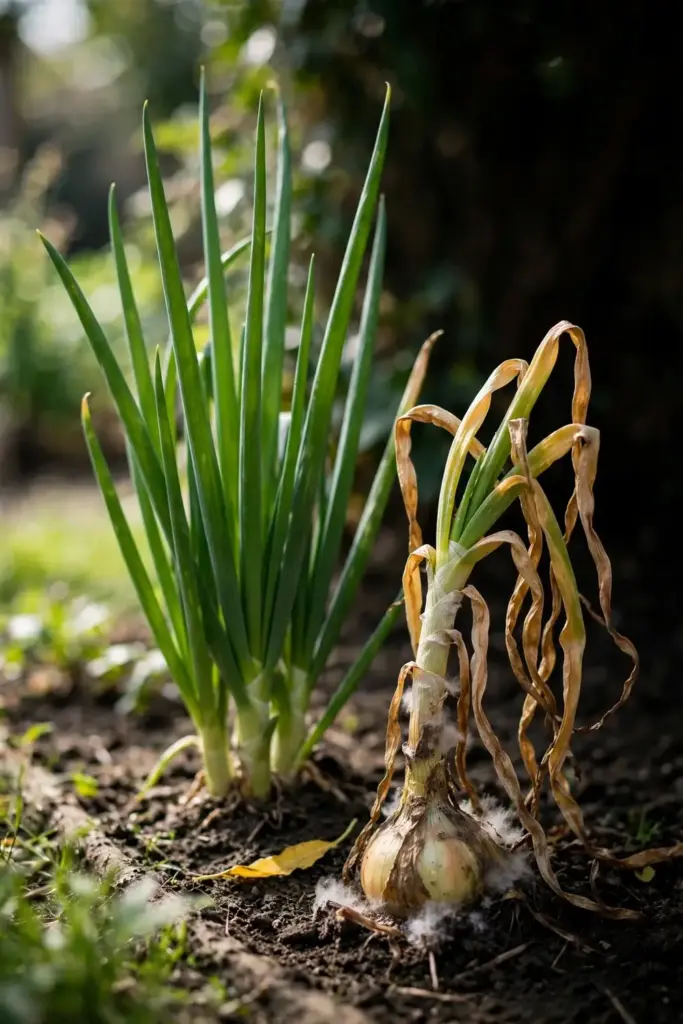
White rot shows first as yellowing leaves that wilt and die back from the outside in. Plants die in patches, often from midseason to harvest.
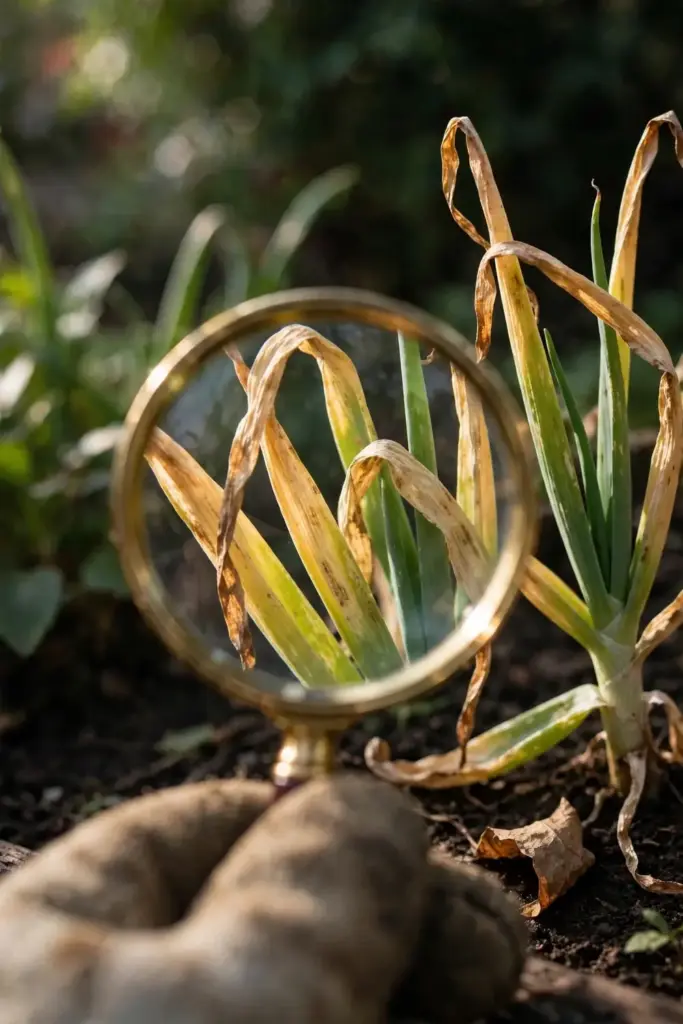
Leaves yellow first at the outer leaves, then the dieback moves inward. In dry weather the foliage wilts and collapses. In wet weather the plants may not wilt at all. They loosen in the soil instead, because the roots below have rotted away.
Patches give the disease away. A scattering of dead plants in one stretch of row, with healthy plants beside them, points underground. A whole row failing at once points elsewhere, often at water or feeding.
Pull a suspect plant and read the roots. Roots rot and the plant lifts from the soil with little resistance. A plant that wilts in moist soil with rotted roots is not thirsty. It is infected.
Pink root shows pink roots and stunting without bulb rot. It stays a one-line mention here because it never rots the bulb.
How to Identify White Rot on Bulbs and Roots
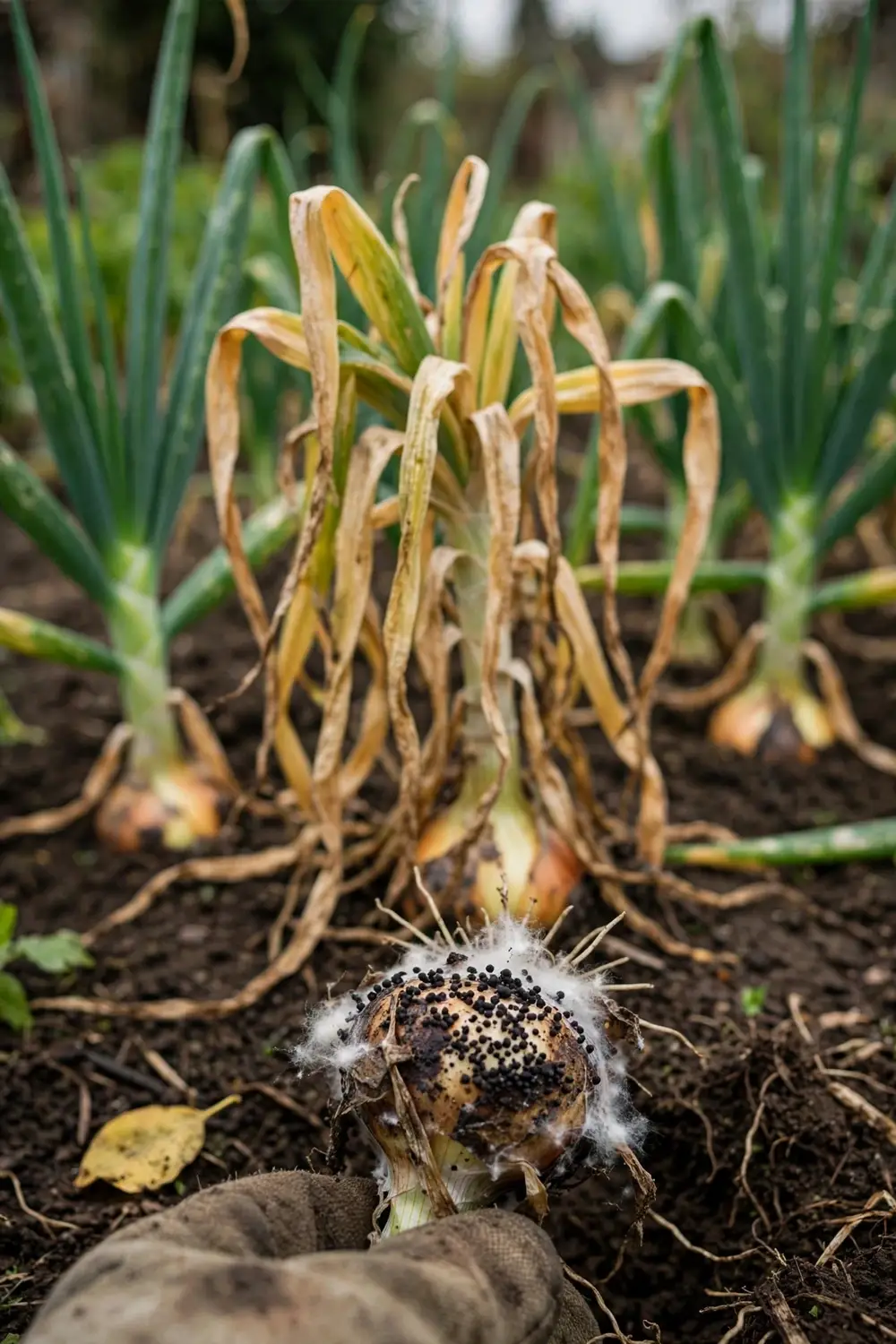
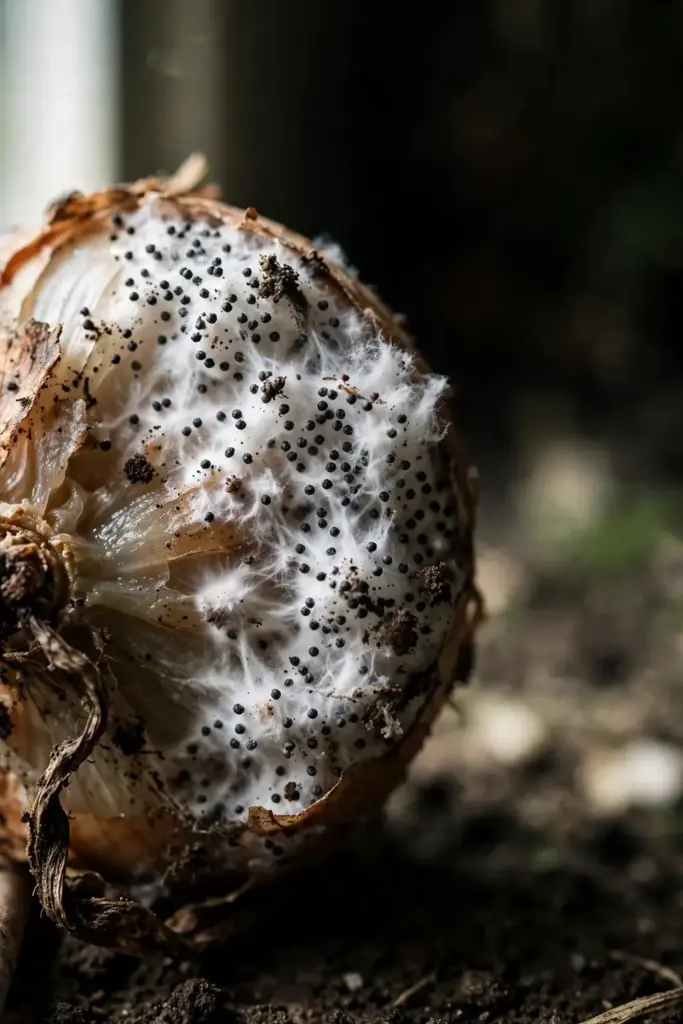
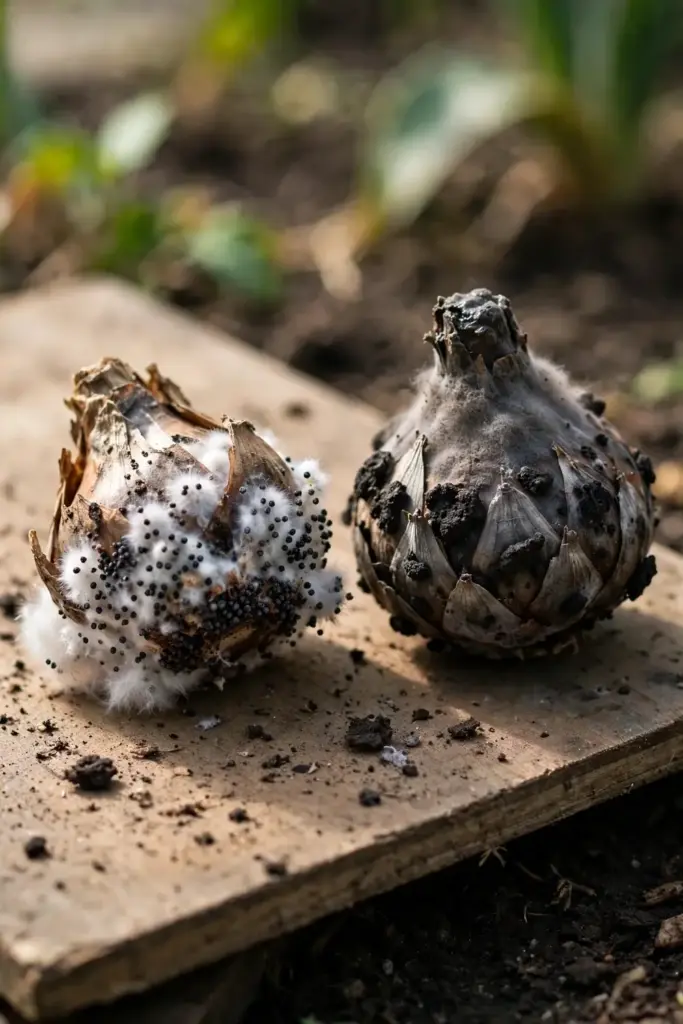
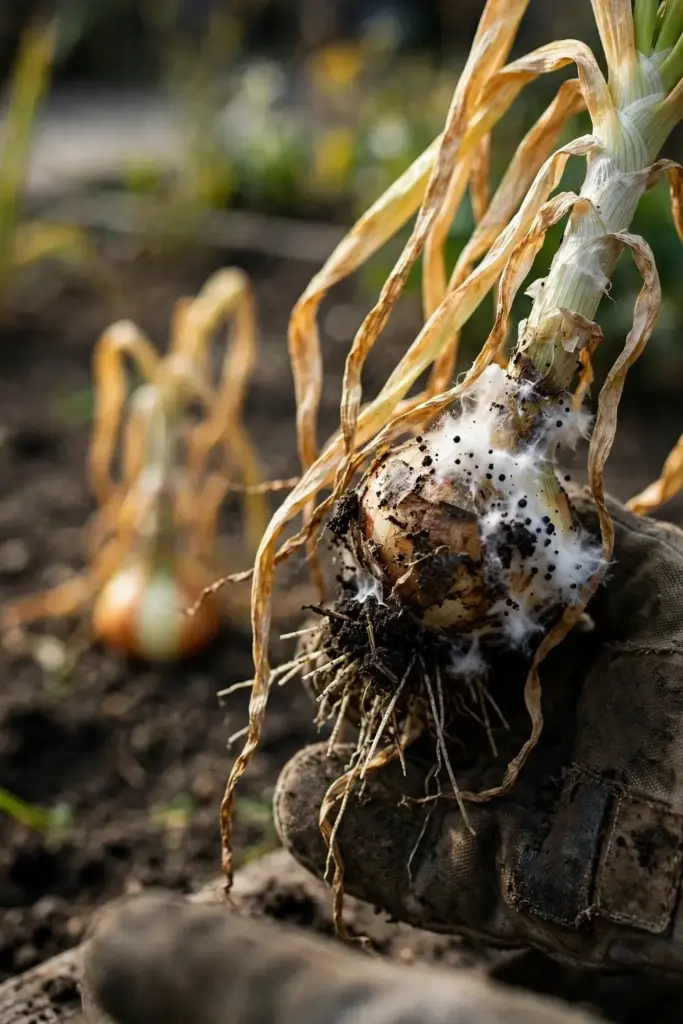
Dig the bulb. White rot shows white fluffy mycelium across the base and roots, studded with tiny black sclerotia.
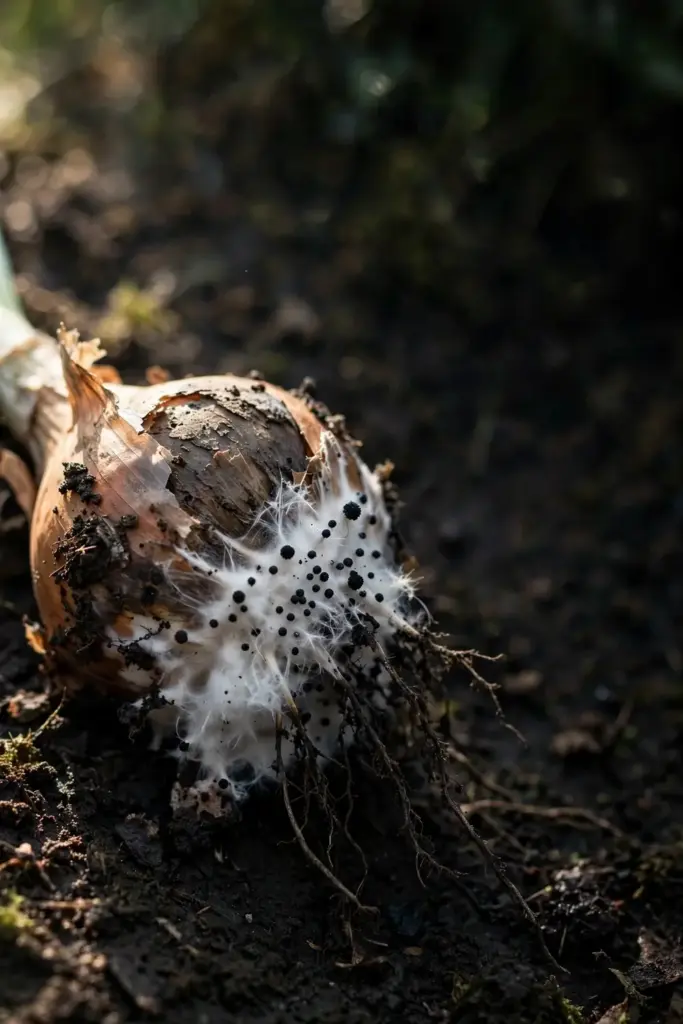
The mycelium looks like loose white fuzz packed around the basal plate and up into the rotted tissue. The bulb below turns soft and watery. Roots rot first, then the rot climbs into the bulb from the base.
The sclerotia give the field diagnosis. Each one is a tiny round black body the size of a poppy seed, about the size of a pinhead. They stud the white mat and the rotted tissue around the base. Poppy-seed sclerotia on a rotted allium bulb mean white rot.
Each rotted bulb returns fresh sclerotia to the soil by the thousand. Leave one infected bulb in the bed and the count rises. Pull it early and the count falls. Sanitation is arithmetic, not tidiness.
Infected bulbs are not marketable. Eat a sound bulb from a lightly touched plant if you like, and discard any bulb with soft rot, white fuzz, or black sclerotia on it.
Which Alliums Get Hit Hardest by White Rot
Garlic and onion sit at the top of the risk list. Leek and shallot follow. Chives host the fungus too.
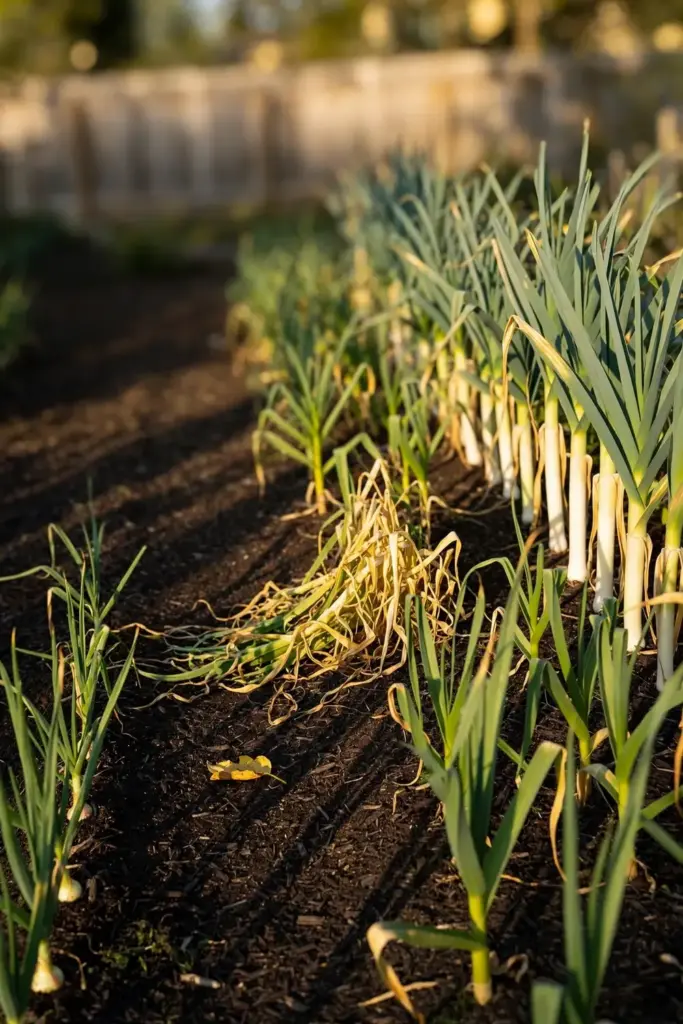
Garlic carries the worst introduction risk. The disease rides into a new bed on seed cloves, and a clove that looks sound can still carry sclerotia. Onion follows close behind. Infected sets and transplants carry the fungus into clean soil the same way.
Leeks grow through the same cool, moist season the fungus favors, and a leek bed with a history of white rot needs the same clean-stock discipline as a garlic bed. The growing leeks from seed to harvest guide covers clean starts for that crop.
Shallot and chives host white rot as well. They draw less attention because gardeners plant fewer of them. A shallot bed in infected soil fails the same way an onion bed does.
Non-allium crops never catch white rot. The fungus answers only to Allium root exudates. Root exudates from other plants leave the sclerotia dormant. That narrow appetite is the one weakness the whole plan exploits.
White Rot vs Botrytis Neck Rot
Timing splits them first. White rot kills plants in the ground. Neck rot shows after harvest, in storage. The UC IPM Botrytis neck and bulb rot page puts neck rot infection in the field and symptoms in storage, with gray feltlike growth on rotting scales.
| Clue | White Rot | Botrytis Neck Rot |
|---|---|---|
| Pathogen | Sclerotium cepivorum | Botrytis allii and Botrytis aclada on onion, Botrytis porri on garlic |
| Where and when | Kills plants in the ground, from midseason to harvest, in patches of dead plants | Most characteristic after harvest, in storage, often weeks in, though infection starts in the field |
| Mycelium | White fluffy mycelium at the base and roots | Gray feltlike mold at the neck and between scales |
| Sclerotia | Tiny round poppy-seed black sclerotia in rotted bulb tissue and around the base | Larger, thin, irregularly shaped black sclerotia between scales or at the neck, often as a solid layer around the neck |
| Entry | Soilborne, through roots and the base plate | Neck wounds and poorly cured necks, airborne conidia landing on tissue |
| Persistence and consequence | Sclerotia persist in soil for decades, so an infected bed stays off-limits for alliums | Fixed by curing, handling, and storage, and the bed is reusable sooner |
| Field test | Dig the bulb and find white mycelium with poppy-seed sclerotia at the base | Check stored bulbs for soft water-soaked necks with gray mold moving down from the neck |
Both diseases make black sclerotia on allium bulbs. Sclerotia alone never separate them. Size, shape, mycelium color, and timing do. Confusing the two means either abandoning a usable bed or replanting into a contaminated one.
Neck rot answers to curing. Utah State University Extension puts neck rot symptoms at 4 to 8 weeks in storage, and safe storage near 33 to 34 degrees Fahrenheit with steady air movement. Harvest with dry necks, cure the crop hard, and store it cool. White rot answers to none of that. The bed is the difference.
Why Sclerotia Make White Rot So Hard to Erase
Sclerotia are the reason white rot outlasts every spray. Each one is a hard black resting body that waits in soil without a host.
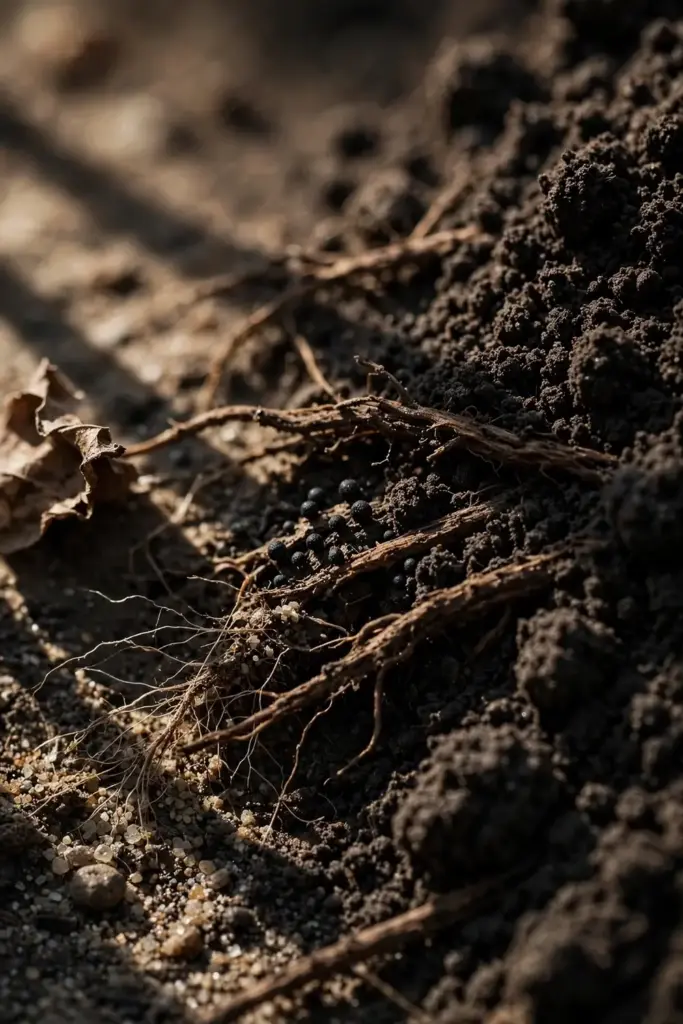
The UC IPM white rot guidelines put sclerotia survival at more than two decades without a host, and name avoidance and sanitation as the most effective controls. Avoidance and sanitation carry this article for the same reason.
Reports run longer. University of Maryland Extension puts survival at 20 to 40 years in soil. The California Garlic and Onion Research Advisory Board puts it at 30 or more years. The range is the point. No single settled number exists, so plan as though the bed never clears on its own.
Sclerotia wait for one signal. Only Allium root exudates wake them. Exudates from other plants leave them dormant. A bed can sit clean-looking for years while the count below holds steady, and the first allium root through that soil wakes the whole bank.
Density decides damage. University of California, Davis plant pathologists put the damage threshold at 2 to 3 sclerotia per kilogram of soil. A very small count causes significant disease. That is why a bed with a light history still deserves full discipline.
Once awake, the fungus grows mycelium through the soil until it meets an Allium root. It enters the roots and the base plate, then rots the bulb from the base up. Mycelium can grow from one plant to a nearby plant, so a single wake-up spreads along the row.
Sprays cannot reach a sclerotium resting in soil. They cannot clear sclerotia already packed into a rotted bulb. The only levers that touch the survival bodies are removal, heat, trick germination, and time.
What Makes White Rot Worse in a Home Garden
Cool, moist soil drives white rot. Infection runs best from 50 to 75 degrees Fahrenheit, with an optimum near 60 to 65 degrees Fahrenheit. At soil temperatures above 78 degrees Fahrenheit, the disease slows sharply.
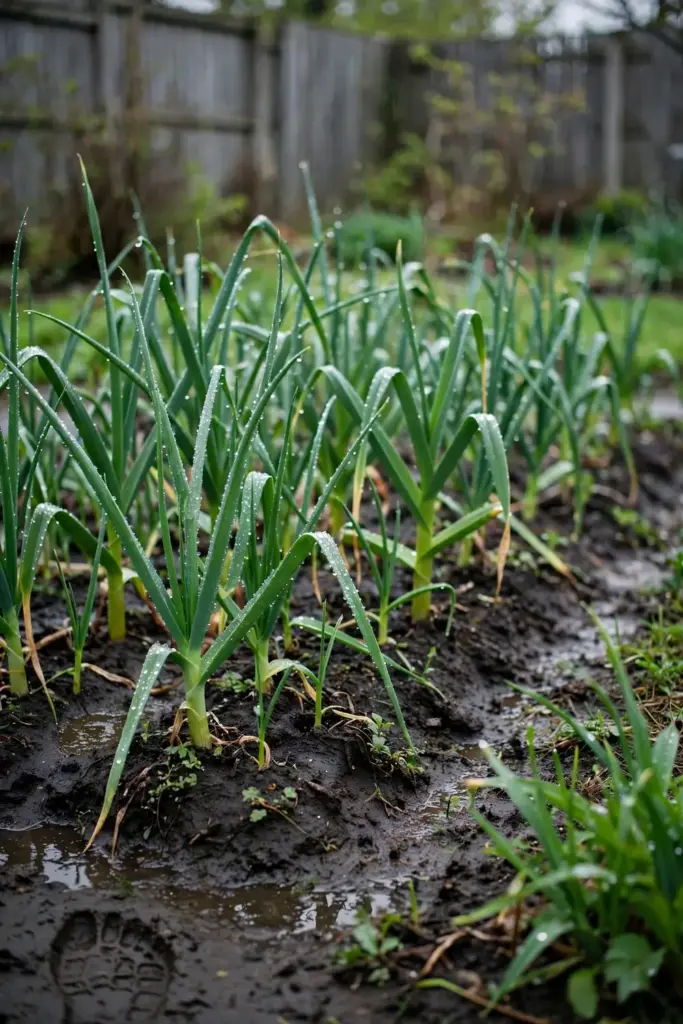
Moisture sets the second condition. Soil moisture that suits onion and garlic growth suits white rot growth too. The crop and the fungus want the same bed. That overlap is why watering decisions matter as much as stock decisions.
Irrigation spreads the damage. University of Maryland Extension notes that reducing or eliminating irrigation will reduce damage to the current crop, and that it will not stop the spread of the disease. Cut water to slow the loss. Do not expect dry soil to cure the bed.
Repeated allium crops build the count silently. A bed that held alliums for several seasons can carry rising sclerotia numbers before any plant shows symptoms. The increase goes unnoticed until the count crosses the threshold and patches start dying.
Dirty traffic spreads it. Soil on tools, boots, and tires moves sclerotia from an infected bed to a clean one. One muddy trip across the garden can seed a bed that never held a sick plant.
Untested stock introduces it. Grocery-store cloves and sets carry no certificate and no history. A bargain bag of cloves can cost a bed for decades. Clean stock is the cheapest control in the whole plan.
Step 1: Decide Whether Saving This Allium Bed Is Worth It
Cut before you spend. A bed with white rot has no cure, so the first move is triage, not treatment.
Once white rot symptoms show, no controls stop or reduce disease during the current season. The California Garlic and Onion Research Advisory Board states that limit plainly. Garden sprays cannot reach sclerotia in soil, and they cannot clear fungus already inside a rotted bulb.
Grower programs use at-planting fungicides such as tebuconazole, fludioxonil, and boscalid. Those are commercial at-planting products, not home-garden advice. This plan carries no fungicide recommendation for home gardeners, because none fits the home garden.
Count the bed before you decide. One infected plant in a row of healthy alliums is a salvage job. Rogue it, sanitize, and watch the rest. Patches of dead plants across the bed mean contamination, and the bed problem needs rotation and containers, not rescue.
Pull the doomed plants and save the season. A clove costs little and a season nursing dead plants costs the whole bed. The exception is a bed where only one plant shows symptoms and the rest look clean. Cull the sick one. Watch the rest.
Step 2: Buy Certified Disease-Free Stock and Inspect Every Clove
Start with clean stock. Certified disease-free seed, cloves, and sets keep white rot out of beds that never had it.
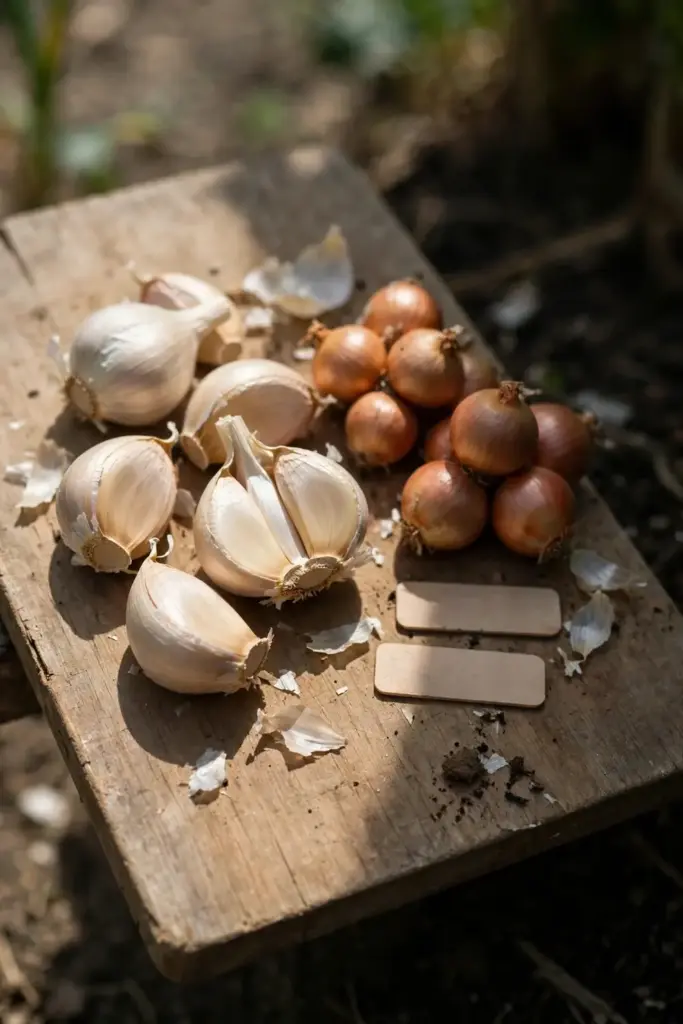
Buy from a reputable supplier with a history of clean allium stock. Certification is the control. A certificate means the seed field was checked and the stock carries no white rot history. A bargain bag carries no such promise.
Skip grocery-store alliums for planting. Grocery-store garlic and onion sets carry no certificate. They were grown for the kitchen, not for the seed bed, and planting them gambles a whole bed for the price of one bulb.
Inspect every clove before it goes into the ground. Cloves should feel firm, with a clean basal plate and no white fuzz or black specks. Any clove with fuzz, soft spots, or pinhead black bodies stays out of the bed. One suspect clove is not worth the row.
UC IPM notes that onion seed rarely carries sclerotia, while infected transplants and sets do. Garlic carries the disease on seed cloves. That is why inspection matters most on cloves, sets, and transplants, and why seed-grown onions start cleaner.
Never plant into a bed with white rot history. A bed that held white rot last season still holds it. Clean stock in contaminated soil fails the same way dirty stock does. Match clean stock to clean ground.
Step 3: Rogue Infected Plants and Sanitize Every Tool
Pull infected plants whole, roots and all, the day you find them. Bag them for municipal waste before you carry them across the garden.
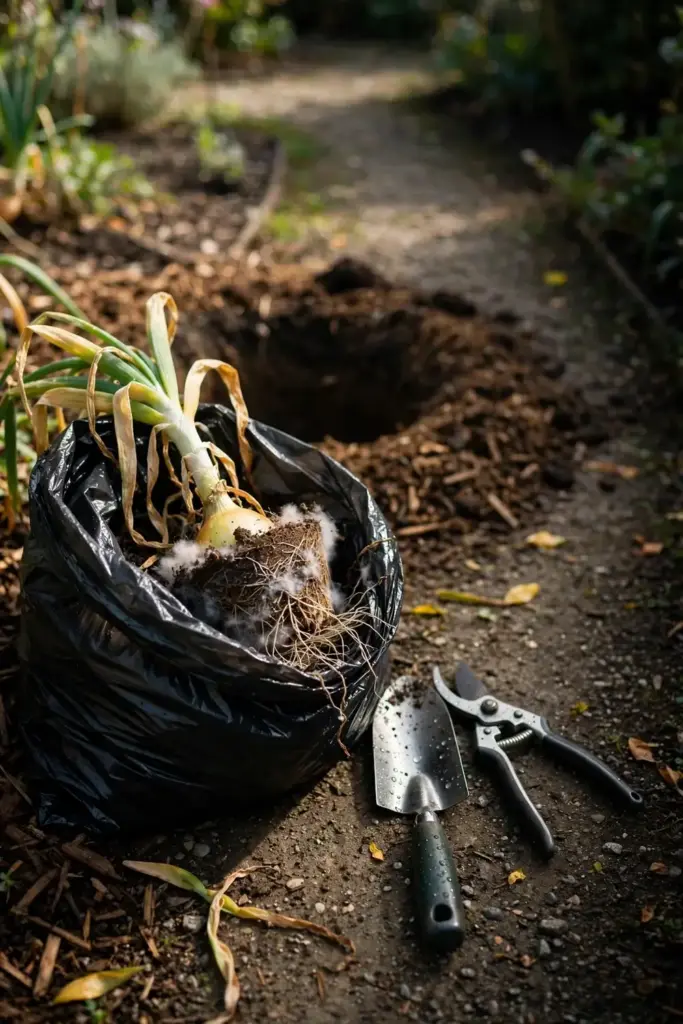
A plant carried loose drops sclerotia along the path. A plant carried in a closed bag drops nothing. The bag is the tool. Pull the surrounding soil into the bag with the plant, and tie the bag shut before it leaves the bed.
Do not compost infected plants. Home compost piles rarely hold the sustained heat that kills sclerotia. Cornell Cooperative Extension notes composted onion waste needs sustained heat of at least 48 degrees Celsius for 3 days to kill sclerotia in the waste. A home pile rarely holds that heat. Bag it, bin it, and keep it out of the compost pile.
Sanitize everything the plant touched. Wash soil off tools, stakes, pots, and boots. University of Maryland Extension advises sanitizing equipment with quaternary ammonia before moving to another field. Clean the tools again before you put them away. Sclerotia ride soil, and soil rides tools.
Work sick beds last. Move through healthy beds first, then the infected bed, so shoes and tools never carry soil from sick to healthy. Change gloves between beds if you wear them. The order of the walk is part of the control.
Step 4: Keep Alliums Out of the Bed for 8 Years or More
Give the bed 8 years or more away from alliums. Rotation lowers the count. It never clears the bed.
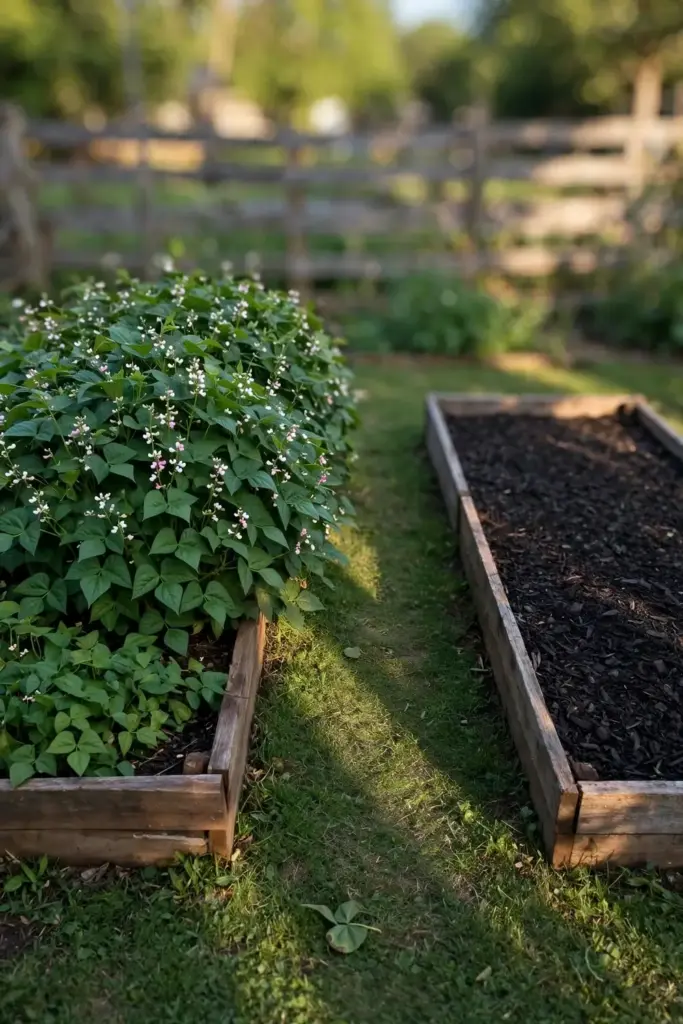
UC IPM states the limit plainly. Rotation alone will not control white rot. The sclerotia outwait any short rotation, and a bed that returns to alliums a season early pays for the shortcut with a fresh outbreak.
Eight years is the floor, not the cure. Treat it as one lever among many. A bed that also gets solarization, rogueing, and trick germination comes back cleaner than a bed that only waited.
Fill the fallow years with non-alliums. Corn, beans, grains, and vegetables outside the Allium family break the cycle. The fungus answers only to Allium roots, so every non-allium season is a season the sclerotia wait without food.
Pull allium volunteers through the fallow years. Volunteer onions, garlic, and leeks host the fungus and reset the clock. A volunteer is a host crop you did not plan. Pull it the week it appears.
Map the bed on paper. Write down which bed held white rot, which crop grew there, and which year. Memory fades. The sclerotia do not. The map stops next spring from repeating this spring.
Step 5: Solarize the Bed in the Hottest Stretch
Solarize the bed in the hottest stretch. Clear plastic over wet soil cooks sclerotia in the top layer.
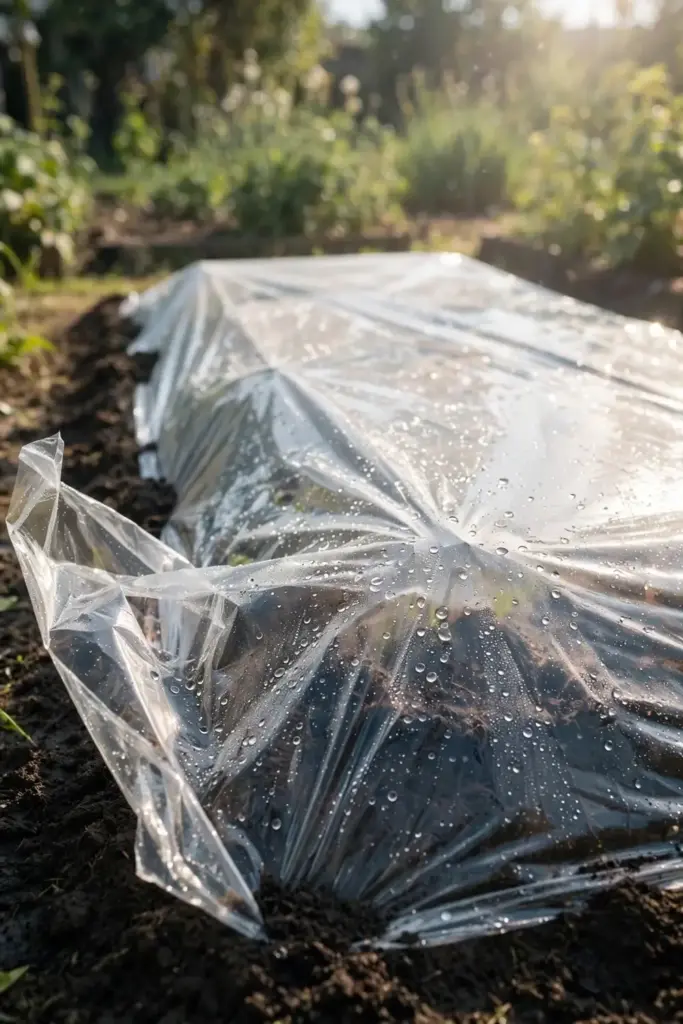
A Cornell Cooperative Extension review reports sclerotia viability falling 95 percent after 1 day at 113 degrees Fahrenheit or 8 days at 95 degrees Fahrenheit. Heat is one of the few forces that reaches a resting sclerotium.
Work the method in order. Cultivate the bed, irrigate it well, then cover it with transparent polyethylene sheeting for about one month. The sheet must sit tight to the soil with its edges buried, so heat cannot escape. Black plastic will not work. Sunlight must pass through the sheet and trap heat underneath.
Solarization works best where summers run hot and sunny. Cornell Cooperative Extension notes the technique proved most effective in Mediterranean climates, and that it would likely fail during cool summers. A cool, cloudy stretch wastes the plastic. Save the job for the hottest month.
Pull the plastic, let the bed cool for a few days, then plant non-alliums into the undisturbed surface. Solarization cuts the population. It does not sterilize the bed. Pair it with rotation and clean stock, never with hope alone.
Step 6: Grow the Next Crop in Fresh Containers
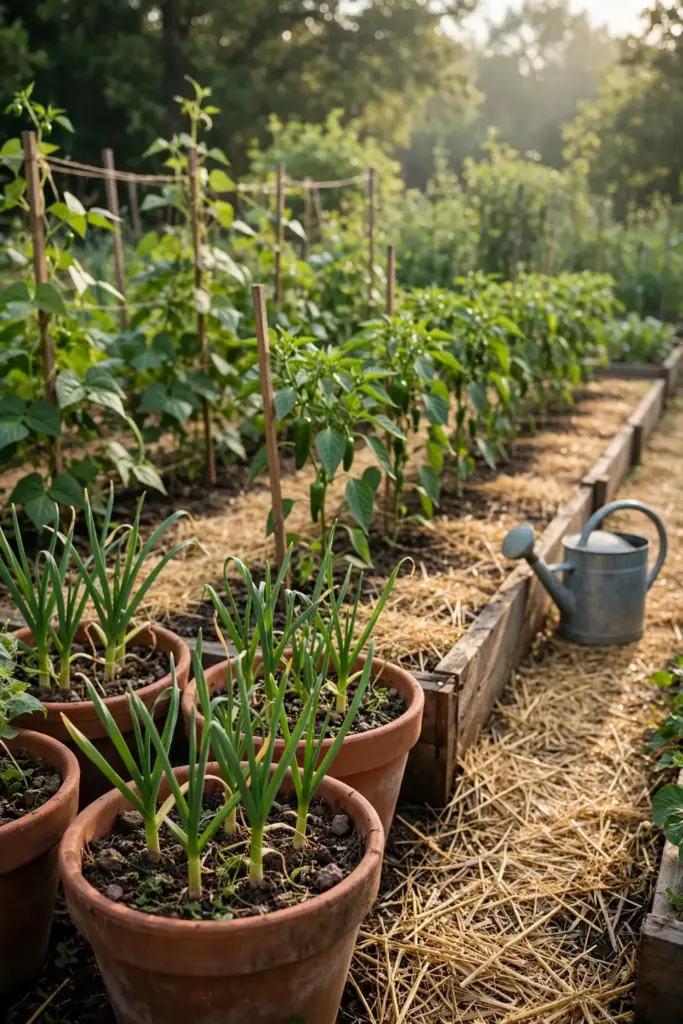
Containers dodge the bed entirely. Fresh potting soil carries no soil history and no sclerotia. An allium in a clean container on a patio grows free of the bed that killed its cousins.
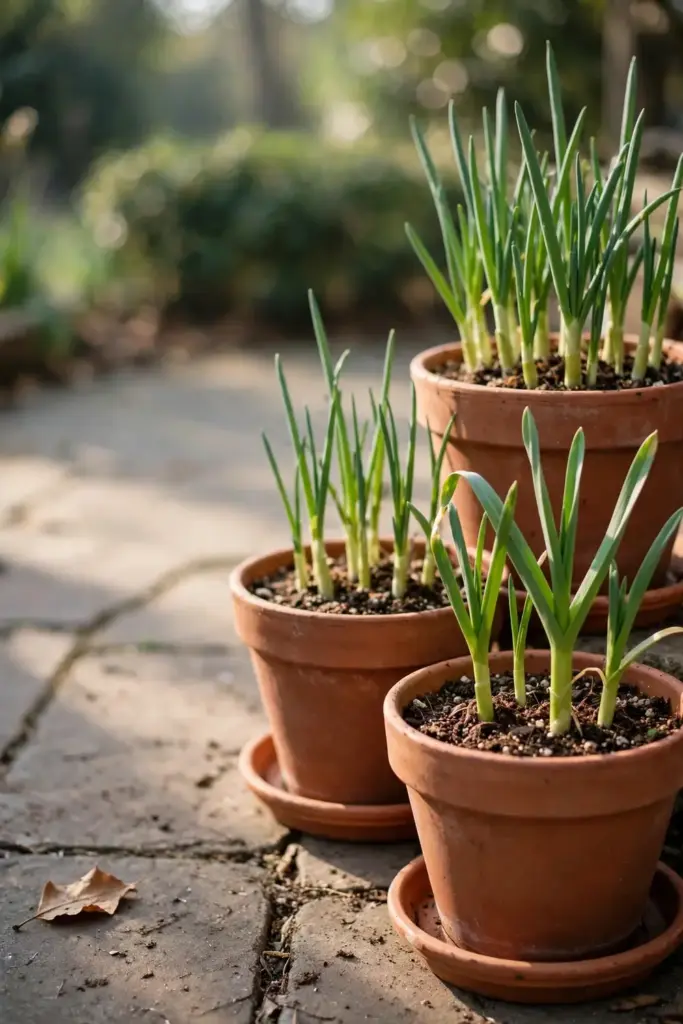
Keep infected soil out of the pot. Never fill containers with bed soil, even soil that looks fine. One scoop of bed soil seeds the pot with the same fungus the container was meant to dodge. Buy clean soil for containers, and keep the bag off infected ground.
Use clean pots. Wash used pots before filling them, and never reuse a pot that held a sick plant without washing it first. A pot that held white rot holds sclerotia in the clinging soil. Fresh mix in a dirty pot is a wasted bag.
Drainage decides container success. Drill holes if the pot lacks them. Set the pot where morning sun dries the surface. Empty saucers within half an hour. A pot that sits in standing water trades white rot for root rot.
UC IPM notes raised beds and careful furrow irrigation can limit damage in the ground. Containers go further. They remove the ground from the equation entirely, which is why they are the honest shortcut when a bed cannot be trusted.
Step 7: Dip Seed Garlic in Hot Water Inside a 5-Degree Window
Dip seed garlic in hot water before planting. The window is 5 degrees wide, and missing it kills the cloves.
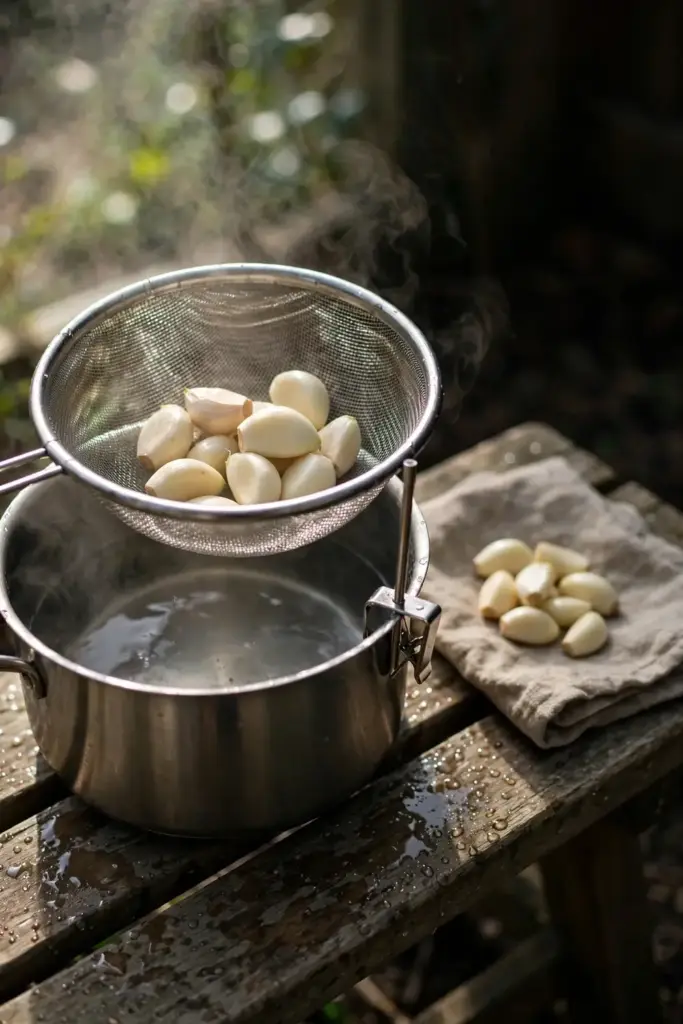
The University of Maryland Extension white rot page notes the fungus turns vulnerable above 115 degrees Fahrenheit, while garlic dies above 120 degrees Fahrenheit. Five degrees separate control from crop loss. That gap is the whole procedure.
Use a thermometer, not a guess. Heat the water to the target, hold it steady, and dip small batches of cloves. Test one small batch first and plant it apart from the rest, so a mistake costs a handful of cloves and not the whole planting.
The dip reduces the pathogen load. It will not completely eliminate the fungus. University of Maryland Extension states that limit plainly. Treat the dip as one layer of clean-stock discipline, alongside certified stock and inspection, never as a standalone cure.
Treat this as a careful procedure, not a kitchen shortcut. A pot without a thermometer, a distracted cook, and a batch left a minute too long add up to dead cloves. If you cannot hold the temperature steady, skip the dip and lean on certified stock instead.
Step 8: Try Suicidal Germination as an Experiment, Not a Cure
Suicidal germination tricks sclerotia into germinating with no host nearby. Germinated sclerotia starve. The method stays experimental.
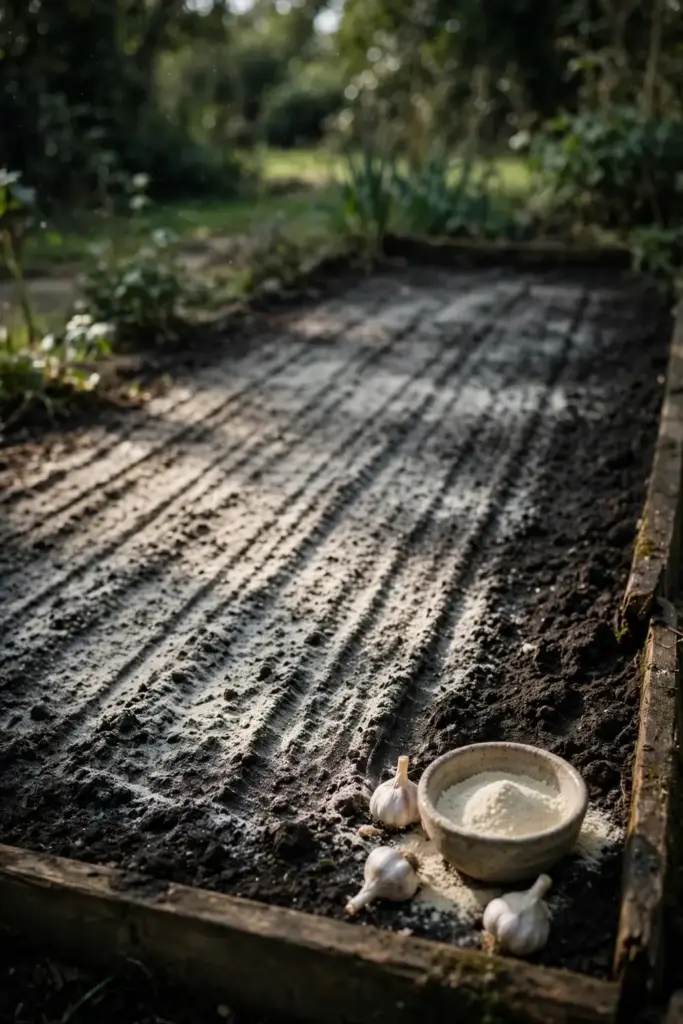
The trick runs on the same signal that wakes sclerotia in a planted bed. Garlic extract, juice, oil, or powder supplies the Allium sulfur compounds, and the sclerotia germinate toward a host that is not there. With no root to infect, the fungus dies without reproducing. One wake-up, no meal, no next generation.
Cornell Cooperative Extension reports garlic powder at 125 to 135 pounds per acre cutting sclerotial viability sharply, with application made when soil sits between 50 and 72 degrees Fahrenheit and no allium host stands in the ground. Work the powder into empty, moist soil in the season before planting alliums, and keep alliums out of the treated ground until the next season.
A synthetic compound called diallyl disulfide did the same job in research, cutting viable sclerotia sharply in a single season, but the product is no longer commercially available. Oregon State University professor Fred Crowe studied garlic extracts as germination stimulants, and home-garden interest in the method traces back to that work.
Run it as an experiment with honest expectations. Results vary with soil, moisture, and timing. The treatment never eradicates white rot. Run it on an empty bed a season before planting alliums, and pair it with every other step in this plan.
Use clean material for the trick. Garlic powder from a shop, or extract from certified stock, keeps the treatment from introducing fresh disease. Never grind up cloves from an infected bed and spread them on clean ground. That trades one infection for another.
Step 9: Stop Moving Soil, Tools, and Debris Between Beds
Stop the traffic that moves sclerotia. Soil, tools, boots, and plant debris carry white rot from bed to bed.
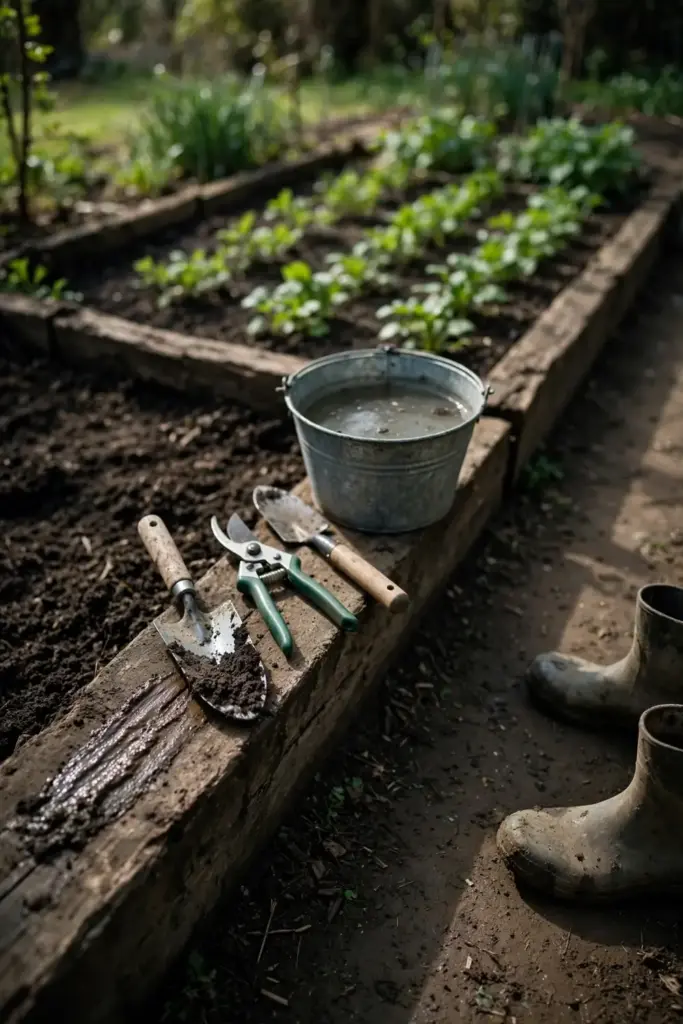
Do not move soil from an infected bed to a clean one. Do not move tools, stakes, or pots without washing them first. Do not carry plant debris across the garden in an open trug. Each trip is a seeding event.
Keep irrigation water from running out of an infected bed into a clean one. Water carries soil, and soil carries sclerotia. A slope that drains from the sick bed to the clean bed needs a barrier, a swale, or a change of plan.
Give the infected bed its own tools if you can. A dedicated trowel, fork, and pair of boots for the sick bed cost little and stop the daily commute of soil. Wash them before they go back into storage, even if they never leave that bed.
Do not spread compost, mulch, or soil from an infected bed anywhere else in the garden. What leaves the infected bed stays contaminated until heat or time says otherwise. The bed boundary is a quarantine line. Treat it as one.
Step 10: Start Clean Next Season With Certified Seed and Sterile Mix
Start clean next season. Certified seed, sterile mix, and a bed map keep one bad season from repeating.
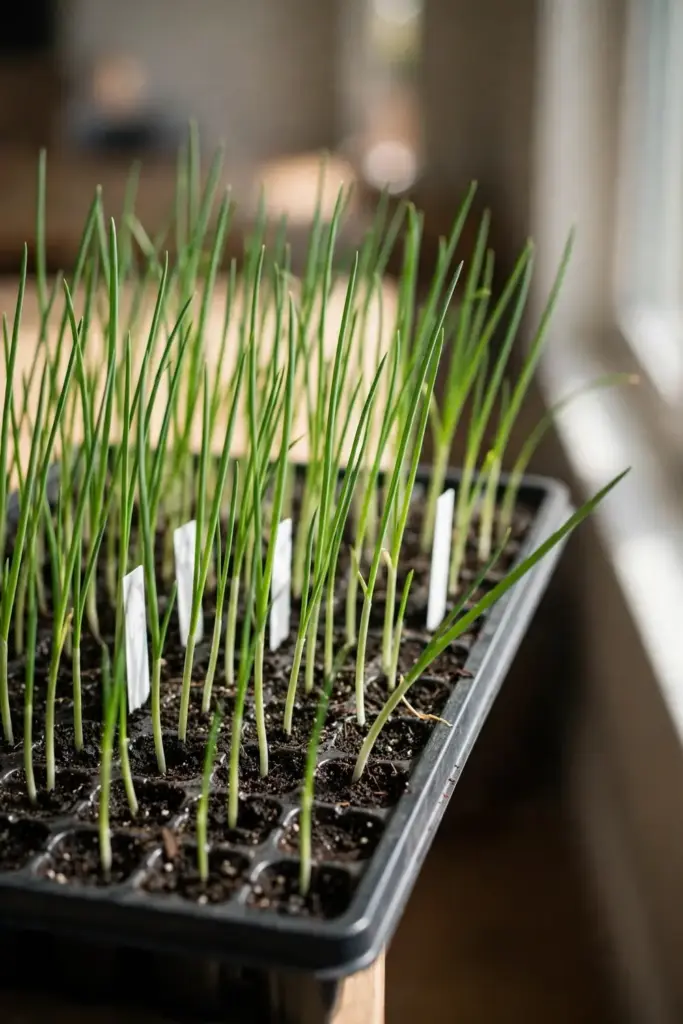
Buy certified seed from a reputable supplier. Seed from a bed with white rot history is a gamble, and allium crops from an infested field should not be used as seed. The certificate is the control. The bag is cheaper than the bed it protects.
Sterilize the seed-starting setup. Use fresh sterile seed-starting mix, new or disinfected trays, and clean water. The seed starting guide covers clean technique from sowing to transplant. Keep bed soil out of the seed trays. One scoop seeds every cell it touches.
Save seed only from healthy plants in clean beds, because seed from a sick bed carries the fungus forward into a clean one. Label every bed and keep a notebook of which bed held white rot, which crop grew there, and which year.
Plant clean stock into clean ground, and keep the two clean together. Clean stock in contaminated soil fails. Contaminated stock in clean soil fails. Both halves of the rule matter, every season.
Living With White Rot in a Bed You Already Own
A bed with white rot is not a dead bed. It is a managed bed. Plant non-alliums there for years. Grow onions and garlic in containers or in a clean bed. Keep the sanitation, watering, and rotation discipline every season, because the sclerotia wait longer than any gardener’s memory.
I have learned that a bed with white rot rewards patience more than products.
Build the soil between allium crops. The soil health guide walks through structure, organic matter, and drainage in practical detail. Work finished compost into the top layer between seasons. Compost feeds the microbes that compete with soilborne fungi for root space and food. It does not cure an infected plant, and it does not kill sclerotia.
Stop three habits. Do not plant alliums in that bed to test it. Do not reuse its soil in seed trays. Do not compost its sick plants. Each habit feeds the count back up and costs a season.
Keep a bed map on paper. Write down which bed held white rot, which crop grew there, and which year. The map stops next spring from repeating this spring. A bed that grew beans for years earns alliums back. A bed that grew garlic last year does not.
If the rot sits on stems with cottony growth and larger sclerotia, White Mold fits that problem. If warm-weather rot shows tan mustard-seed sclerotia at the soil line, Southern Blight fits. Each one is a separate disease with separate controls.
Frequently Asked Questions
No. Sclerotia wait in soil for decades without a host, and an infected plant never recovers on its own. What can change is the pressure. Removal, heat, trick germination, and rotation cut the sclerotia count year after year, and containers let you grow alliums while the bed rests. The fungus leaves only when its survival bodies run out.
Yes, if the bulb looks sound. White rot is a plant disease, not a human one. Harvest bulbs from infected plants and wash them as usual. Discard any bulb with soft rot, white fuzz, or black sclerotia on it. The real loss is the crop, not safety. Do not save cloves or seed from an infected bed, since that stock carries the fungus forward.
No. Garden fungicides cannot reach sclerotia resting in soil, and they cannot clear fungus already inside a rotted bulb. Grower programs apply at-planting fungicides such as tebuconazole, fludioxonil, and boscalid, but those are commercial products, not home-garden advice. That is why the plan above leads with clean stock, sanitation, heat, and containers. Prevention carries the whole plan.
Reports run from more than 20 years to 30 or more years, and University of Maryland Extension puts the span at 20 to 40 years. The range is the point. No single settled number exists, so plan as though the bed never clears on its own. Every other decision in this plan gets easier once you accept that. Rotation, removal, heat, and trick germination cut the count, but no single season resets it.
Not in a home pile. Home compost piles rarely hold the sustained heat that kills sclerotia, so composting a sick plant seeds next season’s beds with the same fungus. Bag infected plants for municipal waste instead. Pull the surrounding soil into the bag with the plant. Finished compost from a hot commercial pile is a different product, and it is safe to use. Your backyard pile is not that product.
Yes. Containers with fresh potting soil are the most practical workaround for an infected garden. The fungus lives in bed soil, not in a fresh bag of mix. Use clean pots, fresh mix, and water that never drains from an infected bed into the pots. Keep infected soil out of the container entirely. One scoop of bed soil seeds the pot with the same fungus you are dodging.
Where to Go From Here
White rot rewards fast triage and steady soil work. Confirm the white mycelium and the poppy-seed sclerotia at the base of the bulb. Make the honest triage call in Step 1. Then work the sequence: rogue, sanitize, rotate, solarize, containerize, and start clean.
Next season, start clean. Certified stock, fresh mix, and clean tools will prevent more white rot than any product treats. The blossom blight guide is a useful companion read if you are building a broader disease-identification habit, since it trains the same look-closely-at-symptoms approach.