
Sumatran benzoin is a tree you plant for resin, not for fruit, shade, or a quick harvest. The tree grows up to 34 m tall, and resin collection starts when the tree is 7 years old. Those two facts shape the whole crop.
If you want to learn how to grow Sumatran benzoin, start with the honest picture. You need humid tropical lowland, years of patience, and a trunk wide enough to wound without killing the tree. No pot, no temperate garden, and no indoor setup will carry this tree to a useful resin harvest.
I have learned to check the botanical name before trusting any resin sold as benzoin. Two different Styrax species supply the Sumatra trade, and Styrax benzoin is not the one with the better resin. Keep that distinction in mind from the first paragraph onward, and the rest of the guide falls into place.
1. Decide Whether Sumatran Benzoin Fits Your Garden
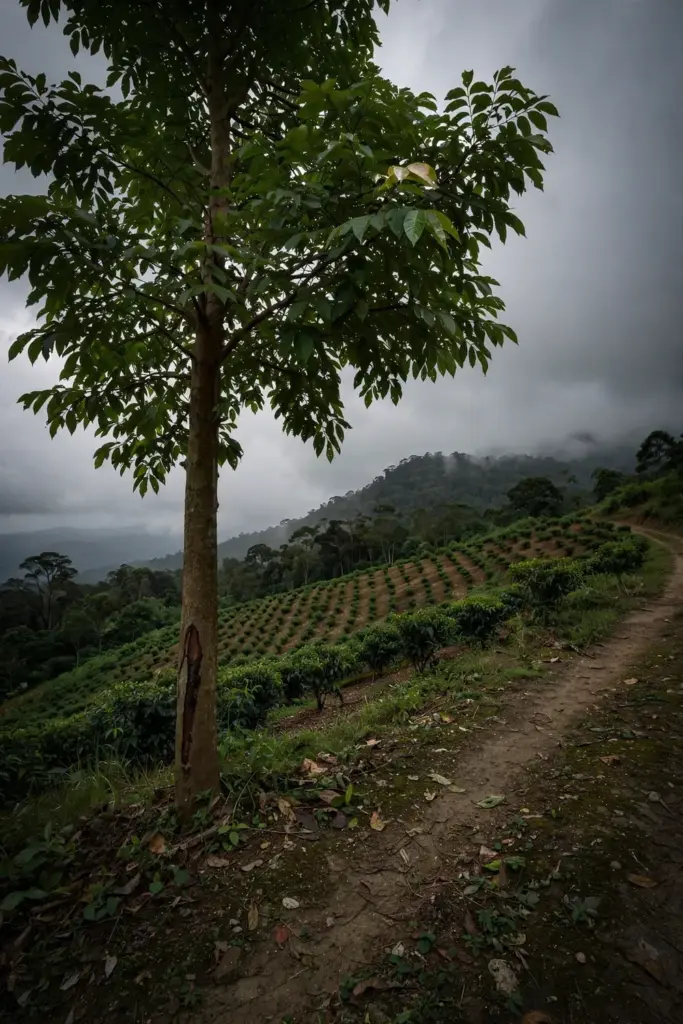
Sumatran benzoin fits a tropical plantation or a large tropical garden. It does not fit a small yard, a balcony, or a temperate climate. The tree reaches up to 34 m, so a single specimen needs the footprint of a small house lot and decades of clear sky above it.
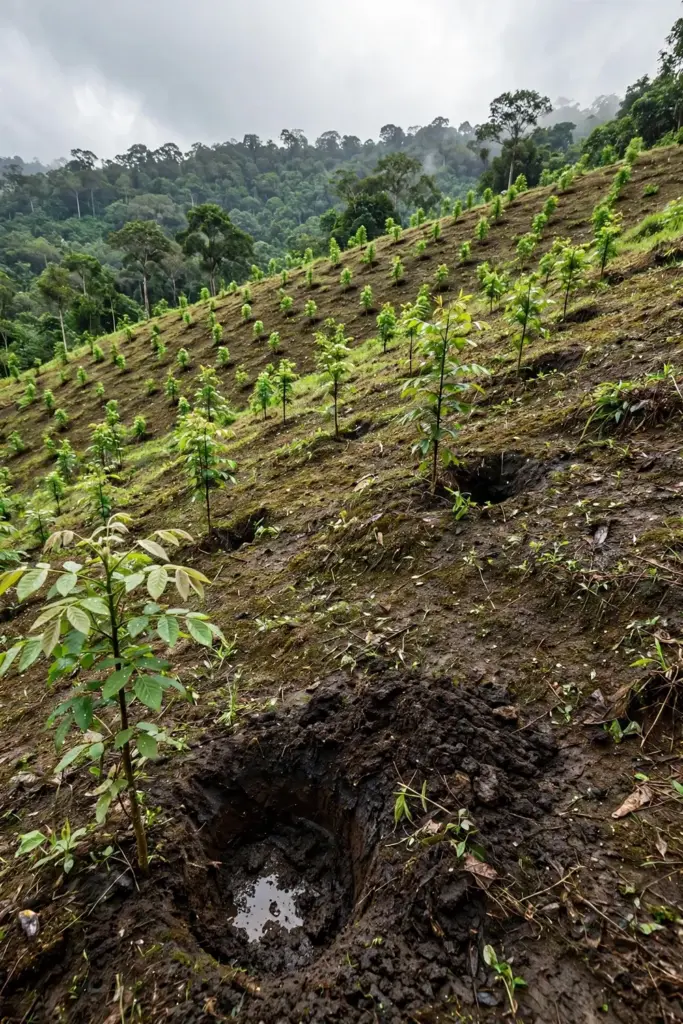
Resin work starts at year 7. Collection runs from trees 7 to 20 years old, which means the tree must survive and grow for seven years before it returns anything at all. A gardener who wants a harvest this season should buy resin instead of planting a tree.
Three gates decide the question. Anyone asking how to grow Sumatran benzoin should answer these gates first. First, the climate must stay humid and tropical year round, with no frost and no long dry season. Second, the site must hold a tree that can reach 34 m without hitting power lines, roofs, or a neighbor fence. Third, the grower must accept a seven-year wait before the first tapping. If any gate fails, the honest answer is to buy the resin and skip the tree.
2. Identify the Real Kemenyan Tree Before You Buy
Kemenyan is the Indonesian and Malaysian name for the benzoin tree. Styrax benzoin carries that name, and it belongs to the Styracaceae family. Nurseries sometimes sell other Styrax species under the same common name, so the botanical name on the tag is the check that matters.
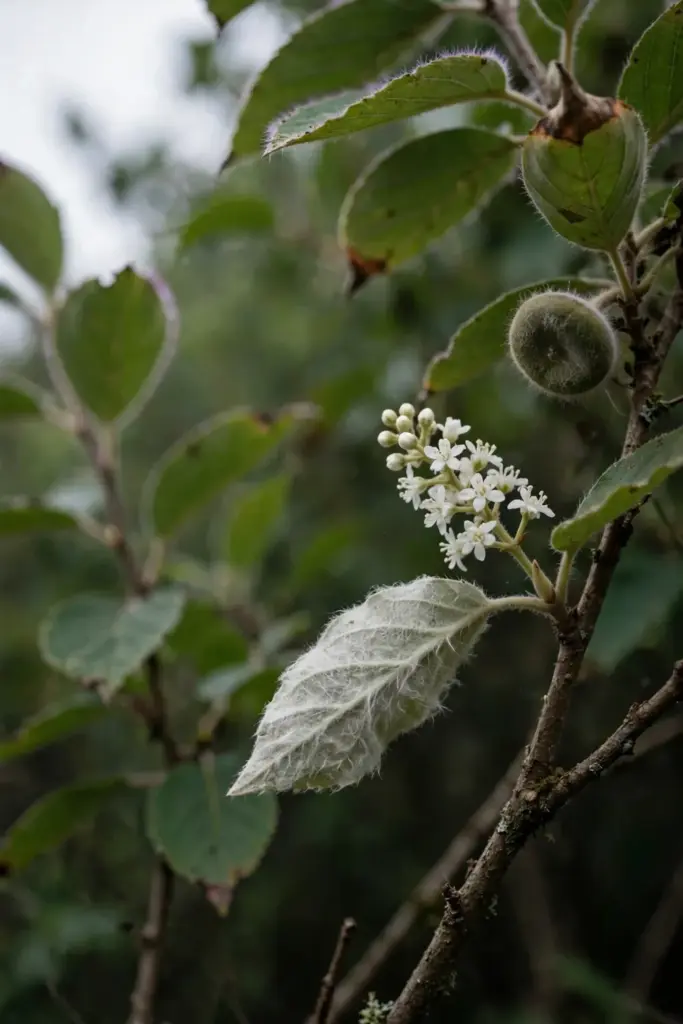
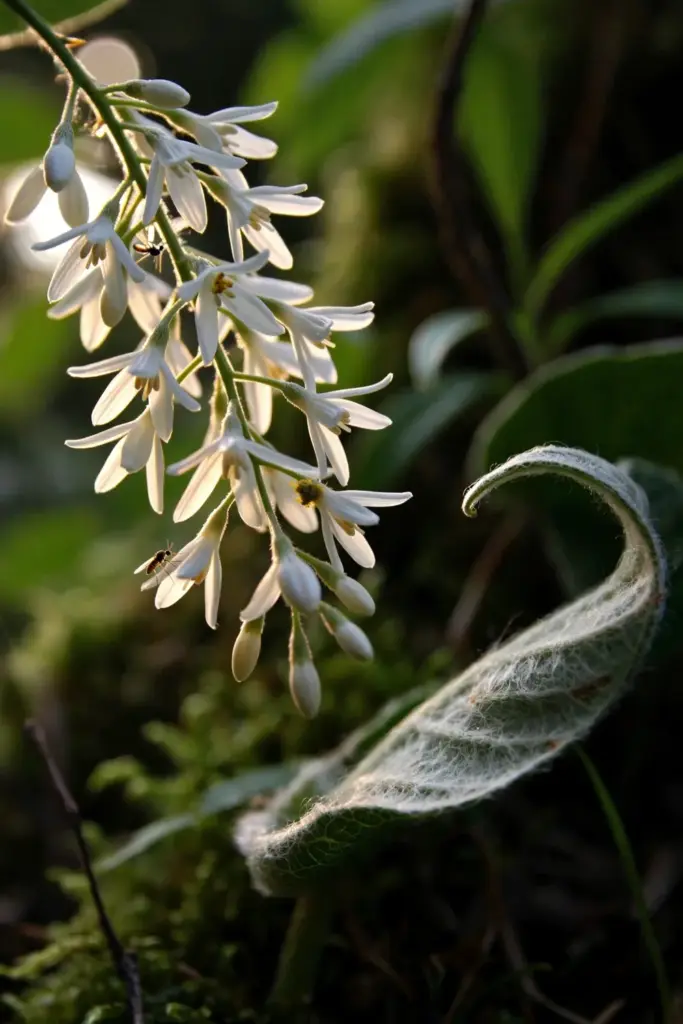
Styrax benzoin grows up to 34 m tall with small buttresses, and the plant excretes an aromatic and resinous substance when bruised, according to the National Parks Board of Singapore. Its leaves are spirally arranged and stalked, with blades egg-shaped to oblong or lance-shaped and 6 to 20 cm long by 2 to 9 cm wide. The undersides carry white, woolly, star-like hair. That pale felted underside is the fastest field mark on a young tree.
The flowers are stalked, fragrant, and white, borne on a flowering shoot 13 to 20 cm long at the end of leafy twigs or in the leaf axils. The fruits are flattened-round, 2 to 3.8 cm wide, and each holds 1 or 2 dull pale brown seeds 1.5 to 2 cm wide. A seedling offered as kemenyan should show the pale leaf underside first. If the underside is plain green, ask for the botanical name again.
The Species Tangle Behind the Trade Name
Commerce-grade Sumatran benzoin comes mainly from a second species, Styrax paralleloneurus, also sold under the synonym Styrax sumatranus. Its balsamic resin is superior to the resin of Styrax benzoin, because the resin of Styrax benzoin dries slowly, stays sticky, and carries more impurities. That fact is the central trap of this article. A grower who plants Styrax benzoin grows the inferior-resin species.
Buy with the botanical name in hand. If the tag reads Styrax paralleloneurus, the tree matches the main commercial source. If the tag reads Styrax benzoin, the tree is still a true benzoin tree, and it still yields resin, and its resin still sells. The two species share the trade name Sumatran benzoin. They do not share resin quality.
A nursery visit needs a short checklist. Ask for the botanical name on the tag, and walk away from any plant sold only as kemenyan with no Latin name. Turn a leaf over and look for the white, woolly underside. Ask where the seed came from, and prefer seed collected from a known benzoin stand over seed of unknown origin. Reject any plant with a plain green leaf underside, a missing label, or a seller who cannot name the species. A mislabeled tree costs seven years, not seven weeks.
3. Separate Sumatran Benzoin From Siam Benzoin
Siam benzoin comes from Styrax tonkinensis, a different species that grows in Thailand, Laos, Cambodia, and Vietnam. Sumatra benzoin comes from Styrax benzoin and Styrax paralleloneurus, which grow predominantly on Sumatra. The two resins carry different trade names, different supply chains, and different uses. Perfumers do not swap one for the other.
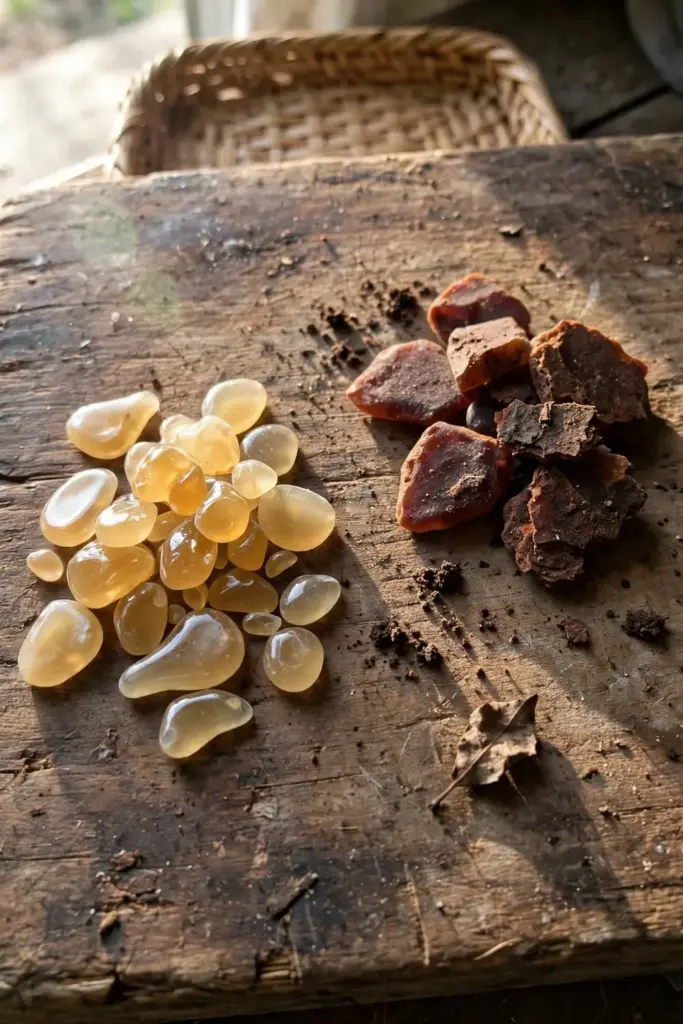
The scent differs too. Traders describe Siam benzoin as sweeter and more vanilla-like, and Sumatra benzoin as spicier with a balsamic edge. That difference comes from chemistry. Sumatra benzoin contains cinnamic acid in addition to benzoic acid, while Siam benzoin leans on benzoic acid. Buyers who need one type should name the type on the order, not just the word benzoin.
A bag labeled benzoin with no origin word is unidentified. Ask the seller for the species, the origin, and the grade. A seller who cannot answer all three is selling a mystery, and mystery resin has no place in perfumery or incense work.
4. Separate Benzoin From Frankincense, Storax, Spicebush, and Snowbells
Five look-alike names cause most benzoin confusion. Each one below is a different plant or a different resin. None of them substitutes for Sumatran benzoin.
| Name You May See | What It Really Is | How It Differs From Sumatran Benzoin |
|---|---|---|
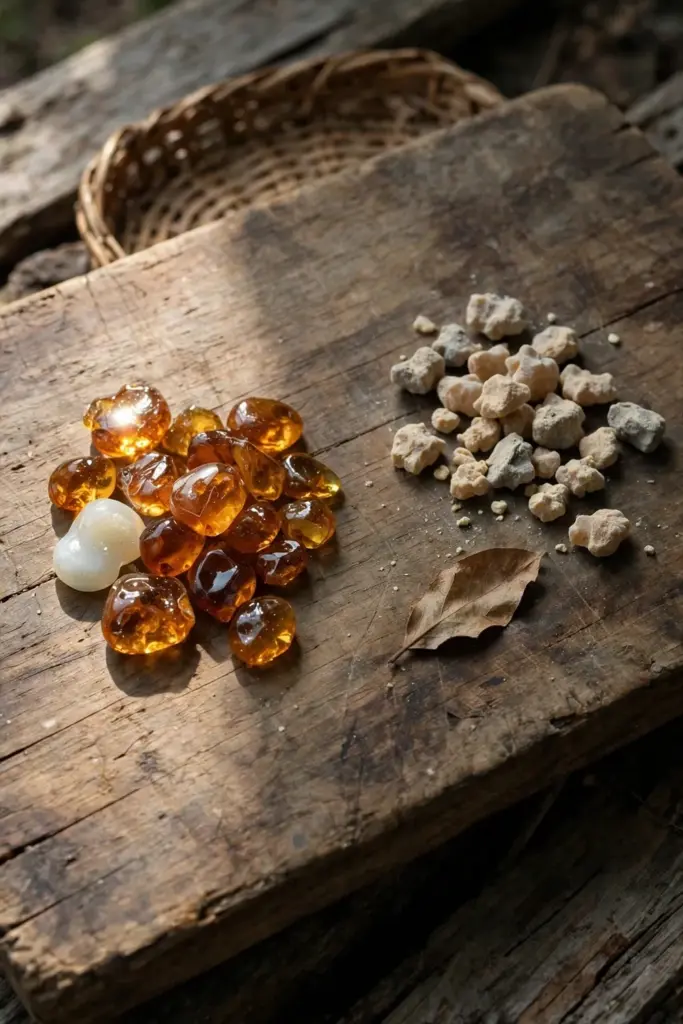
| Frankincense, olibanum | Resin of Boswellia species | Different genus and family. Frankincense comes from Boswellia trees of dry regions. “Sumatran frankincense” is a loose trade nickname for benzoin, not frankincense. |
| Storax balsam | Resin of Liquidambar species | Different genus and family. Storax balsam comes from sweetgum trees. Benzoin resin from Styrax is sometimes called styrax, which feeds the mix-up. |
| Spicebush | Lindera benzoin, family Lauraceae | Different plant and different family. It shares only the benzoin epithet. It yields no benzoin resin. |
| Snowbell | Hardy ornamental Styrax species, such as Styrax japonicus | Same genus, different species. Snowbells are temperate garden trees grown for flowers. Their cold tolerance does not transfer to Styrax benzoin. |
| Onycha | Disputed biblical incense ingredient | The identity of biblical onycha is disputed. Do not treat onycha as a confirmed synonym for benzoin. |
Check the botanical name before following any growing advice. A guide written for a hardy snowbell will kill a tropical benzoin tree, and a guide written for spicebush describes a shrub that never yields resin.
5. Match the Climate and Soil Before You Plant
Styrax benzoin is a plant of the lowland, moist tropics. It grows at elevations of 100 to 700 m, exceptionally to 1,600 m, according to Useful Tropical Plants. It grows where mean annual rainfall is usually 1,500 to 2,200 mm, with no distinct dry season or only a few drier months. Under cultivation it still thrives where mean annual rainfall drops as low as 1,300 mm with 3 to 6 dry months.
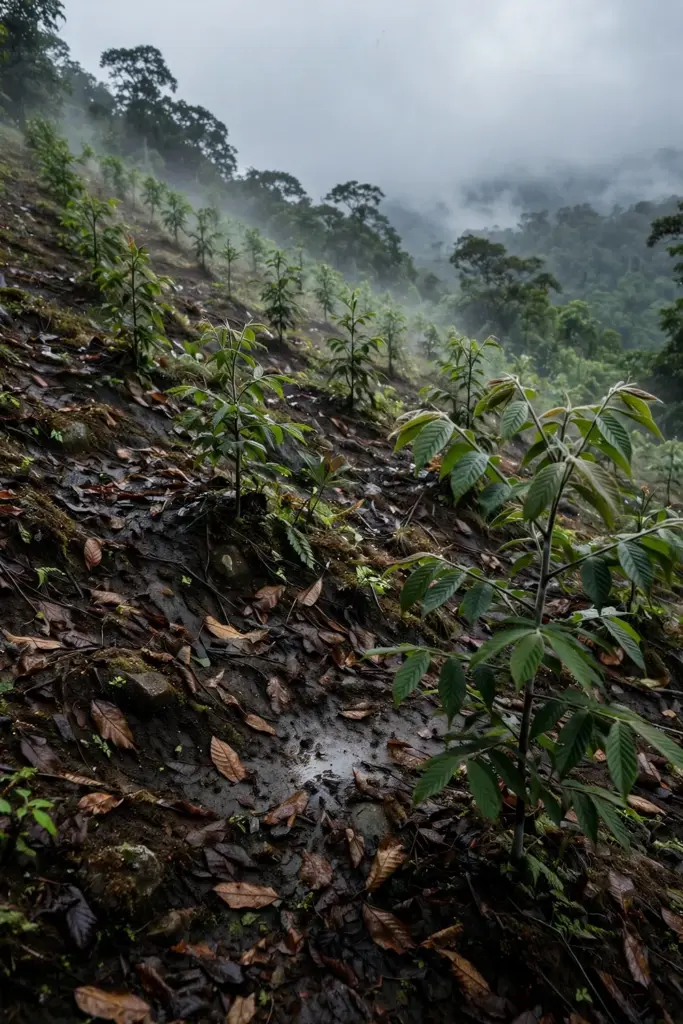
Temperature sets the second screen. The mean annual temperature in its natural range is 15 to 26 degrees Celsius, and the tree tolerates extremes as low as 4 degrees and as high as 45 degrees for a short period. Those extremes describe survival, not cultivation. A brief dip to 4 degrees does not make the tree temperate-hardy, and heat alone does not guarantee good resin. Lowland trees in hot conditions yield poor-quality sap, so the best resin comes from mountainous sites with high rainfall and cooler air.
Soil sets the third screen. The tree prefers a moist, well-drained, lime-free, loamy soil and a position in full sun or partial shade. It grows best in the company of other trees and shrubs, so long as root competition stays moderate. Heavy clay that stays wet will rot the roots. Pure sand that dries out will stall growth. Work on building soil health before planting, because a tree that lives for decades needs soil that drains and holds moisture at the same time.
| Climate and Soil Screen | Sumatran Benzoin Needs | Fails When |
|---|---|---|
| Elevation | 100 to 700 m, exceptionally to 1,600 m | Sea-level hot lowland yields poor-quality sap |
| Annual rainfall | 1,500 to 2,200 mm; cultivation tolerates 1,300 mm with 3 to 6 dry months | Long dry season with no irrigation |
| Mean temperature | 15 to 26 degrees Celsius | Frost, or any freeze |
| Soil | Moist, well-drained, lime-free loam | Waterlogged clay or chalky alkaline soil |
| Light | Full sun or partial shade | Deep shade under a closed canopy |
| Neighbors | Other trees and shrubs with moderate root competition | Dense plantation crowding the young tree |
Run this screen before buying seed. A site that fails two rows is not a benzoin site. The tree may survive there, and survival without resin is the most common disappointment in this crop.
6. Grow Sumatran Benzoin From Seed in a Nurse Bed
Seed is the standard way to start Styrax benzoin, and the National Parks Board of Singapore lists seed as the propagation method for the species. Fresh seed gives the best result. Old seed stored dry loses vigor fast, so buy from a supplier who states the harvest date.
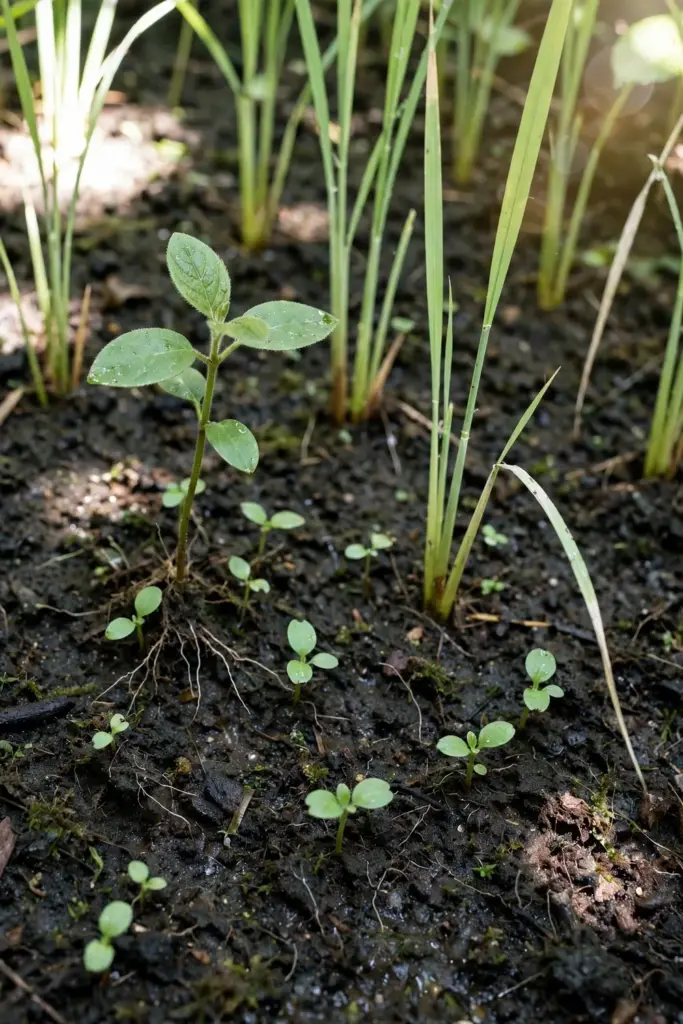
Sow in a shaded nursery bed with moist, well-drained, lime-free loam. The same seed starting steps used for garden vegetables apply here, with one change: shade the bed and wait longer. Cover the seed lightly, keep the bed damp, and protect it from direct midday sun. Germination takes weeks to months, not days. A bed that shows nothing after a month is normal, not failed. Keep watering and keep waiting.
Sumatra growers sow benzoin seed in rice fields. The rice plants grow faster and shade the young benzoin trees through the first year. After the rice harvest, the benzoin trees stand on their own and grow toward tapping age. That nurse-crop method solves two problems at once. It shades the seedlings, and it keeps the ground worked and weeded during the slow first year.
Move seedlings to their final positions once they stand sturdy with several pairs of true leaves. Handle the root ball gently. A seedling with a broken taproot may live, and it will grow crooked and slow for years.
7. Root Semi-Mature Cuttings as a Faster Backup
Semi-mature cuttings offer a second propagation path. Take cuttings from healthy, current-season wood that has started to firm but still bends without snapping. Strip the lower leaves, keep two or three leaves at the tip, and set the cutting in moist, well-drained rooting mix under shade.
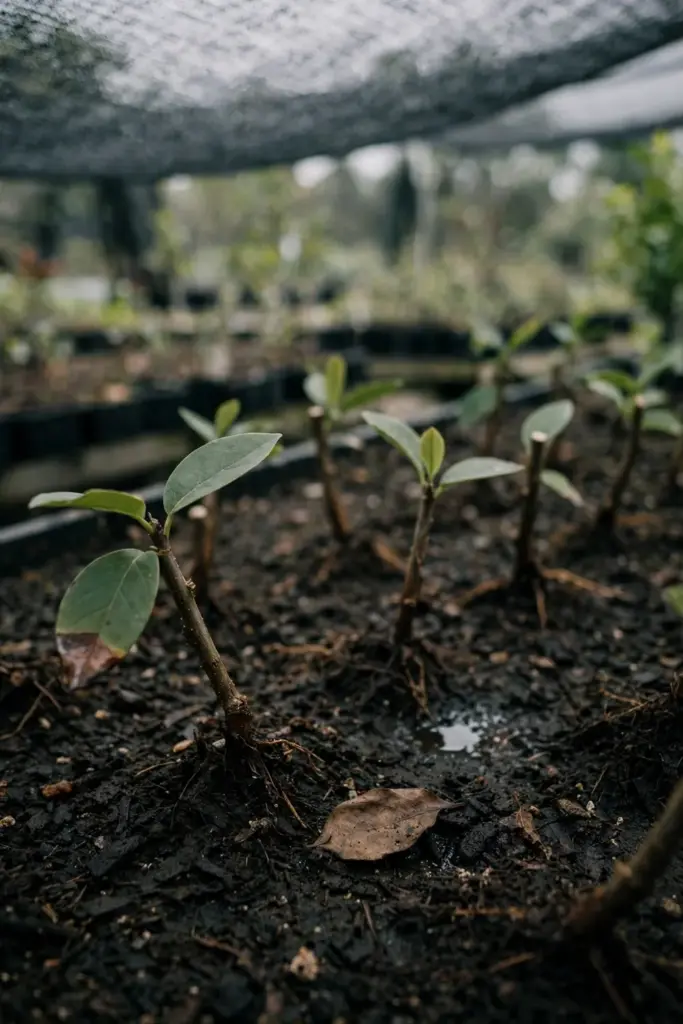
Cuttings root slower than seed in most hands, and they skip the taproot that a seedling grows. A cutting-grown tree may anchor less firmly in a storm. Use cuttings as a backup for a parent tree with proven resin, not as the main planting method. Seed stays the standard for plantation planting.
No published success percentage for benzoin cuttings appears in the linked sources for this guide, so this article states no figure. Treat any seller who quotes a rooting rate as selling a guess.
8. Plant the Tree With Room for a 30-Metre Canopy
Plant for the mature tree, not for the seedling in your hand. A tree that can reach 34 m needs open sky, deep soil, and distance from buildings, power lines, and property boundaries. A benzoin tree planted 3 m from a house becomes a removal job, not a resin crop.
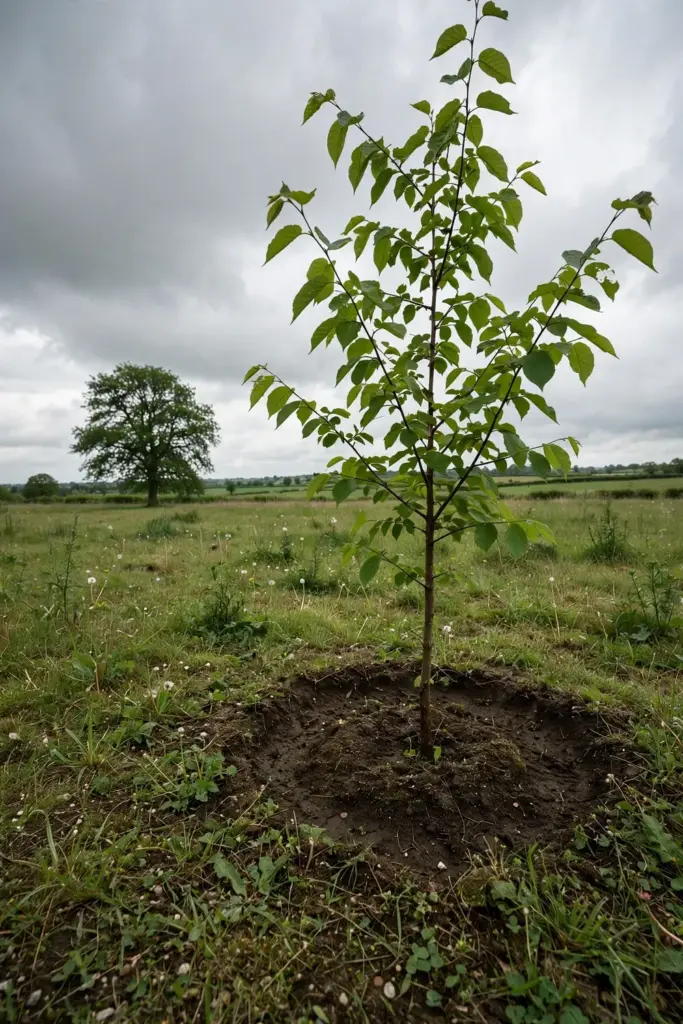
Give each tree room to spread. The linked sources for this guide carry no published spacing figure for Styrax benzoin, so this article states no row or grid number. Use the canopy as the guide. Space trees so their crowns never lock together, and keep the ground between them open enough for a worker to walk the trunk at tapping time.
Site the tree where the climate screen already passed. A tree planted on a cool, wet, mountain slope outyields a tree planted on a hot, dry lowland plot, even when both trees survive. Altitude and rainfall shape resin quality, so the planting decision is also a quality decision.
Keep a clear work ring around the trunk. Tapping needs access from every side, and a worker carrying a knife and a scraper needs firm footing, not a tangle of shrubs. Avoid planting beside a footpath, because constant foot traffic compacts the soil over the roots and slows growth. Leave the ground under the canopy open enough for fallen resin tears to be seen and picked up.
9. Manage Water, Shade, and Weeds Through Year 7
The first seven years are establishment work. Water the young tree through dry spells so the root zone never dries out completely. A seedling that wilts repeatedly will stall, and a stalled seedling may take an extra year or two to reach tapping size.
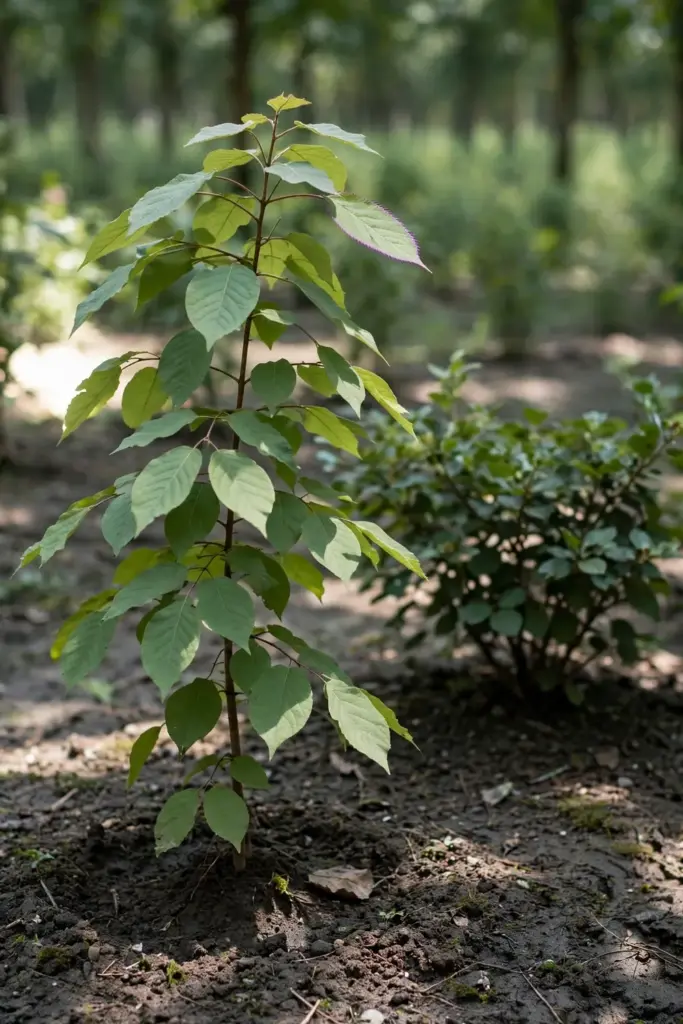
Shade helps early and hurts late. Nurse crops, light shade cloth, or neighboring shrubs protect a first-year seedling from harsh sun. Remove that shade gradually as the tree gains height. A tree kept in deep shade stays thin and slow, and thin trees yield little resin.
Weed the root zone by hand or with mulch. Weeds steal water and nitrogen from a young benzoin tree, and a strimmer can ring-bark a thin trunk in one careless pass. Keep mulch clear of the trunk itself. Mulch piled against bark holds moisture and invites rot.
Pruning stays light. Remove dead wood, crossing branches, and any shoot that blocks access to the trunk. The trunk is the harvest surface, so keep it reachable from the ground. Learn the basics of spring pruning techniques before cutting a young tree, and never remove more than the tree can replace in one season.
10. Tap the Trunk for Resin After Year 7
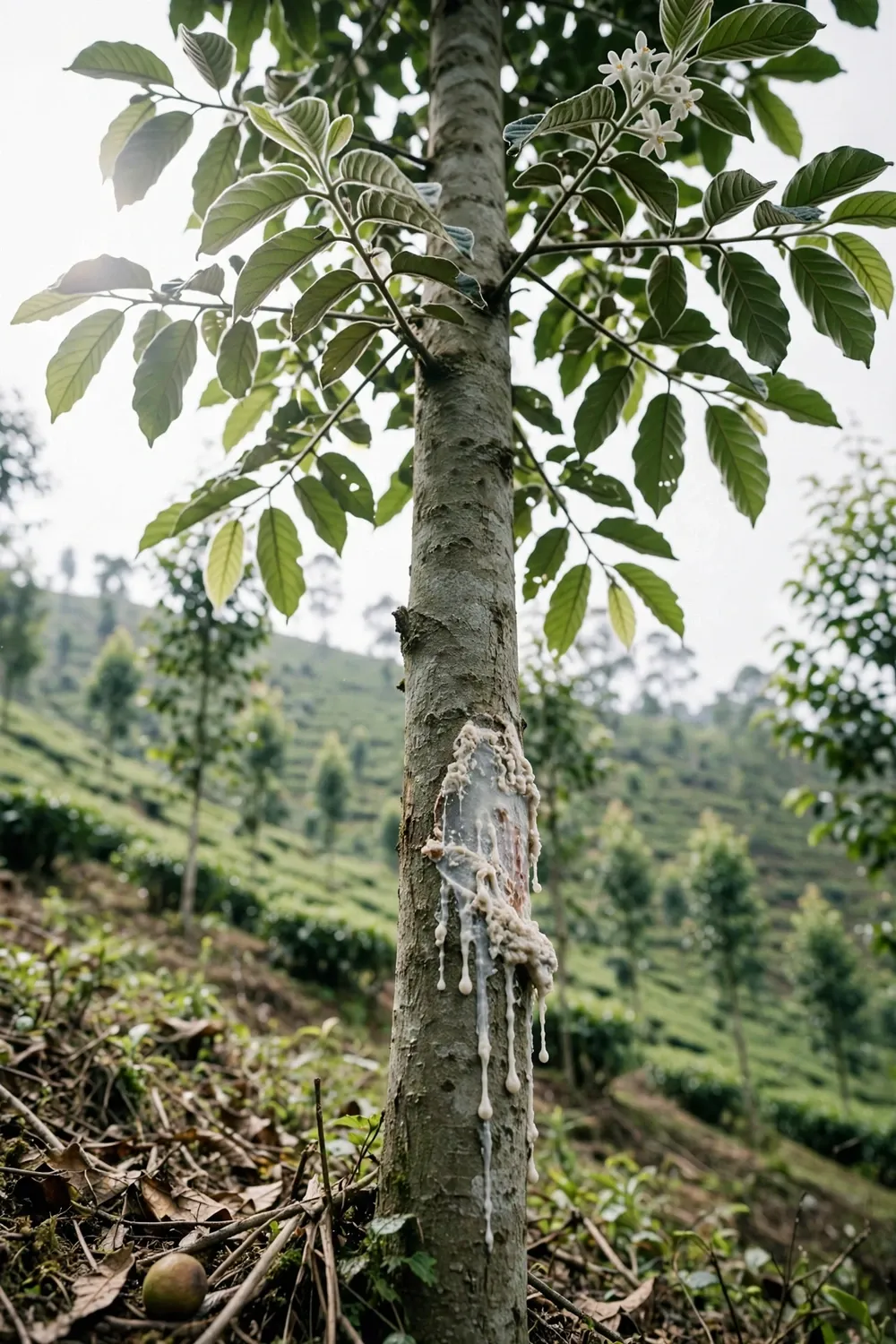
Tapping starts when the tree is 7 years old. Workers make three triangular wounds in a vertical row on the trunk, with the wounds 40 cm apart, and scrape the bark between the wounds smooth. The first secretion is very sticky and gets rejected. After further cuts, each 4 cm above the preceding ones, a harder secretion appears. That sequence is the core of Sumatra tapping practice, described in a pharmacognosy account of Sumatra benzoin.
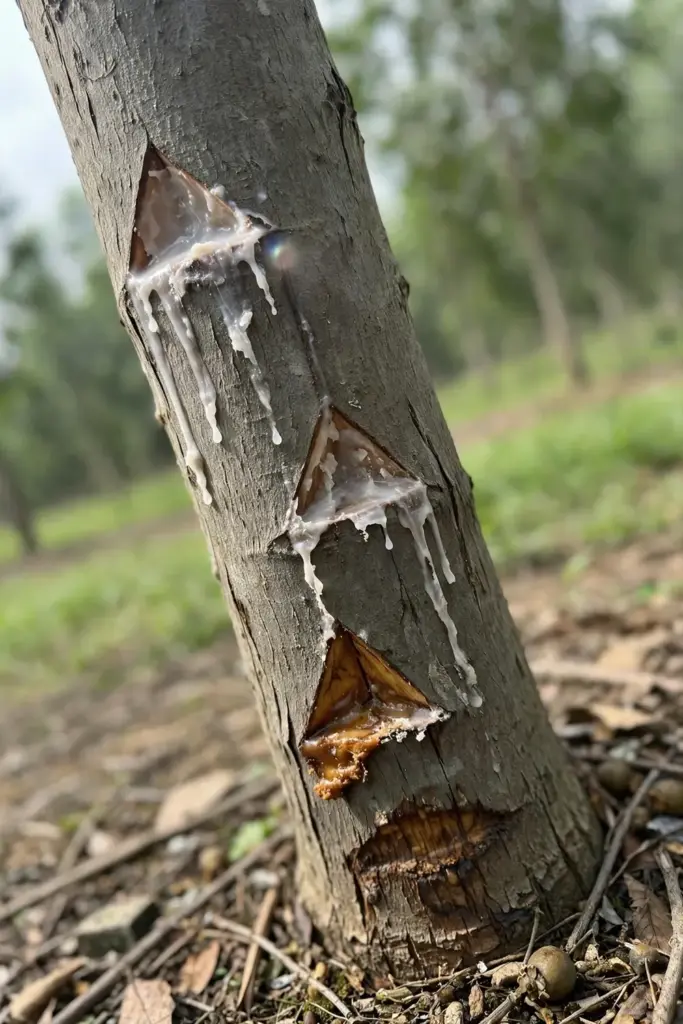
Tapping repeats at three-monthly intervals, which means about four woundings per year. 6 weeks after each fresh tapping, workers scrape the product off. The outer layer gives the finest quality and stays separate from the next layer, which gives intermediate quality. 2 weeks later, workers scrape the strip again, and that pass gives a lower quality, darker in color and carrying fragments of bark.
Wounding drives the whole process. Benzoin resin is a pathological exudation. The tree makes no resin until the trunk is injured, and the injury triggers the resin ducts that produce the flow. That is why an untapped benzoin tree yields nothing, no matter how large it grows. The wound must cut into the bark and cambium without girdling the trunk. A girdled tree dies, and a dead tree yields no second tapping. Reading how trees add a new ring of wood each year helps a tapper understand why shallow, spaced wounds heal while a full ring cut kills.
Keep wounds spaced and shallow, and move to the other side of the trunk when one side fills with scars. A tree tapped on one side for years will weaken on that side. Rotation keeps the trunk sound across the 7 to 20 year collection window.
11. Grade, Dry, and Store the Resin You Collect
The second exudation is the prize. It comes out milky white and crystalline, and traders call the best quality benzoin almond. The first sticky flow gets discarded. The later scrapes give darker, bark-flecked resin of lower grade. That three-layer sequence is the grading system at the tree.
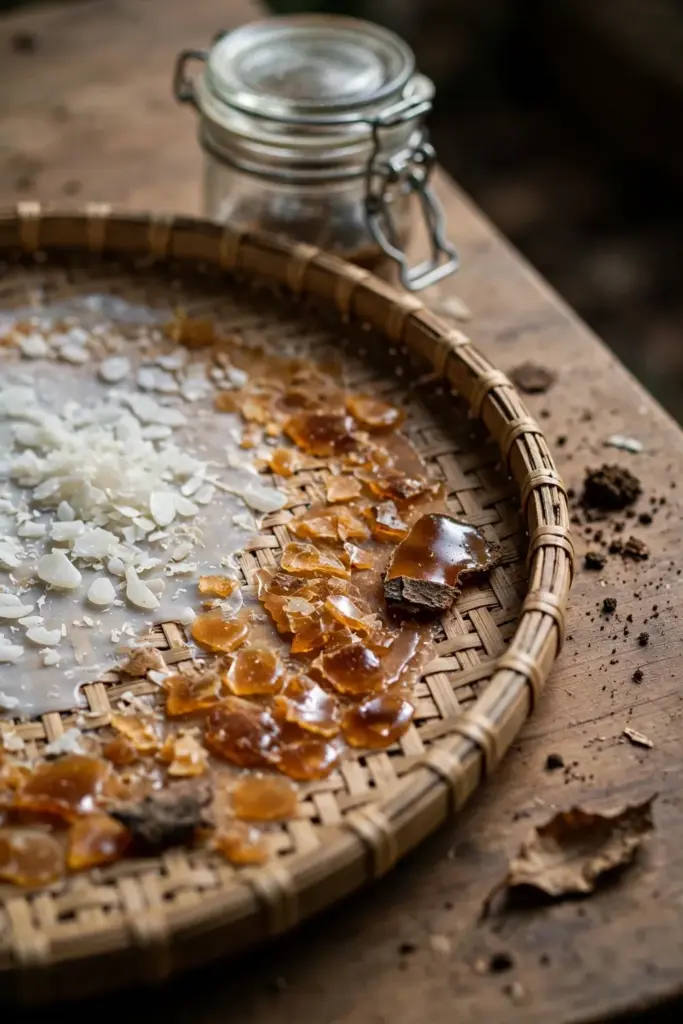
Drying comes next. Fresh resin holds water and volatile parts. Spread the tears and lumps in thin layers in open air, away from dust and rain. Turn them gently until they harden and lose their surface tack. Resin that still feels sticky needs more drying time. Resin dried in direct sun may darken and lose scent, so shade drying beats sun drying.
Store dried resin in clean, dry, airtight containers, away from heat and strong odors. Benzoin absorbs nearby smells, and a batch stored beside kerosene or spices will carry those notes into the incense burner. Label each container with the species, the origin, and the harvest date. A label that reads only benzoin tells the next buyer nothing.
Watch for adulteration when buying. Sumatra benzoin contains about 25 percent total balsamic acids, calculated as cinnamic acid, according to the same pharmacognosy account. Damar resin is a known adulterant in blended benzoin, and a suspiciously cheap batch deserves a hard look. Buy from sellers who state the species and origin, and distrust any batch that smells of turpentine or looks like uniform plastic beads.
A buying checklist keeps the resin honest. Prefer tears and lumps with uneven shapes over perfectly uniform pieces. Smell the batch before paying: true benzoin smells sweet, warm, and balsamic, never sharp or chemical. Ask the seller for the species, the origin, and the grade, and expect all three answers. A seller who answers with only the word benzoin is selling a mystery, and mystery resin has no place in perfumery or incense work.
12. Use Benzoin Resin for Incense, Perfume, and Flavouring
Benzoin resin serves three trades. Incense makers burn it for its sweet, balsamic, vanilla-like scent. Perfumers use it as a fixative, a base note that slows the evaporation of lighter fragrance materials and holds a scent on skin and cloth. Food makers use benzoin as a flavouring in chocolate, ice cream, milk products, syrups, and baked goods, where it fixes other flavours and adds a warm note.
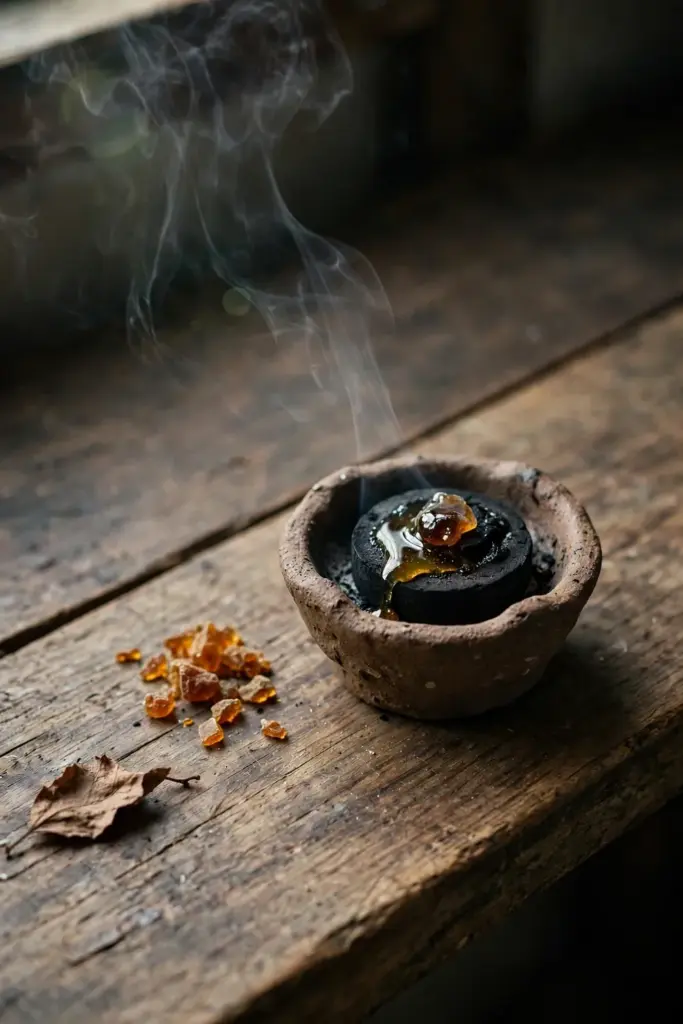
Incense use is the simplest. Place a small piece of resin on a charcoal disc or an electric incense heater, and let it melt and release scent. Burn in a ventilated room, and never leave burning incense unattended. The smoke carries the scent, and smoke in a closed room irritates eyes and lungs. People with asthma should skip incense burning entirely and enjoy benzoin in another form.
Perfumery use belongs to trained makers. Benzoin tincture and absolute are factory products, not kitchen projects. A home cook should never add raw resin lumps to food. Food-grade benzoin flavouring is a factory ingredient, dosed in parts per million by manufacturers. Raw incense lumps are not for eating, and they stay out of reach of pets and children.
Buy tears rather than pre-ground resin when you can. Whole tears keep their scent far longer than powder, and powder loses its volatile top notes within months of grinding. Grind only the amount you plan to burn within a few weeks. Store the rest in a cool, dry, airtight jar, away from spices and cleaning chemicals, and label the jar with the species and origin.
Medicinal claims around benzoin run far ahead of proof. Traditional sources describe benzoin as antiseptic, astringent, and expectorant, and modern papers report laboratory activity against microbes and inflammation. Those reports describe lab work and tradition, not a dose a reader should take. This guide gives no medicinal dose. Anyone considering benzoin for a health purpose should talk to a clinician first.
Religious use deserves a plain note. Benzoin burns in churches and temples as incense, and many people value that scent in worship. In Islamic teaching, burning kemenyan to summon spirits or seek help from unseen beings is forbidden as shirk. Burn kemenyan for fragrance and worship, never as a spirit ritual, and never repeat mystical or magical claims about the resin as fact.
Frequently Asked Questions
No. Styrax benzoin grows into a tree up to 34 m tall, and no pot holds that root system or that canopy. A potted seedling may live for a while, and it will stall, sicken, and never reach tapping size. Container growing has no published record for this species. Growers with only a balcony should buy resin from a supplier and skip the tree.
No. Styrax benzoin needs humid tropical lowland with no frost and no long dry season. Brief survival at 4 degrees Celsius does not make the tree temperate-hardy, and a cold winter will kill it. Temperate gardeners who want a Styrax should plant a hardy snowbell species instead, and buy benzoin resin for incense and perfume.
Buy Styrax paralleloneurus for the best resin. That species is the main commercial source of Sumatran benzoin, and its resin dries harder and cleaner than the resin of Styrax benzoin. Styrax benzoin still yields real benzoin resin, and it still sells. Check the botanical name on the tag before paying, because the trade name alone does not separate the two species.
Plan for 7 years from planting to first tapping. Tapping starts when the tree is 7 years old, and collection runs from trees 7 to 20 years old. The first sticky secretion gets discarded, and the second milky exudation gives the best quality, called benzoin almond. A tree tapped too young yields little and heals slowly, so patience pays directly in resin quality.
Raw incense lumps are not for eating, and they stay out of reach of pets and children. Food-grade benzoin flavouring is a factory ingredient used in tiny amounts by manufacturers. Burn resin only in a ventilated room, never leave burning incense unattended, and skip incense smoke entirely if anyone in the house has asthma. Ask a clinician before taking any medicinal dose.
No. Tapping needs a trunk wide enough to carry spaced wounds without girdling, and that means a tree at least 7 years old with a sturdy trunk. A small garden tree cannot spare the bark. Wounding a young tree risks killing it outright. Let the tree grow to full tapping size first, and buy resin in the meantime.
Where to Go From Here
Sumatran benzoin rewards growers who respect its scale. The tree needs tropical humidity, years of patience, and a trunk wide enough to wound safely. The resin rewards buyers who check the botanical name, the origin, and the grade. Both paths lead to the same lesson. The name on the bag matters as much as the tree in the ground.
If your site passes the climate screen, plant seed in a nurse bed, give the tree room, and wait for year 7. If your site fails the screen, buy the resin and enjoy the scent without the tree. Either choice is honest, and honesty is what this crop demands. Learning how to grow Sumatran benzoin means learning when not to plant it, and that knowledge saves more time than any tapping trick.