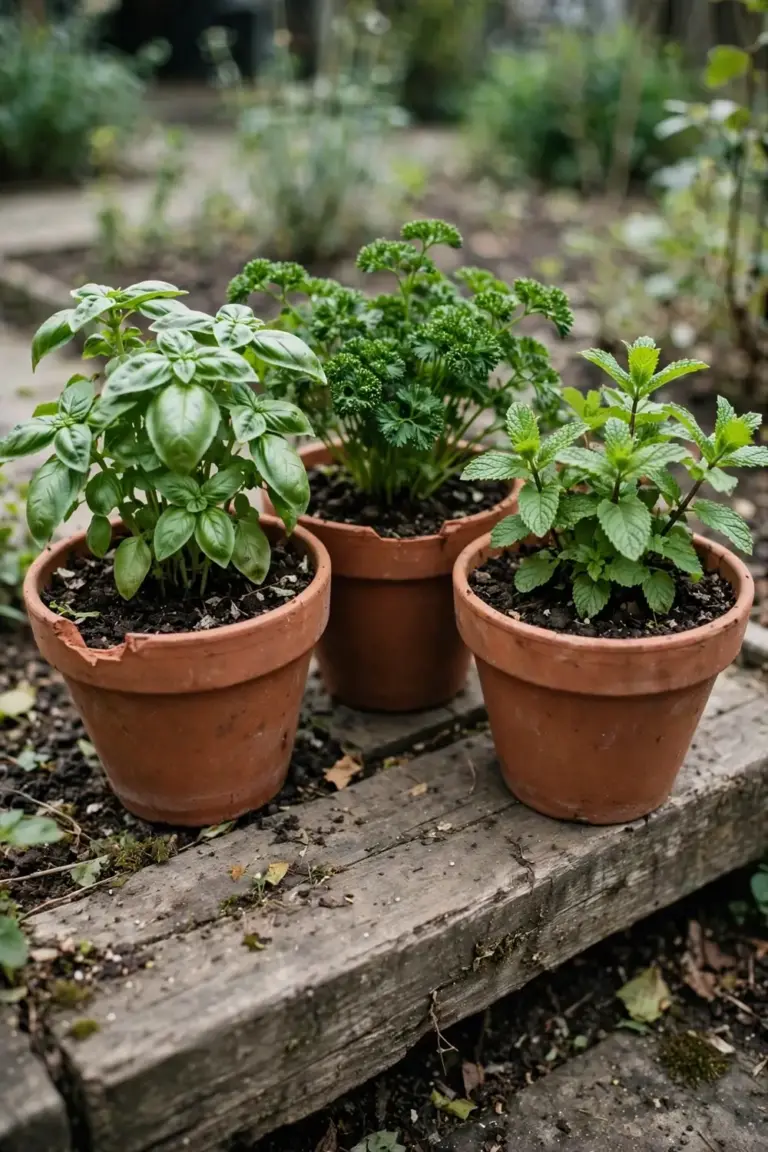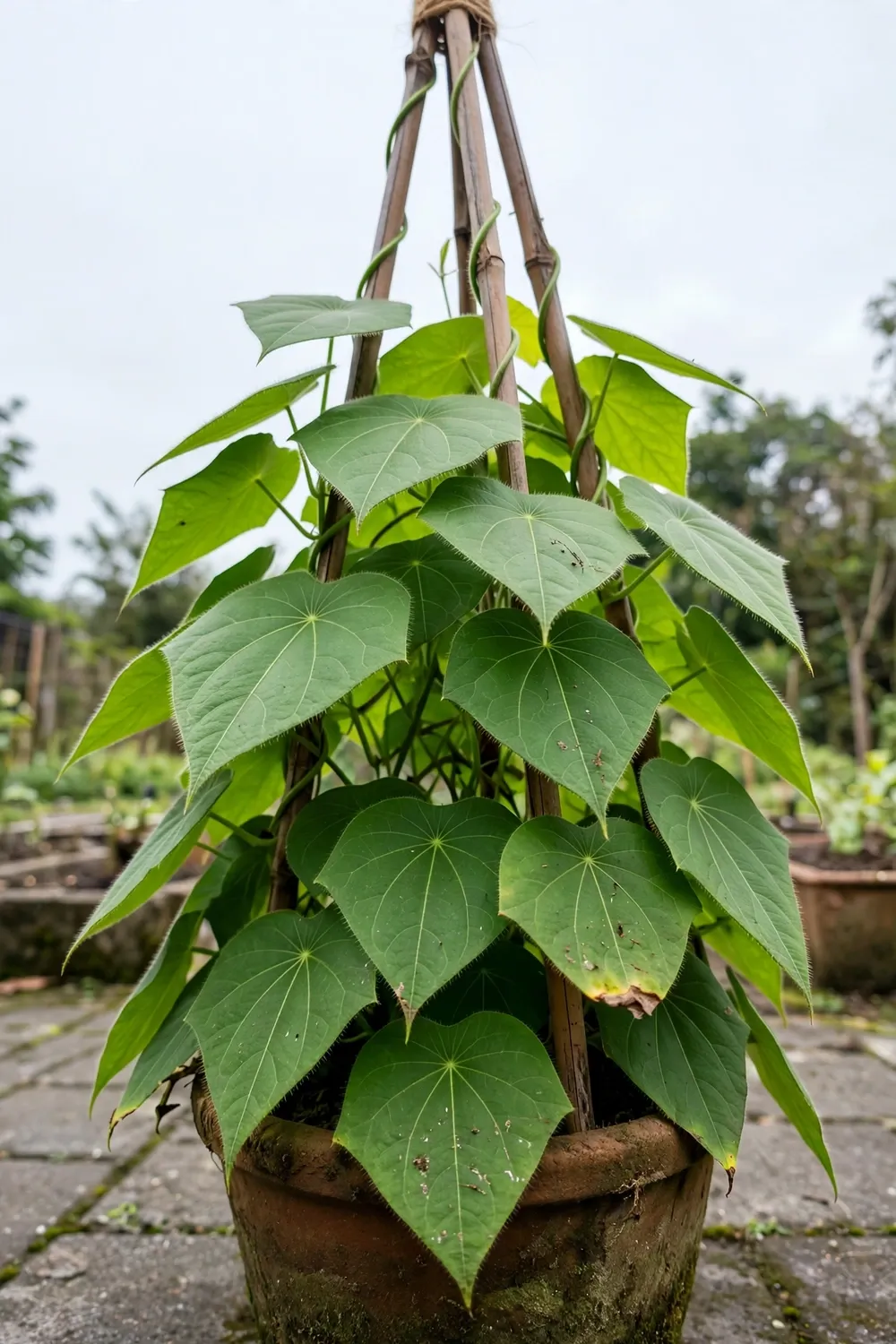

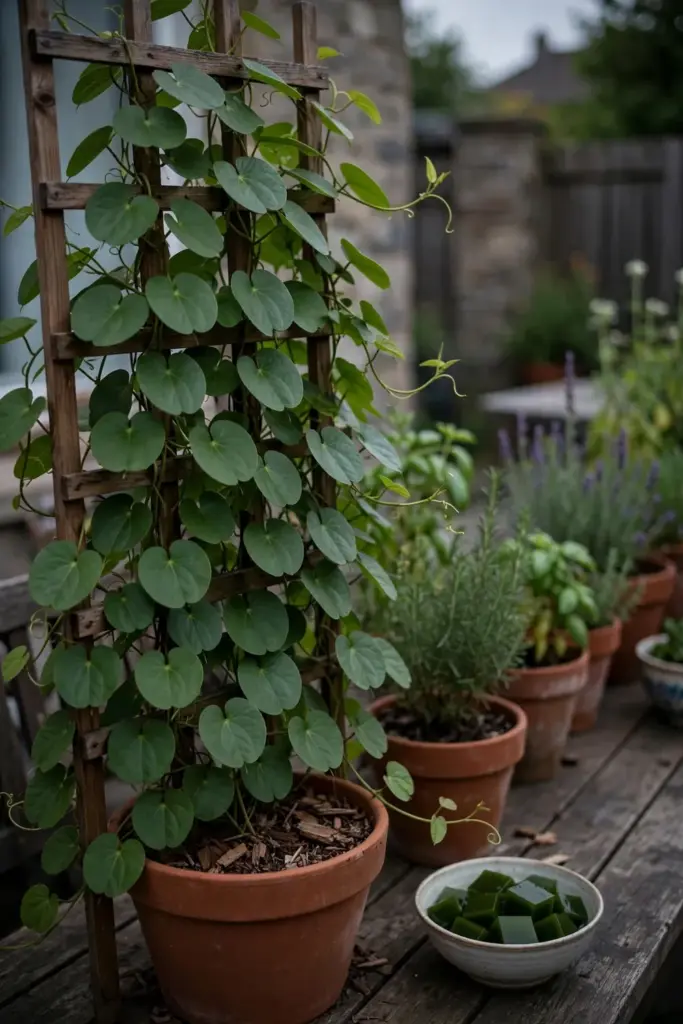
Start a stem cutting of grass jelly plant (Cyclea barbata, cincau hijau) in a large pot with a tall trellis. That is how to grow grass jelly plant outside the tropics: a herbaceous vine that climbs about 5 m in one warm season, then winters in a bright indoor spot. The rest of this page is 16 moves, from buying the right species to your first bowl of homemade cincau.
Growing the vine is the easy half. Turning leaves into firm jelly is a skill you practice. No nursery sells you the dessert along with the plant. You grow Cyclea barbata, then you crush and squeeze its leaves by hand, strain the liquid, and wait while it sets at room temperature. Some batches set like glass. Some stay soft. The plant is honest work, and the jelly is honest craft.
The 16 moves below take you from identifying the right species to the first bowl of homemade cincau. Every step assumes a container, a temperate climate, and a winter indoors. If you live somewhere frost never visits, you can skip the overwintering move and let the vine climb all year.
| Spec | Grass jelly plant (green) |
|---|---|
| Botanical name | Cyclea barbata Miers, family Menispermaceae |
| Common names | grass jelly plant, green grass jelly, cincau hijau, cincau rambat, cincau bulu |
| Synonyms on old labels | Cyclea ciliata, Cyclea wallichii |
| Growth habit | herbaceous climbing vine, to about 5 m |
| Leaves | triangular to ovate, 4 to 10 cm long and 2.5 to 8 cm wide |
| Flowers and fruit | male and female flowers on separate plants; red fleshy drupes |
| Preferred climate | tropical to sub-tropical/monsoonal |
| Propagation | stem cuttings (practical); seed and root buds also reported |
| Container method | one large pot with drainage holes, tall trellis, indoor overwintering |
1. Confirm You Are Buying Cyclea barbata, Not a Different Cincau
Buy Cyclea barbata and nothing else. Every step on this page is written for the green grass jelly vine, and the growing advice does not transfer to the black grass jelly plant or the shrub types.
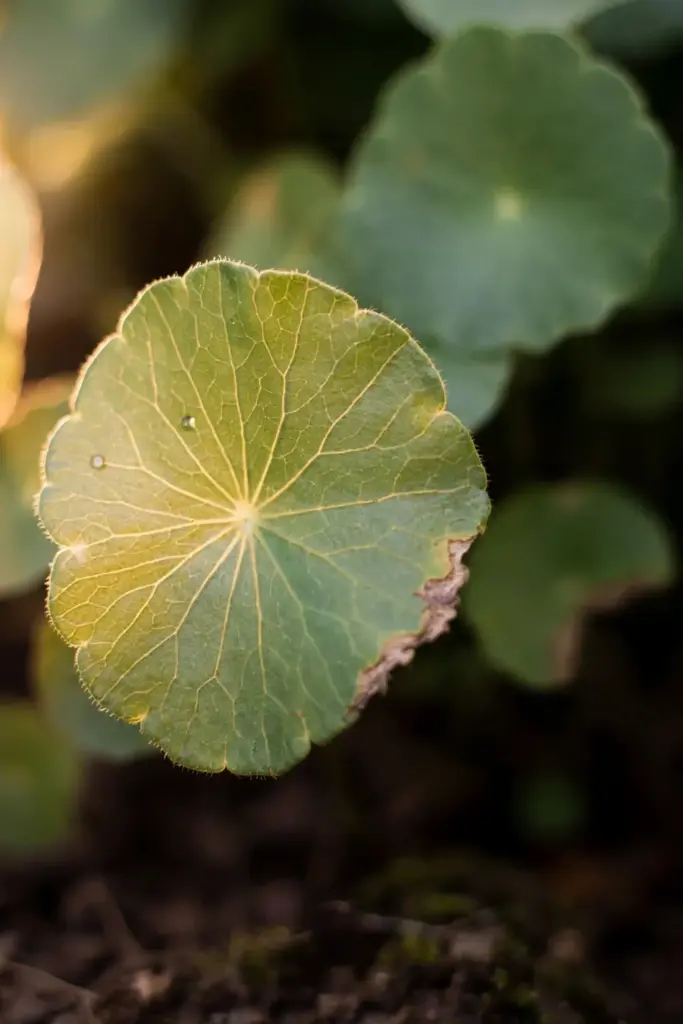
The word cincau covers several different plants in Indonesia, which is exactly why the botanical name matters more than the common name. Singapore’s NParks flora database lists green grass jelly as Cyclea barbata and warns directly: not to be confused with Platostoma palustre, known as liang feng in China and cincau hitam in Indonesia. That single sentence is the fence this whole article stands behind.
| What you want | Botanical name | Notes |
|---|---|---|
| Green grass jelly (this article) | Cyclea barbata | cincau hijau, cincau rambat, cincau bulu; family Menispermaceae; old synonyms Cyclea ciliata and C. wallichii |
| Black grass jelly | Platostoma palustre | cincau hitam, janggelan; family Lamiaceae; Platostoma palustre is the currently accepted name; the widely used synonyms are Mesona chinensis and Mesona procumbens (plus Mesona palustris) |
| Shrub grass jelly | Melastoma malabathricum (cincau pohon); Premna species (cincau perdu) | woody shrubs, a different growing method entirely |
| Chinese green grass jelly | Cocculus orbiculatus | cincau Cina; another Menispermaceae vine |
Check the label before you pay. Seed packets and nursery tags in this trade use grass jelly loosely, and a cutting sold as cincau with no botanical name could be any of the four. Ask for the binomial. If the seller cannot give it, buy elsewhere. The full accepted-name mapping behind this table, including the Mesona synonyms of black grass jelly, sits in Wikipedia’s list of grass jelly plants.
2. Understand the Climbing Habit Before You Plant
Cyclea barbata is a herbaceous vine that reaches about 5 m long in its native range, according to the NParks flora database. Its leaves are roughly triangular to ovate, 4 to 10 cm long and 2.5 to 8 cm wide. The plant carries male and female flowers on separate plants, and fertilised females produce small red fleshy drupes.
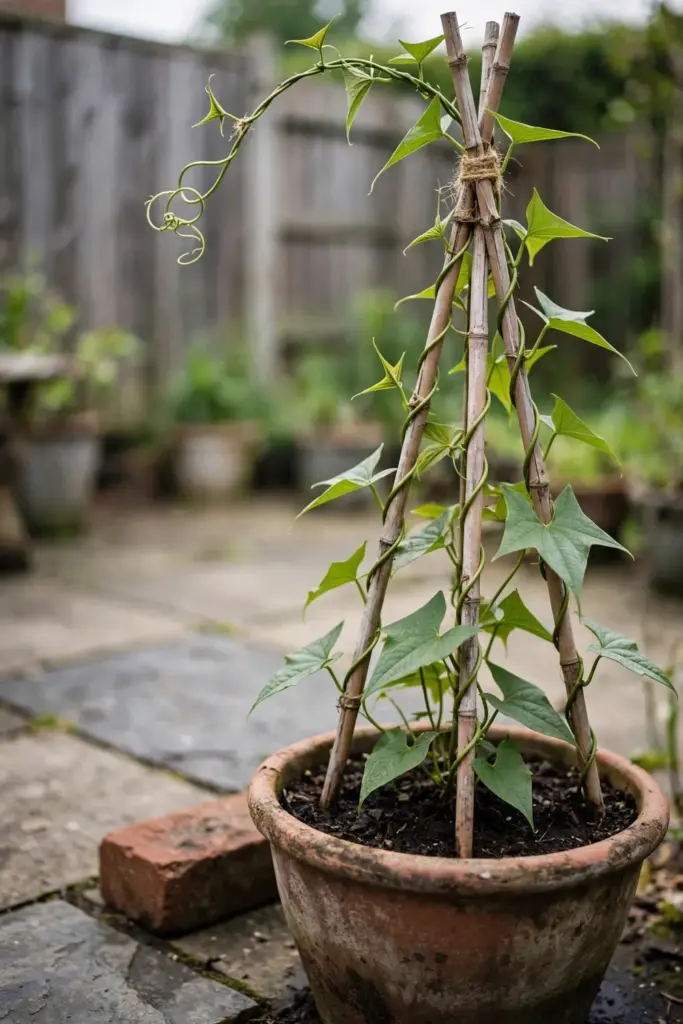
That dioecious habit answers a question new growers ask early. You do not need a male and a female plant for jelly. Fruit needs both sexes. Leaves do not. You propagate this plant from cuttings and harvest leaves, so a single plant of either sex serves you perfectly. If red berries ever appear on your vine, consider them a bonus.
The vine climbs by twining and scrambling. It grows no tendrils and no suckers, so it needs something to wrap around from the day it goes in the pot. It also spreads through root buds, which is one reason experienced growers keep it contained. You are not planting a polite herb. You are planting a tropical vine with ambitions, and the container is the leash.
3. Start New Plants From Stem Cuttings, Not Seed
Take stem cuttings. That is how to grow grass jelly plant reliably in a home garden, and it is the method the published literature confirms: a peer-reviewed journal paper on green grass jelly notes the species propagates by seed, stem cuttings, and root buds, and growers everywhere default to cuttings because they skip the slow seed stage and clone the mother plant exactly.
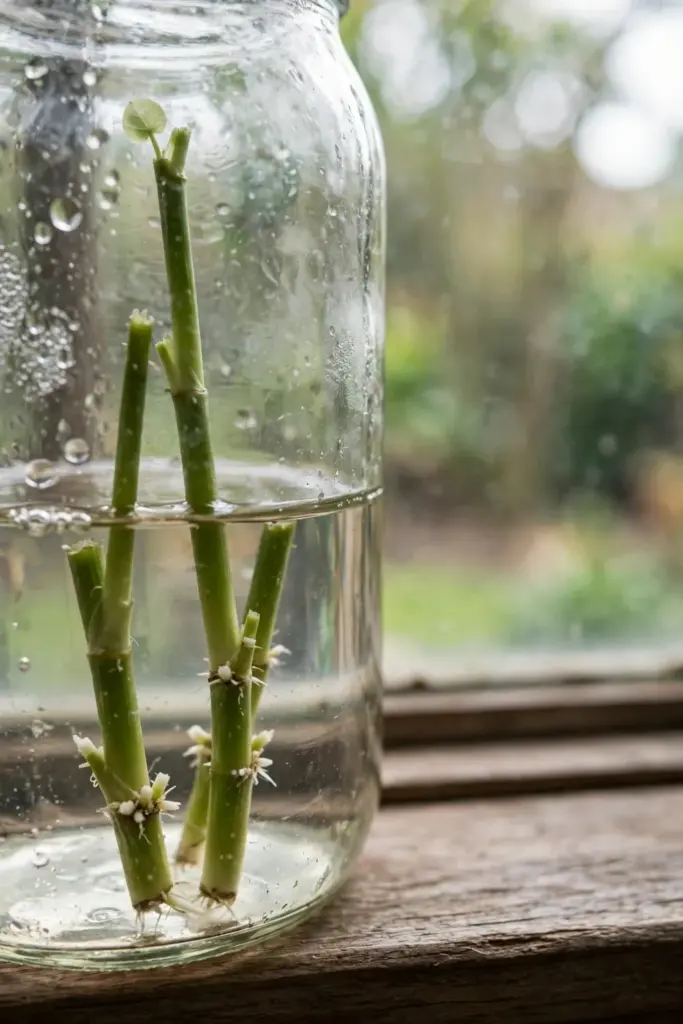
Choose a healthy, disease-free stem from a plant you trust is Cyclea barbata. Cut a section with several nodes, the bumps where leaves meet the stem. Strip the leaves from the lower half so no leaf sits buried in the mix. Push the lower nodes into a moist, free-draining rooting medium, perlite and fine bark works, and cover the pot with a clear dome or plastic bag to hold humidity. Park it in bright, indirect light, out of harsh midday sun.
Published rooting timetables for this species are data not available, so watch the plant instead of the calendar. The first new leaf pushing out means roots have formed. Tug gently after a few weeks: resistance means the cutting has anchored. Growers who sell green cincau plants trade rooted cuttings, not seedlings, which tells you where the reliable practice sits.
4. Mix a 3-Part Fast-Draining Potting Soil
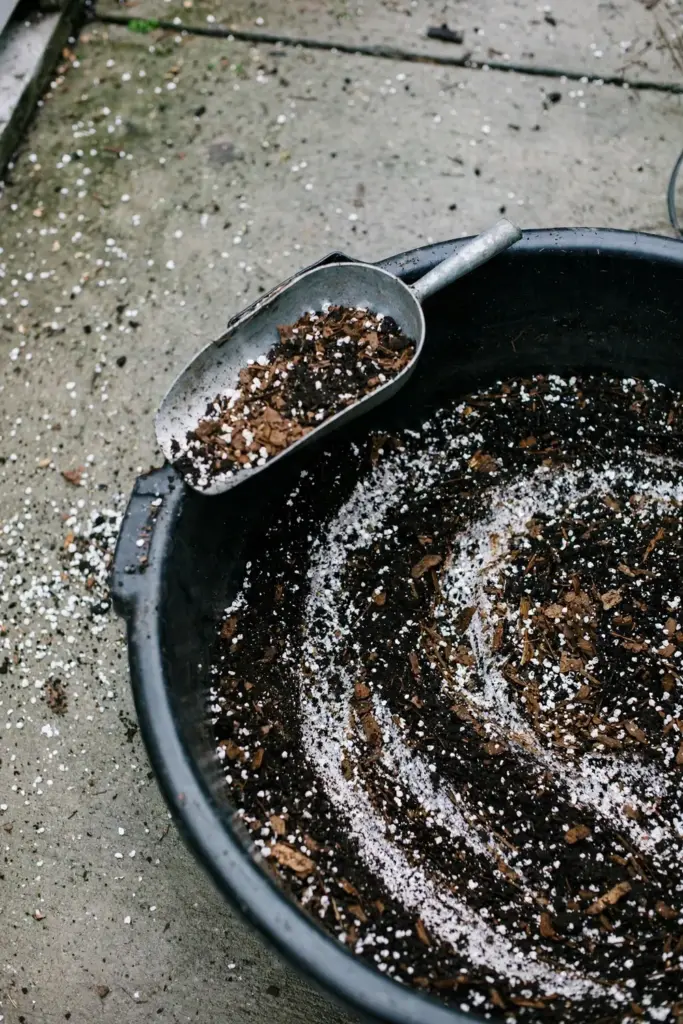
Cyclea barbata wants rich soil that holds moisture but never stays soggy. A tropical vine rots fast in a heavy mix, and a mix that dries to dust every afternoon starves the leaf crop. Three parts, roughly equal, cover every need.
| Component | Purpose | Proportion of the mix |
|---|---|---|
| Quality potting soil | structure and steady moisture retention | about one third |
| Mature compost | gentle, slow nutrition for the leaf crop | about one third |
| Perlite or coarse pumice | drainage and air around the roots | about one third |
Mix the three in a wheelbarrow or large tub until you cannot see streaks of any one ingredient. Water the batch and watch how it drains: water should run out of the bottom within seconds, and the mix should feel like a wrung-out sponge, damp but not dripping. If it puddles on top, add more perlite. If it falls straight through, add more potting soil.
Skip garden soil in containers. It compacts, it carries weed seeds, and it turns a pot into a brick by midsummer. Bagged components cost more up front and save the plant later.
5. Pot the Cutting in a Roomy Container With Drainage
A roomy pot with real drainage holes is non-negotiable. Pick the largest container you can move, because a vine that wants 5 m of trellis wants root room to match. A deep pot beats a wide shallow one: the roots run down, and depth buys them a cool, even moisture zone in summer heat.
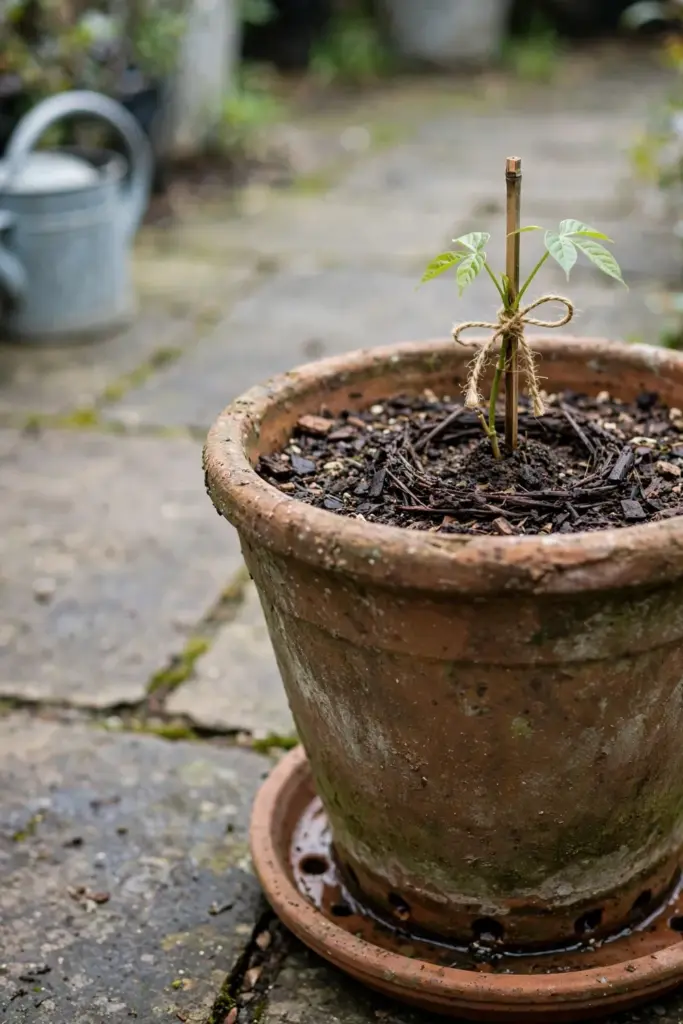
Fill the pot with the 3-part mix from the previous step, leaving a few centimetres of headroom for watering. Set the rooted cutting at the same depth it sat in its nursery pot. Water deeply until it runs from the drainage holes, then let the top few centimetres dry before you water again.
The container does double duty, and the second duty matters more. A pot is also a containment wall. This species spreads through root buds and scrambles aggressively in warm climates, so planting it in open ground where winters never come is a decision you may regret for years. The pot keeps the ambition in one place.
6. Install the Trellis Before the First Tendril Runs
Put the support in at planting time. A trellis installed later means driving stakes through roots that have already claimed the pot, and a vine with nothing to climb tangles itself into a mat that never recovers its shape.
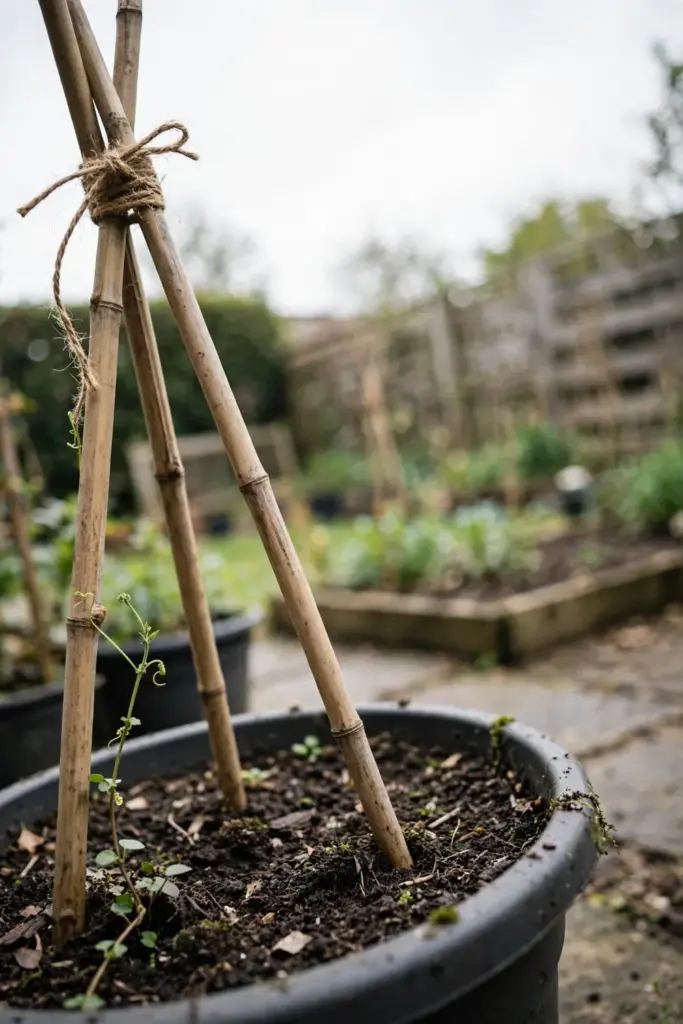
Choose the tallest support you can fit on your patio. A 1.5 m obelisk, a bamboo tripod, or a fan trellis against a wall all work. The vine tops 5 m in the tropics, so even a generous trellis will need the vine trained back down or along a horizontal wire by late summer. Indoors for winter, the same trellis comes with the pot, so keep the whole assembly light enough to carry.
Anchor the trellis so it cannot tip. A top-heavy vine in a summer storm pulls a light pot over, and the landing snaps stems you waited months to grow. Sink the legs deep into the mix or lash the pot to a railing. Boring, sturdy, and invisible once the leaves cover it: that is the right trellis.
7. Water for Evenly Moist, Never Soggy Roots
Keep the mix evenly moist through the warm season. Water when the top 3 cm feel dry, then water deeply until it drains. A vine pushing metres of new growth drinks steadily, and leaf quality falls off fast when the plant cycles between drought and flood.
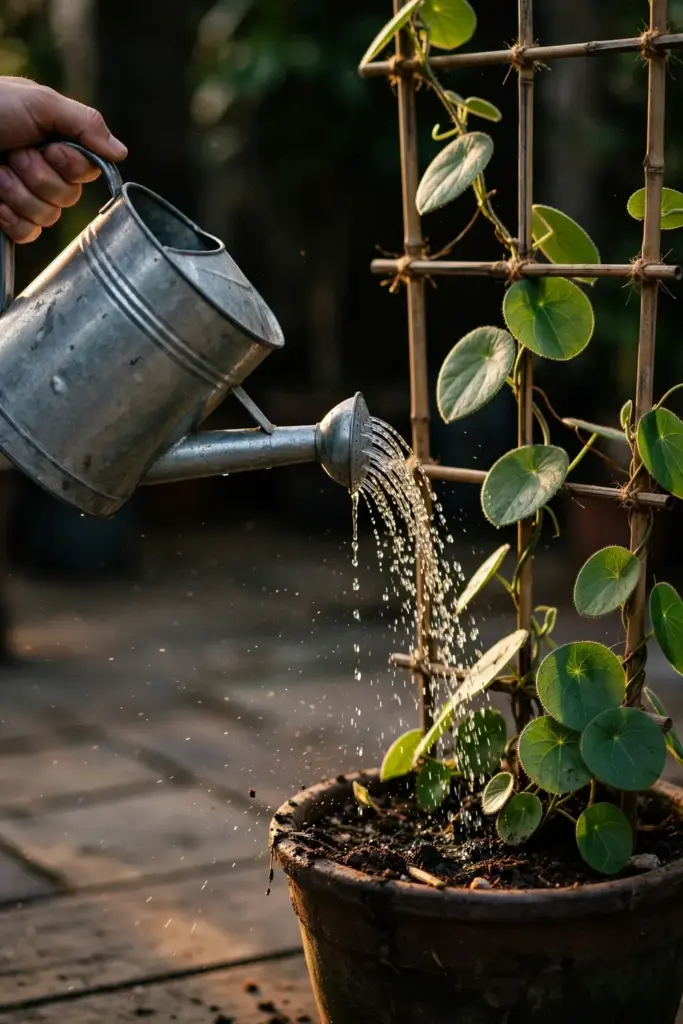
Mulch the surface with a thin layer of compost or shredded leaves. Mulch slows evaporation, keeps the mix temperature even, and feeds the soil a little every time you water. Keep the mulch a finger’s width away from the stem so the crown stays dry.
Cut back hard when the plant moves indoors for winter. Growth slows in low light, the roots drink less, and soggy winter mix is the fastest way to lose the plant. Water sparingly, only when the mix dries well down, and resume normal watering when new growth restarts in spring.
8. Feed Lightly Through the Warm Months
Feed for leaves, not flowers. A balanced, gentle fertilizer through the growing season keeps new leaves coming, and new leaves are the harvest. Compost mixed into the potting soil covers the first month; after that, a monthly liquid feed at half the label’s suggested strength carries the plant through summer.
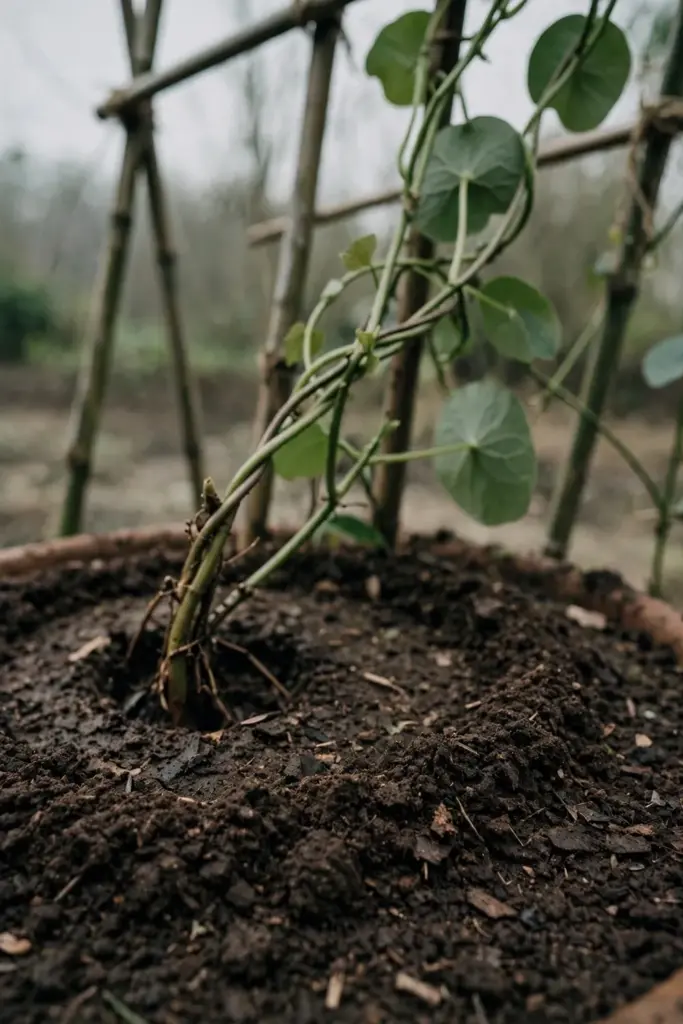
Stop feeding when you see the season turning. Late nitrogen pushes soft growth that hates the move indoors, and soft growth is also the first thing pests find. Let the plant harden a little before it comes inside.
Overfeeding shows up as soft, dark, floppy growth that wilts at noon and a leaf crop that tastes of nothing much and sets a weaker jelly. Less is more with this plant. Wild vines grow in forest margins on lean soil, and they never saw a fertilizer schedule. Keep the feeding light and the plant stays honest.
9. Train the Vine to Climb Instead of Creeping
Guide the young stems onto the trellis by hand. Cyclea barbata twines willingly once a stem touches a support, but a stem that misses the trellis will creep across the patio and root where it touches damp soil. Catch them early and wind them up.
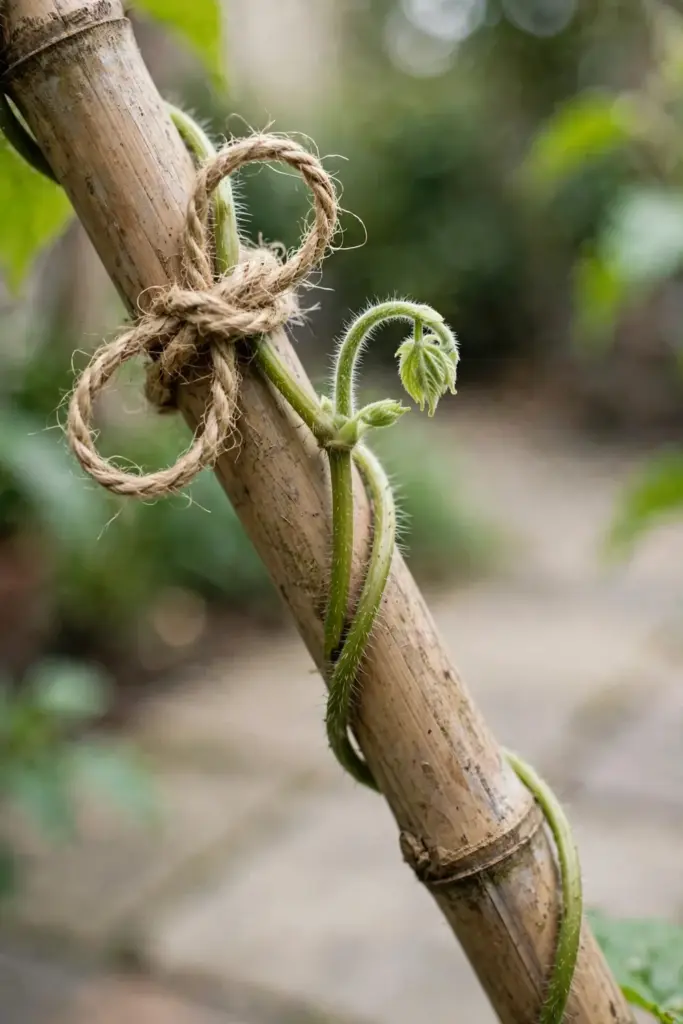
Tie loosely with soft twine or strips of cloth. Wire and tight zip ties cut into fast-growing stems. Tie at wide intervals, a figure-eight loop that holds the stem near the support without strangling it, and check the ties monthly. A stem doubles in girth faster than you expect in a good summer.
When the leader reaches the top of the support, you have two honest choices. Pinch it and force side branches, which fills the trellis and multiplies your leaf harvest. Or let it spill over the top and trail, which looks romantic and gives you long cuttings for the next pot. Pinching wins for jelly; trailing wins for photographs.
10. Prune for Bushier Growth and Bigger Leaf Harvests
Pinch the growing tips to force branching. Every tip you remove becomes two or three side shoots, and side shoots mean more leaves per plant. Start pinching once the vine passes knee height, and keep at it through the season. This is the single highest-return habit in the whole article.
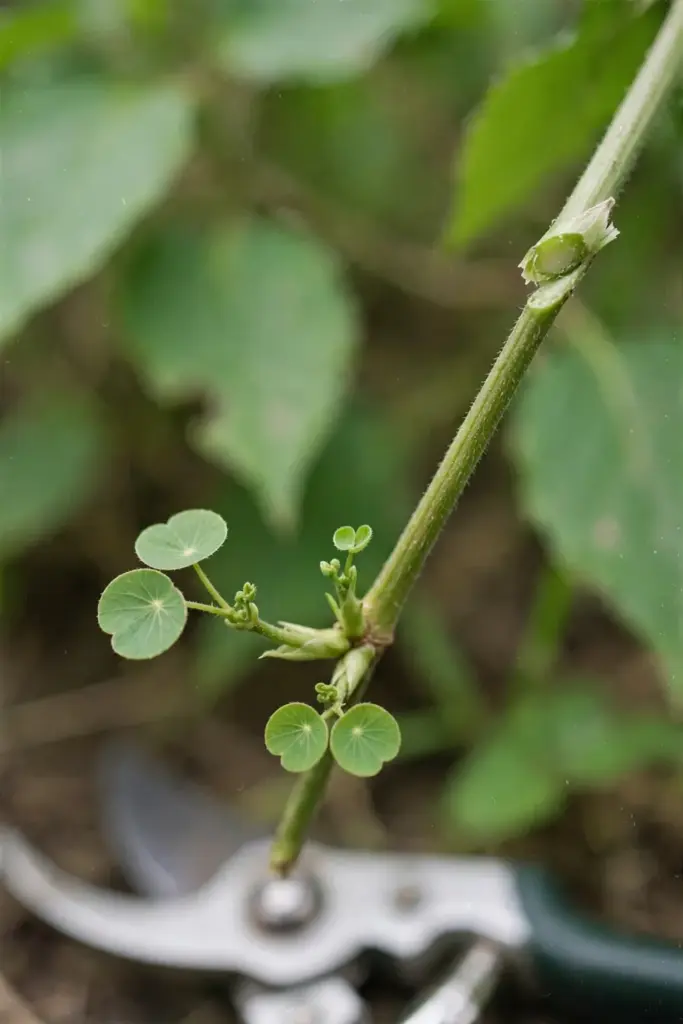
Harvest pruning and shaping pruning are the same job. When you pick leaves for jelly, take whole stem tips rather than stripping single leaves. You get the harvest and the branching in one cut. Never remove more than about a third of the plant at once; a hard strip shocks a potted vine and stalls it for weeks.
Cut the vine back by half before it moves indoors for winter. A 5 m vine does not fit through a doorway gracefully, and the plant cannot support that much foliage in winter light anyway. Prune to the trellis size, keep the cuts above outward-facing nodes, and let it regrow from a compact frame in spring.
11. Contain the Spread: Respect the Vigorous Warning
Take the vigorous warning seriously. Growers who keep this plant in warm climates report that it spreads aggressively when left to its own devices, and one experienced grower advises plainly: keep it in a pot or an area you can manage, because it can become invasive if left unchecked.
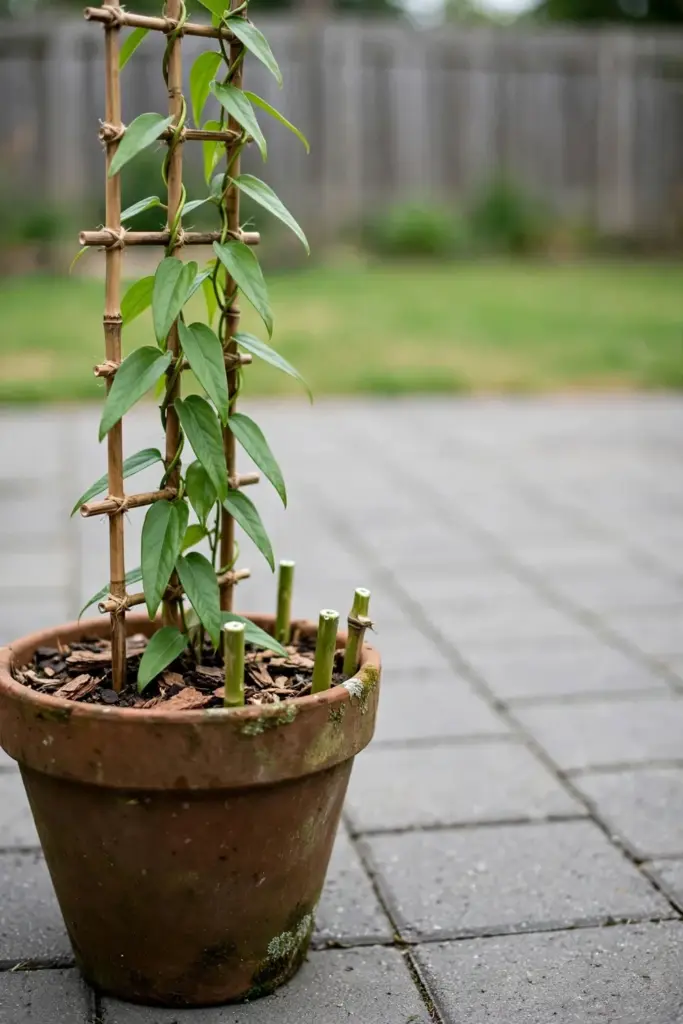
The container does two jobs. It grows the plant, and it contains the spread. Never plant Cyclea barbata in open ground in a frost-free climate and walk away. It spreads through root buds as well as seed, so even a plant that never fruits can travel underground.
Watch the drainage holes and the soil surface for escaping runners. Snip any stem that roots outside the pot. Compost the trimmings; do not toss live stems onto a compost heap in a warm climate and expect them to stay there. A contained vine is a well-behaved vine. An escaped one becomes someone else’s weed problem.
12. Move the Pot Indoors Before the First Frost
Cyclea barbata is a tropical to sub-tropical plant, and frost is the line it cannot cross. Move the pot indoors well before your first hard freeze, not the morning after. A single hard frost can kill the top growth to the soil line; the roots may resprout, but you lose a season.
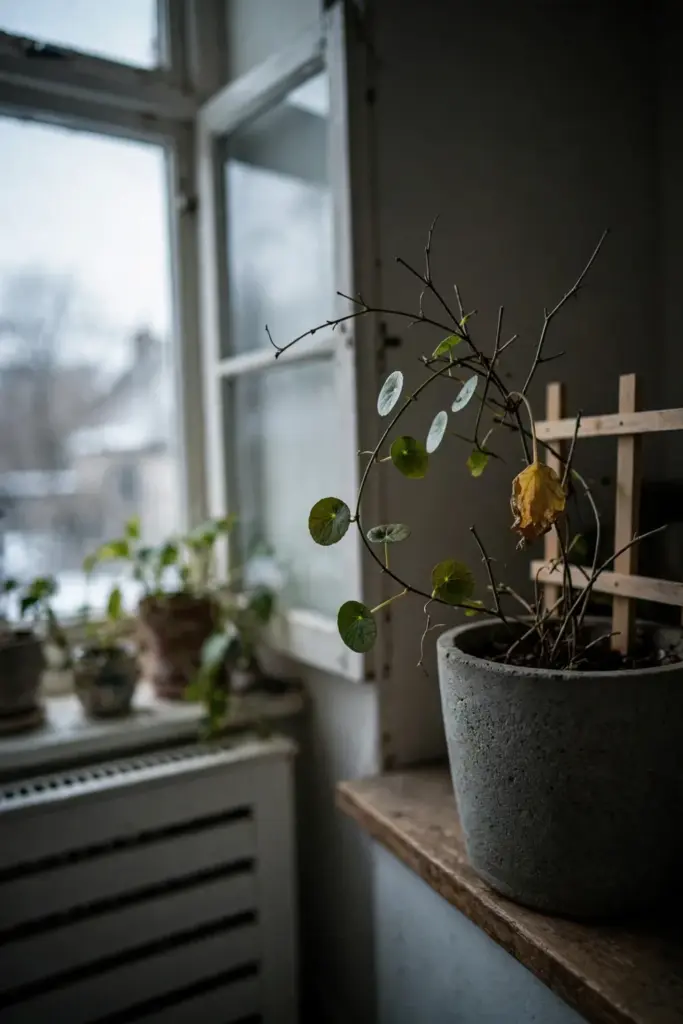
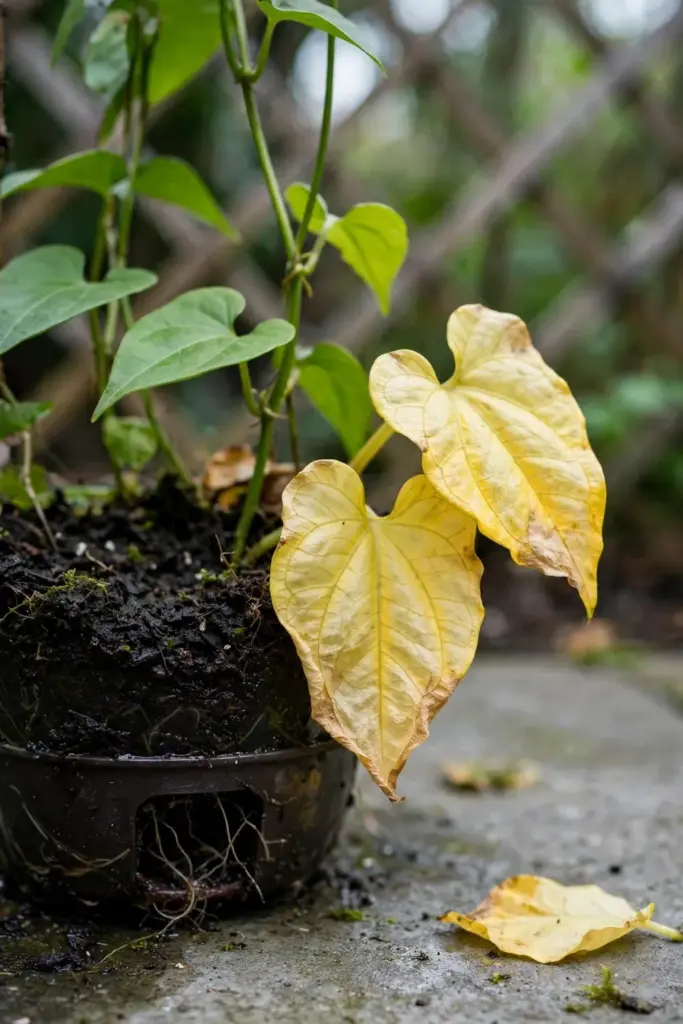
Give it the brightest spot you own. A south-facing window or a simple grow light keeps the vine alive through winter. Expect it to sulk: some leaves yellow and drop, growth stalls, and the plant looks tired by February. That is normal. It is resting, not dying, as long as the stems stay flexible and the crown stays firm.
Water sparingly and stop feeding entirely. Resume normal care only when nights stay reliably warm and new growth restarts. If a late cold snap threatens after you moved the pot back out, the late-frost protection guide covers the covers, cloches, and timing calls that save tender plants in spring.
13. Watch for the Usual Sap-Sucking Pests on a Tender Vine
Inspect the new growth weekly. Aphids, mealybugs, and spider mites find tender tropical vines fast, especially on plants fresh from the move indoors for winter. Check leaf undersides and stem tips, where colonies start small and explode in a week.
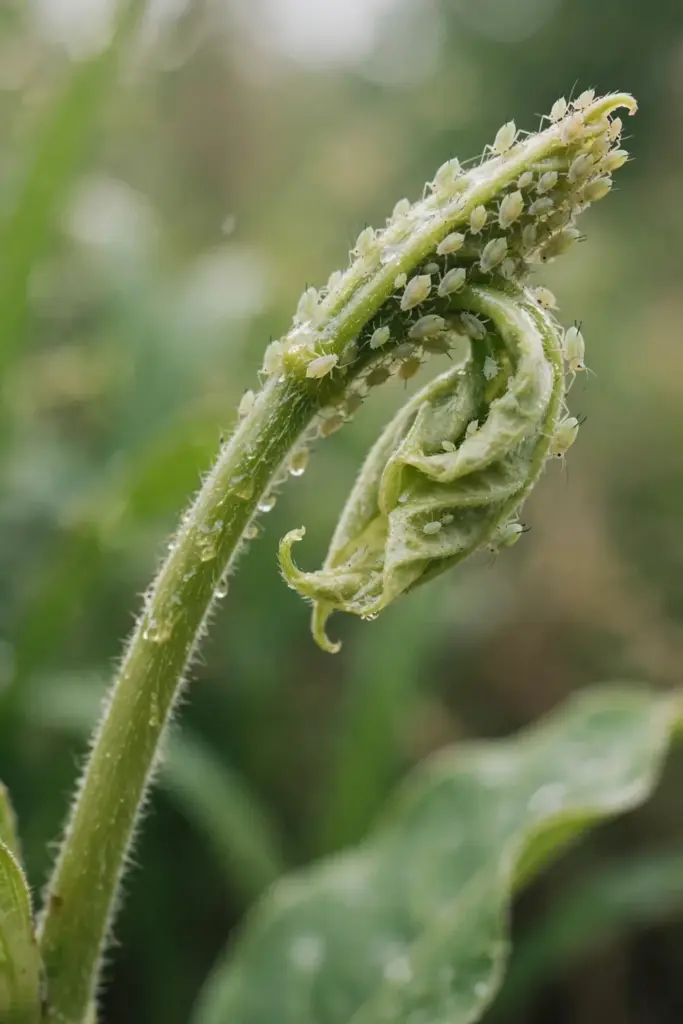
A strong jet of water knocks aphids off outdoor plants. Indoors, wipe mealybugs with a damp cloth and prune out the worst-hit tips. Horticultural oil applied according to its label handles stubborn cases; test any spray on a few leaves first and wait two days before treating the whole plant.
Healthy, unstressed plants resist pests best. Most infestations on this vine trace back to something else: too little light indoors, soggy winter soil, or a plant crowded against a wall with no airflow. Fix the conditions and the pest pressure usually drops with them. Quarantine any new cutting for two weeks before it joins your collection.
14. Harvest Mature Leaves for the Best-Setting Gel
Pick mature, fully expanded leaves for jelly. Young tip leaves look tender and tempting, but the mature leaves lower on the stem carry the compounds that make the liquid set. Researchers preparing green grass jelly extracts select old leaves from established plants, which tells you the mature leaf is the working material.
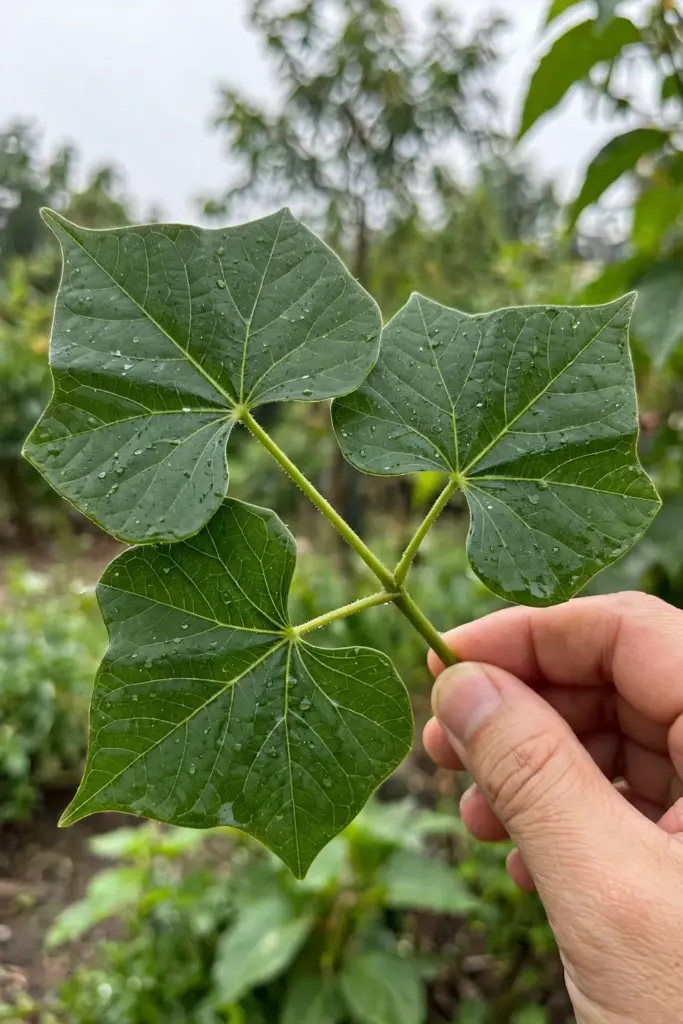
Harvest in the morning after the dew dries. Leaves are crisp, clean, and at their best. Take stem tips whole, which doubles as your pruning, and never strip more than a third of the plant in one session. Rinse the leaves, use them fresh the same day, and expect a productive vine to give you repeated small harvests through the warm months.
In my experience, the same mature leaves the researchers use set a noticeably firmer jelly than the soft new growth at the tips. Dry the leaves only if you must store them; fresh leaves make the classic green cincau, and the black variant’s dried-leaf process belongs to a different species entirely.
15. Expect a Learning Curve Before Your First Jelly Sets
Growing the plant and making the dessert are two different skills, and the second one takes practice. The classic method needs no cooking at all: crushed leaves are mixed with water, the liquid is strained, and it sets at room temperature on its own, as documented in the grass jelly reference. Simple to describe, fiddly to perfect.
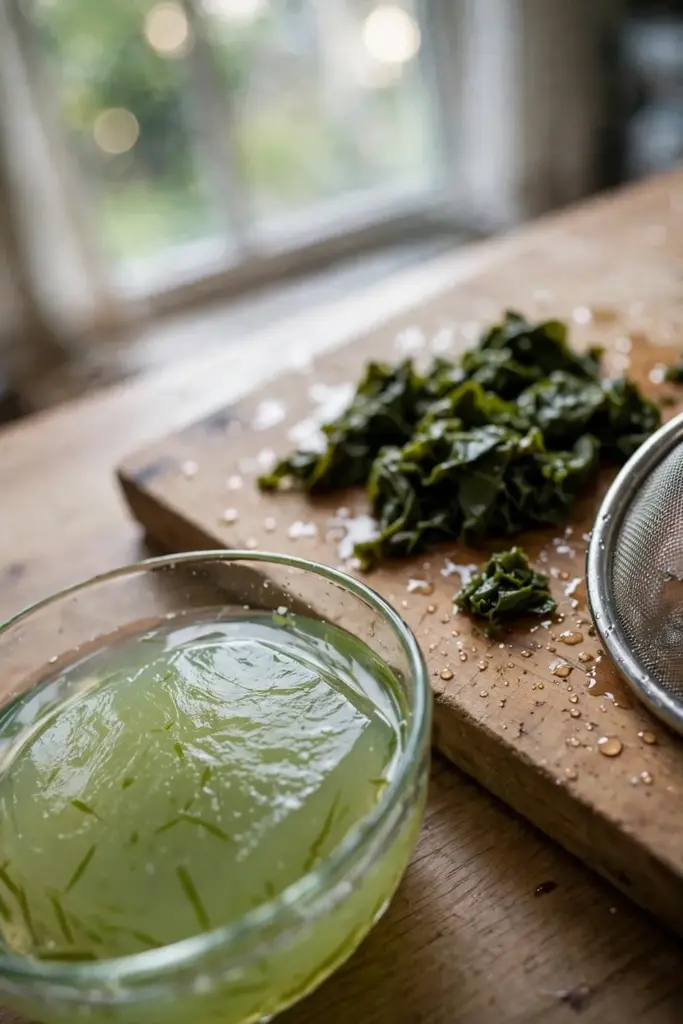
Work the leaves by hand. Rinse a generous handful of mature leaves, crush and squeeze them in clean water, knead patiently until the water turns green and slightly thick, then strain out every scrap of leaf. Leave the liquid alone at mild room temperature. Hours later it firms into jelly. Rushing, under-squeezing, or using too much water gives you green soup instead of cincau. Every maker on video says the same thing, including the growers filming their own backyard jelly process: the method is simple, the hand work takes patience, and the feel comes with repetition.
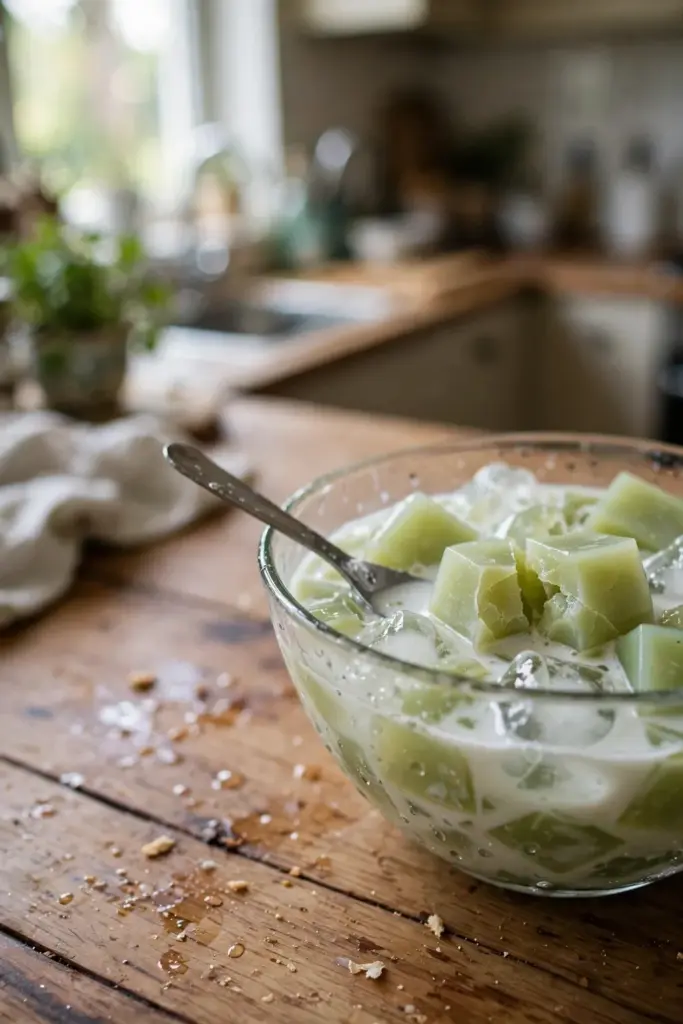
Know what the finished jelly tastes like before you judge your first batch. Indonesian green grass jelly has almost no bitter taste and none of the smoky note of the black kind; its flavour is mild and leafy, which is why it is served with sugar water, syrup, coconut milk, and ice. Do not expect it to taste like the black cincau from a can. They are different plants making different desserts.
Serve your first successful batch the traditional way and invite someone to taste it. Cubed jelly over ice with coconut milk and palm sugar, or a tall glass with lemongrass iced tea poured over the cubes, turns a gardening experiment into a drink worth repeating. That is the moment the whole project pays off.
16. Troubleshoot 7 Common Grass Jelly Plant Problems
Most failures with this plant come from three roots: cold, soggy soil, or the wrong species. Run down the table before you change anything drastic. The fix is usually smaller than the worry.
| Symptom | Likely cause | Fix |
|---|---|---|
| Vine stalls after planting | nights still too cold, or transplant shock | wait for reliably warm nights; keep moist and shaded for a week after potting |
| Yellow lower leaves | overwatering or natural shedding | let the top mix dry between waterings; a few yellow leaves on an old stem are normal |
| Stems creep along the ground | no support contact | wind stems onto the trellis and tie loosely; prune ground-creepers |
| Leggy growth indoors | too little light | move to the brightest window or add a grow light; prune back in spring |
| Rotting stem base | soggy mix, no drainage | repot into the 3-part mix; confirm drainage holes run clear |
| Pests cluster on new tips | aphids or mealybugs on soft growth | hose off, prune worst tips, treat with horticultural oil per label |
| Jelly will not set | young leaves, too much water, impatience | use mature leaves, squeeze longer, strain well, and give it the full resting time |
If the plant dies back to the soil line after a cold snap, do not dig it out immediately. Keep the pot barely moist and wait for spring warmth. Tropical vines often resprout from the crown when the top growth is lost, and a patient month beats a premature funeral.
Frequently Asked Questions
No. Green grass jelly (cincau hijau) comes from the vine Cyclea barbata, in the Menispermaceae family. Black grass jelly (cincau hitam) comes from Platostoma palustre, a mint-family plant whose accepted name replaced the widely used Mesona chinensis. The two need different processing: green sets from fresh crushed leaves at room temperature, while black is made from dried, oxidised leaves and stems. Do not follow black-jelly growing advice for a green-jelly plant.
You can, but cuttings are the practical route for home growers. Published research confirms Cyclea barbata propagates by seed, stem cuttings, and root buds, and the nursery trade moves rooted cuttings rather than seedlings. Cuttings clone the mother plant exactly and skip the slow seedling stage. Seed germination rates and timetables for this species are data not available in the published literature, so buy or swap a cutting if you can.
Only if you want fruit. Cyclea barbata carries male and female flowers on separate plants, so berries need both sexes, but jelly needs neither. You harvest leaves, and leaves grow on every plant regardless of sex. One healthy plant of either sex gives you all the cincau leaves a household can use. Treat any red drupes that appear as a curiosity, not a requirement.
The usual suspects are young leaves, too much water, or too little squeezing. Use mature, fully expanded leaves, the older foliage researchers select for extracts, and work them thoroughly in the water before straining. Give the strained liquid the full resting time at mild room temperature; chilling it early or stirring it after pouring breaks the set. Expect the first few batches to teach you the feel. Firm jelly is a practiced skill, not a guaranteed outcome.
No, not through a real freeze. Cyclea barbata is a tropical to sub-tropical vine, and frost kills its top growth. In any climate with freezing winters, grow it in a container and move the pot to a bright indoor spot before the first hard freeze. In frost-free zone 9 and warmer areas it can stay outside year-round, but keep it potted: its root buds and vigorous scrambling make it a poor candidate for open ground.
A rooted cutting focuses on roots and trellis-climbing first, so expect light picking in the first season and real harvests from the second year onward in a temperate climate. Harvest stem tips through the warm months, never more than a third of the plant at once, and always choose mature leaves for the best-setting gel. In frost-free climates the vine grows year-round and the harvest window never closes.
Grow Your Cincau Garden From Here
That is how to grow grass jelly plant from a cutting to your first bowl of homemade cincau: confirm the species, pot it big, trellis it tall, keep it contained, bring it in before frost, and practice the jelly until your hands learn it. The plant asks for less than a tomato and gives you a dessert no shop sells fresh.
When the vine is established, the how-to-grow herbs collection holds the rest of the Indonesian kitchen garden: fellow tropical herbs that share the pot, the windowsill, and the winter routine. Grow the leaves, master the squeeze, and the jelly takes care of itself.