
You can learn how to grow butterfly pea for blue tea in a single warm season. One vine gives you fresh flowers for the cup from summer into fall. Scarify the seed, soak it for 24 hours, and sow after the last frost.
I have learned to judge this vine by its morning flowers, not by how tall it climbs.
The rest of this page is 18 moves. Grow it for flowers, not pods. Pick daily and the vine keeps flowering, while a vine left to set seed puts its energy into pods instead.
| Spec | Detail |
|---|---|
| Botanical name | Clitoria ternatea (Fabaceae) |
| Indonesian name | Kembang telang |
| Plant type | Trailing perennial vine, grown as a warm-season annual in temperate climates |
| Height | To 4.6 m where the season stays warm |
| Leaves | Pinnately compound, 5 to 7 leaflets |
| Flowers | Pea-shaped, deep blue with a yellow center, to 5.1 cm across, borne singly or in pairs |
| Pods | Flat, hairy pods that split open and scatter seed |
| Main propagation | Seed |
| Soil pH | 4.5 to 9 |
| Temperature range | 15 to 32 degrees Celsius |
| Kitchen use | Dried flowers steeped as a blue herbal infusion |
| Native range | Believed native to a wide area of tropical Africa and Asia, exact home hard to pin down |
1. Grow Butterfly Pea for Blue Tea in One Warm Season
Grow butterfly pea as a warm-season annual and you drink blue tea from your own vine in the same year you sow. The vine climbs, flowers open through the warm months, and a daily pick keeps new flowers coming.
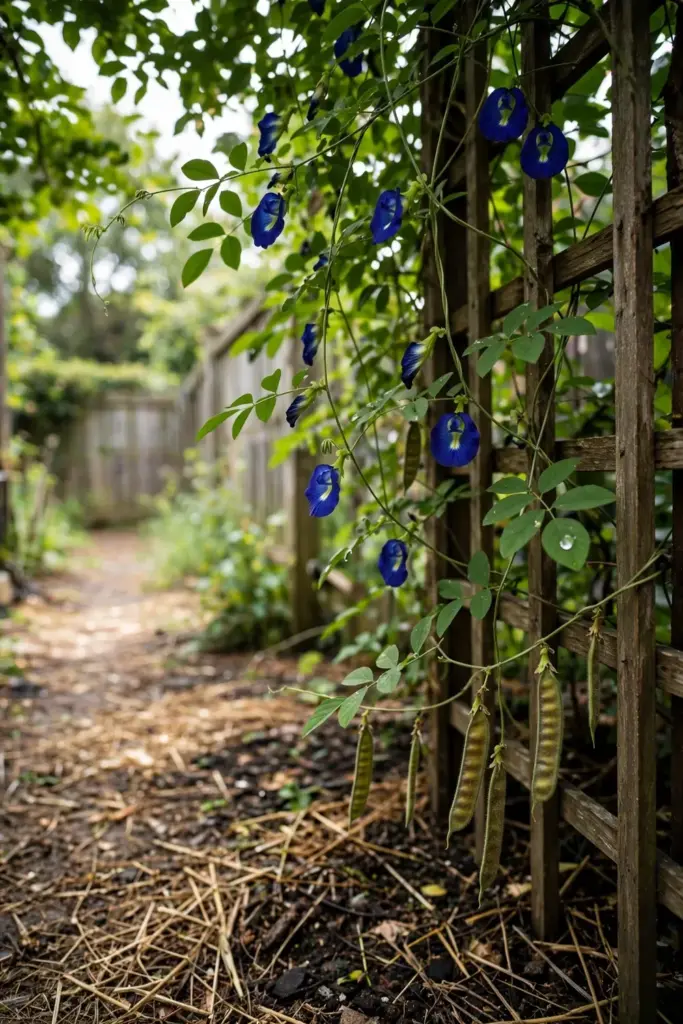
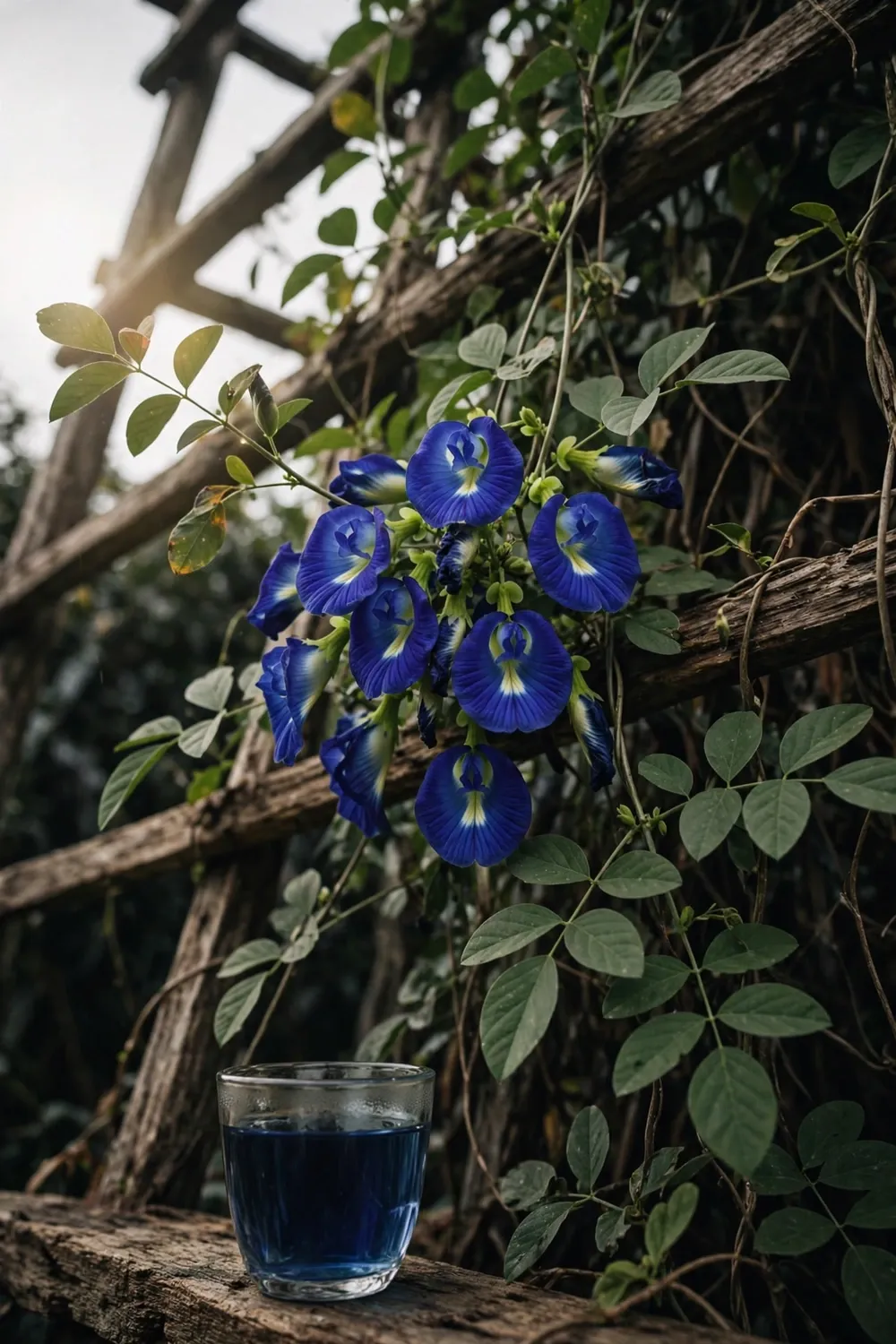
Learning how to grow butterfly pea starts with the plant itself. Butterfly pea is a trailing vine in the bean family, grown for sky-blue flowers, according to the NC State Extension Gardener Plant Toolbox entry for Clitoria ternatea. The vine climbs weakly, so it needs a trellis, a fence, or an arbor. The flowers open singly or in pairs from summer to fall. The vine can reach 4.6 m in a warm season, so plan the support before the seed goes in.
Kembang telang is the Indonesian name for this same plant. The name describes Indonesian use, not origin. Butterfly pea is believed native to a wide area of tropical Africa and Asia, but it is so widely naturalized through the tropics that its exact native home is hard to pin down, according to the same NC State Extension entry. The species name means of Ternate, and that name is probably a misnomer, since the plant is probably not native to the island of Ternate.
The blue tea comes from the flowers alone. Dried butterfly pea flowers carry a long history of food use in Southeast Asia, and the dried flowers are the form sold as a traditional food. Leaves and stems stay out of the cup. That flowers-only rule runs through every step below.
2. Name the Vine Correctly Before You Buy Seeds
Buy seed labeled Clitoria ternatea and check the botanical name on the packet before you pay. Common names overlap, and three different plants share the butterfly pea name.
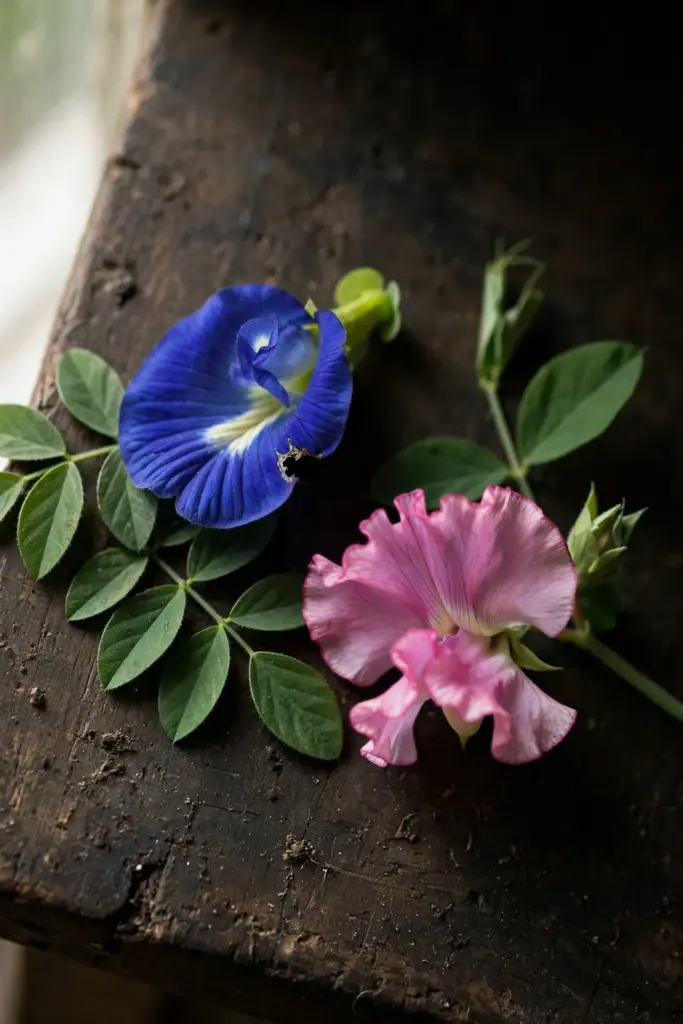
Nurseries and seed stalls mix up names. One name on a packet can mean a different plant in a different country. The botanical name settles it. Clitoria ternatea is the tea vine. Anything else is a different plant.
| Name on the packet | What it is | Why it matters |
|---|---|---|
| Clitoria ternatea | Butterfly pea, the tea vine | The plant this article grows |
| Centrosema virginianum | Spurred butterfly pea, a different genus | An American wild vine, not the tea plant |
| Lathyrus odoratus | Sweet pea, a different plant | Grown for scent, seeds are toxic, never brewed |
| Blue pea as a color name | A color label, not a plant | A color name on a packet tells you nothing about species |
Sweet pea is the dangerous mix-up. Sweet pea seeds are toxic. Never brew them, and never follow butterfly pea advice for a sweet pea plant. Check the packet. Check it again at the nursery.
The same plant also travels under other names. Aparajita, blue ternate, Darwin pea, Asian pigeonwings, Cordofan pea, and bluebellvine all mean Clitoria ternatea. Treat those names as labels for one plant. Keep the botanical name fixed through the whole season, from packet to cup.
3. Match Butterfly Pea to Warmth or Grow It as an Annual
Butterfly pea stays perennial where winters stay frost-free and grows as an annual everywhere else. Pick your plan from your winter, not from the packet photo.
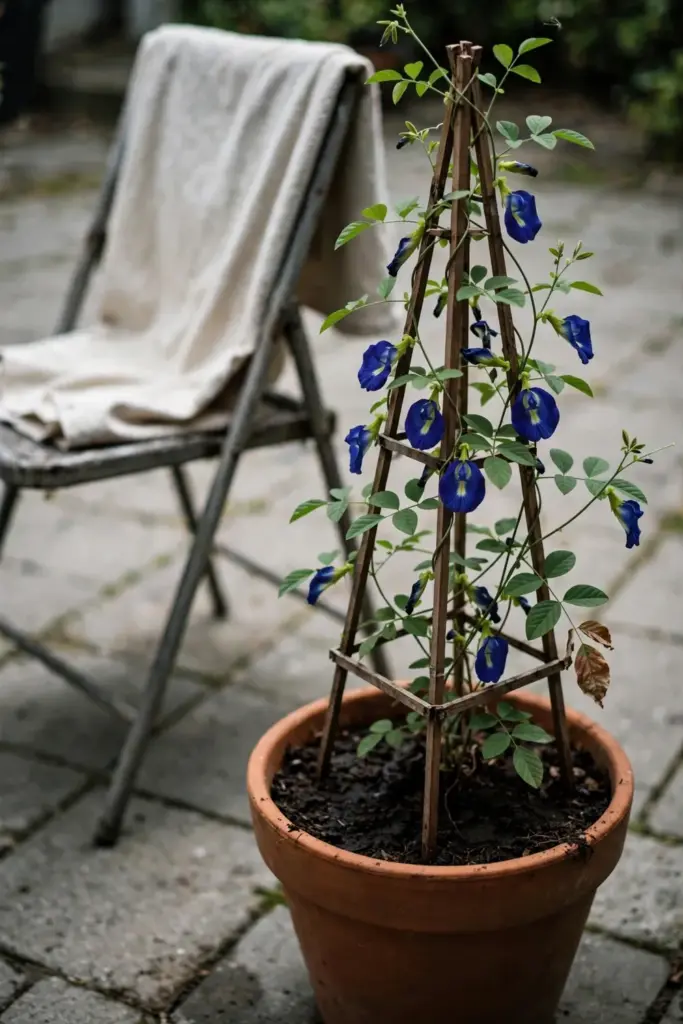
Butterfly pea is perennial in the tropics and usually grown as an annual in the temperate zone, according to the NC State Extension Gardener Plant Toolbox entry for Clitoria ternatea. Frost ends the vine outdoors. A frost-free garden keeps the vine alive across years, and the base turns woody with age.
Warmth sets the pace. Butterfly pea grows in a temperature range of 15 to 32 degrees Celsius, according to the ECHO plant information sheet for Clitoria ternatea. Growth stalls in cool soil. Heat and sun drive flowering. A temperate garden still grows a full vine in one warm season, as long as sowing waits for warm soil.
The annual plan is simple. Sow after the last frost. Harvest all season. Save seed from a few dry pods. Start fresh next spring. The perennial plan keeps the same vine in a frost-free bed and prunes it back each year. Both plans grow the same plant. Only the winter differs.
4. Set a Trellis in a Sunny Spot Before You Sow
Set the trellis before you sow, in full sun, and the vine climbs where you can reach the flowers. A trellis set late means tangled stems and flowers lost in the foliage.
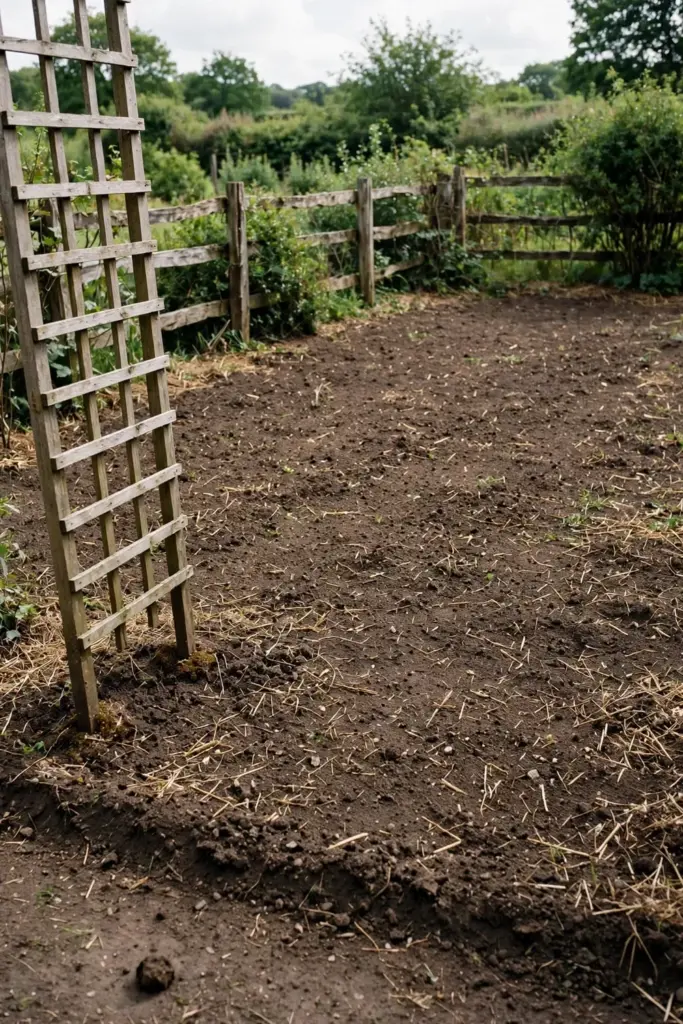
Full sun drives flowering. Butterfly pea does best with consistent watering and full sun, according to the NC State Extension Gardener Plant Toolbox entry for Clitoria ternatea. The ECHO plant information sheet for Clitoria ternatea also lists full sun as the light the plant prefers. Pick the sunniest spot you have. More sun gives more flowers than part shade.
The plant climbs weakly, so it needs help to climb well. A fence, an arbor, a cattle panel, netting, or a patio obelisk all work, and any of them beats a bare wall for picking. Ground cover also works, according to the same NC State Extension entry. It hides the flowers in the foliage and makes picking slow. A trellis lifts every flower into view.
Set a trellis about 1.8 m tall. That height keeps flowers within reach and keeps the top of the vine prunable without a ladder. Sink the legs deep enough that a loaded vine cannot pull the trellis over in wind. Set the trellis before sowing, so the first stems climb in the right direction from day one.
Soil matters as much as sun. Butterfly pea does well in well-drained, dry to slightly moist, fertile soil, according to the same NC State Extension entry. Skip low spots where water stands after rain. A slope, a raised bed, or a pot all drain better than a hollow.
5. Scarify and Soak Seeds to Lift Germination Past 80 Percent
Nick the seed coat and soak the seed for 24 hours, and germination climbs past 80 percent, according to the University of Florida germination study on butterfly pea. Untreated seed germinates slowly and unevenly, because the hard coat blocks water.
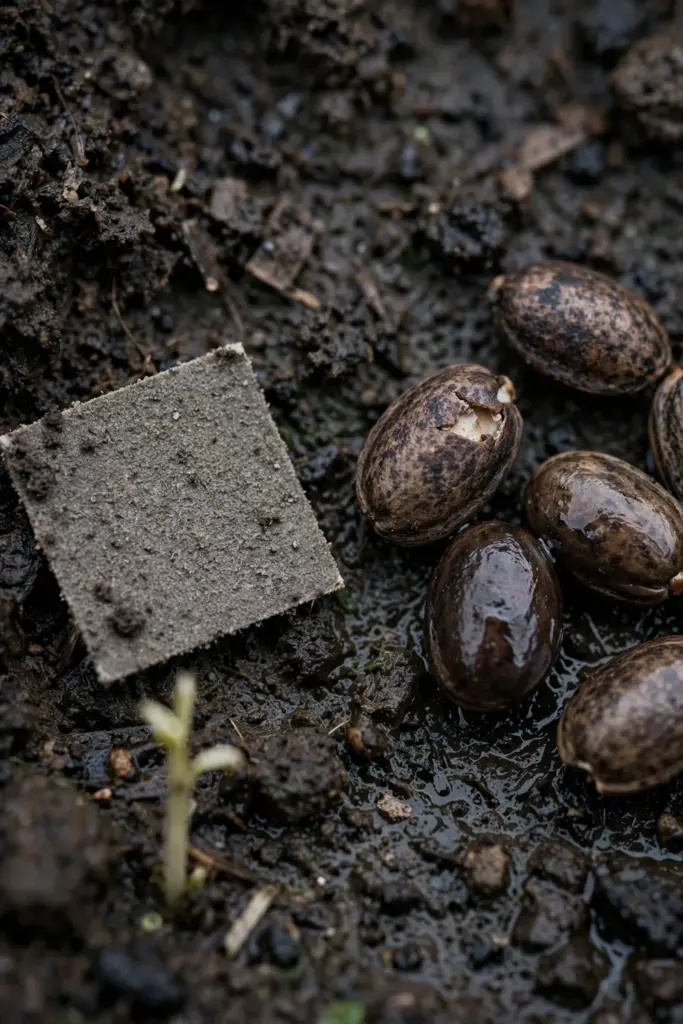
The hard coat is the whole problem. Water cannot reach the embryo through an intact coat, so a nick lets water in and a soak swells the seed. The pair together breaks dormancy.
A University of Florida study tested the method. Mechanical scarification by nicking the seed coat with a razor blade before soaking the seed for 24 hours reached maximal germination of 80.95 percent, according to the University of Florida germination study on butterfly pea. Germination ran fastest at a substrate temperature of 21 degrees Celsius, according to the University of Florida germination study on butterfly pea. Nick plus soak plus warmth is the working method.
| Step | Action | Time |
|---|---|---|
| Nick | Rub one spot on the coat with sandpaper until the pale inner coat shows | A few seconds per seed |
| Soak | Drop nicked seeds in room-temperature water | 24 hours |
| Sow | Sow seeds that swell, discard seeds that stay hard and flat | Same day |
Nick the rounded side of the seed. Leave the scar where the seed sat in the pod alone. One nick is enough. A deep cut wounds the embryo.
Seeds should be mechanically scarified, according to the ECHO plant information sheet for Clitoria ternatea. Sandpaper, a nail file, or a razor nick all count as mechanical scarification. Skip acid treatments. A home gardener has no need for them, and a nick plus soak already clears 80 percent, according to the University of Florida germination study on butterfly pea.
Sow soaked seed the same day. Soaked seed left in water rots. Soaked seed left on the bench dries out and stalls. Nick, soak, sow. The three steps run in one day.
6. Sow Butterfly Pea Seeds 2 cm Deep After the Last Frost
Sow nicked, soaked seed 2 cm deep in warm soil after the last frost. Warm soil matters more than the calendar date.
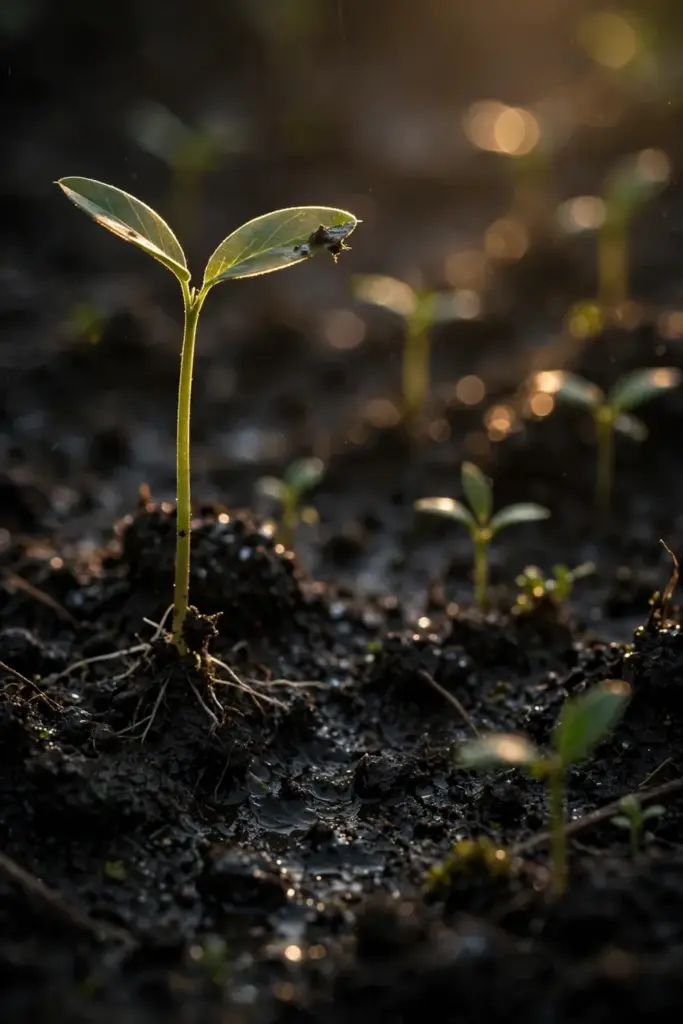
Soil temperature drives germination. The University of Florida study found optimal germination when scarified and soaked seed germinated at a substrate temperature of 21 degrees Celsius, according to the University of Florida germination study on butterfly pea. Cold soil stalls seed. Warm soil wakes it. Wait for warm soil after the last frost, even if the packet date has passed.
Sow one seed per cell in a tray, or space seeds a hand span apart in the bed. Cover with 2 cm of mix. Press the mix down lightly. Water gently until the mix is damp through. A seed starting guide with a warm tray and a humidity dome covers the same setup for gardeners who start seed indoors.
Keep the mix damp until sprouts show. In the study, nicked and soaked seed averaged 2.06 days to germinate at 21 degrees Celsius, according to the same University of Florida germination study. Garden soil runs slower than a lab tray. Expect sprouts within the first week in warm soil. If nothing shows in two weeks, the seed was likely dead or the soil stayed cold.
Thin to the strongest seedling per spot. Snip the weaker stem at the soil line. Pulling disturbs the keeper. One strong seedling beats two crowded ones.
7. Grow Butterfly Pea in a 30 cm Pot With Free Drainage
A pot 30 cm across and the same depth holds one vine with room for roots and a trellis. The pot is the temperate gardener’s best move.
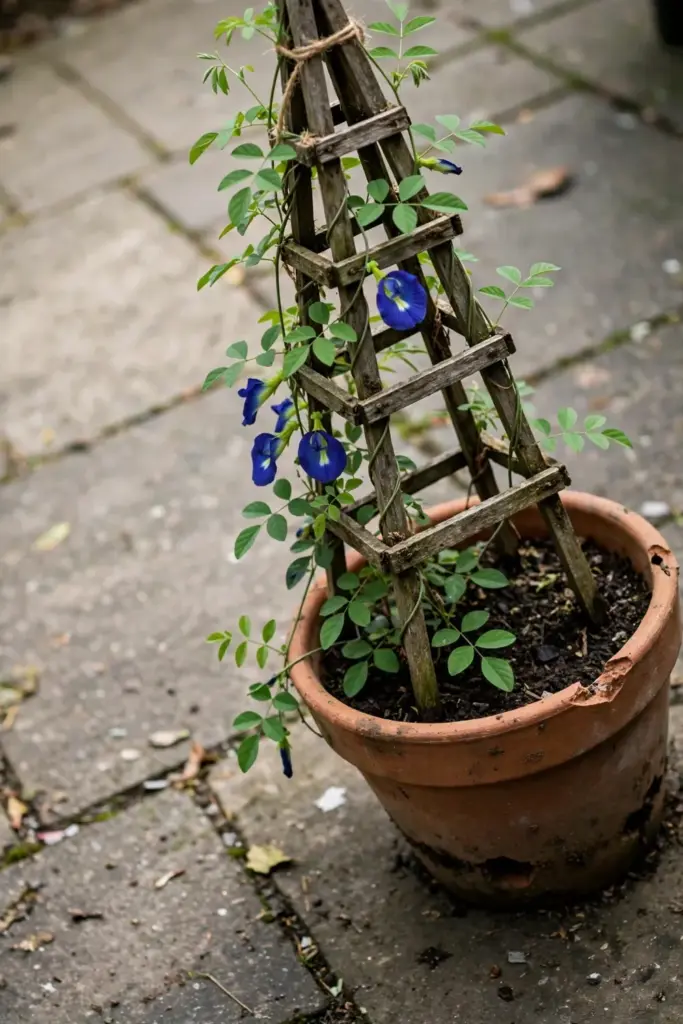
A pot puts a tropical vine on a balcony, a patio, or a sunny doorstep. The pot rolls indoors before the first frost. The vine still climbs, so the pot needs its own trellis. An obelisk or three bamboo canes tied at the top gives the vine something to climb.
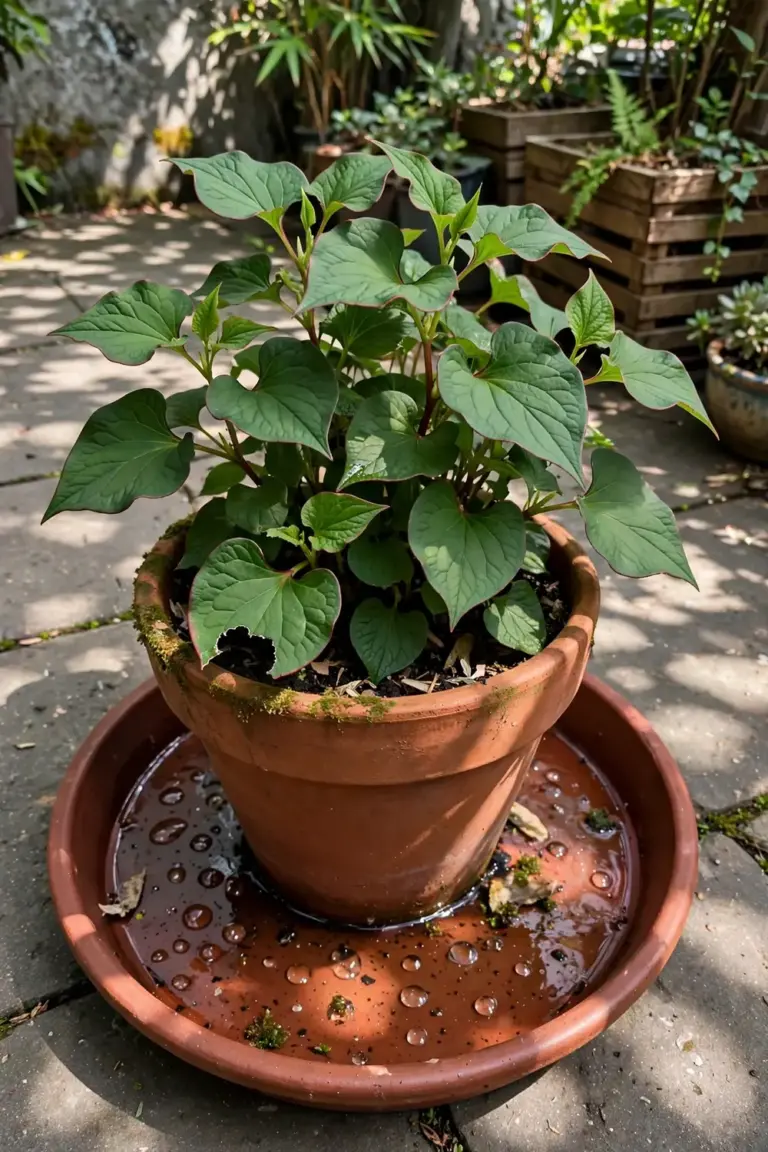
Drainage decides whether the pot works. The pot needs holes in the base. The saucer needs emptying after watering. Standing water rots roots. A pot without holes is a bucket, not a home.
One vine per pot keeps the math simple. Two vines in one pot fight for water and root room, and both flower less. One vine fills a 30 cm pot on its own by midsummer.
Pot material changes watering. Terracotta dries fast and needs checking in heat. Plastic holds moisture longer and needs a lighter hand. Glazed ceramic sits between the two. Pick the material that matches your watering habit, not the prettiest pot.
8. Mix a Free-Draining Soil From pH 4.5 to 9
Butterfly pea grows in soil from pH 4.5 to 9, so most garden soil works if it drains. Drainage beats pH on this plant.
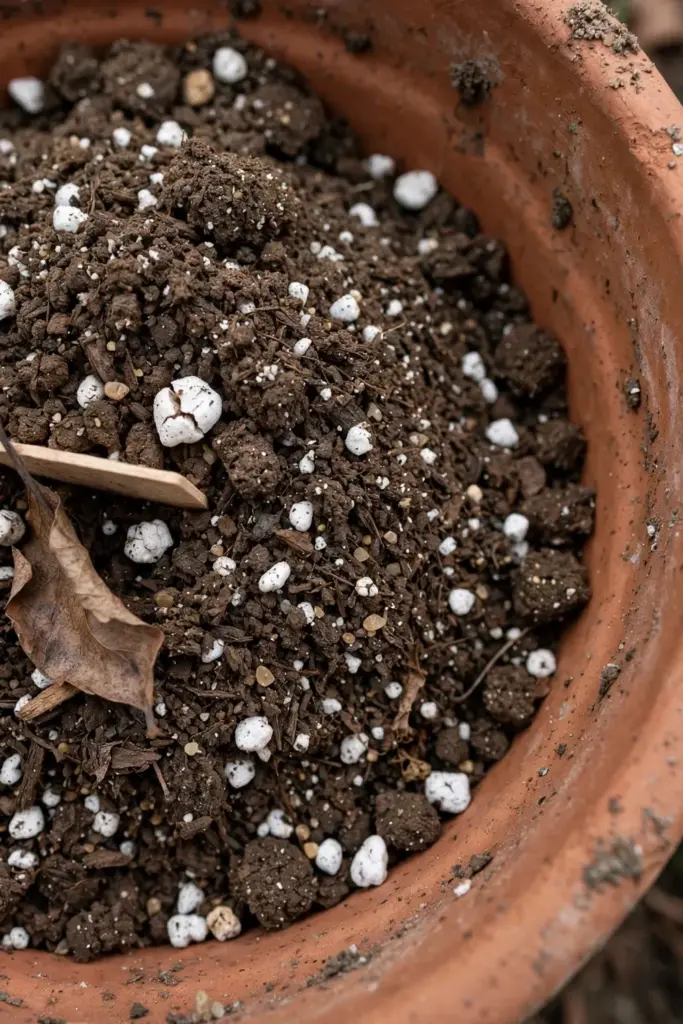
Butterfly pea grows in soil types from pH 4.5 to 9 and prefers well-drained soils, according to the ECHO plant information sheet for Clitoria ternatea. That pH span covers nearly every garden. Butterfly pea also tolerates loam and heavy clay as well as very acid and very alkaline soils, according to the NC State Extension Gardener Plant Toolbox entry for Clitoria ternatea. A pH test is not required. A drainage test is.
Test drainage with a hole. Dig a hole 30 cm deep, fill it with water, and watch. Water that drains within an hour means the soil drains well. Water that still stands at dusk means the bed needs help. Raised beds, coarse sand, or perlite open up heavy soil.
Mix a pot soil from three parts: one part garden soil for body, one part compost to feed the vine, and one part coarse sand or perlite to open drainage. That mix holds moisture without holding water. Skip fine sand. Fine sand packs tight and drains worse than clay.
Mulch with a thin layer of straw or shredded leaves to hold moisture and keep the soil cool in heat. Keep mulch a finger width from the stem. Mulch piled against the stem holds rot against the bark.
9. Water Butterfly Pea Deeply and Let the Top Soil Dry
Water deeply, then let the top soil dry before you water again. Deep and occasional beats shallow and daily.
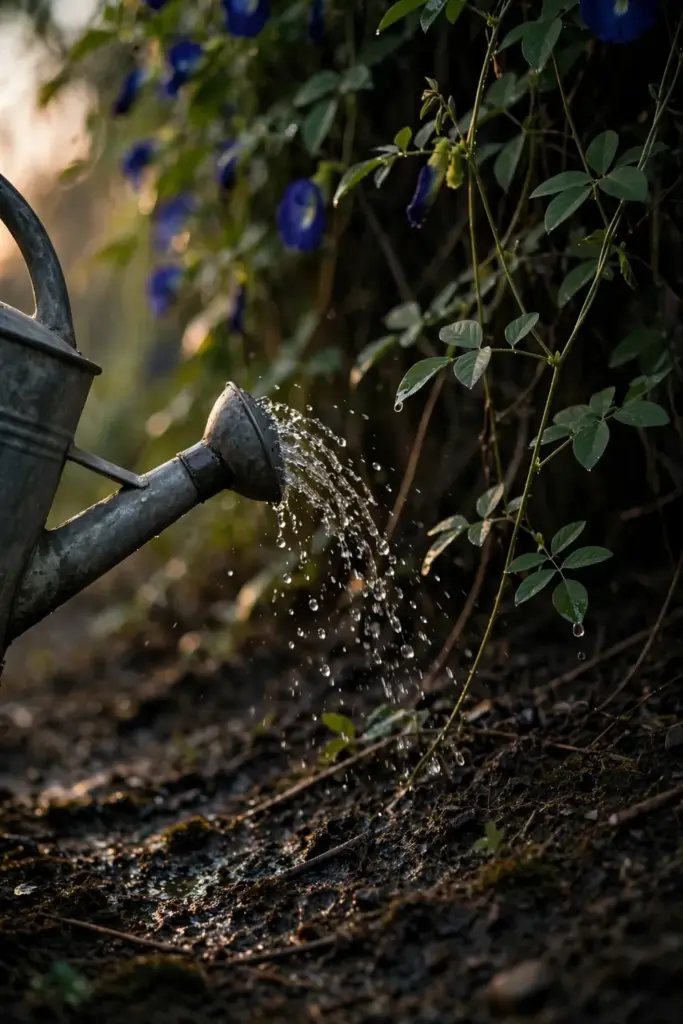
Butterfly pea has a reputation for drought tolerance but does best with consistent watering and full sun, according to the NC State Extension Gardener Plant Toolbox entry for Clitoria ternatea. Consistent watering means damp root soil through the flowering season. Drought tolerance means the vine survives a dry week. Survival and flowering are different jobs.
Water at the base, since wet leaves invite leaf disease. A slow soak reaches the roots. A quick sprinkle wets the top centimeter and leaves the roots dry. Water until the root zone is damp, then stop.
Check with a finger before you water. Push a finger into the soil to the second knuckle. Dry soil at that depth means water now, while damp soil means wait a day. Pots in full sun need checking daily in heat. Beds need checking twice a week.
Wilting at midday in heat is normal. The vine wilts to cut water loss, then recovers by evening. Wilting in the morning means real thirst. Water a morning-wilted vine at once.
10. Feed Butterfly Pea Lightly and Skip Heavy Nitrogen
Feed butterfly pea lightly, since the vine makes much of its own nitrogen. Heavy nitrogen grows leaves and starves flowers.
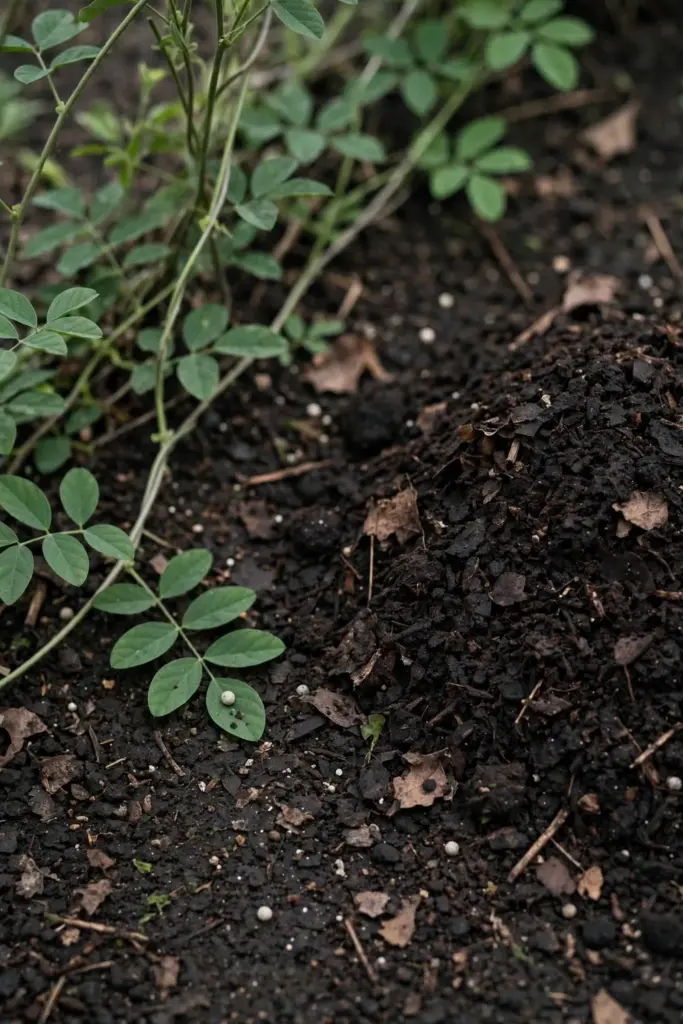
Butterfly pea fixes atmospheric nitrogen and builds soil quality over time, according to the ECHO plant information sheet for Clitoria ternatea. Root nodules host the bacteria that do the work. The vine feeds itself a share of its own nitrogen. A legume fed like a rose grows leafy and flowers poorly.
Compost at planting carries most of the feeding: a bucket of compost worked into the planting hole feeds the vine for weeks. A pot vine gets one light liquid feed a month through the flowering season. Stop feeding when flowering peaks, since late feeding pushes soft growth that frost kills.
Rotation turns the nitrogen gift into a garden gain. Follow butterfly pea with a hungry crop that eats the leftover nitrogen. Do not follow a legume with another legume in the same bed. A crop rotation plan lays out the sequence so the bed rests between legume crops.
11. Train the Vine Up the Trellis in Its First Month
Guide the first stems onto the trellis by hand. The vine climbs on its own after that, and the first month sets the shape of the season.
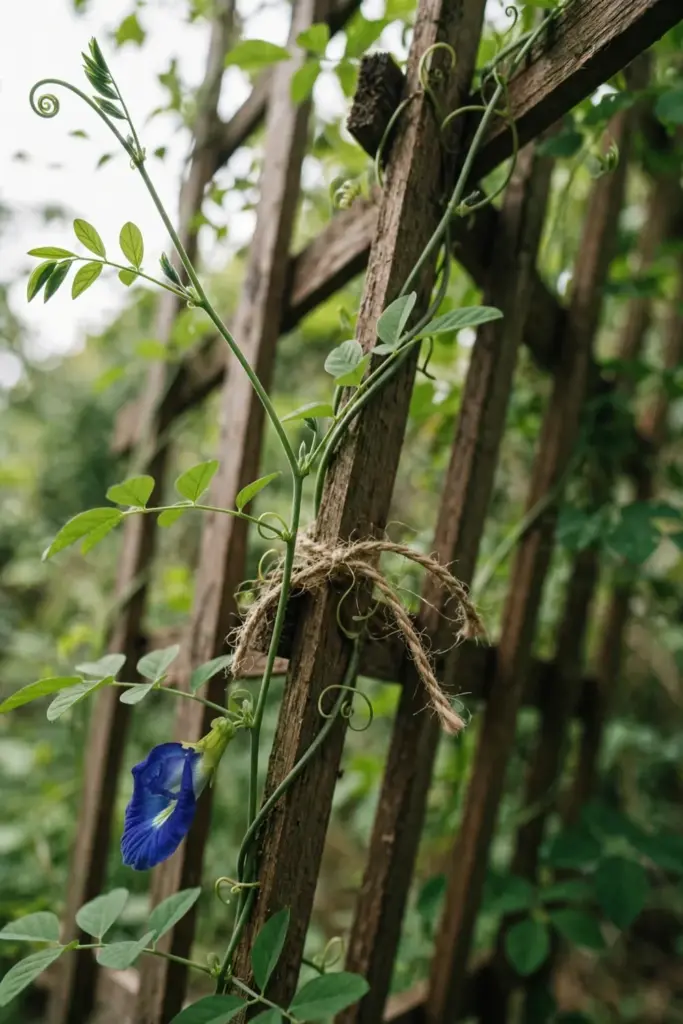
The plant climbs weakly, according to the NC State Extension Gardener Plant Toolbox entry for Clitoria ternatea. Weak climbing means the vine twines, but it needs a start. A stem left on the ground sprawls. A stem laid on the trellis climbs.
Twine the first stems loosely around the trellis with soft twine or plant ties. Check weekly. Redirect stray stems back to the trellis before they tangle into nearby plants. A stem that climbs the wrong plant steals light from both.
Leave the vine alone once it grips. Tendrils and twining stems hold on their own. Over-handling snaps stems. A snapped stem costs a week of growth and a cluster of flowers.
A vine that outgrows the trellis top gets pruned, not extended. The next section covers the cut. A trellis that leans under the vine gets braced, not ignored. A falling trellis tears the vine down with it.
12. Prune Butterfly Pea to Keep Flowers Within Reach
Pinch the growing tips and cut long stems back, and flowers stay where you can pick them. An unpruned vine flowers at 4 m, where no cup can reach it.
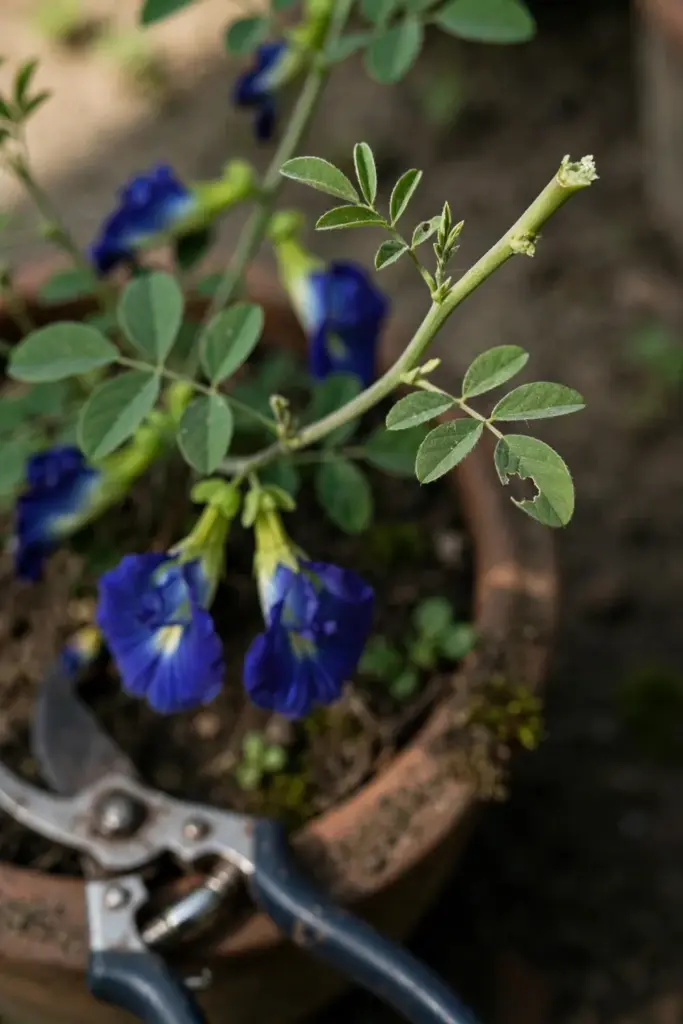
Butterfly pea can grow rapidly to its mature height of 4.6 m, according to the NC State Extension Gardener Plant Toolbox entry for Clitoria ternatea. That height is a fact, not a goal. A tea vine needs flowers at arm height. Pruning keeps them there.
Pinch the growing tip of each stem when it passes the trellis top. Pinching forces side branches. Side branches carry more flowers than one long stem. Pinch with clean fingers or snips. Pinch in the morning, when stems are crisp.
Cut back stems that run past the trellis or tangle into neighbors. Cut just above a leaf joint. New growth follows the cut within days in warm weather. Remove yellow or spotted leaves as you go. Clean cuts and open airflow slow leaf disease.
Prune lightly and often. One hard cutback shocks the vine and stalls flowering for weeks. A few small cuts each week keep the vine bushy and flowering. The pruned stems go to compost. The flowers stay on the vine until picking day.
13. Move Potted Butterfly Pea Indoors Before the First Frost
Move the pot indoors before the first frost, since frost ends the vine outdoors. One cold night can end a season of work.
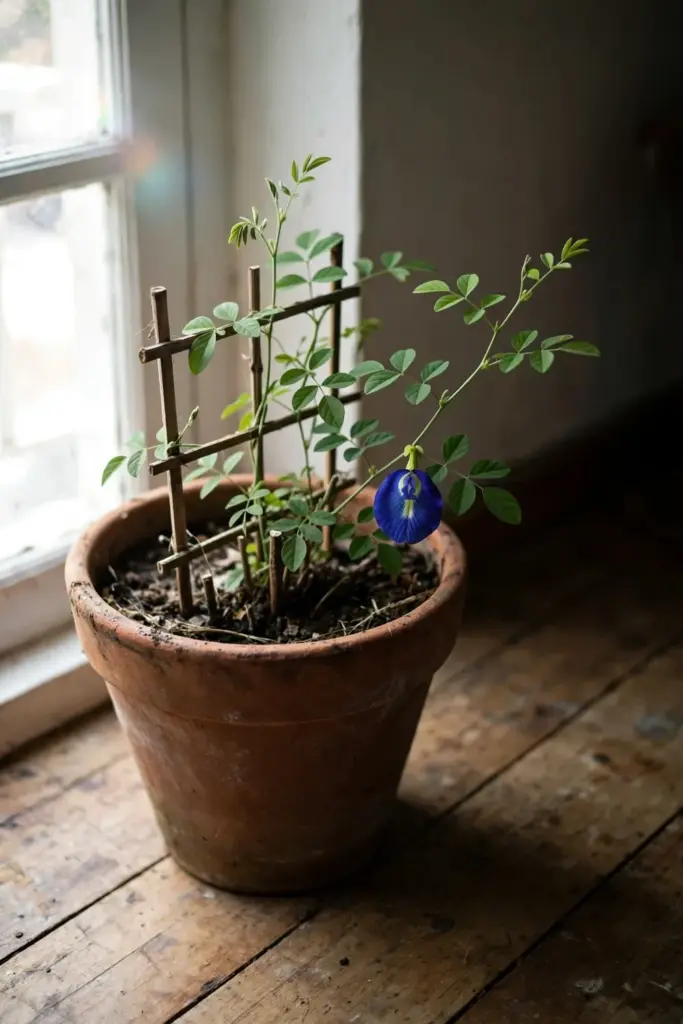
Butterfly pea is usually grown as an annual in the temperate zone, according to the NC State Extension Gardener Plant Toolbox entry for Clitoria ternatea. Annual here means the frost calendar decides, not the plant. A vine that would live for years in the tropics dies in one temperate frost.
Move the pot in while nights still stay above freezing. Cut the vine back to fit the indoor space. Check leaf undersides for spider mites and whiteflies before the pot crosses the door. A pest that rides indoors multiplies fast in dry house air.
Set the pot by the brightest window. Water less indoors. The vine grows slowly in short days, so it drinks slowly. No feeding indoors. Leaf drop is normal in low light. The vine rests.
In spring, move the pot out after the last frost. Harden it off with a few days in shade before full sun. Or start fresh seed. Fresh seed gives a stronger vine than an overwintered one in most temperate gardens. Overwintering is a choice, not a duty.
14. Harvest Open Flowers Every Morning for Blue Tea
Pick fully open flowers every morning, and the vine keeps producing new ones. Morning picking is the harvest rule for this plant.
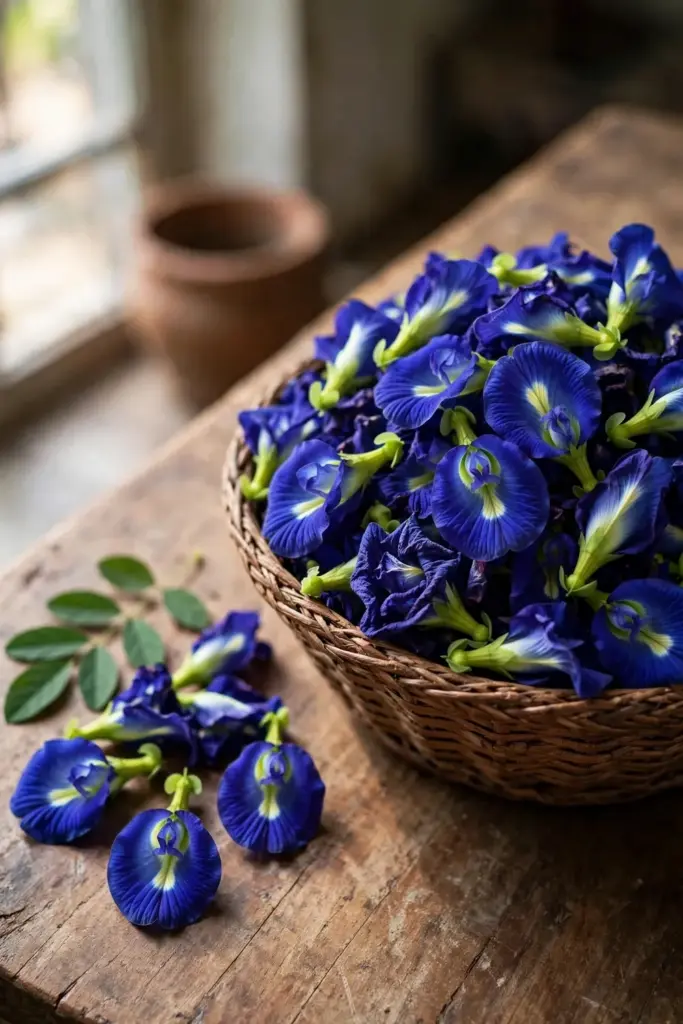
Butterfly pea flowers bloom singly or in pairs from summer to fall, according to the NC State Extension Gardener Plant Toolbox entry for Clitoria ternatea. Each flower opens in the morning. Pick it the same day it opens. A flower left on the vine fades, and the vine moves on to seed.
Pick with dry hands on a dry morning. Wet petals stick together and dry poorly. Hold the flower by the base and pull gently, and the stem snaps clean at the joint. Drop flowers into a basket, not a bag. A basket breathes. A bag sweats.
Pick daily, even when the basket looks full. Daily picking stops pods from forming, and a vine without pods keeps flowering. A vine left to set seed slows down. The harvest rule is simple. Pick today, and tomorrow brings more flowers.
Fresh flowers brew the same day. Flowers meant for storage go to the drying tray at once. Do not pile fresh flowers and dry them later. A pile heats, darkens, and loses color.
15. Dry Butterfly Pea Flowers Until Crisp for Storage
Dry flowers in a single layer in shade with airflow until the petals feel crisp and papery. Crisp is the only test that matters.
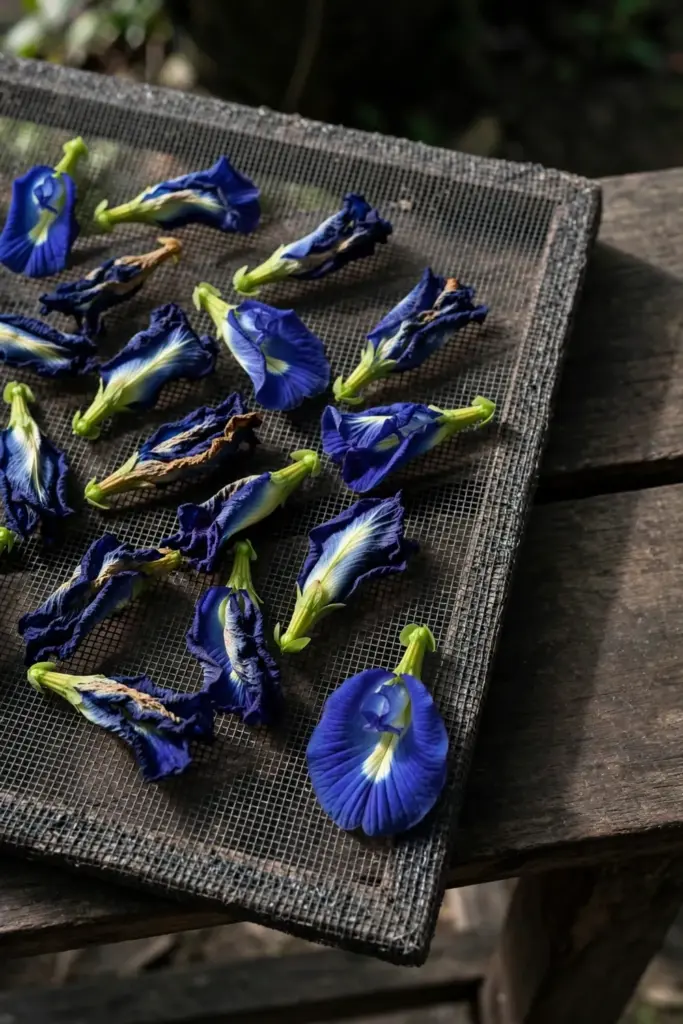
Spread flowers in one layer on a mesh screen or a tray lined with cloth. Shade drying keeps the blue deep. Sun drying bleaches the color. Airflow carries moisture away. A still room dries slowly and invites mold.
Turn the flowers once during drying. One turn exposes both sides to air. A flower dried on one side stays damp on the other. Damp flowers mold in the jar.
Dried flowers are the traditional food form. Dried butterfly pea flowers carry a long and well documented history of safe use and consumption for at least 25 years in Southeast Asia, especially in Thailand, according to the European Commission traditional-food summary for dried Clitoria ternatea flowers. That history covers the flowers, not the leaves or stems. Keep the jar flowers-only.
Store crisp flowers in an airtight jar in a cool, dark place. Check the jar after the first week. Petals that soften need another drying round. A jar that smells musty holds spoiled flowers. Throw those out. Dry flowers that stay crisp keep their color.
16. Brew Blue Tea and Turn It Purple With Lemon
Steep dried flowers in freshly boiled water for blue tea, then add lemon to turn the cup purple. The color change is chemistry, not magic.
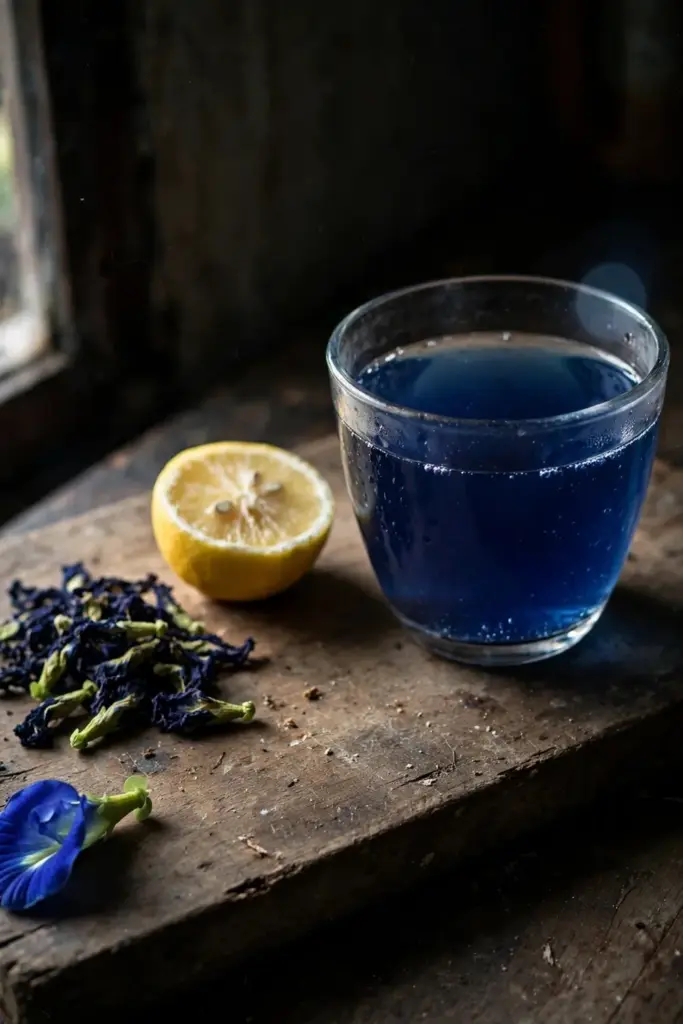
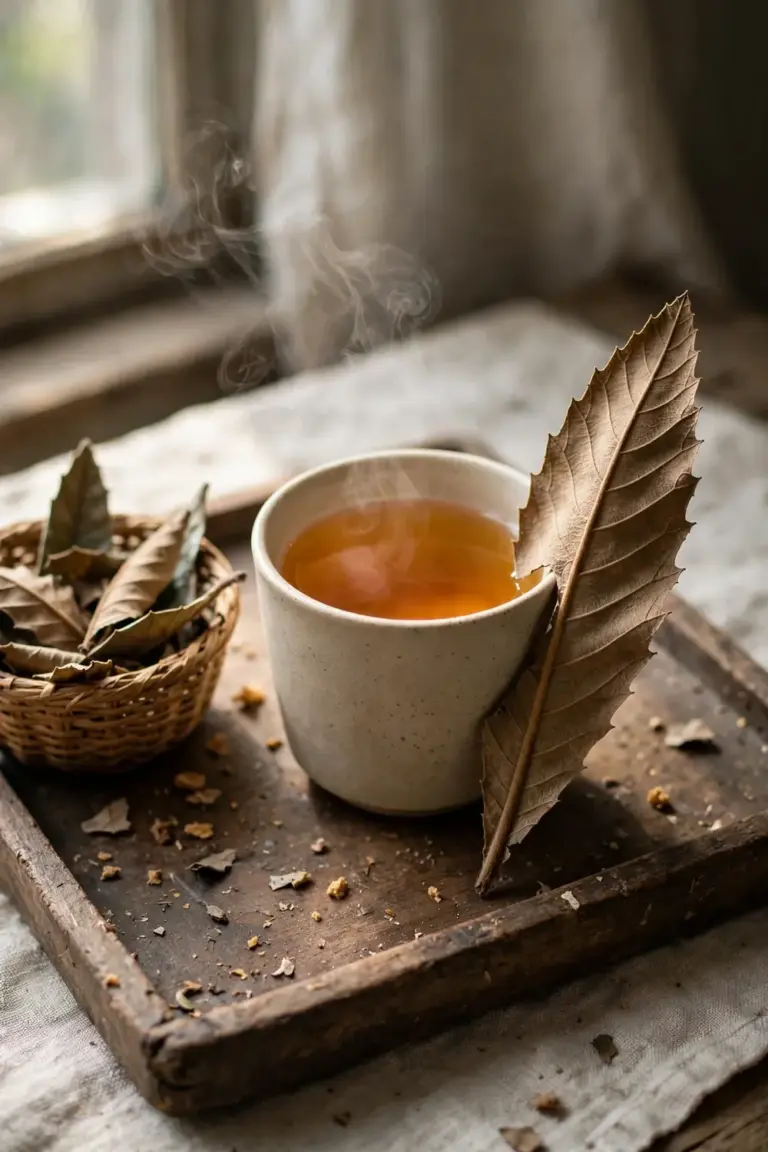
Start with freshly boiled water. Dried flowers should be infused with freshly boiling water, according to the European Commission traditional-food summary for dried Clitoria ternatea flowers. Boiling water also kills germs that can sit on dried flowers in rare cases. Pour the water over a small handful of dried flowers in a cup or teapot. Cover and steep about 5 minutes, until the water turns deep blue. Strain out the flowers.
Lemon shifts the color. An edible blue dye is extracted from the flowers, and it is pH sensitive and turns pink in acidic solutions, according to the NC State Extension Gardener Plant Toolbox entry for Clitoria ternatea. A squeeze of lemon turns the cup purple. More lemon pushes it toward pink. Add the lemon after straining, so the color change stays visible.
Butterfly pea is not tea leaf. Real tea comes from a different plant, the green tea plant. Butterfly pea gives a caffeine-free herbal infusion, not a true tea. Fresh lemongrass stalks join the same cup well, and a slice of ginger adds bite.
Two cautions belong here. Butterfly pea sits in the bean family, according to the same NC State Extension entry. Anyone with a legume allergy checks with a clinician before drinking the infusion. Anyone who is pregnant, nursing, caring for a small child, or taking medication asks a clinician too. This article gives growing information. A clinician answers health questions. The infusion belongs in the cup, not the medicine cabinet.
17. Watch for Spider Mites, Whiteflies, and Anthracnose on Tea Plants
Check leaf undersides weekly, since spider mites and whiteflies hit tea plants first. A tea plant carries no spray, so early eyes beat late cures.
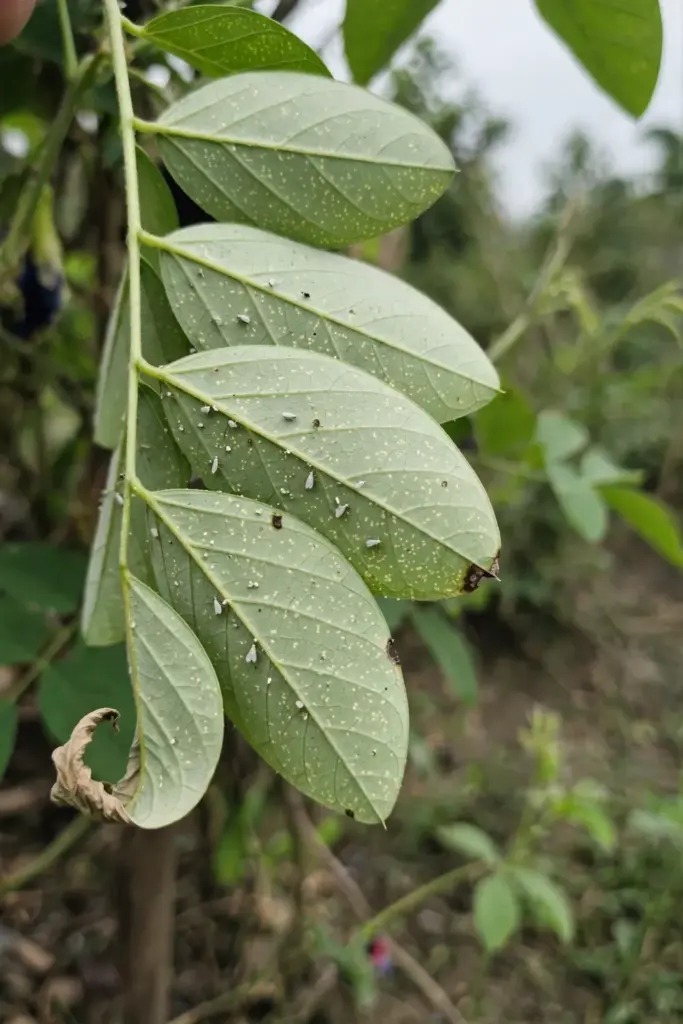
Butterfly pea is susceptible to spider mites and whiteflies, anthracnose, and bacterial soft rot, according to the NC State Extension Gardener Plant Toolbox entry for Clitoria ternatea. Those four problems cover nearly all trouble on this vine. Spider mites stipple leaves and spin fine webs on undersides. Whiteflies rise in a cloud when a leaf moves. Anthracnose spots leaves and stems. Soft rot turns stems mushy at the base.
Tea plants get no spray, and flowers you drink carry no residue. Pick off hit leaves. Blast mites and whiteflies off with a hard water jet. Remove badly spotted leaves at once. Wash hands and snips after handling diseased growth.
Airflow and spacing prevent most trouble. A vine packed against a wall stays damp and sickens. A vine on an open trellis dries fast after rain. Drainage matters too. Wet feet invite soft rot, and soft rot kills from the roots up.
18. Save Seed From Dry Pods and Stop the Vine From Escaping
Save seed from pods that dry on the vine, and pick the rest before pods split. Pods that split scatter seed, and scattered seed becomes next year’s weed.
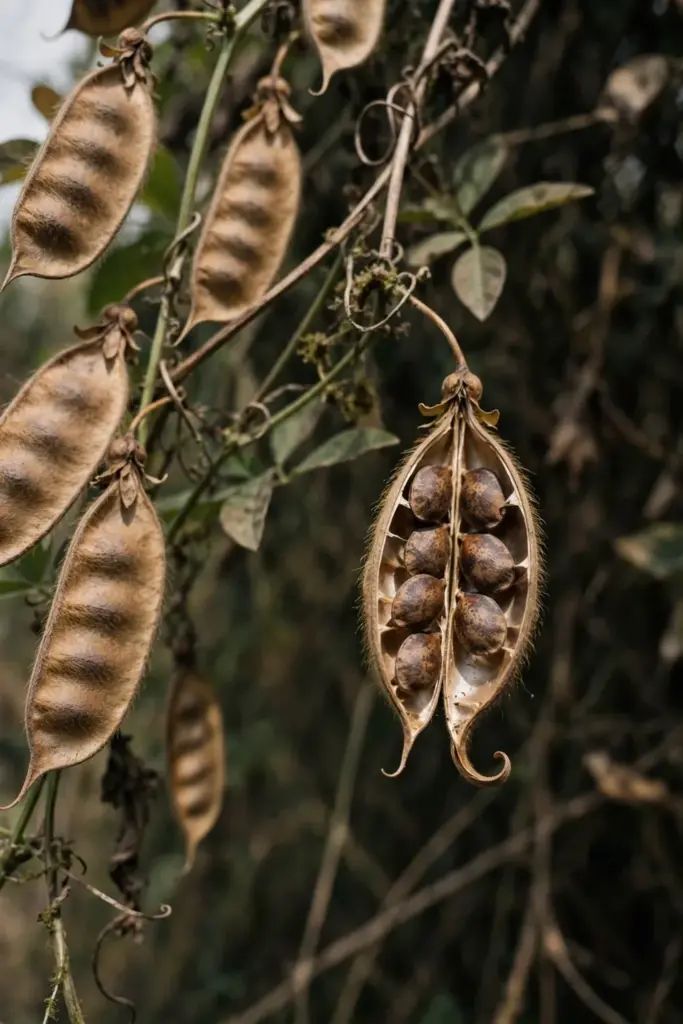
Pods tell the story. Butterfly pea pods are flat and hairy, and at maturity they split open and scatter seed widely. Pick seed pods when they turn brown and dry on the vine. Shell them over a bowl. Store dry seed in a labeled envelope in a cool, dry place. One vine gives more seed than a home garden needs.
Pick the rest of the pods before they split. A vine picked daily for flowers sets few pods, while a vine left alone sets many. Deadheading is seed control. Every pod picked is a pod that cannot scatter.
Containment matters where winters stay frost-free. Butterfly pea quickly colonizes disturbed areas, so exercise caution in planting it where it could displace existing plants, according to the ECHO plant information sheet for Clitoria ternatea. A pot on paving plus deadheading plus seed saving is the control set. A frost-free garden never lets pods split into beds or wild edges. A temperate garden gets a free assist from frost, since the annual cycle ends the vine each winter.
Frequently Asked Questions
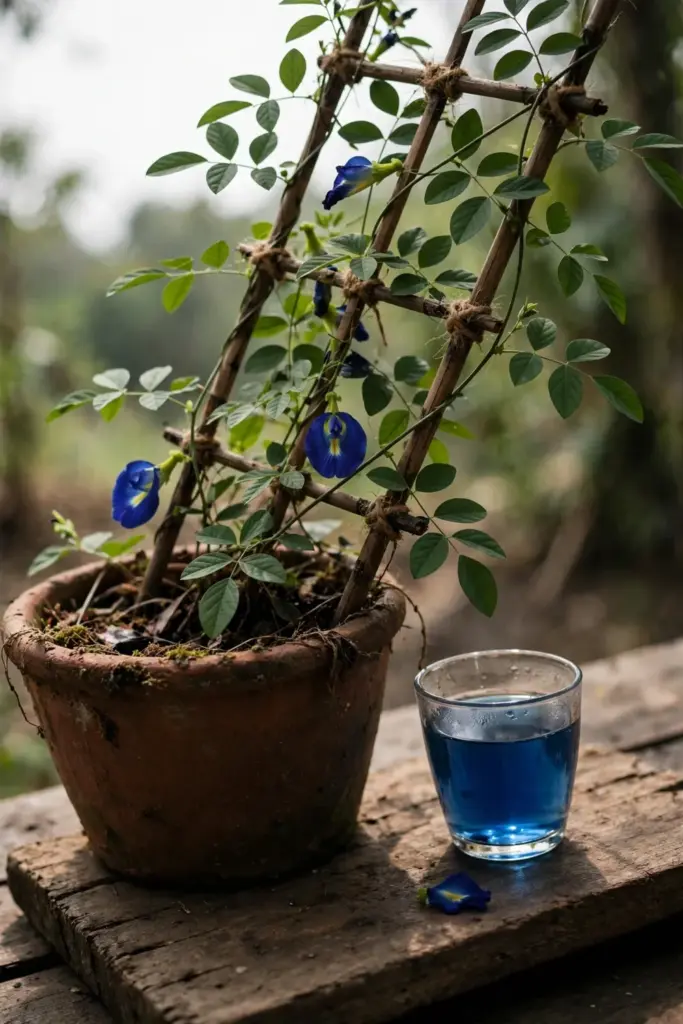
Butterfly pea grows indoors in a bright window, but it flowers weakly in short winter days. A south-facing window plus a small trellis keeps the vine alive. Expect few flowers until days lengthen. Most temperate gardeners start fresh seed each spring instead, since a new vine outgrows an overwintered one by midsummer.
Untreated seed fails most often. The hard coat blocks water, so untreated seed sits in damp soil and rots. Nick the coat and soak the seed for 24 hours before sowing. Cold soil is the second cause. Wait for warm soil near 21 degrees Celsius. Old seed is the third cause. Buy fresh seed each year from a seller who names Clitoria ternatea on the packet.
Dried butterfly pea flowers carry a long history of food use in Southeast Asia, brewed as an herbal infusion. That history covers the flowers only. Keep leaves and stems out of the cup. Anyone with a legume allergy, anyone pregnant or nursing, and anyone taking medication should ask a clinician first. This article gives growing information. A clinician answers health questions.
Green tea means too few flowers or too much steeping heat loss. Use a fuller handful of dried flowers per cup and pour freshly boiled water over them. Cover the cup while steeping so the heat stays in. Old flowers lose color too. Flowers stored for months in light fade. Brew fresh-season flowers for the deepest blue, and keep the jar in the dark.
Butterfly pea comes back after winter only where winters stay frost-free. Frost kills the vine outdoors. A temperate garden treats the plant as an annual and starts fresh seed each spring. A pot moved indoors before the first frost survives, but it flowers weakly until spring. Fresh seed gives the strongest vine in most temperate gardens.
Butterfly pea grows from cuttings, but seed is simpler and faster. Soft stem cuttings root in damp mix in warm weather. Seed gives a stronger root system and a cheaper start. Cuttings make sense only for a rare double-flowered form whose seed does not come true. For standard blue butterfly pea, scarified seed beats cuttings every time.
Make the Honest Call on a Butterfly Pea Tea Vine
One vine in a pot gives a household its blue tea. Daily picking keeps flowers coming from summer into fall. A bed full of vines gives seed for sharing, a screen for summer, and more flowers than one kitchen needs.
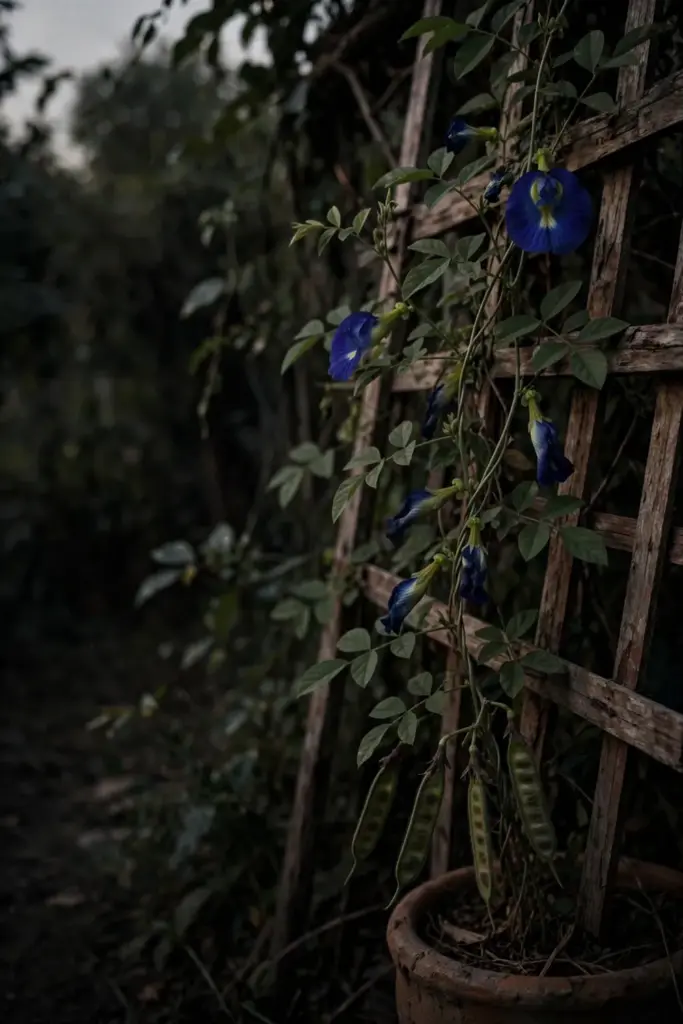
Start with one pot. Scarify the seed, set the trellis, and pick every morning. Dry what you cannot drink. Save seed from a few dry pods. That is how to grow butterfly pea for blue tea, and the whole job fits on a balcony.
Butterfly pea asks little and pays in color. Grow it for the flowers. Drink the flowers. Let the pods wait until you need seed.