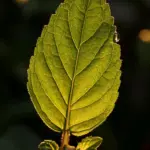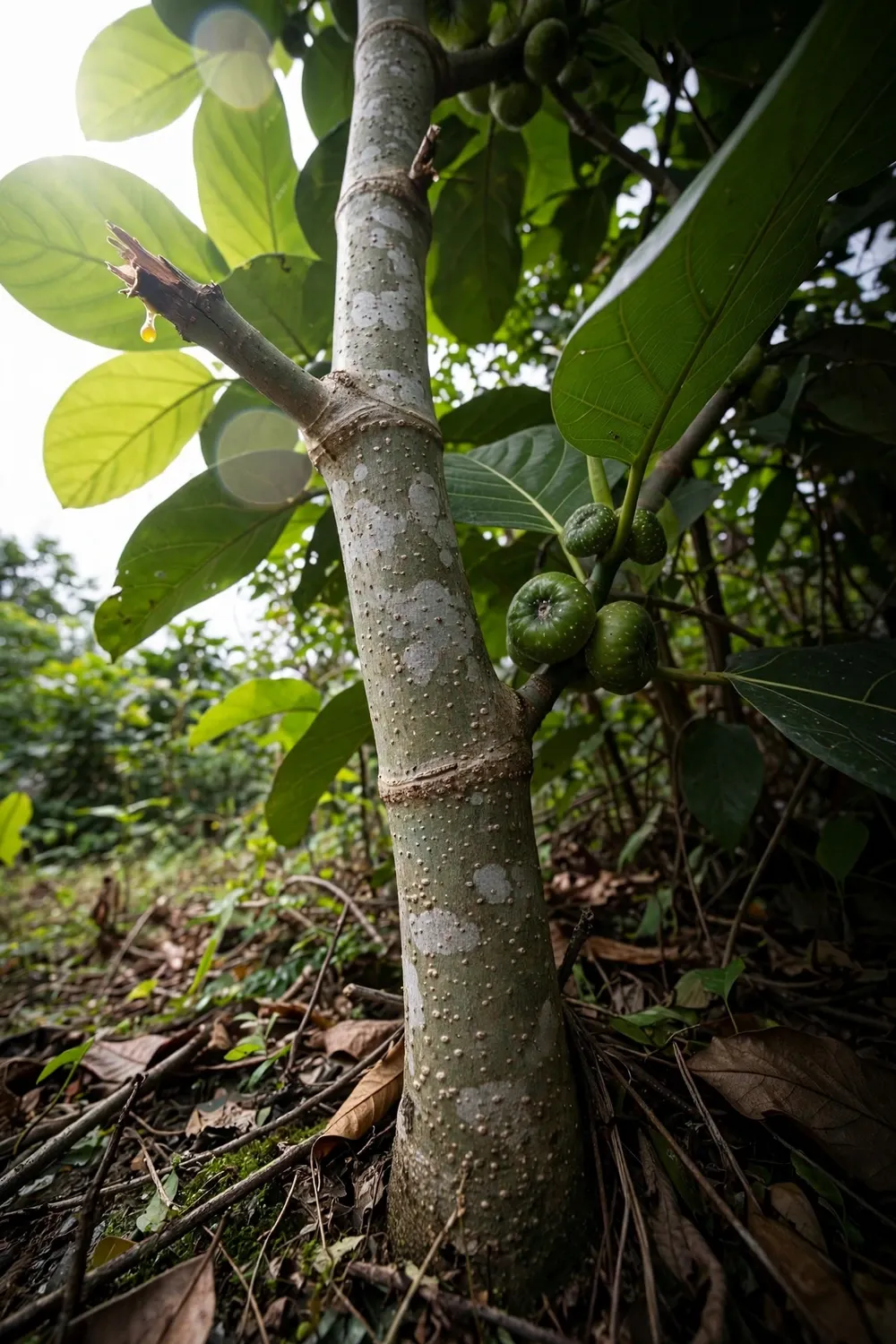

Awar-awar uses divide into two groups that never overlap. The first group is the danger: a caustic yellow latex that blisters skin and burns the mouth and throat when swallowed. The second group is the traditional use: leaves applied as a cooling poultice in Indonesian village practice, on a tree that reaches 25 meters in rainforest. Its figs are toxic. This guide names the tree, explains the latex danger, sorts out the lookalikes, and reports the traditional uses with their limits. It gives zero cultivation instructions.
Do not plant awar-awar. No home-gardener guide to growing it exists, and this guide does not try to write one. The tree grows fast, spreads on its own through fruit bats, and carries latex that punishes bare hands. I have learned to treat any plant with yellow caustic latex as a look-but-do-not-touch plant. This guide shows how to name the tree in front of you, how the latex harms people, how traditional practice uses the leaves, and what to do when the tree shows up uninvited.
The honest starting point is the record. Gardeners searching for this plant want to identify it, avoid its latex, or understand its traditional uses. The demand is identification and caution, not cultivation. This guide teaches use and identification. It gives zero cultivation instructions.
1. Identify Awar-Awar in 6 Field Marks
Awar-awar shows six field marks that separate it from most garden figs. Check all six before you name any tree. A single mark never settles an identification, because figs share most of them.
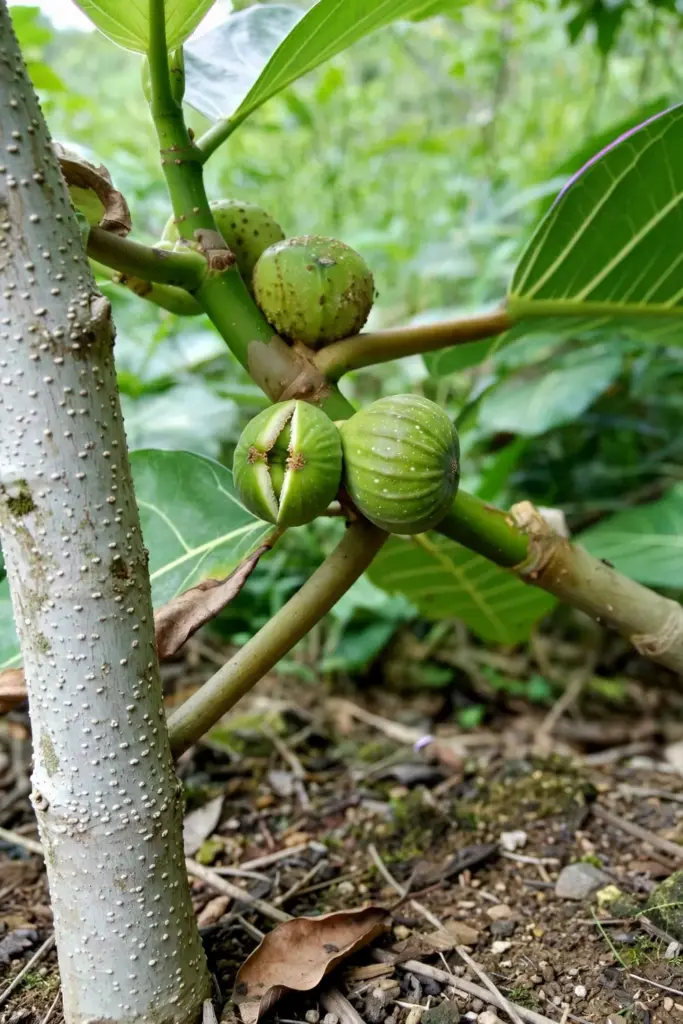
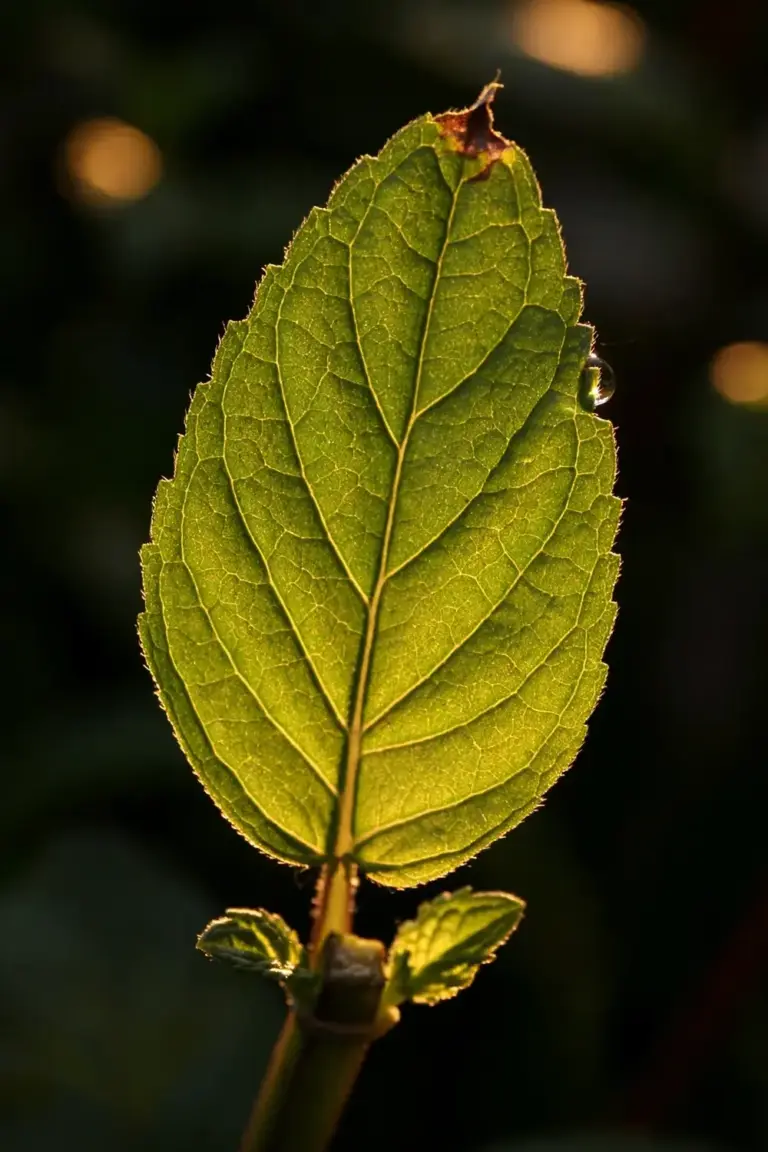
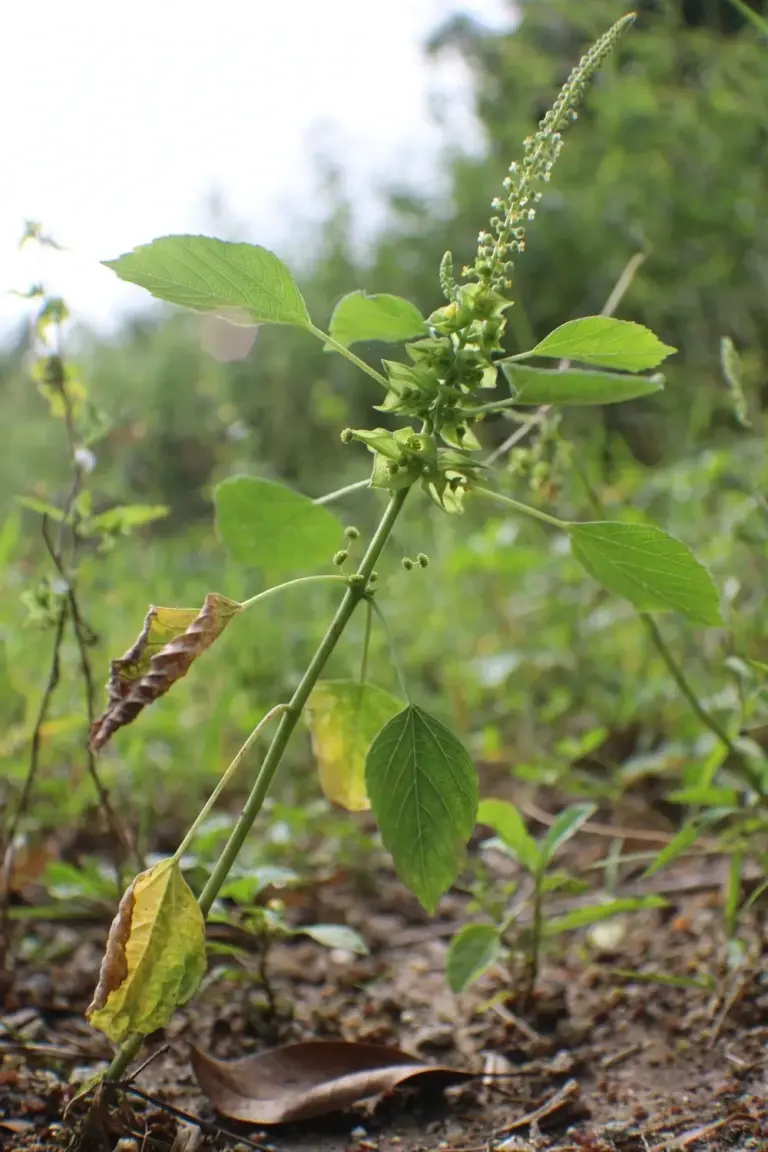
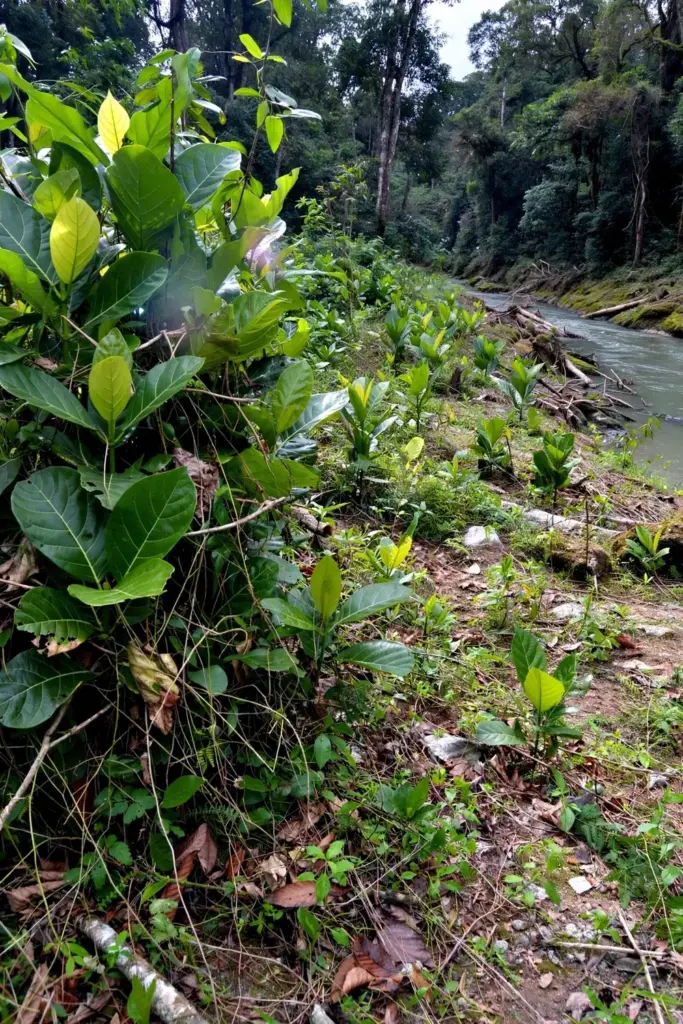
First, the tree stands as a shrub or small tree in open ground, and it reaches 25 meters in rainforest, according to the Ficus septica description on Wikipedia. In gardens and along roads it usually stays between 3 and 8 meters. Second, the bark runs pale gray with small breathing pores called lenticels. Third, the leaves sit spirally arranged or partly subopposite, symmetric, elliptic to oblong, smooth on both surfaces, and they reach 30 cm long, according to the eTawau Ficus septica fact sheet. Fourth, the leaf stalk runs 1 to 5 cm long and the stipule that wraps the terminal bud measures 1 to 6 cm. Fifth, the figs grow in the leaf axils, solitary, in pairs, or in groups of up to four, on short stalks. Sixth, the figs carry 7 to 12 ribs running toward the opening at the tip, and whitish to yellowish dots appear on the fig at maturity, according to the Ficus septica description on Wikipedia.
Fig size adds one more check. Fresh figs measure 2 to 3 cm across, greenish yellow with white spots, according to the eTawau Ficus septica fact sheet. They stay greenish at maturity. They never turn purple, red, or soft and sweet the way an edible fig does. A fig that smells sweet and yields under a fingertip belongs to another species. Awar-awar figs stay firm, greenish, and dotted.
2. Confirm the Yellow Latex Test and Why It Burns
Snap a leaf stalk and watch what comes out. Awar-awar releases yellow latex from stems, leaves, and fig stalks. The color is the first warning. Most garden figs bleed white milky sap. Awar-awar latex runs yellow. That yellow color separates it from the common fig at a glance, before any other mark.
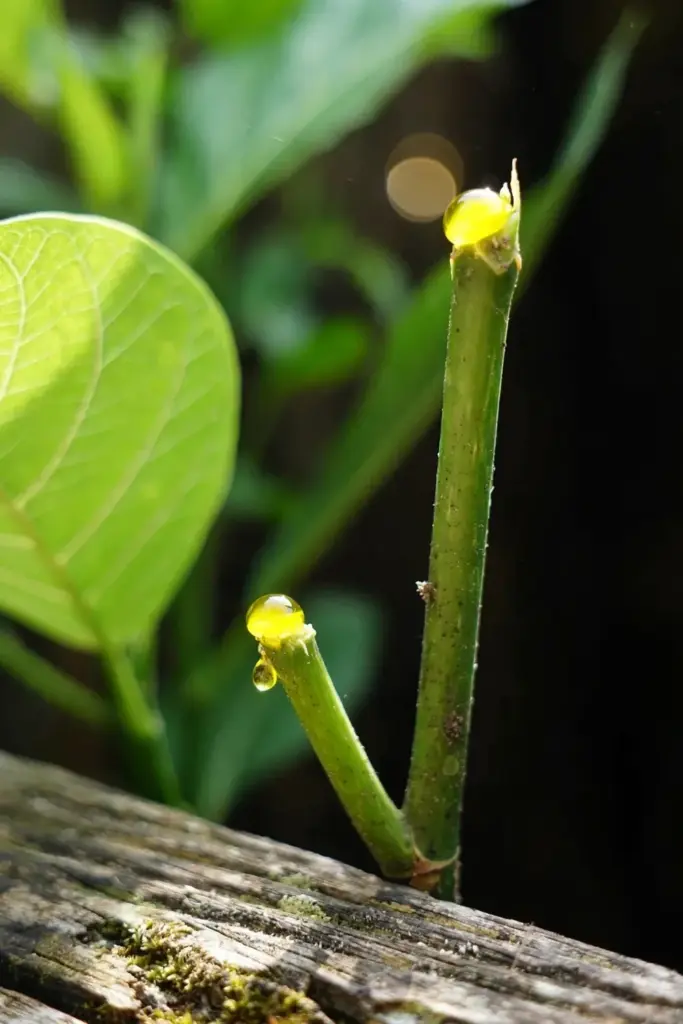
The latex burns because of what it carries. The yellow latex holds irritating compounds called ficins and ficatoxins, and the species name septica comes from a Greek word meaning putrid or septic, a reference to the caustic effect of the latex on skin, according to the Ploi Ficus septica care guide. Ficins are proteolytic enzymes. They break down protein. Skin, mouth lining, and throat lining are protein. That chemistry explains the whole danger profile in one fact. The latex digests the surface it touches.
Never run the latex test with bare hands. Wear a worn garden mitt and snap the stalk at arm’s length, then look at the color from a distance. Wash the mitt after. Wash your hands with soap and water after handling any part of the tree, even with a mitt on. The test takes three seconds. The burn from skipping the mitt lasts days.
3. What Awar-Awar Latex Does to Skin
Awar-awar latex on skin causes irritation, dermatitis, and blistering, according to the Ploi Ficus septica care guide. The reaction starts with redness and itching where the latex touched. Blisters follow on sensitive skin or after longer contact. The face, the inner wrist, and any broken skin react fastest. Sunlight on latex-wet skin can worsen the reaction, because some fig latex compounds react with ultraviolet light.
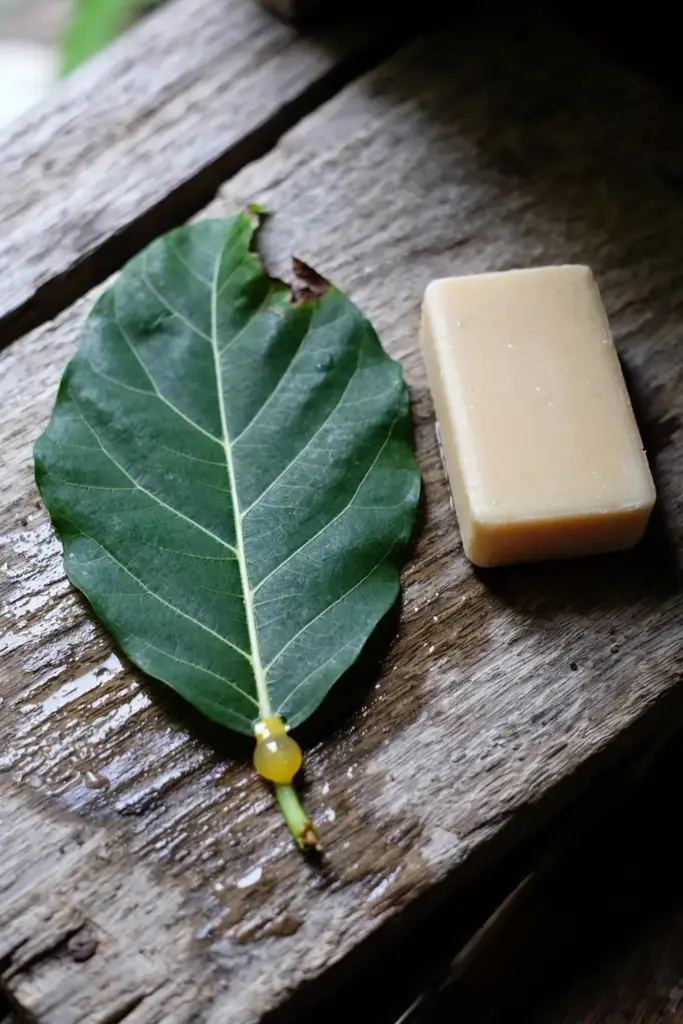
Treat skin contact as a rinse job, not a waiting job. Rinse the skin under running water with soap as soon as you notice contact. Rinse for several minutes. Do not rub the area. Do not apply creams, oils, or herbal pastes to latex-wet skin before rinsing. Rinsing removes the latex. Creams spread it. Change any clothing that caught latex. Wash the clothing separately before wearing it again.
Seek medical care when blisters cover a large area, when the face or eyes are involved, or when pain and swelling keep rising after rinsing. Eye contact needs prompt care. A splash of latex in an eye is an emergency, not a home remedy case. Tell the clinician the plant name, Ficus septica, and the time of contact. That single sentence speeds up treatment more than any description of symptoms alone.
4. What Happens If Awar-Awar Is Swallowed
Awar-awar latex and figs are toxic when swallowed. Ingestion causes mouth and throat irritation, drooling, vomiting, and gastrointestinal distress, according to the Ploi Ficus septica care guide. The mouth burns first. The throat follows. The stomach reacts with nausea and vomiting. The sequence matches the chemistry. The same enzymes that blister skin attack the lining of the mouth and gut.
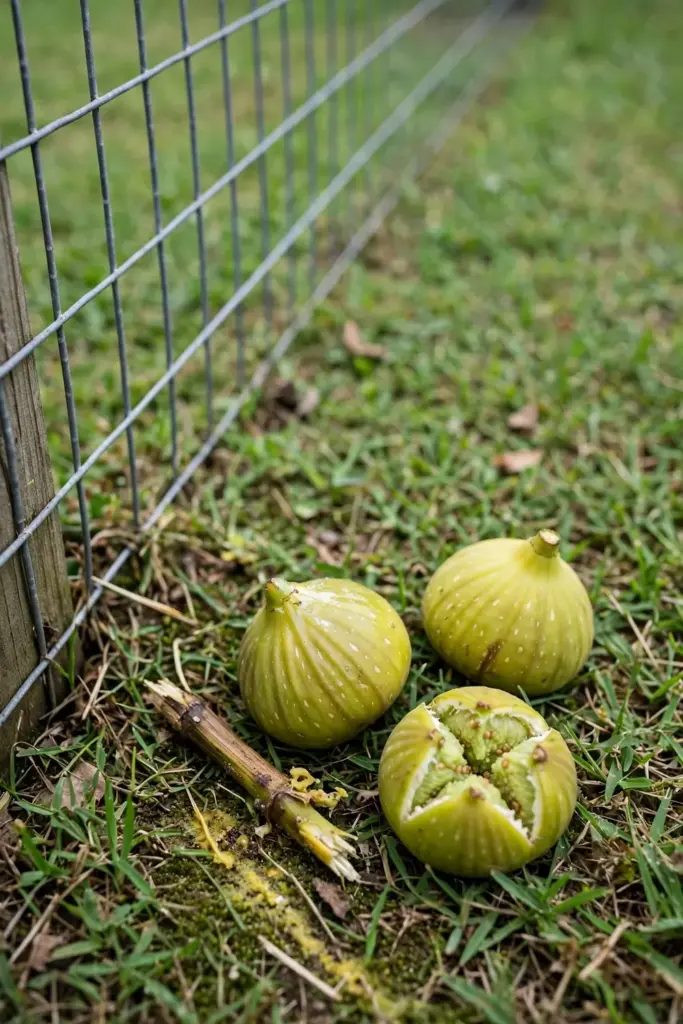
Do not induce vomiting after someone swallows awar-awar latex or figs. Vomiting drags the caustic material back up the throat a second time. Rinse the mouth with water and spit. Give small sips of water if the person can swallow comfortably. Call emergency services or a poison control center at once. Keep a leaf, a fig, or a photo of the tree for identification. Do not give milk, oil, or herbal drinks. They do not neutralize the latex, and they complicate assessment at the clinic.
Children and pets face the highest risk. A child reaches for a fig because figs look like food. A dog chews a fallen branch. A cat rubs against a cut stem. Keep children and pets away from any awar-awar tree, and clear fallen figs from ground where children or pets play. The figs look harmless. The latex inside them is the opposite of harmless. Fence the tree off or remove it when it stands in a play area. A fence costs little. A swallowed fig costs a hospital visit.
5. Separate Awar-Awar From Common Fig (Ficus carica)
Common fig, Ficus carica, is the edible fig of orchards and gardens. Awar-awar is Ficus septica. The two share a genus and almost nothing else that matters to a gardener. Confusing them is the most dangerous mistake this article covers, because one fig feeds people and the other poisons them.
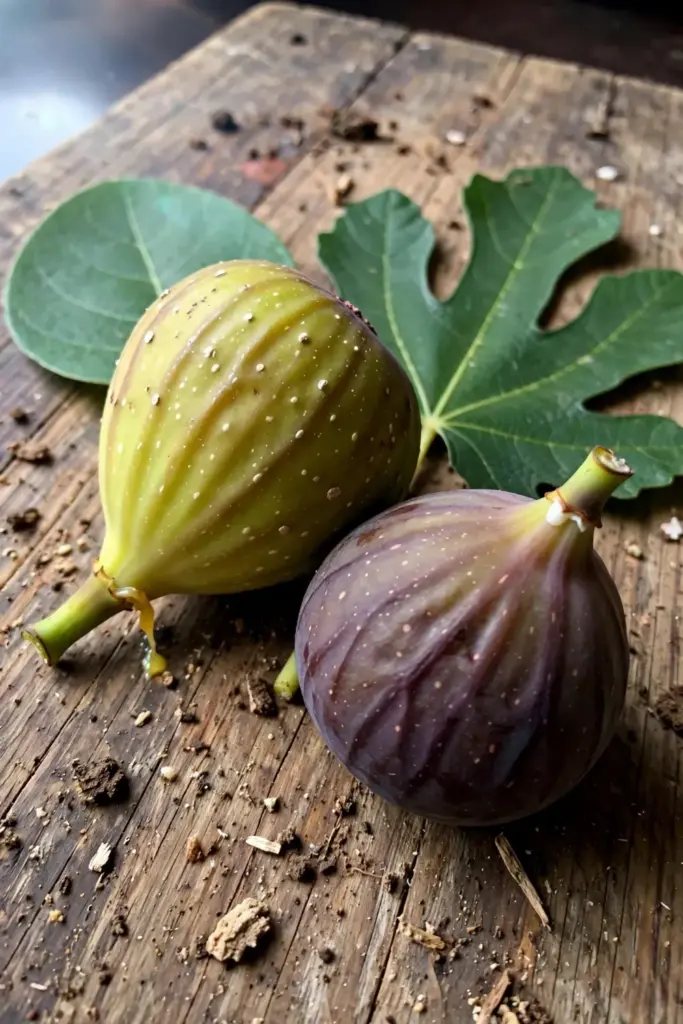
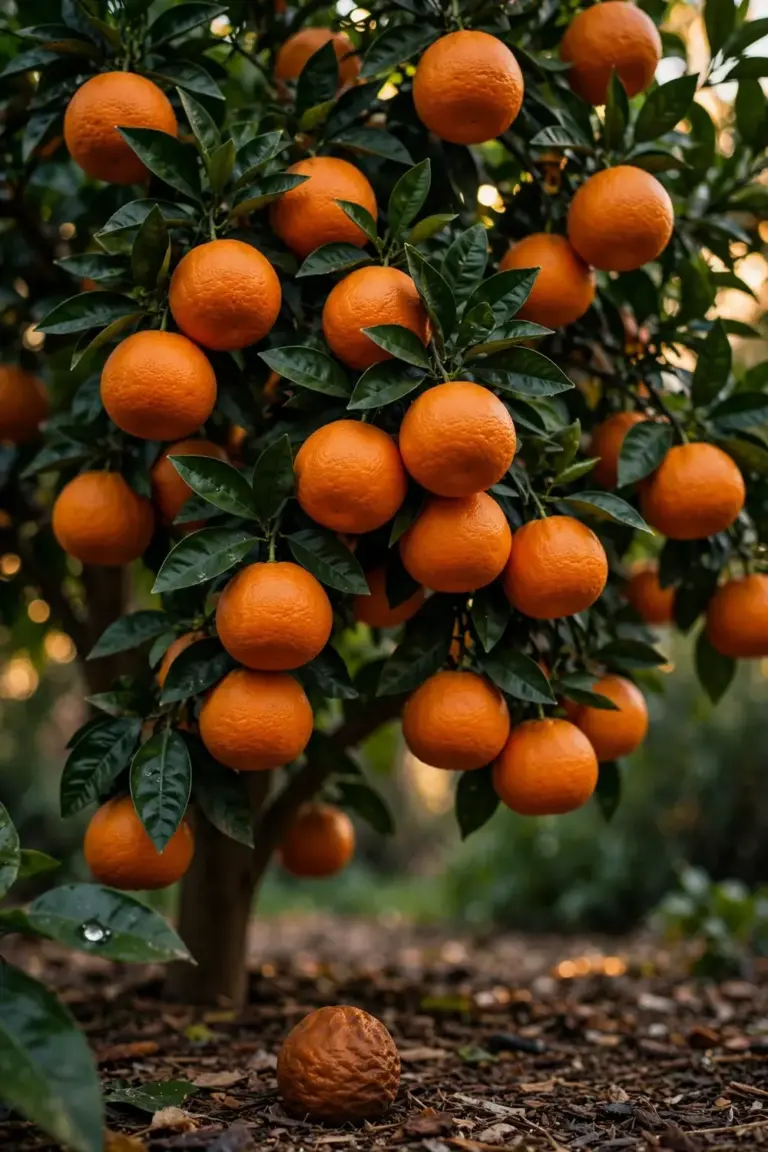
Fruit gives the fastest separation. Common fig fruit ripens soft, sweet, and often purple, brown, or green with a yielding skin, and it carries a small opening that leaks a drop of white sap when picked. Awar-awar figs stay firm and greenish yellow with white spots, measure 2 to 3 cm across, and carry 7 to 12 ribs toward the tip. A fig that tastes sweet is not awar-awar. A firm greenish fig with ribs and dots on a tree with yellow latex is awar-awar until proven otherwise.
Leaves and latex back up the fruit check. Common fig leaves run deeply lobed with three to five lobes, rough to the touch, and shaped like an open hand. Awar-awar leaves stay unlobed, elliptic to oblong, smooth on both surfaces, and symmetric. Common fig sap runs white. Awar-awar latex runs yellow. The yellow latex alone settles most cases. Growers who want the real edible fig should read the site’s fig tree guide and never substitute a yellow-latex tree for it. One plant database labels Ficus septica edible, medicinal, and ornamental. Treat that label as unsettled. It contradicts the toxicity record, and no source linked here supports eating any part of the tree.
6. Separate Awar-Awar From Weeping Fig (F. benjamina) and Other Houseplant Figs
Weeping fig, Ficus benjamina, is the drooping houseplant with small glossy leaves that fills offices and living rooms. Generic fig care guides describe benjamina, elastica, and lyrata. Those guides do not describe awar-awar. Following houseplant advice for a wild toxic tree is a category error, and it leads people to handle the tree barehanded.
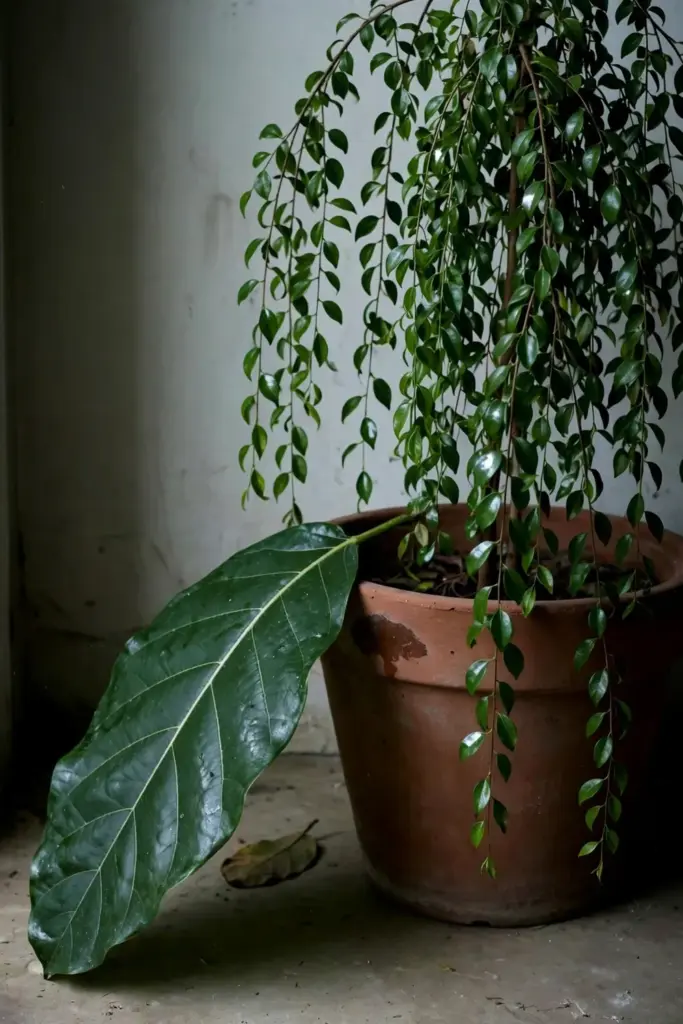
Growth form gives the first separation. Weeping fig grows as a single-trunked evergreen with dense drooping branches and small oval leaves 6 to 13 cm long. Awar-awar grows as a shrub or spreading tree with large leaves to 30 cm and figs in the leaf axils. A potted indoor fig with small leaves and no figs is not awar-awar. A large-leafed outdoor tree with yellow latex and axillary figs is not a houseplant.
Latex color gives the second separation. Weeping fig sap runs white and milky. Awar-awar latex runs yellow. The color rule holds across the whole genus for this comparison. Any fig tree bleeding yellow latex deserves the full awar-awar caution routine: mitt, distance, soap and water. The houseplant guides never mention yellow latex, because their subjects do not produce it.
7. Separate Awar-Awar From Ficus variegata, Its Closest Lookalike
Ficus variegata is the similar species that causes the most confusion in the field. The two trees share the same forests, the same dioecious breeding system, and a similar fig shape. The toxicity gap between them is wide. Awar-awar carries high toxicity. F. variegata carries low toxicity, according to the eTawau Ficus septica fact sheet. That gap is the reason the separation matters. A forager who mistakes awar-awar for F. variegata eats a toxic fig.
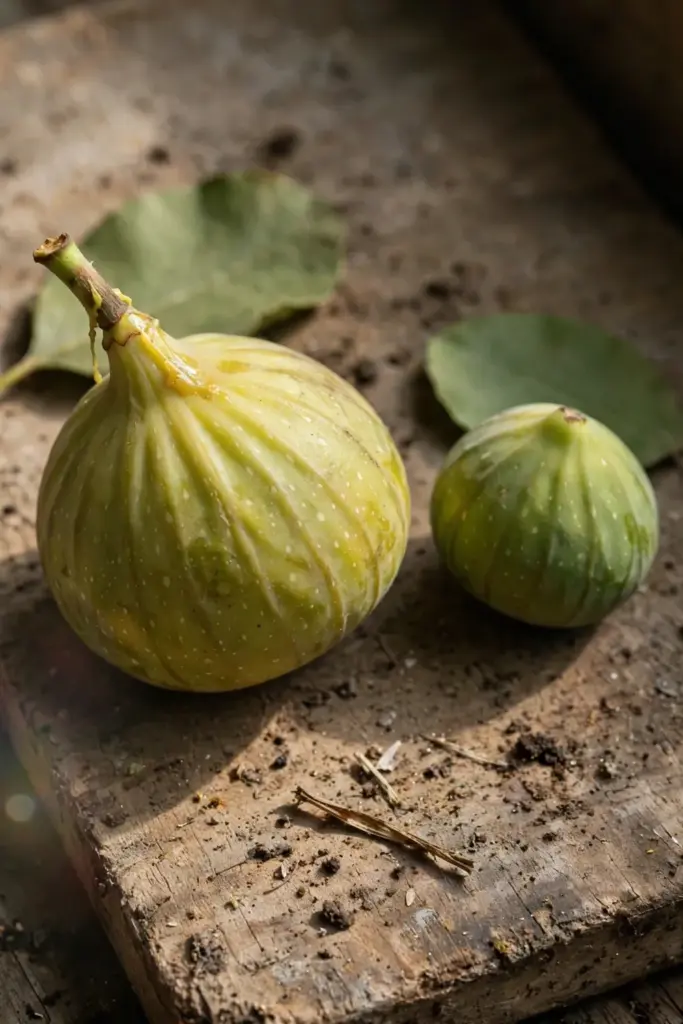
Fig size gives the faster field check, because awar-awar figs run large at 2 to 3 cm across while F. variegata figs run smaller at 1 to 2 cm, according to the eTawau Ficus septica fact sheet. Measure the fig. A fig near 3 cm with yellow latex points to awar-awar, while a fig near 1 cm with milder latex points toward F. variegata. Size alone never settles it, because figs vary. Pair the measurement with the latex color and the rib count.
Growth speed adds a second check. Awar-awar grows fast, up to 2 meters per year in good conditions, according to the eTawau Ficus septica fact sheet. F. variegata grows at a moderate pace. A sapling that shoots up a fence line in one season fits the awar-awar pattern. Treat any fig you cannot separate as awar-awar for handling purposes. The cautious rule costs nothing when the tree is F. variegata, and it saves a latex burn when the tree is awar-awar.
8. Rule Out Fuligo septica, the Slime Mold With the Same Name
Fuligo septica is a slime mold, not a plant. It shares only the epithet septica with Ficus septica, and the shared word confuses plant lists and nursery labels. The organisms could not be more different. One is a tree up to 25 meters tall. The other is a yellow blob on mulch.
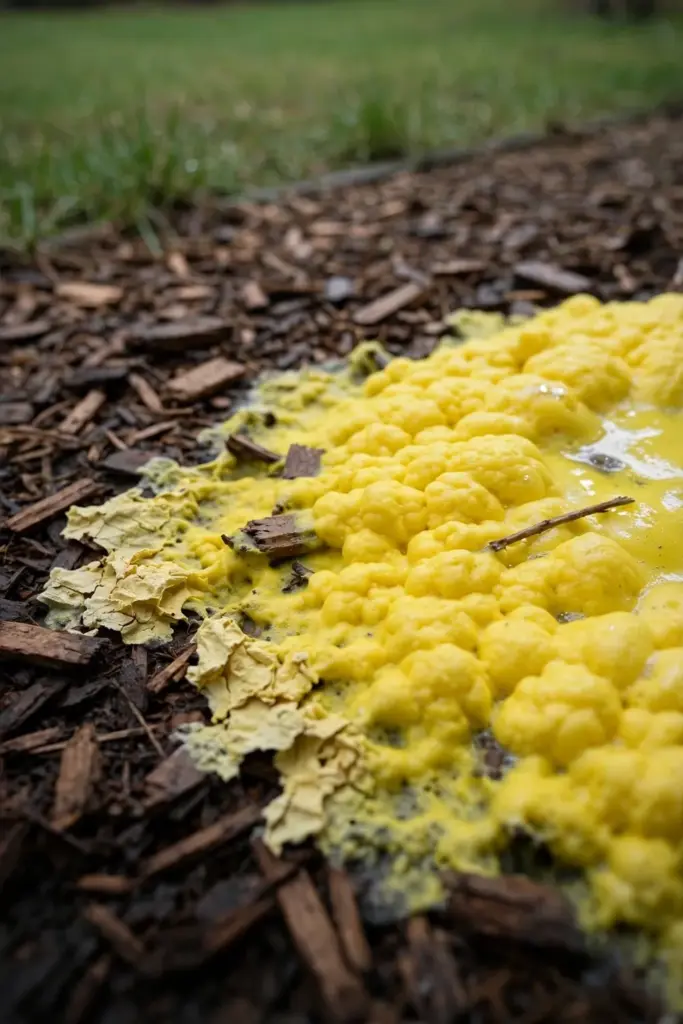
Fuligo septica appears as a bright yellow, foamy mass on wood chips, mulch, and rotting logs. Gardeners call it dog vomit slime mold. It has no leaves, no bark, no figs, and no latex. It creeps across the surface of mulch and dries into a crust. It washes off with a hose. It never grows into a tree.
The separation takes one look. A plant with leaves, bark, and figs is Ficus septica. A yellow foam on mulch with no plant parts is Fuligo septica. Never apply tree advice to a slime mold, and never apply slime mold advice to a tree. The name match is an accident of Latin, not a relationship.
9. Understand Why Awar-Awar Spreads So Fast Without Any Help
Awar-awar spreads on three tracks at once, and that triple track explains why the tree shows up uninvited. Seeds ride inside figs that fruit bats and birds carry. Pollination depends on fig wasps. Disturbed ground invites seedlings. Each track alone would make a persistent tree. Together they make a tree that recolonizes ground you thought you had cleared.
The wasp track decides where seeds form. Awar-awar figs are pollinated by fig wasps from the genus Ceratosolen, according to the Ficus septica description on Wikipedia. The tree is functionally dioecious. Male trees bear figs that produce wasp offspring and pollen. Female trees bear figs that produce seeds. Without Ceratosolen wasps, no viable seeds form outside the native range. That fact kills the idea of growing awar-awar from seed in a temperate garden. The wasps do not live there. The seeds do not form there.
The animal track decides where seeds land. The figs of Ficus septica have been reported eaten by 22 animal species, and 14 of those are bats, according to the Ficus septica description on Wikipedia. Fruit bats carry figs far from the parent tree and drop seeds across the landscape. Few animals eat the toxic figs as a staple, according to the eTawau Ficus septica fact sheet. Bats tolerate them. Most other animals leave them alone. The tree still spreads, because bats alone move enough seed.
The disturbance track decides where seedlings survive. Awar-awar grows in lowland tropical moist forests, often at forest edges and in degraded environments, according to the Ficus septica description on Wikipedia. It lives up to 1,800 meters in montane forests or secondary growth, and it appears often along rivers. It is a pioneer species that quickly colonizes cleared areas, according to the eTawau Ficus septica fact sheet. Cleared ground, road edges, river banks, and garden edges suit it. That is why this article gives no planting advice. Every act of moving awar-awar seed or cuttings moves a pioneer tree.
10. Put Awar-Awar Uses to Work the Traditional Way
Awar-awar uses in Indonesian tradition center on the leaves as a cooling remedy. In the karst villages of South Sulawesi, awar-awar counts among the most widely acknowledged medicinal plants in everyday life, and healers use it for ailments linked to internal heat, headache, fever, and swelling, according to a 2026 ethnobiology survey of Ficus septica in South Sulawesi. Healers treat the leaf as penawar, a neutralizing or cooling agent that absorbs excess vital heat and restores balance. Those are traditional descriptions, not proven medical facts. This article reports what the tradition says. It does not promise any result.
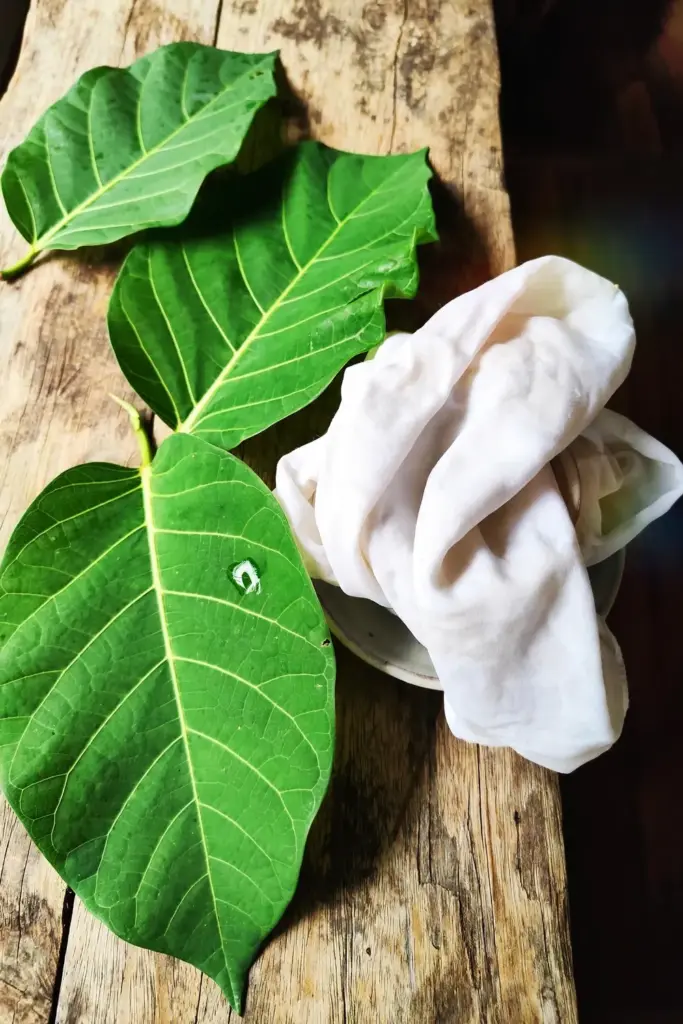
The recorded preparation is a poultice, not a drink. Fresh leaves are harvested near the household, slightly crushed to release the leaf juices, and then applied to the forehead, temples, or chest, according to the 2026 ethnobiology survey of Ficus septica in South Sulawesi. Some practitioners wrap the leaves in a clean white cloth and moisten the cloth before application. When the leaf dries, it is replaced with a fresh one. The practice carries a clear internal logic. A cool leaf on a hot forehead feels cooling. The tradition frames that feeling as absorbing heat.
Three limits govern every traditional use, and the first is the bluntest: no dosage appears below, by design, because traditional preparation varies by healer and region and no standardized human dose exists in the sources this article links. Second, laboratory findings about alkaloids in the plant do not prove that a leaf poultice treats fever or swelling in a person. A compound in a test tube is a starting point for more research, not evidence of a clinical effect. Third, the latex danger still applies during preparation. Crushing leaves releases latex, so a healer who handles leaves barehanded risks the same blistering described in the skin section. The traditional use and the toxicity live in the same leaf, so respect both.
Buy jamu from a reputable seller when you want a traditional preparation. A packaged jamu product carries a producer name, an ingredient list, and a registration number you can check. Leaves picked from a roadside carry exhaust dust, spray drift, and soil contaminants that no seller would accept. Anyone with a fever that will not break, a severe headache, or swelling that spreads should see a clinician promptly. Fever can signal infections that need medical care. A leaf poultice never replaces that visit.
11. Handle Awar-Awar Safely Around Children, Pets, and Livestock
Awar-awar in a yard with children, pets, or livestock is a supervision problem before it is a plant problem. The tree looks ordinary. The figs look edible. The latex hides inside every broken stem. Children, pets, and grazing animals all explore with their mouths, and the safety plan starts from that fact.
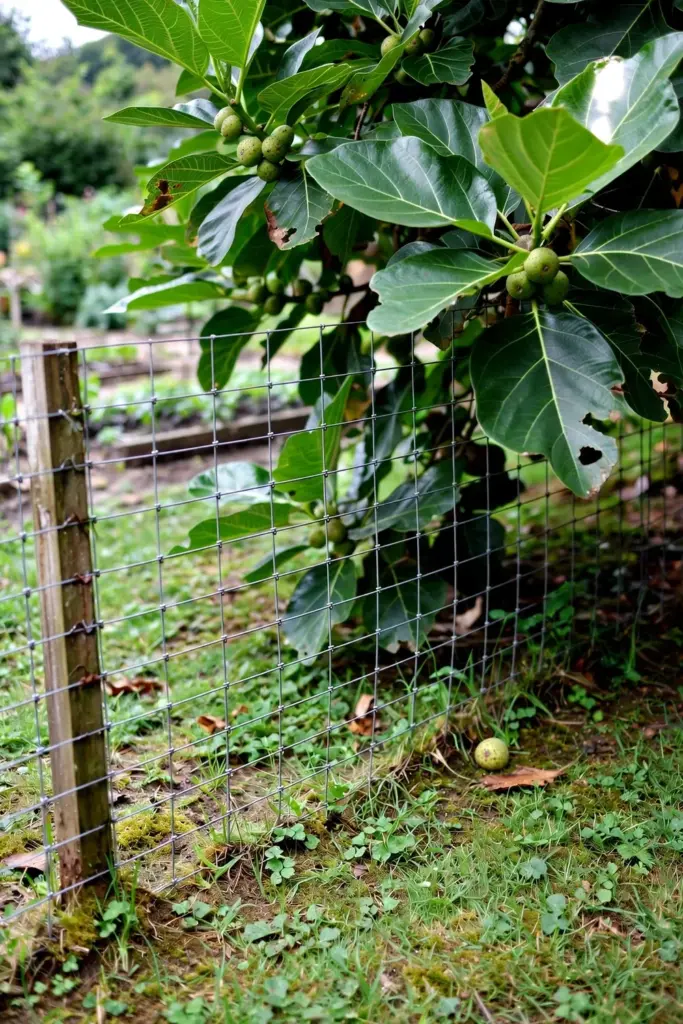
Keep children away from the tree and teach the yellow latex rule. Yellow latex means do not touch. The rule works for children because it needs no botany. Show the color once from a distance, with a mitt on. Repeat the rule at the start of every outdoor season. Clear fallen figs from play areas before children go out: a fig on the grass is an invitation. A cleared lawn removes it.
Keep pets away from cut branches and fallen figs. Dogs chew sticks. Cats rub against fresh cuts. Both behaviors put latex on skin or in mouths. Fence the tree off when it stands in a yard where pets roam. Bag pruned branches at the tree and remove them the same day. Never leave a pile of awar-awar prunings where a dog can chew them overnight.
Livestock deserve the same caution. Grazing animals strip leaves and bark from low branches. Awar-awar leaves and figs are toxic, and the latex irritates mouths. Fence livestock away from the tree. Check fence lines after storms, because a fallen awar-awar branch inside a pasture is a poisoning risk. Move fallen branches out of the pasture before animals find them. When in doubt, call a veterinarian and name the plant, Ficus septica, with the time of exposure.
12. Decide What to Do When Awar-Awar Appears on Your Land
Awar-awar on your land is a decision, not a planting opportunity. Start by naming the tree with the six field marks, then decide whether it stays or goes. The tree stays only where nobody touches it, nobody eats near it, and nobody grazes under it. A tree beside a path, a play area, a vegetable bed, or a pasture fails that test. Remove it.
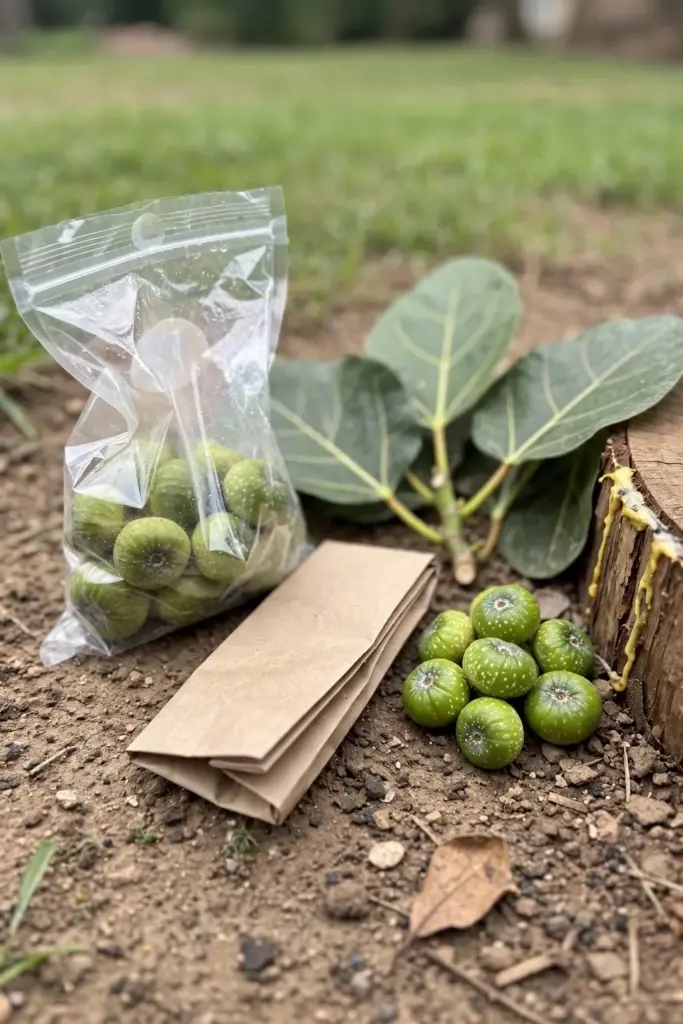
Removal starts with protection. Wear a worn garden mitt, long sleeves, eye protection, and closed shoes. Work on a calm day so latex does not blow onto skin. Cut low and bag the figs at the tree. Never compost awar-awar figs, leaves, or roots. Bag them and send them with household trash where local rules allow. Wash tools, mitts, and boots after the job. Latex on a tool transfers to the next plant you touch.
Cover bare ground after clearing. Mulch blocks light and slows regrowth, and dense planting leaves less room for new seedlings. The site’s organic weed control guide covers mulch, cover, and competition in detail. Gardeners fighting a different persistent root weed will find a parallel story in the site’s field bindweed guide. Both plants punish half measures. Both yield to steady removal before seeding, season after season.
Call your local extension office when the tree stands near a crop field, a waterway, or a protected forest edge. Staff there know the local rules, the control calendar, and the disposal guidance. A phone call costs nothing and keeps you inside the law. Never reach for a herbicide on a label you have not read, and never spray near water, food beds, or a neighbor’s fence without checking the label and the local rules first.
Frequently Asked Questions
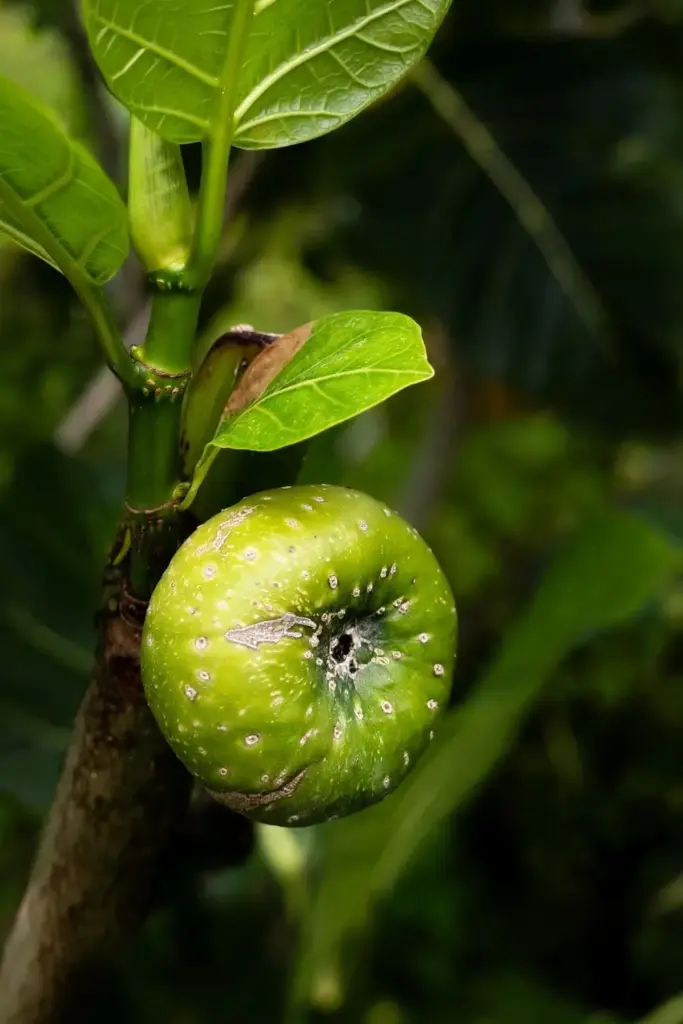
No. Awar-awar is Ficus septica, a tropical tree with yellow caustic latex and firm greenish figs that measure 2 to 3 cm across. Common fig is Ficus carica, the orchard fig with white sap, deeply lobed leaves, and soft sweet fruit. The two share a genus and almost nothing else that matters. Never eat a fig from a yellow-latex tree.
Do not. A pot does not contain this tree. Seeds need Ceratosolen fig wasps that do not live outside the native range, so home seed growing fails, and cuttings would only produce a toxic tree with caustic latex in a living space. The tree reaches 25 meters in rainforest and grows fast in the tropics. The latex burns skin and the figs poison anyone who eats them. Forage nothing from it and plant nothing from it.
No, not with bare hands. The yellow latex causes skin irritation, dermatitis, and blistering. Wear a worn garden mitt, long sleeves, and eye protection when you must handle any part of the tree. Rinse skin with soap and running water at once after contact, and change clothing that caught latex. Seek medical care for blisters over a large area, face or eye contact, or pain and swelling that keep rising after rinsing.
Traditional practice in South Sulawesi uses crushed awar-awar leaves as a cooling poultice on the forehead, temples, or chest for fever, headache, and swelling. That is a traditional description, not proven medical fact. No standardized dose exists in the linked sources, and laboratory findings about plant alkaloids do not prove a clinical effect in people. Fever that will not break needs a clinician. A leaf poultice never replaces that visit.
Rinse the mouth with water and spit. Do not induce vomiting, because vomiting drags caustic material back up the throat a second time. Give small sips of water if the child can swallow comfortably. Call emergency services or a poison control center at once. Keep a leaf, a fig, or a photo of the tree for identification. Tell the clinician the plant name, Ficus septica, and the time of eating.
Awar-awar is Ficus septica, with high toxicity, figs 2 to 3 cm across, and fast growth up to 2 meters per year in good conditions. Ficus variegata is a similar species with low toxicity, figs 1 to 2 cm across, and moderate growth. Treat any fig you cannot separate as awar-awar for handling purposes. The cautious rule costs nothing when the tree is F. variegata, and it saves a latex burn when the tree is awar-awar.
Make the Honest Call on Awar-Awar
Awar-awar uses make sense only in one direction. Learn the tree, name it correctly, respect the latex, and keep it from spreading. That is the full program. It needs no seed packet, no garden bed, and no cultivation advice. The tree already grows where it grows, and it spreads faster than any gardener can use it.
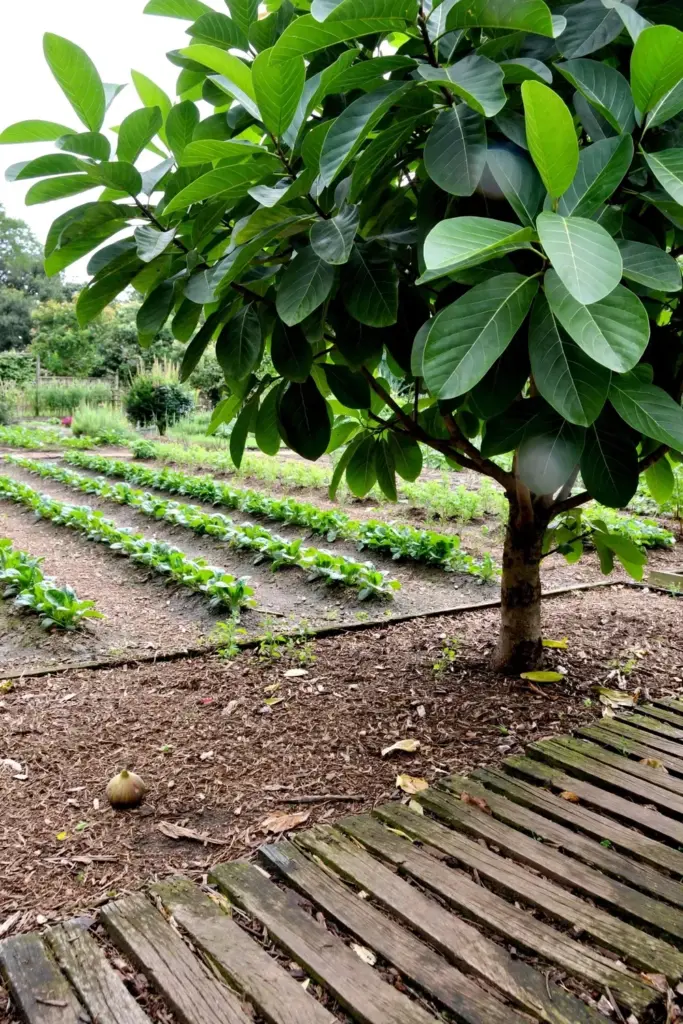
The honest call is a two part habit. First, check every fig tree against the six field marks and the yellow latex test before you touch it or eat from it. Second, keep every interaction inside the safety rules: mitt on, figs bagged, never composted, children and pets kept clear. A tree this caustic deserves respect in both directions. Use the traditional knowledge where it already stands, and never give it a new address.