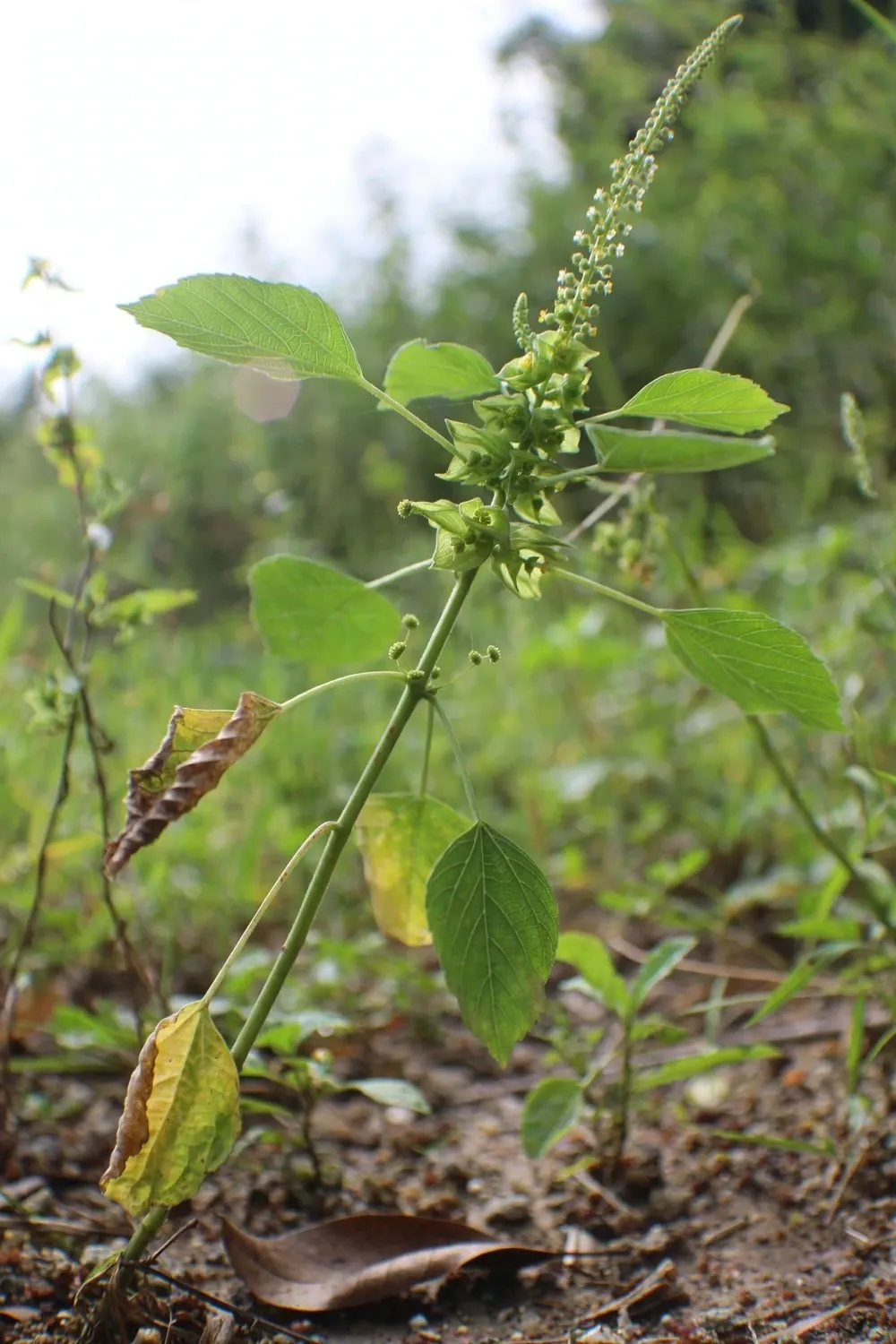

Check 5 field marks before you call any weed anting-anting. Anting-anting Acalypha indica is an erect annual herb that tops out near 1.5 m, and it carries its own set of leaf, flower, and fruit marks that separate it from its look-alike cousins. I have learned to check the botanical name before trusting any anting-anting claim. The rest of this page covers anting-anting uses in 12 moves, from field marks to the garden decision.
A wrong name sends you to the wrong plant. Indonesian anting-anting is Acalypha indica. Asian copperleaf is Acalypha australis, a different species with its own weed record. The two share a genus and a weedy habit, and that shared habit is exactly why the name check comes first.
Catnip is a different plant with a related trick, and that comparison lives on the site’s catnip guide. This page stays on anting-anting: identification, traditional use, safety, and the weed decision. Nothing here tells you to plant it, and nothing here replaces medical advice.
1. Identify True Anting-Anting by 5 Field Marks
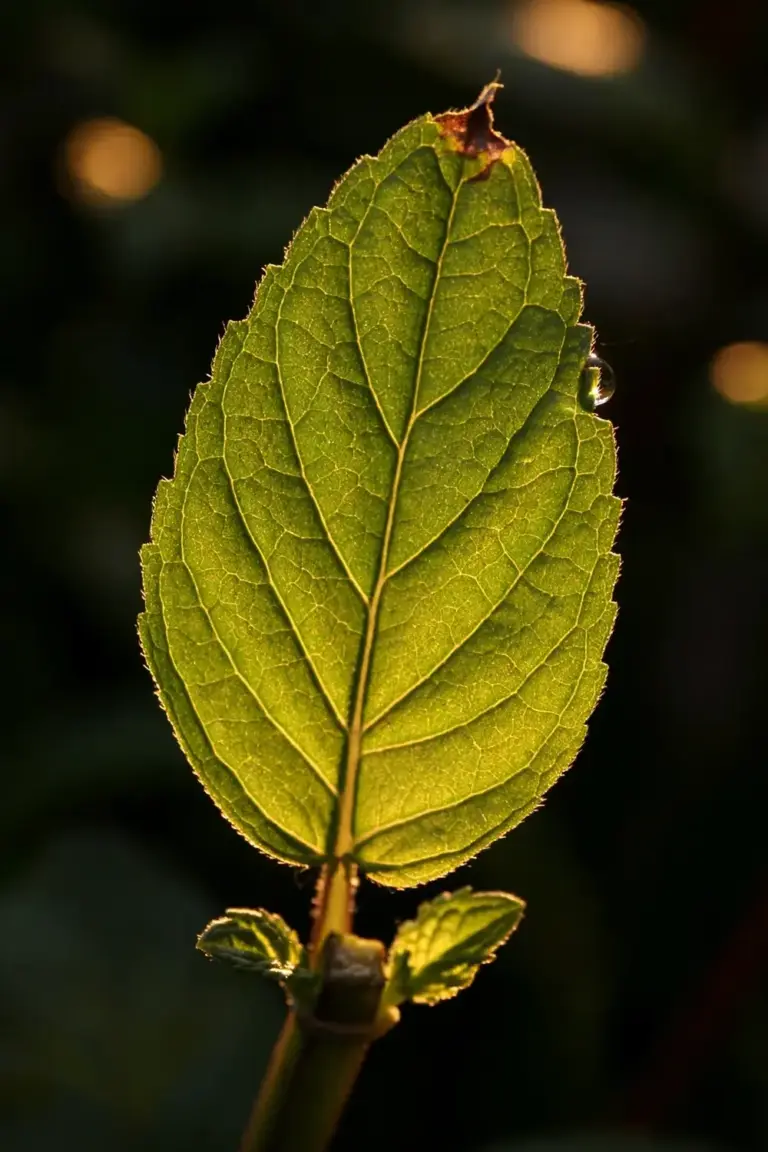
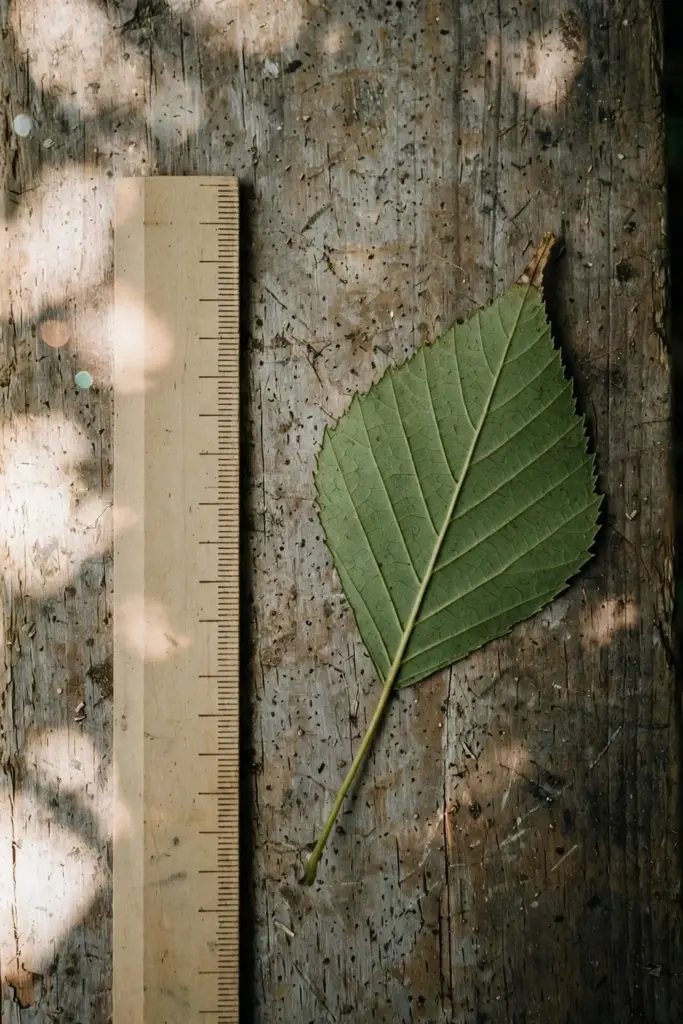
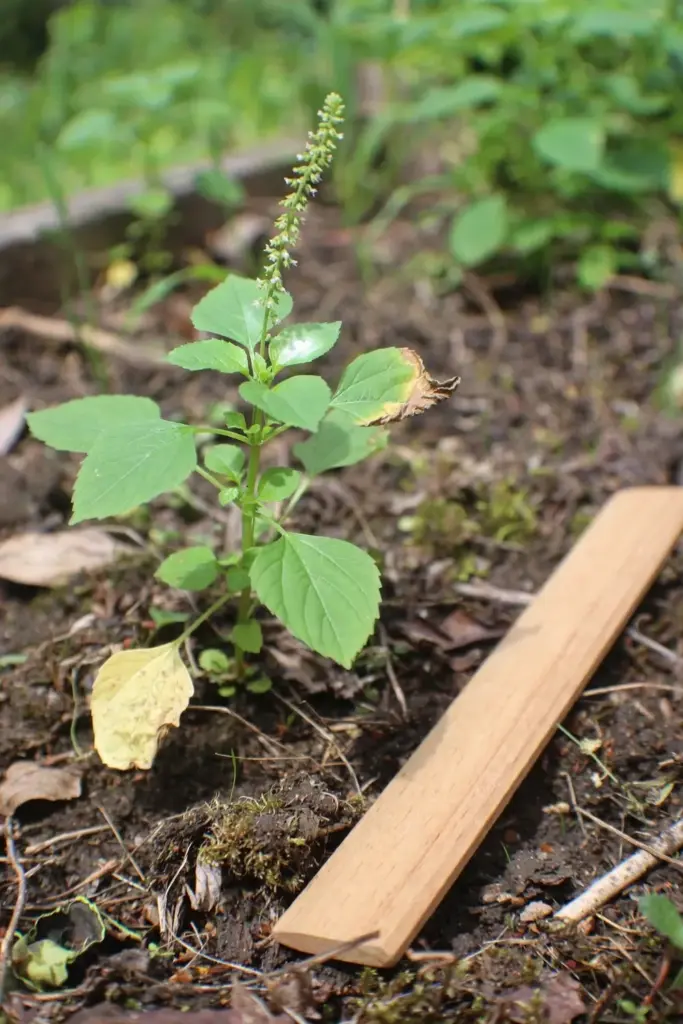
Start with the leaves. True anting-anting carries rhombic-ovate leaves, 3 to 5 cm long and 2.5 to 3 cm wide, with a wedge-shaped base and a shallowly serrated margin, on petioles 2 to 6 cm long, according to the PROSEA record for Acalypha indica). Hold a leaf flat and look at the outline. A diamond-leaning oval with a narrow base and fine teeth along the edge matches. A long narrow lance shape points toward Asian copperleaf instead.
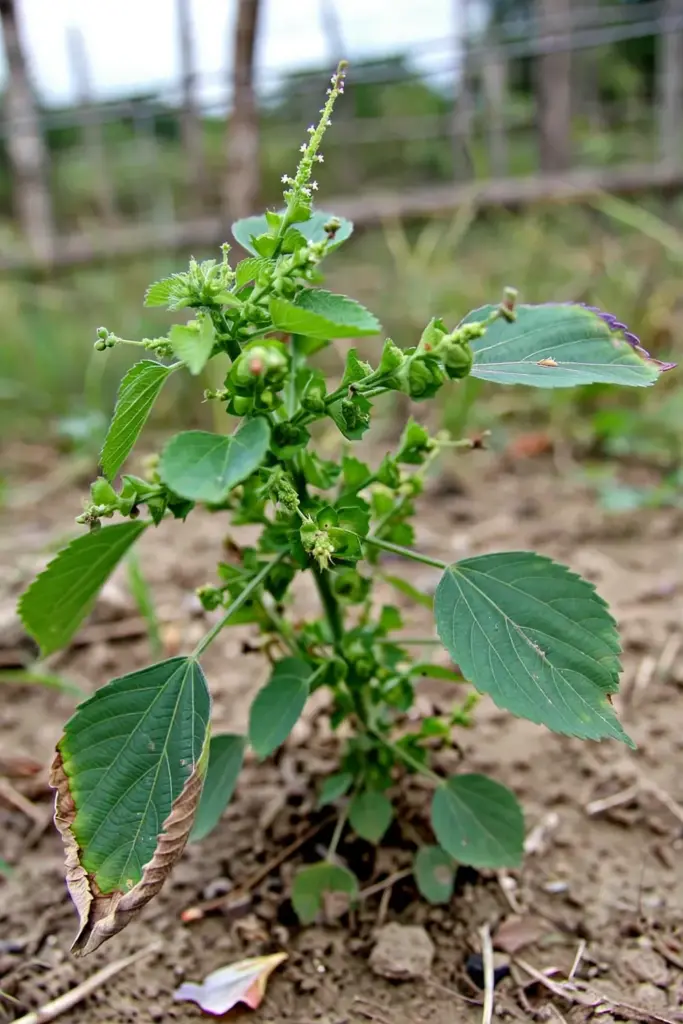
Check the flower spike next. The same PROSEA record describes solitary bisexual spikes with a short slender male portion and fewer, less crowded female flowers. Male flowers sit toward the tip. Female flowers sit lower, tucked in broad leafy bracts. The spike reads as thin and airy, never as a dense furry tassel.
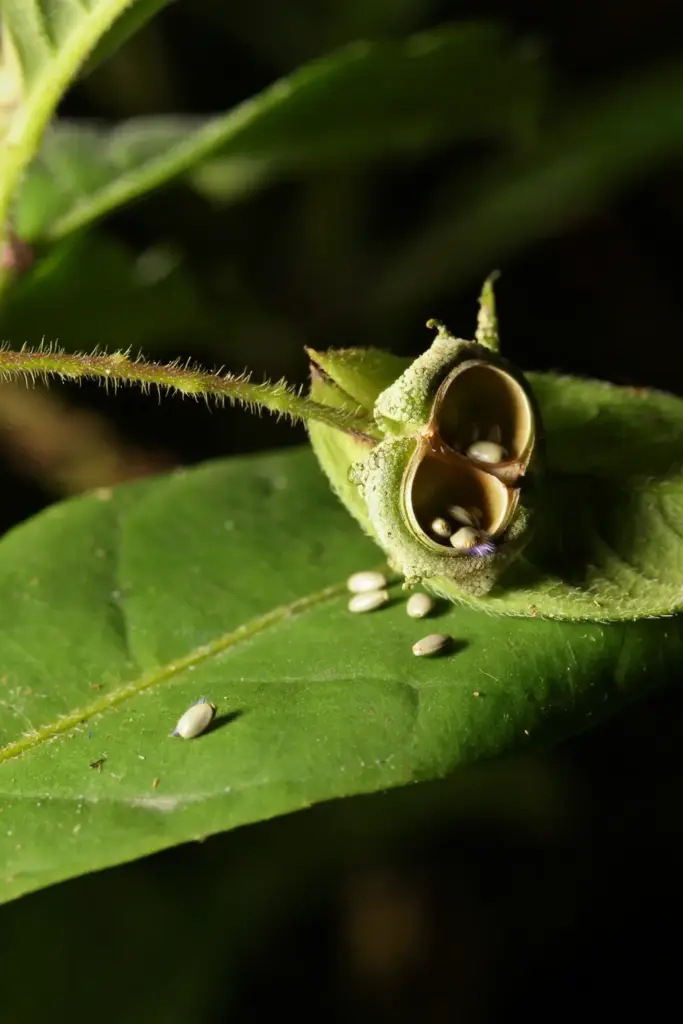
Finish with the fruit. The fruit is a capsule 2 to 2.5 mm across. That is the size of a pinhead. Three lobes split at maturity and release small ovoid seeds. A plant with showy fruit, fleshy berries, or long hanging tassels is not anting-anting.
Two more marks close the check. The plant is an annual herb, soft-stemmed from base to tip, with no woody trunk. The whole plant tops out near 1.5 m, and most volunteers stay far shorter. A woody stem or a plant holding firm through a frost season fails the test.
2. Check the Botanical Name Before You Trust Any Anting-Anting Claim
The true Indonesian plant is anting-anting Acalypha indica. The name anting-anting also travels with other meanings, and each one can mislead a reader who trusts the common name alone. In the Philippines, anting-anting names an amulet or charm. In English-language hobby forums, the word anting names ant-keeping behavior. Neither one has anything to do with this herb.
The costliest mix-up sits inside the same genus. Asian copperleaf, Acalypha australis, once circulated under the anting-anting name with the wrong Latin attached to the label. Indonesian anting-anting is Acalypha indica, and Asian copperleaf is a separate species from China and Japan with its own weed history. A label, a seed packet, or a web page that says only anting-anting proves nothing. Ask for the botanical name. Read it twice.
English names add one more layer. Indian acalypha and Indian-nettle both name Acalypha indica. Three-seeded mercury also names it, and the same phrase names several other Acalypha species. Common names overlap. The botanical name does not. When the two disagree, follow the botanical name.
The confusion persists because common names travel faster than botanical names. A market stall can sell a cutting under the name anting-anting with no Latin label at all. A neighbor can pass along a seedling with the same name and the same confidence. A gardener who trusts either source can tend the wrong species for a season before the flower spike exposes the error. The fix costs nothing. Ask for the botanical name at the point of sale, and walk away from a seller who cannot give it. A plant with no botanical name is a plant with no reliable use record.
3. Separate Anting-Anting From 5 Look-Alike Acalypha Species
The genus Acalypha holds hundreds of species, and five of them cause most of the confusion. The reference point for the whole table is anting-anting Acalypha indica. Habit separates the group at a glance. Acalypha indica is a soft-stemmed annual herb. The two ornamental cousins are woody shrubs. The two North American cousins are annual herbs like anting-anting, so habit alone cannot split them. Bract shape does that job.
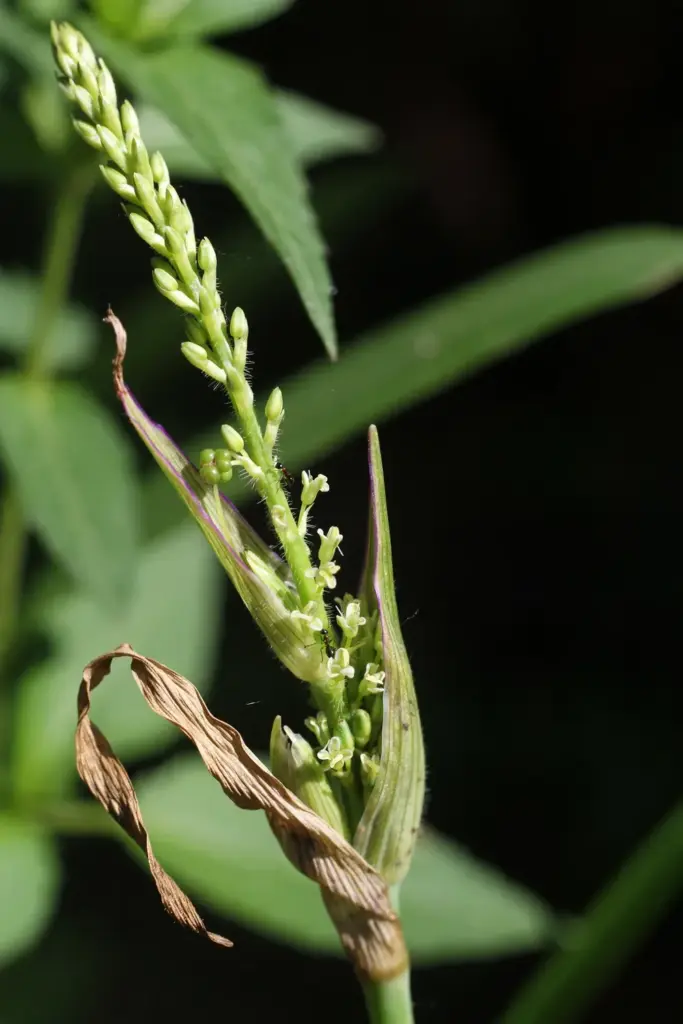
Asian copperleaf carries lance-shaped leaves 5.1 to 7.6 cm long and bracts that are circular to heart-shaped with a toothed margin, according to Iowa field reports on Asian copperleaf. Virginia copperleaf and rhombic copperleaf carry deeply lobed bracts, and the same Iowa reports note that no one can separate these species with confidence before flowering. Wait for the bracts. A leaf-only identification across this group is a guess.
| Plant | Habit | Telling Mark | Why It Confuses |
|---|---|---|---|
| Anting-anting, Acalypha indica | Annual herb to 1.5 m | Rhombic-ovate leaves, pinhead capsule 2 to 2.5 mm | True anting-anting, the reference point |
| Asian copperleaf, Acalypha australis | Annual herb | Lance-shaped leaves, heart-shaped bracts with toothed margins | Once mislabeled as anting-anting |
| Copperleaf, Acalypha wilkesiana | Woody evergreen shrub | Large copper-splashed leaves, woody stems | Shares the copperleaf name and the genus |
| Chenille plant, Acalypha hispida | Woody shrub | Long drooping crimson flower tassels | Same genus, sold as a houseplant |
| Virginia copperleaf, Acalypha virginica | Annual herb | Deeply lobed bracts | Same habit, same weedy places |
| Rhombic copperleaf, Acalypha rhomboidea | Annual herb | Deeply lobed bracts | Same habit, same weedy places |
Chenille plant earns its own warning. Its flower tassels are unmistakable once they appear, long and drooping and crimson. A plant with those tassels is an ornamental shrub, not a roadside herb. Copperleaf shrub earns the same warning in reverse. Its leaves run large and copper-splashed, and its stems turn woody. Anting-anting never does either.
4. Read the Weed Record Before You Touch Any Volunteer Plant
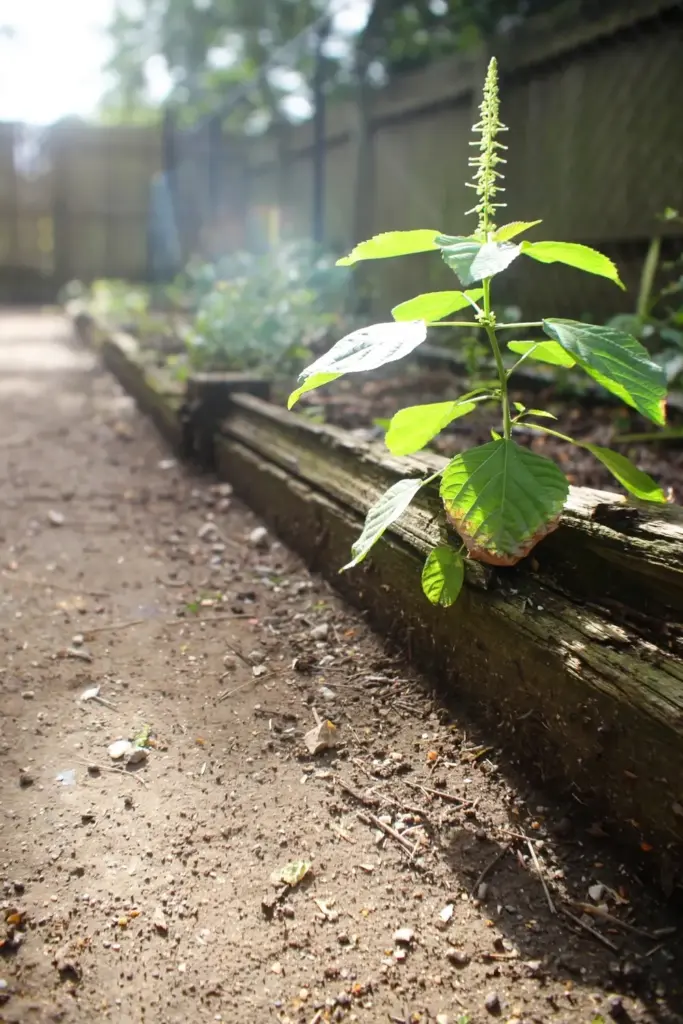
Anting-anting behaves like a weed because it is one. The PROSEA record places it in waste places and cropped land at low altitudes, where it grows locally common. It colonizes open soil, path edges, garden beds, and field margins. A plant that appears on its own in disturbed ground fits the pattern. A plant sold with a cultivar name and a price tag does not.
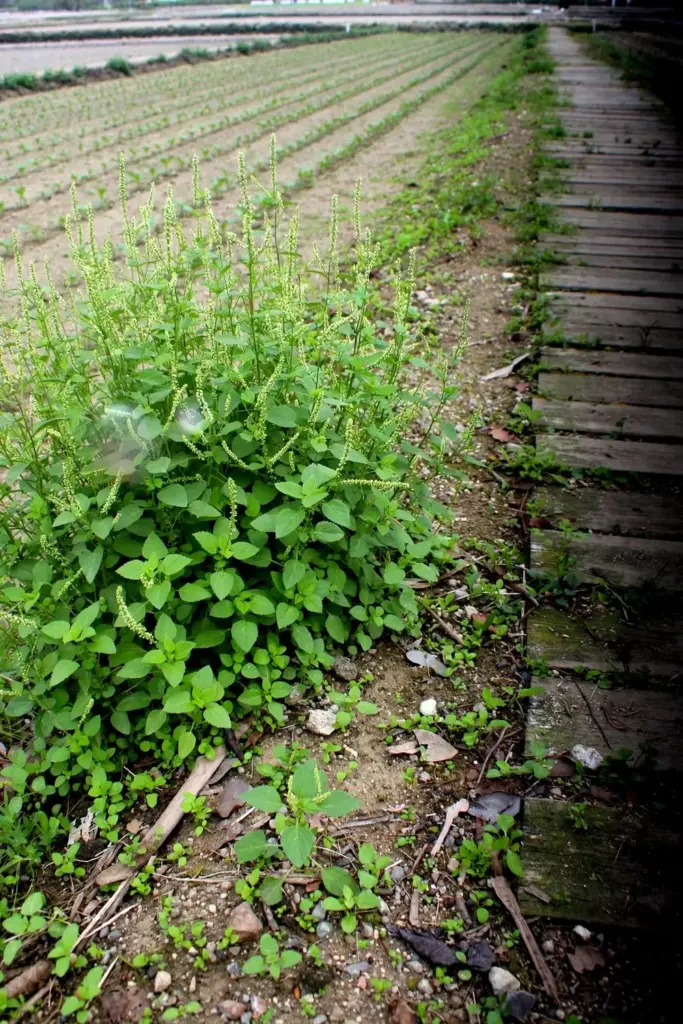
Asian copperleaf shows what the weedy habit can do at scale. The plant first turned up in Iowa in 2016, in a cornfield in Black Hawk County. It appeared again in 2022, in a soybean field in Grundy County nearly 48 km away. Both fields held dense patches, which meant the weed had sat there unrecognized for several seasons. The plant threatens row crops in its native range, and Iowa agriculture officials asked Iowans to report sightings so the state could map the spread. The Iowa reports describe an erect plant 61 to 91 cm tall, with most plants under 46 cm, and lance-shaped leaves 5.1 to 7.6 cm long.
The lesson for your garden is direct. Treat every volunteer Acalypha as a weed first. Identification comes before use. Use comes before any thought of keeping the plant. A weed that you name correctly is a decision you can defend. A weed that you keep on a hunch is a seed bank you planted by accident.
5. Put Anting-Anting Uses to Work for Skin and Swelling Care
Traditional practice in Indonesia and Thailand applies anting-anting leaves externally to sores and swellings. That external use is the best documented leaf application in the PROSEA record. The leaf is the working part. The skin is the target. Nothing about this use requires eating the plant.
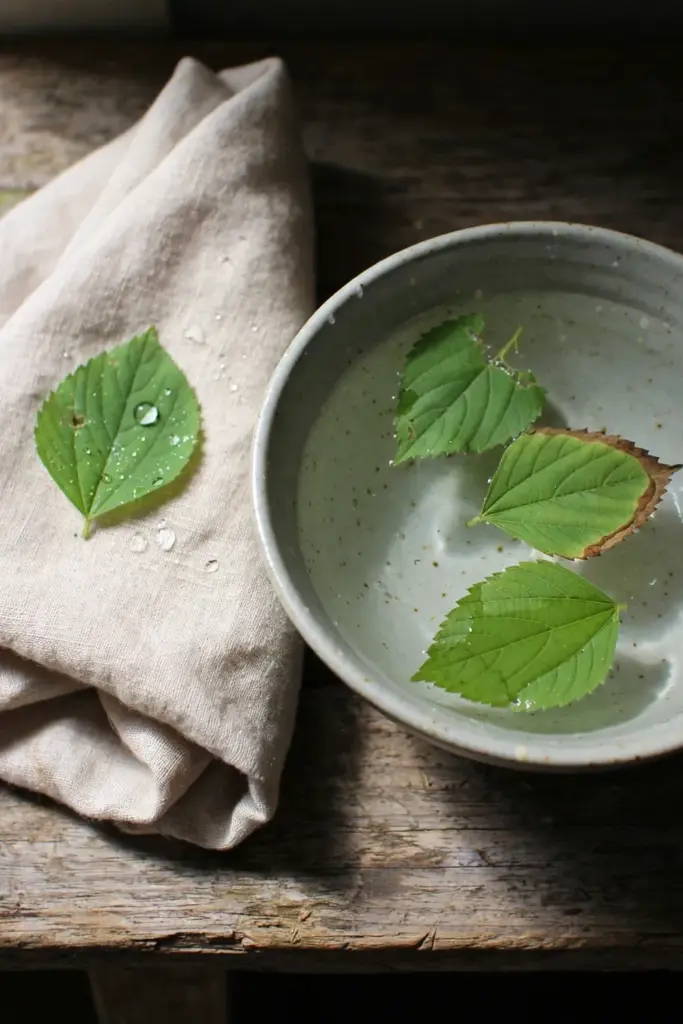
African traditional practice adds more external uses. Leaf sap serves as eye drops for eye infections in East Africa. Leaf powder goes onto maggot-infested wounds. Crushed leaves mixed with salt go onto scabies and other skin problems in Mauritius. A poultice of the whole plant goes onto the head for headache. Each of these is a traditional record, not a tested treatment. Skin breaks, allergies, and infection change the risk fast. A sore that spreads, weeps, or brings fever needs a clinician, not a leaf.
Lemongrass carries a parallel record as an Indonesian herb with external traditional uses, and the site’s lemongrass guide covers that plant in full. The parallel matters because it shows the pattern. Traditional use records describe what people did. They do not measure what worked, and they do not set a safe dose. Read them as history. Act on them only with professional guidance.
External use also carries its own failure mode. A leaf applied to intact skin behaves differently from a leaf applied to broken skin, and a preparation that sits on a wound for an hour behaves differently from one that sits for a day. Traditional records rarely state the contact time, the freshness of the leaf, or the state of the skin. Those gaps are why external use still needs a clinician when the wound is deep, the swelling spreads, or the person has diabetes or poor circulation. The leaf record is a starting point for a conversation, not a treatment plan.
6. Understand the Root’s Traditional Role for Digestion and Breathing
The root carries the strongest internal-use record in the traditional literature. In Malaysia and Thailand, a decoction of the plant serves as a purgative. In the Philippines, juice or decoction of roots and leaves serves as an emetic or expectorant in bronchitis and asthma, with the effect depending on dosage. In southern Vietnam, the roots serve as a cathartic. In the Seychelles and Reunion, root infusion or decoction serves against asthma and for cleaning the liver and kidneys. The Pharmacopoeia of India lists the plant as an expectorant for asthma and pneumonia.
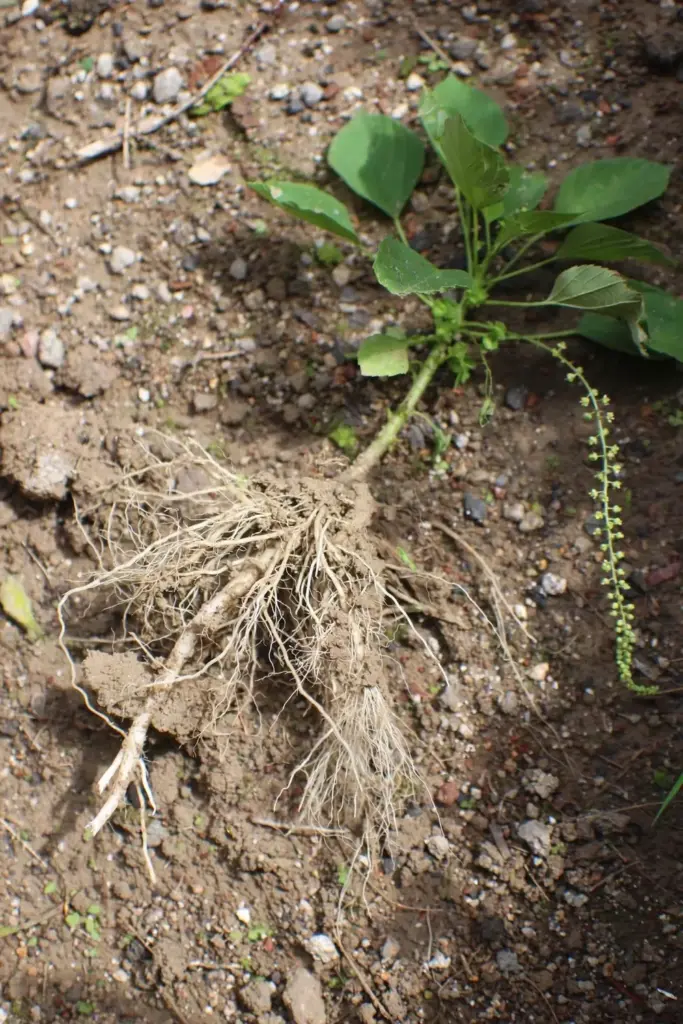
Dosage dependence is the warning inside that record. A preparation that acts as an expectorant at one strength acts as an emetic at another. Traditional practitioners set the strength from experience with the plant, the patient, and the preparation. A reader working from a web page has none of those three. Do not convert a traditional record into a home recipe. The record tells you what the root was used for, and it stays silent on how much is safe.
Ginger root carries its own long traditional record for digestion and breathing, and the site’s ginger guide covers that plant in full. The comparison is useful. Ginger is a food plant with a wide safety margin in kitchen amounts. Anting-anting is a weed with a cyanogenic compound and a case record of serious harm. The two roots do not belong in the same risk class.
7. Learn Why Cats Seek Out Anting-Anting Roots
Cats seek out anting-anting roots with a focus that surprises first-time observers. The PROSEA record notes that in Indonesia, the root counts as a universal remedy for cats, based on observations of cats consuming the roots. Malay names the plant pokok kucing galak, which points to the excited-cat behavior. Thai names it cat nettle. The pattern repeats across the plant’s range. Where the plant grows, cats find the roots.
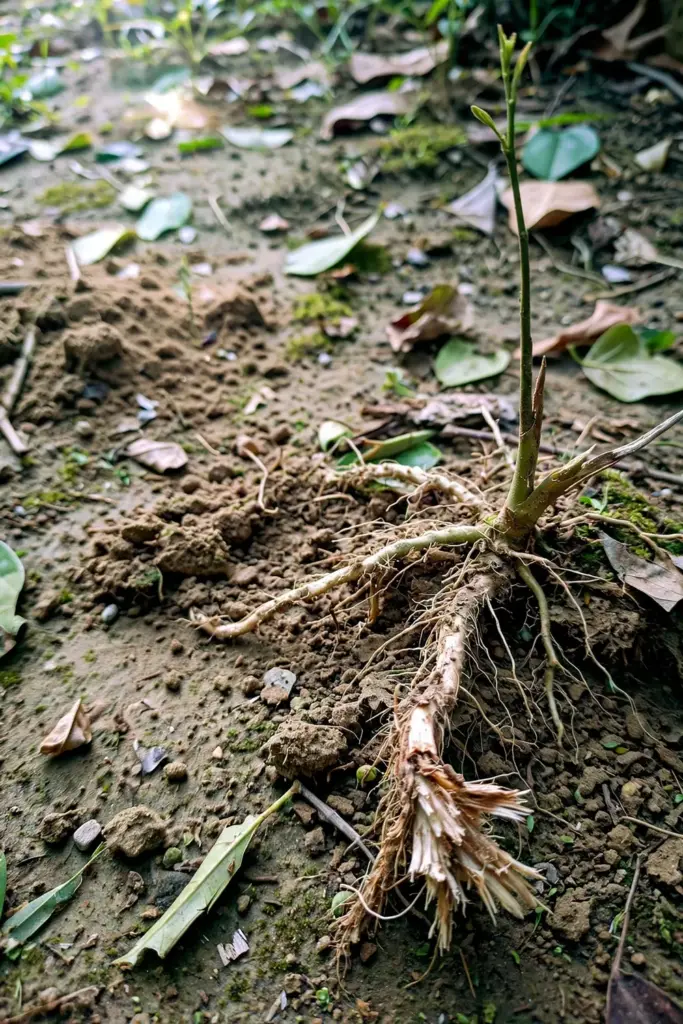
The effect resembles catnip and runs stronger. Cats rub, chew, roll, and return to the same root, sometimes for a long stretch. That behavior explains part of the plant’s folk reputation. A plant that cats pursue looks like a plant with power. The behavior proves attraction, not safety or medicine, for cats or for people.
Keep the interaction under your control. Do not offer roots to a pet cat as a treat. Do not let a cat strip a plant you are trying to identify, since a chewed root destroys the specimen. A cat that eats an unknown plant part and then vomits, drools, or hides needs a veterinarian. The root contains acalyphin, a cyanogenic compound covered in the safety section below. Attraction and safety are separate facts.
8. Cook the Young Shoots as a Vegetable With 2 Safety Rules
Young shoots and leaves of anting-anting serve as a cooked vegetable in India and Indonesia, according to the PROTA record for Acalypha indica). The shoots bring real nutrition. Per 100 g of edible portion, the shoots carry 6.7 g of protein, 667 mg of calcium, 17 mg of iron, and 147 mg of vitamin C, with 64 kcal of energy. Those figures put the shoots in the company of dark leafy greens. They do not make the plant a health food. They make it a famine-season and kitchen-garden vegetable with a history.
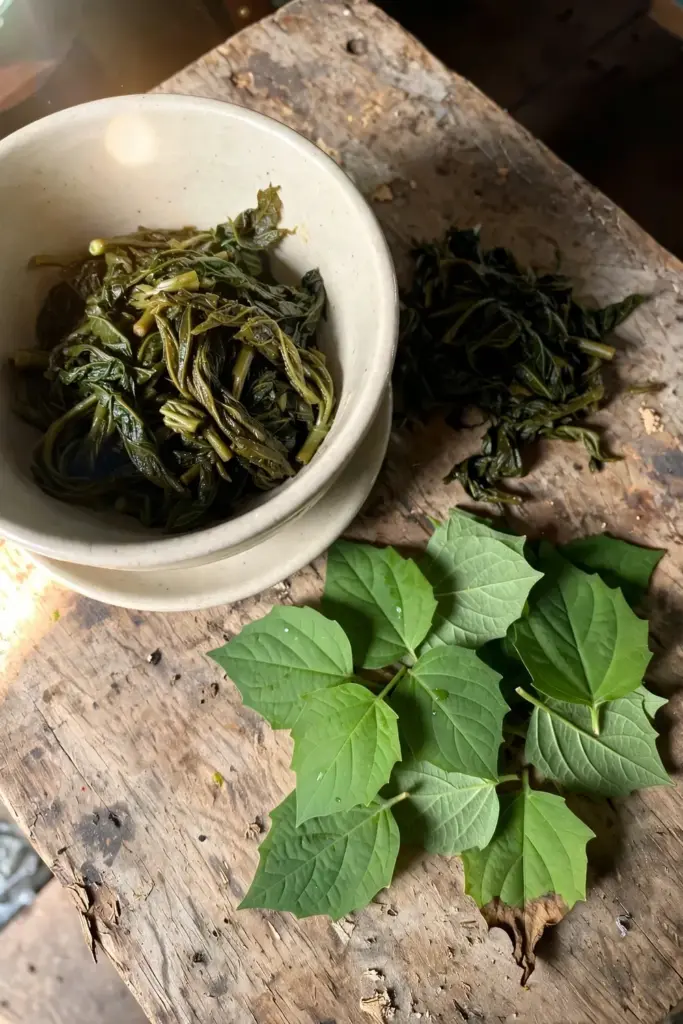
Two safety rules govern the vegetable use. Rule one is heat. Cook the shoots. Never eat the raw plant in quantity, since the raw plant carries acalyphin and hydrocyanic acid. Rule two is quantity and condition. Keep portions modest, and skip the plant entirely if you carry the G6PD deficiency described in the safety section below. A cooked vegetable with a narrow safety margin stays a curiosity, not a staple.
The vegetable record also explains why the plant survives. People who eat a weed protect it, intentionally or not. A patch near a kitchen door may be a tolerated weed rather than a planted crop. Tolerated weeds still seed. The garden decision at the end of this page covers that risk.
9. Respect the Acalyphin Risk in Every Internal Use
Acalyphin is the compound that sets the safety boundary. It is a cyanogenic glycoside, and the plant also contains hydrogen cyanide, according to a case report on Acalypha indica toxicity. The same report names three constituents with oxidative properties. Those constituents can trigger acute oxidative haemolysis and methaemoglobinaemia in susceptible people. Cyanide toxicity reports are uncommon, and the oxidative risk is the documented one.
The case record is specific. A previously healthy Sri Lankan woman and her son developed haemolysis and methaemoglobinaemia after ingesting the plant. Both were later diagnosed with glucose-6-phosphate dehydrogenase deficiency. G6PD deficiency is common in many tropical populations and often undiagnosed. A person who does not know they carry it cannot weigh the risk. That gap is the core safety problem with internal use of this plant.
The practical rule follows from the case record. Do not use anting-anting internally without clinician guidance. Do not serve it to children. Do not eat it raw, and do not treat a serious illness with it. Traditional use records describe a plant that people used, and they do not cancel a compound that harms people with a common enzyme deficiency.
10. Skip Anting-Anting in 4 High-Risk Situations
Situation one is G6PD deficiency. The case record in the safety section names this deficiency directly. A person with G6PD deficiency faces oxidative haemolysis from compounds in this plant. A person who has never been tested cannot rule the deficiency out. Testing comes before any internal use, and most readers will never take that step. Skip the plant.
Situation two is childhood. Traditional records describe giving root and leaf preparations to children as an emetic or expectorant, with effects that depend on dosage. A dosage-dependent emetic in a small body is a hazard, not a remedy. Children cannot report early symptoms with precision. Keep the plant away from children’s food, drink, and play.
Situation three is raw or large-quantity eating. Cooking reduces part of the risk, while raw eating keeps the full risk and large quantities multiply it. The vegetable record describes modest cooked portions, not raw salads or daily juicing. A plant with a cyanogenic compound and a documented haemolysis case does not belong in a raw-juice routine.
Situation four is substitution for medical treatment. Traditional use is a historical record, not a prescription. Asthma, pneumonia, intestinal worms, and skin infections all carry effective modern treatment. A weed with a narrow safety margin does not replace that treatment. Dandelion carries a similar pattern of traditional use and similar caution, and the site’s dandelion guide covers that plant in full. The pattern repeats across weedy herbs. Tradition records use. It never certifies safety.
11. Press and Photograph a Specimen for a Certain Identification
A photograph settles more arguments than memory. Photograph the whole plant, one leaf from above, one leaf from below, the stem, the flower spike with its bracts, and the fruit. Place a ruler or a coin beside the leaf and the spike so the scale stays honest. Record the date and the place. A photo set with scale beats a verbal description in every identification exchange.
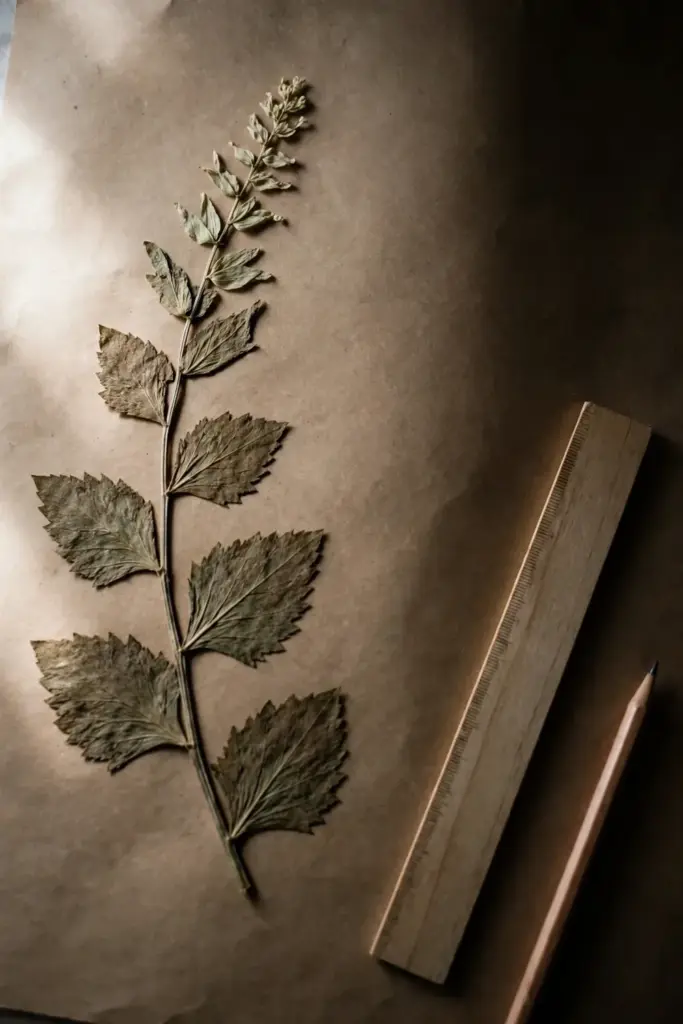
Press a specimen as backup. Lay the plant between sheets of newspaper, press it under weight, and change the paper as it dries. Keep the label with the specimen: date, place, habitat, and your name. A pressed specimen keeps the bract shape and the leaf outline after the color fades. Those two traits carry the identification across the look-alike group.
Send the photo set to a local extension office or herbarium for confirmation. Extension botanists see the local weed flora daily, and herbarium staff hold reference specimens. Tell them the plant came up as a volunteer and you need a name before any use. Wait for the answer. A plant you cannot name is a plant you cannot use.
If the answer comes back uncertain, accept the uncertainty. Extension offices sometimes reply that a specimen needs flowers or fruit for a firm name, and that answer is useful. It tells you to watch the plant until the spike forms, photograph the bracts, and send a second set. Two rounds of photos cost less than one wrong identification. A volunteer weed waits well enough for a second opinion, and the garden decision stays open until the name is firm.
12. Decide What to Do With Anting-Anting in Your Garden
The default decision is removal. Anting-anting arrives on its own in disturbed soil, seeds freely, and sits in the weed flora of tropical and subtropical gardens. A volunteer weed needs no invitation to return. Pull it before it sets seed, bag the seed heads, and keep the seed out of the compost pile. Compost heat in a home pile rarely runs hot enough to kill weed seed, and a composted seed head becomes next season’s patch.
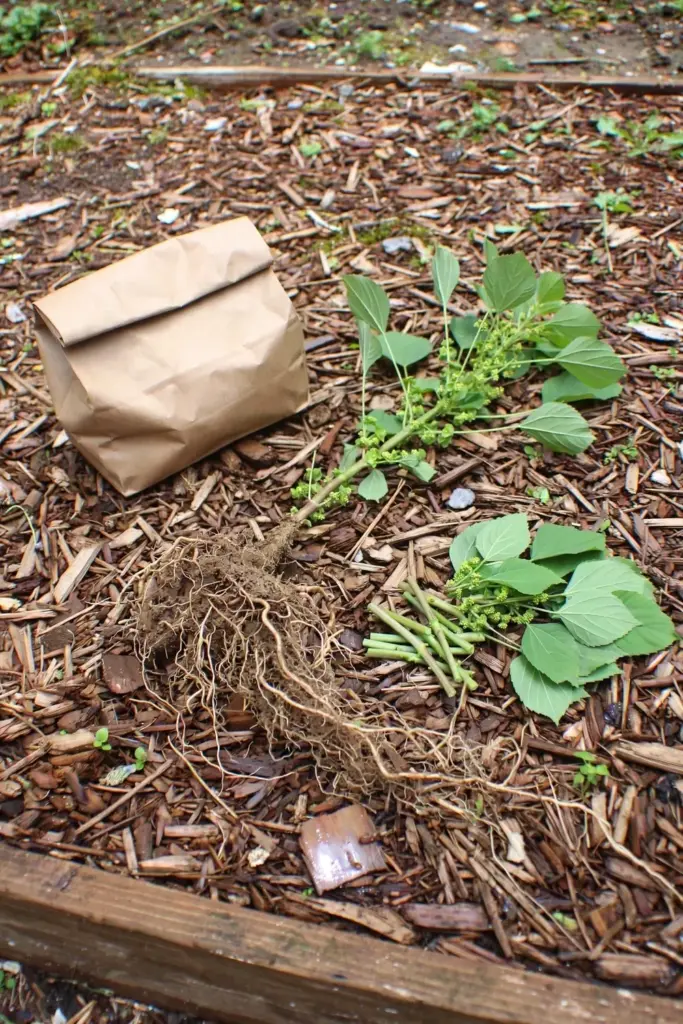
Keeping one plant for observation stays possible under two conditions. First, the identification must be certain, confirmed by the photo and specimen work above. Second, the plant must never set seed. Remove the flower spikes before the capsules mature. A kept plant that seeds is a kept weed population. Observation ends when the spikes appear.
The final test is honest. If you cannot name the plant, pull it. If you can name it and still cannot state a safe use, pull it. If you can name it, state a safe use, and control its seed, the decision is yours. Most gardens answer the test the same way. The plant goes in the bag, and the bed stays clean.
Frequently Asked Questions
No. Anting-anting is Acalypha indica. Asian copperleaf is Acalypha australis. The two share a genus and a weedy habit, and mislabeled stock once sold Asian copperleaf under the anting-anting name. Asian copperleaf carries lance-shaped leaves and heart-shaped bracts. Anting-anting carries rhombic-ovate leaves and a pinhead capsule. Check the botanical name on every label.
Young shoots and leaves serve as a cooked vegetable in India and Indonesia, with 6.7 g of protein and 147 mg of vitamin C per 100 g. Cook the shoots, keep portions modest, and skip the plant with G6PD deficiency. Never eat it raw in quantity, since the raw plant carries acalyphin and hydrocyanic acid. Traditional vegetable use is a historical record, not a recommendation for daily eating.
Cats seek out the roots with strong focus, and Indonesian tradition calls the root a universal remedy for cats. Attraction is not safety. The root contains acalyphin, a cyanogenic compound. Do not offer roots to a pet cat as a treat, and do not let a cat strip a plant you are identifying. A cat that eats an unknown plant part and then vomits or hides needs a veterinarian.
Yes. The plant colonizes waste places and cropped land at low altitudes and grows locally common. Its cousin Asian copperleaf turned up in Iowa corn and soybean fields in 2016 and 2022, in dense patches that sat unrecognized for seasons. Treat every volunteer Acalypha as a weed first. Identification comes before use, and use comes before any thought of keeping the plant.
Check habit and flowers. Anting-anting is a soft-stemmed annual herb with a thin flower spike and a pinhead capsule. Chenille plant is a woody shrub with long drooping crimson flower tassels. The tassels are unmistakable once they appear. A plant with woody stems or crimson tassels is not anting-anting. A plant with soft stems, rhombic-ovate leaves, and tiny capsules fits the true plant.
No. Anting-anting arrives on its own in disturbed soil and seeds freely. There is no reason to sow it, feed it, or give it bed space. A volunteer weed that you keep becomes next season’s seed bank. Pull it before it sets seed, bag the seed heads, and keep the seed out of the compost pile. The garden decision is removal, not cultivation.
Where to Go From Here
Identification is the whole job with anting-anting. Name the plant from its five field marks, split it from its five look-alikes, weigh the traditional record against the acalyphin risk, and pull the volunteers before they seed. The true plant is anting-anting Acalypha indica, and the name check is the habit that protects every other decision.
The plant rewards caution and punishes guessing. A confirmed identification opens a small set of anting-anting uses with real safety limits. An unconfirmed identification opens nothing. Keep the photo set, keep the pressed specimen, and keep the botanical name in front of you. The rest of the decision follows from the name.
One more habit closes the loop. Check the next volunteer that appears in the same bed. Weeds arrive in company, and the plant beside anting-anting may be a different species with a different risk. The five field marks from the first section take a minute once you know them. Run them on every unfamiliar seedling before you touch it, and the garden stays a place of decisions rather than guesses.