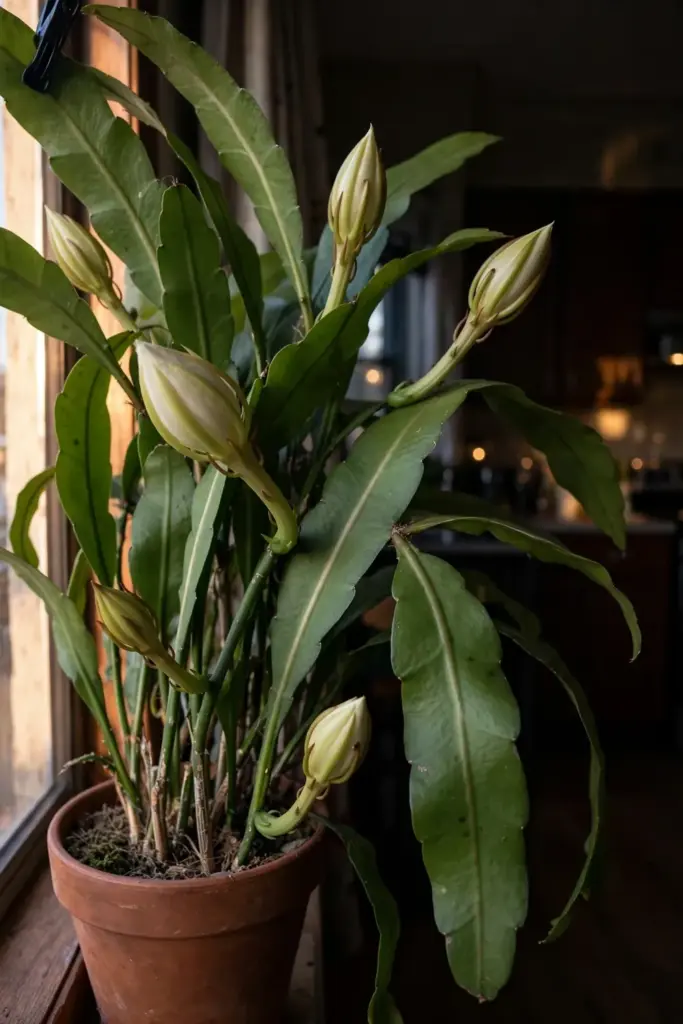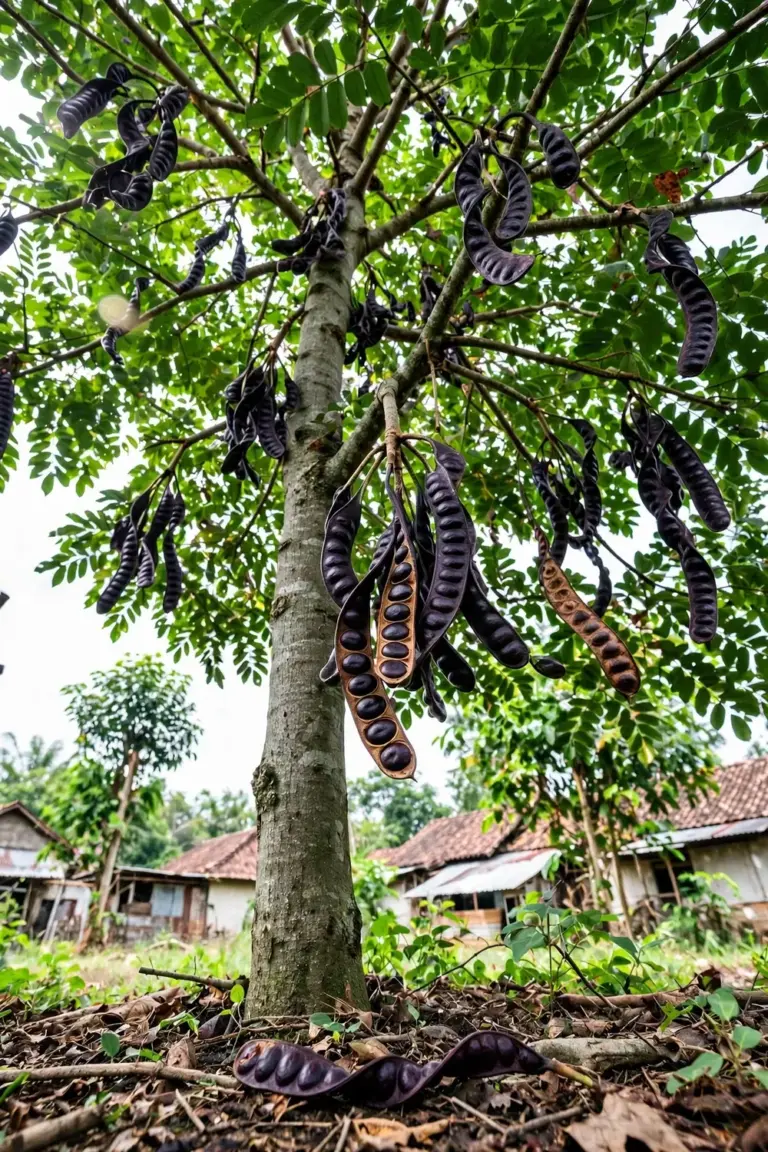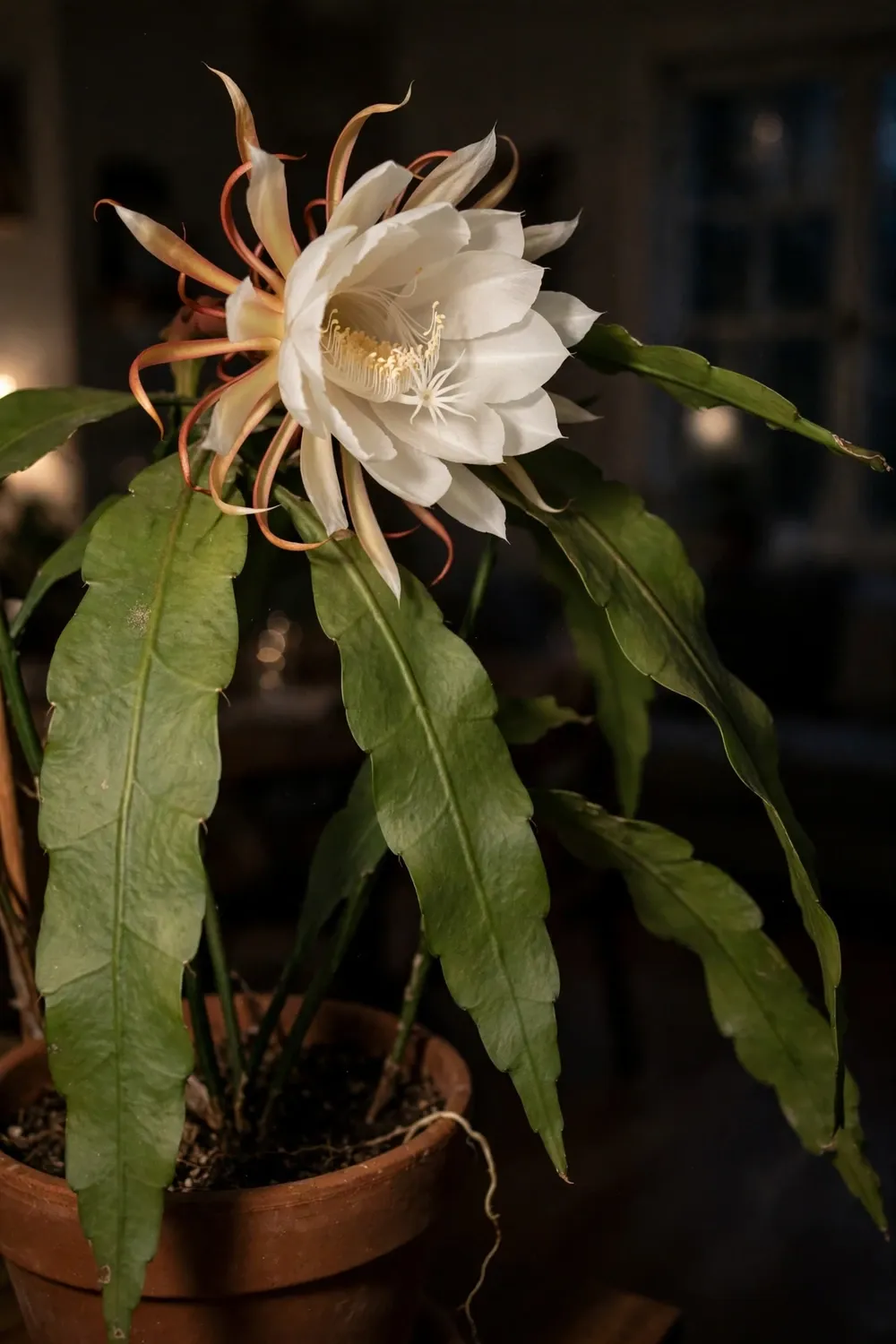

Start one 10 to 15 cm cutting in a small pot this spring and plan on 3 to 5 years before the first flower. That is how to grow night blooming cereus indoors: a jungle cactus in a pot, bright indirect light, a cool dry winter rest, and one white flower that opens after dark and wilts before dawn. The rest of this page is 13 moves, from checking the botanical name to catching the one-night bloom.
Buy a cutting in spring and root it in warm soil. Move it outside after the last frost, then bring it back inside before the first frost. Watch for buds in late spring, and check the plant every evening once they swell.
Epiphyllum oxypetalum is a spineless epiphytic cactus from Mexico and Central America, not an Indonesian native. In Indonesia it carries the name wijaya kusuma, the victorious flower of Javanese royal folklore, and that name is the reason many growers meet it first. In my experience, growers who check the botanical name before buying are the ones who end up with the white one-night flower, because every later step assumes that identity.
| At a glance | Night-blooming cereus |
|---|---|
| Botanical name | Epiphyllum oxypetalum |
| Other names | Night-blooming cereus, Queen of the Night, wijaya kusuma |
| Native range | Mexico and Central America |
| Hardiness | Outdoors year-round in USDA zones 10b to 11 only |
| Temperate home | A pot by a bright window, frost-free |
| First bloom | 3 to 5 years from a cutting |
| Flower | White, 30.5 cm long, open for one night only |
In the wild, Epiphyllum oxypetalum grows on trees and rocks in wet tropical forest. It roots in the leaf litter that collects on branches, not in desert sand. That single fact explains most of its care: bright filtered light, airy soil that drains fast, steady moisture in summer, and no frost ever.
1. Confirm the Real Species Before You Buy
Buy Epiphyllum oxypetalum, and check the tag for that exact Latin name before you pay. The common name night-blooming cereus covers many cacti, and the wrong species brings the wrong care. A tag that says only night-blooming cereus, Queen of the Night, or wijaya kusuma proves nothing. The Latin name is the check.
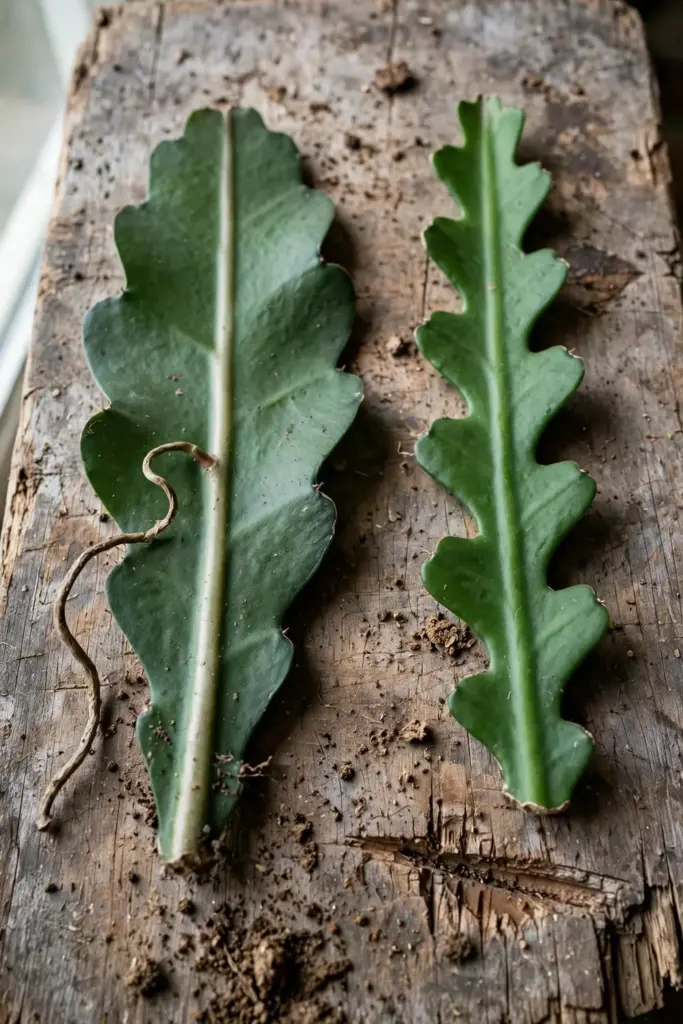
| Plant | Stems | Flowers | What to do |
|---|---|---|---|
| Epiphyllum oxypetalum | Flat, leaf-like, spineless | White, one night | This article |
| Selenicereus grandiflorus | Slender, ribbed, climbing | White, one night | Different genus, climbing cactus care |
| Peniocereus greggii | Desert stems from an underground tuber | White, one night | Desert care, not jungle care |
| Epiphyllum anguliger | Deeply lobed, zigzag | White, one night | Fishbone cactus, a different species |
| Pink Epiphyllum hybrids | Flat, leaf-like | Pink | Hybrids, not this species |
Two traps deserve a closer look. Some Indonesian listings call wijaya kusuma Epiphyllum anguliger. That fishbone cactus is a different species with zigzag stems. Pink-flowered plants sold as wijaya kusuma are usually Epiphyllum hybrids, not the white-flowered Epiphyllum oxypetalum. Dragon fruit, Hylocereus undatus, also shares the night-blooming cereus and Honolulu queen names, and it grows for fruit on three-ribbed stems. If the tag lacks a Latin name, treat the plant as unconfirmed and keep looking.
2. Keep It Frost-Free and Indoors in Temperate Zones
Grow night-blooming cereus outdoors year-round only in USDA zones 10b to 11. Everywhere else, grow it in a pot and keep it indoors through winter. Gardenia lists the hardiness band at zones 10b to 11 and puts wild stems at up to 6.1 m long, which shows how large this plant wants to grow when frost never checks it.
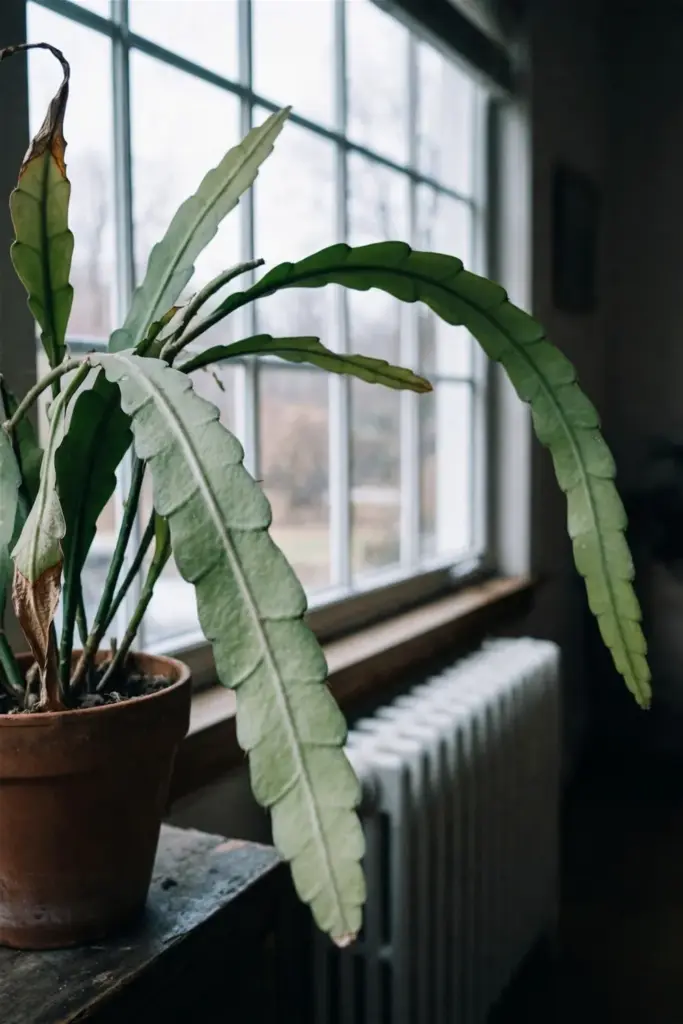
The temperature band is narrow. North Carolina State University Extension puts the preferred range at 10 to 27 degrees Celsius (50 to 80 degrees Fahrenheit) and states plainly that the plant is not frost-tolerant. The same notes describe flat stems 40.6 cm long and white fragrant flowers 30.5 cm long and 20.3 cm wide. Those are the numbers to plan around: a plant that wants warmth, hates frost, and needs room for long flat stems.
In a temperate climate, the routine is simple. Set the pot outside in bright shade after the last frost. Bring it back inside when night temperatures start falling toward 10 degrees Celsius. A greenhouse works too, as long as it stays frost-free. A plant left out in a freeze loses stems fast, and a frozen root ball rarely recovers.
3. Choose a Pot That Keeps the Roots Snug
Start a cutting in a 15 cm pot with drainage holes, and move up one size at a time. Night-blooming cereus blooms best when its roots fill the pot. An oversized pot holds wet mix around a small root ball, and wet mix is where rot starts. A snug pot also dries at a sane pace between waterings.
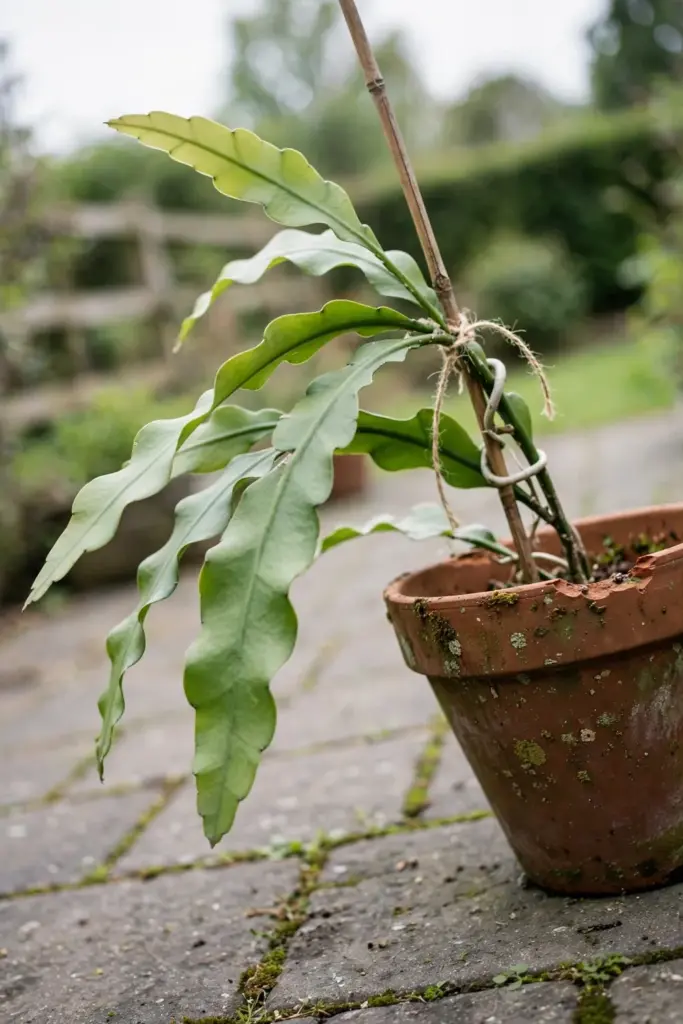
Terracotta suits this plant. The porous wall breathes, and the weight steadies a top-heavy plant. Plastic holds moisture longer, which helps in a hot dry room but hurts in a cool one. Either material works if the drainage holes are wide and the saucer stays empty after watering.
Give the stems support early. The flat stems sprawl and arch as they lengthen, and a bamboo cane or a small trellis tied loosely to the longest stems keeps the plant upright. A hanging basket is another honest option: the stems cascade over the rim, and the flowers hang clear of the foliage. Tie with soft twine, never wire, and re-tie as the stems thicken.
4. Mix a Fast-Draining Jungle-Cactus Soil
Mix one part cactus or succulent potting mix, one part orchid bark, and one part perlite. That blend holds moisture the way forest litter does, then lets the extra water leave. Dense garden soil stays wet and airless in a pot, and airless mix rots epiphyte roots.
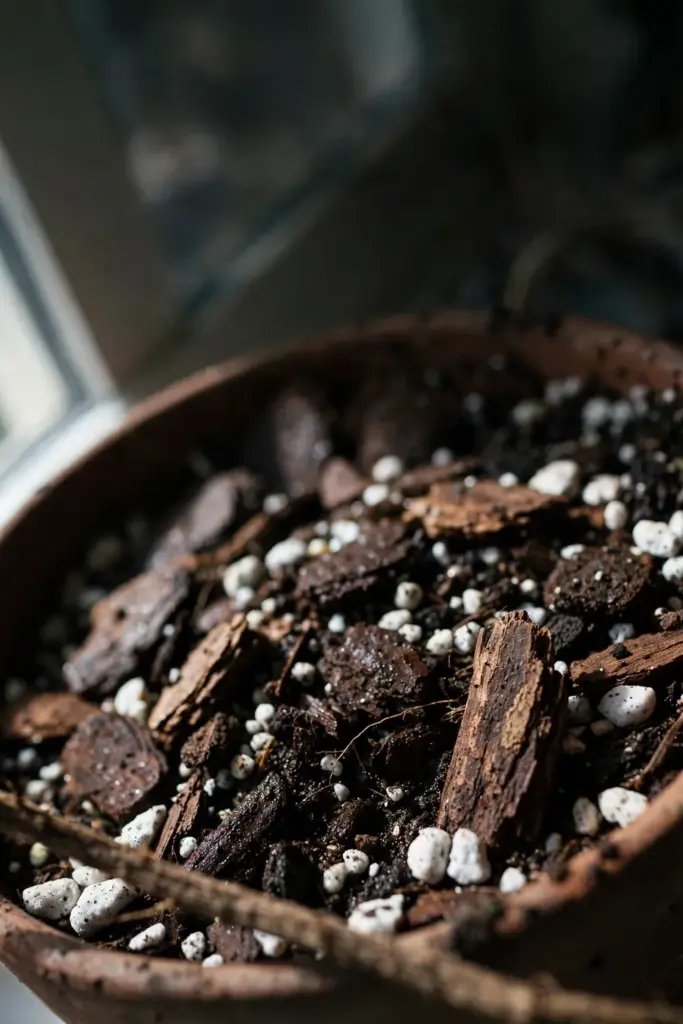
| Component | Share | Job |
|---|---|---|
| Cactus or succulent potting mix | 1 part | Body and nutrients |
| Orchid bark | 1 part | Air pockets and structure |
| Perlite or pumice | 1 part | Drainage that never compacts |
Work the mix with your fingers before potting. It should feel loose and springy, with bark chunks and white perlite flecks through it. If it clumps into a ball when you squeeze it, add more perlite. The guide to building soil health explains why drainage and air decide root survival, and the same logic governs this pot mix.
Repot every 2 to 3 years, in spring, moving up one pot size. The same notes that set the temperature band give that repotting rhythm. Shake off the old mix, trim any soft brown roots with clean shears, and settle the plant at the same depth it grew before. Burying the stem base invites rot.
5. Give It Bright Indirect Light All Year
Set the pot about 1 m from a bright east or south window, behind a sheer curtain in strong sun. Night-blooming cereus wants bright light all year, and it burns in direct afternoon sun. Morning sun suits it. A north window is too dim in most homes, and a dark corner never produces flowers.
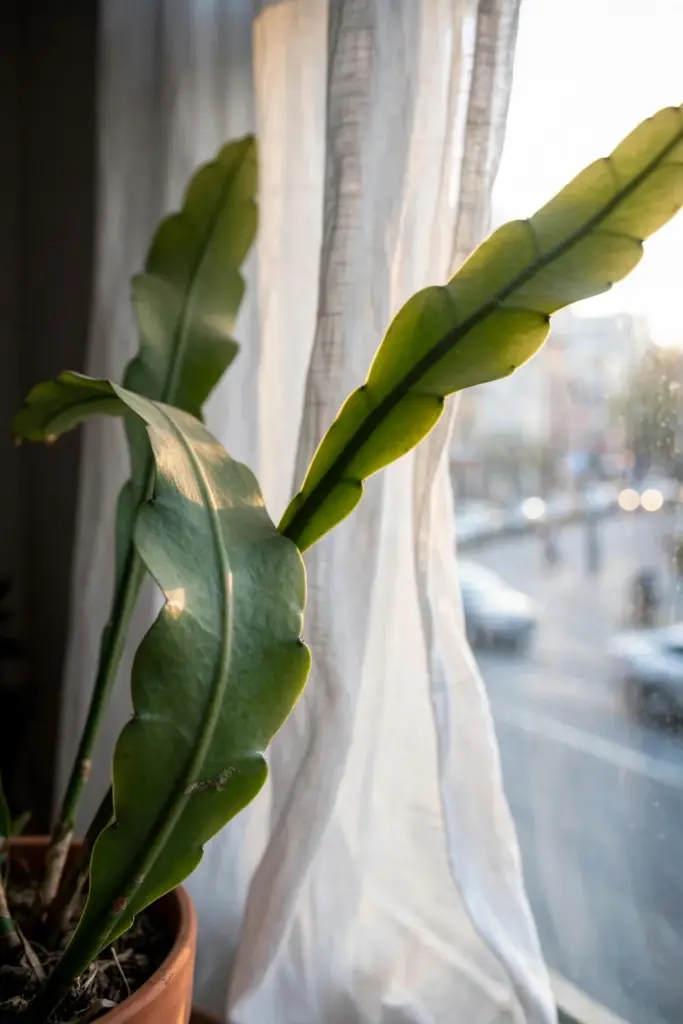
Read the stems for feedback. Pale, stretched stems with wide gaps between lobes mean too little light. Bleached yellow patches on the flat stems mean too much direct sun. Move the pot in small steps, a few days at each new spot, and let the plant answer before moving it again.
Outdoors in summer, park the pot under a tree canopy, on a shaded porch, or against a wall that blocks the afternoon sun. Dappled light through leaves is the closest match to its forest home. Bring a light meter if you own one. Anything above 1,000 foot-candles of direct afternoon sun is more than this plant wants.
A full-spectrum grow light covers short winter days. Hang it 30 to 45 cm above the stems and run it 12 to 14 hours a day. A plant that leans hard toward one window wants a turn. Rotate the pot a quarter turn each week so the stems grow evenly instead of piling to one side.
6. Water Like a Jungle Cactus, Not a Desert Cactus
Water when the top 2 to 3 cm of mix feel dry, then soak until water runs from the drainage holes. Night-blooming cereus comes from wet forest, not desert, so it wants steady moisture in the growing season. Letting the mix dry out fully between waterings stresses the plant and stalls growth.
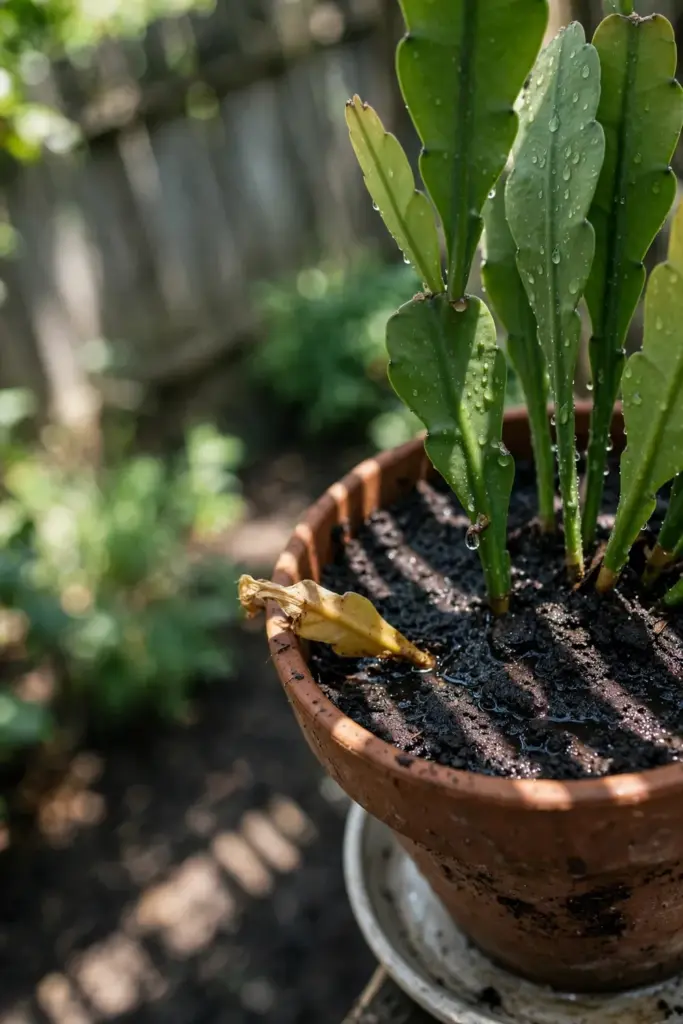
Summer watering runs about once a week in most homes, more often in a small terracotta pot in a hot room. Winter watering drops sharply, and the winter-rest section below sets that schedule. Always empty the saucer after watering. A pot that sits in a saucer of water keeps its roots wet for days, and wet roots rot.
Judge by finger, not by calendar. Push one finger into the mix to the second knuckle. Dry at that depth means water now. Damp means wait. A wooden skewer works the same way: pull it out and look for damp soil clinging to it. Overwatering kills more of these plants than underwatering, so when in doubt, wait one more day.
7. Feed Lightly Through the Growing Season
Feed once a month from spring to early autumn with a balanced liquid fertilizer at half the label rate. Night-blooming cereus grows in leaf litter, not rich soil, so it needs little feeding. A full-strength dose pushes soft growth that burns easily and flops.
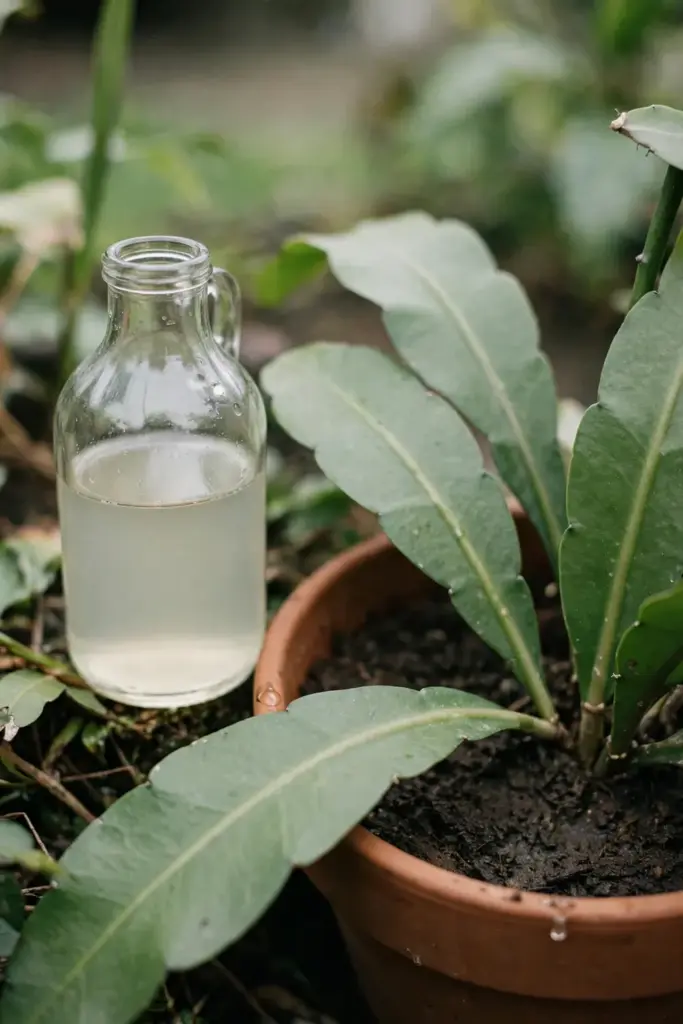
Early spring is the moment for a bloom-leaning feed. The Spruce recommends a 2-10-10 application in early spring to encourage healthy blooms, with nitrogen kept low, and conservative feeding otherwise. The high middle and last numbers mean phosphorus and potassium, which support flowering, while the low first number holds nitrogen back.
Stop feeding entirely in winter. A resting plant cannot use fertilizer, and salts build up in the mix while it sleeps. Flush the pot with plain water once each spring before the first feed, to wash out the salts left from last season. Pale new growth in spring usually means the mix ran out of nutrients after a year of watering, and a fresh feed cycle fixes it.
8. Give It a Cool Dry Winter Rest to Trigger Buds
Move the plant to a bright spot with night temperatures of 10 to 14 degrees Celsius for 6 to 8 weeks in winter, and cut watering back. That cool dry rest is the trigger that sets flower buds for the next season. A plant kept warm and wet all winter grows stems and skips flowers.
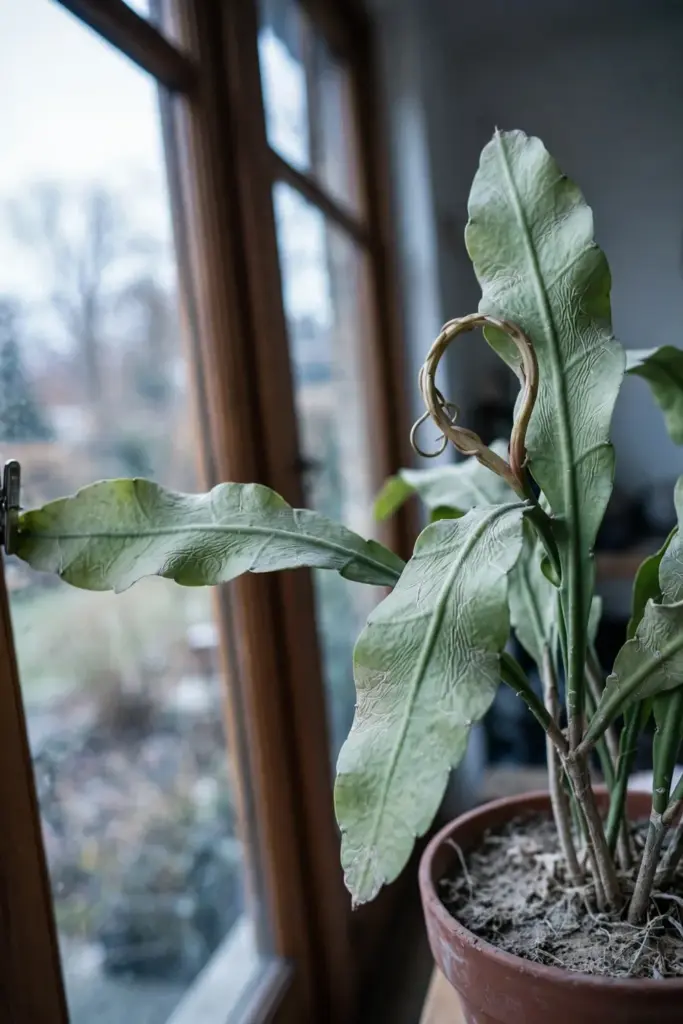
Grower guides disagree on the exact winter band, so treat the numbers as a range. Some growers use nights near 10 degrees Celsius. Others allow up to 15 degrees Celsius. The band that recurs most often is 10 to 14 degrees Celsius, and every guide agrees on the floor: never frost, never below freezing. The Spruce puts the winter sweet spot at 10 to 14 degrees Celsius, which sits inside that range.
Water every 2 to 3 weeks during the rest, just enough to keep the stems from shriveling. The stems may wrinkle slightly. That is normal in a resting plant. When buds appear in spring, move the plant back to warmth and resume normal watering. Buds that form in a cool room abort if the plant moves to a hot dry room too fast, so shift it in steps over a week.
9. Catch the One-Night Bloom Without Missing It
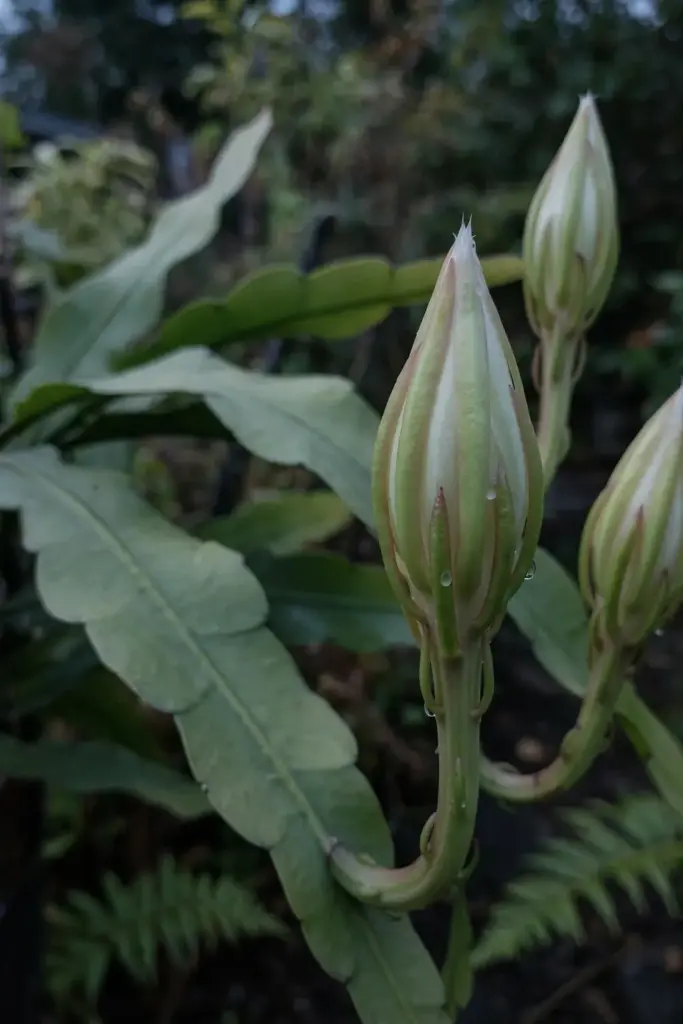
Watch the buds from late spring. Each flower opens one evening and wilts before dawn. A mature plant can carry several buds at once, and each bud takes weeks to swell before it opens. Once a bud shows color at the tip, the opening night is close.
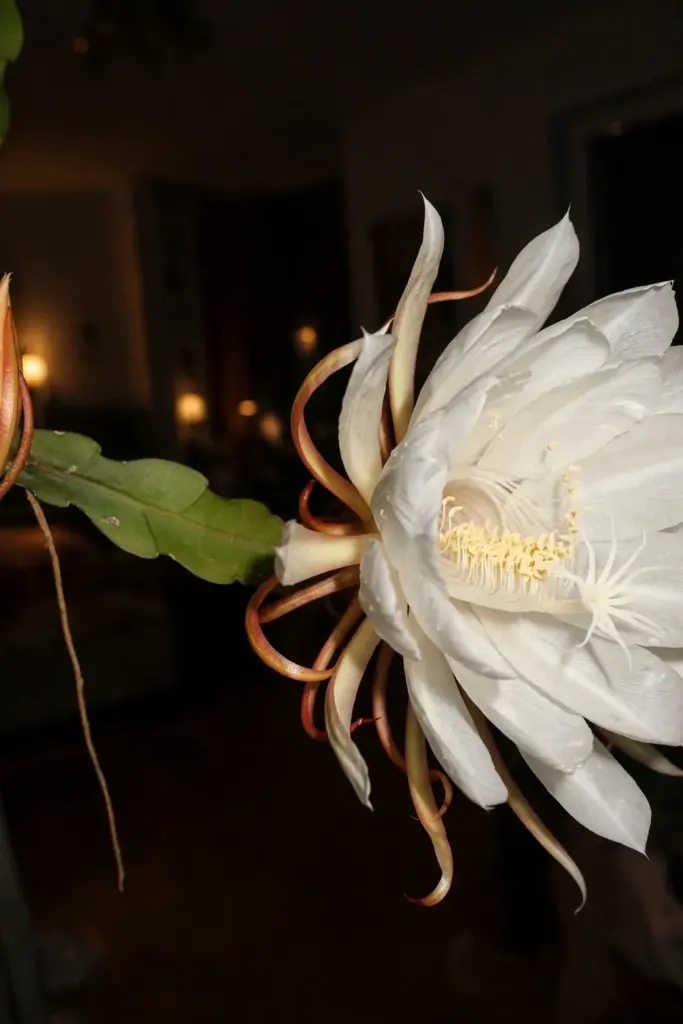
Check the plant every evening once buds swell. The flower starts opening in the early evening, reaches full width overnight, and closes by morning. The fragrance peaks overnight too, and it fills a room. Set a reminder for the evening, not the morning, because a morning check finds a wilted flower.
The flower is large. The same notes that set the temperature band measure it at 30.5 cm long and 20.3 cm wide. After flowering, a purplish-red fruit may follow if the flower was pollinated. In the wild, bats and moths do that work. Indoors, pollination rarely happens, so most indoor plants never set fruit. The same notes call the fruit edible, but an unpollinated indoor plant will not produce one.
Leave the buds alone once they form. A bud knocked off never returns, and a plant moved to a new spot while buds swell may drop them. Keep watering steady while buds develop, and skip the fertilizer until the flowers open. A plant that drops buds usually sat in a draft, dried out, or moved too often.
10. Propagate New Plants from Stem Cuttings
Cut a 10 to 15 cm length of flat stem, let the cut end callus for 3 to 5 days, then set it 3 to 5 cm deep in moist mix. That is how to grow night blooming cereus from cuttings, and it is the standard method. Roots form in 4 to 6 weeks in warm conditions. New growth at the tip of the cutting means the roots took.
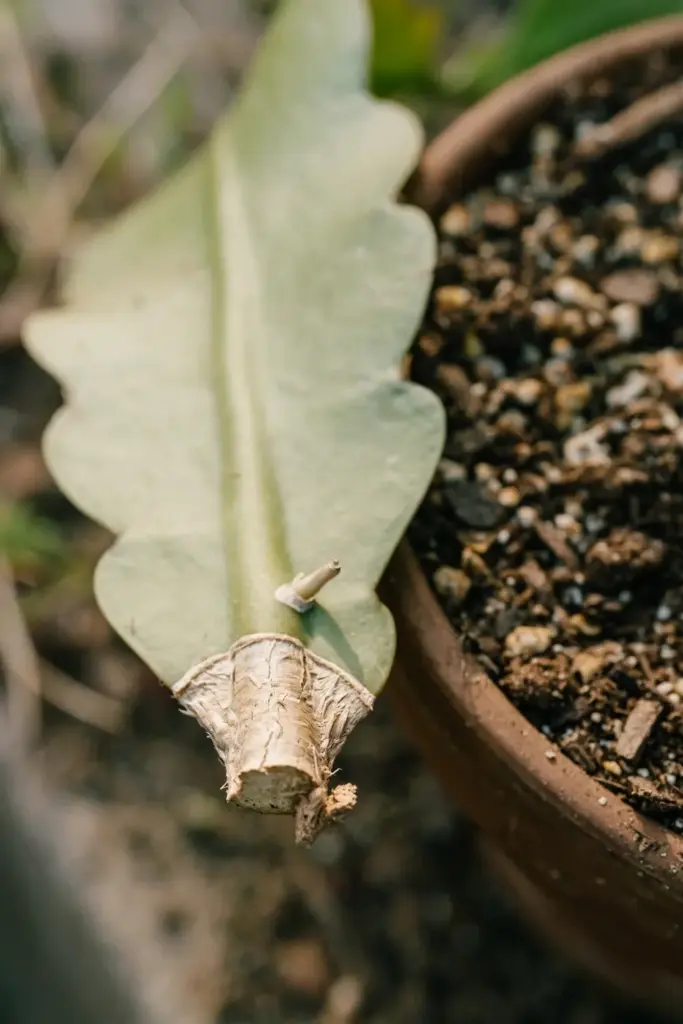
Use a mature stem, not a soft new shoot. Cut with clean shears, straight across, and leave the cutting in open air on a dry shelf until the cut end hardens. A cutting planted while the wound is still wet rots from the base. Keep the mix barely moist, not wet, until roots form, and hold the pot in bright indirect light.
Water rooting works too, and it answers a common question. Stand the callused cutting in a jar with 3 to 5 cm of water, change the water every few days, and move the cutting to soil when the roots reach 2 to 3 cm. Soil rooting rots less often, because the cutting never sits in standing water. Seed propagation is possible, and the seed starting guide covers the tray routine, but seedlings take up to 5 years to reach flowering size. Cuttings are faster and true to the parent plant.
11. Prune for Shape and More Flowering Stems
Prune after flowering, and cut only the stems that crowd the pot or flop past the support. Night-blooming cereus flowers on mature flat stems, so cutting away all the old wood removes next season’s bloom. Keep the thick mature stems. Cut the thin weak ones.
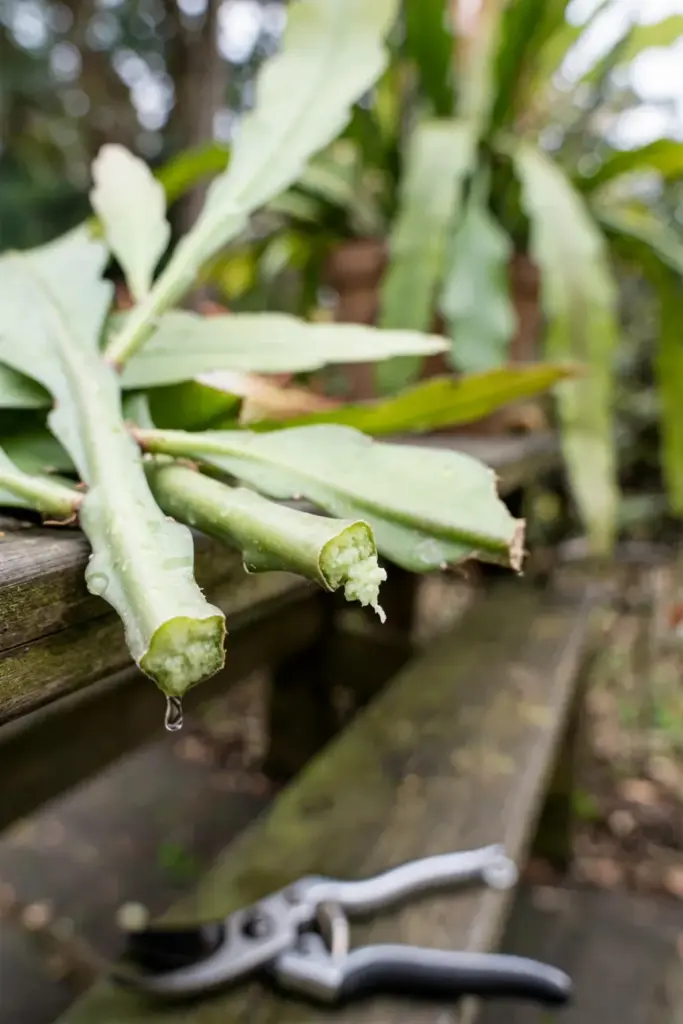
Remove dead or damaged stems any time you see them. Cut back to healthy green tissue with clean shears, and wipe the blades with rubbing alcohol between cuts. A stem that turned soft and dark at the base is rotting, and it will not recover. Cut it away before the rot spreads.
Shorten stems that outgrow the support by cutting at a natural joint between stem segments. The plant branches from the cut, which thickens the crown over time. Spring pruning techniques cover the same cut-and-branch logic for woody plants, and it applies here too. Every pruned stem is a potential cutting, so root the healthy pieces instead of composting them.
12. Stop the Pests and Rots That Follow It Indoors
Check the stems monthly for mealybugs and scale, and fix watering before reaching for any spray. Indoors, this plant faces a short list of problems, and most of them trace back to still air and wet mix. A monthly check catches each one while it is small.
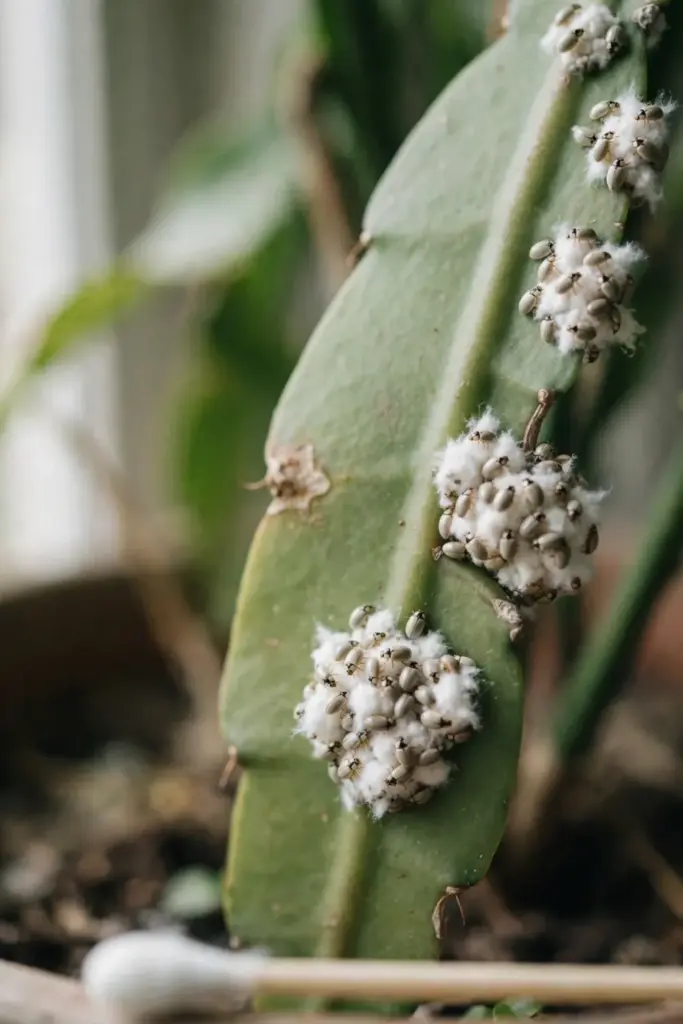
Mealybugs show as white cottony clusters along the stems and in the joints. Wipe them off with a cotton swab dipped in rubbing alcohol, then check again in a week. Scale insects show as small brown bumps that do not move. Scrape them off the same way. Spider mites show as stippled pale patches and fine webbing on the stems, and a strong jet of water knocks them off before a soap spray finishes the job.
Root rot is the serious one. The stem base turns soft and dark, and the plant loosens in the pot. Lift the root ball, cut away soft brown tissue with clean shears, let the cuts dry for a day, and repot into fresh fast-draining mix. Fungal leaf spots show as brown patches on the flat stems. Remove the spotted stems and improve airflow around the plant. Still air and wet stems overnight invite both problems, so space the pots and water in the morning.
Prevention beats treatment. Space the pots so air moves between the stems. Water in the morning so the stems dry before night. Quarantine a new cutting for two weeks before setting it beside the main plant, and check it twice in that window. A new plant is the usual way pests arrive.
13. Grow Night-Blooming Cereus as Wijaya Kusuma in Indonesia
Grow night-blooming cereus outdoors year-round in Indonesia, in bright shade with rain and warmth doing the work. The tropical climate removes the two hardest temperate jobs: the winter move indoors and the artificial cool rest. A shaded patio, a tree canopy, or a bright balcony all suit it, as long as afternoon sun stays off the stems.
The origin story needs honesty. Kew’s Plants of the World Online lists Epiphyllum oxypetalum as native to Belize, El Salvador, Guatemala, Honduras, Mexico, and Nicaragua, and as introduced across tropical Asia, the Caribbean, and the Pacific. Indonesia is not in the native list. The plant reached Asia through cultivation, and Indonesian growers adopted it as their own.
The name carries the older story. Wijaya kusuma means victorious flower. Javanese folklore says a person who sees it bloom gains luck. Royal circles prized the flower, and Old Javanese literature records a sacred wijaya kusuma flower in court ritual. The botanical identity of that ancient sacred flower is not established as Epiphyllum oxypetalum, so treat the royal link as cultural heritage, not as proof that this species bloomed in old Javanese courts. The name is real. The folklore is real. The species match is not proven.
Tropical care differs in three ways. First, skip the indoor winter move, since frost never comes. Second, sharpen drainage, because tropical rain soaks pots fast and wet mix rots roots. Third, check for slugs and snails after rain, since they chew the flat stems at night. The bloom still opens for one night only, and the same evening watch applies: check the buds each evening from late spring, and catch the flower before dawn closes it.
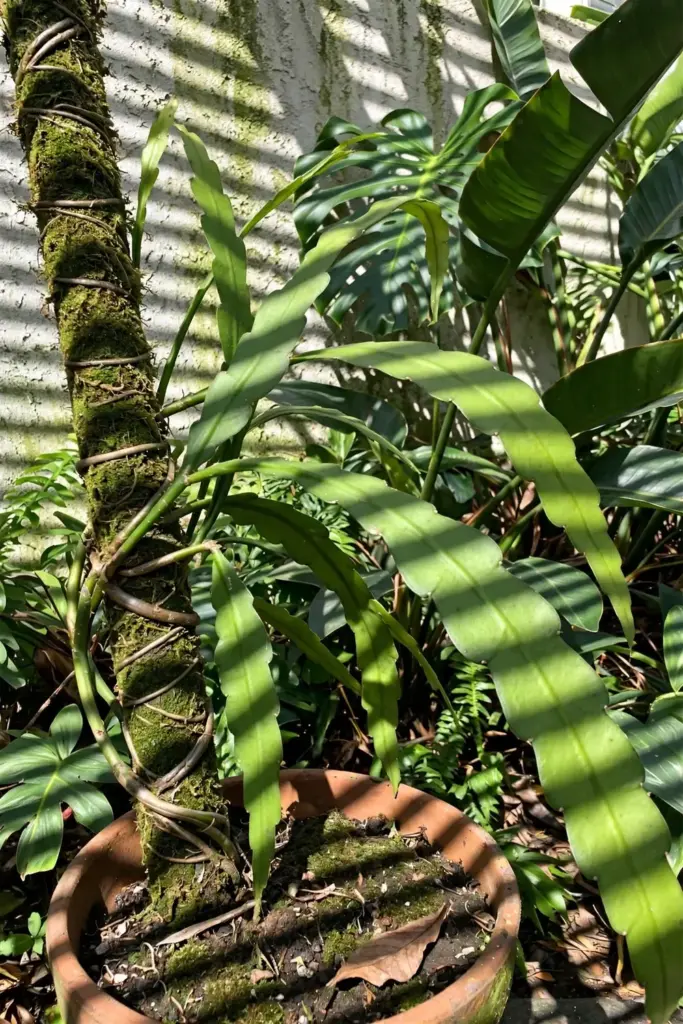
Mount it or pot it. In Indonesia, growers also tie the plant to a tree trunk or a moss pole and let the aerial roots grip. A mounted plant dries fast after rain, which suits the wet season. A potted plant holds moisture longer through the dry months. Either home works if the roots breathe and the stems stay out of direct afternoon sun.
Frequently Asked Questions
Budget 3 to 5 years from a cutting to the first flower. Seedlings take up to 5 years to reach flowering size. A vigorous cutting in bright light with a proper winter rest sometimes flowers at 2 to 3 years. A few plants take longer. Maturity decides the timing, and a young plant never flowers, no matter how good the care.
Four causes cover most cases. The plant is too young. The light is too dim. The pot is too large, so the plant grows roots instead of buds. The winter rest never happened. Fix them in that order: confirm the plant is at least 3 years old, move it to brighter indirect light, hold it in a snug pot, and give it a cool dry winter rest.
Only in USDA zones 10b to 11, where frost never arrives. Everywhere else, move the pot indoors before the first frost. Frost kills the stems, and a frozen root ball rarely recovers. A bright windowsill, a frost-free greenhouse, or a cool bright room all work as a winter home.
Gardenia states that Epiphyllum oxypetalum is not known to be toxic to humans or animals. Treat that as the current position, not as a guarantee. The ASPCA page under the same common name lists Hylocereus undatus, a different species, so it does not settle this plant. Keep the plant out of reach of children and pets, and seek veterinary advice if a pet eats any part.
Yes. Stand a callused cutting in 3 to 5 cm of water, change the water every few days, and move the cutting to soil when the roots reach 2 to 3 cm. Soil rooting rots less often, because the cutting never sits in standing water. Either method works if the cutting calluses first and the water stays fresh.
Wijaya kusuma is the Indonesian name for Epiphyllum oxypetalum, the white-flowered night bloomer above. Javanese folklore ties the flower to victory and luck. Pink-flowered plants sold under the same name are usually Epiphyllum hybrids, not this species. Check the botanical name on the tag before buying, and treat an unnamed plant as unconfirmed.
Where to Go From Here
Start with the tag, then commit to the pot. A confirmed Epiphyllum oxypetalum in a snug pot, in bright indirect light, with a cool dry winter rest, will give you the white one-night flower that earned the wijaya kusuma name. Water it like the jungle cactus it is, prune it after flowering, and check the buds every evening from late spring. That is how to grow night blooming cereus from a cutting to a bloom night worth staying up for.