
Cut a 10 to 15 cm stem from a healthy beluntas shrub, strip the lower leaves, and set the bare stem in moist mix. That is how to grow beluntas in a pot, and the same pot gives you fresh leaves for lalapan and tea. The rest of this page is 16 steps, from the first cutting to a shrub that keeps producing for years.
Start cuttings in spring. Pick young leaves before flowering. Bring the pot inside before nights drop to 10 degrees.
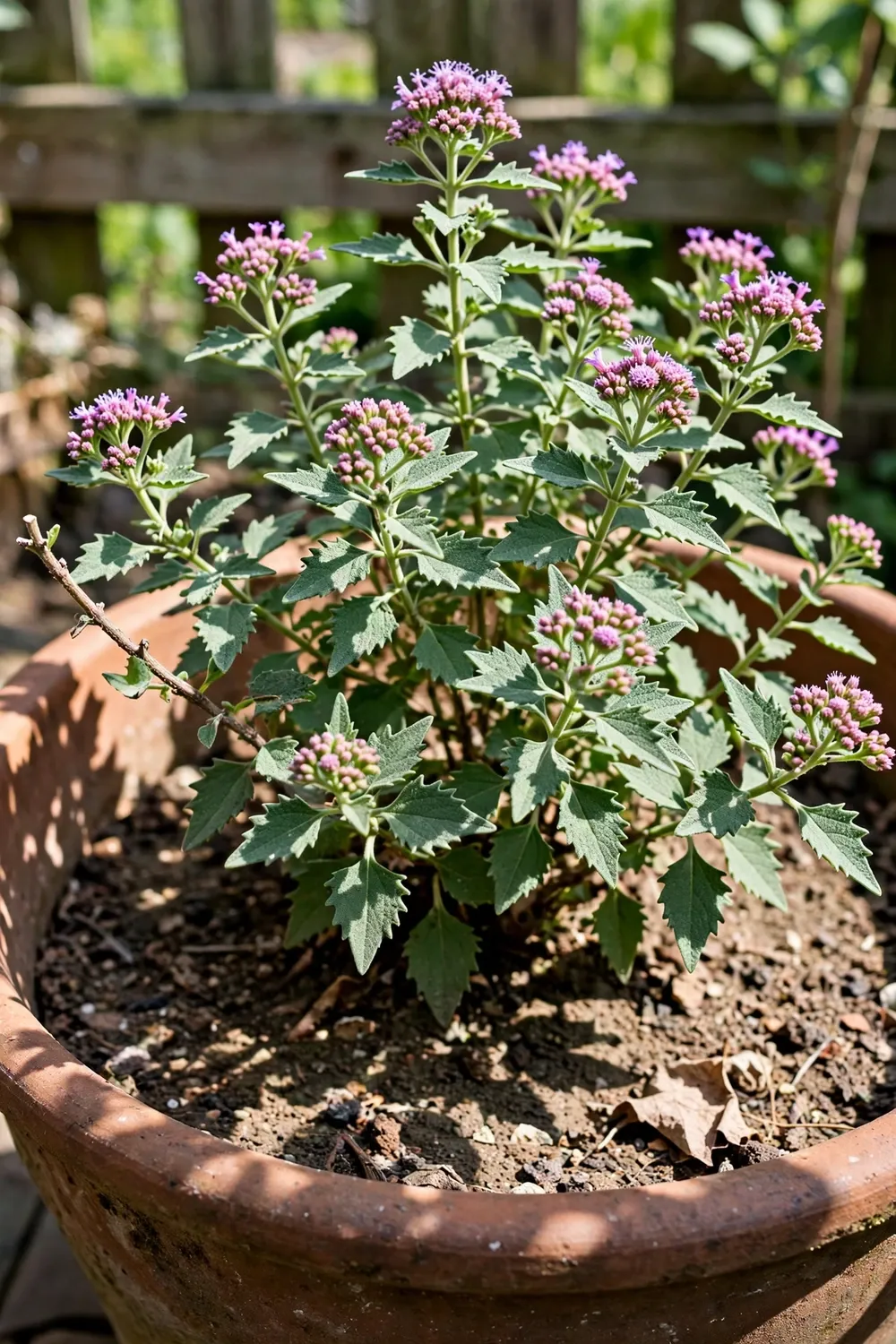
Beluntas is the Indonesian name for Pluchea indica, a much-branched shrub in the aster family. It grows wild from India through Southeast Asia to northern Australia, and Indonesian cooks pick its young leaves for the table. English-language sources call the same plant Indian camphorweed.
| Spec | Detail |
|---|---|
| Botanical name | Pluchea indica (Asteraceae) |
| Indonesian name | Beluntas |
| Thai name | Khlu |
| English common name | Indian camphorweed |
| Plant type | Evergreen shrub, grown in a pot in temperate climates |
| Height | To 2 m in its native range. Pot size sets indoor height |
| Leaves | Obovate, 2.3 to 8 cm long, 1 to 4 cm wide, toothed margin |
| Flowers | Small heads, 5 to 6 mm across, in dense terminal and axillary corymbs |
| Main propagation | Stem cuttings, also seed |
| Cold floor | Damage below 10 degrees |
| Kitchen uses | Lalapan, Khlu tea |
1. Root 10 to 15 cm Cuttings in Moist Mix
Cuttings root faster than seed and stay true to the parent plant. Take a 10 to 15 cm stem cutting in spring or summer, dip the cut end in rooting hormone, and set it in a free-draining mix. Roots form in 4 to 6 weeks, according to the Botanikks page on Pluchea indica.
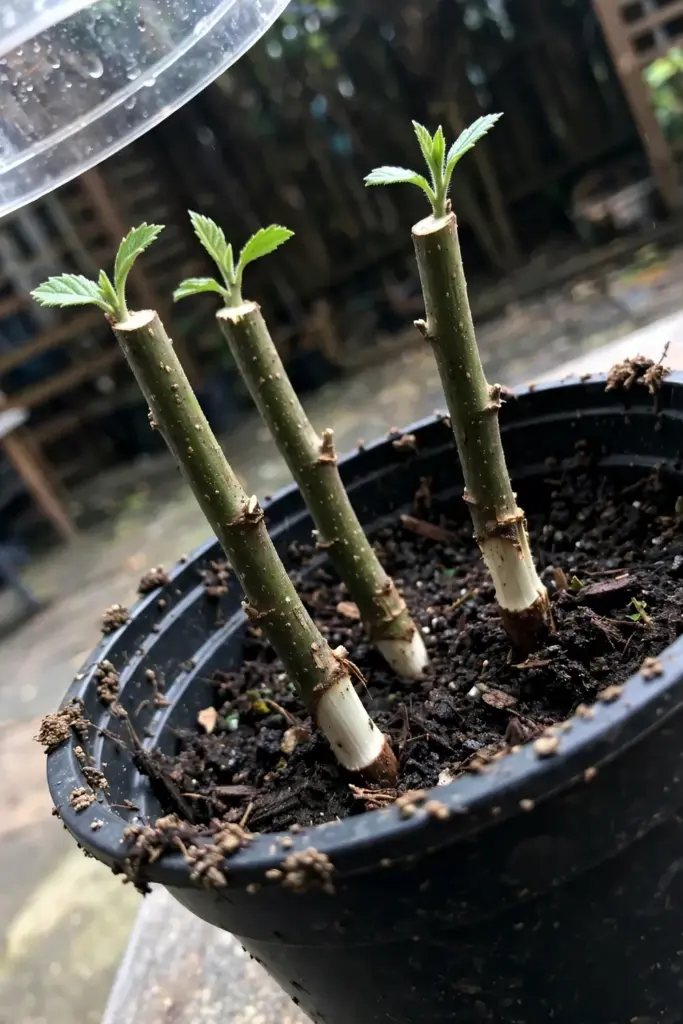
Choose a firm stem from current-season growth, not soft tip growth and not old wood. Cut straight across below a leaf node, strip the lower leaves, and leave two or three leaves at the top to feed the cutting. Set the cutting one third of its length into the mix and firm the mix around it.
Keep the mix moist, never waterlogged. A cutting that stays limp after a week sat too wet or too dry. Check the mix with a finger and adjust. Tug gently after a month and feel for resistance before you move the plant.
Cover the pot with a clear plastic bag to hold humidity. Open the bag daily for fresh air. A cutting that molds under the bag sat too wet. Lift the bag off for a day and let the mix breathe.
2. Sow Seed on the Surface in Spring
Seed works when you can find fresh seed, and it runs slower than cuttings. Sow seed in spring or autumn in well-drained mix, keep the mix moist until sprouts show, and give the tray bright light. The same Botanikks page notes a high germination rate for beluntas seed.
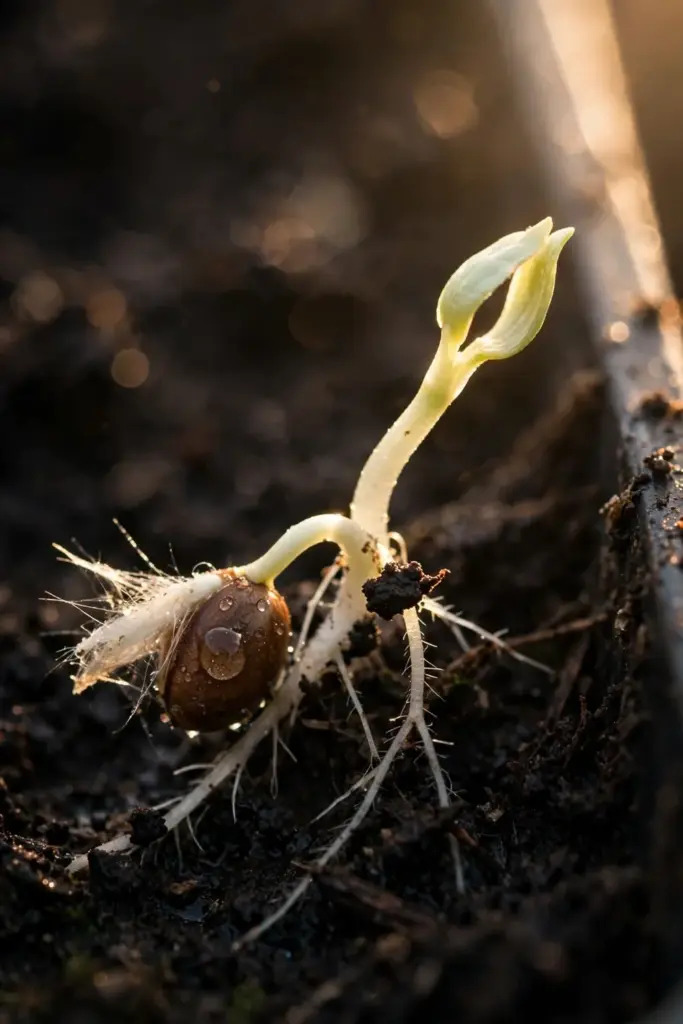
No published day count for beluntas seed germination was available, so this article gives no day count for sprouting. Label the pot with the sowing date and leave the tray alone. Seedlings that appear get the same care as rooted cuttings. Pair this with the site’s seed starting steps for trays, heat, and timing.
Each seed carries a white pappus that catches the wind. Sow indoors or in a sheltered tray so a gust does not carry the seed away.
Seedlings want bright light from the first day. A seedling that stretches toward a dim window grows a pale stem that flops. Move the tray to the brightest sill and turn it every few days so the stems grow straight. Pot seedlings up once they hold several true leaves and the roots fill the cell.
3. Give Beluntas Full Sun and Warmth Above 10 Degrees
Beluntas wants full sun and warm air. It grows best at 20 to 30 degrees and cannot tolerate temperatures below 10 degrees, according to the same Botanikks page. A pot on a sunny patio in summer gives it both.
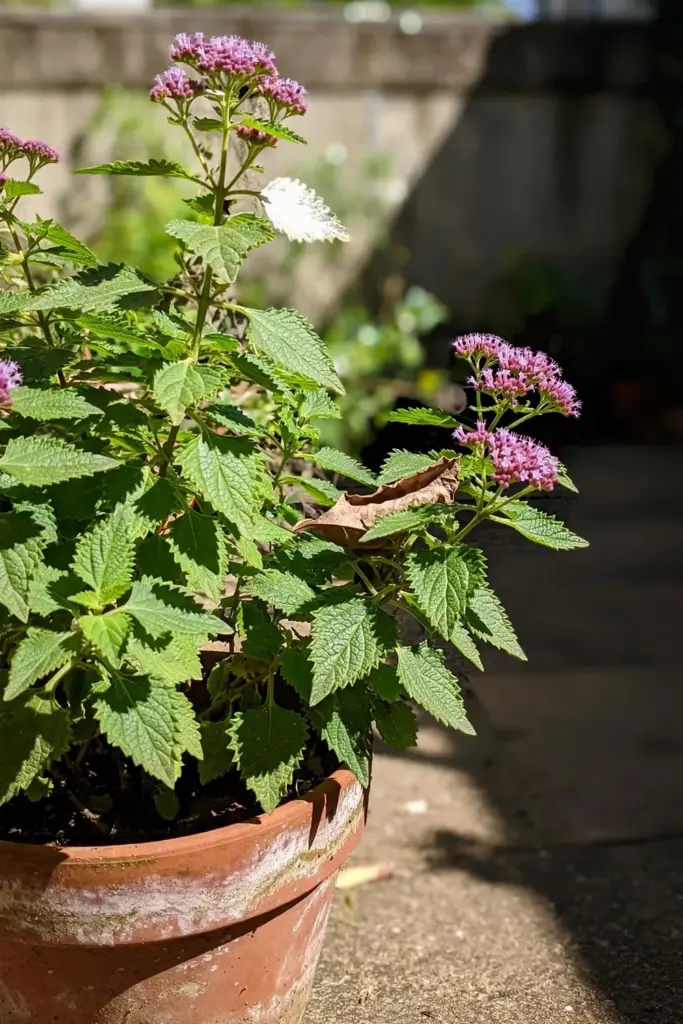
The plant comes from coasts. The PROSEA account) records it along sea shores, tidal streams, and swamps, on clay or hard stony soils, in sun or light shade. PROSEA also records hedges of beluntas at 1,000 m altitude in the lower regions.
Shade grows a leggy shrub with sparse leaves. Sun grows dense growth and flowers. Set the pot where it catches direct sun for most of the day, and move it only when a heat wave scorches the leaves. Salt spray off the sea does not bother it.
A heat wave tests a potted shrub harder than a shrub in the ground. The mix in a pot dries fast, and the leaves lose water all day. Light shade in the hottest afternoon hours costs little growth and saves the leaves. Water in the morning on hot days so the mix holds moisture through the afternoon.
4. Build a Free-Draining Mix at pH 6 to 7.5
Beluntas wants a mix that drains fast and still holds moisture. The same Botanikks page gives pH 6.0 to 7.5 in well-drained sandy soil, and notes the plant grows in clay too when drainage holds. A pot mix built on coir or peat with perlite does the job.
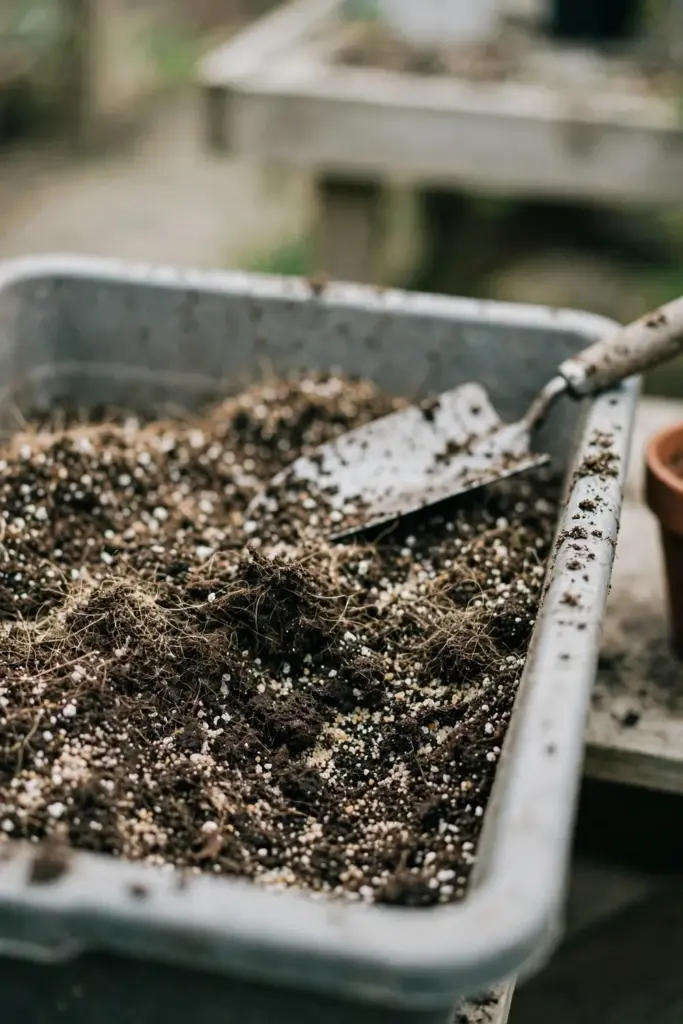
Mix two parts potting mix, one part perlite, and one part coarse sand. Fill the pot with fresh mix. Garden soil from a bed packs down in a pot, squeezes air from the roots, and stays wet for days after watering.
Pair this with the site’s notes on building soil health for the longer view on organic matter and drainage. Fresh mix feeds the plant for its first weeks. Repot into fresh mix each spring.
5. Plant in a Pot You Can Carry Indoors
A pot you can carry is the whole temperate method. One plant per pot keeps the roots contained and the plant movable. Set the plant at the same depth it grew before, water after potting, and let the pot drain fully before it goes back on the saucer. Empty the saucer after watering, since a saucer left full keeps the base wet for days.
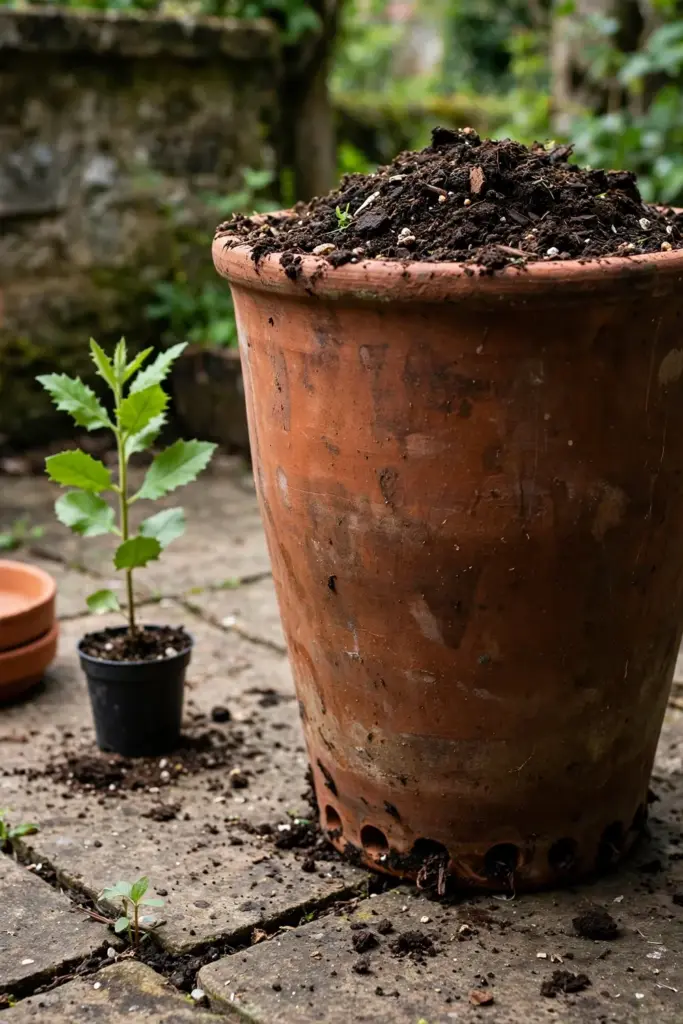
Burying the stem deeper invites rot at the base. A stem that has gone soft rarely recovers. Keep the crown at the mix surface and the base dry between waterings.
In warm zones, beluntas also grows as a hedge. The same Botanikks page gives 30 cm spacing between plants for hedge planting. Dig a hole twice the size of the root ball, set the plant level with the soil surface, and backfill with compost, topsoil, and sand.
Pick a pot with a wide base and drainage holes. A shrub that reaches 2 m catches wind, and a narrow pot tips. Terracotta dries faster than plastic, so a terracotta pot suits a grower who waters with a heavy hand. Plastic holds moisture longer and suits a grower who forgets a watering. Either material works when the drainage holes stay open.
6. Water Deep, Then Let the Top Dry
Water deep once a week, or more often when the soil dries. The same Botanikks page calls for deep weekly watering with more in dry spells, and for soil that stays moist without turning waterlogged. Push a finger into the mix up to the second knuckle. Dry mix means water. Damp mix means wait.
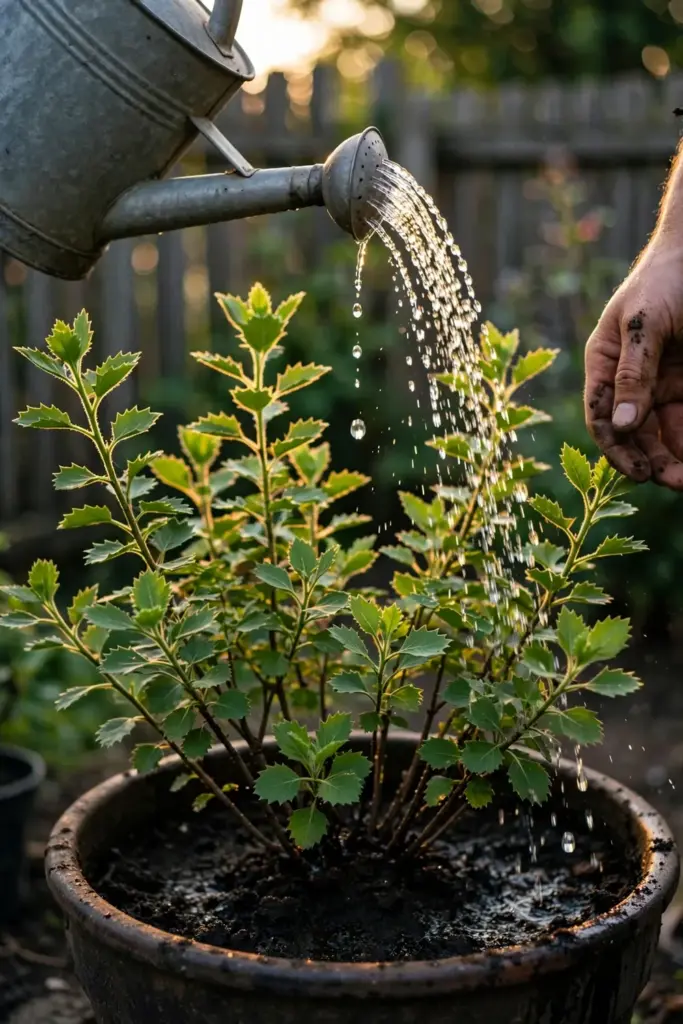
Water slowly until it runs from the drainage holes, then empty the saucer. A pot that sits in standing water rots from the base up. The first sign is a soft stem at soil level.
Beluntas forgives a missed watering far better than it forgives a wet week with no air at the roots. A dry spell costs a drooping leaf. A week of wet mix costs the plant.
Thirst shows on the plant before it shows in the mix. Leaves droop in the afternoon heat and lift again by morning when the roots still find water. Leaves that stay drooped at dawn mean the mix ran dry. Water at once and the plant recovers. Leaves that yellow from the base up mean the mix stayed wet too long, and that damage takes longer to fix.
7. Feed Lightly Every 2 Months in the Growing Season
Feed lightly while the plant grows. The same Botanikks page calls for a balanced fertilizer before planting, then feeding every 2 months during the growing season. Water well after feeding to prevent fertilizer burn.
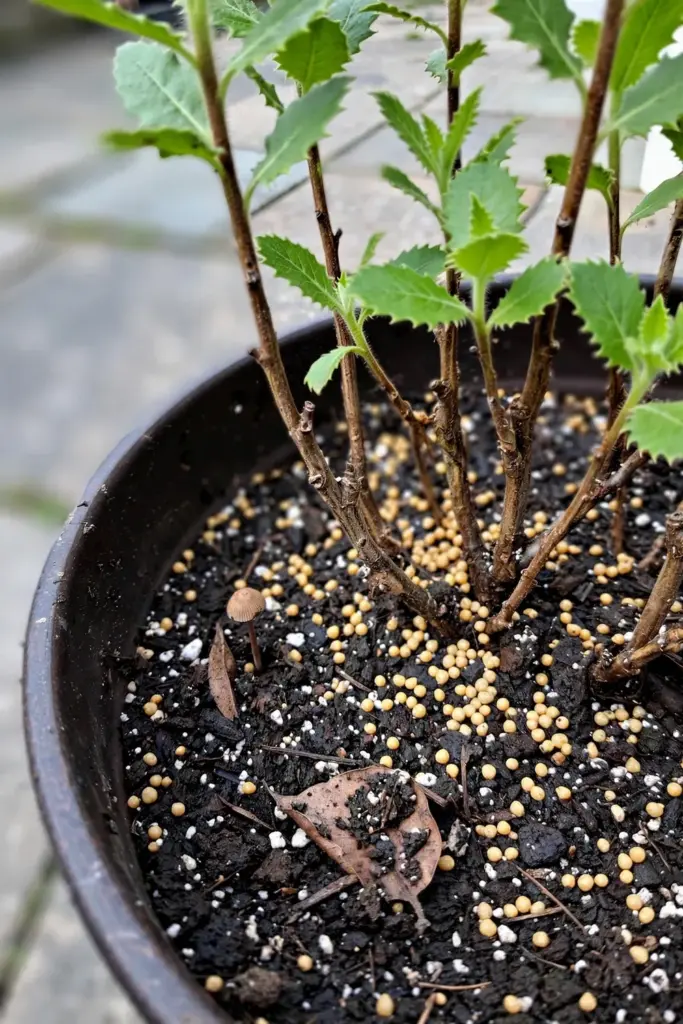
A plant in fresh mix needs no feed for its first two months. The mix feeds it. A plant in low light needs less feed than a plant in full sun. Match the feed to the growth you see.
Heavy feed grows soft stems that flop. A plant pushing new leaves each month earns its feed. A plant that sits still through the whole winter earns no feed at all.
Signs of overfeeding show at the leaf edges. Brown tips and a white crust on the mix surface mean salts built up. Flush the pot with plain water and skip the next feed. Growth resumes when the salts wash out.
8. Prune After Flowering to Keep the Shrub Bushy
Prune once a year, right after the flowers fade and before the next flush starts. The same Botanikks page calls for annual pruning after flowering to remove dead or damaged branches and hold the shape. Cut above a node or leaf, where new growth starts.
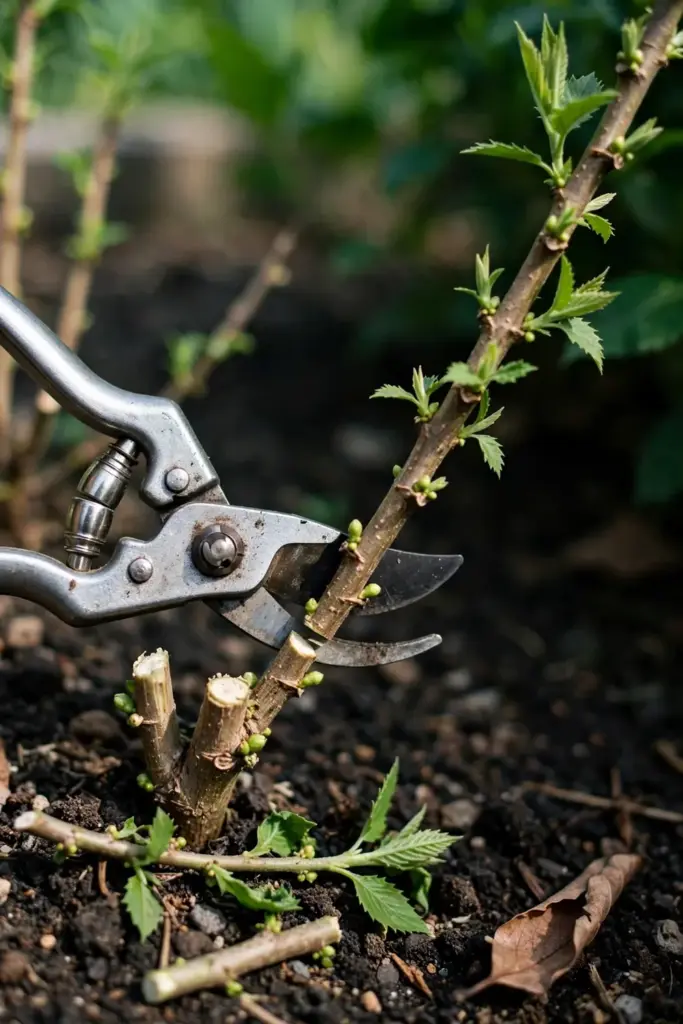
In Java, growers prune beluntas hedges on a regular rhythm to hold height and shape, according to the same PROSEA account. A plant grown for leaves gets cut back harder, since cutting back brings a flush of young leaves. Pair this with the site’s spring pruning techniques for clean cuts and timing.
Strip yellow or dead leaves as they appear. A dead leaf left on the stem holds moisture against the stem and invites mold. A clean plant dries fast after watering and stays healthy.
9. Bring the Pot Inside Before Nights Hit 10 Degrees
Beluntas lives outdoors year-round only where frost never arrives. Everywhere else, the pot comes inside before nights drop to 10 degrees and stays inside until spring nights turn reliably warm. That pot-and-bring-inside routine is how to grow beluntas outside the tropics.
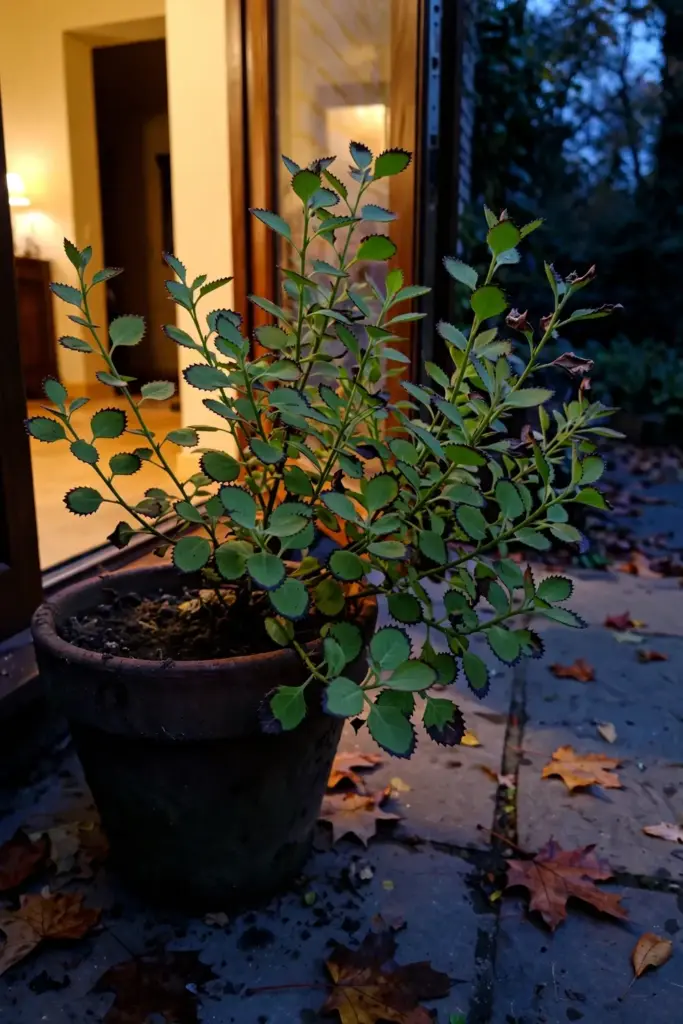
The plant carries no frost protection. A cold night below 10 degrees blackens the leaves and kills stems to the base. The roots may resprout, but the season is lost. Bring the pot in while nights still feel mild.
Indoors, give the plant the brightest window and cut watering back. Growth slows in winter. A plant that barely grows drinks little, so the mix may stay damp for weeks between waterings. Resume normal watering when new leaves open in spring.
Dry indoor air draws moisture from the leaves faster than the roots can replace it. Set the pot on a tray of pebbles with water below the pot base, and keep the pot base above the waterline. A grow light covers a dark winter window. Hang a full-spectrum LED bar above the plant, run it through the day, and switch it off at night. Check the leaf undersides every week for small pests, and wipe the leaves with a damp cloth when you find any.
10. Harvest Young Leaves Before Flowering Starts
Pick young leaves before flowering starts. The same PROSEA account notes that leaves should be picked before flowering, and that leaves and roots are collected all year round. I have learned to pick before flowering, since that is when the leaves are at their best.
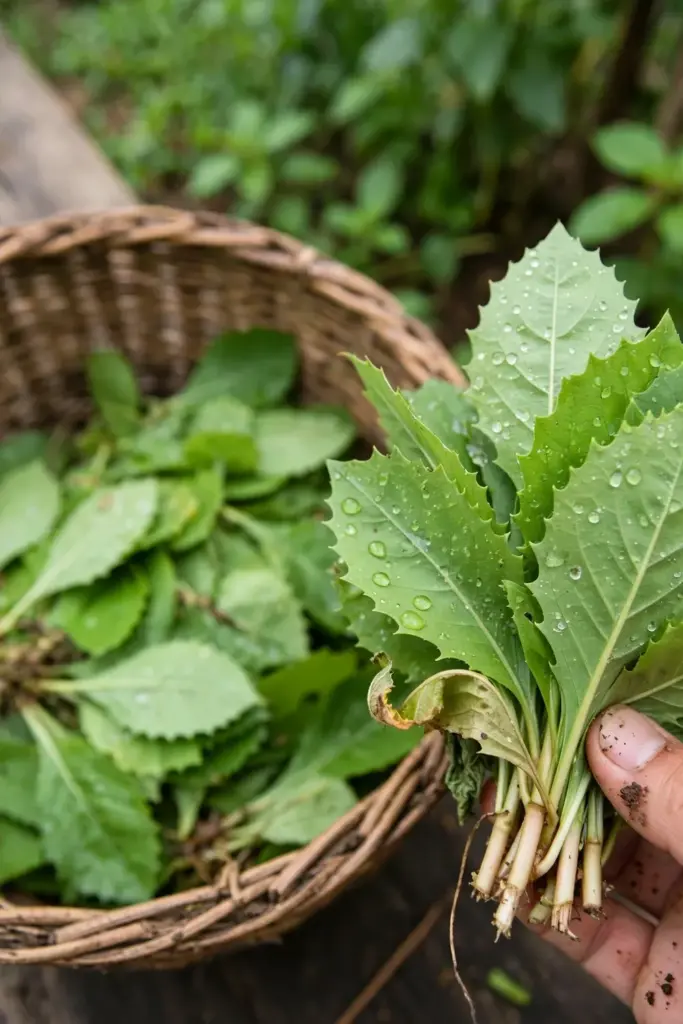
Take a few leaves at a time, never more than the plant can spare. A young plant with fewer than ten leaves gives nothing yet. Wait until the plant fills its pot. Cut each leaf at the stem with clean shears, and take the oldest leaves first.
Morning harvest beats afternoon harvest. Leaves cut in the morning hold more water and stay crisp in the basket. Rinse the leaves, pat them dry, and use them the same day.
11. Serve Fresh Leaves as Lalapan with Chili Paste
Lalapan is the Indonesian way to eat beluntas: fresh leaves served raw beside a main dish, with chili paste on the side. Thai cooks eat the same leaves raw or blanched as a side dish with chili paste, according to the Mahidol paper on Khlu leaves. Rinse the leaves and serve them crisp.
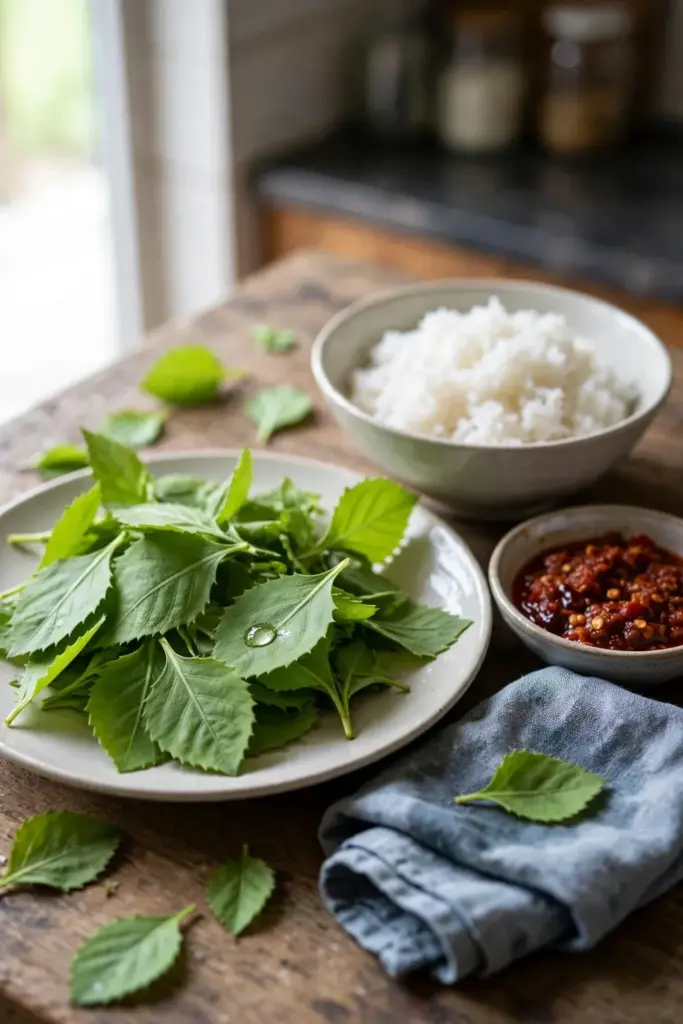
Pick young leaves for the table. Older leaves turn tougher. Blanch older leaves briefly in boiling water when you want them softer, then cool them fast in cold water.
This article gives growing and kitchen information only. Traditional medicinal uses exist across the region, and this article makes no health claims for the leaves. Eat beluntas as food, in the amounts a meal calls for.
Serve lalapan beside rice and the main dish, with the chili paste in its own bowl. The leaves are the fresh counterpoint to rich food. A plate of beluntas leaves, a bowl of chili paste, and steamed rice is a complete small meal on its own.
12. Dry Spare Leaves for Khlu Tea
Thai cooks call the plant Khlu. An infusion of beluntas leaves is drunk as tea in Vietnam and Cambodia, according to the same PROSEA account. Dry spare leaves through the season and brew them when the plant rests in winter.
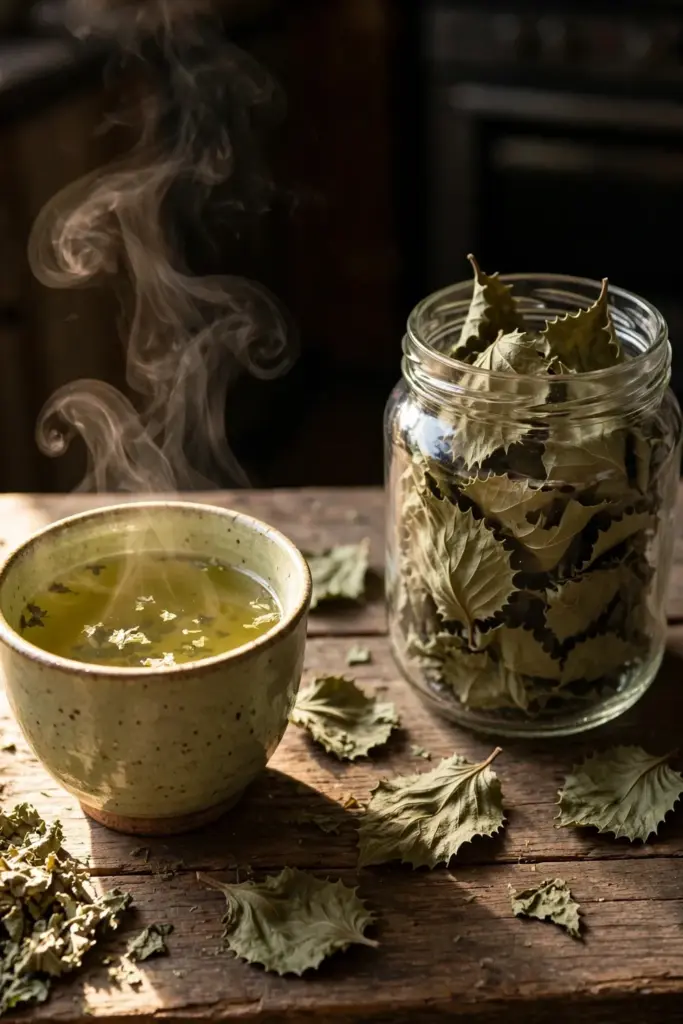
Spread the leaves thin on a tray in shade with moving air. Turn them once a day. The leaves are done when they feel crisp and crumble between the fingers. Store them in a sealed jar away from light.
Brew a small handful in hot water and taste. Strong tea comes from more leaf, not from longer steeping. A bitter cup means too much leaf or water that stayed at a hard boil.
Dry leaves in shade, not in direct sun. Sun drying fades the color and the aroma with it. Leaves dried in shade with moving air keep their green and their scent. Dry only leaves you would eat fresh. Old, tough leaves dry into old, tough tea.
13. Keep Beluntas in a Pot Outside Its Native Range
Beluntas is a traveler. The same PROSEA account records beluntas from India to southern China, through Indo-China, Thailand, Malaysia, Indonesia, and the Philippines, to Australia and the Pacific Islands, including Hawaii. A plant with that reach belongs in a pot outside its native range, not in an open bed.
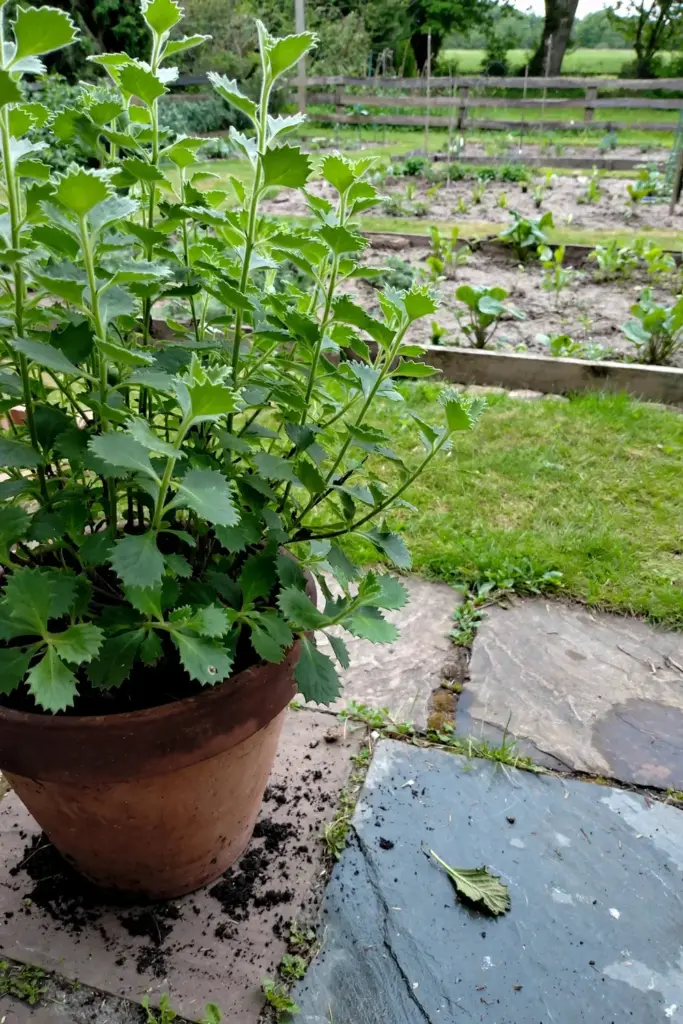
Each seed carries a white pappus that catches the wind. A pot stops seed from leaving the garden. A hedge in open ground does not. Check local invasive-plant lists before planting beluntas in the ground, and keep it in a pot when the lists are silent.
Never dump prunings or spent mix in a ditch or waterway. Bag the prunings and bin them. A cutting that roots in a ditch is a plant you no longer control.
Buy from a seller who names the species and the provenance. A plant dug from a coastal hedge and a plant raised from a cutting in a nursery behave the same in a pot, but the label tells you which one you hold. Keep the label with the pot. A labeled plant is easy to identify, easy to describe, and easy to keep out of the wrong bed.
14. Tell Beluntas Apart from 3 Pluchea Lookalikes
Check the botanical name before you buy. Beluntas carries obovate leaves 2.3 to 8 cm long and 1 to 4 cm wide, with a sharply toothed margin and a pointed tip, and heads 5 to 6 mm across in dense terminal and axillary corymbs, according to the Flora of China account for the species. The table below sorts the three mix-ups.
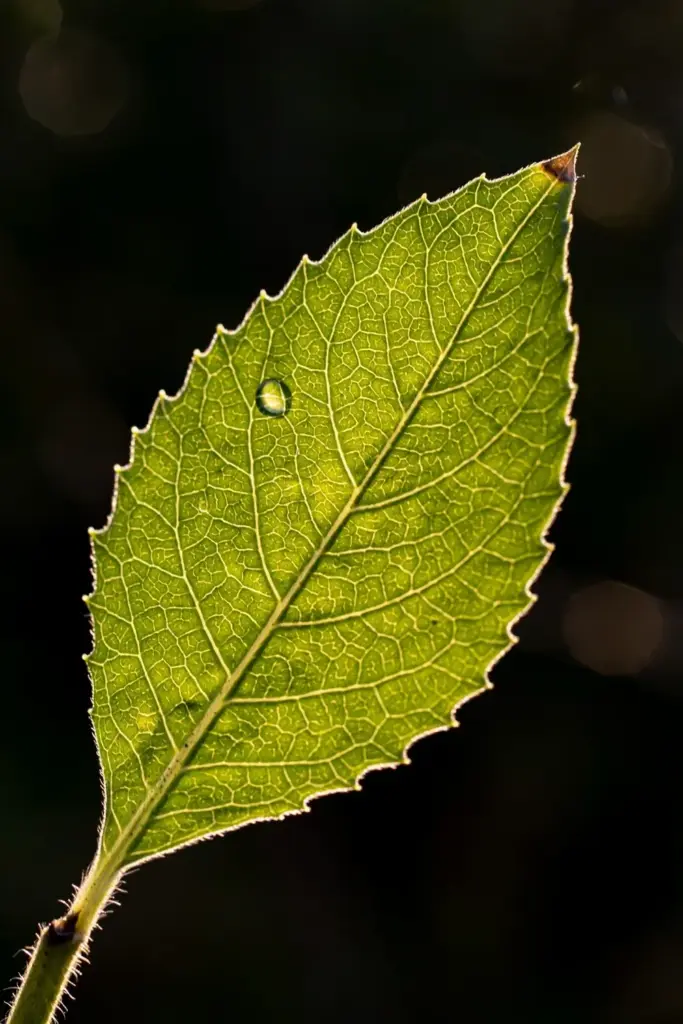
Pluchea camphorata is a different species in the same genus, and Pluchea odorata is another. Neither one is beluntas. A pot sold only as camphorweed or fleabane may hold any Pluchea. Ask for Pluchea indica by name, and check the leaf against the description above.
Pluchea lanceolata and Pluchea pteropoda also share the genus. The same PROSEA account notes Pluchea lanceolata leaf tea in India and Pluchea pteropoda as a febrifuge in Indo-China. Neither one is the Indonesian lalapan plant. The botanical name on the label settles it.
Buying online raises the risk. Ask the seller for the botanical name in writing and for a photo of the leaf. A seller who answers with the botanical name and a clear leaf photo is worth trusting. A seller who answers with a common name alone is not.
| Plant | What It Is | Check |
|---|---|---|
| Beluntas (Pluchea indica) | Indonesian lalapan and Khlu tea plant | Obovate leaves, toothed margin, pointed tip |
| Pluchea lanceolata | Indian species, leaf tea tradition | Different species, not beluntas |
| Pluchea pteropoda | Indo-China species, febrifuge tradition | Different species, not beluntas |
| Camphorweed or fleabane, no botanical name | Could be any Pluchea | Ask for Pluchea indica by name |
15. Fix the 5 Failures That Stall Beluntas
Five failures stall beluntas, and each one shows on the leaves first. Read the leaf, then fix the cause.
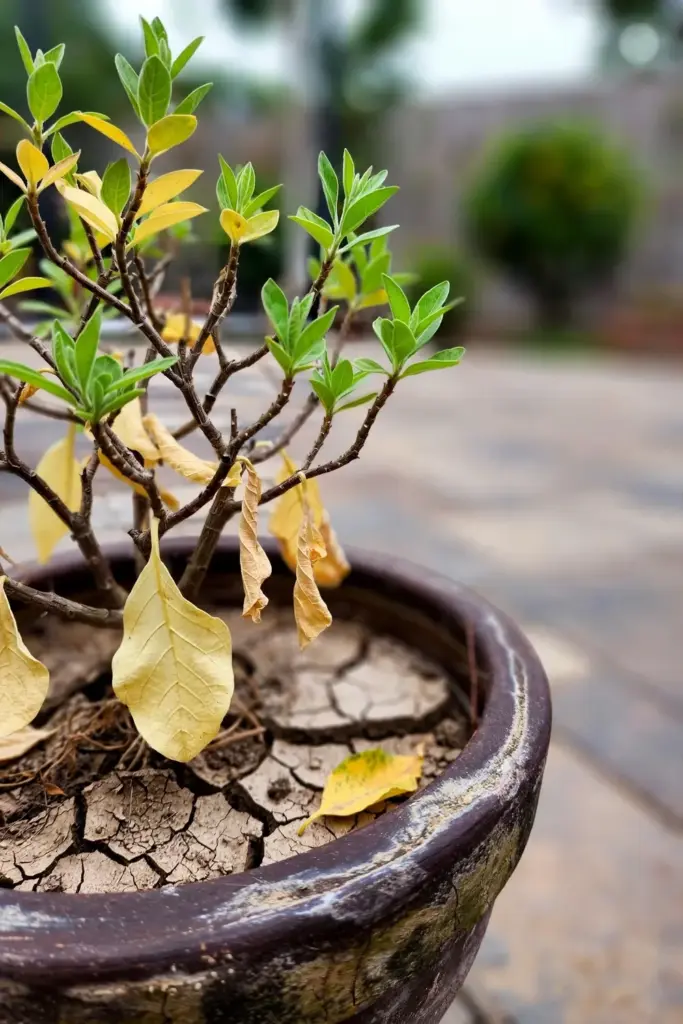
Black leaves after a cold night mean cold damage. Move the pot inside and cut the dead stems back to live wood. New growth starts from the base when the roots survived.
Yellow lower leaves mean wet mix. Let the pot dry, check the drainage holes, and repot into fresh mix when the base feels soft.
Leggy stems with wide leaf gaps mean low light. Move the plant closer to the window and prune the stretched stems back.
No flowers on a healthy plant means the plant is young or the pruning cut the buds. Prune after flowering, never before, and give the plant a full season.
Pale leaves and slow growth mean a hungry pot. Feed once with balanced fertilizer at the strength printed on the bottle and watch the new growth. New leaves that open green mean the plant recovered.
16. Run a Simple Yearly Routine for a Long-Lived Shrub
A beluntas shrub lives for years on a simple yearly routine. Take cuttings in spring, feed through summer, harvest before flowering, and bring the pot inside before the cold.
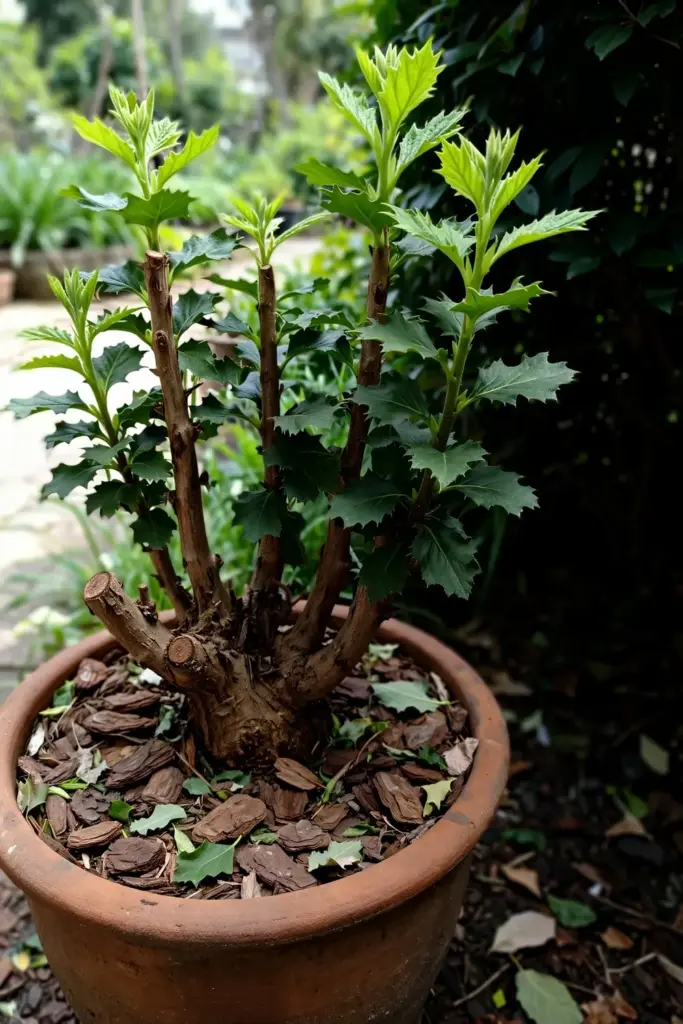
Each spring, slide the root ball out and check the mix. Fresh mix and one pot size up carry the plant through the season. Prune the tallest stems back to force side growth, and root the cut pieces as new plants. A pot that held beluntas for a full season earns fresh mix at repotting, even when the pot size stays the same.
Keep one plant for leaves and one for looks when space allows. The leaf plant gets harvested hard and pruned often. The show plant keeps its shape and loses only a leaf or two. Two plants cost one cutting and a second pot.
Label each pot with the plant name and the date it was potted. A label turns a guess into a record. Note the harvest dates on the label too, and the routine runs itself: a pot with no harvest note for a month is a pot that needs a look.
Frequently Asked Questions
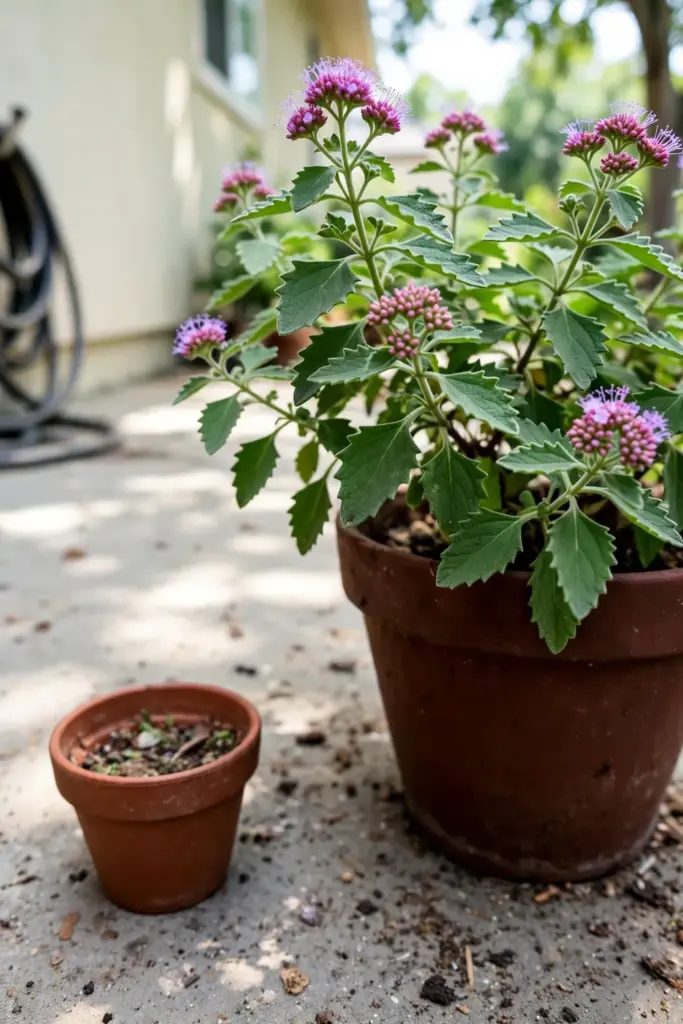
Grow beluntas in a pot, kept outside through the warm months and brought inside before nights drop to 10 degrees. The plant comes from tropical coasts and cannot tolerate temperatures below 10 degrees. Give the pot full sun in summer and the brightest window in winter. Cut watering back while growth slows. The pot-and-bring-inside routine is the whole temperate method, and it works for years.
Yes. Beluntas grows from seed as well as from cuttings, and seed runs slower. Sow seed in spring or autumn in well-drained mix and keep the mix moist until sprouts show. No published day count for beluntas seed germination was available, so expect a wait and watch the tray. Seedlings get the same care as rooted cuttings. Cuttings stay the faster route.
Yes, in the sense that matters at the nursery. Indian camphorweed is the English common name for Pluchea indica, and beluntas is the Indonesian name for the same plant. The two names point to one species. Check the botanical name on the label before you buy. A pot sold only as camphorweed or fleabane may hold a different Pluchea species entirely.
Yes. Indonesian cooks serve fresh beluntas leaves raw as lalapan, beside a main dish with chili paste. Thai cooks eat the same leaves raw or blanched with chili paste. Pick young leaves and rinse them before serving. Older leaves turn tougher, so blanch them briefly when you want them softer. This article makes no health claims for the leaves.
Yellow lower leaves usually mean wet mix. Let the pot dry, check the drainage holes, and repot into fresh mix when the base feels soft. Yellow leaves with dry mix point to hunger. Feed once with balanced fertilizer at the strength printed on the bottle and watch the new growth. New leaves that open green mean the plant recovered.
Only where frost never arrives. Everywhere else, the pot comes inside before nights drop to 10 degrees and stays inside until spring nights turn reliably warm. The plant carries no frost protection, and one cold night below 10 degrees can blacken the leaves. A bright window and sparing water carry it through winter. Resume normal watering when new leaves open in spring.
Keep One Pot of Beluntas by the Kitchen Door
One pot gives you a shrub for the sill and leaves for the table, and that is how to grow beluntas at its best. Give it a sunny pot and sharp shears. Start with one cutting this spring. Harvest young leaves before flowering.
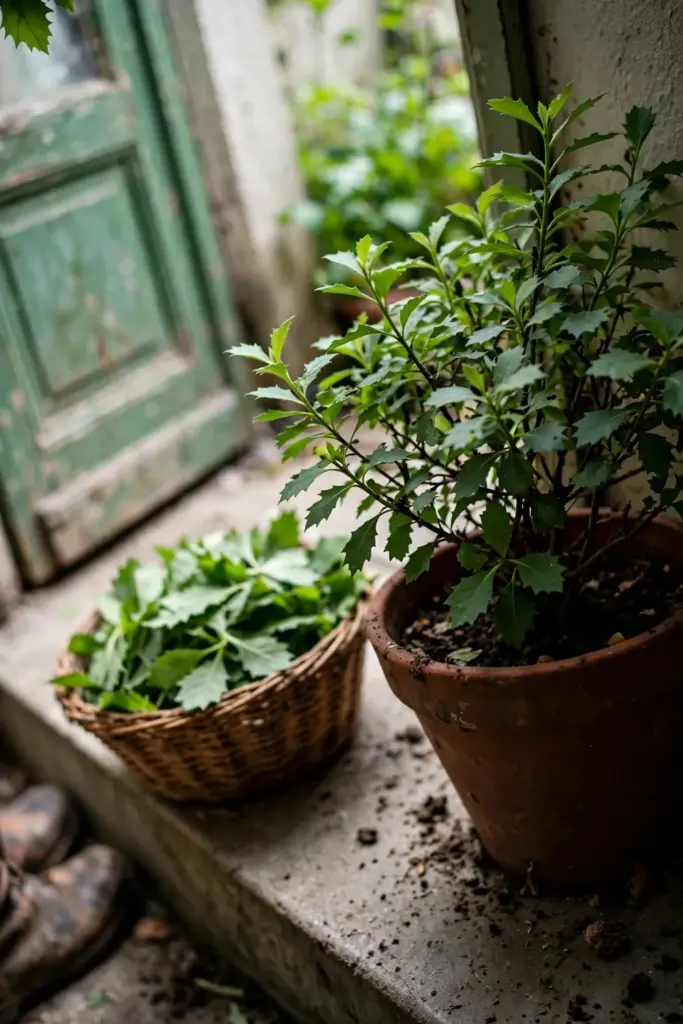
Pair beluntas with another Indonesian herb on the same sill. The site’s lemongrass guide covers a second tropical herb that grows in a pot and flavors the kitchen. Beluntas gives the greens. Lemongrass gives the scent. The two pots sit well together.