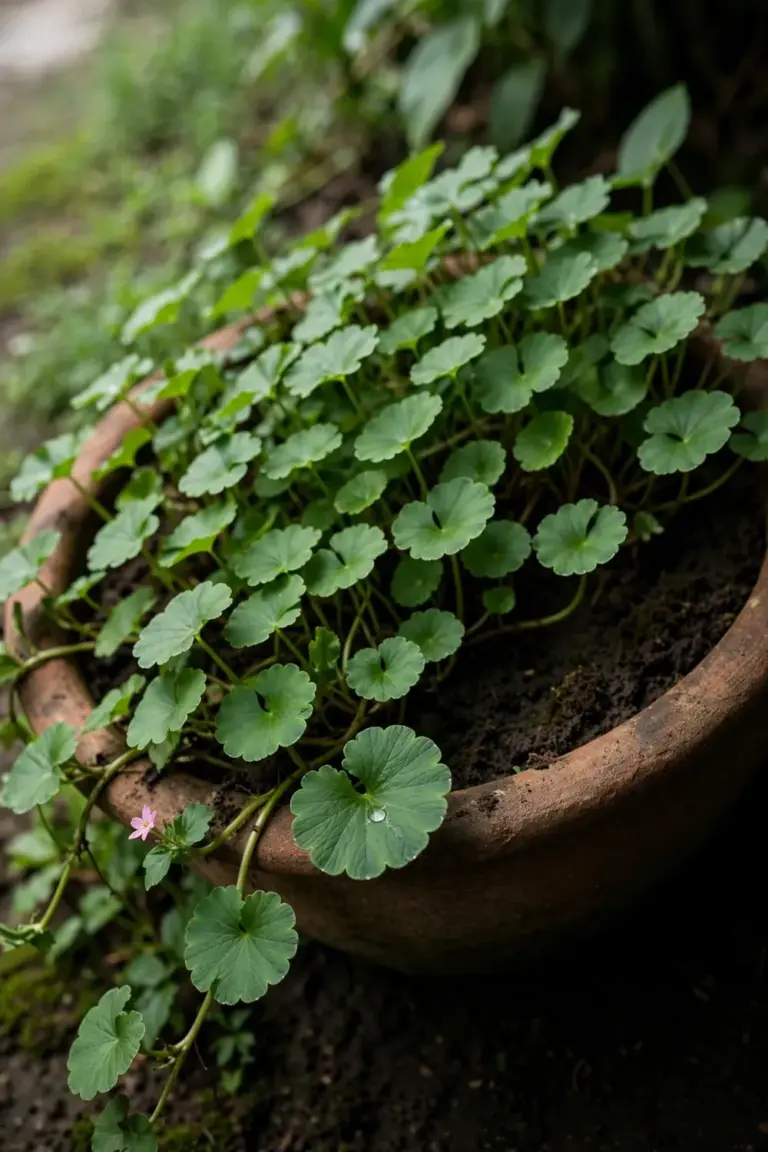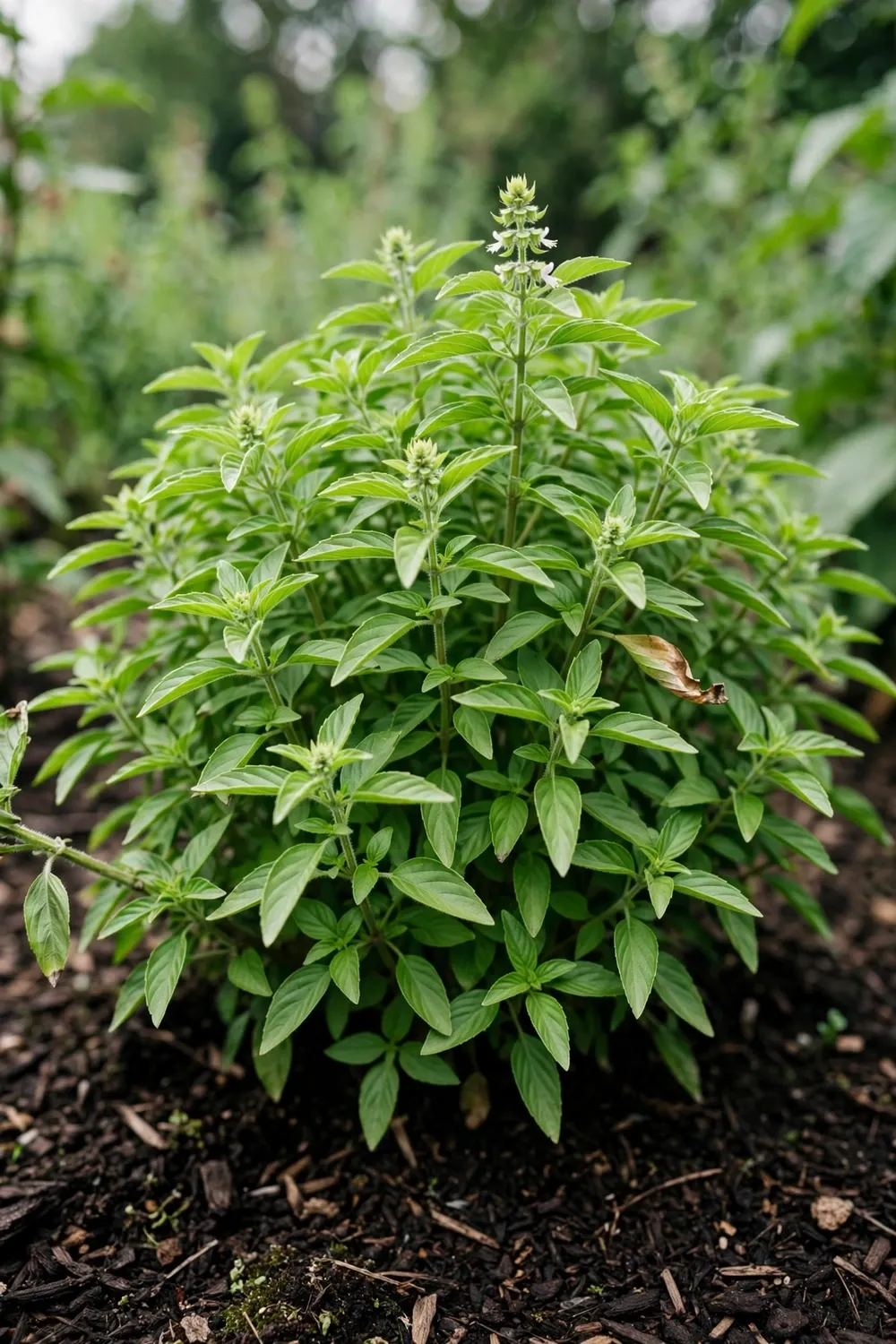

Press lemon basil seed into damp mix 4 to 6 weeks before your last frost, and the first sprouts break the surface in 10 to 14 days at 70 to 85°F. That is how to grow lemon basil from seed: a tender annual with a real lemon punch that gives its first full harvest 60 to 90 days after seeding. The rest of this page is 15 steps, from the first sow to the last seed head.
Lemon basil is the kemangi of Indonesian lalap, the raw-vegetable platter served with sambal, and it behaves nothing like the sweet basil in a pesto jar. It germinates on the soil surface, sulks in cold, and turns bitter the moment it flowers. The seed starting steps on this site cover the general tray mechanics; everything below is specific to this lemon-scented herb.
One honest note before the tray: the plant on your seed packet may carry a different botanical name than the one in a botany textbook. The identity section below sorts that out in one table, so you never grow the wrong basil by mistake. The method below assumes a temperate gardener growing an Indonesian herb far from home: start indoors, move out after frost, harvest hard all summer. Get the identity right once, and every step after it behaves the way this guide says it will.
Which Basil Is in Your Pot? Lemon Basil vs Thai Basil vs Holy Basil
Three different basils share the name “basil” in Asian kitchens, and they are three different plants. Grow the wrong one and the dish tastes wrong. The table below separates them as plain plant facts.
| Trait | Lemon basil (kemangi) | Thai basil (horapa) | Holy basil (tulsi) |
|---|---|---|---|
| Botanical name | Ocimum ×africanum, a hybrid of O. basilicum × O. americanum | O. basilicum var. thyrsiflora | Ocimum tenuiflorum |
| Scent | lemon, from citral and limonene | anise and licorice | peppery clove |
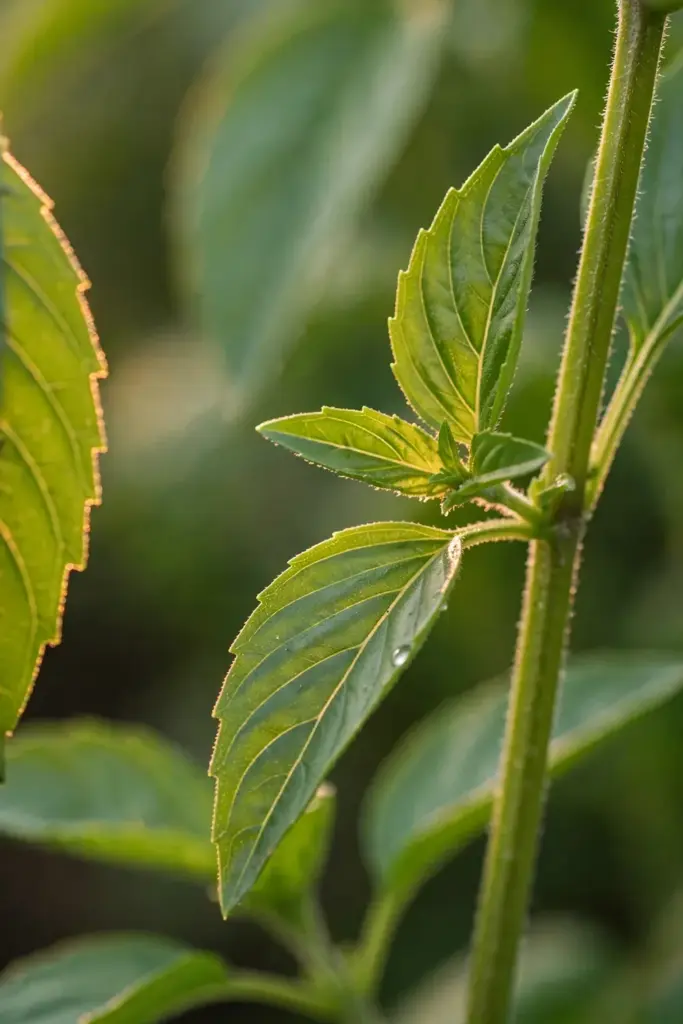
| Leaves | narrower than sweet basil, slightly serrated edges | broad, glossy green | smaller, hairier |
| Flowers and stems | white flowers on green stems | purple flowers on purple stems | small purple-white flower spikes |
| Height | 20 to 40 cm | 45 to 60 cm | 30 to 60 cm |
| Kitchen role | eaten raw in lalap, cooked in Lao and Thai dishes | stir-fries and curries, added at the end | teas and medicine, sacred in India |
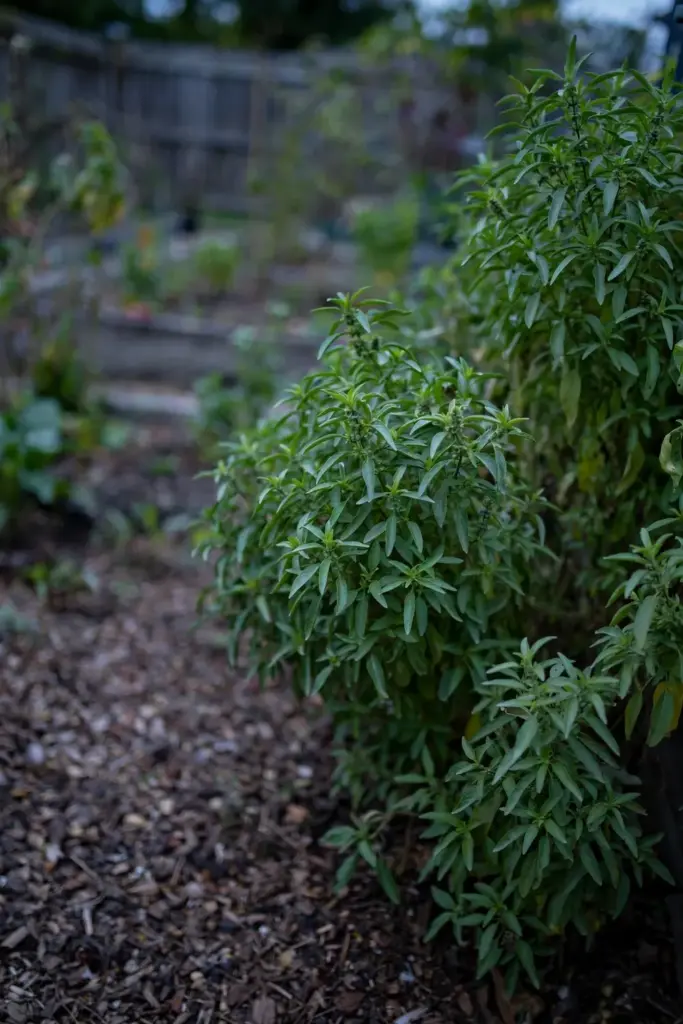
Lemon basil carries the synonym Ocimum ×citriodorum on older labels and seed packets, and that is the name still printed on most commercial seed. Current taxonomy lists the plant as Ocimum ×africanum, a hybrid of sweet basil and American basil, with white flowers and stems 20 to 40 cm tall. True O. americanum has hairy, pubescent leaves and barely exists in cultivation, so the “lemon basil” you buy is the hybrid, not the wild species. Know the packet name and the garden name, and nursery mix-ups stop being a problem.
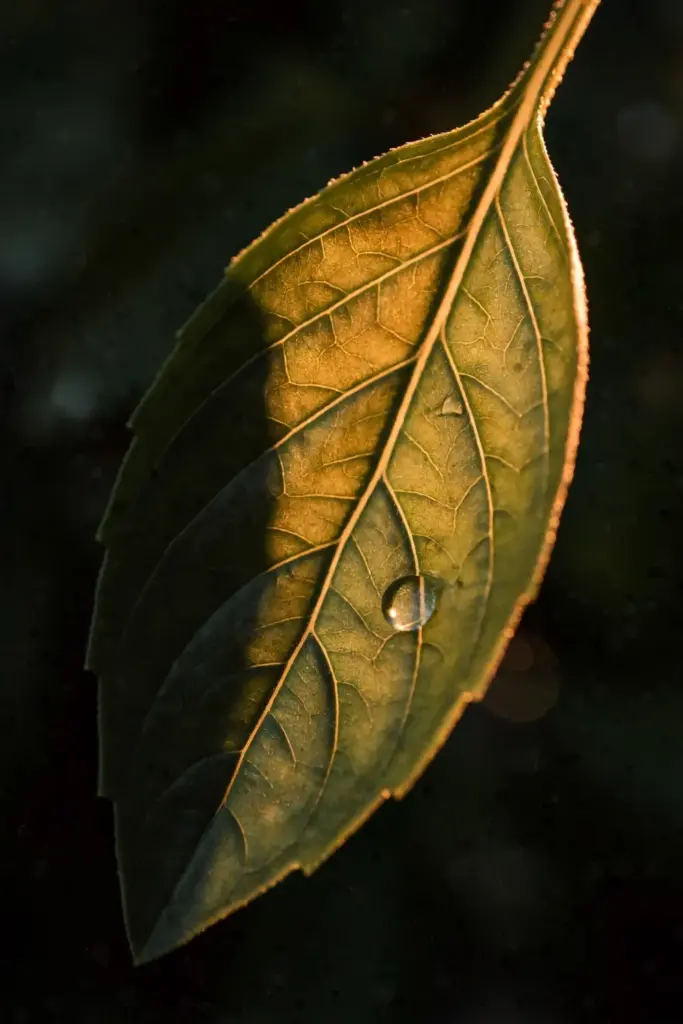
The name matters at the garden center. Packets labeled “Thai lemon basil” or “manglak” are usually the same hybrid, while anything labeled “lemon balm” is a different plant entirely. When a label shows only a common name, the leaf settles it: lemon basil leaves run narrower than sweet basil with lightly serrated edges, and crushed between your fingers they smell unmistakably of lemon peel.
A companion guide on this site covers growing holy basil (tulsi) from India, the sacred and medicinal species in the right-hand column. It is scheduled for publication; once both guides are live, they will link to each other. This page stays with lemon basil only.
1. Start Seeds Indoors 4 to 6 Weeks Before the Last Frost
Lemon basil dies at the first frost, so the season starts under cover. Sow indoors 4 to 6 weeks before your last frost date to give seedlings a head start. Basil is a tender annual, and the Herb Prof’s basil growing guide reports the standard indoor-start window along with the warmth the seed needs.
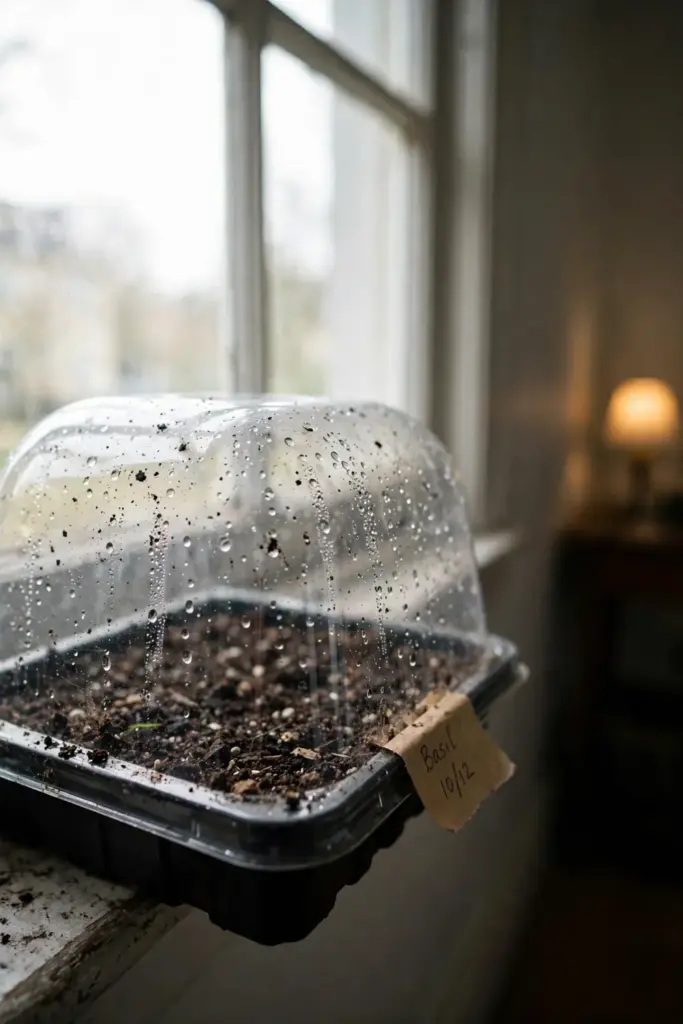
Count backward from your frost date and mark the sow day on a calendar. For a continuous supply, sow a second tray three weeks after the first, so the first tray peaks while the second hits its stride and the kitchen never runs dry. A packet sown too early produces leggy seedlings that stall under weak spring light. A packet sown too late pushes the first harvest into the hottest weeks, when flowering pressure is highest and every bud must be pinched daily. The 4-to-6-week window threads between those two failures. If your springs run cold and gray, sow at the late end of the window and make up the time with a heat mat, which buys back the week that weak light steals.
2. Surface-Sow the Light-Hungry Seeds on Damp Mix
Lemon basil seed needs light to wake up, so burying it is the fastest way to get zero sprouts. Press each seed onto the surface of damp, fine seed-starting mix and leave it uncovered. A fingertip press gives seed-to-soil contact without a soil blanket on top.
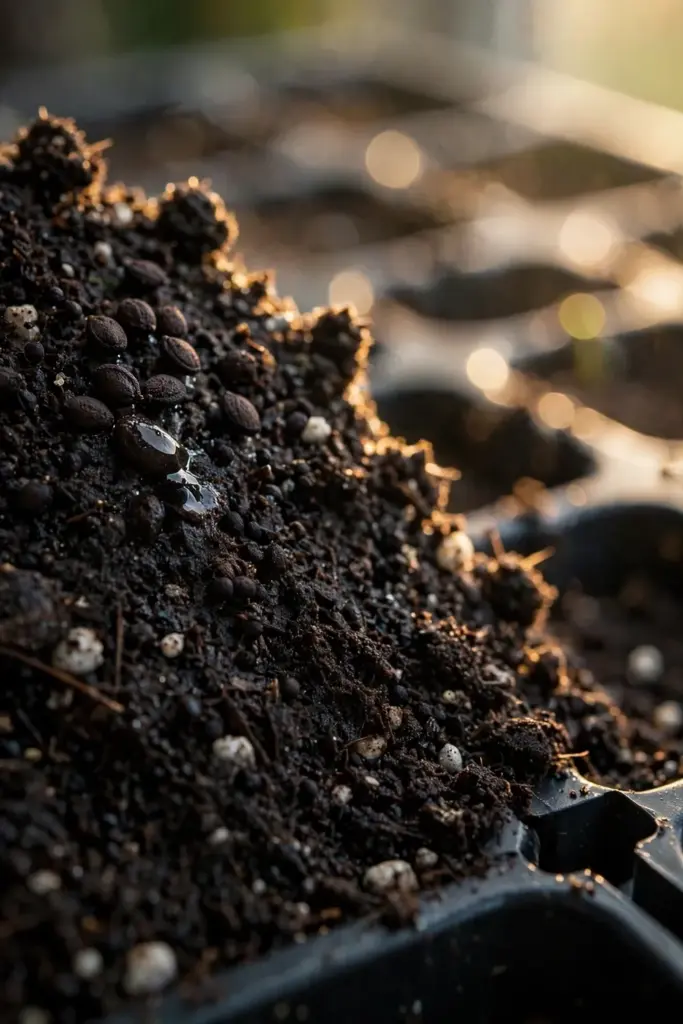
Mist the surface gently after sowing. A hard watering stream floats the tiny seeds into clumps, and clumped seedlings compete instead of growing. Label the tray with the variety and the sow date. Two trays of green seedlings look identical a month later, and the label is the only memory that does not fade. Cover the tray with a clear dome or plastic wrap to hold humidity, and vent it daily so stale air does not sit on the mix. Lift the cover at the first sign of green. For packet-buying basics, from germination rates to storage, a guide to buying herb seeds is worth a read before you order. Fresh seed matters more with basil than with tomatoes or peppers, so check the packed-for date and buy for the current season.
3. Hold the Tray at 70 to 85°F for 10-to-14-Day Germination
Warmth decides the calendar. Basil seed sprouts in 10 to 14 days when the soil holds between 70 and 85°F (21 to 29°C), per the Herb Prof’s basil growing guide. Below that range, germination drags and rots beat sprouts.
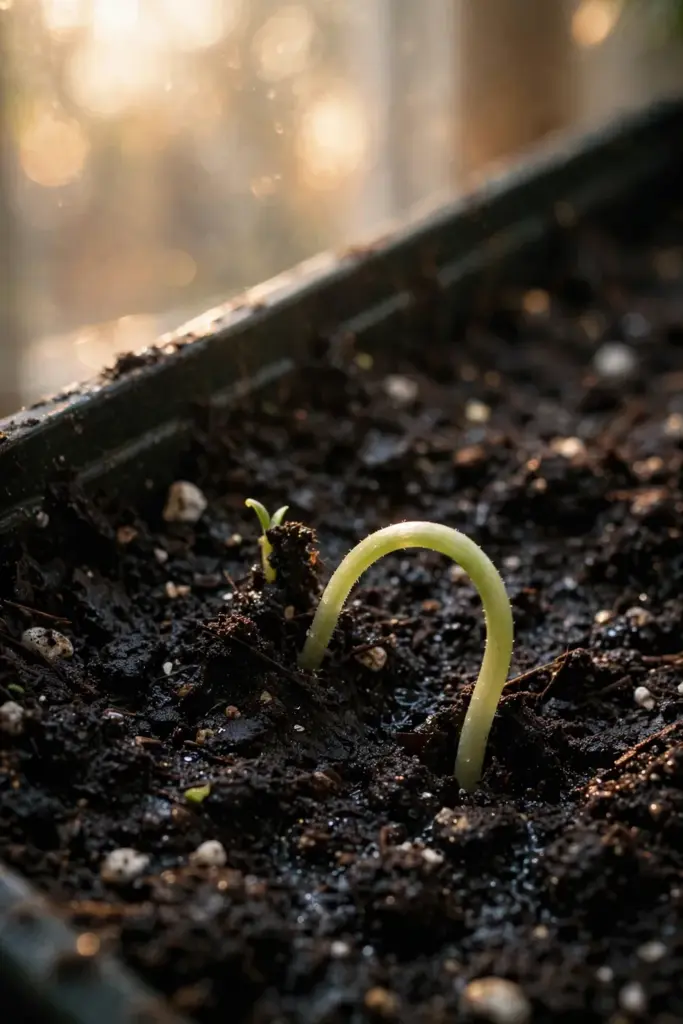
A heat mat under the tray is the simplest fix in a cool house. Set it with a thermostat and check the mix with a finger each morning. The top of a refrigerator works in a pinch, but a mat holds the temperature steady through cold nights, when an unheated tray can drop 10 degrees and stall the whole batch. Pull the mat off the day the first green loops appear, since seedlings prefer slightly cooler air than germinating seed. Keep the dome on for two more days after sprouting, then remove it for good so the young stems toughen in moving air. The first sign is a tiny green loop, followed by two rounded seed leaves. The pointed, serrated true leaves that smell of lemon follow about a week later. If nothing shows by day 14, the tray was too cold or the seed too old. Resow rather than waiting.
4. Give Seedlings 12 to 16 Hours of Bright, Close Light
The moment sprouts appear, light becomes the limiting factor. A sunny windowsill grows tall, pale seedlings that flop at transplant time. Iowa State Extension’s seed-starting notes recommend 12 to 16 hours of light per day with fluorescent fixtures hung 4 to 6 inches above the seedlings, in their yard-and-garden seed-starting guide.
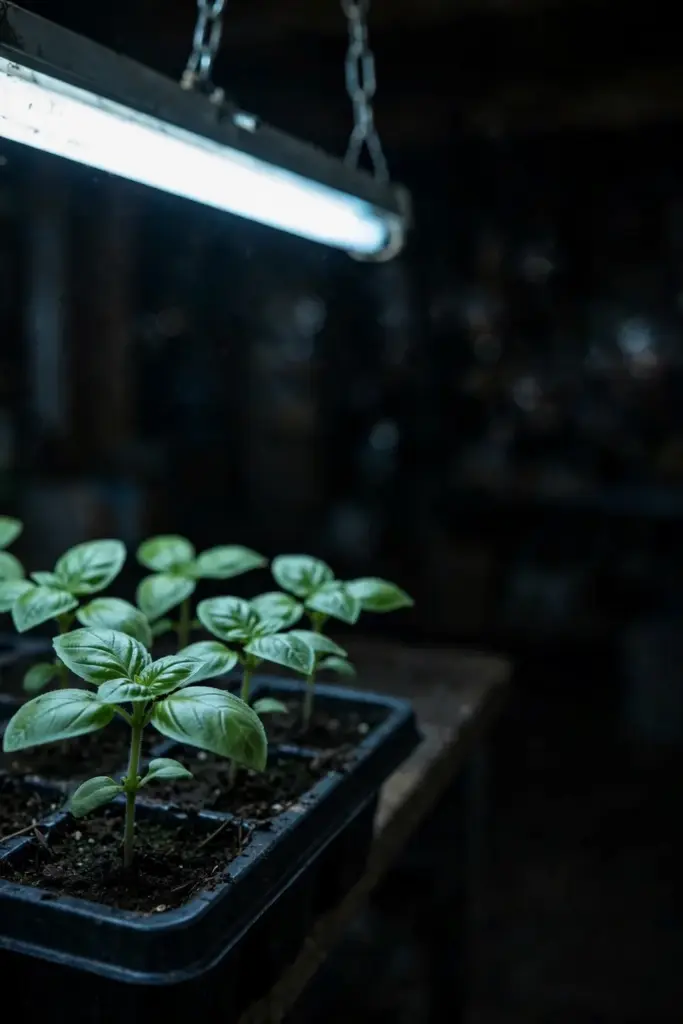
Hang a basic shop light on chains so you can raise it as the plants grow. Keep the tubes just above the leaves, not a foot overhead. Run the light on a timer and give the seedlings a dark night. Seedlings grown this way stay short, stocky, and green, with stems thick enough to survive wind. If a batch still stretches, the light was too far or the room too warm. Lower the fixture, add a small fan on its lowest setting a few feet away, and the next leaves come in tighter. Leggy seedlings rarely recover their shape, so it is cheaper to resow than to nurse them.
5. Transplant Out Only After Nights Stay Above 50°F
Lemon basil reads cold as damage, not as a challenge. Move seedlings outside only after the last frost, when nights hold above 50°F and the soil has warmed to at least 60°F. The Herb Prof’s basil guide notes that soil below 60°F stalls basil, and nights under 40°F discolor the leaves.
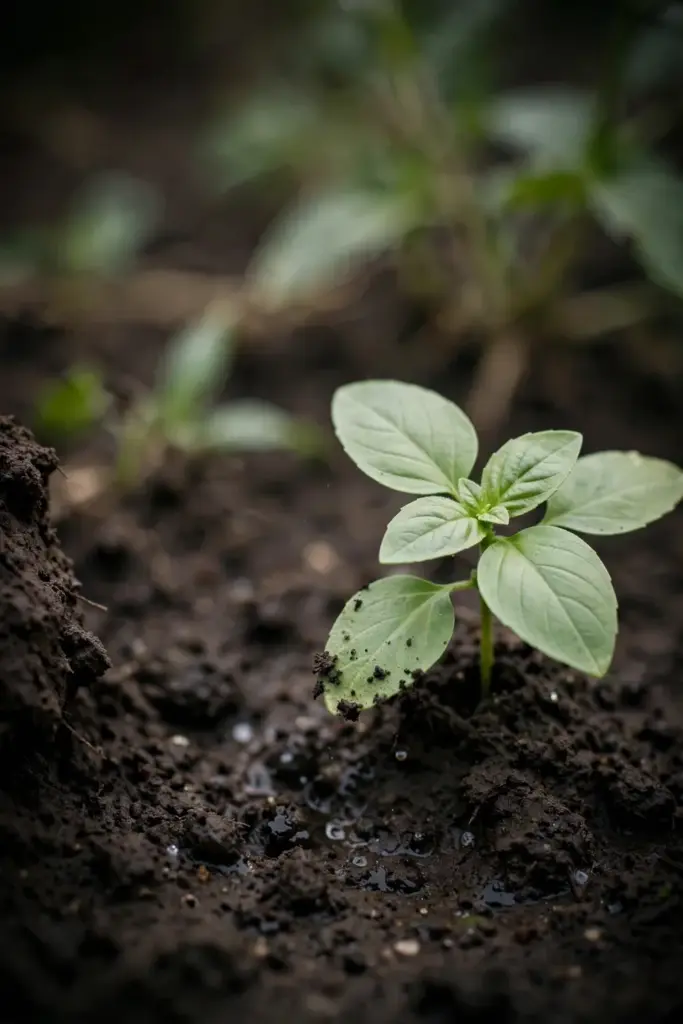
Harden the seedlings off first. A soil thermometer takes the guesswork out of the timing: push the probe 5 cm into the bed on three consecutive mornings, and transplant when it reads 60°F or higher. Set the tray outside in shade for an hour on day one, then add an hour of sun each day for a week, bringing the tray in if a cold snap threatens. Skipping this step burns leaves that grew up under glass. A seedling that sulks for two weeks after transplanting gives the same harvest as one sown two weeks later, so the patience pays. Transplant on a cloudy afternoon or in the evening to cut transplant shock, and water each plant in with a full can so no air pockets remain around the roots.
6. Set Plants 10 to 12 Inches Apart in Full Sun
Give each plant room and light. Space lemon basil 10 to 12 inches (25 to 30 cm) apart in a spot that receives 6 to 8 hours of direct sun, the spacing and sun figures the Herb Prof’s basil guide publishes. Crowded plants trap humidity between leaves and invite fungal trouble.
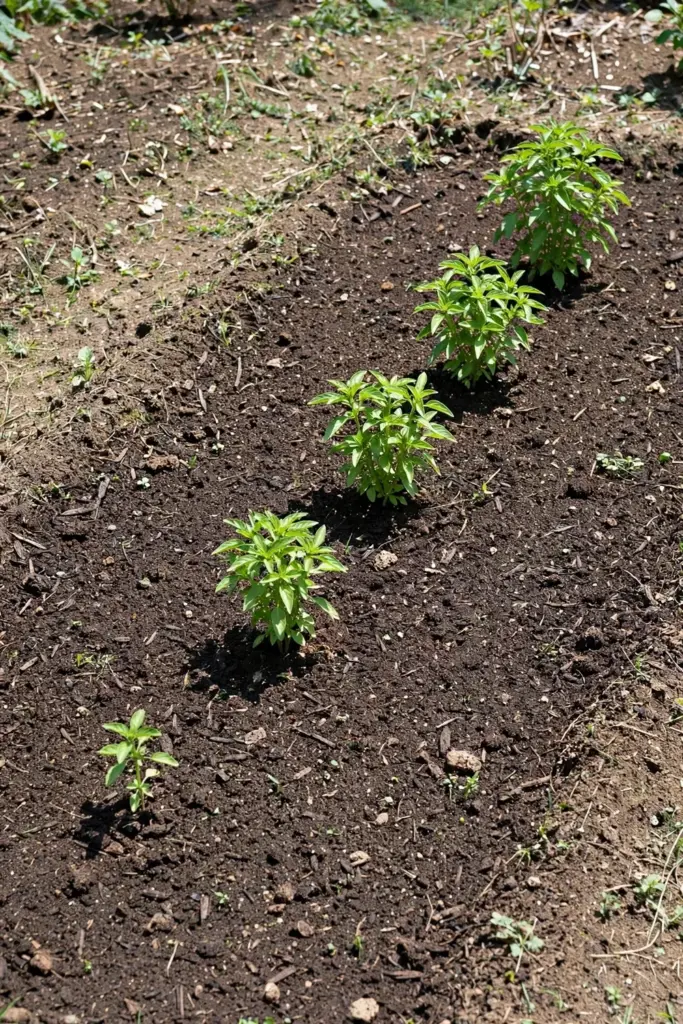
Dig each hole twice as wide as the root ball and set the seedling at the same depth it grew in the tray. Water the hole before the plant goes in, then firm the soil and water again. In very hot climates, afternoon shade keeps leaves from cupping, but full morning sun stays non-negotiable. Basil sits happily beside tomatoes, peppers, and eggplants, which share its appetite for sun, warmth, and steady water. Keep it clear of tall corn and sunflowers.
7. Build Loose Soil at pH 6.0 to 7.0
Lemon basil wants fertile, well-drained soil with a pH between 6.0 and 7.0, the range the Herb Prof’s basil guide lists. Clay holds water and rots the crown, while sand drains before the roots can drink.
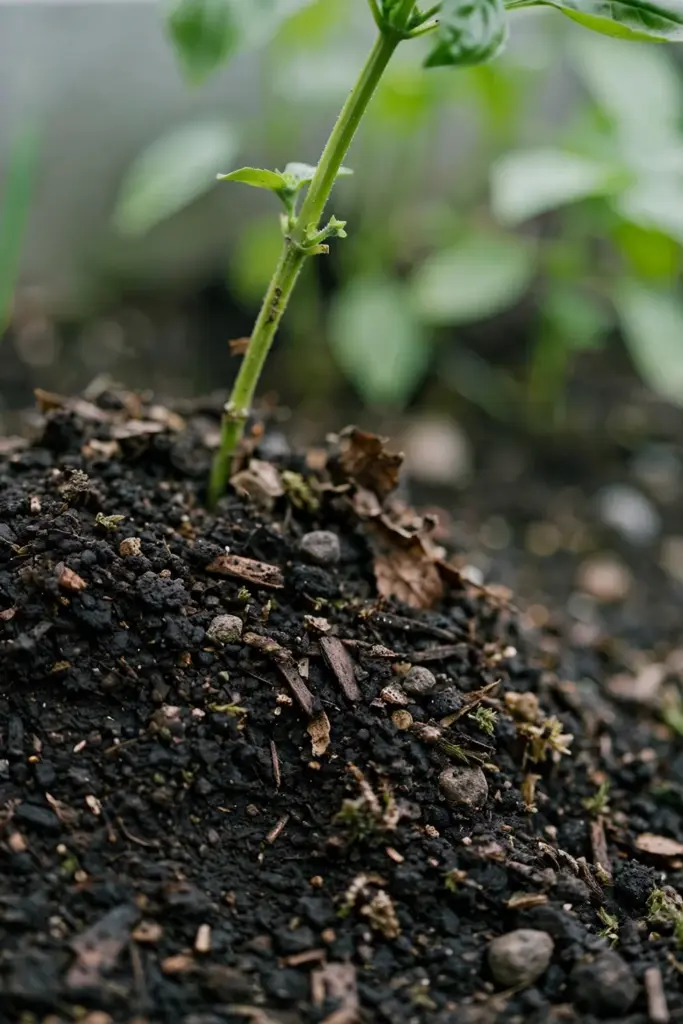
Work 5 cm of finished compost into the top 20 cm of the bed before planting. Compost feeds slowly. It opens the structure in one move. Building soil health through organic matter is the long game that makes every later step easier. Skip fresh manure, since it burns young roots and carries weed seed. Where the native soil is heavy clay, plant on a low ridge 10 cm high so excess rain drains away from the crown instead of pooling around it. Test the pH with a cheap probe or a lab kit before amending, because guessing leads to over-liming. Basil forgives a slightly low pH far better than a high one.
8. Water When the Top Inch of Soil Goes Dry
Basil likes steady moisture, not a swamp. About 1 to 1.5 inches of water per week keeps lemon basil growing, the figure the Herb Prof’s basil guide gives. The finger test beats any schedule: push a finger into the soil, and water when the top inch feels dry.
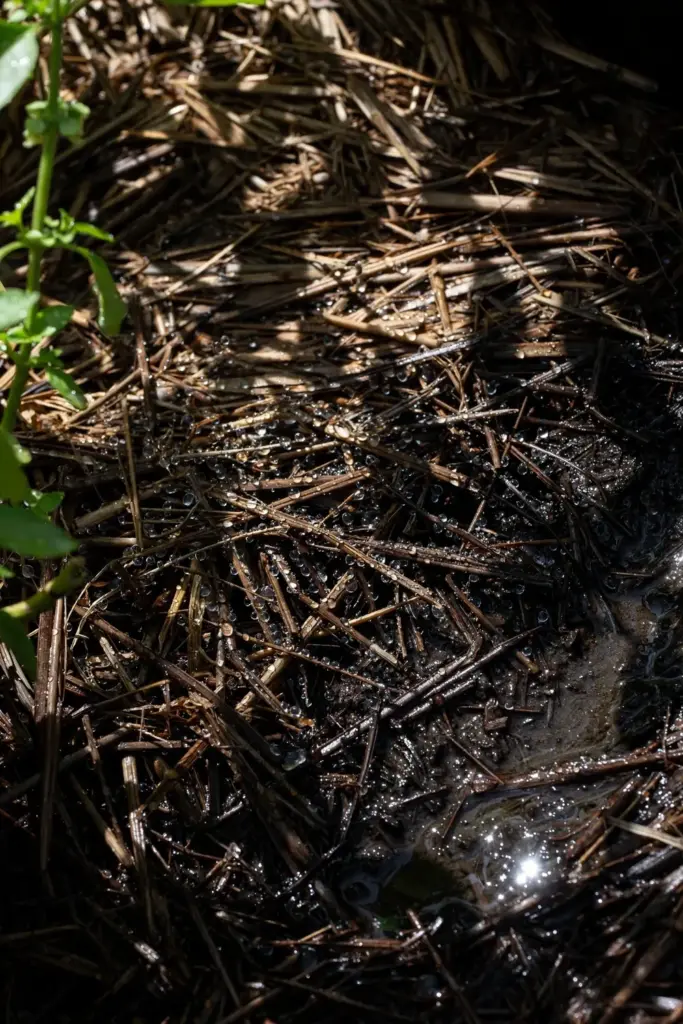
Water the soil, not the leaves. Wet foliage invites the leaf diseases that basil is prone to. A ring of straw or shredded-leaf mulch 5 cm deep holds moisture between waterings and keeps soil from splashing onto lower leaves. In a heat wave, check pots twice a day, since containers dry far faster than beds. Deep, infrequent watering builds deeper roots than a daily sprinkle, so soak the root zone fully each time and then let the top inch dry before the next round. Learn the two failure looks: underwatered leaves wilt in the afternoon heat and recover by morning, while overwatered leaves yellow from the bottom up and stay limp. A rain gauge under the sprinkler tells you when the week delivered its inch and a half, so you stop guessing.
9. Feed Lightly at Half the Label Rate
Lemon basil is a light feeder, and heavy nitrogen pushes soft growth with weaker scent. Scratch a balanced granular fertilizer into the soil surface at half the label rate, or water in a diluted liquid feed, and repeat monthly while the plant grows. The leaves tell you when the rhythm is right: deep green and fragrant means enough.
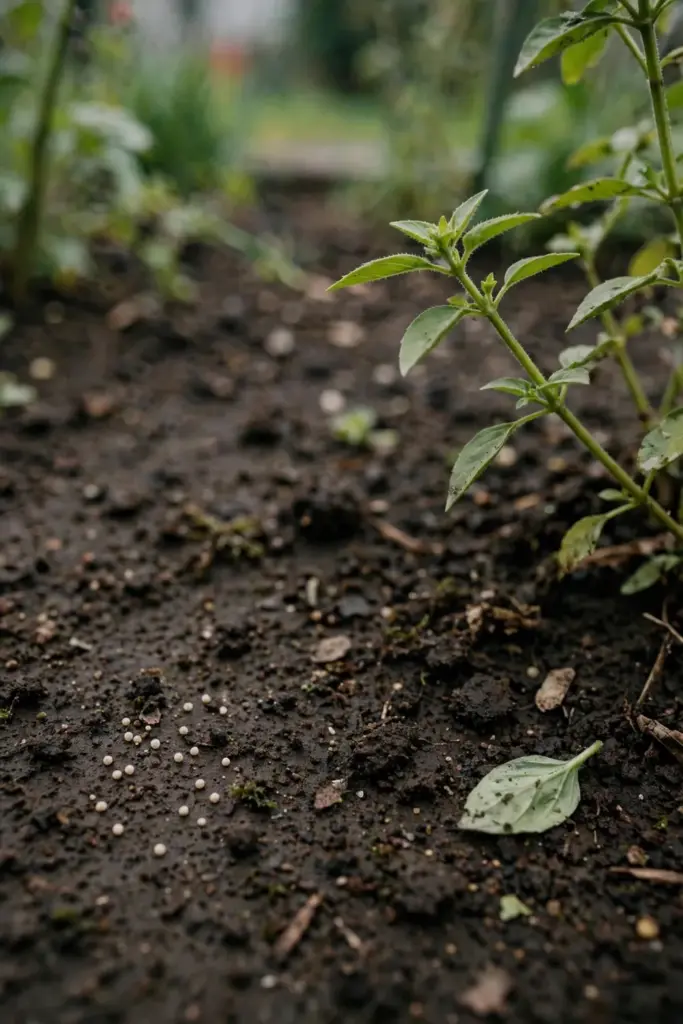
Pale, slow leaves after a month of good weather signal hunger. Yellowing that starts at the leaf edges with dark green veins points to a different problem, usually pH or water, not fertilizer. Feed the plant, not the calendar, and back off entirely in the last month before frost. A compost top-dressing in midsummer often replaces a feeding round entirely, since the bed built in step 7 keeps releasing nutrients.
10. Pinch Above a Leaf Pair at 6 Inches
Pinching is the single skill that turns one stem into a bush. When the plant reaches about 6 inches (15 cm) tall, pinch or snip the main stem just above a pair of leaves. The Spruce’s basil guide gives the same 6-inch mark for the first pinch. Use clean fingernails or small scissors. A crushed stem heals slowly and invites trouble. Two new stems sprout from the leaf axils below the cut.
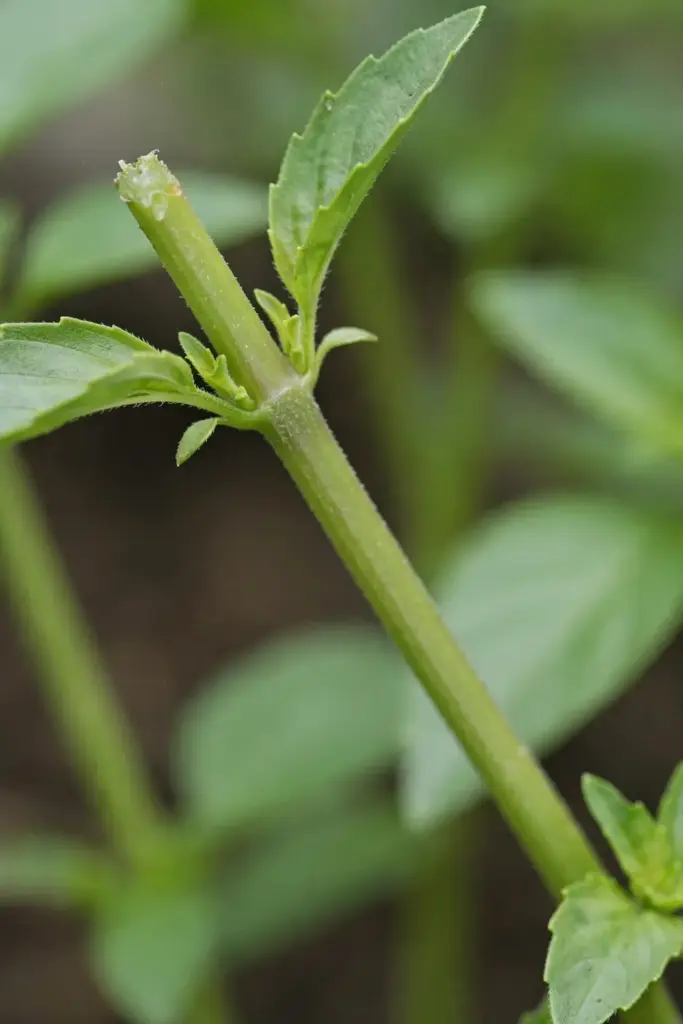
Repeat the cut on every branch once it carries six to eight leaves. Each pinch doubles the growing tips. A plant pinched three times by midsummer carries eight growing tips where an unpinched plant carries one, which is the whole arithmetic of a bushy harvest. Never strip more than a third of the plant in one session, or recovery stalls. The cut heals in days on a healthy plant, and the two replacement shoots grow faster than the single stem they replaced.
11. Strip Flower Buds the Day They Appear
Flowers end the harvest. The first buds usually show about six weeks after transplanting, and the plant’s energy shifts from leaves to seed the day they open. Pinch every bud cluster off the moment you spot it, cutting back to a leaf pair.
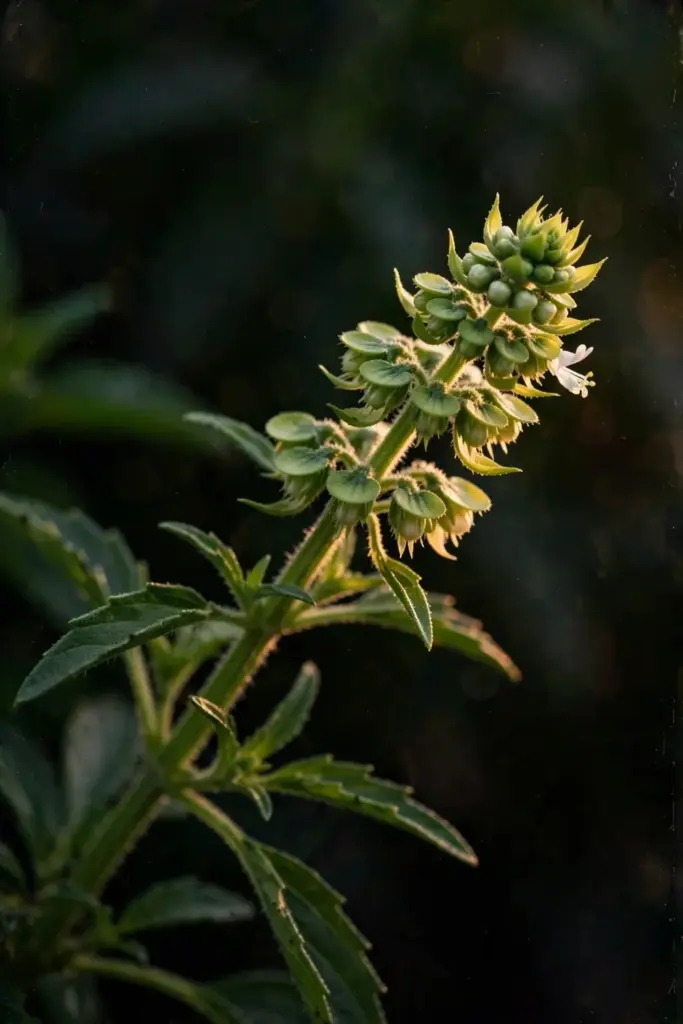
Flowering redirects the plant’s energy from leaves to seed, and the leaf flavor turns bitter after bloom. I have learned to check every stem for buds every two or three days, because once the plant flowers the leaves turn bitter. A plant allowed to bloom freely also stops branching, so the bush you built in step 10 collapses into a flower stalk. Late in the season, let one plant flower on purpose if you want to save seed. The seeds form on the plant after flowering and dry there, so wait until the heads turn brown and crisp before shaking them into a paper bag. The hybrid grows reasonably true from saved seed, which means next year’s plants will smell like this year’s.
12. Scout Weekly for Aphids, Whiteflies, and Slugs
Small pests find basil fast. Clemson Extension names Japanese beetles, slugs, and aphids as basil’s most common pests, with whiteflies and spider mites close behind, as reported in the Herb Prof’s basil growing guide. Check leaf undersides once a week. Aphids and whiteflies cluster there, along the veins.
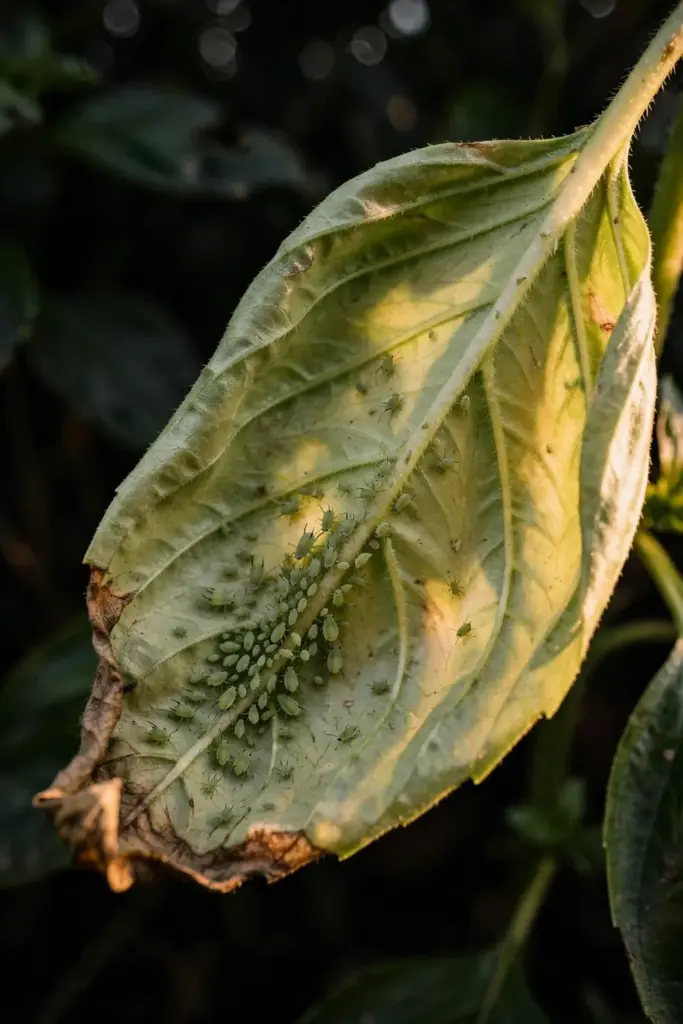
Start with a hard jet of water to knock soft-bodied insects off the plant. Follow with insecticidal soap only if they return, coating both leaf surfaces in the evening when bees are done foraging. For Japanese beetles, the morning hand-pick into a jar of soapy water beats any spray, since the beetles move slowly before the sun warms them. Hand-pick slugs after dark with a flashlight. A flat board laid near the bed works as a daytime slug trap: lift it each morning and dispose of the catch. Good spacing and dry foliage keep fungal leaf spots rare without any spray at all.
13. Grow a Patio Plant in a 3-Gallon Pot
No bed is no excuse. One lemon basil plant thrives in a 3-gallon (11-liter) pot with drainage holes, filled with quality potting mix. The pot must drain freely, since basil roots rot in standing water. On picking potting soil, texture matters more than brand: open, airy, and able to hold moisture without waterlogging.
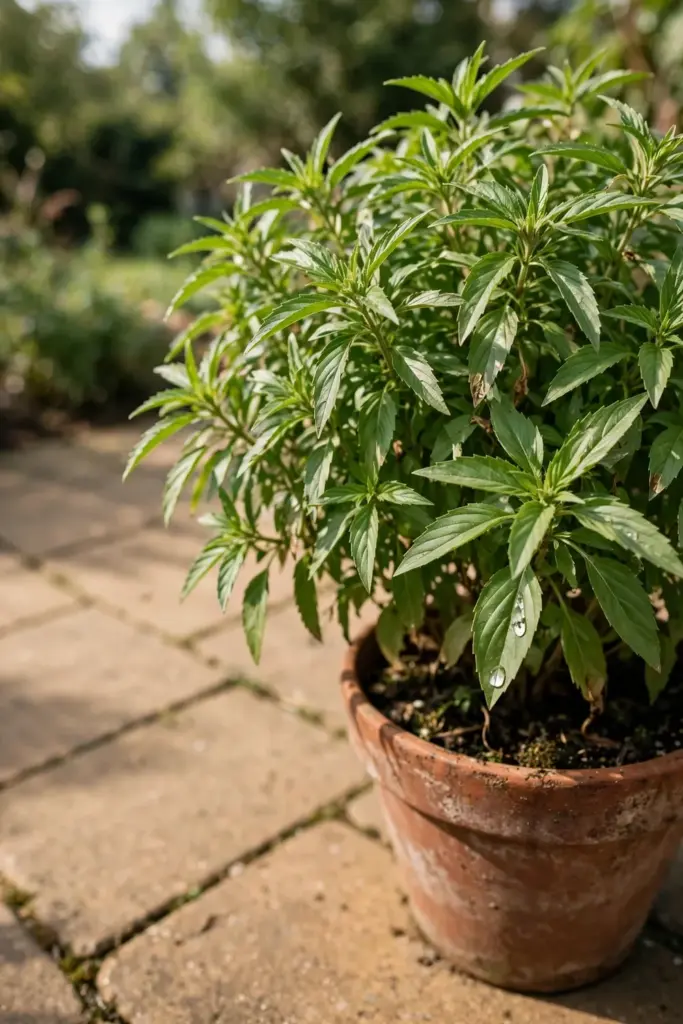
Set the pot where it gets full morning sun. Container plants dry fast, so check the mix daily in summer heat. Feed at half strength every two weeks, because watering leaches nutrients out of pots quickly. That is the whole method for how to grow lemon basil on a patio, a balcony, or a fire escape: one good pot, daily water checks, and ruthless bud pinching.
Before the first cold night, bring the pot inside to a south-facing window and cut the plant back by a third to fit the space. Indoor winter growth slows but continues, and the plant you carry through winter gives you cuttings and an early start the following spring. Keep the indoor pot away from heat vents, which dry the air and invite spider mites.
14. Harvest in the Morning for the Strongest Lemon Flavor
Pick after the dew dries and before the midday heat. Morning leaves carry the highest concentration of the lemon-scented oils, and they wilt less in the basket. Harvesting can begin 60 to 90 days after seeding, per The Spruce’s basil guide, and regular picking keeps new leaves coming all season.
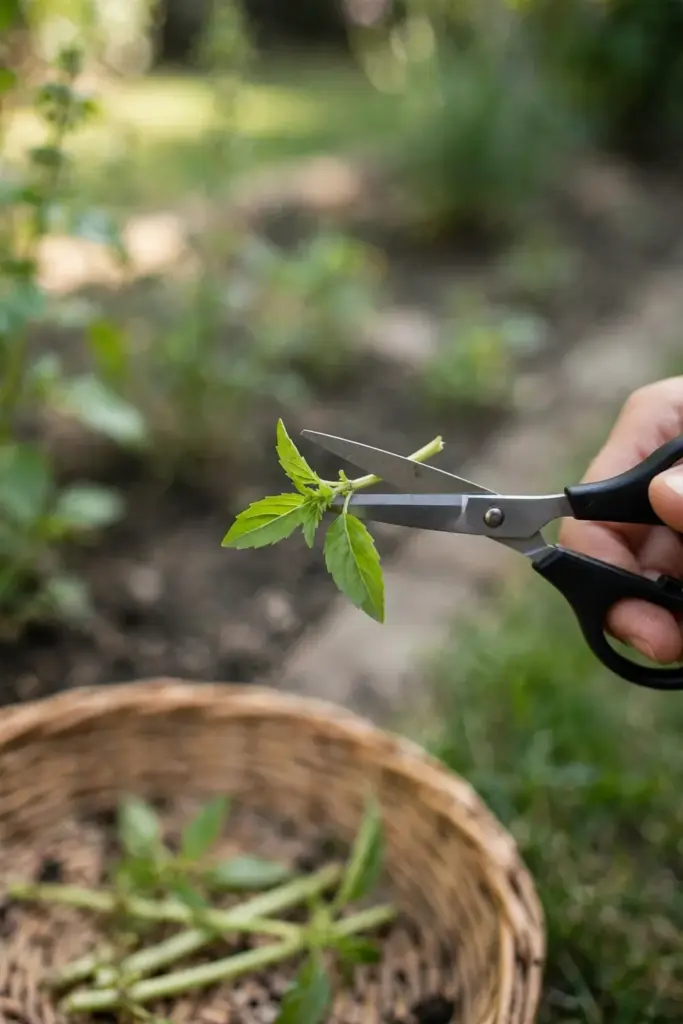
Take stems, not single leaves, cutting just above a leaf pair so two new shoots replace each one. Use the harvest fresh the same day for the brightest flavor. In the kitchen, kemangi goes raw into lalap with sambal, into Lao or lam stew, and into Thai and Filipino dishes that need citrus brightness without acidity.
For longer storage, layer dry leaves between paper towels in a sealed jar in the refrigerator, or freeze chopped leaves in a thin film of oil in ice cube trays. Dried lemon basil keeps its color but loses most of the lemon punch, so dry only what the fresh harvest cannot cover. The flowers are edible too, with a milder lemon note that suits salads and cold drinks. The seeds earn their own use: dropped into water or coconut milk, they swell into the gelatinous pearls served in Southeast Asian sweet drinks, a second harvest from the same plant.
15. Dodge 6 Beginner Mistakes That Kill Lemon Basil
Most failures trace to six errors. Fix them and the plant nearly grows itself.
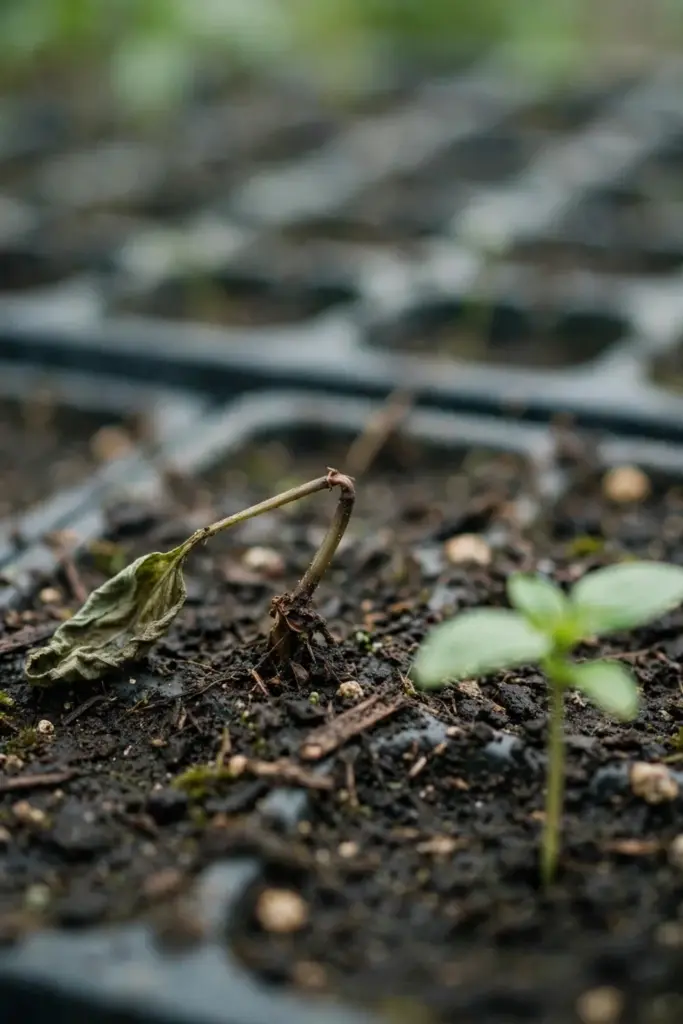
- Burying the seed. Lemon basil seed needs light to germinate, so a covering of mix means an empty tray. Press seeds onto the surface and leave them uncovered.
- Sowing into cold mix. Below 60°F the seed sits, and rot wins the race. Warm the tray with a heat mat first.
- Transplanting before the last frost. A single cold night blackens basil leaves past recovery, and the plant never catches up.
- Skipping the pinch. An unpinched plant grows one tall, sparse stem, then bolts. Two minutes with your fingernails at 6 inches prevents it.
- Letting flowers open. Open blooms flip the plant into seed mode. The leaves turn bitter within days.
- Drowning the roots. Soggy mix invites root rot faster than drought kills. Drainage first, always, in trays and in pots.
Each mistake has the same cure: read the plant, not the calendar. A seedling that stalls is cold, not hungry. A plant that tastes flat has flowered, not failed.
Frequently Asked Questions
No. Lemon basil is Ocimum ×africanum, a hybrid with a true lemon scent from citral and limonene. Thai basil is O. basilicum var. thyrsiflora, with an anise-licorice scent and purple stems and flowers. They look different, smell different, and season different dishes. Check the botanical name on the seed packet before sowing, since nurseries sometimes label either one as just “basil.”
No, treat it as an annual. Frost kills lemon basil, and leaf damage starts when nights drop near 40°F. In frost-free zones 10 to 11 it can persist as a short-lived perennial, but most gardeners replant from seed each spring. Save seed from one flower head in fall, or bring a potted plant indoors before the first cold night to extend the season.
No soaking needed. Lemon basil seeds develop a gelatinous coat when wet, which is why they are used in Southeast Asian sweet drinks, but the coat does not require pre-soaking to germinate. Surface-sow on damp mix, mist gently, and hold the tray at 70 to 85°F. Sprouts appear in 10 to 14 days. Soaking adds a drowning risk with no germination benefit.
It flowered. Once buds open, the plant redirects energy from leaves to seed and the flavor turns bitter. Pinch every flower bud the day it appears, cutting back to a leaf pair, and check stems every two or three days in summer. Heat and water stress also push early blooming, so keep moisture steady. Leaves picked before flowering keep the clean lemon flavor.
Yes, with enough light. A south-facing window giving 6 hours of direct sun works, or run a grow light 12 to 16 hours a day a few inches above the plant. Keep indoor temperatures between 65 and 80°F and never let nights drop near 50°F. Pinch regularly to keep the plant compact. Indoor leaves taste slightly milder than outdoor ones, but the lemon character stays.
No, they are completely different plants that share only a lemon scent and a confusing name. Lemon basil is Ocimum ×africanum in the basil family tree. Lemon balm is Melissa officinalis, a mint relative with wrinkled, heart-shaped leaves and a milder lemon fragrance. Growing advice for one does not transfer to the other, so confirm the botanical name on any guide you follow.
Your Kemangi Patch Starts With One Tray
Sow one tray, keep it warm, pinch early, and strip every flower bud. That routine turns a packet of lemon basil seed into a summer of kemangi for lalap, curries, and drinks. The full method for how to grow lemon basil fits on an index card, but the flavor payoff runs all season. The first tray teaches the rhythm, and the second tray runs on habit. Save seed from the last plant of the season and the next year costs nothing. Start the tray 4 to 6 weeks before your last frost, and the lemon harvest takes care of itself.