
Buy one rooted sucker and plant it, because Pandanus amaryllifolius never makes seeds to sow. A sucker with white aerial roots settles in within weeks, and the first fragrant leaves land within the first year. The rest of this page is 16 moves: the species fence, the fake-seed warning, the sucker method, and the pot-indoors system that carries cold-climate growers through winter.
In my experience, a sucker that arrives with white aerial roots establishes in weeks, exactly as the propagation guides promise. That one fact decides how to grow pandan at home: start from a living offshoot, never from a packet. Seed-starting does not exist for this plant, so this page stays on suckers, the crush-and-sniff identification test, and the winter routine for growers far from the tropics.
1. Master How to Grow Pandan from a Sucker, Not a Seed Packet
True pandan reproduces only vegetatively. The grower buys a sucker or a potted plant, plants it, and harvests leaves; no seed packet ever enters the picture.
Pandanus amaryllifolius is sterile. The species makes no viable seed, so every plant in every kitchen garden is a clone of a clone, multiplied by suckers or stem cuttings. That is the whole propagation story, and it is good news for the home grower: a sucker grows into an exact copy of a known fragrant plant, with zero germination gamble.
Pick the start that matches your situation. A bare sucker with visible aerial roots goes straight into moist soil or into a jar of water for rooting first. A potted nursery plant skips the wait and goes into its final pot the day it arrives. Either way, the plant wants the same thing afterward: warmth, steady moisture, and bright light without harsh midday scorch.
| Start | What you do | First leaves |
|---|---|---|
| Rooted sucker | Plant straight into moist soil | Weeks |
| Bare sucker | Root in water first, then plant | A few weeks |
| Potted nursery plant | Move to a bigger pot, keep watered | Days |
How to grow pandan in a cold climate starts with the same choice, because the pot is the whole winter strategy. A plant in a pot summers on the patio and winters by a bright window, and the sucker start is identical either way. Buy the plant, not the promise of seeds.
2. Name the Species: Pandanus Amaryllifolius Is the Indonesian Pandan Wangi
The Indonesian cooking pandan, pandan wangi or daun pandan, is Pandanus amaryllifolius. That single Latin name is your buying filter at every market and nursery.
Pandanus amaryllifolius is a true cultigen, a plant that exists only in cultivation. Botanical references record that it is sterile and reproduces only vegetatively, through suckers or cuttings, and that the species was first described from specimens from the Maluku Islands. No wild population has ever been found. Every pandan plant on earth descends from ancient cultivated stock, multiplied by hand for centuries.
The fragrance has a name too. The characteristic pandan aroma comes from the compound 2-acetyl-1-pyrroline, the same aroma compound that gives jasmine rice and white bread their typical smell. The compound sits in the leaf tissue, which is why cooks bruise or tie the leaves: bruising releases the aroma into rice, desserts, and drinks.
The fence on this page: pandan belongs to the Indonesia lane. The kewra tree of India, Pandanus odoratissimus, is a different species grown for its fragrant male flowers, not its leaves, and the India queue covers it separately. If a tag says only “pandan” with no Latin name, ask. The Latin name settles it.
3. Reject Every Pandan Seeds Offer You See Online
No marketplace listing for “pandan seeds” sells true pandan. Pandanus amaryllifolius makes no seeds, so any packet labeled that way holds something else entirely.
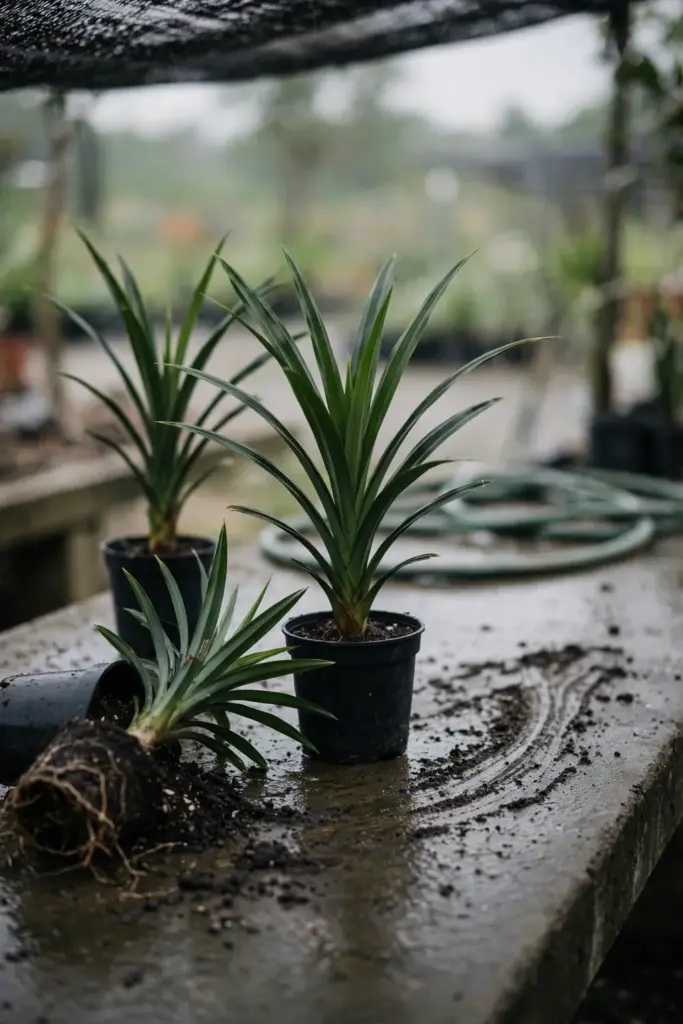
The logic is airtight and the University of Reading tropical plant profile states the biology plainly: the plant is sterile and reproduces only vegetatively. A seed cannot exist for a plant that never sets seed. Sellers offering pandan seeds are selling seeds of some other plant, mislabeled stock, or nothing at all. The scam works because beginners assume every plant grows from seed. Pandan does not.
Buy a sucker or a potted plant instead. Reputable sellers list Pandanus amaryllifolius as a live plant, a cutting, or an offshoot, never as a seed packet. If the listing shows seeds, close the tab. If it shows a rooted sucker with white aerial roots, that is the real start this page describes.
4. Crush a Leaf to Confirm the Fragrance in 10 Seconds
Tear a leaf and crush it between your fingers. True Pandanus amaryllifolius releases its sweet, musky fragrance instantly; a leaf with no scent is not the cooking species.
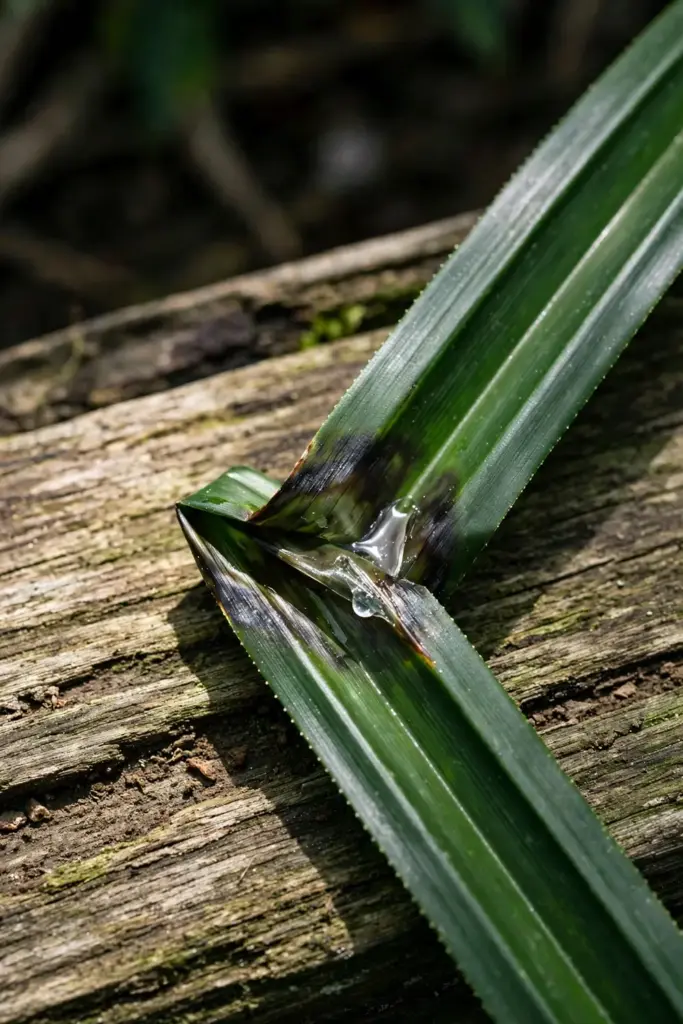
The crush test is the fastest identification tool a buyer has, and it works at the market, the nursery, and a friend’s garden. No other common screw pine carries that fragrance in its leaves. A plant sold as pandan that smells like plain grass when crushed is an ornamental cousin wearing the wrong label.
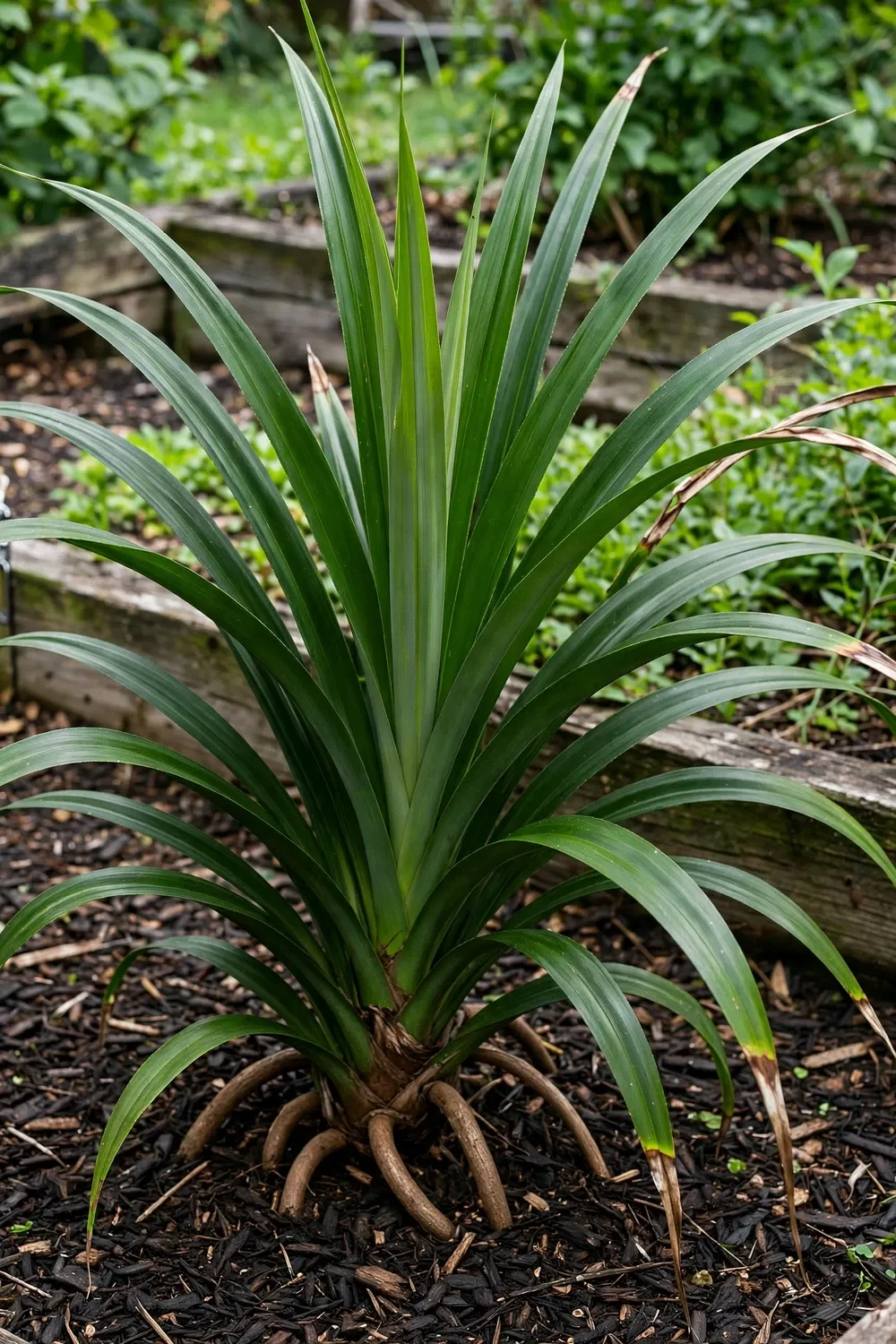
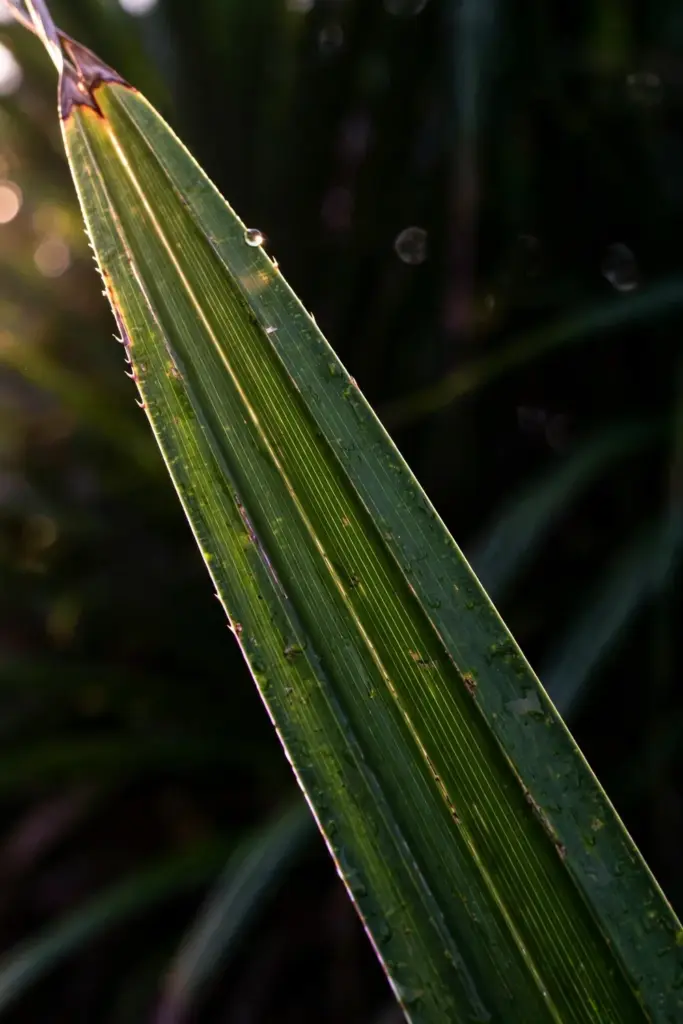
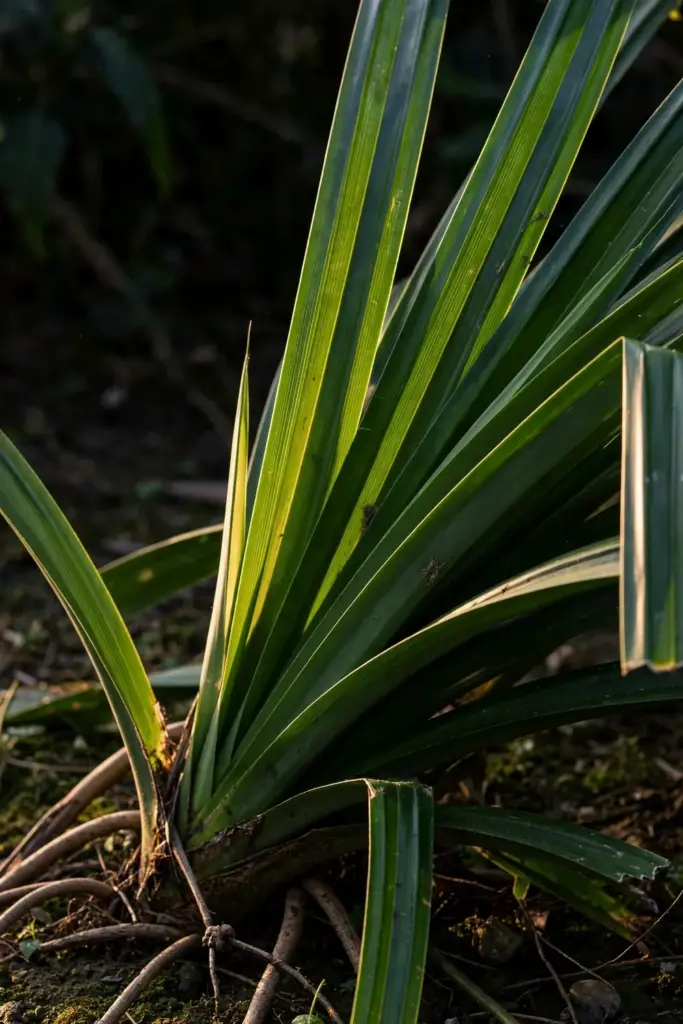
Back the test with the visual traits. Pandanus amaryllifolius grows as a dense shrubby clump of fan-shaped sprays, with long narrow blade-like leaves and woody aerial roots bracing the lower stems. The leaves run dark green, keeled underneath, with margins unarmed except for tiny prickles near the tip. A mature plant stands 1 to 2 m tall in good conditions. None of the ornamental screw pines combines all of these: the fragrance, the shrubby clump, and the aerial roots. When the crush test and the visual traits agree, the plant is the right one.
Nursery labels are the main source of mix-ups. A tag that reads only “screw pine” or “pandanus” with no species name can be any of the four plants in the table below, and staff at general garden centers rarely know the difference. The crush test settles it in seconds, and it works on any plant old enough to have mature leaves. Young seedlings of the ornamental species can look similar, which is why the fragrance check beats the eye check every time.
5. Separate the 4 Pandanus Cousins in One Table
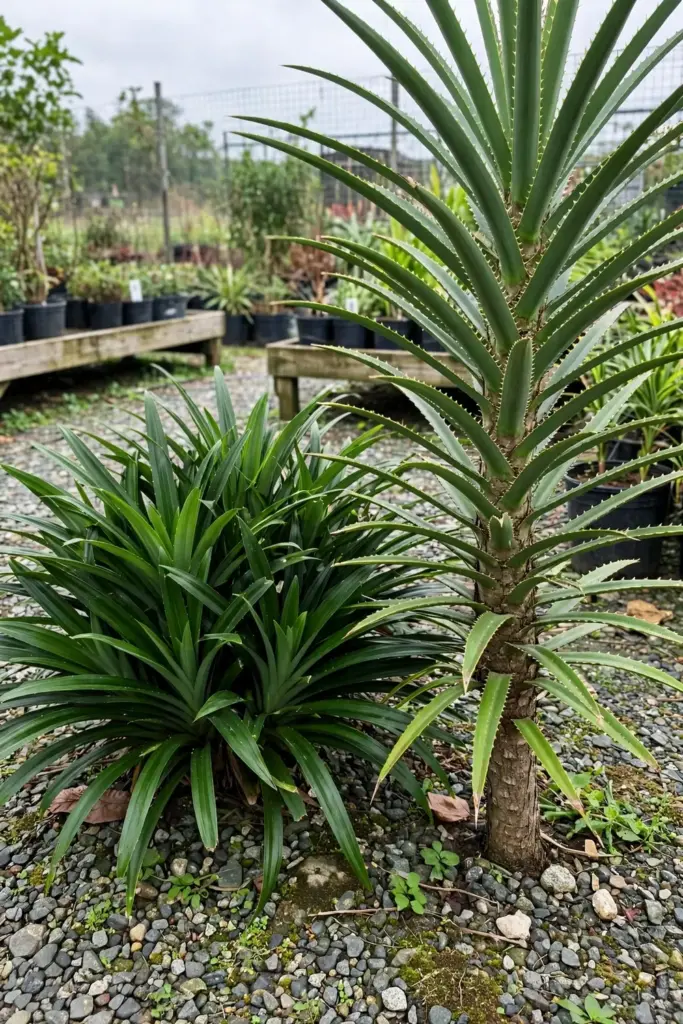
Four Pandanus species share nursery shelves and search results. One table ends the mix-ups for good.
| Species | Common name | Use | Tell |
|---|---|---|---|
| Pandanus amaryllifolius | Pandan wangi, daun pandan | Cooking leaves | Fragrant crushed leaves, shrubby clump |
| Pandanus utilis | Screw pine | Ornamental | Huge tree, sword leaves with sharp spines, no fragrance |
| Pandanus odoratissimus | Kewra, fragrant screwpine | Fragrant male flowers | Tree-sized, spiny leaves, scent from flowers not leaves |
| Pandanus tectorius | Beach pandanus | Coastal ornamental | Sprawling, aerial prop roots, inedible leaves |
Pandanus utilis is the ornamental giant sold across Florida and other warm regions as a landscape screw pine. It grows into a small tree with viciously spiny leaf margins, and its leaves carry no cooking fragrance. It is a handsome plant and a terrible substitute in the kitchen.
Pandanus odoratissimus is the kewra of India, prized for its intensely fragrant male flowers, which are distilled into kewra water. Its leaves are not the cooking leaf. The flowers are the prize, the plant is tree-sized, and it belongs to a different culinary tradition. Keep the two species in their lanes and neither disappoints.
6. Cut a Sucker from the Mother Plant in 4 Moves
A sucker with its own aerial roots becomes a new plant in four moves: choose, cut, pot, water. The mother plant barely notices.
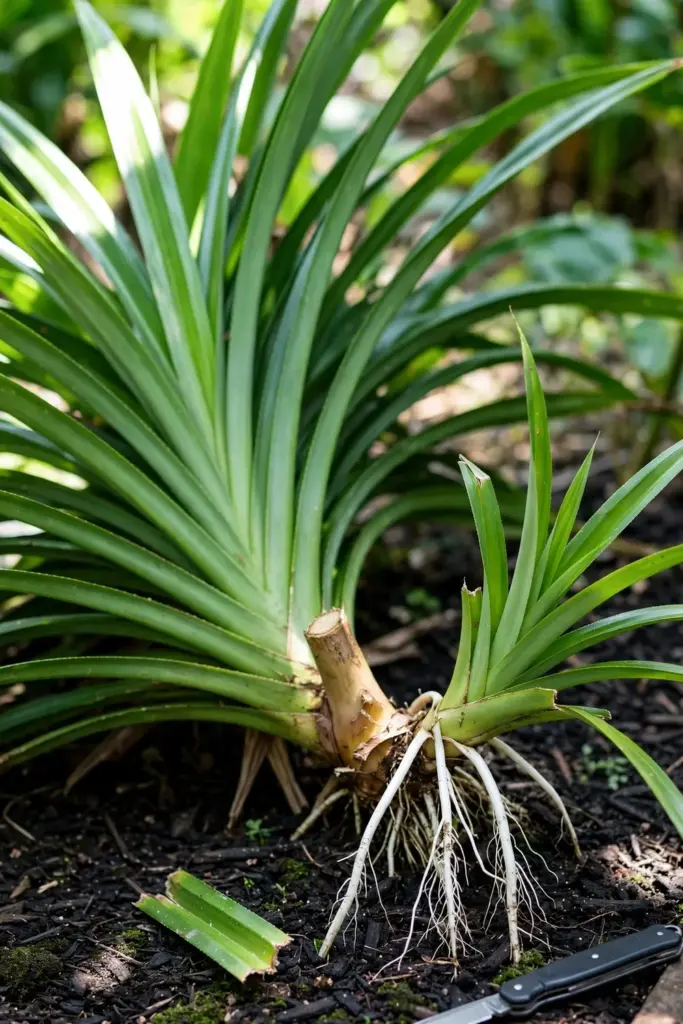
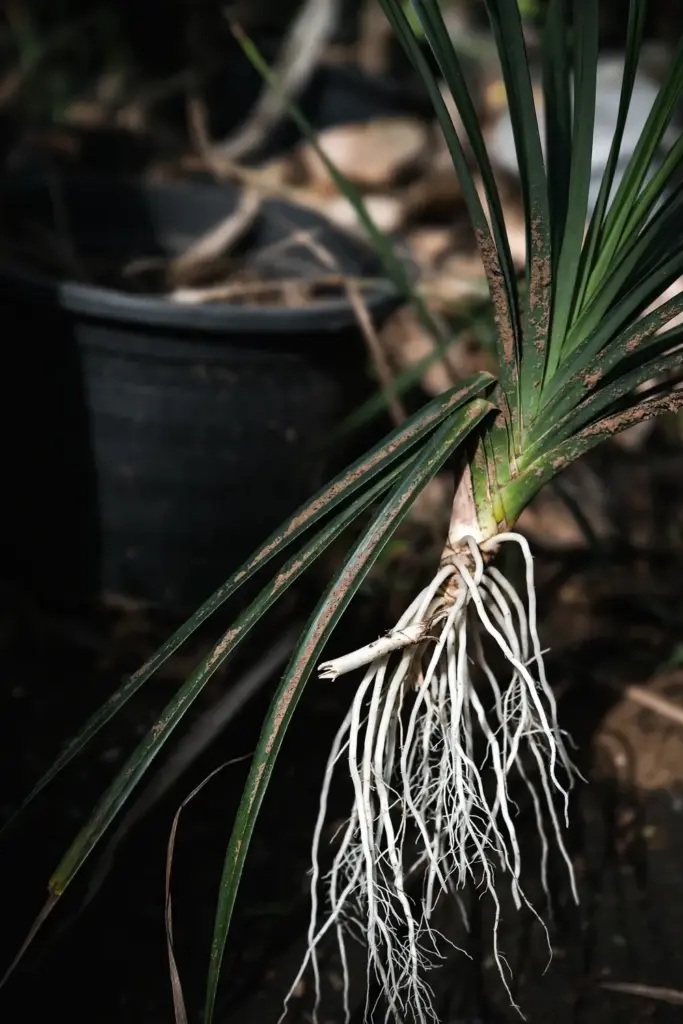
Choose a sucker growing from a leaf axil low on the mother plant, one that already shows white aerial roots dangling from its base. Those roots are the head start: a sucker with roots establishes far faster than a bare stem section. Push the surrounding leaves aside and look for the thickest sucker with the most roots, at least as long as your hand.
Cut the sucker free with a clean sharp knife, slicing through the connecting stem close to the mother plant without tearing. Keep every aerial root attached; each one is a future soil root. If the sucker snaps off with no roots at all, root it in water first instead of planting it straight into soil.
Pot the sucker into moist, well-draining mix with the base buried just deep enough to stand upright. Firm the mix gently around it and water thoroughly. Park the pot in bright indirect light, out of direct midday sun, while it settles. The sucker draws on its stored energy first, then pushes new roots into the mix.
Water steadily for the first weeks and watch for the sign it worked: new leaves unfurling from the center. A sucker that keeps its color and pushes fresh growth within weeks is established. One that yellows from the base upward is rotting; lift it, trim any mush, and start the rooting in fresh mix.
7. Root a Bare Sucker in Water Before It Meets Soil
A sucker with no roots goes into a jar of water first. Roots show as white threads from the base, and the sucker moves to soil once they are several centimeters long.
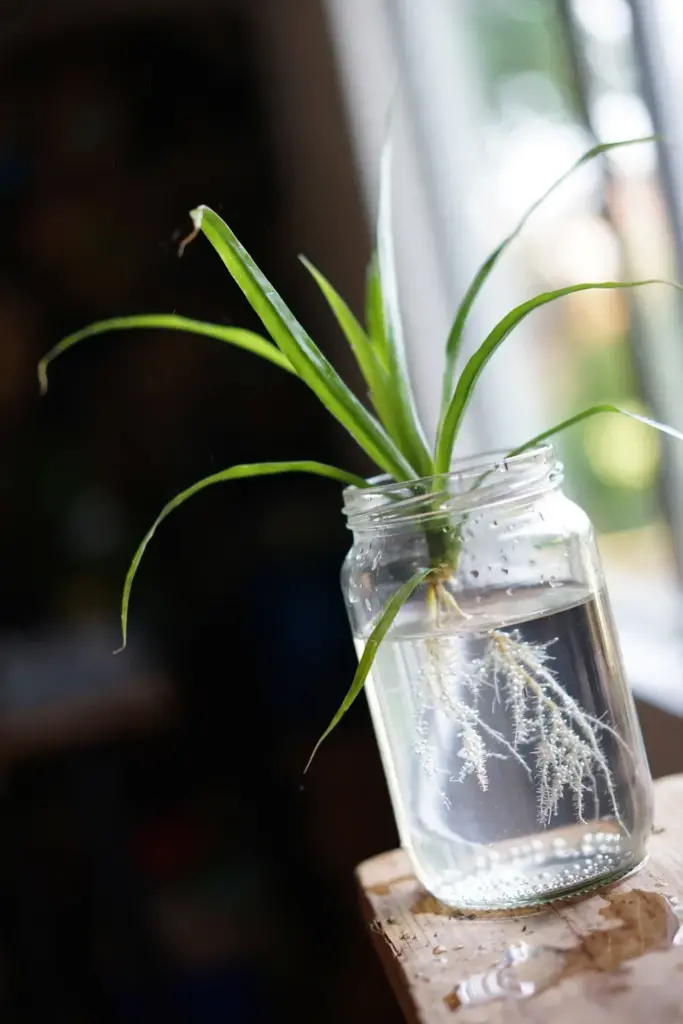
Stand the sucker upright in a jar with a few centimeters of water covering the base, and set the jar in bright indirect light. Change the water every few days so it never clouds. Leaves below the waterline rot, so strip any that would sit submerged. The base stays firm and pale while it works; a base that goes soft and brown is finished.
Transplant when the white roots are long enough to grip soil, not before. A sucker with stubby nubs looks ready and collapses in soil; wait for real length. Pot it into moist mix, water it in, and keep it out of harsh sun for the first week. The water phase adds a short delay and buys near-certain survival, which is a fair trade for a sucker that arrived rootless.
Keep the jar in bright indirect light while roots form. Direct midday sun overheats the water and cooks the base, and the sucker needs no fertilizer at this stage. Once the roots reach several centimeters, pot it up and treat it like any newly planted sucker: moist mix, sheltered light for the first week, then its normal spot.
8. Wait for Nights Above 10 Degrees Before Planting Out
Pandanus amaryllifolius is a tropical plant that must be protected from temperatures below 10 degrees Celsius. Plants go outside only when nights reliably stay above that line.
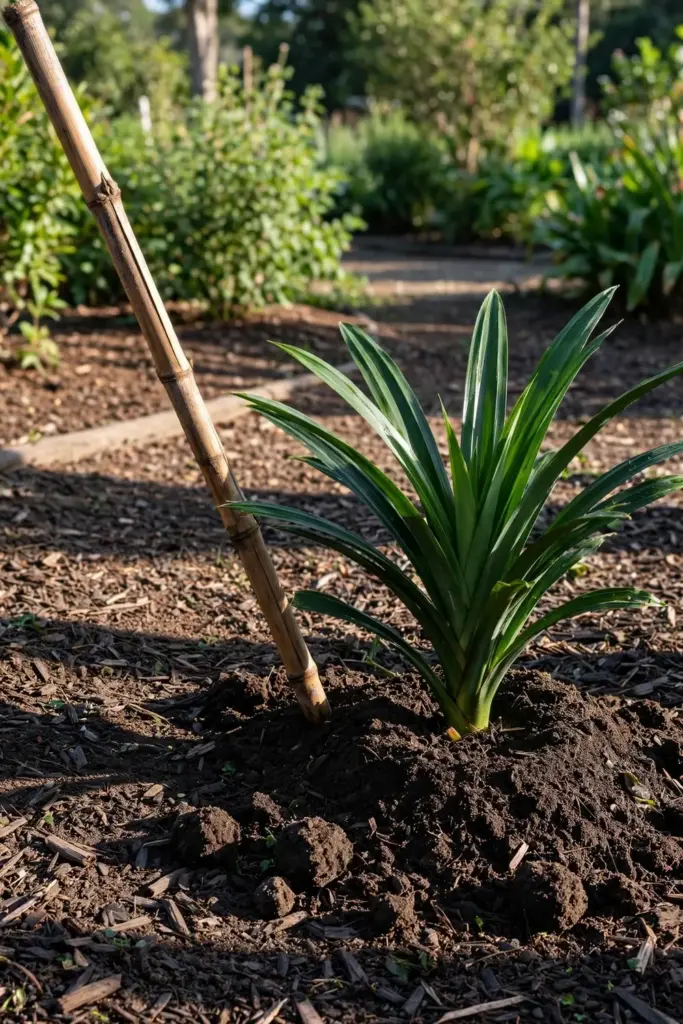
Nursery growers in the subtropics put it bluntly: the plant absolutely needs protection below 10 degrees, and many growers move potted plants under cover for winter even in mild climates. Growth stalls in cool weather well before any frost, and a hard freeze kills the crown outright. This is the strictest climate rule in the whole article.
Watch the night forecast, not the calendar. A stretch of reliably warm nights is the green light. Harden the plant off first: a few days in shade, a few days in morning sun, then its summer spot. A plant that jumps straight from a windowsill to full summer sun scorches, and scorched leaves never recover their looks.
Where winters never frost, pandan grows as an evergreen perennial in the ground and the whole indoor routine below is unnecessary. Everywhere else, the plant is a container plant on a frost-to-frost schedule, and the pot is not optional.
9. Give Each Plant 1 m of Space in Bright Indirect Light
Space plants about 1 m apart in bright light with some afternoon shade. A happy plant forms a dense clump 1 to 2 m tall and about as wide.
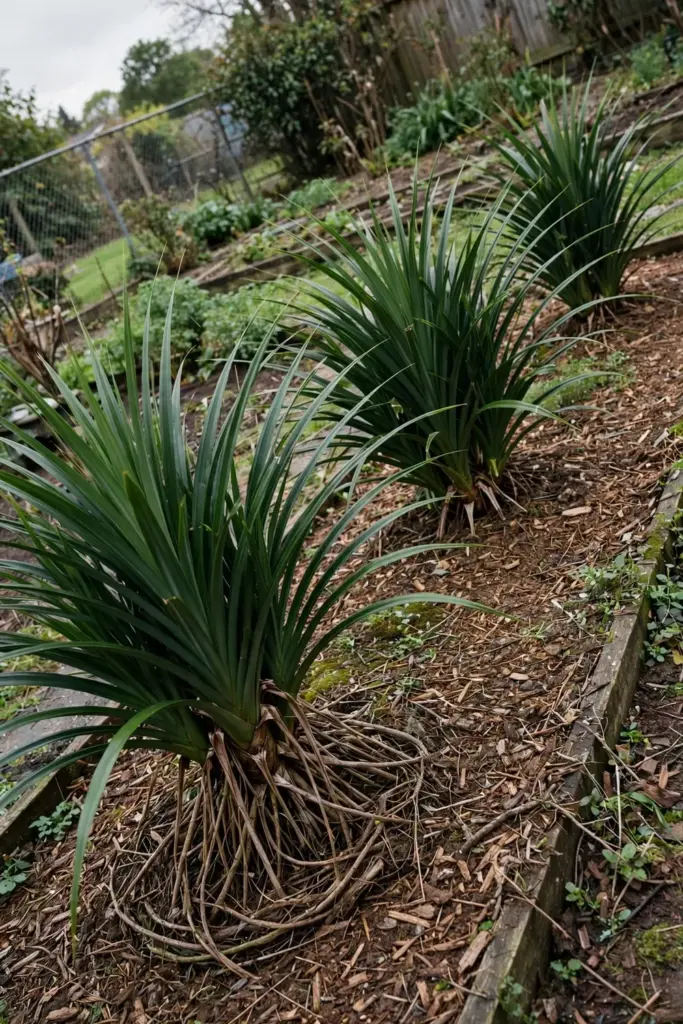
Nursery data for Pandanus amaryllifolius sets the light rule at part sun, 50 to 80 percent of full sun, and the mature size at 1 to 2 m in good conditions. Morning sun with afternoon shade is the sweet spot in hot climates; in cooler regions the plant takes more sun gladly. Crowded plants stay thin because the inner leaves never see light.
Dig the planting hole no deeper than the root ball and set the crown at the same level it sat in the pot. Burying the crown invites rot. Water the hole in well at planting, then settle into the steady moisture routine. The plant spreads by suckering, so the 1 m gap fills in within a couple of seasons without ever looking cramped.
10. Settle the Plant in a 35 L Pot If Winters Get Cold
A mature pandan wants a pot of at least 35 L. Smaller pots work for young suckers, but a full clump needs the volume, and the pot is the whole strategy for cold-climate growers.
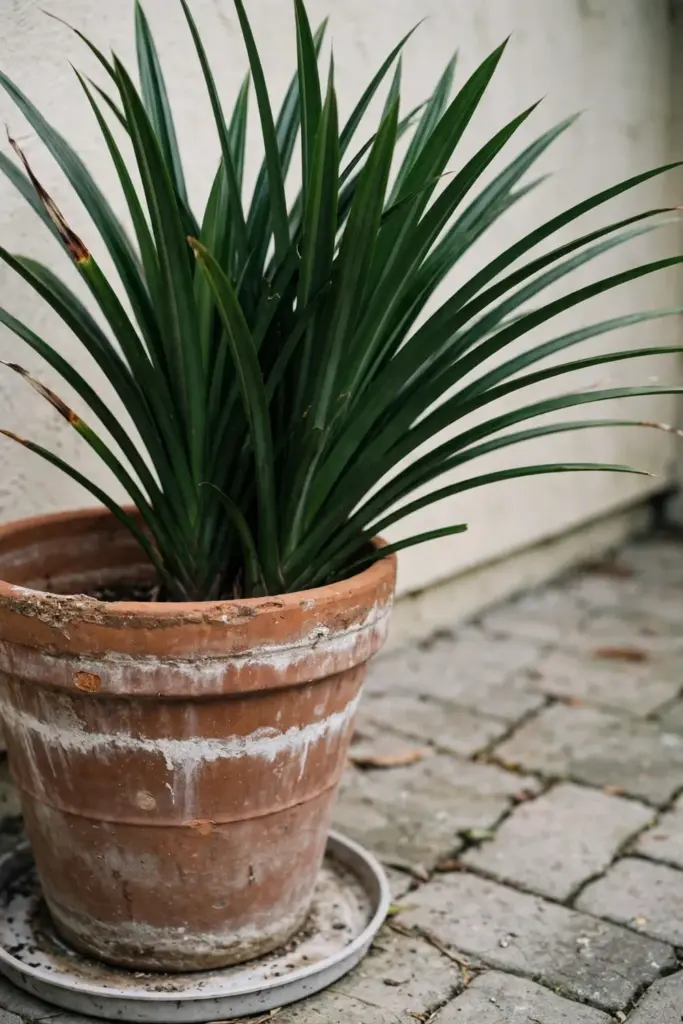
The nursery specification is direct: suitability in pots starts at 35 L and up. Fill it with a quality well-draining potting mix, plant the crown just below the surface, and water thoroughly at planting. One plant per pot. Two plants in one pot fight for water by midsummer and both lose.
Heavy pots matter. A 35 L pot full of wet mix and a 2 m leafy clump topples in wind. Set the pot where a wall breaks the wind, or drop the nursery pot inside a heavier ceramic cachepot. Drainage holes are non-negotiable; a sealed decorative pot with no holes is a slow drowning, and the plant shows it with yellowing outer leaves first. The pot that summers on the patio winters by the brightest window, and that move is the entire cold-climate playbook.
11. Keep the Soil Evenly Moist, Never Waterlogged
Pandanus amaryllifolius wants soil evenly and lightly damp, never waterlogged. Think tropical forest floor: moist, rich, and breathing.
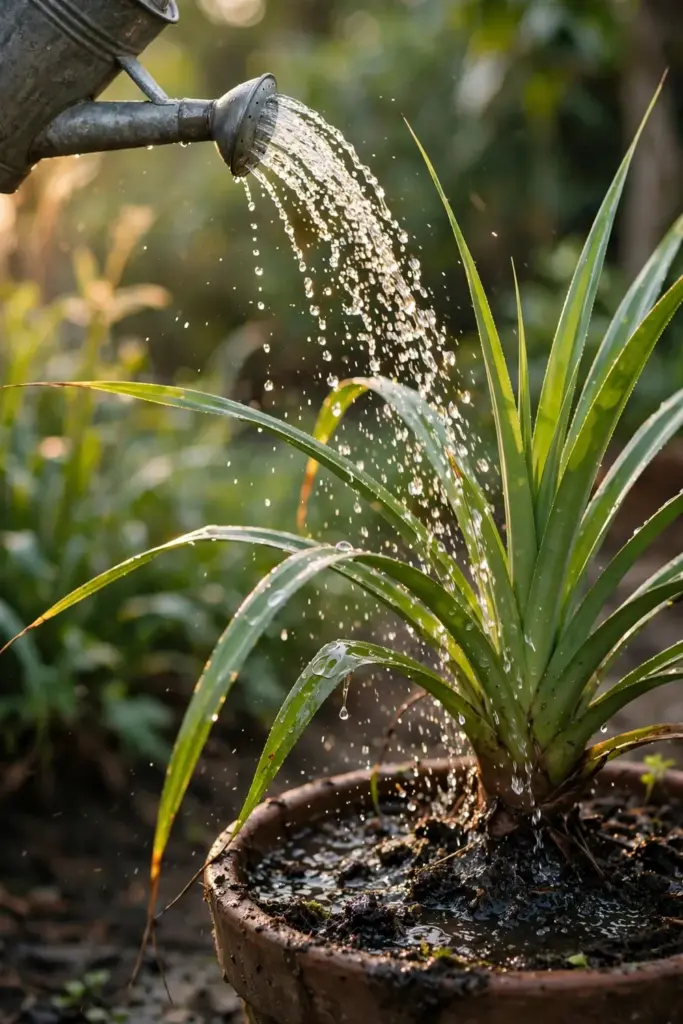
Water deeply when the top few centimeters of mix dry out, and let excess drain freely. In hot weather a big pot may need water daily; in-ground plants drink with the rain and need supplementing only in dry spells. Stick a finger into the mix. Dry at fingertip depth means water now. Soggy at that depth means the drainage failed, not the plant.
Rainwater is the best water for this plant. Nursery growers warn against heavily chlorinated or salty bore water: pandan dislikes chlorine and salt in the soil, and brown leaf tips are the usual complaint. If the tap water runs hard and chlorinated, let it stand overnight before watering, or catch rainwater when you can. Mulch helps in the ground, but keep it off the crown: mulch piled against the stem bases holds moisture where the plant wants air.
12. Feed Lightly Through Summer and Stop in Winter
Feed regularly through the warm growing season and stop when growth slows. Pandan feeds lightly. A starved plant shows it with thin pale leaves.
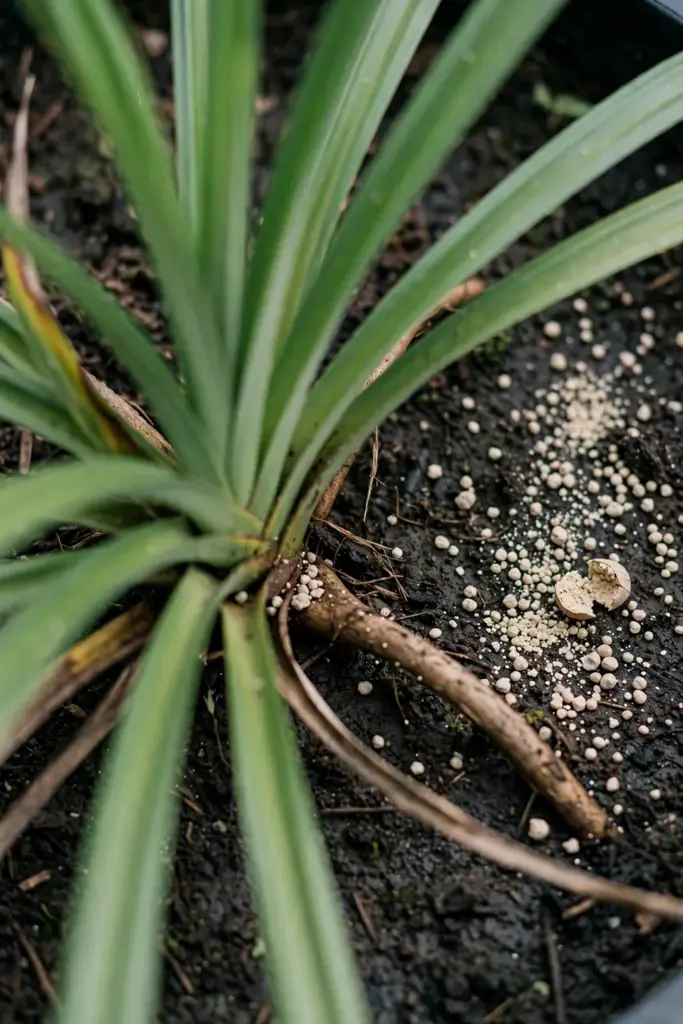
Nursery guidance recommends fertilizing regularly in summer, when the plant is actively pushing new leaves. A balanced all-purpose fertilizer at the package rate, or a compost-rich top dressing, both work. In containers, where every watering leaches nutrients out the drainage hole, a monthly light feeding through summer keeps the foliage deep green.
Stop feeding as days shorten and growth slows. Fertilizer in cold, dim conditions pushes soft growth the plant cannot support, and the salts accumulate in a pot that is barely drinking. Resume only when warm weather returns and new leaves start unfurling. The plant tells you when it is hungry: pale new leaves in summer mean feed; pale leaves in winter mean wait for spring.
13. Move the Pot Indoors Before Nights Drop to 10 Degrees
Bring the pot inside when nights approach 10 degrees Celsius. That single move is the difference between a plant that thrives for years and one that dies in November.
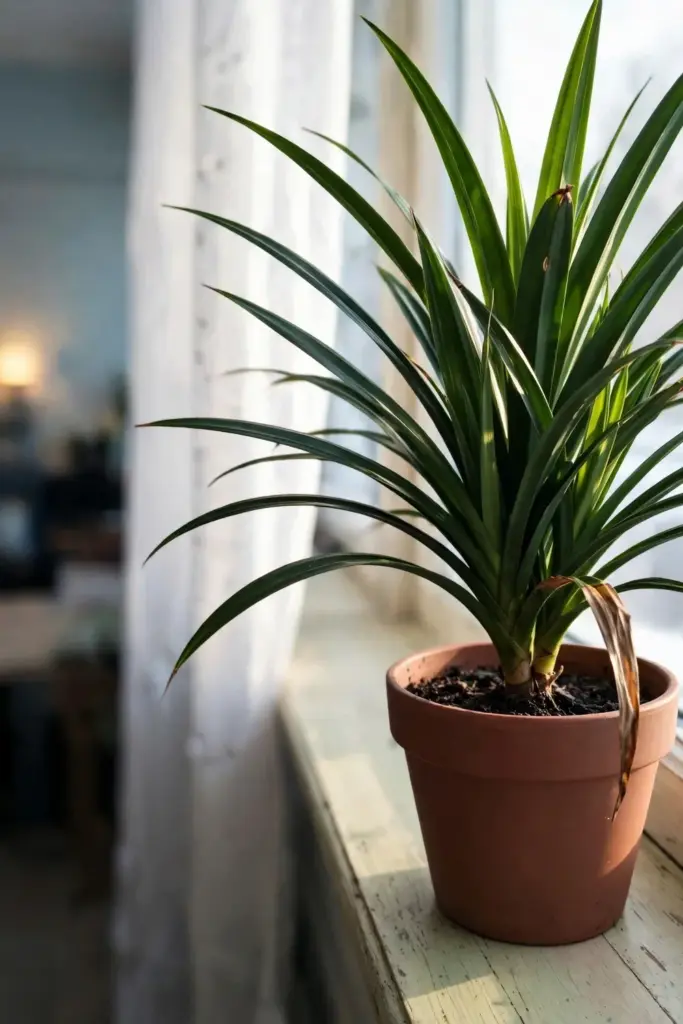
The whole cold-climate playbook is the pot. Park it at the brightest window you own, cut watering back to about once a week, and stop fertilizing entirely. Nursery growers run exactly this routine: protect below 10 degrees, keep winter watering to about once a week, and avoid overwatering in winter because the roots rot when a tropical plant sits cold and wet. Rainwater stays the best choice indoors too.
Before the move, cut the foliage back by a third and check every leaf for hitchhikers. Outdoor pots carry scale and mealybugs inside every autumn, and a neglected infestation spreads to the houseplants by midwinter. Expect some ugliness anyway. Indoor leaves brown at the tips in dry heated air, and the clump looks tired by late winter, which is normal. In spring, trim the dead leaves, harden the plant off again, and set it out once nights stay reliably above 10 degrees.
14. Dodge the 4 Winter Mistakes That Kill Pandan Indoors
Most dead pandan plants die from four avoidable winter mistakes, not bad luck. Run this checklist before the pot comes inside.
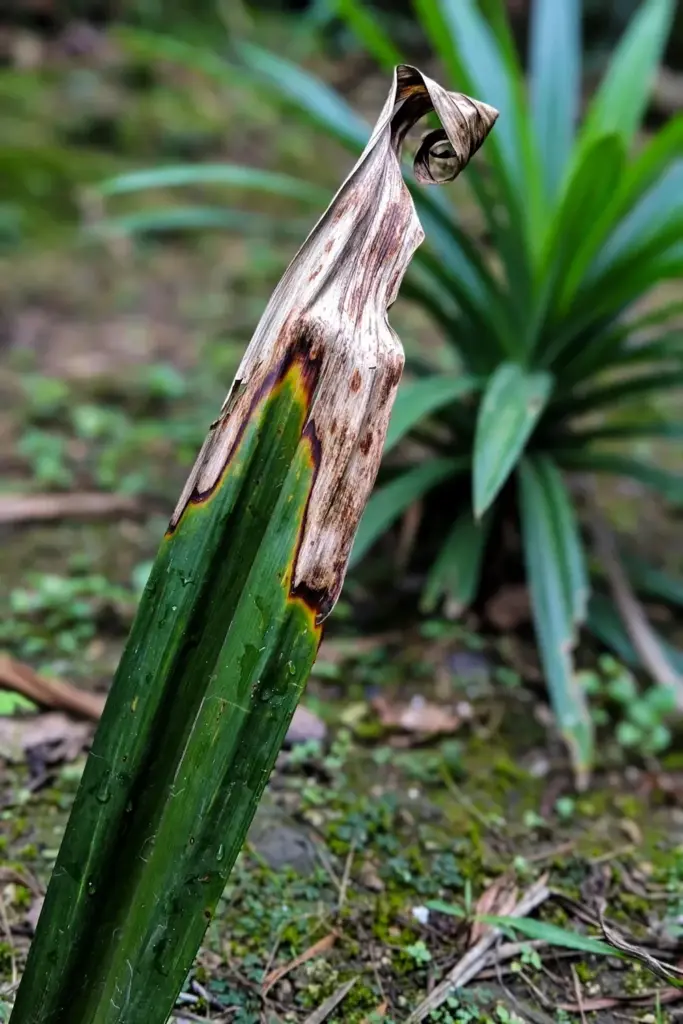
First, overwatering in winter. A tropical plant in cool dim conditions barely drinks, and weekly water is plenty. Soggy mix in a cool room rots the roots while the top still looks alive. Second, moving it in too late. One frosty night below the threshold undoes a year of growth; bring it in when nights approach 10 degrees, not after the first scare.
Third, a dim corner. The plant survives winter without actively growing, yet it still needs the brightest window available. A dark hallway stretches the plant pale and invites pests. Fourth, chlorinated water all winter. The chlorine sensitivity does not pause indoors; brown tips by February often trace back to the tap. Let water stand overnight or use rainwater, and the spring foliage comes back clean.
15. Harvest the Outer Leaves in the First Year
Harvest starts in the first year. Cut the outer mature leaves and leave the young center spears to keep growing.
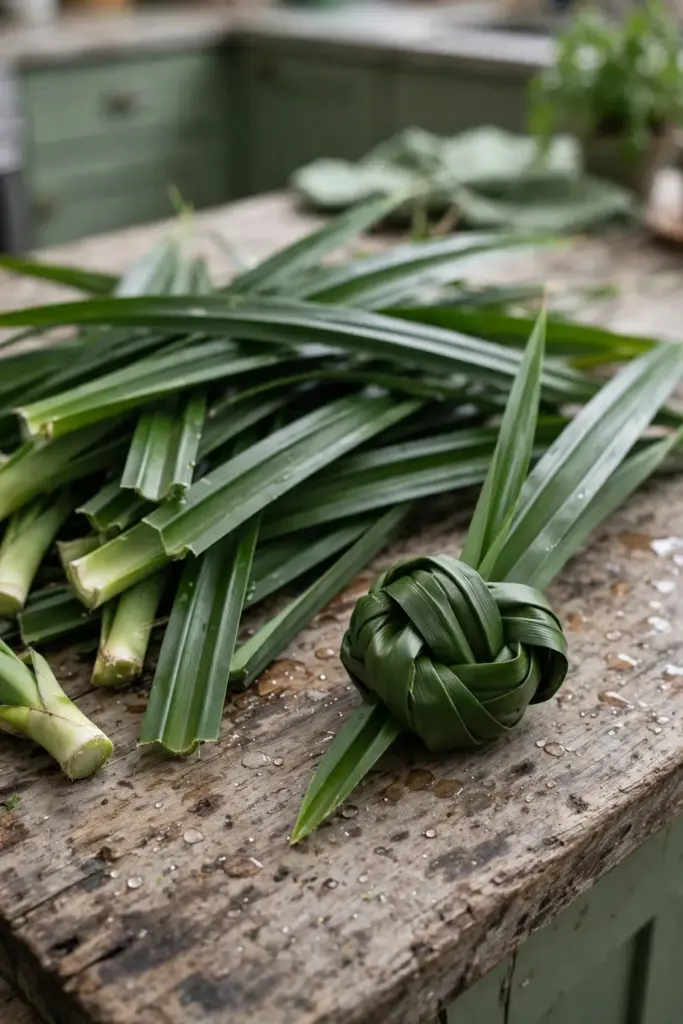
Nursery data lists the time to first harvest as the first year, which is fast for a plant this useful. Choose fully expanded outer leaves, the deep green ones with the strongest fragrance, and cut them low with a clean knife or sharp scissors. Take a few leaves at a time, never stripping the plant bare. The center keeps pushing new growth, and continual harvesting keeps the plant in its productive shrubby phase.
Use the leaves fresh for the strongest aroma. The classic move is the pandan knot: fold a leaf into a loose knot and drop it into the rice pot, the coconut dessert, or the drink, then fish it out before serving. Bruising or tying releases the 2-acetyl-1-pyrroline that makes pandan taste like pandan. Fresh leaves freeze well in a sealed bag and drop straight into the pot from frozen. For drinks and cakes, blend chopped leaves with a little water and strain: the green extract is the flavoring.
Dried leaves have their place too. Air-dried pandan keeps a milder version of the fragrance and works in long-simmered dishes, though fresh or frozen leaves beat it for aroma. Whatever the form, the rule stays the same: the leaf flavors the food and leaves the pot. Nobody eats the leaf itself.
16. Pair Pandan with Ginger and Turmeric in the Tropical Corner
Pandan, ginger, and turmeric all want the same thing: heat, bright light, and steady water. Plant them in one tropical corner and water them together.
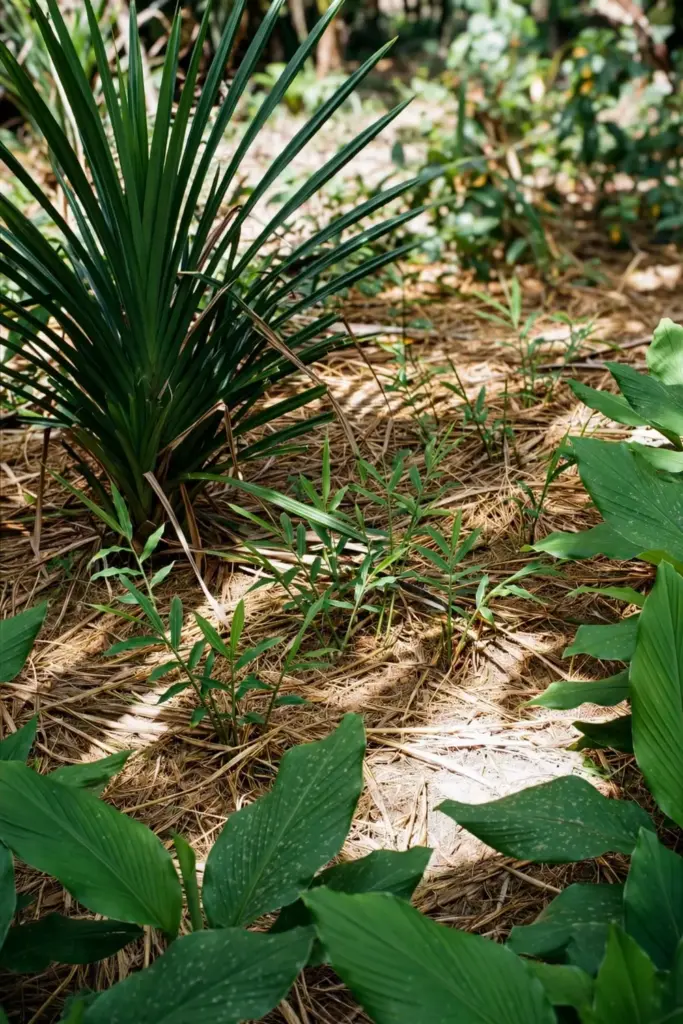
The trio shares a growing calendar. All three go out after the last frost, drink heavily through summer, and come inside or get harvested before the first frost. Pandan brings height and structure at up to 2 m; ginger and turmeric stay low and fill the foreground. A big container grouping on the patio works the same way, and the single watering routine keeps all three happy.
Companion notes from the site’s tropical growers cover the details: growing ginger at home for a big harvest and the beginner’s turmeric guide both run on the same frost-to-frost rhythm as this page. Keep the corner mulched, keep the water steady, and the whole trio cruises through summer with one routine. When autumn nights start sliding toward 10 degrees, the pandan pot goes in first, and the ginger and turmeric harvests follow.
Frequently Asked Questions
No. Pandanus amaryllifolius is sterile and sets no viable seed; it reproduces only through suckers or cuttings. Any packet sold as pandan seeds holds some other plant’s seeds, or nothing worth planting. Start from a sucker with aerial roots or a potted nursery plant instead. A rooted sucker establishes in weeks and gives a known fragrant clone, which is a better outcome than any seed could promise.
Crush a leaf. True Pandanus amaryllifolius releases its sweet musky fragrance the moment the leaf bruises. A leaf that smells like plain grass is an ornamental screw pine with the wrong label. Check the Latin name on the nursery tag, and confirm the shrubby clump habit with woody aerial roots. Only the fragrant species belongs in the kitchen; the ornamental cousins are landscape plants, not cooking herbs.
Dry indoor air browns the tips of almost every overwintering pandan. Cosmetic. The spring leaves come back clean. Chlorinated or salty tap water causes the same symptom, so let water stand overnight or switch to rainwater. Whole leaves yellowing after a cold night mean the plant got too cold: move it somewhere warmer and trim the damage.
Yes, as a houseplant by a bright window. Move the pot inside before nights drop to 10 degrees Celsius, water about once a week, and stop fertilizing until spring. Expect some brown leaf tips and tired-looking foliage by late winter; that is normal. Trim dead leaves in spring, harden the plant off, and return it outside once nights stay reliably warm. The established root mass makes second-year plants thicker than first-year ones.
Tie a leaf into a loose knot and drop it into rice, coconut desserts, or drinks, then remove it before serving; bruising releases the aroma compound into the food. For a stronger flavor, blend chopped leaves with a little water and strain out the green extract for cakes and jellies. Fresh leaves freeze well in a sealed bag and go straight into the pot from frozen. Use the outer mature leaves, which carry the strongest fragrance.