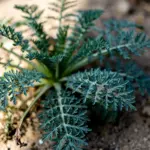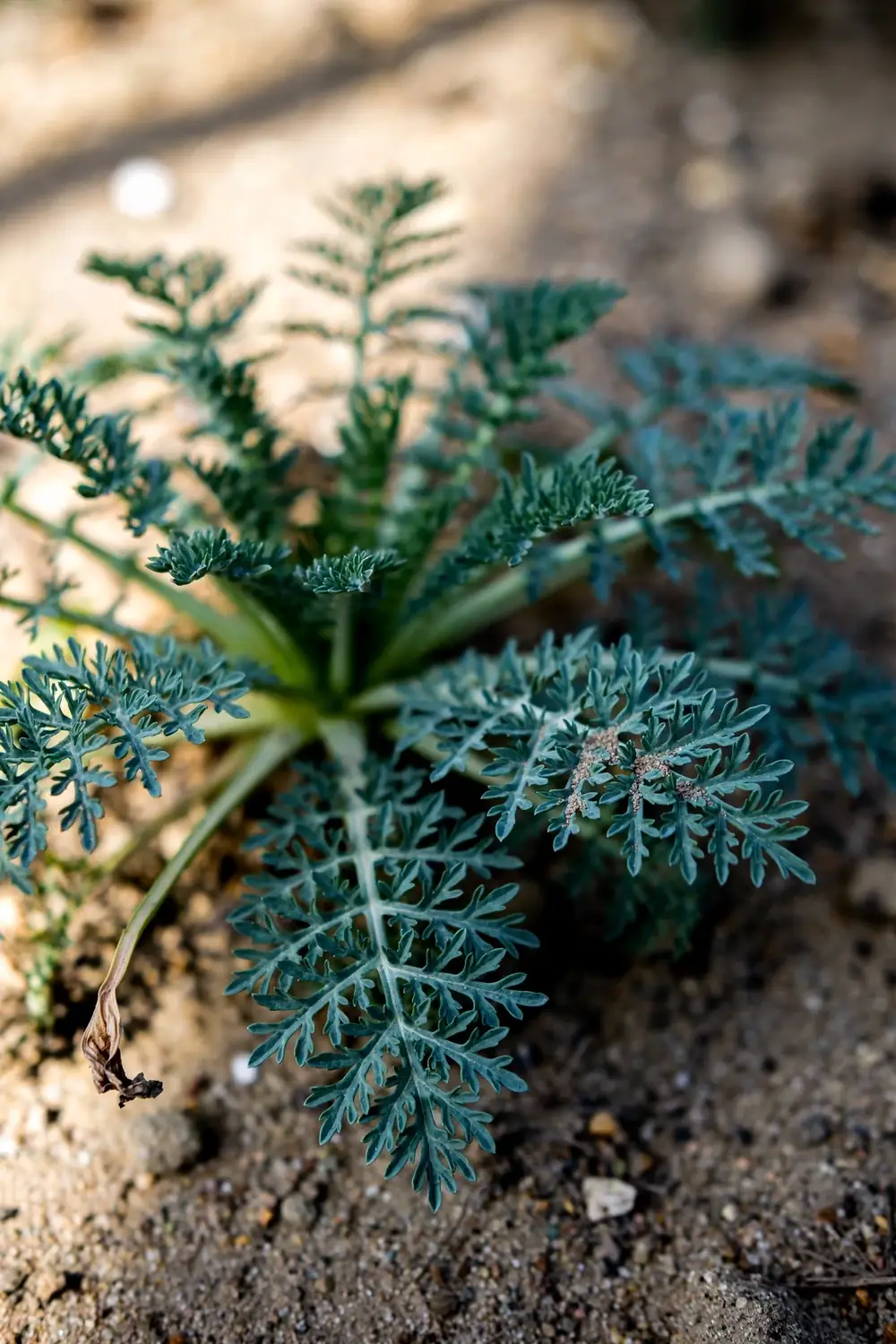

If you are reading up on how to grow asafoetida from India at home, start with the truth: the harvest comes in year 4 at the earliest. You will not see spice in your first season, your second, or your third. Hing, the pungent resin at the heart of Indian cooking, comes from the thick taproot of a cold-desert perennial called Ferula assa-foetida, and that root needs 4 to 7 years of growth before it yields a single gram of resin.
That sounds discouraging only if nobody told you. Once you accept the timeline, growing asafoetida becomes a deeply rewarding long project for a patient gardener. The plant itself is striking: ferny blue-green foliage rising from a desert crown, then a towering flower stalk up to 12 feet tall in its final year. Your garden gets a botanical event. Your spice jar gets patience.
This guide covers the full method for the home gardener: the honest climate test, buying seed that can actually germinate, cold stratification, direct sowing, and the care routine that keeps a taprooted desert plant alive through years of waiting.
1. The Honest Answer: Growing Hing Takes Years, Not Weeks
Can you grow asafoetida at home? Yes, with the right climate and the right expectations. The plant is a monocarpic perennial, which means it grows for several years, flowers once, sets seed, and dies. Your resin harvest arrives in years 4 to 7, when the thick taproot is mature enough to be cut and bled for its milky latex.
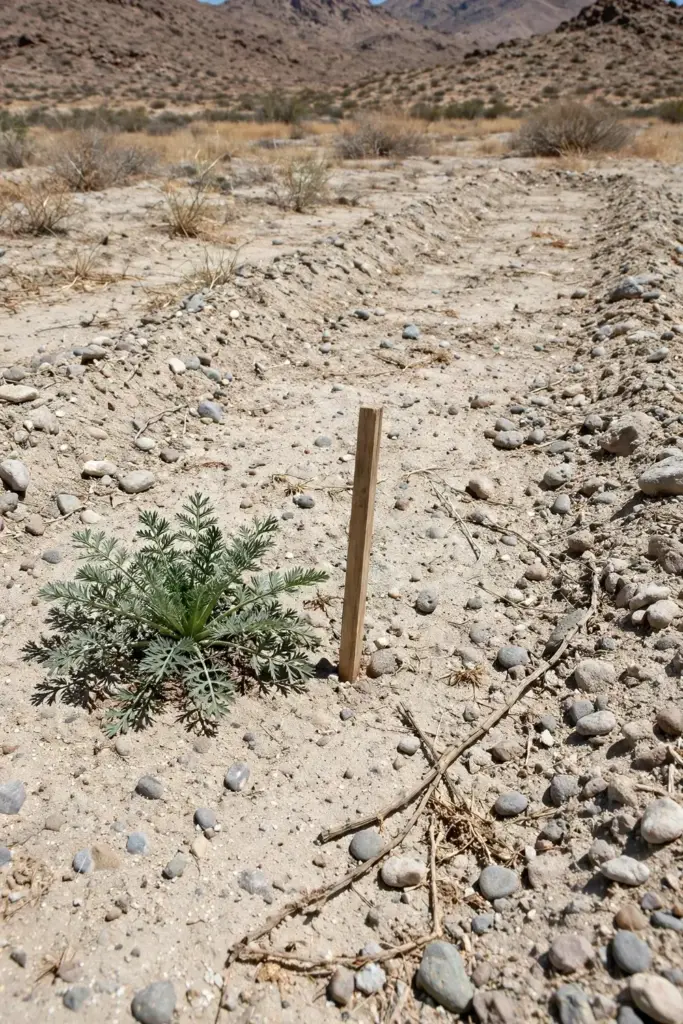
Forget every claim of a quick crop. Nurserylive’s two-to-three-year harvest promise contradicts the growers who actually work with this plant, and the scout research for this guide found those contradictions across the whole search results page. The reliable figures come from the trade: a commercial cultivation guide from Maleki, an Iranian exporter that buys and sells the real crop, puts maturity at 4 to 7 years, with harvest beginning 4 to 5 years after planting. Trust the people who tap roots for a living.
So the decision is simple. Grow asafoetida if you want a multi-year botanical project with a spectacular payoff. Skip it if you want this year’s spice supply; the grocery store sells hing powder for that, and there is no shame in it.
2. What Hing Actually Is: Root Resin, Not a Spice Shrub
New growers picture a bush they can pick. Hing is none of that. The spice is the dried, hardened latex that oozes from cuts made in the plant’s swollen taproot, a milky juice that browns in air and hardens into the pungent resin cooks know. Everything sold as hing powder starts as root resin, usually compounded with rice flour or gum arabic before it reaches the store shelf.
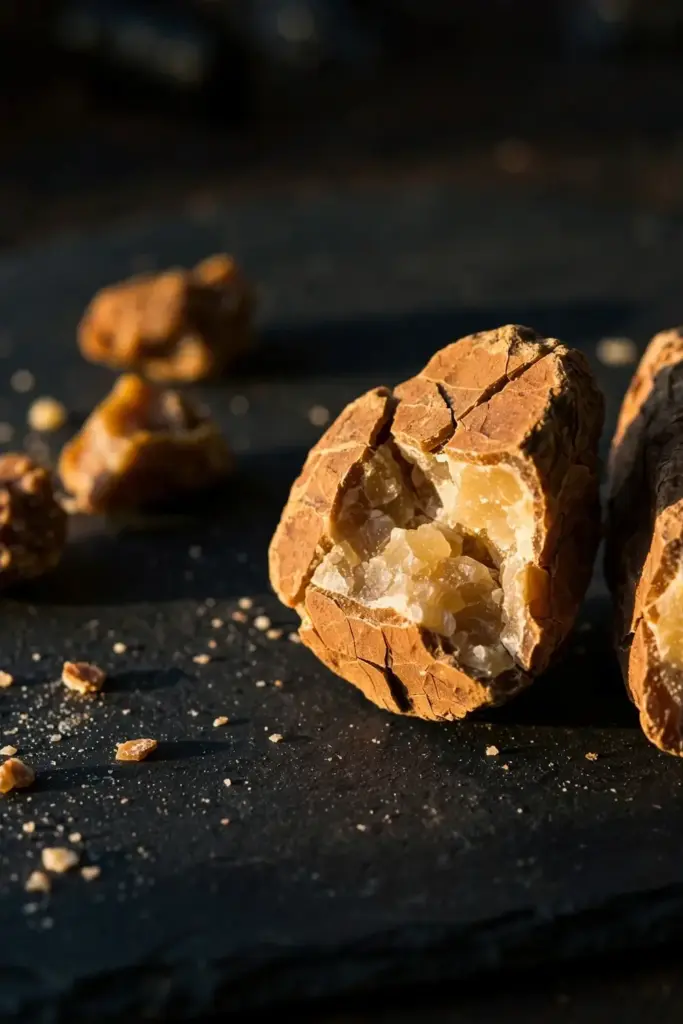
The plant behind it is Ferula assa-foetida, a giant fennel relative in the carrot family. It sits in a different plant family from ginseng entirely. The comparison still helps calibrate patience. Like ginseng, asafoetida is a slow root crop that punishes impatience, a point growers of both crops make constantly. It grows wild across the cold deserts of Iran, Afghanistan, and Central Asia, where almost the entire commercial supply is still wild-harvested or gathered from semi-managed stands.
Know what you are not growing, because the market is full of lookalikes and loose language.
| Name You Will See | What It Really Is | Why It Matters |
|---|---|---|
| Asafoetida plant | Ferula assa-foetida, the real hing plant | This is your seed packet target |
| Compounded hing powder | Resin cut with rice flour or gum arabic | The grocery version; you cannot reverse-engineer the plant from it |
| Asafoetida tree | No such plant; a confused label | If a seller uses it, their botany is suspect |
| Sweet vs bitter asafoetida | Two resin grades from related Ferula species | Culinary grade is sweet; both come from taproot resin |
Use one name per plant in your own notes. Ferula assa-foetida is the plant. Hing is the resin. Compounded powder is the grocery product. Keeping those three separate protects you from sellers who blur them.
3. The Climate Test: Cold, Dry, and Sunny Wins
Asafoetida evolved in cold deserts with blazing sun, thin air, and almost no summer rain. Give it those conditions and it thrives on neglect. Give it a humid summer and it rots, sulks, or fails outright.
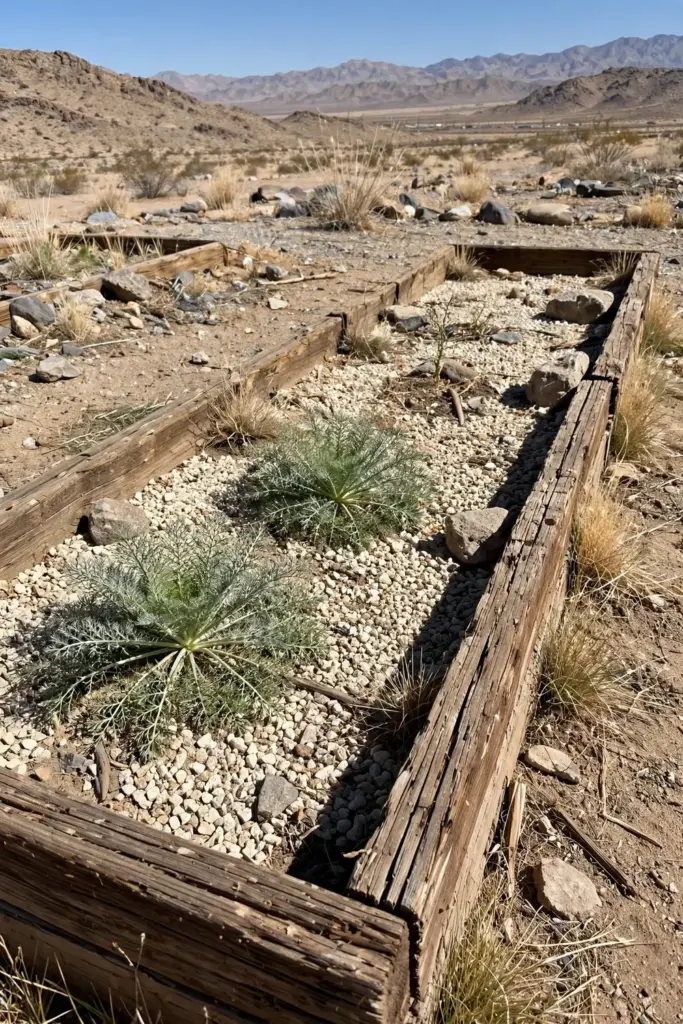
Run this test before you buy seed.
- Winters: The plant needs real cold. A domestic refrigerator runs at about 5°C, and seed sources treat that as the stratification benchmark, which tells you the plant’s DNA expects freezing winters. USDA zones 6 to 8 suit it as a perennial in the ground; colder zones work if you treat it as a managed crop with winter protection.
- Summers: Hot and dry is ideal. Humid subtropical summers, like the American Southeast or coastal tropics, are the hardest test this plant can fail. Constant leaf wetness invites the rot that kills taproots.
- Sun: Full sun, 6 to 8 hours minimum. Desert plants do not negotiate shade.
- Rainfall pattern: Low humidity with winter moisture and a dry summer mirrors the native range. If your summers are wet, a rain shelter or a very gritty raised bed becomes mandatory.
India’s own hing story is instructive. India consumes most of the world’s asafoetida but grows almost none of it commercially; the plant needs the cold dry hills of places like Kashmir and Ladakh, and Indian farming guides consistently describe hing as a cool dry-climate crop. Learning how to grow asafoetida from India, then, means learning the conditions of India’s cold deserts, not its monsoon plains.
If your climate fails the test, you have two honest options: grow it as a curiosity in a deep pot under a rain shelter, or admire it from the seed catalog and spend your garden years on something else.
4. Years 1 to 7: The Full Timeline
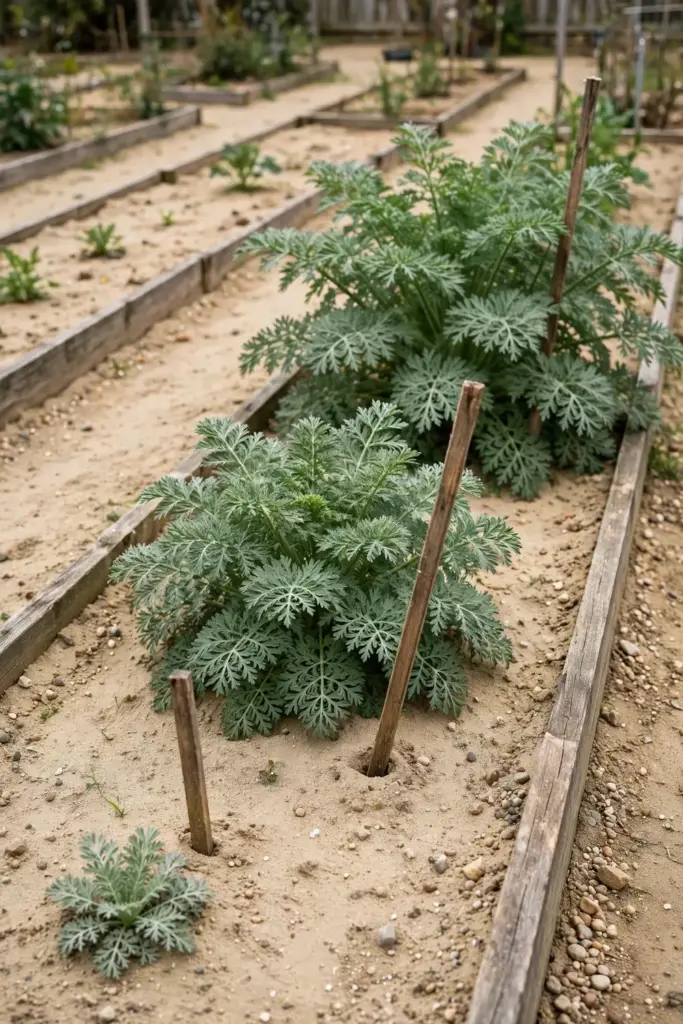
Commitment is easier when you can see the whole arc. Here it is, year by year, with what the plant is doing and what you are doing.
| Year | What the Plant Does | What You Do |
|---|---|---|
| 0 (fall) | Seed rests, needs cold | Cold-stratify 3 to 6 weeks, then sow |
| 1 | Germinates, builds a small rosette and the taproot’s first inches | Water carefully, weed, protect from rot |
| 2 | Rosette grows larger, foliage ferny and vigorous | Almost nothing; weed and observe |
| 3 | Crown thickens, leaves die back each summer | Resist the urge to dig and check |
| 4 | Taproot approaches harvestable size in good conditions | Test one plant if you must; most wait |
| 5 to 7 | Mature; if it flowers, it will set seed and die | Cut roots for resin, or collect seed first |
| Final | Flowers once on a 6 to 10 foot stalk, sets seed, dies | Harvest seed, start the next generation |
The monocarpic ending surprises people, so say it plainly: your plant will die after it flowers. That is the design, not a failure. A single mature plant can produce enough seed to start dozens of successors, so the project continues even as the individual plant ends.
This timeline is why the seed-buying step matters so much. Seven years of care is a lot to gamble on dead seed.
5. Buy Seed Like a Skeptic: Fresh, Scarce, and Worth the Caution
Asafoetida seed is scarce, slow to germinate, and wildly variable in quality. Treat every packet as guilty until proven fresh.
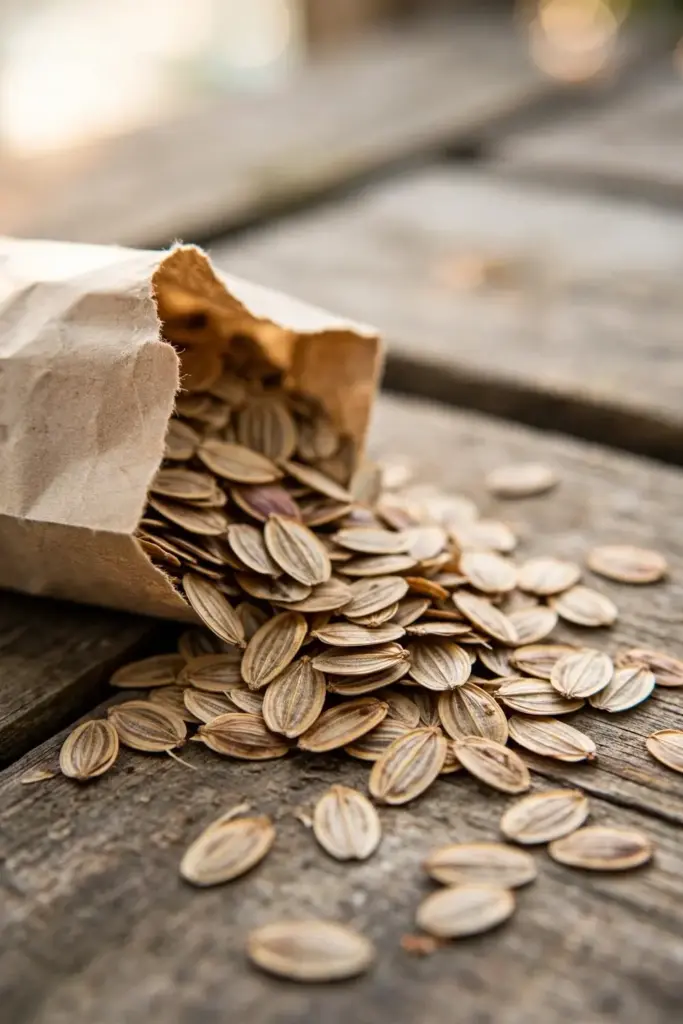
- Buy from specialists. General seed racks almost never carry it. Apothecary herb sellers and Ferula specialists are the reliable sources. One respected seller lists 200 seeds per half-ounce packet and warns openly that germination rates are uncertain. Buy more than you need. It is simple insurance.
- Ask the harvest date. Ferula seed loses viability fast. Seed from the most recent harvest germinates; two-year-old seed mostly does not. A seller who cannot tell you the harvest year is a seller to skip.
- Expect poor germination. Even fresh seed germinates erratically, over weeks, not days. Sow thickly. Thin later. Never ration five precious seeds across a bed.
- Ignore “easy” claims. Listings that promise fast germination with no stratification are selling hope, not botany. The seed needs cold. Full stop.
Store any seed you do not sow immediately in a sealed jar in the refrigerator. Cool, dry, and dark preserves what little vigor the seed has.
6. Cold-Stratify for 3 to 6 Weeks at 5°C
Stratification is non-negotiable. In the wild, seed falls in autumn and sits through a freezing winter before spring germination. Your refrigerator imitates that winter.
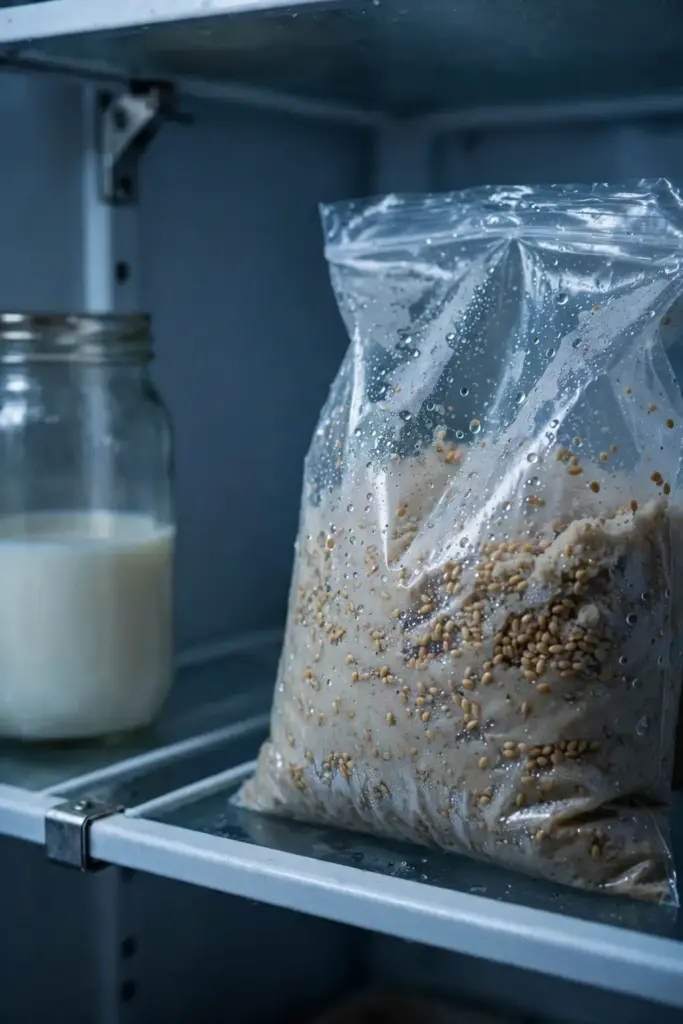
Here is the method that works.
- Mix the seed into barely damp sand or vermiculite in a zip bag. Moist, not wet. Squeeze the medium; no water should drip.
- Label the bag with the date and the species name. Future you will thank present you.
- Refrigerate at about 5°C for 3 to 6 weeks. The standard home fridge sits right at that temperature, which is exactly why seed specialists cite it.
- Check weekly. If you see mold, rinse the seed, refresh the medium, and return it to the fridge.
- Sow immediately after the stratification period ends. Stratified seed that sits warm on a shelf loses its head start.
Some growers extend stratification toward 8 weeks for stubborn lots, a figure that appears in the AI summaries of the top guides. The 3 to 6 week window covers most fresh seed. If your first batch barely sprouts, run the next one longer.
If you have never handled seed before, the seed-starting guide covers tray hygiene and labeling basics that apply here too, even though asafoetida itself must be direct-sown.
7. Direct Sow Only: The Taproot Cannot Be Transplanted
This is the rule that decides success or failure. Asafoetida sends down a long taproot within days of germination, and that root does not forgive disturbance. Transplanting a seedling snaps or bends the taproot, and a bent taproot becomes a stunted plant.
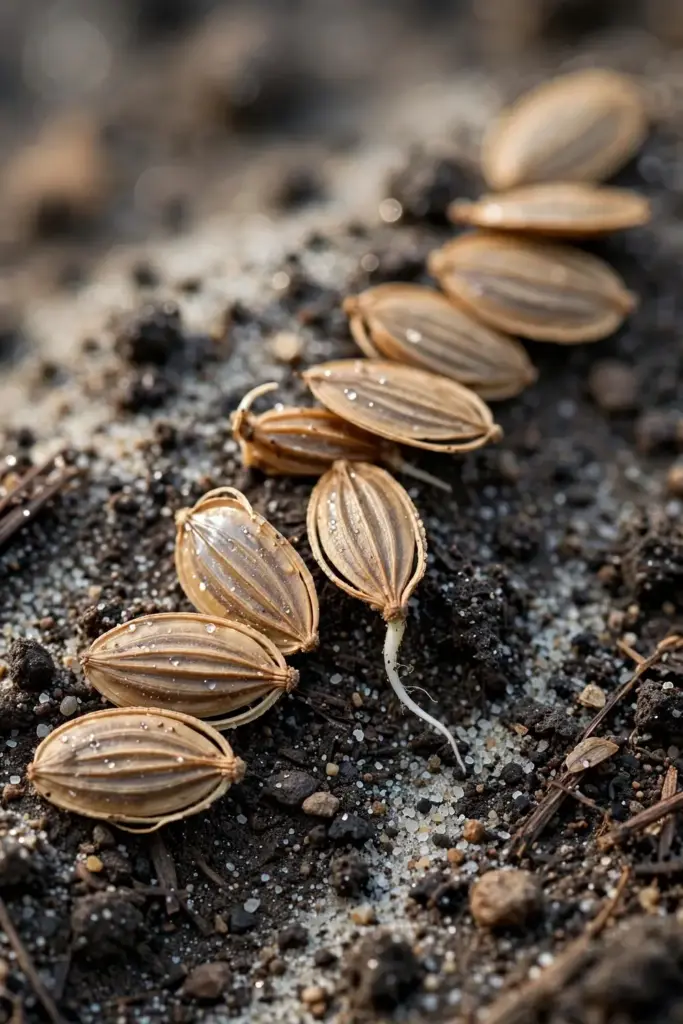
Sow in fall or early spring, directly into the bed where the plant will live for the next half decade.
- Prepare the bed weeks ahead so the soil settles.
- Sow seed about 1 centimeter deep, roughly a quarter to half inch. Press a thin layer of sand or fine soil over the top.
- Space sowing stations 45 to 60 centimeters apart, about 18 to 24 inches. Mature plants are large, and crowding invites the humidity problems this species hates.
- Water gently to settle the seed in. Then keep the bed evenly moist, not soggy, until germination.
- Expect germination over 3 to 5 weeks, unevenly. Mark your stations so you do not weed out your own seedlings.
Deep pots are the one acceptable compromise for gardeners who must move plants, and only if the pots are truly deep, at least 30 centimeters, and the seedling moves out while very young. Even then, direct sowing wins. Choose the final spot as if the plant will live there for seven years, because it will.
8. Soil: Sandy, Lean, and Slightly Alkaline
Desert soil is the template. Think grit, drainage, and restraint.
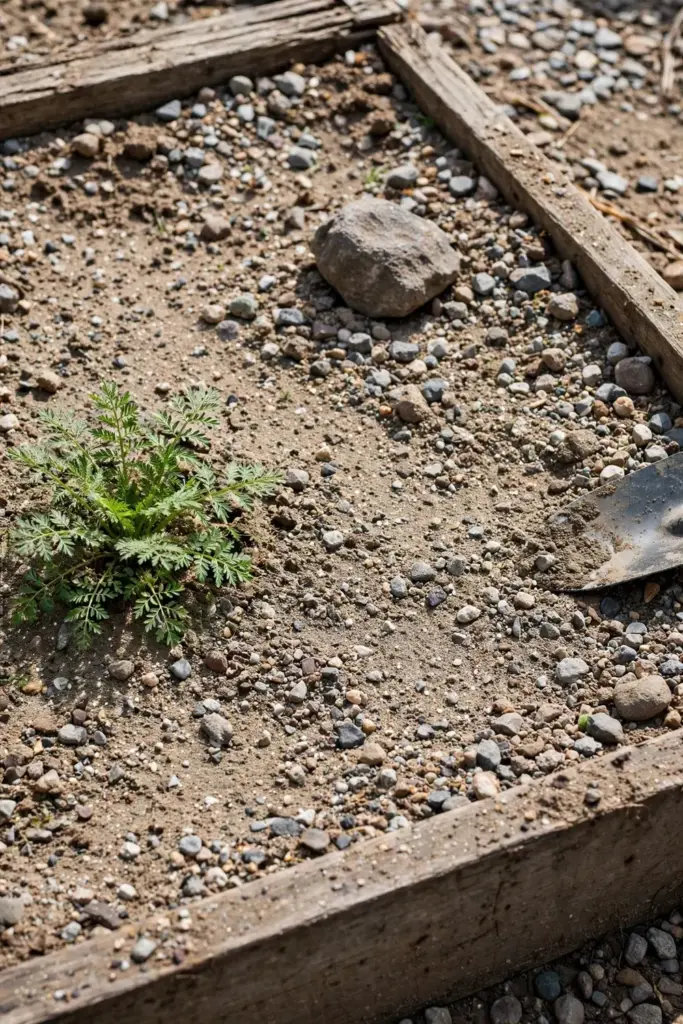
- Texture: Sandy loam or a gritty mix with added coarse sand or fine gravel. Water must pass through fast.
- Drainage: Non-negotiable. A raised bed 20 to 30 centimeters high solves drainage in heavy native soil. Never let water pool around the crown.
- pH: Near-neutral to slightly alkaline, roughly 6.5 to 8.0. If your soil is acidic, a light lime application brings it into range.
- Fertility: Lean. This plant evolved in poor soils. Rich, compost-heavy beds push soft growth that rots at the first humid spell.
Dig the bed deep, at least 40 centimeters, because the taproot will go there. Remove stones and break up any hardpan; a taproot that hits a compacted layer forks or stalls. For the broader principles of building living soil without overfeeding it, the soil-health guide is the reference this article defers to.
Mulch lightly with gravel or coarse sand around the crown, never with moisture-holding organic mulch piled against the stem. Gravel mulch keeps the crown dry while letting rain through.
9. Water Like a Desert Gardener
Asafoetida’s watering rule changes with the season, and most failures come from treating it like a vegetable.
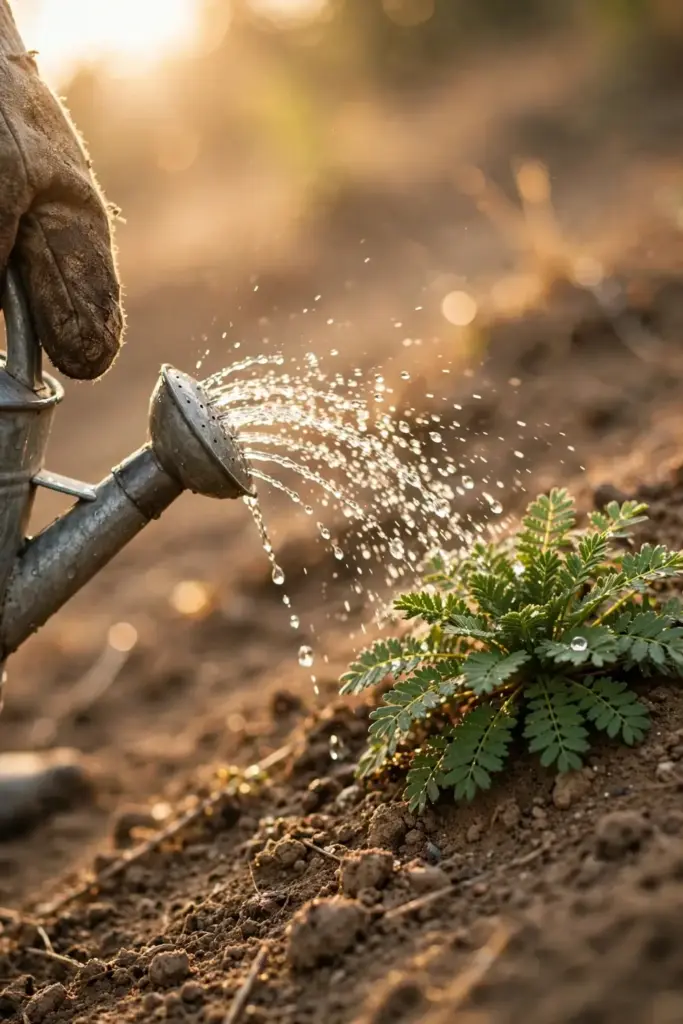
- Germination (weeks 1 to 5): Keep the sowing bed evenly moist. This is the one phase where consistent water matters.
- First growing season: Water when the top few inches of soil are dry. Deep, infrequent watering trains the taproot downward.
- Established plants (year 2 onward): Water rarely. In climates with dry summers, established plants may need no supplemental water at all. When you do water, soak deeply and then walk away for a long time.
- Dormancy: When foliage dies back in summer heat, stop watering almost entirely. A dormant taproot in wet soil is a rotting taproot.
The killer is summer wetness combined with heat: wet soil plus hot air rots taproots fast. If your region gets summer thunderstorms, rig a simple rain shelter, even a clear polycarbonate panel on posts, because that one structure can decide whether a plant sails through year three or melts into mush. Drainage handles winter wet; shelter handles summer wet.
10. Feed Lightly or Not at All
Asafoetida is not a hungry plant. In its native range it grows in soils most vegetables would starve in, and it shows its health through restraint, not appetite.
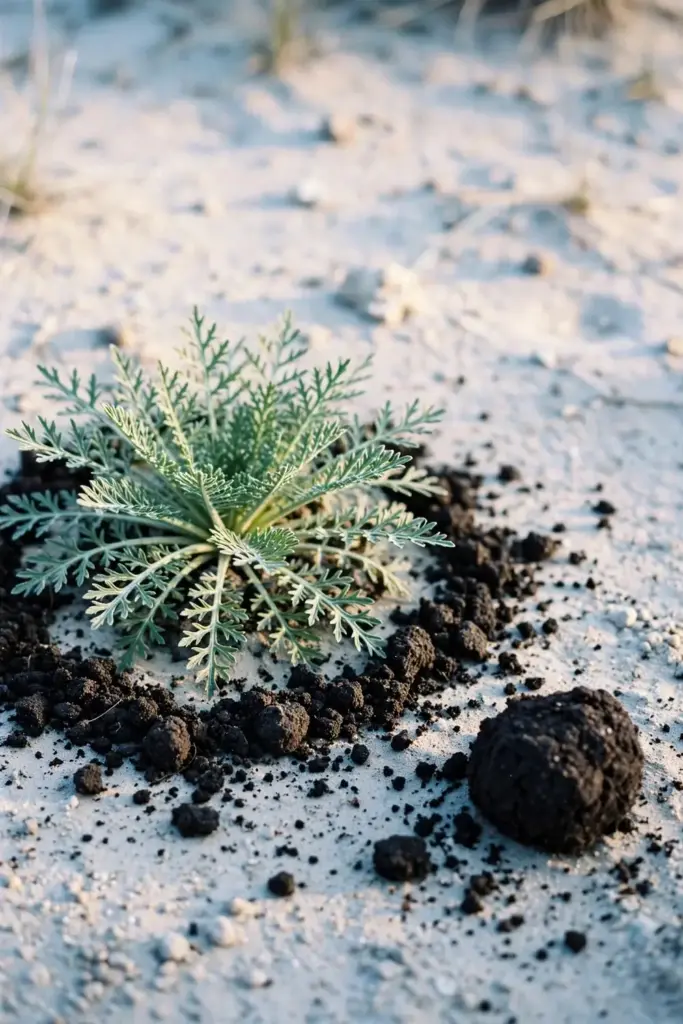
- Year 1: No fertilizer. The seedling is building a root system, and rich soil encourages top growth the young taproot cannot support.
- Year 2 onward: A single light top-dressing of compost in early spring is the maximum most plants need. Think a thin scattering, not a shovelful.
- Never: High-nitrogen fertilizer. It produces soft, weak foliage that flops, invites disease, and delays the root maturity you are actually growing for.
If the foliage looks pale and growth stalls for a whole season, a weak liquid feed once in spring is a reasonable rescue. One application. Then stop. Pale leaves on this plant more often signal overwatering than hunger, so check your watering before you reach for fertilizer.
11. Summer Dormancy: Your Plant Is Not Dead
Sometime in its first or second summer, your asafoetida will do something alarming. The ferny foliage yellows, collapses, and vanishes. New growers assume the plant died. It did not. It went dormant.
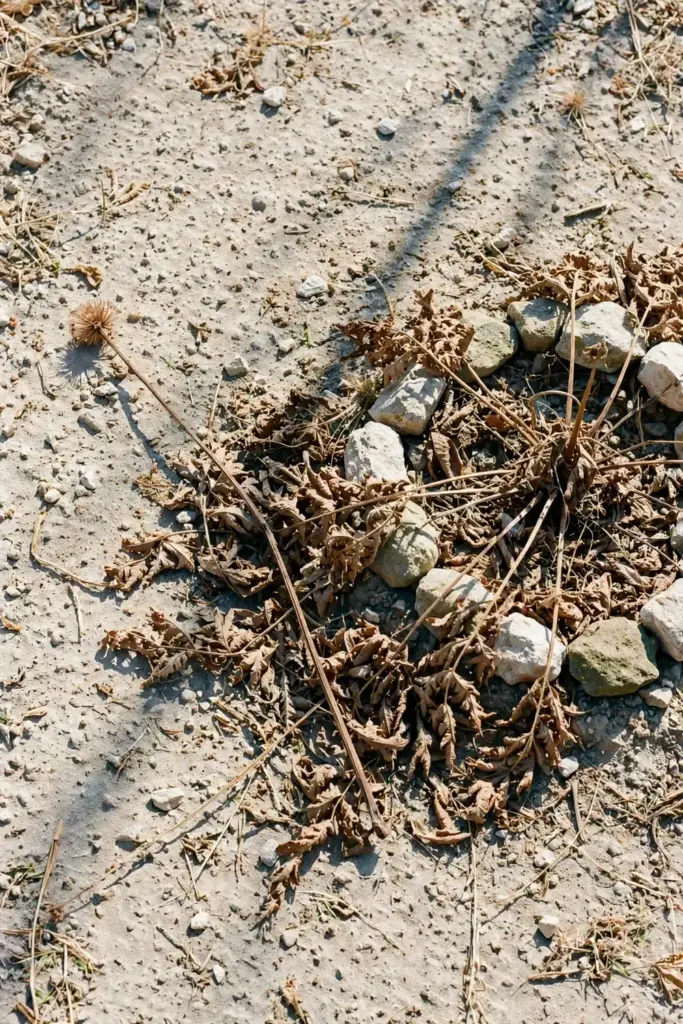
Summer dormancy is the plant’s desert survival strategy. When heat arrives, the top growth shuts down and the taproot waits underground for cooler weather. The crown will resprout with autumn rains or cooling temperatures.
Your job during dormancy:
- Stop watering. Seriously. A dormant root in wet soil rots.
- Mark the spot. A small stake or stone ring prevents you from digging up your own plant or planting something on top of it.
- Do not dig to check. Every disturbance sets the taproot back.
- Wait. Resprouting can take weeks after conditions improve.
First-year seedlings sometimes skip full dormancy and keep a small rosette through summer in mild climates. That is fine too. Either behavior is normal. Panic is the only wrong response.
12. Years 2 to 4: Roots Down, Patience Up
The middle years are the quietest and the hardest. The plant does its real work underground, and above ground you get a rosette that looks much the same each spring, slightly bigger, slightly bolder.
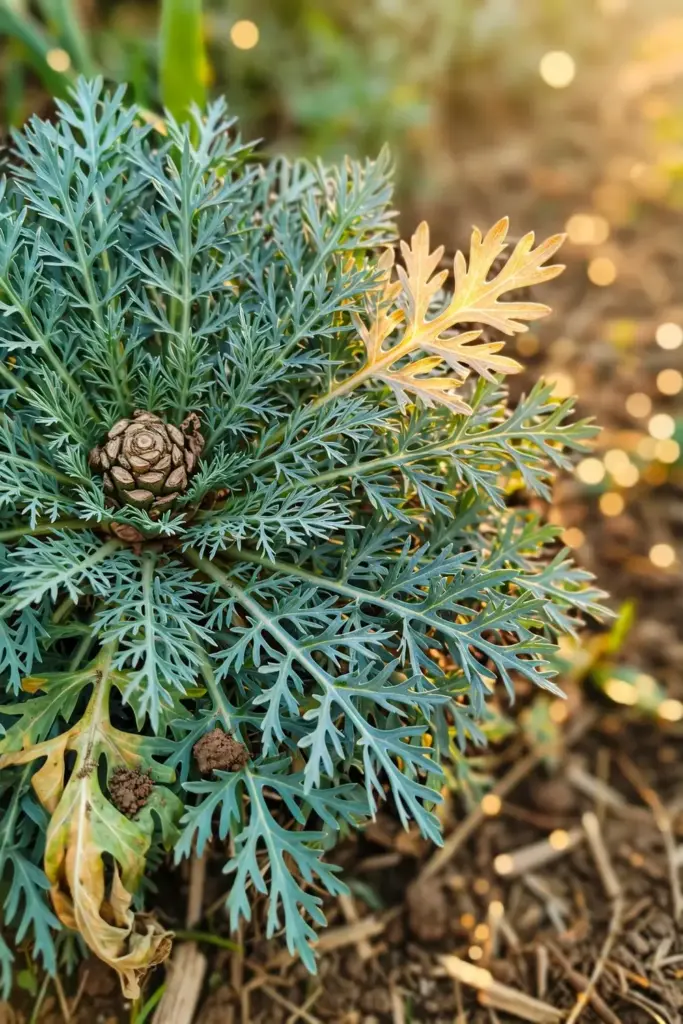
What to do in the waiting years:
- Weed by hand. Keep the bed clear so the rosette gets full sun and air. Weeds also hold humidity against the crown.
- Watch the crown. The growing point at soil level should stay firm and dry. Soft or dark tissue at the crown is the earliest rot warning.
- Leave it alone. No dividing, no moving, no “just checking.” The taproot is the crop.
- Photograph it yearly. A photo series across years 1 to 4 is genuinely satisfying and helps you learn the plant’s rhythm.
Traditional growers in Uzbekistan follow essentially this same patience. A 2024 paper in the Research Journal of Agricultural Science describes Uzbek farmers planting in fall, watering minimally so young plants adapt to the dry climate, and beginning harvest only after 4 to 5 years of growth. Your home project follows the same arc, just with one plant instead of a field.
Year 3 is when doubt peaks. The plant looks like a weed, your friends ask what it is, and the spice jar is still store-bought. This is the filter that separates growers who harvest resin from growers who quit. The plant is fine. You are fine. Keep going.
13. Harvest Resin in Years 4 to 7: Cut and Collect
When the taproot is thick and mature, usually from year 4 onward in good conditions, you can harvest hing the traditional way.
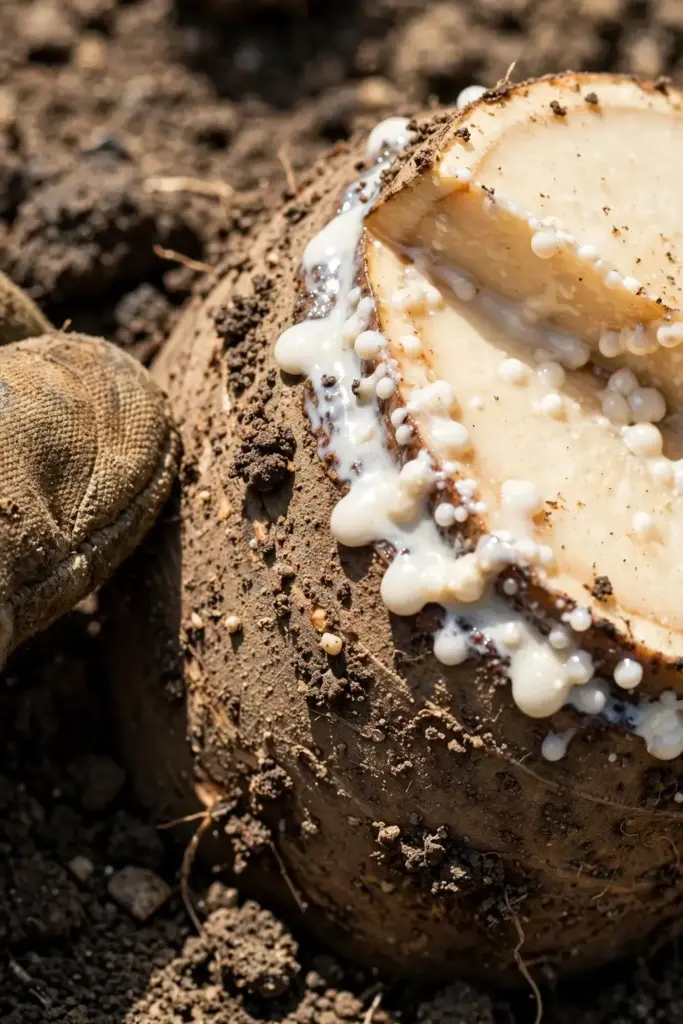
- Read the plant. The signal is the basal leaves drying while the root is still alive. When the lower foliage browns off naturally, the root is mature enough to bleed.
- Expose the root crown. In late spring, carefully clear soil from around the top of the taproot without cutting it.
- Make a shallow cut across the top of the root. Traditional harvesters slice the crown and let the milky latex ooze out.
- Collect after it hardens. The latex browns in air and hardens into resin within a day or two. Scrape it off with a clean knife.
- Cut again. Make a fresh thin slice below the first cut. Latex flows again. Repeat across the season as long as the root keeps bleeding.
Commercial harvesters use several cutting patterns, cross cuts, one-sided cuts, and longitudinal cuts, choosing the method that keeps the root bleeding longest without killing it prematurely. A detailed commercial guide from an Iranian exporter walks through these cutting methods and notes that older roots yield more gum.
A home harvest will be small. A few grams of resin from one root is a triumph, not a failure. Commercial hing powder is compounded and stretched; your few grams of pure resin are stronger than a whole grocery jar.
Safety note: the fresh latex is intensely pungent. Work outdoors or in ventilated air, keep it off your skin if you are sensitive, and store the resin in a sealed glass jar. It keeps for a year or more.
14. Save Seed From a Monocarpic Plant
If you let one plant flower instead of harvesting its root, you get the next generation. The flower stalk rises dramatically, up to 12 feet, topped with umbrella-shaped clusters of small yellow flowers that pollinators love.
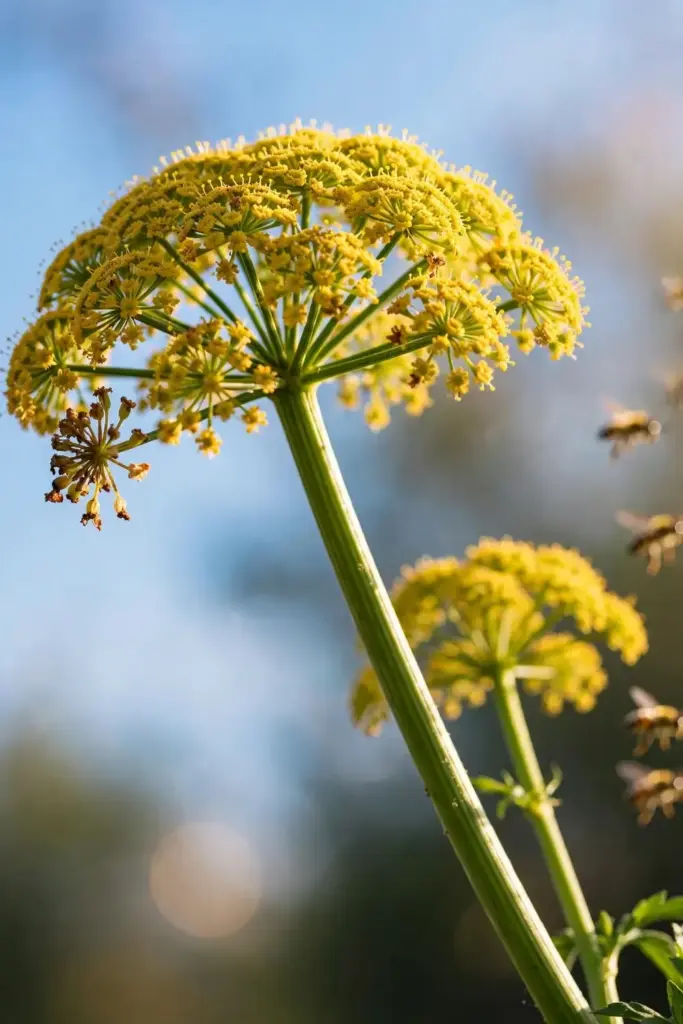
- Isolate or accept crosses. Other Ferula species in the neighborhood can cross-pollinate. For pure seed, bag a flower head or grow a single species.
- Let the seed ripen fully. Umbels turn brown and dry on the stalk. Cut whole heads when most seed is brown but before it shatters.
- Dry indoors. Hang the heads in paper bags in a dry room for two weeks, then shake the seed out.
- Clean and store. Winnow the chaff, seal the seed in a jar, and refrigerate it. Freshness rule: sow next season, within the year.
One flowering plant produces hundreds of seeds. Since germination is erratic, sow generously and share the surplus. Every seed you give away is another gardener joining the seven-year club.
Removing flower heads is the alternative strategy. If you want maximum root resin and no volunteers, cut the stalk early. But on at least one plant, let it flower. The seed is how this project outlives the individual plant.
15. 8 Mistakes That End an Asafoetida Project Early
Every dead asafoetida traces back to one of these. Learn them once and your seven-year project survives its first year.
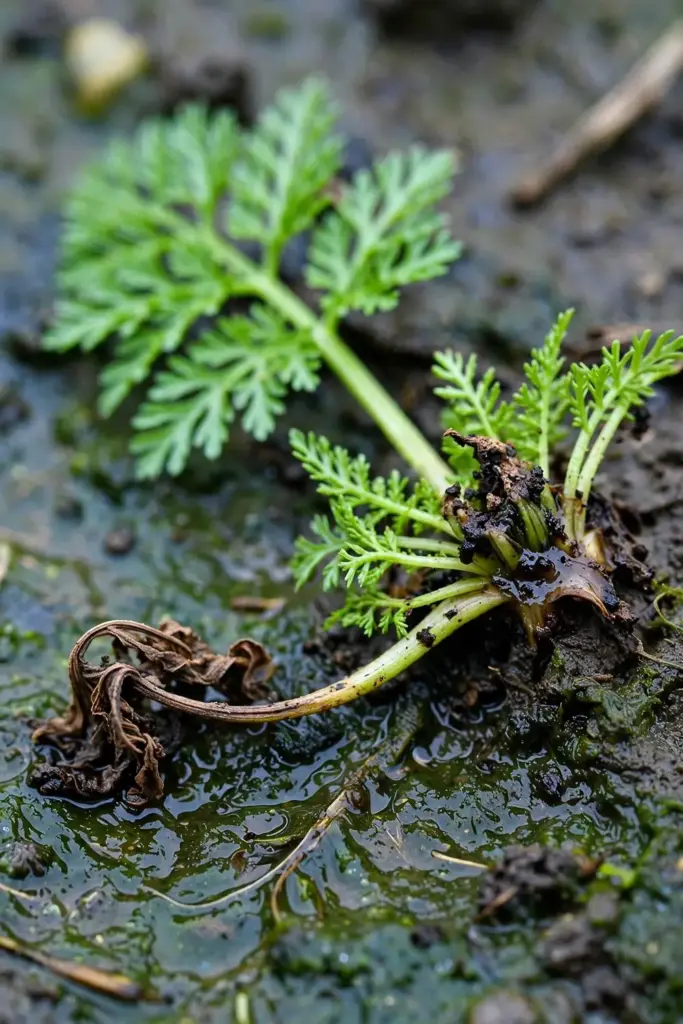
- Transplanting seedlings. The taproot bends or snaps, and the plant never recovers its vigor. Direct sow into the final spot.
- Skipping stratification. Unchilled seed sits in the soil and rots. Chill for 3 to 6 weeks at 5°C, the protocol seed specialists prescribe for Ferula.
- Sowing old seed. Two-year-old packets look identical to fresh ones and germinate at a fraction of the rate. Buy current-harvest seed.
- Watering through summer dormancy. The number one killer. When the foliage dies back, the hose stays off.
- Rich soil. Compost-heavy beds grow soft tops and rotting crowns. Lean and gritty wins.
- Planting in shade. A desert plant in shade stretches, weakens, and succumbs. Full sun or do not bother.
- Digging to check progress. Curiosity kills taproots. Trust the timeline.
- Expecting a quick harvest. Quitting in year 2 because there is no spice yet is a planning failure, not a plant failure. Like ginseng, another famously slow root crop, asafoetida pays growers who measure in years.
16. Troubleshooting: Quick Fixes for Slow Problems
Seed never germinated. The usual suspects in order: no stratification, old seed, or sowing too deep. Ferula seed wants light; surface sowing under a thin sand layer is the method the established growing guides recommend, with about 2 feet between stations. Retry with fresh seed and a full chill.
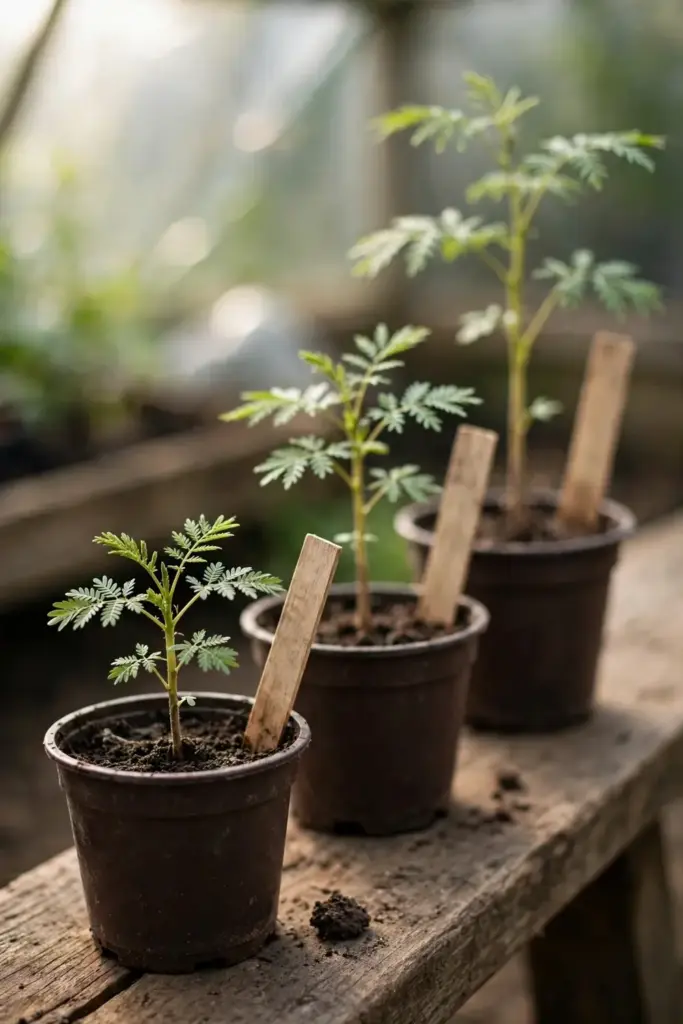
Seedlings damped off. Too wet, too crowded, or too rich a medium. Thin to one seedling per station, back off water, and make sure air moves around the stems.
Rosette yellows in spring. Check drainage first and overwatering second. Yellow spring foliage on this plant is almost always wet feet, not hunger.
Crown feels soft. Early rot. Stop all water, pull back any mulch touching the crown, and hope the taproot below is still firm. Prevention beats cure here; gravel mulch and raised beds exist for this reason.
Plant flowered in year 2. Unusual but possible in stressful conditions. You will not get resin from a young root. Let it set seed and start over with the lessons learned.
No flowers by year 7. Some plants take longer, and marginal climates slow everything further. Keep caring for the root; flowering happens on the plant’s schedule, not yours.
Frequently Asked Questions
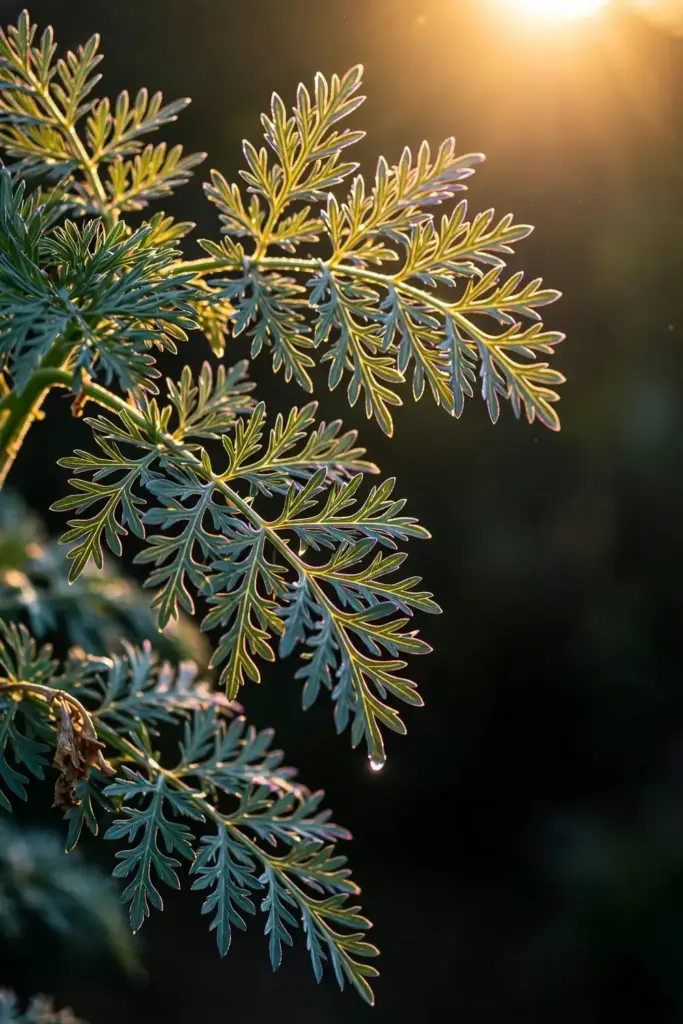
Plan on 4 to 7 years from sowing to your first resin harvest, with year 5 as a realistic middle. The taproot must reach harvestable thickness before cutting, and rushing it yields a weak, short-lived bleed. This is the single fact that filters serious growers from the curious.
You can, with conditions. The pot must be deep, at least 30 to 40 centimeters, because the taproot goes straight down. Use a gritty, fast-draining mix and move the pot under cover during wet summers. Treat pots as a climate workaround, not the ideal; the ground is better whenever your winters allow it.
It is a monocarpic perennial. It lives several years as a leafy rosette, then flowers once, sets seed, and dies. Calling it “perennial” misleads, because the flowering year is the plant’s last. Save seed from the flowering stalk and the project continues indefinitely.
It went dormant. That is normal desert behavior: the foliage dies back in heat while the taproot waits underground for cooler weather. Stop watering. Mark the spot so you do not disturb it, then wait for autumn resprouting. Digging it up to check is the one response that turns dormancy into death.
Buy from specialist apothecary herb sellers, not general seed racks. Ask for the harvest year and buy the freshest lot available; a half-ounce packet holds 200 seeds by the seller’s count, so one packet sows generously. Avoid any listing that promises quick germination with no cold treatment.
Usually yes, because store powder is compounded with flour or gum to tame the resin. Your scraped resin is pure and intensely pungent, so use far less than you would of the grocery jar. A few grams from one root flavors a year’s worth of cooking for most households.
Closing: Grow It for the Story, Buy the Spice for the Kitchen
Here is the honest way to hold this project. Buy your hing powder at the store this year and every year. Meanwhile, sow your seed in fall, stratify it properly, and tend a strange ferny rosette that asks almost nothing of you except time. In seven years you will scrape your own resin from a root you raised from dust, and you will understand the spice in a way no grocery jar can teach.
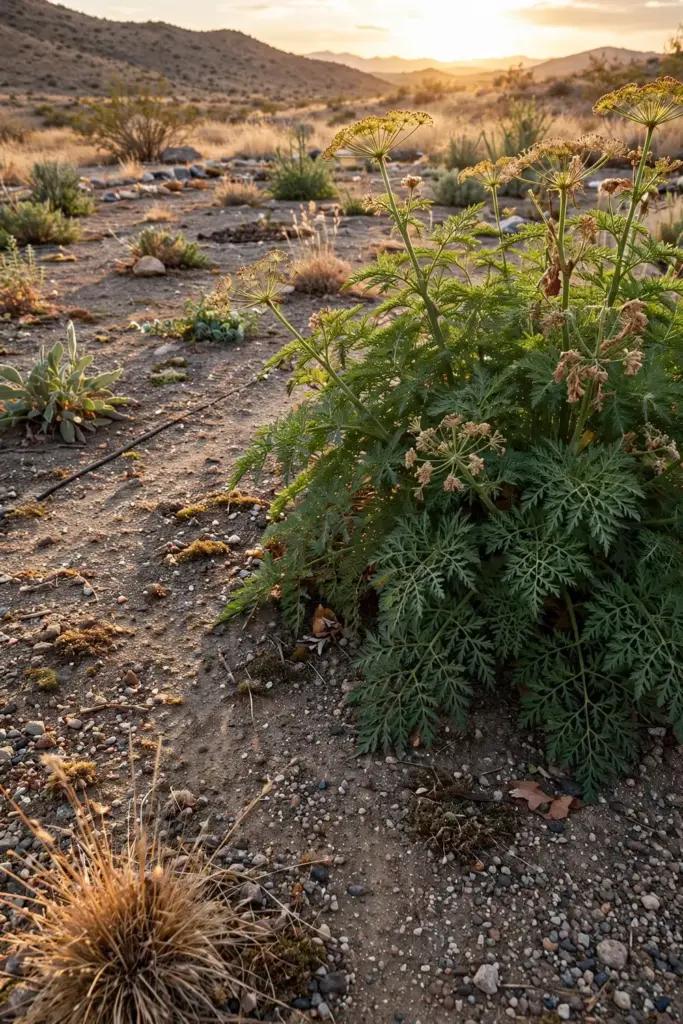
Fall is the natural sowing season in climates with cold winters, which makes asafoetida a fine companion to the other herbs on the fall planting list. Start the long game this autumn. That is the whole of how to grow asafoetida from India: honest about the timeline, careful with the taproot, and patient enough to let a desert plant keep desert time.