Plant one blanket flower in full sun and lean soil, then leave it alone for 30 days while roots settle. That is how to grow blanket flower in a hot, dry bed. One plant, one sunny spot, and flowers from early summer to frost reward a gardener who resists feeding and fussing.
Follow 13 moves, from picking a variety to skipping the mistakes that kill it. Each move names the job, the number, and the failure that follows when the job is skipped.
I have learned that blanket flower forgives drought faster than it forgives wet winter soil. Wet crowns rot while dry crowns wait out the heat.
Pick a Variety That Fits Your Bed
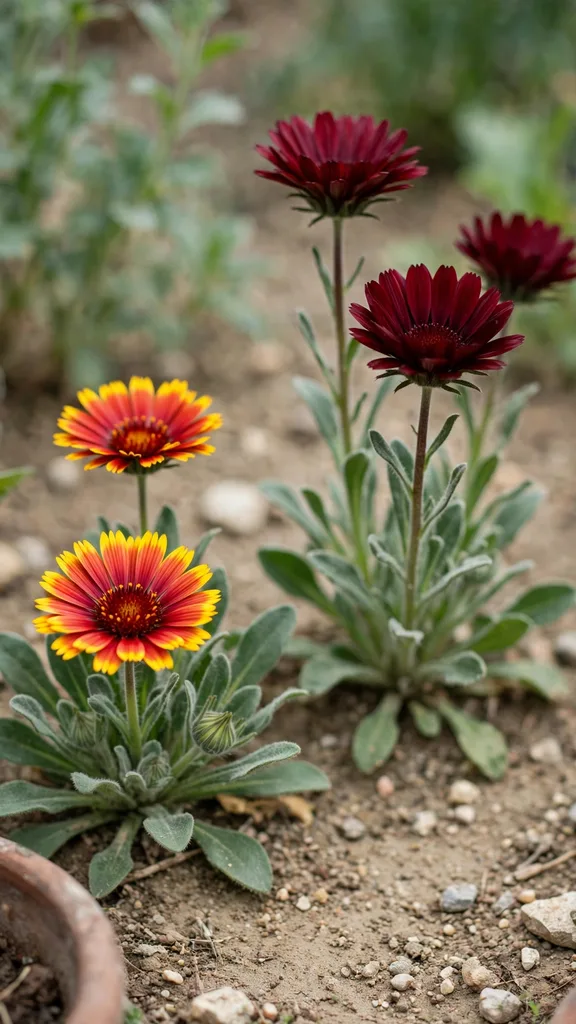
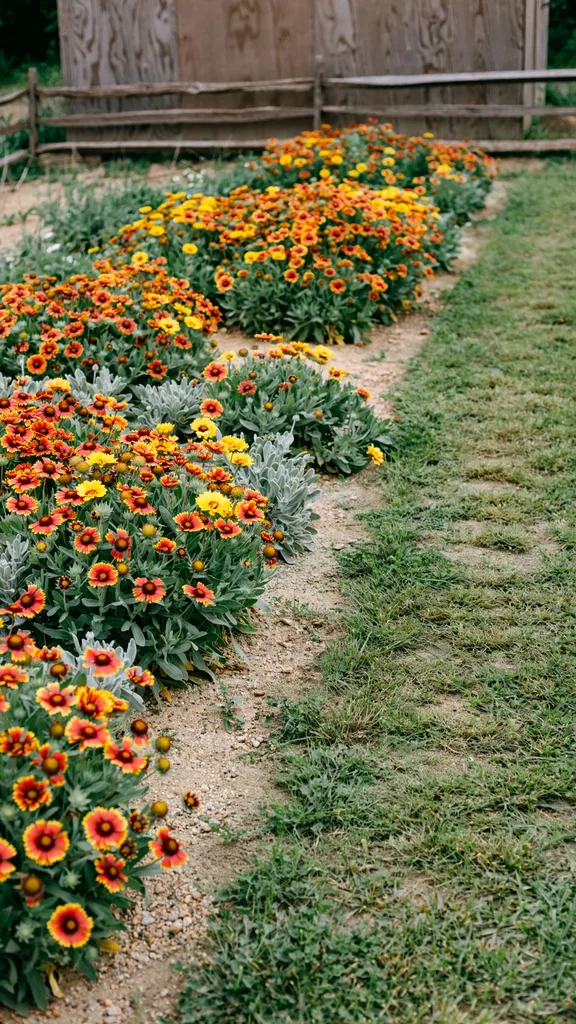
Pick the size first and the color second. A tall form in a small bed flops over its neighbors, and a dwarf form lost at the back of a border never shows its flowers. Garden blanket flower is a hybrid of the perennial Gaillardia aristata and the annual Gaillardia pulchella, and most garden forms reach 30.5 to 91.4 cm tall with a 61.0 cm spread, according to the North Carolina Extension blanket flower profile. Short forms suit pots and edging. Tall forms suit the middle of a sunny border.
| Variety | Flower Color | Height | Best Use |
|---|---|---|---|
| Arizona Sun | Red with yellow tips | 20.3 to 30.5 cm | Edging, pots, front of border |
| Burgundy | Deep wine red | 45.7 to 61.0 cm | Middle of border, cutting |
| Fanfare | Red and yellow pinwheel | 30.5 to 45.7 cm | Border, cottage garden |
| Goblin | Red with yellow edge | 25.4 to 30.5 cm | Small beds, containers |
| Mesa Yellow | Clear yellow | 38.1 to 45.7 cm | Mass planting, hot beds |
| Blanket Flower | Mixed red, orange, yellow | 30.5 to 61.0 cm | Wildflower beds, meadow edge |
Arizona Sun earns its place as the default pick for a first bed. The compact plant flowers heavily in its first year, holds a tight mound, and needs no staking. Burgundy suits a cutting bed, with long stems and a deep color that holds in a vase. Fanfare carries pinwheel petals with rolled tubes, so it reads as a different flower from across the garden. Mesa Yellow breaks the red and orange pattern with clean yellow heads that light up a hot corner.
Buy a plant with a full shape and many buds. Count the stems, since each stem carries one flower head. A leggy plant with three stems gives three flowers. A bushy plant with twenty stems gives twenty. Check the crown for soft, dark tissue, which signals rot before you even get the plant home.
Seed packets labeled blanket flower usually carry the species mix, and the seedlings vary in color. Named cultivars grown from seed do not always match the parent, so buy a named cultivar as a plant when the exact color matters. Seed suits a wildflower bed where variation adds to the show.
Start Blanket Flower Seed 6 Weeks Before Frost
Start seed indoors 6 to 8 weeks before the last frost for first year blooms. Seed sown after frost still flowers, but the show starts later and the plants stay smaller in year one. Indoor sowing buys the plant a full season of growth before summer heat arrives.
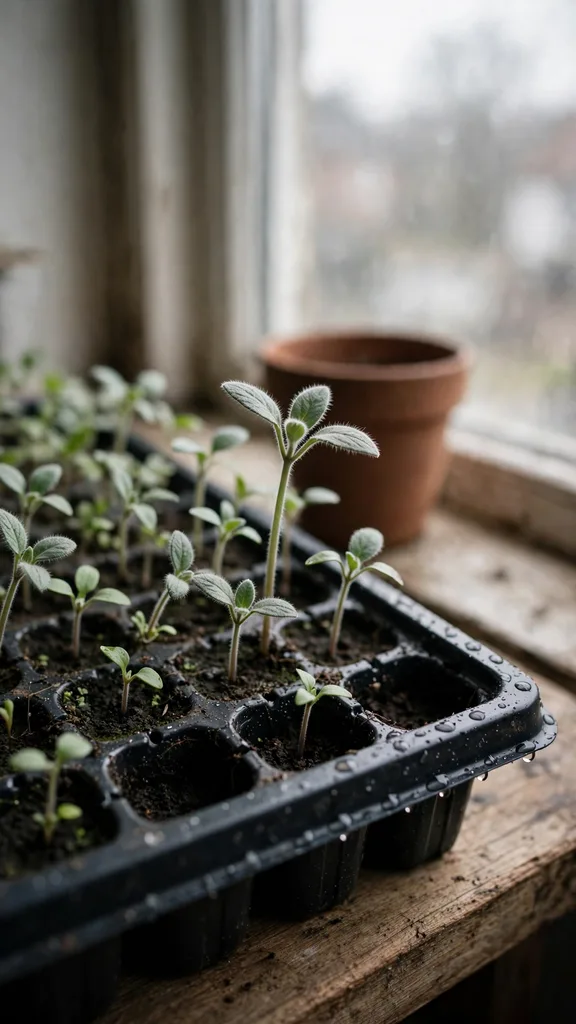
Fill a tray with damp seed mix and press the seed onto the surface. Blanket flower seed needs light to germinate, so press it into the mix and leave it uncovered, or cover it with only a dusting of fine mix. A seed buried deep stays dark and never sprouts.
Keep the tray at 18.3 to 21.1 degrees Celsius and keep the surface damp with a mister. Seedlings appear in 14 to 21 days under warm, damp conditions. A cold windowsill slows germination to a crawl, and a tray that dries out once can lose the whole sowing.
Thin seedlings to one per cell when the first true leaves open. Two seedlings in one cell fight for light, and both grow thin and pale. Move the strongest seedling on and compost the rest.
Harden seedlings off for 7 to 10 days before planting out. Set the tray outside in shade for a few hours on day one, then add sun and wind a little each day. A seedling moved straight from a windowsill to full sun scorches in one afternoon.
Direct sow after the last frost where the season runs long. Rake the bed smooth, scatter seed thinly, press it into the soil with a board, and water with a fine rose. Thin the seedlings to one plant every 30.5 cm once they reach 7.6 cm tall. Direct sown plants flower later than indoor sown plants, and they catch up fast once summer heat arrives.
Plant Blanket Flower at 30.5 cm Spacing in Lean Soil
Plant blanket flower at 30.5 to 45.7 cm spacing in lean, fast draining soil. Space plants one mature width apart so air moves between the crowns and the leaves dry fast after rain. Crowded plants trap damp air, and damp air feeds mildew.
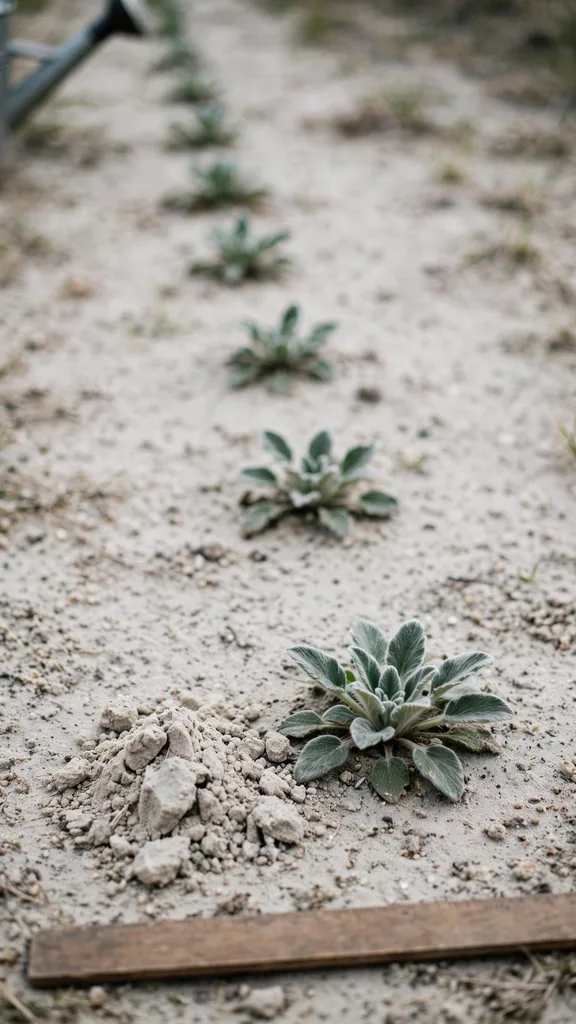
Dig the hole the same depth as the pot and twice as wide. Set the plant so the crown sits level with the soil surface, never buried. A buried crown rots in the first wet spell. Backfill with the soil you dug out, firm it gently, and water once to settle the roots.
Skip compost and fertilizer in the planting hole. Blanket flower grows best in poor soil, and rich ground pushes soft leafy growth with few flowers. The plant evolved on prairies and dunes, where lean ground keeps it compact and floriferous.
Test drainage before you plant. Dig a 30.5 cm hole, fill it with water, and watch it drain. Water that stands longer than 4 hours means the bed holds too much moisture for this plant. Raise the bed 15.2 cm with gritty soil, or move the plant to a slope or a raised bed. Drainage decides survival more than any other factor.
Plant in spring after the last frost in cold zones, and in early autumn in warm zones where the ground stays workable. Spring planting gives the roots a full season before winter. Autumn planting works only where winters stay mild and the soil drains fast.
Match Blanket Flower to Zones 3 to 11
Match the plant to your winter before you buy it. Blanket flower grows as a perennial in zones 3 to 11, and the University of Florida IFAS blanket flower guide lists Gaillardia pulchella forms at 30.5 to 61.0 cm tall with flowers 5.1 to 7.6 cm wide. The plant survives hot summers and freezing winters where the soil drains. Wet winter soil kills it faster than cold does.
| Spec | Blanket Flower |
|---|---|
| USDA zones | 3 to 11 |
| Mature size | 30.5 to 91.4 cm tall, 30.5 to 61.0 cm wide |
| Flower size | 5.1 to 7.6 cm across |
| Light | Full sun, 6 or more hours a day |
| Soil | Lean, sandy or rocky, fast draining |
| Bloom season | Early summer to frost |
| Growth habit | Mounding, short lived perennial |
Give blanket flower full sun for the heaviest flowering. A spot with 6 or more hours of direct sun keeps the stems short and the flowers coming. Shade stretches the stems, thins the flowers, and invites mildew. Pick the sunniest bed you own, then plant where the morning sun hits first.
Blanket flower comes from the prairies and open ground of North America, where it grows in thin, rocky soil under open sky. The hairy gray green leaves slow water loss, and the deep root reaches moisture that shallow rooted annuals never touch. Hot, dry, sunny beds suit it, and growing zinnia fills the same hot border with a second flower color that shares the same sun and lean soil.
Cold zones treat blanket flower as a short lived perennial. Expect 2 to 4 good years from one plant, then replace it or let it reseed. Warm zones keep the same plant longer, and self sown seedlings fill gaps without any work from the gardener.
Water New Plants Deep, Then Back Off
Water new plants deep once a week until roots establish, then back off. Soak the root zone until water reaches 15.2 cm deep, then let the soil dry before the next watering. Deep, infrequent watering pulls roots down. Daily sprinkles keep roots shallow and the crown damp.
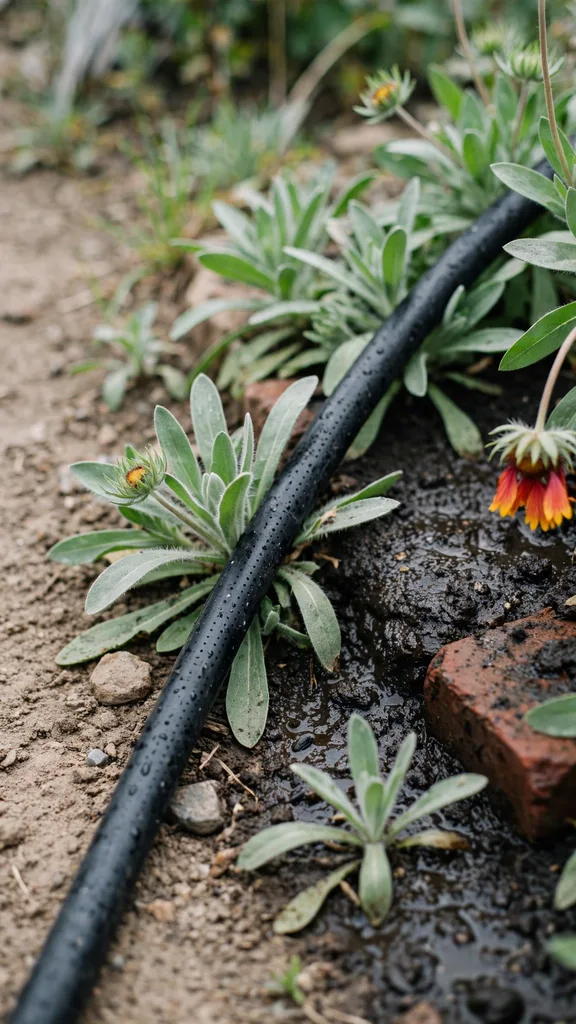
Water at the base in the morning. Wet leaves at night stay damp for hours, and damp leaves feed mildew and leaf spot. A soaker hose or a watering can aimed at the soil keeps the foliage dry. Overhead sprinklers waste water on leaves that never needed it.
Established blanket flower tolerates drought. The plant survives dry spells that kill thirstier perennials, and it flowers through heat that wilts its neighbors. Water only when the top 5.1 cm of soil feels dry and the leaves flag in the afternoon. A plant that perks up by evening needed no water at all.
Cut water back in autumn. Wet autumn soil followed by cold nights rots the crown before winter. Let the bed dry between rains, and stop watering entirely once growth slows. Dry crowns enter winter sound. Wet crowns enter winter already rotting.
Containers dry faster than beds, so check pots by weight. Lift the pot each morning. A light pot needs water, and a heavy pot does not. Water a pot until it runs from the drainage holes, then empty the saucer. Standing water in a saucer drowns the roots in hours.
Skip Fertilizer and Keep Stems Short
Skip fertilizer and keep stems short. Blanket flower flowers best in lean soil, and fertilizer pushes soft, leafy stems that flop and flower poorly. A plant fed like a rose grows leaves like a rose and flowers like a weed.
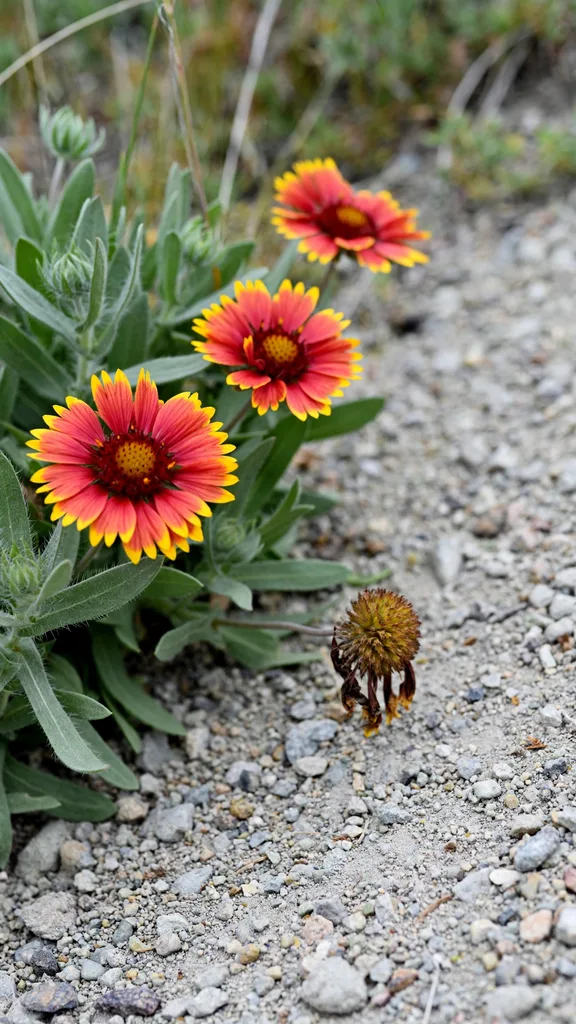
Never feed a new planting. The roots need to settle into native soil, not chase a pocket of rich feed. A plant that grows slowly in year one builds a strong crown. A plant forced fast in year one grows soft tissue that winter kills.
Top dress with a thin layer of gravel instead of compost. Gravel keeps the crown dry, stops soil splashing onto leaves in rain, and holds no moisture against the stem. Compost holds moisture at the crown, and a damp crown rots.
Short stems carry flowers upright through wind and rain. Tall, soft stems bend after the first storm. They never stand straight again. Lean soil, full sun, and no fertilizer keep the stems short and stiff. Rich soil, shade, and feed grow the floppy stems that gardeners blame on the variety.
If a plant grows leggy despite lean soil, cut it back by one third in midsummer. Shearing forces side shoots, and the side shoots carry the late season flowers. Cut hard. A sheared plant looks bare for 10 to 14 days, then returns bushier than before.
Deadhead Weekly for Blooms Until Frost
Deadhead weekly for blooms until frost. Snip each spent flower head off at the stem just above the next leaf, and the plant pushes a new bud within days. A plant left to set seed stops flowering and spends its strength on seed instead.
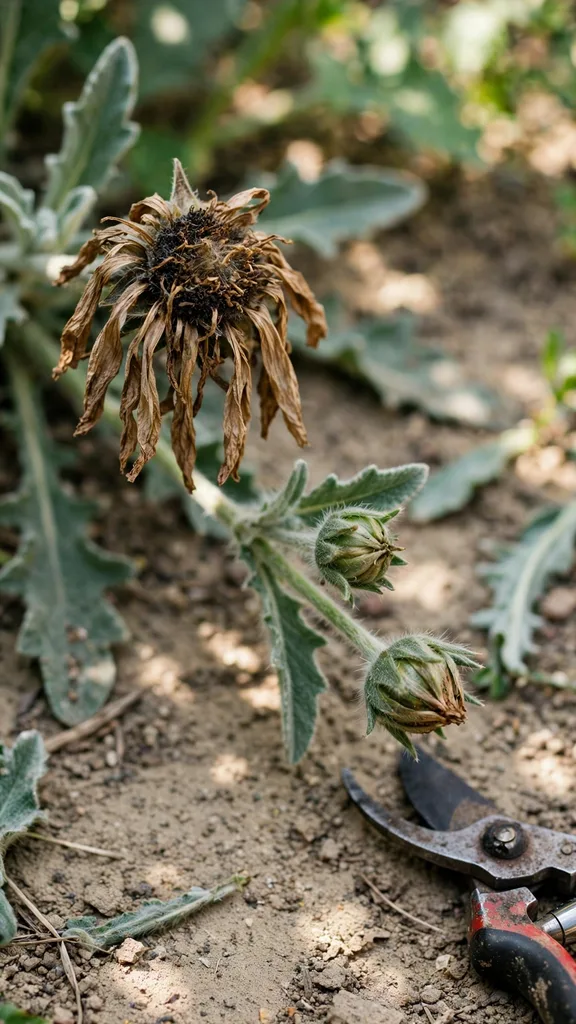
Carry shears on every garden walk from June onward. Spent heads show a browned center and drooping rays, and they come off with one snip. A weekly pass takes 5 minutes on a small bed and keeps the show running for months.
Leave a few heads at the end of the season if you want seedlings. Seed heads feed goldfinches. Fallen seed sprouts next spring where the soil stays open. Mark the plants you leave. A bed left entirely to seed turns weedy fast. Self sown seedlings vary in color, and the best of them earn a place in the bed.
Deadheading also extends the life of the plant. Blanket flower blooms so heavily that it can exhaust itself in a few seasons, and removing spent flowers spreads the effort across the season. A deadheaded plant lives longer than a plant left to seed itself out.
Cut flowers for the vase while you deadhead. A stem cut for indoors is a stem that never sets seed, so the vase and the deadheading pass do the same job. Cut in the morning, strip the lower leaves, and set the stems in cool water at once.
Cut Blanket Flower Stems for a Long Vase Life
Cut blanket flower stems for a vase that lasts a week. Cut stems in the morning when the flowers just open, since a flower cut at midday wilts faster in the vase. Choose stems with one open flower and one bud, so the bud opens as the first flower fades.
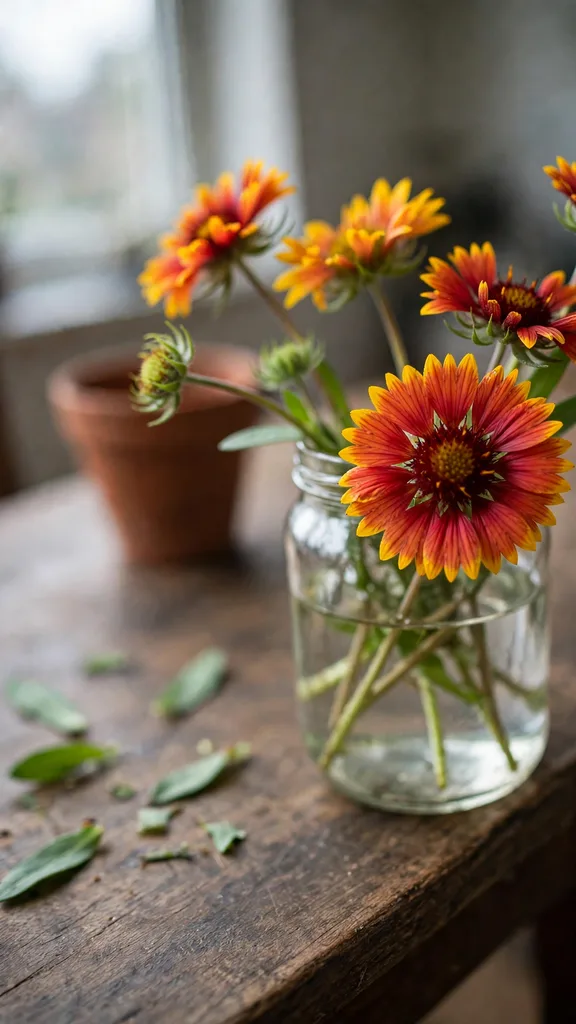
Cut the stem 20.3 to 25.4 cm long with sharp shears. A clean cut drinks. A crushed stem drinks poorly. Strip leaves below the water line, since submerged leaves rot and foul the water in 2 days.
Change the vase water every 2 days and recut the stems by 1.3 cm each time. Fresh water and a fresh cut keep the stems drinking. Cloudy water starves the flowers, and the heads droop overnight.
Pair blanket flower with growing sunflower stems in a mixed vase. The small daisy heads fill the gaps between large sunflower faces, and both flowers share the same hot, sunny bed. Cut both in the morning, condition both in cool water, and the mixed bunch outlasts either flower alone.
Dry the seed heads for winter interest. Hang a few stems upside down in a dry shed, and the domed centers hold their shape for months. Dried heads suit a winter arrangement, and the seed inside still sows next spring.
Divide Crowns Every 2 to 3 Years
Divide crowns every 2 to 3 years to keep blanket flower vigorous. Lift the plant in early spring when new shoots reach 7.6 cm, and split the crown into pieces with a sharp spade. Each piece needs roots and at least one shoot. Replant at once at the same depth, water once, and leave it alone.
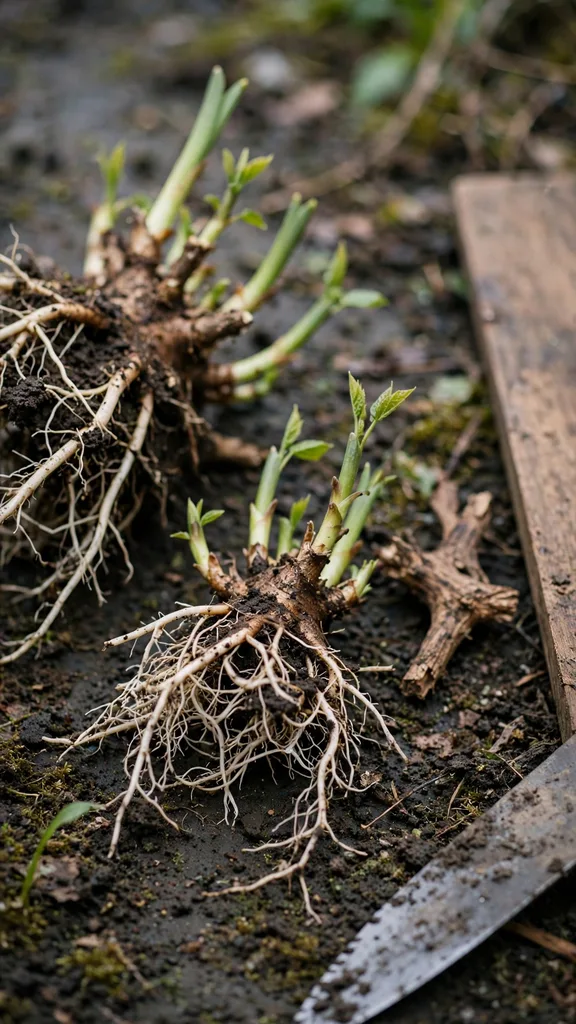
Division renews a plant that flowers less each year. Old crowns grow woody in the center and flower only at the edges. A divided crown grows fresh shoots across the whole clump, and the flowers return to the center.
Discard the woody center and keep the outer pieces. The center holds the oldest, weakest tissue, and it rots first in wet soil. The outer ring carries young roots and strong shoots. Compost the center and plant the ring.
Divide on a cool, cloudy day. Hot sun wilts divided roots before they settle, and a cloudy day gives the pieces time to take hold. Water the divisions once, then treat them like new plants for 30 days.
Seed sowing renews a bed faster than division when many plants are needed. One flower head holds dozens of seeds, and a single season of self sowing fills a bare bed. Division suits a named cultivar that must stay true. Seed suits a wildflower bed where variation adds color.
Grow Blanket Flower in Pots With Gritty Mix
Grow blanket flower in pots with gritty mix and full sun. Fill a pot 30.5 cm wide with one part potting mix, one part coarse sand, and one part perlite. The grit keeps the mix open, and open mix drains fast after rain. A pot of rich potting mix holds water at the crown, and the plant rots.
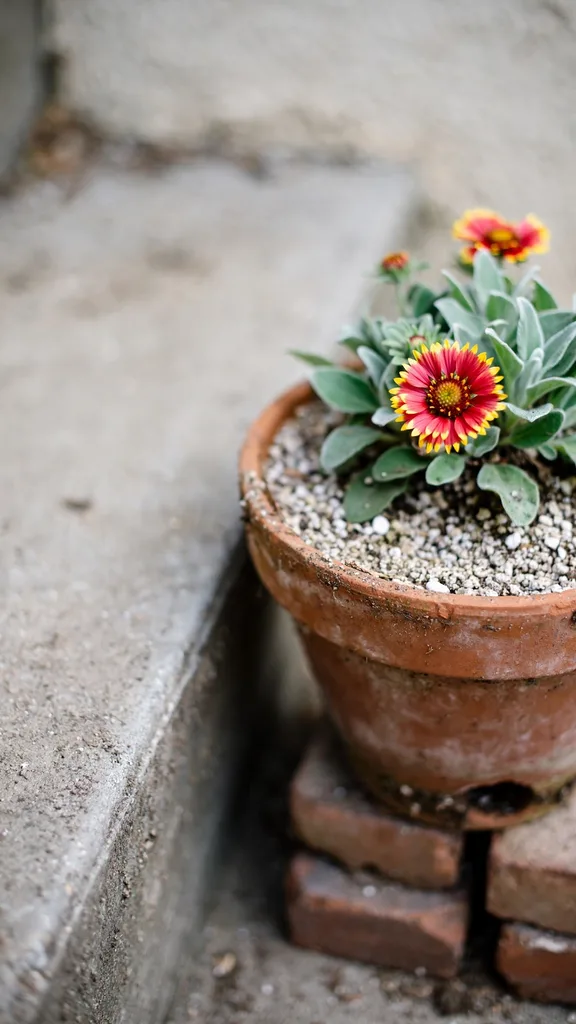
Pick a pot with drainage holes and feet. Water must leave the pot, and a pot sitting flat on a patio traps water underneath. Raise the pot on feet or bricks so the holes drain free. A saucer left full drowns the roots.
Set one plant per pot. Two plants in one pot fight for water and light, and both flower less than one plant alone. A single plant fills a 30.5 cm pot by midsummer and flowers from every stem.
Move pots to the sunniest spot you own. A pot on a shaded patio grows leggy stems and few flowers. A pot on a sunny step or a south facing wall flowers all season. Turn the pot a quarter turn each week so the plant grows straight instead of leaning toward the sun.
Protect pots in cold zones. A pot freezes harder than open ground, and the roots have no earth to insulate them. Move the pot against a house wall and wrap it in burlap, or sink the pot into the ground for winter. A plant in a frozen pot dies while the same plant in a bed survives.
Stop Powdery Mildew Before It Spreads
Stop powdery mildew before it spreads. Mildew shows as a white, powdery coat on leaves and stems, and it starts on the lowest leaves in damp, still air. Remove the first spotted leaves at once, and the plant often outgrows the problem without any spray.
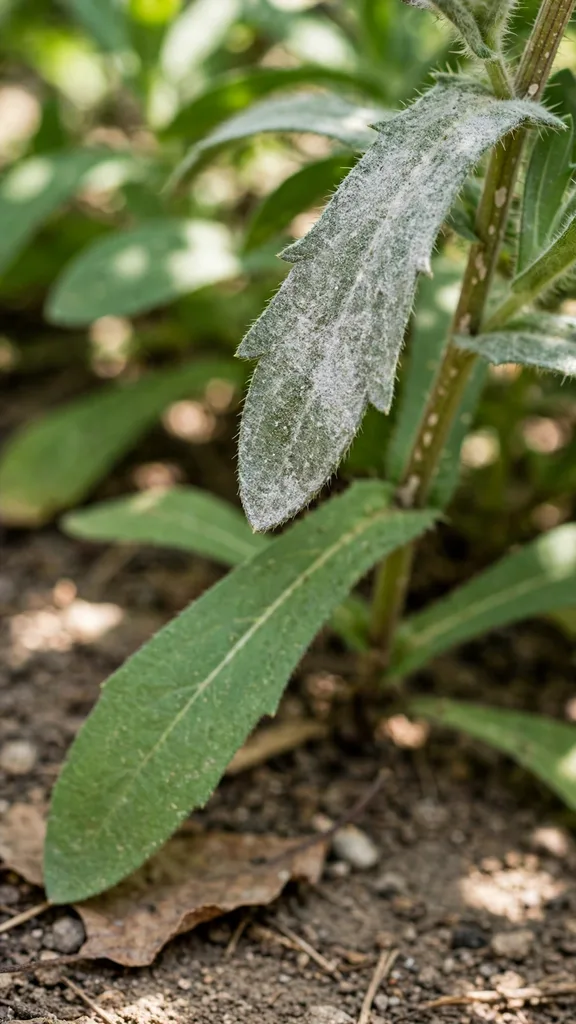
Space plants for air flow and water at the base. Air moving through the bed dries leaves fast after rain, and dry leaves resist mildew. Crowded plants and overhead watering keep leaves damp, and damp leaves invite the fungus.
Cut back a badly mildewed plant by one half in midsummer. Remove the diseased growth, compost it away from the bed, and let the plant regrow clean shoots. A hard cut looks severe for 2 weeks, then the plant returns with fresh foliage and late flowers.
Never compost diseased leaves in a home pile. Home compost never gets hot enough to kill mildew spores, and the spores return on next year mulch. Bag the leaves and bin them. Clean shears with soap after cutting diseased growth, so the next cut spreads no spores.
Choose a sunny, open site for the next planting. Mildew follows shade and still air, and a plant moved to open sun rarely mildews again. The site fixes more mildew than any spray does.
Treat White Smut on Gaillardia Early
Treat white smut on gaillardia early, before the pustules spread across the leaves. White smut shows as pale, blistered pustules on leaves and stems, and the pustules later split and release dark spores. Read the white smut on gaillardia guide at the first sign, and match the symptoms before you act. A wrong diagnosis wastes the season on the wrong fix.
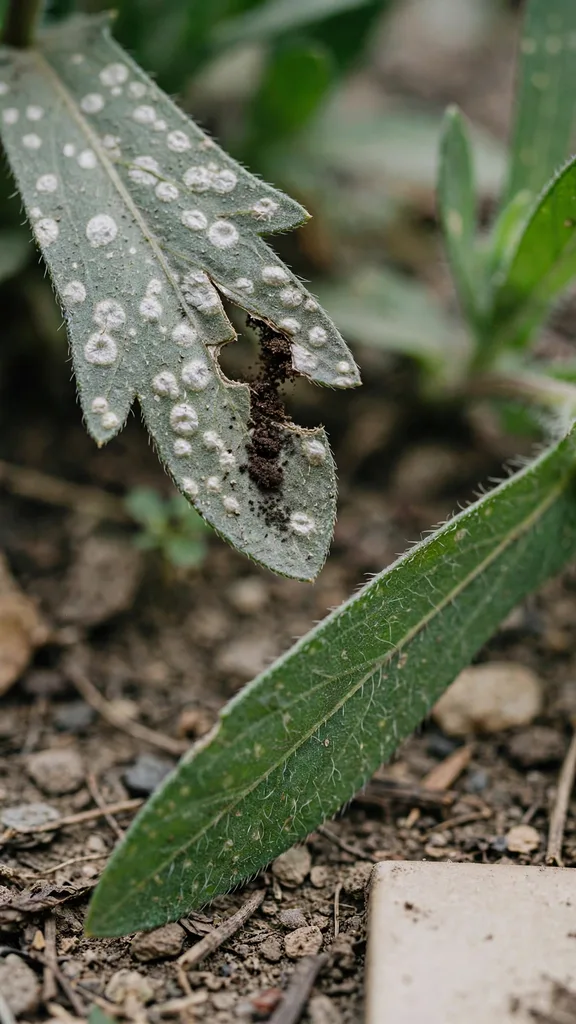
Remove infected leaves at once and bag them. White smut spreads by spores carried on water and tools, and one infected leaf left in the bed seeds the next outbreak. Work on dry plants only, since wet foliage spreads spores with every touch.
Clean shears between cuts with soap and water. A blade that cuts an infected leaf then cuts a sound leaf moves the disease in one motion. Wash the blade, let it dry, and cut again.
Improve air flow around the plant after an outbreak. Thin crowded neighbors, pull weeds from the base, and stop overhead watering. Dry leaves and moving air slow the fungus more than any product does.
Rotate the bed next season if smut returns. Plant blanket flower in a fresh spot and rest the old bed for a year. Spores persist in soil and plant debris, and a new site breaks the cycle. Clear old stems in autumn so no infected debris winters in the bed.
Skip 6 Mistakes That Kill Blanket Flower
Skip 6 mistakes that kill blanket flower. Each mistake looks like care, and each one shortens the life of the plant. The plant wants sun, lean soil, and dry crowns. Give it those three things and it flowers for months.
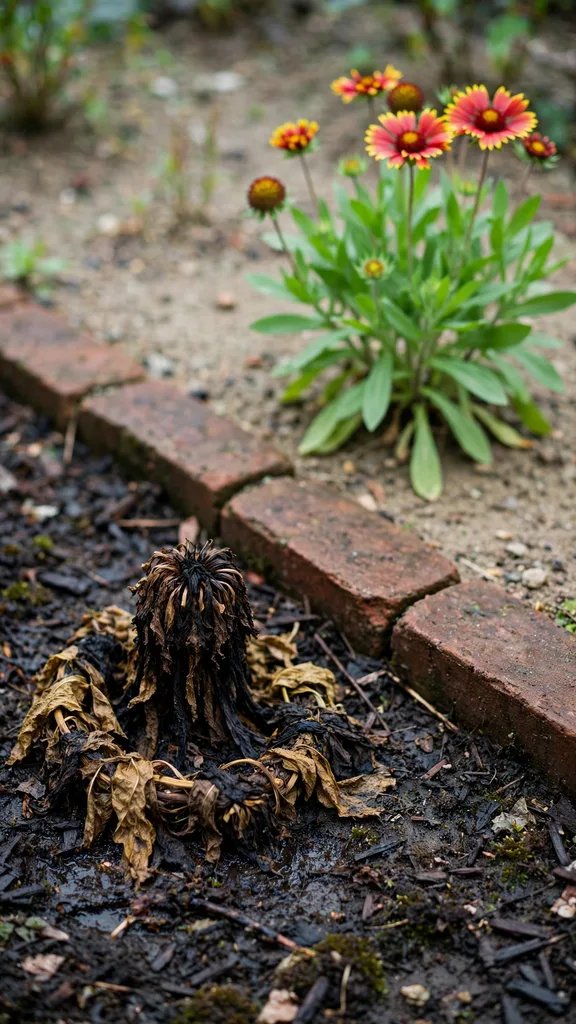
Rich soil grows floppy stems with few flowers. Skip compost and fertilizer in the bed, and let the plant grow in the lean ground it evolved for. A hungry looking bed suits blanket flower better than a rich one.
Wet winter soil rots the crown. Plant on a slope, in a raised bed, or in gritty soil, and never mulch against the stem. A crown that sits wet through winter dies before spring.
Shade stretches stems and invites mildew. Plant in full sun, 6 or more hours a day, and move any plant that stretches toward light. A stretched plant never recovers its compact shape.
Overwatering kills faster than drought. Water deep once a week for new plants, then let the soil dry. A plant watered daily drowns while its owner believes it is thirsty.
Letting seed set stops flowering. Deadhead weekly, and leave only a few heads for seed at the end of the season. A plant that sets seed all summer stops blooming by August.
Planting too deep buries the crown. Set the crown level with the soil surface, and keep mulch 5.1 cm away from the stem. A buried crown rots in the first wet spell.
Frequently Asked Questions
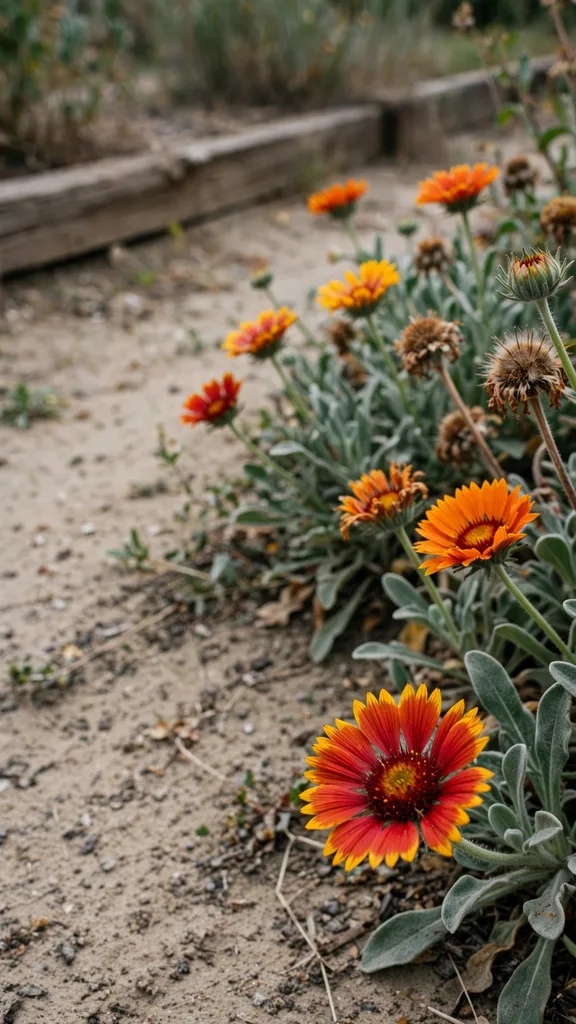
Blanket flower blooms from early summer to frost in most gardens, a season of 12 to 16 weeks where the sun stays strong. Deadheading weekly keeps new buds coming, and a plant left to set seed stops flowering months early. The first flowers open 90 to 120 days after sowing seed indoors, so an early indoor start buys the longest season. Cut the plant back by one third in midsummer if flowering slows.
Blanket flower grows as a short lived perennial in zones 3 to 11, and most garden forms live 2 to 4 good years before they fade. The species Gaillardia pulchella grows as an annual in cold zones, while Gaillardia aristata and their hybrid Gaillardia x grandiflora return for several years where the soil drains. Self sown seedlings replace old plants without any work, so a bed often looks permanent even as individual plants turn over.
Blanket flower needs full sun, 6 or more hours of direct sun a day, for the heaviest flowering. Shade stretches the stems, thins the flowers, and invites powdery mildew. A spot with morning sun and light afternoon shade still flowers in the hottest gardens, but deep shade starves the plant of blooms. Pick the sunniest bed you own, and move any plant that leans toward light.
A blanket flower that fails to flower usually sits in shade, rich soil, or wet ground. Shade stretches stems without buds, fertilizer pushes leaves instead of flowers, and wet soil rots the roots before buds form. Move the plant to full sun and lean, fast draining soil, stop feeding it, and deadhead weekly. A plant cut back by one third in midsummer often flowers within 14 to 21 days of the cut.
Blanket flower grows well in a pot 30.5 cm wide or larger, filled with gritty mix and set in full sun. Mix one part potting mix with one part coarse sand and one part perlite. Raise the pot on feet so water drains free. Water when the pot feels light. Empty the saucer after watering. Protect the pot in cold zones. A pot freezes harder than open ground, and the roots have no earth to insulate them.