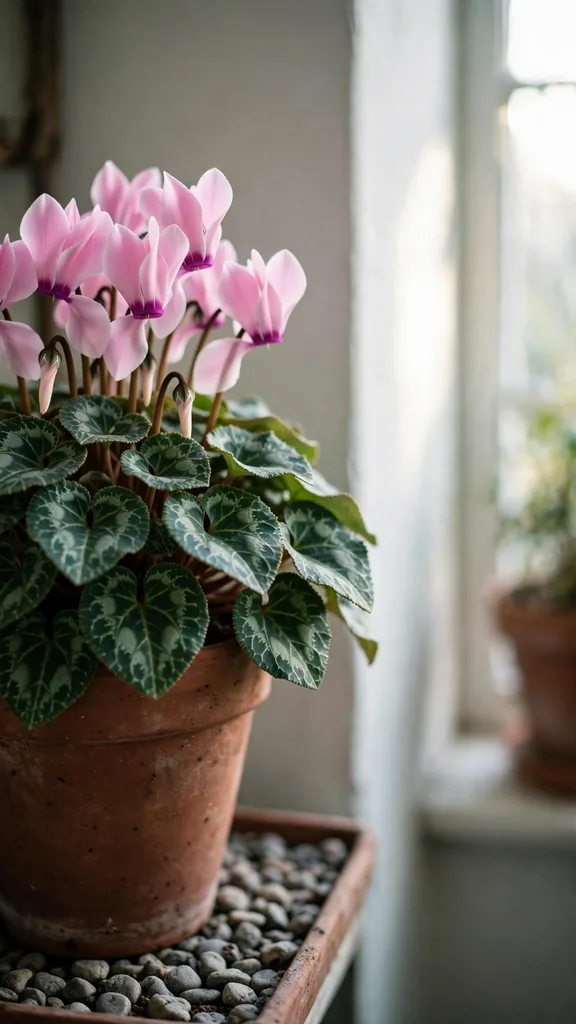
Set one cyclamen pot in a cool east window and water it from below for 15 minutes. That is how to grow cyclamen that keeps flowering for up to 3 months instead of collapsing in a warm room. The plant comes from Mediterranean hillsides, where it grows through cool wet winters and rests through hot dry summers, so a heated living room reads as summer to it. Cool air, bright indirect light, and a dry crown carry the plant through winter.
Work through 14 moves, from matching the plant to your coolest room to resting the tuber through summer and waking it again in late summer. Each move names one job and the failure that follows when the job is skipped.
I have learned that a cool room matters more than any fertilizer. A plant that sits near a heat vent drops its buds, while the same plant in a cool window keeps opening new flowers for weeks.
Match Cyclamen to Cool Air and Bright Light First
Give cyclamen daytime temperatures of 15.6 to 18.3 degrees Celsius, nights near 10 degrees Celsius, and bright indirect light all day. The University of Wisconsin-Madison Extension cyclamen guide sets those temperatures, notes the genus holds 23 species, and records bloom lasting up to 3 months in cool conditions. A warm room shortens that bloom fast, and no fertilizer stretches it back.
| Spec | Florist Cyclamen (Cyclamen persicum) |
|---|---|
| Day temperature | 15.6 to 18.3 degrees Celsius |
| Night temperature | Near 10 degrees Celsius |
| Light | Bright indirect light all day |
| Bloom season | Winter to early spring, up to 3 months |
| Summer dormancy | Late spring to summer, 2 to 3 months |
| Tuber size in pots | Up to 15.2 cm across |
| Water | From below, when the surface feels dry |
| Soil | Well drained potting mix |
An east window suits most cyclamen. The morning sun is gentle, and the plant gets bright light for the rest of the day without direct midday sun on its leaves. In a northern winter a south window serves better, since the light stays weak and the days stay short. Watch the leaves for the verdict. Leaves that stretch on long stalks and flowers that open small point to light that is too weak, and the fix is a brighter window.
Heat sources decide more than windows do. A radiator, a heat vent, a fireplace, and the warm air above a kitchen stove all push the plant toward early dormancy. Move the pot to the coolest room in the house, and keep it away from drafts that swing the temperature up and down. Cyclamen needs high humidity and moist soil while it flowers, so a pebble tray of water under the pot helps in a dry heated house. The pot sits on the pebbles, never in the water.
Florist cyclamen will not tolerate frost. The plant grows as a houseplant through winter in cold climates, and it spends summer outdoors only in shade, where the pot stays dry while the plant rests. Bring it inside before the first frost. One frosty night ends a plant that would have flowered for months indoors.
Pick a Variety That Fits Your Room or Garden
Pick the type first and the flower color second. Florist cyclamen, Cyclamen persicum, is the winter houseplant sold in garden centers, with swept-back petals in pink, red, white, and purple over heart-shaped leaves. Hardy cyclamen species grow outdoors under trees, where they flower in autumn and late winter. The two groups want different homes, and a plant bought for the wrong home fails fast.
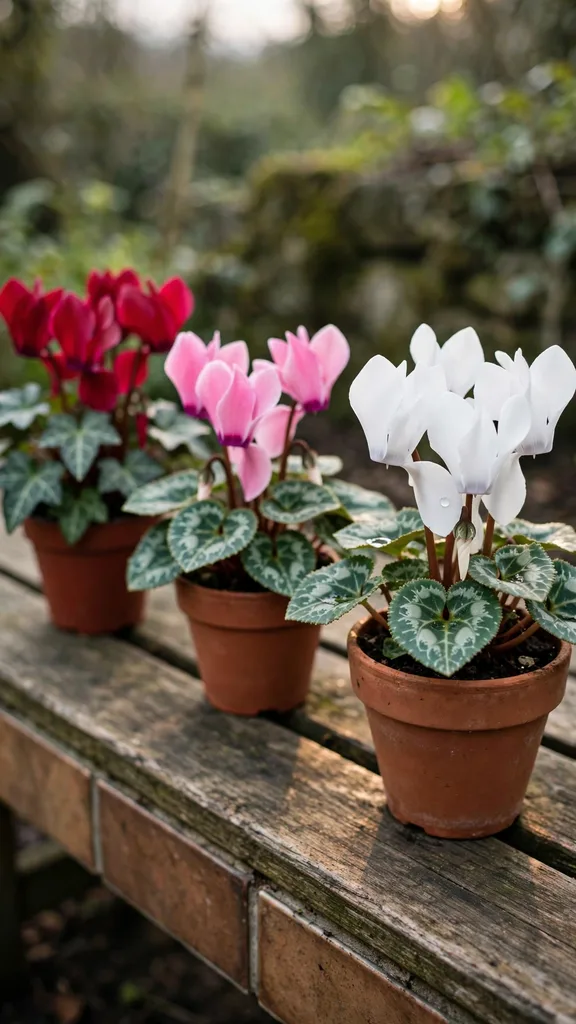
Cyclamen coum leads the hardy group. It flowers in late winter, and its forms include Cyclamen coum Album with white flowers, Cyclamen coum f. albissimum with clean white blooms, and Cyclamen coum Maurice Dryden with silver-marked leaves and pink flowers. Cyclamen hederifolium follows in autumn with ivy-shaped leaves and pink flowers that open before the leaves spread. Both hardy types naturalize under deciduous trees, where the canopy gives shade in summer and bare branches give light in winter.
Size guides the pot choice. A large florist cyclamen fills a 15 cm pot with leaves and flowers, while a miniature form suits a small windowsill pot and still flowers for weeks. Check the plant label for the mature size, and buy the pot to match it. A plant crammed into a small pot dries out between waterings, and the flowers fade early.
Flower color changes nothing about care. A white form wants the same cool air and bottom watering as a red form. Buy the color you like, and spend the decision on the growing spot instead. The spot decides whether the plant reblooms next winter.
Buy a Healthy Plant With Buds Still Closed
Buy the plant with the most buds still closed. A plant in full flower looks best in the shop, and it has already spent half its bloom at home. A plant with tight buds under the leaf canopy keeps opening flowers for weeks after you carry it home.
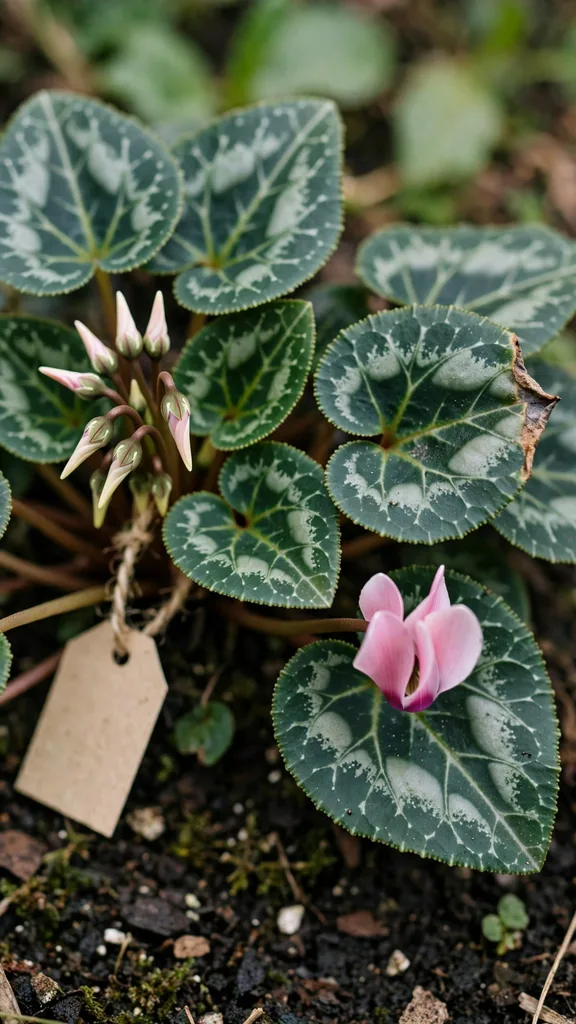
- Look for dark green leaves with no yellow edges and no brown spots.
- Lift the leaves and count the unopened buds beneath the canopy.
- Check the soil surface. It should feel moist, never waterlogged or bone dry.
- Press the tuber gently through the soil. It should feel firm, never soft or hollow.
- Look under the leaves for aphids, mealybugs, or white webbing.
Skip a plant with flowers that already droop on their stems. Drooping flowers on a shop plant point to a warm display shelf or a missed watering, and the plant may never recover its full bloom. Skip a plant with a wet crown too. Water sitting in the center of the rosette rots the tuber, and rot in the shop becomes rot at home.
Carry the plant home in a paper bag on a cold day. The bag shields the leaves from freezing wind on the walk to the car, and a few minutes of cold wind can blacken a leaf edge. Set the pot in its window the same day, and water it from below if the surface feels dry.
Water From Below and Keep the Crown Dry
Water cyclamen from below, and keep water out of the crown. The leaves and flowers grow in a rosette from a tuber, and water that sits where the leaf stalks meet the tuber rots the center of the plant. Bottom watering solves the problem at the root.
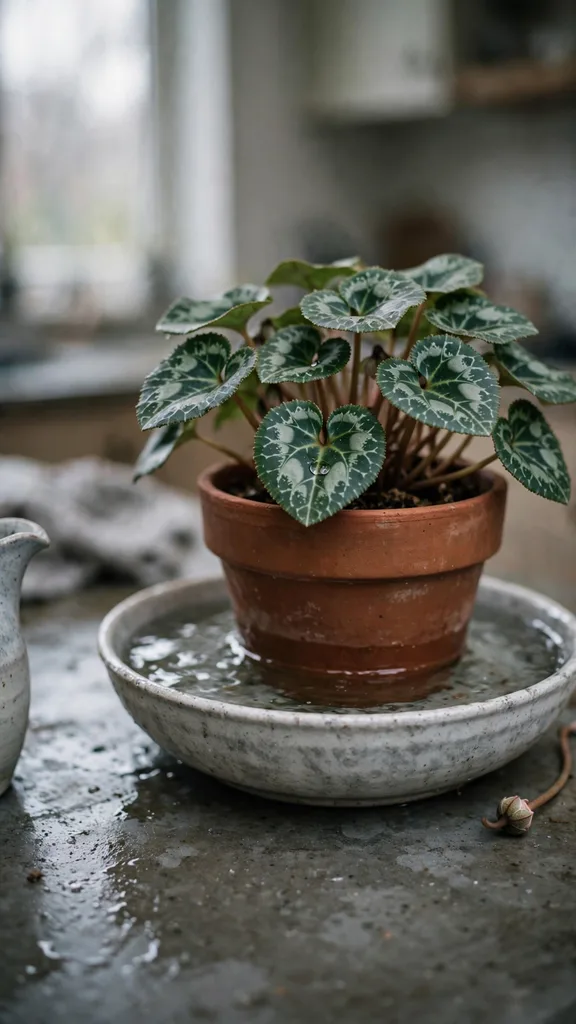
Stand the pot in a shallow bowl of room-temperature water for 15 minutes when the soil surface looks and feels dry. Lift the pot out, let it drain fully, and empty the saucer. The mix drinks what it needs through the drainage holes, and the crown stays dry. Warm room-temperature water suits the plant better than cold tap water, which can mark the foliage.
Water thoroughly at each watering, and let the surface dry between waterings. Cyclamen wants moist soil while it flowers, and it does not tolerate wet soil that never dries. A pot that sits in standing water suffocates the roots, and the leaves yellow from the base upward. Empty the saucer every time, and the roots keep breathing.
Reduce watering as the flowers finish in late spring. The leaves yellow and drop as the plant slides into dormancy, and a dormant tuber in wet mix rots. Let the mix dry, and keep it barely moist through the rest period. The tuber waits underground, firm and dry, until late summer wakes it.
Feed Every Two Weeks While Flowers Open
Feed cyclamen every 2 weeks while it grows and flowers. Use a low-nitrogen fertilizer or a houseplant food made for blooming plants, mixed at half the label rate. The plant flowers for months on that schedule, and the buds keep opening in sequence.
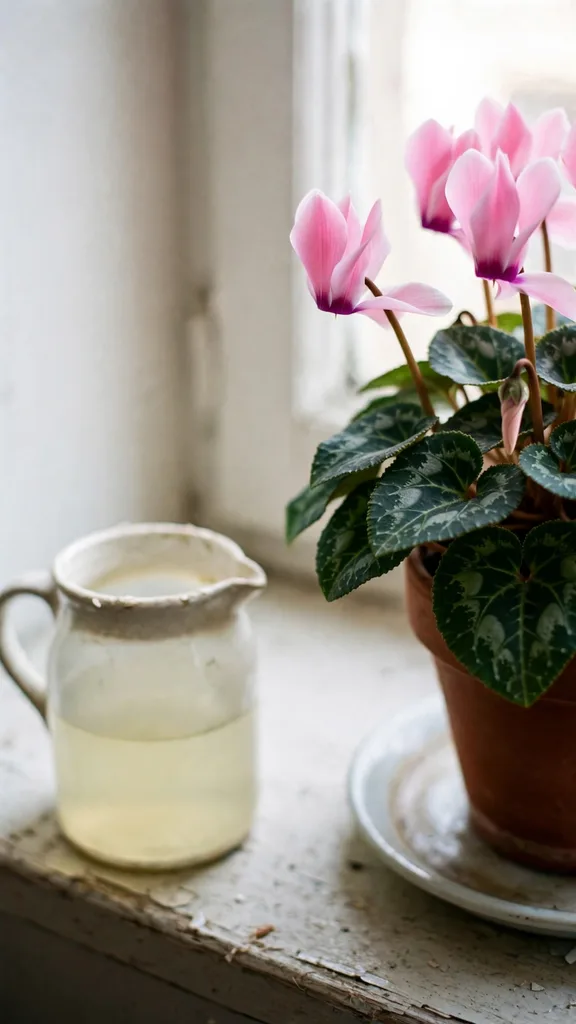
Too much fertilizer hurts more than too little. Heavy feeding pushes soft overgrown leaves that fall over and catch disease, and the flowers shrink while the leaves swell. A dilute feed every 2 weeks gives the plant what it needs without pushing it. Measure the feed, and write the date on the pot label so the schedule stays honest.
Stop feeding when the flowers finish and the leaves start to yellow. A plant sliding into dormancy needs no food, and fertilizer salts build up in a dry mix and burn the roots. Resume feeding only when new growth shows in late summer. The first new leaf is the signal, and the first feed follows it.
Repot the Tuber With Its Top Half Exposed
Repot cyclamen after summer dormancy, when new growth starts in late summer. The tuber has spent the summer resting, and fresh mix gives the new roots a clean start. Repot only then, never while the plant flowers. Moving a flowering plant breaks the fine roots that feed the open blooms, and the flowers collapse within days.
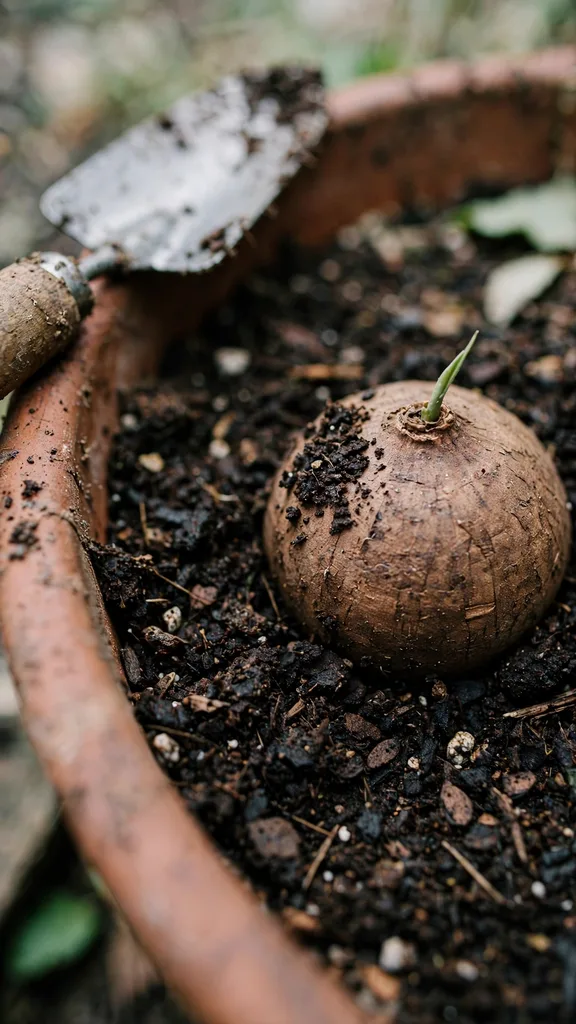
Use a well-drained potting mix, and choose a pot with drainage holes. Set the tuber with its upper half above the surface of the mix. A buried tuber rots from the crown, and a tuber perched too high dries out and wobbles. The top half exposed is the rule, and it holds for every repot.
Tubers in pots grow up to 15.2 cm across, so size the pot to the tuber with room for one season of growth. A pot one size larger than the tuber suits a young plant, and a pot that dwarfs the tuber stays wet too long. Press the mix gently around the tuber, water from below once, and set the pot back in its cool window.
Rest the Tuber Through Summer Dormancy
Let the plant rest in summer, and do not read the rest as death. Cyclamen stops blooming in late spring, the leaves fade and drop, and the tuber sleeps for 2 to 3 months. The rest is the plant following its Mediterranean calendar, where summer is hot and dry and growth waits for autumn rain.
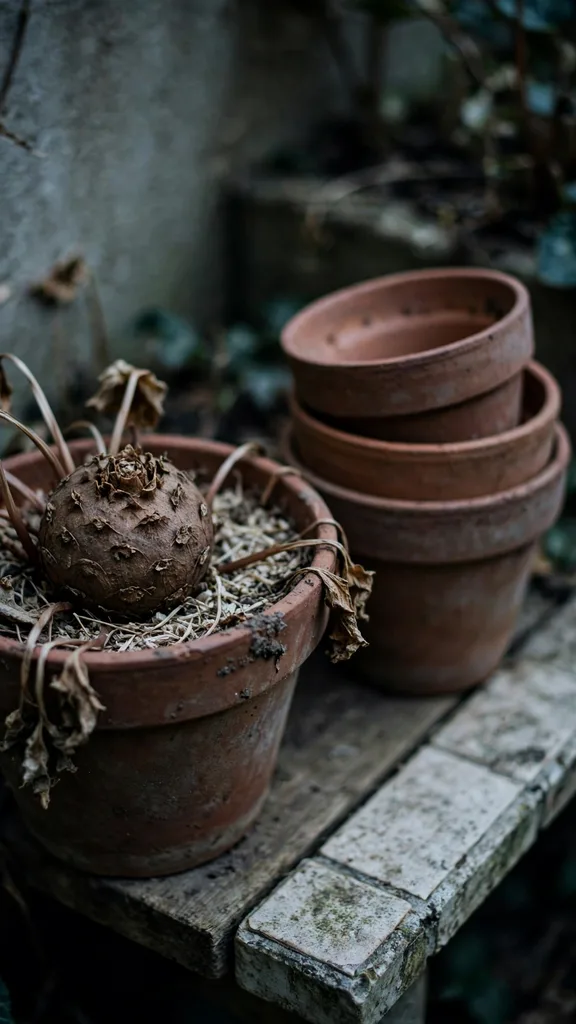
The Iowa State University Extension cyclamen guide sets the rest period at 6 to 8 weeks during late spring and early summer, kept in a cool shaded spot at 7.2 to 10 degrees Celsius. Warmer temperatures of 10 to 18.3 degrees Celsius in mid to late summer, with watering resumed, wake the tuber into new growth. The two guides agree on the shape of the rest, and the difference between their week counts is the difference between a cool room and a warm one.
Give the dormant tuber one of two rests. Leave it in its pot in a cool shaded spot, and water it only enough to keep the mix from drying to dust. Or lift the tuber when the leaves have withered, and store it in dry vermiculite at 10 degrees Celsius for 6 to 12 weeks. Both rests work, and the pot rest is simpler for a first plant.
Watch the tuber, not the calendar. New leaf tips pushing from the top of the tuber end the rest, whatever the date says. Repot it then, resume watering from below, and return it to the cool window. The first flowers follow the new leaves by weeks, and the plant blooms again through winter.
Sow Fresh Cyclamen Seed in Late Summer
Sow fresh cyclamen seed in late summer, when the parent plant wakes from dormancy. Fresh seed germinates best. Seed stored dry through winter loses vigor. Collect seed from the round pods that follow the flowers. Sow it the same season it ripens.
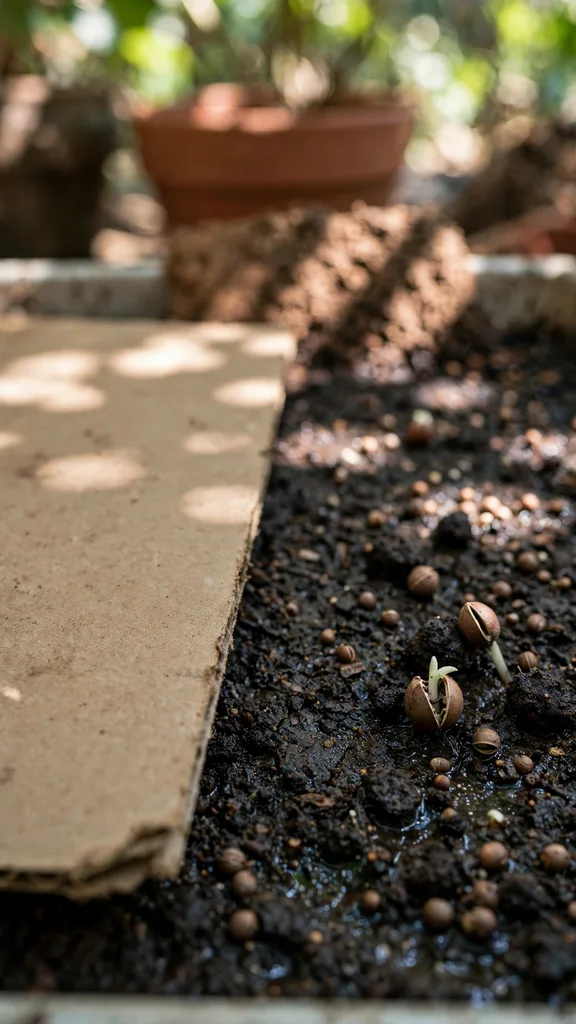
Sow the seed thinly on damp well-drained mix, and cover it lightly. Cyclamen seed germinates in the dark, so cover the pot with a sheet of cardboard or set it in a shaded spot. Keep the mix moist and cool, and wait. Germination is slow. The first small leaves look nothing like the parent plant.
Seed-grown plants take more than one season to flower. The first year builds the tuber, and the flowers come later. A gardener who wants flowers this winter buys a plant, and a gardener who wants a dozen plants for a shady border sows seed and waits. Both paths end at the same plant, and the seed path costs less.
Plant Hardy Cyclamen Under Trees in Autumn
Plant hardy cyclamen under deciduous trees in autumn, where the soil stays leafy and well drained. Cyclamen coum and Cyclamen hederifolium grow outdoors through frost, and the tree canopy gives them shade in summer and light in winter. A spot under a maple or an oak suits them, and the fallen leaves mulch the tubers through winter.
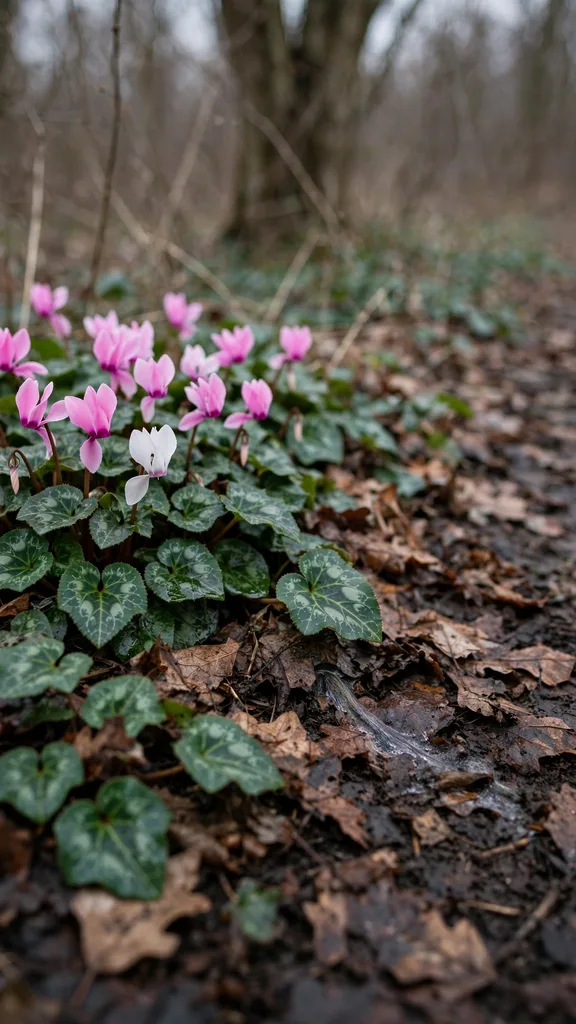
Set the tubers shallow, with their tops just under the surface, and space them a hand width apart. Water them in once, and let autumn rain take over. The tubers root before winter, and the flowers open in late winter for coum and in autumn for hederifolium. A colony builds slowly, and each year brings more flowers than the last.
Hardy cyclamen shares its season with other cool-weather flowers. Growing crocus fills the same autumn planting window with early spring color, and growing primrose flowers adds spring bloom to the same shady border. Florist cyclamen never joins that bed. Cyclamen persicum will not tolerate frost, and one freezing night ends it.
Keep Cyclamen Blooming for 3 Months
Keep the plant cool, and the flowers keep coming for up to 3 months. Each flower lasts for weeks, and new buds open in sequence from the center of the rosette. Cool nights near 10 degrees Celsius stretch each flower, and warm nights shorten them. The room temperature is the bloom clock.
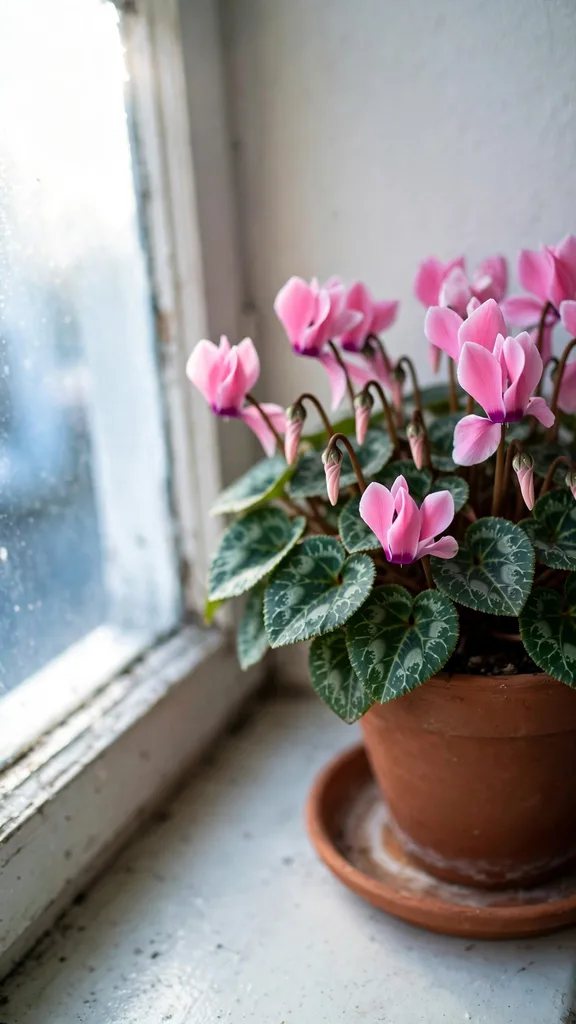
Remove spent flowers as they fade. Twist the stem gently at its base until it pulls free from the tuber, and take the whole stalk. A stalk left behind rots at the base and invites gray mold into the crown. Pick off yellowing leaves the same way, with a clean twist at the base.
Feed every 2 weeks while flowers open, and water from below when the surface dries. The two habits together carry the bloom through winter, and the plant rewards them with buds that keep opening. Growing pansy flowers carries the same cool-season color outdoors while the indoor cyclamen rests through summer, and the two plants trade the seasons between them.
Stop Aphids, Spider Mites, and Gray Mold Early
Check the plant every week, and catch trouble while it is small. Aphids cluster on soft new growth and on flower buds, and they curl the leaves they feed on. Mealybugs hide in the leaf joints as white cottony lumps. Spider mites and thrips mark the leaves with pale speckles, and the leaves lose their shine. A weekly look under the leaves finds all four before they spread.
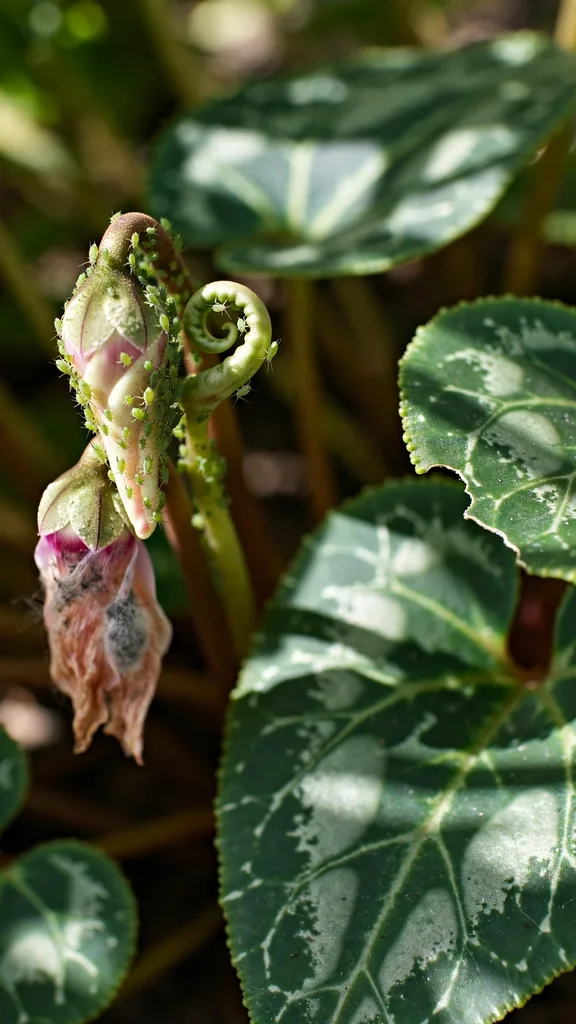
Isolate an infested plant the same day. Cyclamen sits close to other houseplants on a winter windowsill, and aphids walk to the next pot. Wash the leaves with a strong jet of room-temperature water, and pick off the worst leaves with a clean twist. A plant with a light infestation recovers with washing alone, and the buds keep opening.
Gray mold follows wet crowns and still air. The mold shows as fuzzy gray growth on leaves and flowers, and it spreads fast in a damp room. Keep water out of the crown, space the pots for airflow, and remove faded flowers before they rot. A plant with a dry crown and moving air rarely meets gray mold at all.
Fix Yellow Leaves and Buds That Drop
Read the pattern before reaching for a fix. Yellow leaves mean different things in different seasons, and the wrong fix wastes weeks. Start with the calendar, then look at the room.
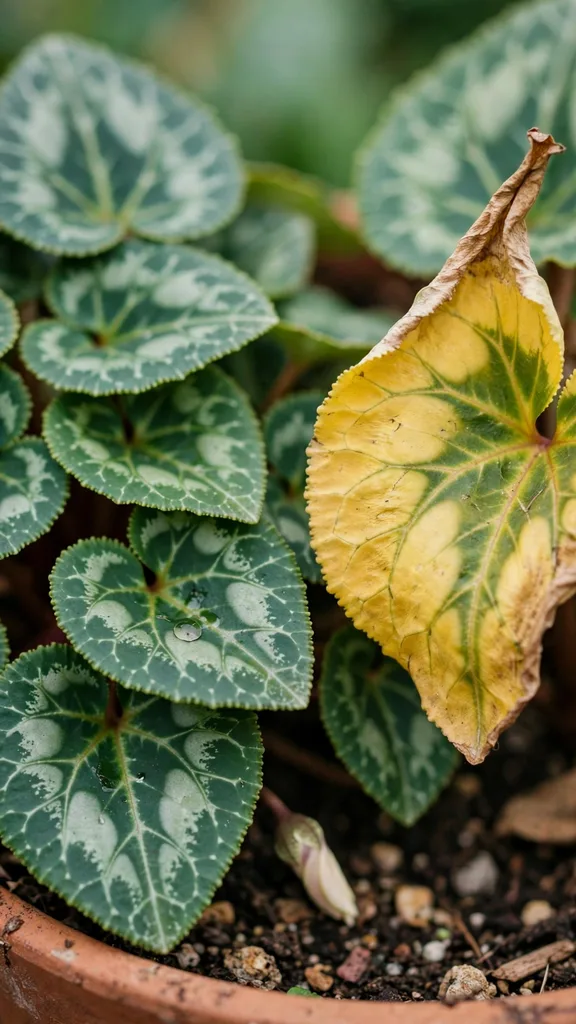
Yellow leaves in late spring mean dormancy is starting. The flowers finish, the leaves fade from the edges inward, and the plant rests for the summer. Reduce watering, stop feeding, and let the leaves wither. The tuber underneath stays firm, and new growth returns in late summer. Yellowing at this season is the plant working, and fighting it with fertilizer only salts the mix.
Yellow leaves in midwinter point to a warm room or a wet crown. Move the pot to a cooler spot, and check the watering habit. A pot that never dries between waterings drowns the roots, and the lowest leaves yellow first. Let the surface dry, empty the saucer, and water from below next time. New leaves open green when the roots breathe again.
Buds that drop before opening point to heat or dry air. A plant near a heat vent aborts its buds, and a plant in dry heated air does the same. Move the pot away from the heat source, and set it on a pebble tray. Buds that stay cool and humid open, and the plant keeps its bloom.
Pale leaves with long stalks point to light that is too weak. Move the pot to a brighter window, and the new leaves open compact and dark green. The old pale leaves never darken, so judge the fix by the new growth, not the old.
Skip Five Mistakes That End Cyclamen Early
Most cyclamen die from five avoidable mistakes, and each one has a simple fix.
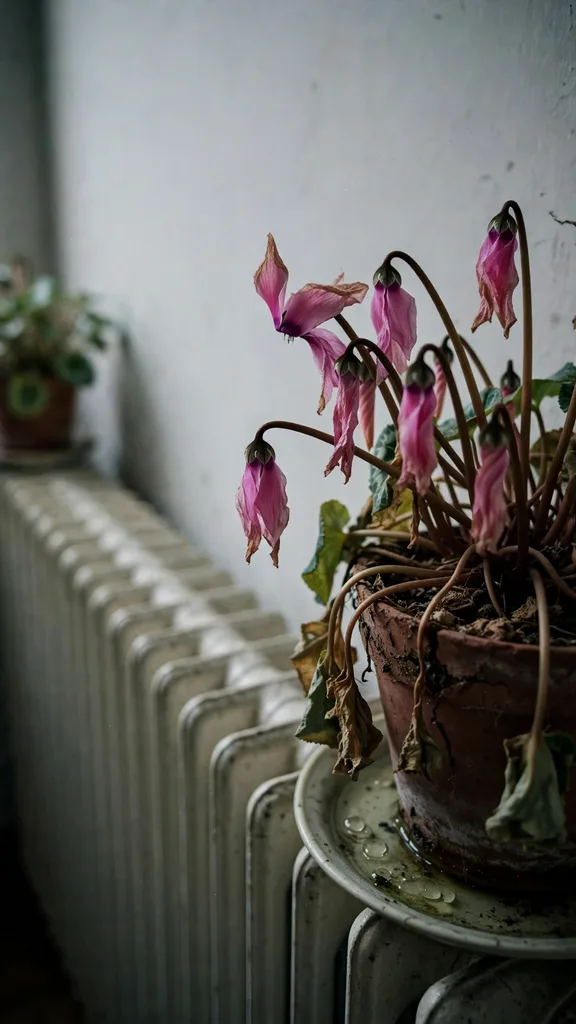
- A warm room. Heat above 21 degrees Celsius ends the bloom early and pushes the plant into dormancy. Keep the plant in the coolest bright room, away from radiators and heat vents.
- Water poured into the crown. Water in the rosette rots the tuber from the center. Water from below, and let the mix drink through the drainage holes.
- A buried tuber. A tuber set deep in the mix rots, and a tuber set with its top half exposed stays dry and firm. Repot with the upper half above the surface.
- Feeding through dormancy. Fertilizer in a dry resting mix burns the roots. Stop feeding when the leaves yellow, and resume only when new growth shows.
- Throwing the plant away at dormancy. A leafless tuber in late spring is resting, and a firm tuber wakes again in late summer. Keep it cool and barely moist, and wait for the new leaves.
Frequently Asked Questions
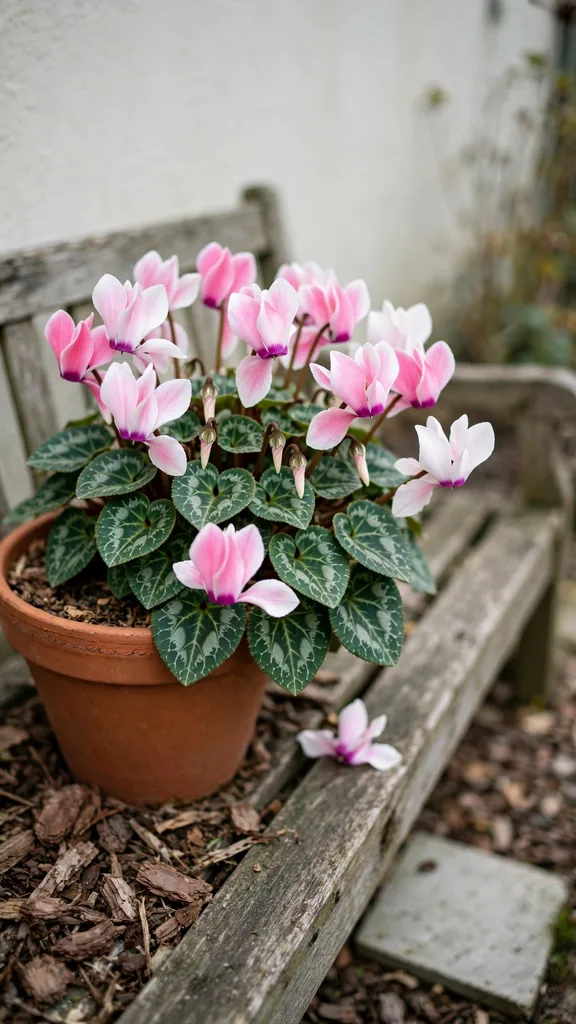
Cyclamen comes from Mediterranean hillsides, where it grows through cool wet winters and rests through hot dry summers. A heated room reads as summer to the plant, so the flowers collapse and the buds stop opening. Move the pot to the coolest bright room, away from radiators and heat vents. Nights near 10 degrees Celsius keep the flowers standing, and the plant blooms again once the air cools.
Water a cyclamen when the surface of the mix looks and feels dry, and water it from below each time. Stand the pot in room-temperature water for 15 minutes, lift it out, and let it drain fully. Empty the saucer so the pot never sits in standing water. Reduce watering as the leaves yellow in late spring, and keep the dormant tuber barely moist through summer.
A healthy cyclamen blooms again next winter when it gets a proper summer rest. Let the leaves yellow and drop in late spring, keep the tuber cool and barely moist for 6 to 12 weeks, and resume watering in late summer when new growth shows. Repot with the top half of the tuber above the mix, feed every 2 weeks, and keep the plant cool. The first flowers follow the new leaves.
Cyclamen tubers carry compounds that upset a pet stomach, so keep the pots out of reach of cats and dogs. A pet that chews a leaf may drool and vomit, and a pet that eats tuber pieces faces a worse reaction. Set the pots on high shelves or in rooms pets cannot enter, and call a vet at once if a pet eats part of the tuber.
Hardy cyclamen species grow outdoors in a cold garden, and florist cyclamen cannot. Cyclamen coum and Cyclamen hederifolium flower outdoors under deciduous trees through frost, while Cyclamen persicum will not tolerate frost and grows as a houseplant. Plant the hardy types in autumn in leafy well-drained soil, and keep the florist type in a cool window indoors.