Nick 12 lupine seeds with sandpaper and steep them in hot water for 12 hours. That single evening of prep is how to grow lupine from seed instead of watching a dry row sit silent for a month. Lupine seed wears a hard coat that blocks water, and scarified seed wakes faster than seed sown straight from the packet.
Sow the treated seed in fall where winters run cold. Or start it indoors in early spring in deep pots. Give the bed full sun, acid soil, and room. A mature plant reaches 91.4 to 152.4 cm tall, and its spikes open in May, then run into summer with dozens of pea shaped blooms.
I have learned that dry seed sown straight from the packet is the slowest way to a lupine bed. The coat does the waiting for you, and no amount of watering hurries it. Nick the coat, soak the seed, and the bed moves on your schedule.
Bigleaf lupine grows 91.4 to 152.4 cm tall, blooms in May, and wants acidic soil below pH 6.8, as the Lady Bird Johnson Wildflower Center plant profile records. The same profile lists moist, cool soil and sun to light shade as the growing conditions, and it warns that the seeds carry alkaloids and are poisonous when eaten. Keep those three facts in mind and the rest of the choices follow from them.
| Spec | Lupine |
|---|---|
| Botanical name | Lupinus polyphyllus |
| Height | 91.4 to 152.4 cm |
| Spread | 61 to 91.4 cm at planting |
| Bloom | May through July or August |
| Light | Full sun to light shade |
| Soil | Acidic, below pH 6.8, moist and well drained |
| Sowing depth | 1.3 to 1.9 cm |
| Life | Short lived perennial, usually 3 years |
| Flowers | Second year from seed |
Pick a Lupine Variety That Fits Your Bed
Start with the plant, not the packet color. Bigleaf lupine, Lupinus polyphyllus, is the tall perennial behind most garden lupine. Its Russell Hybrids carry the mixed colors on seed racks, and the named forms keep one color true. Chandelier opens yellow, My Castle opens red, Noble Maiden opens white, The Chatelaine opens pink, and The Governor opens blue. Buy a named form when one color matters to the bed design. Buy a mixed packet when a drift of mixed spikes suits the border better.
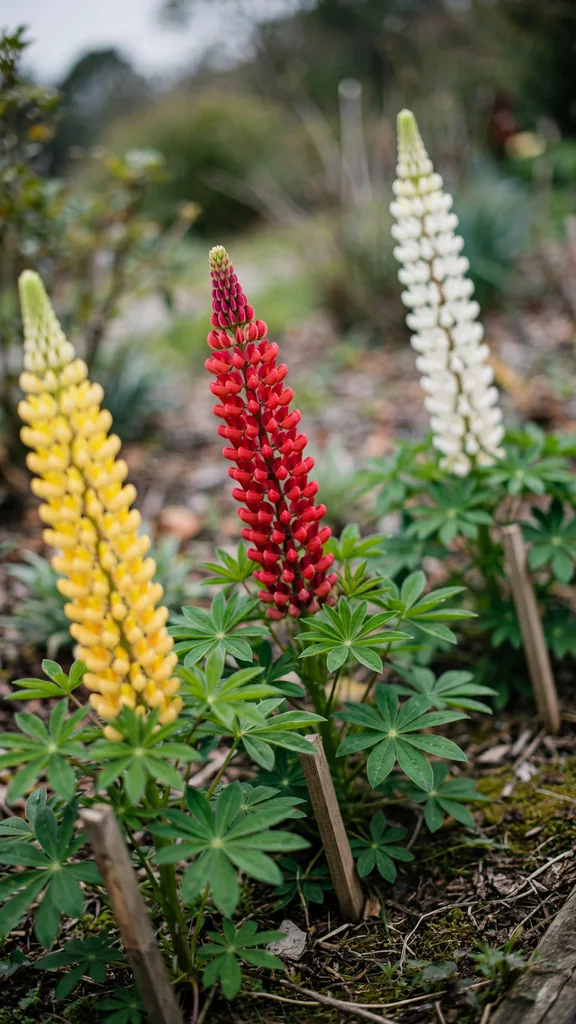
Dwarf forms fit pots and bed edges. The Gallery series stays short enough for a container or a front row. Tall Russell Hybrids belong at the back of the border, where a 91.4 to 152.4 cm spike rises behind shorter perennials without hiding them. Match the mature height to the spot before you buy, since a tall form in a front row blocks everything behind it by June.
Seed racks also list Alpine Lupine, Arctic Lupine, and Arroyo Lupine. These are lupine species and forms with their own habits, and they suit wilder corners and meadow plantings more than a formal border. Read the packet for height and bloom time before choosing one for a mixed bed. A meadow form that self sows freely will wander, while a named Russell Hybrid stays where you plant it.
Wild lupine, Lupinus perennis, is a different plant from bigleaf lupine. It runs smaller and shorter, and it hosts Karner blue butterfly larvae. Bigleaf hybrids do not serve that host role. Check the botanical name on the tag when the planting aims at pollinators. A tag that reads polyphyllus buys tall spikes. A tag that reads perennis buys butterfly habitat.
Scarify and Soak Lupine Seed Before You Sow
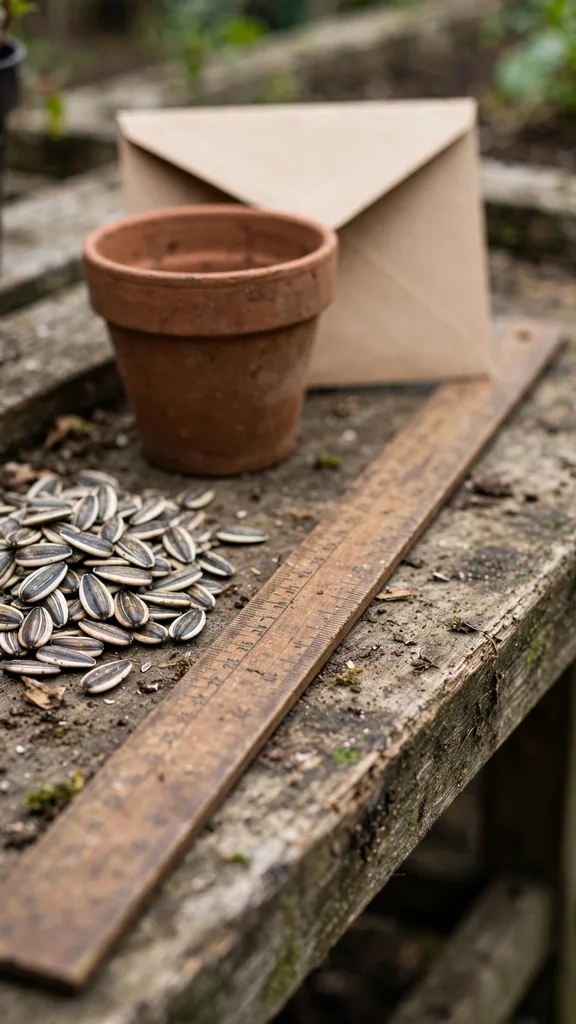
Lupine seed fails most often before it ever meets soil. The coat is hard and water resistant, so untreated seed germinates slowly and unevenly. Scarify every seed you sow. Rub each seed on fine sandpaper until the coat dulls and a pale line shows. Stop at the first sign of the inner coat. A deep nick cuts the embryo and kills the seed.
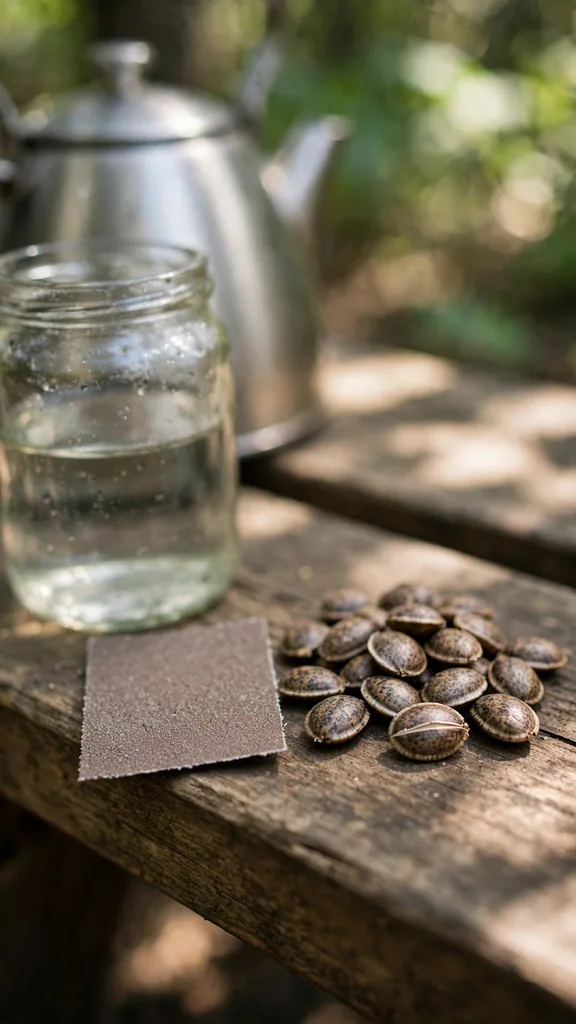
Soak the nicked seed next. Drop the seed in water brought just to a boil and leave it to steep for 12 hours. The seed swells as water crosses the nicked coat. Sow swollen seed the same day. Seed left sitting in water after it swells can rot before it reaches soil.
Fresh seed needs less help than dry stored seed. Seed from a ripe pod may germinate with a soak alone, while dry packet seed always needs the nick first. Treat every packet seed the same way. The row comes up even. Skip the prep and the row comes up patchy, with gaps that no later watering fills.
Keep the tools simple. A sheet of fine sandpaper, a jar, and a kettle cover the whole job. Work over a tray so seed never rolls off the bench. Count the seed into groups of 12 as you nick them, so a dropped seed never leaves you guessing how many went into the row.
Sow Lupine Seed in Fall or Start It in Spring
Fall sowing suits cold climates best. Sow scarified seed outdoors in fall, where winter cold and rain finish breaking the coat. The seed rests through winter and sprouts with spring warmth. Fall sowing also suits gardeners who want plants in the ground with zero indoor work. Mark the row with a stake so spring weeding never pulls the seedlings by mistake.
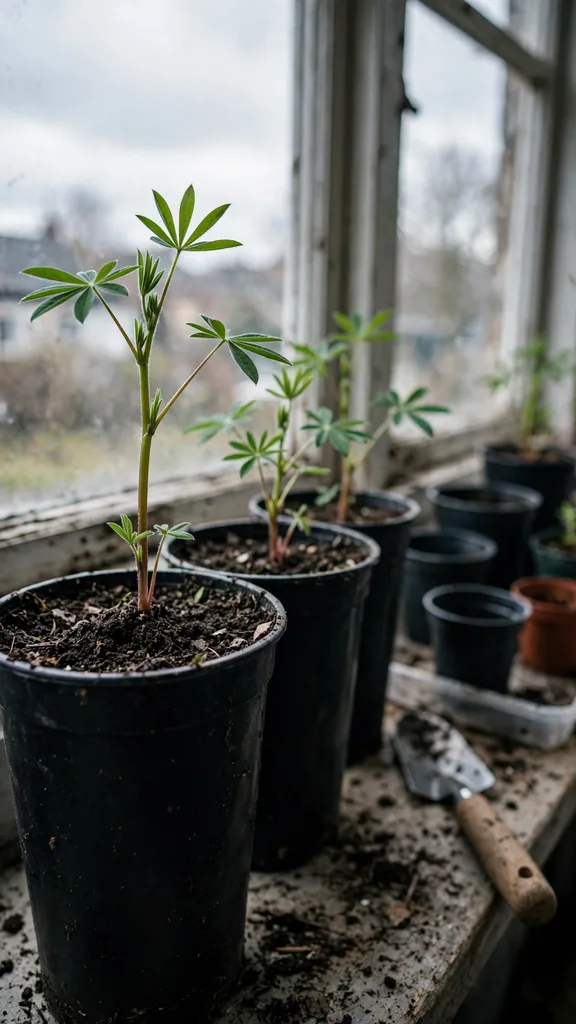
Spring sowing works where winters stay mild or where the bed is not ready in fall. Start seed indoors in early spring in deep pots. Lupine grows a long taproot early, and shallow trays stunt it. Use deep cells or tall pots, one seed per cell, and move plants out while young. The seed starting steps walk through trays, moisture, and hardening off for indoor starts of all kinds. Transplant before the taproot circles the pot. A root bound seedling never catches up to a direct sown neighbour.
Direct sow in spring once soil can be worked. Press scarified seed 1.3 to 1.9 cm deep into moist soil and firm the soil over it with a palm. Space the seed so each plant keeps 61 to 91.4 cm of room at maturity. Water the row in gently and keep it evenly moist until seedlings show. Thin extra seedlings while small, and keep the strongest one at each spacing mark.
The USDA plant guide for bigleaf lupine puts flowering from May through July or August, a usual lifespan of 3 years, and sowing at 1.3 to 1.9 cm deep. The same guide notes that plants reach maturity and flower in their second year. Plan the bed around that second year. First year plants build roots and leaves. Second year plants carry the spikes the packet promised.
Give Lupine Acid Soil and Wide Spacing
Soil decides lupine success more than any other factor. Lupine wants acidic soil below pH 6.8, moist but well drained, and cool at the root. Alkaline soil starves the plant of iron and manganese, and the leaves yellow while growth stalls. Test the soil before planting when the bed has never grown lupine. A soil test settles the pH question before planting, and building soil health covers tests, compost, and drainage in one place.
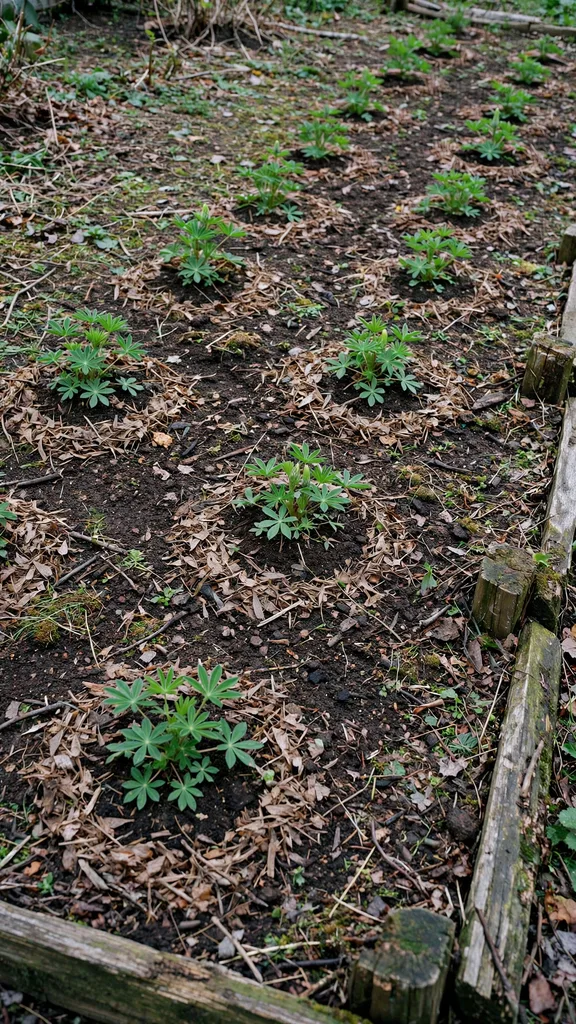
Fix heavy soil before seed goes in. Dig compost through the top 20.3 cm of a clay bed to open it, and raise the bed 10.2 cm where water stands after rain. Lupine roots rot in standing water, and no later care saves a crown that sat wet through spring. Sandy soil suits lupine better than clay, since it drains fast and warms early. Add compost to sand too, so the bed holds moisture through dry weeks without turning soggy.
Space plants 61 to 91.4 cm apart, the wide row spacing the same guide recommends for bigleaf lupine. Wide spacing moves air through the leaves and keeps powdery mildew from settling. Crowded plants trap humidity at the crown and invite the exact disease the spacing prevents. A bed that looks sparse in May looks right in July, when each plant fills its allotted width.
Skip lime in a lupine bed. Lime lifts pH toward alkaline, which is the direction lupine hates. Skip fresh manure as well. Fresh manure feeds soft leafy growth and burns young roots. Compost that has finished heating is the safe amendment. Spread it thin and work it in, then plant.
Water Lupine Deeply and Feed It Almost Nothing
Water lupine like a plant that likes moist soil and hates wet feet. Soak the root zone deeply, then let the top soil dry before watering again. Deep watering pulls roots down toward the taproot zone. Daily sprinkles keep roots at the surface, where the next dry day kills them. Water at the base and keep foliage dry, since wet leaves invite mildew.
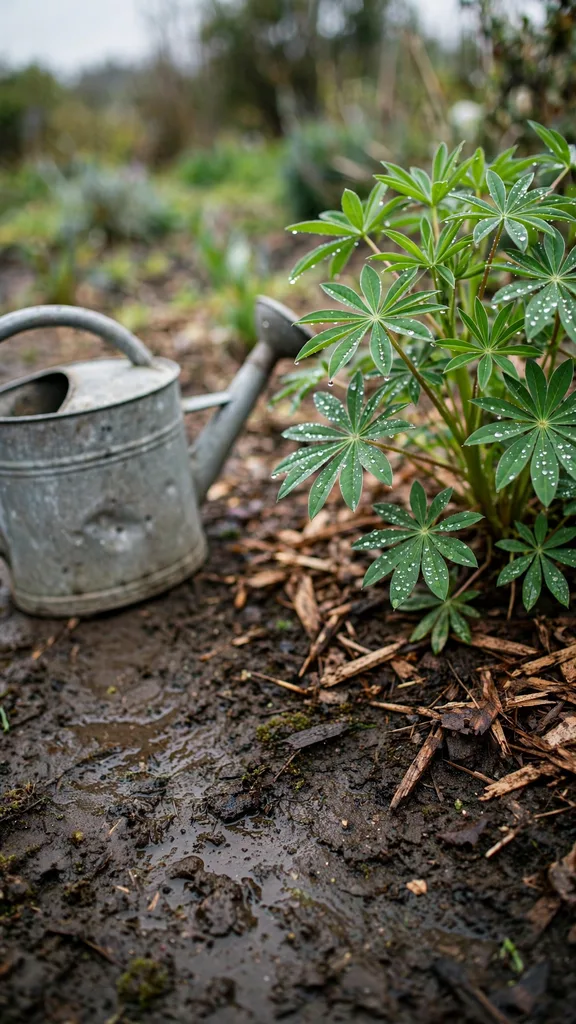
New plants need steady water through their first season. A seedling with a short root dries fast in sun and wind. Water new plantings every few days until they show new growth, then stretch the gap as roots reach deeper. Established plants tolerate short dry spells once their taproot is down. A plant that wilts by afternoon and recovers by morning needs mulch, not more water.
Mulch with a thin layer of shredded leaves or bark, pulled back from the crown. Mulch holds moisture and keeps roots cool through summer heat. Mulch piled against the crown holds damp against the stem and rots it. Leave a clear ring of bare soil around each crown, wide as a hand span.
Feed lupine almost nothing. Lupine is a legume, and its root nodules fix nitrogen from the air with Rhizobium bacteria. Rich feeding grows leaves at the cost of flowers, and tall spikes flop in wind. A balanced 15-15-15 feed after planting may aid establishment, per the same guide, and that single feed is enough for the season. Skip high nitrogen fertilizer entirely. A lupine fed like a rose grows a rose sized leaf pile with no spikes.
Deadhead Spent Spikes for a Second Flush
Cut each spent spike as soon as its lower flowers fade. Cut the stem down to the first set of healthy leaves, and a second flush often follows in late summer. Leave the spike standing and the plant spends its strength on seed pods instead of new flowers. Deadheading also stops self sowing, which matters where lupine escapes into wild ground.
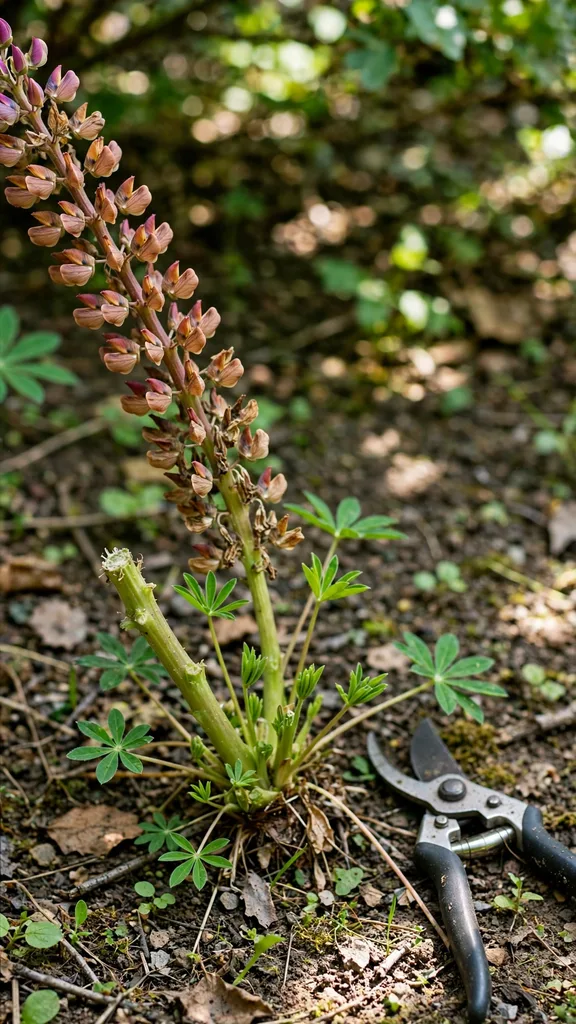
Cut in the cool of the morning with sharp pruning shears. A clean cut heals fast. A crushed stem tears and invites rot into the crown. Drop the cut spikes into a bucket, not onto the bed, so seed never scatters where you did not plan it. Compost the cut stems only when they carry no disease.
Let a few spikes finish only when you want seed or self sown plants. Pick the strongest plant in the bed for seed and let its best spike ripen. The rest get cut. One spike gives plenty of seed for next year, since each pod holds 5 to 9 seeds and one spike carries dozens of pods. A bed left to seed itself turns into a lupine thicket within a few seasons.
Watch the base after deadheading. New basal shoots push from the crown within weeks of the cut. Protect those shoots from slugs and foot traffic, since they carry the second flush. A bed cut back hard in midsummer looks bare for a couple of weeks, then fills again with fresh leaves and short spikes.
Grow Lupine Through Hot Summers Without Losing It
Lupine is a cool climate plant, and heat shortens its life. The species prefers cool, subalpine conditions and damp soil, so gardens with hot humid summers should treat lupine as a short lived perennial rather than a permanent planting. Plant it where morning sun reaches the bed and afternoon shade cools it. A wall or tall shrub on the west side gives that shade without blocking morning light.
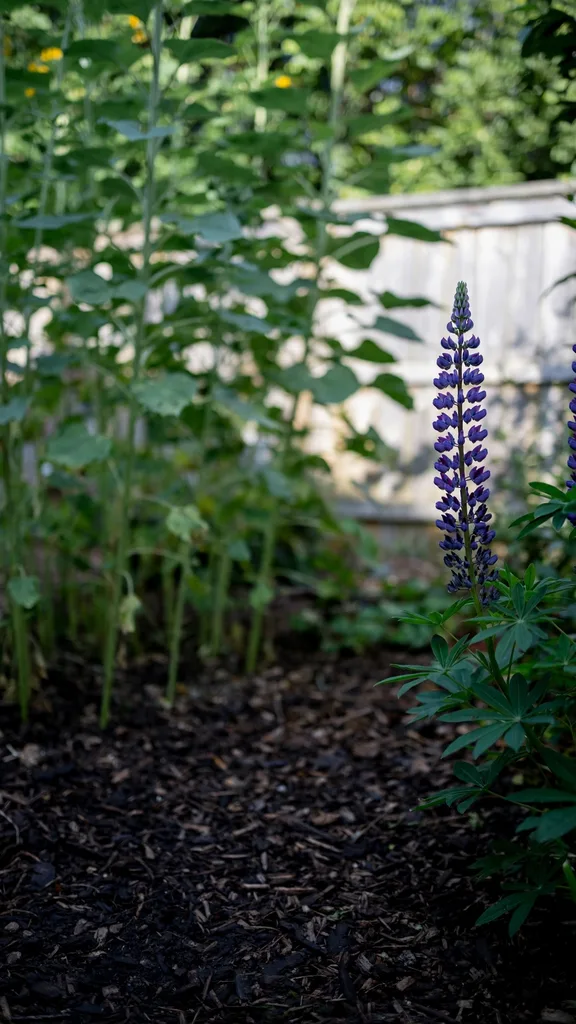
Water matters more in heat. Keep the root zone evenly moist through the hottest weeks, and mulch deeper to hold soil temperature down. Dry roots in hot soil shut the plant down, and a stressed lupine never recovers its spring vigor. Check soil moisture with a finger before watering. Wet soil needs no water, and adding more only rots the crown.
Tall annuals behind the lupine row give wind shelter and light shade in hot gardens. Growing sunflowers beside lupine keeps the tall layer in one bed, and the sunflower row breaks wind that would snap lupine spikes. Plant the annuals to the west or south of the lupine, never in front, so they never steal morning sun.
Accept the trade in warm zones. Lupine may live 3 years in a cool garden and a single season in a hot one. Grow it as a biennial there: sow in fall, enjoy the second year spikes, and sow again. A fresh sowing each fall costs little and keeps the bed in flower, while a struggling old plant gives thin spikes and yellow leaves. Replace tired plants without sentiment.
Skip These 5 Lupine Mistakes
Five mistakes waste a lupine season. Fix them first and the rest of the care gets easy.
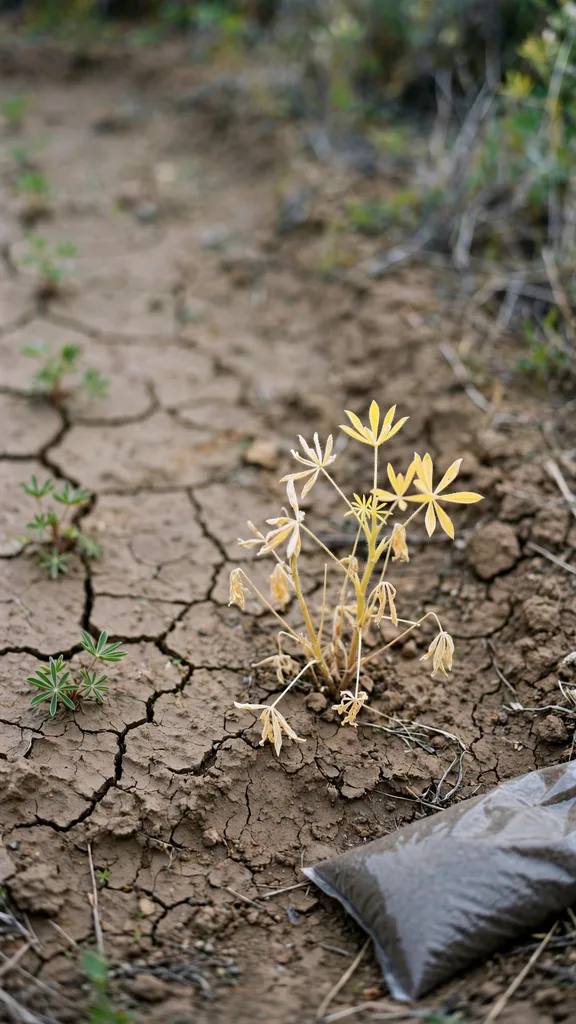
- Sowing untreated seed, then waiting for a row that never comes up. Nick the coat. Soak the seed. Do both every time.
- Planting in alkaline soil and wondering why the leaves yellow. Test pH first. Plant only where soil reads below pH 6.8.
- Feeding lupine like a hungry annual. Skip high nitrogen feed entirely. The root nodules supply nitrogen on their own, so bought fertilizer only grows leaves.
- Watering daily in light sprinkles. Soak deeply, then let the top soil dry. Shallow watering grows shallow roots that die in the first dry week.
- Letting every spike set seed. Deadhead all but one spike, or the bed self sows into a thicket within a few seasons.
One more habit deserves a line of its own. Moving an established lupine kills it more often than it saves it. The taproot snaps on lifting, and the plant never re roots well. Plant lupine where it will stay, and sow fresh seed when a new spot needs plants. A seedling moved young survives. An old clump moved in full leaf does not.
Diagnose Yellow Leaves, Aphids, and Missing Flowers
Yellow leaves point at the soil first. Check drainage before reaching for fertilizer. Water that stands around the crown yellows leaves from the base up, and the fix is drainage, not feeding. Alkaline soil yellows leaves too, with green veins on yellow leaf blades. Test pH when yellowing spreads across the bed. A bed that reads above pH 6.8 needs sulfur or a new spot, not more water.
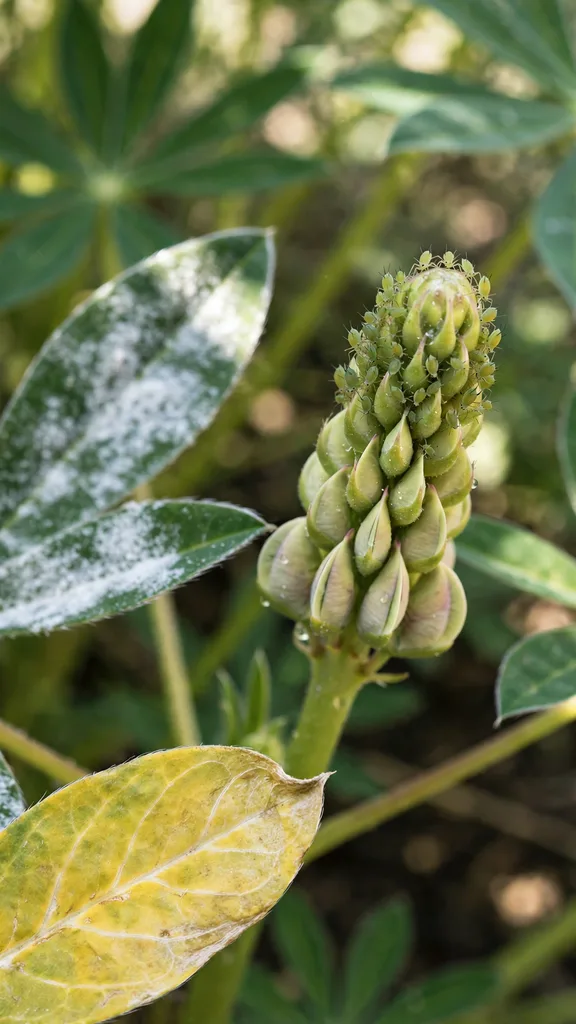
Aphids cluster on young shoots and flower buds in spring. The same guide names aphids and powdery mildew as the known problems for this species. Knock aphids off with a hard jet of water from a hose, and repeat every few days until the colony thins. Ladybugs and lacewings eat the rest when the bed holds mixed planting. Skip broad sprays, since they kill the predators along with the aphids and the colony returns stronger.
Powdery mildew coats leaves with a white dust in humid weather. It starts on lower leaves where air moves least. Cut the worst leaves and drop them in the bin, never on the compost heap. Space plants wide, water at the base, and keep foliage dry. A plant with mildew on every leaf needs cutting back to the crown, and the regrowth usually comes clean in drier air.
Missing flowers in the first year are normal, not a failure. Lupine reaches maturity and flowers in its second year. A first year plant with strong leaves and no spikes is doing its job. Feed it nothing and let it build roots. Missing flowers in the second year point at shade, rich soil, or a taproot damaged at transplant. Move the plant never, thin the shade, and skip the fertilizer.
Floppy spikes mean rich soil or still air. Stake tall spikes early, before wind bends them, with a cane and a loose tie. A tie pulled tight cuts the stem as it thickens. Feed nothing after staking. A staked plant in rich soil flops again next year, while a lean bed grows spikes that stand on their own.
Cut Lupine Spikes and Save Seed for Next Year
Cut lupine spikes in the cool of the morning, when the lower third of the flowers have opened and the upper buds still hold shut. Cut stems last longer with the same conditioning routine in the fall cut flowers guide. Stand cut stems in deep water at once and keep the bucket in shade until arranging. A spike cut at noon wilts by evening, while a spike cut at dawn holds for days.
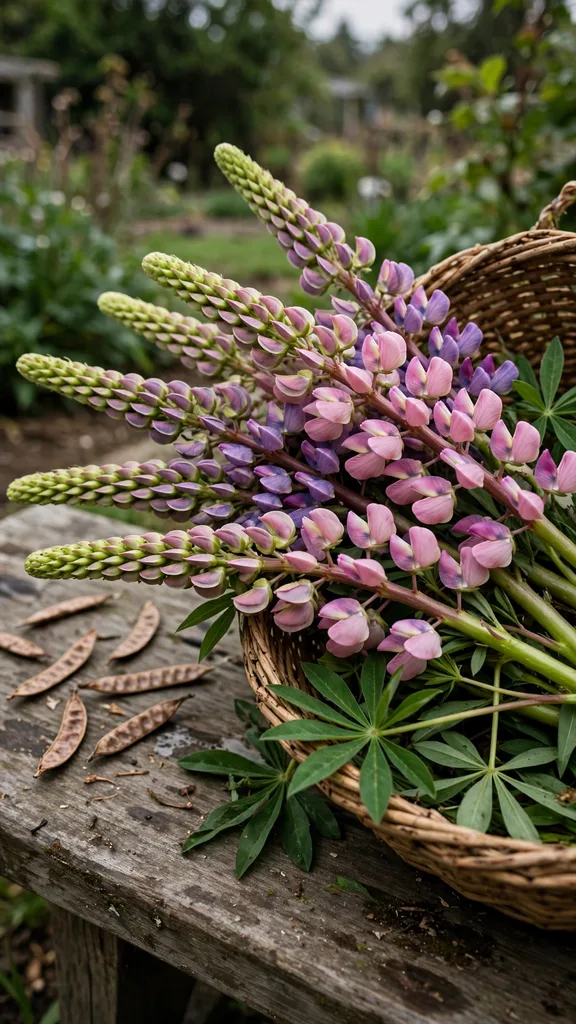
Strip the lower leaves before the stems go in the vase. Leaves below the waterline rot and cloud the water, and cloudy water shortens vase life. Recut the stem base under water with a sharp knife, and change the water every few days. A clean vase and fresh water matter more than any flower food packet.
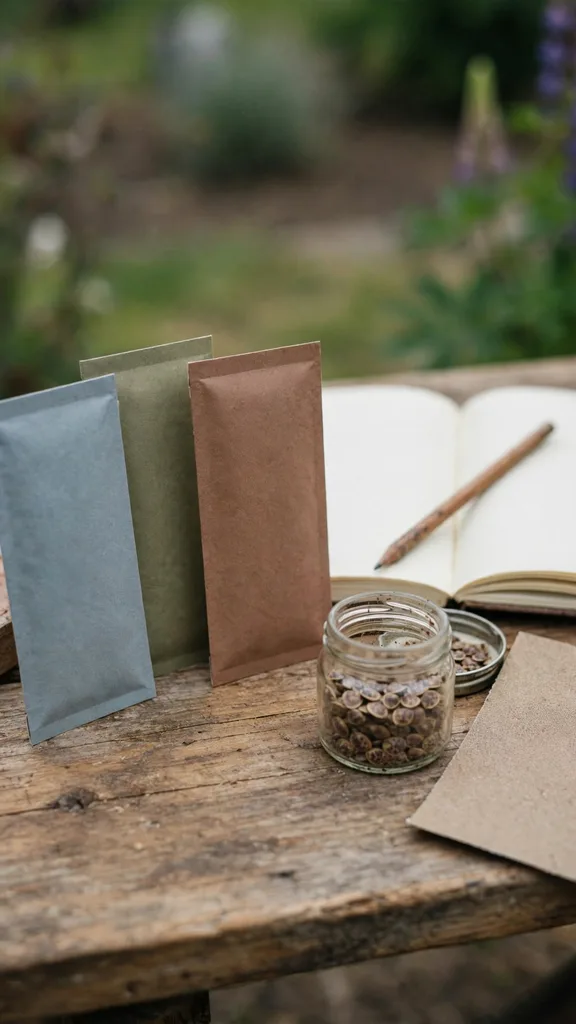
Save seed from the strongest plant in the bed. Let its best spike finish blooming and form pods. Pods ripen from green to tan and then dark brown, and they hold 5 to 9 mottled seeds each. Snip the spike when pods turn brown and dry but before they split. Pods split with force and throw seed many feet, so dry them inside a paper bag or under a net cover.
Dry the seed fully before storing. Spread pods on a tray in a warm dry place for a week, then shell the seed and store it in a labeled jar in a cool dry cupboard. Seed keeps for several seasons in dry storage. Write the variety name and the year on the jar, since lupine seed all looks alike once shelled. Keep the jar away from children and pets, since the seeds carry the same alkaloids as the plant.
Keep Lupine From Taking Over the Bed
Lupine self sows freely where it likes the soil. One missed spike scatters seed across the bed, and seedlings appear in paths, lawn edges, and neighbouring beds the next spring. Deadhead every spike you do not need for seed, and pull stray seedlings while small. A seedling pulled while small comes out clean. A seedling left to grow a taproot needs a fork and leaves a hole.
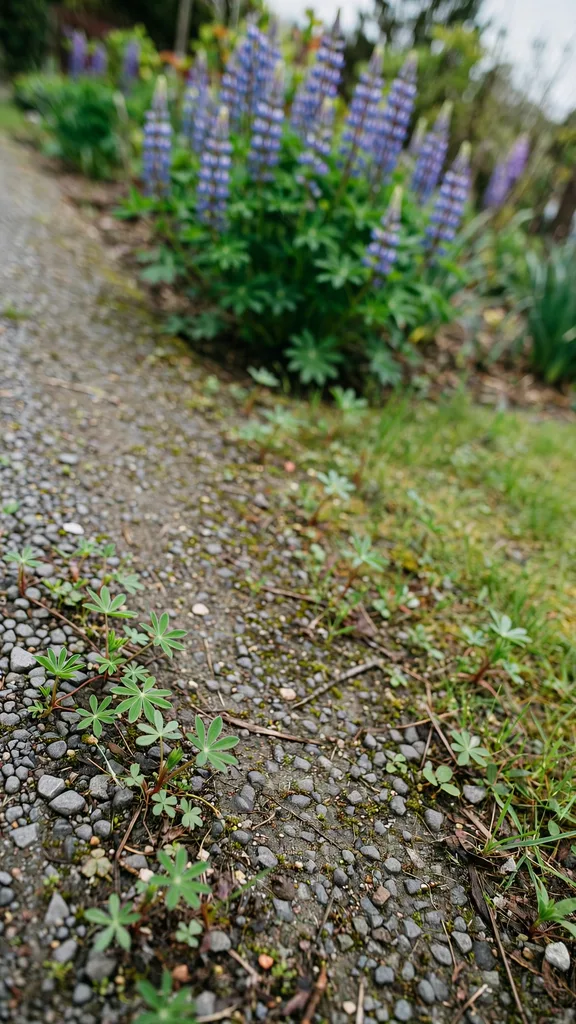
Escaped garden lupine turns weedy in parts of eastern North America, where hybrids naturalize beyond gardens and crowd native plants. The same guide warns that ornamental hybrids can become weedy and problematic outside their native range. Check local guidance before planting lupine near wild meadows or waterways. A garden bed is one thing. A riverbank is another.
Contain lupine with a mowing line. Mow or cut the plants back before pods ripen in beds near wild ground, and never dump seed heads on a compost heap that goes out raw. Hot compost kills seed. Cold compost spreads it. A bed that gets deadheaded on time never needs a bigger fix.
Choose named hybrids over mixed seed near sensitive ground. Named forms still self sow, but their seedlings stay closer to the parent color and are easier to spot and pull. Mixed seed throws seedlings of every color, and a white seedling in a blue drift hides until it flowers. Rogue seedlings are easiest to pull before they bloom.
Frequently Asked Questions About Growing Lupine
Lupine can grow in clay only when the clay drains. Dig compost through the topsoil, raise the bed where water stands, and keep the crown clear of mulch. Soil that stays wet after rain rots the crown, so a raised bed or a sandy spot suits lupine better than flat clay. Test drainage with a hole full of water first.
First year lupine builds roots and leaves, and flowering waits for the second year. The plant reaches maturity and flowers in its second year, so a leafy first year plant is normal. Keep it watered, feed it nothing, and protect it through winter. Spikes appear the next spring when the crown has bulked up.
Yes, lupine seeds are poisonous when eaten, and the whole plant carries bitter alkaloids. The Lady Bird Johnson Wildflower Center profile lists seeds as the poisonous part and names alkaloids such as lupinine and sparteine. Keep seed packets and ripe pods away from children and pets, and wash hands after handling seed.
A lupine plant usually lives 3 years, and it may live longer in cool moist soil. Hot humid summers shorten that life, sometimes to a single season. Treat lupine as a short lived perennial and sow fresh seed each fall, so new plants replace tired ones without a gap in the bed.
Yes, deadhead each spent spike down to healthy leaves as soon as lower flowers fade. Cutting spent spikes often brings a second flush in late summer and stops the bed from self sowing. Leave only one spike to ripen when you want seed, and cut the rest before pods form.