Spend 90 minutes potting one rhizome in heavy soil and sinking the pot into still water. That is how to grow water lily from a bare rhizome to a first bloom in one season. Eleven moves follow, from matching the lily to your pond to wintering the pot below the ice.
Plant in spring, after the last frost, when the water warms. Set the pot on bricks first. Lower it in stages as pads reach the surface. Feed through summer. Lift tropical tubers before the first frost.
Match the Lily to Your Pond in 5 Minutes
Match the lily to your winter first. Hardy lilies sleep through frost, sit quiet under ice all winter, and return each spring with fresh pads. Tropical lilies need warm water and die at the first freeze. Pick the wrong type and the pond stays empty by July. A pond that freezes solid in January still suits a hardy lily, since the rhizome rests below the ice line and wakes when the water warms in spring.
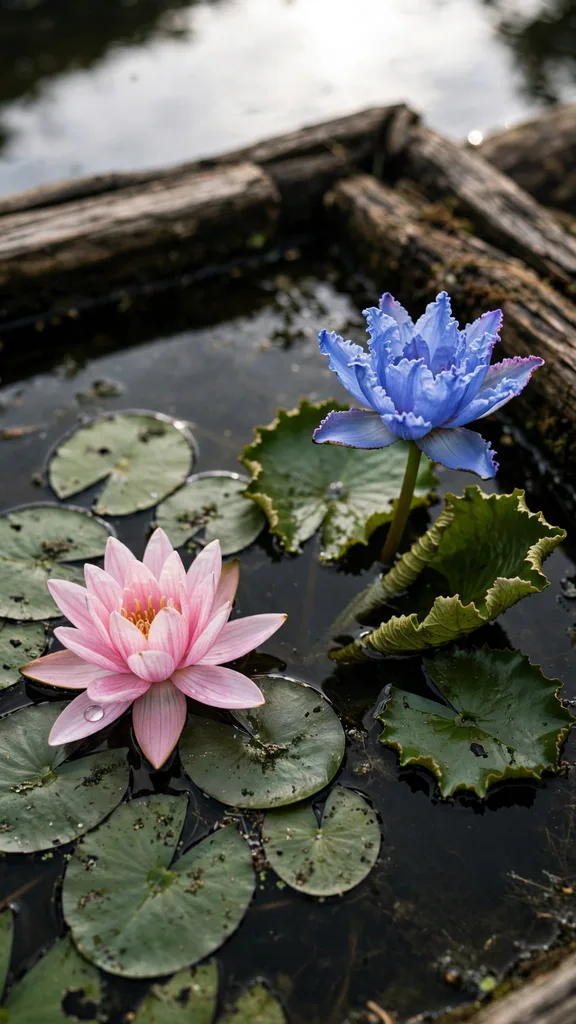
The North Carolina Extension Gardener Plant Toolbox places the genus in water 7.6 cm to 61 cm deep, with a spread of 61 cm to 3.66 m, in loamy soil at a neutral pH, in full sun. Hardy types go dormant in winter and survive when the rhizome sits below the freeze line. Most hardy blooms open by day and rest on the surface. Tropical day blooms open in the morning and close before sunset. Night bloomers open in the evening and close by late morning.
Five hardy names suit a first pond. Chromatella opens yellow. Colorado opens salmon pink. Comanche opens apricot. Aurora shifts from yellow to orange red as the bloom ages. Carolina opens pink. All five grow from rhizomes and return each spring in a pond that does not freeze solid. Tropical types bring blue and purple flowers that hardy lilies never make, plus larger blooms with a stronger scent. Lotus is the other classic pond flower, and growing lotus from seed takes a longer start than a lily rhizome.
Match the size to the pond before you buy. A small patio pond suits one dwarf lily. A large pond takes two or three standard lilies spaced well apart. A standard lily spreads 61 cm to 3.66 m across the surface, so one plant fills a small pond by midsummer. A lily that outgrows its pond shades the water, crowds the fish, and hides the surface under pads. Buy a named variety from a water garden nursery, not a bare bag with no label. A named rhizome tells you the flower color, the spread, and the depth before you plant it.
| Type | Water Depth | Bloom | Flower | Winter |
|---|---|---|---|---|
| Hardy | 7.6 to 61 cm | Day | Rests on the surface | Dormant below the freeze line |
| Tropical day | 15.2 to 25.4 cm | Day, 7:30 to 9:30 am open | Held above the pads | Lift before frost |
| Tropical night | 15.2 to 25.4 cm | Night, open at dusk | Held above the pads | Lift before frost |
| Dwarf hardy | 12.7 cm | Day | Rests on the surface | Dormant below the freeze line |
Pot a Water Lily Rhizome in 6 Steps
Pot the rhizome before the pond warms up, and the plant settles in weeks. A bare rhizome potted in spring sends pads to the surface fast. A rhizome left dry in a bag waits and weakens. Buy the rhizome firm and heavy, with a visible growing tip at one end and no soft black patches along its length.
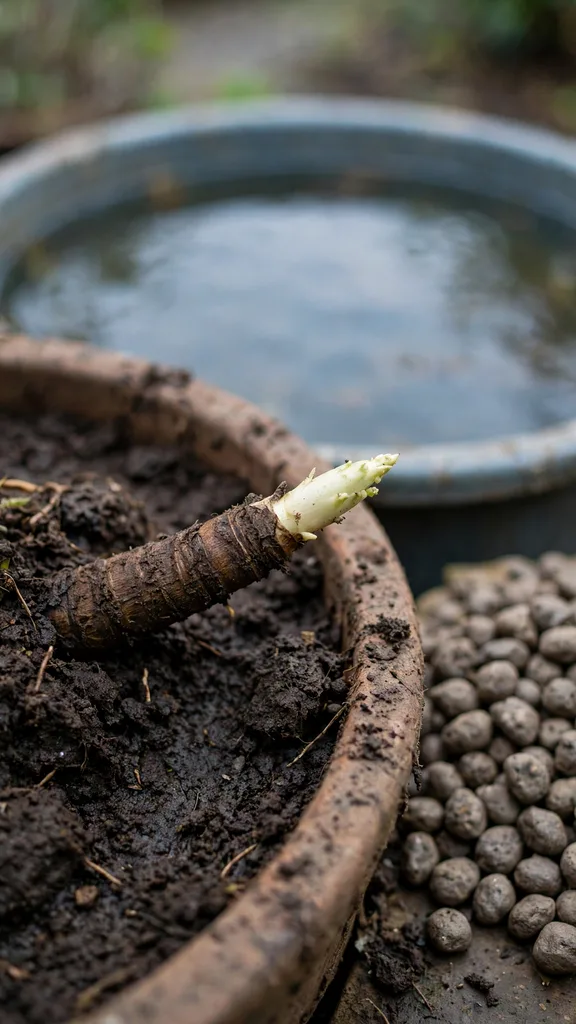
- Fill a wide pot two thirds full with heavy loam soil.
- Push two fertilizer tablets into the soil near the rim.
- Lay the rhizome against the side of the pot with the growing tip toward the center.
- Cover the roots with soil and leave the crown bare.
- Top the soil with 2.5 cm of pea gravel.
- Lower the pot into a tub of water at an angle until the air bubbles stop.
Potting mix floats. Heavy loam stays put. A wide pot beats a deep pot, since roots run sideways across the soil. Mix a little sand into stiff clay so the soil drains without floating away. Cover the drainage hole with mesh or burlap so soil stays in the pot when you sink it. Pea gravel on top keeps fish from digging in the soil and stops the soil from clouding the water.
Tropical tubers plant differently from hardy rhizomes. Set a tropical tuber upright in the pot, with the roots buried and the top of the tuber left exposed. Cover the soil with gravel the same way, and sink the pot shallow until pads reach the surface. A tropical tuber buried deep rots before it sprouts.
Soak the finished pot in a tub before it goes in the pond. Air trapped in dry soil lifts the pot and tips it over. Lower the pot at an angle and let the bubbles escape. Pick a pot with no holes or cover the holes with mesh, since holes leak soil into the pond all season. Fabric pots work too, and roots grow through the fabric into the pond floor over time. A buried crown rots. A crown left bare sends pads up in days.
Set the Crown 25.4 to 30.5 cm Below the Surface
Set a new standard crown 25.4 to 30.5 cm below the surface. Set a dwarf crown 12.7 cm below the surface. Depth decides whether pads reach the light or stall below it. Measure from the soil surface in the pot to the water line with a ruler, not by eye.
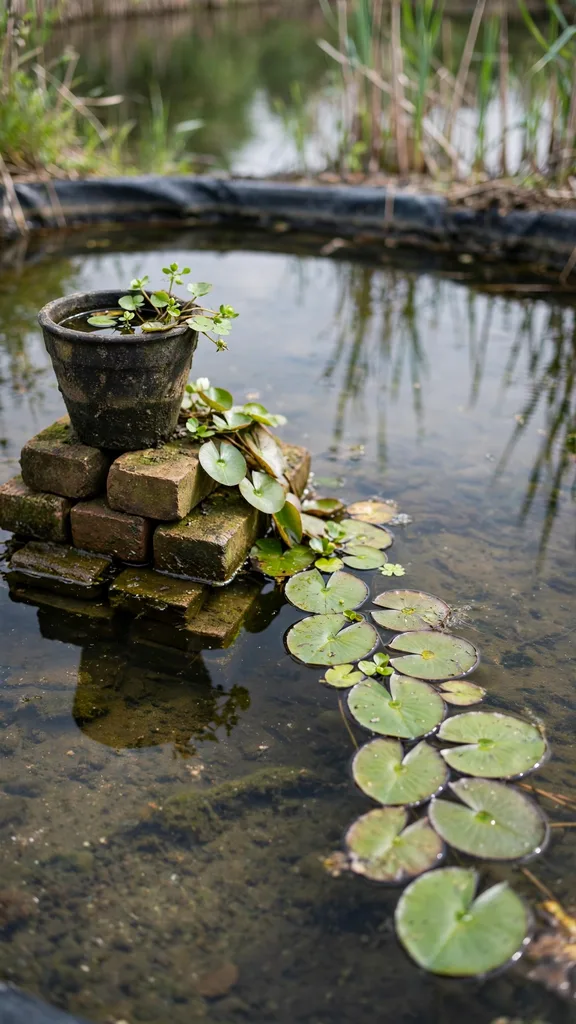
The University of Missouri Extension sets a new hardy crown 25.4 to 30.5 cm below the surface, a dwarf crown 12.7 cm below the surface, and tropical types planted only once the water reaches 18.3°C. Raise a new pot on bricks or an upturned pot. Lower it in stages as pads reach the surface. Each drop waits for fresh pads to float, and each fresh pad pulls the plant a little deeper into the light.
| Stage | Water Over the Crown |
|---|---|
| New standard lily | 25.4 to 30.5 cm |
| New dwarf lily | 12.7 cm |
| Genus range | 7.6 to 61 cm |
A pot sunk too deep in cold spring water sits silent. Pads stall below the surface. Flowers wait for warmth that never reaches them. A pot set shallow in warm water sends pads up in days. Check the depth again in midsummer, since evaporation and plant growth shift the water line by a few centimeters over the season.
Give the Lily 6 Hours of Sun and Still Water
Give the lily 6 hours of direct sun each day. Count the hours on the water, not on the patio. Shade from a wall counts for nothing once the sun leaves the pond. Morning sun matters most, since it warms the water early and opens the blooms for the longest part of the day.
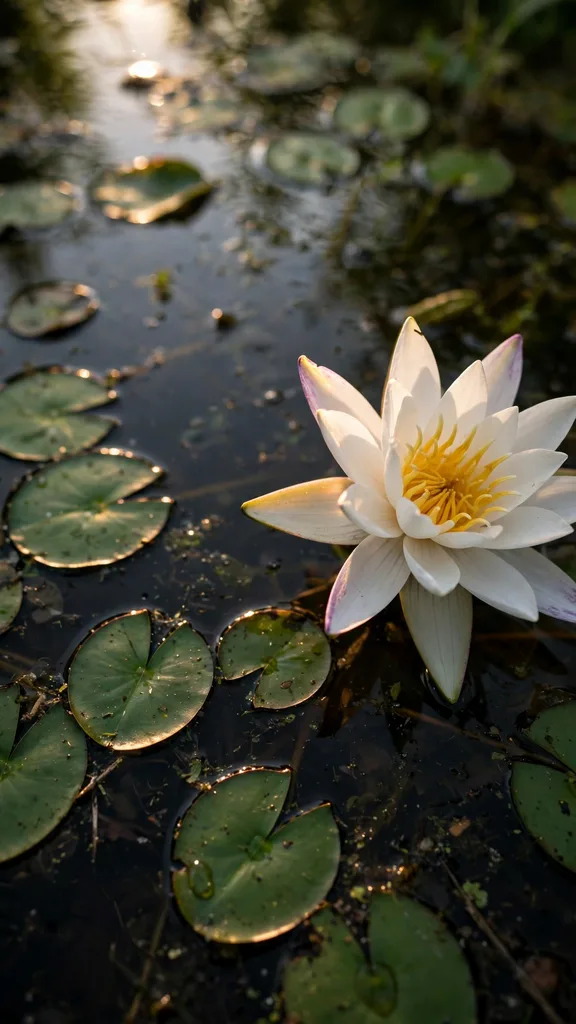
Still water suits a lily. Fountains and waterfalls chop the surface and cool the water. Place the pot away from splashing inlets and falling water. A calm corner warms fast in the morning and holds that warmth into the afternoon. Ponds that refill often with cool water stay cold, and cold water slows every lily in it.
Site the pond on the south side of the garden where the sun tracks longest. Wind across the surface cools the water and tears pads loose, so a low hedge or fence on the windy side helps. Count the sunny hours on the water for a week before you plant, and mark the hours on paper so the count is real. A pond that looks sunny at noon may sit in shade by mid-afternoon. A lily in shade grows pads and skips flowers. Move the pot to the sunny side of the pond. A pot on bricks moves in minutes. Sun on the water is the cheapest fertilizer a lily gets.
Feed a Heavy Feeder Without Greening the Pond
Push aquatic fertilizer tablets into the soil, never into the open water. Tablets in the water feed algae. Tablets in the soil feed the lily. That one habit decides whether the pond stays clear or turns green.
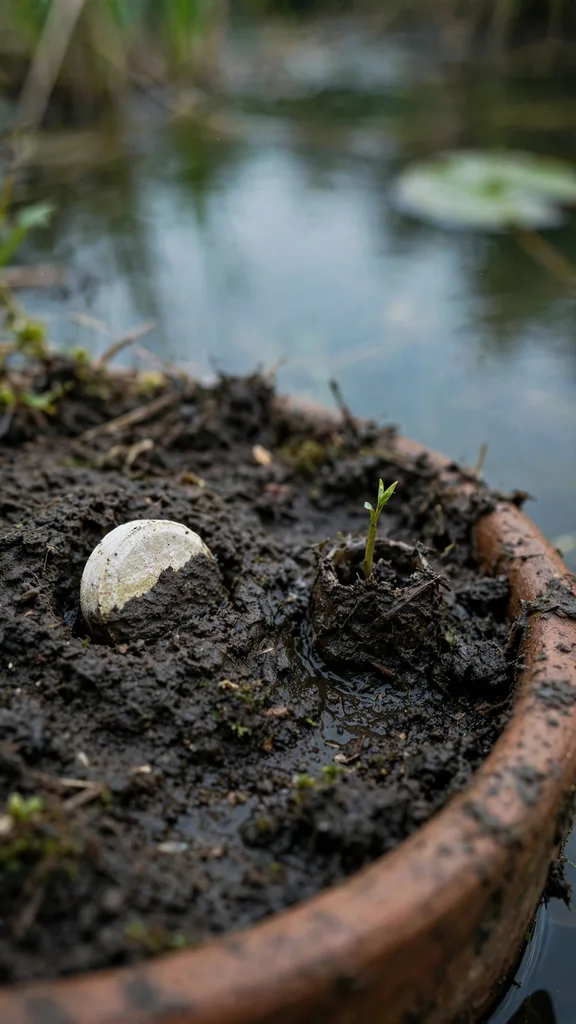
Feed through the growing season. Start when pads reach the surface in spring. Stop when growth slows in autumn. A hungry lily shows it first in small pads and few buds. A fed lily pushes broad pads and steady buds from June into September. Two tablets suit a small pot. A large pot takes more, spaced around the rim away from the crown.
Feed on a schedule. One round each month keeps pads broad and buds steady. Skip the liquid feed poured over the surface. Green water follows within days. Push each tablet deep into the soil and pinch the soil closed over it so nothing leaks into the pond.
Read the pads to judge the feeding. Pale pads and small leaves point at hunger. Broad dark pads with steady buds mean the dose is right. Green water after feeding means a tablet escaped the soil or the dose ran too high for the size of the pond. Cut the next round back and push the tablets deeper.
A lily fed in the water grows algae. A lily fed in the soil grows flowers.
Divide a Crowded Lily in Spring
Divide in spring, when new growth shows and the water warms. Lift the pot. Wash the soil from the rhizome. A rhizome that circles the pot twice has outgrown its home. A lily in its first year stays put, since dividing a young plant sets it back a full season.
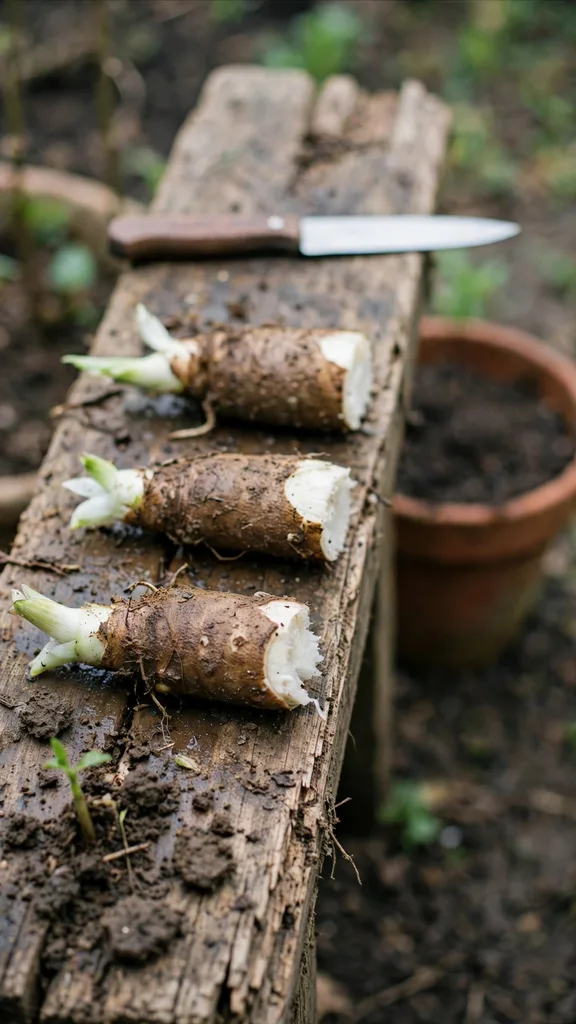
Cut the rhizome into pieces with a sharp knife. Keep one growing tip on each piece. Trim soft or black tissue back to firm white flesh. Repot each piece the same way as a new rhizome, with the crown bare and the tip toward the center. Handle roots with care. Rhizomes and tubers break easily when pulled hard. Clean the knife between cuts so rot does not travel from one piece to the next.
Set the divided pots back in the pond at once so the roots never dry out. A divided rhizome left on the bank in the sun wilts in an hour. Sink each piece at the same shallow depth as a new plant, then lower it in stages as pads reach the surface. Feed the divisions a month after potting, once new pads show. Two lilies in one pot fight for the same soil. A divided lily blooms harder the next summer, since each piece gets fresh soil and room to run. A crowded lily sulks in its own roots.
Grow a Water Lily in a Tub Without a Pond
Grow a dwarf lily in a tub on a patio. No pond is needed. A watertight tub, a pot of heavy soil, and 6 hours of sun make a small water garden in a weekend. Pick a tub with straight sides and no drainage hole, since a hole in the bottom drains the whole garden overnight.
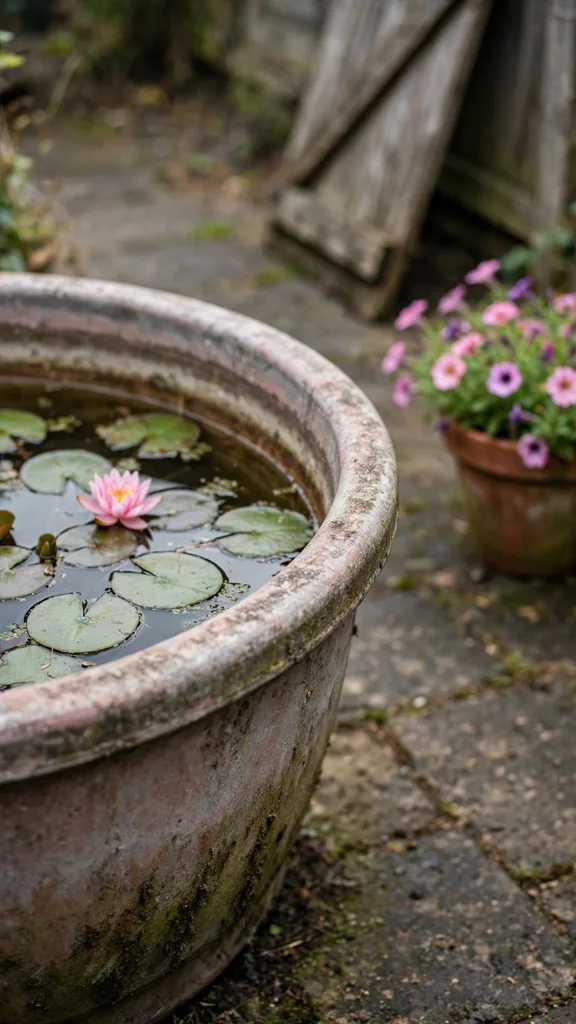
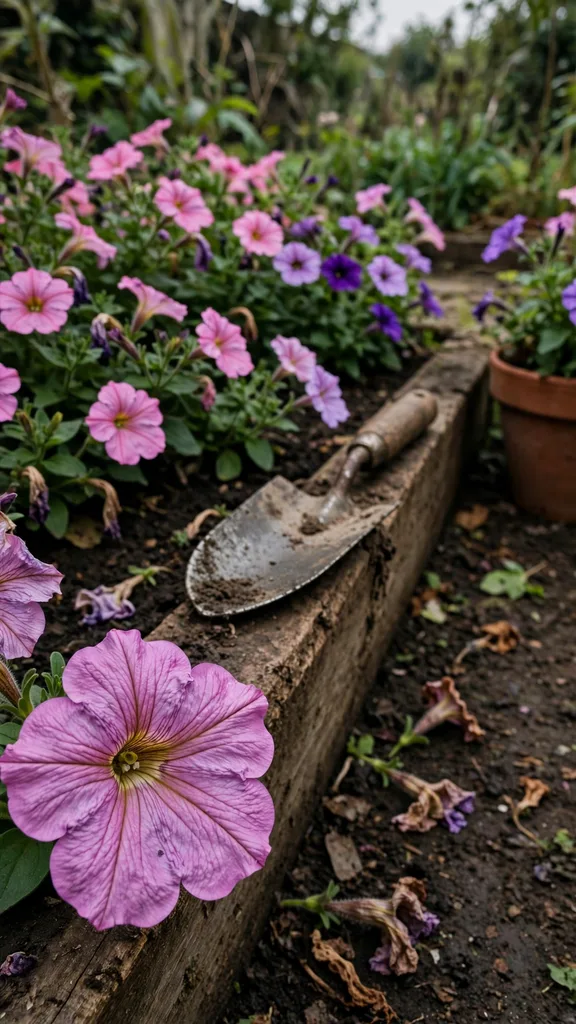
Use a pot 22.9 to 25.4 cm across for a dwarf lily. Fill a standard pot with 28.3 L of heavy soil. Set the tub where it catches the sun, and ring the rim with pots of petunias grown in containers for color at the water line. Top the water weekly in hot weather. Evaporation drops the level fast in a small tub.
A tub heats fast and cools fast. Shade the tub wall in the afternoon with a board. Keep the water still. A pump that churns the surface cools the water and stalls the blooms. A tub on a patio freezes solid long before a pond does. Move the whole tub to a shed or garage before the first hard freeze, and keep the soil damp through winter. A hardy lily in a tub survives the cold the same way as a pond lily, as long as the crown never freezes dry. A tub lily blooms like a pond lily. A tub left dry cracks its pads in a day.
Fix a Lily That Makes Leaves and No Flowers
Check sun first. Give the lily 6 hours of direct sun each day. Pads without buds point at shade first. Move the pot out of the shadow of walls and trees and count the hours again. A pond that gets sun only after lunch rarely blooms well, even when the pads look green and healthy.
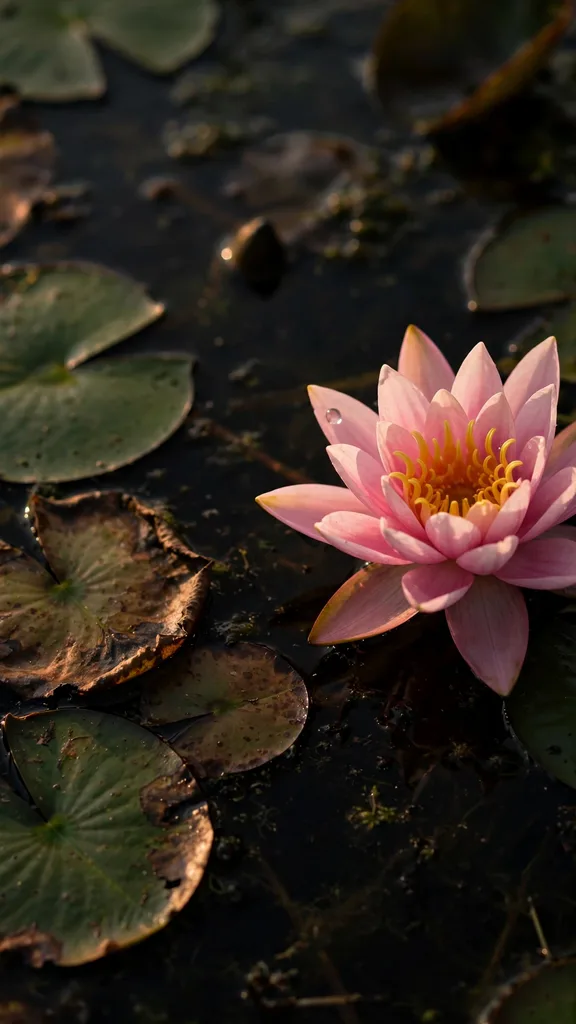
Check depth next. A crown sunk past 61 cm sits in cold water. Lift the pot onto bricks and let the pads warm. Check food next. A hungry lily makes small pads with no buds. Push tablets into the soil and wait for the next round of growth.
A new rhizome blooms lightly in its first summer and harder in its second. Give the plant its first season to build roots and pads before you judge it, since a rhizome that spends spring on roots pays summer back in flowers. A lily moved twice in one summer spends its strength on settling, not on flowers. Leave the pot alone once it sits at the right depth in full sun.
Check crowding next. A pot stuffed with rhizomes has no room for new growth. Divide it in spring. Fix one cause at a time. Blooms follow in the weeks after the cause is fixed.
Each bloom lasts a few days, then sinks. Hardy flowers open in the morning and close by afternoon. A lily that opens fresh blooms week after week through the summer, with new buds rising as old flowers sink, is working. A lily with sun, food, and room blooms. A lily missing one of the three sulks in leaves.
Stop Crown Rot, Aphids, and Beetles Early
Watch for crown rot, waterlily aphids, waterlily beetles, midges, and leaf spot. Check the pads each week when you top the water. Pests found early cost minutes, while pests found late cost the season and sometimes the plant.
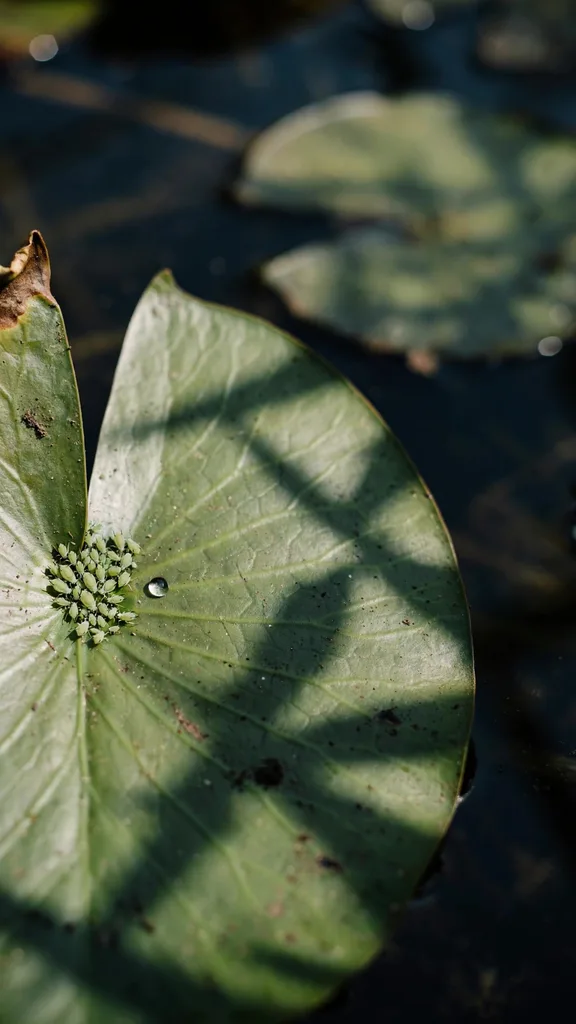
Lift a soft crown at once. Cut black tissue back to firm white flesh with a clean knife, and keep cutting until every soft patch is gone. Spray aphids off the pads with a hard jet of water. Pick beetles off in the morning, when they move slowly. Remove yellow leaves at the stem base each week, before they sink and rot. Dead pads left on the water rot and foul the pond.
Leaf spot shows as brown patches on the pads. Cut spotted leaves off at the stem and drop them in the bin, not back in the pond. Midges hover over still water in summer and do little harm, so leave them alone unless they cloud the surface. Thin crowded pads for air and light. A pond full of dead leaves feeds pests. A clean pond starves them.
Winter a Hardy Lily Below the Ice Line
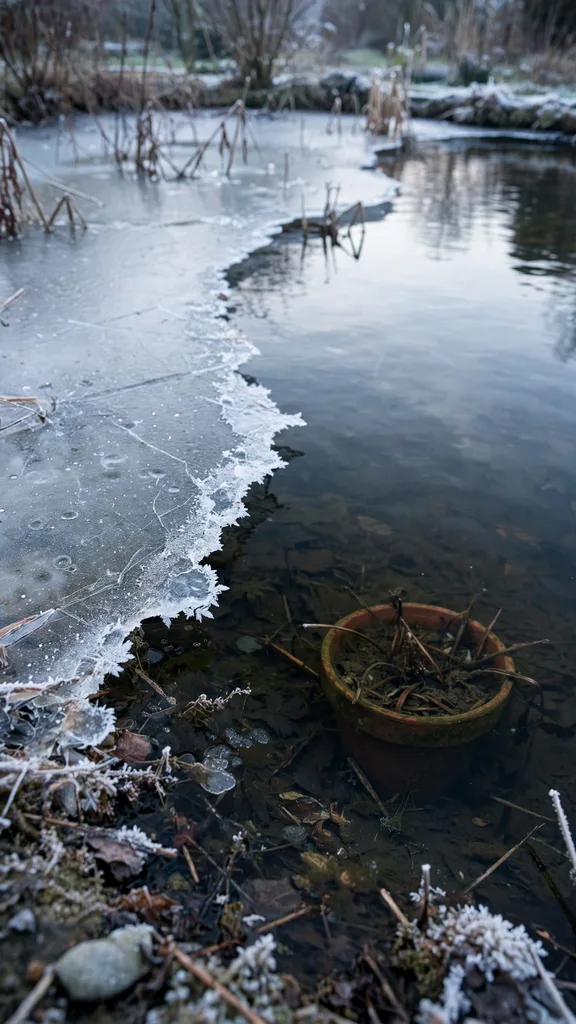
Sink a hardy pot so the crown sits below the ice line before the first freeze. A pond 61 cm deep holds free water under the ice. Move the pot to the deepest part of the pond in autumn. Leave the pot on the pond floor through winter. Ice on top does no harm while the crown sits in unfrozen water below.
Lift tropical lilies before the first frost. Tropical tubers die at the first hard freeze. Shake the soil off the tuber and store it in damp sand in a cool room above freezing. Label the bag with the variety name. Check the sand once a month through winter and dampen it when it dries out, since a tuber stored dry shrivels past saving.
Cut dead pads back to the crown in late autumn. Stop feeding when growth slows. Set the tuber back in a pot in spring, once the water warms. Start the tuber shallow on bricks, the same way as a new plant, and lower it as pads reach the surface. A hardy rhizome under ice wakes in spring. A tropical tuber left out never wakes.
Skip the 5 Mistakes That Starve a Water Lily
Five mistakes cause most failures. Each one has a fix that takes minutes, and each fix works the same week you make it.
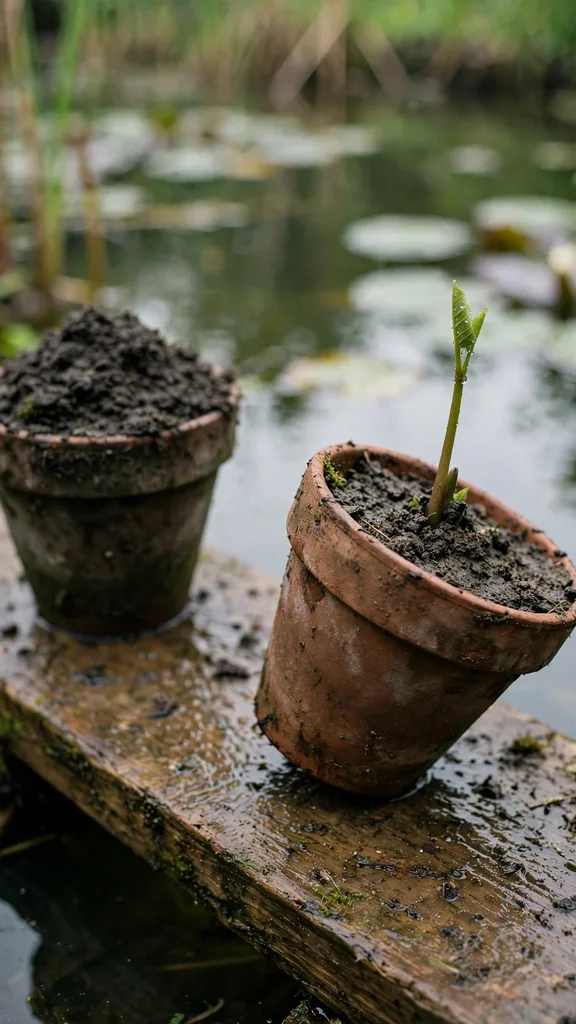
- Potting mix in the pot. Use heavy loam from the garden, not bagged potting mix that floats away.
- A buried crown. Skip soil over the growing tip, and leave the crown bare so new pads push up into the light.
- Tablets in the water. Push tablets into the soil beside the roots, never into the open water where they feed algae.
- A pot sunk too deep too early. Skip the deep drop. Start shallow on bricks and lower the pot in stages as pads reach the surface.
- Shade all day. Skip the shady corner. Move the pot to a spot that catches 6 hours of sun each day.
A water lily bloom lasts a day in a vase, so cut stems for the house from fall cut flowers that hold up indoors. Five mistakes, five fixes. A lily given what it needs pays the season back in blooms.
Frequently Asked Questions
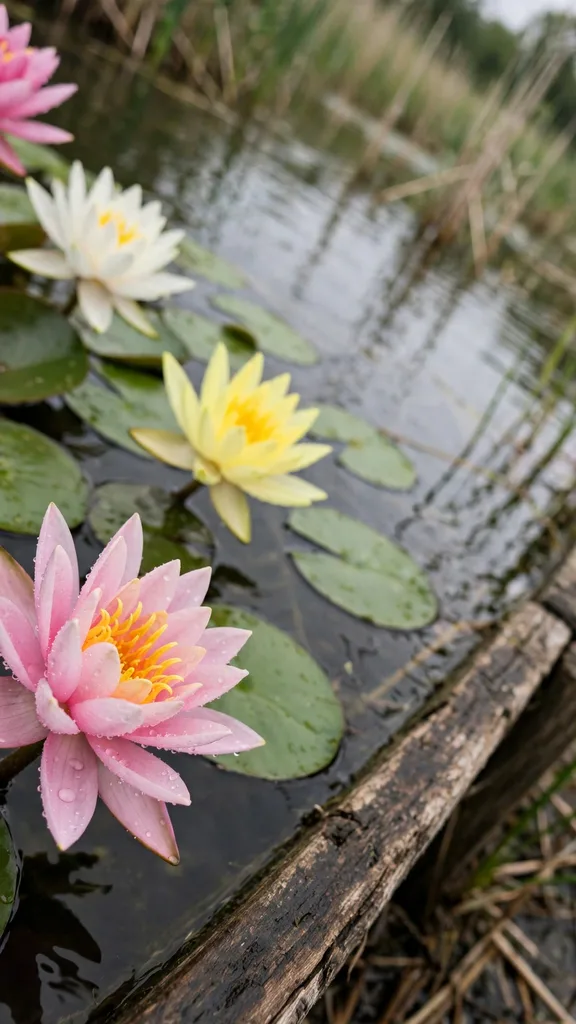
Set a new standard crown 25.4 to 30.5 cm below the surface and a dwarf crown 12.7 cm below the surface. Start shallow on bricks, then lower the pot in stages as pads reach the surface. The genus tolerates water 7.6 cm to 61 cm deep, so match the depth to the size of the plant. A pot sunk too deep in cold spring water grows pads slowly and flowers late.
Yes. Grow a dwarf lily in a watertight tub on a sunny patio, with the crown 12.7 cm below the surface. Fill the tub with heavy loam soil in a pot, not bagged potting mix, and top the water weekly in hot weather. A tub heats fast, so shade the wall in the afternoon. The plant blooms the same way it blooms in a pond.
Shade is the usual cause. Give the lily 6 hours of direct sun each day and move the pot out of the shadow of walls and trees. Check depth next, then food. A crown sunk too deep sits in cold water, and a hungry lily makes small pads with no buds. Fix one cause at a time and watch for buds in the weeks after.
Lift the pot before the first frost, since tropical tubers die at the first hard freeze. Shake the soil off the tuber and store it in damp sand in a cool room above freezing. Label the bag with the variety name. Set the tuber back in a pot in spring, once the water warms to 18.3°C.
Feed through the growing season with aquatic fertilizer tablets pushed into the soil, never into the open water. Start when pads reach the surface in spring and stop when growth slows in autumn. One round each month keeps pads broad and buds steady. Tablets in the water feed algae, so keep every tablet buried in soil.