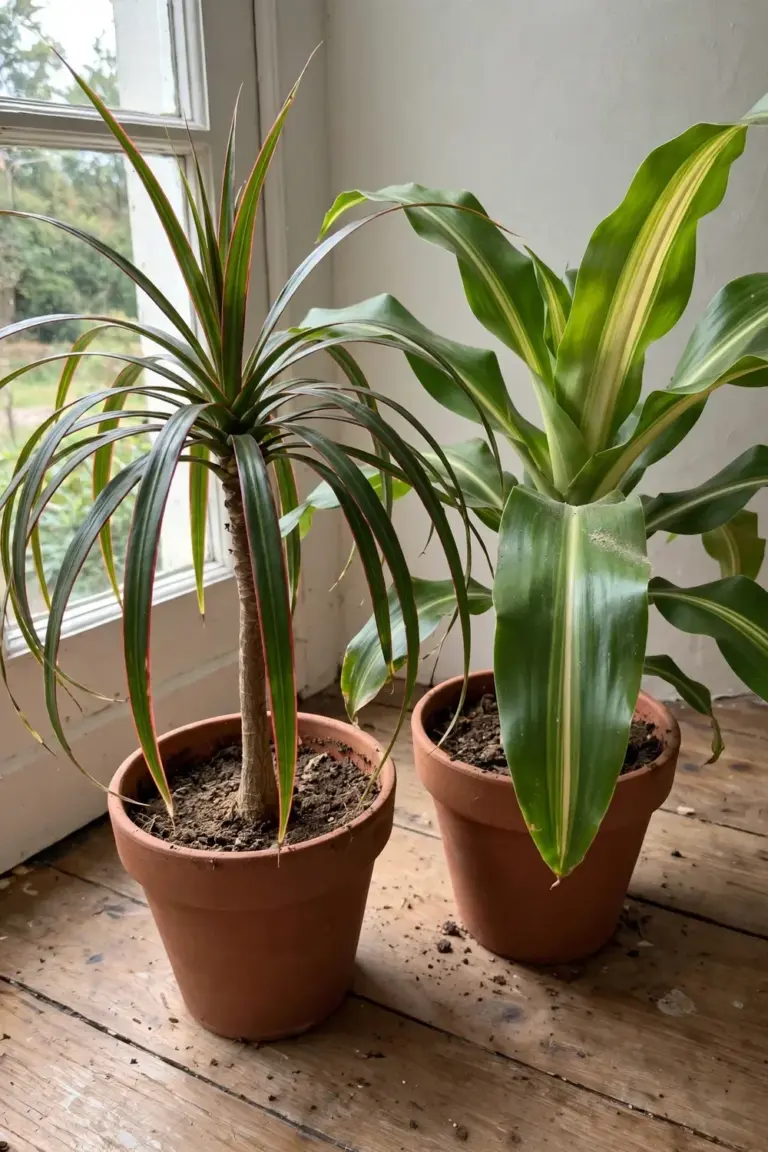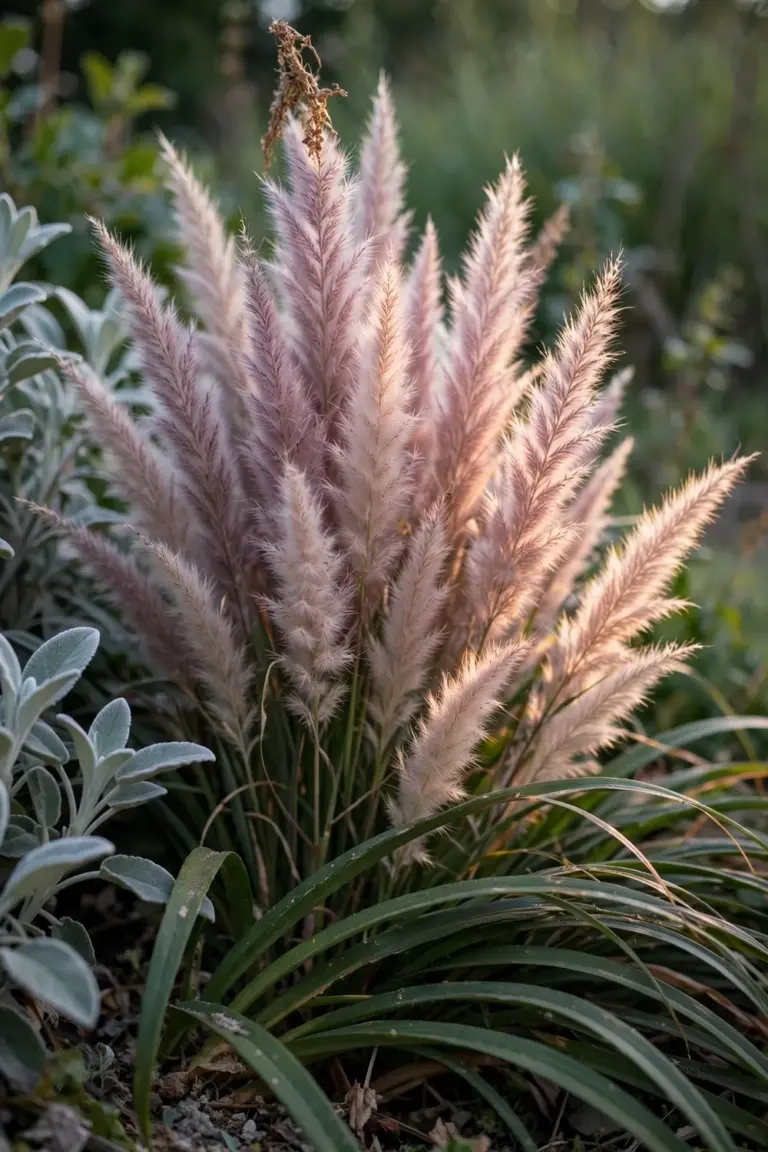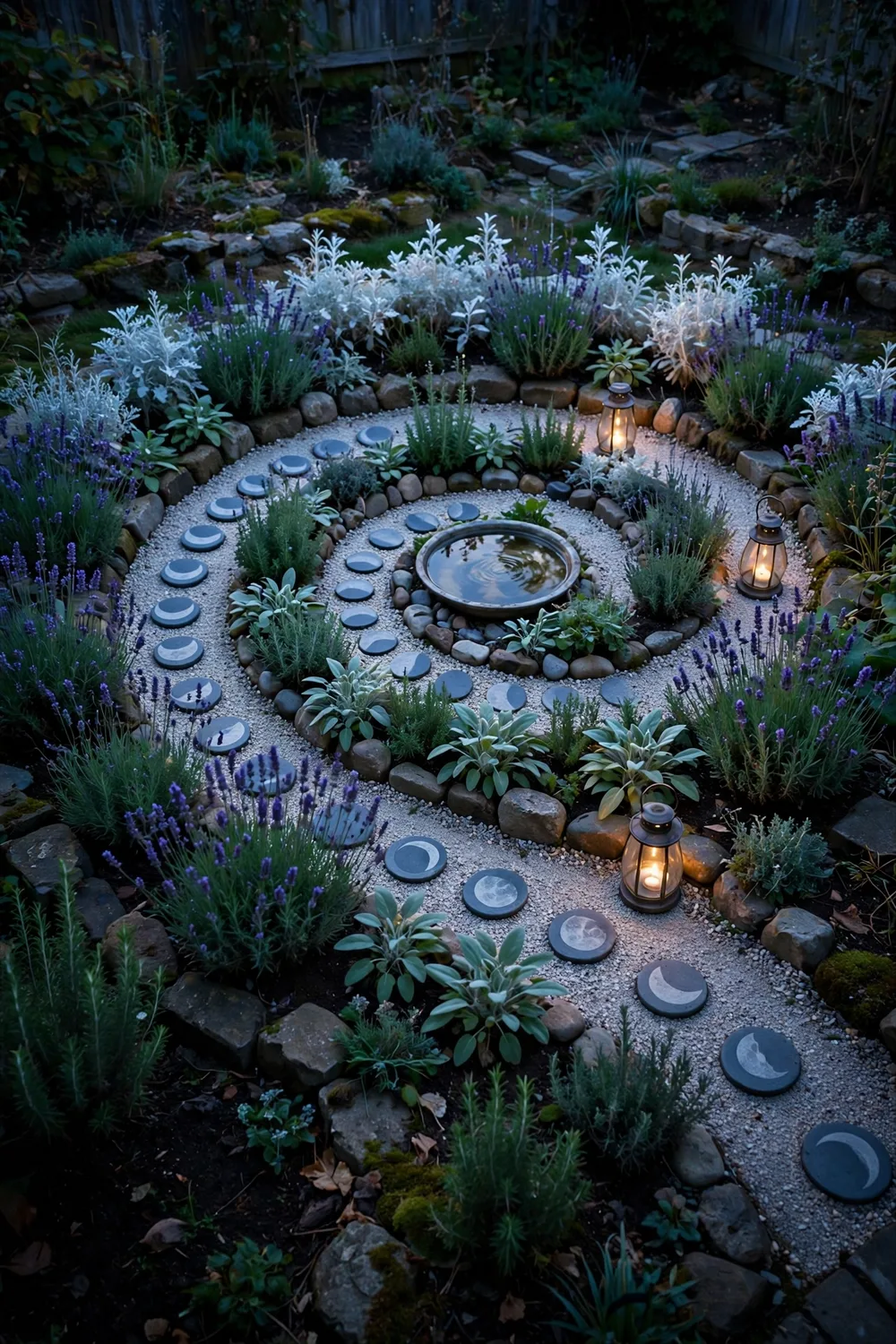

A witch garden is a working garden with a point of view. The beds grow herbs for the kitchen and the teapot, the paths curve on purpose, and the whole planting glows after dark. Gardeners have built versions of it for centuries, mixing useful plants with old folklore about protection, luck, and the moon. These 30 witchy garden ideas build one from scratch, starting with the layout and ending at the candlelit corner.
An apothecary herb bed is the spine of the garden, and the table below covers its eight core plants. After that comes the moon garden, planted in white and silver for the hours after sunset. I keep my own witchy corner at the shadiest end of the yard, where the herbs scent the path and the white blooms take over once the light drops. The poison corner gets its own honest section, because a real witch garden names its dangerous plants and handles them with respect.
Nothing here is Halloween-only. The garden earns its keep from spring through frost, and October simply becomes its showiest month. Start with the circle bed and three herbs, and add one idea each season until the corner feels enchanted.
| Herb | Role in the Witch Garden | Sun | Honest Caution |
|---|---|---|---|
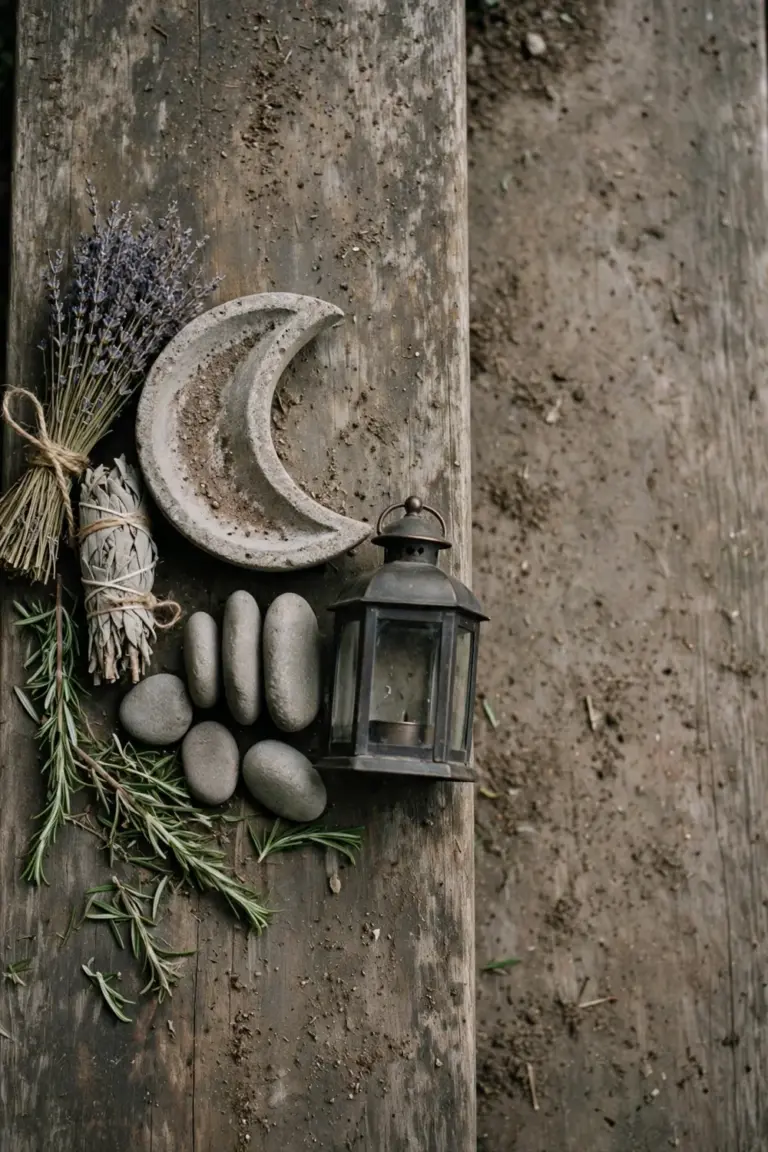
| Lavender | Scent, tea, dried bundles, bees | Full sun | Needs sharp drainage; wet winter soil kills it |
| Rosemary | Kitchen herb, remembrance lore | Full sun | Bring pots indoors in cold winters |
| Sage | Cooking, dried bundles, pollinators | Full sun | Cut back woody growth each spring |
| Thyme | Path edges, tea, ground cover | Full sun | Hates wet feet; plant high and lean |
| Chamomile | Tea flowers, soft bed edges | Full sun | Self-seeds freely around the bed |
| Lemon Balm | Evening scent, tea, bee plant | Sun to part shade | Spreads like its mint cousin; trim often |
| Mint | Tea, scent, container star | Sun to part shade | Never plant it loose in a bed; pot only |
| Rue | Old protective lore, blue foliage | Full sun | Sap plus sunlight blisters skin; gloves required |
Layout & Bones
1. Choose a Quiet Corner With Morning Sun
Every witch garden starts with a good seat in the yard. Look for a corner that catches the morning sun and slips into soft shade by midafternoon, because early light dries the dew from the leaves, and dry leaves discourage fungal disease through the season. A quiet corner sets the mood, too. Foot traffic stays low, and benches and beds fit without crowding the lawn.
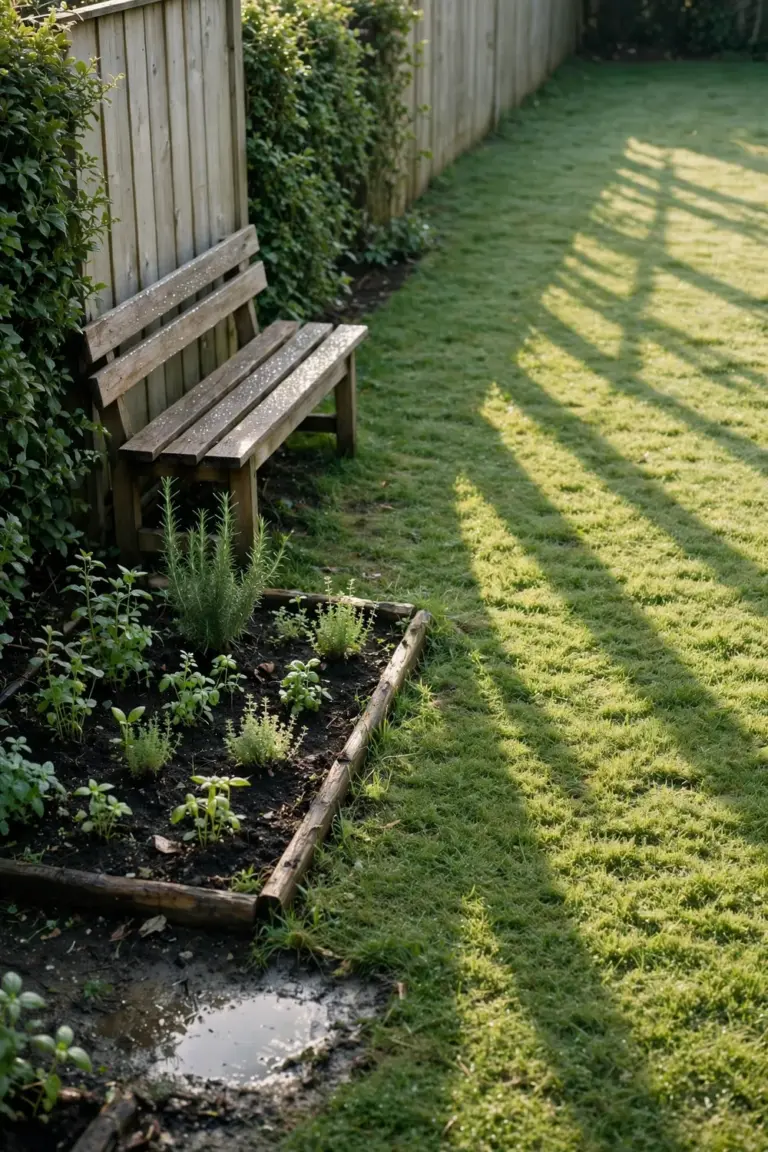
Walk the yard at breakfast time before you decide. Note where the sun lands at eight in the morning, and check where puddles sit after rain, since herbs dislike wet feet all winter. A fence or hedge behind the corner adds shelter, holds tall stems upright, and keeps scent hanging in the air on still evenings. Choose once, and the garden builds outward from there.
2. Lay a Circle Bed as the Garden’s Center
Gardeners have laid out circle beds for centuries, and folklore links the circle with protection and wholeness. The round shape works hard in practical ways, too: every plant sits within reach of the edge or a short path, and weeding stays quick in every season. The bed reads clearly from the kitchen window in January and in June.
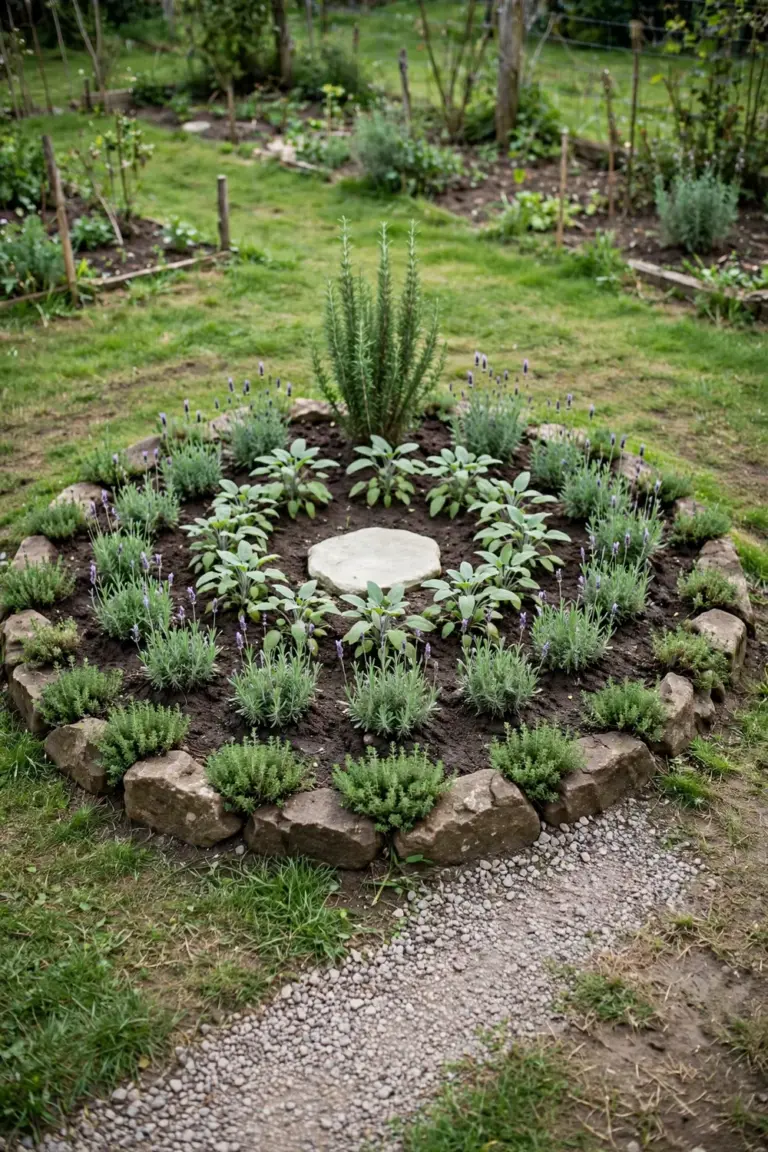
Mark the circle with a stake, a length of string, and a line of sand. Six feet across suits most small gardens. Leave the center open for a feature stone, a birdbath, or the tallest herb in the planting, and set the plants in rings, tall growers behind short ones. The rings keep the bed tidy and deliberate all year round.
3. Wind a Spiral Path Through the Planting
Spirals turn up in old garden carvings and labyrinth traditions across Europe, and folklore treats the spiral as a slow journey inward, one step at a time. In a planted bed it earns its keep as a path. One winding route reaches every plant, and boots stay off the soil, so the beds never compact underfoot.

Lay the path with gravel, bark, or flat stones set into the soil, wide enough for one person and a watering can. Plant low herbs along both edges so the curve stays visible through summer growth; thyme forgives the odd stray footstep at the path edge. Gravel drains freely, which keeps the route walkable after autumn rain.
4. Set Moon-Phase Stepping Stones Across the Bed
A row of round stones carries the moon’s phases through the bed in honest materials, a motif that suits a garden that wakes at dusk. Full moons, half moons, and slim crescents step the eye across the planting. No plastic props, no batteries.
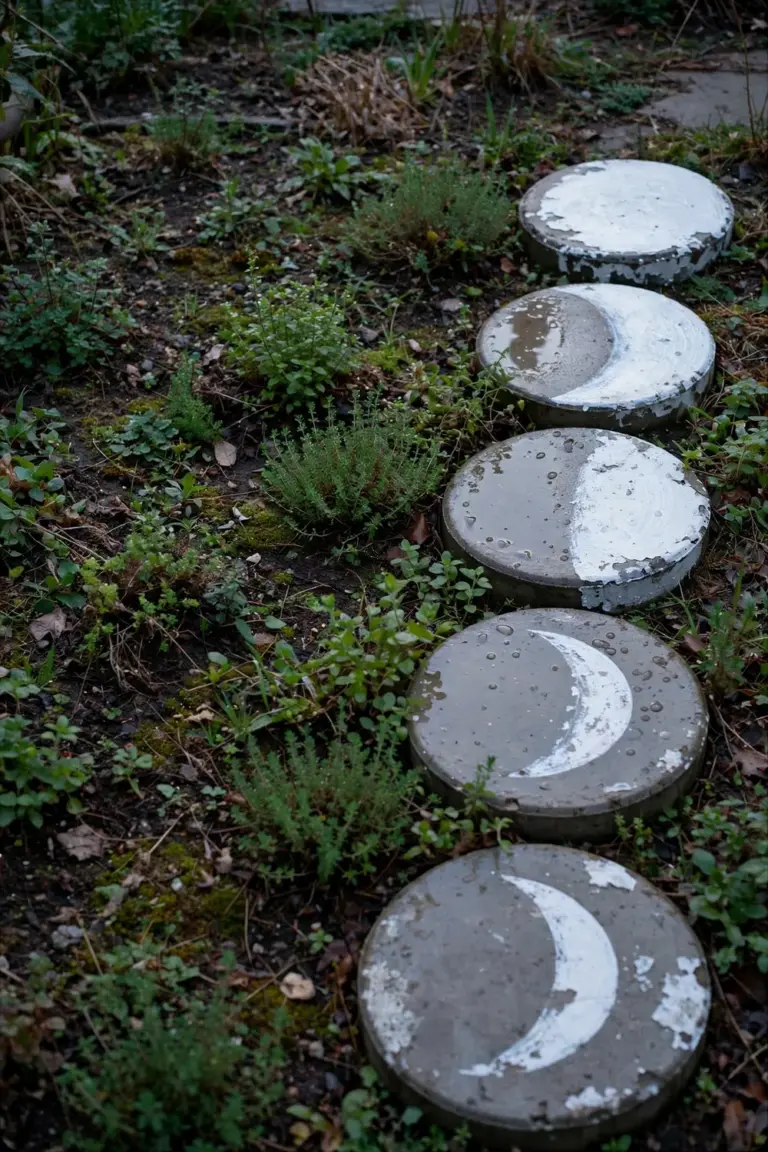
Buy plain round pavers or cast your own from concrete in shallow molds. Paint or carve the phase shapes at the kitchen table, then seal the stones against the weather, and set each one level with the soil so the mower passes cleanly over the row. Space them at an easy stride. By day they read as simple geometry; after dark they become the garden’s quiet signature.
5. Build a Small Altar Corner From Stone and Wood
Many garden traditions keep one small corner for pausing. Call it an altar, a shrine, or simply the still spot. The build uses what the yard already offers: a flat stone forms the surface, offcuts of wood form the base, and the whole corner asks for five minutes of carpentry and no shopping trip.
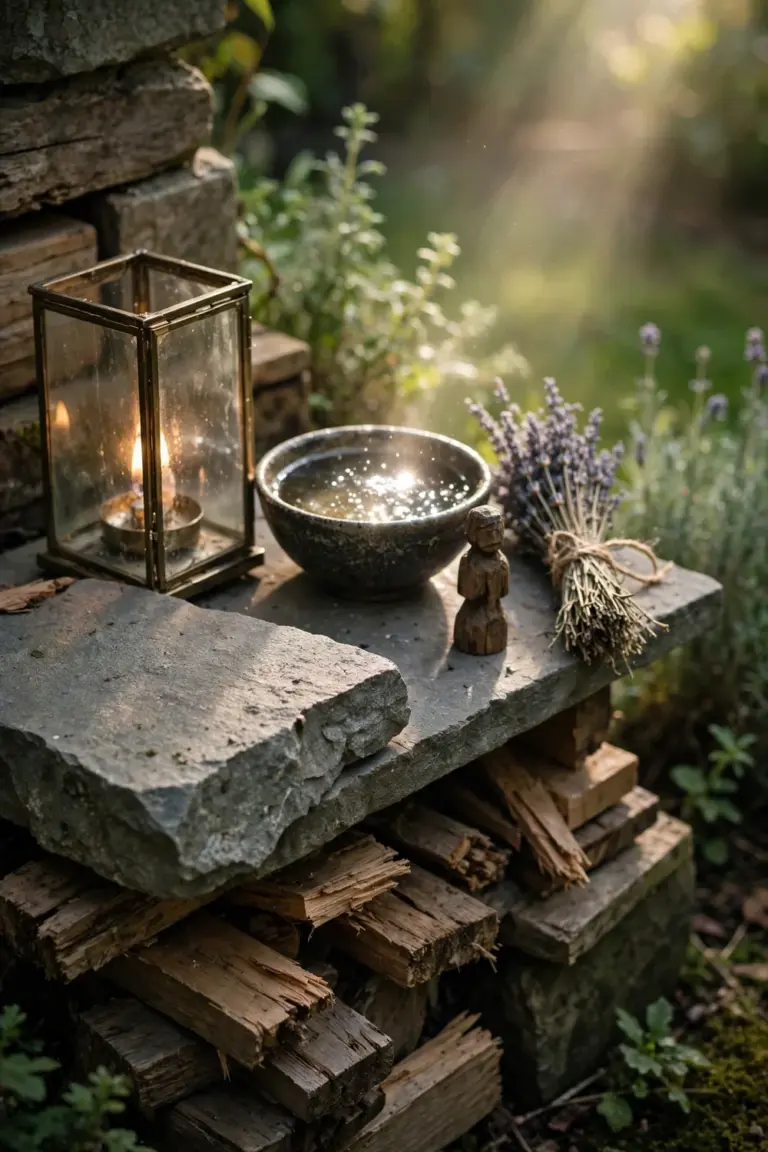
Set the stone at knee height along the bed’s most sheltered edge and top it with objects that carry meaning for your household. A candle lantern, a bowl of water, a carved figure, a bundle of dried herbs: all of them work. Refresh the display as the seasons turn. Spring brings the first cut flowers, and autumn brings seed heads and one small pumpkin from the patch.
6. Edge the Bed With a Woven Willow Border
A woven willow border gives the bed a handmade edge that suits the theme. Willow rods bend easily while fresh and green, the weave holds soil in place on gentle slopes, and the finished hurdle stands about a hand’s height above the path. Within one season it ages to a soft grey brown.
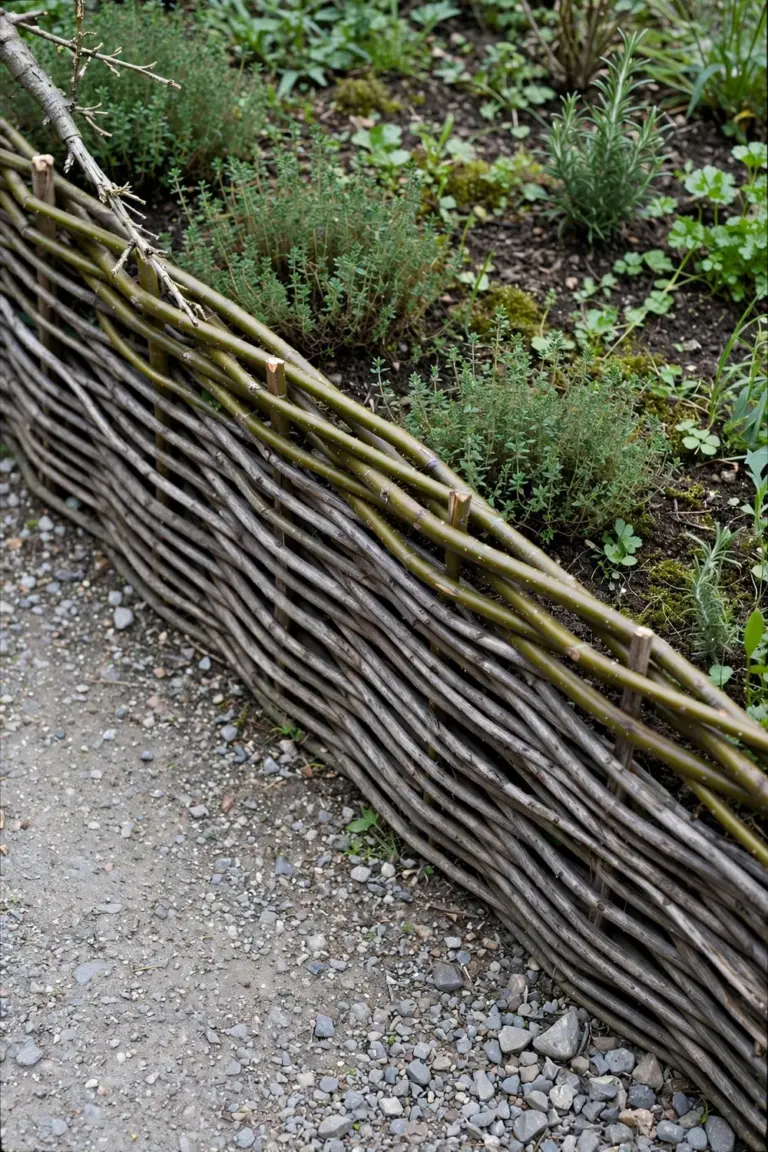
Cut or buy the rods in late winter, when the stems stand bare and flexible. Push short upright stakes into the soil every foot or so along the edge, then weave the long rods in and out until the panel reaches the height you want, and trim the tops level with secateurs. Replace tired rods one at a time over the years. The border costs little and composts cleanly at the end of its life.
The Apothecary Herb Bed
7. Plant Lavender for Scent, Tea, and Bees
Lavender anchors the herb bed with scent, colour, and a long flowering season. Folklore links lavender with protection and calm, and gardeners once tucked it into linen cupboards for its perfume. The plant asks for full sun and sharp drainage above all else; wet winter soil kills more lavender than frost ever does. The step-by-step guide to growing lavender well covers spacing, pruning, and soil preparation.

Choose a named culinary variety if the harvest matters to you. Hidcote and Munstead stay compact, and both flavour teas and baking reliably. Cut the flower spikes just as the buds show colour and hang the bunches upside down in a dark, airy room to dry. Bees work the open flowers from late spring onward, so leave some spikes standing for them as you harvest.
8. Grow Rosemary by the Path Where Hands Brush It
Rosemary belongs where daily life brushes past it, because every touch releases the resinous scent from the leaves. Folklore links the herb with memory and remembrance, and sprigs once travelled in wedding bouquets and funeral wreaths. Plant it at the path edge, beside the gate, or next to the bench, and let hands, sleeves, and passing dogs do the perfuming for free.

In mild climates rosemary grows into a small evergreen shrub that keeps its needles and its usefulness through the winter months. Give it full sun and lean, well-drained soil, and water young plants through their first dry summer; established plants need little attention after that. Snip sprigs as the kitchen needs them, and avoid hard pruning into old wood, since bare stems rarely sprout again.
9. Let Sage Fill the Sunny Corner
Common sage fills a sunny corner with soft, grey-green leaves that earn their place in every month. Folklore links sage with wisdom and long life, and old herbals found a use for it in nearly every remedy. The plant is tougher than its velvet leaves suggest, and it shrugs off dry spells once the roots settle deep.
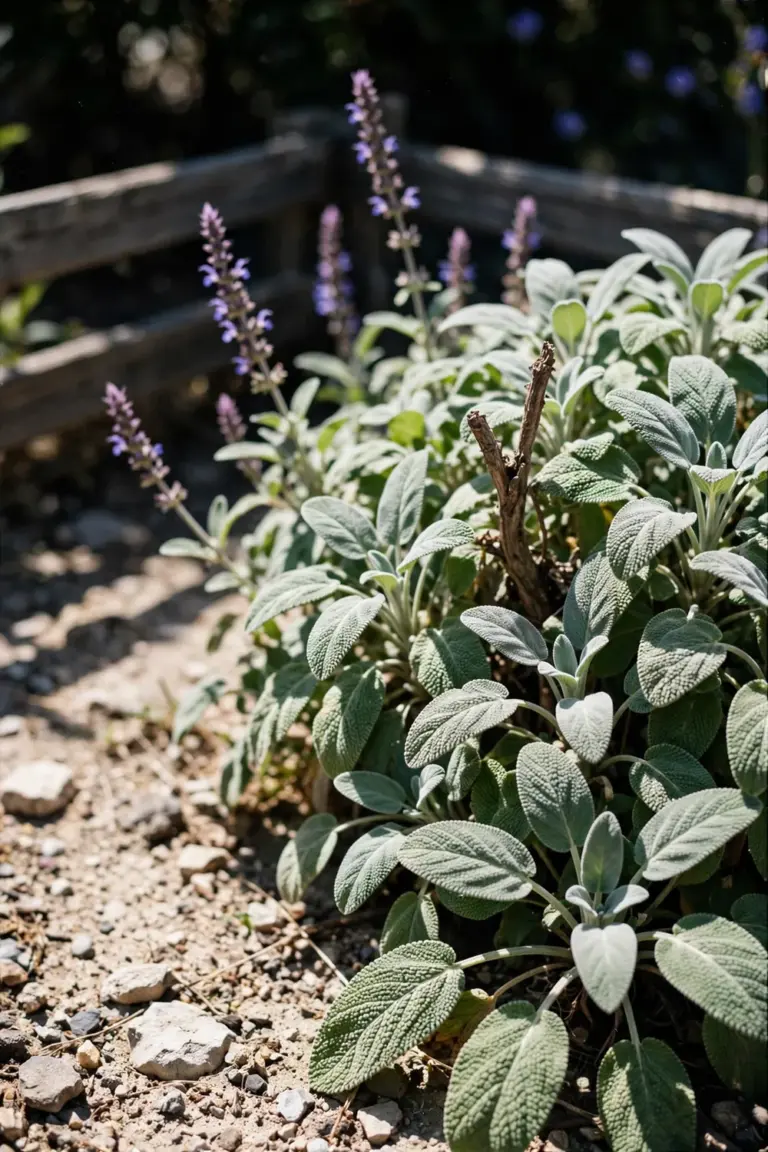
Give sage the sunniest and driest corner of the bed, where the leaves develop their best flavour in poor soil and bright light. Pinch the growing tips through summer to keep the plant bushy, and cut the flower spikes back after blooming if you want leaves over flowers. Replace the plant every four or five years, because old sage turns woody and sparse; cuttings root easily in a jar of water on the windowsill.
10. Keep Mint in a Pot Before It Takes the Bed
Mint tastes wonderful and behaves badly. It spreads by underground runners that travel fast and far, so one spring planting can swamp a whole bed by the second autumn. Roots dive under paths and surface inside neighbouring plants, and gardeners who set mint loose in open soil often spend years digging it back out again.
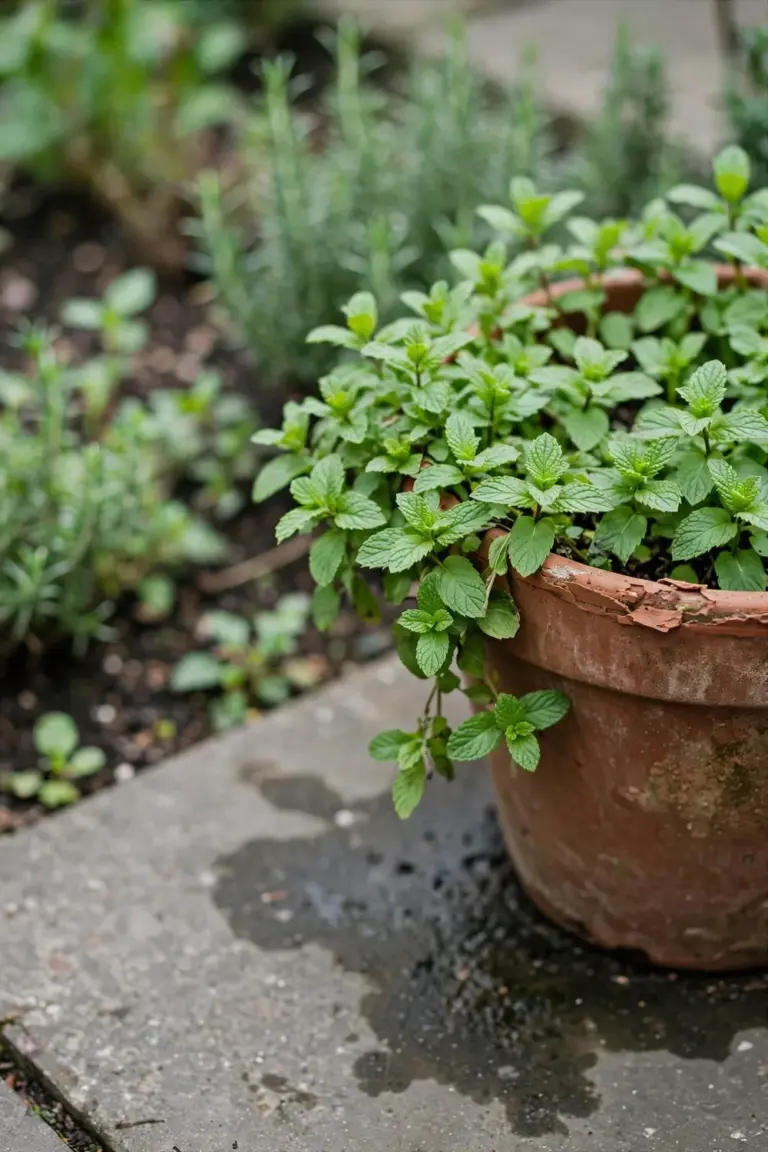
Grow it in a pot from the very start. Stand the pot on a hard surface, such as paving or a stone slab, so runners cannot escape through the drainage hole; a sunken pot also works when the rim stands proud of the soil. Keep each variety in its own pot. Spearmint suits teas, and peppermint suits desserts. The pot lifts easily into shelter when hard frosts arrive.
11. Add Chamomile for Tea and Soft Edges
Run a row of chamomile along the front of the bed and the whole planting loosens up. Feathery foliage, small white daisies, bare stems hidden behind it. The flowers keep opening from summer into early fall, and bees work them all day, so the corner never sits still.
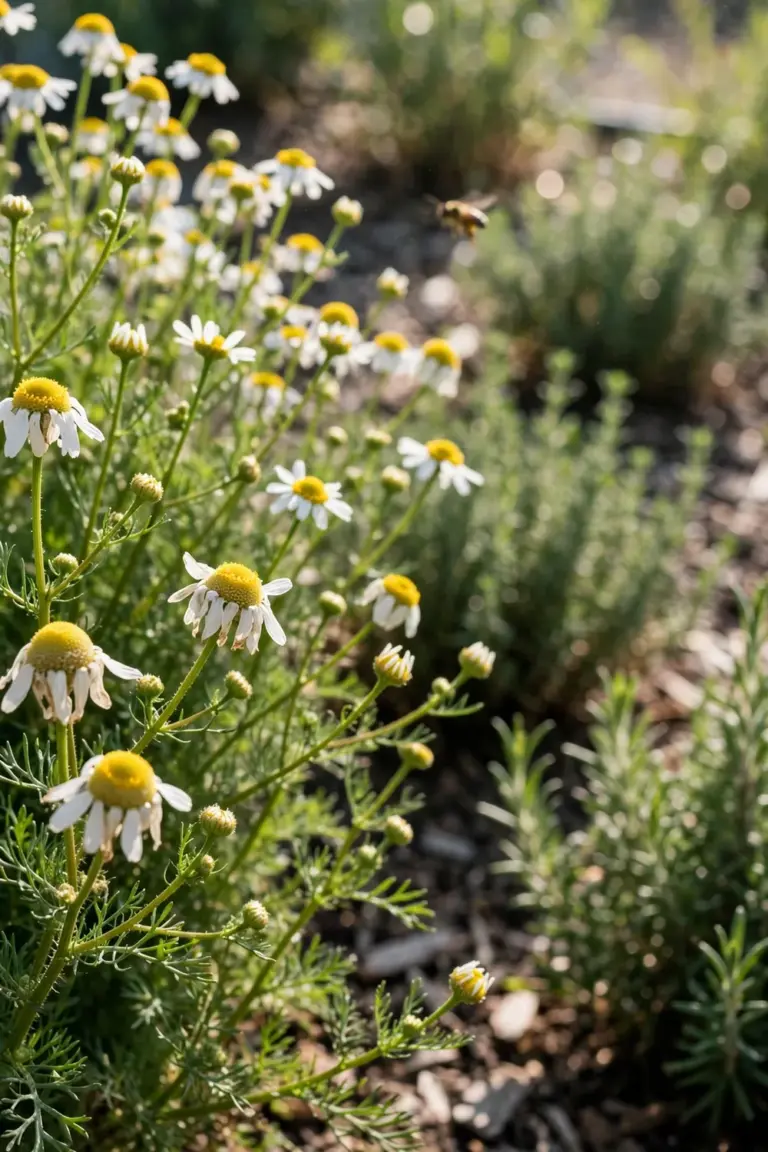
Pick on a dry morning, once the petals have flattened back. Fresh heads keep coming for weeks, and a small basket fills faster than expected. Dry the harvest indoors, then seal it in a jar away from the light. The tea it makes is mild and apple-scented, and garden lore links chamomile with calm evenings and restful sleep.
12. Grow Lemon Balm for Evening Scent
Brush a hand through lemon balm on a still evening and the citrus scent does the rest. The plant builds into a full, leafy mound by midsummer, and it asks for sun, regular water, and very little else.
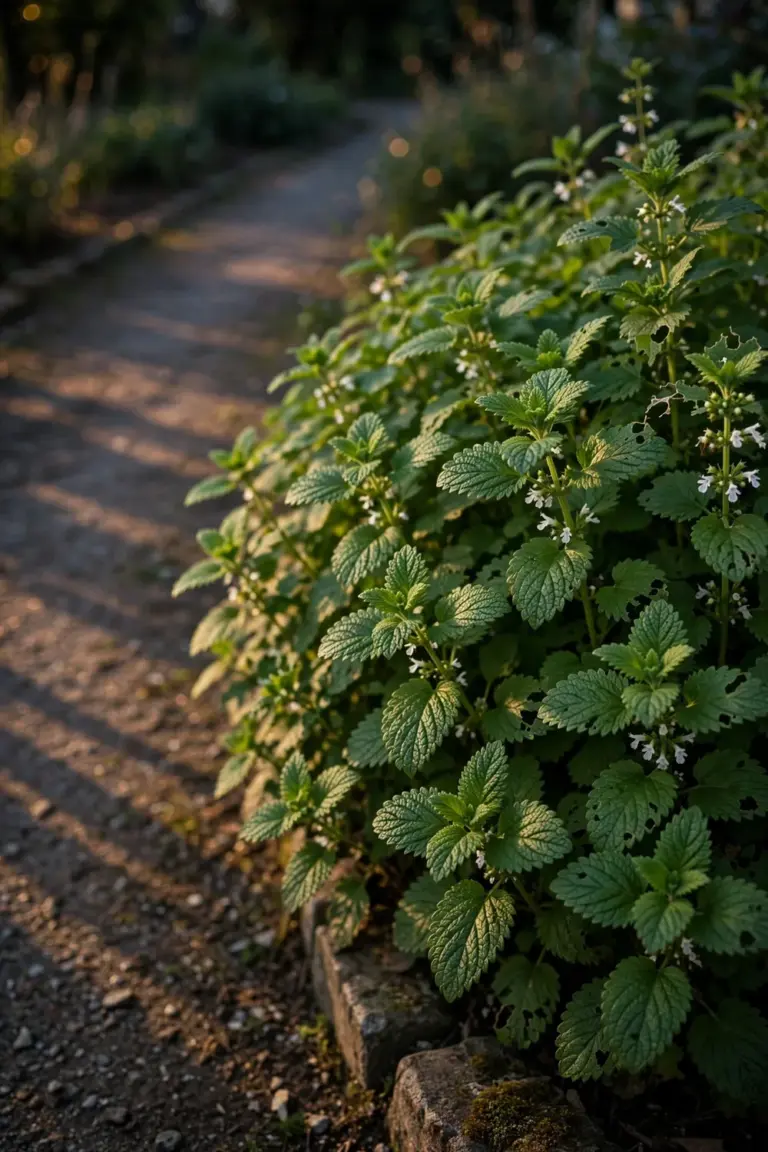
Cut the stems back hard after the first flowering and a fresh flush of tender leaves follows, ready for tea and summer salads. Take a second harvest before frost and dry it alongside the chamomile on the rack. Folklore links lemon balm with cheerfulness and clear heads, and gardeners have planted it by paths and doors for centuries for that welcome.
13. Hang a Drying Rack for the Herb Harvest
A drying rack is where the herb harvest becomes next season’s teas and seasoning. Hang small bundles of lavender, sage, lemon balm, and chamomile by their stems, loose and slim so air moves around every bunch. A shaded porch works. So does a dry shed or a spare-room corner.
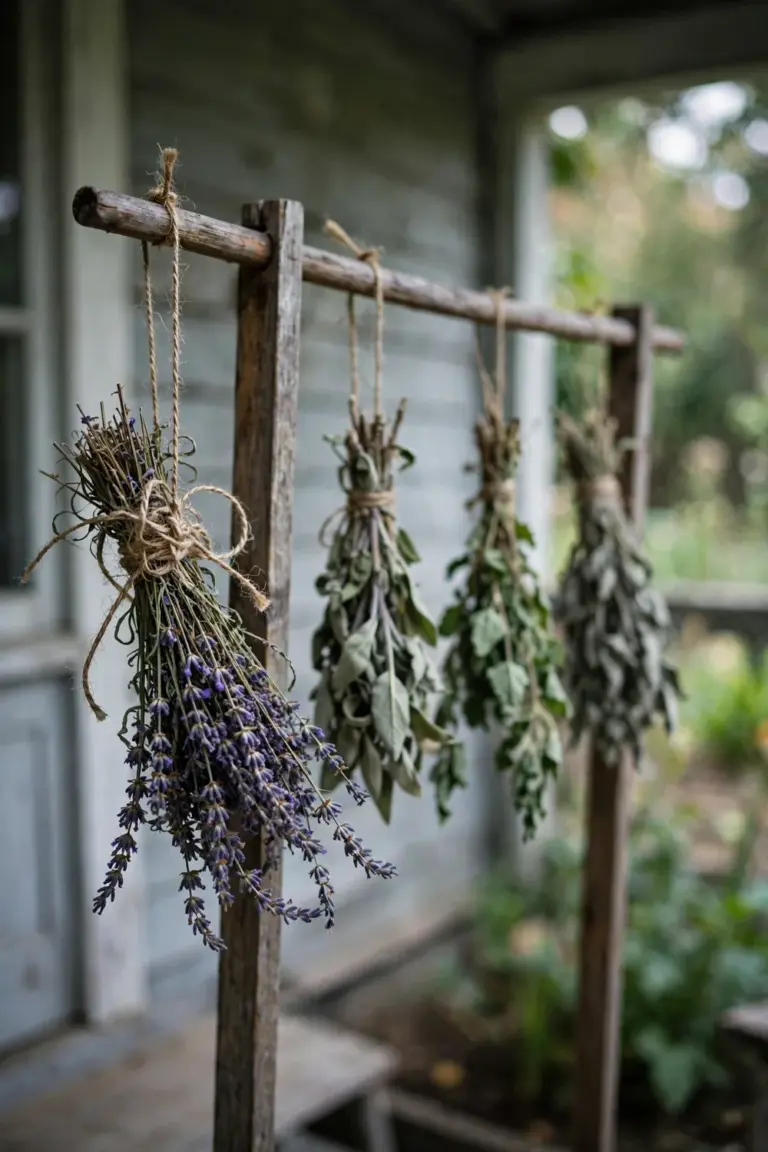
Tie each bundle with twine and hang it upside down. One to two weeks later the leaves should crumble cleanly between finger and thumb, and that is the sign they are ready. Strip them into labeled jars and compost the stems. If you are still choosing which herbs to grow, our herb growing guides walk through the reliable starters for a bed like this.
The Moon Garden
14. Plant Moonflowers for Blooms That Open at Dusk
Moonflower owns the night shift in this garden. The large white blooms open at dusk and close again by morning, each one lasting a single night, with the scent carrying across a small garden on still evenings. Fresh buds open in their place the next night. Set one plant beside a bench or gate and the whole corner gains a nightly event to gather around.
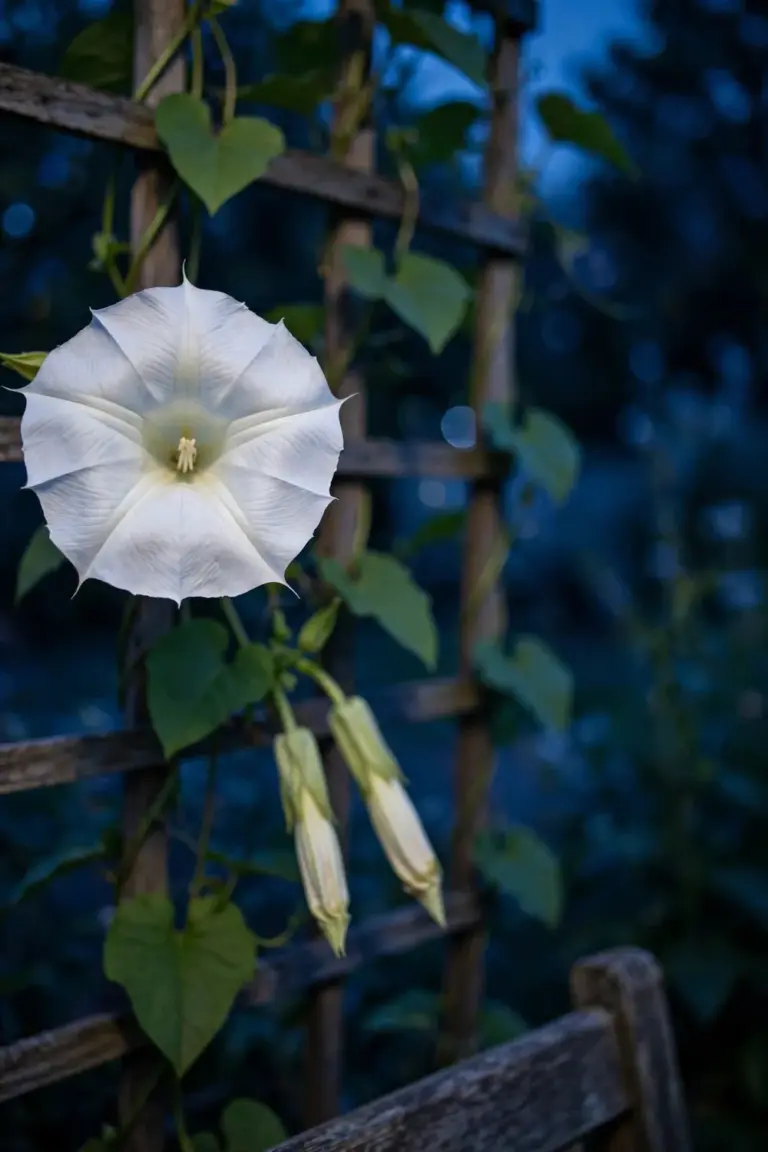
The vine climbs fast once the weather warms, so give it a trellis, fence, or arch and the warmest sunny spot you have. Water it through dry spells. Sow seed in spring after the last frost, once nights stay mild. Moonflower seeds are toxic if eaten, so keep them away from children and pets.
15. Add Silver Foliage That Catches Moonlight
After sunset, silver foliage takes over. Dusty miller, lamb’s ear, and silver artemisia catch what light is left, their pale leaves glowing softly against dark soil and shadowed corners. A drift of silver between green herbs pulls the whole bed into focus at dusk.
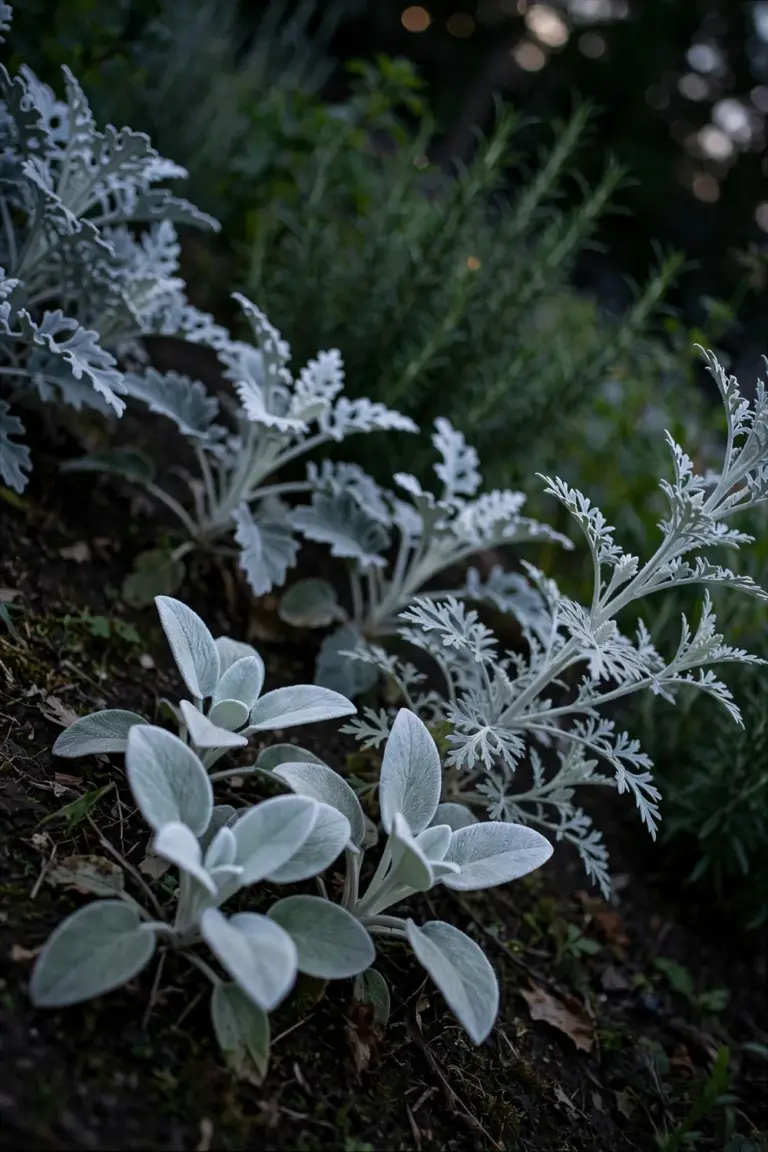
Sharp drainage and full sun suit most of them. Wet winter soil rots their crowns, so raise the bed or work in grit where winters run soggy. Lamb’s ear spreads happily and wants an edging to hold it. Dusty miller often grows as a summer annual, while artemisia returns each spring from its roots. Trim spent flower stalks and the leaf rosettes stay tidy.
16. Grow Night-Scented Stock Beside the Bench
By day, night-scented stock is easy to walk past. After dark, the small lilac flowers open and let loose a rich clove-like perfume that scents the whole seating corner. Plant it where you sit, since the fragrance fades within a few steps of the patch. Warm, still nights carry it furthest.
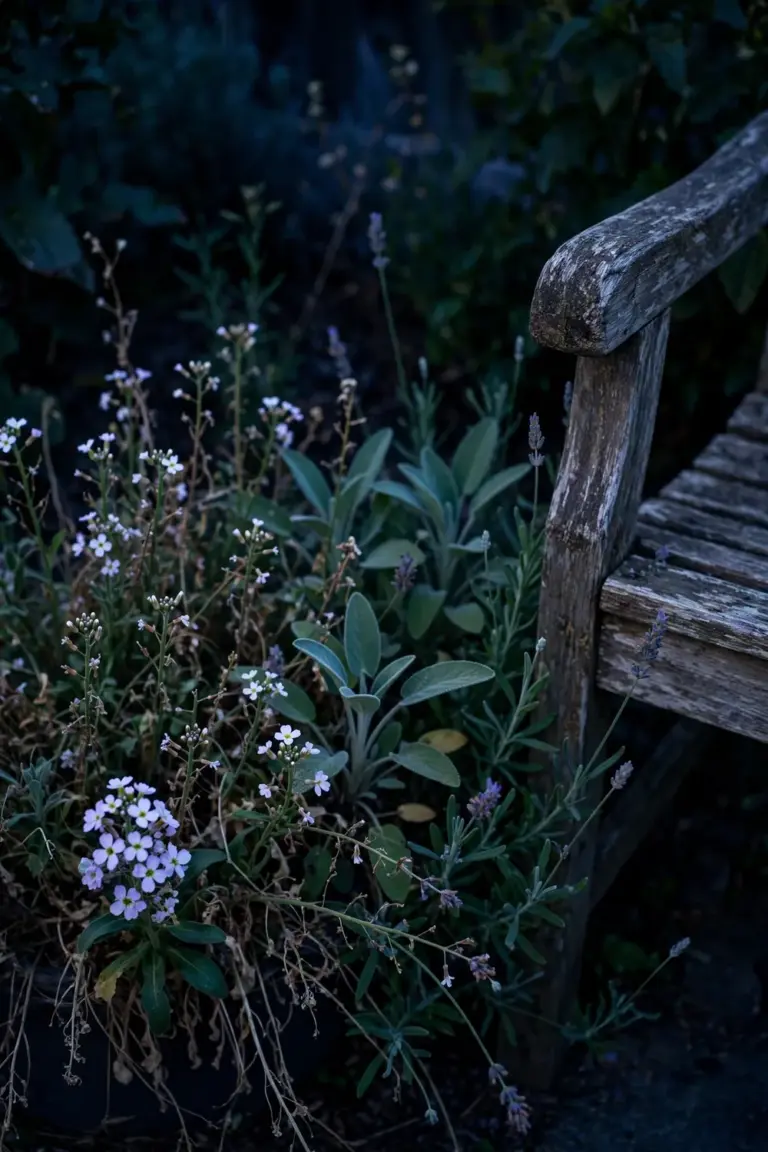
Sow seed straight into the bed in spring, then sow again every few weeks into early summer so fresh flowers keep coming as earlier patches fade. The plants are small and a little scraggly, best tucked between sturdier herbs. Seed is cheap, and one packet covers several sowings across the season.
17. Set a Shallow Moon Bowl to Hold the Sky
Nothing in the garden asks less of the gardener than a moon bowl. Fill a wide, shallow bowl with clean water and set it where the sky opens above it. On a clear night it holds a reflection of the moon, and the still surface mirrors lanterns, branches, and passing clouds besides.
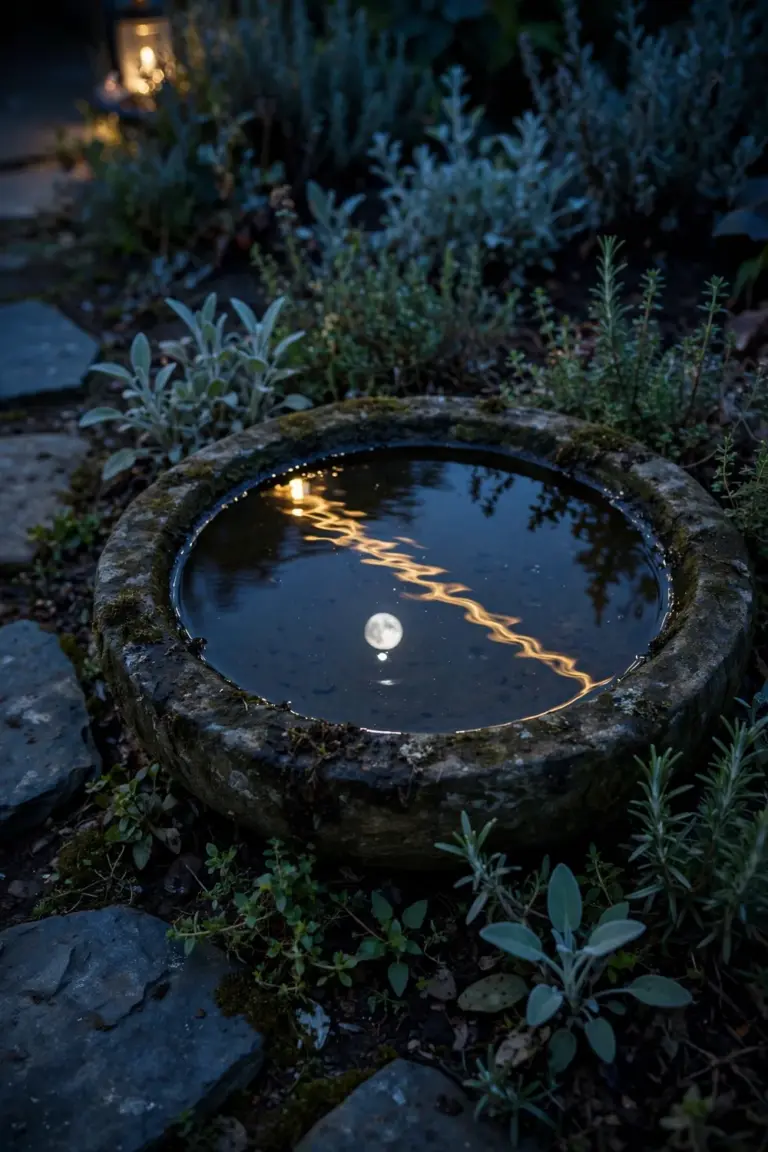
Pick a heavy bowl, stone, ceramic, or cast metal, so wind and cats leave it standing. Level ground inside the bed or beside the path suits it best. Refresh the water every few days to keep it clear and sweet. Birds and bees will drink from it too, and a few flat stones at the rim give them a dry place to land.
18. Light the Moon Corner With Candle Lanterns
Enclosed lanterns, flame sealed behind glass or mesh, give the moon corner its warm pool of light. Set each one on a flat stone, a slab, or bare soil, well away from dry foliage, mulch edges, and trailing stems. Three lanterns in a cluster mark the corner better than a single bright light.
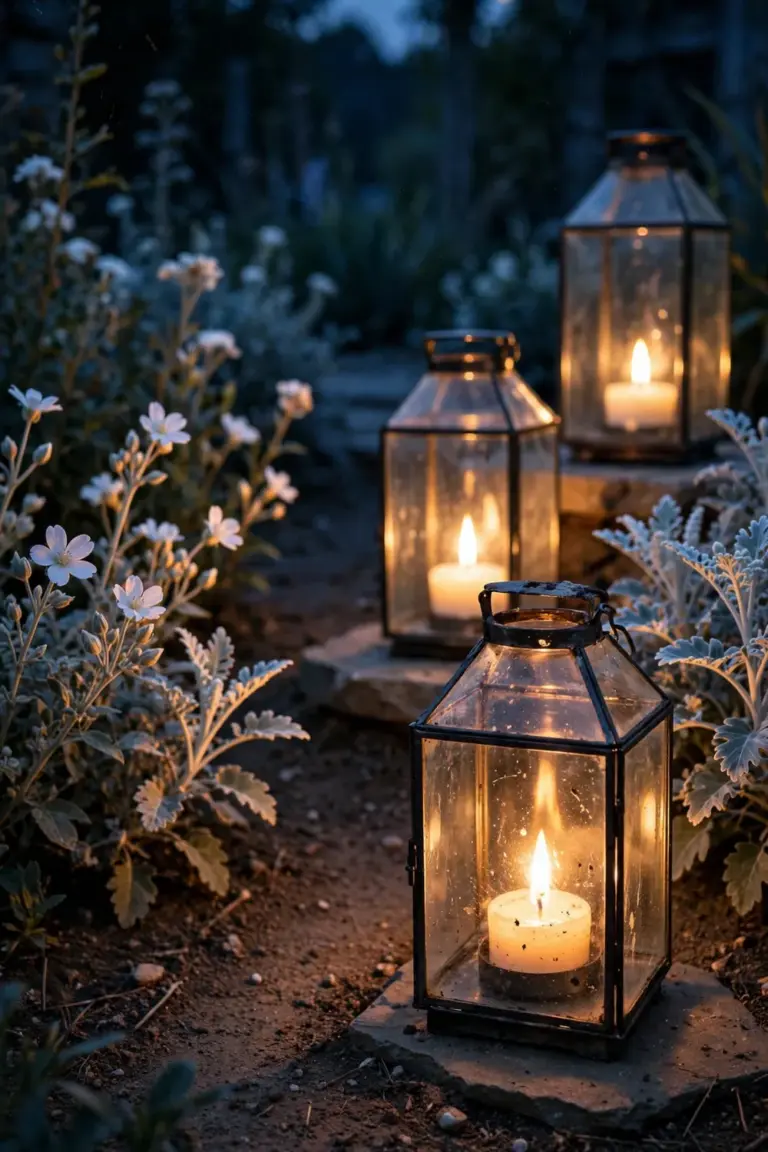
On windy nights and during dry spells, LED candles are the safer swap. They flicker convincingly inside a lantern, never blow out, and never spill wax. Mix two or three lanterns at different heights along the path into the corner. Real candles get put away before anyone goes indoors, every single time.
Protective Plantings & Old Lore
19. Plant Rue With Gloves and Respect
Blue-green foliage and a long history earn rue its place in the protective border. Folklore casts it as a guard plant, and gardeners once carried sprigs for luck. The plant itself is a tidy, rounded shrub with small yellow summer flowers, happy in a dry, sunny spot with poor soil. Its strong scent divides opinion, so smell a leaf at the nursery before buying.
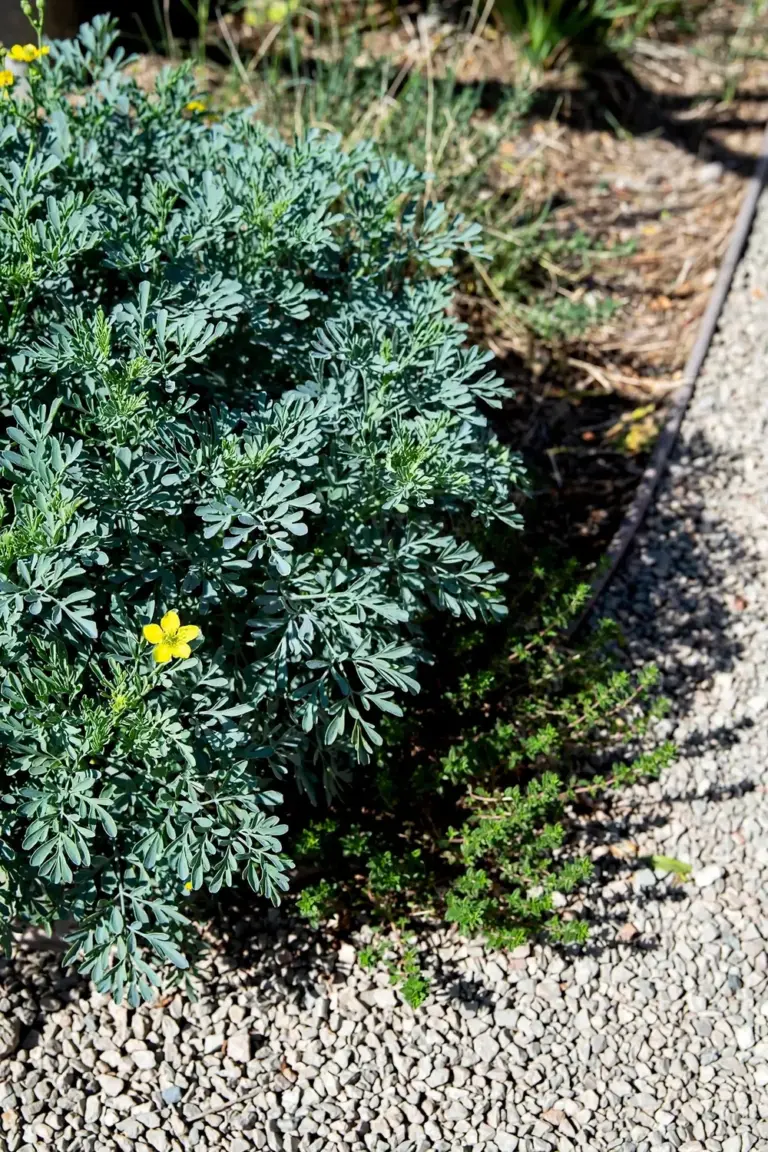
Rue asks for respect because its sap can hurt skin. Sap on skin, followed by sunlight, can raise painful blisters, a reaction called phytophotodermatitis. Gloves go on for every job around rue, from planting to pruning to weeding beneath it. Set the plant well back from path edges, where sleeves and bare legs never brush the leaves.
20. Tuck Garlic Between the Roses
Cottage gardeners have tucked garlic between their roses for generations. Plant single cloves in fall, pointy end up and a few inches deep, and they root before winter and send up green shoots in spring. Those shoots mark the rows while the roses are still bare. By early summer, each clove has swollen into a full bulb underground.
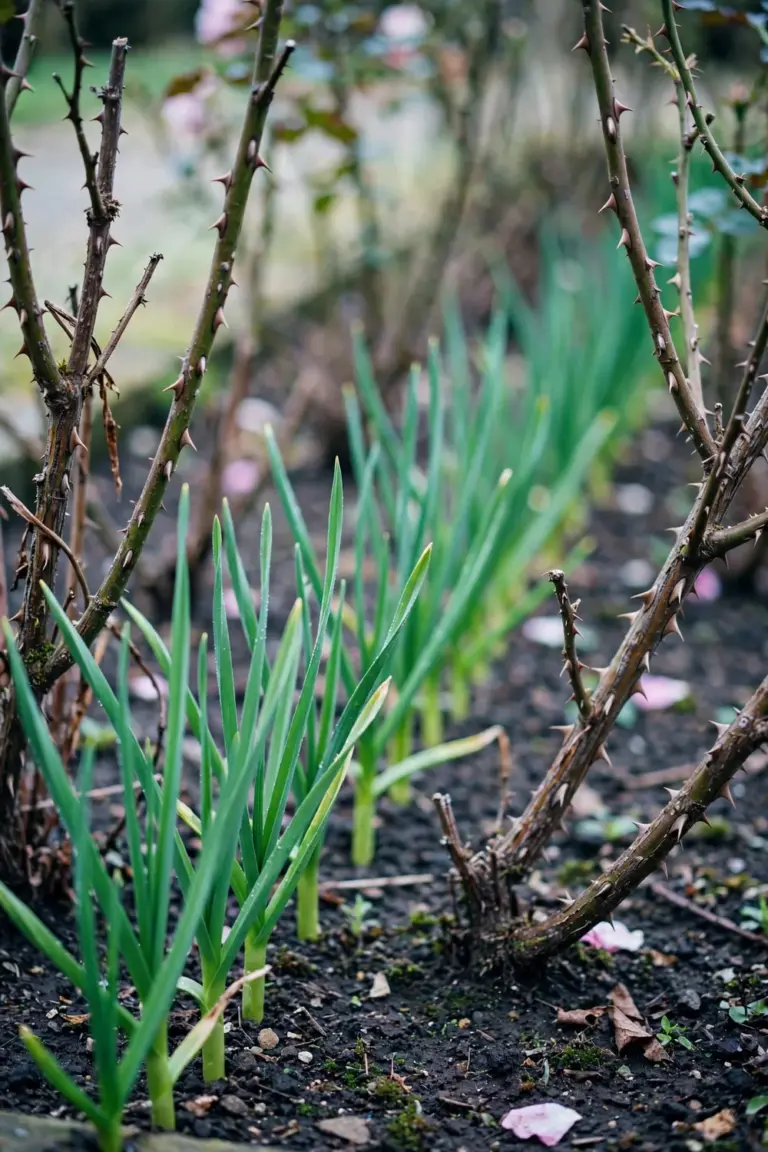
Garden lore credits garlic with keeping aphids off roses and discouraging fungal trouble. The evidence sits in the lore column, and the pairing harms nothing either way. Harvest when the lower leaves yellow, cure the bulbs in a dry, airy spot, and save the fattest cloves. Next fall’s planting stock, free.
21. Grow a Bay Laurel in a Pot by the Door
Folklore gives the place by the door to bay laurel. Old garden lore links bay with protection and a warm welcome. Gardeners have planted it beside thresholds for centuries, and the plant earns its spot on merit. Bay laurel grows slowly into a dense evergreen shrub, and its glossy leaves hold their shape and colour through every season.
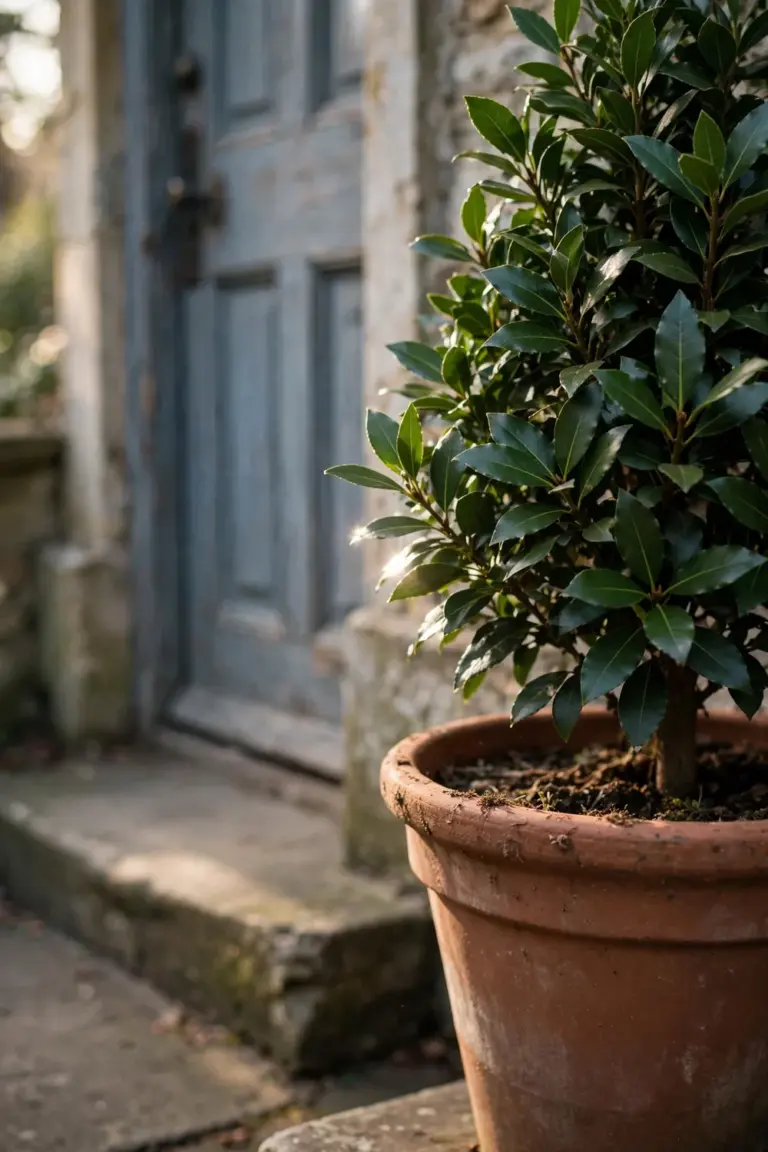
A pot suits bay better than open ground in most gardens. Bay is tender in hard frost, and a pot moves under cover when a cold snap threatens. Set the pot where hands brush the leaves on the way in. Snip a leaf or two for soups and stews through the year, then trim lightly in spring to keep the shape full.
22. Mark the Four Corners With Standing Stones
Old garden lore treats a marked corner as a promise: this ground is tended on purpose. Four standing stones give the witch garden that sense of a set-apart place. They also anchor the beds visually through winter, when the planting dies back. Choose stones with a flat base and a bit of height, roughly knee high, so they read as markers rather than pebbles.

Sink each stone a third of its length into the soil so frost and knocks cannot topple it. Set them just outside the beds, where the mower and the hoe cannot reach. Skip the salt lines that old tales sometimes mention. Salt damages soil and the plants rooted in it. Stone marks the corner and harms nothing.
The Poison Corner, Honestly
23. Grow Foxglove at the Back, Behind a Low Fence
Foxglove gets in on looks. Its spires of speckled bell flowers tower over the early summer border, and bees work the blooms all day. Honesty comes first, though. Every part of the foxglove plant is toxic: leaves, flowers, seeds, and roots. Gardeners grow it as a look-only plant, and this garden treats it exactly that way.
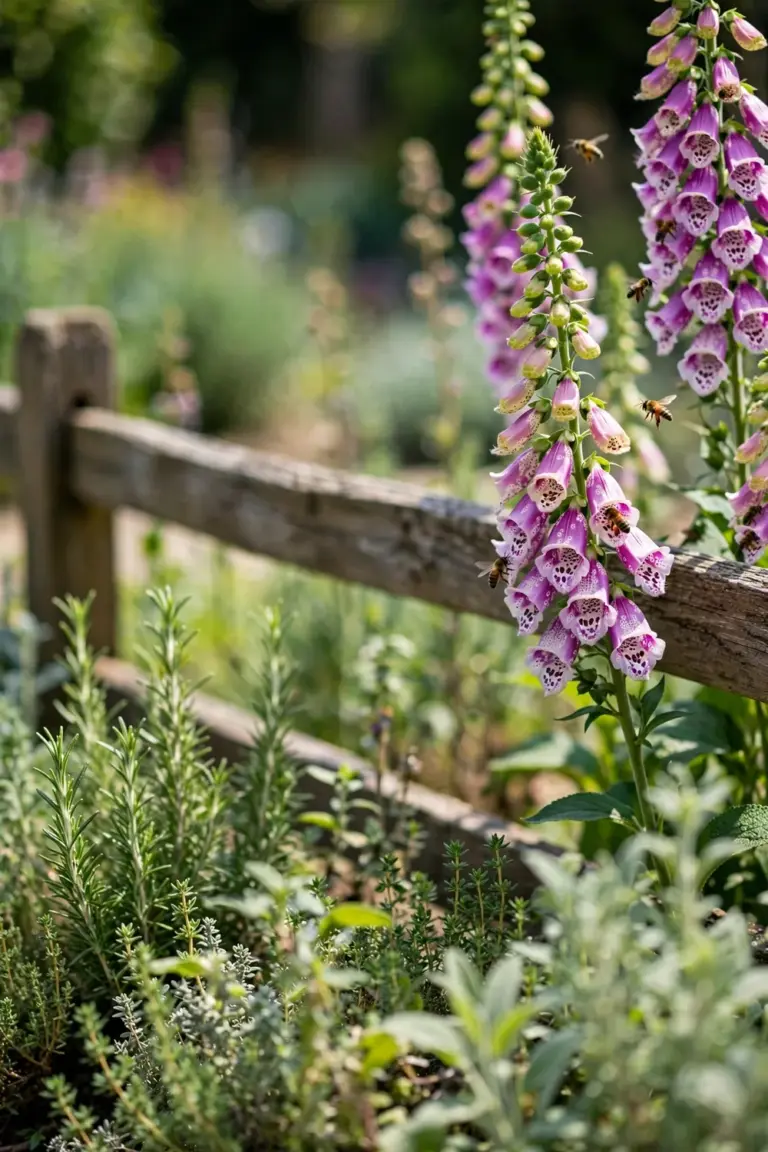
Plant foxglove at the very back of the border, behind a low fence or a dense row of herbs. Wear gloves for every job around it, from staking to clearing spent stems. Never put foxglove in a tea or a tincture. Keep children and pets away from the patch, and check any new plant against the ASPCA toxic plant list before it goes in near them.
24. Keep Monkshood Where Hands Never Reach
Monkshood waits until most of the border has faded, then opens hooded blooms in a deep blue that suits the witch garden better than almost any other colour. It also carries the strongest warning in this whole list. Every part of monkshood is toxic, and the roots hold the poison in its most concentrated form.

Site monkshood where hands never reach: the back of a deep border, behind sturdy planting, well away from paths and seats. Wear gloves for planting, dividing, and clearing, and wash hands and tools afterwards. Label the clump clearly, so a helpful visitor never weeds it barehanded. Never use monkshood in teas or tinctures, and keep children and pets away from it entirely.
25. Leave Belladonna to the Botanical Gardens
Belladonna fills the covers of old herbals and seed catalogues, so the honest advice belongs in plain words: do not grow it at home. Every part of belladonna is toxic. Its ripe berries shine black and sweet-looking at exactly a child’s picking height. A plant this dangerous gains a home garden nothing worth the risk.
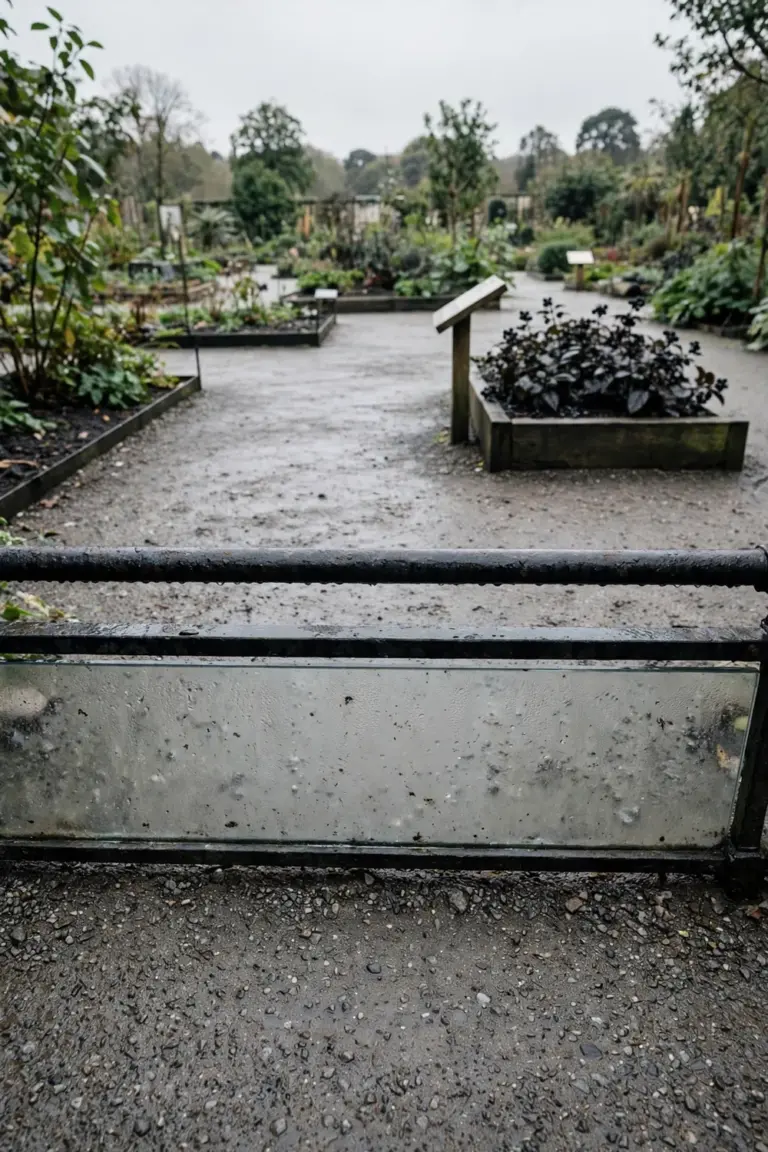
See belladonna where it belongs, in a botanical garden. There it grows labelled, fenced, and watched by staff who know it well. Your own beds lose nothing by its absence. Moonflower, night-scented stock, and black foliage plants deliver the same after-dark mood with none of the danger. Some plants earn their legend best at a distance.
Props, Corners & Small Spaces
26. Plant a Cauldron With Trailing Herbs
A cauldron is the one prop that also works as a planter. Cast iron looks the part and lasts for decades; a black plastic cauldron costs little and weighs far less. Drill drainage holes in the base either way. Fill it with potting mix and plant the rim with trailing herbs that spill over the edge.
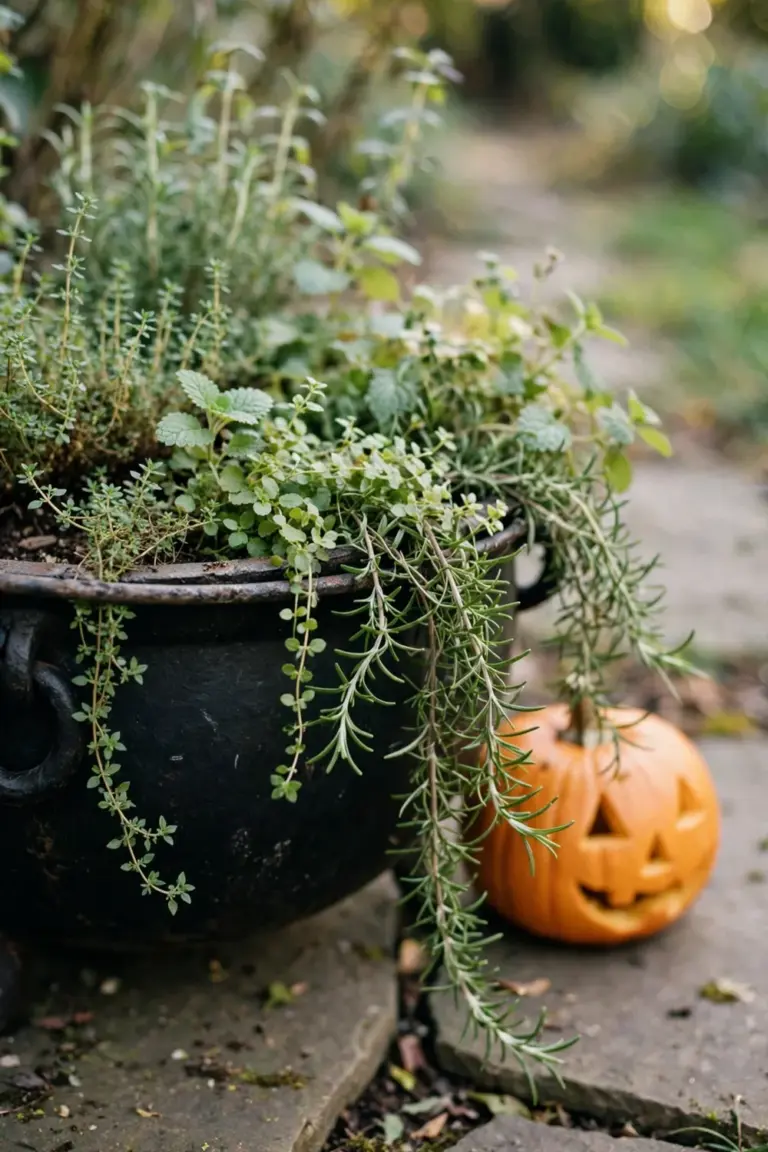
Creeping thyme, trailing rosemary, and lemon balm soften the black rim within a season. Set the cauldron on stones beside the path or the altar corner, and water it often, since pots dry out faster than beds. Come October, a carved pumpkin beside the cauldron finishes the scene, and the herbs carry on scenting the corner all year.
27. Lean a Besom Broom Beside the Gate
The besom is a working tool before it is a symbol. A traditional besom binds birch or hazel twigs to a stout handle, and it sweeps paths, steps, and the altar corner better than any stiff yard brush. Folklore parks a broom beside the door as a welcome and a ward. Gardeners have leaned one by the gate for as long as gates have existed.
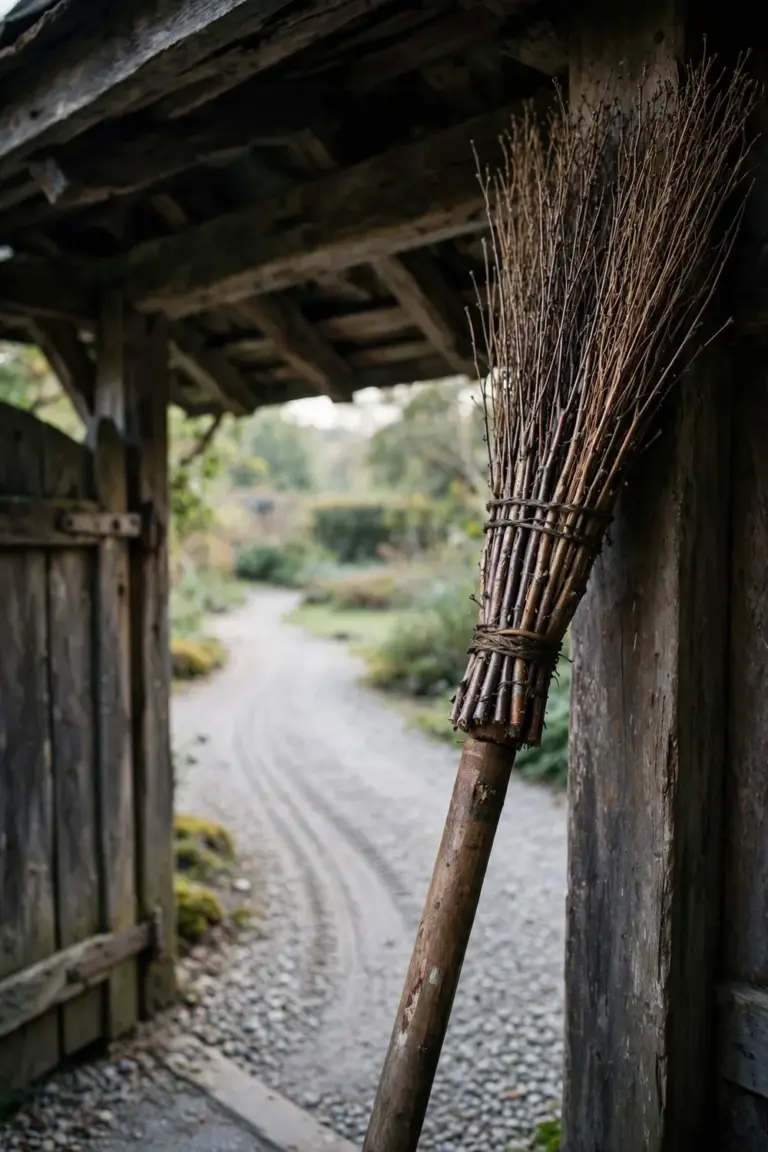
Buy a handmade besom or bind your own from pruned twigs in winter. Store it leaning at an angle, bristles up, under the eaves so rain cannot rot the binding. Use it often. A swept path is half the witch garden’s charm. When the twigs wear thin, the whole head composts, and a new one takes an afternoon to tie.
28. Build the Candlelit Corner Everyone Photographs
This is the corner the whole garden has been building towards. By day it reads as a quiet planting of silver foliage, white blooms, and potted herbs around a small bench. At dusk it changes completely. Enclosed lanterns stand on the stone edging, their flames steady behind glass, and the light catches every silver leaf and pale petal in the beds behind them.
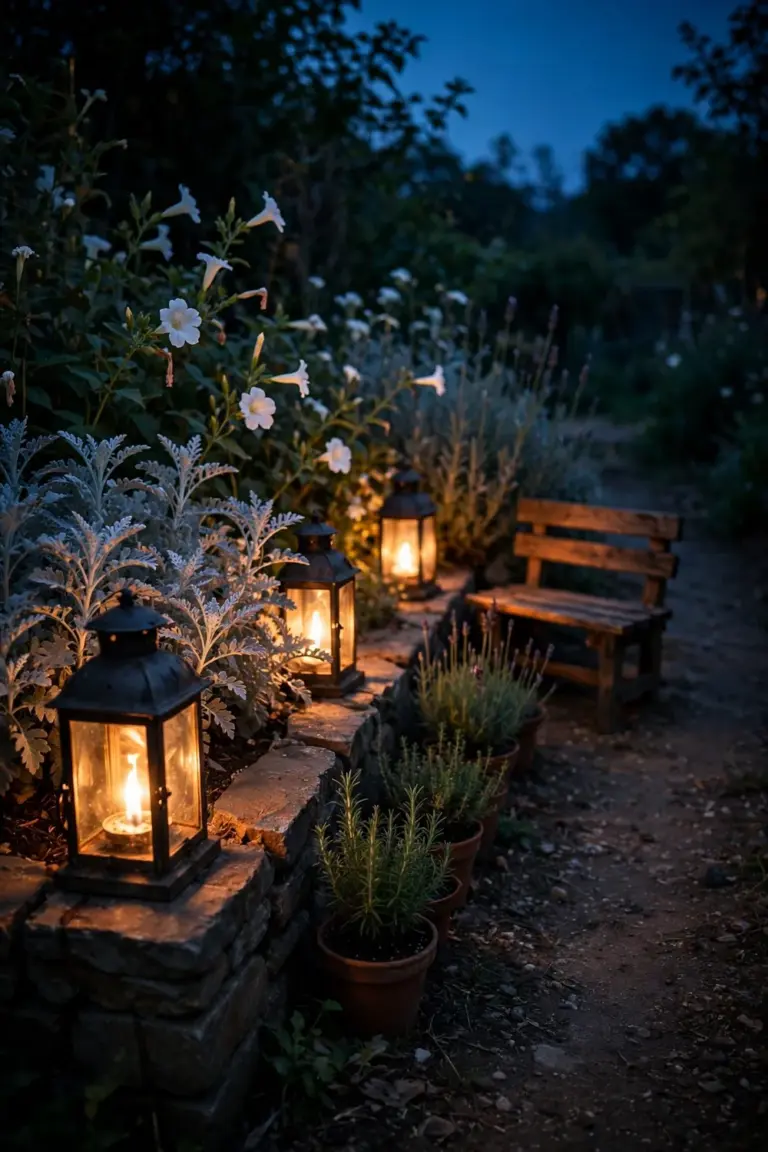
Keep every flame on stone or gravel, well clear of dry foliage and trailing stems. Enclosed lanterns are the rule in this corner, and LED candles are the safer swap on windy nights or in a dry spell. Then sit down with a cup of herb tea. This finished corner, glowing as the light fails, is the result all the planting was for.
29. Shrink the Whole Garden Into Three Pots
A witch garden needs no beds at all. Three large pots on a doorstep, balcony, or sunny patio hold the whole idea in miniature. Pot one carries the apothecary herbs: a small lavender, rosemary, and sage in free-draining mix. Pot two carries the moon garden: white flowers and silver foliage that show after dark.
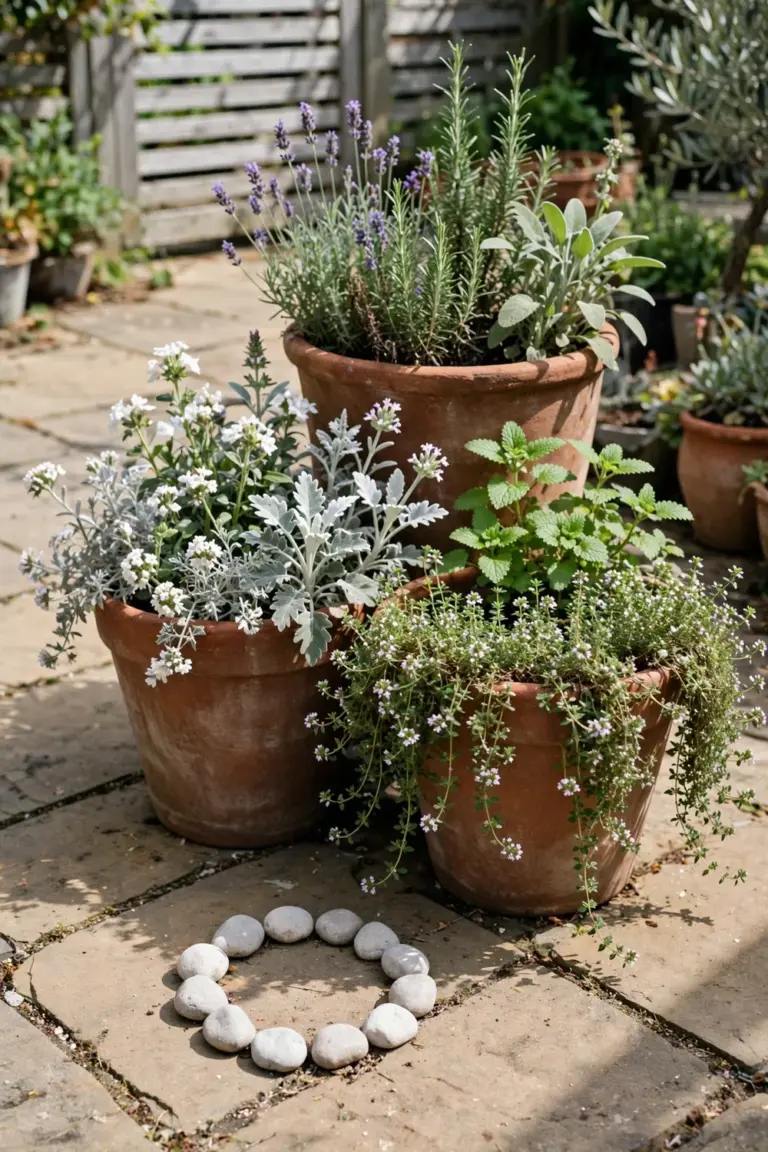
Pot three carries the trailers and the scent: creeping thyme over the rim and lemon balm for evening fragrance. Stand the three pots close together so they read as one planting, tallest at the back. Water pots daily in hot weather and feed lightly through summer. The corner dresses up in October and works as a herb garden the rest of the year.
30. Put the Witch Garden to Bed for Winter
Winter closes the garden’s year, and the witch garden takes its rest in good order. Cut back spent herb stems once the seeds have fallen for the birds. Leave a few sturdy seed heads standing for winter shape. Then spread a thick mulch of compost or leaf mould over the beds to guard the roots through frost.

Learn which herbs overwinter where you live. Sage, thyme, and lavender stand through cold winters in the ground. Rosemary survives outdoors only in mild areas, so its pot comes under cover. The bay pot moves beside it. Lemon balm dies back and returns from the roots in spring. Next spring the circle bed wakes again, and the work starts fresh.
Frequently Asked Questions About Witchy Garden Ideas
A witch garden is a year-round planting. The herbs feed the kitchen from spring onward, the moon garden performs on every summer night, and the paths and stones hold the design through winter. October adds candlelight and visitors, and the garden simply wears its spookiest face for one month. Gardeners who plant one for Halloween usually keep it for the tea.
A beginner starts with lavender, rosemary, and sage. The three herbs share one demand: full sun and soil that drains fast. Mint joins them in a pot, where its runners stay harmless. Those four plants fill the apothecary bed’s front row and survive ordinary beginner mistakes, including a missed watering in a hot week.
Most witch garden herbs are ordinary kitchen plants, and the danger concentrates in the poison corner. Foxglove and monkshood are toxic in every part, so they sit behind a fence or skip the garden entirely where toddlers and dogs roam. The ASPCA toxic plant list settles any doubtful plant before it goes in the ground. Rue earns a milder warning: its sap plus sunlight can blister skin, so wear gloves for every rue job.
A potted witch garden works on any balcony or doorstep. Three pots carry the whole design: one for herbs, one for white moon flowers, one for a trailing cauldron planting. The circle appears in miniature as a ring of small stones on the paving. Candle lanterns finish the corner, and the garden moves indoors or under cover when hard frost threatens the pots.
A moon garden is a planting designed to be seen after dark. White blooms and pale foliage catch the moonlight, and night-scented plants perfume the air near a bench. Moonflowers, night-scented stock, and silver artemisia are its classic cast. The witch garden treats the moon garden as one room inside the bigger design, placed where evening paths already lead.
One Witchy Corner in a Bigger Haunted Garden
A witchy corner works best as one chapter of a bigger display, so borrow the lighting and path ideas from the full list of Halloween garden ideas. The graveyard, gothic plants, and porch scenes in that list surround the corner and give it a festival to belong to each October. Between festivals, the corner goes back to its quiet work of growing herbs and catching moonlight.
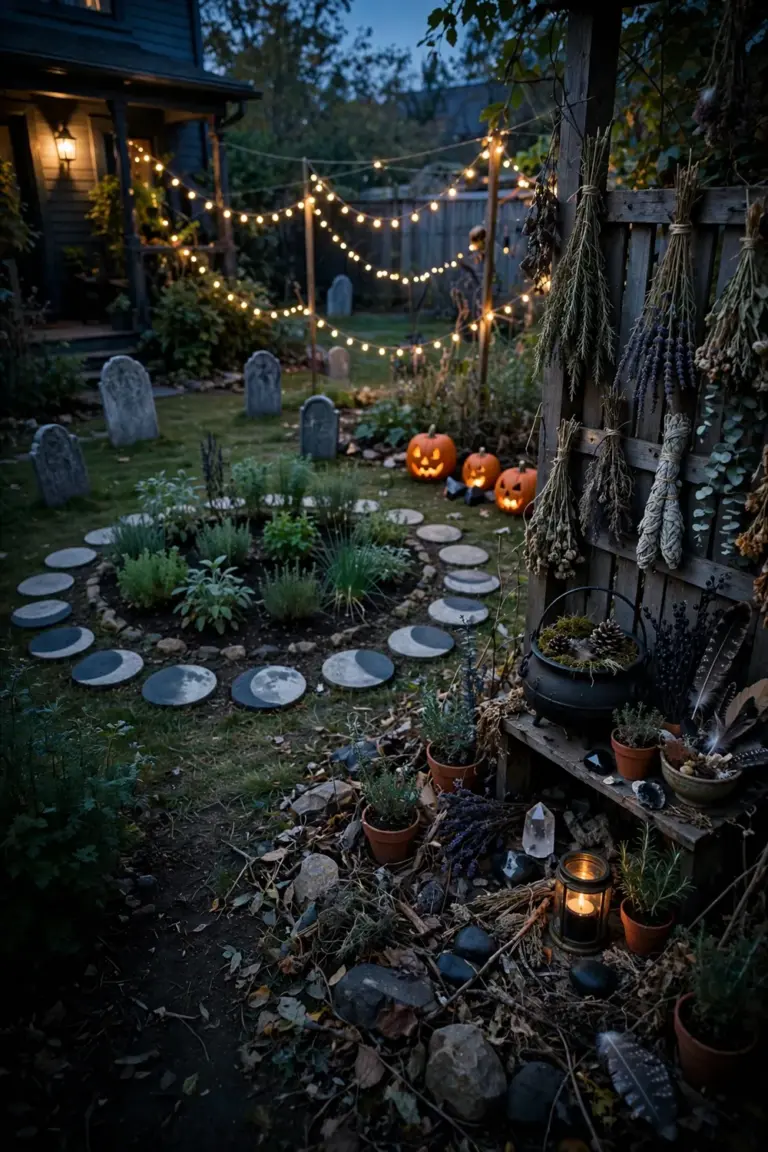
That double life is the real charm of the planting. The same bed that flavors winter soups glows behind candle lanterns in the fall, and the same moon bowl that reflects July stars holds a floating candle at Halloween. Plant it once, tend it gently, and let the garden keep both of its promises.