
Cure Jarrahdale pumpkins in warm sun for 7 to 10 days, then store them at 10 to 13 degrees Celsius in dry darkness. That is how to store Jarrahdale pumpkins for 9 to 12 months. The rest of this page is 15 moves, from the blue-gray ripeness check to the weekly storage inspection.
Jarrahdale is Cucurbita maxima ‘Jarrahdale’, an Australian heirloom named after the town of Jarrahdale in Western Australia. Curing hardens the skin. Storage keeps the cured fruit for the long term, month after month. This page covers those two jobs only. Growing, feeding, and pest control belong in a grow guide, which this article is not. Store only undamaged fruit. A bruised pumpkin never keeps.
1. Pick at Full Ripeness: Blue-Gray, Never Orange
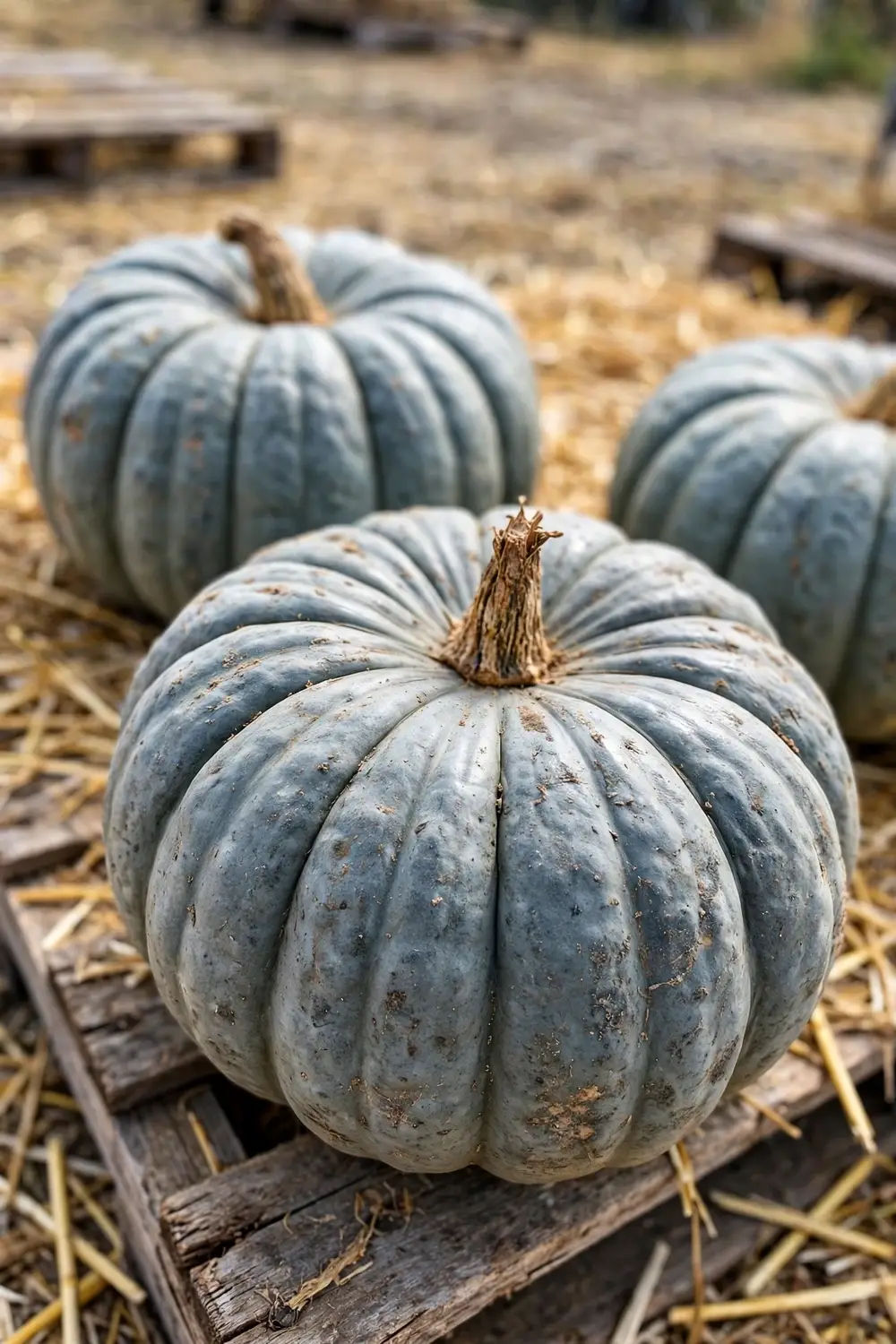
A ripe Jarrahdale is deep blue-gray, never orange. The generic “harvest when orange” rule fails on this variety, because Jarrahdale skin stays blue-gray from fruit set to full maturity. Waiting for orange means waiting forever, and the fruit rots on the vine while you wait.
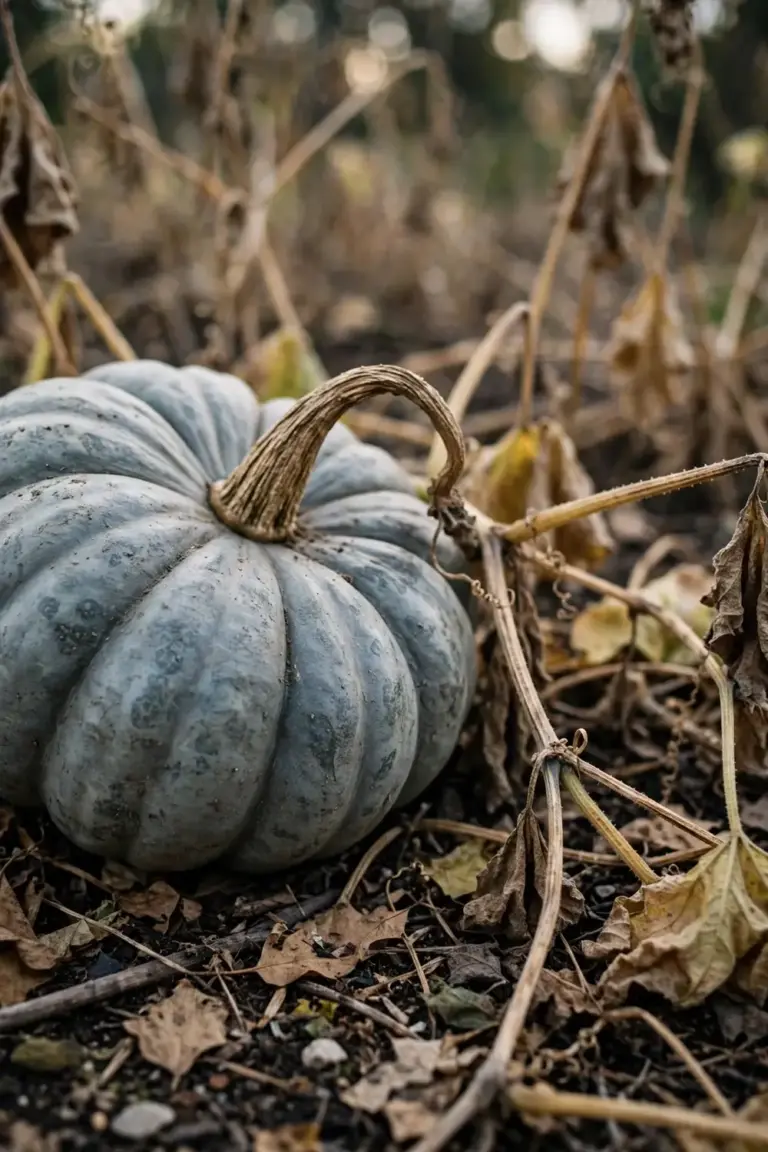
Check three signs together, never just one. Press a fingernail firmly into the rind. Ripe rind resists and barely dents. Unripe rind punctures easily and feels thin under your nail. Look at the stem where it meets the vine. A ripe stem turns dry, shrunken, and corky, losing its green flexibility. Watch the vine itself. When the leaves yellow and the vine browns and dies back naturally, the plant has finished feeding the fruit.
Your seed packet prints a days-to-maturity figure. Count forward from your sowing date as a rough guide, then confirm with the three physical signs above. The packet number gets you to the right week. The fingernail, the stem, and the vine get you to the right day.
In Australia, harvest falls in autumn. Pick before the first hard frost in cold districts, because frost-damaged rind rots in storage even when the damage looks minor. Terroir Seeds notes that Jarrahdale tolerates one or two light frosts to minus 2 degrees, but colder than that damages the fruit, according to their Jarrahdale variety notes. Where frost never comes, wait for full vine die-back and let the fruit take every day it needs.
Queensland Blue is a different variety, not a synonym for Jarrahdale. The two share the blue-gray color and the Cucurbita maxima species, but they are distinct cultivars with different shapes and habits. Do not apply Queensland Blue advice to Jarrahdale fruit.
2. Cut an 8 to 10 cm Stem and Never Carry by the Handle
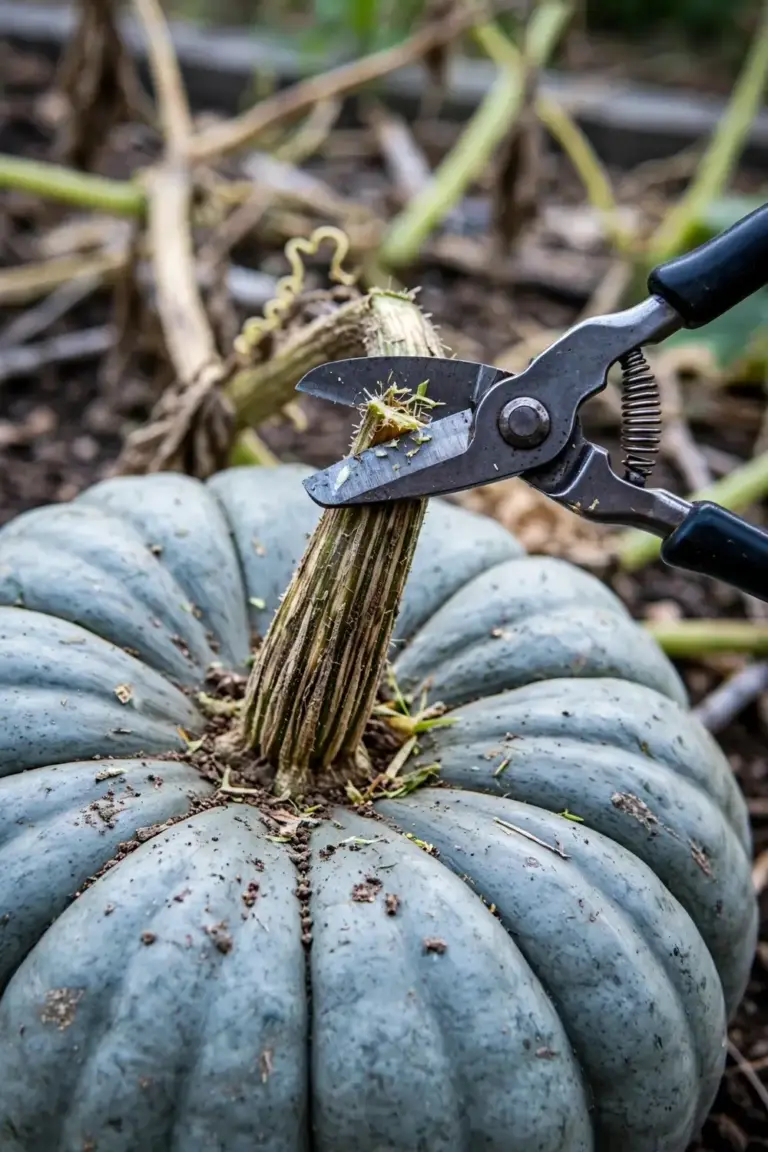
Cut the fruit from the vine with sharp secateurs, leaving 8 to 10 cm of stem attached. Terroir Seeds directs growers to clip the vine 3 to 4 inches from the fruit, which converts to 7.6 to 10.2 cm, in their harvest instructions. Make the cut clean in one motion. A ragged cut tears tissue and opens entry points for rot.
Never lift or carry a pumpkin by its stem. The stem is the fruit’s seal against the outside world. A cracked or torn stem lets rot organisms straight into the flesh through the vascular tissue. A stemless pumpkin stores poorly because the open scar never seals as well as an intact stem. Cup the fruit from below with both hands and carry it cradled against your body. Set it down gently. Never drop, toss, or roll a pumpkin, because a bruise invisible today becomes the soft spot you find in week six.
Work on a dry day if you can. Wet rind at harvest invites the decay fungi that ruin stored fruit, and a wet stem scar stays vulnerable longer. If rain is coming and the fruit is ripe, harvest ahead of it and cure under cover rather than leaving ripe fruit sitting wet in the paddock.
Leave the cut stem to dry for a day before the sun cure starts if the cut end looks green and sappy. A fresh cut weeps a little. That moisture evaporates in a day of air exposure, and a dry cut end cures into a hard seal instead of a soft entry point.
3. Brush the Rind Clean and Dry
Brush loose soil and debris off every pumpkin with a soft brush or a dry cloth. Do this at harvest, before the cure starts. Dirt holds moisture against the rind, and moisture feeds the fungi that cause storage rot.
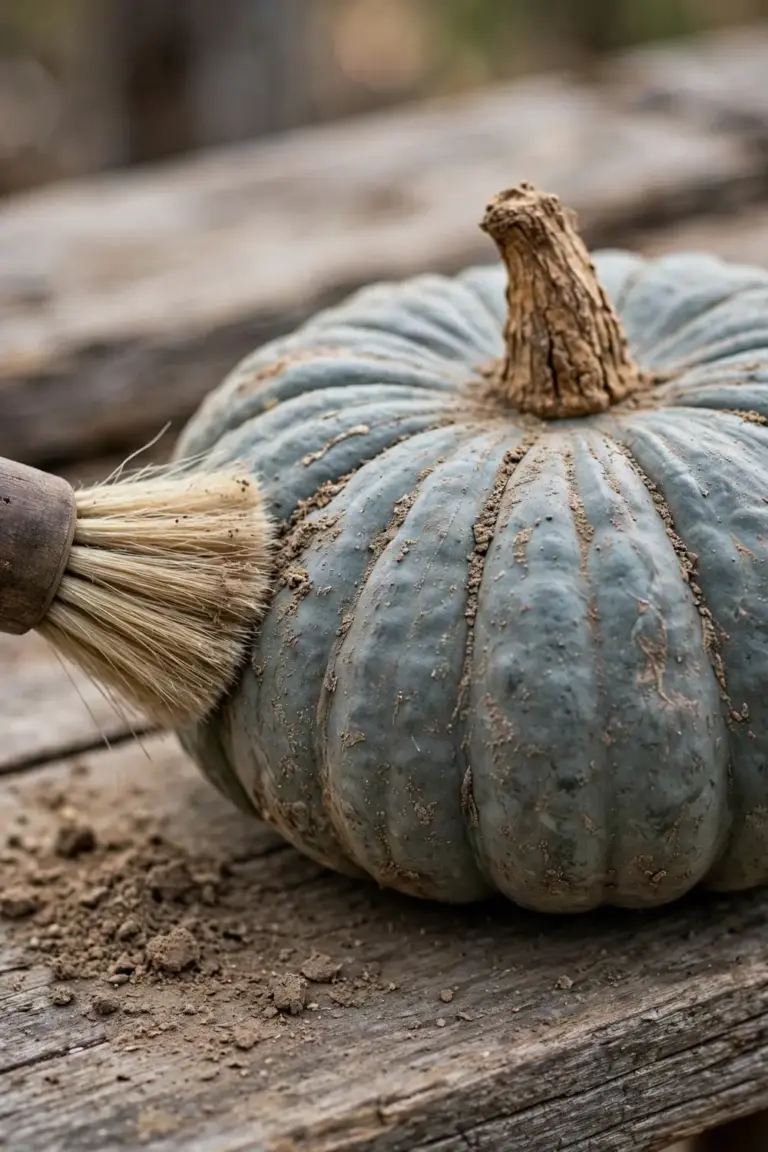
Do not wash the fruit. Water pools in the stem scar, the blossom end, and the deep ribs of a Jarrahdale, and those damp pockets stay wet long after the surface looks dry. A dry brush removes what matters. If a pumpkin comes in caked in mud, let the mud dry completely, then brush it off. Patience beats water here.
Check the stem scar while you brush. It should be dry and firm. If the scar looks wet or weepy, that fruit needs extra curing time and should go into storage last, or get eaten first. Mark it with a pencil so you remember.
4. Gather the Curing Tools Before You Start
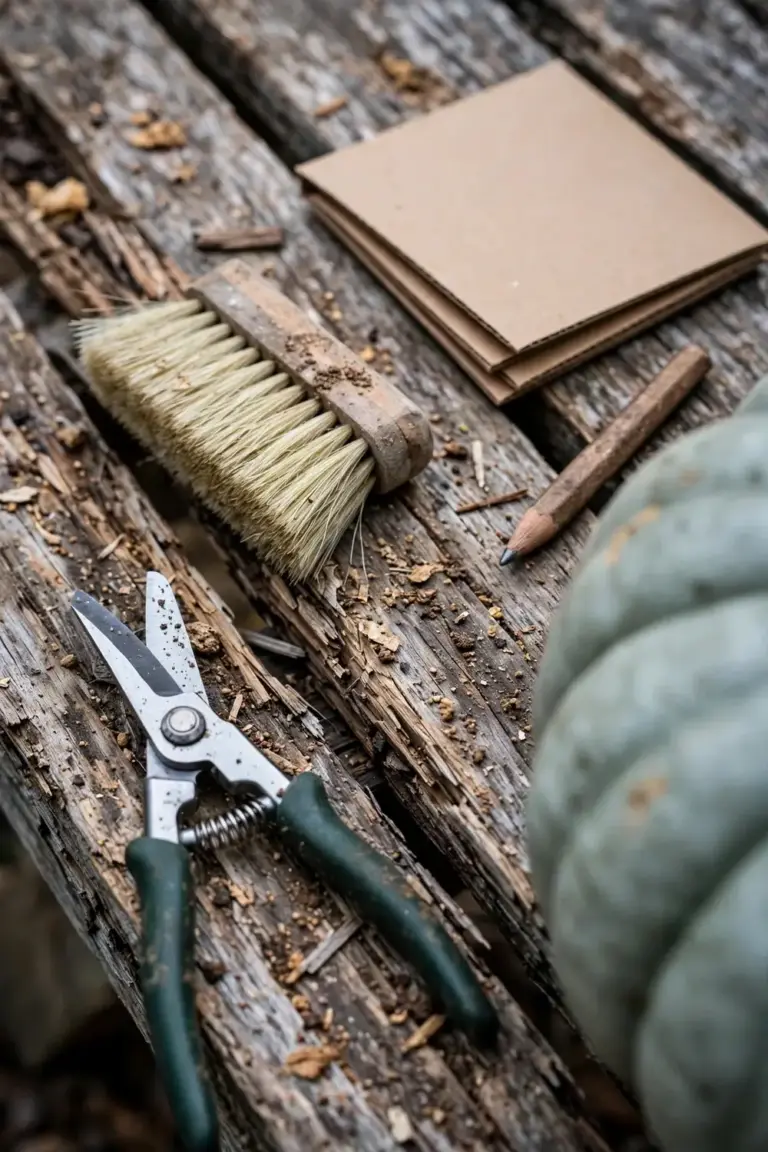
You need five things: a sharp pair of secateurs, a soft brush or dry cloth, a slatted shelf or pallet in full sun, a piece of cardboard or folded newspaper for each fruit, and a pencil for dating. The cardboard goes under any fruit sitting on damp soil during the sun cure. The pencil marks the harvest date on each pumpkin so the eating queue stays honest.
Curing takes 7 to 10 days. The whole job from vine to storage shelf runs about two weeks. Difficulty is low. The season window is autumn, at harvest.
5. Cure in Warm Sun for 7 to 10 Days
Lay the harvested pumpkins in full sun for 7 to 10 days. Sun curing hardens the rind and heals small harvest abrasions before they become rot entry points. Terroir Seeds gives this exact window for Jarrahdale in their curing directions.
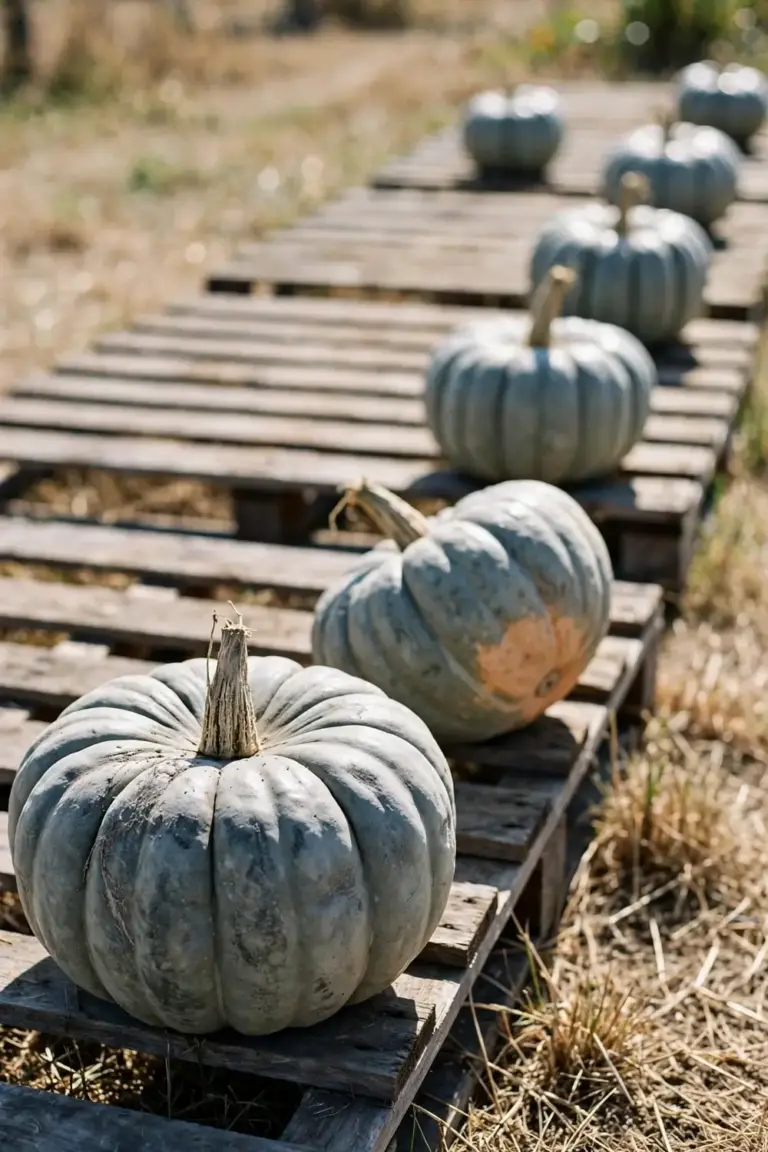
Warmth drives the cure. University extension guidance puts the curing range at 27 to 29 degrees Celsius with good air flow, which is 80 to 85 degrees Fahrenheit, according to Oregon State University Extension. At that warmth, the rind’s outer cells suberize, laying down the waxy hardened layer that seals moisture in and fungi out. The University of California recommends 7 to 14 days at the same warmth for winter squash generally, per their harvest and storage guide.
During those warm days, two things happen inside the rind. Small cuts and abrasions seal over as the outer cells lay down suberin, the waxy waterproof compound that makes a cured rind tough. At the same time, starches in the flesh begin converting to sugars, which is why cured pumpkins taste better than fresh-picked ones. Both processes need warmth and dry air. Cool or wet conditions stall them, leaving the rind soft and the flavor flat.
Keep every fruit dry during the cure. Cover the curing row or move fruit under a roof if rain threatens, because a soaked rind stops hardening and starts molding. Turn each pumpkin once or twice so all sides see sun and air, including the ground spot. Slip cardboard or folded newspaper under any fruit resting on damp soil, because a wet contact patch never hardens properly and becomes the first rot site in storage.
Good air circulation matters as much as warmth. Do not pile fruit or crowd them together. Leave space between each pumpkin so air moves around the whole rind and carries surface moisture away. Sweet potatoes follow the same warm-cure logic for the same reason, as the site’s sweet potato growing guide shows, though their cure runs warmer and more humid than a pumpkin’s.
6. Run the Thumb-Press Test Before You Store
Press your thumb firmly into the rind. A cured Jarrahdale resists the press with a hard, almost wooden feel. Terroir Seeds describes this as the finish line: the rind hardens as it cures, so when fully cured it is very resistant to a thumb pressing on it, in their Jarrahdale notes.
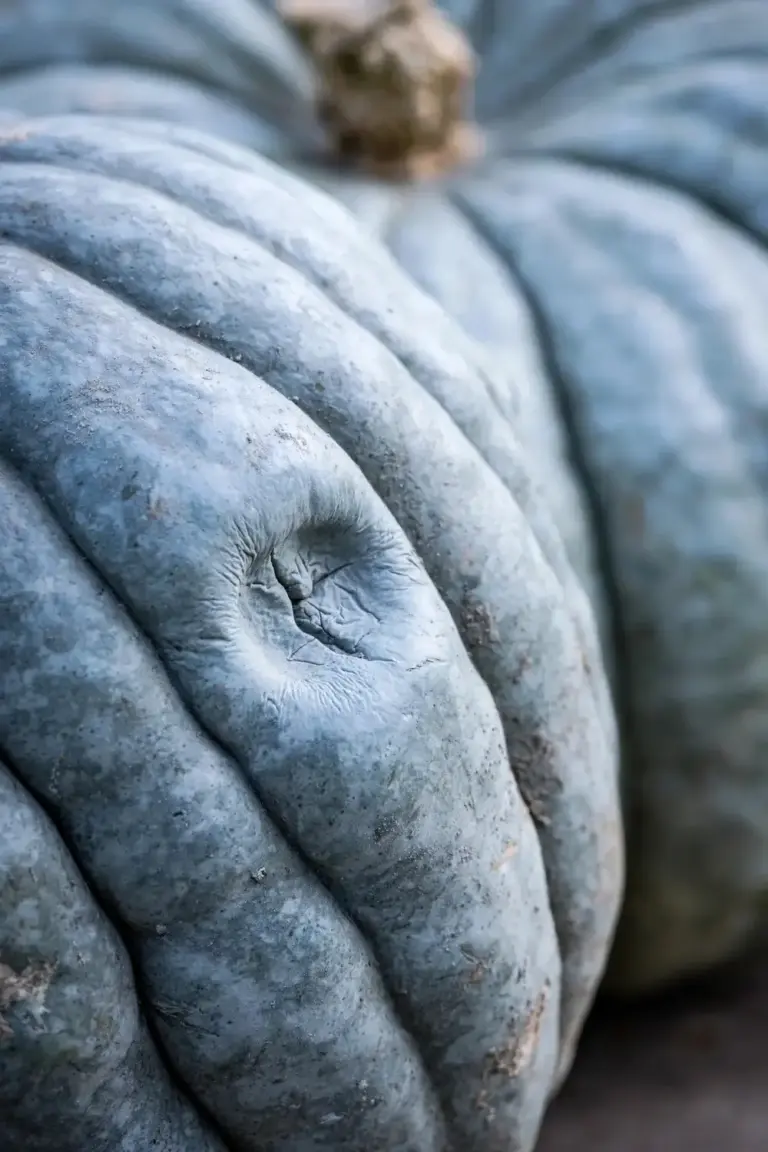
Test several spots on each fruit, including the ground spot that sat on the soil and the ribs where moisture lingers. If any area still dents under your thumb, give the fruit two or three more days in sun. Only fully hardened fruit goes into long-term storage, because a soft patch is a rot patch waiting to happen. I press my thumb into the rind before I trust the calendar, because the thumb test tells me the cure is done when the day count says it should be.
Brush off loose dirt with a dry cloth before storing. Do not wash the fruit. Water left in the stem scar or the blossom end feeds rot from the inside out.
7. Store at 10 to 13 Degrees in Dry Darkness
Move cured pumpkins into a cool, dry, dark place with steady air movement. Oregon State University Extension sets the storage band at 10 to 13 degrees Celsius with moderate humidity and good air circulation, which is 50 to 55 degrees Fahrenheit, in their storage guidance. Below 10 degrees the flesh suffers chilling injury, which shows up as sunken pits and rapid decay weeks later. Above 16 degrees the fruit respires fast, loses moisture, and turns stringy inside.
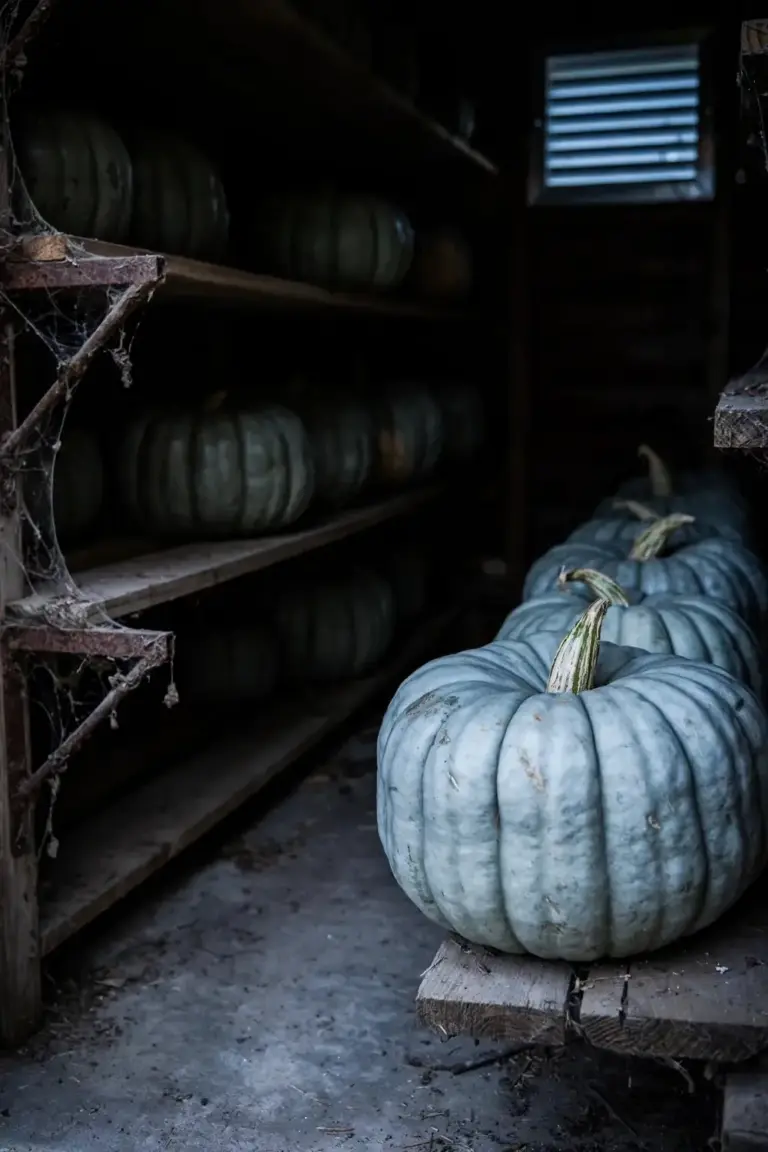
An Australian community gardening guide gives the same idea in metric: a dark, cool, dry place at 10 to 16 degrees, never on bare ground or concrete, in their pumpkin storage notes. A garage shelf, a garden shed, or a cool laundry room all work if the temperature holds reasonably steady through winter. Avoid spots near hot water systems, clothes dryers, or sun-struck walls.
Stability matters as much as the number on the thermometer. A spot that swings between 8 and 18 degrees stresses the fruit more than a steady 14 degrees does, because each warm swing restarts respiration and each cold dip risks chilling damage. Pick the most temperature-stable corner you have, away from doors that open to winter air and walls that bake in afternoon sun. An interior garage wall beats an exterior shed wall in most houses.
Darkness matters more than most growers think. Light does not rot the fruit directly. A lit spot runs warmer than a dark one, and warmth shortens storage. Keep the storage area dry as well as dark. Damp air grows the mould that colonises stem scars first, then spreads across the rind. Potatoes want the same cool darkness for the same reasons, covered in the site’s potato growing guide.
8. Keep Every Fruit Off the Floor on Slats or Straw
Set pumpkins on slatted shelves, pallets, or a thick bed of clean straw. Oregon State University Extension recommends shelves to keep fruit off the floor, with a layer of straw underneath to keep the fruit dry, in their storage guidance.
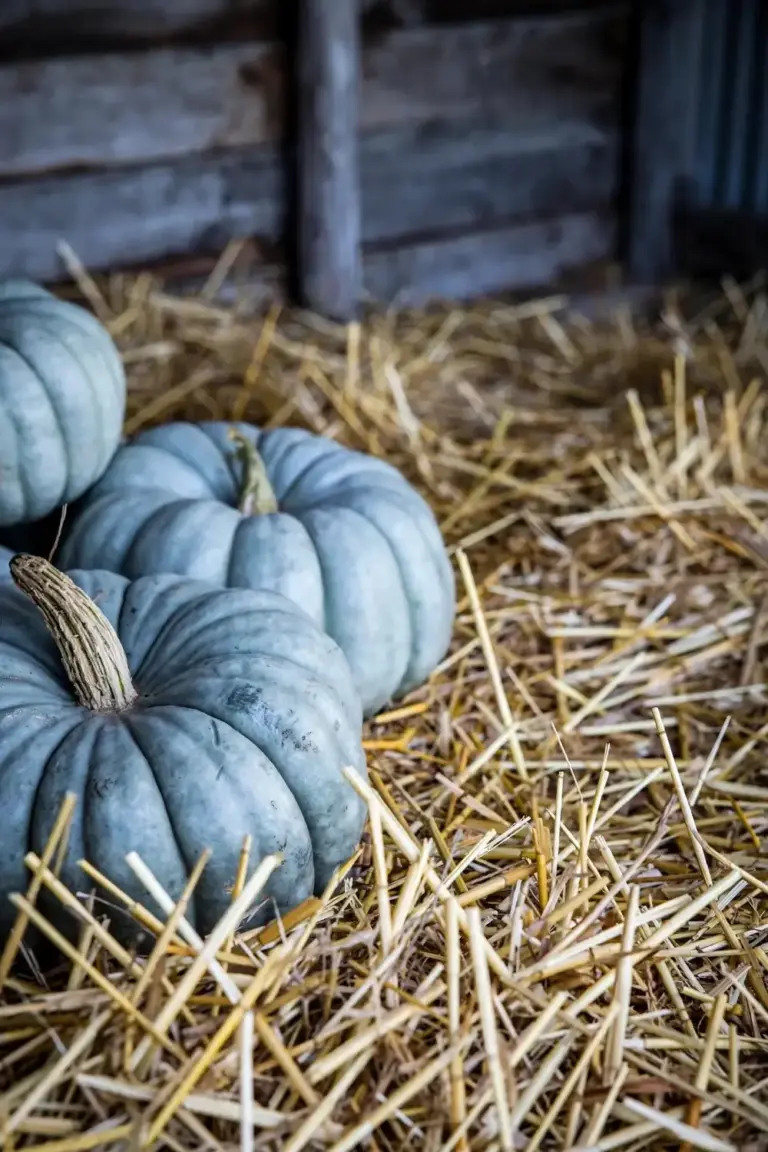
Concrete sweats with temperature changes. Bare soil breathes moisture upward all winter. Both wet the rind from below, and a wet rind rots from the contact patch outward. Straw breaks that contact and lets air move under the fruit, keeping the ground spot as dry as the crown. Replace the straw if it gets damp, matted, or mouldy, because wet bedding is worse than no bedding.
Never store pumpkins in newspaper or paper bags. Paper holds moisture against the rind and encourages rot, which Oregon State flags explicitly. The same goes for plastic bags or sealed bins, which trap the fruit’s own respiration moisture into a rot chamber.
Straw and slats solve the same problem differently. Slatted shelves give the best air flow and the easiest weekly inspection, because you can see and reach every fruit. Straw bedding suits a shed floor or a cool corner where shelves are impractical. Lay the straw 10 cm deep, nestle each pumpkin in slightly, and fluff the straw back up after every weekly check. Either way, the principle never changes: air must move under the fruit as freely as it moves around it.
9. Space Fruit in a Single Layer, Stems Up
Place pumpkins in one layer with space between them. Fruit that touch trap humid air in the contact zone, and that dark damp zone rots first. The University of California advises a single layer with a bit of space between each fruit for air circulation in their storage guide.
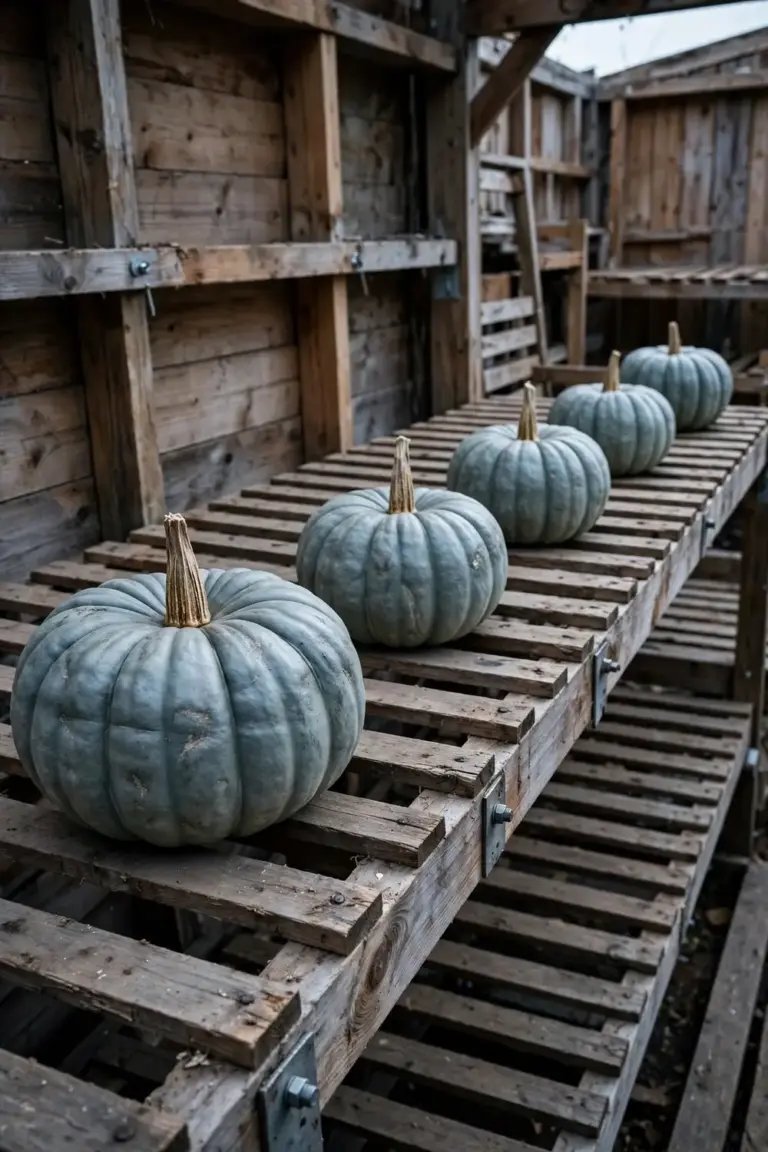
Rest each pumpkin stem-side up. The stem scar is the most vulnerable point on the whole fruit, and facing it upward keeps moisture from pooling around it. A Jarrahdale’s deep ribs can also cup water, so tilt each fruit so no rib holds a puddle. Do not stack. A Jarrahdale weighs several kilograms, and the bottom fruit in a stack bruises under the load, then rots from the bruise.
Leave room to walk the row. You will inspect every fruit weekly, and a storage layout you cannot reach is a layout you will neglect.
10. Keep Apples and Pears Away From Your Pumpkins
Store pumpkins away from apples, pears, and other ripening fruit. Ripening fruit gives off ethylene gas, and ethylene speeds up spoilage in stored squash by accelerating ripening and senescence. Oregon State University Extension states this directly in their storage guidance.
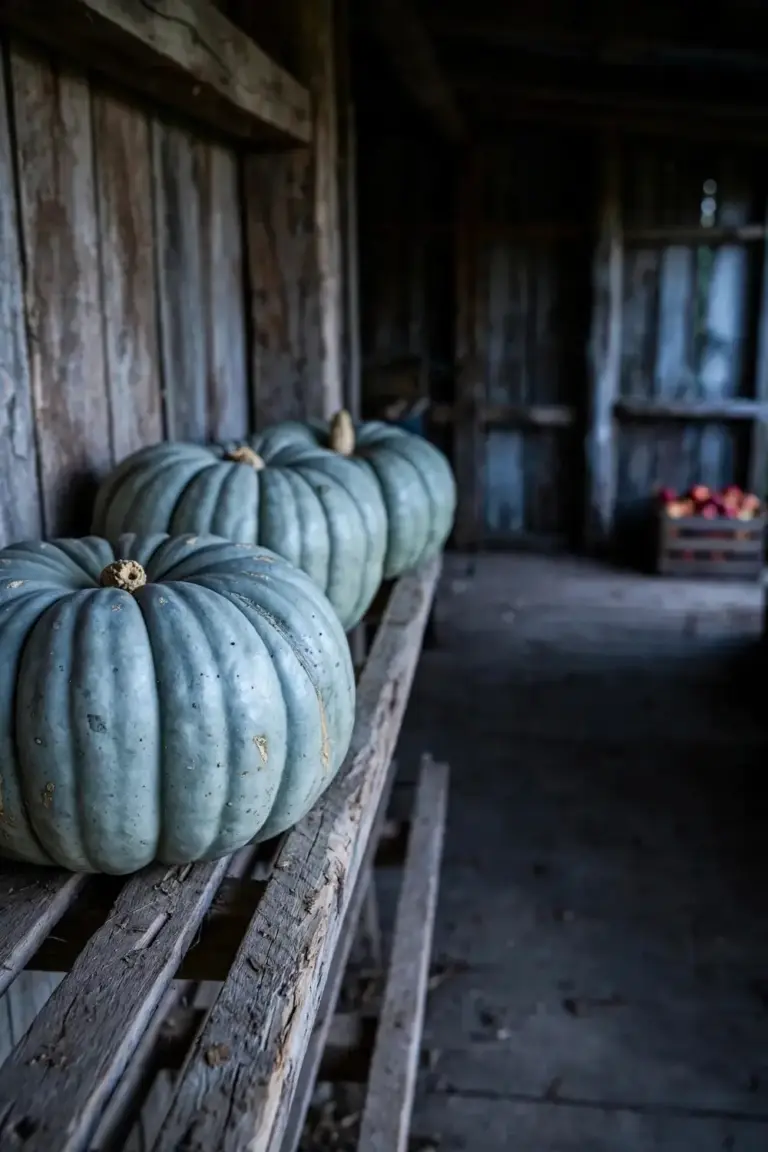
This rule bites in a home garage where the apple box sits on the next shelf over. Move the apples to a different corner or a different room entirely. Bananas and tomatoes are strong ethylene producers too, so keep the pumpkin shelf clear of all ripening fruit, not just the obvious ones.
Good ventilation dilutes whatever ethylene is around. Do not seal the storage room airtight. A vent, a louvered door, or a slightly open window keeps air fresh without chilling the fruit, and moving air also keeps rind surfaces dry.
11. Check Every Fruit Weekly and Remove Soft Ones
Inspect each pumpkin once a week without fail. Run your eyes and hands over the whole rind, including the underside and the stem scar. Oregon State University Extension tells growers to check stored produce weekly and remove any fruit that shows softening or rot before it affects the rest, in their storage guidance.
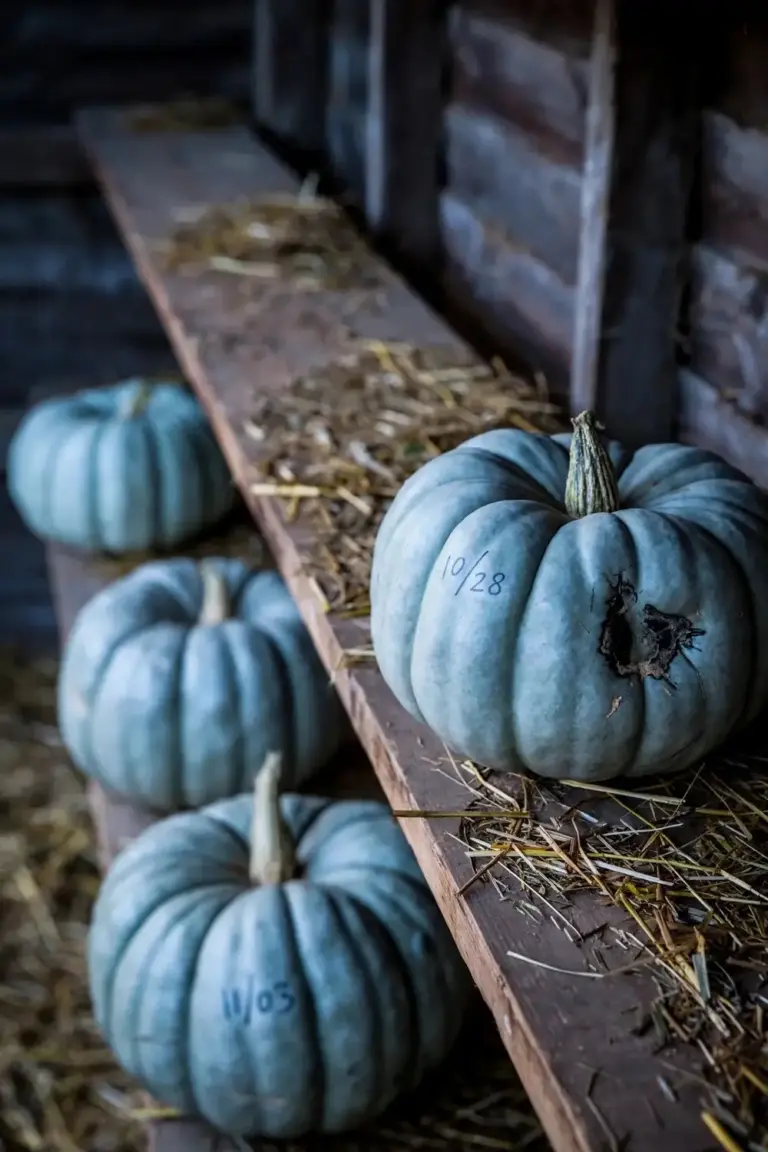
An Australian guide repeats the weekly check and adds the underside explicitly: inspect for soft spots including beneath the pumpkin, and discard any that are rotting, per Sustainable Macleod. Lift each fruit to check the ground spot. That hidden patch is where most storage failures start.
One rotting pumpkin infects its neighbours fast through spores and contact moisture. Remove suspects immediately, the day you find them. Cut out and cook any fruit with a small soft spot that same day, cutting well back into firm flesh. Compost the rest well away from the vegetable garden, because the rot organisms persist in compost that never heats up properly.
12. How Long Jarrahdale Keeps: 9 to 12 Months
A sound, well-cured Jarrahdale outlasts generic pumpkins by months. Its thick Cucurbita maxima rind is the reason. That dense shell loses moisture slowly and resists the fungi that colonise thinner rinds.
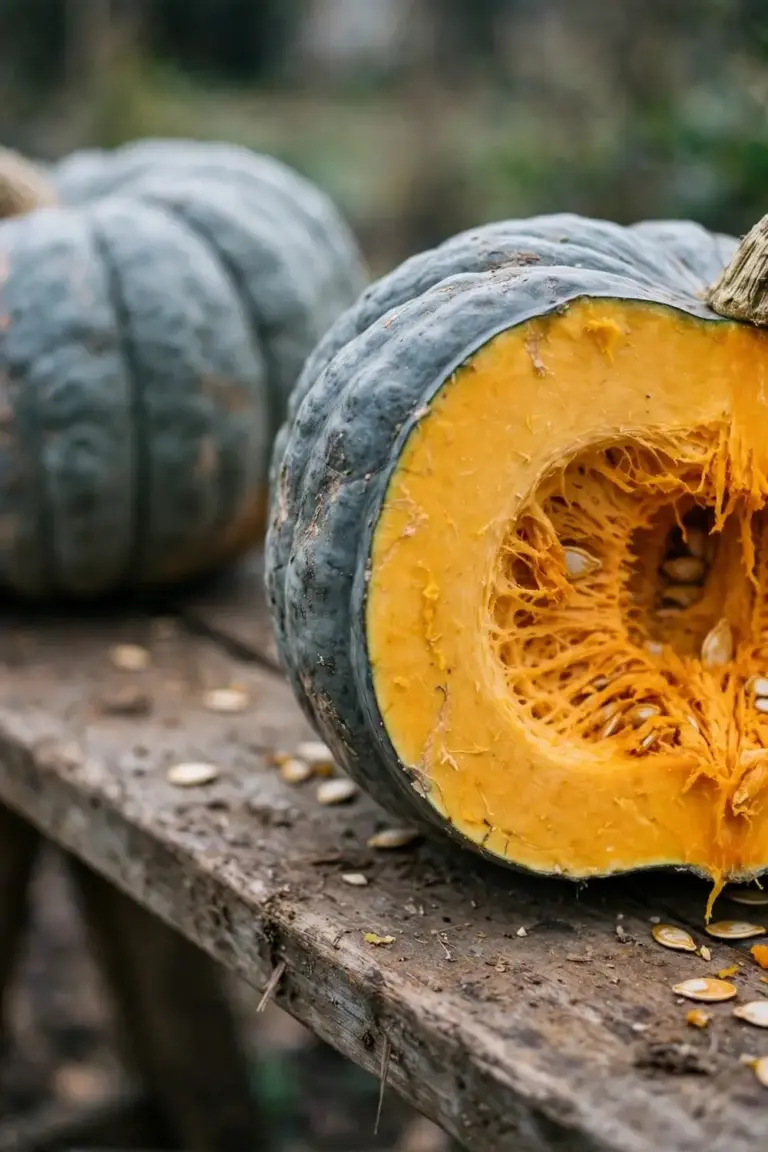
| Squash Type | Typical Storage Life | Source |
|---|---|---|
| Acorn squash | 1 to 2 months | UC Agriculture and Natural Resources |
| Pumpkin and butternut | 2 to 3 months | Oregon State Extension |
| Hubbard, turban, kabocha | Up to 6 months | UC Agriculture and Natural Resources |
| Jarrahdale (sound, cured) | 9 to 12 months | Heirloom and Australian grow guides |
A US heirloom-vegetable guide puts sound Jarrahdale fruit at up to 9 months in storage. An Australian grow guide stretches that figure to a full year for perfect fruit. The range is honest: 9 months is achievable with good practice, 12 months needs perfect fruit, perfect curing, and perfect conditions.
Compare that with generic pumpkins at 2 to 3 months under the same conditions, which is the Oregon State figure for pumpkins and butternut squash. The Jarrahdale advantage is real, but it only applies to fruit that was fully ripe, unbruised, fully cured, and stored cool, dry, and dark. A bruised or under-cured Jarrahdale keeps no longer than any other pumpkin.
Stored squash keeps converting starch to sugar for weeks after harvest. The University of California notes that pumpkins and winter squash slowly convert starch to sugars while curing and in storage, which is why a Jarrahdale eaten in winter tastes sweeter and richer than one eaten at harvest, per their storage guide. This is the quiet reward for patience. The fruit you store longest eats best.
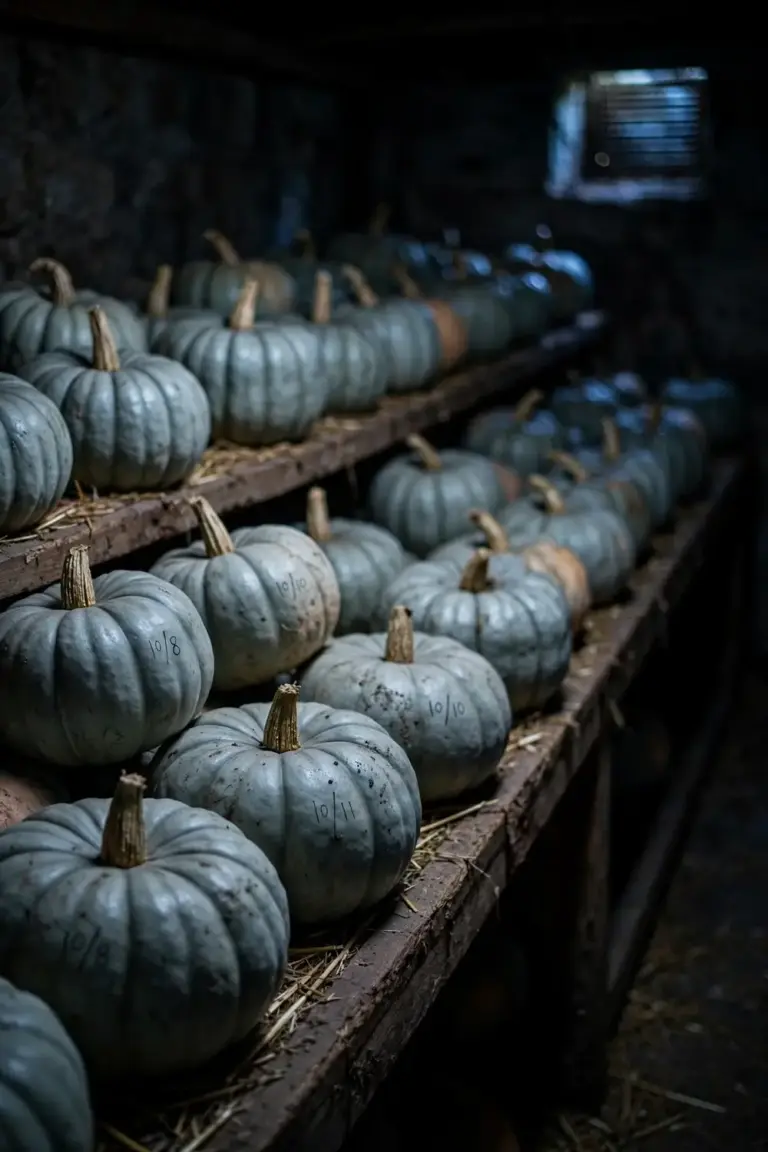
Eat the oldest fruit first. Date each pumpkin with a pencil mark at harvest so the queue stays honest and no fruit gets forgotten at the back of the shelf.
13. The 5 Storage Killers: Bruises, Broken Stems, Wet Rind, Frost, and Vermin
These five ruin more stored pumpkins than all other causes combined. Every one is preventable, and every one traces back to a decision at harvest, curing, or storage setup. Get these five right and the weekly check becomes a formality. Get any one wrong and you will be cutting out rot by midwinter.
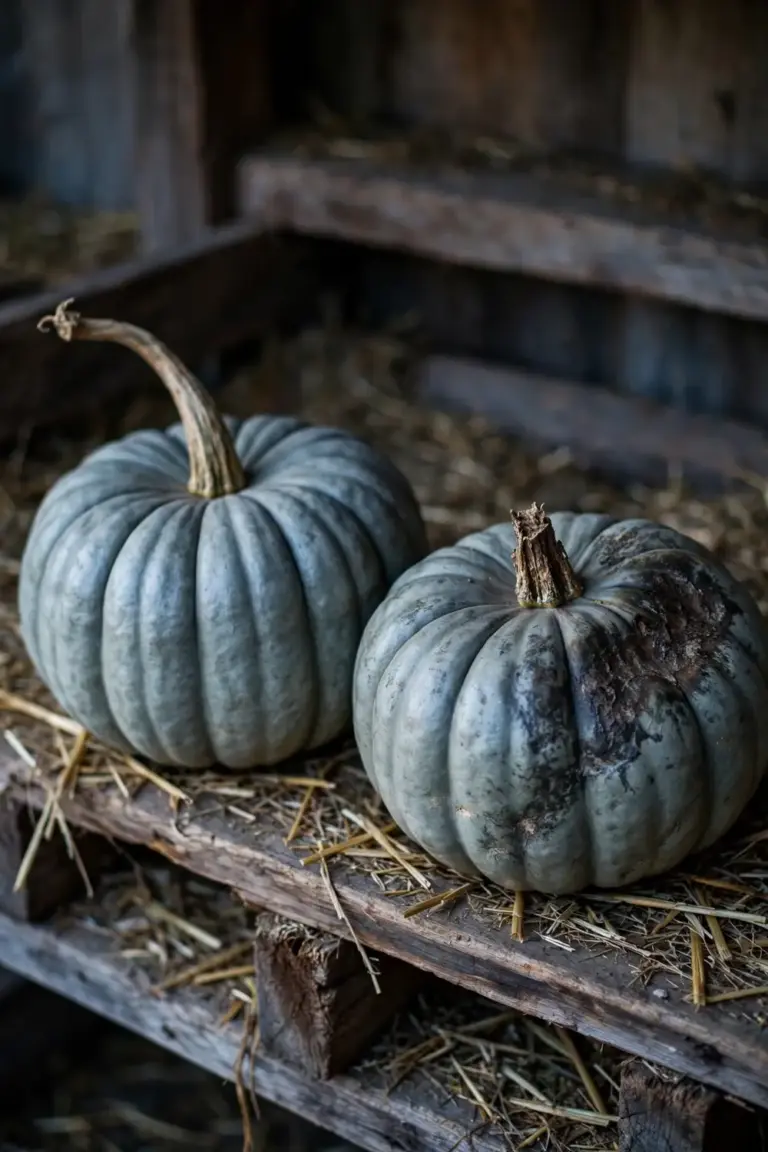
Bruises come from drops, throws, stacking, and rough handling at harvest. The damage hides under an intact rind for weeks, then surfaces as a soft spot. Handle every fruit like an egg from vine to shelf. Train every helper the same way, because one careless lifter ruins the fruit you grew for months.
Broken stems come from carrying fruit by the handle. The stem cracks at its base, the seal breaks, and rot walks straight in. Cut the stem long, carry from below, and never let the stem take the weight. If a stem snaps off at harvest, seal the scar by melting candle wax into it, a trick one Australian storage guide recommends for damaged stems. Eat that fruit first, because even sealed it keeps a shorter time.
Wet rind comes from rain during curing, damp storage floors, paper wrapping, and sealed containers. Cure under cover when rain threatens. Store off the floor on slats or straw. Never wrap in newspaper or plastic. Dry rind is safe rind.
Frost comes from leaving fruit out too late in cold districts. A hard freeze damages rind cells even when the surface looks fine, and the damage rots from inside weeks later. Harvest before the first hard frost. Fruit that has frozen does not keep, so eat frozen fruit within days.
Vermin comes from rats and mice, which chew into stored pumpkins for the sweet flesh. One Australian guide warns that vermin tunnel into the center and set up home inside the fruit. Store where rodents cannot reach, keep the storage area clean of spilled grain and rubbish, and check for gnaw marks in the weekly inspection. A gnawed pumpkin is a lost pumpkin.
14. Frequently Asked Questions
An unripe Jarrahdale never ripens properly off the vine, so it stores badly. The rind stays thin, the flesh stays bland, and the fruit rots weeks before a ripe one would. Harvest only fruit that passes all three ripeness signs: blue-gray color, fingernail-resistant rind, and a dry corky stem. If frost forces an early pick, cure those fruit warm for the full 10 days and eat them first, because their storage life is short.
Yes, and humidity makes the cure harder, not optional. Cure under a roof with strong air movement rather than in open rain-prone sun. A covered verandah, a carport, or a shed with the doors open all work. Run a fan if the air sits still. The goal is a hard, dry rind, and humid still air grows mould on the stem scar before the rind hardens. Extend the cure to the full 10 days and turn the fruit often.
Anything below 10 degrees Celsius risks chilling injury in pumpkins and winter squash. Oregon State University Extension warns that fruit deteriorates rapidly below 50 degrees Fahrenheit, which is 10 degrees Celsius. A garage that drops near freezing on winter nights is too cold. Move the fruit to a warmer spot or insulate the storage corner with straw bales. Steady cool beats fluctuating cold every time.
Yes. Cook and puree the flesh, then freeze the puree in portions. Frozen puree keeps its quality for months and skips the whole curing and storage project. This suits fruit with small blemishes that would not store well anyway. Cut away any soft or damaged flesh before cooking. Whole raw pumpkin does not freeze well, because the texture collapses on thawing.
Press the rind all over during the weekly check. A keeping pumpkin stays hard everywhere. Soft spots, weeping cracks, a sour or fermented smell, and visible mould all mean the fruit is done. Cut out small blemishes and cook the rest the same day if the damage is minor and the flesh inside is firm and normal colored. Discard anything with widespread softness or an off smell, and compost it away from the vegetable beds.
A light wipe of cooking oil on the rind is an old Australian practice some growers swear by, and it does slow moisture loss slightly. It never substitutes for curing, cool storage, or the weekly check. Skip petroleum-based waxes on eating pumpkins. If you oil, use a thin film on sound cured fruit only, and keep the stem scar dry and unoiled so it can breathe.
15. Eat the First Soft One and Save the Seeds
Storage ends one pumpkin at a time. Cook the first fruit that softens, and keep the queue moving oldest first. A Jarrahdale that kept 10 months has done its job, and it will taste better than the day you picked it.
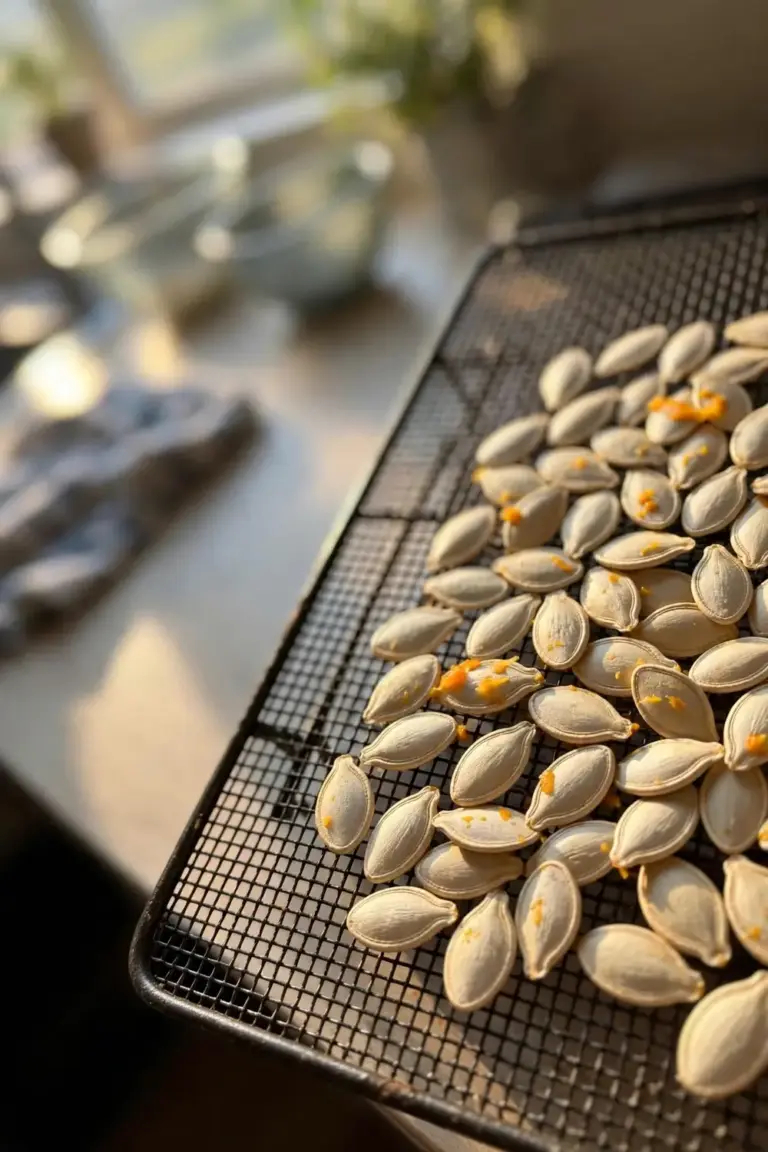
Save seeds from your best-keeping fruit. Scoop, rinse, and dry the seeds on a wire rack for a full week until they snap rather than bend, then store them cool and dry in a labelled paper envelope. Seeds from the longest-keeping pumpkin carry the genetics worth growing again, because storage life runs in the family. Label the envelope with the variety, the harvest year, and how many months that particular fruit kept, so next season’s planting starts from knowledge instead of guesswork. For the growing side this storage article leaves out, the site’s squash growing guide covers planting through harvest.